Free Printable Congressional Committees Worksheets for Class 10
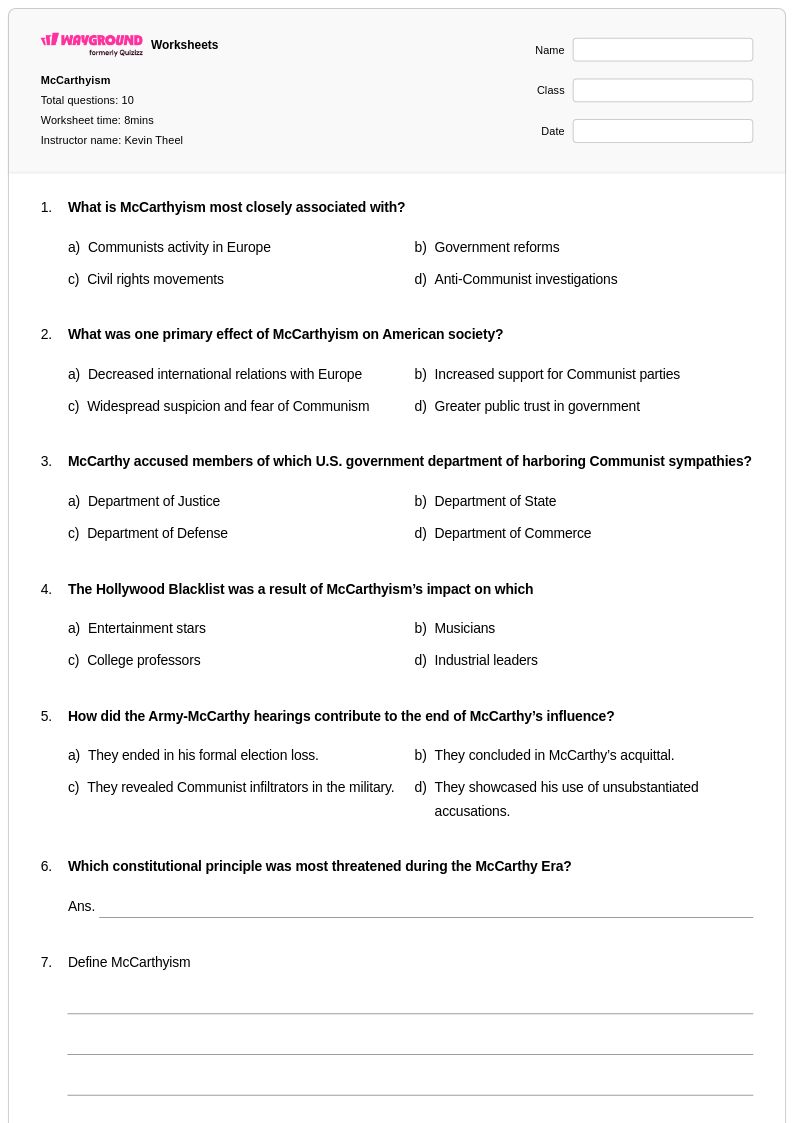
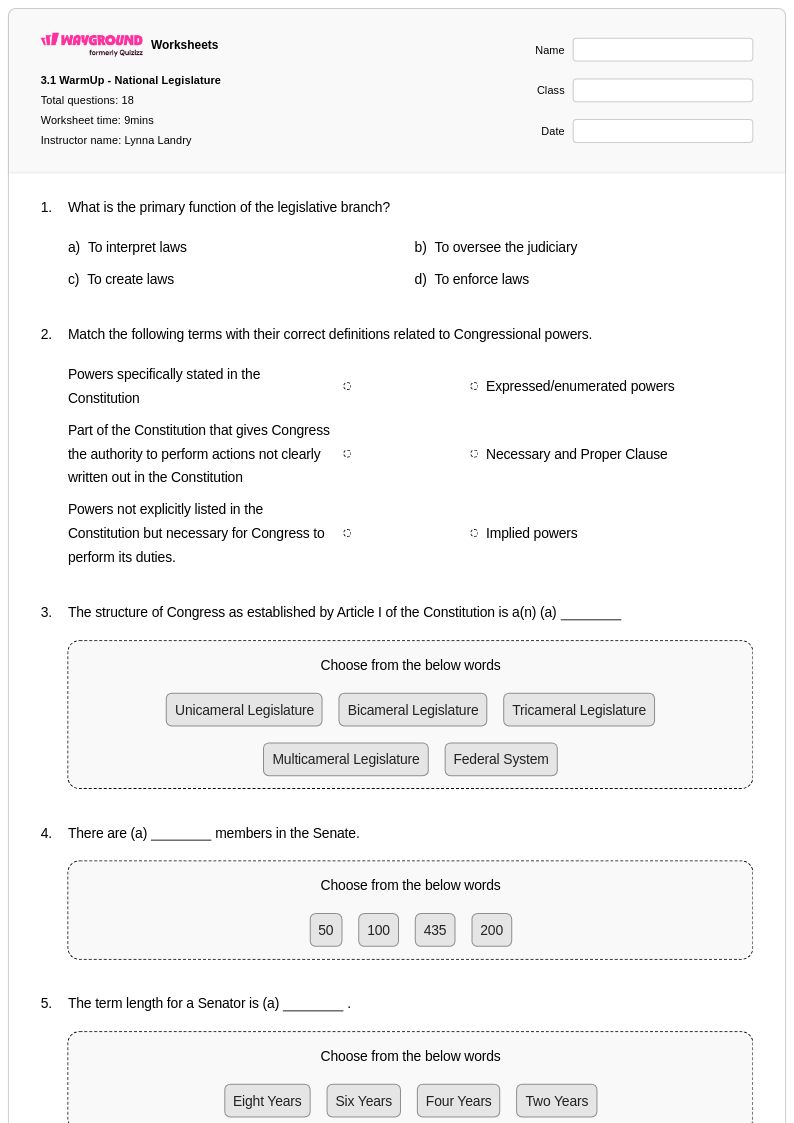
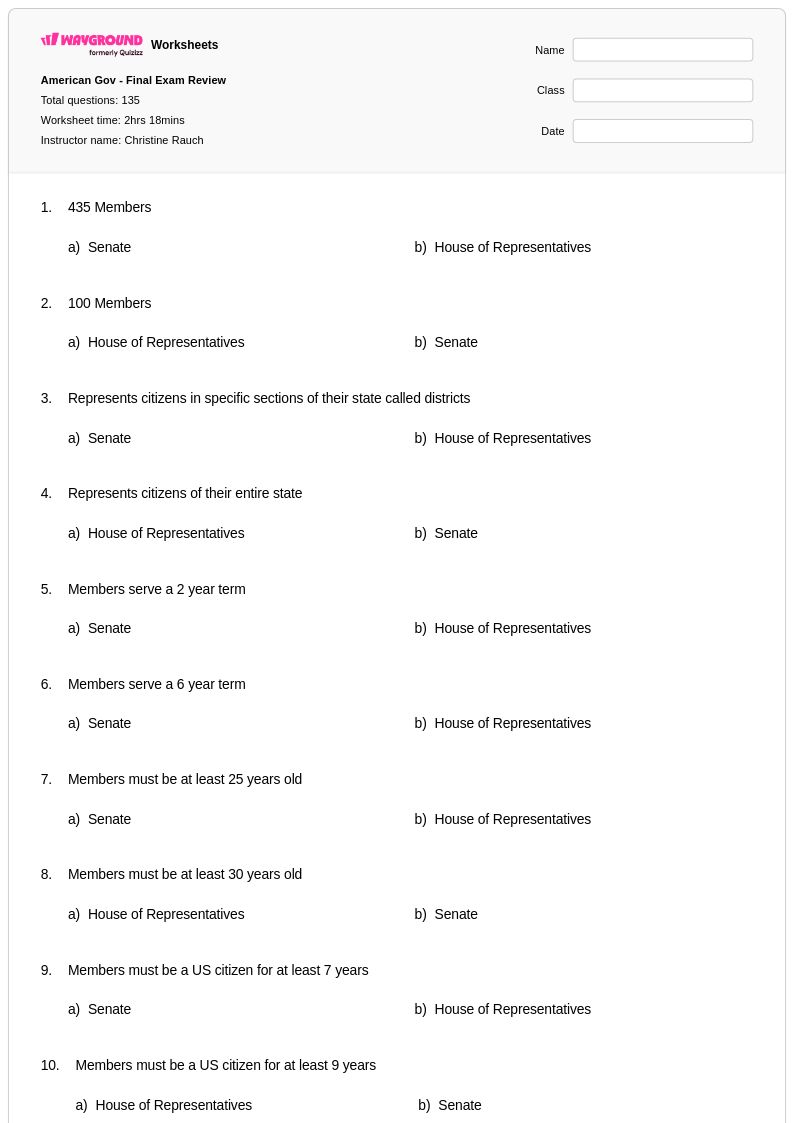
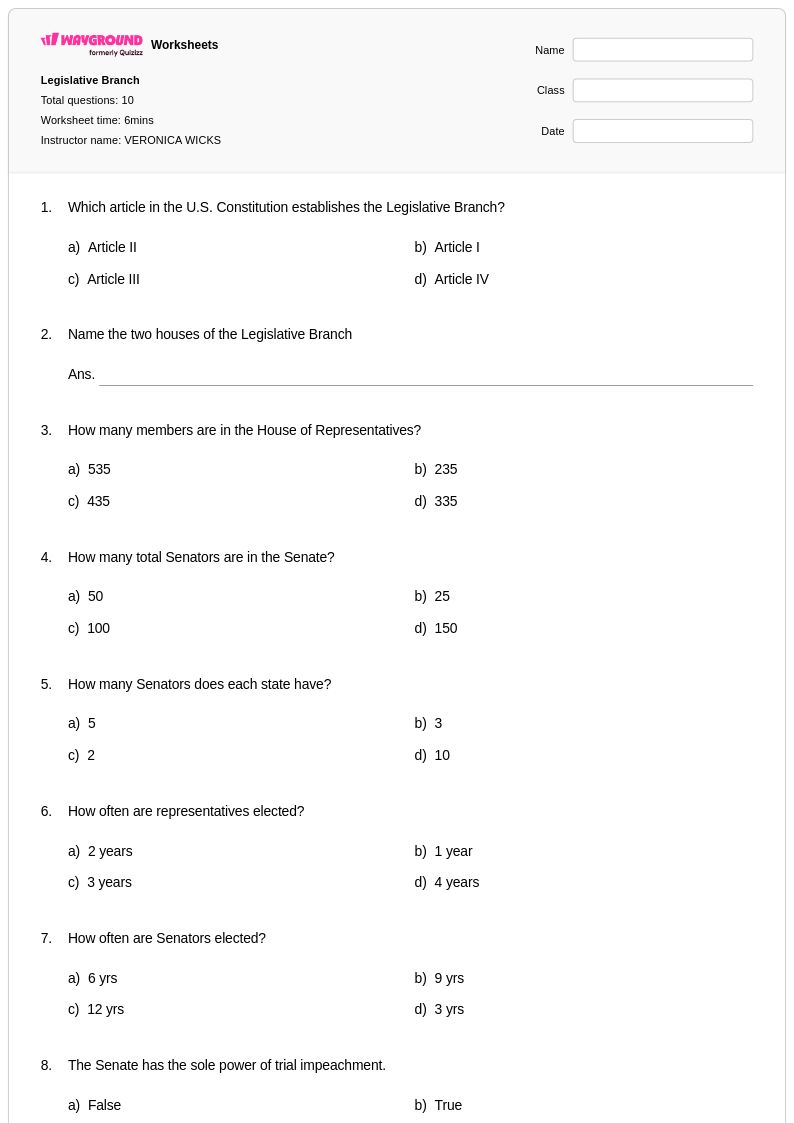
Explore Wayground's free Class 10 Congressional Committees worksheets and printables that help students master the structure, functions, and roles of legislative committees through engaging practice problems and comprehensive answer keys.
Explore printable Congressional Committees worksheets for Class 10
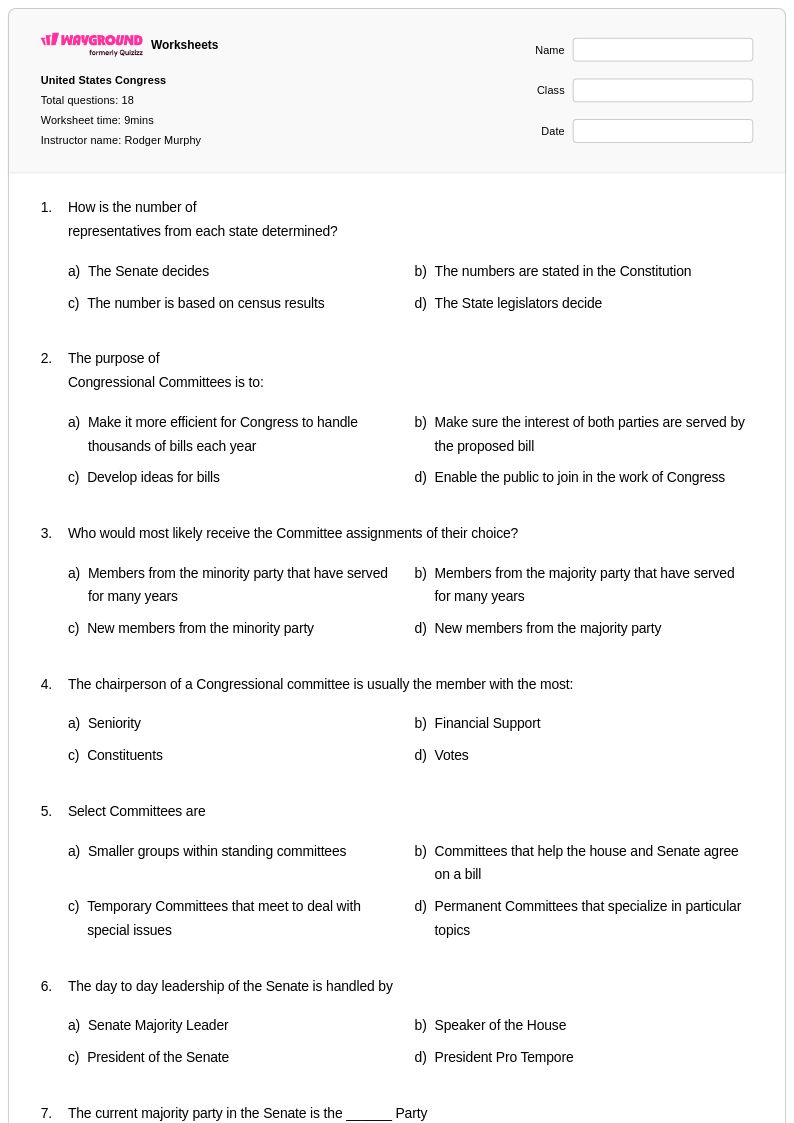
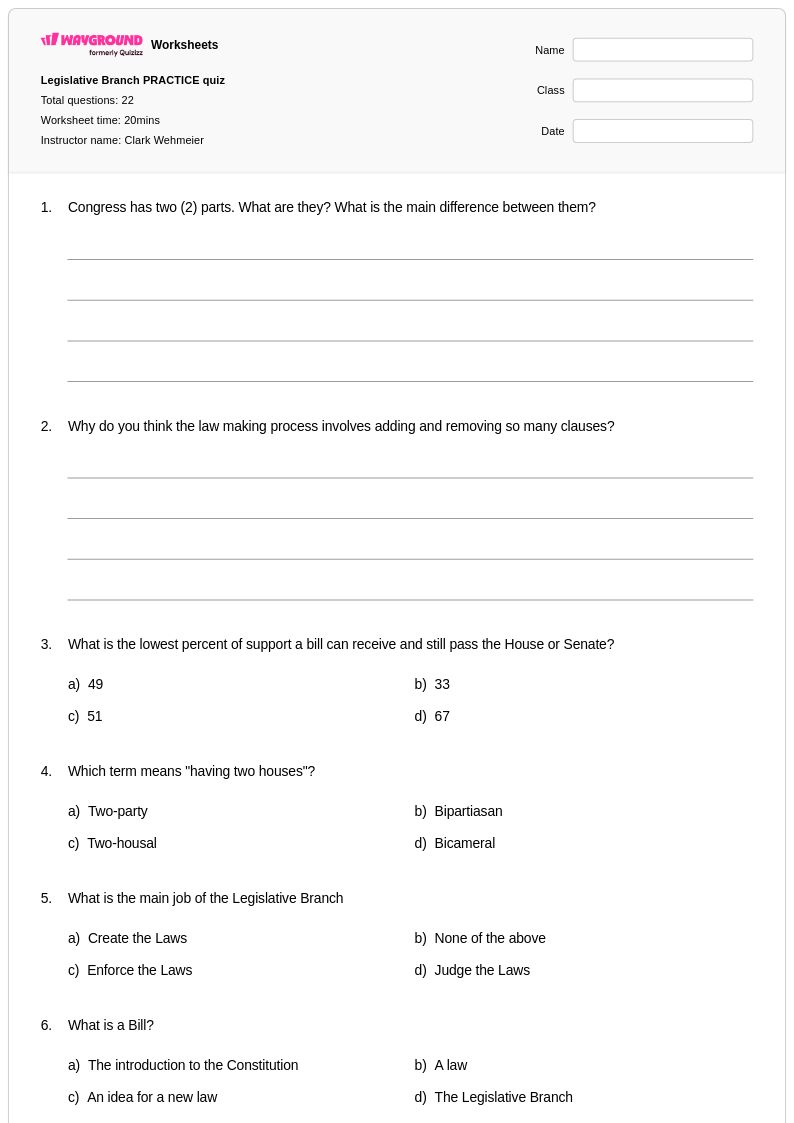
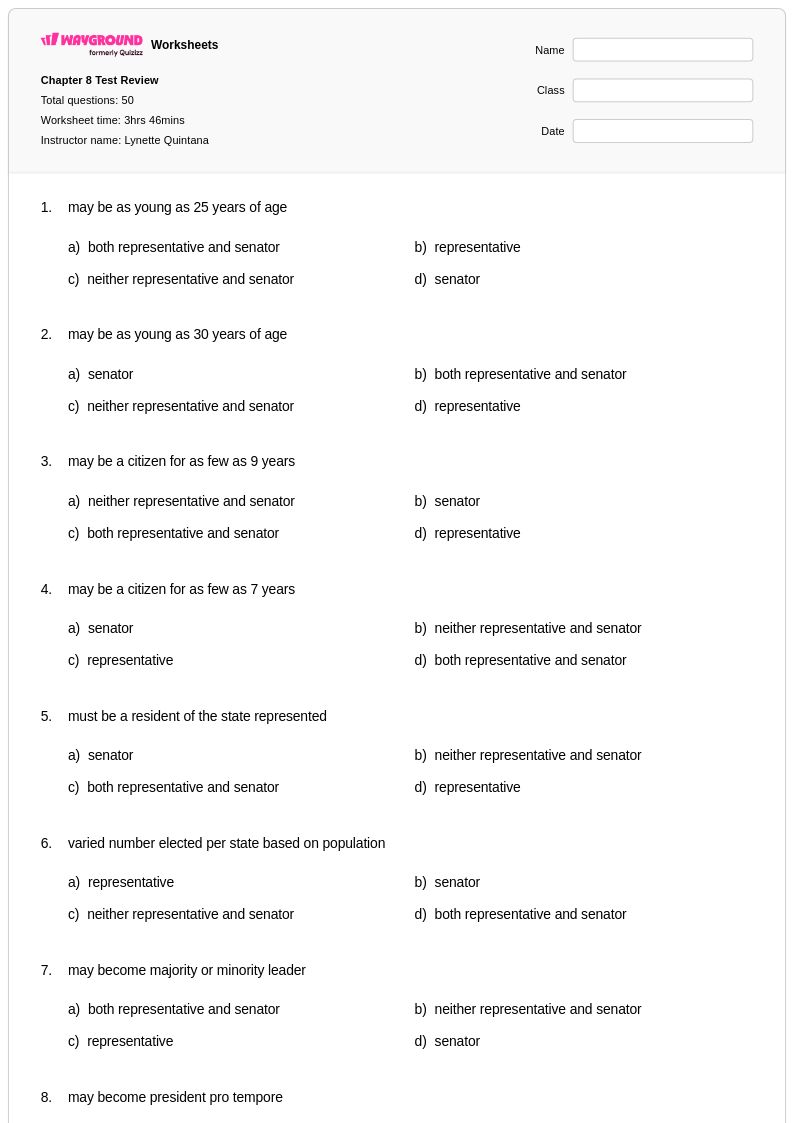
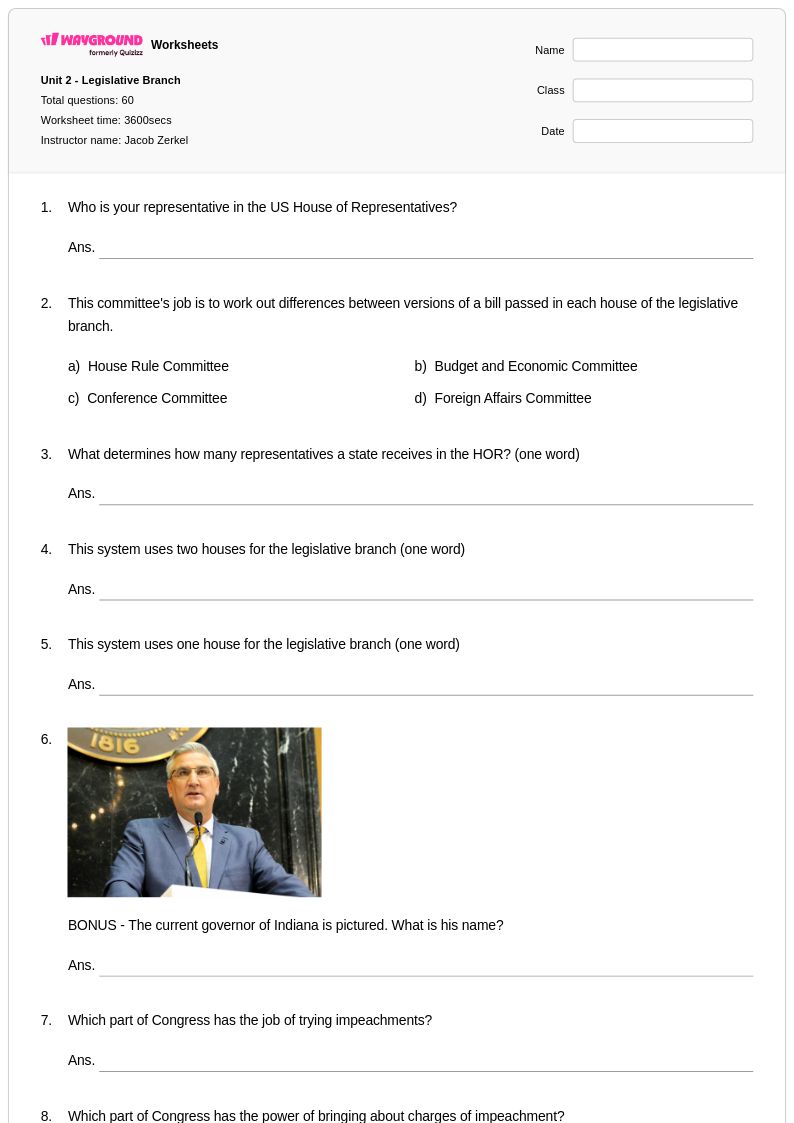
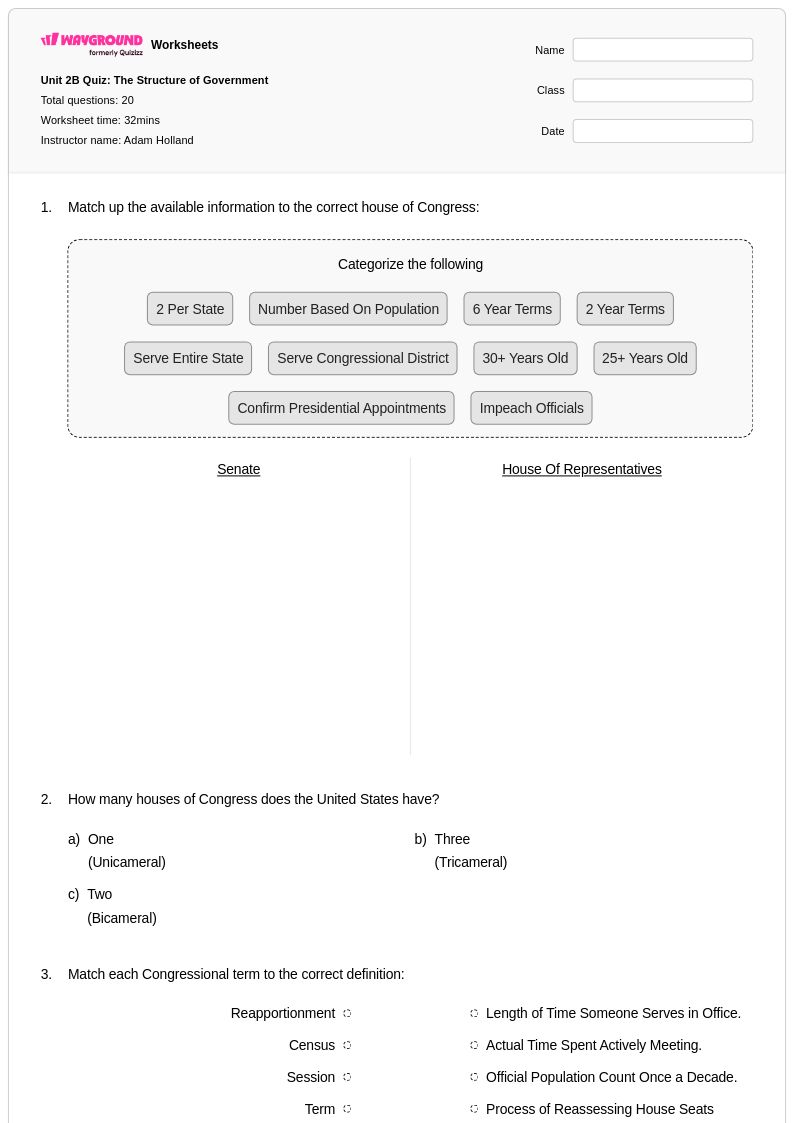
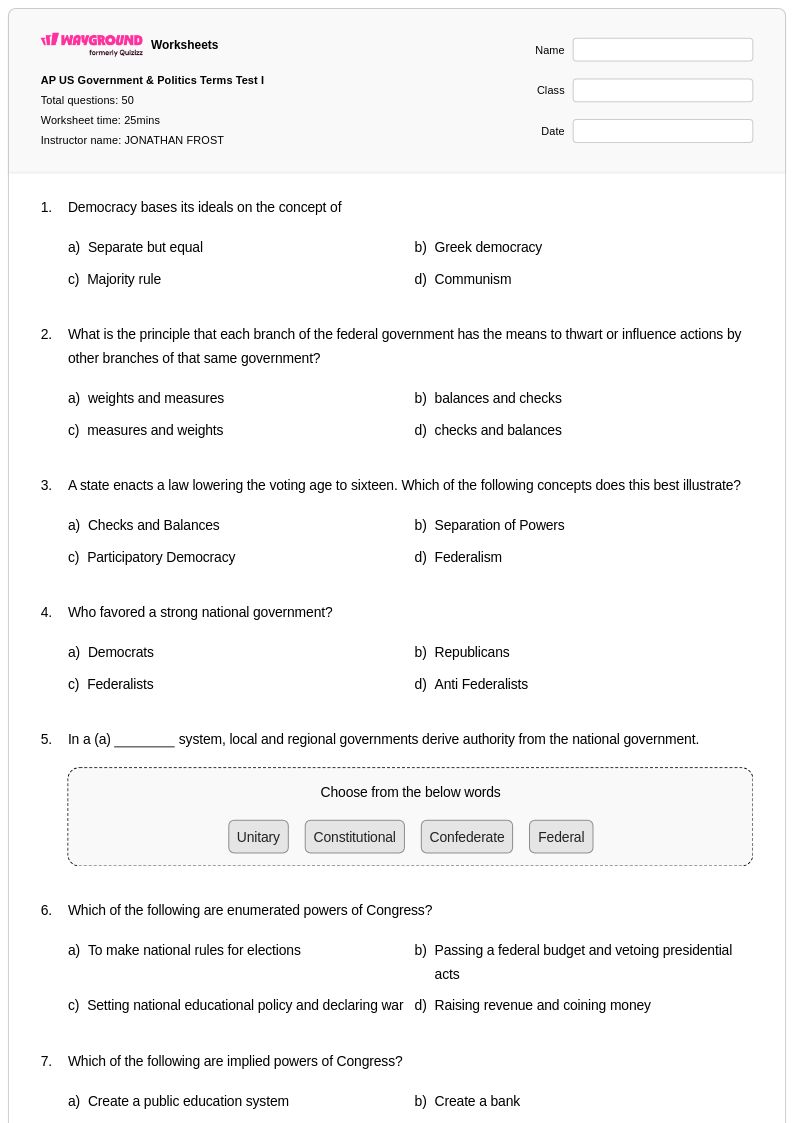
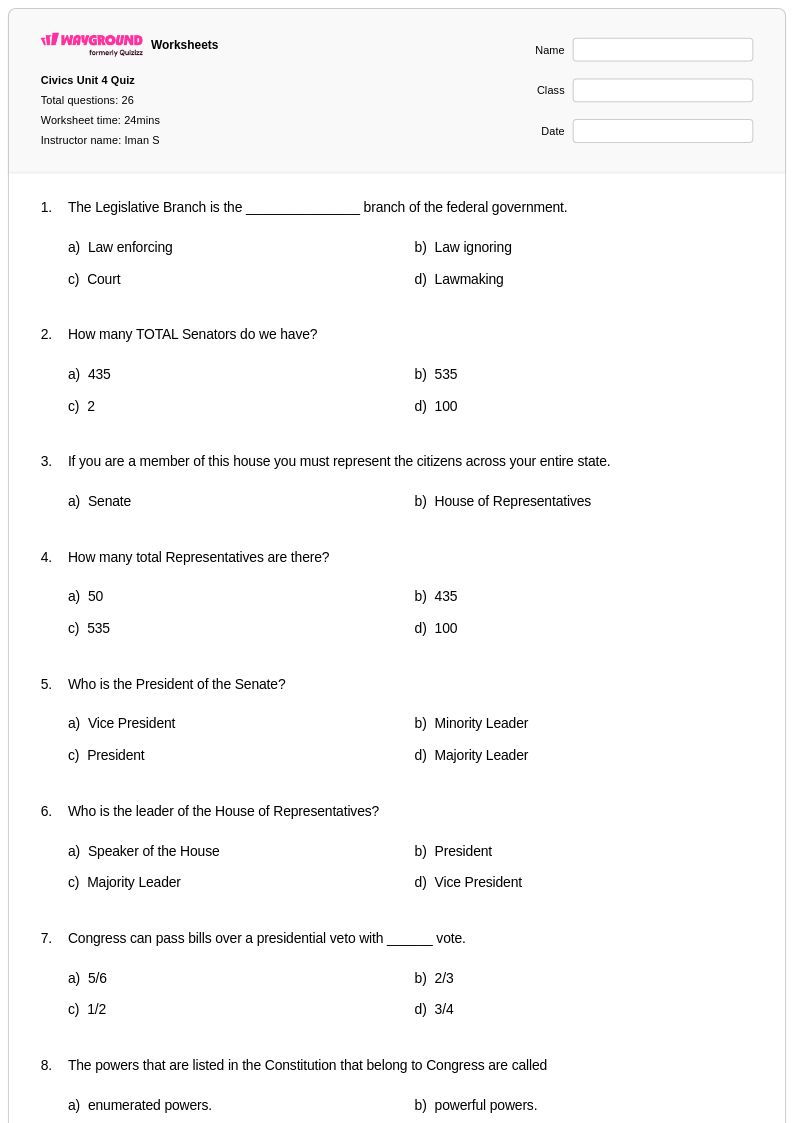
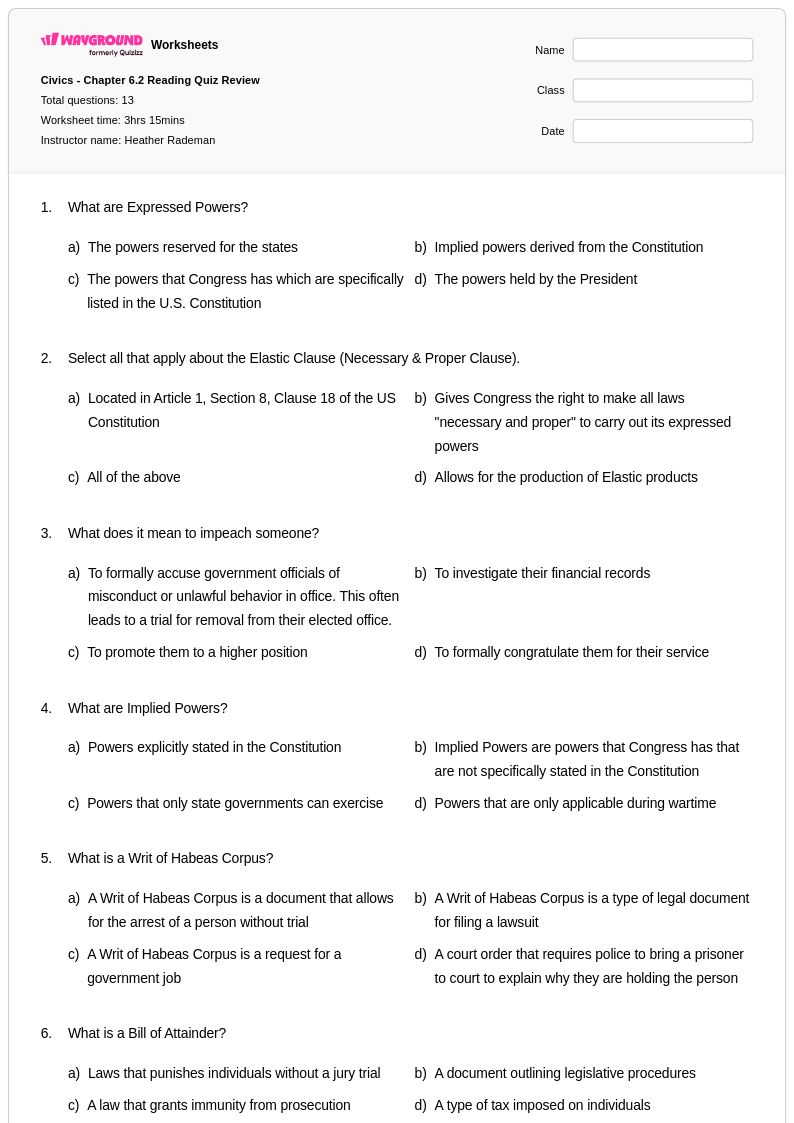
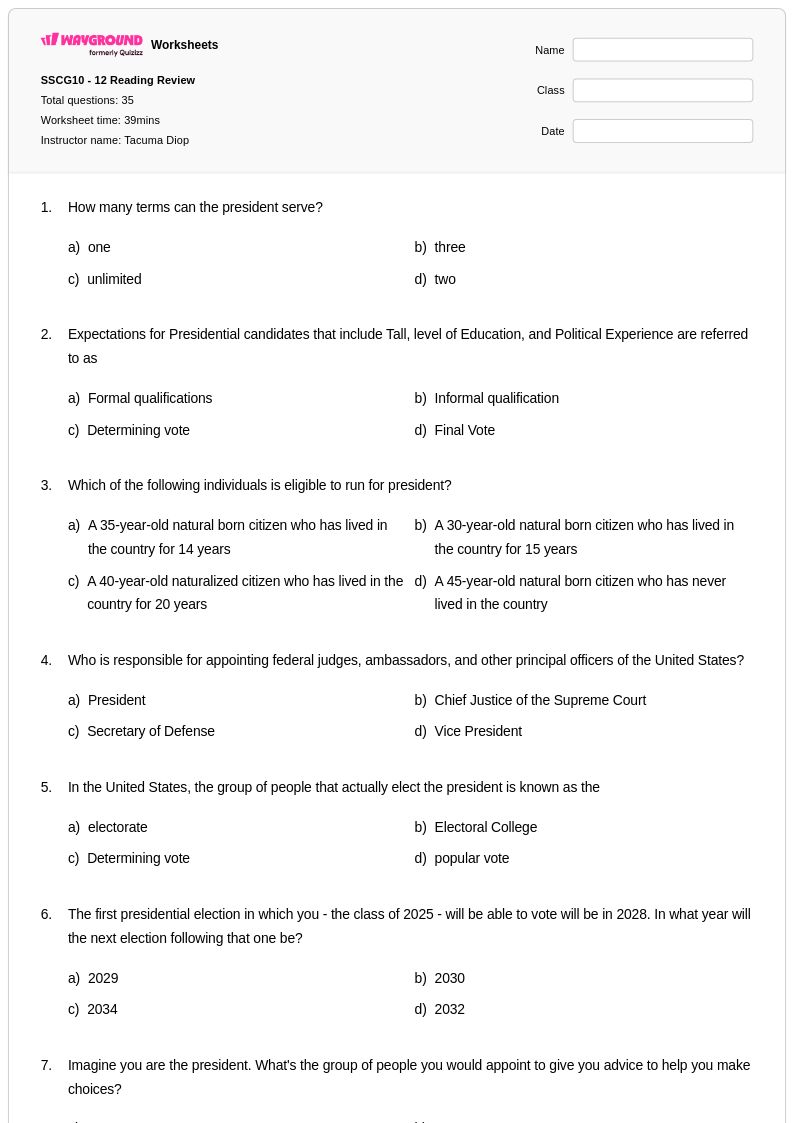
Congressional Committees worksheets for Class 10 students available through Wayground (formerly Quizizz) provide comprehensive coverage of the legislative branch's committee system and its critical role in the lawmaking process. These expertly designed resources help students master essential concepts including committee types, jurisdictions, leadership structures, and the detailed procedures committees follow when reviewing proposed legislation. Students develop analytical skills by examining how bills move through committee stages, understanding the power dynamics between standing, select, and joint committees, and evaluating the influence of committee chairs and ranking members. The worksheets strengthen critical thinking abilities through practice problems that require students to trace legislative pathways, analyze committee markup processes, and assess how committees serve as gatekeepers for congressional action. Each resource includes detailed answer keys and is available as free printables in convenient pdf format, making them accessible for both classroom instruction and independent study.
Wayground (formerly Quizizz) supports educators with an extensive collection of teacher-created Congressional Committees worksheets, drawing from millions of high-quality resources that address diverse learning needs in Class 10 civics education. The platform's robust search and filtering capabilities enable teachers to quickly locate materials aligned with specific curriculum standards and learning objectives, while differentiation tools ensure appropriate challenge levels for all students. Teachers can customize worksheets to emphasize particular aspects of the committee system, such as oversight functions or the role of subcommittees, and access materials in both printable and digital formats including downloadable pdfs. These flexible resources prove invaluable for lesson planning, targeted remediation of complex governmental concepts, enrichment activities for advanced learners, and structured skill practice that builds students' understanding of how Congressional committees shape American legislative processes and democratic governance.
FAQs
How do I teach congressional committees to middle or high school students?
Start by grounding students in why committees exist: Congress cannot debate every bill on the full floor, so committees serve as specialized filters that review, revise, and prioritize legislation. A useful sequence is to first introduce the distinction between standing, select, joint, and conference committees, then walk students through a real bill's path from introduction to committee referral to markup. Connecting committee jurisdictions to current news events helps students see the system as active rather than abstract.
What exercises help students practice understanding how congressional committees work?
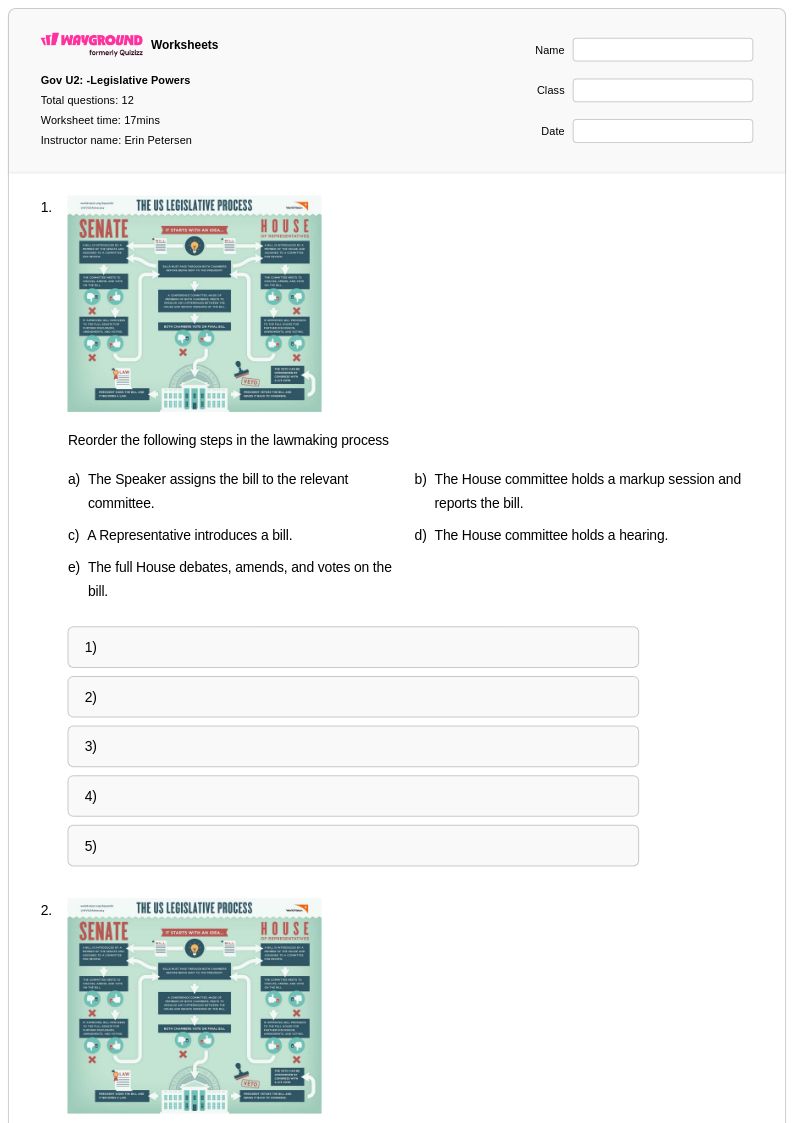
Effective practice tasks include labeling diagrams of the committee referral process, matching committee types to their specific functions, and analyzing case studies of how a bill moves through markup before reaching a floor vote. Fill-in-the-blank and short-answer questions that ask students to explain why a particular bill would be sent to a specific committee reinforce both vocabulary and procedural reasoning. These formats mirror the depth of understanding assessed on AP Government exams and state civics assessments.
What are common misconceptions students have about congressional committees?
A frequent misconception is that committees simply approve or reject bills without modifying them, when in fact the markup process is where much of the substantive shaping of legislation occurs. Students also often confuse the roles of committee chairs with party leadership, not realizing that committee chairs hold independent procedural power such as scheduling hearings and controlling the agenda. Another common error is conflating select committees, which are temporary and investigative, with standing committees, which are permanent and have ongoing legislative jurisdiction.
How can I use a congressional committees worksheet to assess student understanding?
These worksheets can function as formative checks after a lesson on the legislative process or as summative assessments at the end of a unit on Congress. Questions targeting committee types, leadership roles, bill referral logic, and the markup procedure allow teachers to pinpoint exactly where students' conceptual gaps lie. Because each worksheet includes an answer key, teachers can also use them for self-paced review or peer-correction activities.
How do I use Wayground's congressional committees worksheets in my classroom?
Wayground's congressional committees worksheets are available as printable PDFs for traditional classroom use and in digital formats for technology-integrated environments, giving teachers flexibility for in-class instruction, homework, or independent review. Teachers can also host worksheets as a quiz directly on Wayground, enabling interactive student completion with built-in tracking. Wayground's accommodation tools, including read aloud and extended time settings, can be applied per student so that all learners engage with the same rigorous content at an appropriate access level.
How do congressional committees fit into AP Government or state civics curriculum standards?
Congressional committees are a core component of AP U.S. Government and Politics, directly addressed in the unit on Congress and the legislative process, and students are expected to explain how committees decentralize congressional power and affect policy outcomes. At the state level, most civics and government standards require students to understand the structure and function of the legislative branch, with committee operations typically included as a key structural element. Worksheets that cover committee types, jurisdictions, and procedural steps like markup directly support standards-aligned instruction and exam preparation.