Free Printable Constant of Proportionality Worksheets for Class 8
Explore Wayground's free Class 8 constant of proportionality worksheets and printables that help students master identifying and calculating proportional relationships through engaging practice problems with comprehensive answer keys.
Explore printable Constant of Proportionality worksheets for Class 8
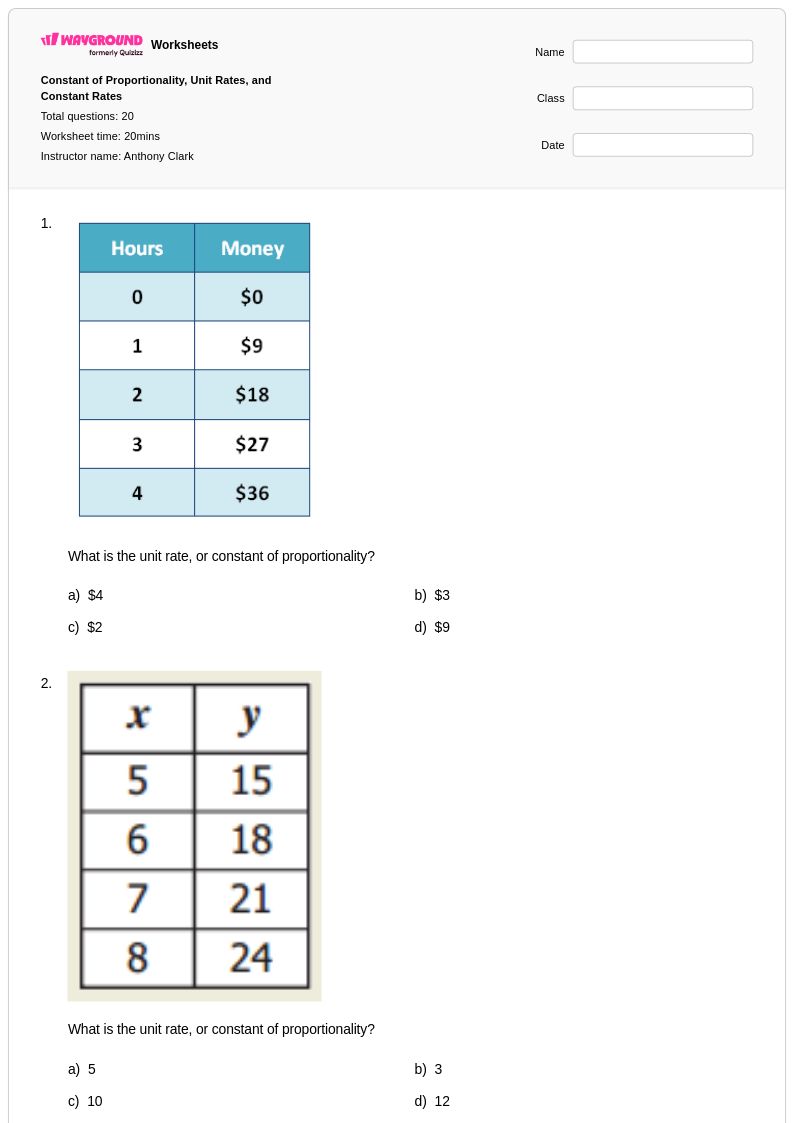
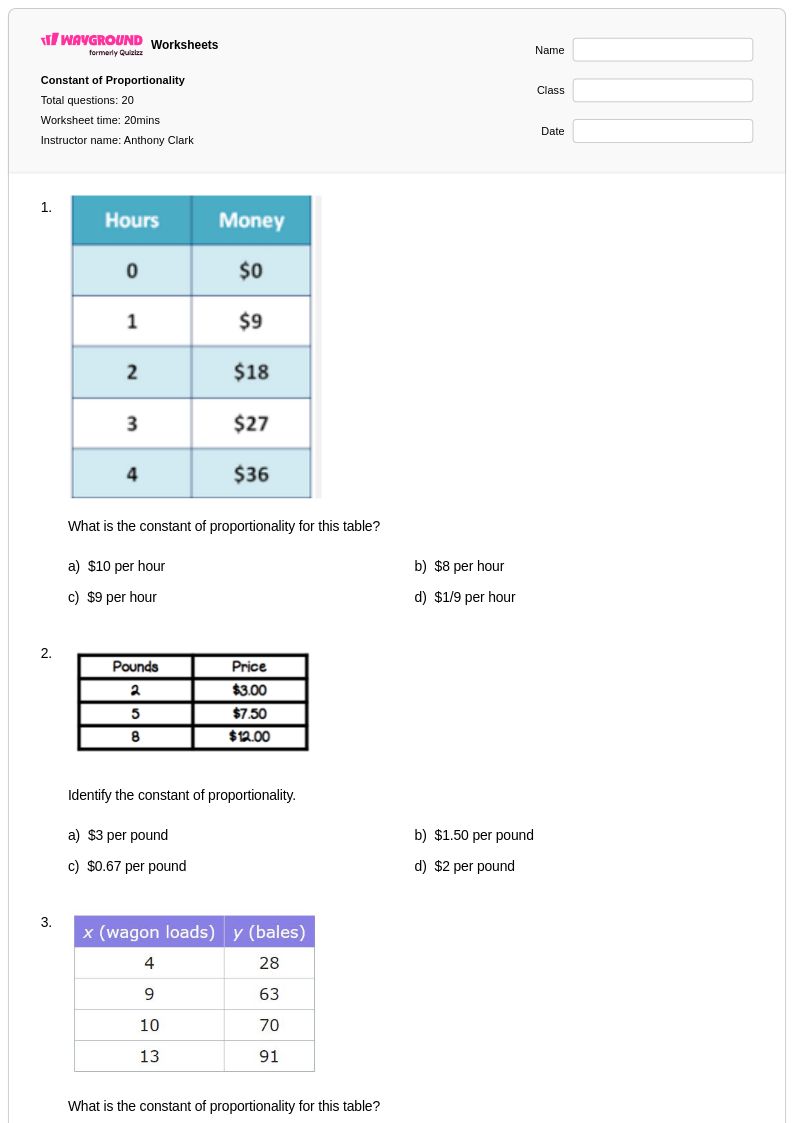
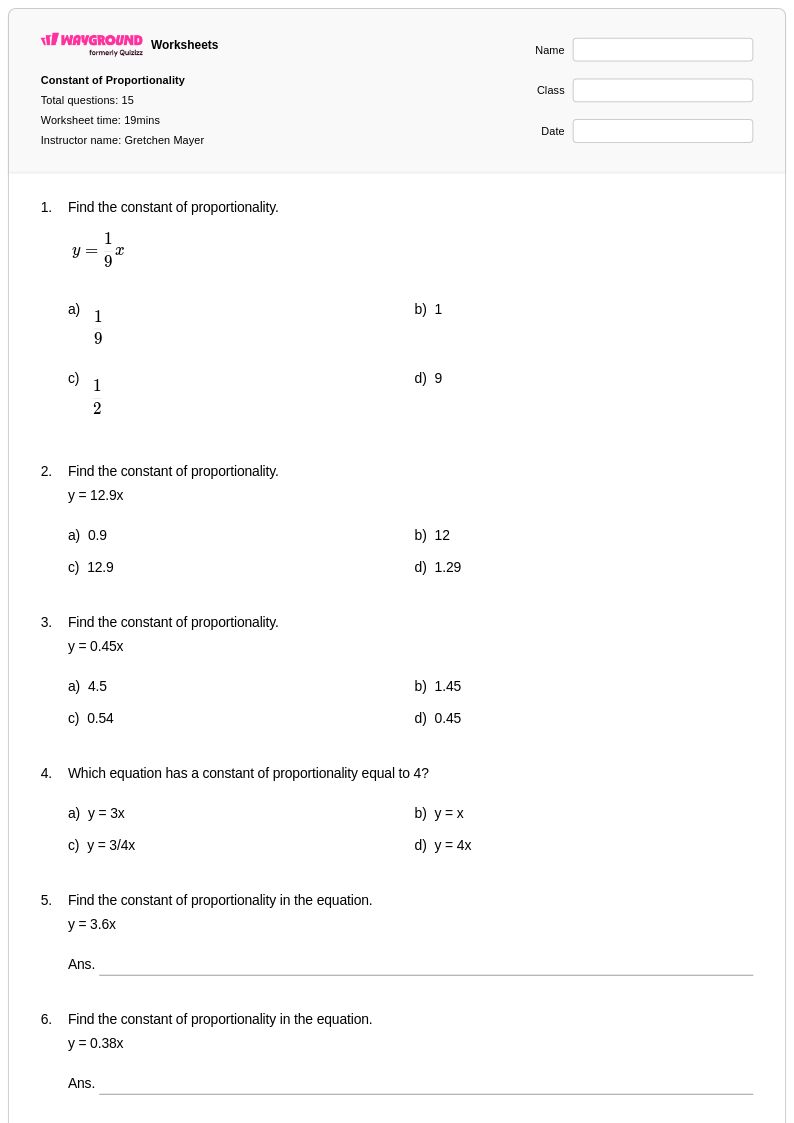
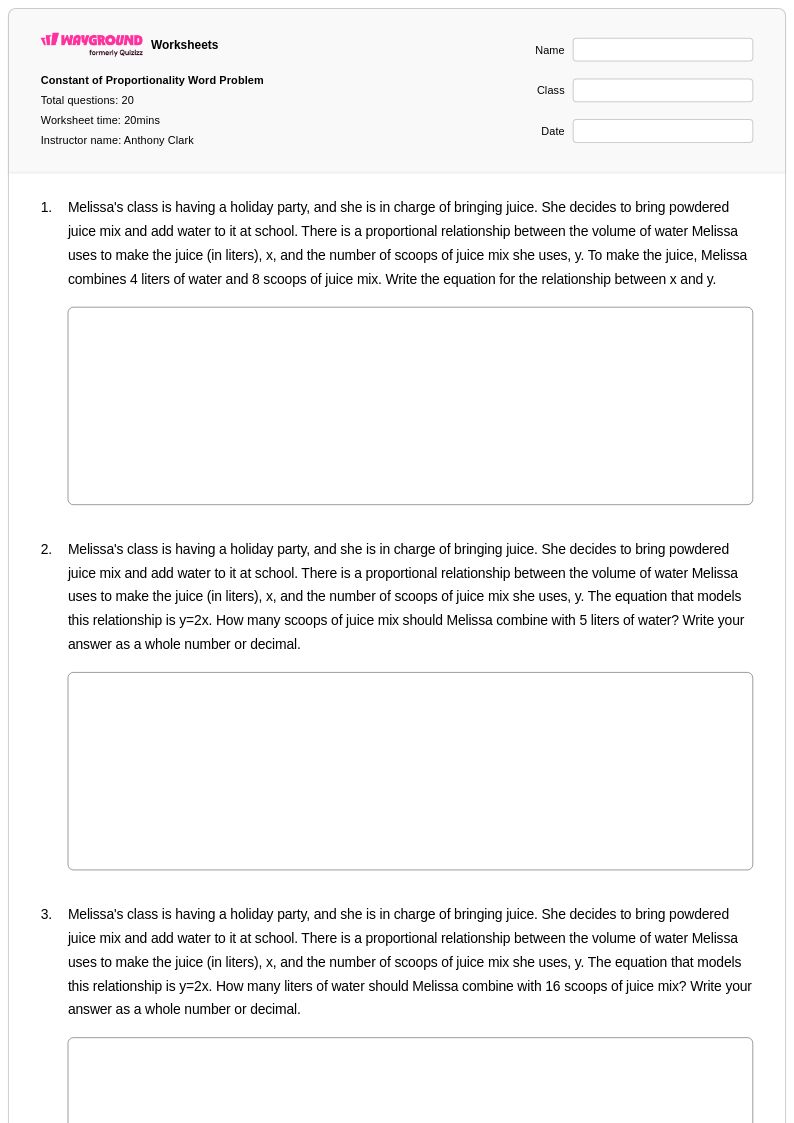
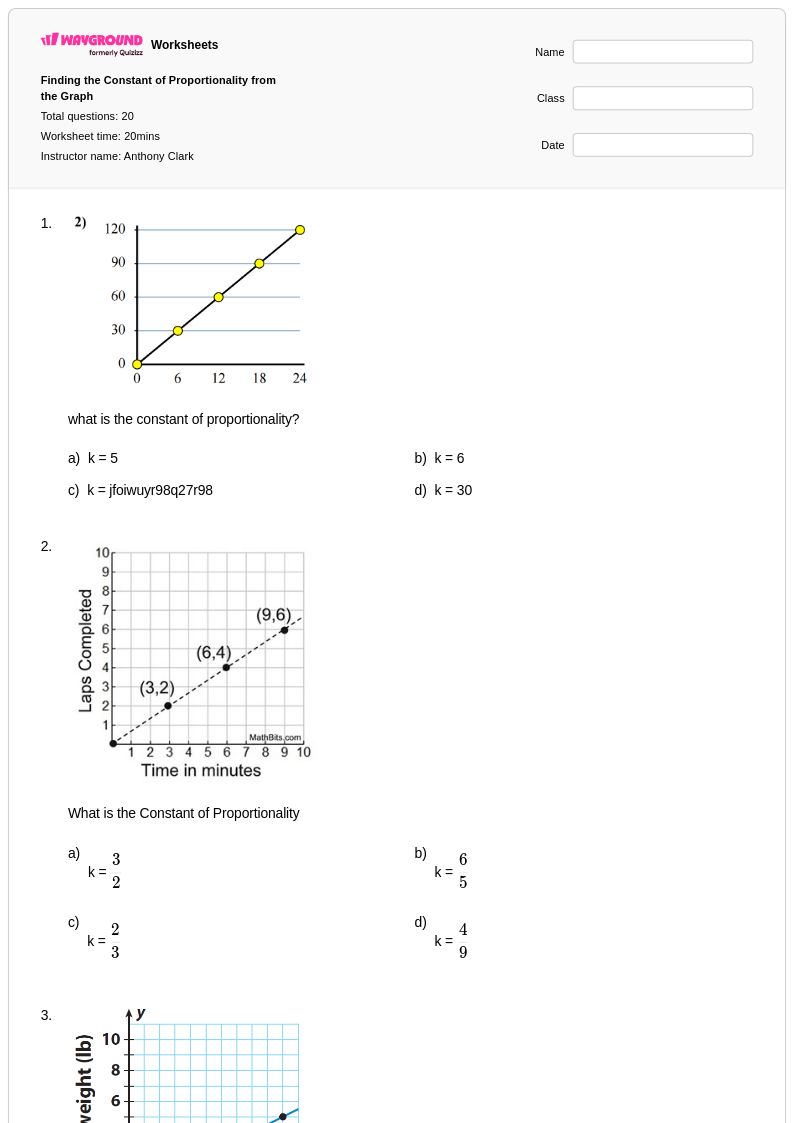
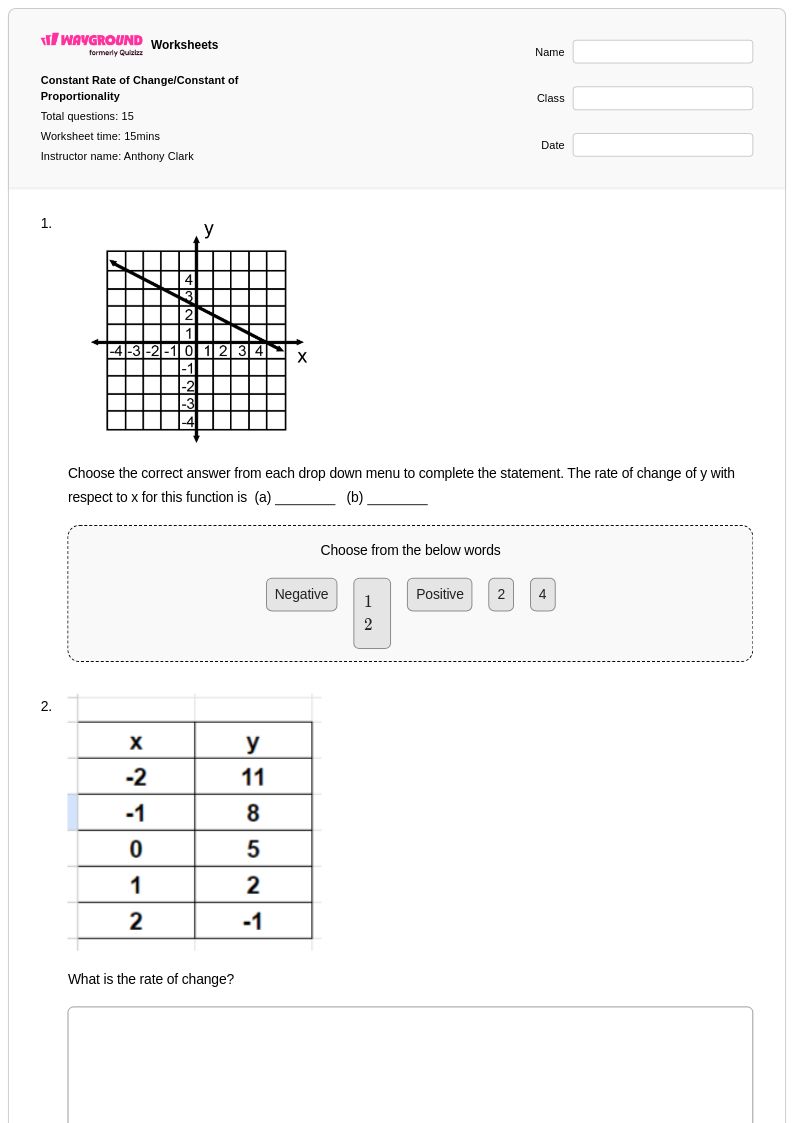
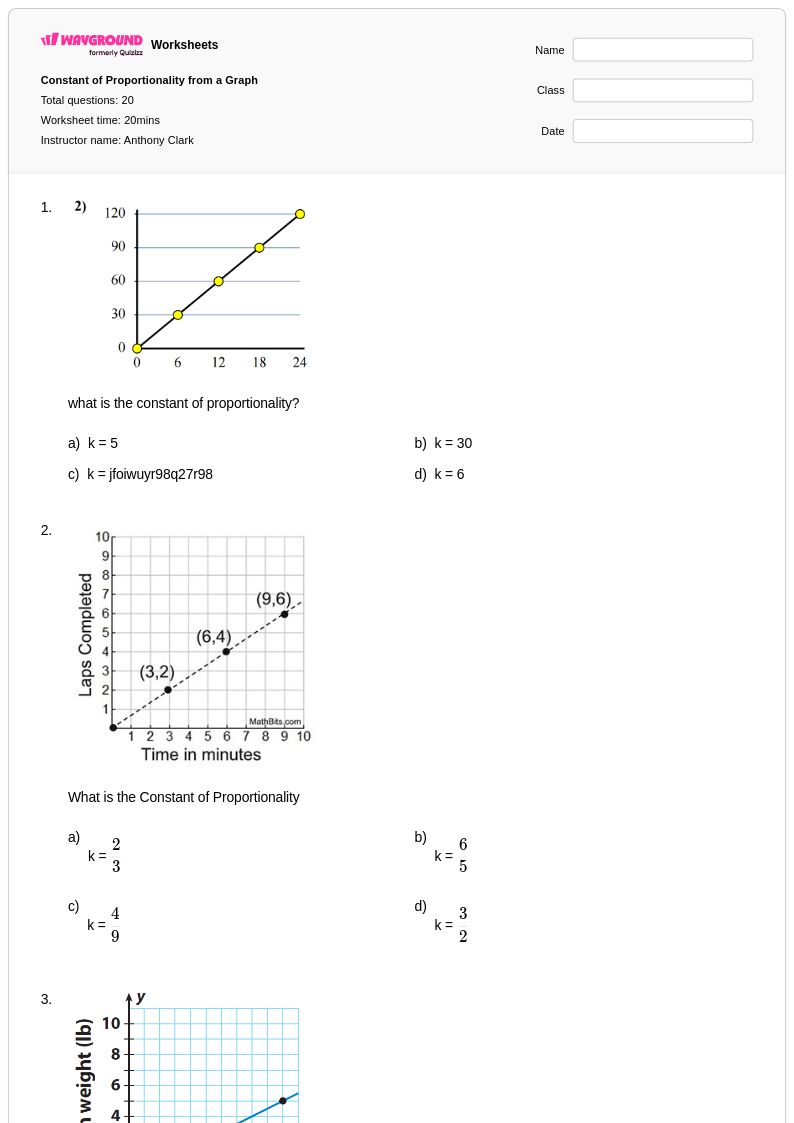
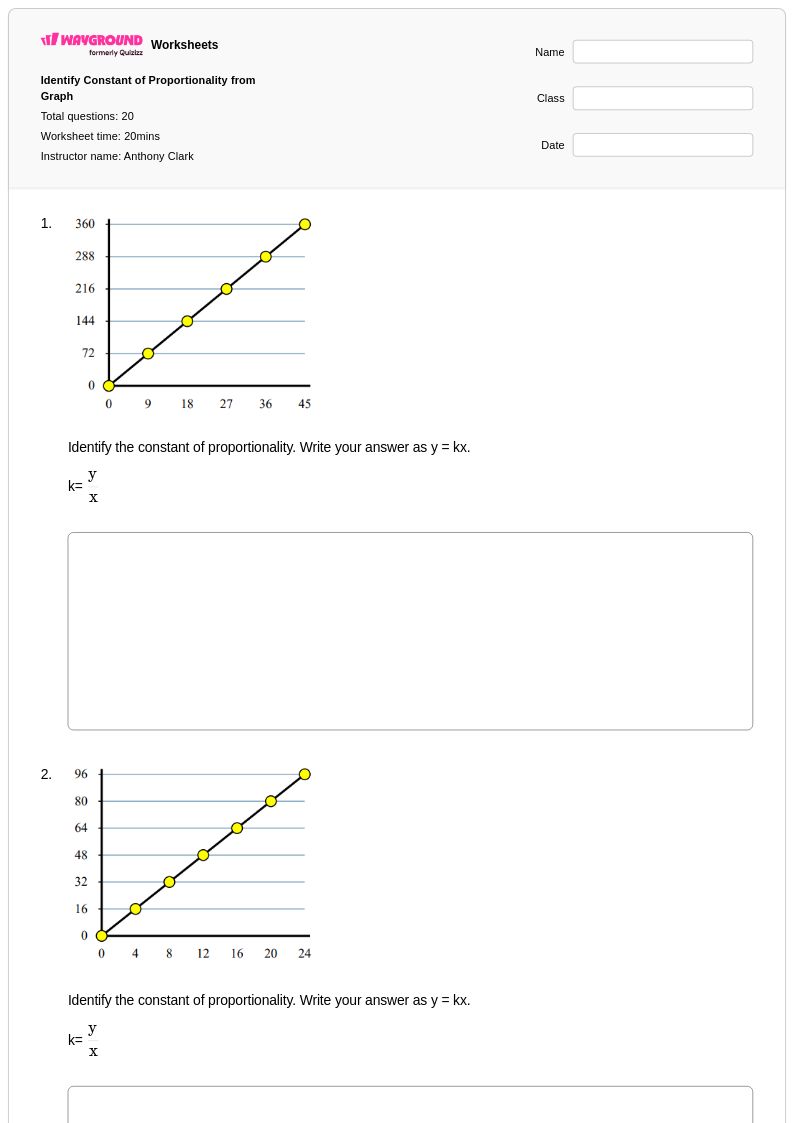
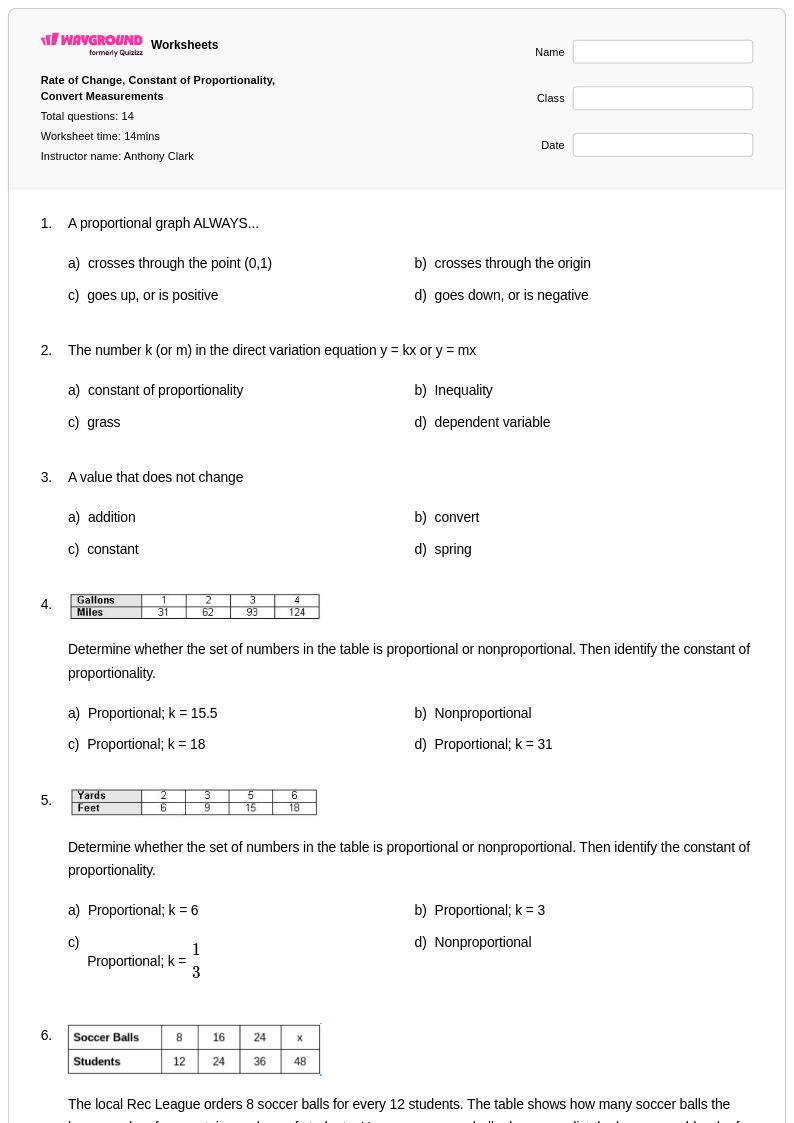
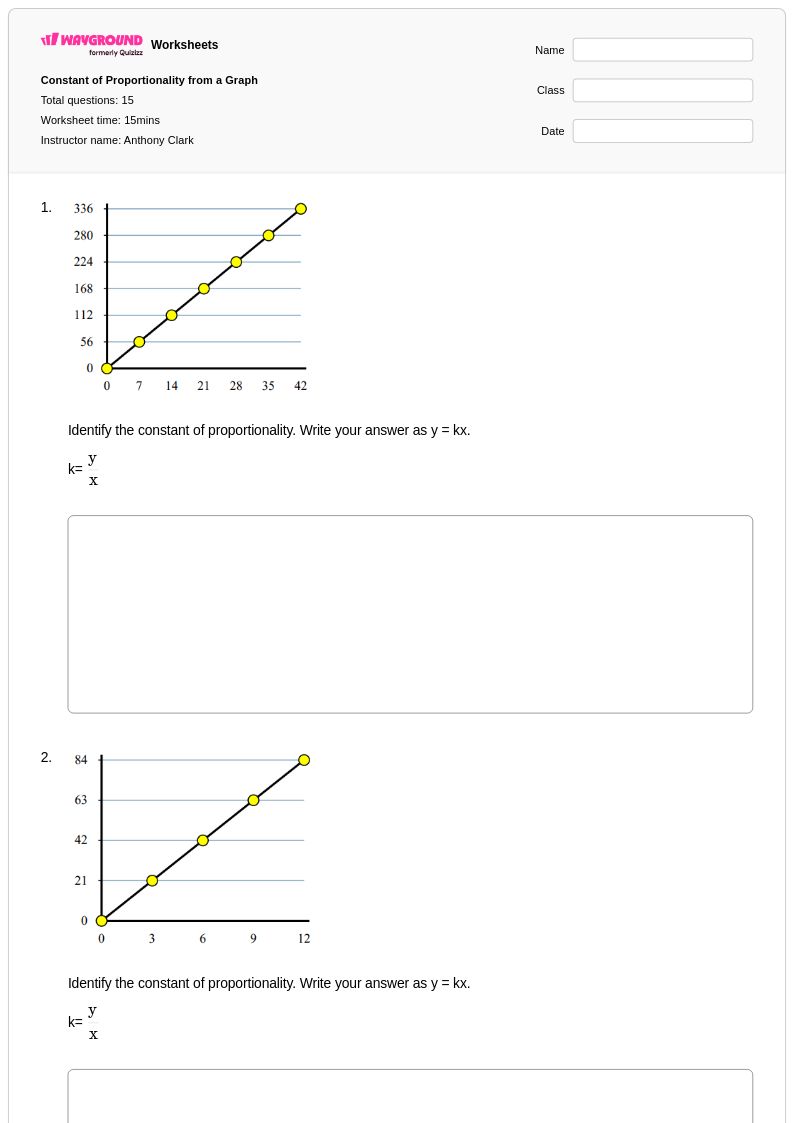
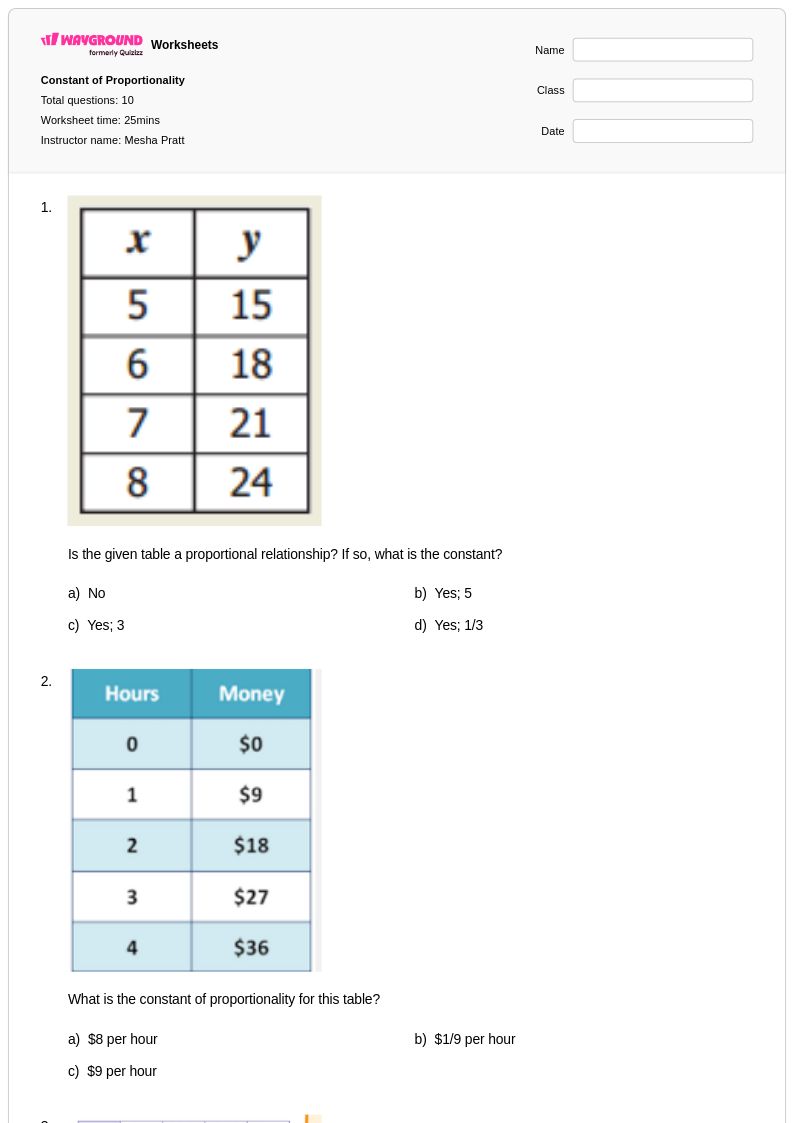
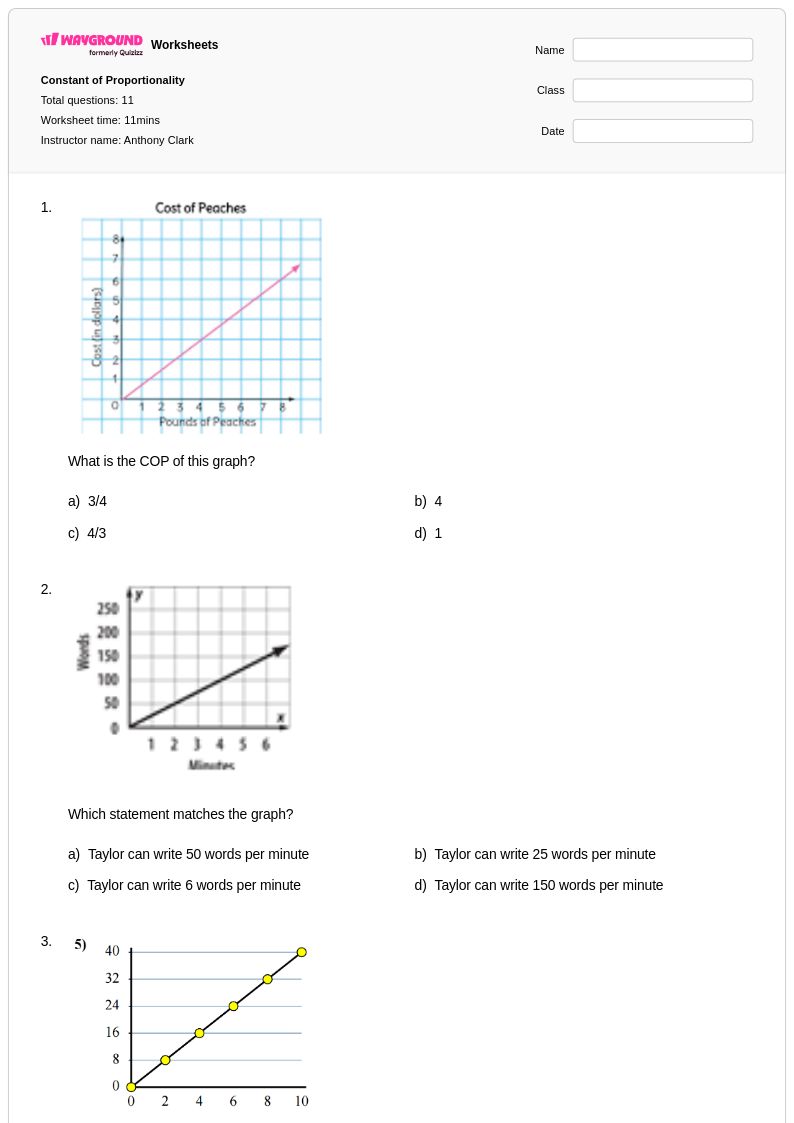
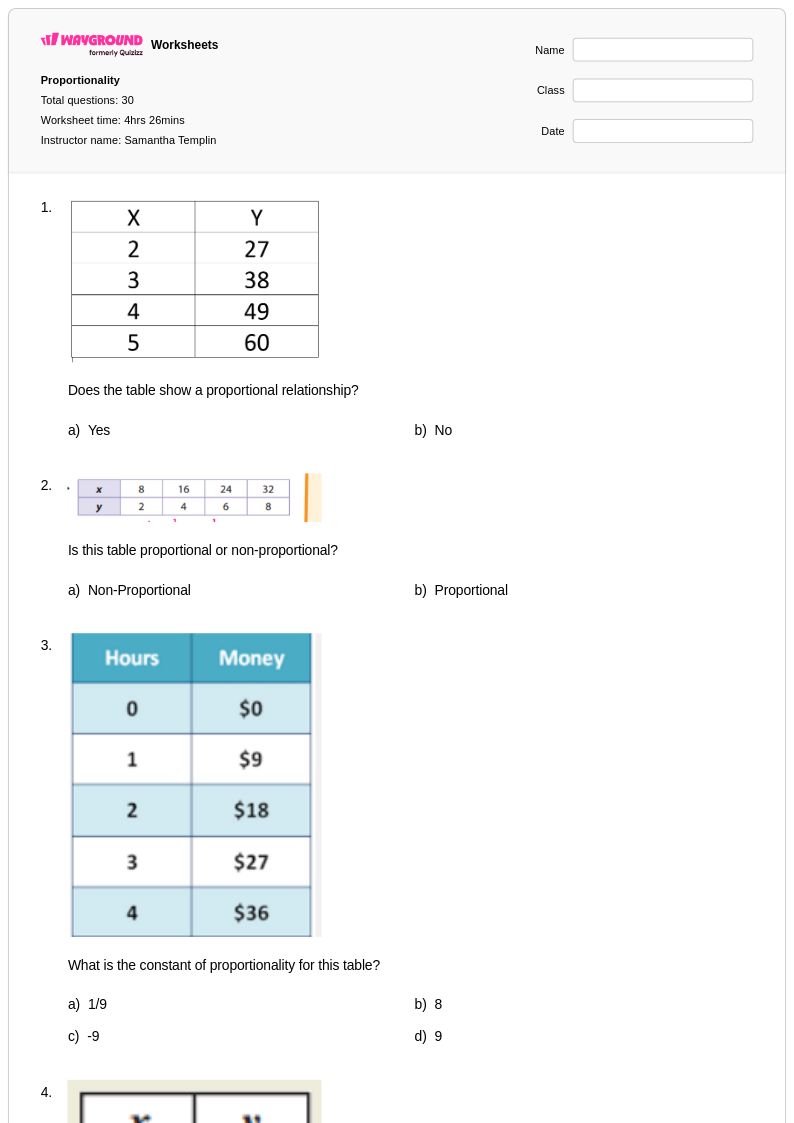
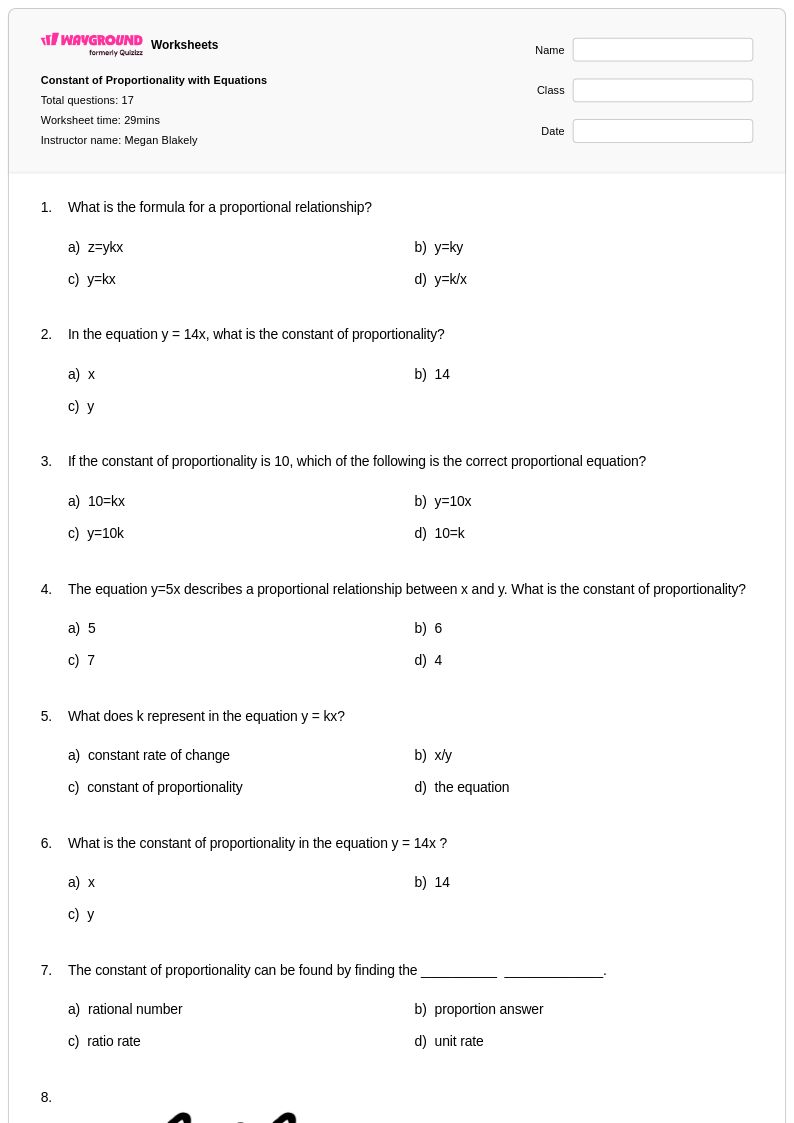
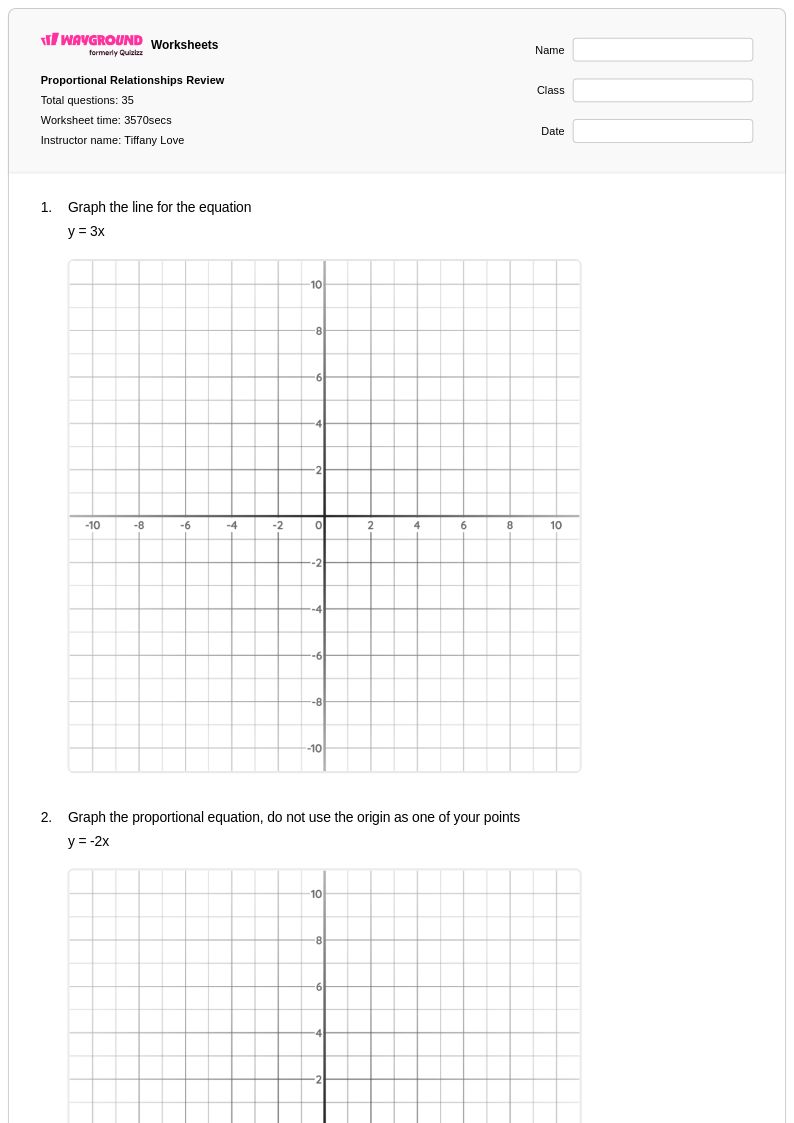
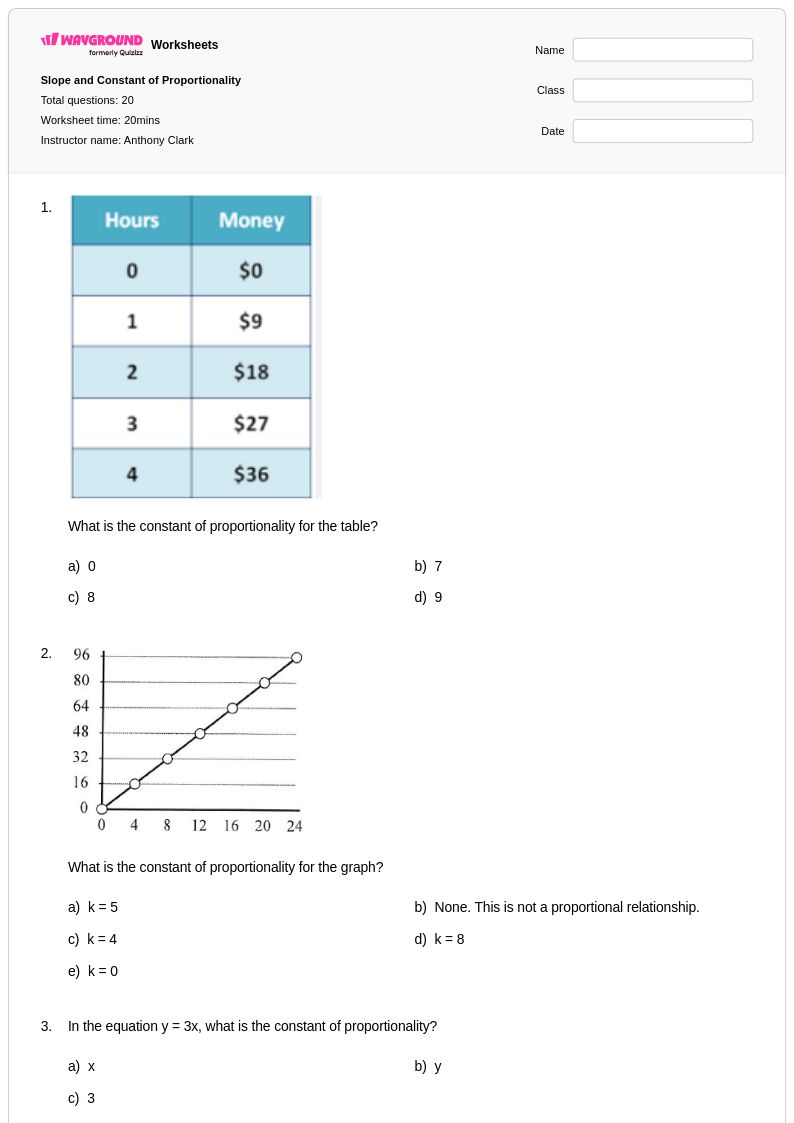
Constant of proportionality worksheets for Class 8 provide essential practice for students developing proficiency in identifying and working with proportional relationships. These comprehensive practice problems help students master the fundamental skill of finding the constant that relates two proportional quantities, whether presented in tables, graphs, or equations. The worksheets strengthen students' ability to calculate unit rates, interpret the meaning of the constant in real-world contexts, and distinguish between proportional and non-proportional relationships. Each printable resource includes detailed answer keys that support independent learning and enable teachers to quickly assess student understanding. These free materials offer systematic practice with various problem types, from basic identification exercises to complex application problems involving ratios and rates.
Wayground (formerly Quizizz) empowers educators with access to millions of teacher-created constant of proportionality resources that streamline lesson planning and differentiated instruction. The platform's robust search and filtering capabilities allow teachers to locate worksheets aligned with specific standards and tailored to diverse learning needs within Class 8 mathematics curricula. These digital and printable materials, available in convenient pdf format, support flexible implementation for both classroom instruction and remote learning environments. Teachers can customize existing worksheets or create new assessments to target specific skill gaps, making remediation and enrichment more effective. The extensive collection enables educators to provide varied practice opportunities that build conceptual understanding while preparing students for more advanced work with linear relationships and algebraic thinking.
FAQs
How do I teach the constant of proportionality in Grade 8?
Review proportional relationships through tables, graphs, and equations, then connect the constant k in y = kx to the slope of a line through the origin. Contrast these examples with non-proportional linear relationships of the form y = mx + b so students can explain how a nonzero initial value changes the model.
What exercises help Grade 8 students practice the constant of proportionality?
Use problems that require students to find the constant from multiple representations, calculate unit rates, distinguish proportional from non-proportional relationships, and interpret the constant in context. Grade 8 practice should also connect k to slope and ask students to compare rates of change across graphs, tables, and equations.
What mistakes do Grade 8 students make with the constant of proportionality?
Students may treat every linear relationship as proportional, ignore a nonzero y-intercept, or confuse the constant of proportionality with the initial value. They also commonly reverse the change in y and change in x when connecting the constant to slope or report a numerical answer without its contextual units.
How can I use a Grade 8 constant of proportionality worksheet on Wayground?
Wayground worksheets are offered as printable PDFs and digital formats, so teachers can host a digital quiz or print and assign the worksheet for independent practice, assessment, remediation, or enrichment. Every worksheet includes a complete answer key, and teachers can grade paper submissions by scanning or capturing student work with the Wayground for Teachers app. Printable copies also provide an effective offline option for reducing screen time.
How does constant of proportionality practice fit the Grade 8 Common Core progression?
Common Core mathematics builds from proportional reasoning into the study of linear equations and slope in Grade 8. Students connect the constant in y = kx to a line's rate of change, compare proportional and non-proportional linear models, and use these ideas to interpret relationships across tables, graphs, equations, and contexts.
How can I differentiate Grade 8 constant of proportionality practice?
Support developing learners with side-by-side representations, highlighted origins, and structured prompts for calculating y divided by x; challenge advanced students to compare proportional models with linear equations containing nonzero intercepts. Wayground also offers extended time, Read Aloud, reduced answer choices, and reading mode, plus worksheet-level options for font spacing, text size, dyslexia-friendly type, and translation.
What grade do students learn the constant of proportionality?
Students usually study the constant of proportionality explicitly in Grade 7 and extend that understanding in Grade 8 by connecting it to slope and linear equations. Grade 8 worksheets are therefore useful for reviewing proportional reasoning while preparing students to distinguish y = kx from broader linear models.