Free Printable Coriolis Effect Worksheets for Class 9
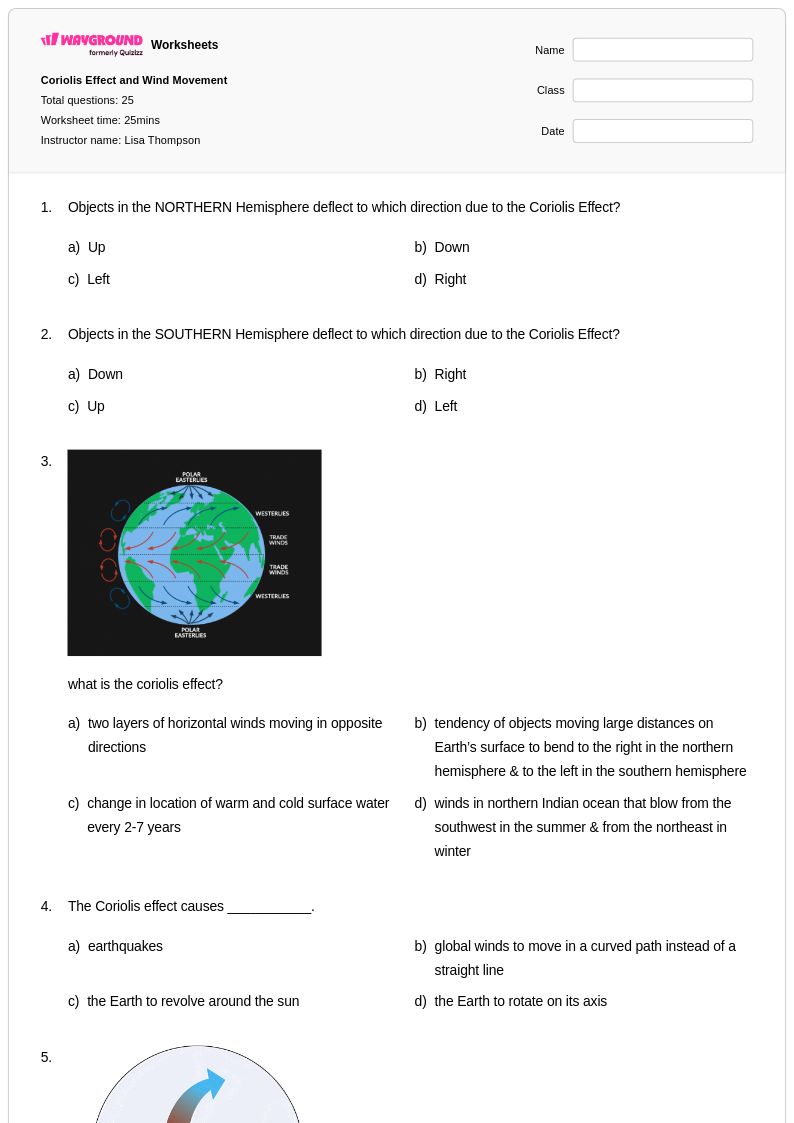
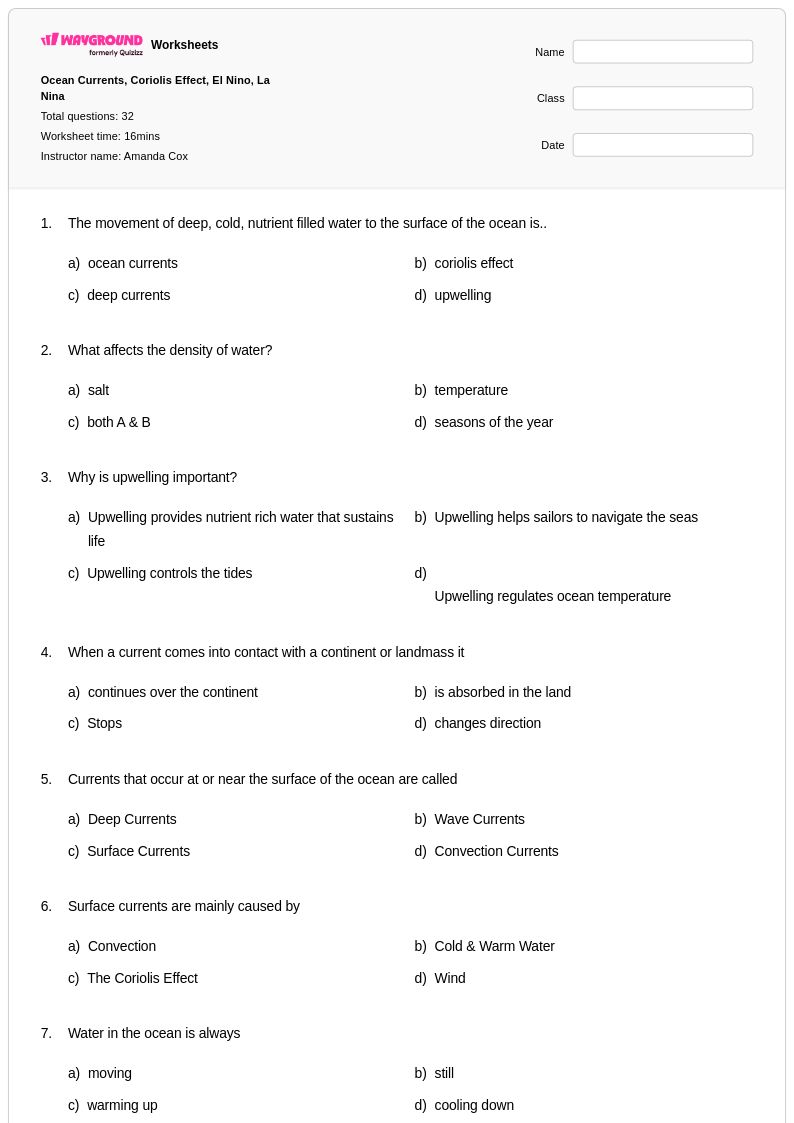
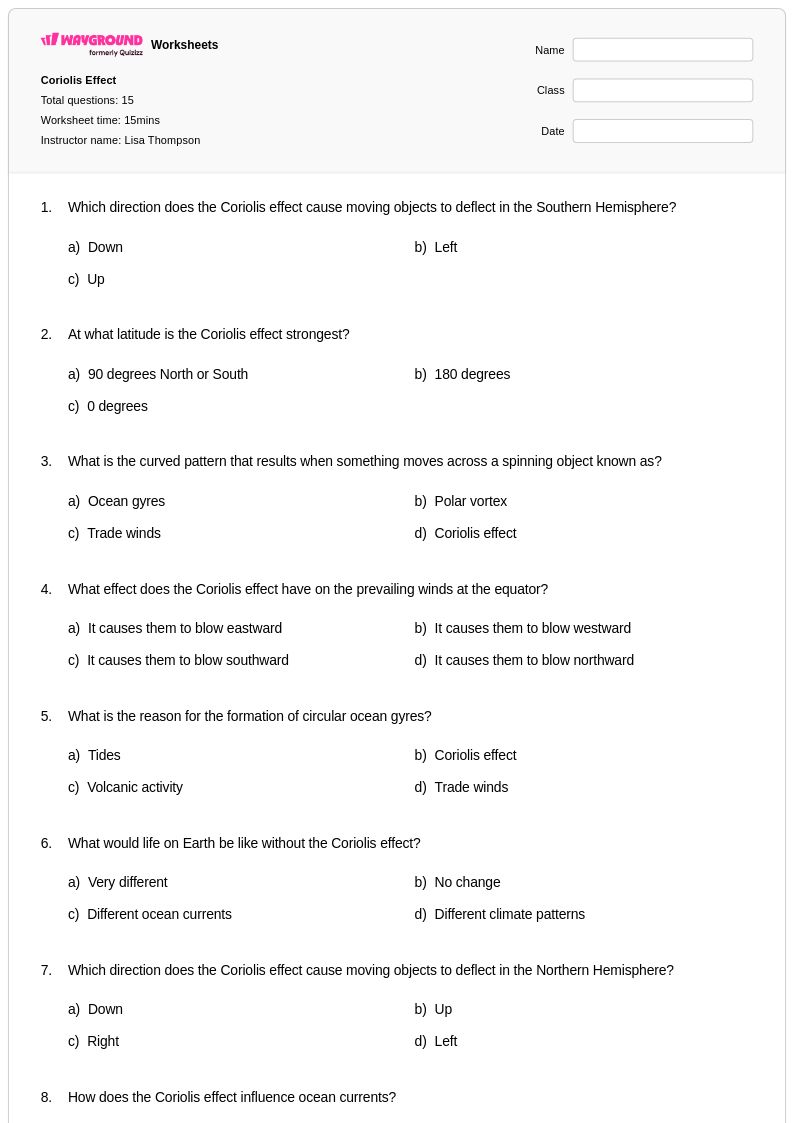
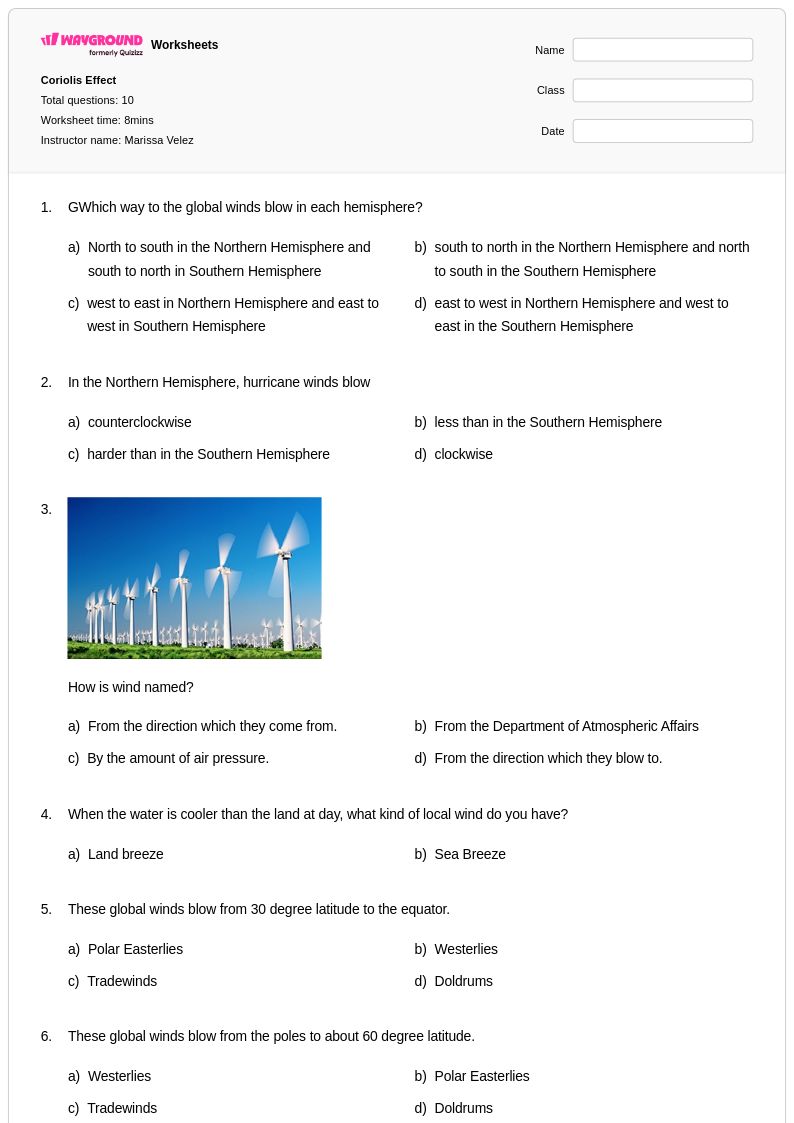
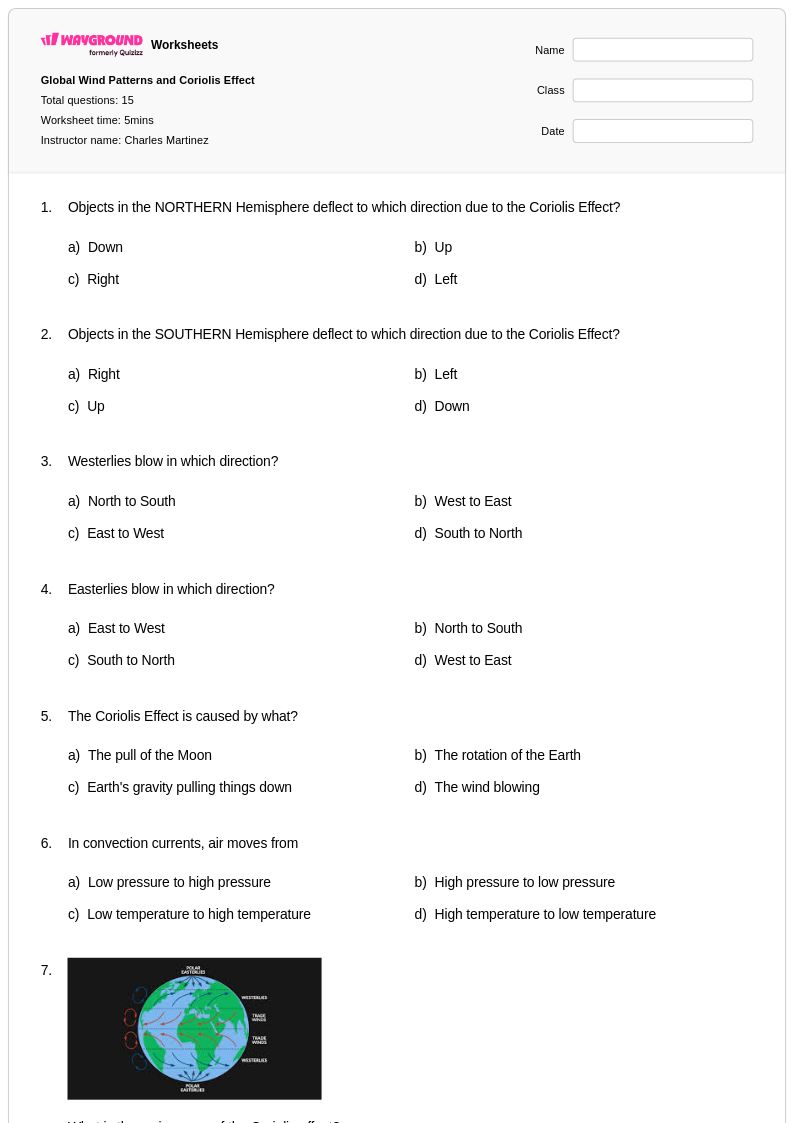
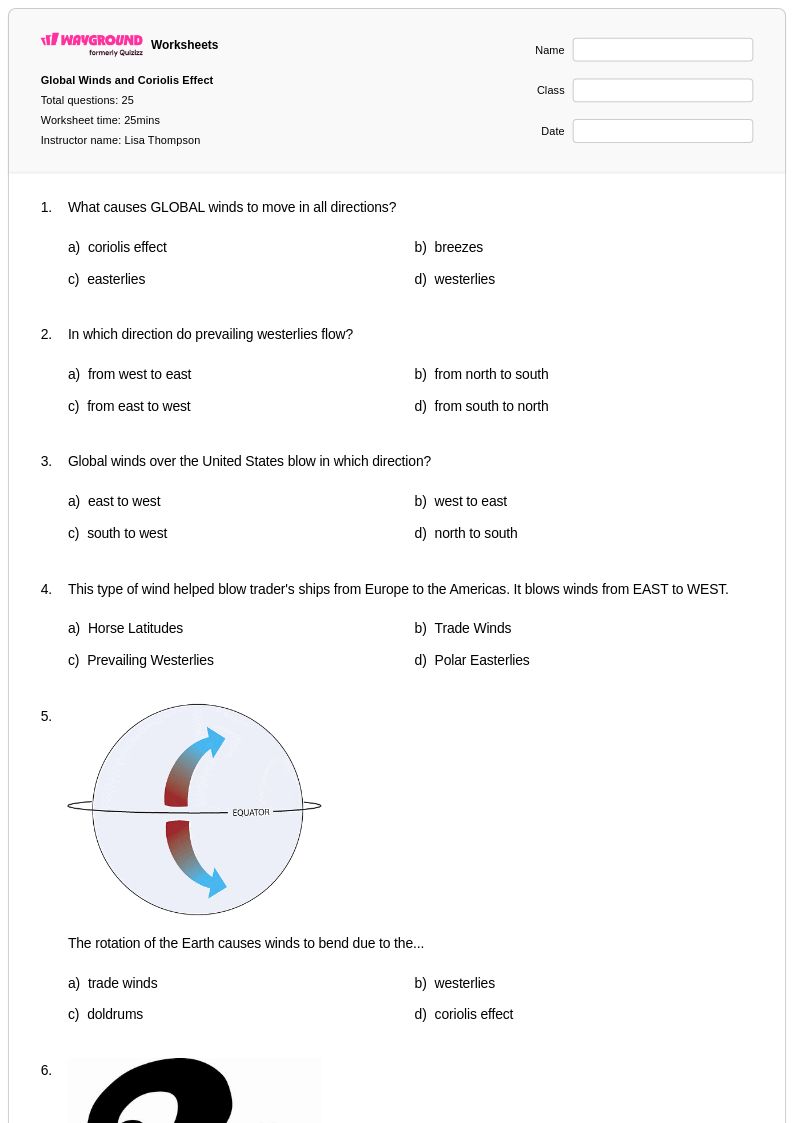
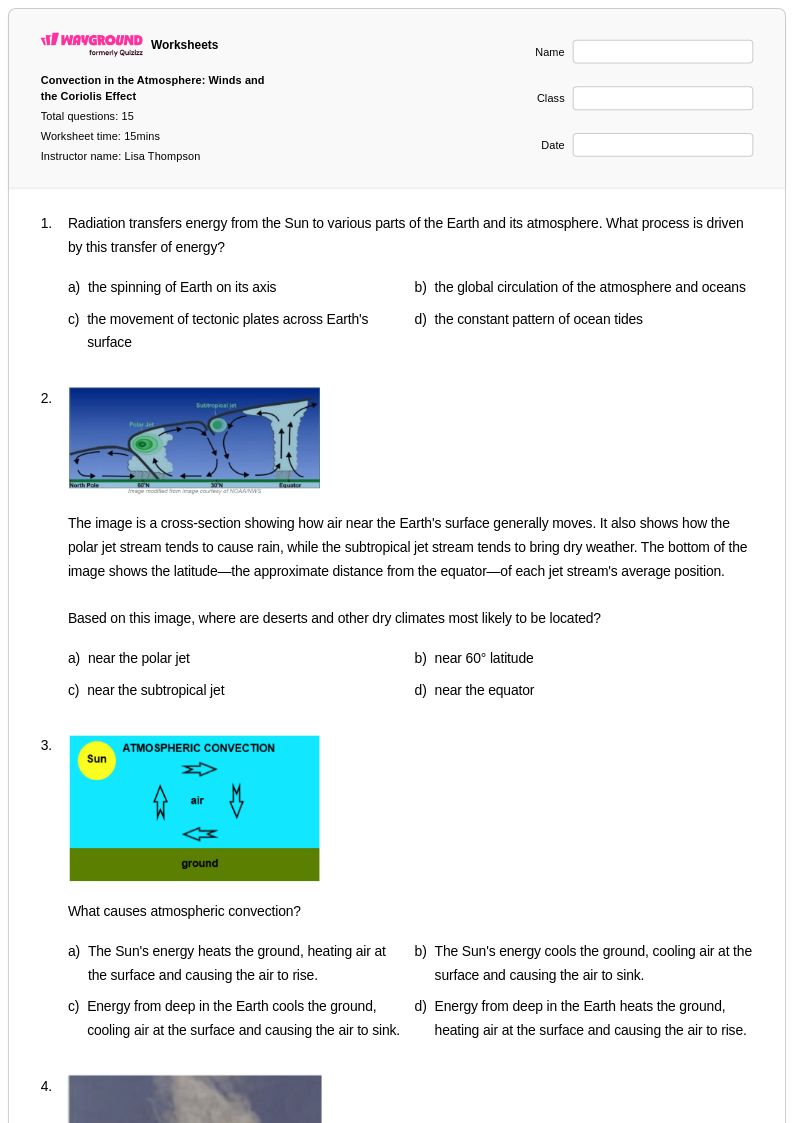
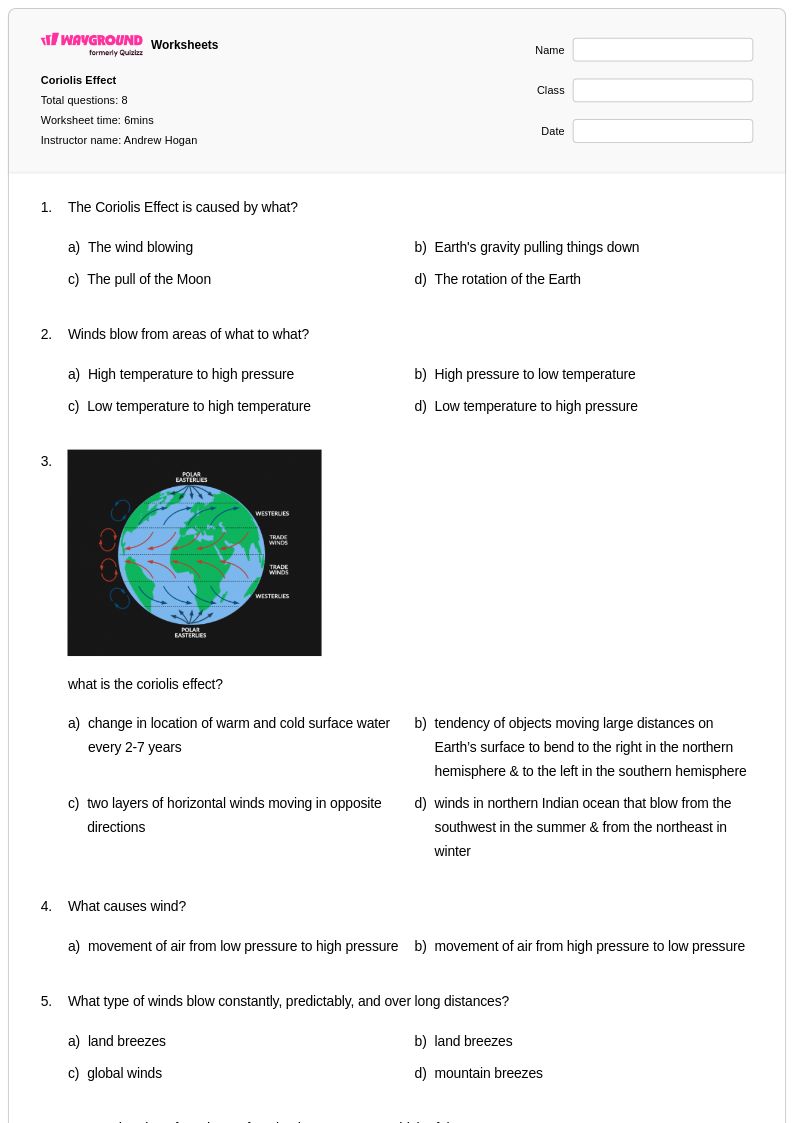
Class 9 Coriolis Effect worksheets from Wayground offer free printables and practice problems with answer keys to help students understand how Earth's rotation influences wind patterns and ocean currents in our atmosphere.
Explore printable Coriolis Effect worksheets for Class 9
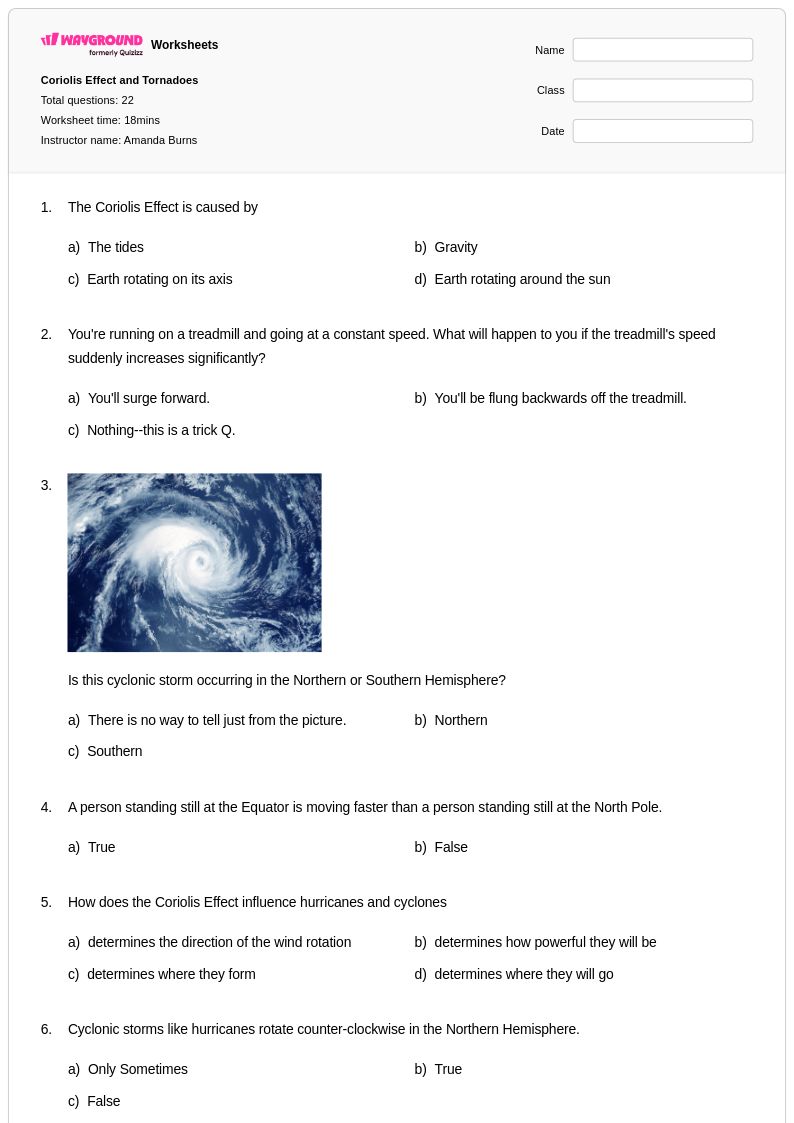
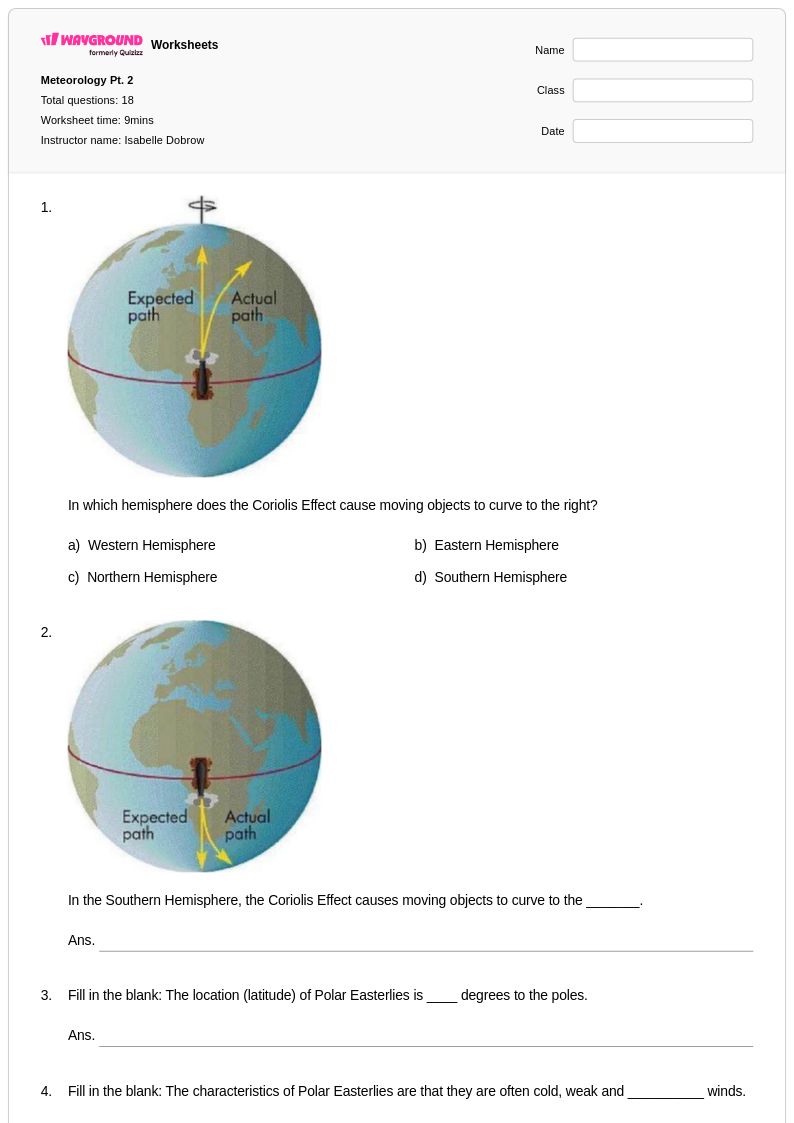
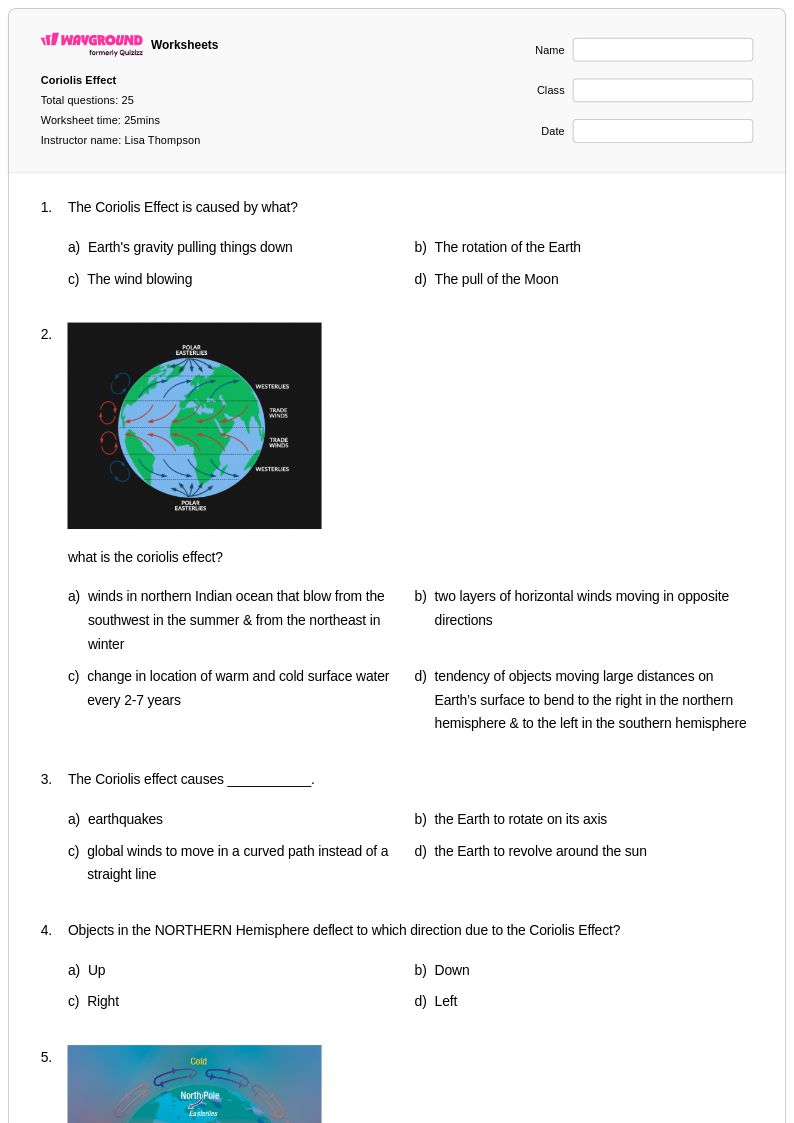
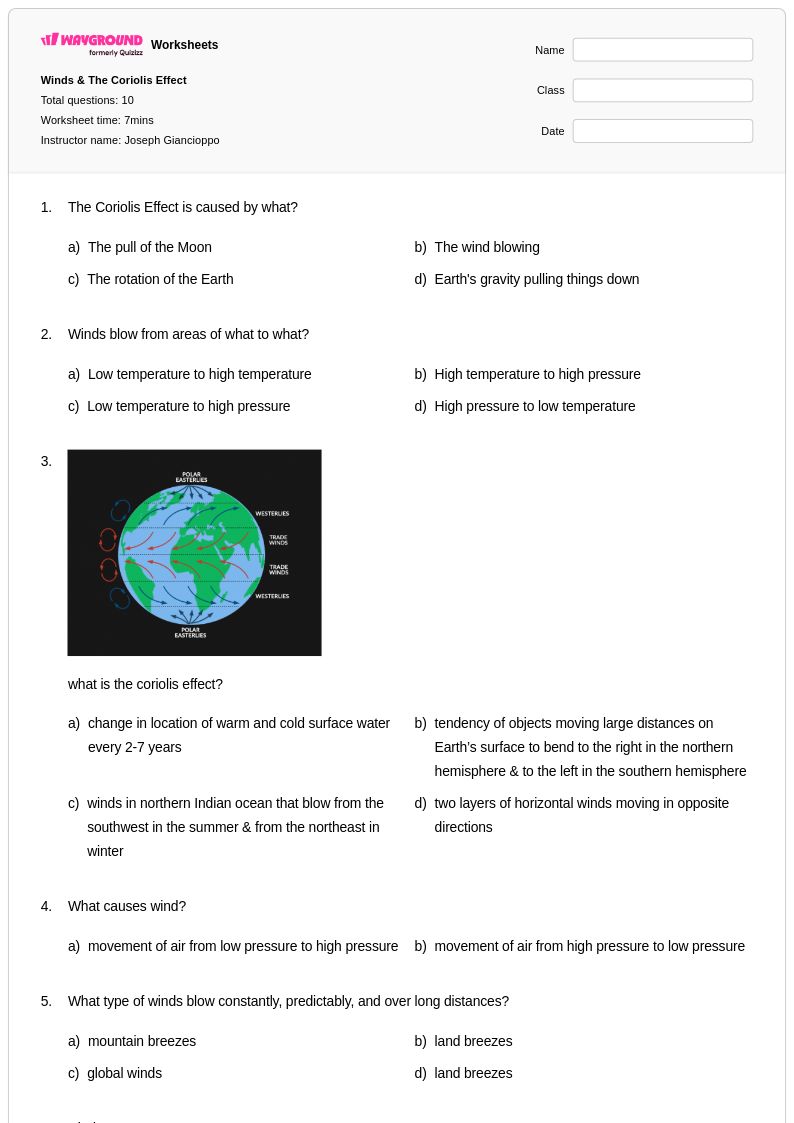
Coriolis Effect worksheets for Class 9 students available through Wayground provide comprehensive exploration of this fundamental Earth and Space Science concept that explains how Earth's rotation influences moving objects and weather patterns. These educational resources strengthen students' understanding of rotational physics, atmospheric dynamics, and global circulation patterns through carefully designed practice problems that demonstrate how the Coriolis Effect impacts everything from ocean currents to hurricane formation. The worksheet collection includes detailed answer keys and free printables that guide students through complex scenarios involving deflection patterns in both hemispheres, helping them visualize how rotating reference frames affect the apparent motion of air masses, projectiles, and water systems across different latitudes.
Wayground supports educators with millions of teacher-created Coriolis Effect resources that can be easily located through robust search and filtering capabilities, ensuring alignment with Earth and Space Science standards for Class 9 instruction. The platform's differentiation tools allow teachers to customize worksheets for varied learning needs, while flexible formatting options provide both printable pdf versions for traditional classroom use and digital formats for interactive learning environments. These comprehensive features streamline lesson planning by offering ready-to-use materials for initial concept introduction, targeted skill practice, and remediation support, while also providing enrichment opportunities for advanced students ready to explore complex applications of rotational dynamics in meteorology and oceanography.
FAQs
How do I teach the Coriolis Effect to students?
Start by grounding students in Earth's rotation before introducing deflection. Use concrete analogies — such as rolling a ball across a spinning merry-go-round — to illustrate why moving objects appear to curve relative to a rotating surface. From there, connect the concept to real-world phenomena like hurricane rotation direction in each hemisphere and the path of trade winds. Building from mechanics to application helps students develop a durable conceptual understanding rather than memorizing a definition.
What practice exercises help students understand the Coriolis Effect?
Effective practice exercises ask students to predict the direction of deflection for moving air masses or ocean currents in both the Northern and Southern Hemispheres, then explain the reasoning. Problems that trace wind patterns in global circulation systems — such as the Hadley, Ferrel, and Polar cells — reinforce how the Coriolis Effect scales from individual storms to planetary circulation. Coriolis Effect worksheets that include labeled diagrams alongside written response questions help students connect visual and analytical reasoning.
What misconceptions do students commonly have about the Coriolis Effect?
The most persistent misconception is that the Coriolis Effect directly causes water to drain clockwise or counterclockwise in sinks and toilets — it does not, because the effect is far too weak at that scale. Students also frequently confuse the Coriolis Effect with centrifugal force, or believe the deflection is caused by wind itself rather than Earth's rotation beneath the moving object. Addressing these errors explicitly, with scale comparisons between a sink and a hurricane, helps correct the underlying conceptual confusion.
How does the Coriolis Effect influence hurricane formation and wind patterns?
The Coriolis Effect causes air flowing into low-pressure systems to deflect to the right in the Northern Hemisphere and to the left in the Southern Hemisphere, producing the counterclockwise spin of Northern Hemisphere hurricanes and the clockwise spin of Southern Hemisphere cyclones. This same deflection shapes the direction of the trade winds, westerlies, and polar easterlies in each hemisphere. Without the Coriolis Effect, air would flow directly toward low-pressure centers rather than spiraling, fundamentally changing global weather patterns.
How can I use Coriolis Effect worksheets in my classroom?
Coriolis Effect worksheets on Wayground are available as printable PDFs and in digital formats, making them suitable for traditional classroom instruction, homework assignments, and technology-integrated learning environments. Teachers can also host worksheets as a quiz directly on Wayground, giving students an interactive experience while automatically capturing results. The included answer keys allow students to self-check their work during independent practice or can be used by teachers for efficient formative assessment.
How do I differentiate Coriolis Effect instruction for students at different skill levels?
For students who need additional support, reduce the complexity of problems to focus on one hemisphere at a time and pair each question with a labeled diagram before asking for written explanation. For advanced learners, introduce quantitative elements such as how the Coriolis parameter varies with latitude, or ask students to analyze real hurricane tracks to identify deflection patterns. On Wayground, teachers can apply accommodations such as read aloud, extended time, and reduced answer choices to individual students, allowing the same worksheet to serve a full range of learners without requiring separate materials.