Free Printable Counting Atoms in Compounds Worksheets for Class 8
Class 8 counting atoms in compounds free worksheets and printables help students master chemical formula analysis through practice problems with complete answer keys in convenient PDF format.
Explore printable Counting Atoms in Compounds worksheets for Class 8
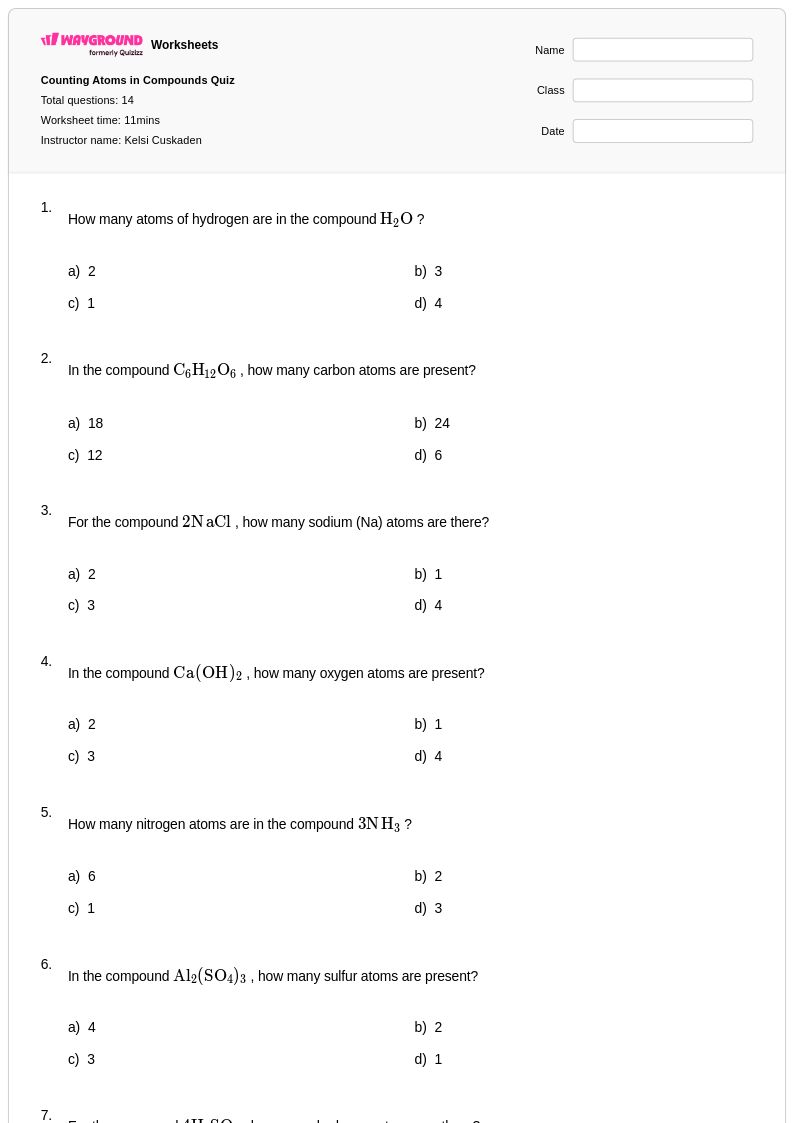
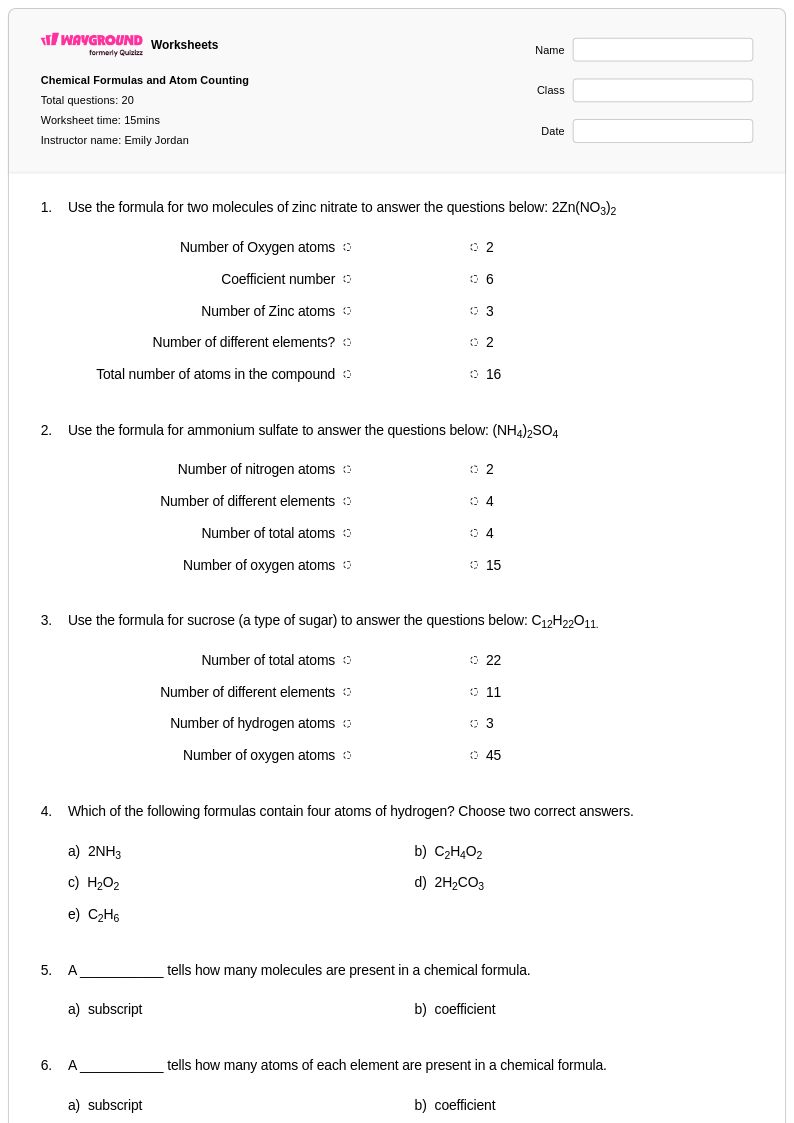
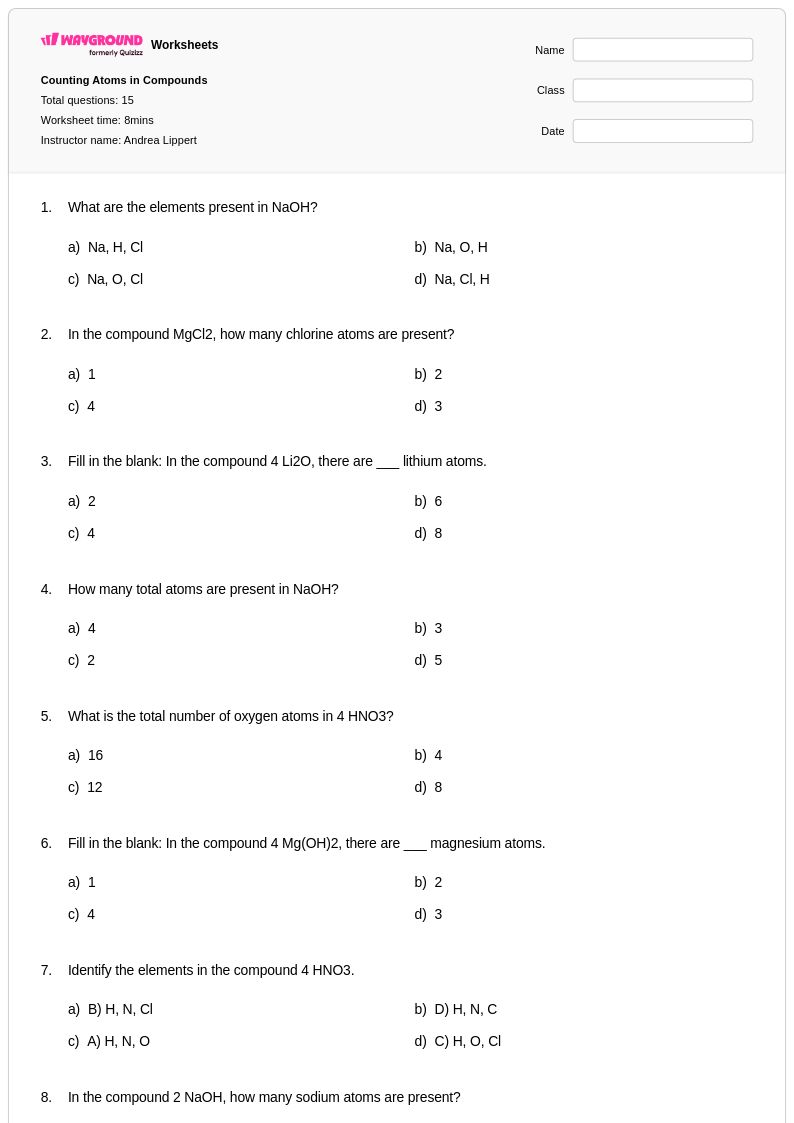
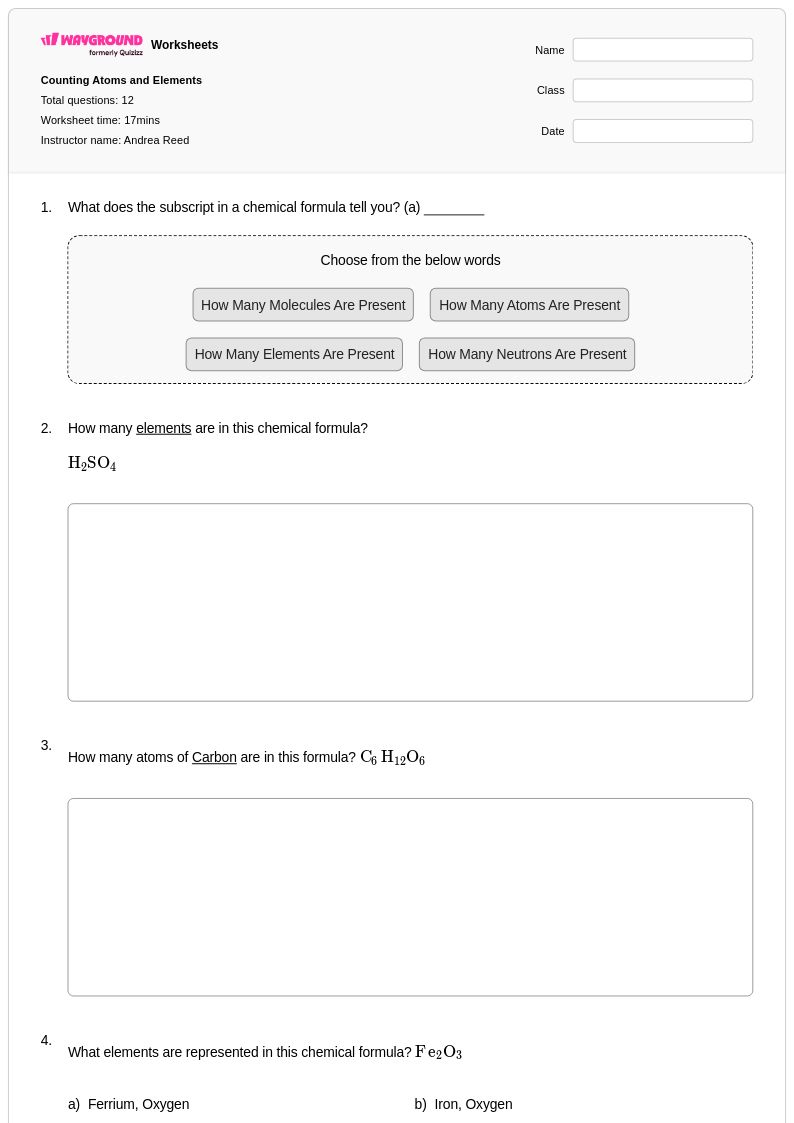
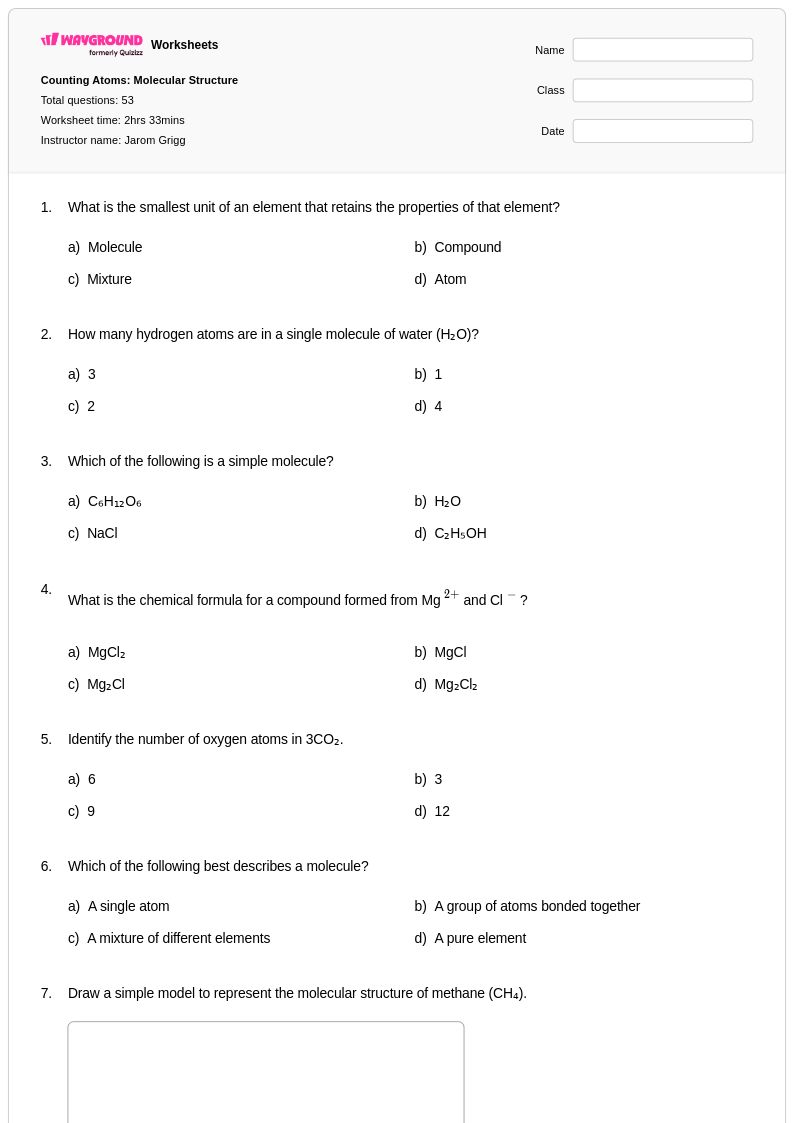
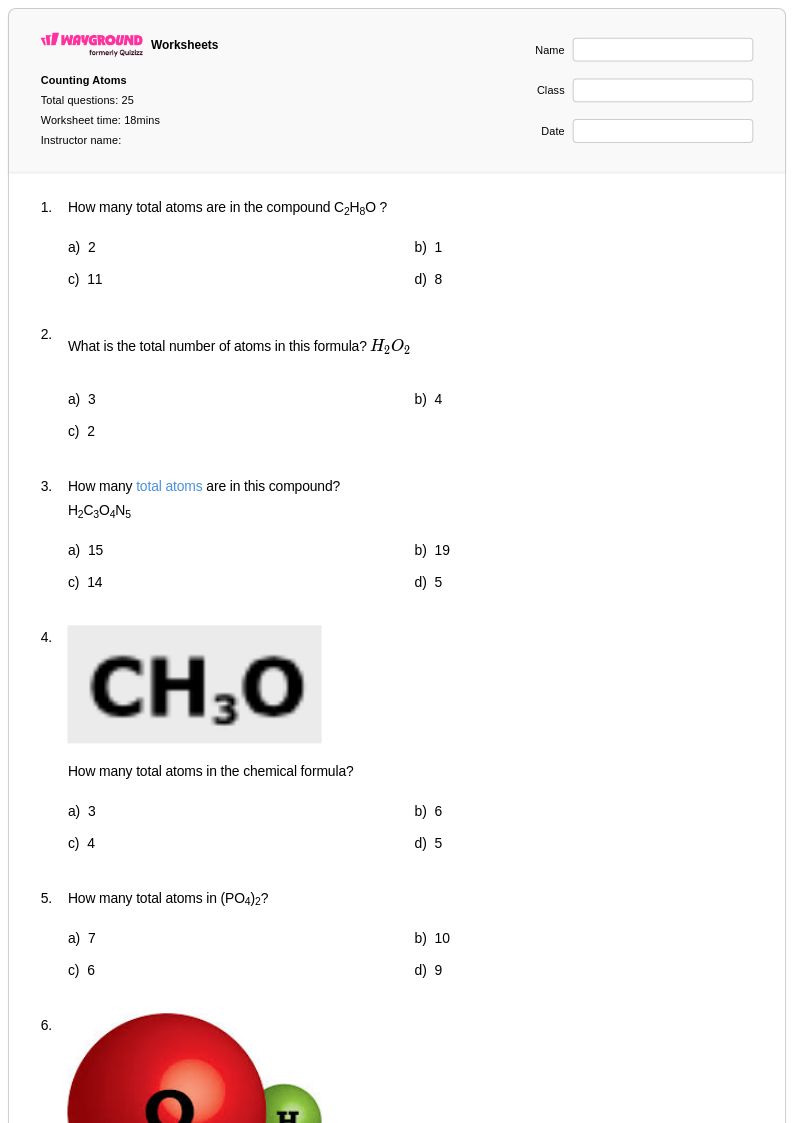
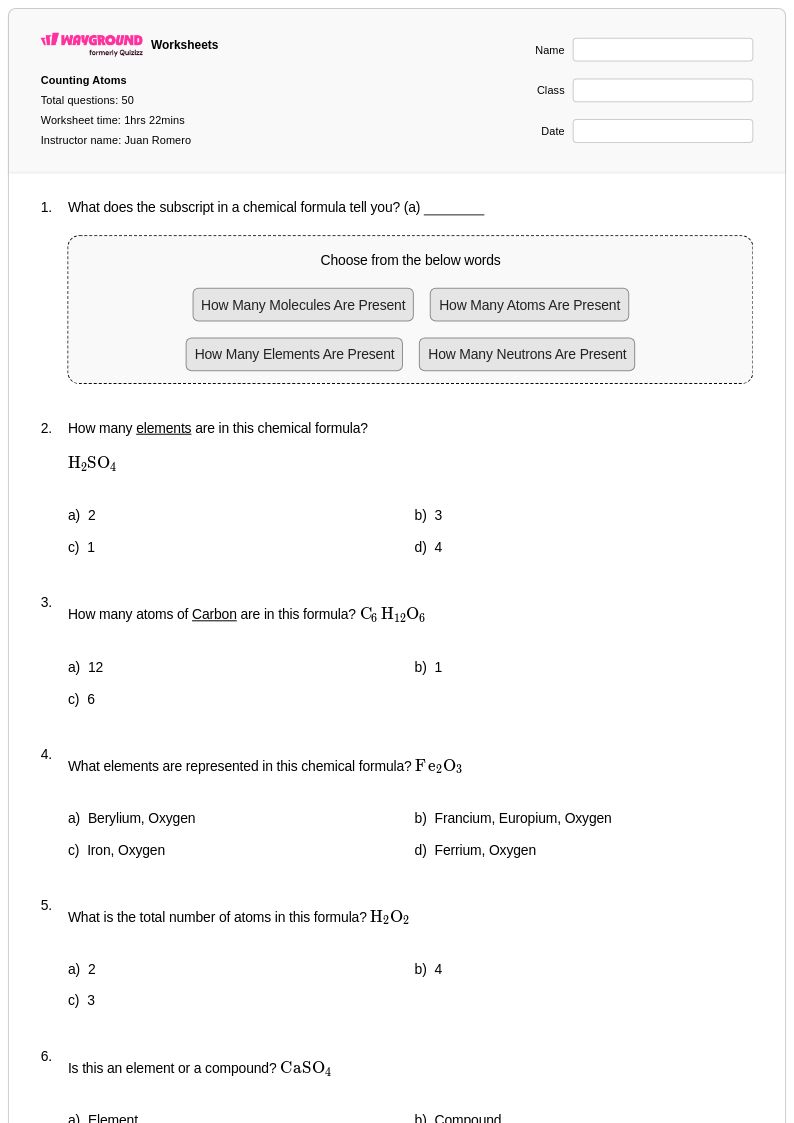
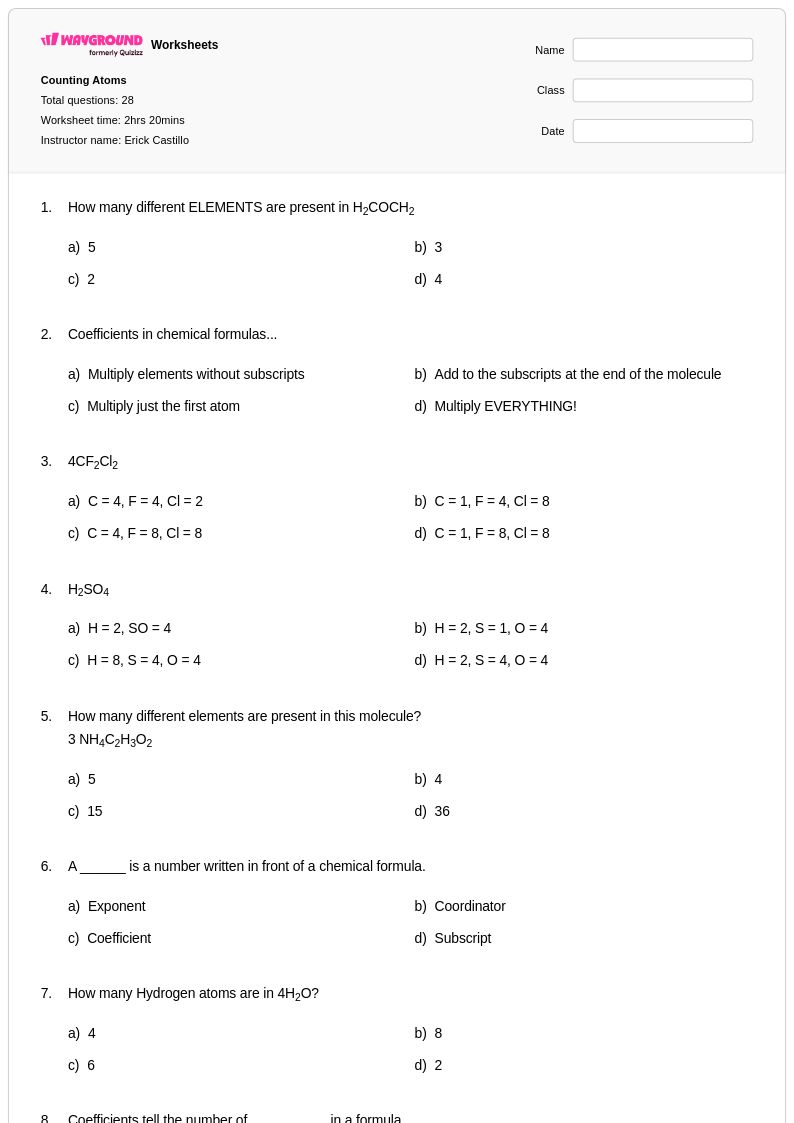
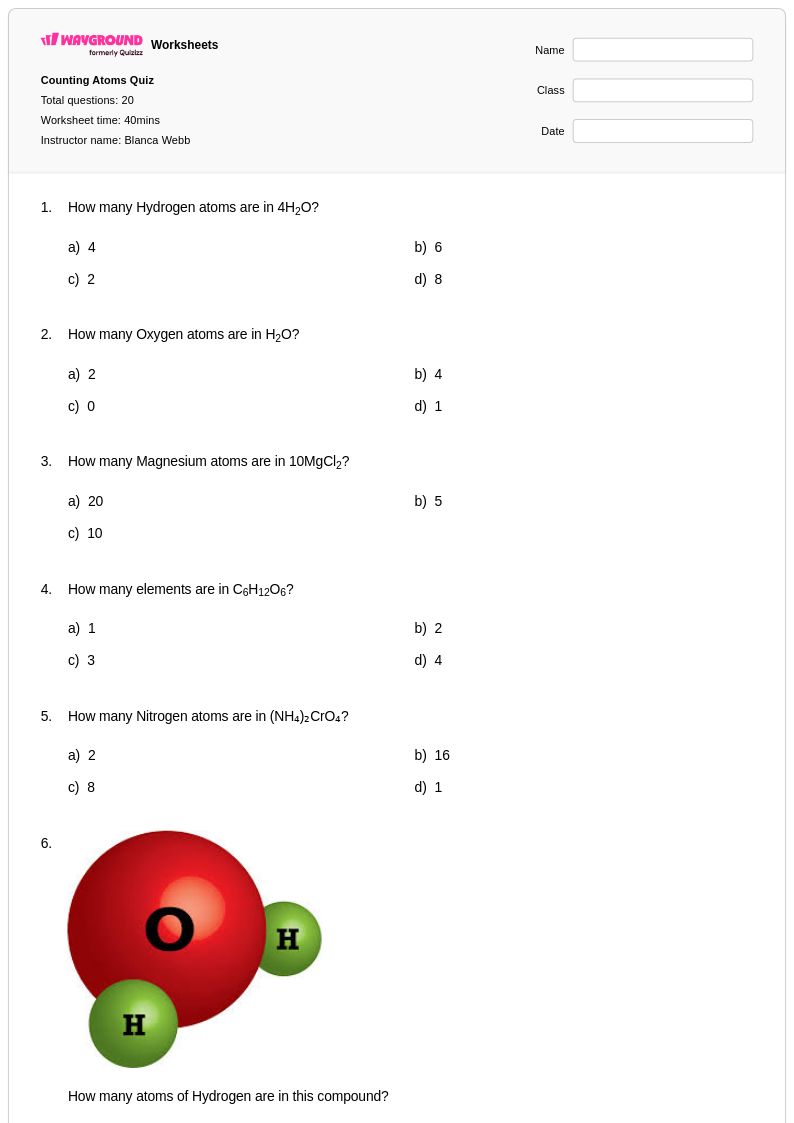
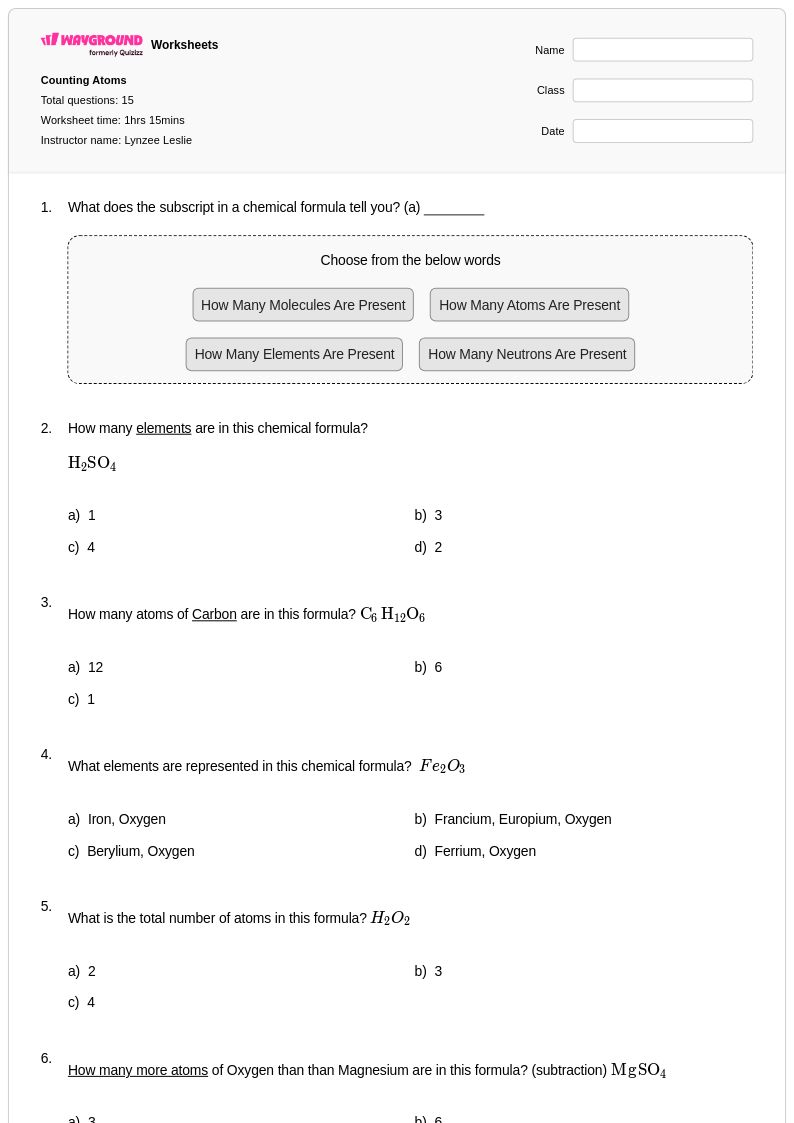
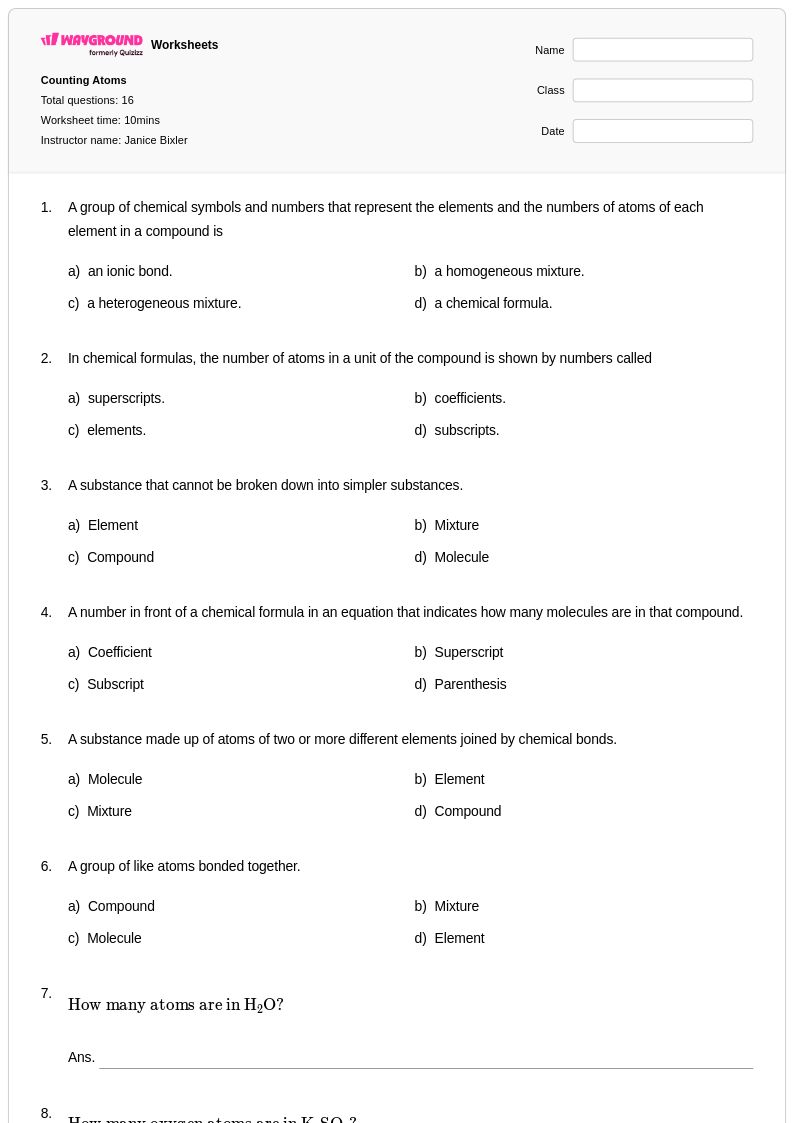
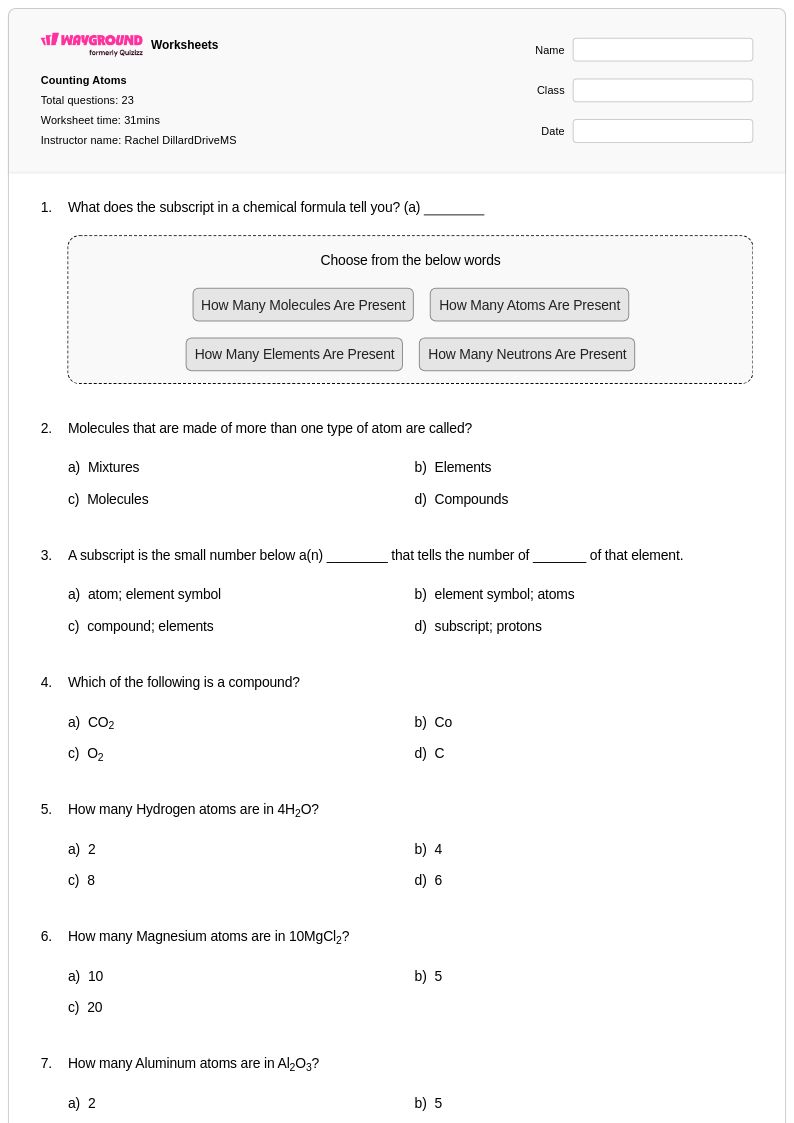
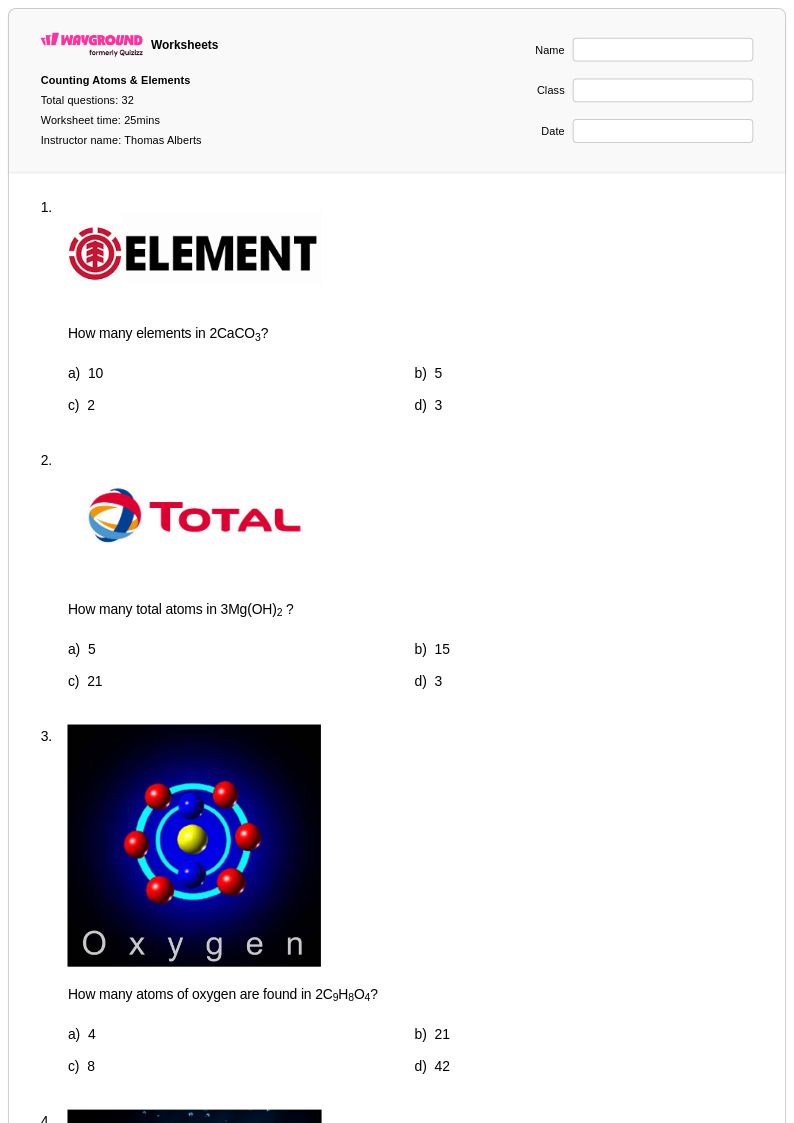
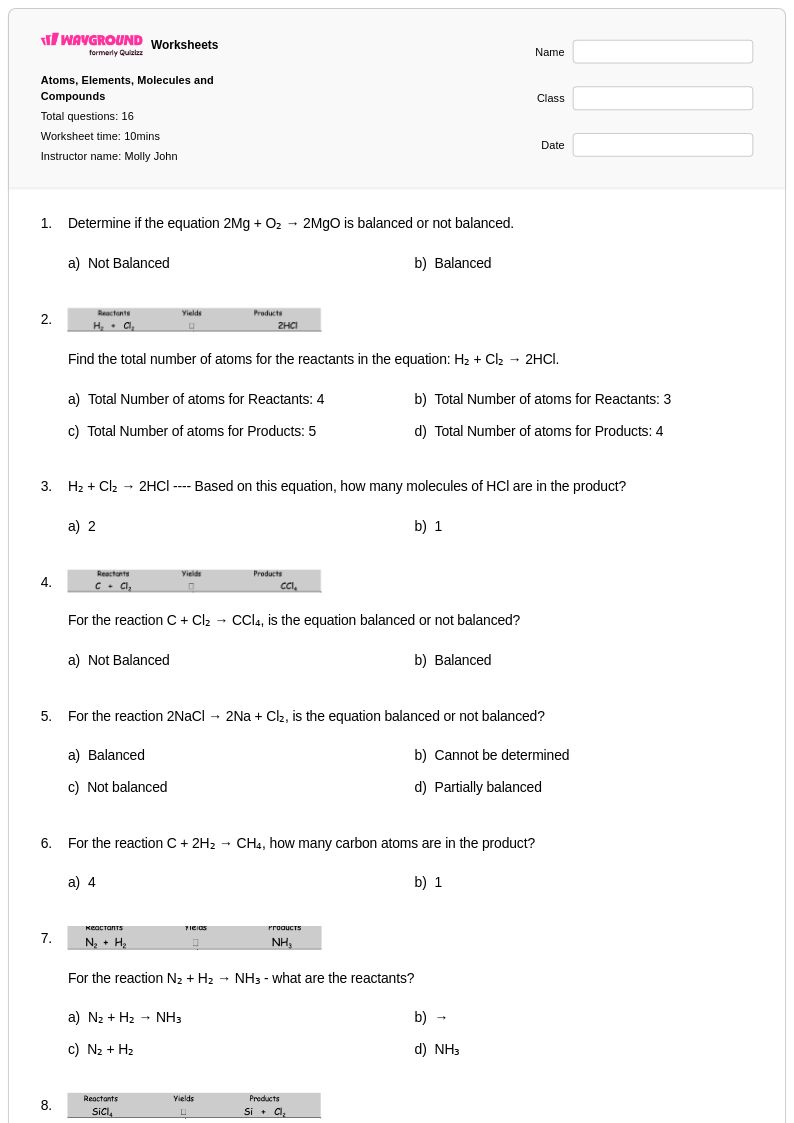
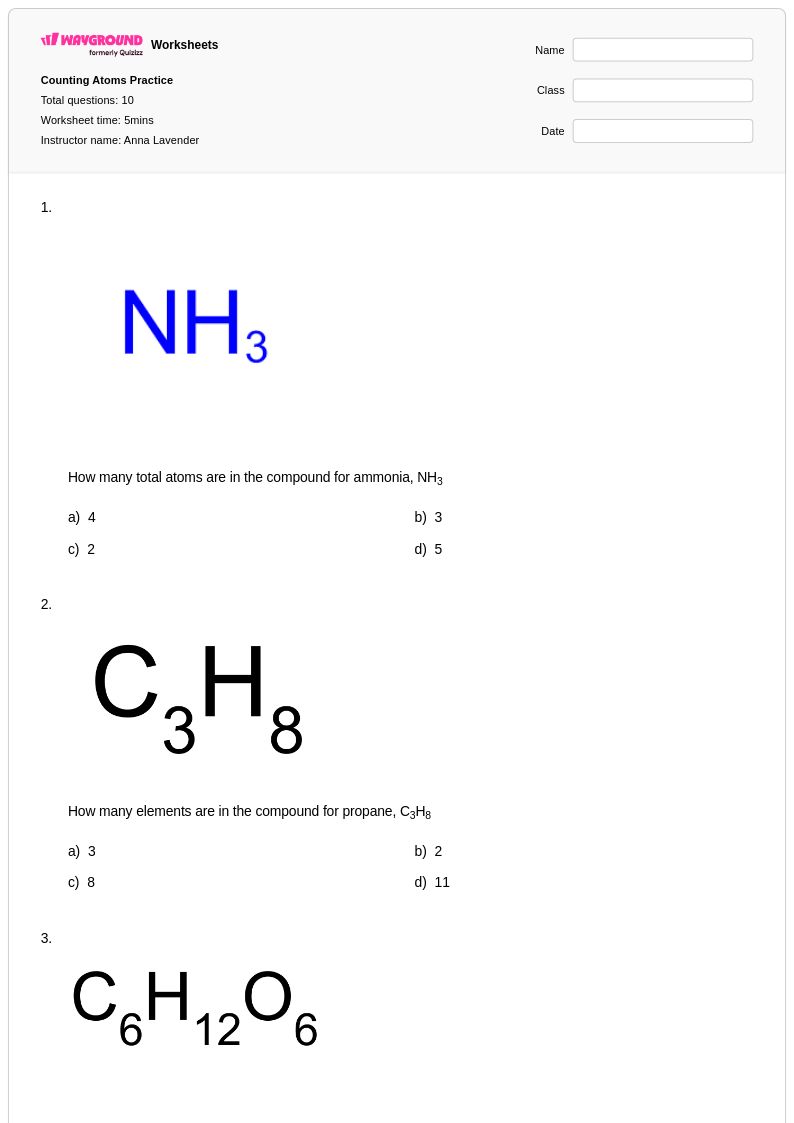
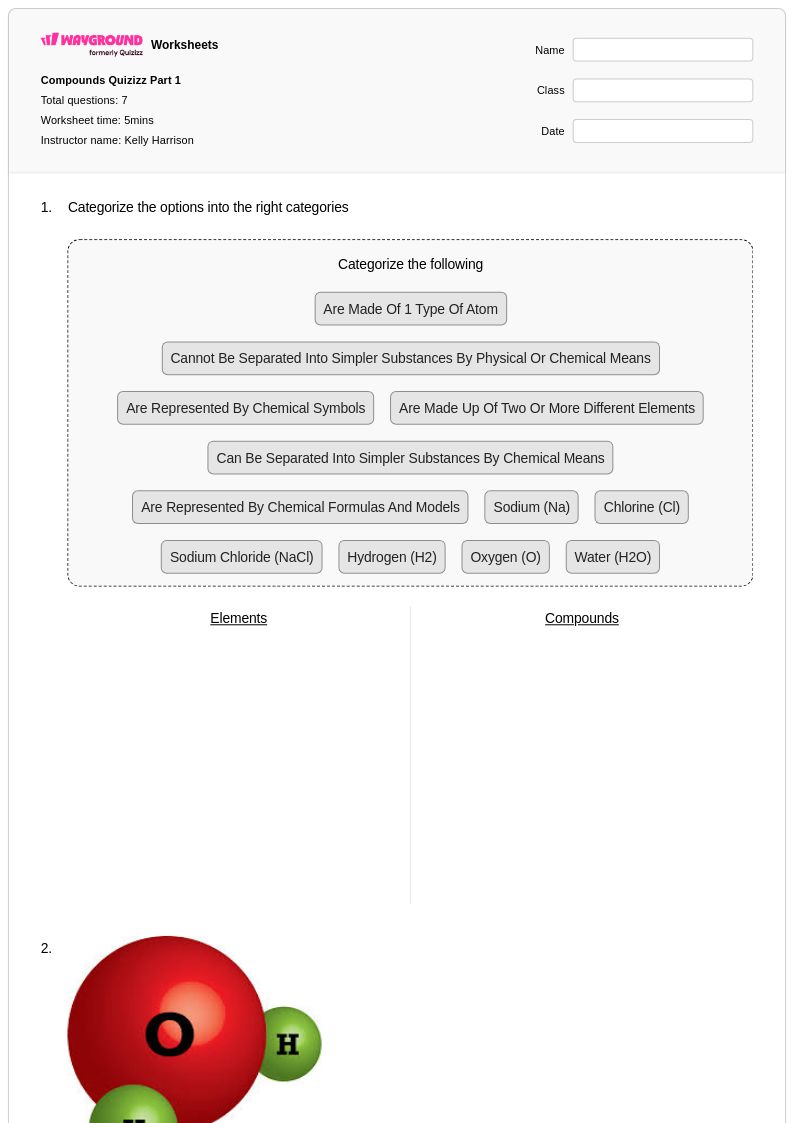
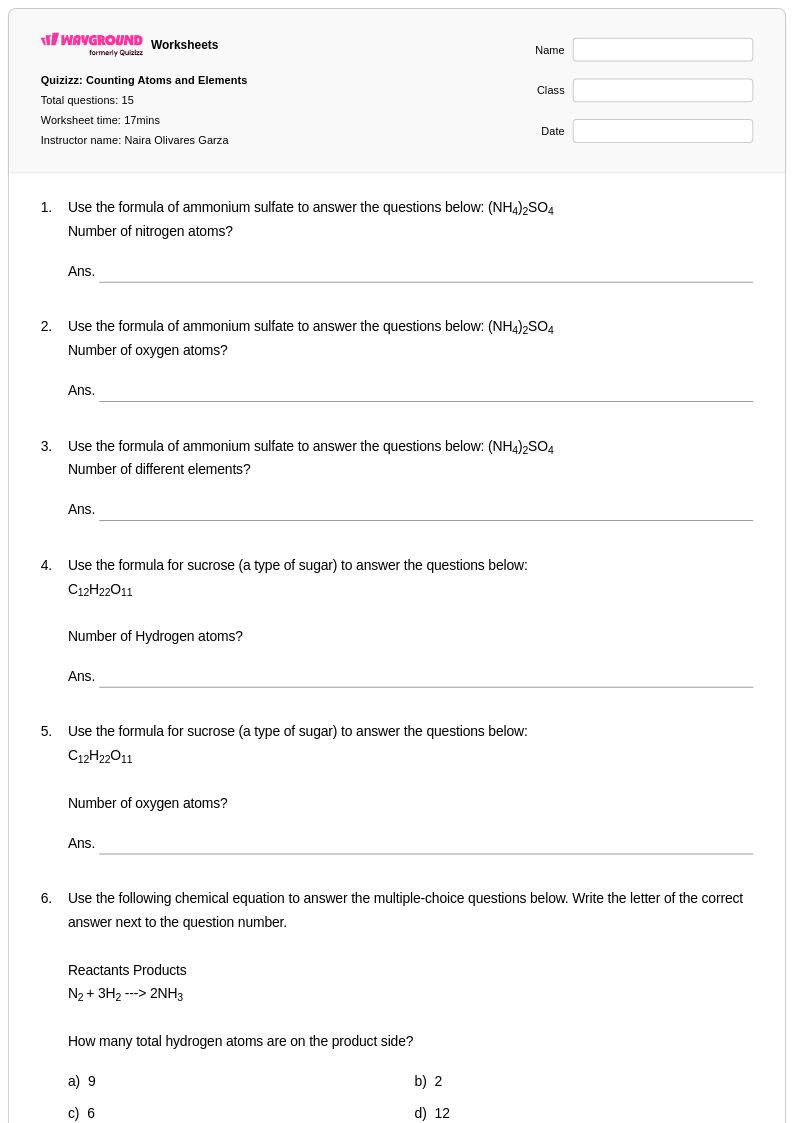
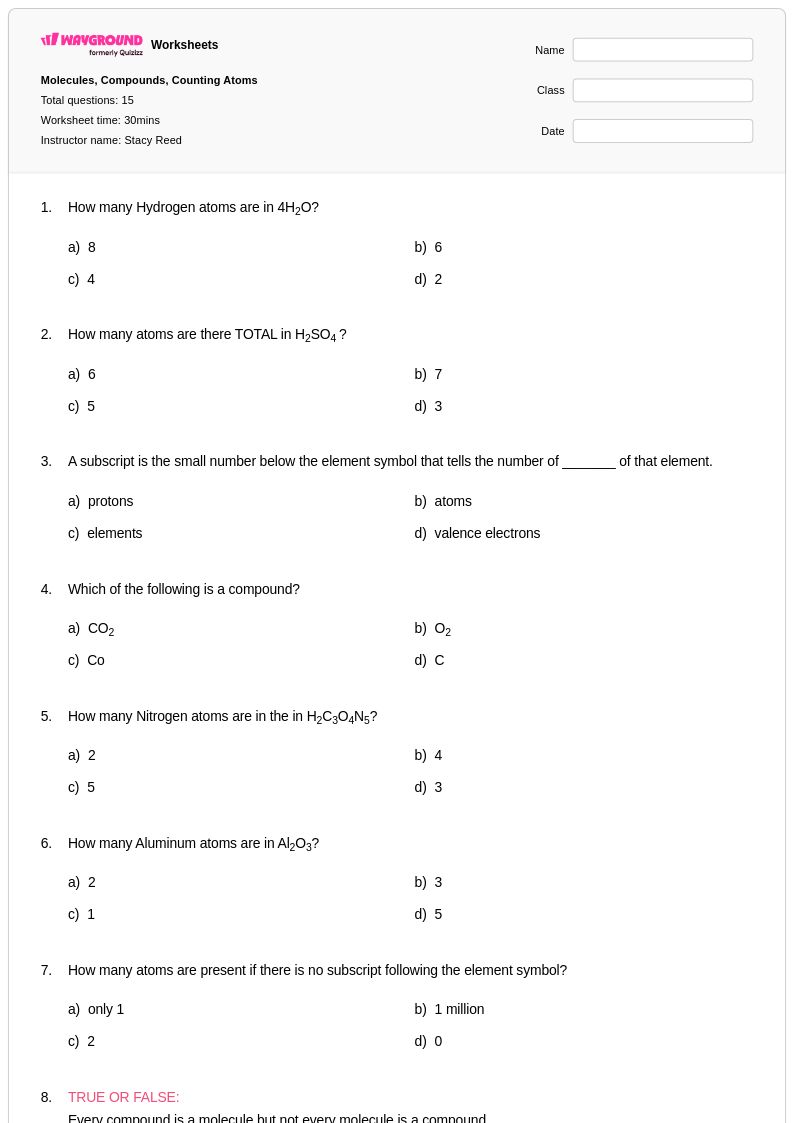
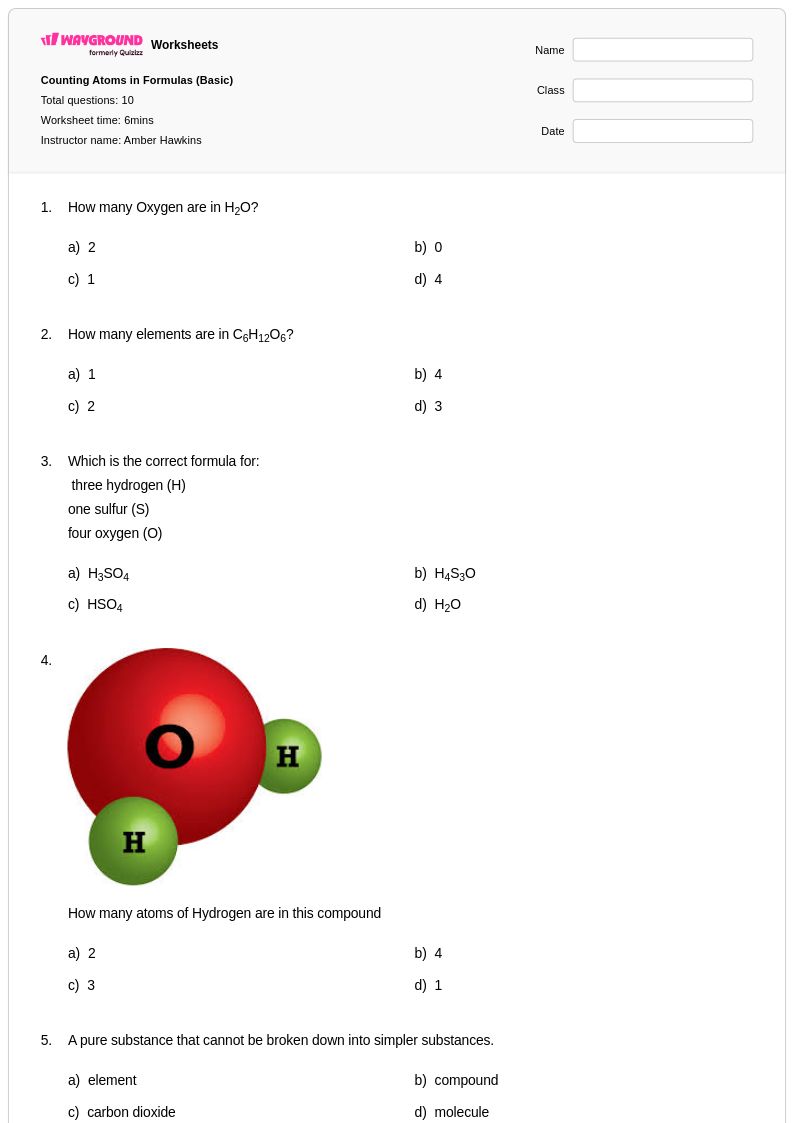
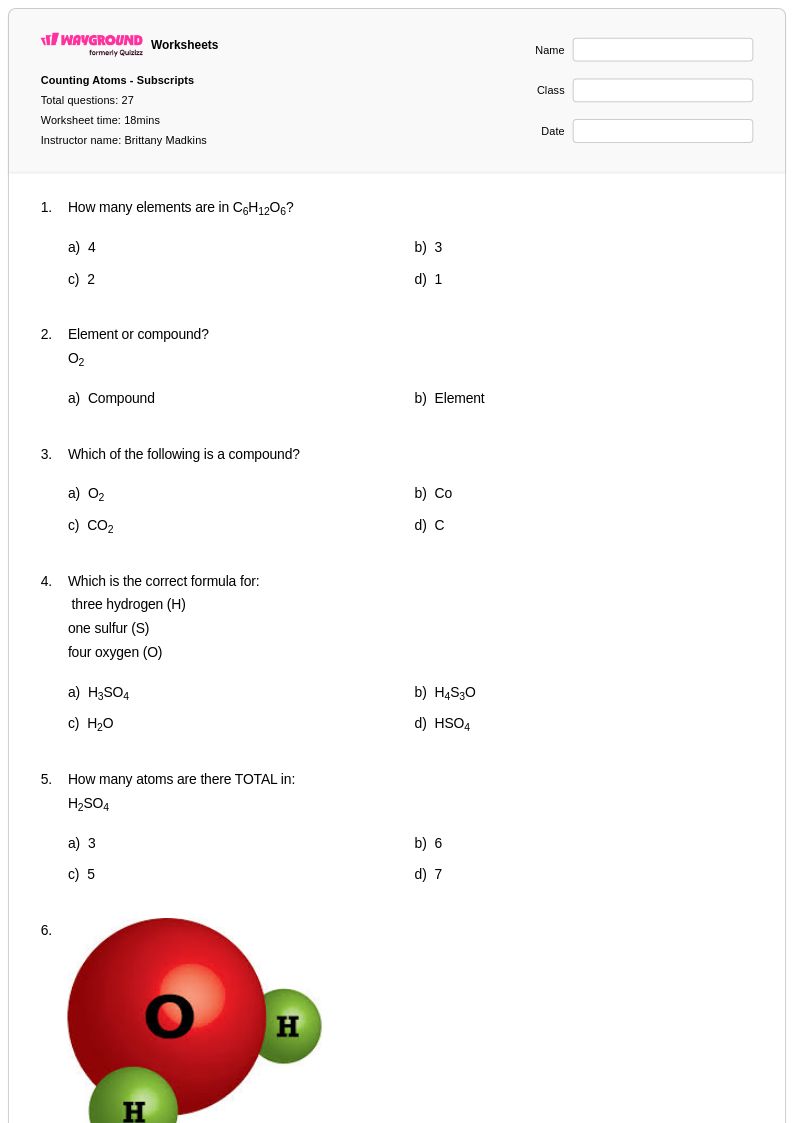
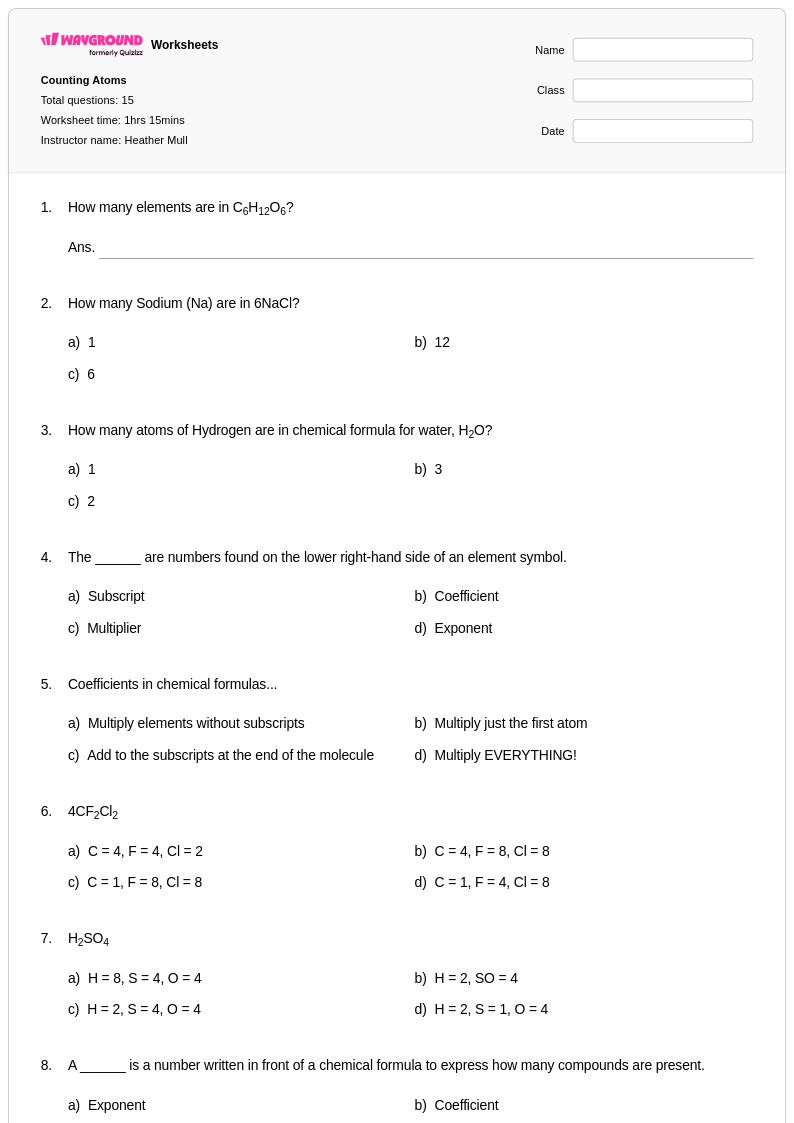
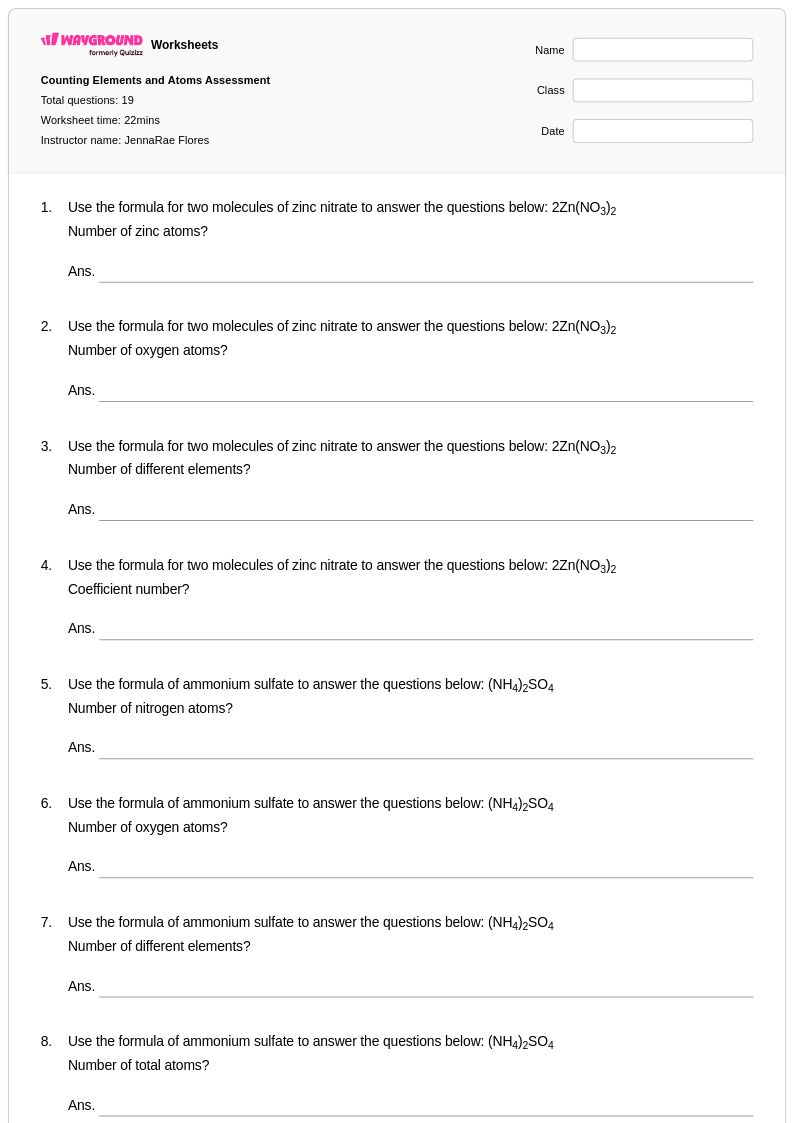
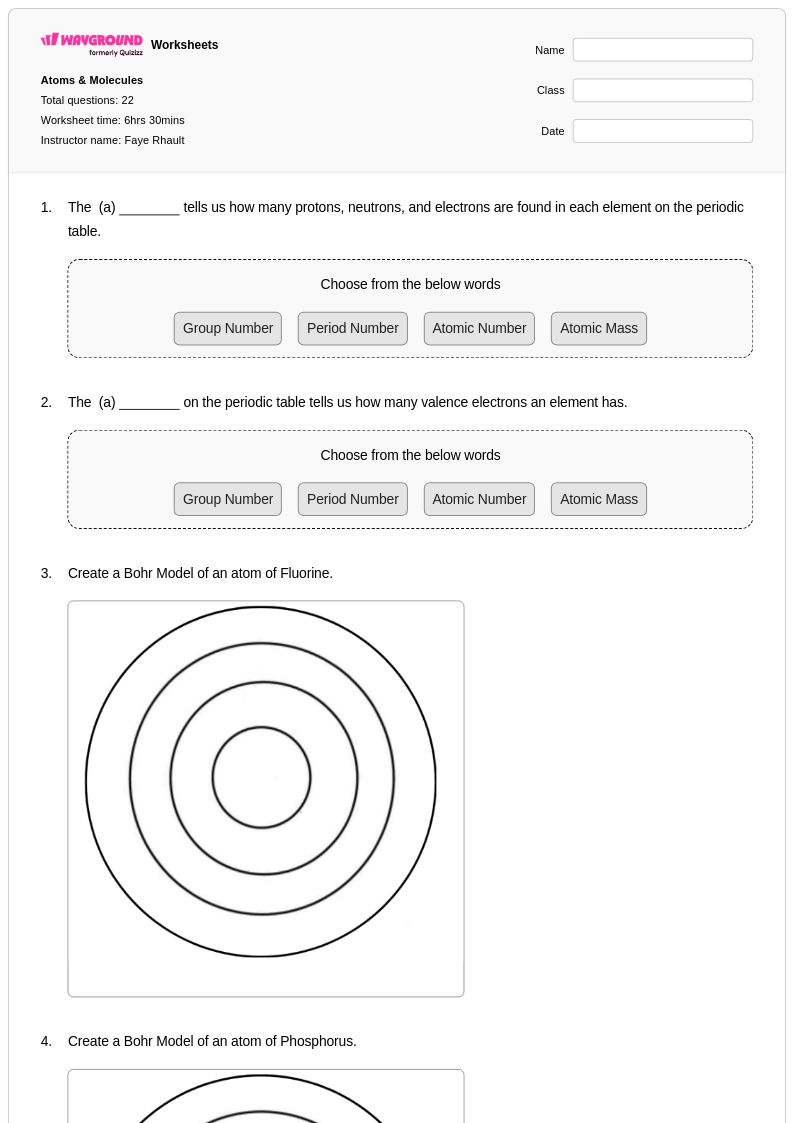
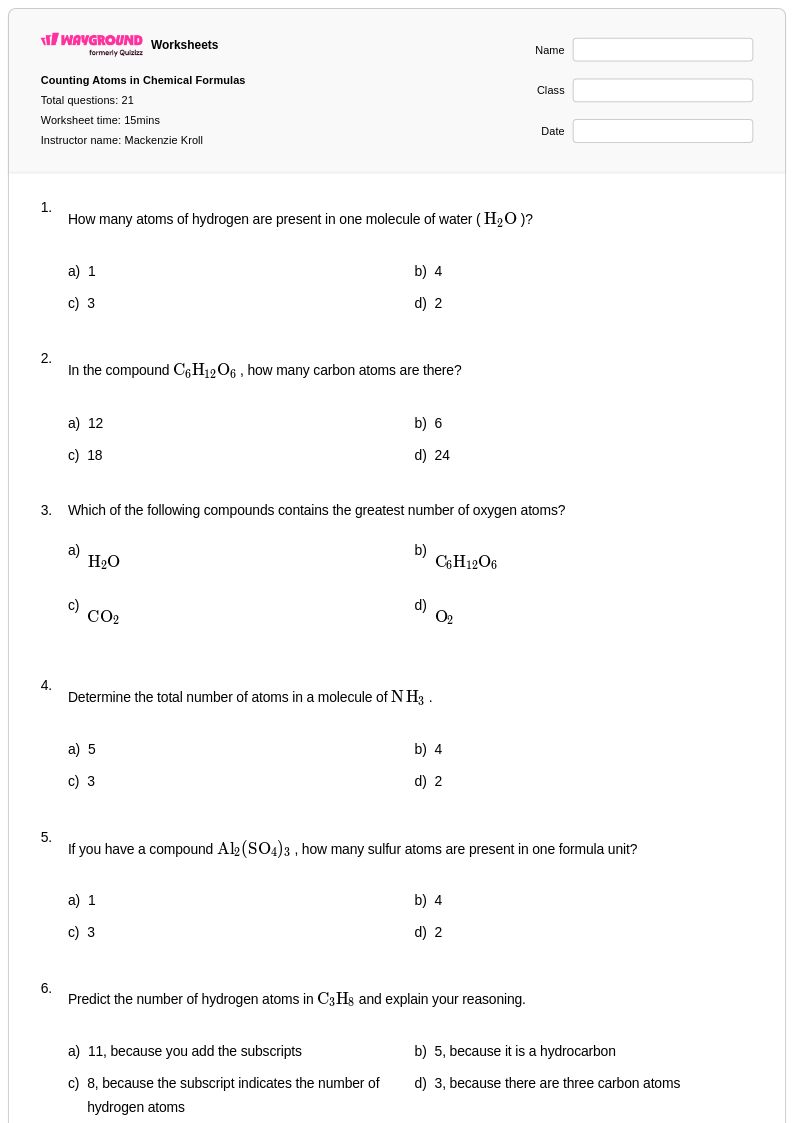
Counting atoms in compounds represents a fundamental skill that Class 8 chemistry students must master to understand molecular composition and chemical relationships. Wayground's comprehensive collection of counting atoms worksheets provides systematic practice with determining the number of each element present in various chemical compounds, from simple binary compounds to more complex molecular structures. These carefully designed resources strengthen students' ability to interpret chemical formulas, apply coefficients and subscripts correctly, and develop the mathematical reasoning essential for stoichiometry concepts they'll encounter in advanced chemistry courses. Each worksheet includes detailed answer keys and step-by-step solutions, with free printable pdf formats that make it easy for teachers to distribute practice problems that reinforce atomic counting techniques through varied compound examples.
Wayground's extensive library draws from millions of teacher-created resources specifically designed to support Class 8 chemistry instruction, offering robust search and filtering capabilities that help educators quickly locate materials aligned with specific learning standards and student needs. The platform's differentiation tools enable teachers to customize worksheets for various skill levels, providing both remedial support for students struggling with basic atomic counting concepts and enrichment opportunities for advanced learners ready to tackle complex polyatomic compounds. Available in both printable and digital pdf formats, these resources seamlessly integrate into lesson planning workflows, whether teachers need quick formative assessments, targeted skill practice sessions, or comprehensive review materials that reinforce students' understanding of atomic composition in chemical compounds.
FAQs
How do I teach students to count atoms in chemical compounds?
Start by ensuring students can read chemical symbols and understand what subscripts represent before introducing coefficients and parentheses. Use simple binary compounds like H₂O and NaCl to build confidence, then progress to compounds with parentheses such as Ca(OH)₂, explicitly modeling how to distribute the subscript outside the parentheses. A common and effective strategy is to have students underline each element and write its count separately before summing totals, which reduces careless errors on more complex formulas.
What exercises help students practice counting atoms in compounds?
Structured practice problems that progress from simple binary compounds to polyatomic and parenthetical formulas are most effective for building this skill. Exercises that ask students to identify the number of each element separately before calculating totals reinforce a methodical approach. Repeated exposure to formulas with coefficients and nested parentheses, such as 2Al₂(SO₄)₃, is especially valuable because these are the structures where errors are most common.
What mistakes do students commonly make when counting atoms in compounds?
The most frequent error is failing to distribute a subscript outside parentheses to all elements within them — for example, treating Ca(OH)₂ as having one oxygen rather than two. Students also often ignore coefficients placed in front of a formula, forgetting to multiply all atom counts by that number. A third common mistake is confusing subscripts with superscripts or misreading handwritten formulas, which is why clear, legible practice materials are important.
How do coefficients change the way students count atoms in a formula?
A coefficient placed before a chemical formula multiplies every atom in that entire formula, not just the first element. For example, in 3H₂O, there are 6 hydrogen atoms and 3 oxygen atoms, not 2 and 1. Students need direct and repeated instruction on this rule before tackling balanced equations in stoichiometry, where applying it correctly is essential.
How can I use Wayground's counting atoms in compounds worksheets in my classroom?
Wayground's counting atoms in compounds worksheets are available as free printable PDFs for traditional classroom use and in digital formats for technology-integrated environments, and can also be hosted as a quiz directly on Wayground. Teachers can use the worksheets for independent practice, homework, or formative assessment, and the included answer keys allow students to self-check their work. Wayground also supports student-level accommodations such as read aloud, extended time, and reduced answer choices, which can be assigned individually so that students who need support receive it without disrupting the rest of the class.
How does counting atoms in compounds connect to more advanced chemistry topics?
Accurately counting atoms in a chemical formula is a prerequisite skill for stoichiometry, mole calculations, and balancing chemical equations — all of which require knowing the exact atomic composition of each compound involved. Students who struggle at this foundational stage will encounter compounding difficulties when they reach quantitative analysis and reaction prediction. Building fluency with atom counting early creates the conceptual groundwork that makes those later topics more accessible.