
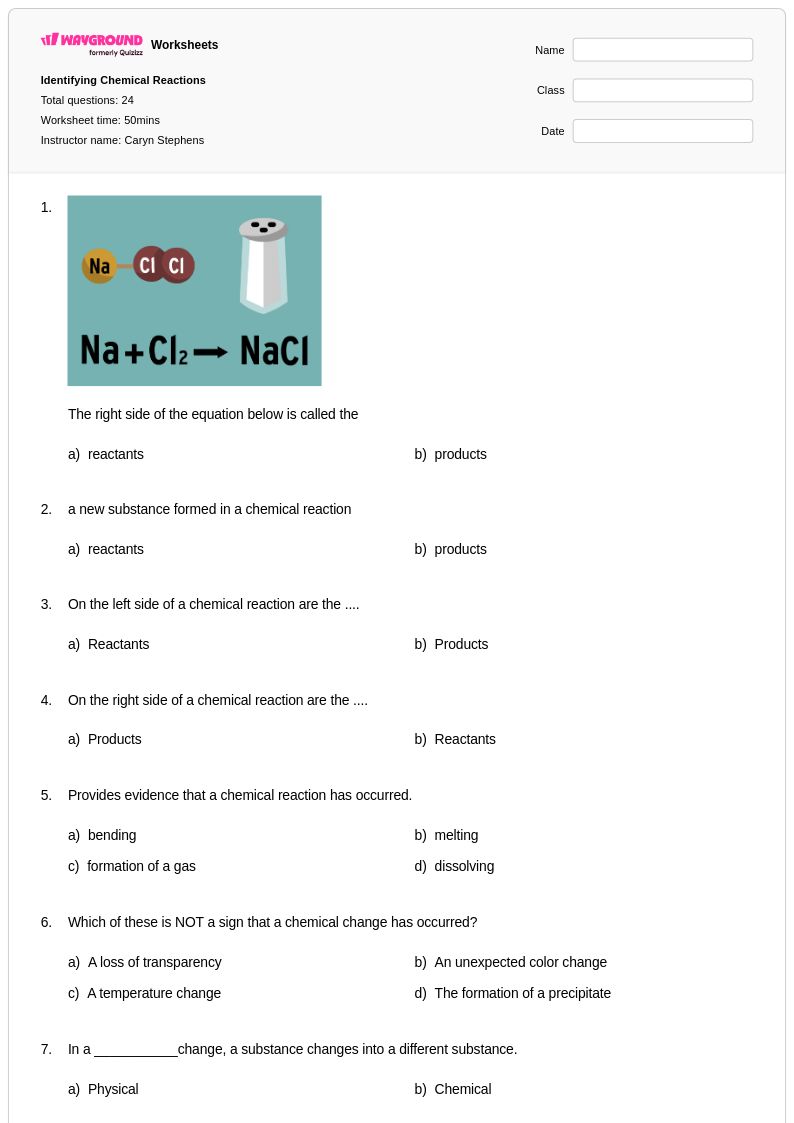
24 Q
8th
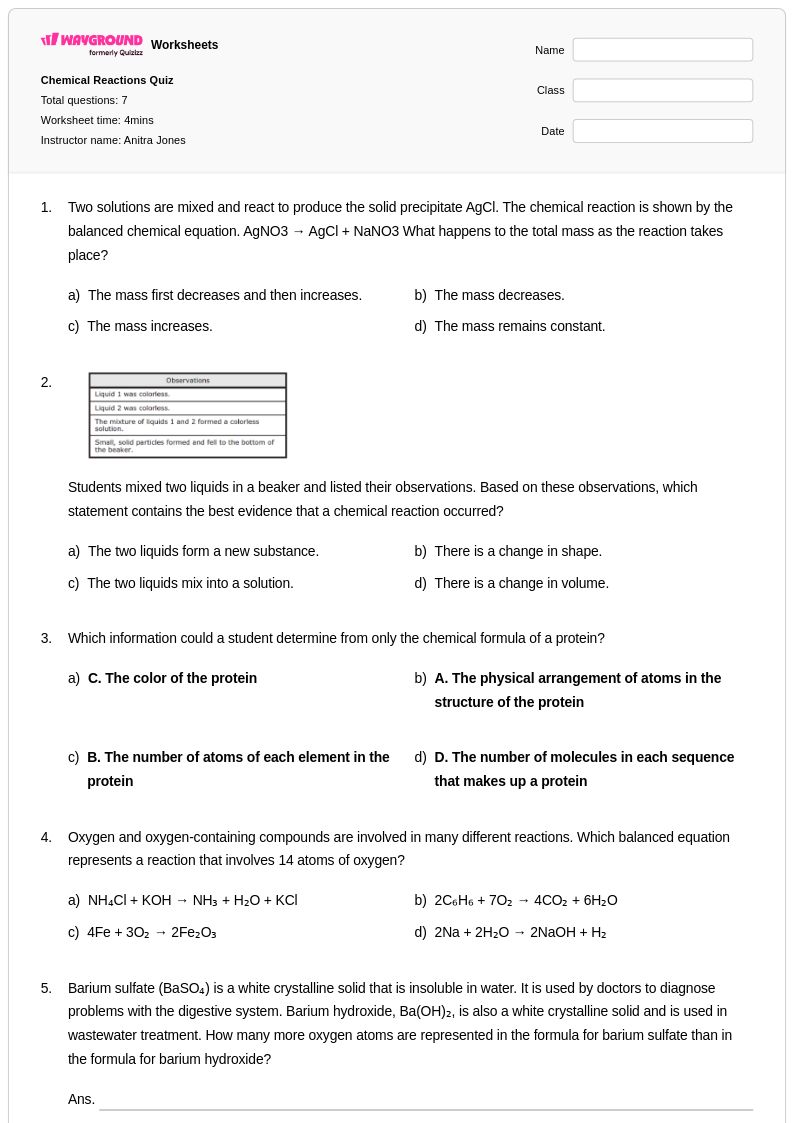
7 Q
8th
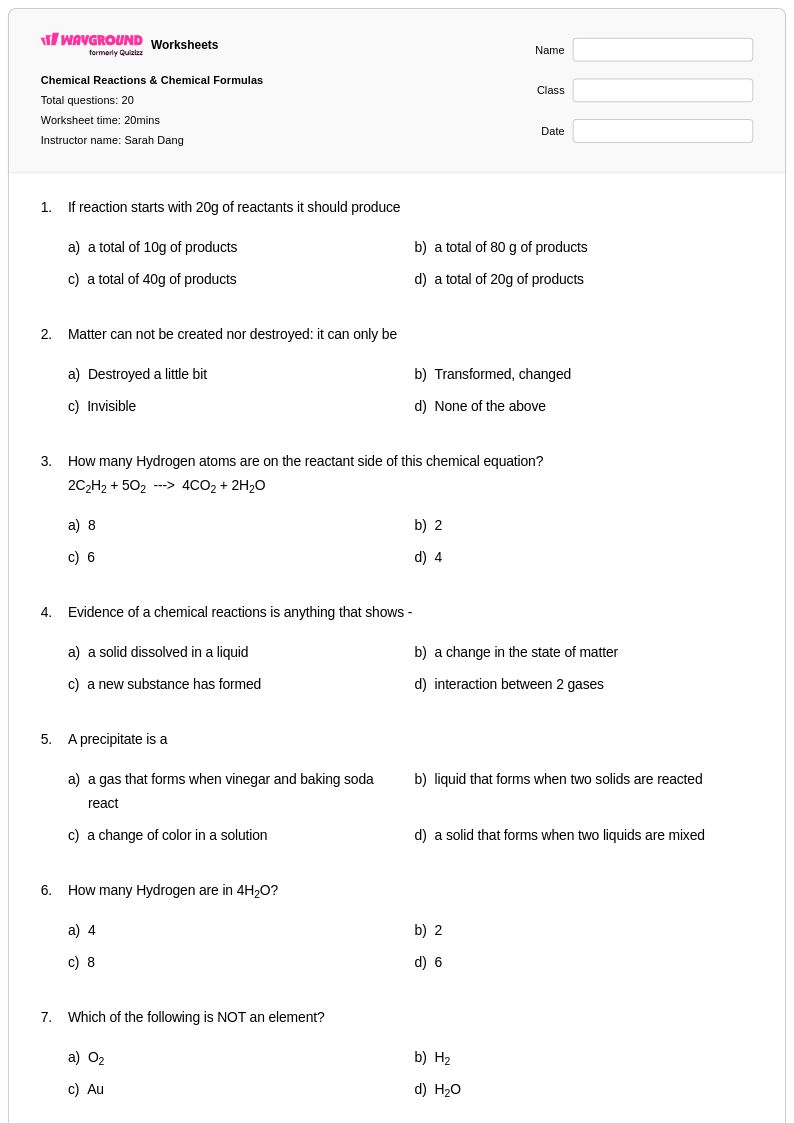
20 Q
8th
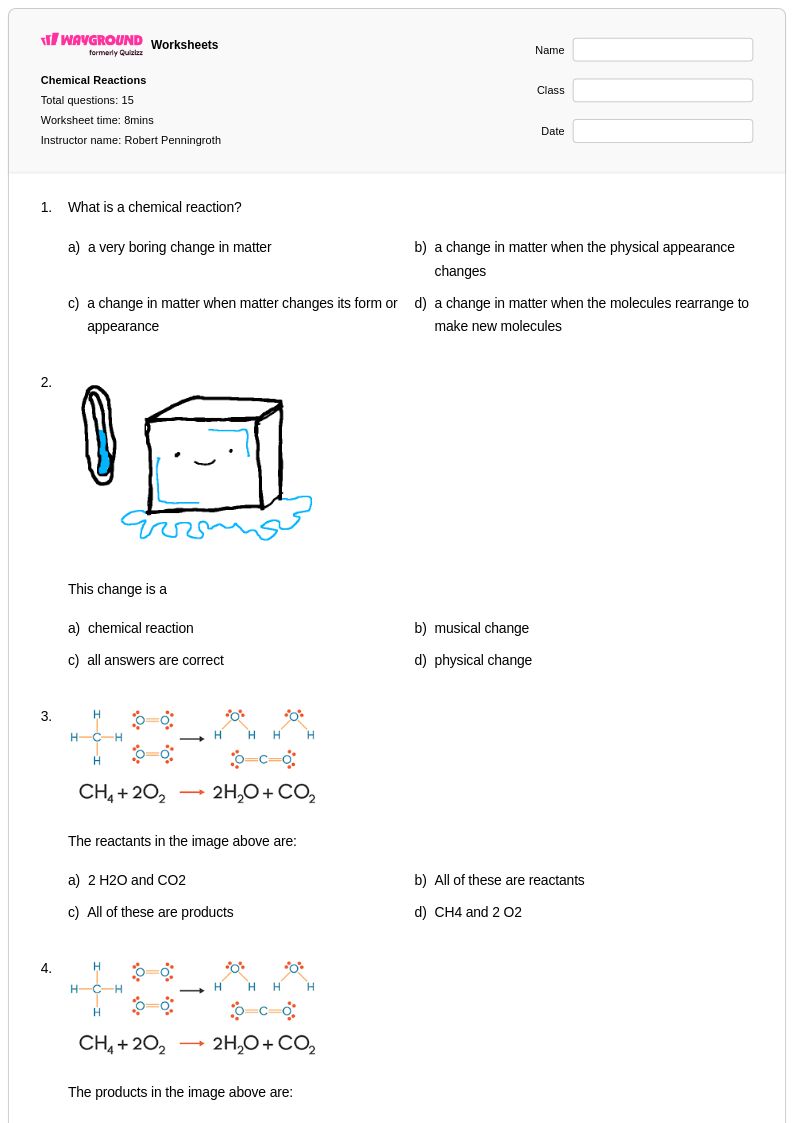
15 Q
8th
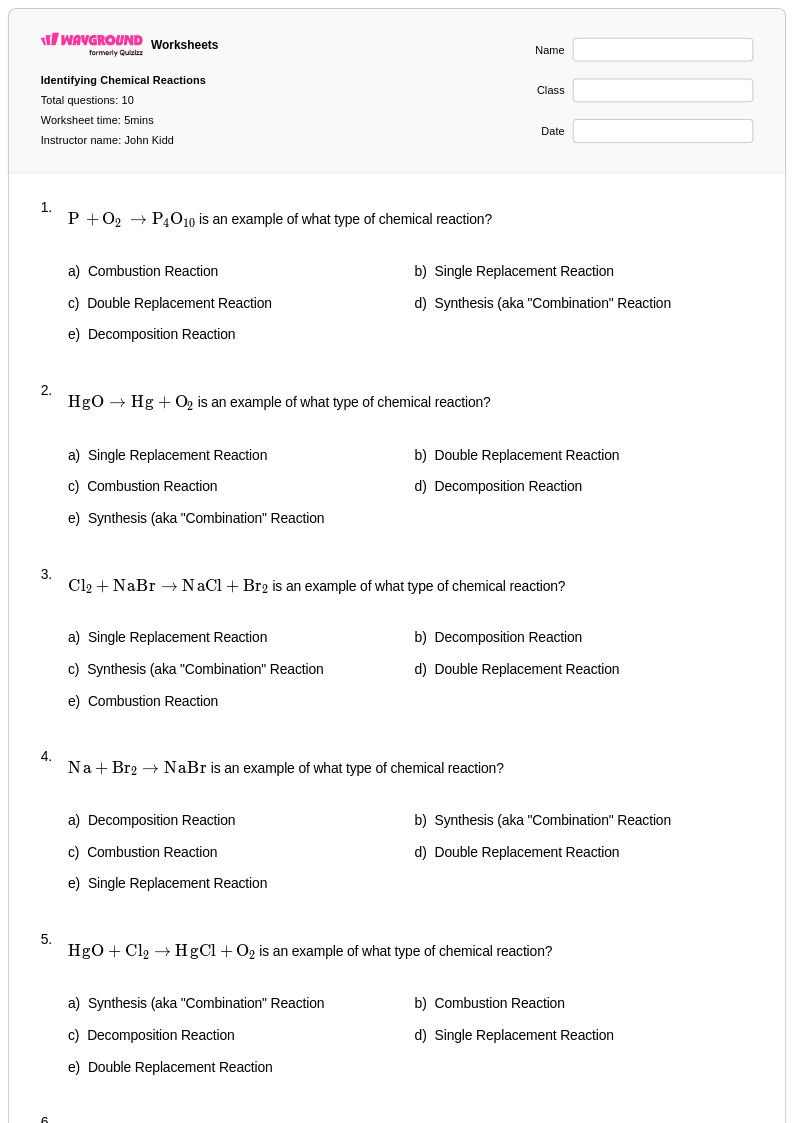
10 Q
8th
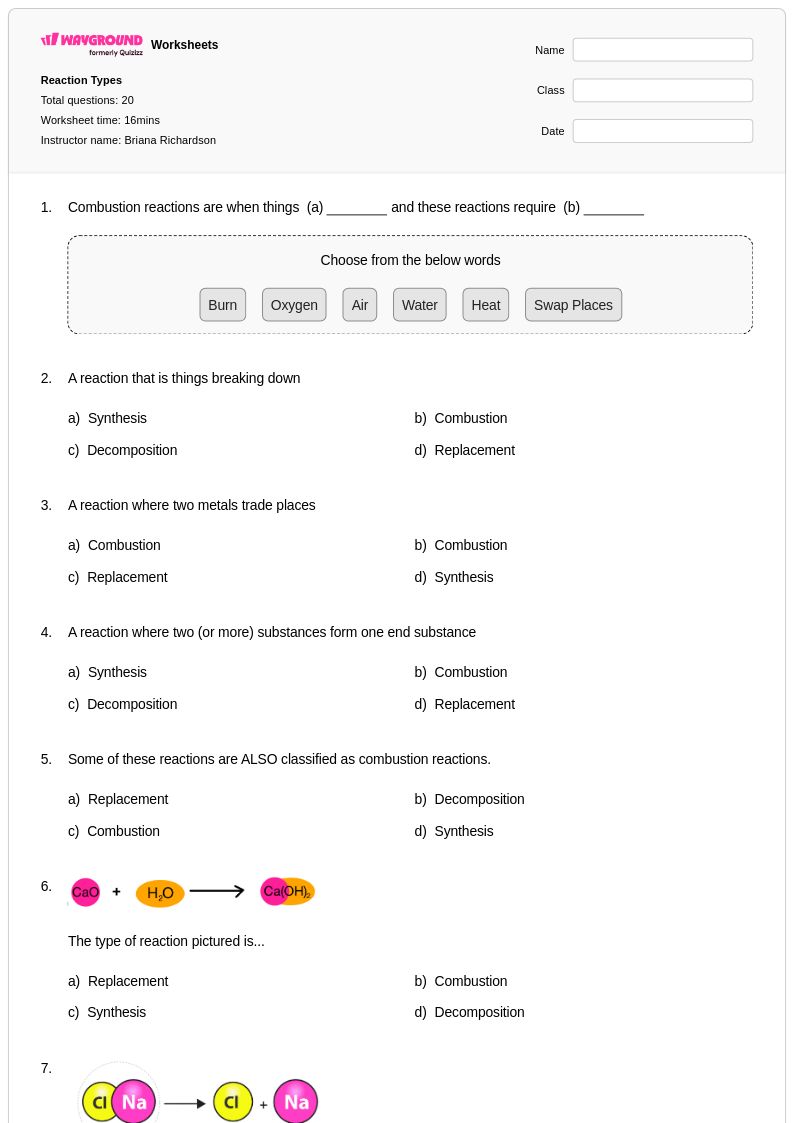
20 Q
8th
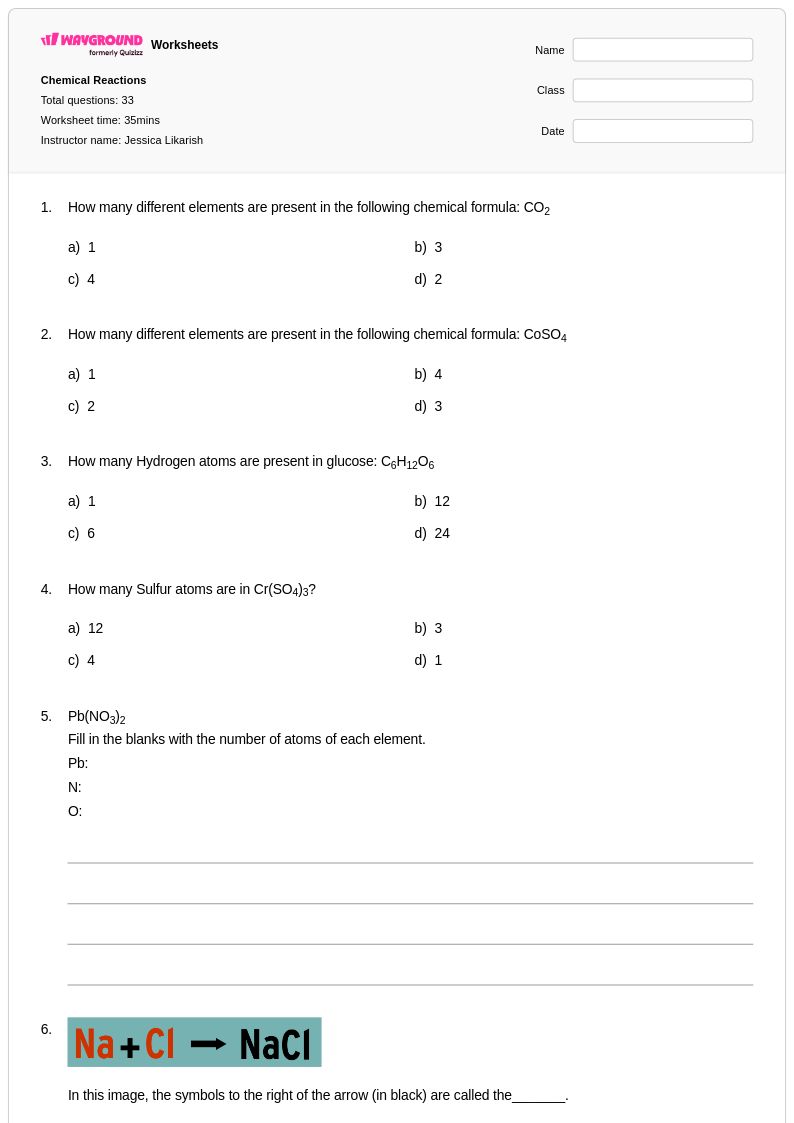
32 Q
8th
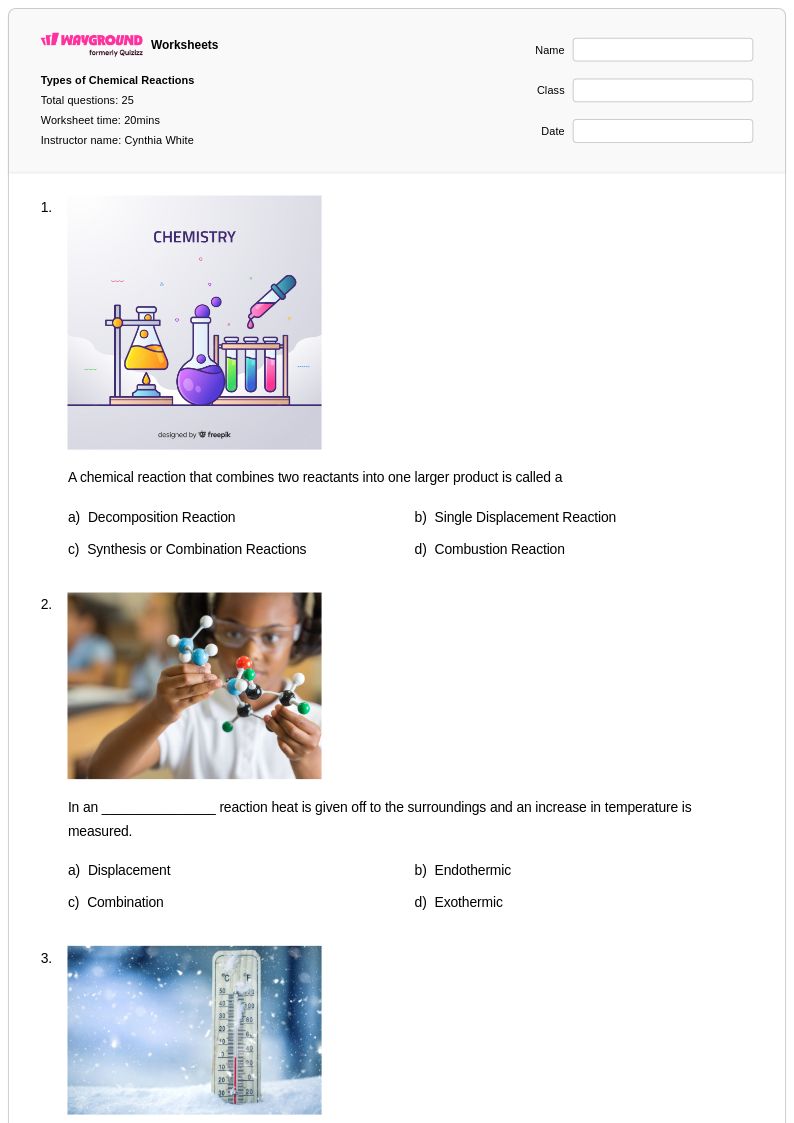
25 Q
8th
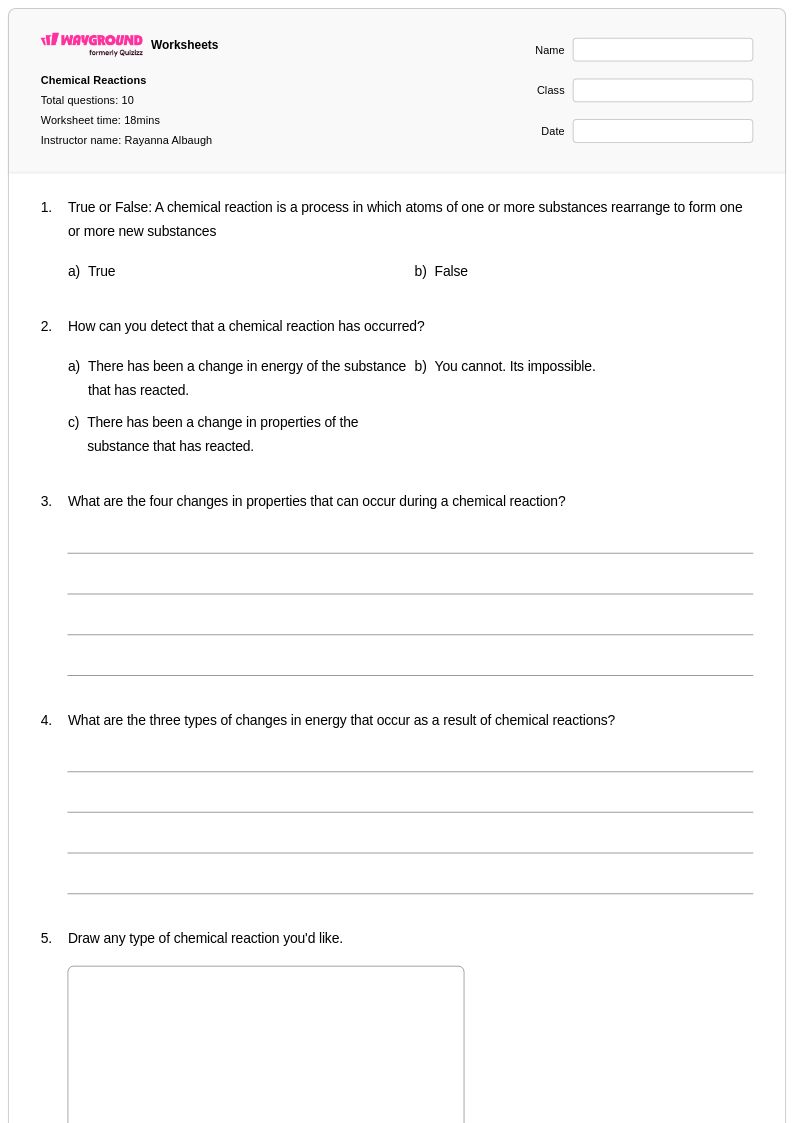
10 Q
8th
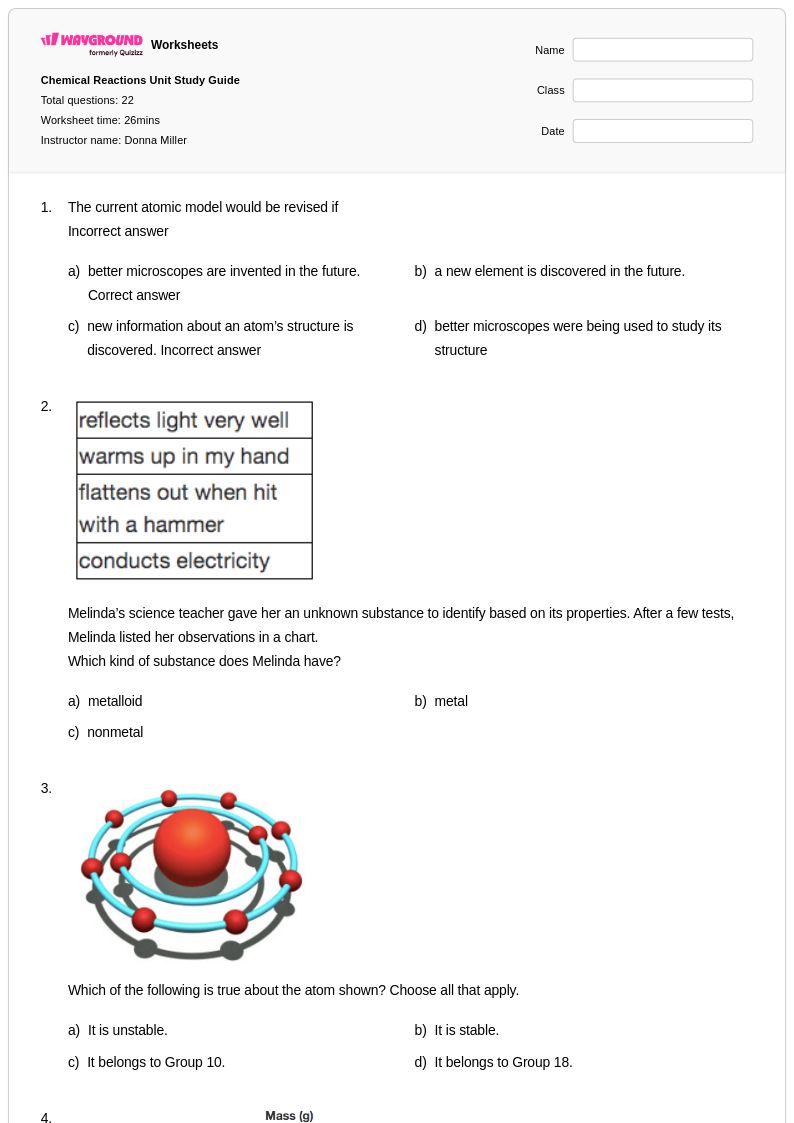
22 Q
8th
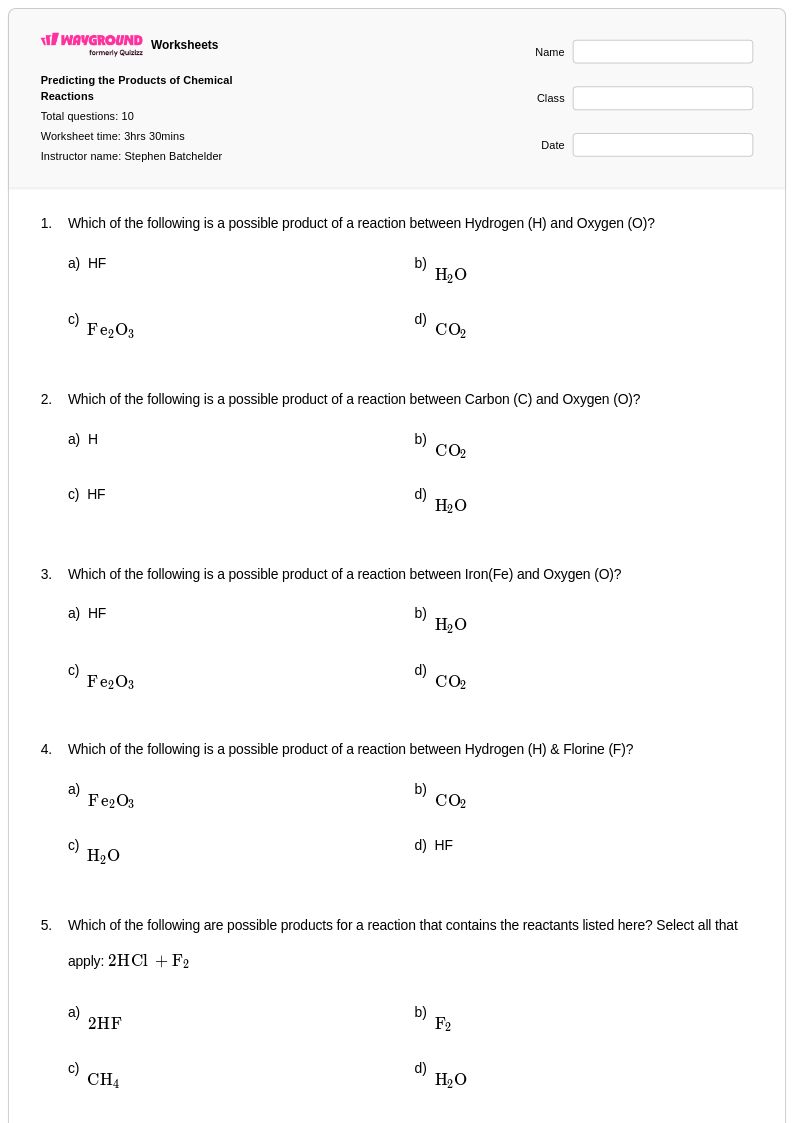
10 Q
8th
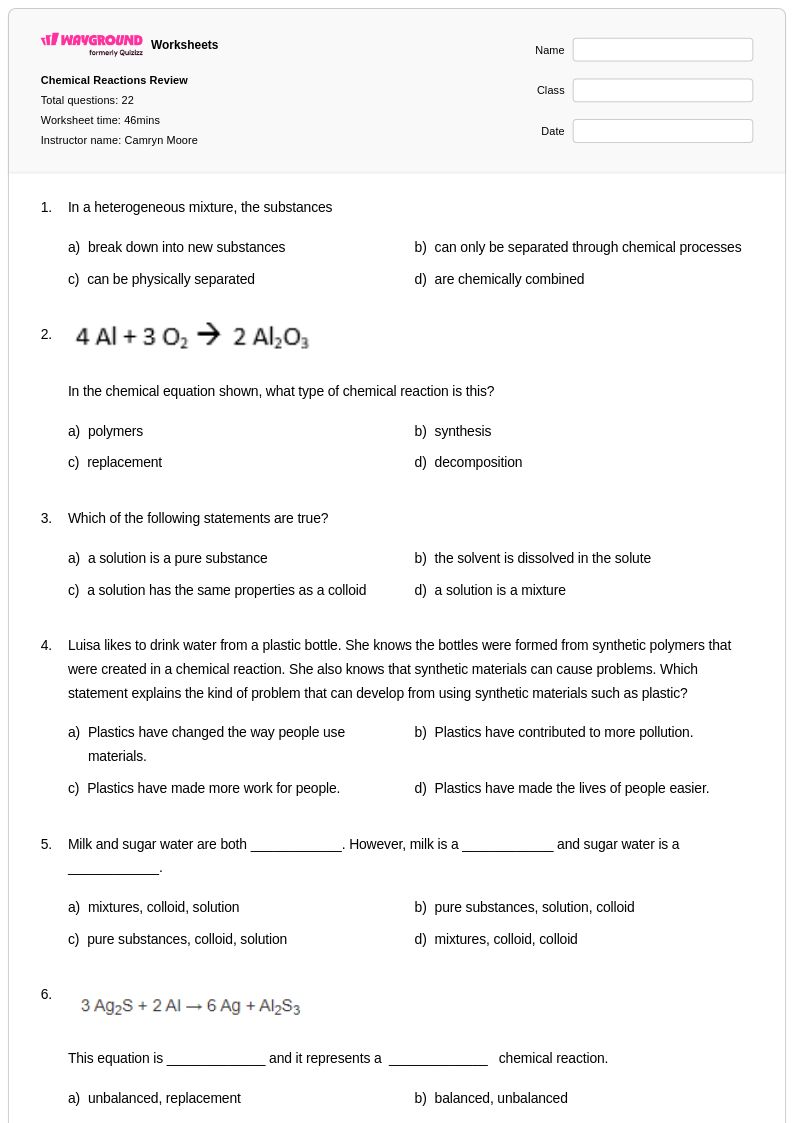
22 Q
8th
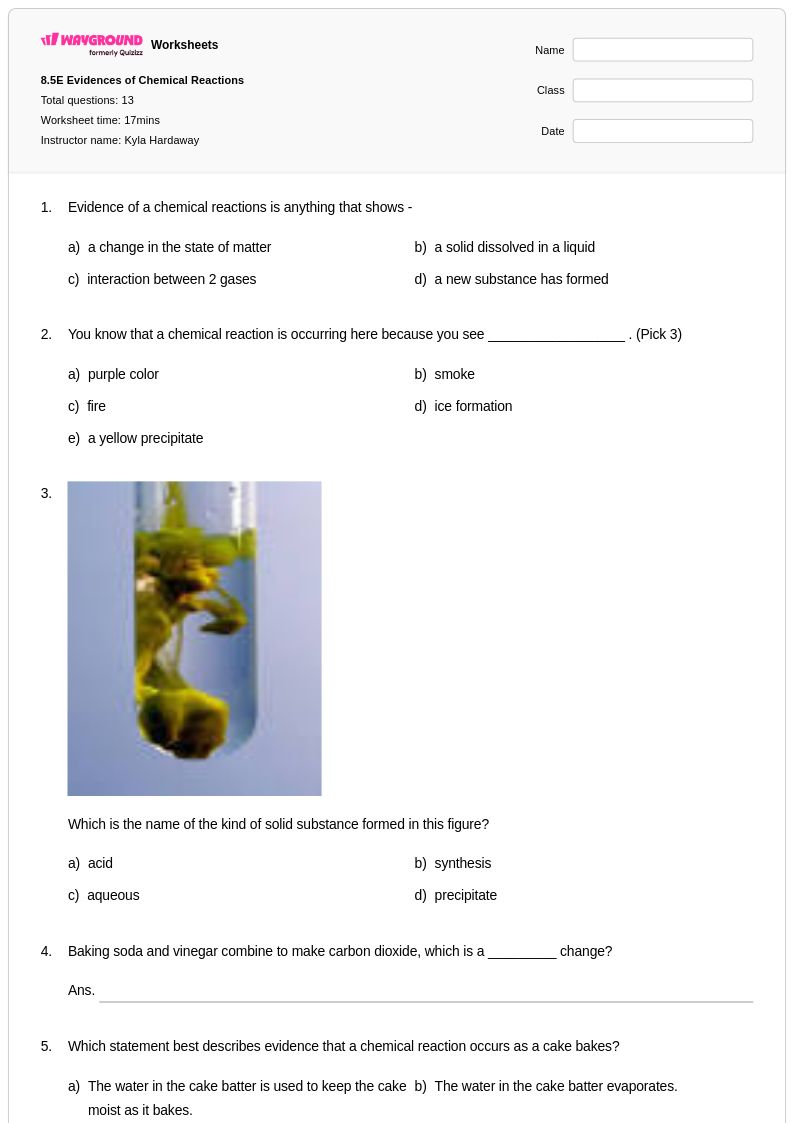
13 Q
8th
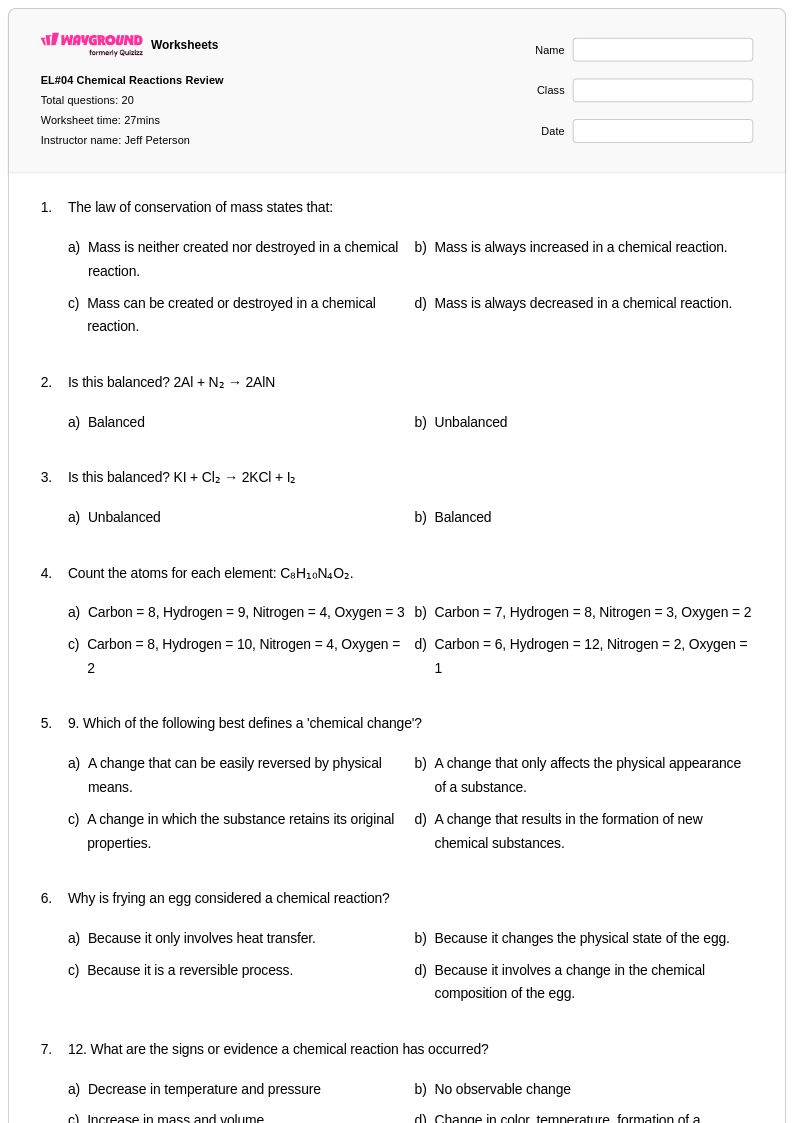
20 Q
8th - Uni
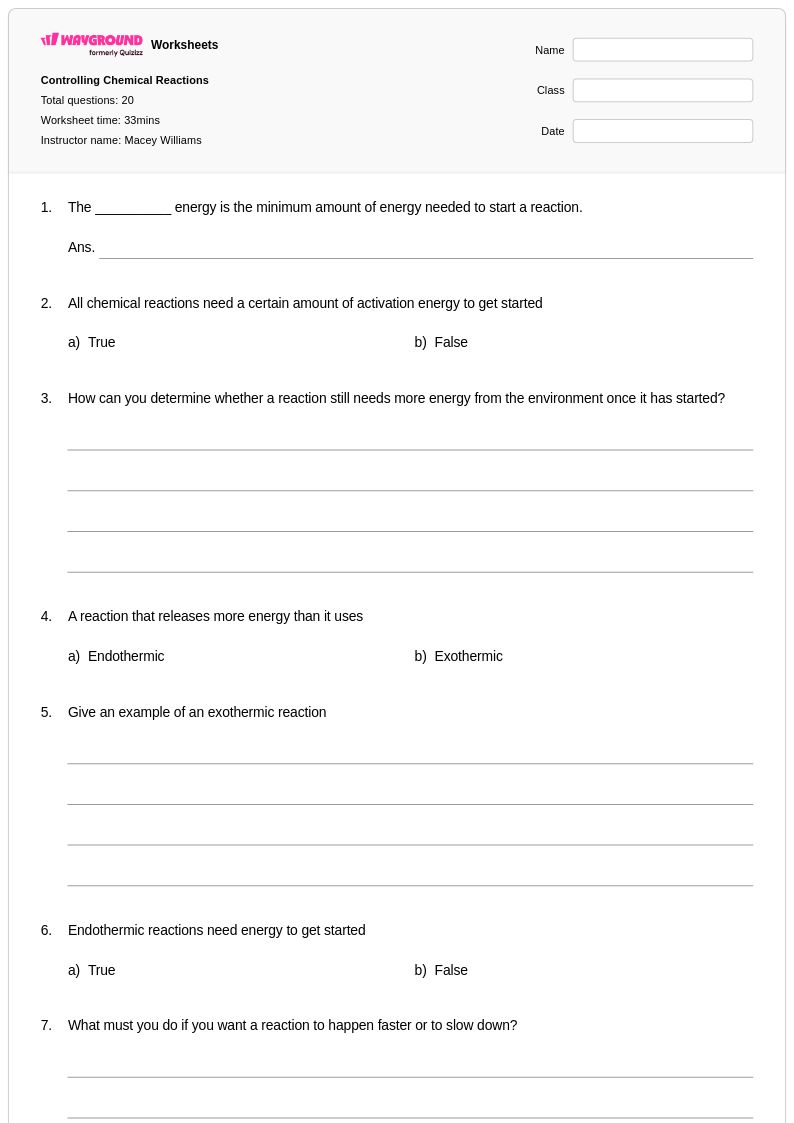
20 Q
8th
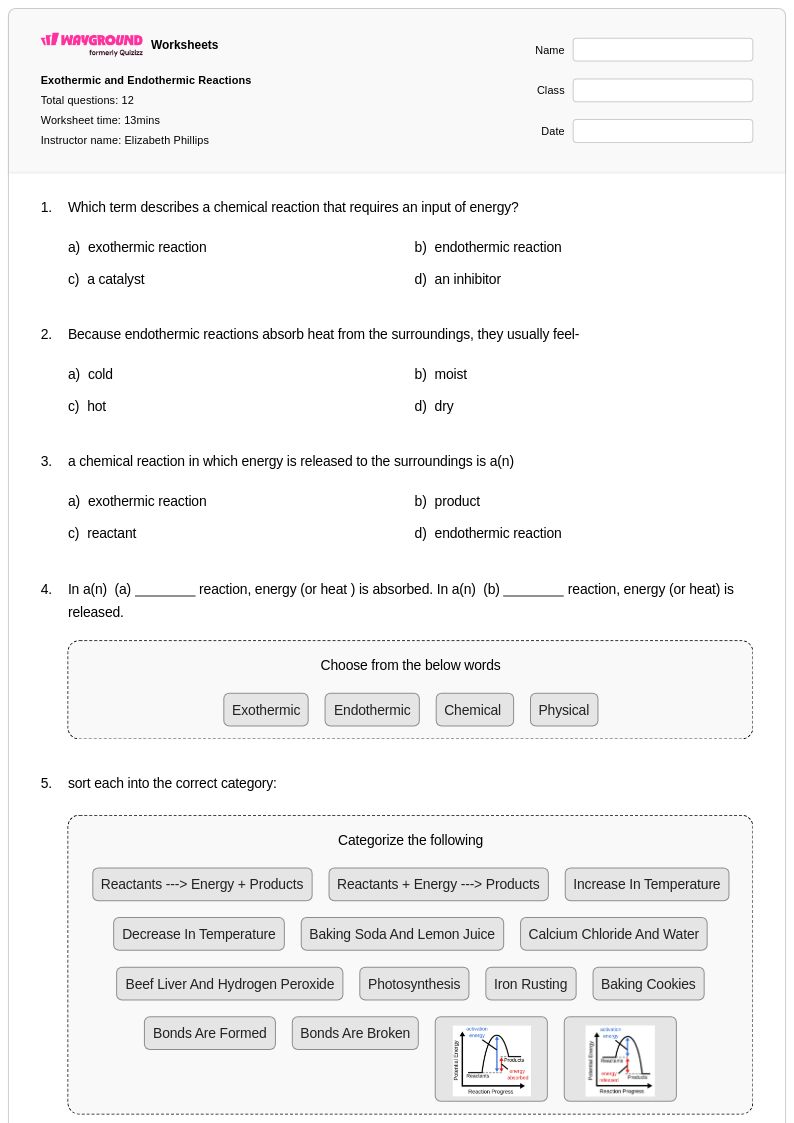
12 Q
8th
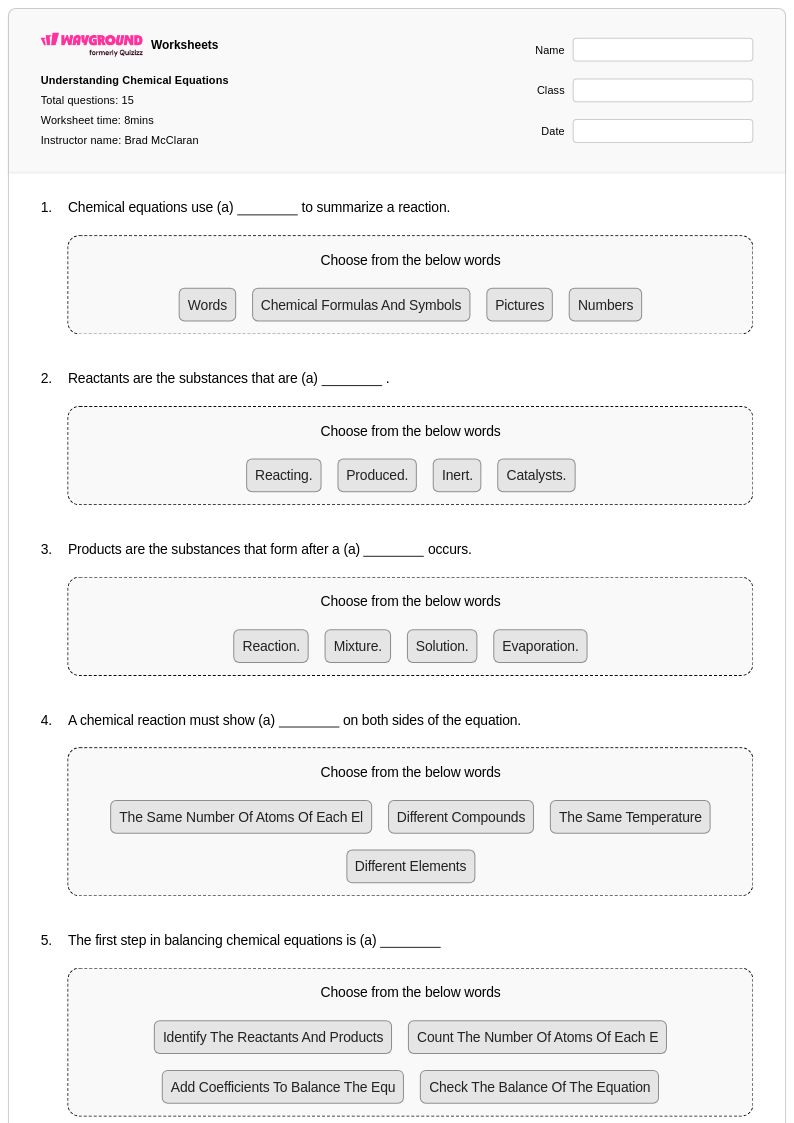
15 Q
8th
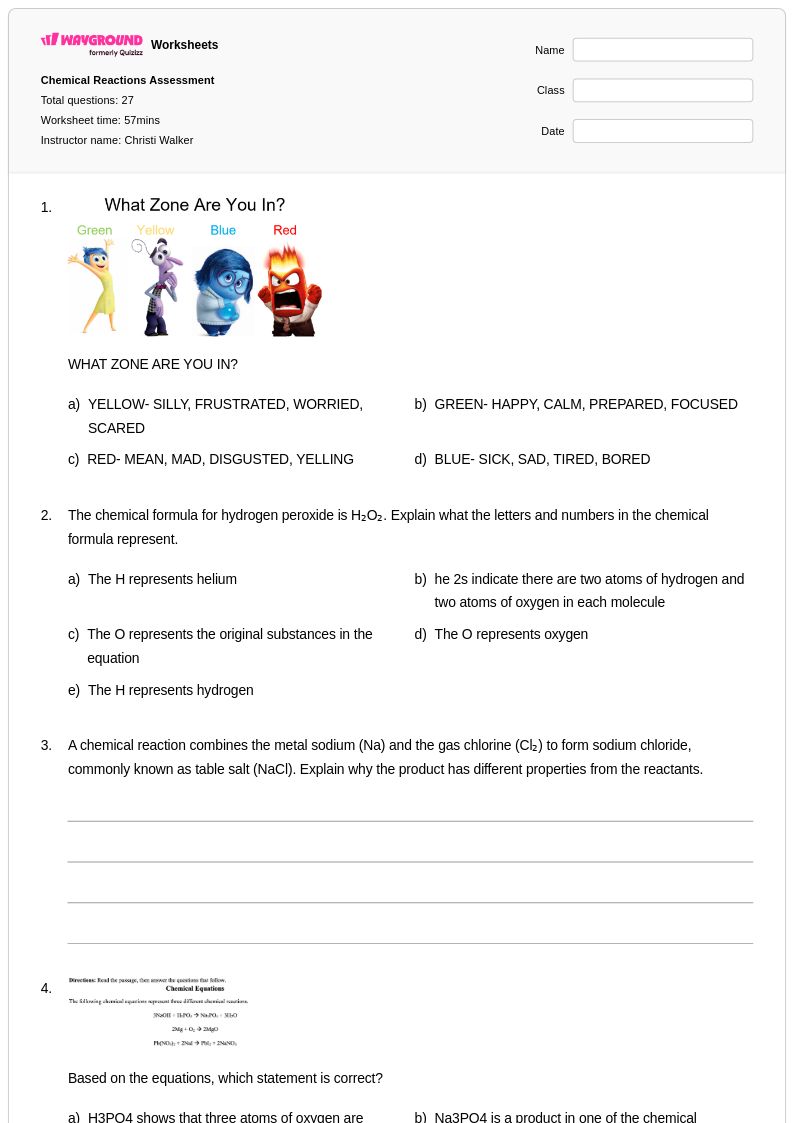
27 Q
8th
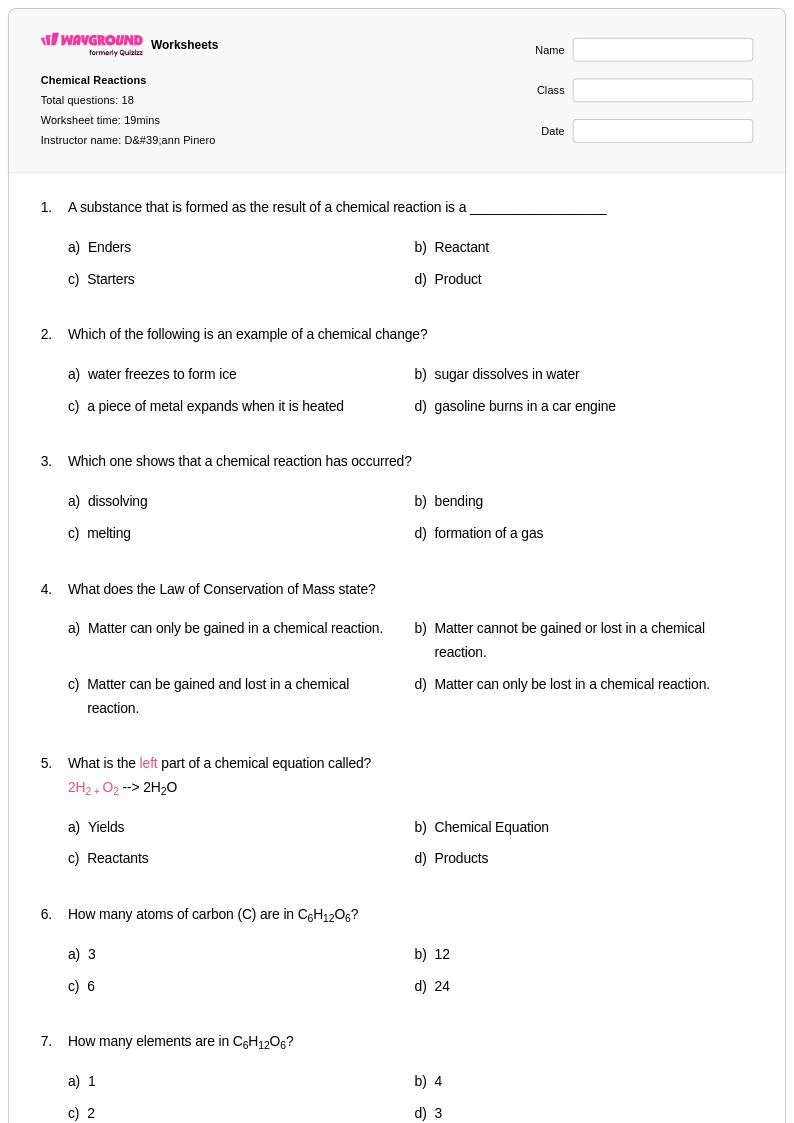
18 Q
6th - 8th
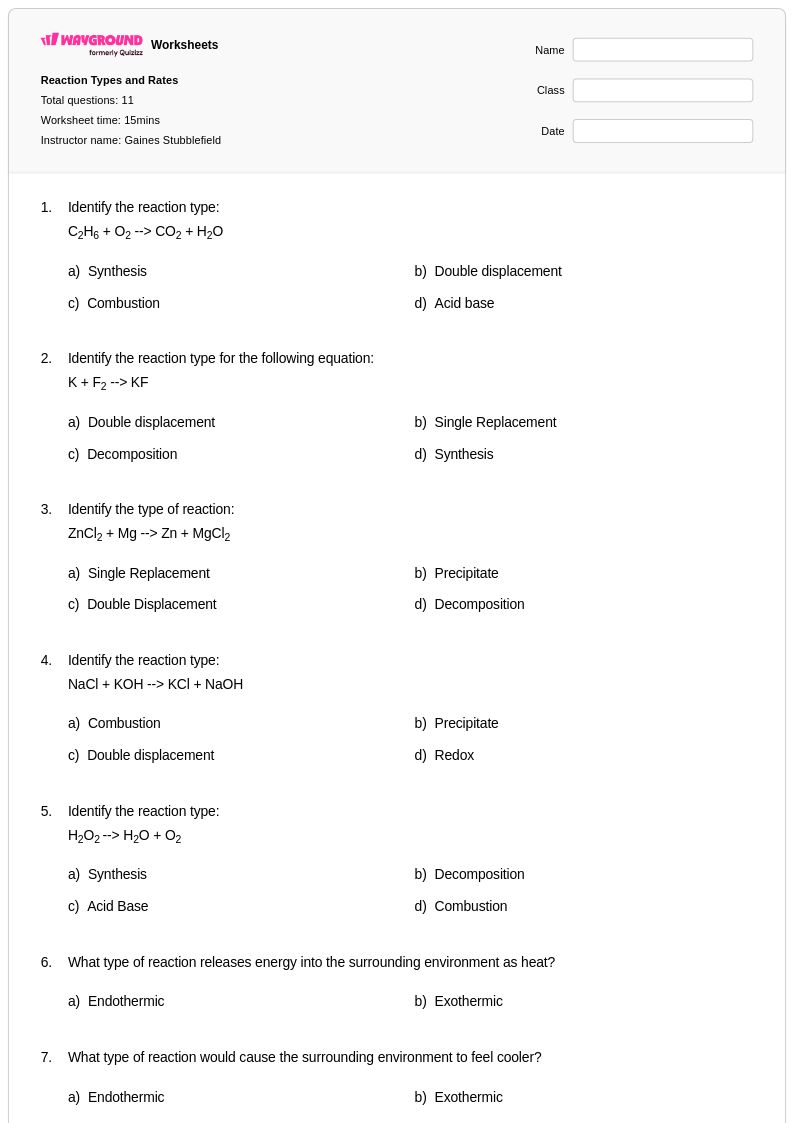
11 Q
8th
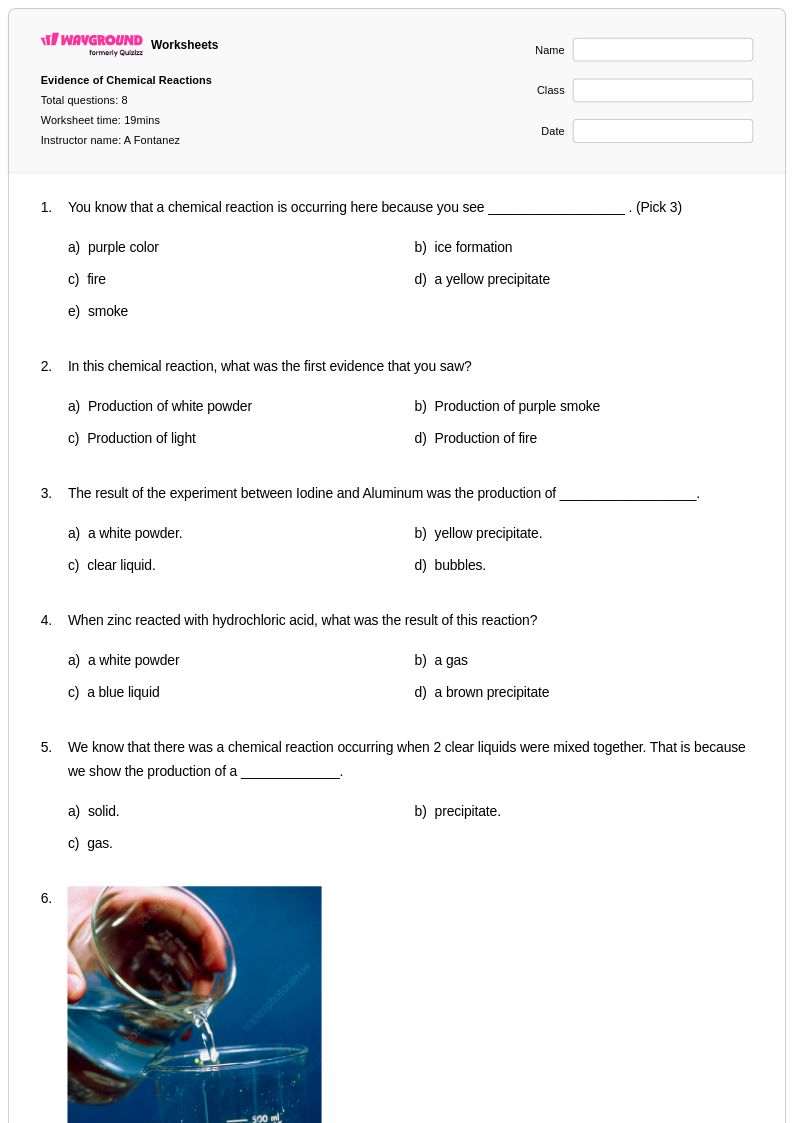
8 Q
6th - 9th
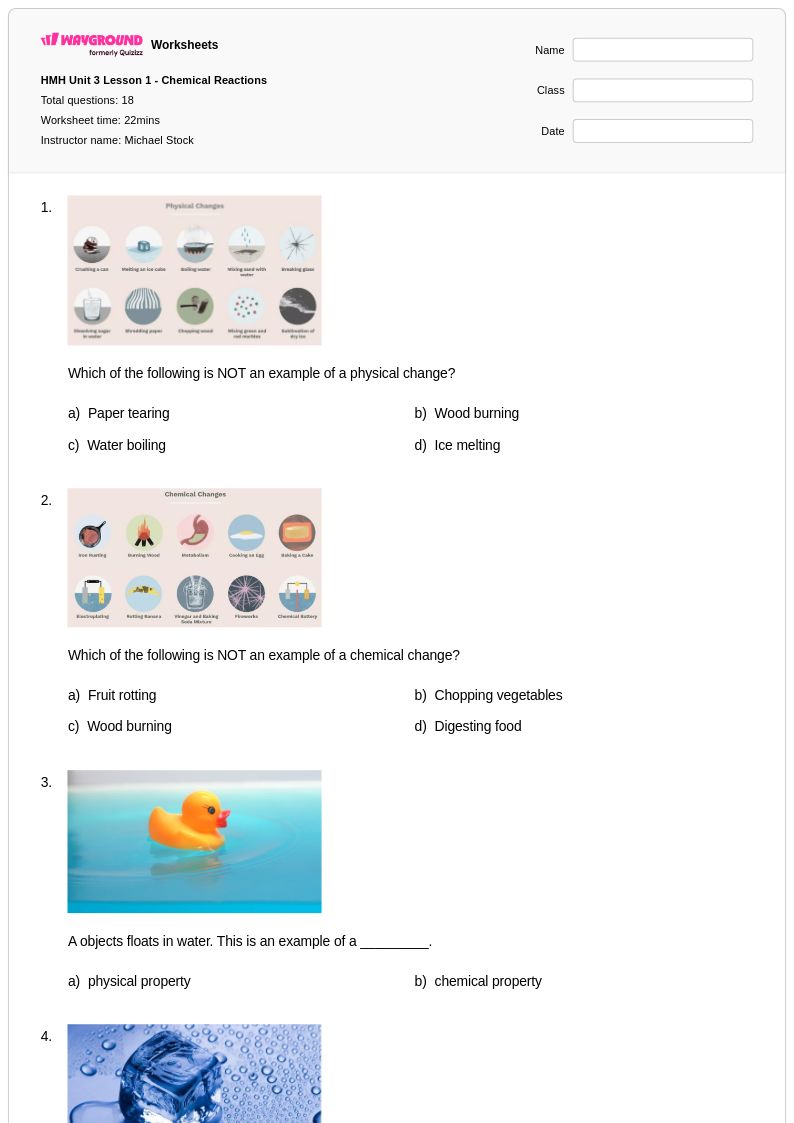
18 Q
6th - 8th
25 Q
8th
9 Q
8th
Explore Identifying Reactions Worksheets by Grades
Explore Other Subject Worksheets for class 8
Explore printable Identifying Reactions worksheets for Class 8
Identifying reactions worksheets for Class 8 students available through Wayground (formerly Quizizz) provide comprehensive practice in recognizing and categorizing different types of chemical reactions. These educational resources strengthen essential chemistry skills by guiding students through systematic analysis of reaction equations, helping them distinguish between synthesis, decomposition, single replacement, double replacement, and combustion reactions. The worksheets feature carefully structured practice problems that progress from basic pattern recognition to more complex reaction identification scenarios, with each resource including detailed answer keys to support independent learning and self-assessment. Teachers can access these free printables in convenient PDF format, making them ideal for both classroom instruction and homework assignments that reinforce fundamental chemistry concepts.
Wayground (formerly Quizizz) supports chemistry educators with an extensive collection of teacher-created worksheets drawn from millions of educational resources specifically designed for Class 8 reaction identification instruction. The platform's robust search and filtering capabilities allow teachers to quickly locate materials aligned with specific chemistry standards and learning objectives, while built-in differentiation tools enable customization based on individual student needs and skill levels. These versatile resources are available in both printable and digital formats, including downloadable PDFs, making them perfect for lesson planning, targeted remediation for struggling students, and enrichment activities for advanced learners. The flexible format options and comprehensive scope of practice problems help teachers create engaging learning experiences that build student confidence in chemical reaction analysis and classification skills.