Explore Class 8 flame test worksheets and printables that help students master chemical element identification through colorful combustion experiments, featuring practice problems, free PDF downloads, and complete answer keys.
Explore printable Flame Test worksheets for Class 8
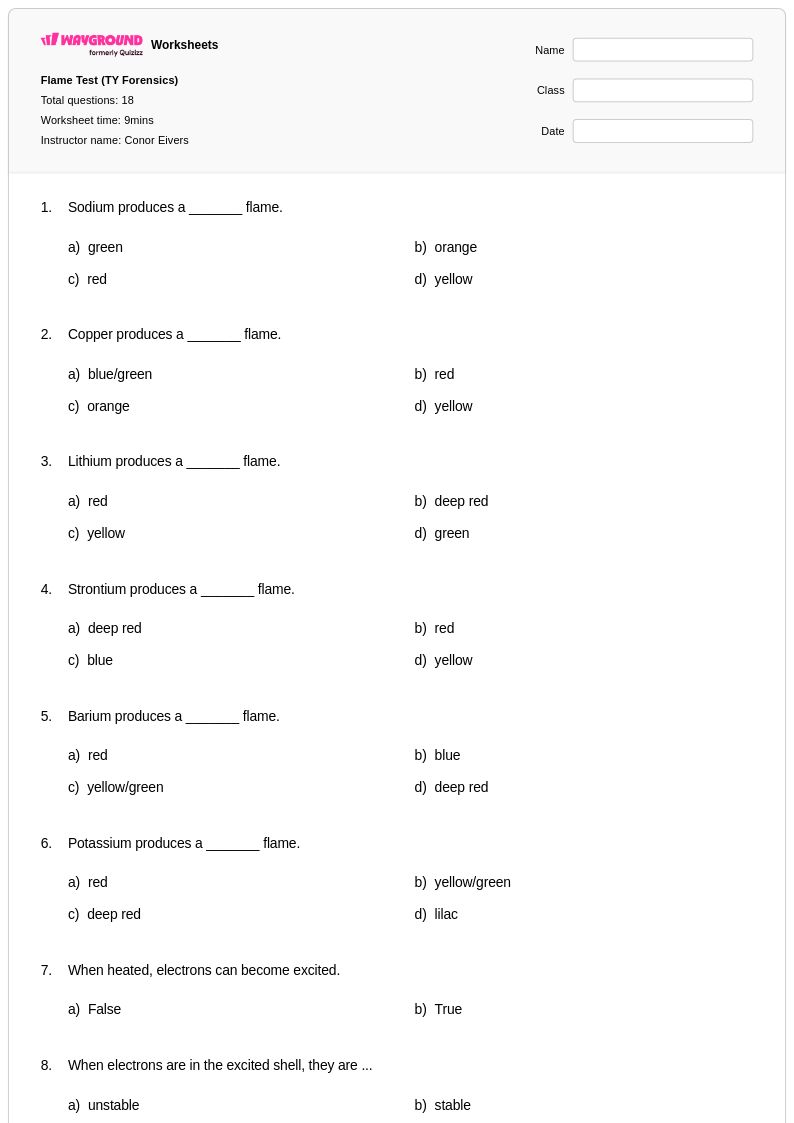
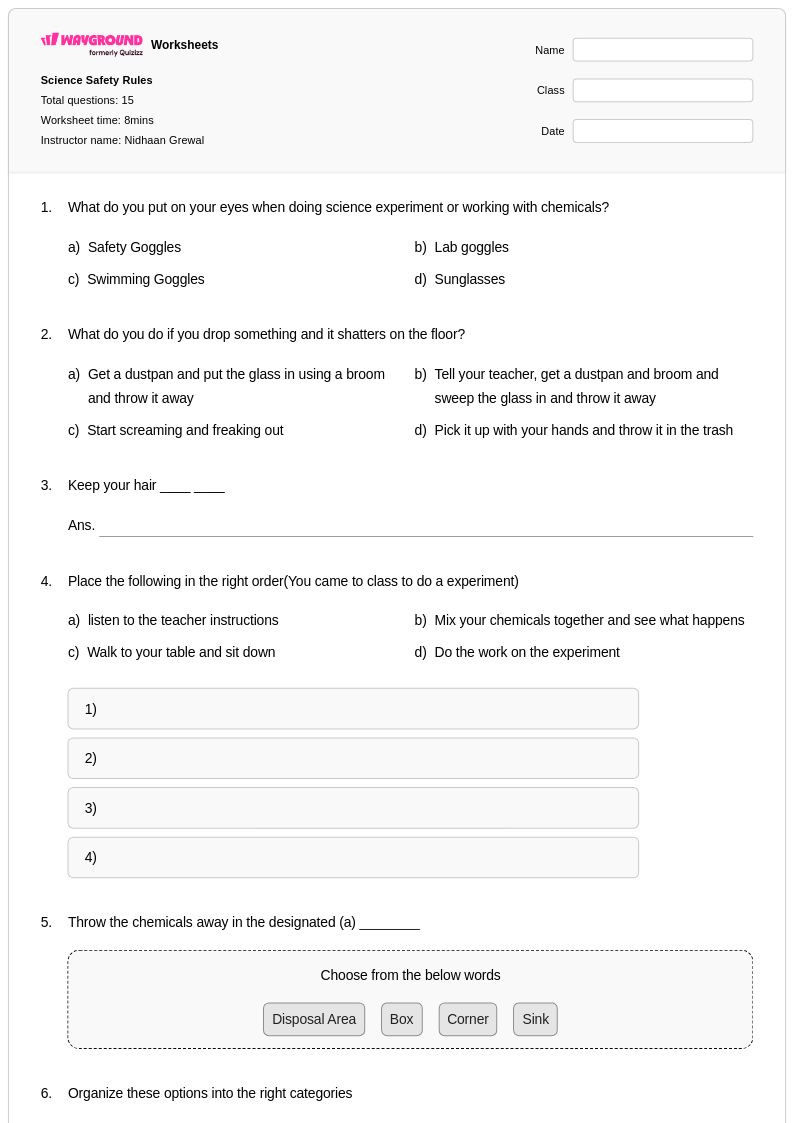
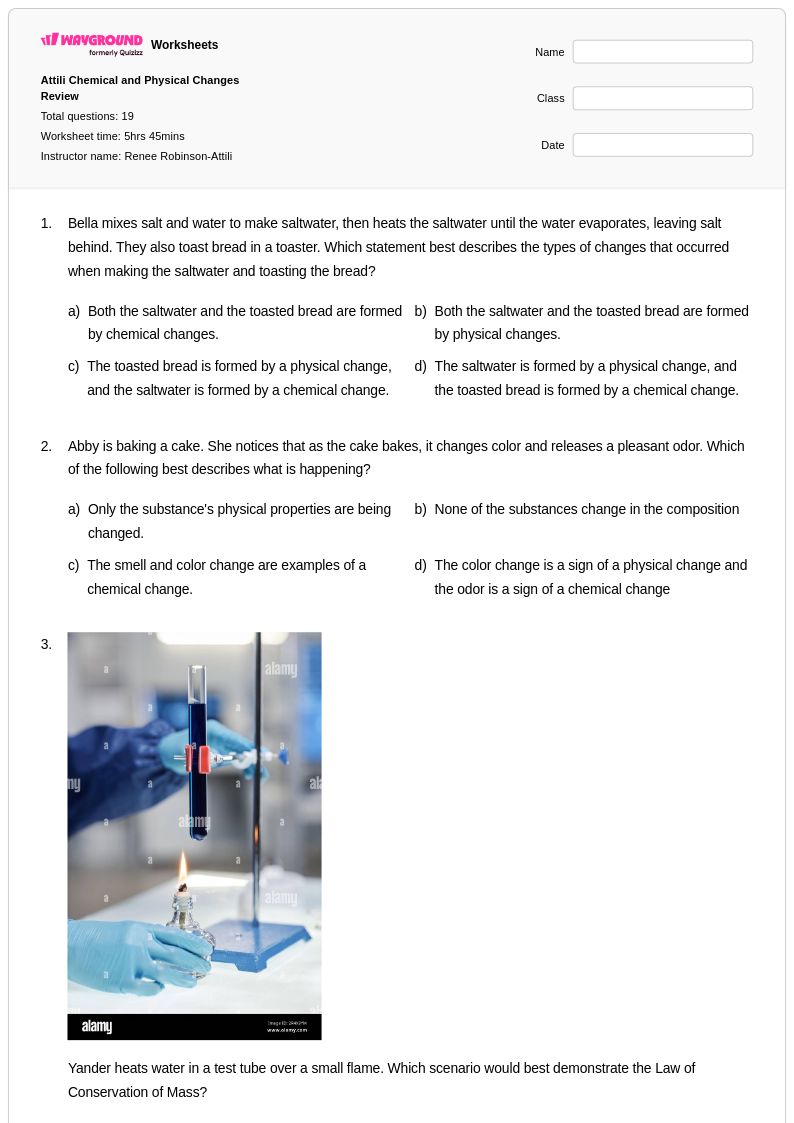
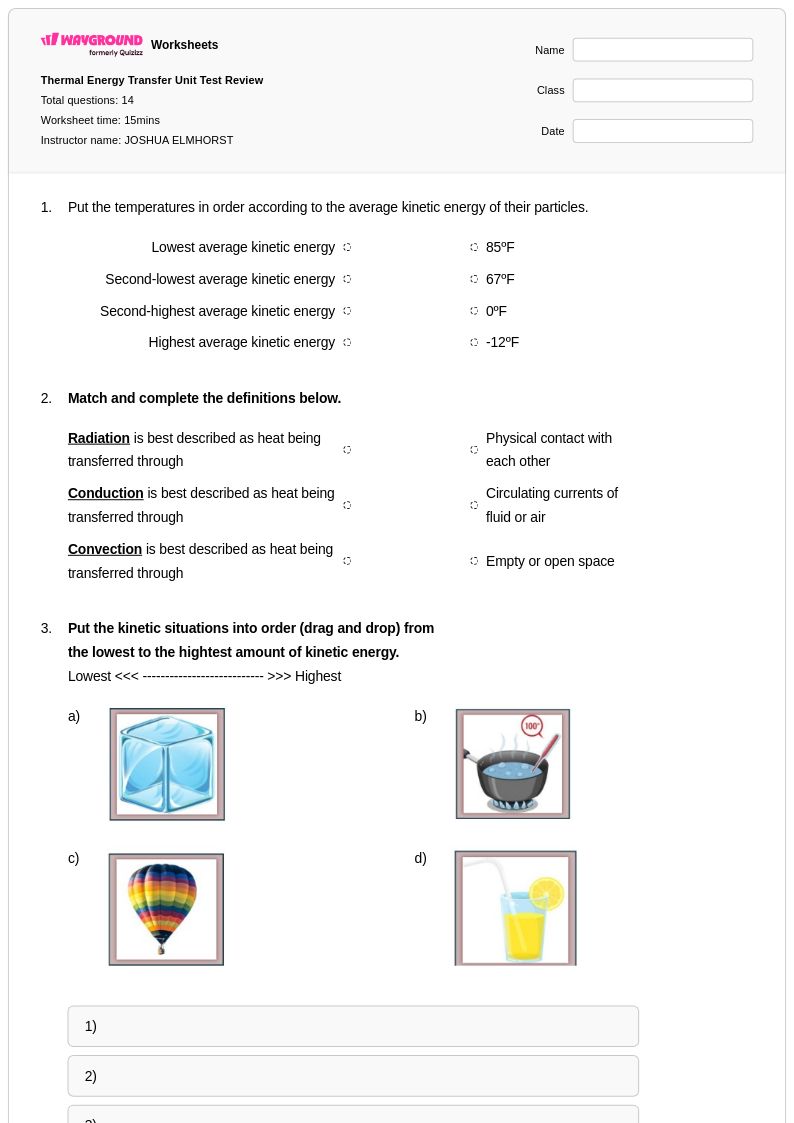
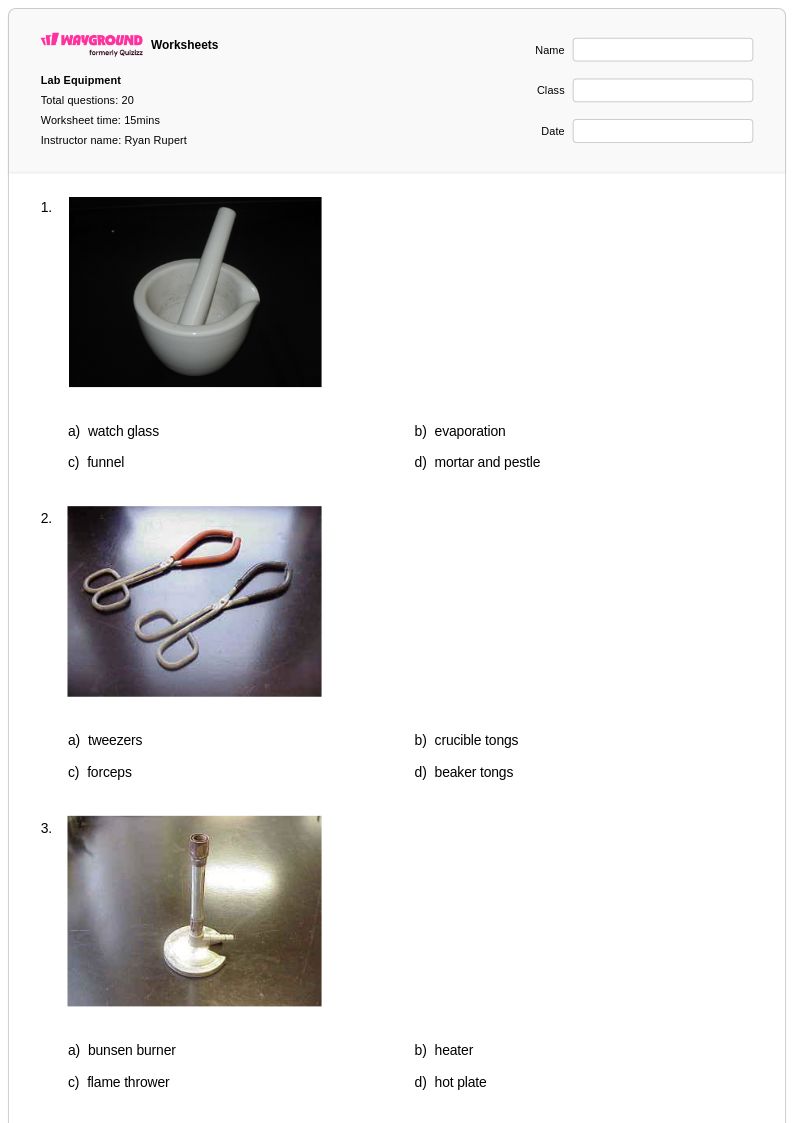
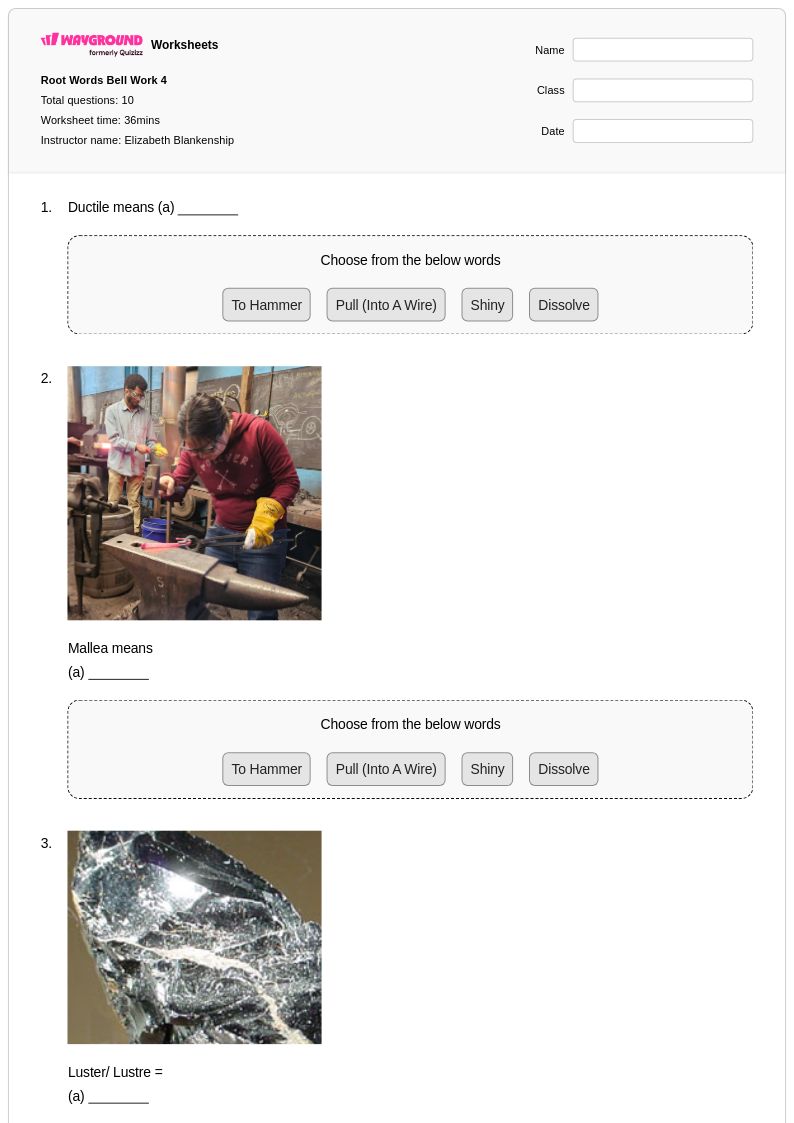
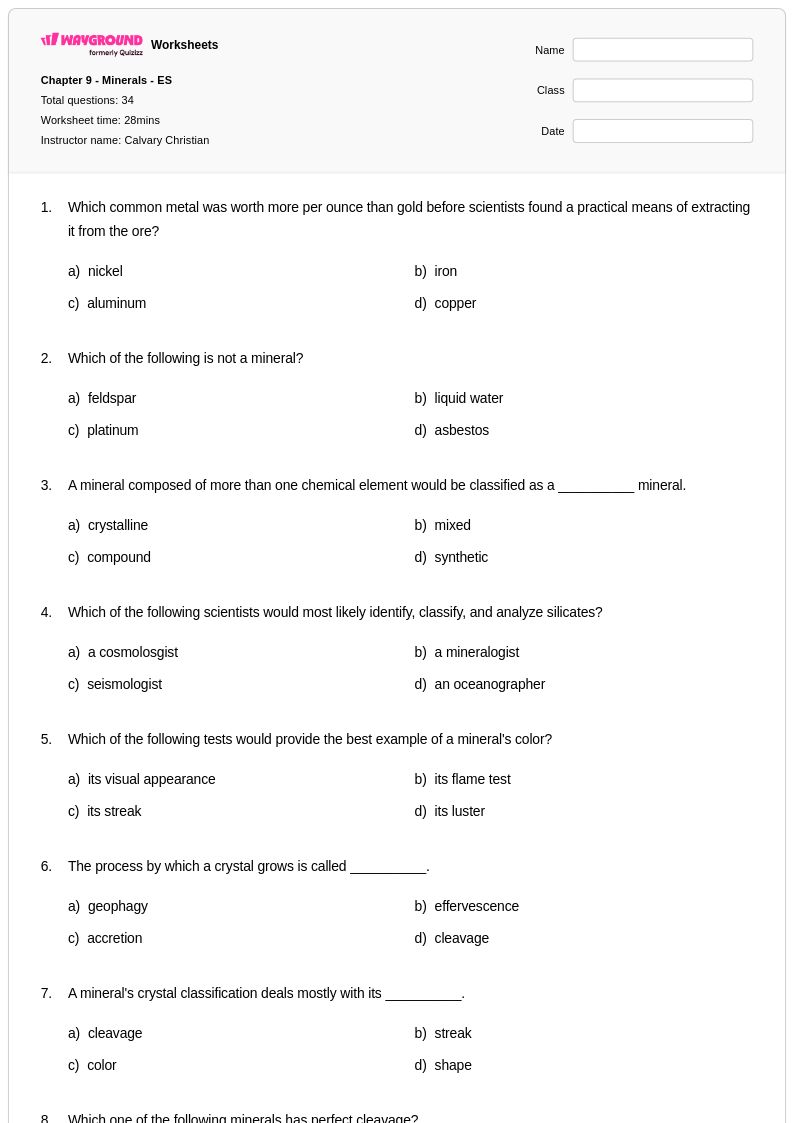
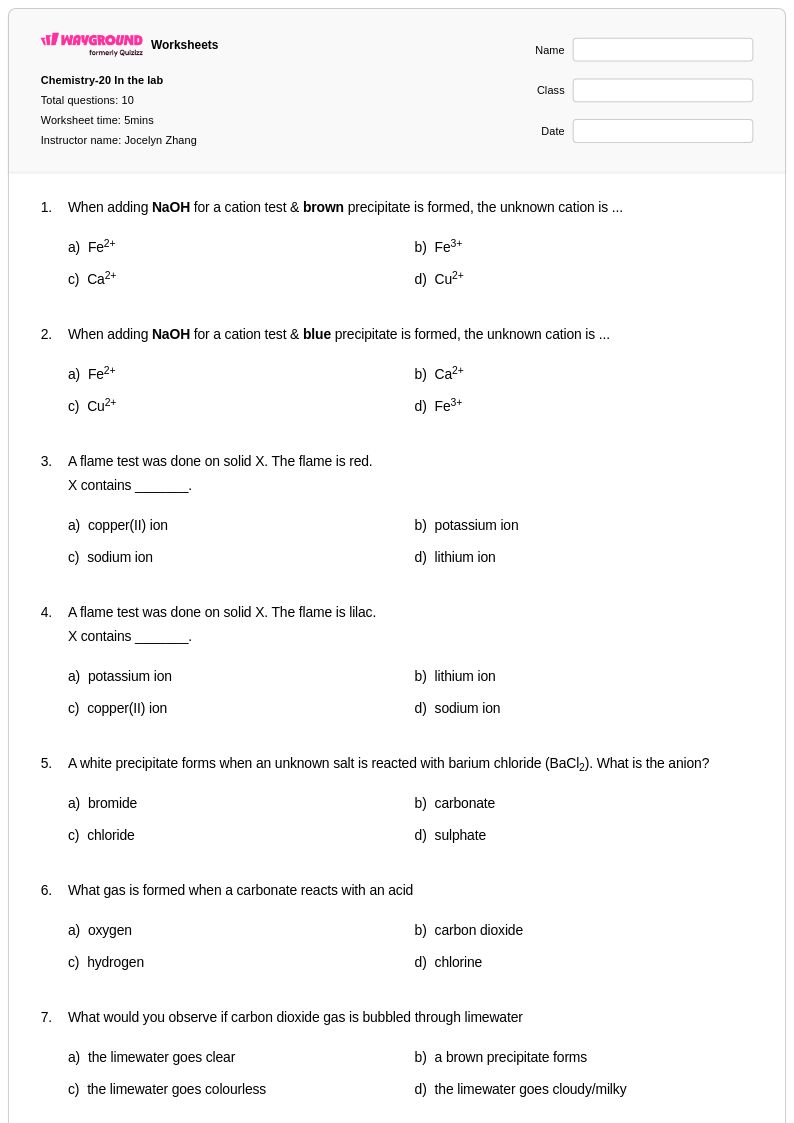
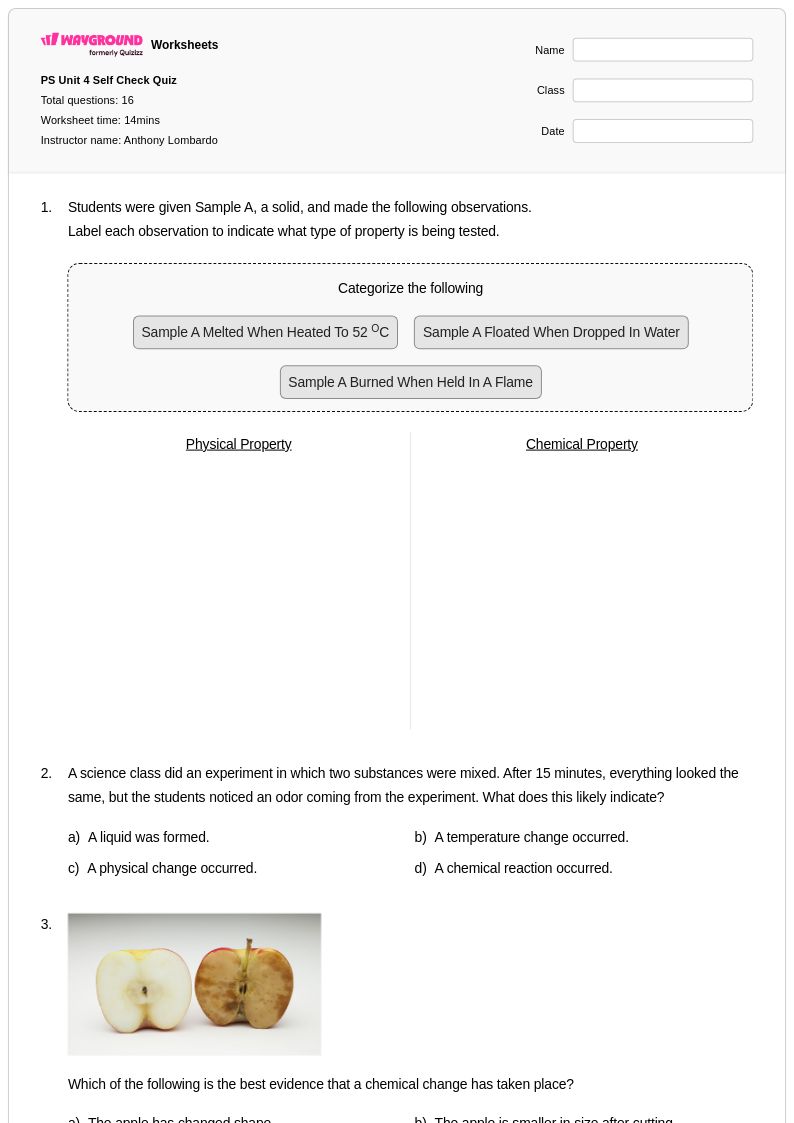
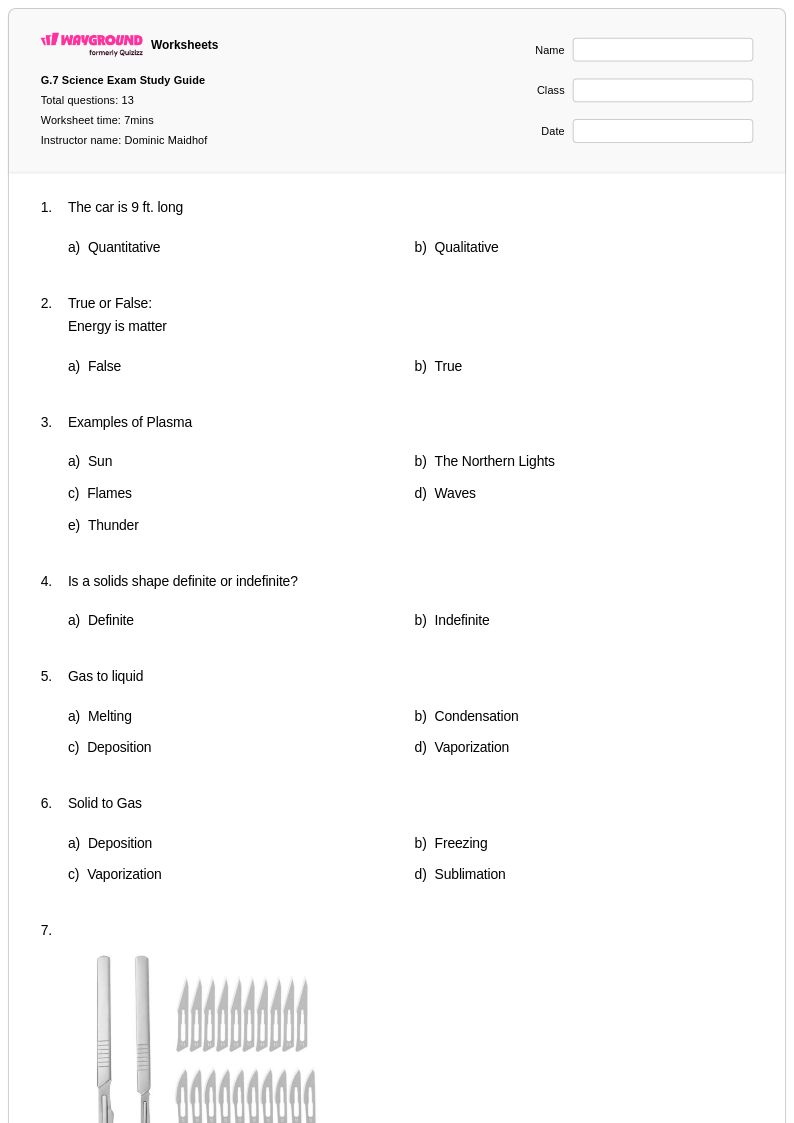
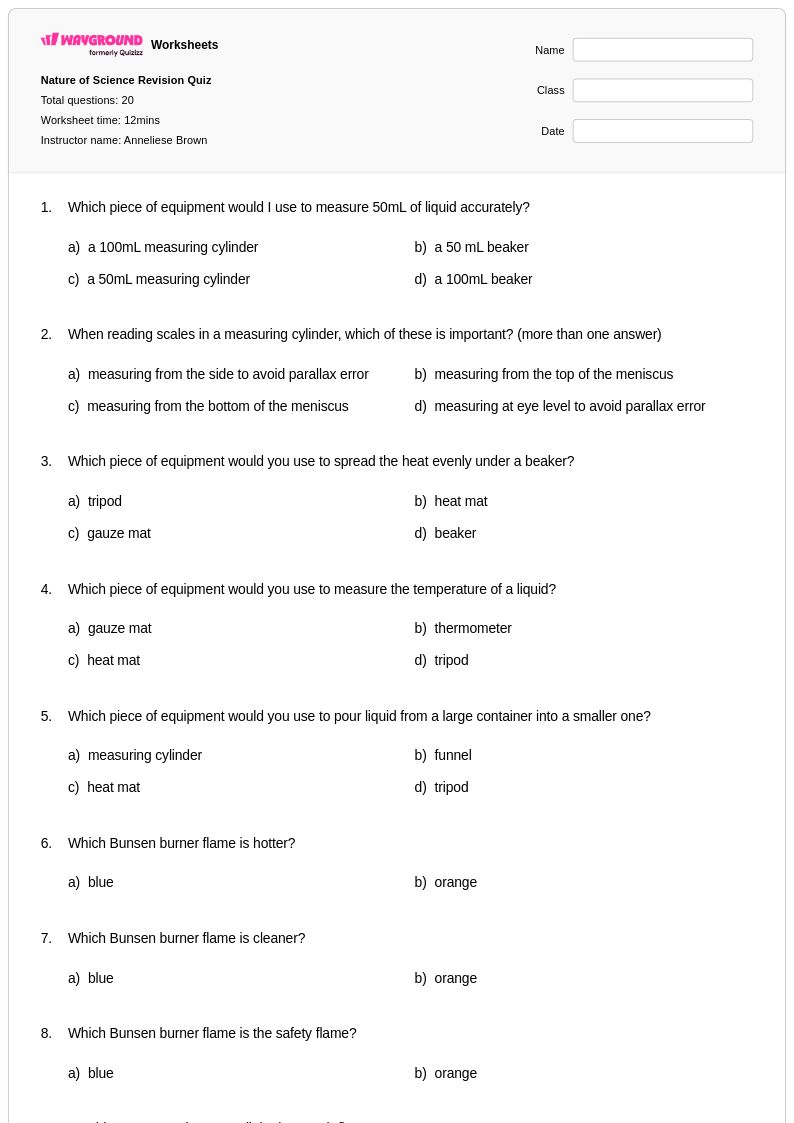
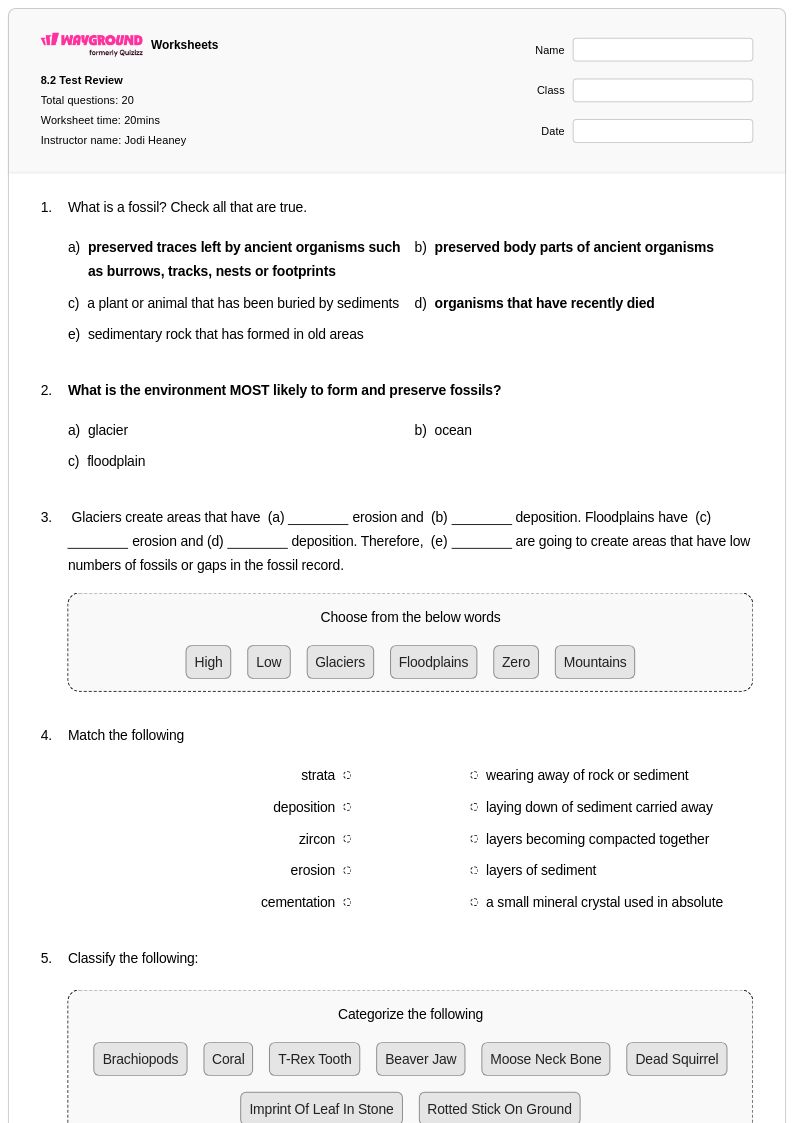
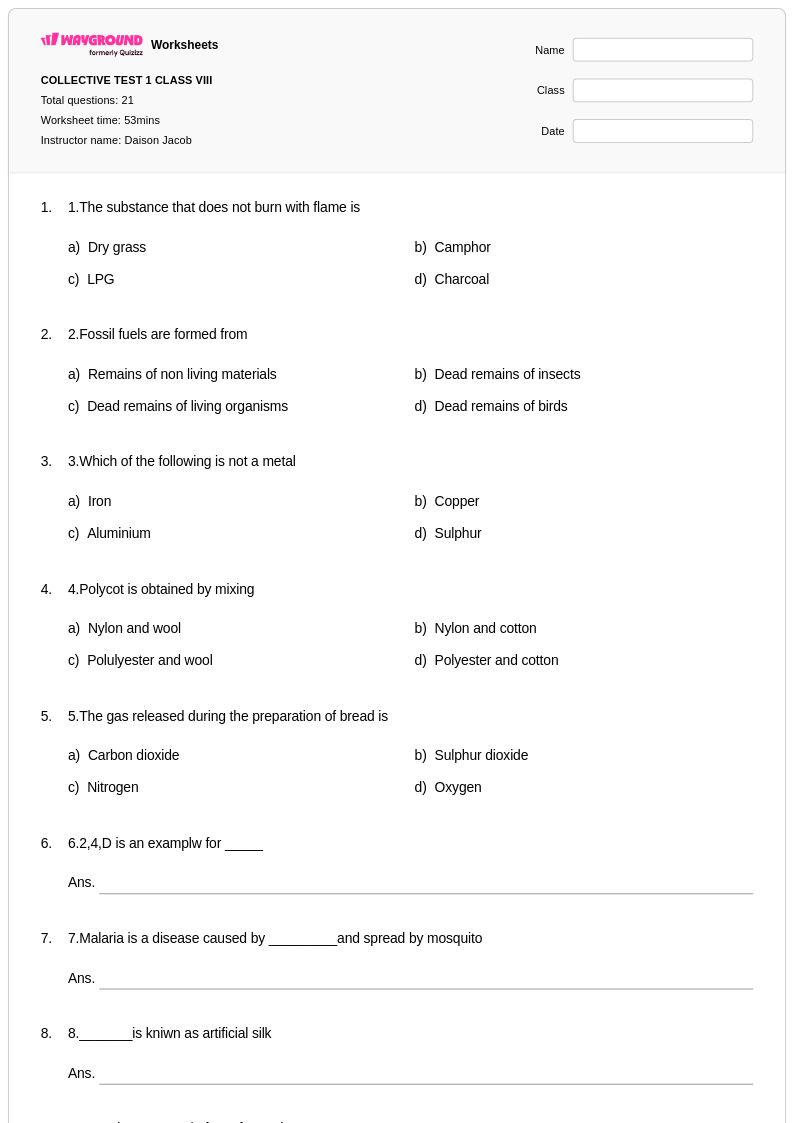
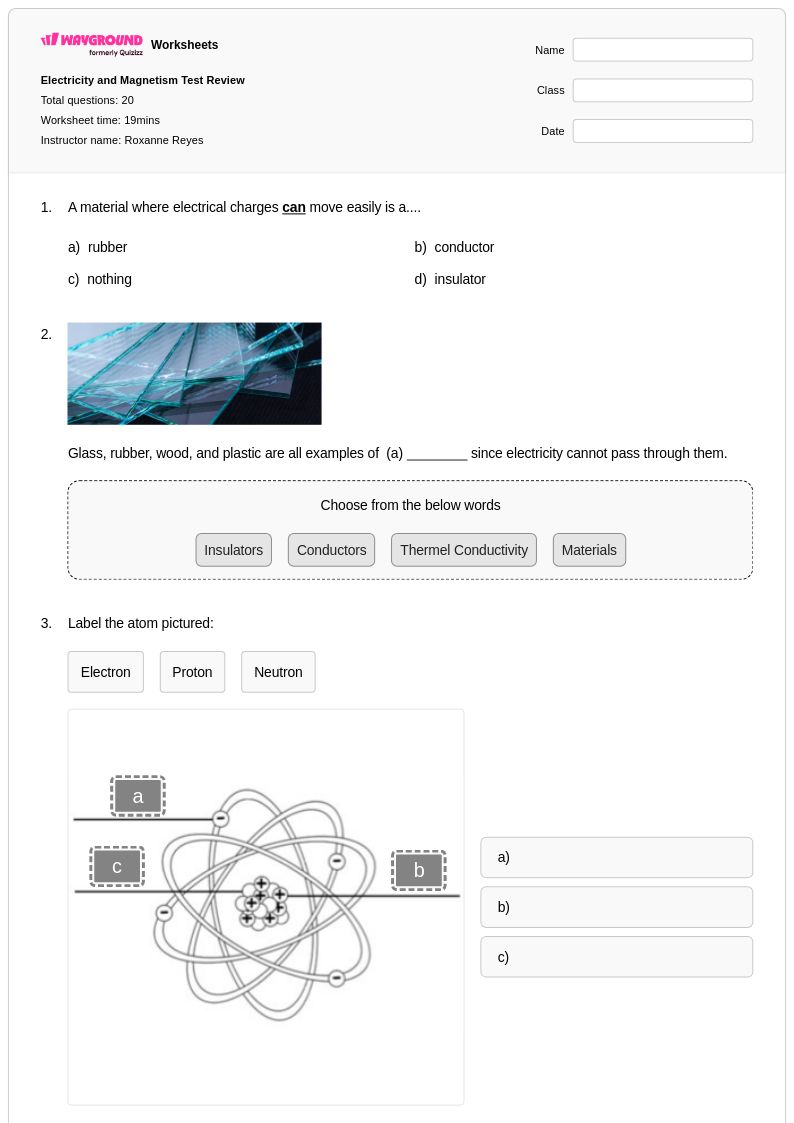
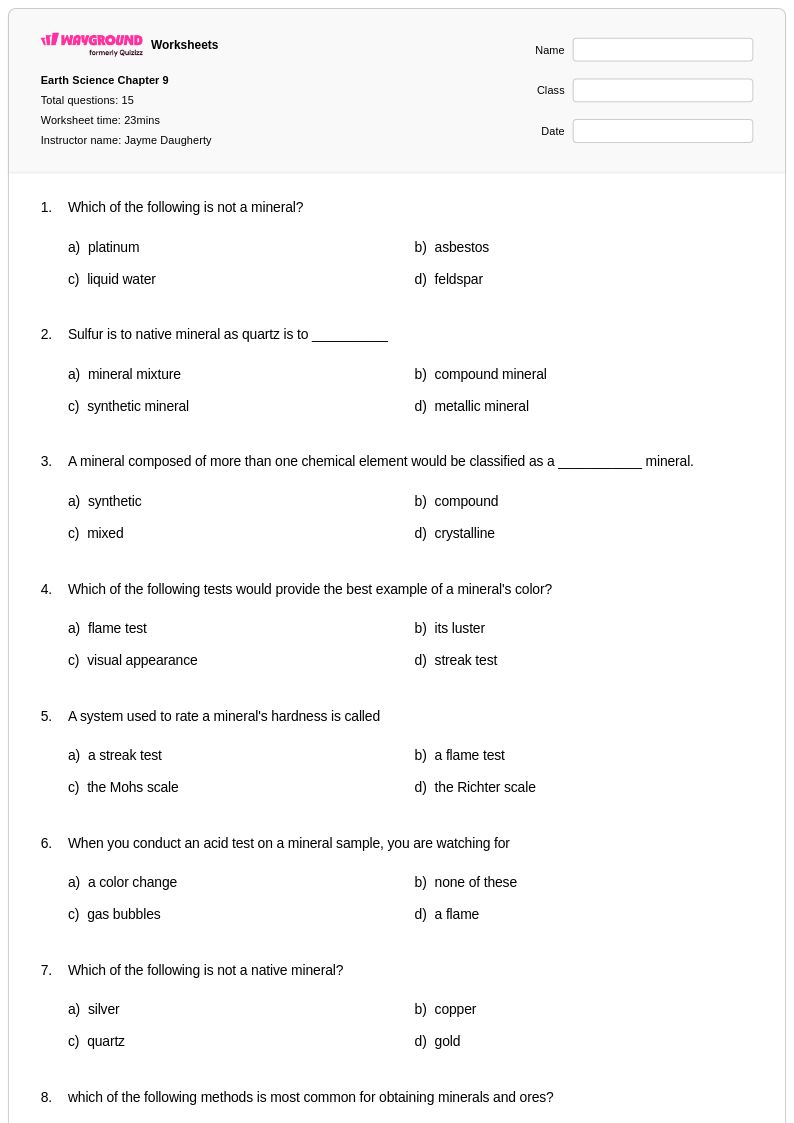
Flame test worksheets for Class 8 students provide comprehensive practice in understanding how different chemical elements produce characteristic colors when heated in a flame. These educational resources from Wayground (formerly Quizizz) strengthen students' analytical skills in qualitative analysis and help them master the connection between atomic structure and observable phenomena. The worksheets include detailed practice problems that guide students through identifying unknown metals based on their flame colors, interpreting spectral data, and understanding the scientific principles behind electron excitation and photon emission. Teachers can access complete answer keys and printable pdf versions that make classroom implementation seamless, while the free format ensures accessibility for all learning environments.
Wayground's extensive collection of flame test worksheets draws from millions of teacher-created resources, offering educators robust search and filtering capabilities to find materials perfectly suited to their Class 8 chemistry curriculum. The platform's standards alignment ensures that worksheets meet educational benchmarks while providing differentiation tools that support diverse learning needs through customizable difficulty levels and varied question formats. Teachers can utilize these resources for initial skill building, targeted remediation, or enrichment activities, with both printable and digital pdf formats available for flexible classroom management. The comprehensive nature of these worksheet collections enables educators to create cohesive learning sequences that build student confidence in laboratory techniques and chemical analysis while reinforcing fundamental concepts about atomic behavior and spectroscopy.
FAQs
How do I teach flame test in chemistry class?
Start by grounding students in the electron excitation model: when a metallic element is heated, its electrons absorb energy, jump to a higher energy level, and emit visible light as photons when they return to ground state. Each element emits a characteristic wavelength, which students perceive as a distinct flame color. Before the lab, use diagrams of emission spectra alongside a flame color reference chart so students can connect the visual observation to the underlying atomic structure. Post-lab discussion should explicitly link what students saw to concepts like quantized energy levels and the electromagnetic spectrum.
What exercises help students practice flame test identification?
Effective practice moves from recognition to application: begin with matching exercises that pair metallic ions to their characteristic colors, such as sodium's bright yellow, copper's blue-green, or potassium's lilac. Then progress to unknown-identification scenarios where students are given a flame color description and must determine the element present. More rigorous practice includes qualitative analysis problems where a mixture of ions is present and students must reason through which element's signal dominates. Flame test worksheets on Wayground cover this full progression, from basic identification through complex multi-ion scenarios, with answer keys included.
What mistakes do students commonly make when interpreting flame test results?
The most common error is confusing similar flame colors, particularly potassium's lilac and sodium's yellow, especially since trace sodium contamination on equipment can mask other colors entirely. Students also frequently misidentify copper's blue-green as lithium's crimson red if their color vocabulary is imprecise. A deeper conceptual mistake is treating flame color as a fixed property of the metal rather than understanding it arises from electron transitions specific to that element's quantized energy levels. Emphasizing the need for clean nichrome wire and reinforcing the connection between wavelength and color perception directly addresses these recurring errors.
How do I differentiate flame test instruction for students at different skill levels?
For students still building foundational skills, reduce the number of elements covered and provide a color-to-element reference table during practice problems so they can focus on the reasoning process rather than memorization. Advanced students benefit from problems that incorporate wavelength values and require them to calculate or rank photon energies using E = hf. On Wayground, teachers can apply accommodations such as reduced answer choices for students who need less cognitive load, or enable the Read Aloud feature for students who benefit from auditory support, ensuring every learner can engage with the same core content at an appropriate level.
How can I use Wayground's flame test worksheets in my classroom?
Wayground's flame test worksheets are available as printable PDFs for traditional lab and classroom settings and in digital formats for technology-integrated or remote learning environments. Teachers can also host the worksheets as a live quiz directly on Wayground, making it easy to collect student responses and review results in real time. Each worksheet includes a complete answer key, so the resources work equally well for in-class instruction, pre-lab preparation, post-lab review, or independent practice.
How does the flame test connect to atomic structure concepts students need to know?
The flame test is a direct, observable application of Bohr's model of the atom and the concept of quantized electron energy levels. When a metal is heated, its electrons absorb thermal energy and transition to excited states; as they fall back to lower energy levels, they release that energy as photons of specific wavelengths, producing the characteristic colors students observe. This makes the flame test one of the most effective lab demonstrations for making abstract atomic theory concrete, because students can see evidence of electron transitions with the naked eye. Connecting the colors to wavelength values on the visible spectrum also reinforces broader electromagnetic radiation concepts covered in most chemistry curricula.