Free Printable Critical Race Theory Worksheets for Class 9
Explore Class 9 Critical Race Theory worksheets and printables that help students analyze systemic racism, historical perspectives, and social justice concepts through engaging practice problems with comprehensive answer keys.
Explore printable Critical Race Theory worksheets for Class 9
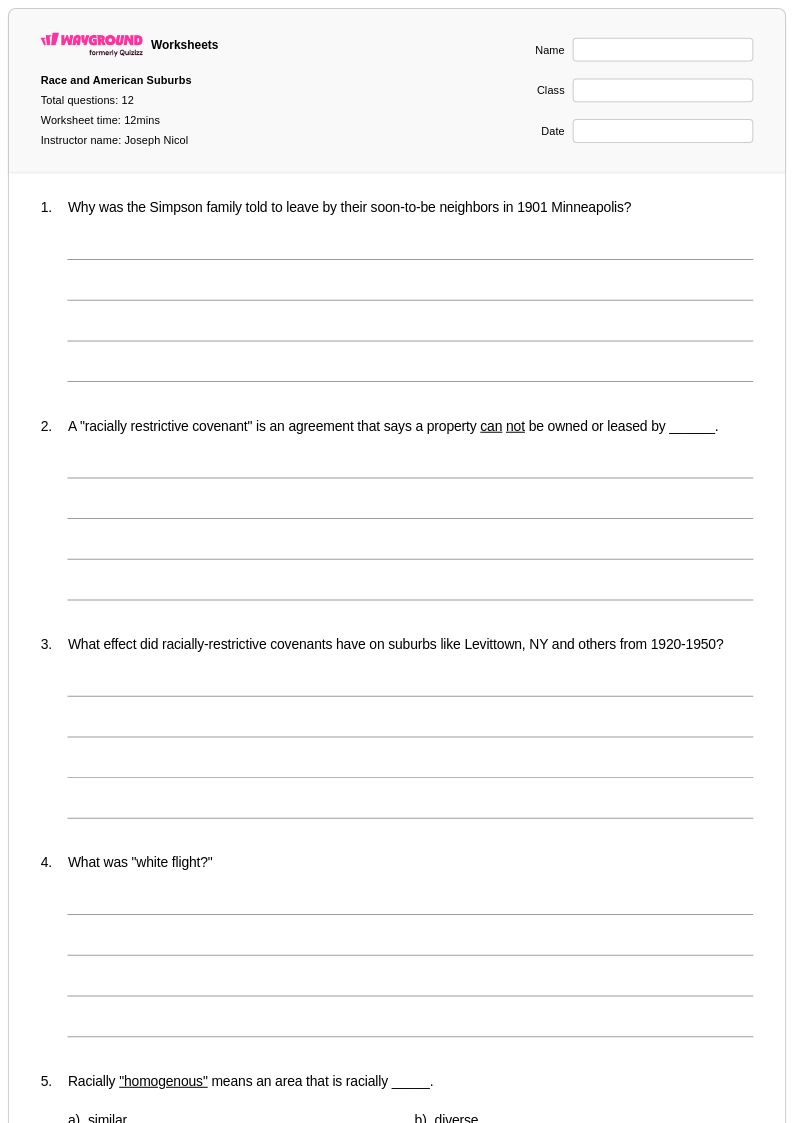
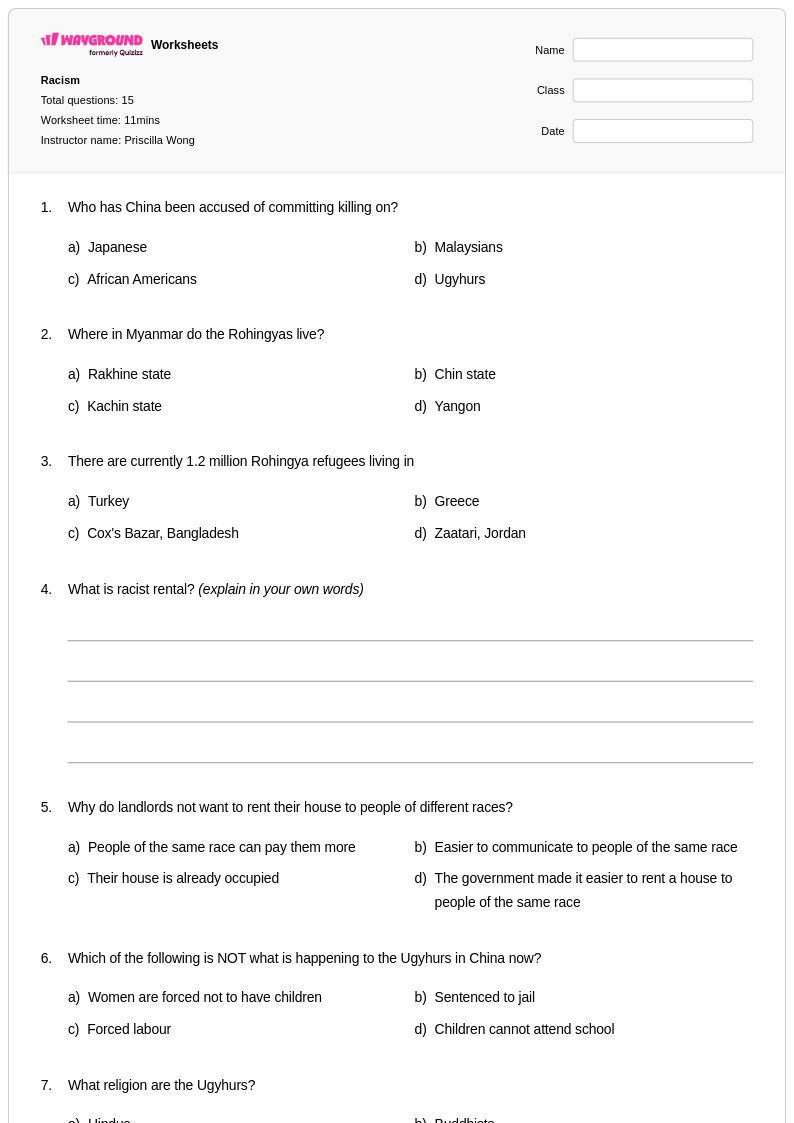
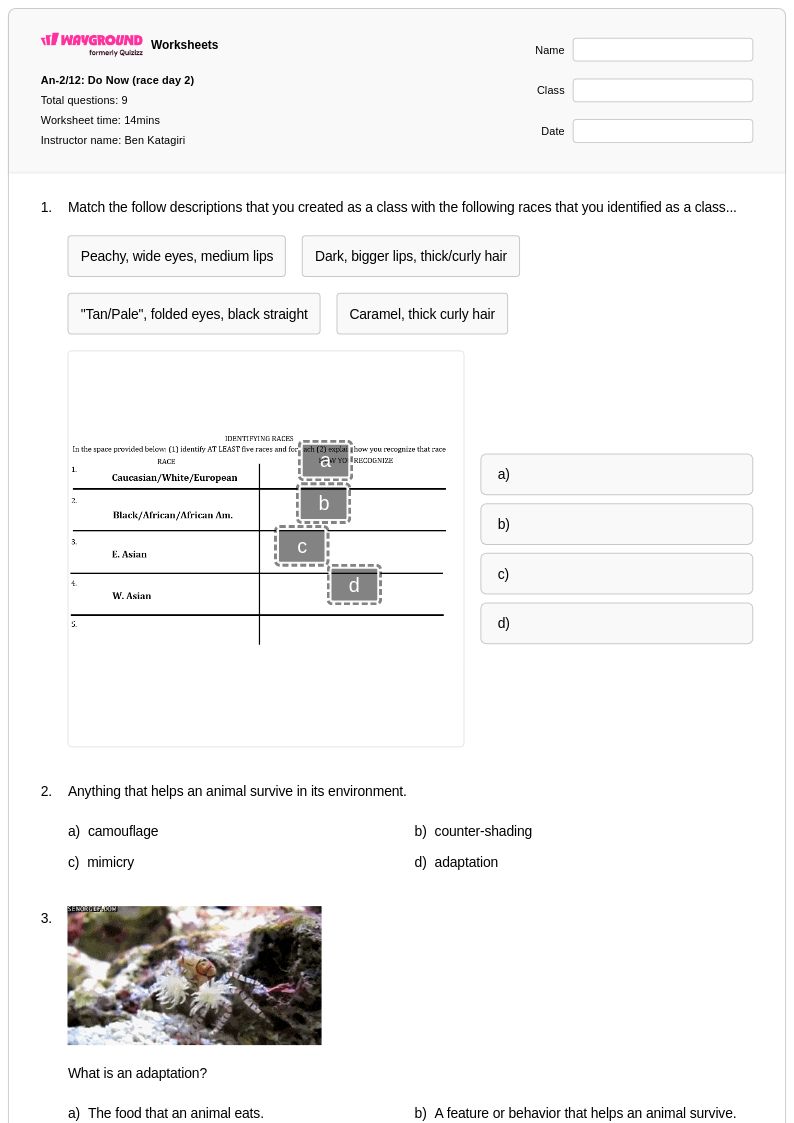
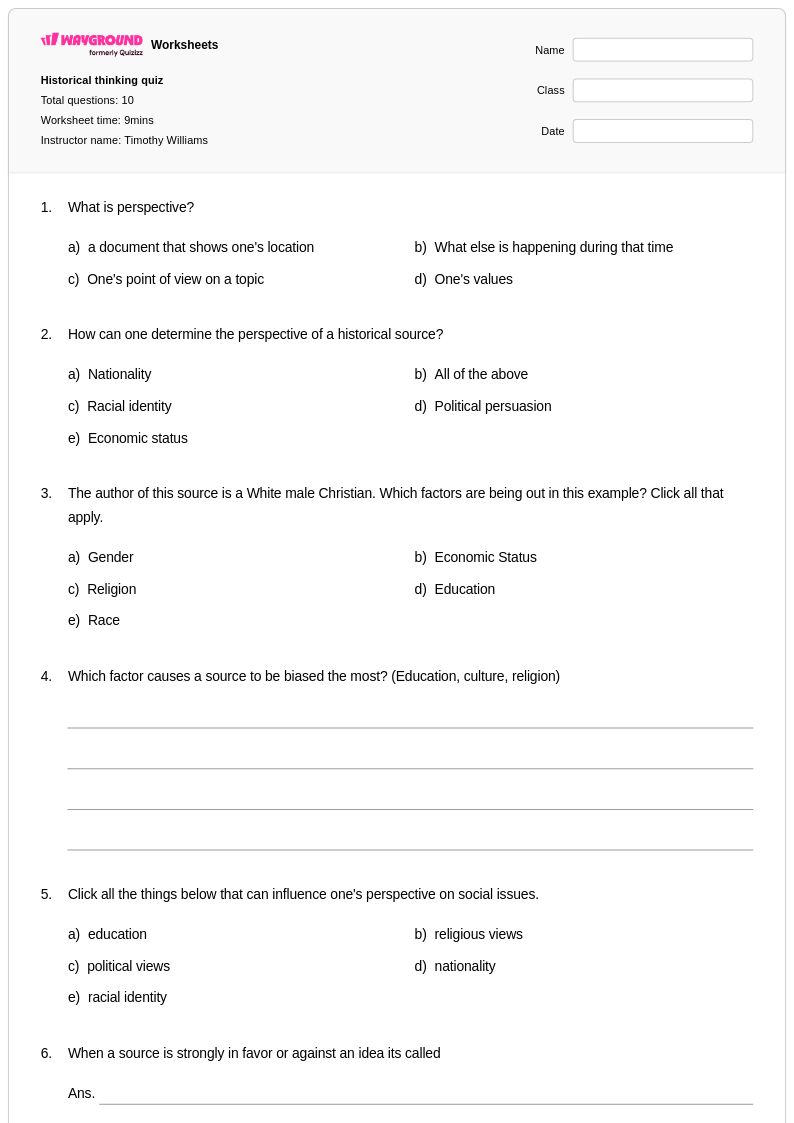
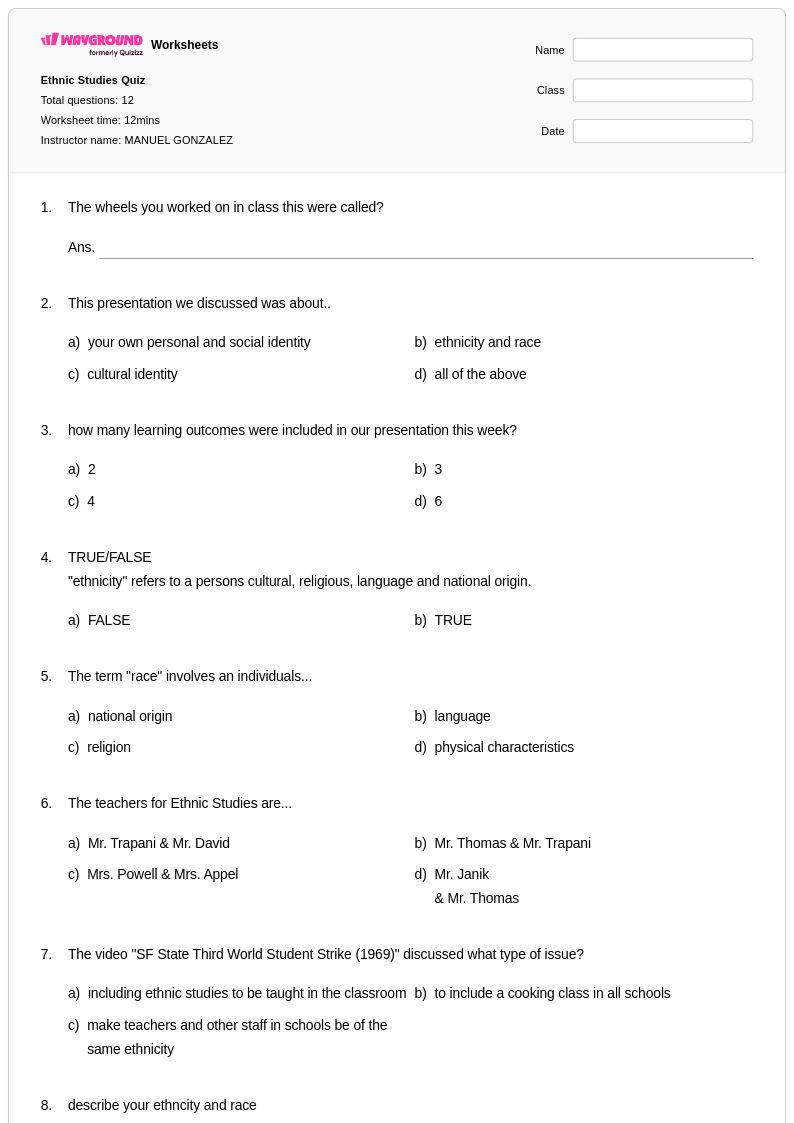
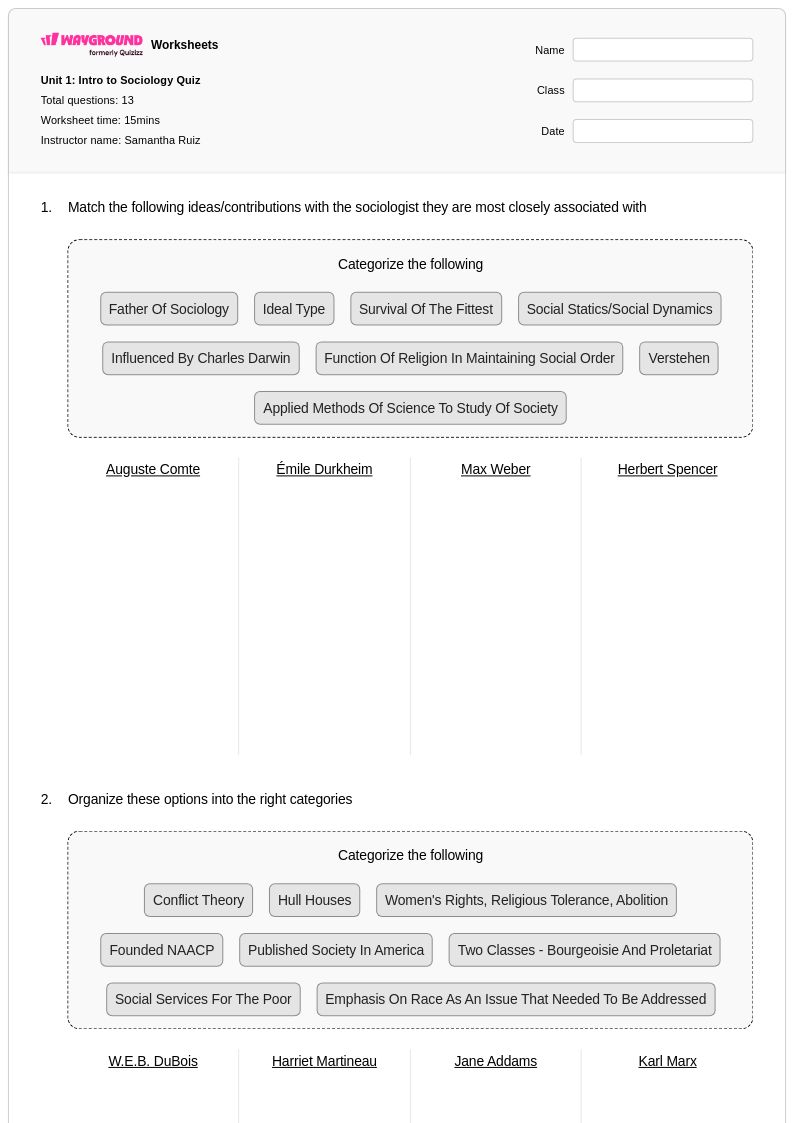
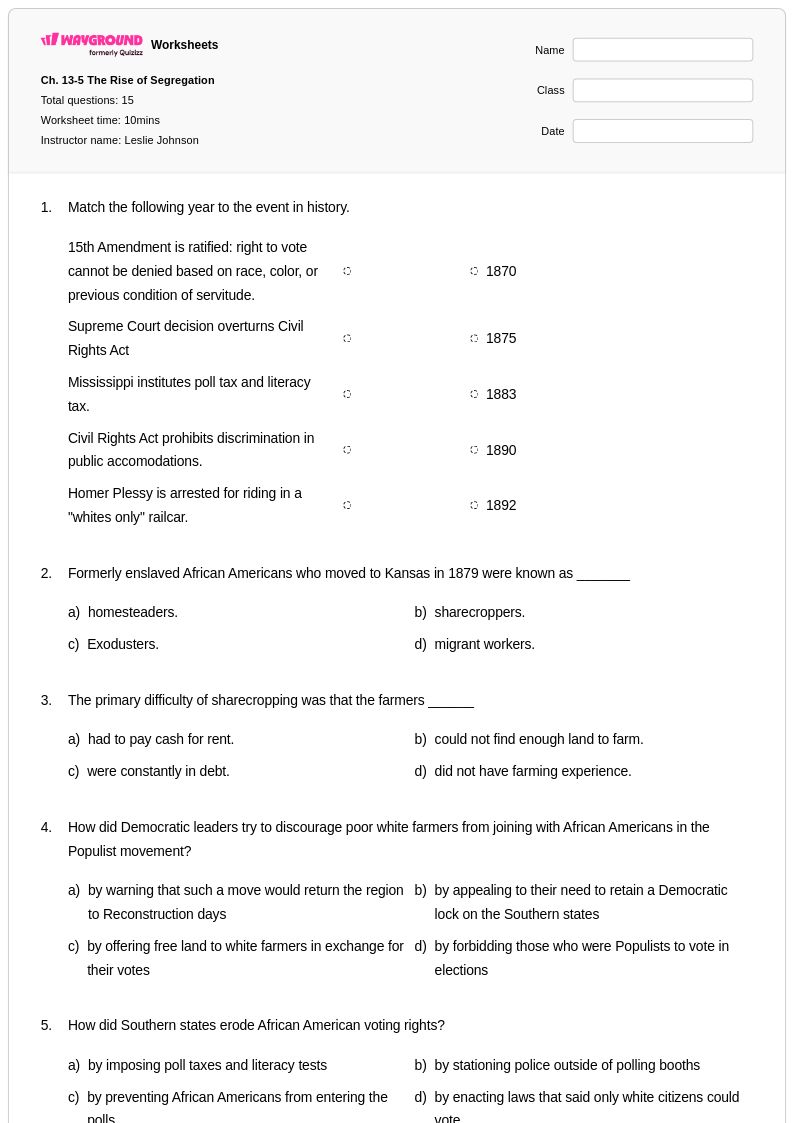
Critical Race Theory worksheets for Class 9 students available through Wayground (formerly Quizizz) provide comprehensive resources for exploring the intersection of race, law, and social power structures within historical contexts. These worksheets strengthen critical thinking skills by guiding students through complex analyses of how racial categories have been constructed and maintained throughout different historical periods, examining landmark legal cases, and evaluating the ongoing impact of systemic racism on contemporary society. Each worksheet includes detailed answer keys to support accurate assessment, with free printable pdf formats that make classroom implementation seamless. Practice problems encourage students to apply theoretical frameworks to real-world historical examples, fostering deeper understanding of how race has functioned as both a social construct and a mechanism of power distribution across various time periods and geographic regions.
Wayground (formerly Quizizz) supports educators with an extensive collection of teacher-created Critical Race Theory resources, drawing from millions of classroom-tested materials that undergo rigorous standards alignment to ensure academic quality and curricular relevance. The platform's advanced search and filtering capabilities enable teachers to quickly locate grade-appropriate content that matches specific learning objectives, while differentiation tools allow for customized assignments that meet diverse student needs and reading levels. These flexible worksheet collections are available in both printable and digital pdf formats, facilitating seamless integration into various instructional models whether for initial skill practice, targeted remediation, or advanced enrichment activities. Teachers can efficiently plan comprehensive units that build students' capacity to analyze historical narratives critically, examine multiple perspectives on contested historical events, and develop sophisticated understanding of how racial dynamics have shaped social, political, and economic institutions throughout world history.
FAQs
How do I teach Critical Race Theory in a social studies classroom?
Teaching Critical Race Theory effectively means grounding abstract concepts in concrete historical examples, such as how laws and institutions have shaped racial hierarchies over time. Start with primary source analysis to help students see how racial categories were legally and socially constructed, then move into case studies that connect those historical patterns to contemporary social outcomes. Structured discussion protocols and reflective writing exercises help students engage with complex perspectives without conflating academic analysis with personal opinion.
What kinds of activities help students practice Critical Race Theory concepts?
Practice activities for Critical Race Theory should push students beyond surface-level comprehension into analysis and evaluation. Effective exercises include primary source analysis, comparative case studies examining institutional racism across different historical periods, and structured writing prompts that ask students to evaluate diverse perspectives on racial justice and equality. These formats build the analytical and interpretive skills essential for advanced social studies coursework.
What misconceptions do students commonly have about Critical Race Theory?
A common misconception is that Critical Race Theory assigns individual blame rather than examining how systemic structures and institutions produce racial disparities over time. Students also frequently conflate correlation with causation when analyzing social outcomes, assuming that disparate results reflect individual choices rather than embedded institutional patterns. Addressing these errors directly through guided case studies and evidence-based discussion helps students develop more precise analytical frameworks.
How can I facilitate productive classroom discussions about race, power, and social justice?
Productive discussions about race and social justice require clear academic framing from the outset — establishing that students are analyzing historical and structural phenomena, not debating personal identities. Using primary sources and structured discussion protocols helps anchor student responses in evidence rather than opinion. Building in reflective writing time after discussion gives students space to process complex perspectives and articulate their reasoning with greater precision.
How do I use Critical Race Theory worksheets from Wayground in my classroom?
Wayground's Critical Race Theory worksheets are available as printable PDFs for traditional classroom use and in digital formats for technology-integrated or hybrid learning environments, accommodating a range of teaching contexts and student preferences. Teachers can also host worksheets as a live quiz on Wayground for real-time student engagement. Each worksheet includes a comprehensive answer key, making them practical for independent student work, small group analysis, or whole-class discussion. The flexible format means the same materials can support in-person instruction and remote or asynchronous learning without additional preparation.
How can I support diverse learners when teaching Critical Race Theory concepts?
When working with diverse learners on complex academic content like Critical Race Theory, differentiation is critical to ensuring all students can access and engage with the material. On Wayground, teachers can apply individual accommodations such as Read Aloud for students who benefit from audio support, reduced answer choices to lower cognitive load, and extended time per question for students who need it. These settings are saved per student and apply automatically across future sessions, so teachers spend less time reconfiguring and more time facilitating meaningful discussion.