Free Printable Rise and Spread of Islam Worksheets for Class 9
Explore Class 9 Rise and Spread of Islam worksheets from Wayground that help students master early Islamic history through engaging printables, practice problems, and comprehensive answer keys.
Explore printable Rise and Spread of Islam worksheets for Class 9
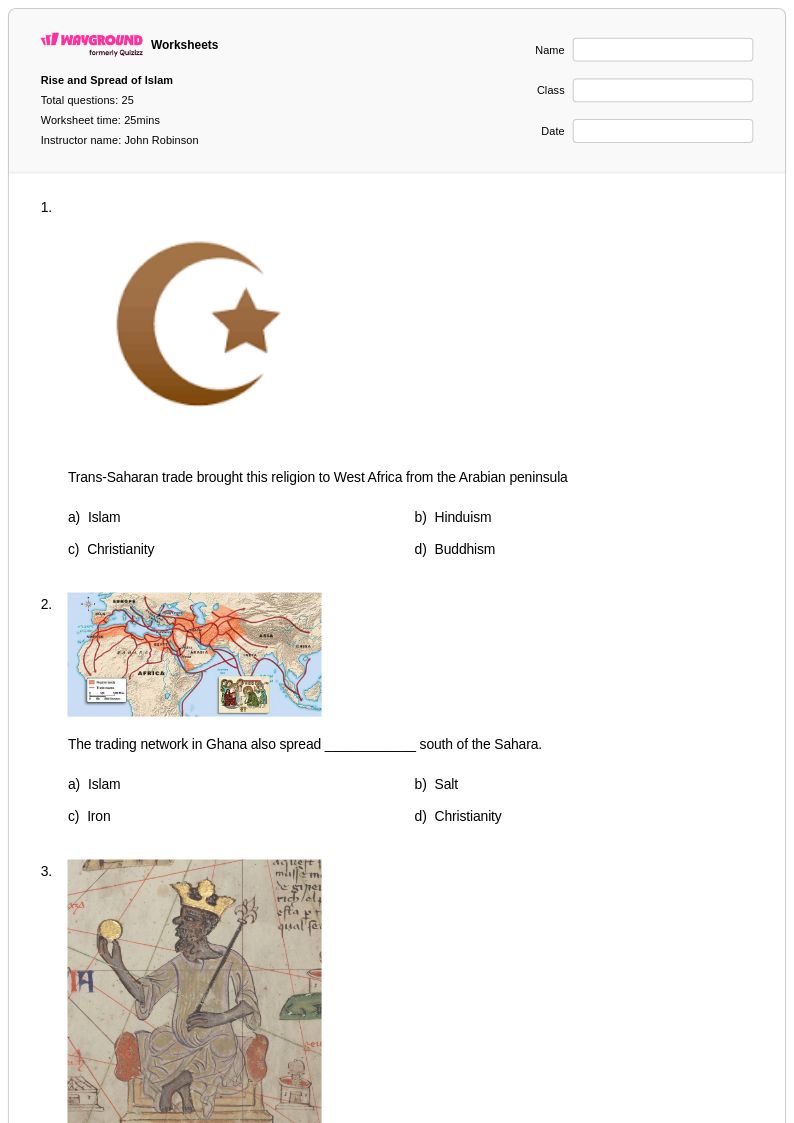
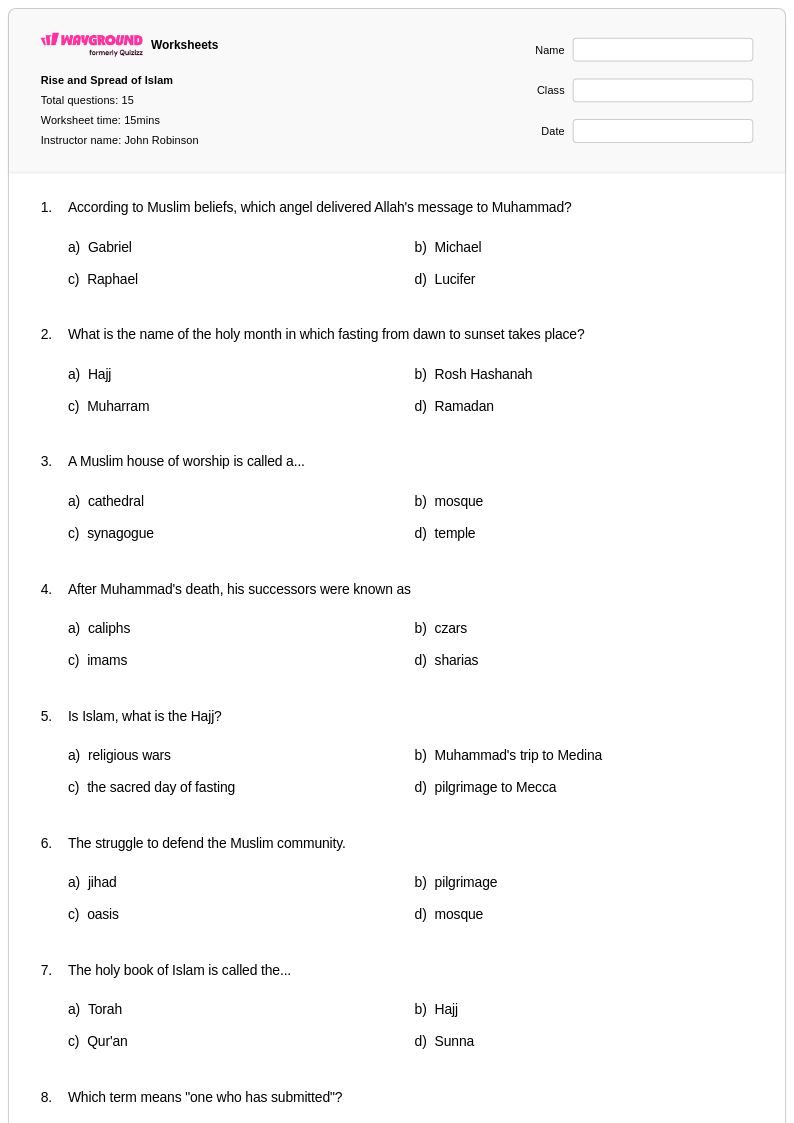
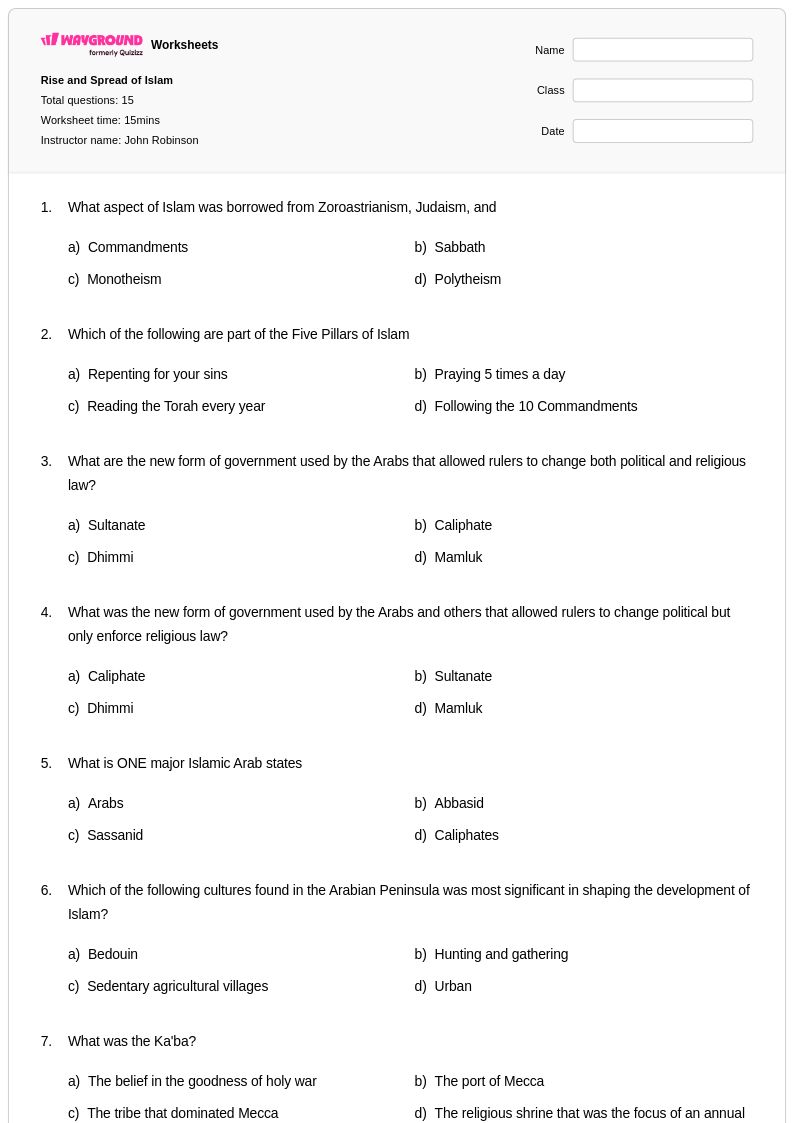
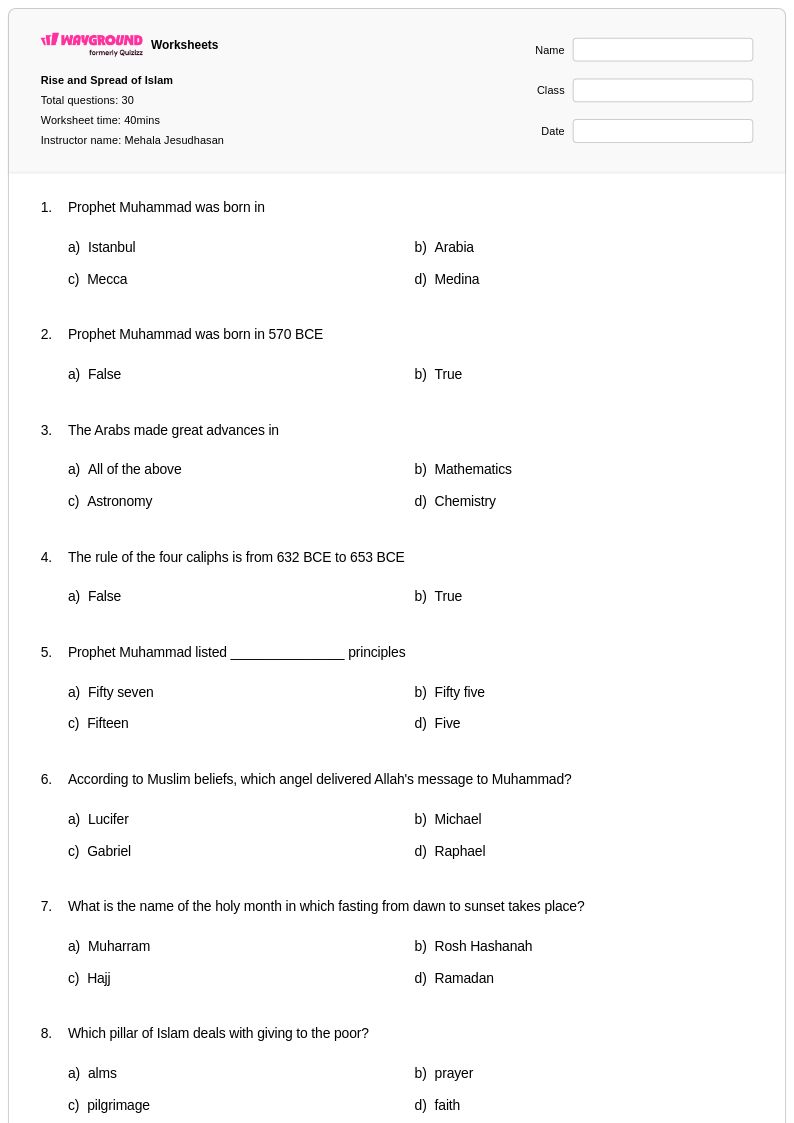
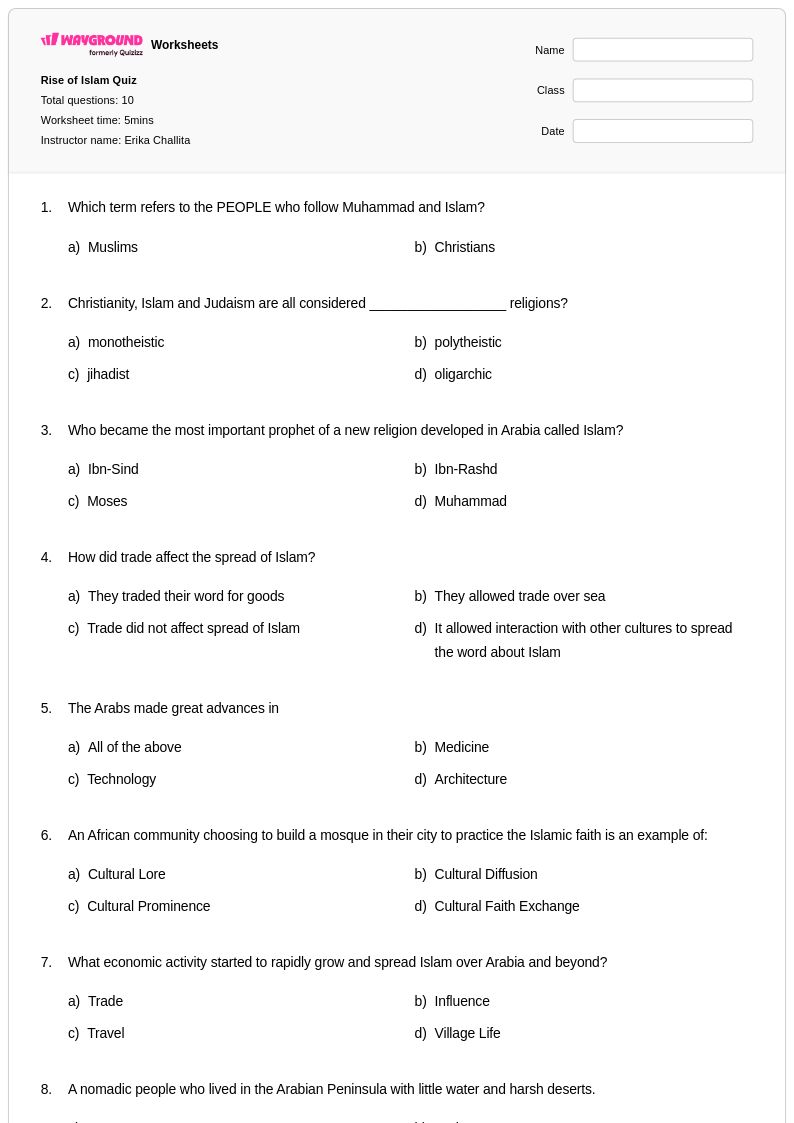
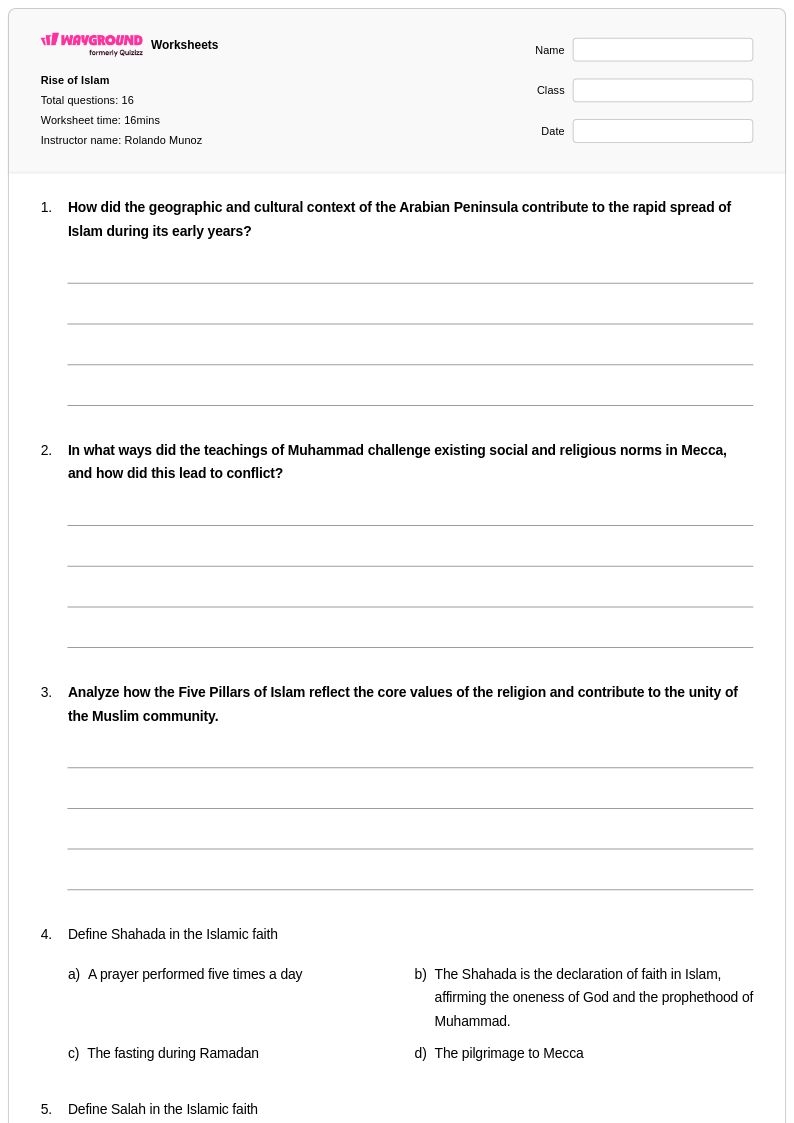
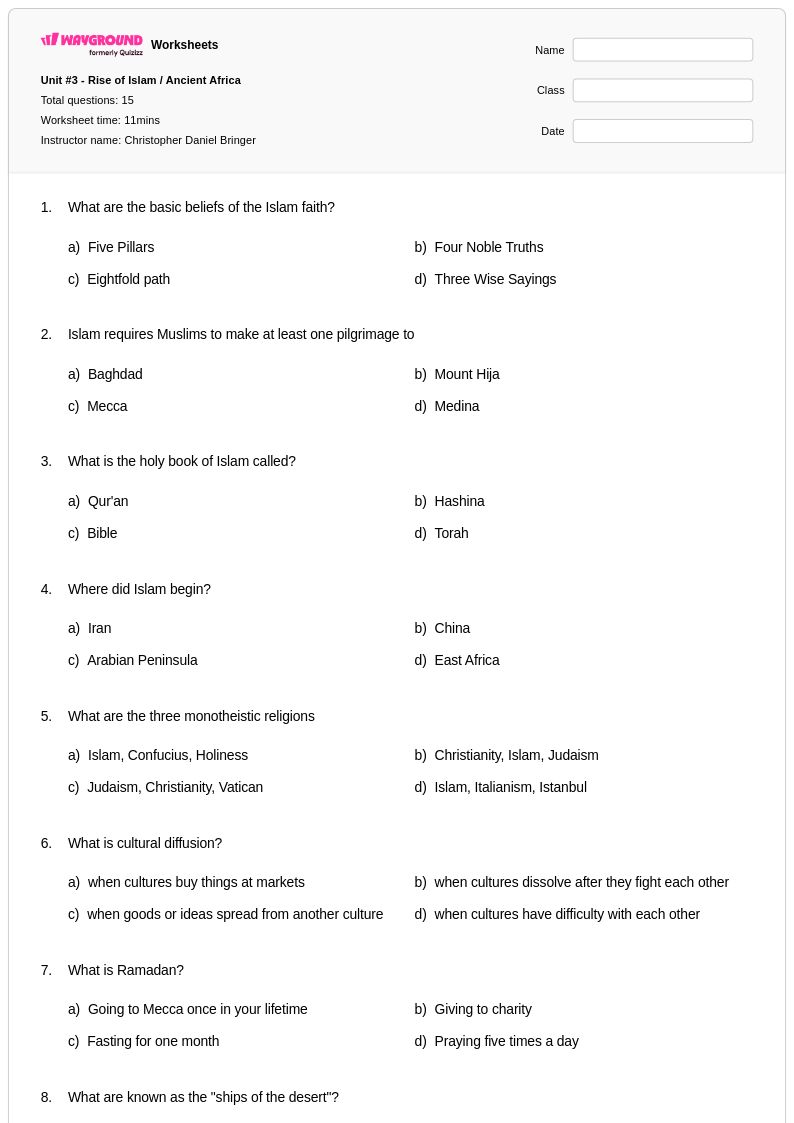
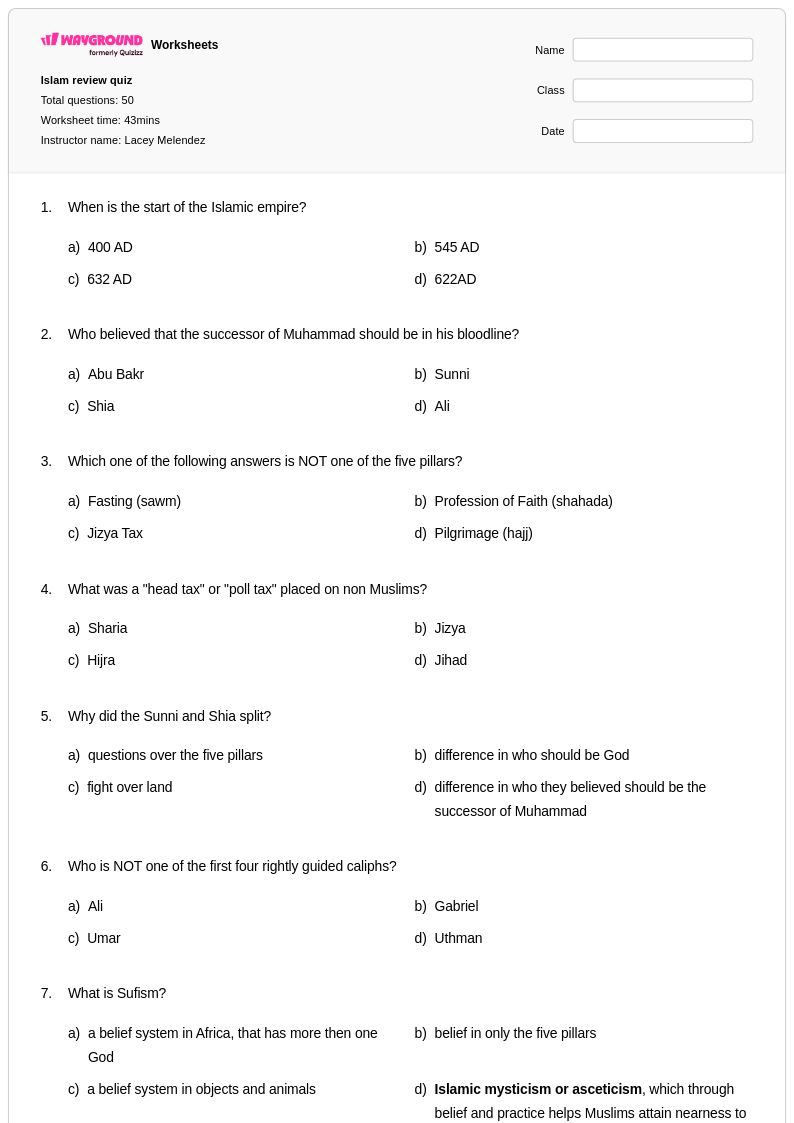
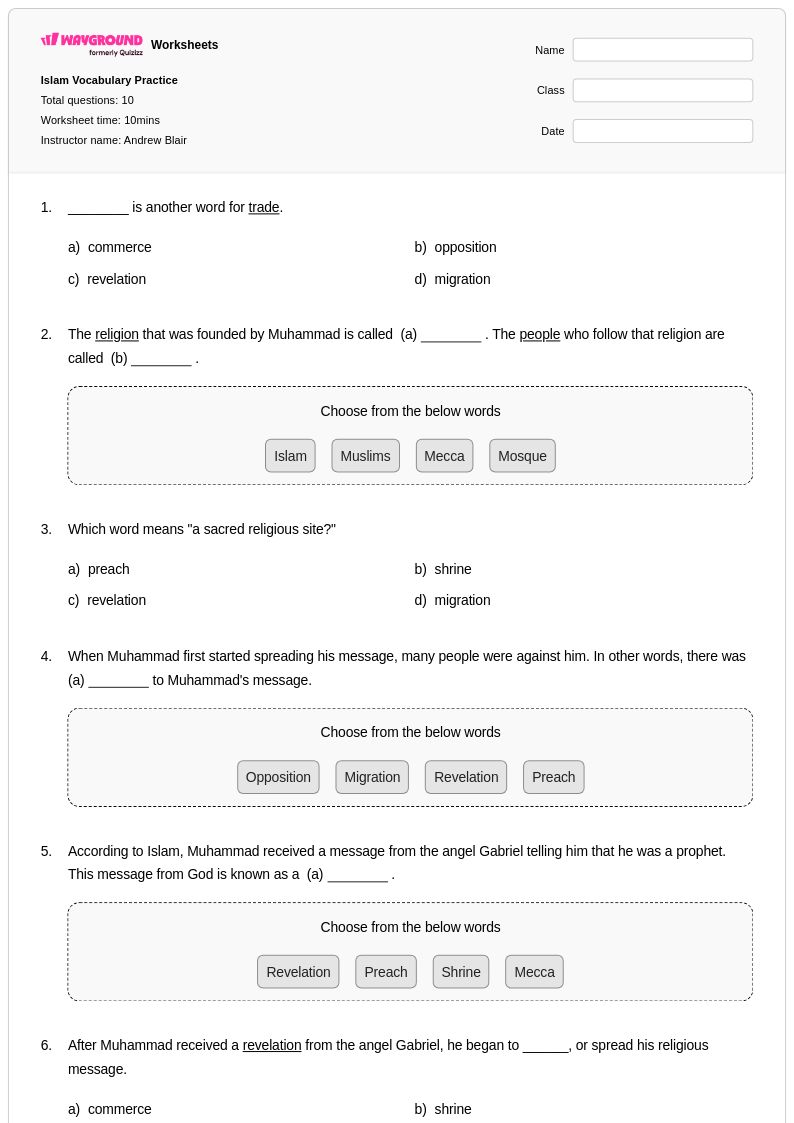
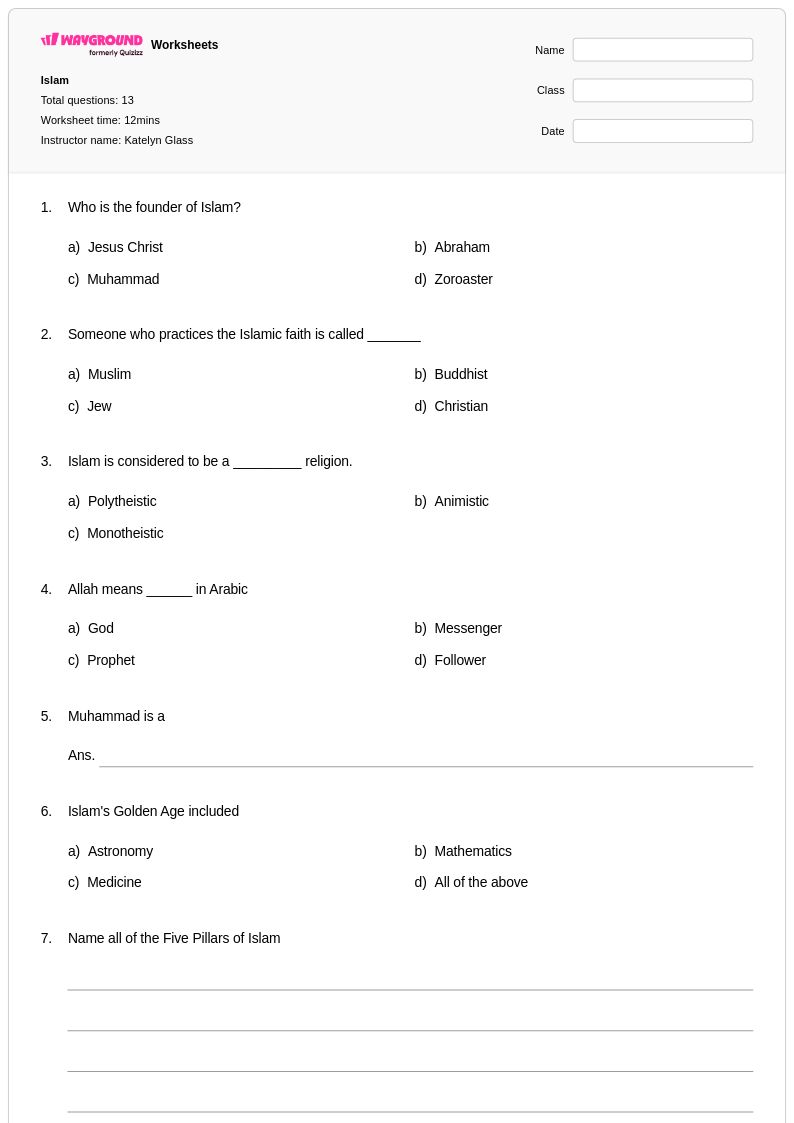
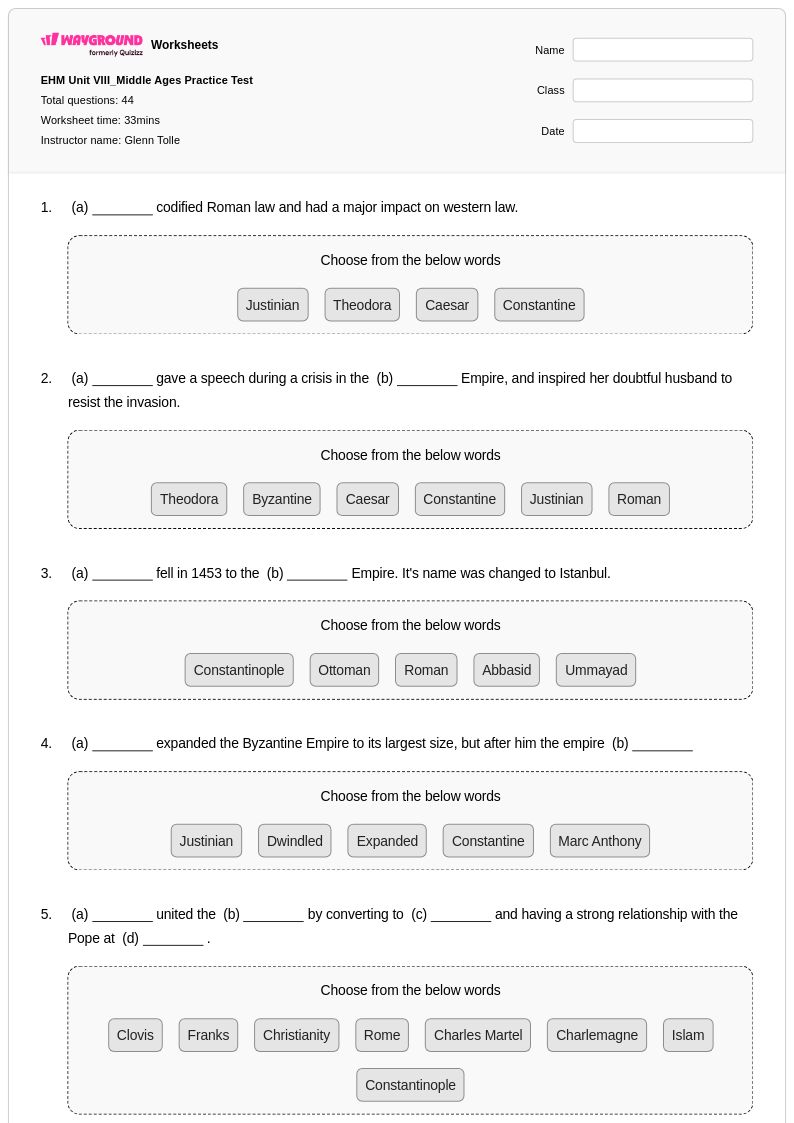
The Rise and Spread of Islam worksheets available through Wayground (formerly Quizizz) provide Class 9 students with comprehensive materials to explore one of history's most significant religious and cultural movements. These expertly crafted resources help students develop critical thinking skills as they analyze the origins of Islam in 7th-century Arabia, examine the rapid expansion of the Islamic empire across three continents, and evaluate the lasting impact of Islamic civilization on world history. Students engage with practice problems that challenge them to trace the spread of Islamic ideas along trade routes, compare different caliphates, and assess the cultural exchanges that occurred as Islam encountered diverse societies. Each worksheet includes detailed answer keys that support independent learning, while the free printables offer flexibility for both classroom instruction and homework assignments, ensuring students can access these valuable pdf resources whenever needed.
Wayground's extensive collection draws from millions of teacher-created resources, providing educators with an unparalleled selection of materials covering the Rise and Spread of Islam that align with social studies standards and Class 9 curriculum expectations. The platform's robust search and filtering capabilities allow teachers to quickly locate worksheets that match specific learning objectives, whether focusing on the Five Pillars of Islam, the conquests of the Rashidun Caliphate, or the Golden Age of Islamic scholarship. Teachers can customize these resources to meet diverse classroom needs, differentiating instruction for students who require additional support or enrichment opportunities. The availability of both printable and digital formats, including easily accessible pdf versions, streamlines lesson planning while supporting various teaching modalities, making it simple for educators to incorporate these materials into remediation sessions, skill practice activities, or comprehensive unit assessments that deepen student understanding of Islamic history's profound global influence.
FAQs
How do I teach the rise and spread of Islam to middle or high school students?
Start by grounding students in the historical context of 7th-century Arabia before introducing the life and teachings of Prophet Muhammad and the core beliefs of Islam. From there, trace the expansion of Islamic civilization across the Middle East and North Africa using maps and primary sources to help students visualize geographic and cultural spread. Connecting religious, political, and trade-driven factors gives students a more complete picture of why Islam spread so rapidly and so widely.
What are good activities to help students practice their understanding of how Islam spread?
Map-based activities are particularly effective, asking students to trace Islamic expansion routes and identify key regions, cities, and trade networks. Document analysis tasks using excerpts from historical accounts or Quranic passages build source-evaluation skills, while structured comparison charts help students distinguish between conquest, trade, and missionary activity as distinct mechanisms of spread. Worksheets that combine these exercise types reinforce both content knowledge and analytical thinking.
What common mistakes do students make when learning about the rise and spread of Islam?
A frequent misconception is that Islam spread exclusively through military conquest, when in reality trade networks and missionary activity were equally significant drivers of expansion. Students also often conflate the political structure of the Caliphate with the religious institution of Islam itself, which can lead to confusion about governance and faith as separate systems. Another common error is treating Islamic civilization as monolithic, when in fact significant regional, cultural, and intellectual diversity developed across the territories where Islam spread.
How can I use Rise and Spread of Islam worksheets to assess student understanding?
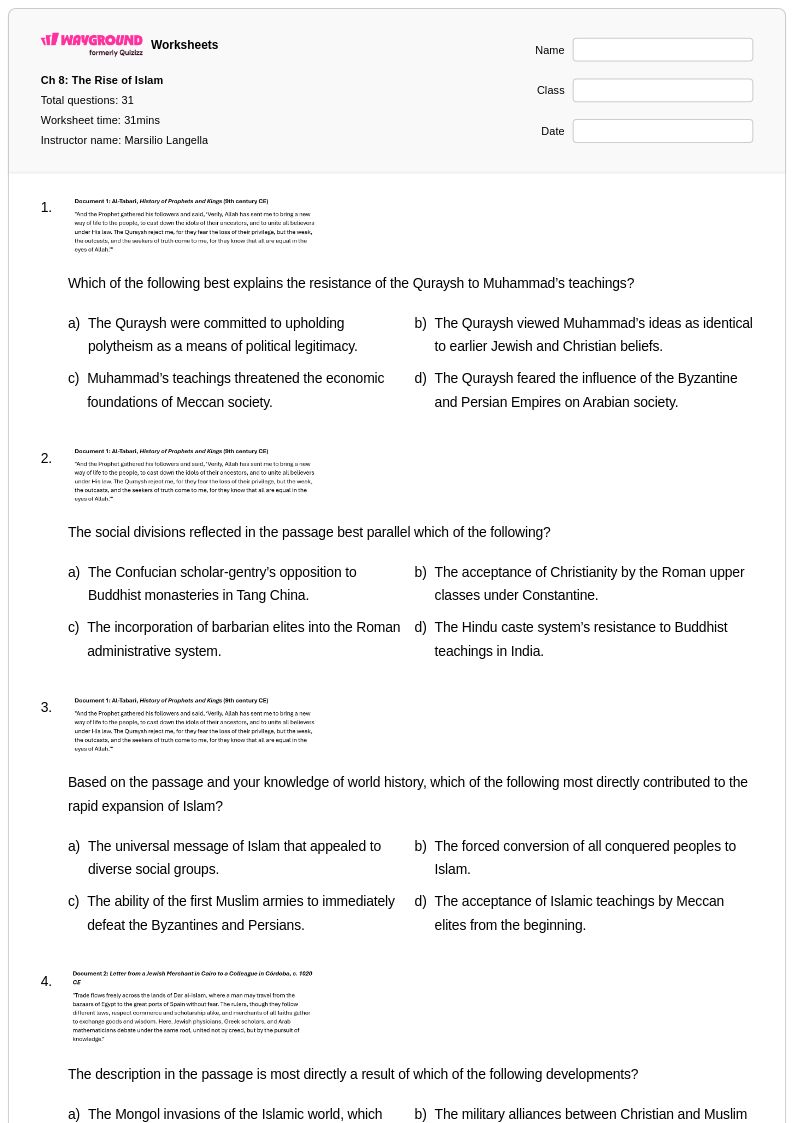
Worksheets that ask students to analyze primary sources, interpret historical maps, and explain the Caliphate system are well-suited for formative assessment because they require application rather than simple recall. Look for answer keys that address complex topics such as Islamic law, trade influences, and architectural achievements, as these allow you to quickly identify where individual students are struggling. Assigning short-answer or written response sections helps surface misconceptions about the relationship between religion, politics, and culture in early Islamic history.
How do I use Rise and Spread of Islam worksheets from Wayground in my classroom?
Wayground's Rise and Spread of Islam worksheets are available as printable PDFs for traditional classroom use and in digital formats for technology-integrated environments, giving you flexibility regardless of your setup. You can also host them as a quiz directly on Wayground, which allows you to track student responses and apply accommodations such as extended time, read aloud, or reduced answer choices for students who need additional support. All worksheets include answer keys, making them practical for independent practice, guided instruction, or homework assignments.
How do I differentiate Rise and Spread of Islam instruction for students at different skill levels?
For struggling learners, scaffolded worksheets with vocabulary support, visual timelines, and guided reading questions reduce cognitive load while maintaining access to core content. Advanced students benefit from tasks that ask them to draw connections between Islamic intellectual contributions, such as advances in science and mathematics, and their influence on later European and global developments. On Wayground, teachers can apply individual accommodations, including reduced answer choices and read aloud support, to specific students without affecting the experience of the rest of the class.