Free Printable Cuban Missile Crisis Worksheets for Class 9
Class 9 Cuban Missile Crisis worksheets provide comprehensive printables and practice problems to help students analyze this pivotal Cold War confrontation, complete with answer keys and free PDF resources.
Explore printable Cuban Missile Crisis worksheets for Class 9
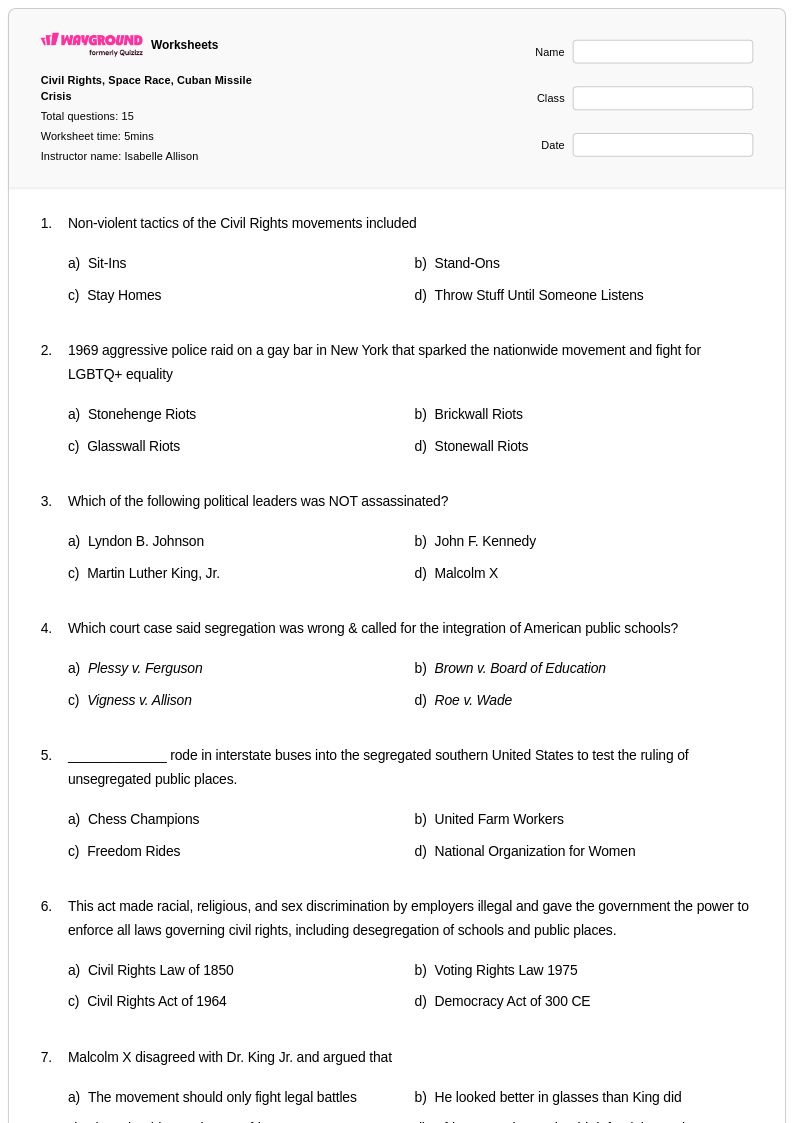
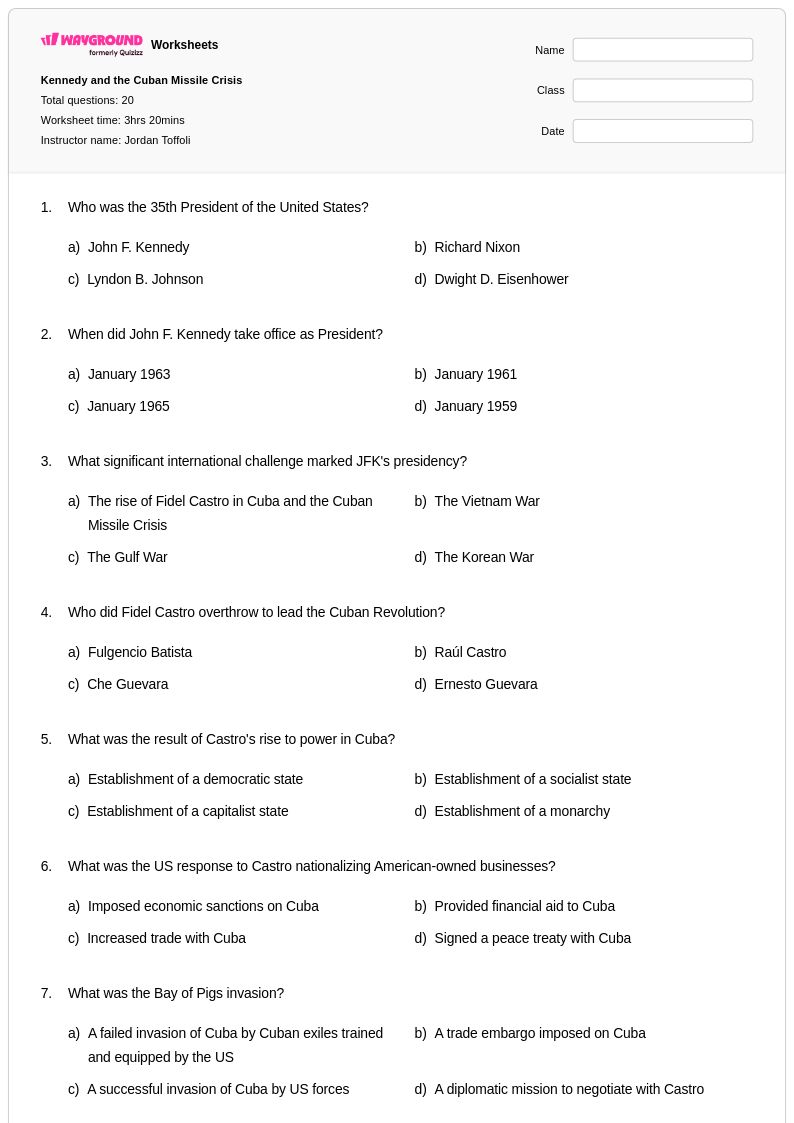
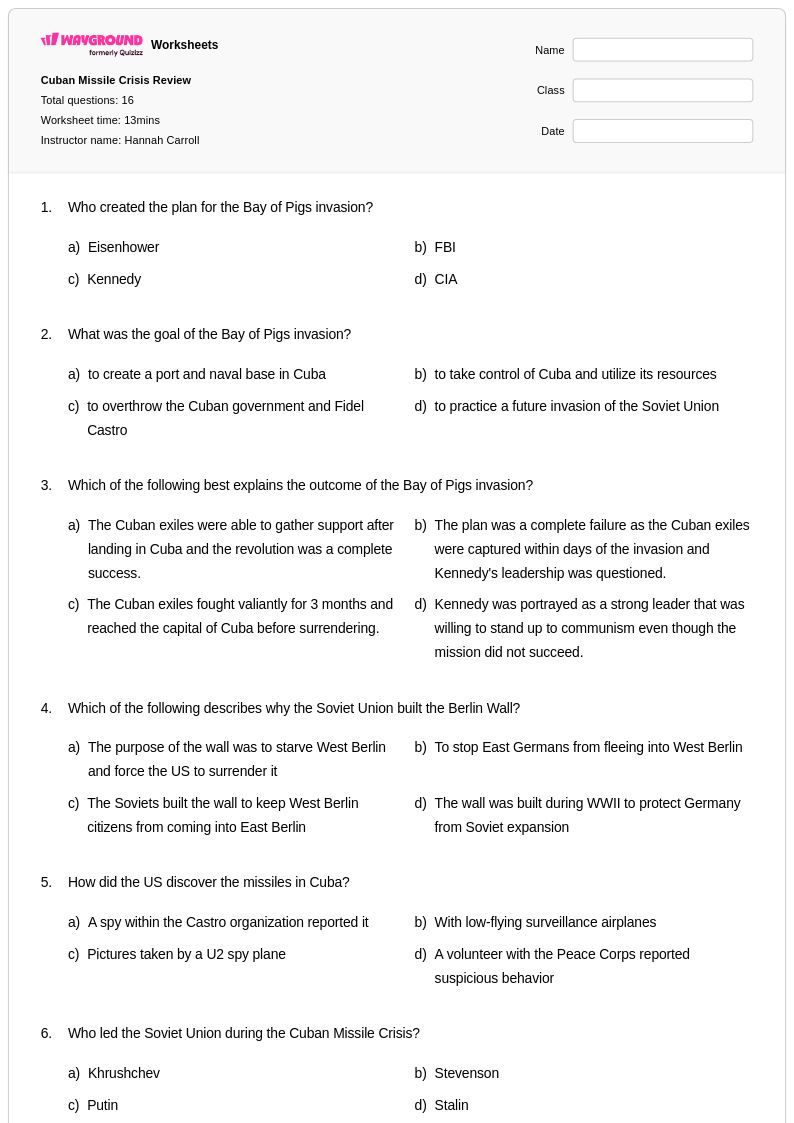
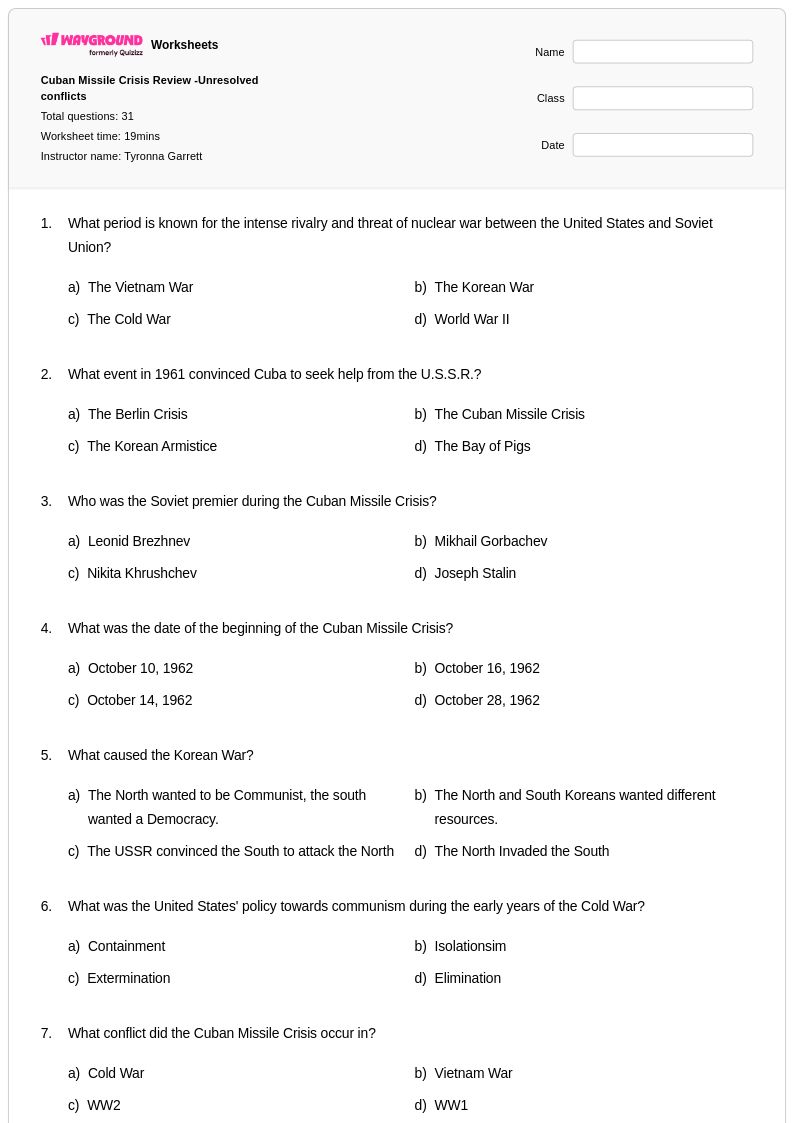
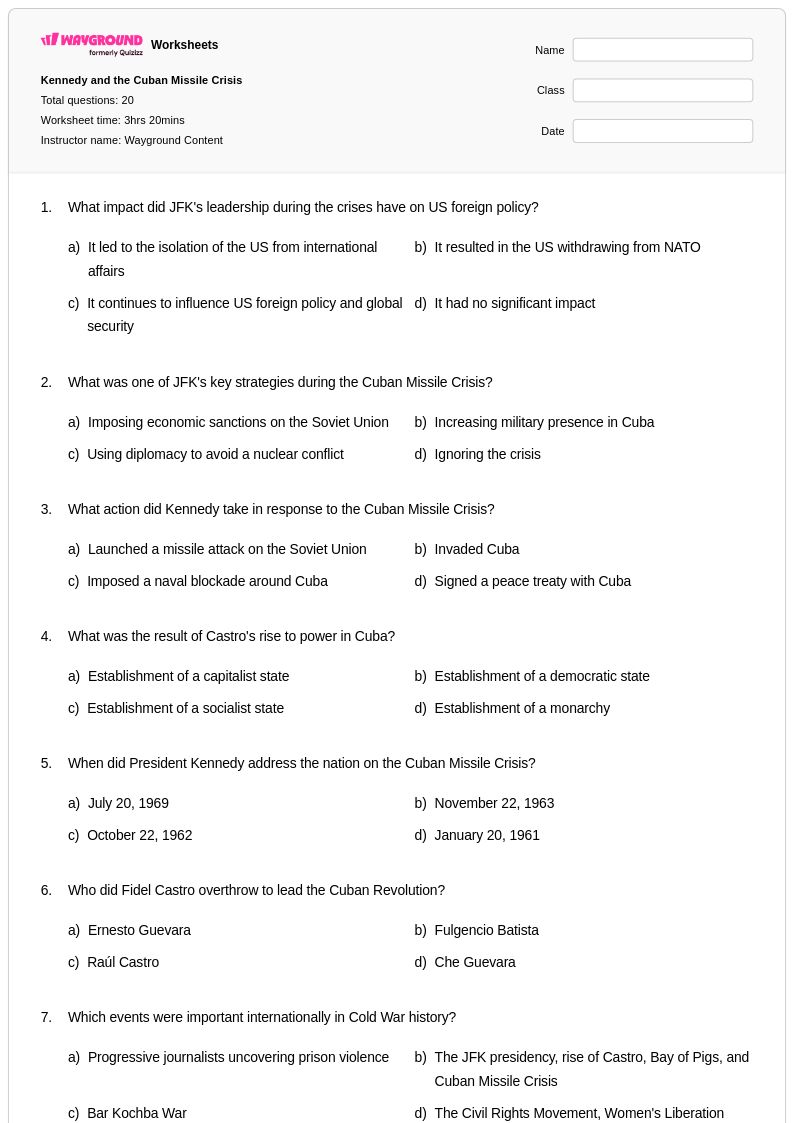
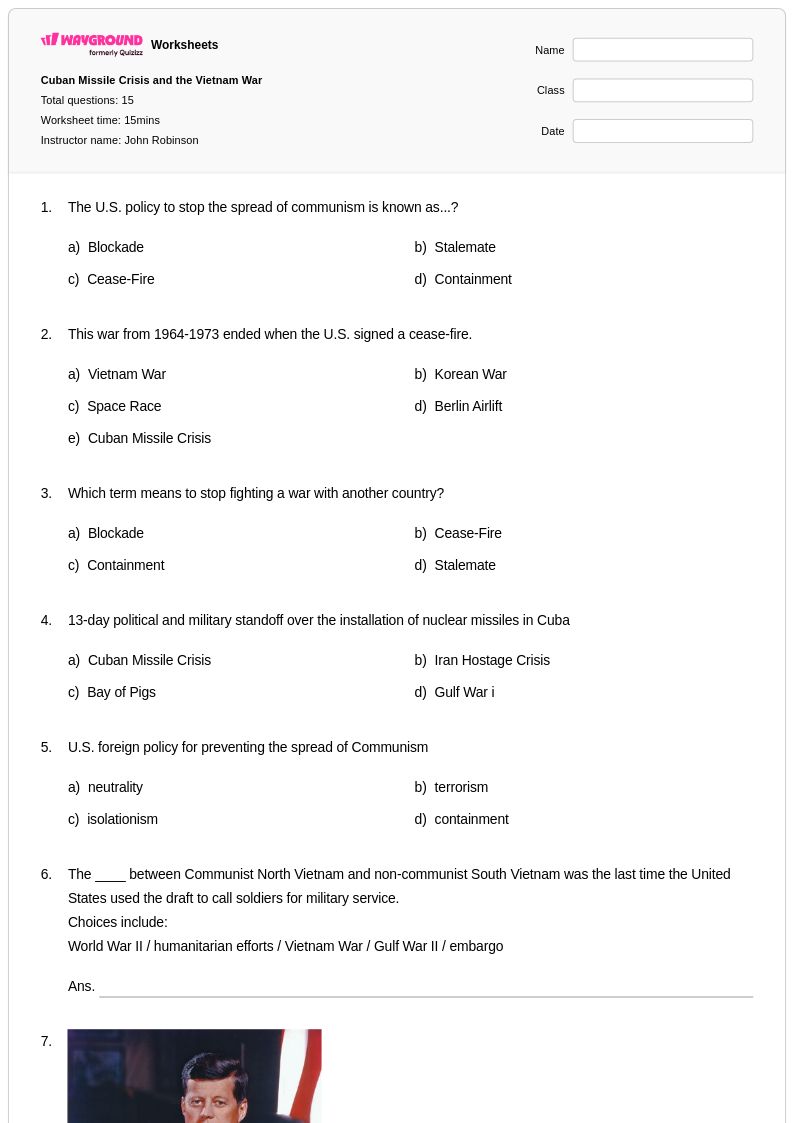
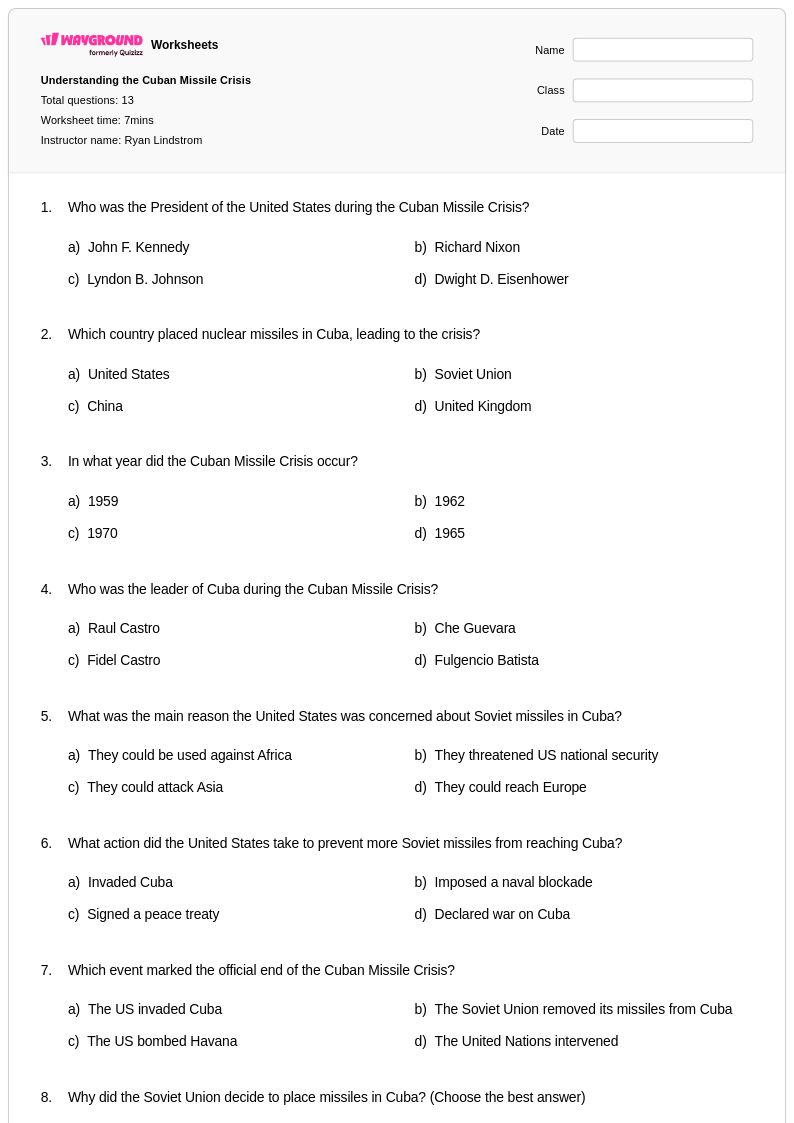
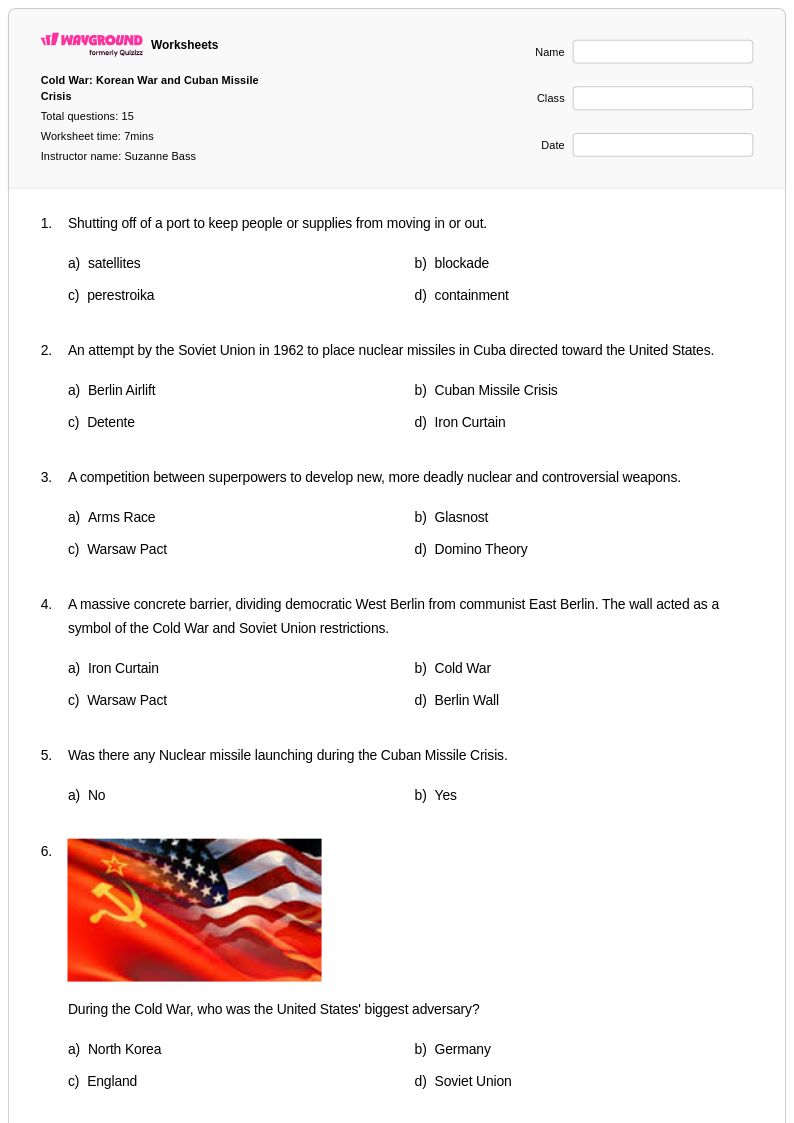
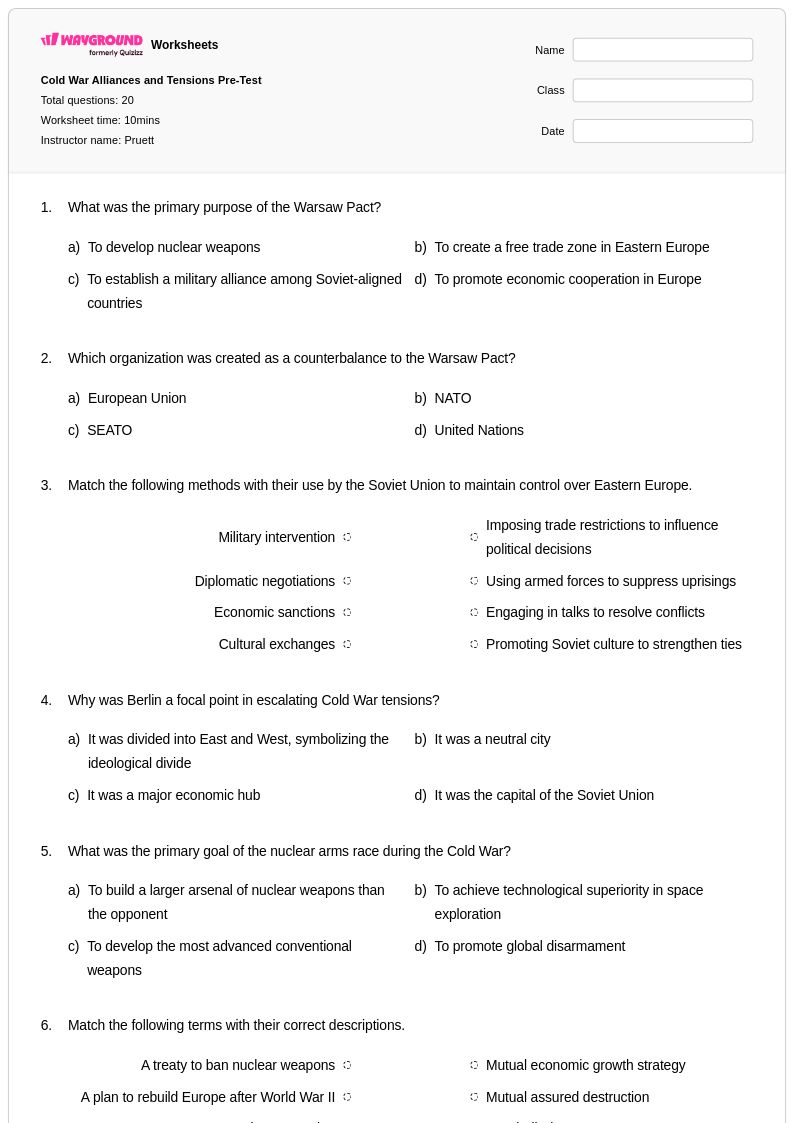
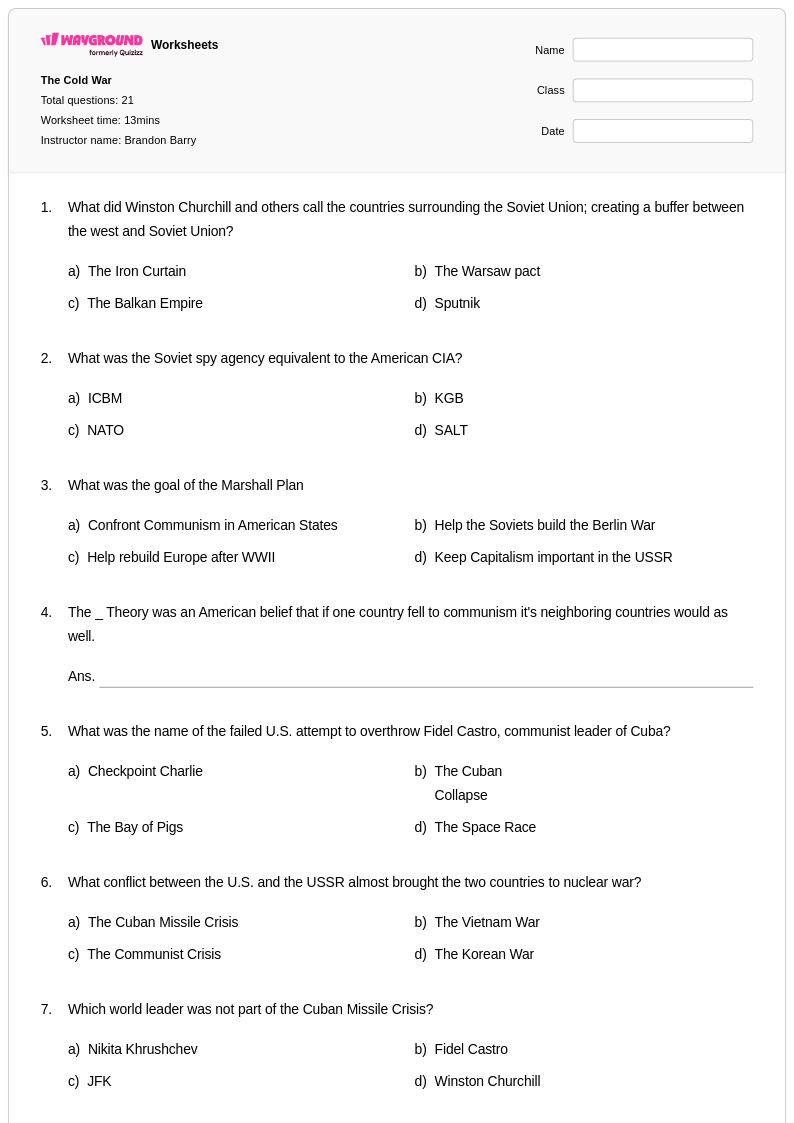
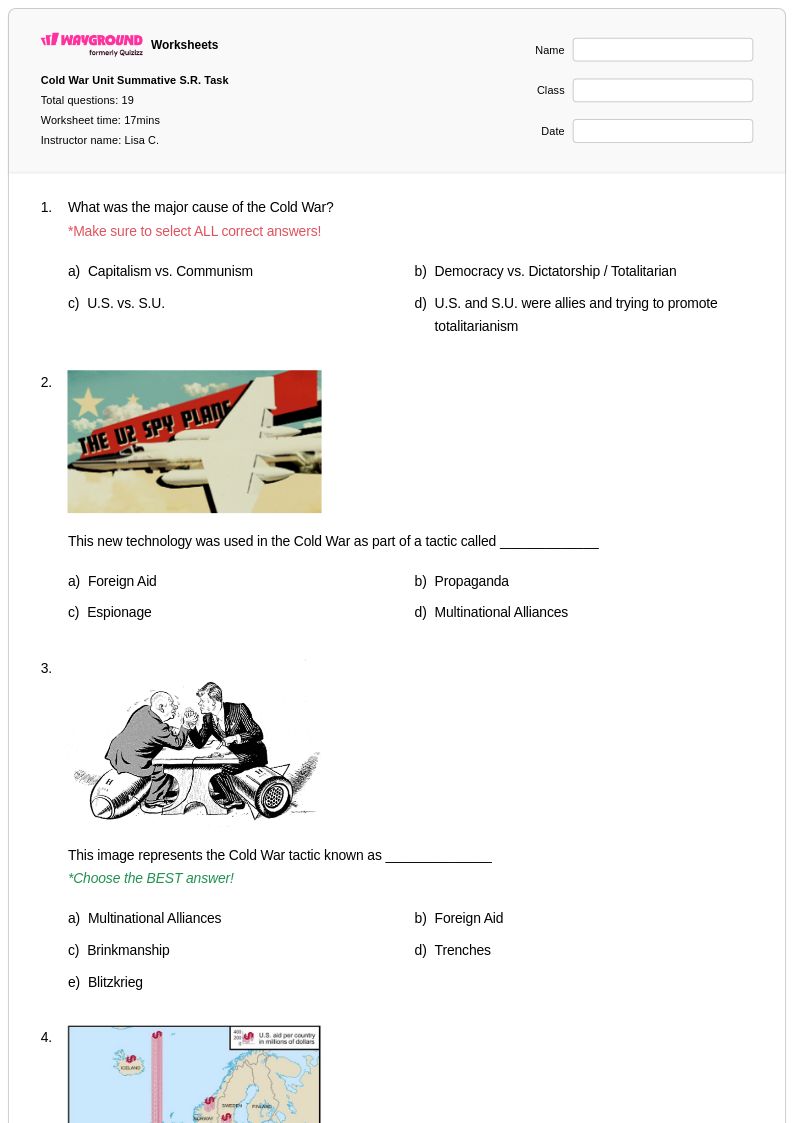
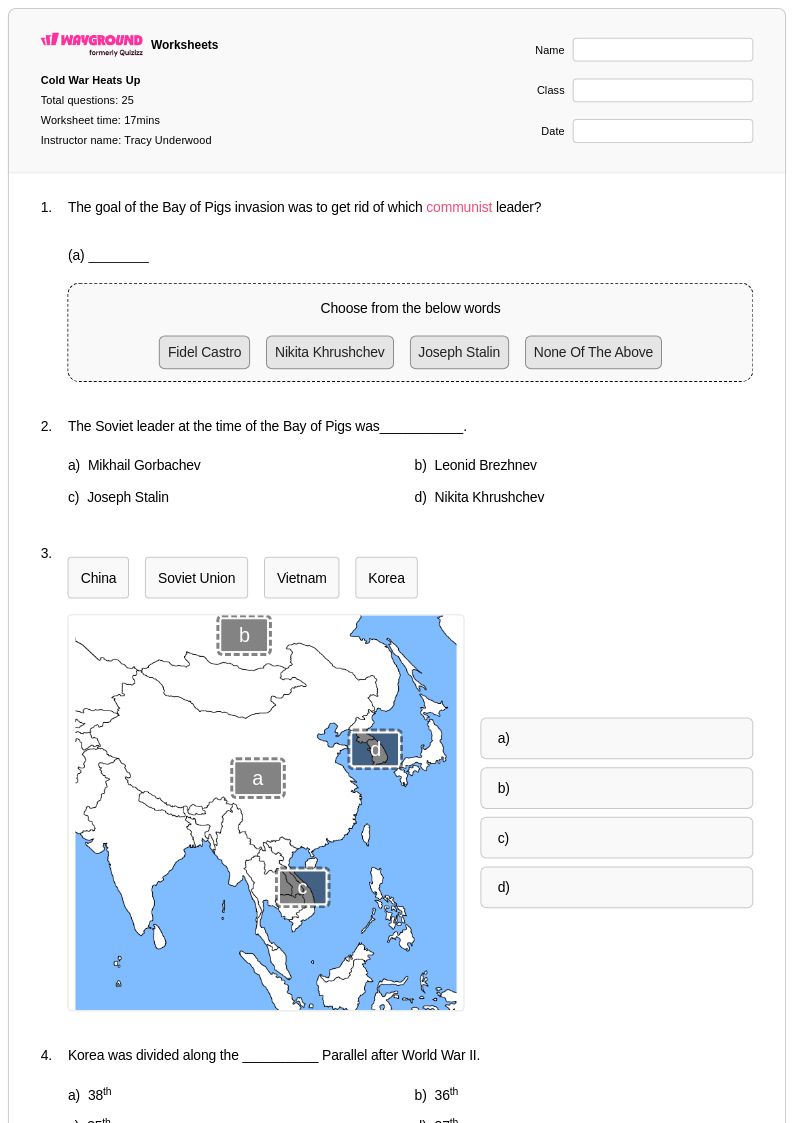
Cuban Missile Crisis worksheets for Class 9 students available through Wayground provide comprehensive coverage of this pivotal thirteen-day confrontation between the United States and Soviet Union in October 1962. These educational resources strengthen critical thinking skills by examining primary source documents, analyzing the decision-making processes of world leaders like President Kennedy and Premier Khrushchev, and evaluating the global implications of nuclear brinkmanship during the Cold War. Students engage with practice problems that require them to sequence events chronologically, interpret political cartoons from the era, and assess multiple perspectives on diplomatic negotiations. The free printables include detailed answer keys that support independent learning, while pdf formats ensure consistent formatting across different devices and printing requirements.
Wayground's extensive collection draws from millions of teacher-created resources specifically designed to help educators deliver engaging Cuban Missile Crisis instruction to Class 9 social studies classes. The platform's robust search and filtering capabilities enable teachers to quickly locate materials aligned with state standards and differentiate instruction based on individual student needs. Flexible customization tools allow educators to modify existing worksheets or combine multiple resources to create comprehensive lesson packets suitable for various learning objectives. Available in both printable and digital pdf formats, these materials support diverse classroom environments while facilitating targeted skill practice, remediation for struggling learners, and enrichment opportunities for advanced students studying this critical moment in world history.
FAQs
How do I teach the Cuban Missile Crisis to middle or high school students?
Teaching the Cuban Missile Crisis effectively means grounding students in the Cold War context before diving into the thirteen-day standoff of October 1962. Start by establishing the roles of the U.S., Soviet Union, and Cuba, then walk students through the escalating decisions made by Kennedy and Khrushchev using primary source documents and timeline activities. Cause-and-effect analysis works especially well here, as it helps students understand how each diplomatic and military decision raised or lowered the risk of nuclear war.
What exercises help students practice analyzing the Cuban Missile Crisis?
Effective practice activities for the Cuban Missile Crisis include timeline construction, primary source document analysis, and cause-and-effect examinations of key decisions. Students benefit from evaluating the roles of Cuba, Turkey, and NATO in the crisis, as well as exploring concepts like nuclear deterrence, diplomatic negotiation, and crisis management. These structured tasks push students beyond memorization and into genuine historical reasoning.
What are the most common mistakes students make when studying the Cuban Missile Crisis?
Students frequently oversimplify the crisis as a direct U.S.-Soviet standoff, overlooking the critical roles of Cuba and Turkey in shaping the diplomatic stakes. Another common error is treating the resolution as inevitable rather than understanding how close the world came to nuclear war due to miscommunication and brinkmanship. Students also tend to underestimate the significance of back-channel negotiations and the role of figures beyond Kennedy and Khrushchev in defusing the confrontation.
How do I help students understand nuclear deterrence in the context of the Cuban Missile Crisis?
Nuclear deterrence is best taught through the lens of the Cuban Missile Crisis because the crisis makes the logic of mutually assured destruction concrete and consequential. Have students examine why the Soviet Union placed missiles in Cuba and how the U.S. interpreted that action as a direct threat to the balance of power. Structured analysis of primary sources, such as Kennedy's address to the nation or declassified correspondence, helps students connect the abstract doctrine of deterrence to real decision-making under pressure.
How do I use Cuban Missile Crisis worksheets in my classroom?
Cuban Missile Crisis worksheets on Wayground are available as printable PDFs for traditional classroom use and in digital formats for remote or hybrid learning environments, and teachers can also host them as a quiz directly on Wayground. Each worksheet includes a comprehensive answer key, making them suitable for guided instruction, independent practice, or review sessions. The range of activity types, including timeline construction, primary source analysis, and cause-and-effect problems, allows teachers to use these resources across multiple points in a unit rather than just as a single assignment.
How can I differentiate Cuban Missile Crisis instruction for students at different skill levels?
For advanced learners, enrichment activities might include evaluating competing historical interpretations of Kennedy's decision-making or analyzing the long-term impact of the crisis on nuclear arms treaties. Students who need additional support benefit from scaffolded worksheets that break down complex geopolitical concepts into structured steps. On Wayground, teachers can apply individual accommodations such as read aloud, reduced answer choices, and extended time to specific students, so differentiation happens at the student level without disrupting the rest of the class.