Free Printable Data Comparison Worksheets for Class 4
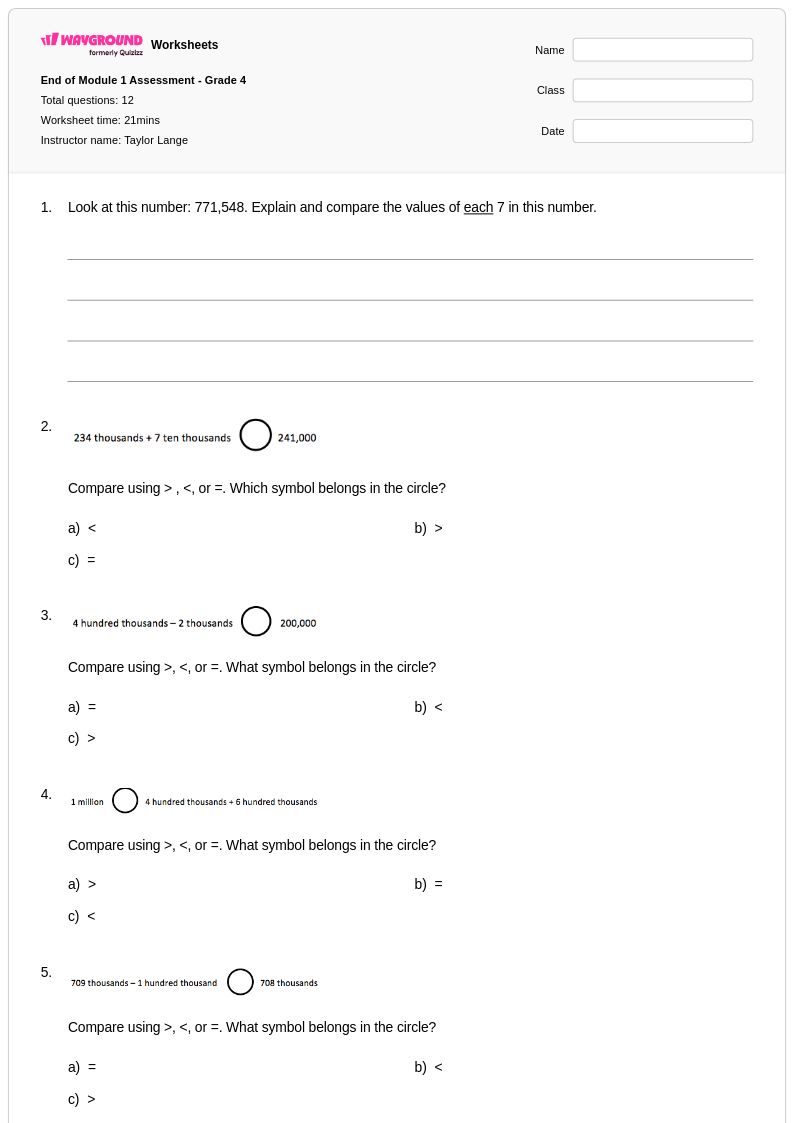
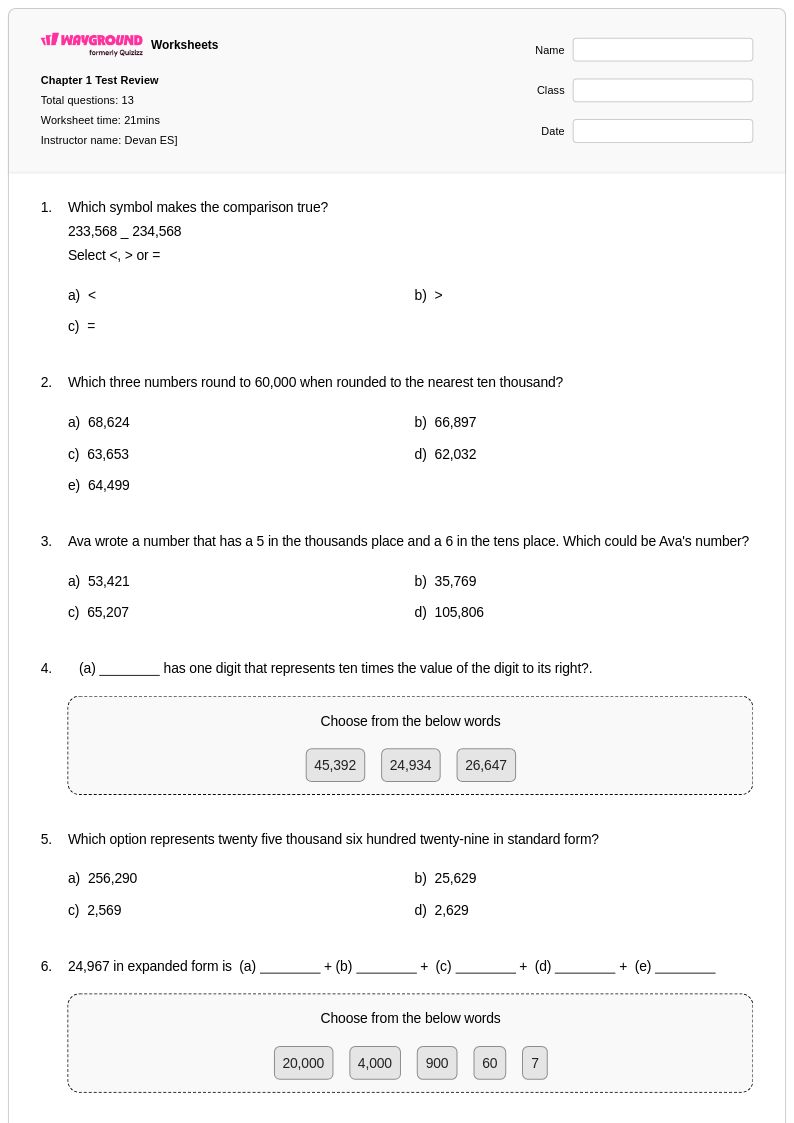
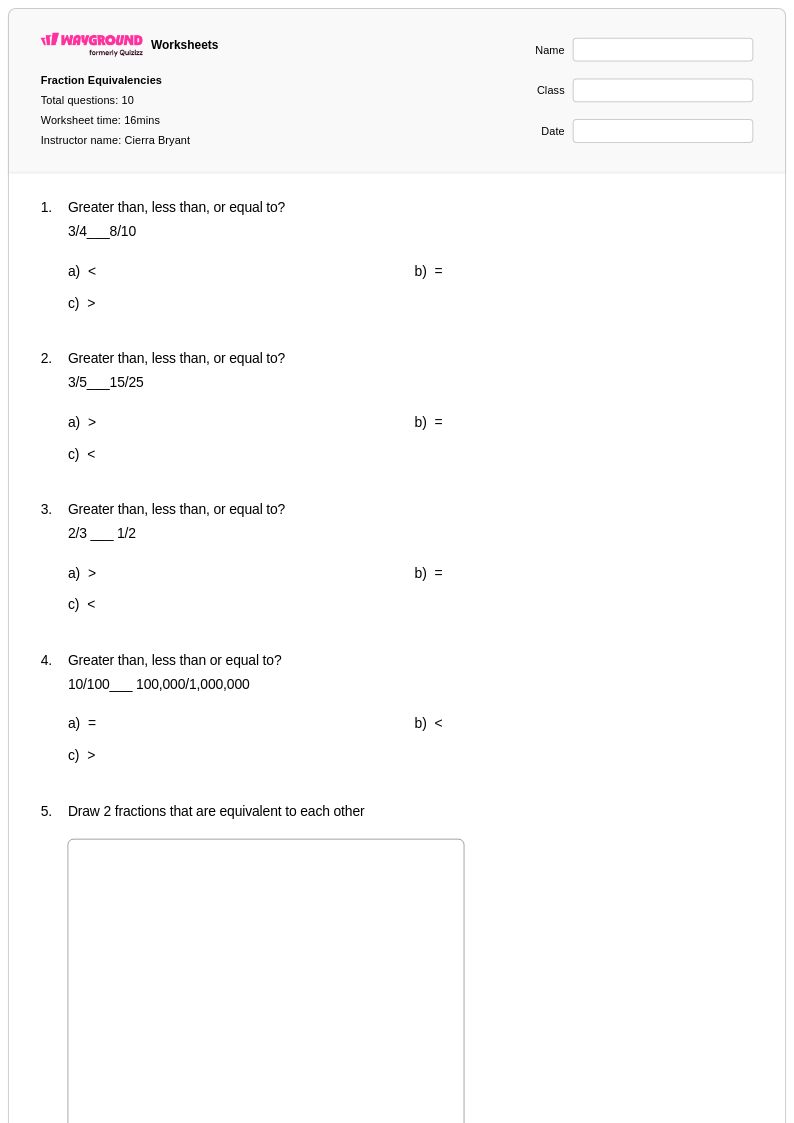
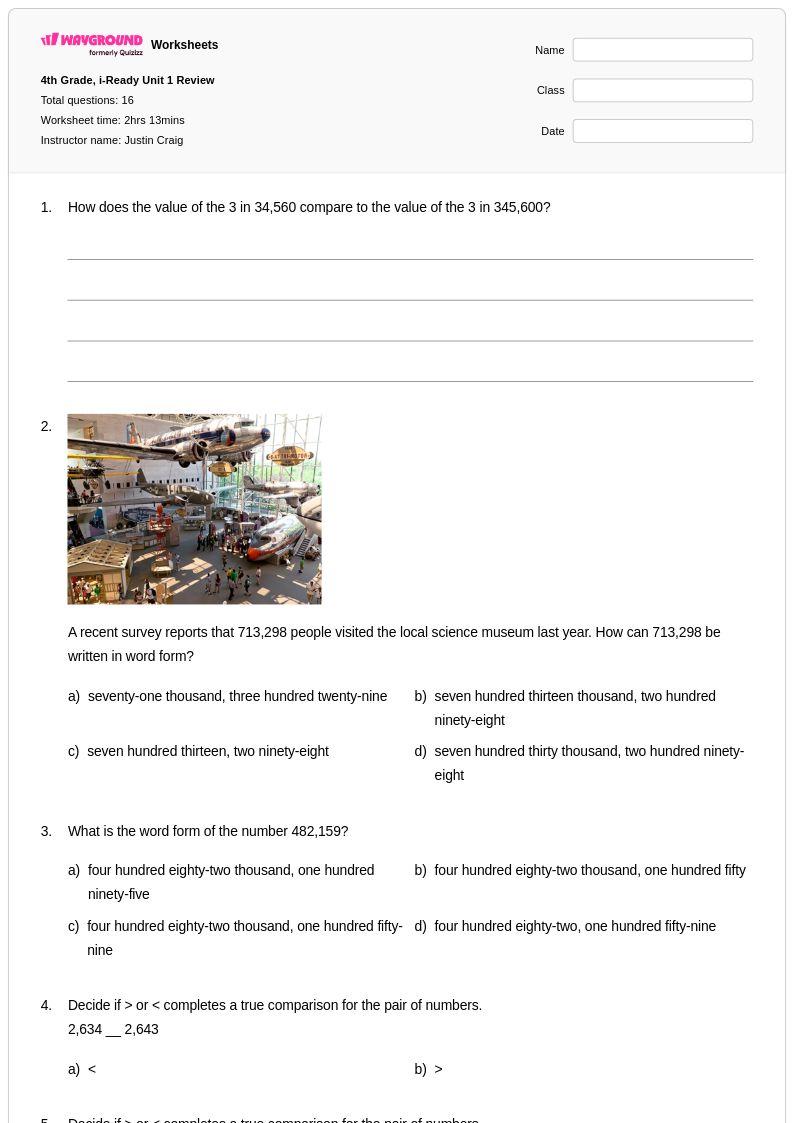
Class 4 data comparison free worksheets and printables help students master analyzing and contrasting different datasets through engaging practice problems with comprehensive answer keys available as downloadable PDFs.
Explore printable Data Comparison worksheets for Class 4
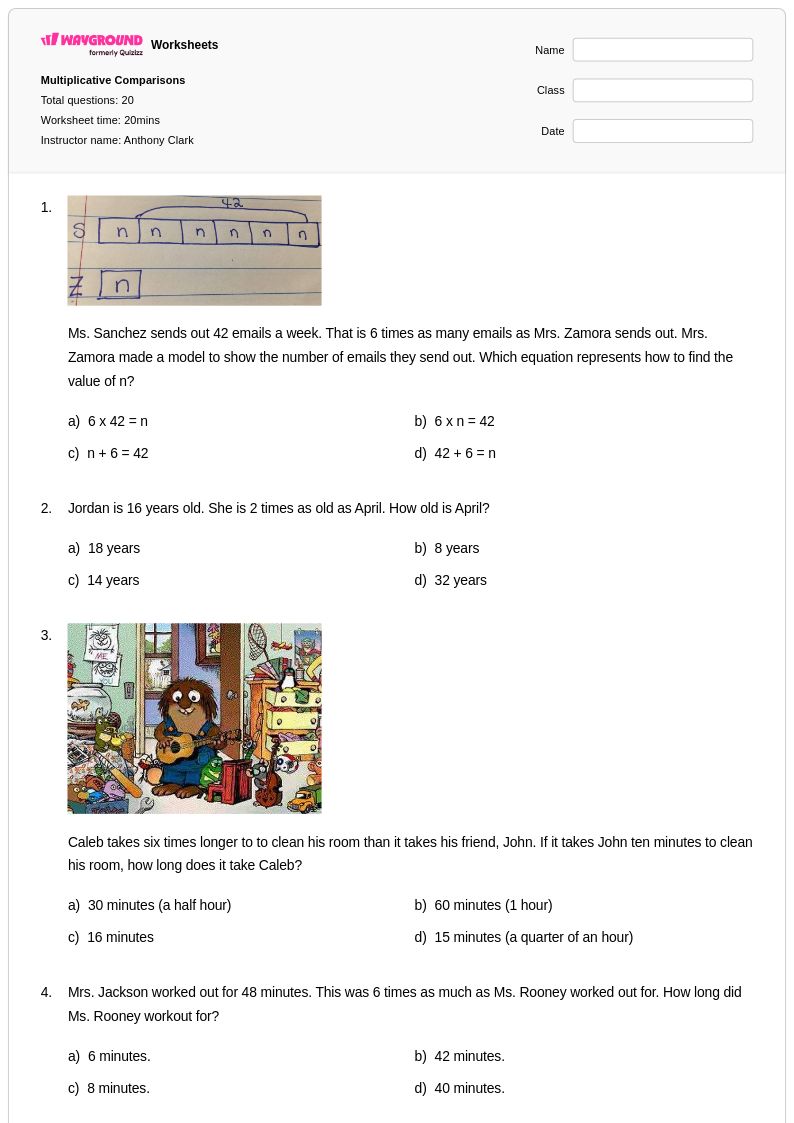
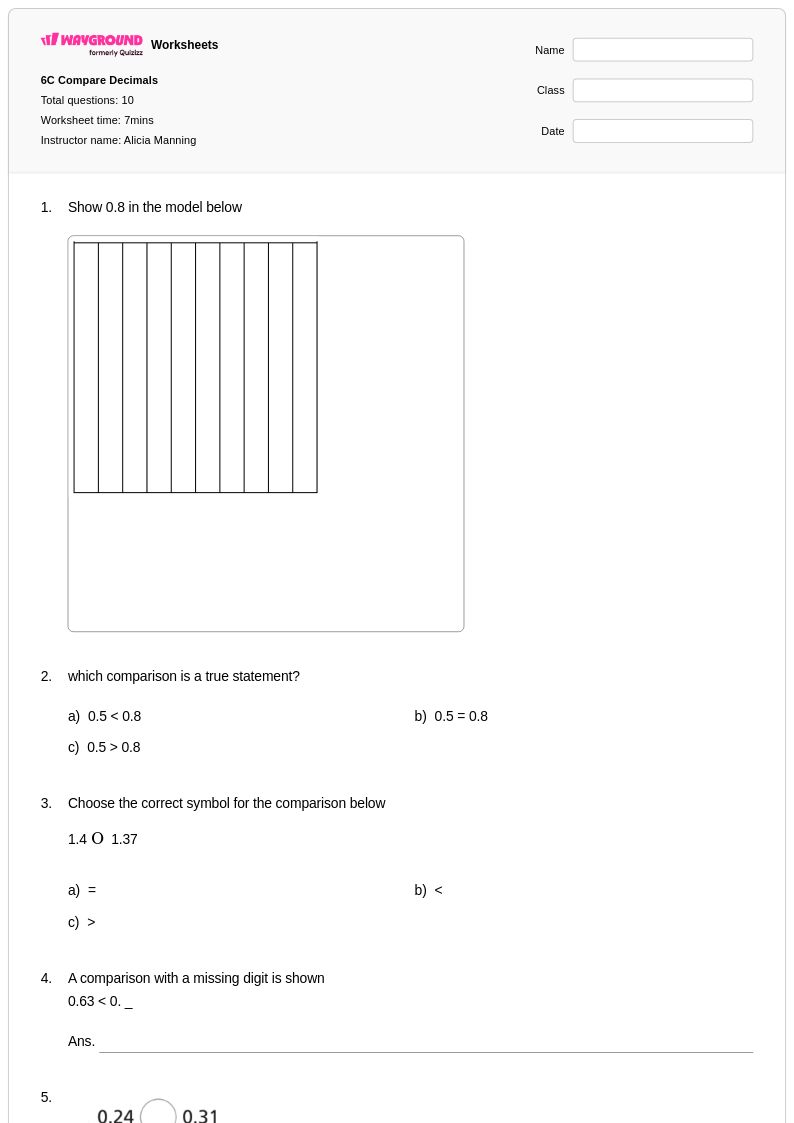
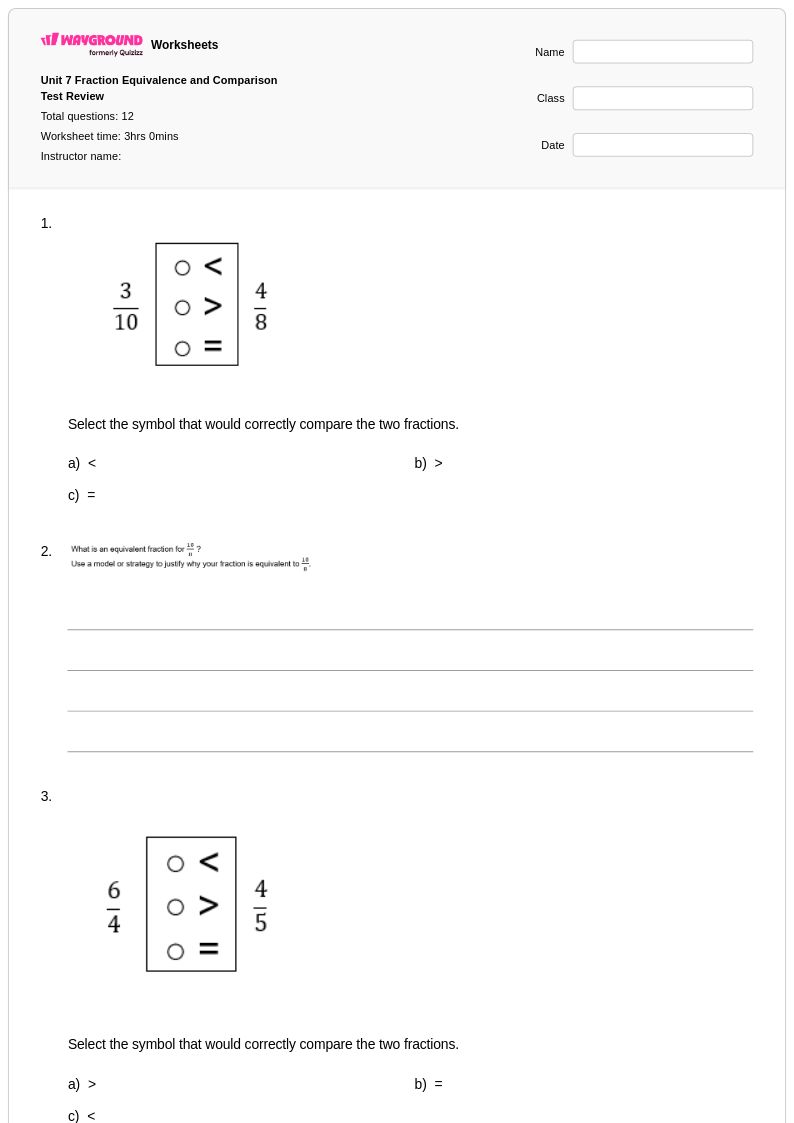
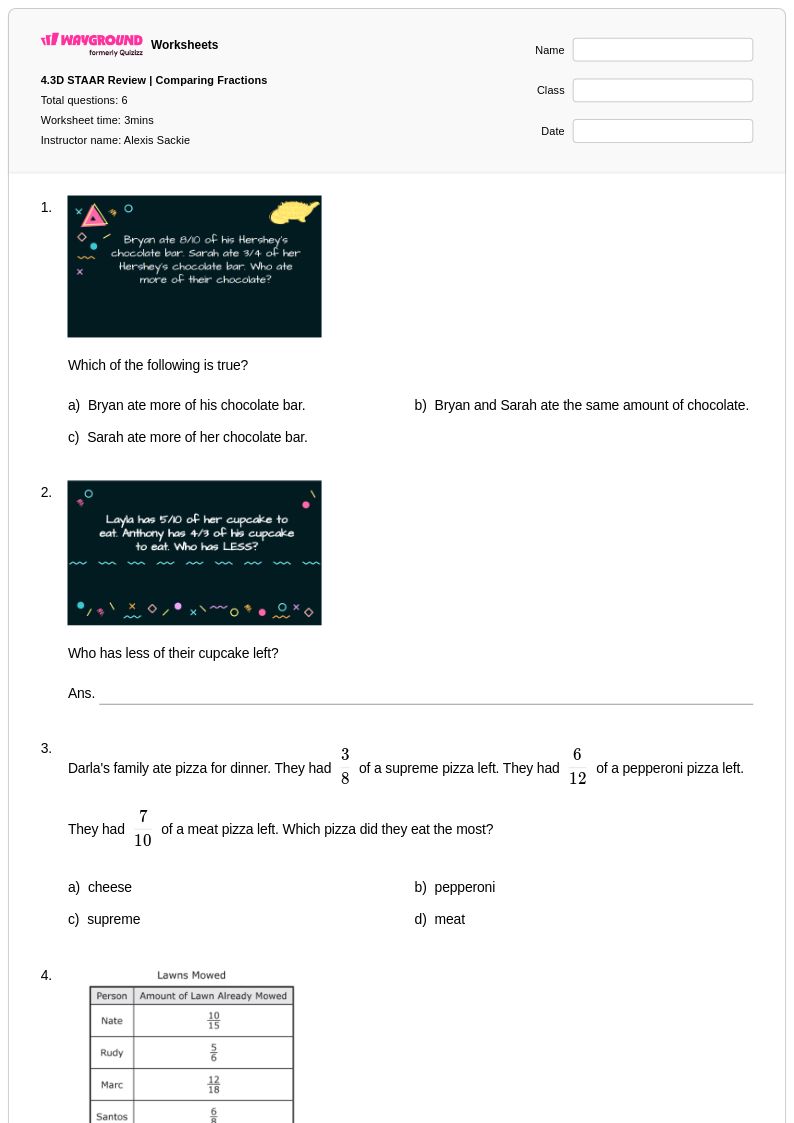
Data comparison worksheets for Class 4 students available through Wayground (formerly Quizizz) provide essential practice in analyzing and interpreting different data sets to draw meaningful conclusions. These comprehensive worksheets strengthen critical mathematical skills including reading various graph types, identifying patterns across multiple data sources, and making evidence-based comparisons between different information presentations. Students engage with practice problems that challenge them to examine bar graphs, pictographs, line plots, and tables side by side, developing the analytical thinking necessary to determine which data set shows greater values, identify trends, and articulate differences between comparable information. Each worksheet includes a detailed answer key and is available as a free printable pdf, ensuring educators have the resources needed to support student learning in this fundamental area of mathematical literacy.
Wayground (formerly Quizizz) empowers teachers with millions of educator-created data comparison resources specifically designed for Class 4 mathematics instruction, featuring robust search and filtering capabilities that align with curriculum standards and learning objectives. The platform's differentiation tools allow instructors to customize worksheets based on individual student needs, while flexible formatting options provide both printable pdf versions for traditional classroom use and digital formats for interactive learning environments. These comprehensive features streamline lesson planning by offering immediate access to high-quality practice materials, support targeted remediation for students struggling with comparative analysis skills, and enable enrichment opportunities for advanced learners ready to tackle more complex data interpretation challenges, ultimately helping educators deliver effective instruction that builds confidence in mathematical reasoning and data literacy.
FAQs
How do I teach data comparison to fourth graders?
Model a consistent routine: inspect each display’s title, labels, units, key, and scale, then identify which values can be compared directly. Use side-by-side bar graphs, pictographs, line plots, and tables, and require students to support each statement about a trend or difference with numerical evidence.
What exercises build Grade 4 data comparison skills?
Students benefit from comparing maximum and minimum values, finding differences between categories, identifying trends, and translating information between tables and graphs. Include problems that place two displays side by side and ask students to determine what is similar, what differs, and which representation best supports a conclusion.
What errors should I watch for when fourth graders compare data?
Fourth graders may ignore unequal intervals, misread a pictograph key, compare categories that represent different units, or treat isolated values as a trend. They may also describe which value is larger without calculating how much larger, so prompts should require both a comparison and supporting arithmetic.
How can I use a Grade 4 data comparison worksheet on Wayground?
Teachers can host the worksheet as a digital quiz on Wayground or use the printable PDF for paper-based, off-screen practice. Worksheets are available in both digital and printable formats, every worksheet has a complete answer key, and physical submissions can be scanned or captured for grading in the Wayground for Teachers app.
How does Grade 4 data comparison fit the Common Core math progression?
Common Core mathematics develops data reasoning through measurement data, line plots, and multi-step problem solving. Grade 4 students extend earlier graph-reading skills by comparing values across representations, reasoning about differences, and using evidence from displays to justify conclusions.
How can I differentiate Grade 4 data comparison practice?
Provide simpler displays and guided prompts for students still developing graph-reading accuracy, while offering multi-display comparisons and open-ended justification tasks for advanced learners. Wayground supports alternate worksheet versions with adjustable font size and spacing, dyslexia-friendly text, and translation, plus digital accommodations such as extended time, Read Aloud, reduced answer choices, and reading mode.
What grade level is data comparison taught at?
Data comparison begins in elementary school and becomes more analytical in Grade 4. Fourth graders typically compare information across bar graphs, pictographs, line plots, and tables, identify trends, and explain differences using values from the displays.