Free Printable Declaration of Independence Worksheets for Class 10
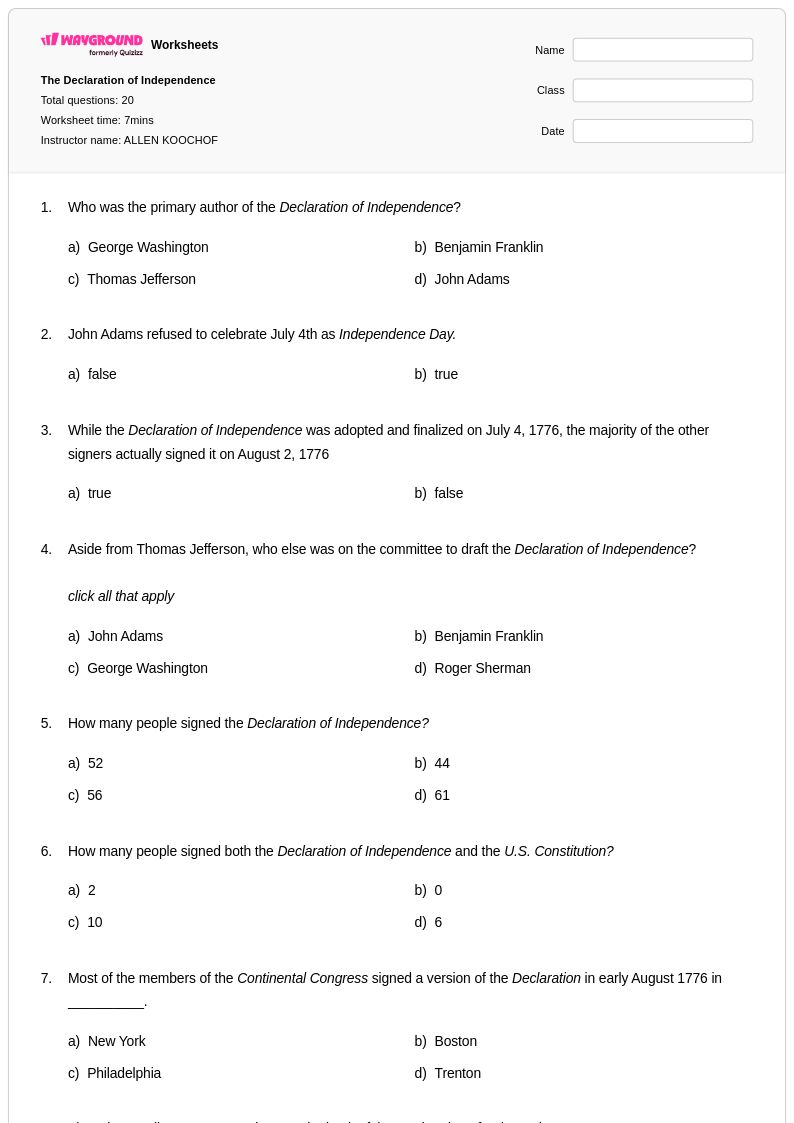
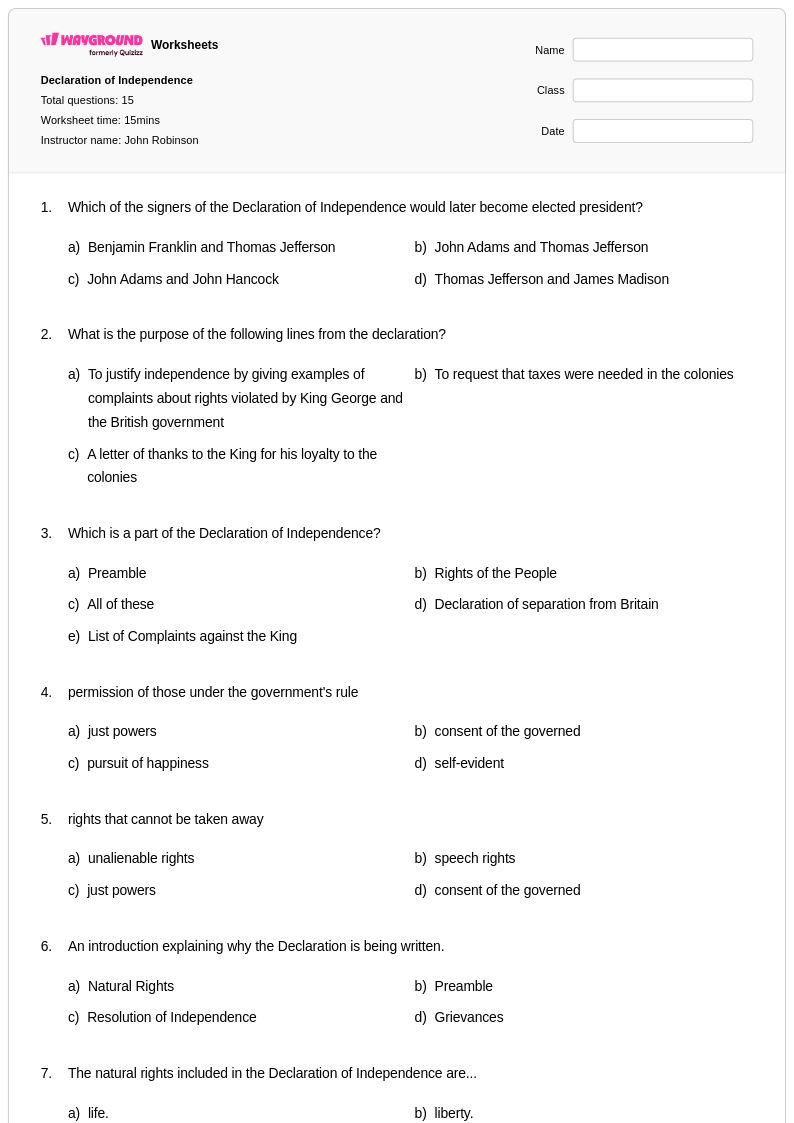
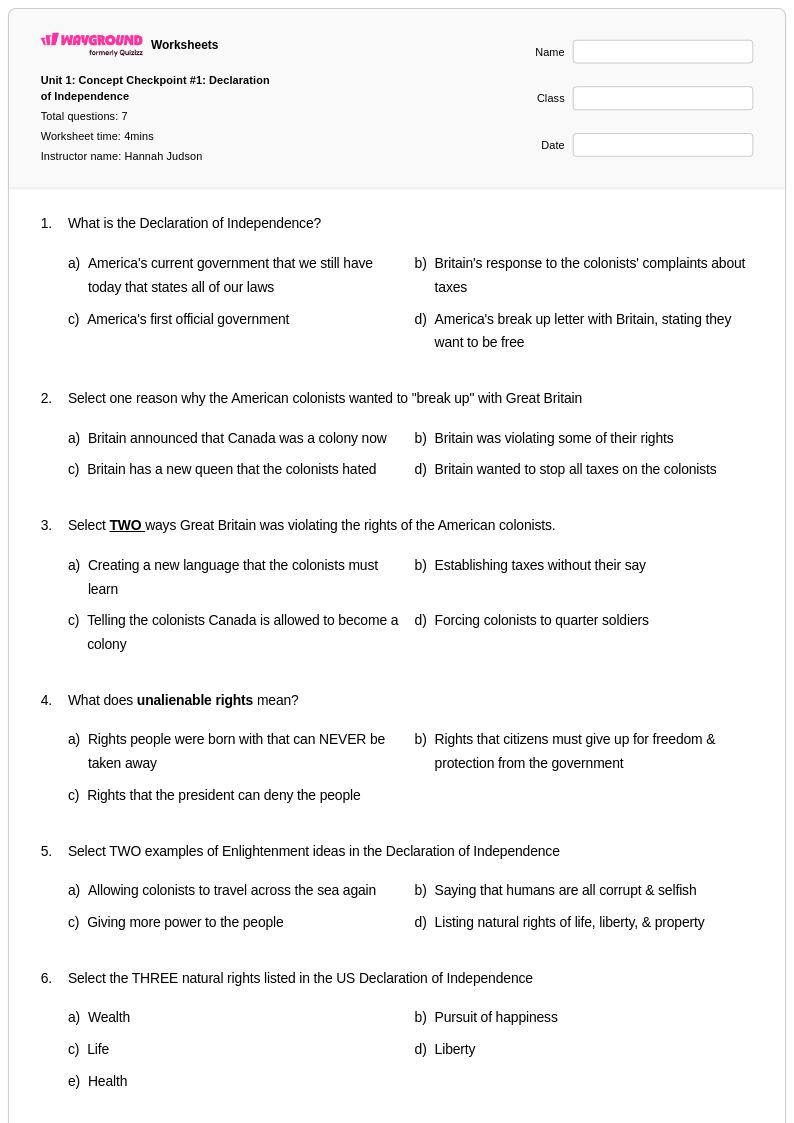
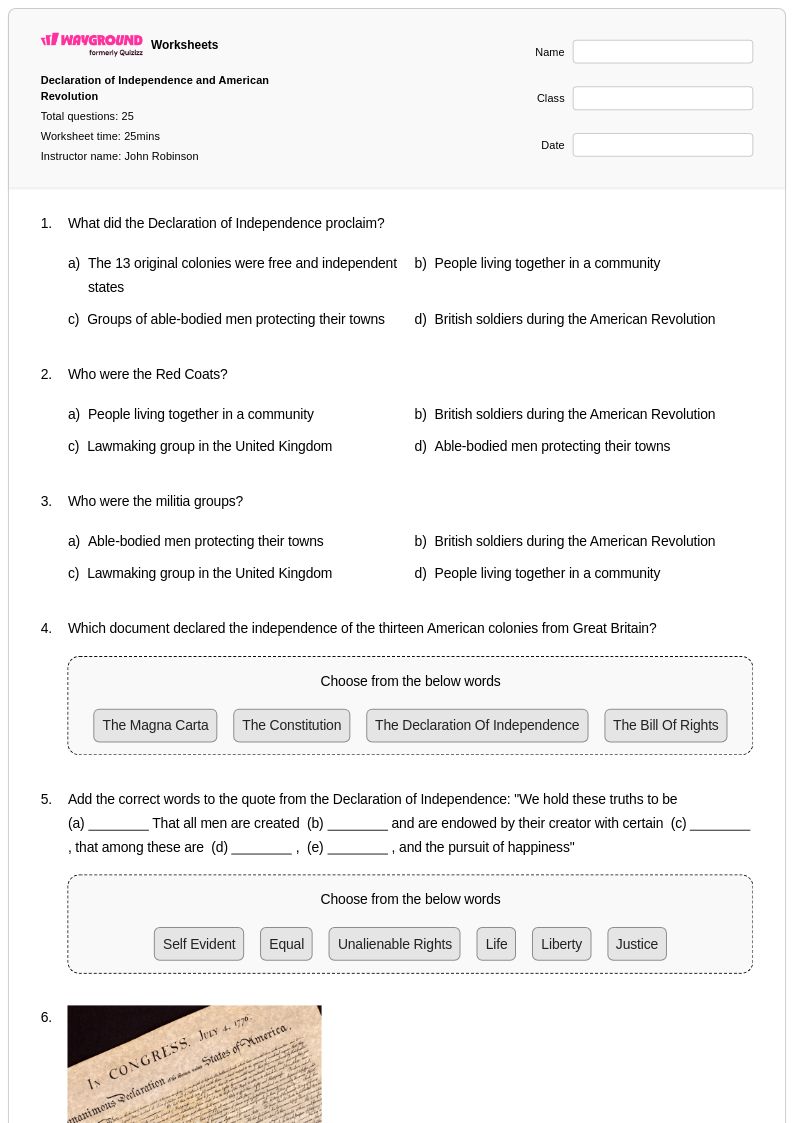
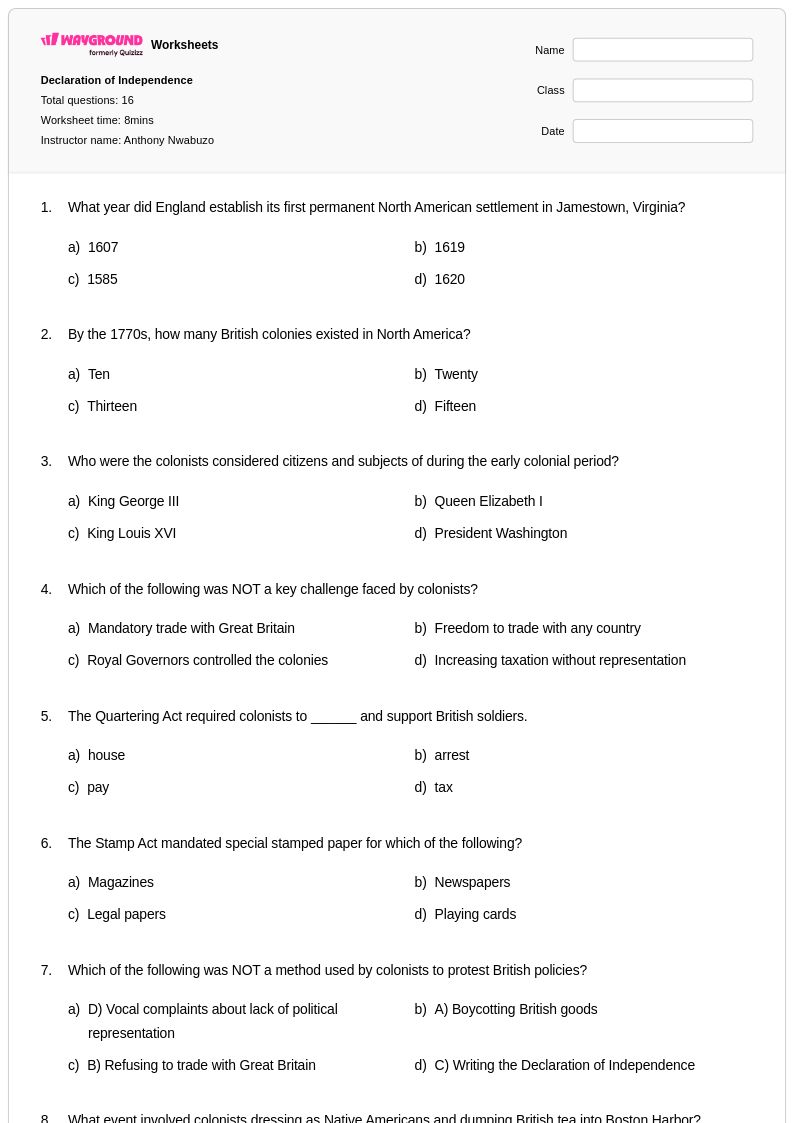
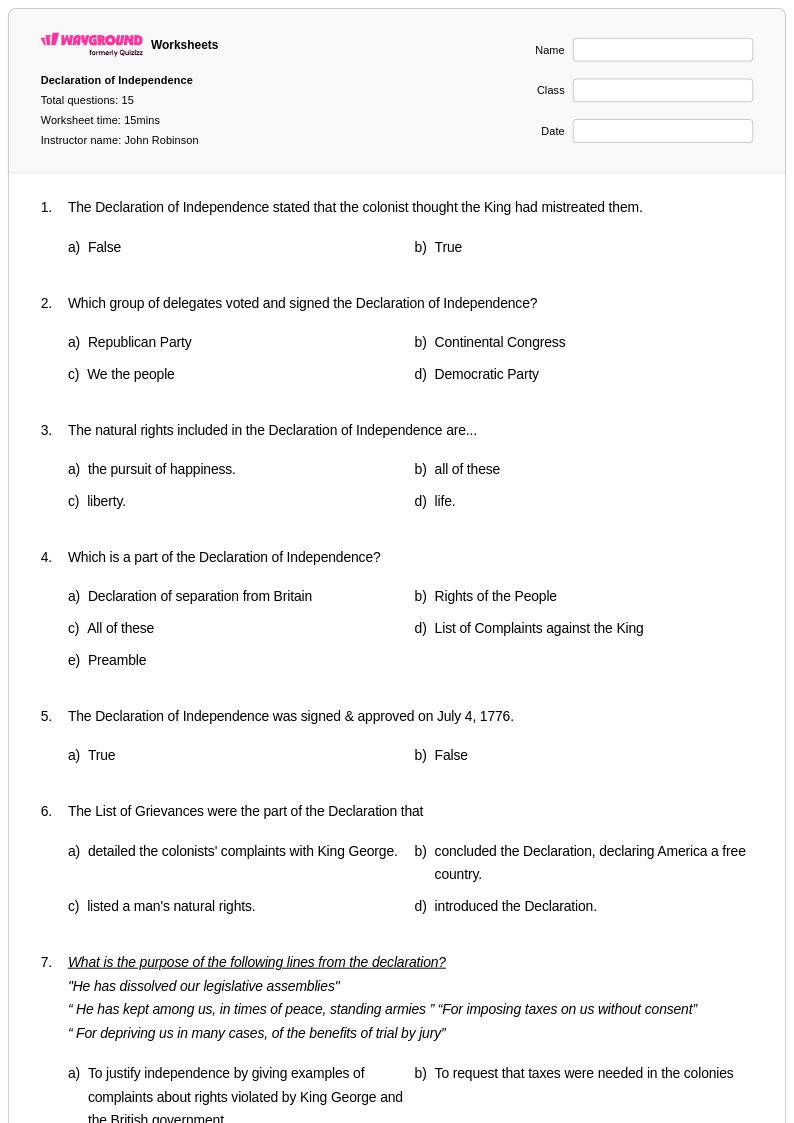
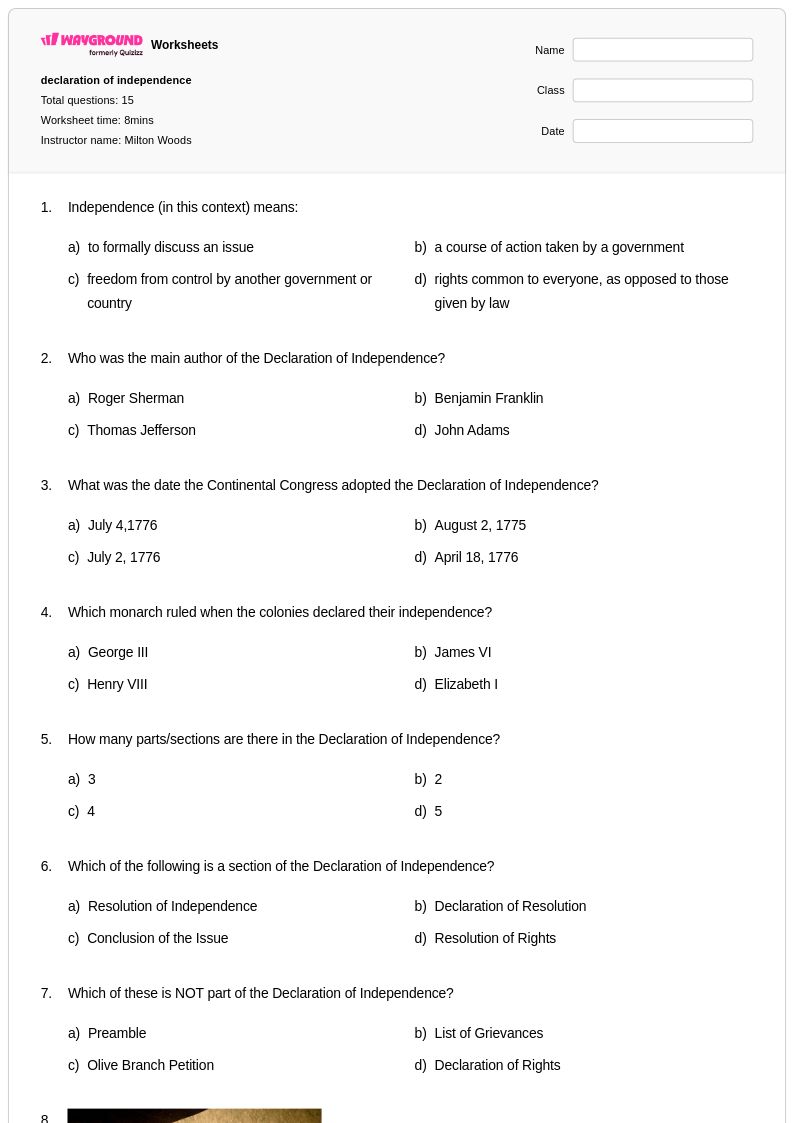
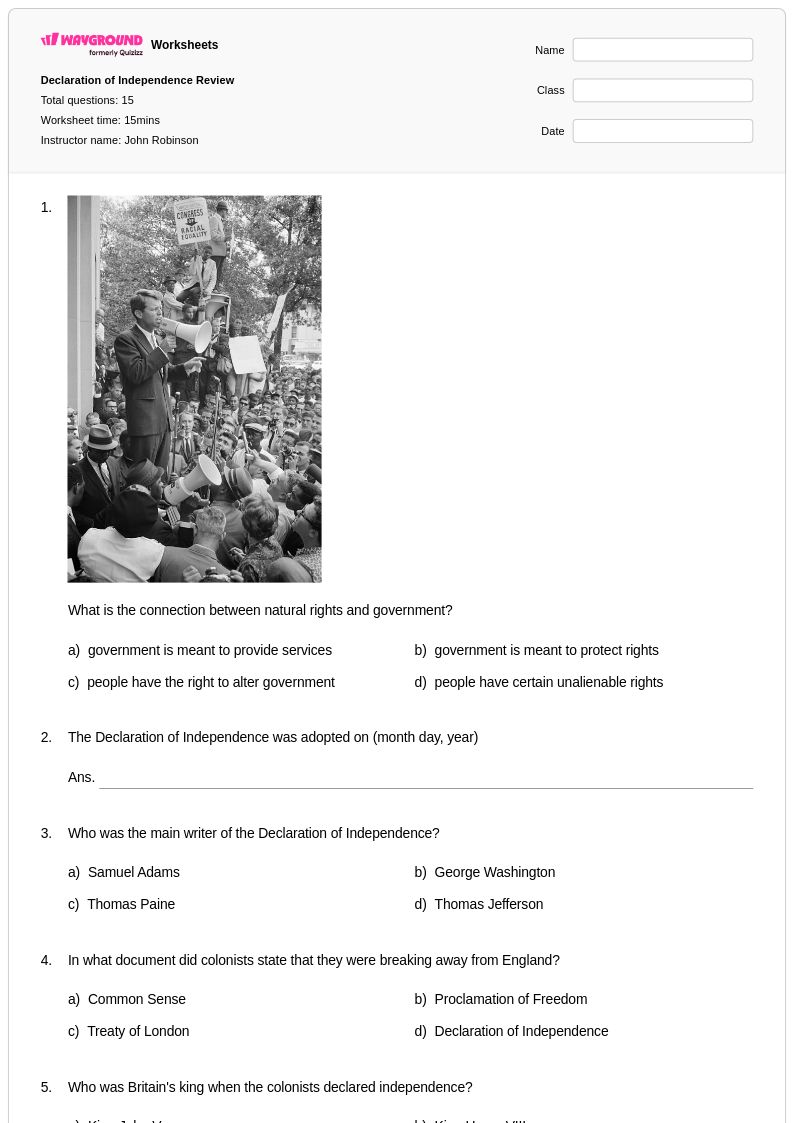
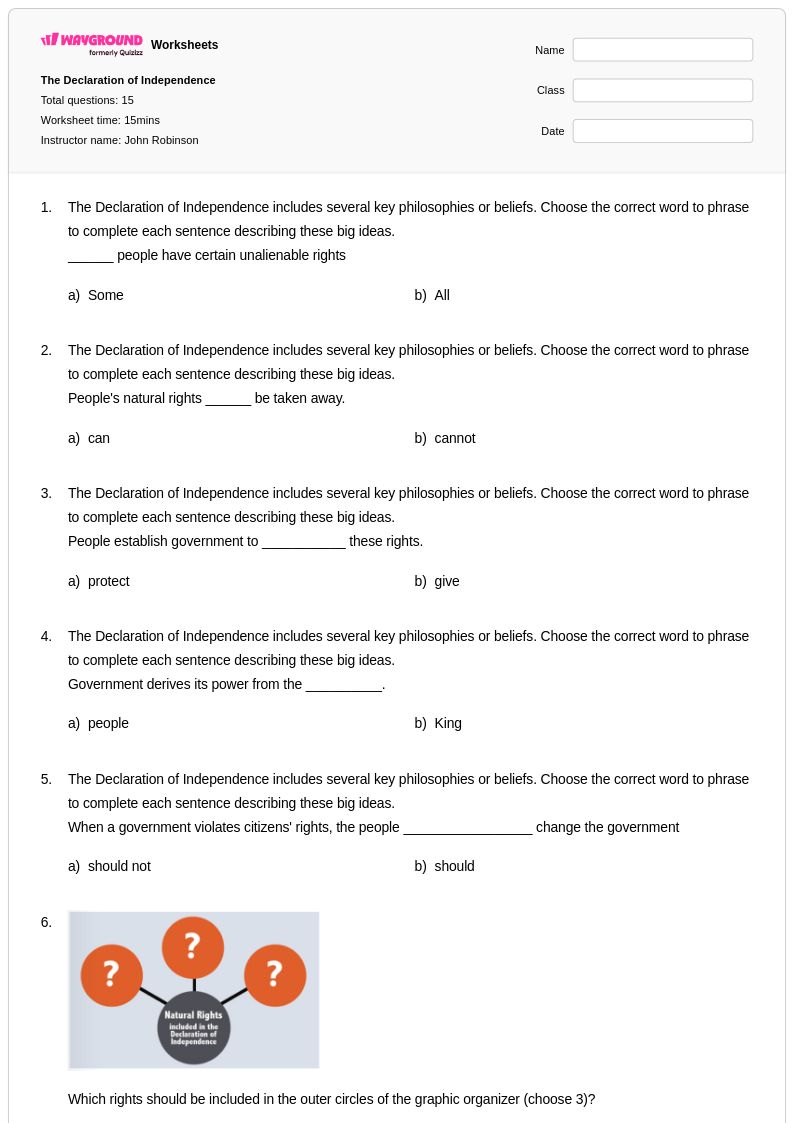
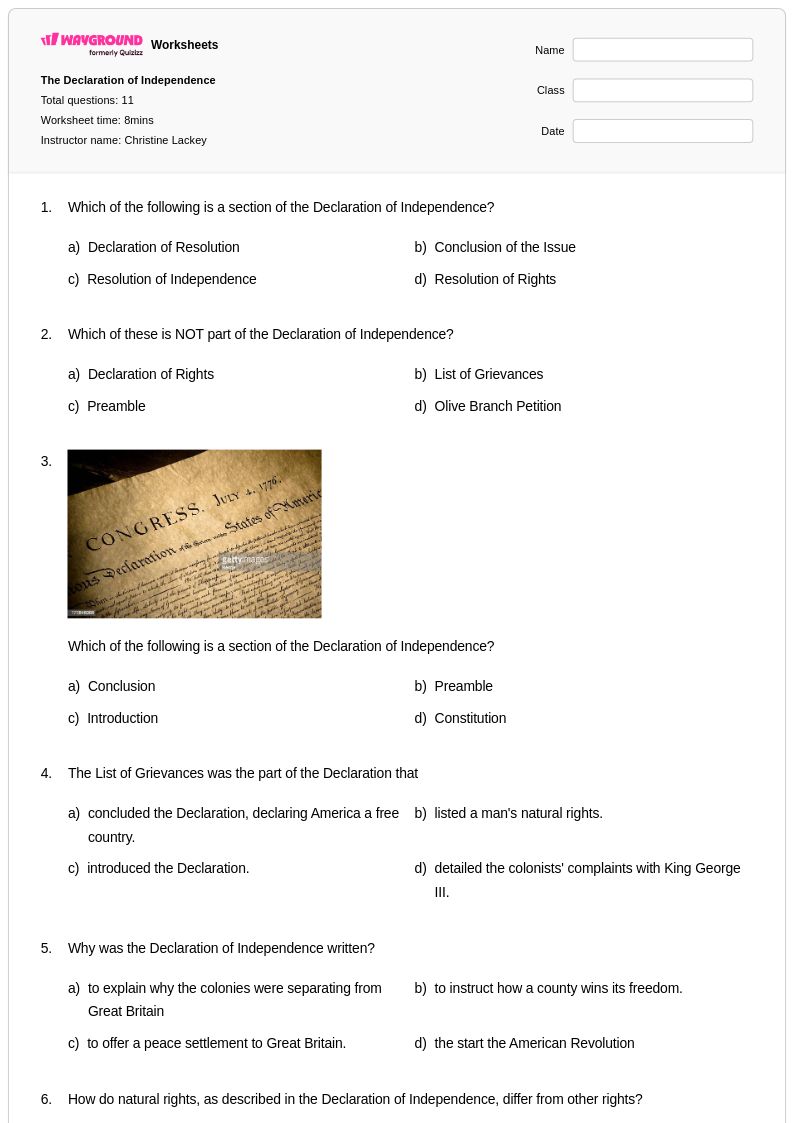
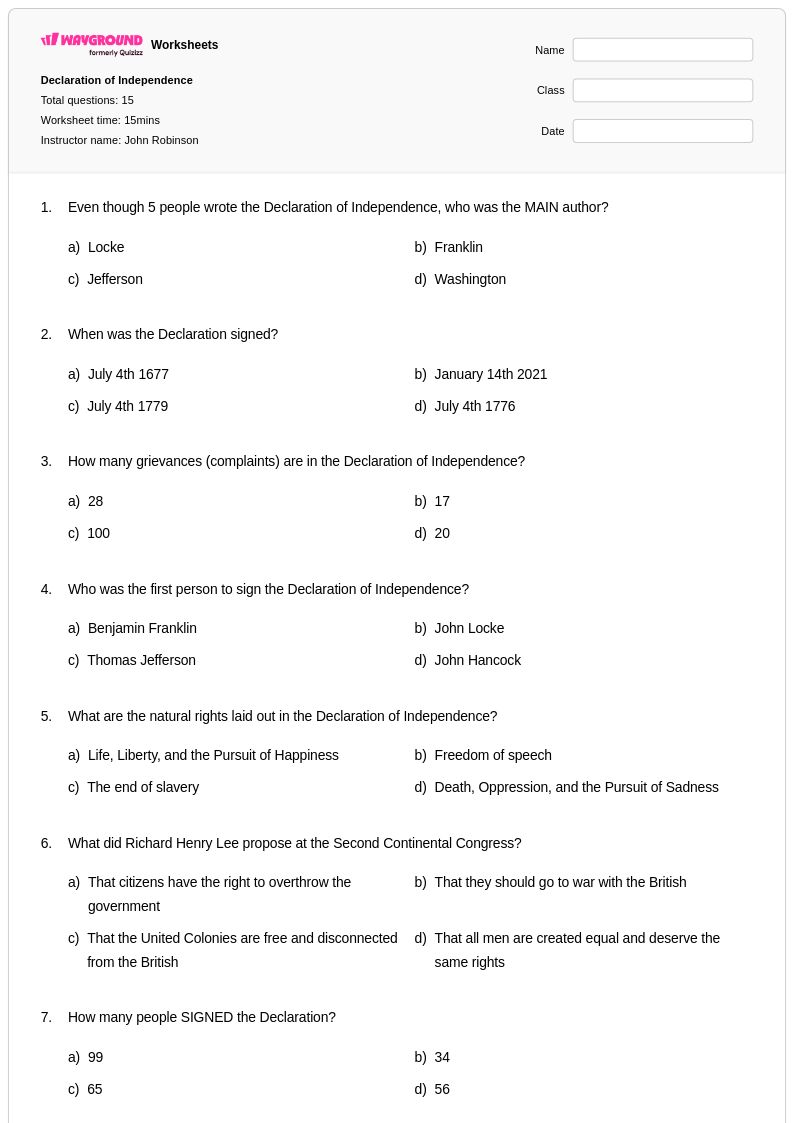
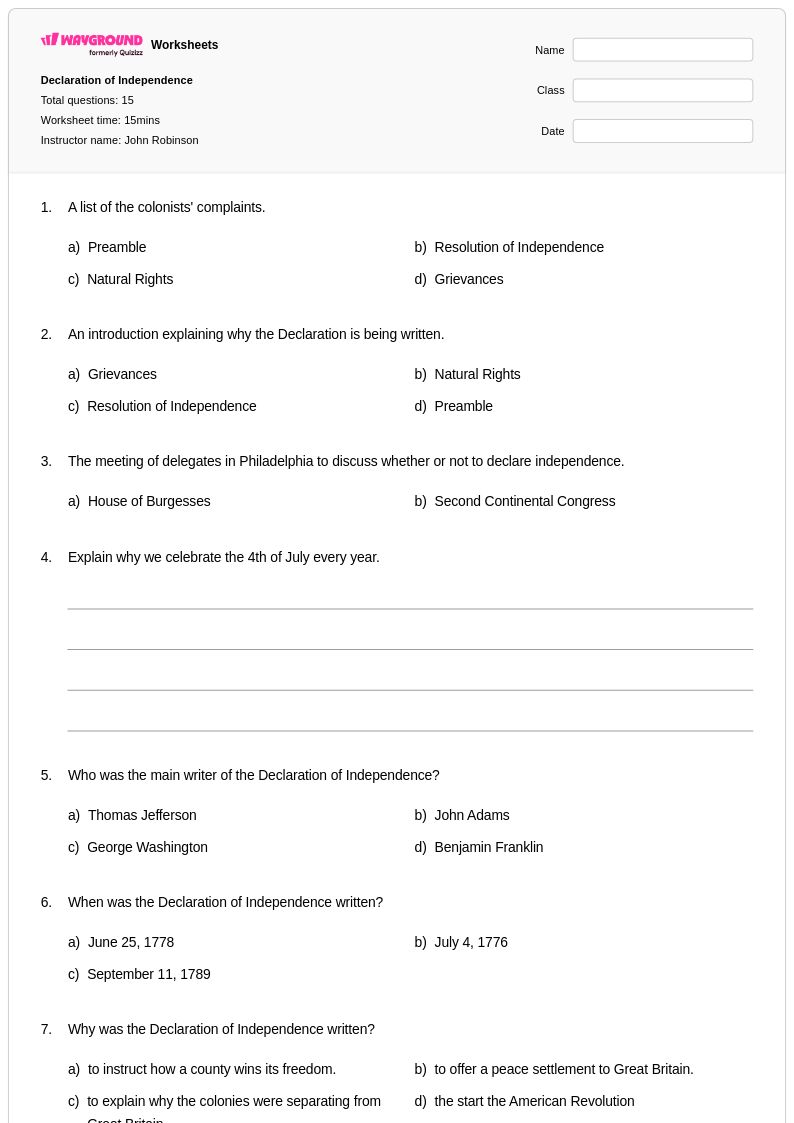
Class 10 Declaration of Independence worksheets from Wayground offer comprehensive printables and practice problems that help students analyze America's founding document, with free PDF downloads and complete answer keys for effective classroom learning.
Explore printable Declaration of Independence worksheets for Class 10
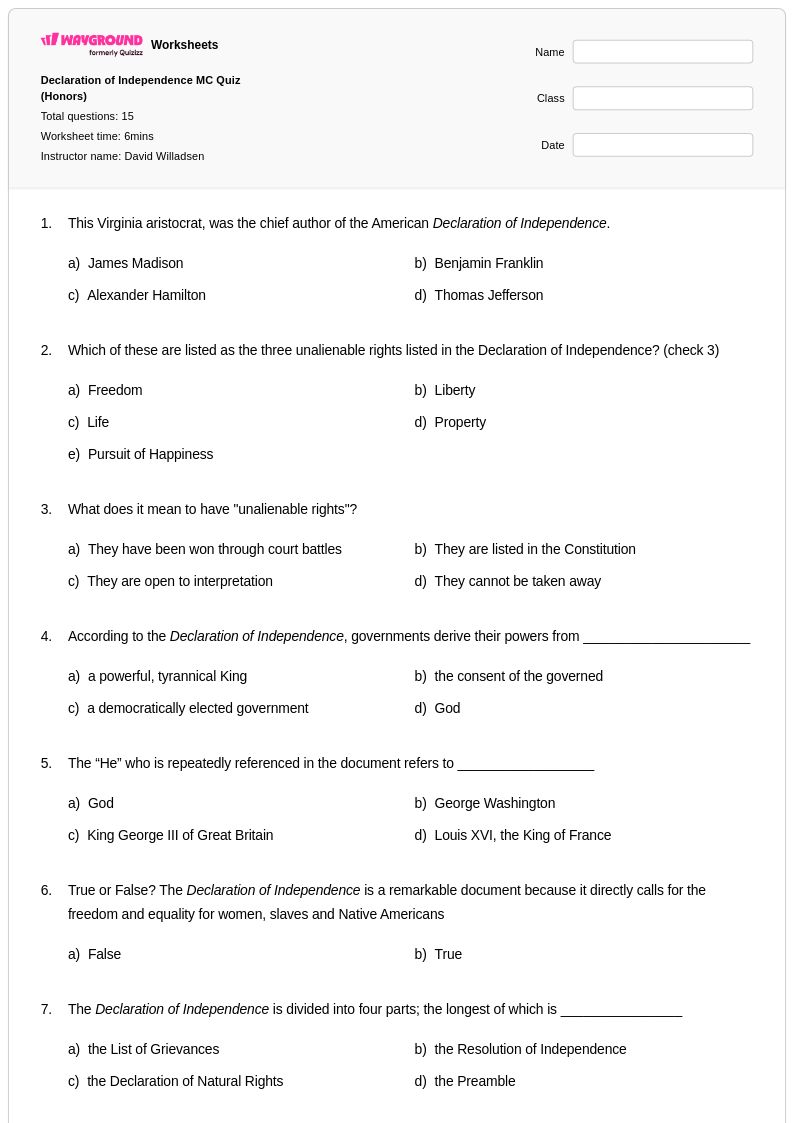
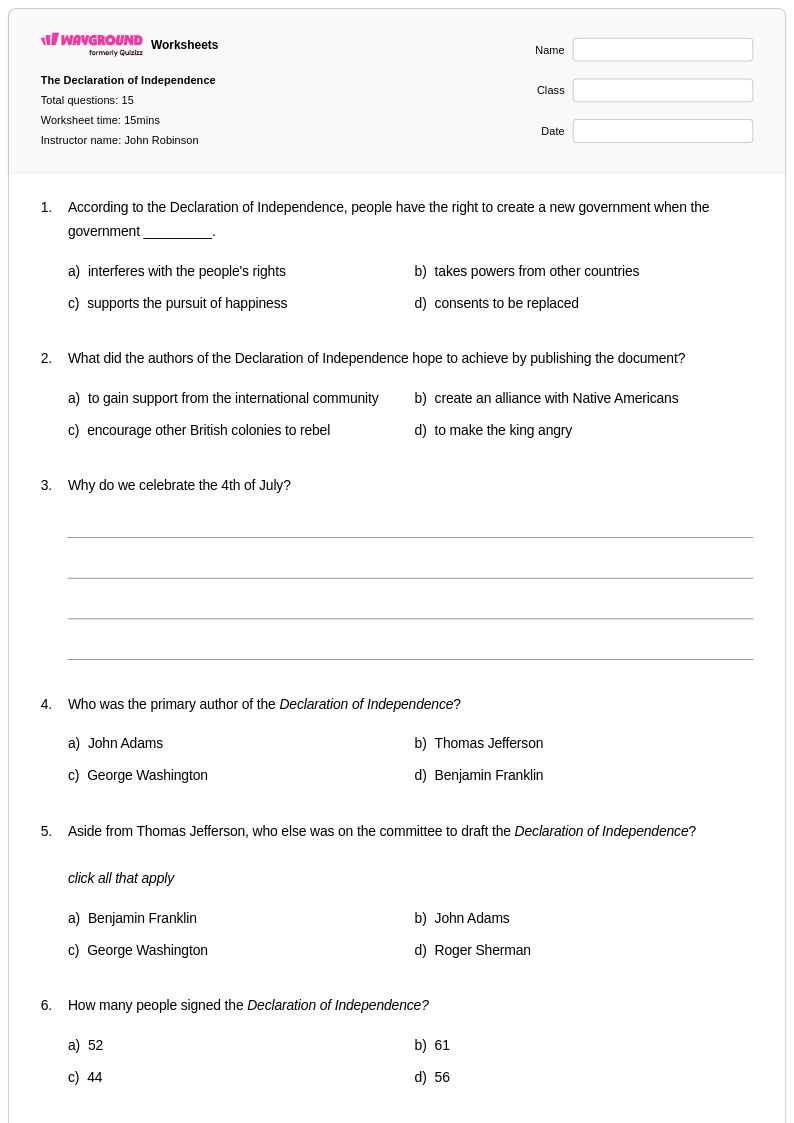
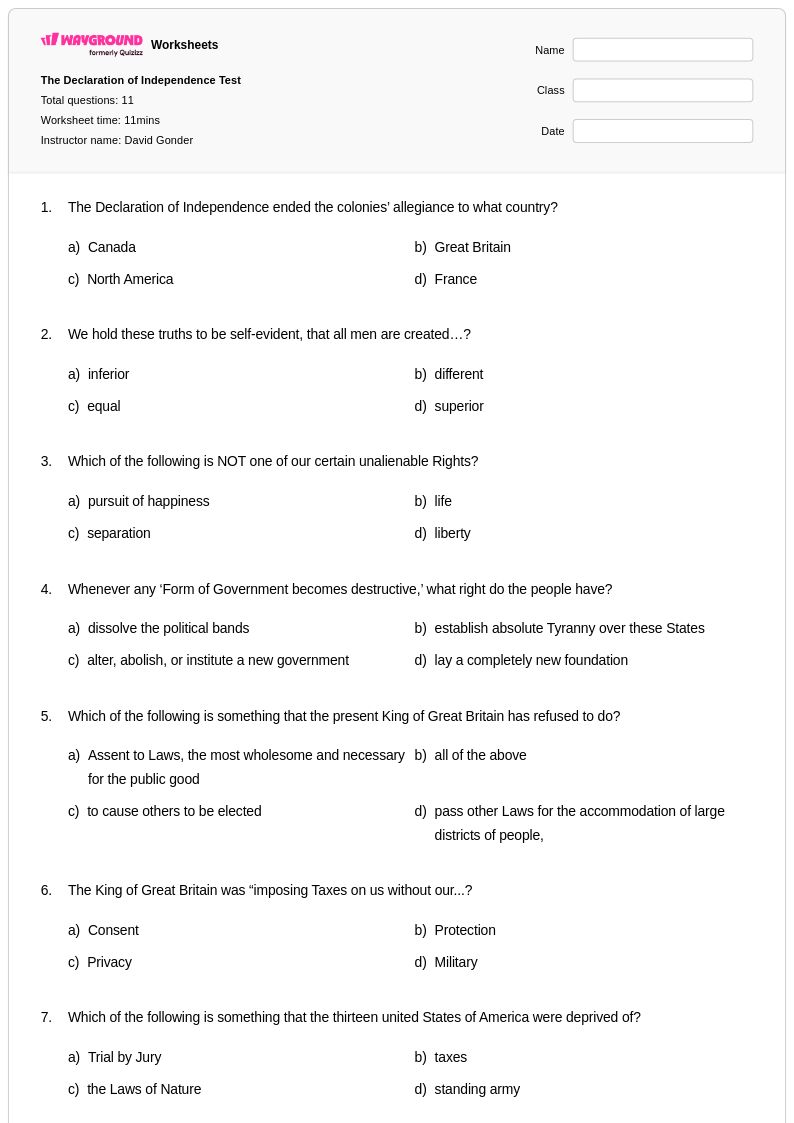
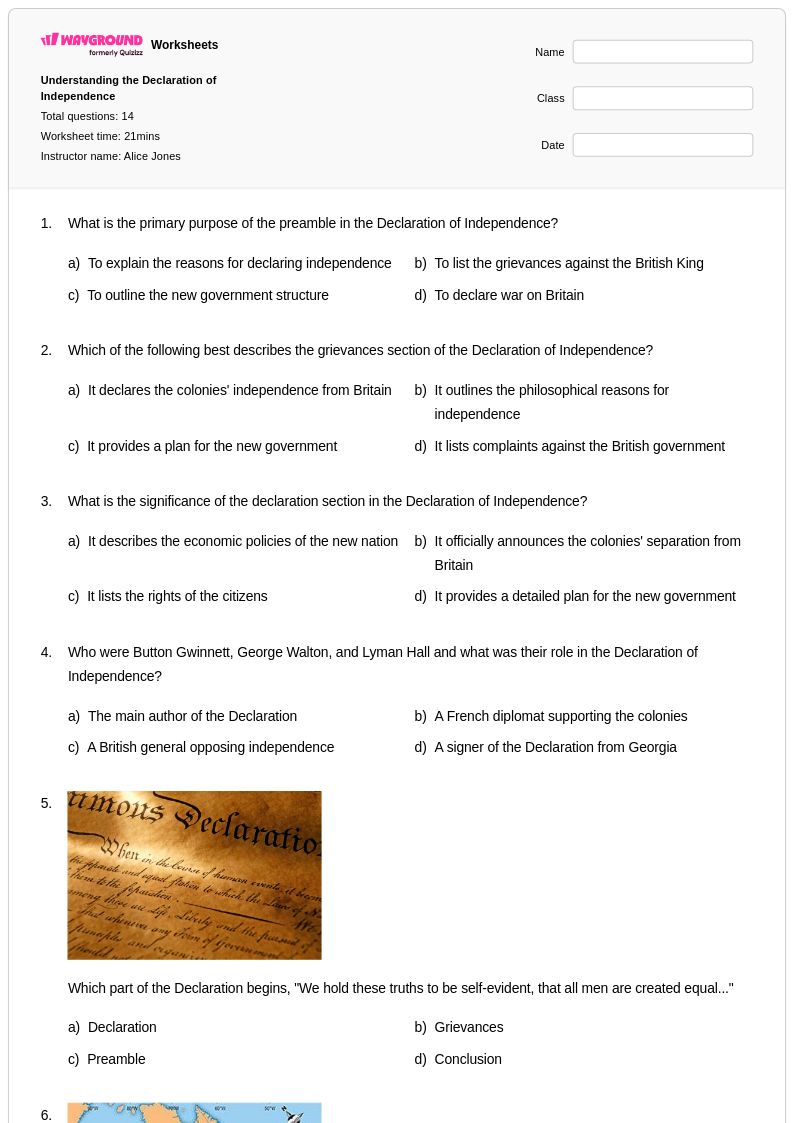
Declaration of Independence worksheets for Class 10 students available through Wayground (formerly Quizizz) provide comprehensive exploration of America's founding document and its enduring significance in U.S. History. These expertly crafted resources strengthen critical thinking skills as students analyze the philosophical foundations, key arguments, and historical context that shaped this pivotal 1776 document. Students engage with practice problems that examine the influence of Enlightenment thinkers like John Locke, decode the meaning behind Thomas Jefferson's carefully chosen language, and evaluate how the Declaration's principles of natural rights and government by consent influenced both the American Revolution and subsequent democratic movements worldwide. Each worksheet includes detailed answer keys to support independent learning, and all materials are available as free printables in convenient pdf format for seamless classroom integration.
Wayground (formerly Quizizz) empowers educators with millions of teacher-created Declaration of Independence resources that transform Class 10 U.S. History instruction through robust search and filtering capabilities aligned to national and state standards. Teachers can easily locate materials that match their specific curricular needs, whether focusing on primary source analysis, comparative government structures, or the Declaration's influence on later reform movements. The platform's differentiation tools allow educators to customize worksheets for diverse learning levels, supporting both remediation for struggling students and enrichment opportunities for advanced learners. Available in both printable and digital formats including downloadable pdfs, these flexible resources streamline lesson planning while providing targeted skill practice that deepens students' understanding of how the Declaration of Independence established the philosophical framework for American democracy and continues to inspire global human rights movements today.
FAQs
How do I teach the Declaration of Independence to students who struggle with primary source analysis?
Start by chunking the document into its four main sections: the preamble, the statement of natural rights, the list of grievances, and the conclusion. Have students paraphrase each section in modern language before analyzing its meaning, which builds comprehension before interpretation. Scaffolded close reading exercises that guide students through key phrases like 'unalienable rights' and 'consent of the governed' help bridge the gap between difficult 18th-century prose and student understanding.
What are the most common mistakes students make when analyzing the Declaration of Independence?
Students frequently conflate the Declaration of Independence with the Constitution, misattributing legal authority to a document that is primarily a political and philosophical statement. Another common error is treating the grievances section as minor background rather than recognizing it as the central legal argument justifying separation. Students also tend to overlook Enlightenment influences, particularly John Locke's social contract theory, which is foundational to understanding why Jefferson's language was deliberately chosen.
What exercises help students understand the Enlightenment ideas behind the Declaration of Independence?
Comparative reading exercises that place excerpts from Locke's Second Treatise alongside Jefferson's preamble are particularly effective for helping students trace the philosophical lineage of natural rights theory. Document-based questions that ask students to identify specific Enlightenment concepts, such as social contract, natural law, and the right to revolution, and then locate evidence for each in the Declaration reinforce these connections. Having students analyze how Jefferson adapted Locke's phrase 'life, liberty, and property' into 'life, liberty, and the pursuit of happiness' is a strong critical thinking task.
How can I use Declaration of Independence worksheets to prepare students for document-based questions on standardized assessments?
The most effective practice mirrors the DBQ format directly: students read a passage, contextualize it within its historical moment, identify the author's purpose, and construct a claim supported by evidence from the text. Worksheets that ask students to compare early drafts of the Declaration with the final version build the sourcing and corroboration skills tested on AP US History and state assessments. Repeated structured practice with the Declaration is especially valuable because it is a recurring primary source on major standardized exams.
How do I use Declaration of Independence worksheets from Wayground in my classroom?
Wayground's Declaration of Independence worksheets are available as printable PDFs for traditional classroom use and in digital formats for technology-integrated learning environments, giving teachers flexibility in how they assign and collect student work. Teachers can also host worksheets as a quiz directly on Wayground, enabling real-time student responses and automatic grading. All worksheets include answer keys, which streamlines grading and makes them practical for independent work, sub plans, or homework assignments.
How do I differentiate Declaration of Independence instruction for students at different reading levels?
For struggling readers, focus on the preamble and the natural rights paragraph using sentence-level paraphrasing tasks before moving to analysis. Advanced students can be challenged with tasks that connect the Declaration's principles to later documents like the Gettysburg Address, the Seneca Falls Declaration, or landmark Supreme Court cases. On Wayground, teachers can apply individual accommodations such as read-aloud support and reduced answer choices for students who need them, while other students receive standard settings without disruption.