Free Printable Division with Remainders worksheets
Master division with remainders through Wayground's comprehensive collection of free worksheets and printables, featuring step-by-step practice problems and complete answer keys to build essential mathematical skills.
Explore printable Division with Remainders worksheets
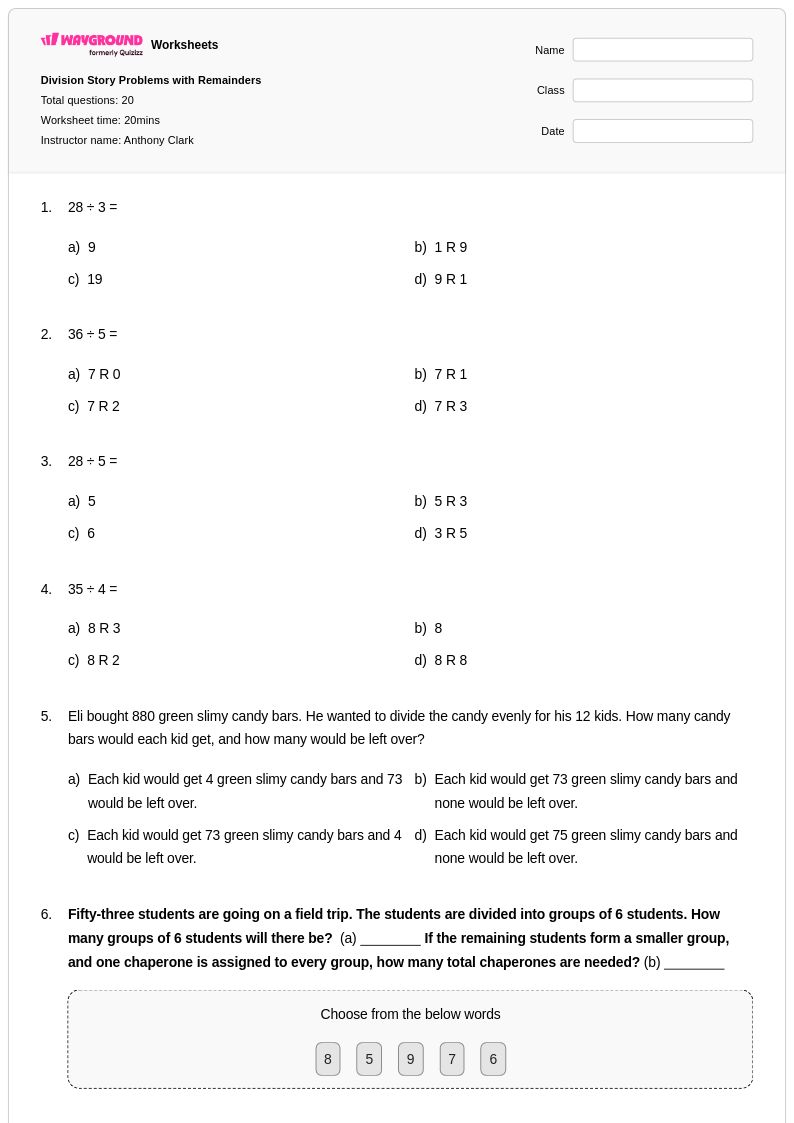
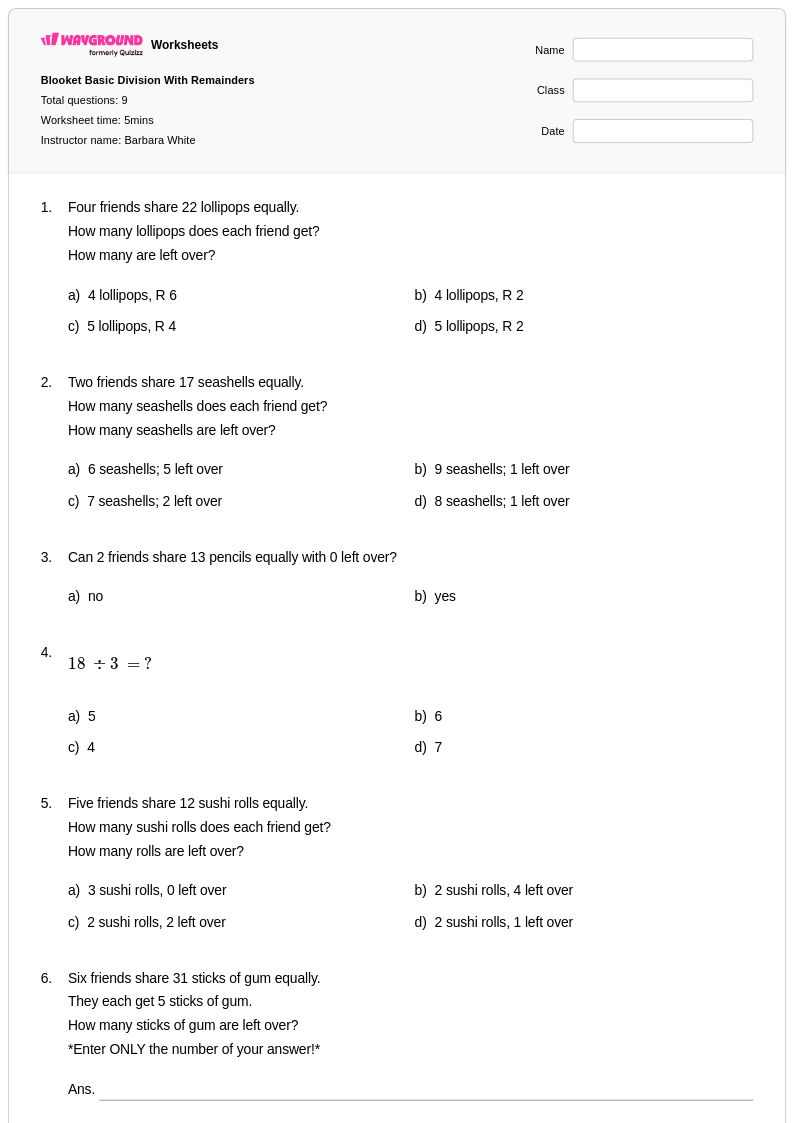
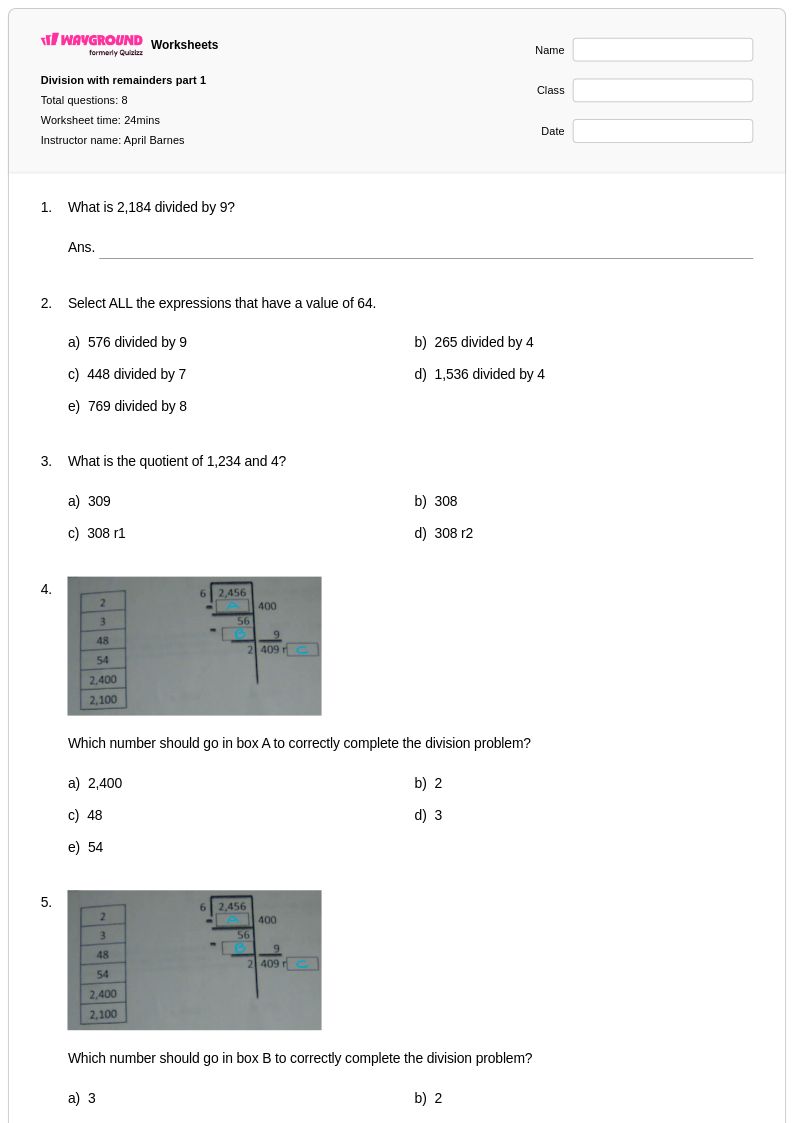
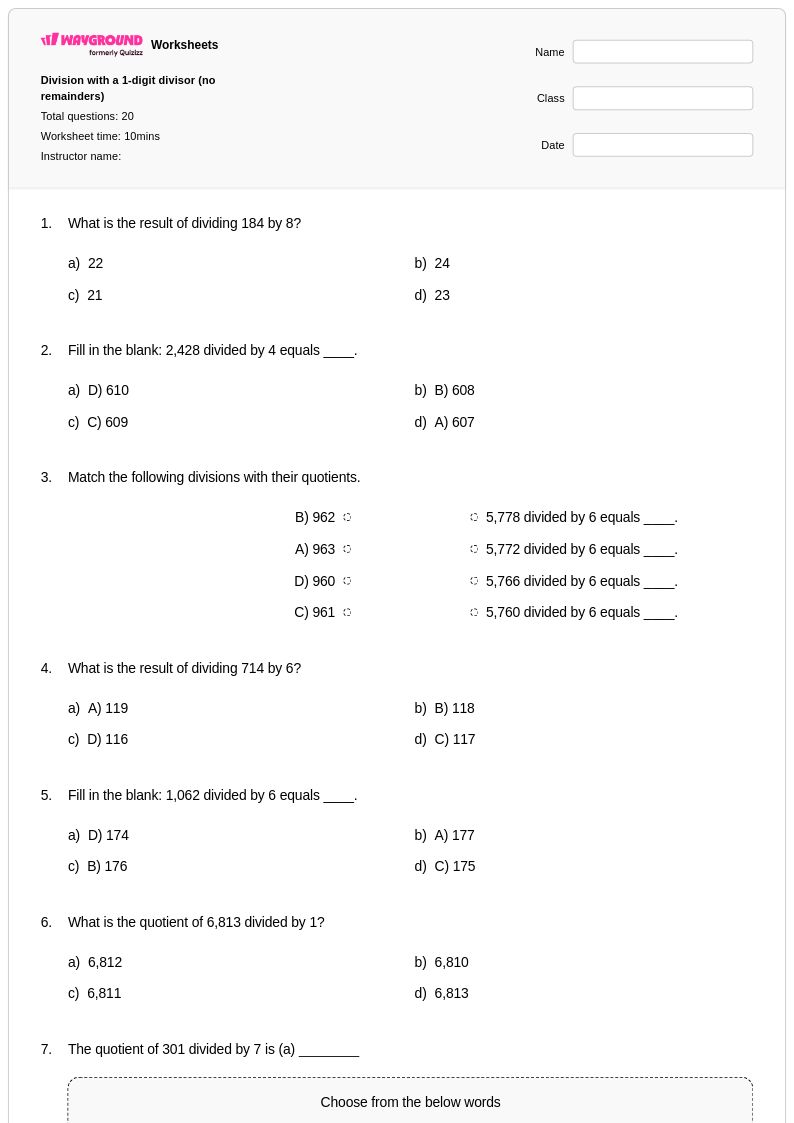
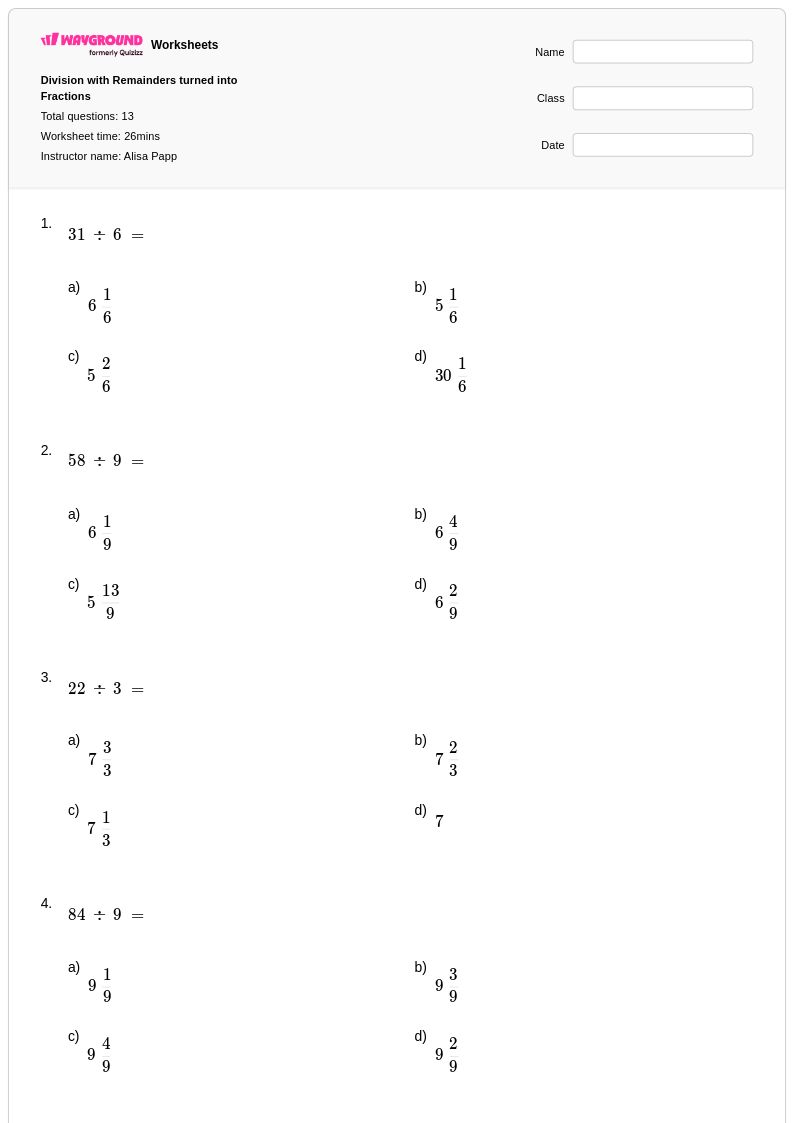
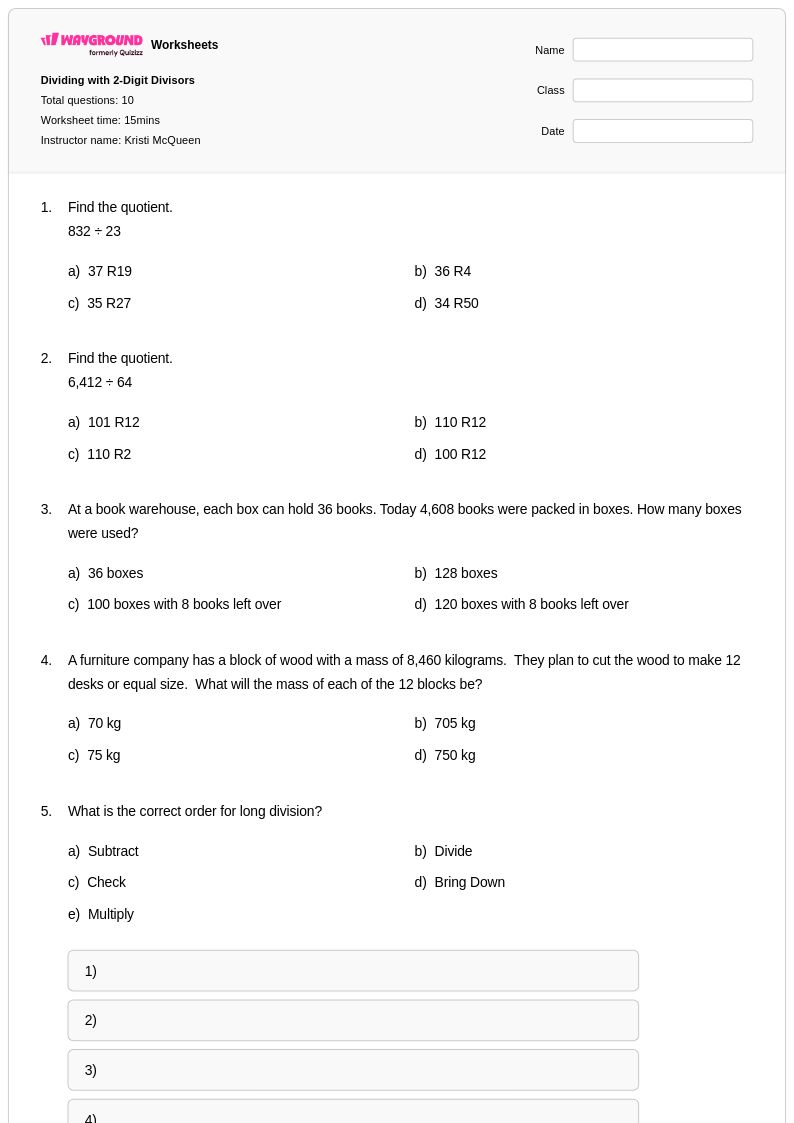
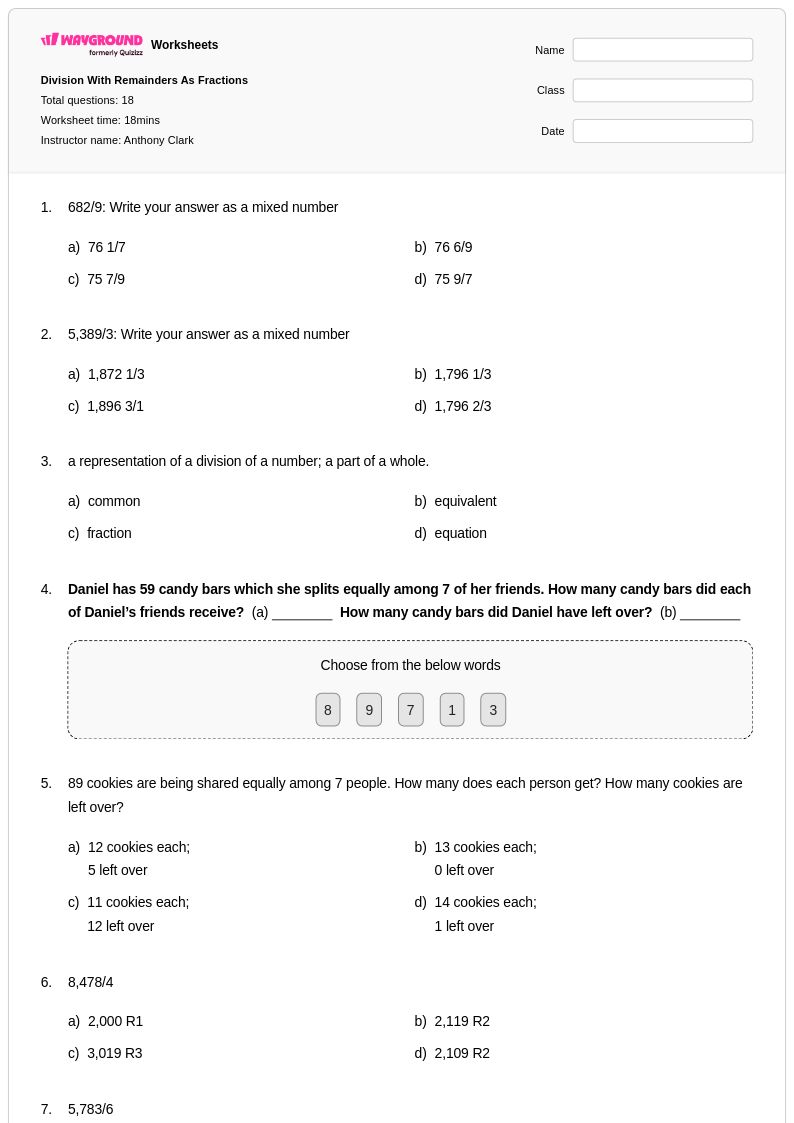
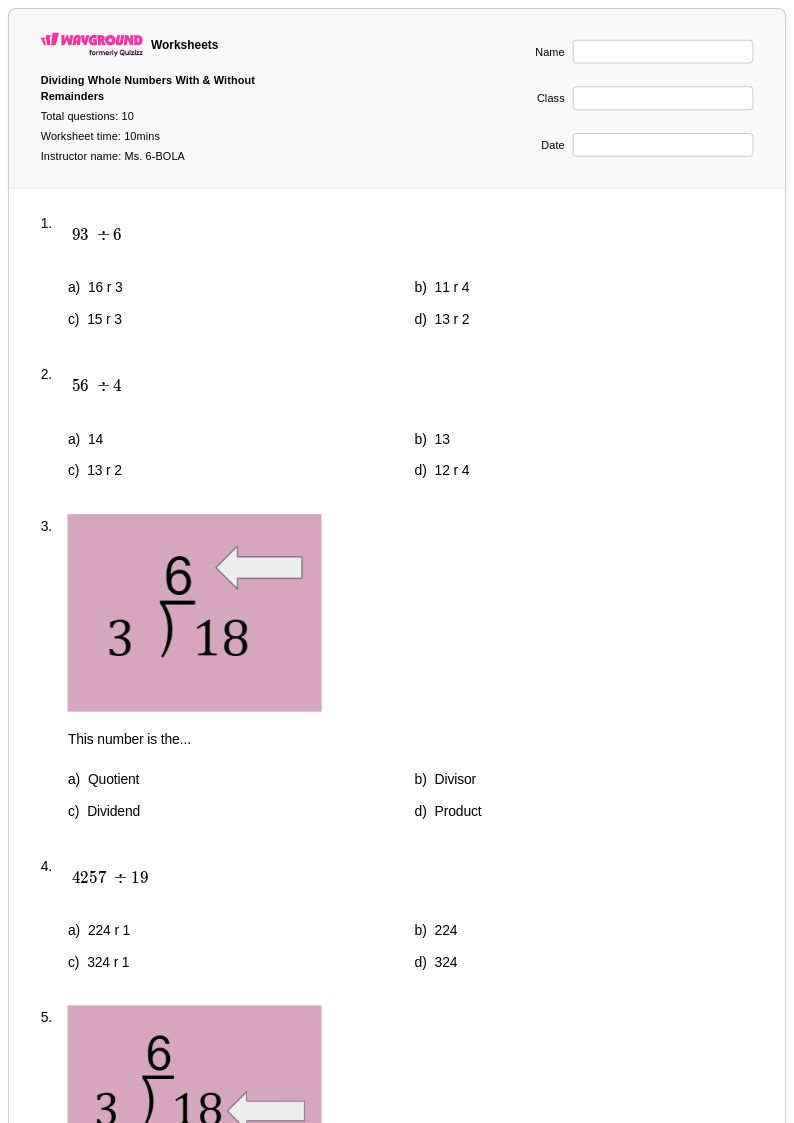
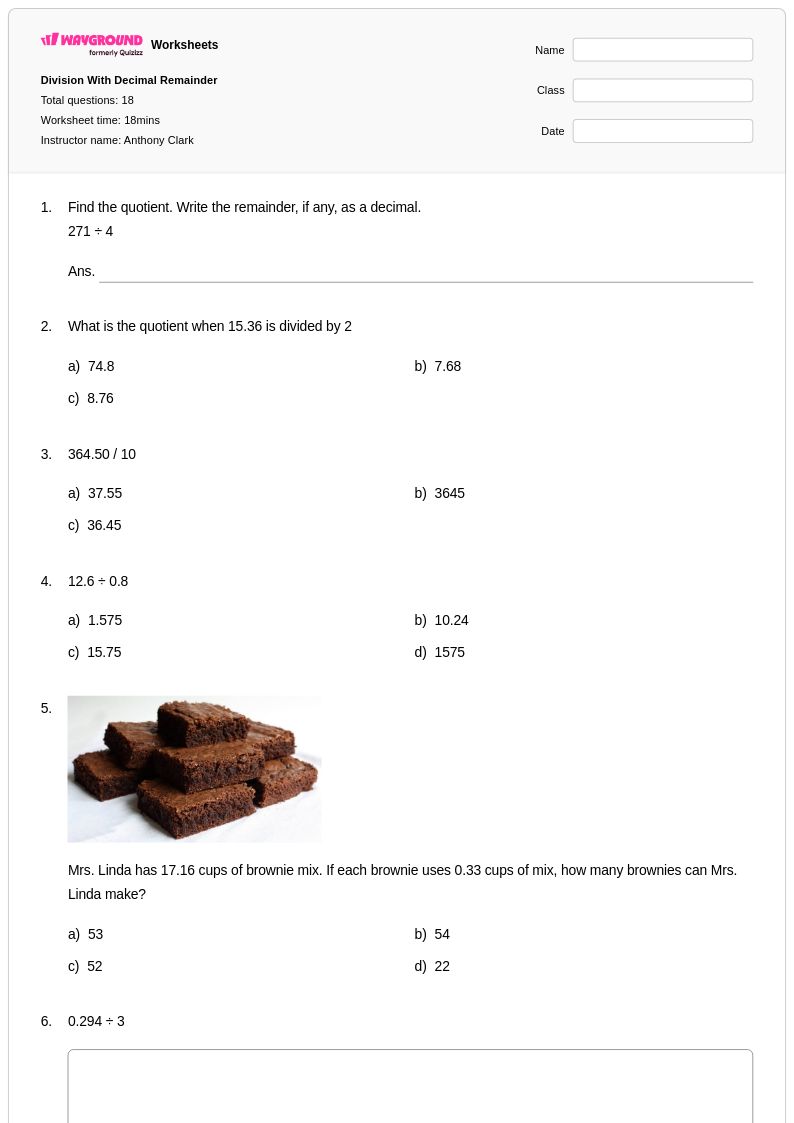
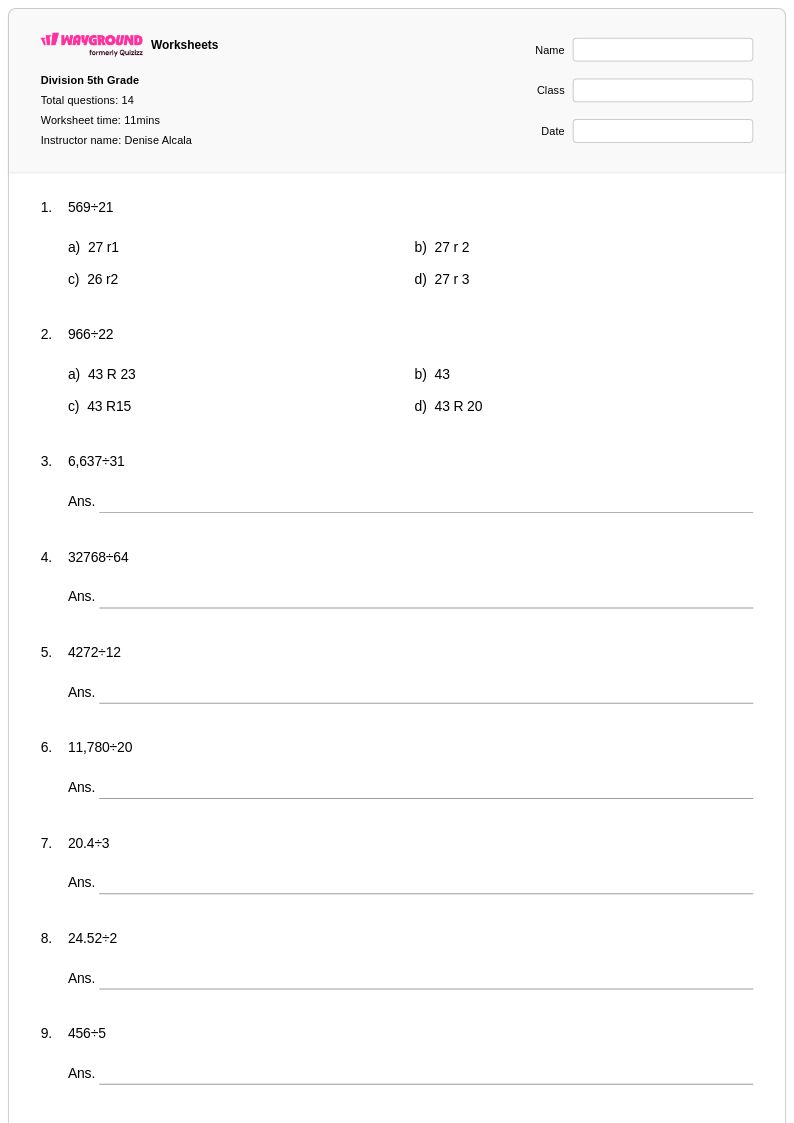
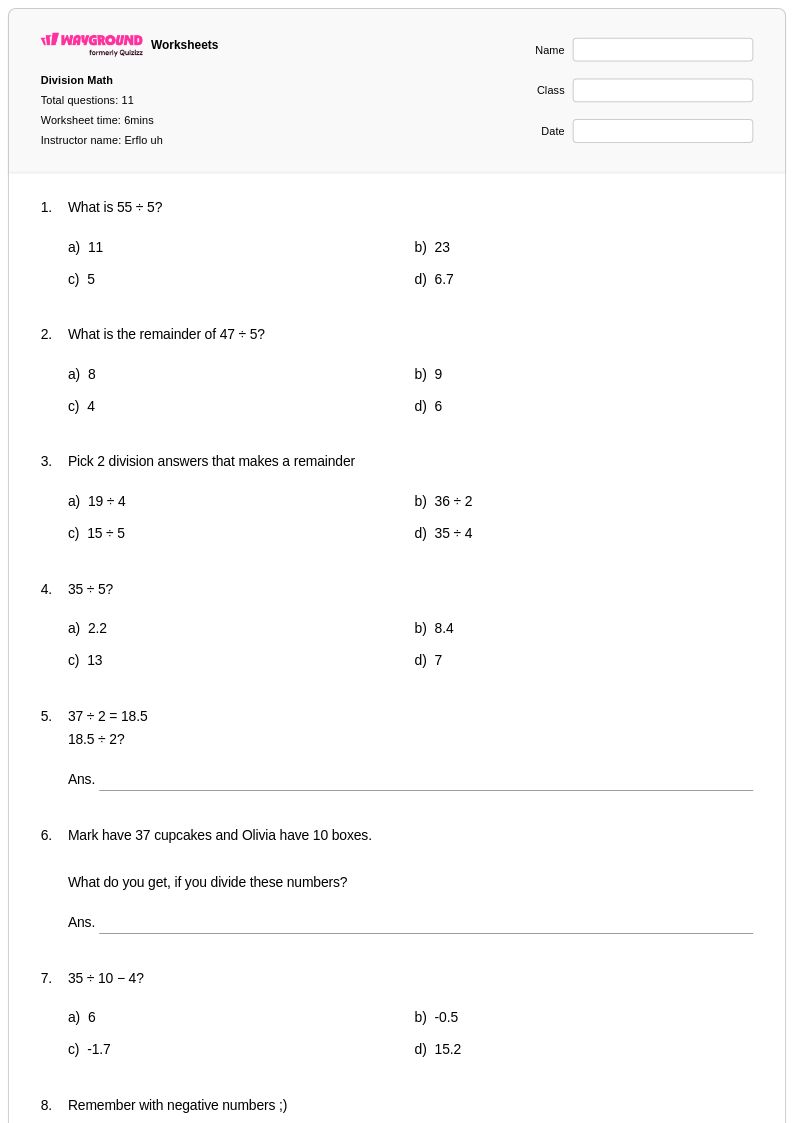
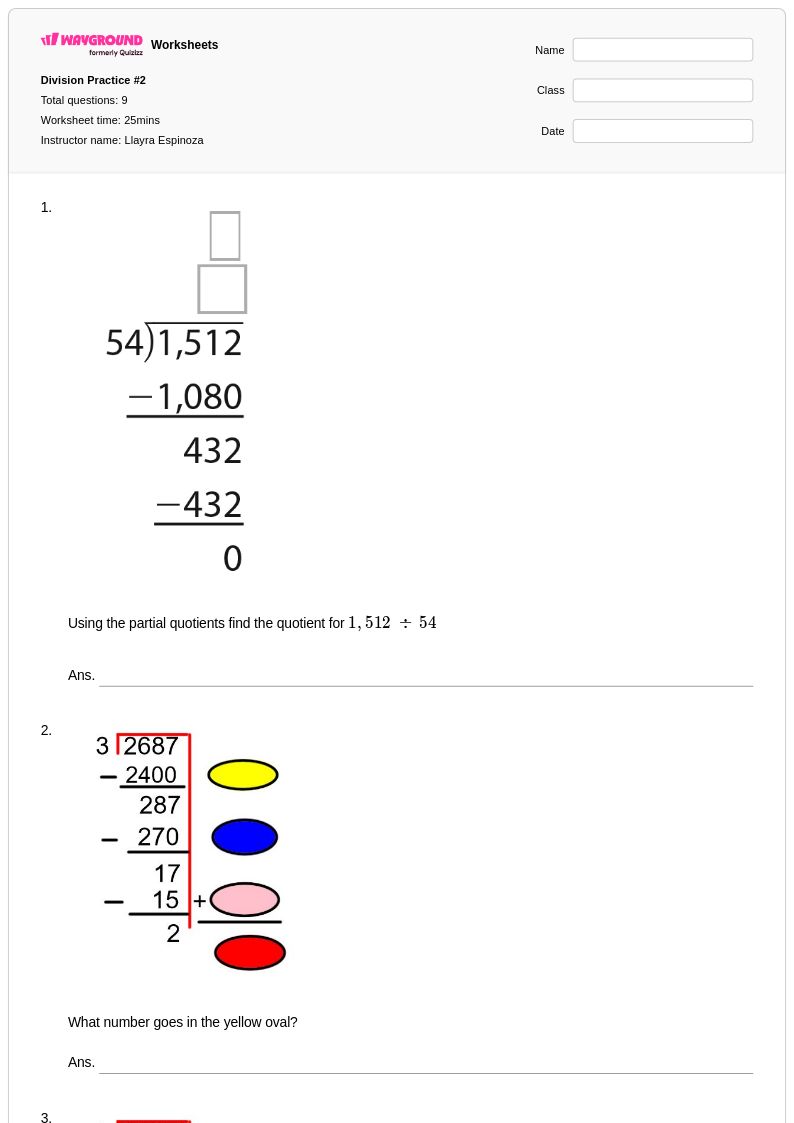
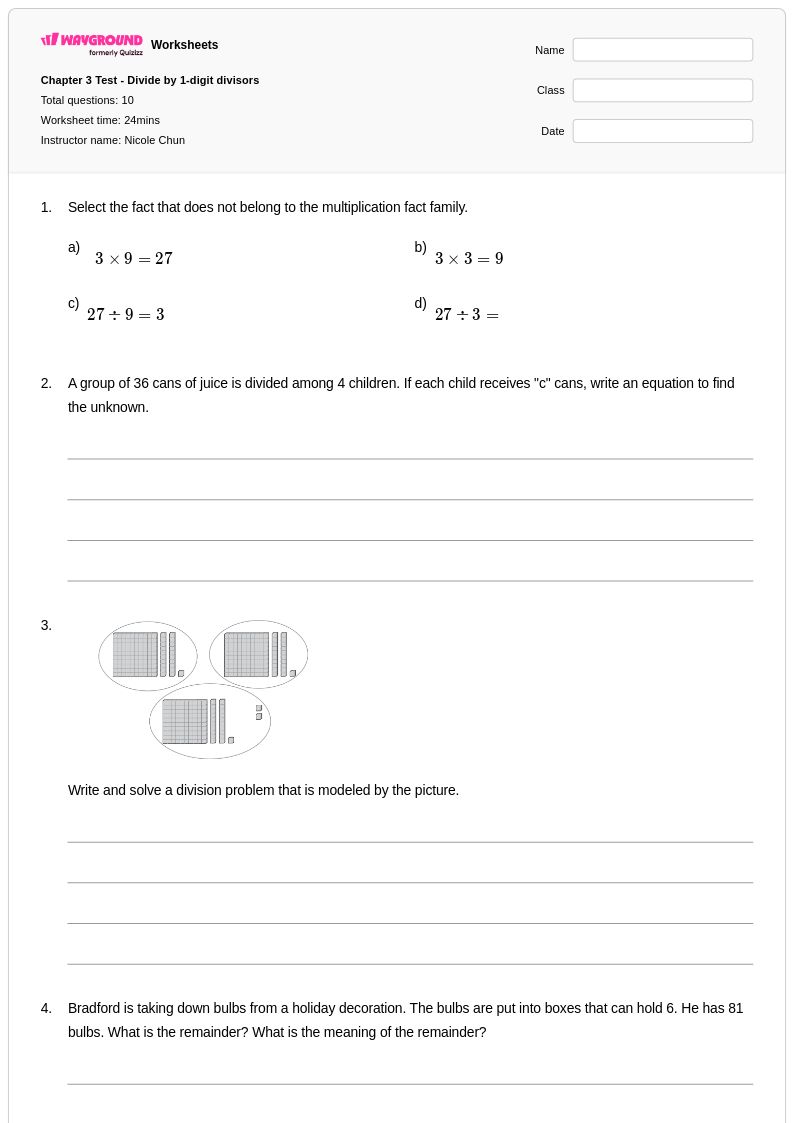
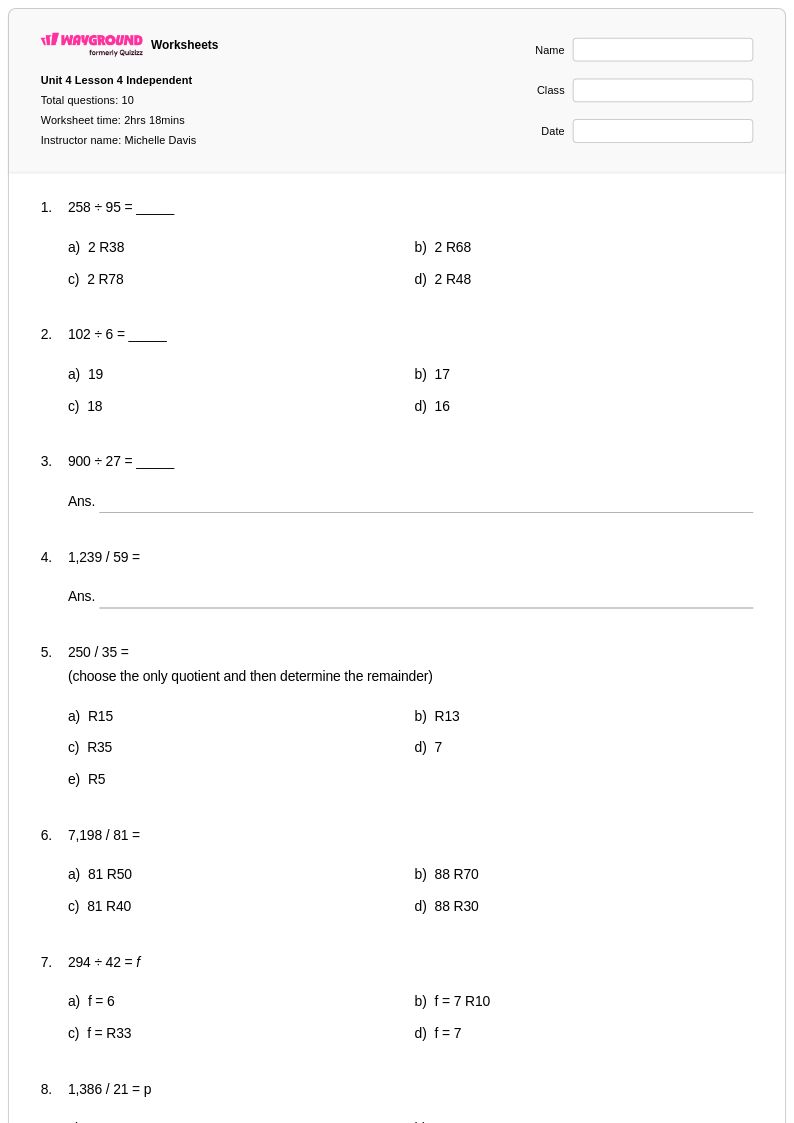
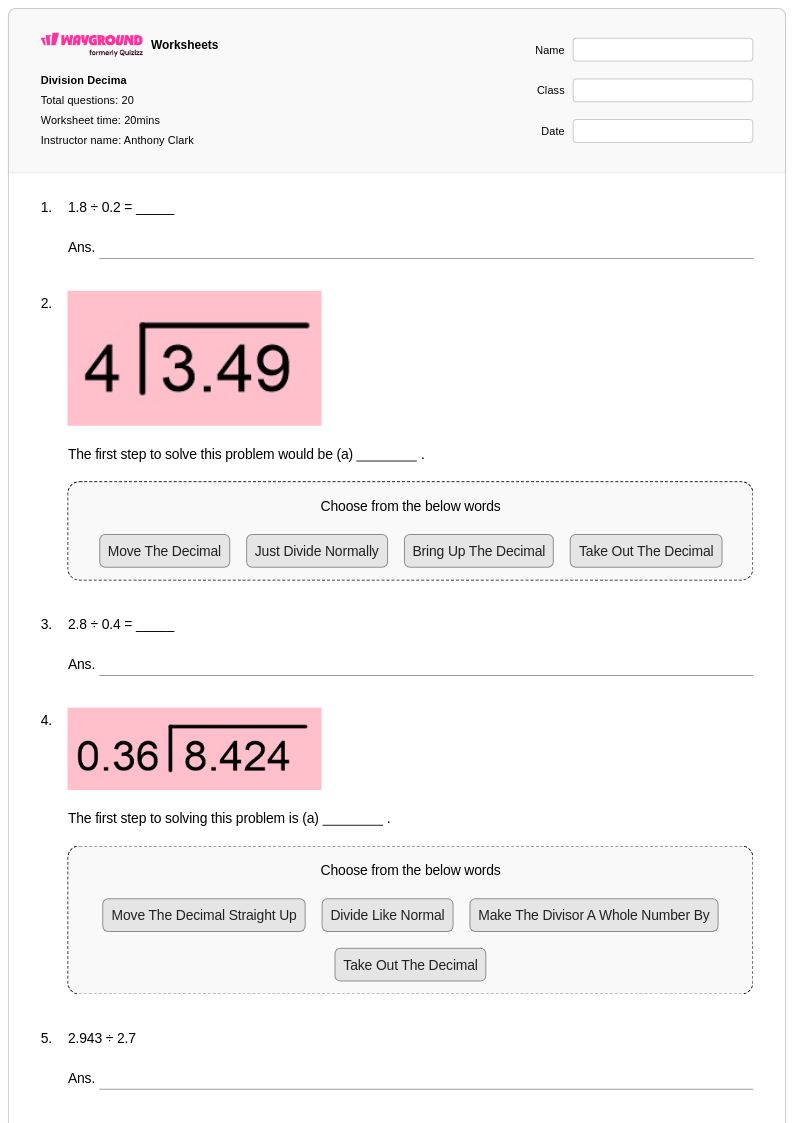
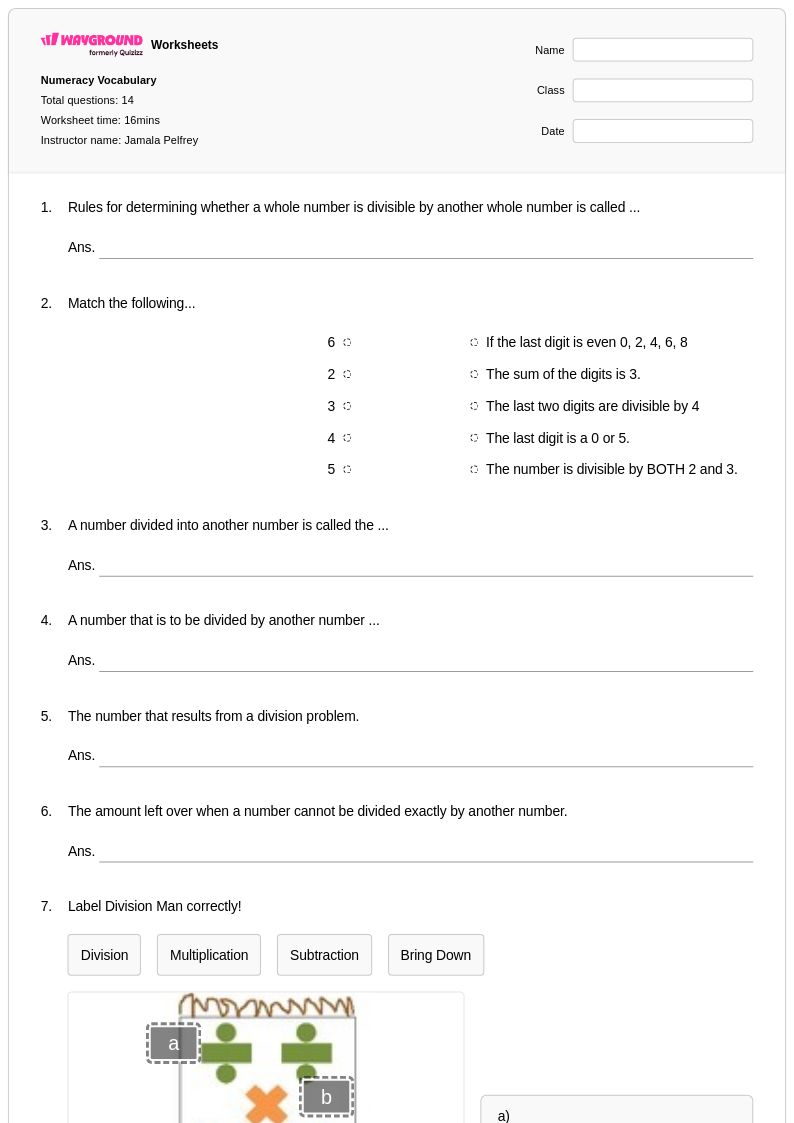
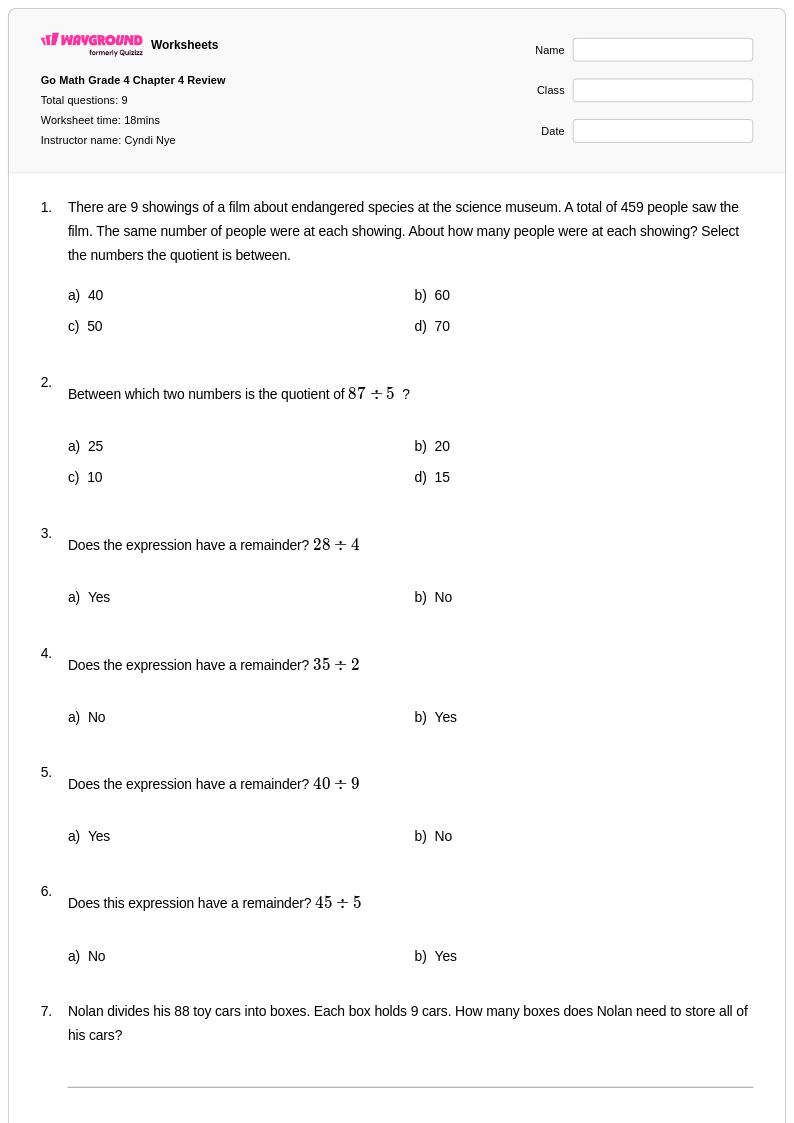
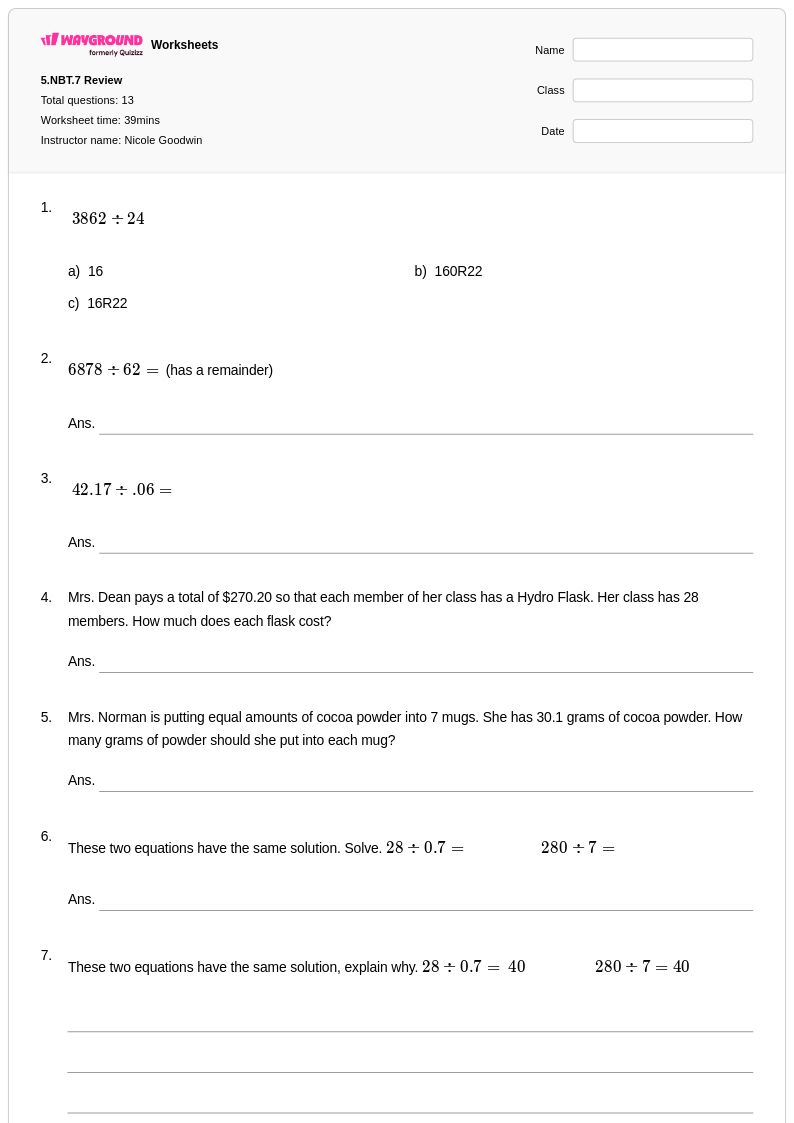
Division with remainders represents a crucial mathematical concept that bridges basic division operations with real-world problem-solving scenarios. Wayground's comprehensive collection of division with remainders worksheets provides students with structured practice opportunities to master this essential skill, featuring problems that require learners to identify quotients and express leftover amounts as remainders. These carefully designed worksheets strengthen computational fluency while developing number sense and logical reasoning abilities through systematic practice problems that progress from simple single-digit divisors to more complex multi-digit scenarios. Each worksheet comes with a complete answer key and is available as a free printable pdf, making it easy for educators to implement immediate feedback and assessment strategies that support student understanding of remainder concepts.
Wayground, formerly Quizizz, empowers mathematics teachers with access to millions of educator-created resources specifically focused on division with remainders, all searchable through advanced filtering tools that allow for precise alignment with curriculum standards and learning objectives. The platform's differentiation capabilities enable teachers to customize worksheets based on individual student needs, whether for remediation of foundational division concepts or enrichment activities that challenge advanced learners. These versatile resources are available in both printable pdf format and interactive digital versions, providing flexibility for various classroom environments and learning preferences. Teachers can efficiently plan lessons, create targeted skill practice sessions, and implement strategic interventions using these thoughtfully curated worksheet collections that address the specific challenges students face when working with division problems that don't result in whole number quotients.
FAQs
How do I teach division with remainders?
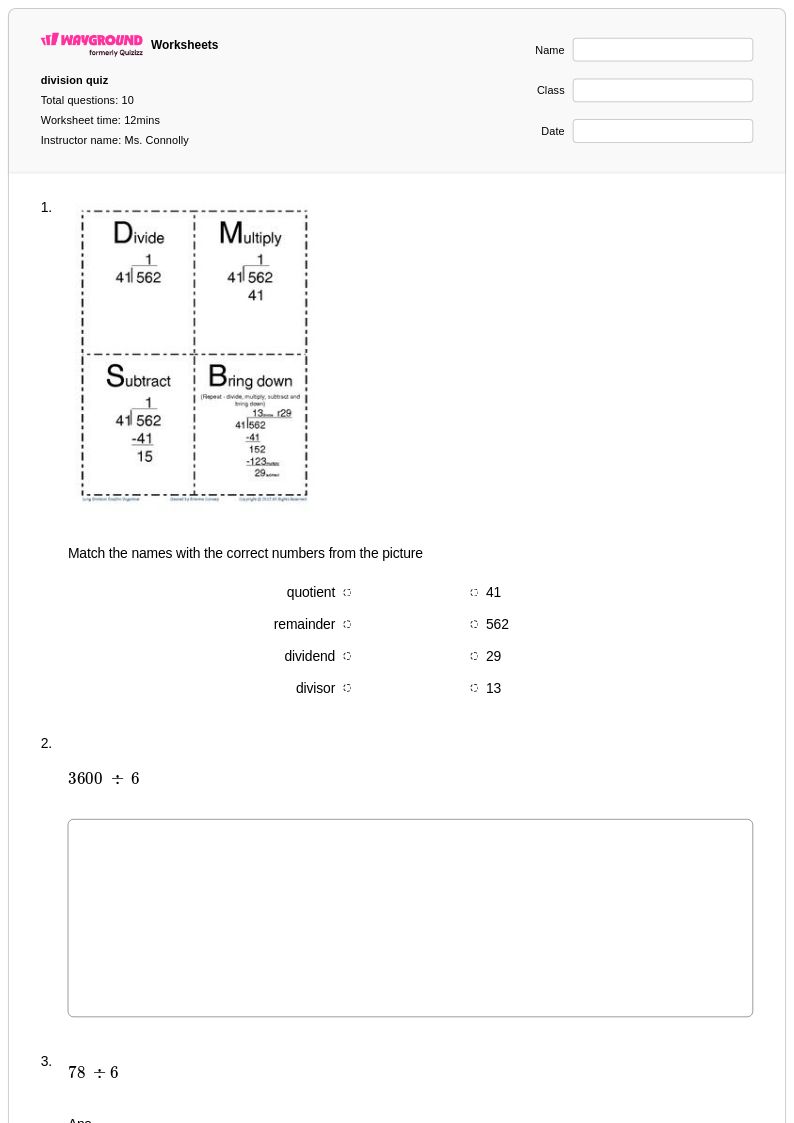
Start with a concrete scenario students can visualize: 'If you have 17 stickers to share equally among 5 friends, how many does each friend get, and how many are left over?' Once students grasp the idea physically, connect it to the written algorithm — divide, multiply, subtract, bring down. The key teaching move is making sure students understand that a remainder is always smaller than the divisor; if it isn't, they haven't divided enough times. From there, practice interpreting remainders in context: sometimes you round up (how many buses do you need?), sometimes you round down (how many full bags can you fill?), and sometimes the remainder becomes a fraction.
What exercises help students practice division with remainders?
The most effective practice moves from naked computation toward interpretation. Begin with straightforward problems using single-digit divisors so students can focus on the algorithm without cognitive overload. Then introduce word problems that require them to decide what to do with the remainder — round up, round down, or express it as a fraction — because that decision-making is where real understanding shows. Wayground's worksheets progress through exactly this sequence, giving students structured repetition on the algorithm before layering in contextual reasoning.
What mistakes do students commonly make with division with remainders?
Three errors come up constantly. First, students record a remainder that is larger than the divisor — a sure sign they stopped dividing too early. Second, they drop the remainder entirely and just write the quotient, treating 'leftover' as irrelevant. Third, in word problems, they apply the remainder mechanically without thinking about what it means in context (writing 'R2 buses' instead of recognizing they need one more bus). Catching the first error is mostly procedural; the third one requires explicit discussion of what remainders represent.
How do I use Wayground's division with remainders worksheets in my classroom?
Each worksheet is available as a printable PDF and as a digital quiz hosted on Wayground, so you can assign the same content whether students are working on paper or on a device. Every worksheet includes a complete answer key, which makes it practical for independent practice or homework. If you go the print route, the Wayground for Teachers app lets you scan or capture student work for grading, so you're not manually checking every problem.
Is division with remainders aligned to Common Core standards?
Yes. Common Core introduces division with remainders in Grade 3, where students use place value understanding and properties of operations to divide within 100 and interpret whole-number quotients. By Grade 4, students are expected to find whole-number quotients and remainders with up to four-digit dividends and one-digit divisors using strategies based on place value. The progression then moves toward multi-digit divisors and, eventually, expressing remainders as fractions or decimals — connecting division with remainders directly to fraction and decimal concepts in Grades 5 and 6.
How can I differentiate division with remainders practice for mixed-ability classes?
For students who struggle with the algorithm itself, Wayground's reduced answer choices accommodation lowers the cognitive load on digital assignments, letting them focus on the process rather than generating answers from scratch. The Read Aloud feature helps students who have difficulty parsing word problems independently. On the worksheet side, you can generate alternate versions with larger font sizes or a dyslexia-friendly font for students who need it — same problems, adjusted presentation. For students who are ready to go further, look for problems that require interpreting the remainder in context rather than just computing it.