Explore Wayground's comprehensive collection of division worksheets featuring free printables and practice problems with answer keys to help students master essential division skills and build mathematical confidence.
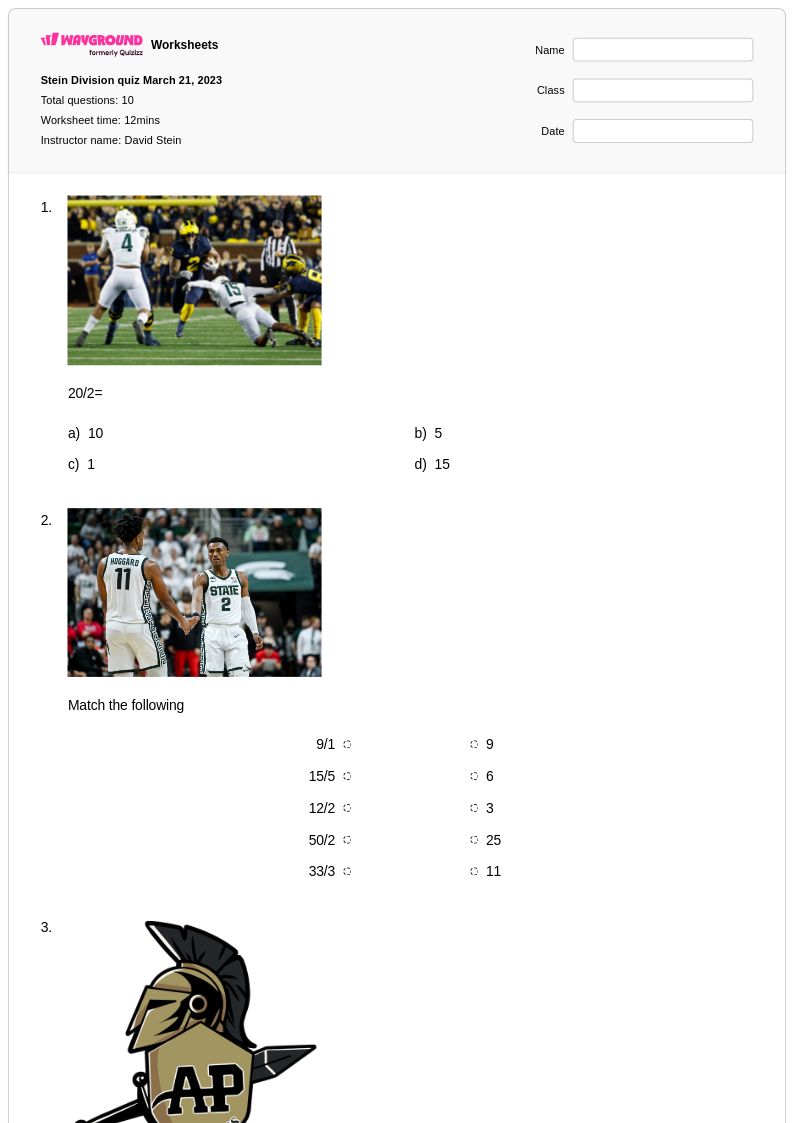
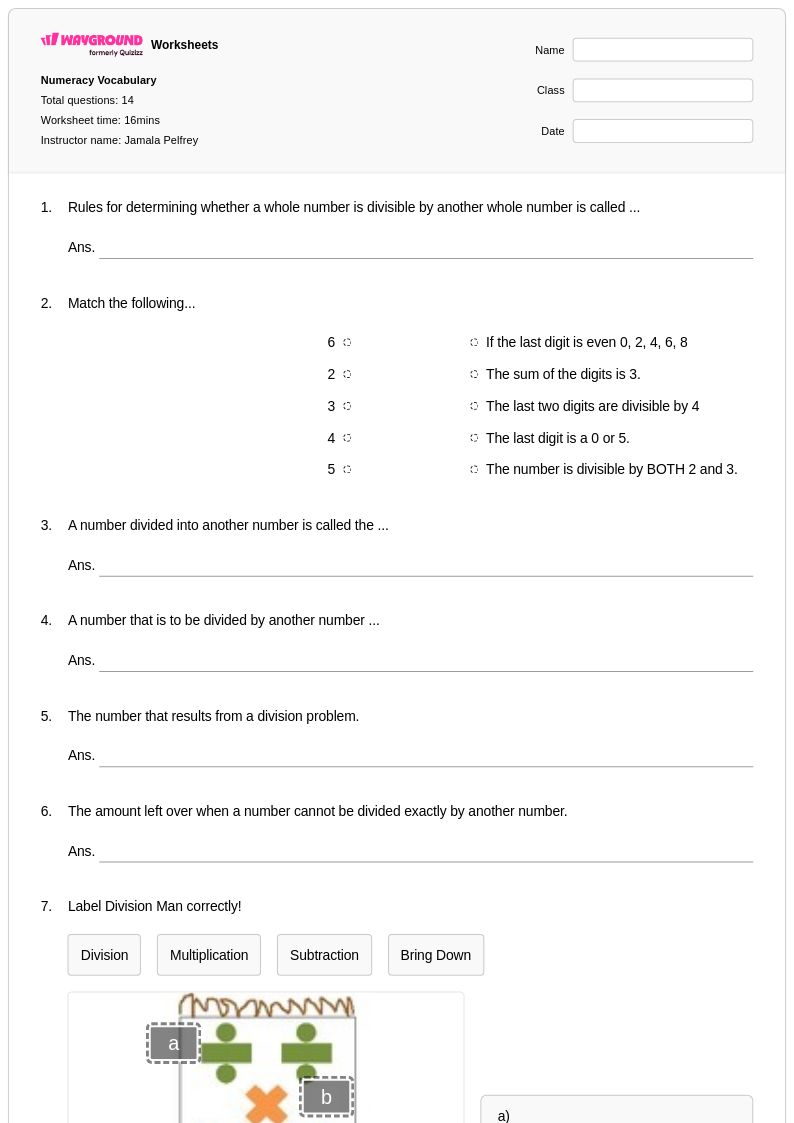
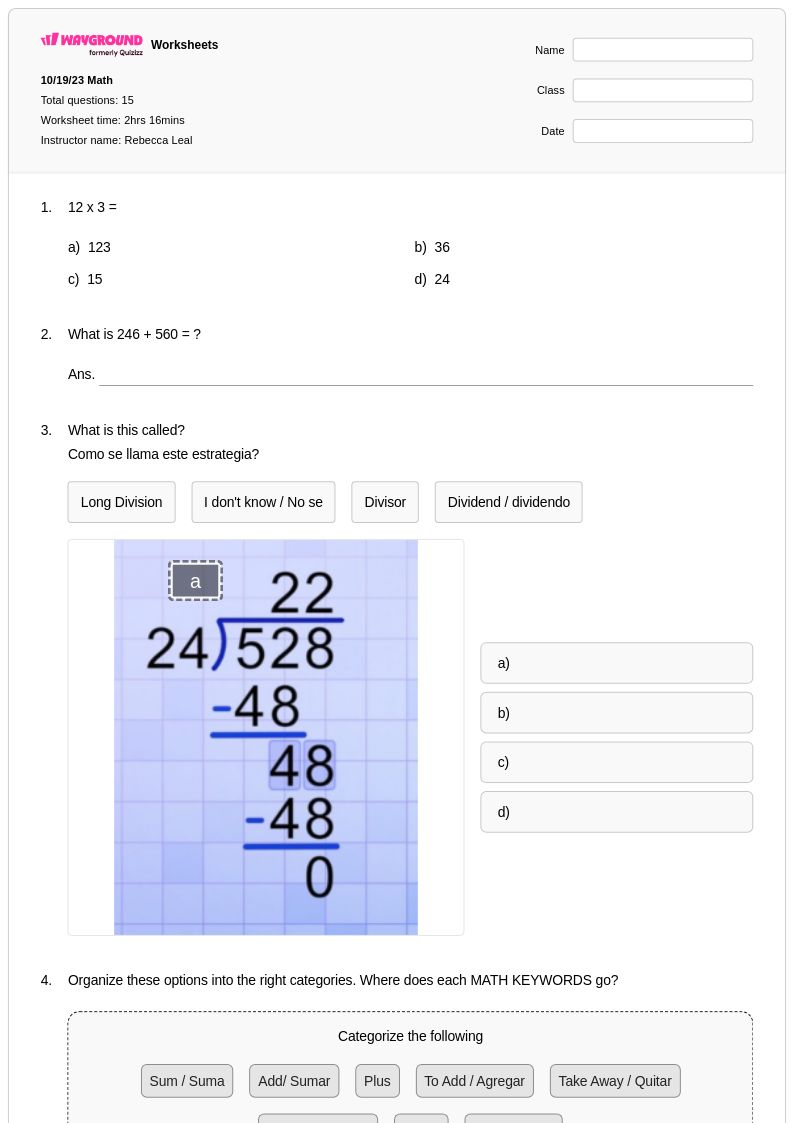
Division worksheets available through Wayground (formerly Quizizz) provide comprehensive practice opportunities that help students master one of mathematics' fundamental operations. These carefully designed resources focus on developing computational fluency, problem-solving strategies, and conceptual understanding of division across various contexts and difficulty levels. The worksheets incorporate diverse problem types including basic division facts, long division algorithms, division with remainders, and real-world application problems that strengthen students' mathematical reasoning abilities. Each worksheet collection includes detailed answer keys and is available as free printables in convenient PDF format, making it easy for educators to implement structured practice sessions that build confidence and accuracy in division skills.
Wayground (formerly Quizizz) empowers teachers with access to millions of teacher-created division worksheet resources that can be easily searched, filtered, and customized to meet specific classroom needs. The platform's robust organizational tools allow educators to quickly locate materials aligned with curriculum standards and differentiate instruction for learners at various skill levels. Teachers can seamlessly modify existing worksheets or combine elements from multiple resources to create targeted practice sets for remediation or enrichment purposes. These division worksheets are available in both printable PDF format for traditional classroom use and digital formats for interactive learning experiences, providing the flexibility educators need to support diverse learning environments and accommodate different instructional approaches while ensuring students receive consistent, high-quality practice opportunities.
FAQs
How do I teach division to students who are just starting out?
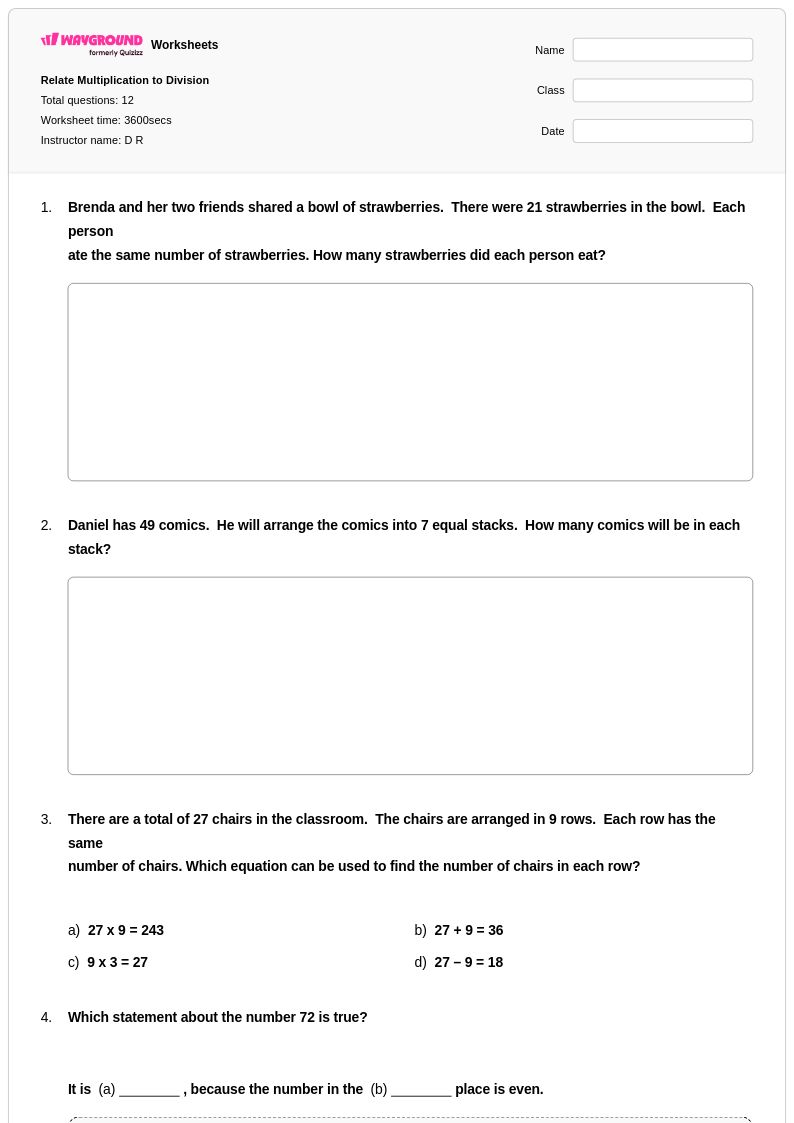
Start with equal sharing using physical objects before introducing any symbols or algorithms. Ask students to distribute 12 counters into 3 equal groups, then connect what they did to the notation 12 ÷ 3 = 4. Once the concept of fair sharing is solid, build toward repeated subtraction, then arrays, and finally the standard algorithm. Students who skip the concrete stage often memorize steps without understanding what a quotient actually means.
What exercises help students practice division effectively?
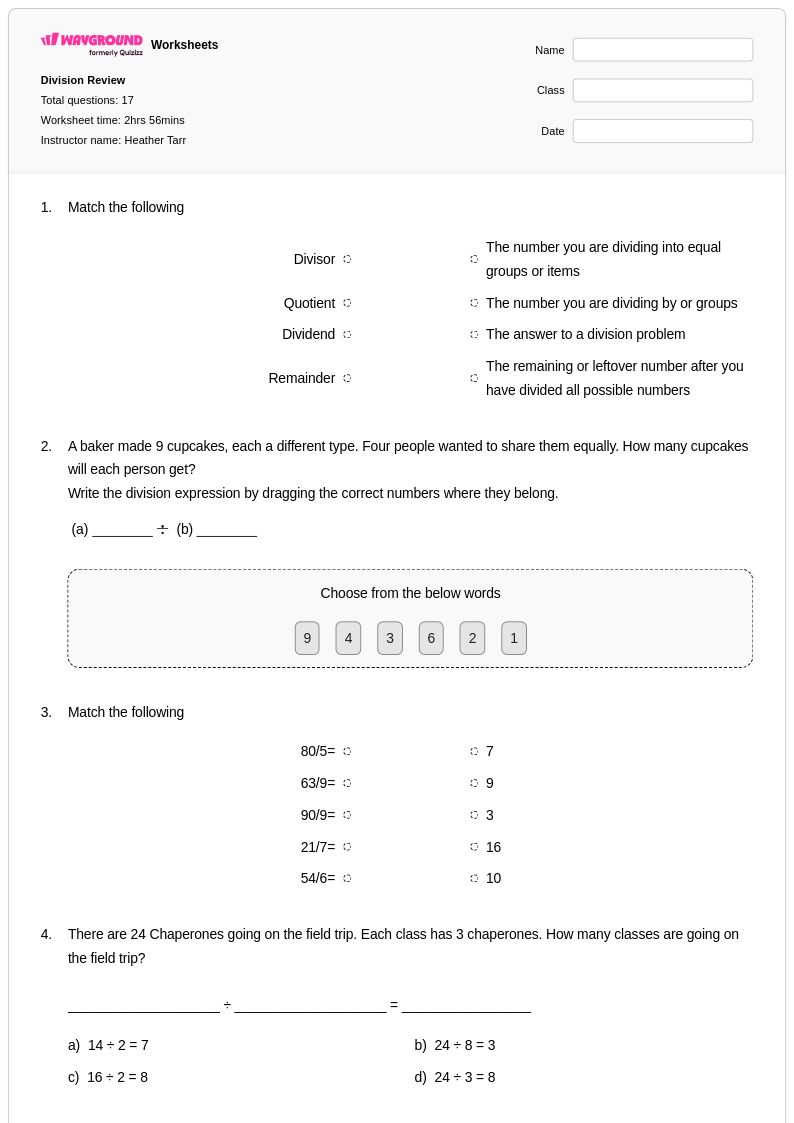
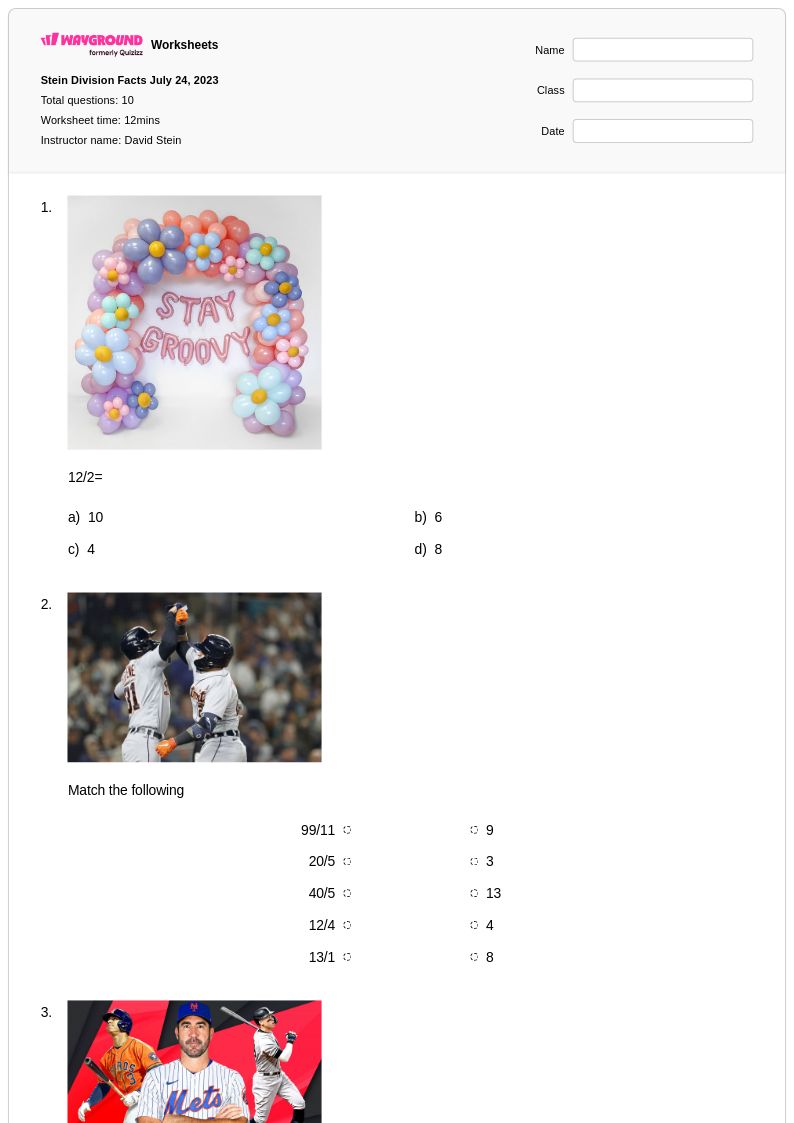
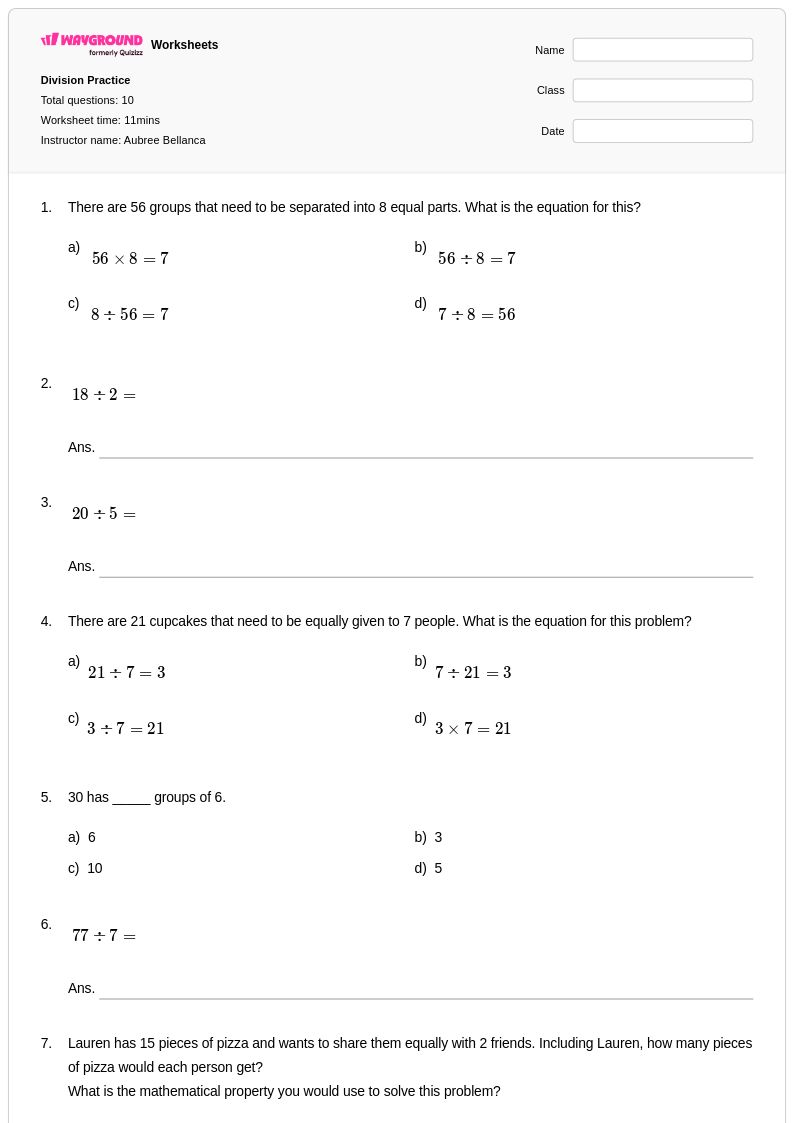
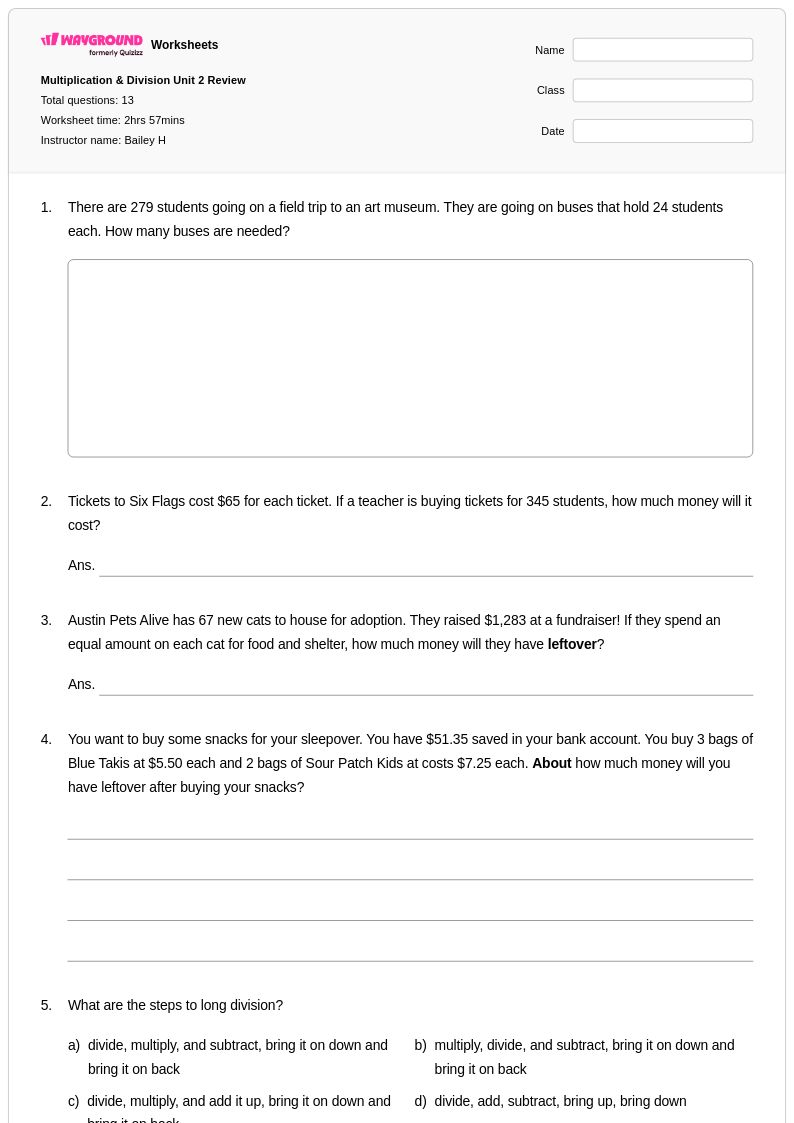
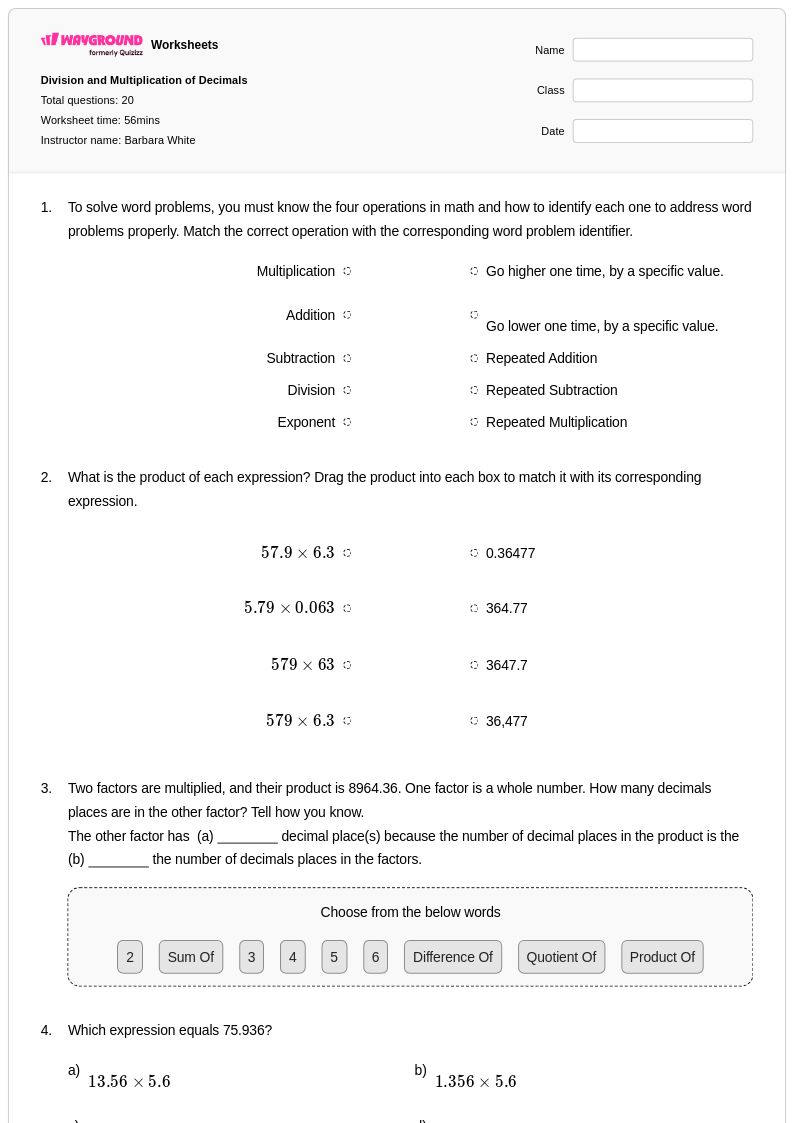
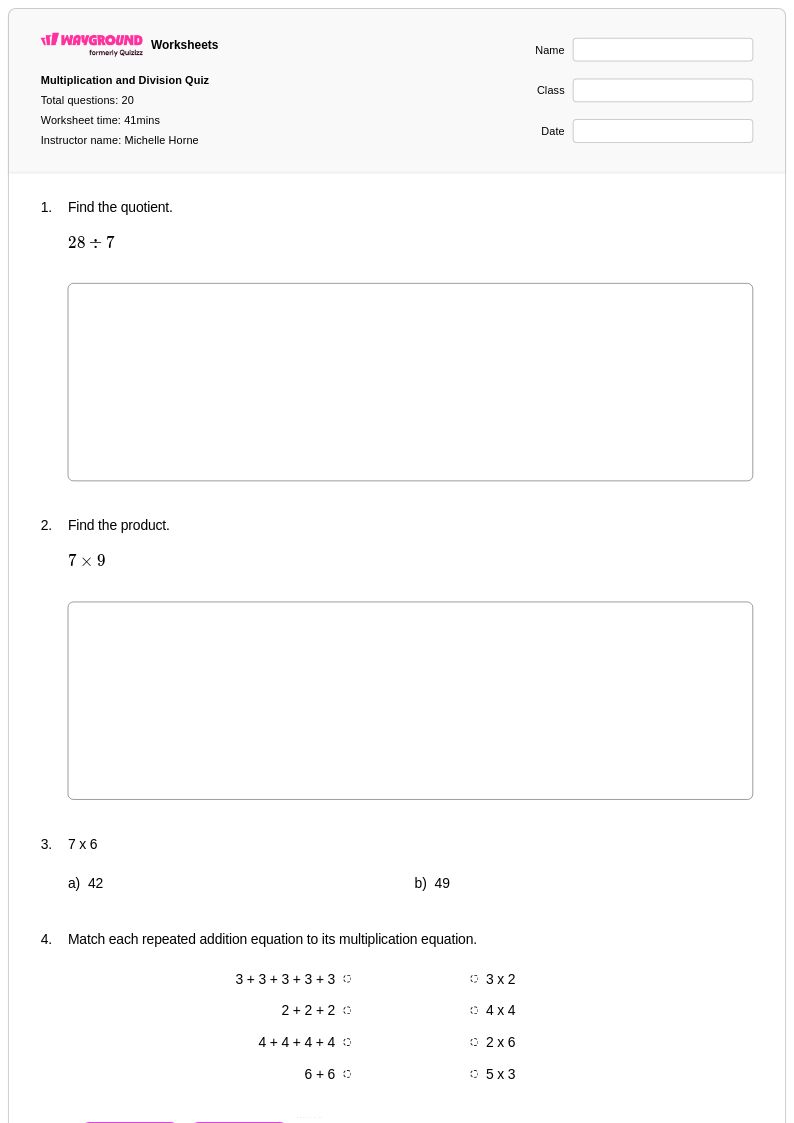
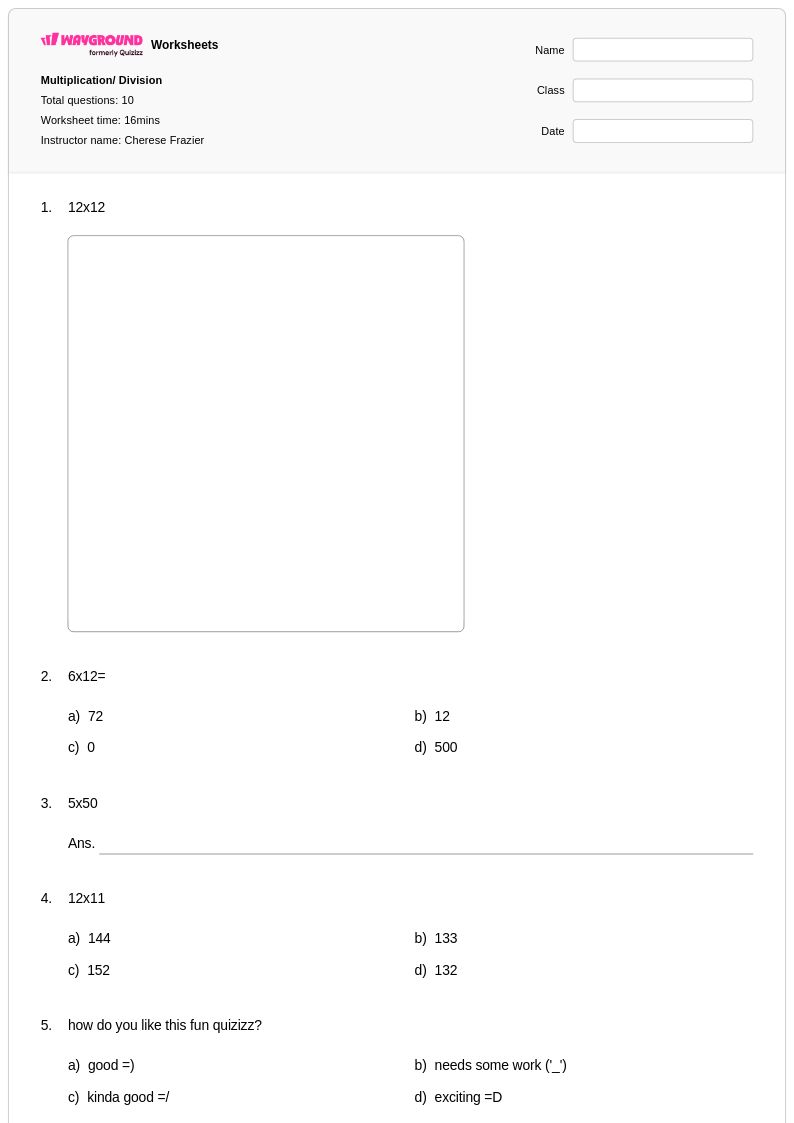
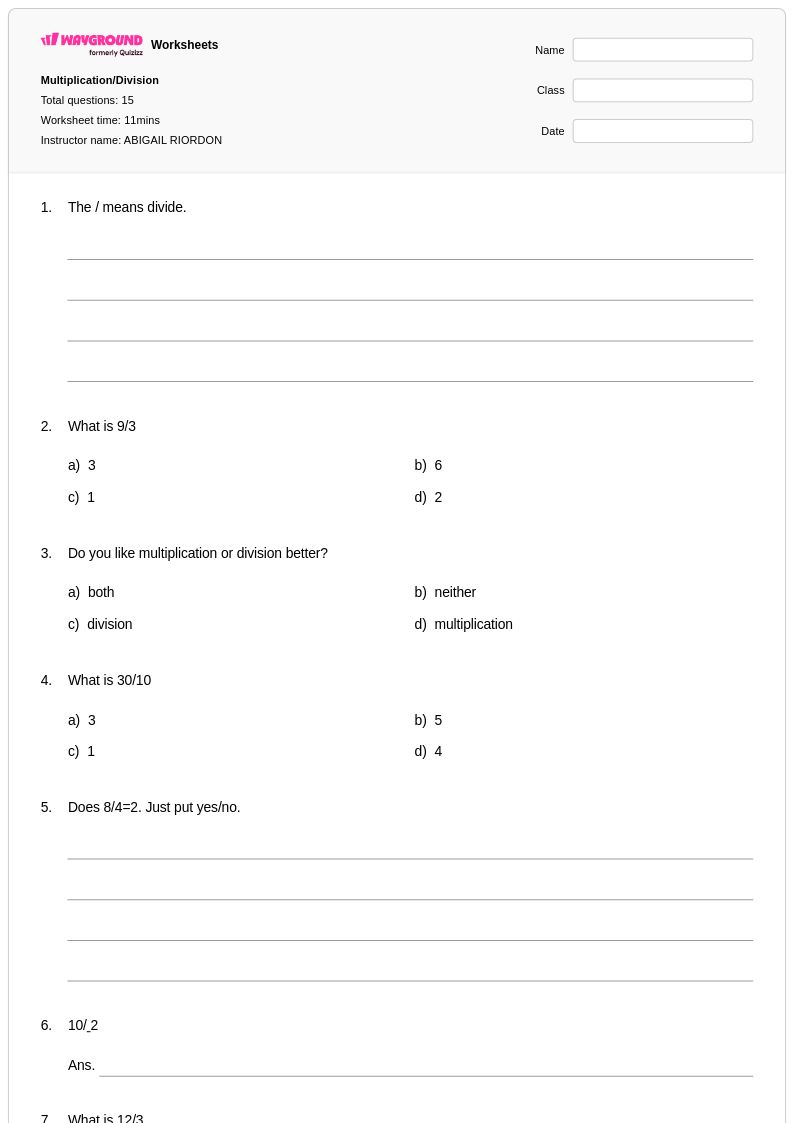
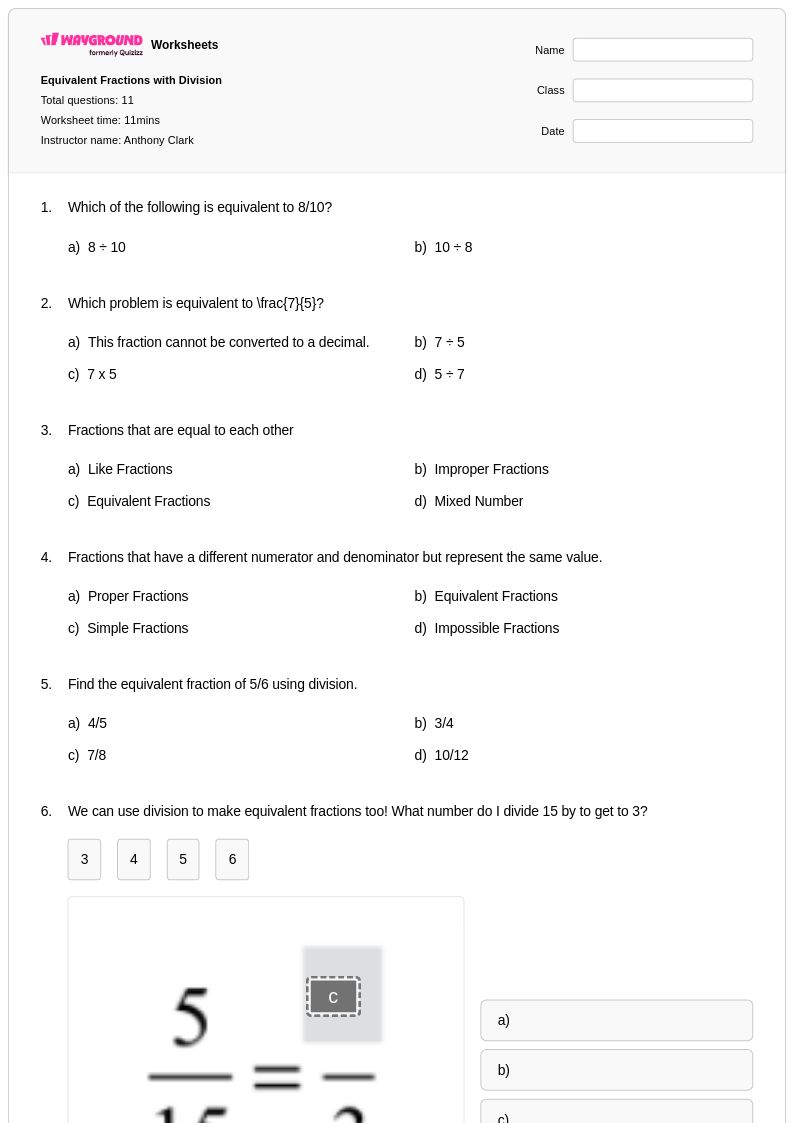
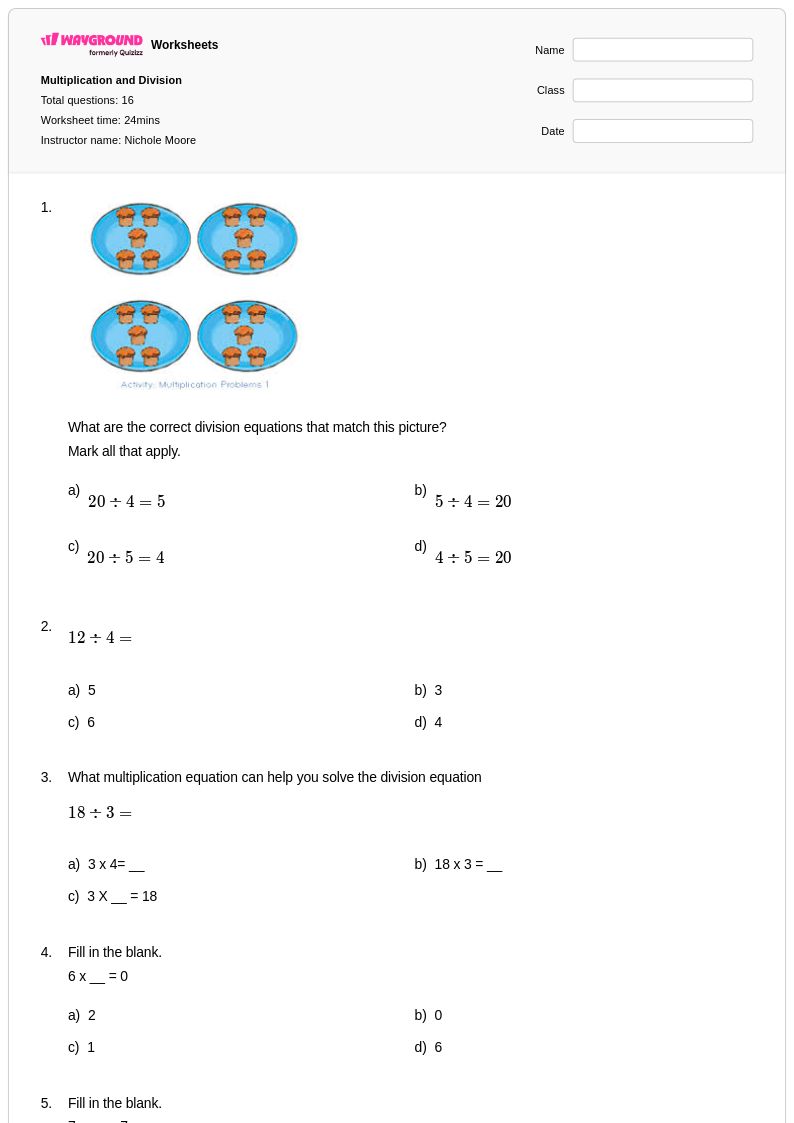
The most productive practice mixes fact fluency drills with conceptual problems. Wayground's division worksheets cover the full range: basic division facts, dividing by 2 and 10, divisibility rules, estimating quotients, partial quotients, long division, and zeros in the quotient. Including word problems alongside computation keeps students from treating division as a purely mechanical process.
What mistakes do students commonly make with division?
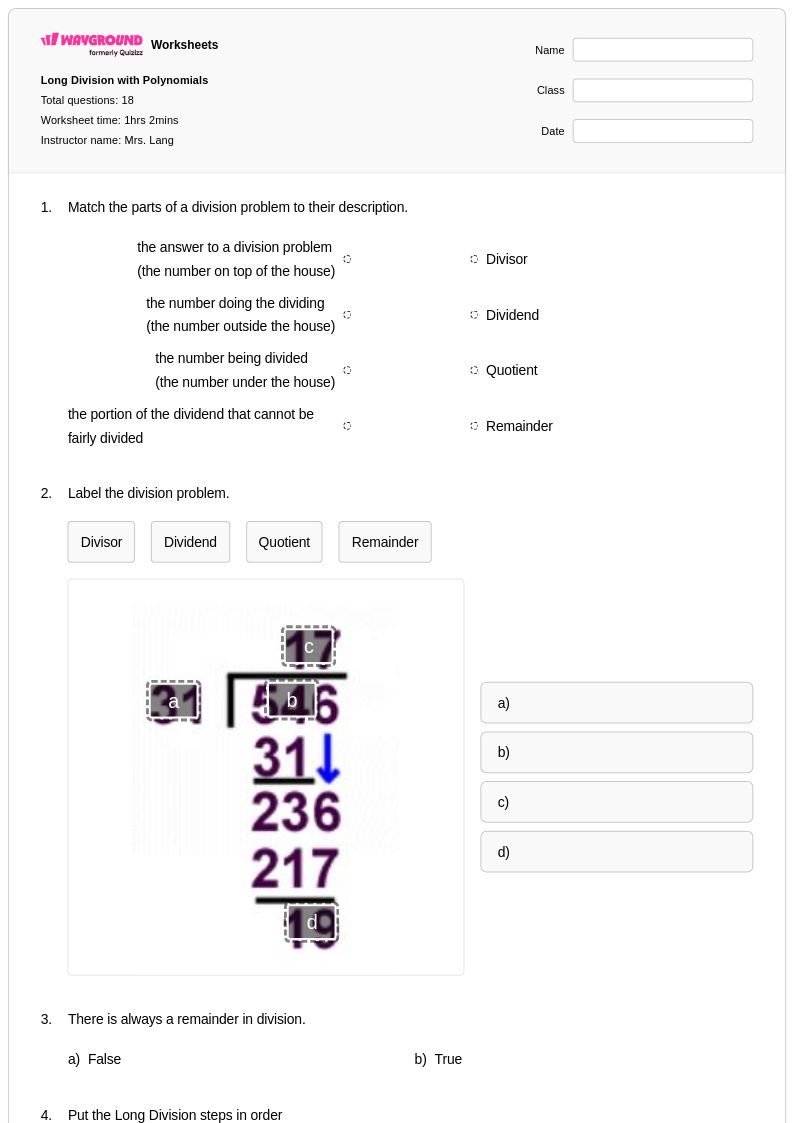
Three errors come up repeatedly. First, students confuse the dividend and divisor, especially when problems are written in word form. Second, they mishandle zeros in the quotient — seeing 306 ÷ 3 and writing 12 instead of 102 because they skip the zero placeholder. Third, when using long division, they lose track of place value mid-problem and misalign partial products. Targeted practice on zeros in the quotient and place-value alignment catches most of these before they become habits.
How do I use Wayground's division worksheets in my classroom?
Each worksheet comes with a complete answer key, so you're not building one from scratch. For digital use, host the worksheet as a quiz on Wayground and assign it directly to students. For paper practice — useful when you're managing screen time or don't have 1:1 devices — download the printable PDF and grade submissions using the Wayground for Teachers app, which lets you scan or capture student work.
How does Common Core sequence division across grade levels?
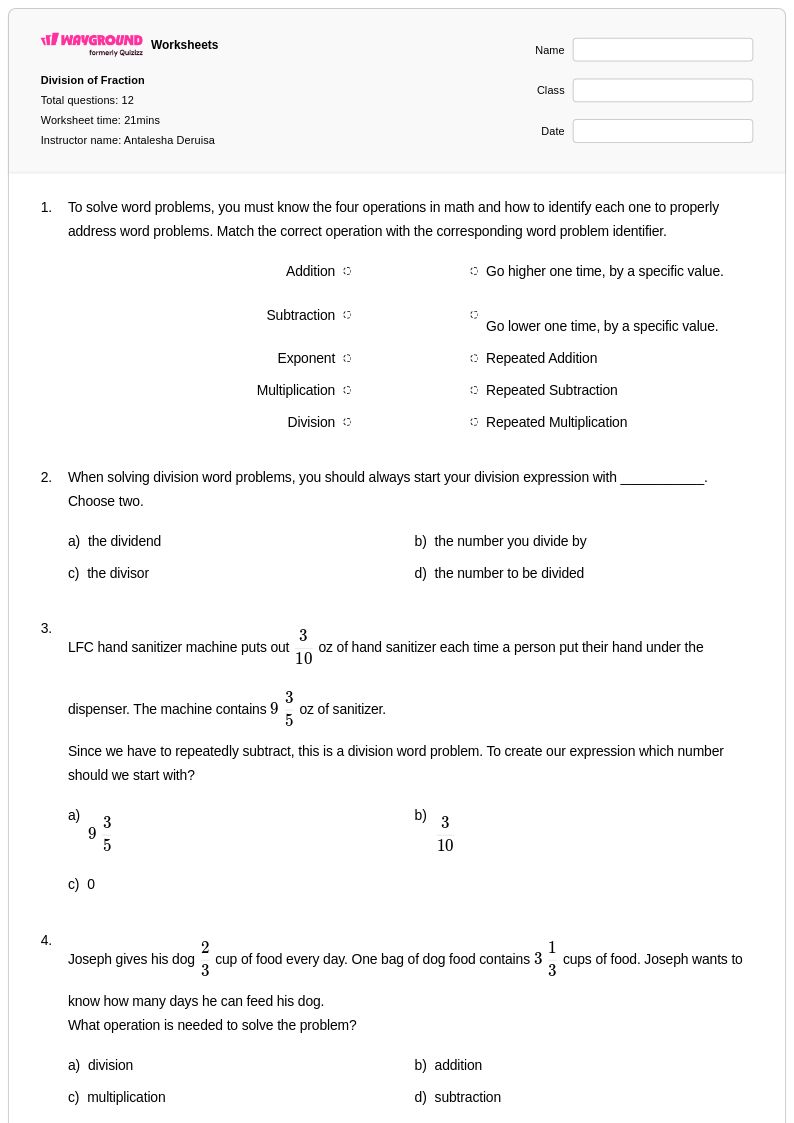
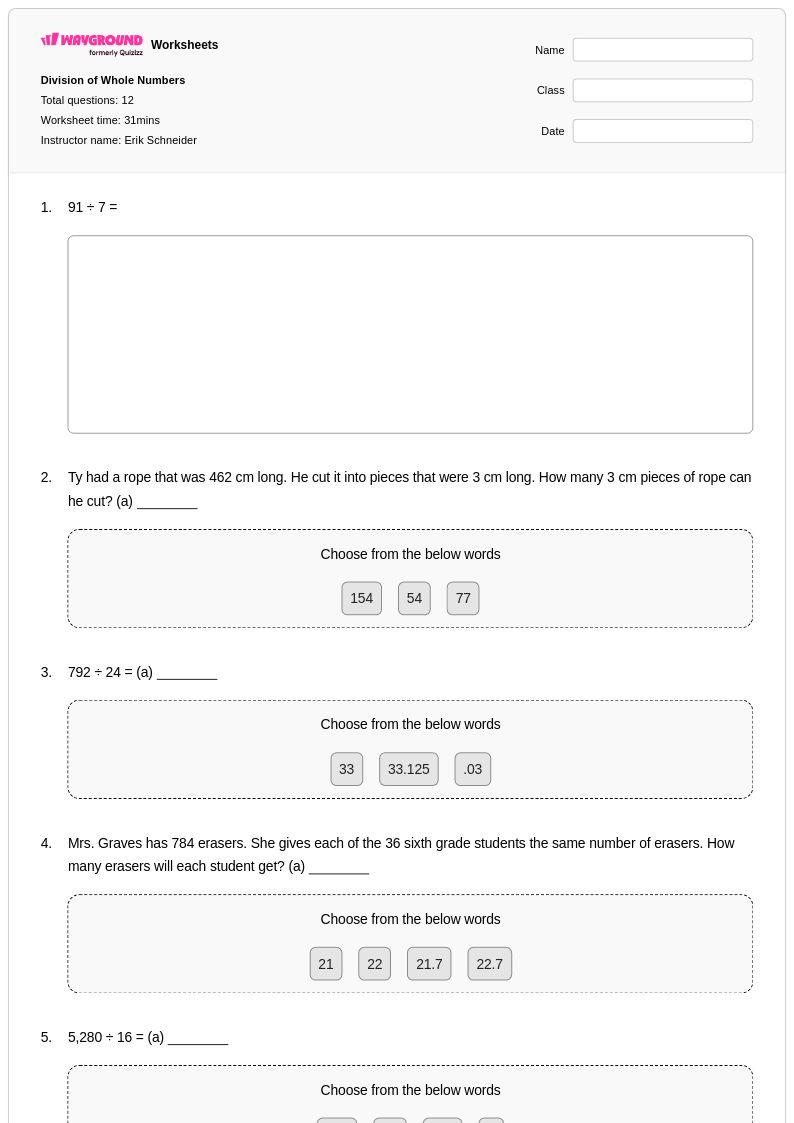
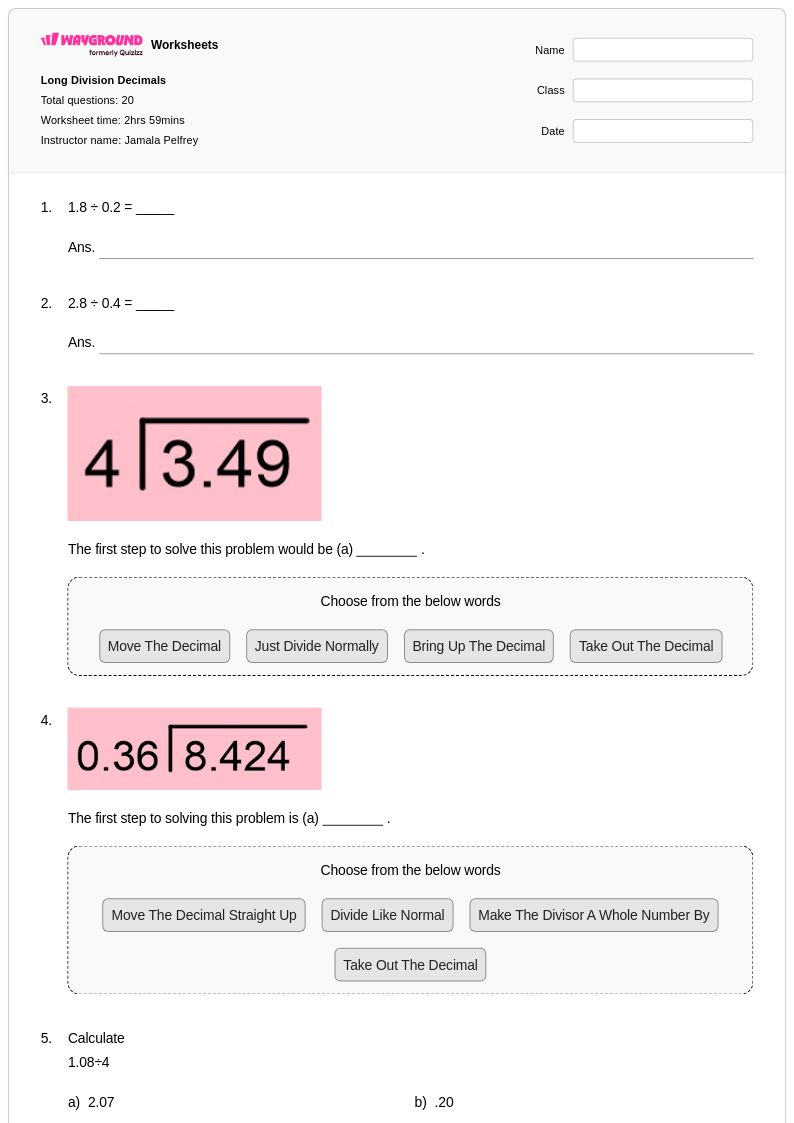
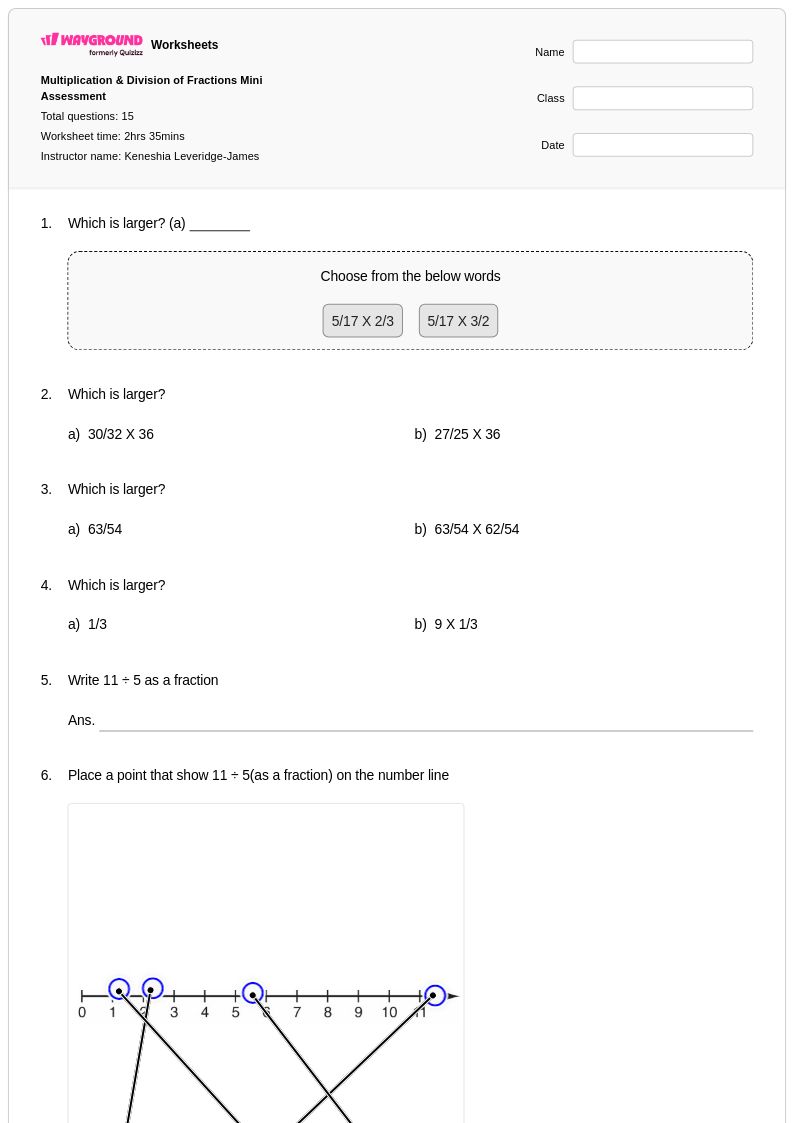
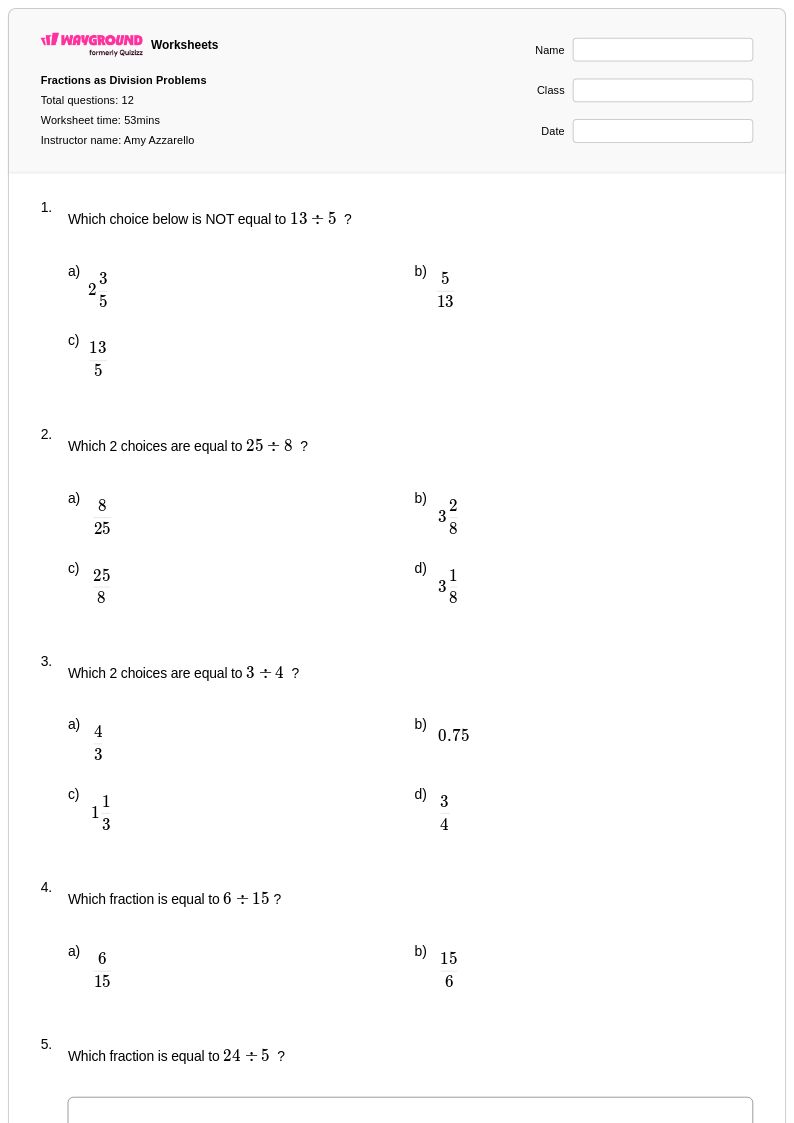
Common Core introduces division conceptually in Grade 3 through equal sharing and the relationship between multiplication and division, keeping dividends within 100. Grade 4 extends this to multi-digit dividends using strategies like partial quotients before the standard algorithm. By Grade 5 and 6, students divide multi-digit whole numbers and then move into division with fractions and decimals. Each stage assumes fluency with the previous one, so gaps in basic division facts tend to compound quickly once long division and fraction division arrive.
How can I differentiate division practice for a mixed-ability class?
Wayground lets you create alternate versions of the same worksheet by adjusting font size, spacing, or applying a dyslexia-friendly font — so every student works on the same concept without the layout becoming a barrier. For students who need more support during a digital session, you can enable reduced answer choices to lower cognitive load, or turn on Read Aloud so word problems are read to them. These settings are saved per student, so you configure them once and they carry forward.
What grade levels are division worksheets appropriate for?
Division concepts span roughly Grades 3 through 6 in most US curricula. Grade 3 focuses on basic facts and equal grouping; Grades 4–5 tackle long division and multi-digit dividends; Grade 6 extends into dividing fractions and decimals. That said, Wayground's collection includes pre-division readiness materials (equal sharing, grouping) suited for Grades K–2, and more advanced topics like divisibility rules and estimating quotients for upper elementary.