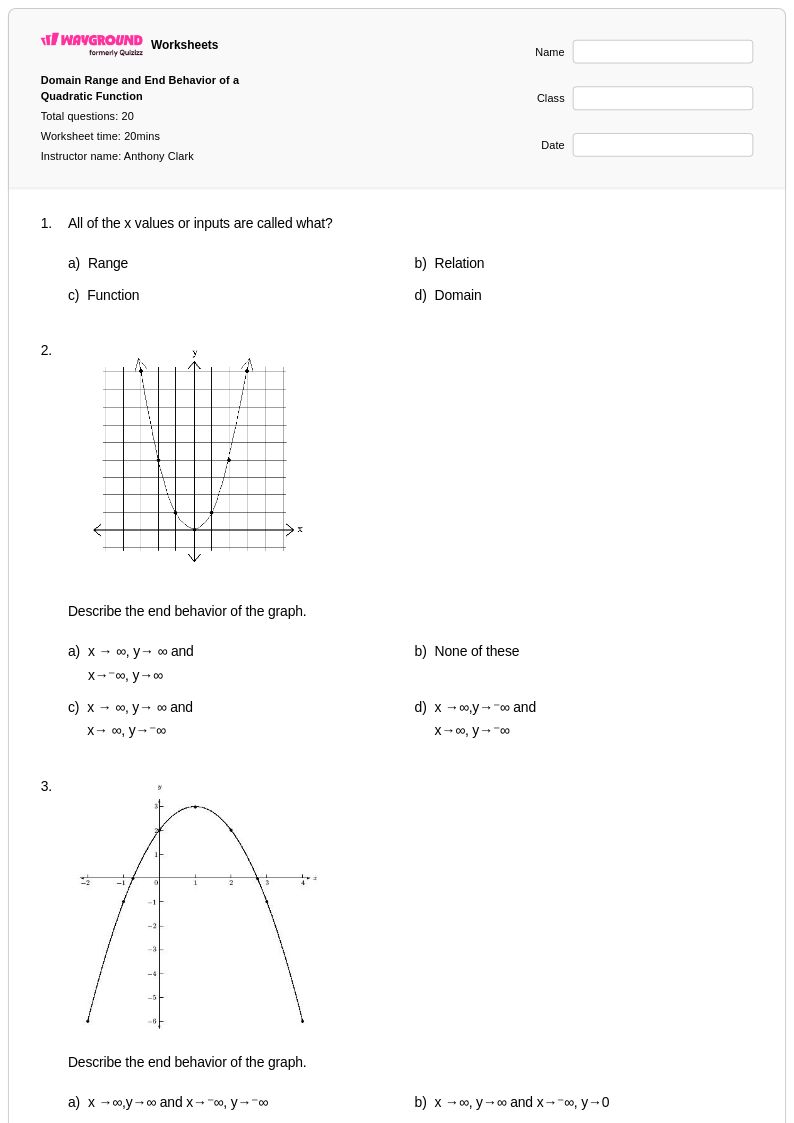
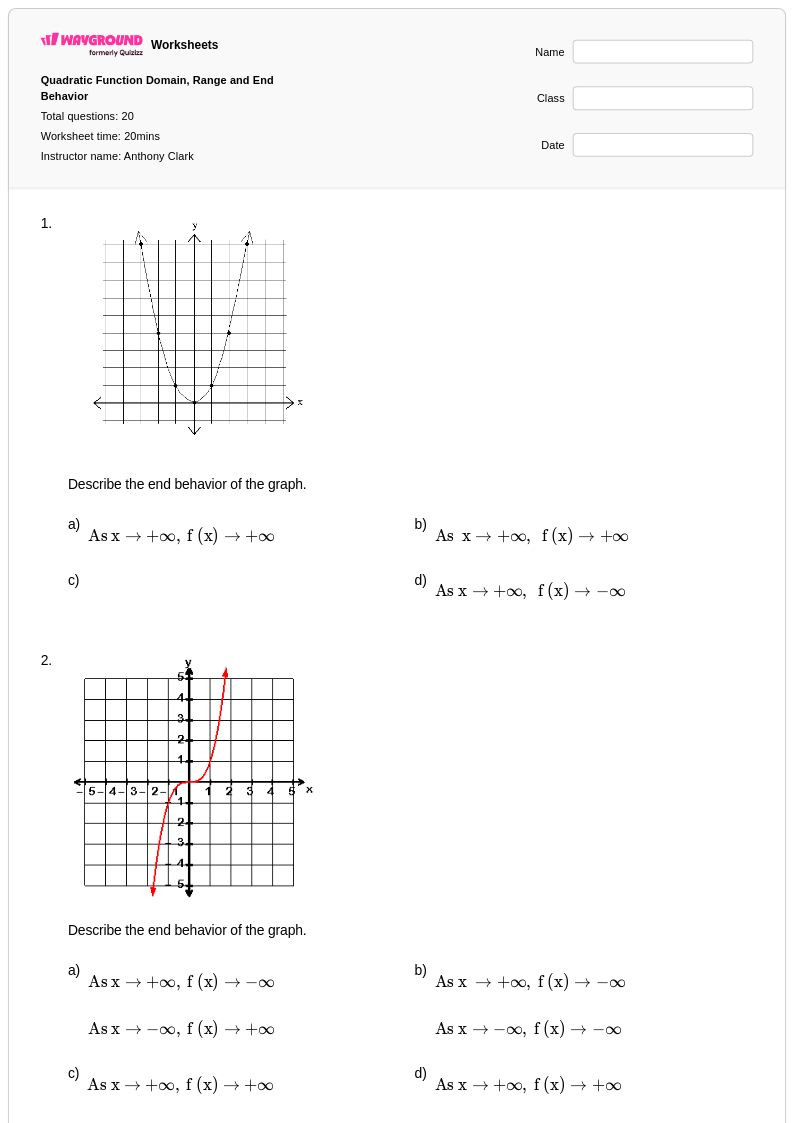
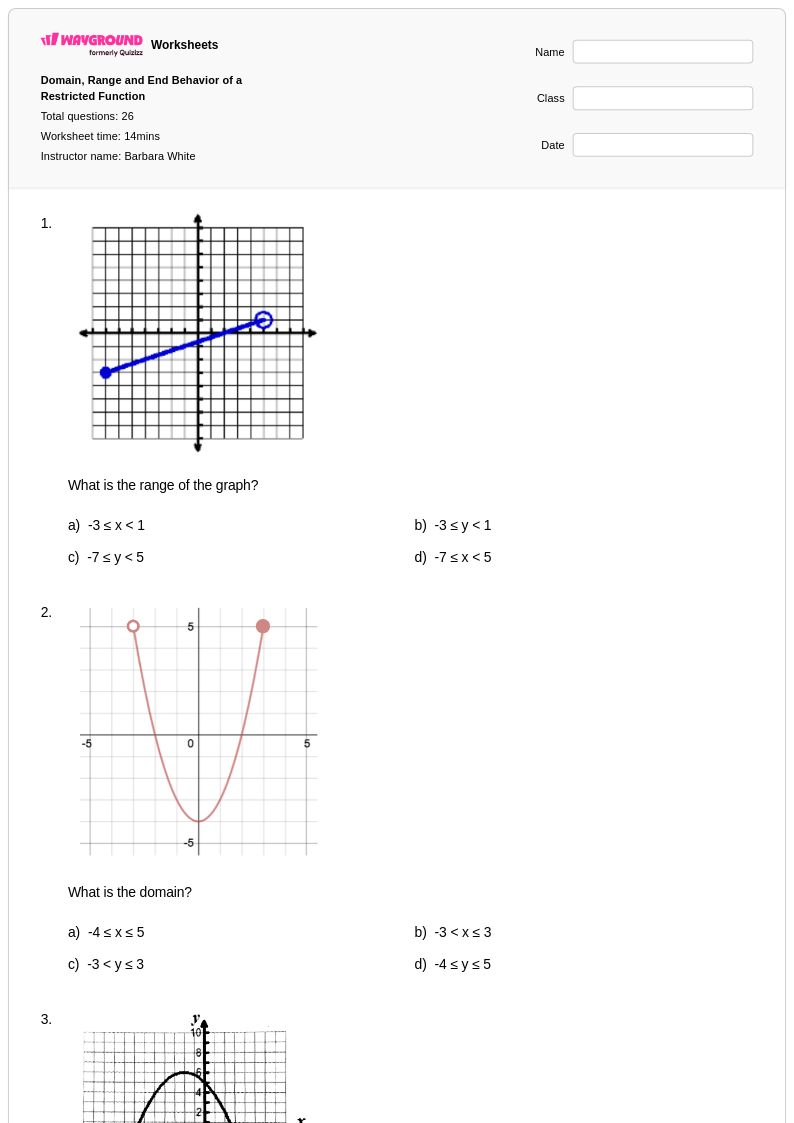
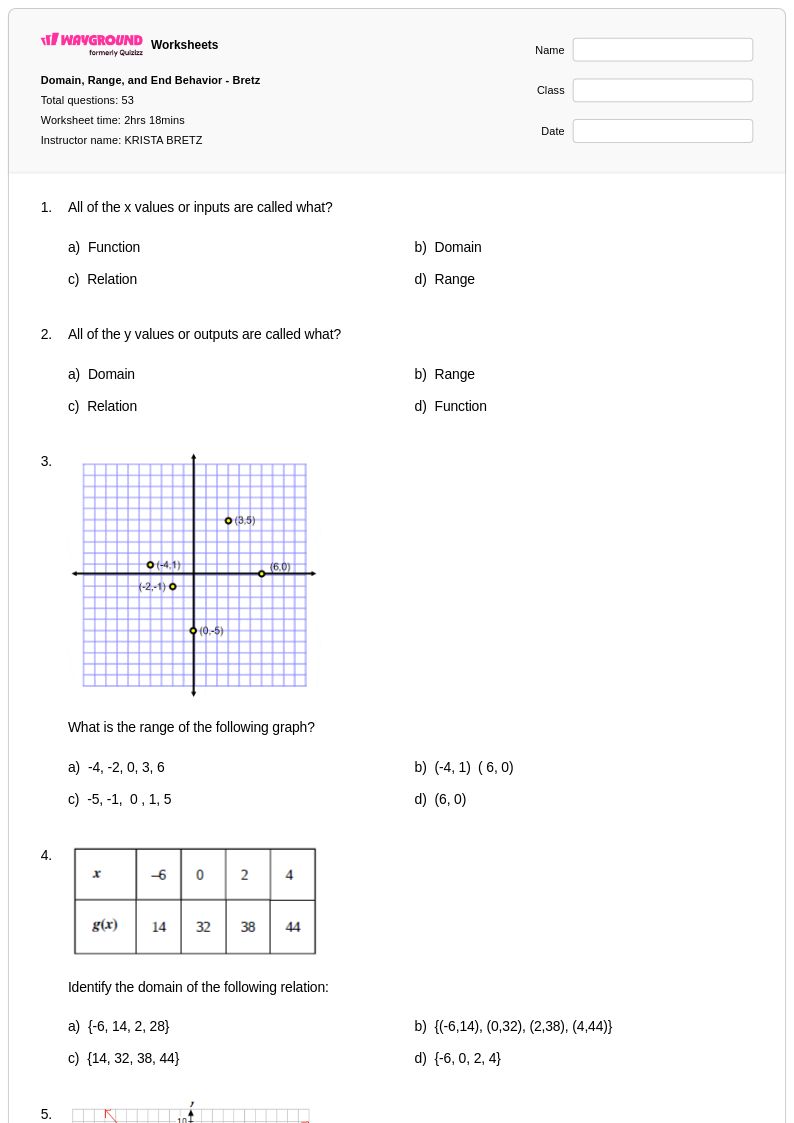
Free Printable Domain, Range, and End Behavior Worksheets for Class 10
Master Class 10 domain, range, and end behavior concepts with Wayground's comprehensive collection of free worksheets, printables, and practice problems featuring detailed answer keys to strengthen function analysis skills.
Explore printable Domain, Range, and End Behavior worksheets for Class 10
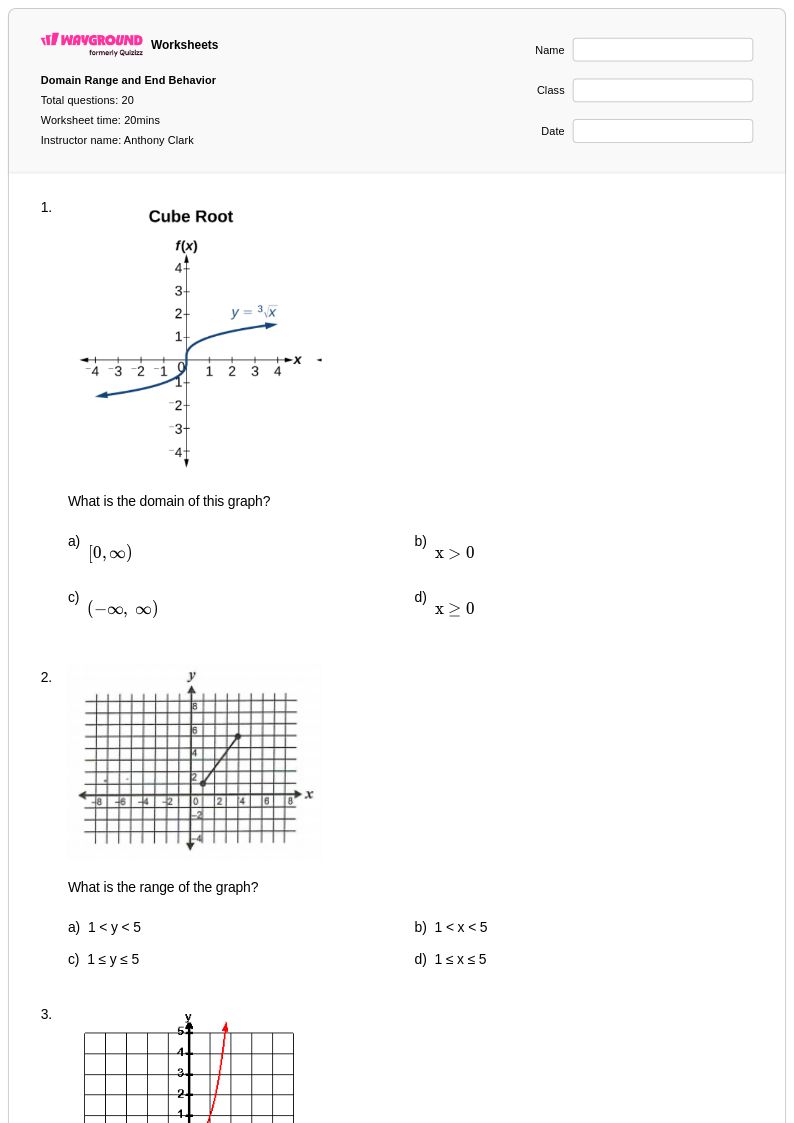
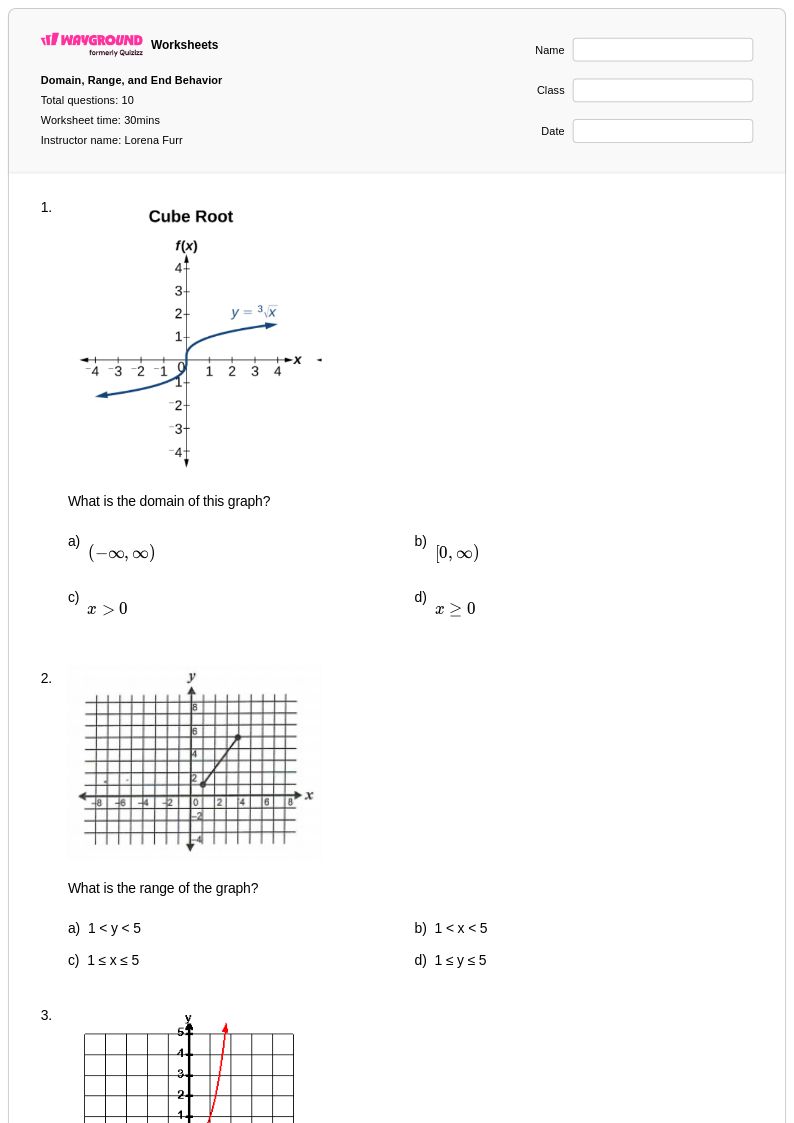
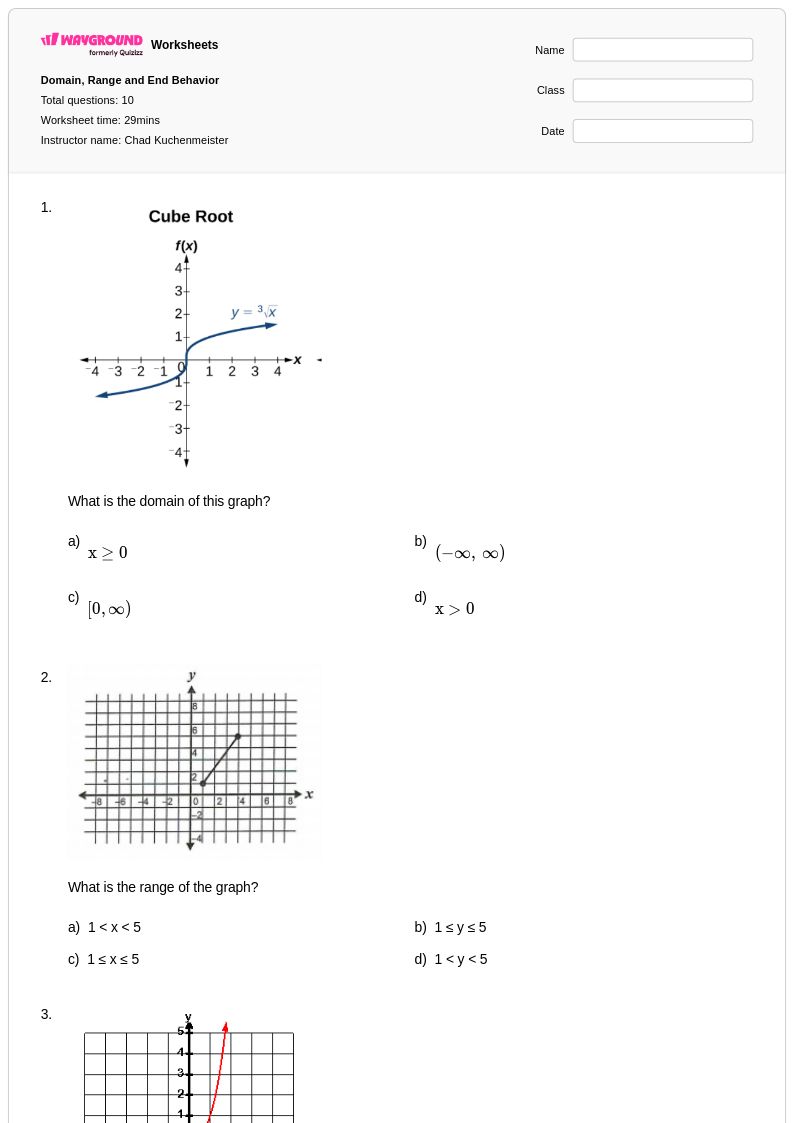
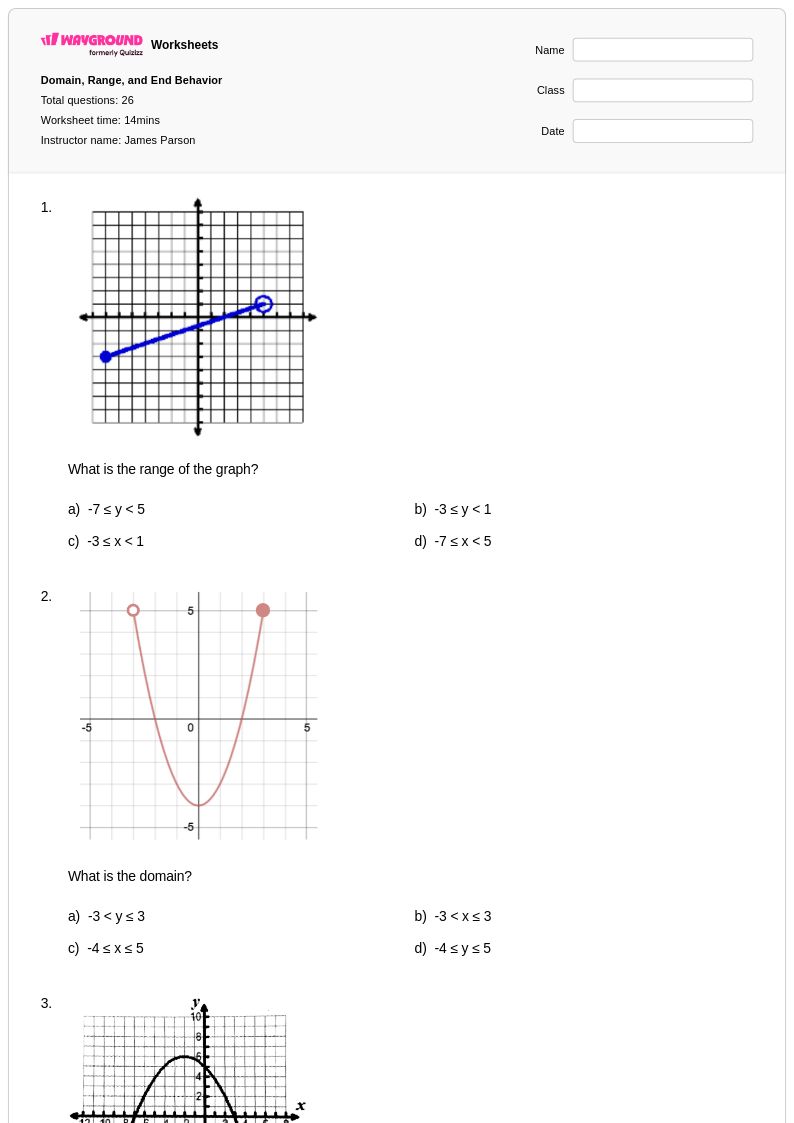
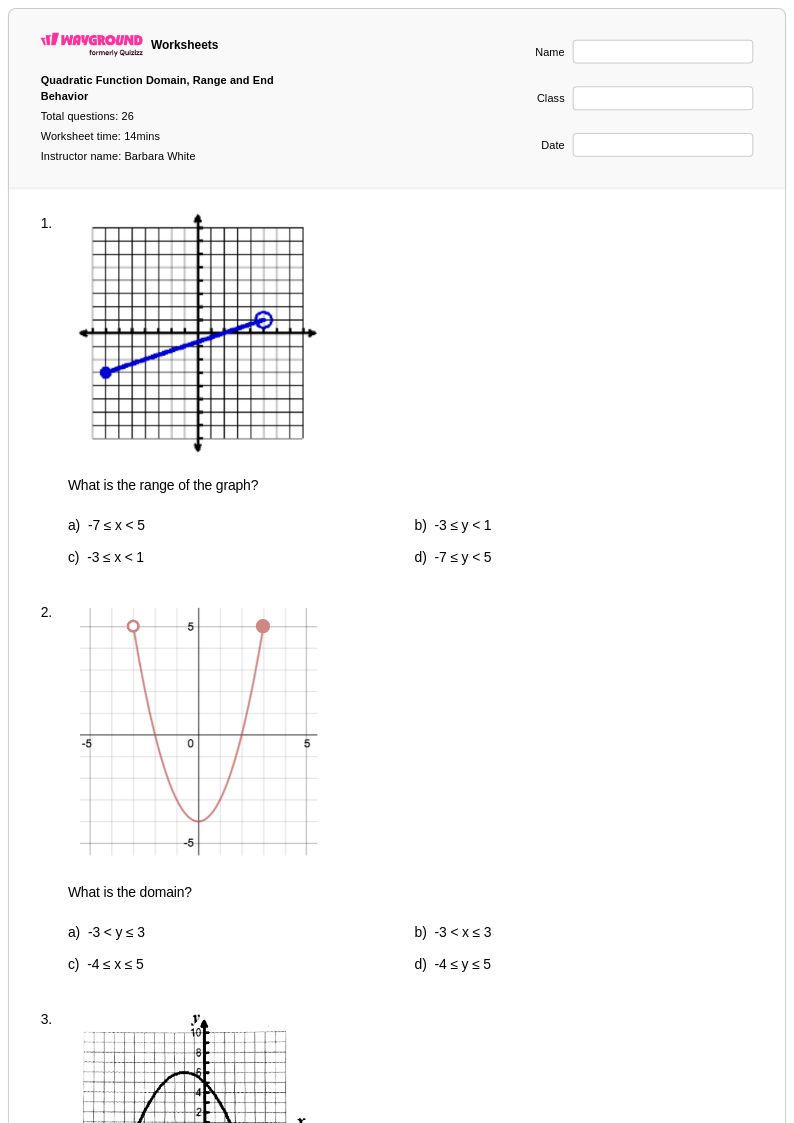
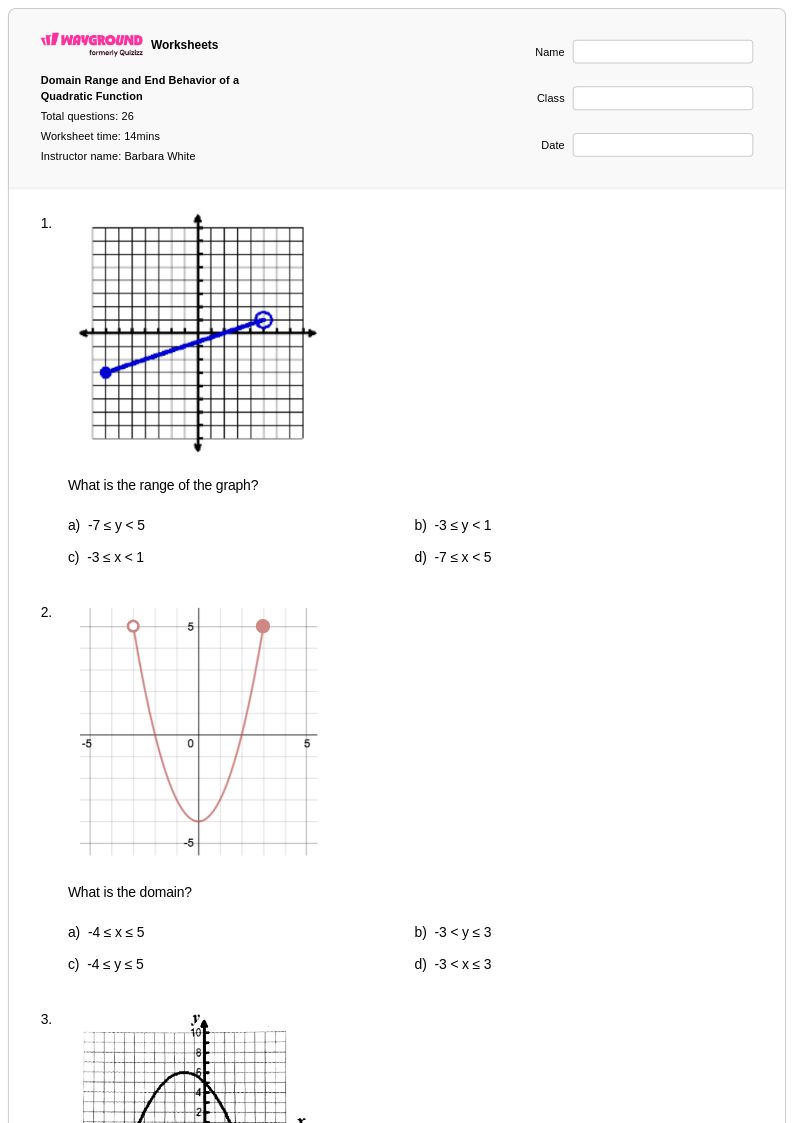
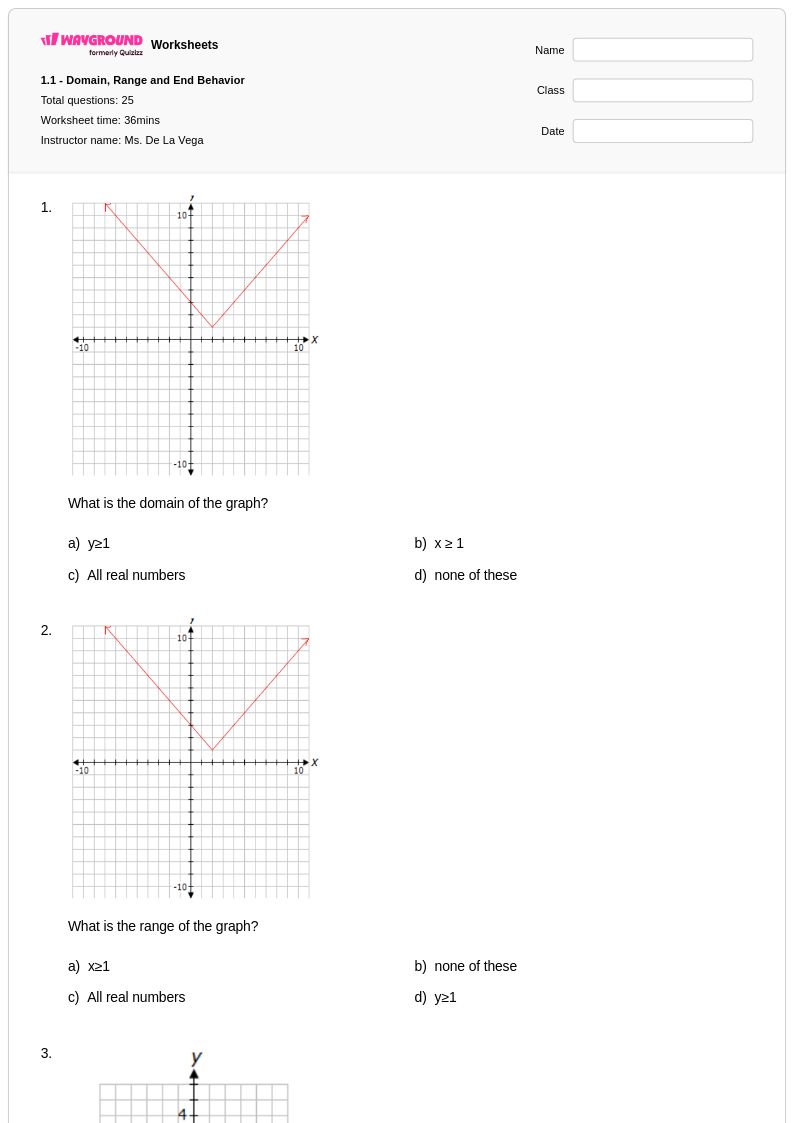
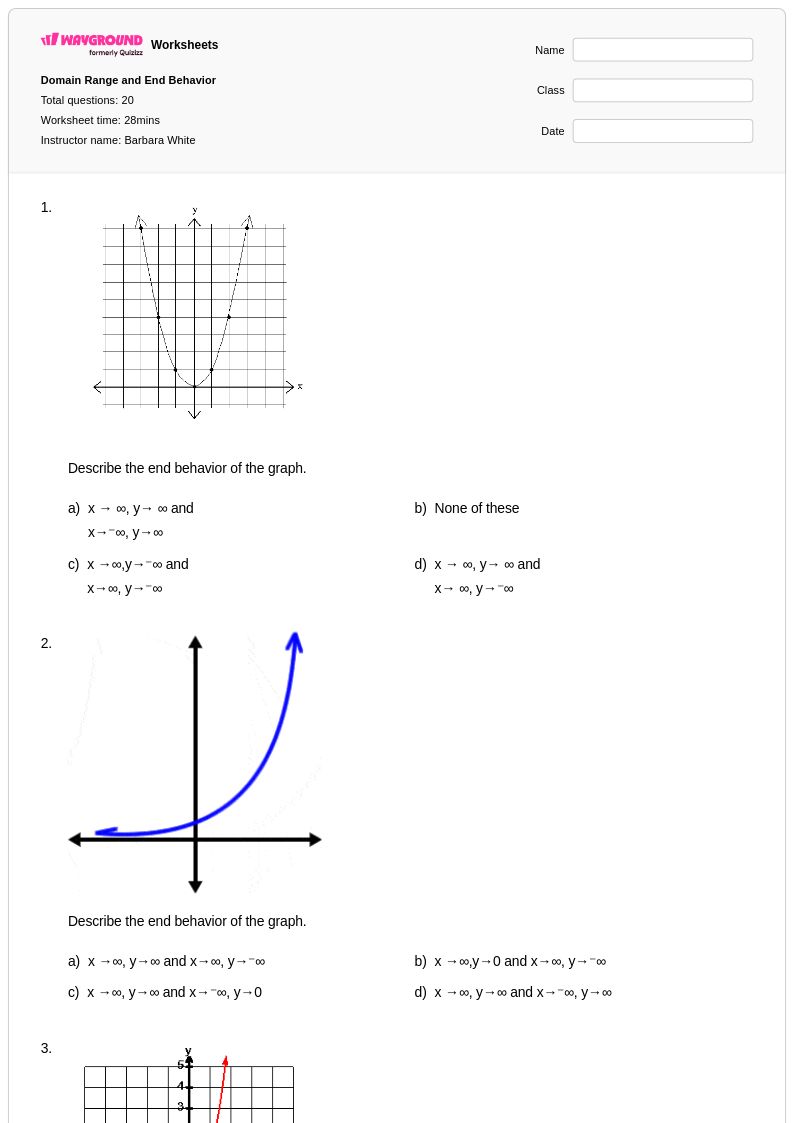
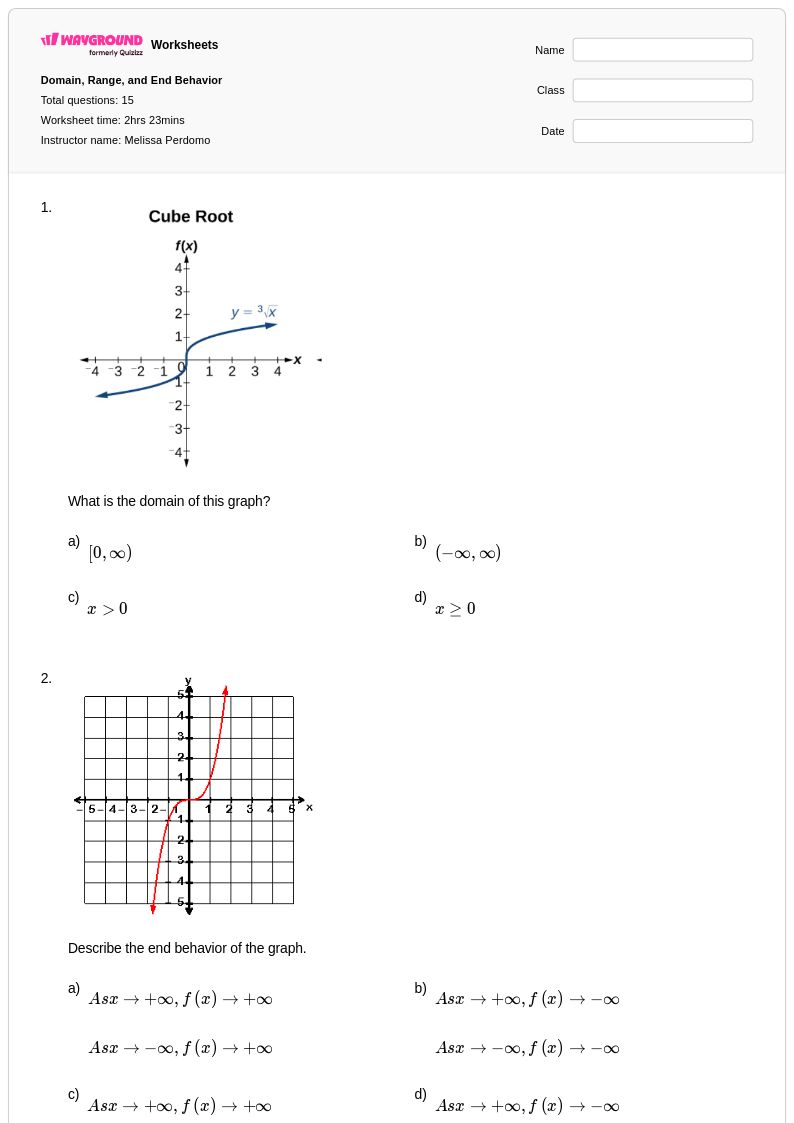
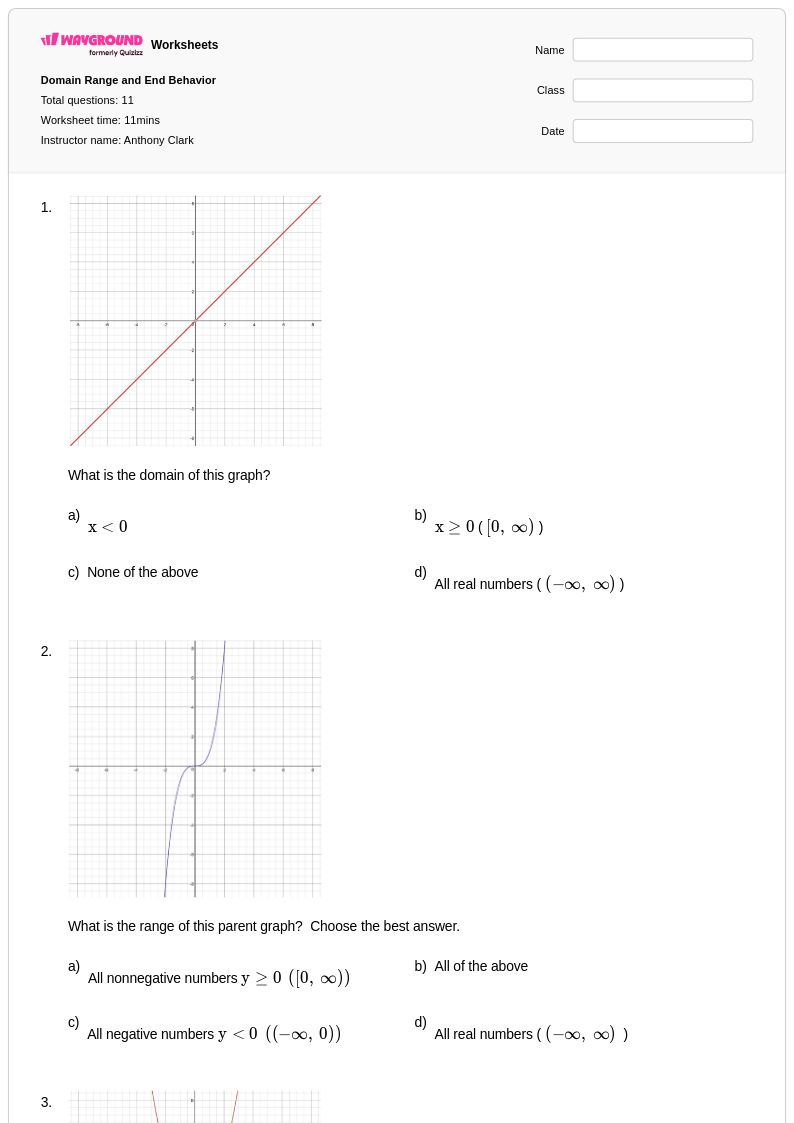
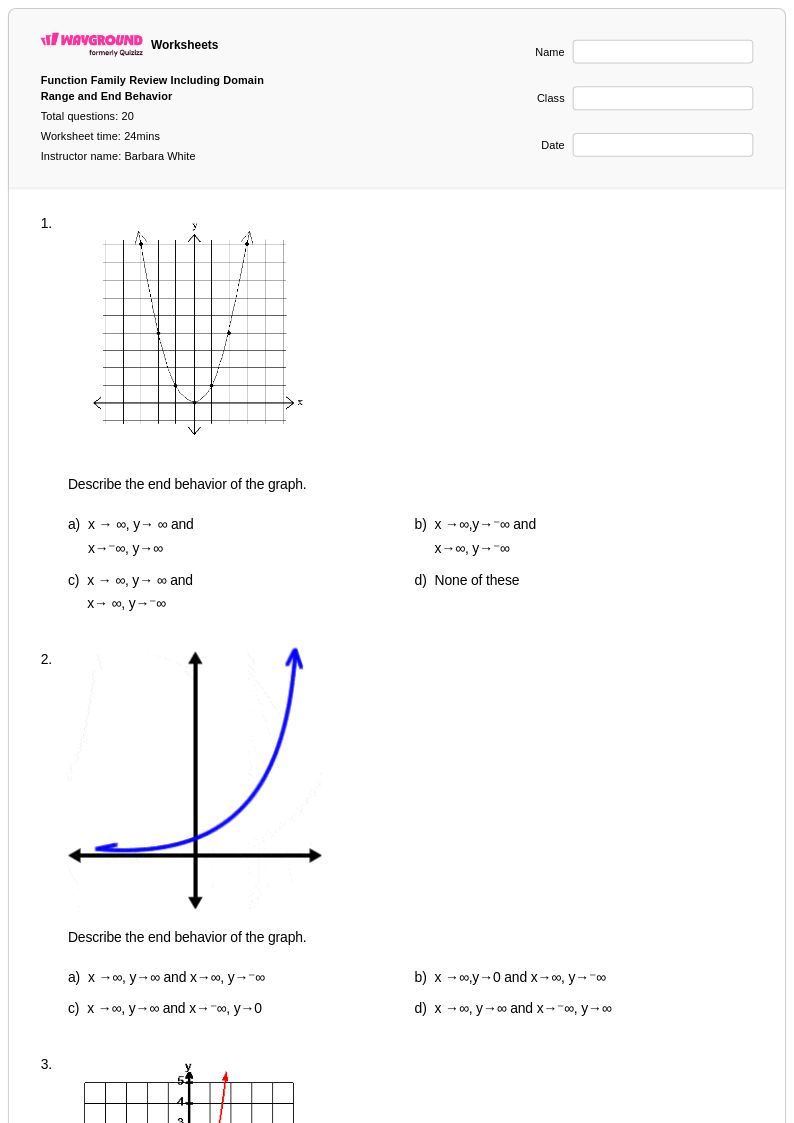
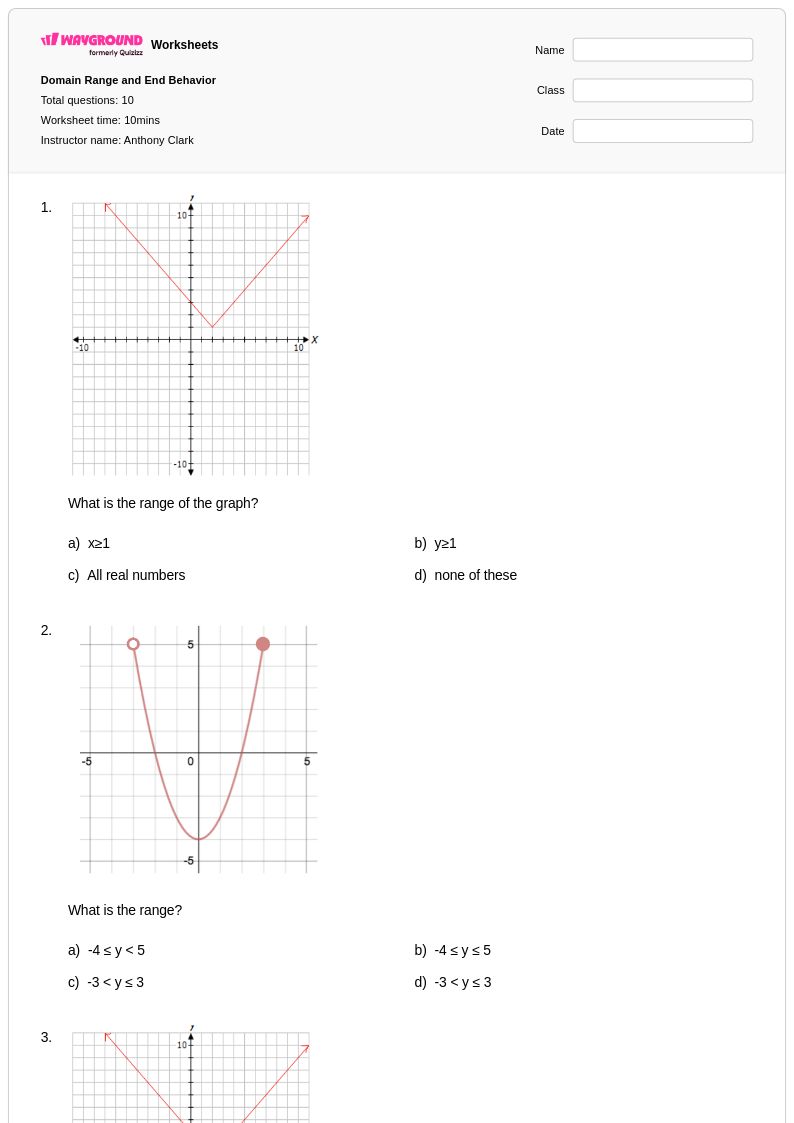
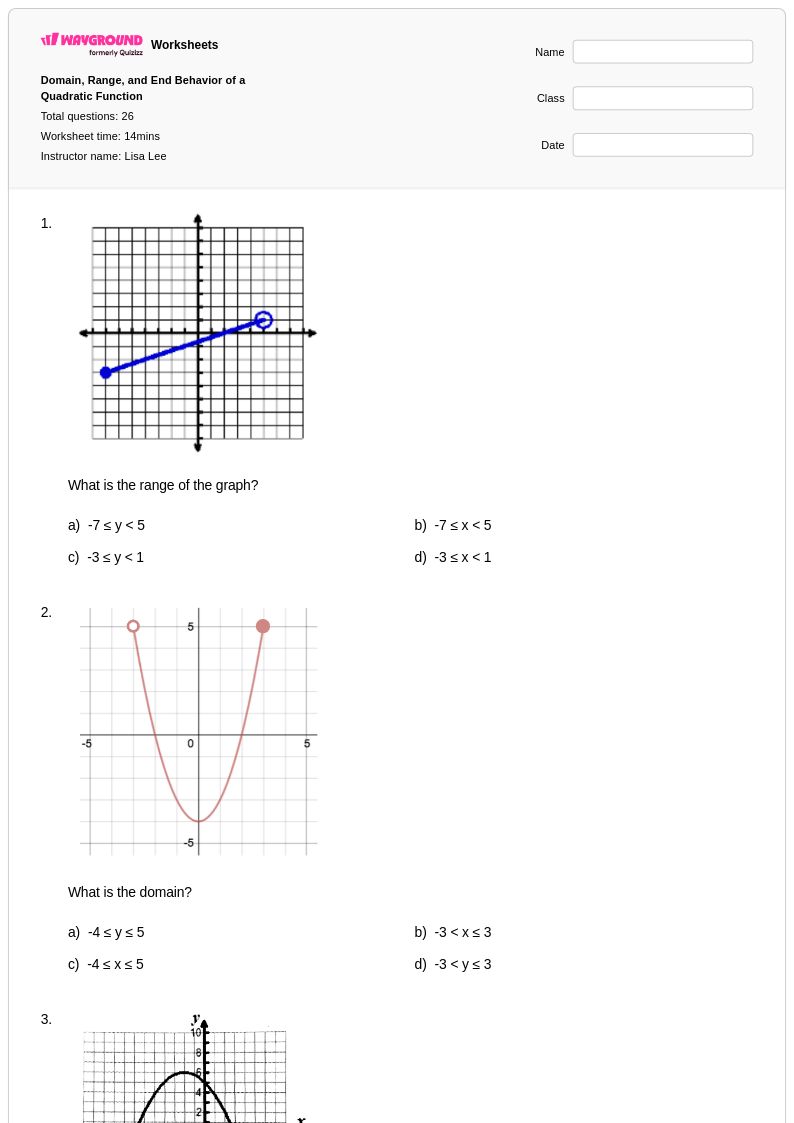
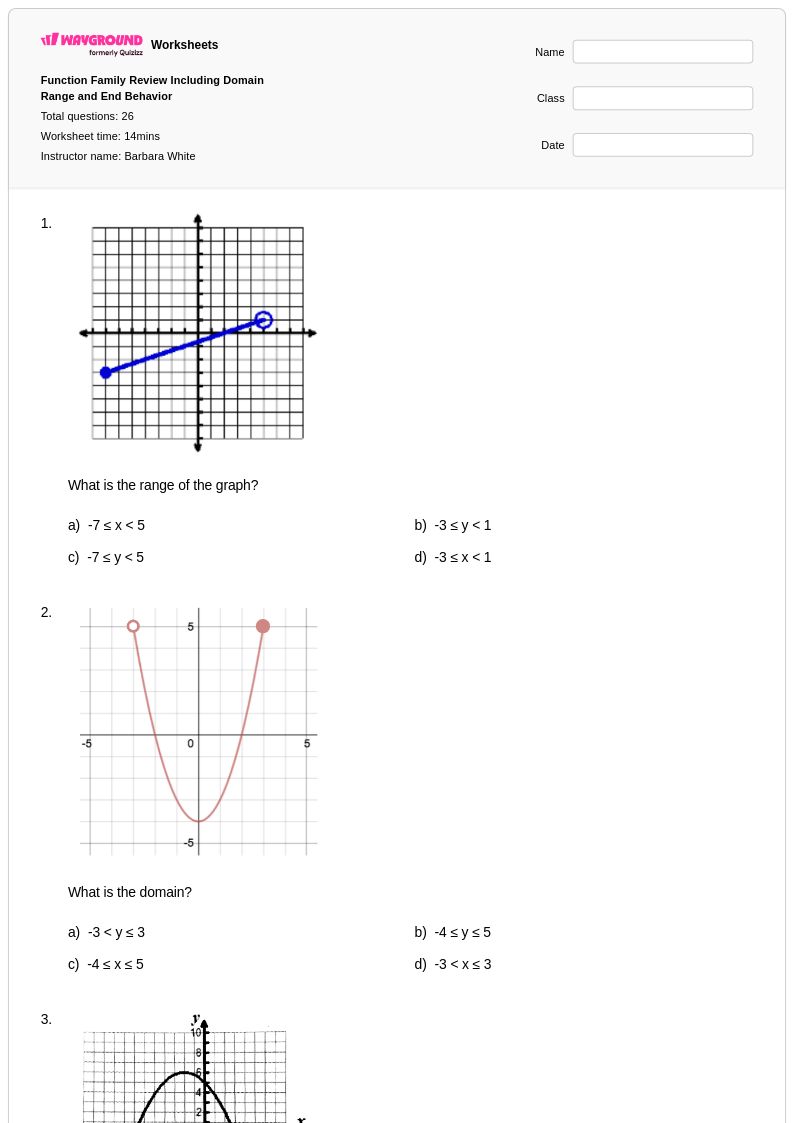
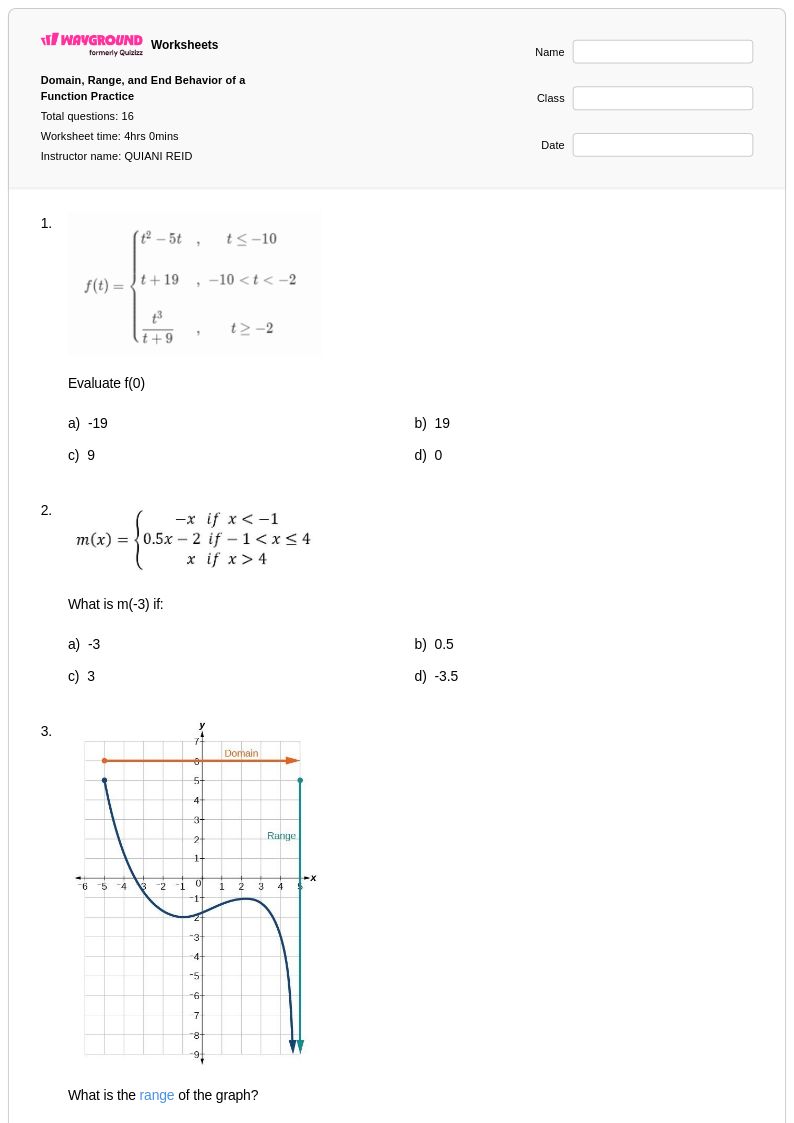
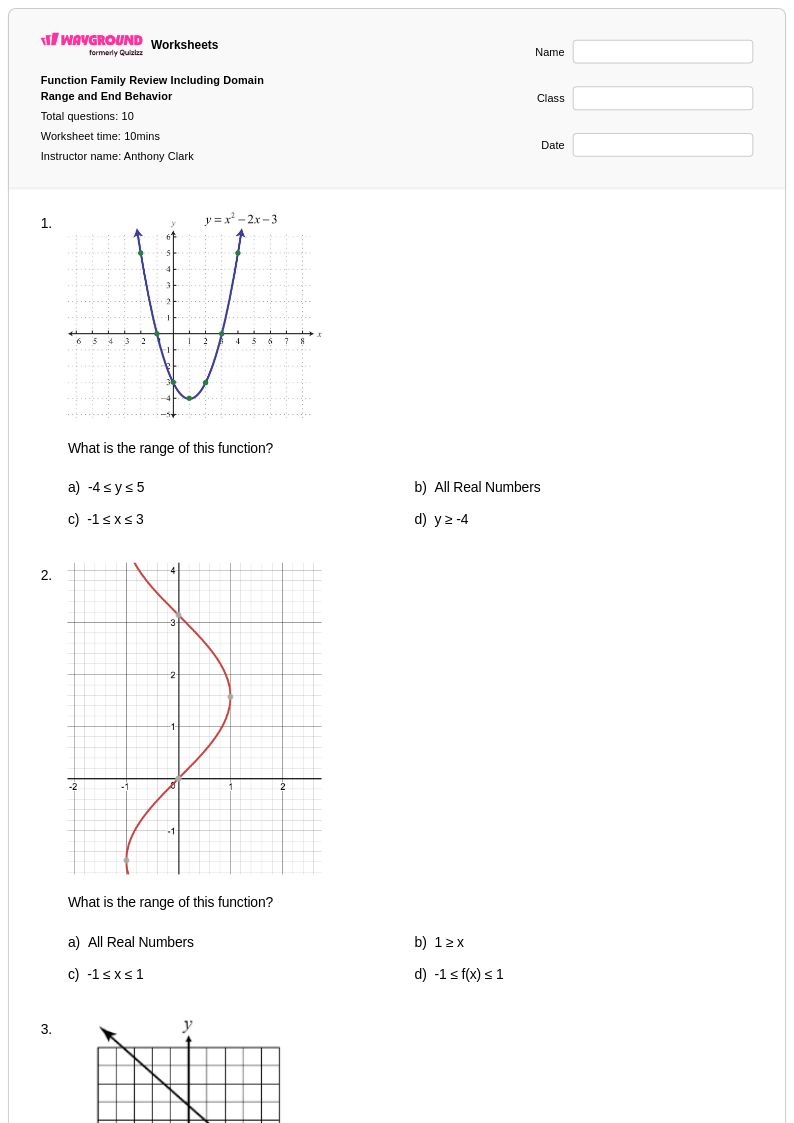
Domain, range, and end behavior worksheets for Class 10 students available through Wayground (formerly Quizizz) provide comprehensive practice with these fundamental function concepts that form the cornerstone of advanced mathematical reasoning. These carefully designed resources help students master the critical skills of identifying input and output values for functions, determining the set of all possible x-values and y-values, and analyzing how functions behave as they approach positive and negative infinity. The worksheets feature diverse problem sets that progress from basic domain and range identification using graphs, tables, and algebraic expressions to more complex analysis of end behavior patterns in polynomial, rational, and exponential functions. Each printable resource includes detailed practice problems with corresponding answer key materials, allowing students to verify their understanding and build confidence in these essential precalculus concepts through systematic free practice opportunities available in convenient pdf format.
Wayground (formerly Quizizz) empowers educators with an extensive collection of millions of teacher-created domain, range, and end behavior resources specifically curated for Class 10 mathematics instruction. The platform's robust search and filtering capabilities enable teachers to quickly locate worksheets that align with specific curriculum standards and match their students' proficiency levels, while built-in differentiation tools allow for seamless customization to meet diverse learning needs within the classroom. These versatile materials are available in both printable and digital formats, including downloadable pdf versions, making them ideal for traditional classroom instruction, homework assignments, or remote learning environments. Teachers can effectively utilize these comprehensive worksheet collections for initial skill introduction, targeted remediation of struggling students, enrichment activities for advanced learners, and ongoing practice to reinforce mastery of domain, range, and end behavior concepts throughout their function operations unit.
FAQs
How do I teach domain, range, and end behavior in Grade 10?
By Grade 10, students have seen domain and range with linear and quadratic functions, so the teaching priority shifts to extending those concepts to rational, exponential, and polynomial functions — where restrictions actually bite. For domain, make the restriction rules explicit: denominators can't be zero, radicands can't be negative. For end behavior, teach students to look only at the leading term of a polynomial and ask two questions: what is the degree (even or odd?), and what is the sign of the leading coefficient? Those two answers determine all four end behavior cases. Connecting end behavior to a quick sketch of the graph helps students check their own reasoning.
What exercises help 10th graders practice end behavior?
Matching exercises work well: give students a list of polynomial functions and a list of end behavior descriptions, and ask them to pair them without graphing. This forces them to apply the leading-term rule rather than reading a graph. For domain and range, problems that use graphs, tables, and equations for the same function — and ask students to identify domain and range from each — reveal whether understanding is genuine or representation-dependent. These worksheets progress from basic identification using graphs and tables to more complex analysis of polynomial, rational, and exponential functions.
What mistakes do 10th graders make with domain, range, and end behavior?
With rational functions, students frequently forget to exclude values that make the denominator zero from the domain — they find the asymptote on a graph but don't connect it to the algebraic restriction. For range, quadratic and absolute value functions trip students up because the range is bounded on one side; students default to 'all real numbers' without checking for a vertex or minimum. On end behavior, the leading-coefficient sign is the most common miss: students correctly identify even vs. odd degree but then ignore whether the coefficient is positive or negative, getting the direction wrong.
How do I use these Grade 10 domain, range, and end behavior worksheets?
Every worksheet comes with a complete answer key, so students can self-check during independent practice or you can use it for quick formative review. For a paperless class, host the worksheet as a digital quiz on Wayground. If you prefer paper — or your school is managing screen time — print the PDF and use the Wayground for Teachers app to scan and grade student submissions.
How does Common Core approach domain, range, and end behavior at the Grade 10 level?
Common Core's high school Functions standards build toward students being able to interpret key features of functions — including domain, range, and end behavior — from graphs, tables, and equations. At Grade 10, the expectation is that students move beyond linear and quadratic functions and apply these concepts to polynomial and exponential families. End behavior specifically connects to the standard asking students to identify and interpret the behavior of a function for large positive and negative values of x, which is the analytical foundation these worksheets target.
How can I differentiate these worksheets for a mixed-ability Grade 10 class?
The range of problem types in these worksheets — from graph-based domain identification to algebraic end behavior analysis — already provides natural differentiation by assignment. For students who need additional accessibility support, Wayground lets you apply a dyslexia-friendly font or increase font size on a per-student basis without creating a separate worksheet. During digital sessions, extended time can be set individually for students who need it, and remaining students work under default settings with no notification.