Free Printable Domain, Range, and End Behavior Worksheets for Class 11
Class 11 students can master domain, range, and end behavior concepts with Wayground's comprehensive collection of free worksheets, printables, and practice problems featuring detailed answer keys and downloadable PDFs.
Explore printable Domain, Range, and End Behavior worksheets for Class 11
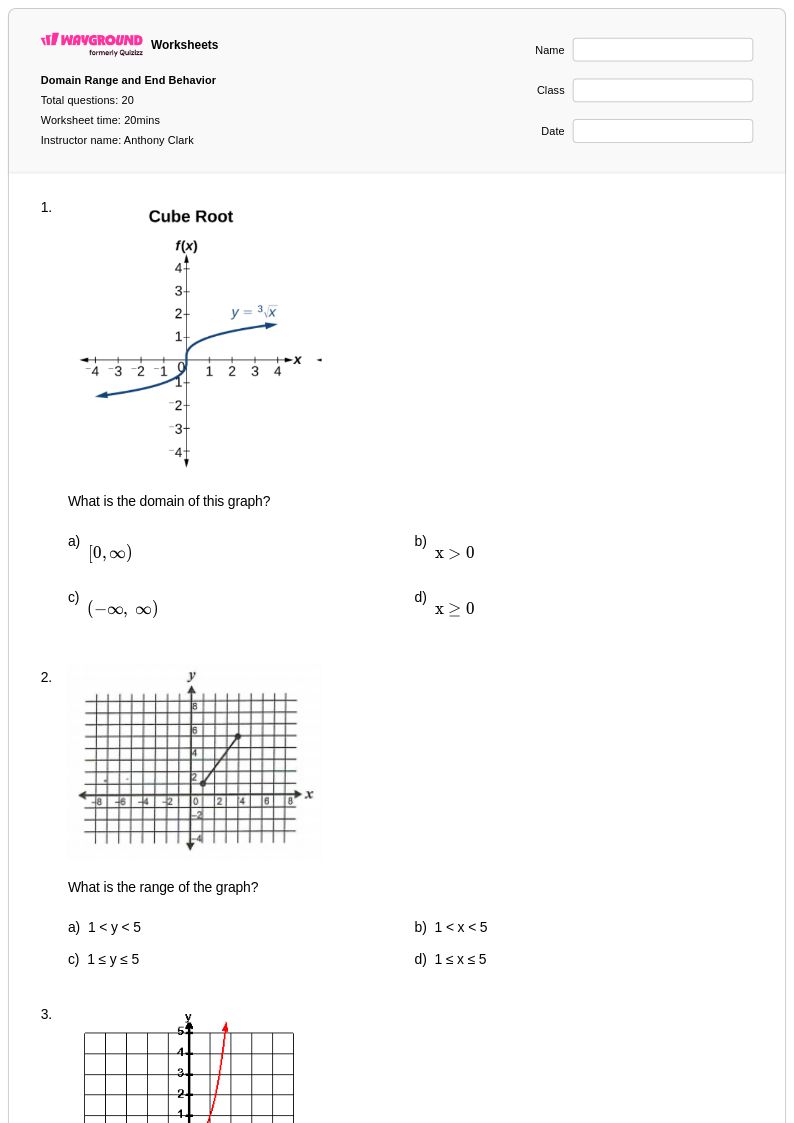
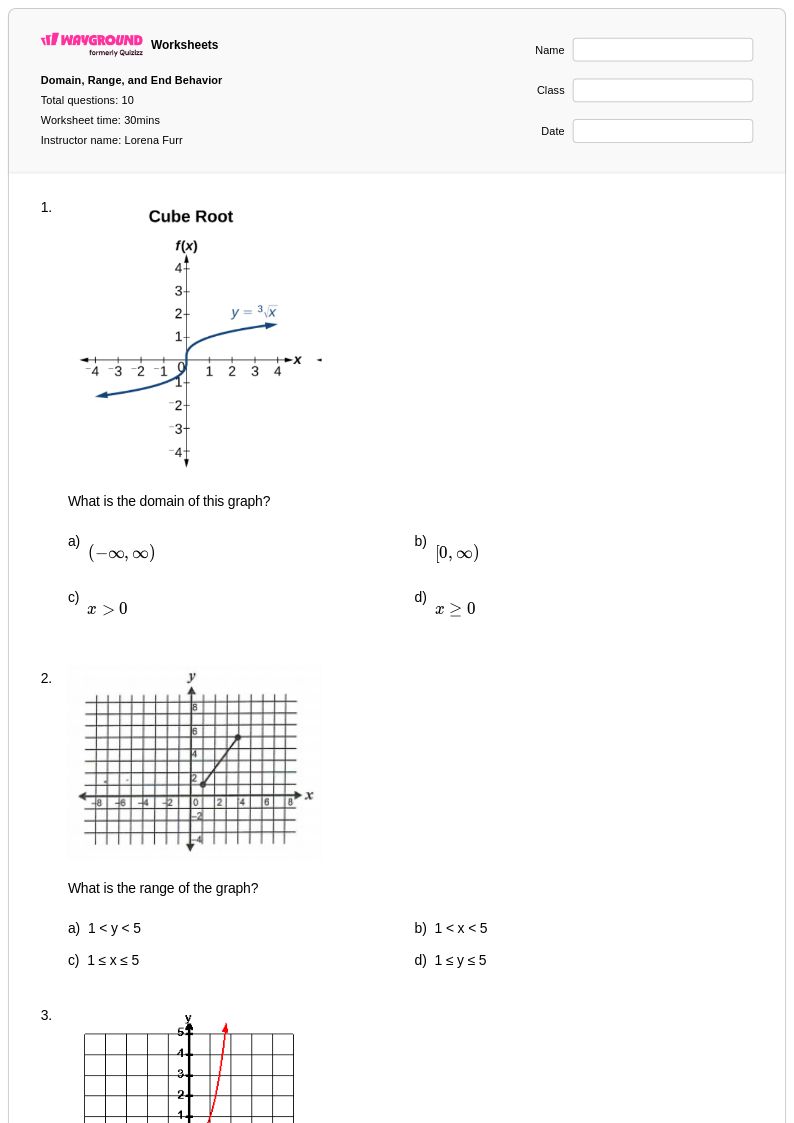
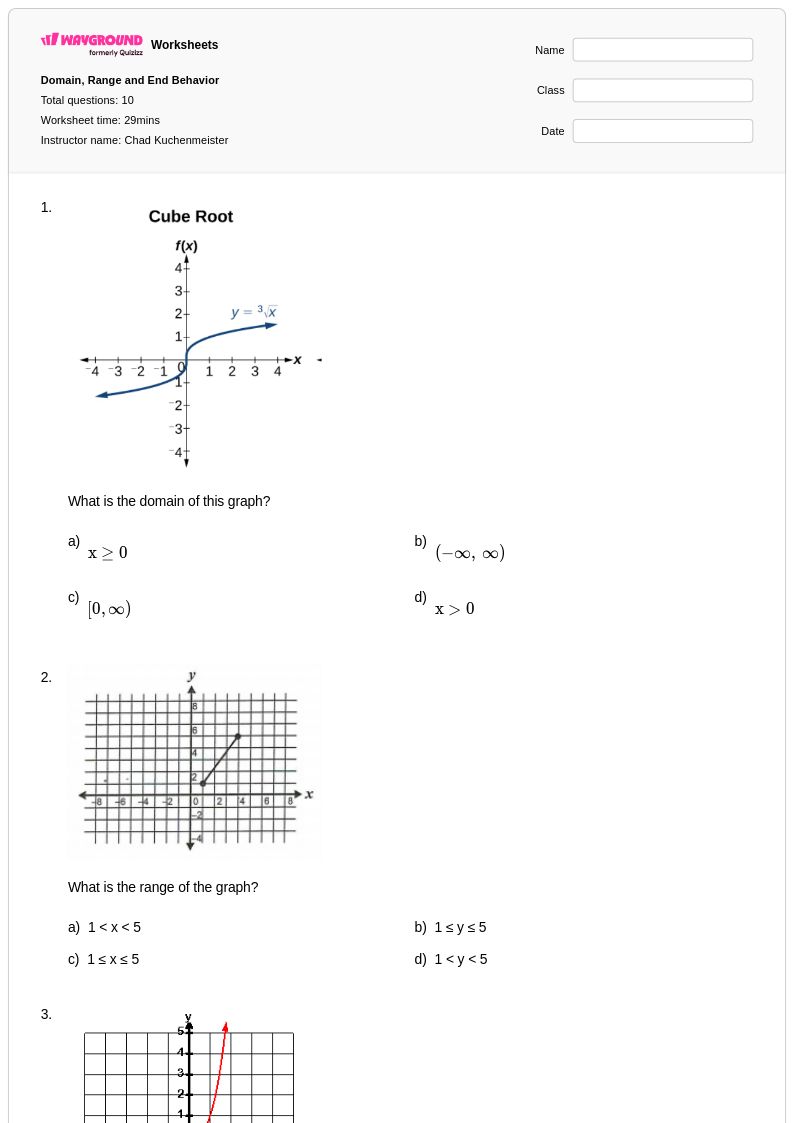
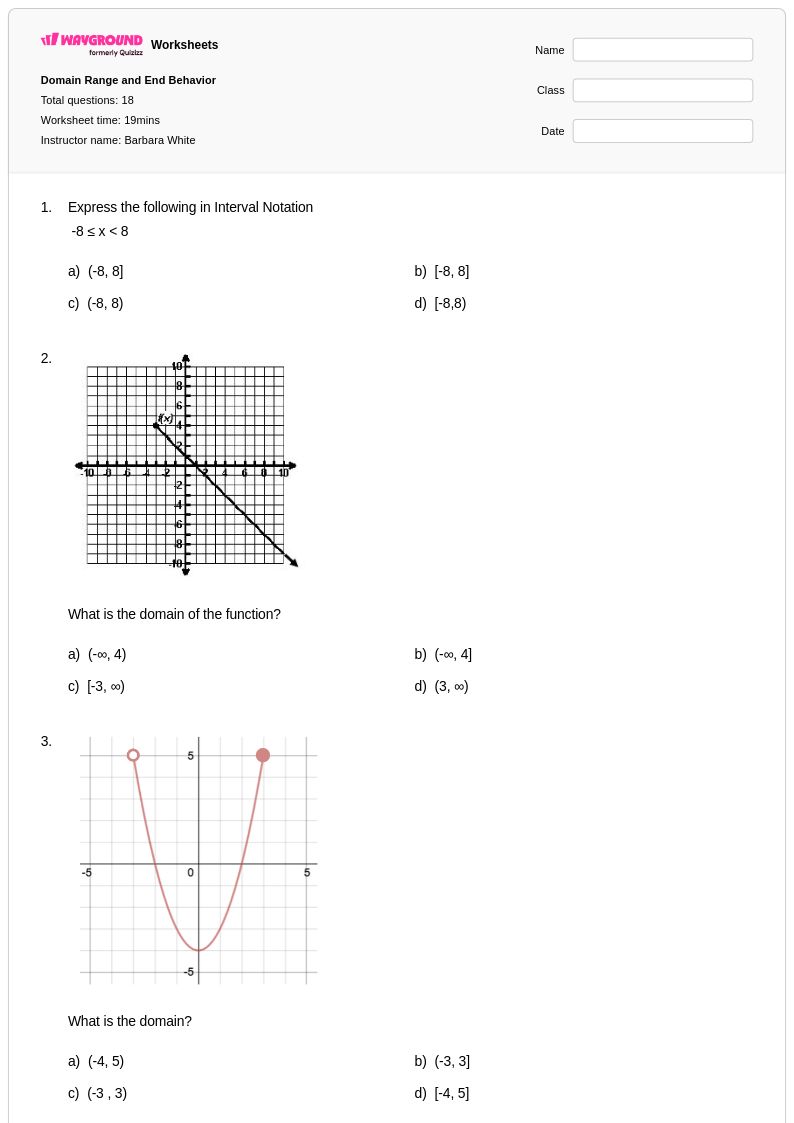
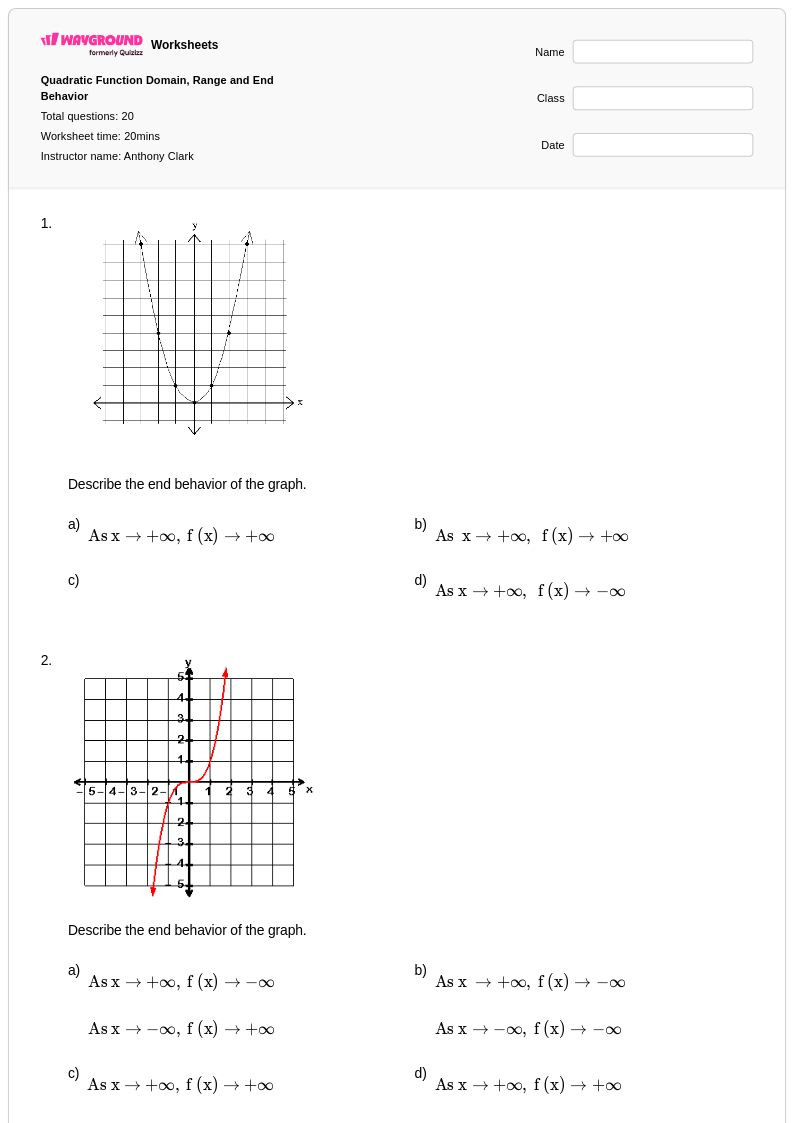
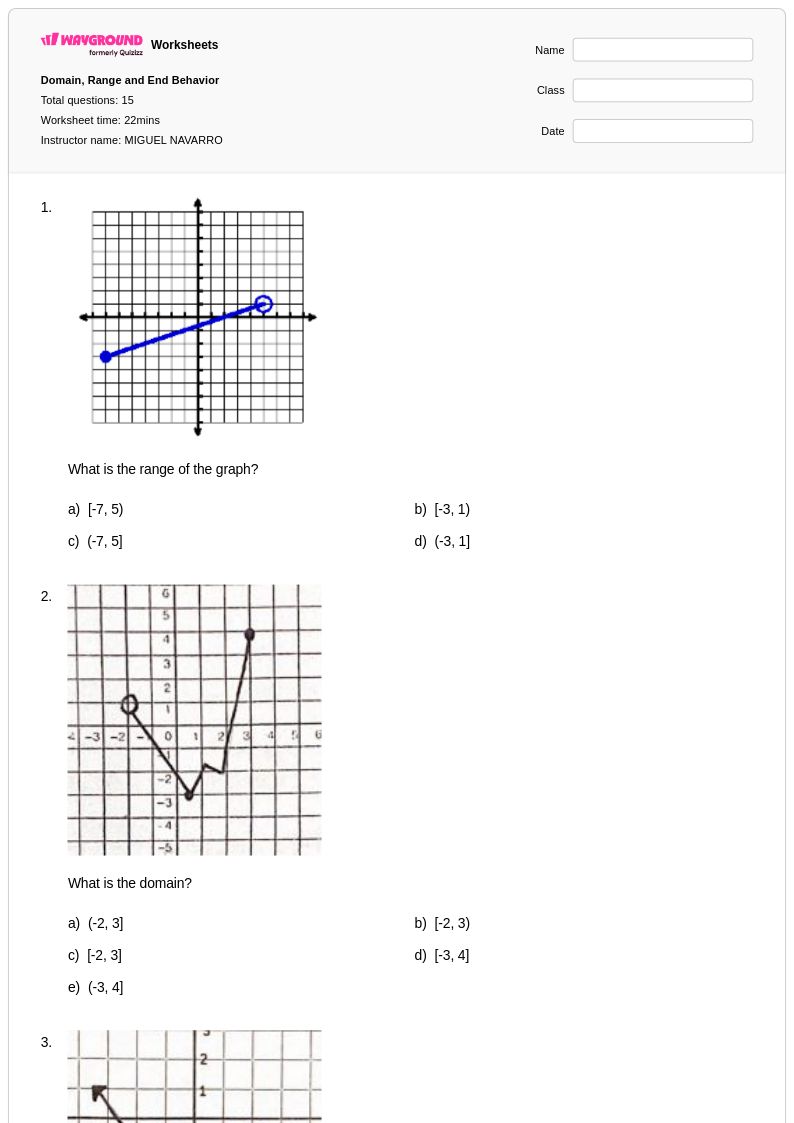
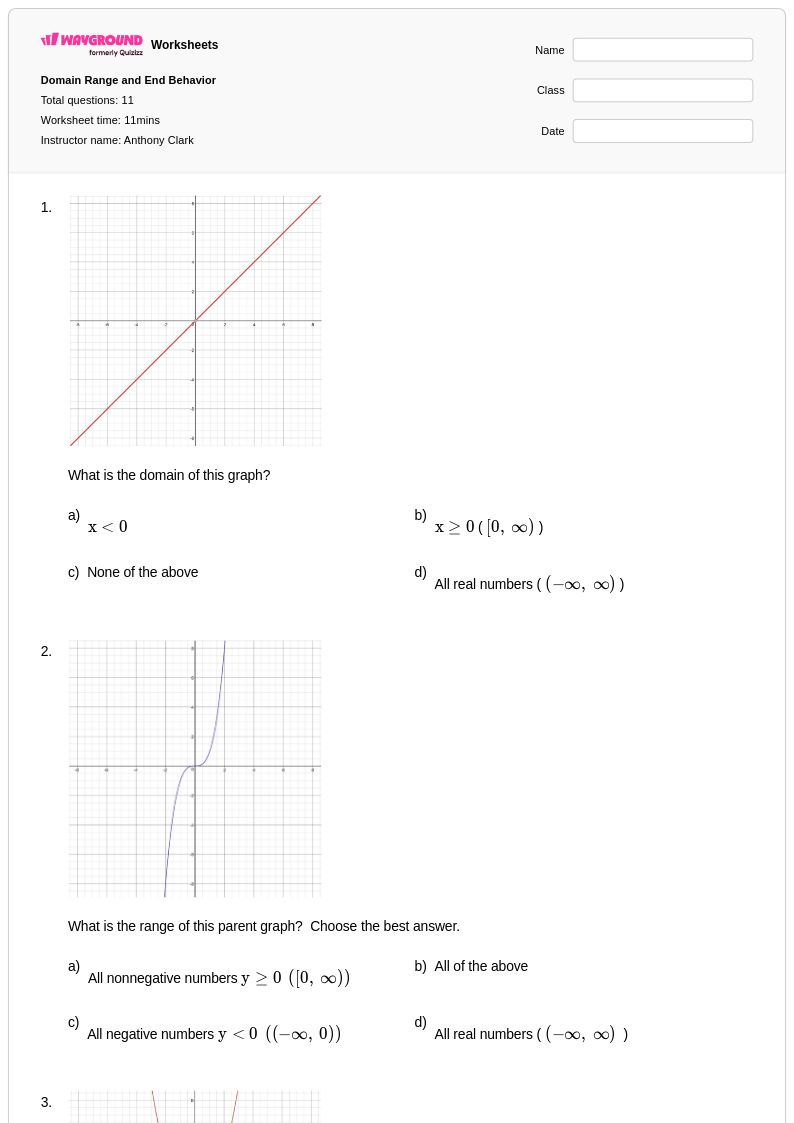
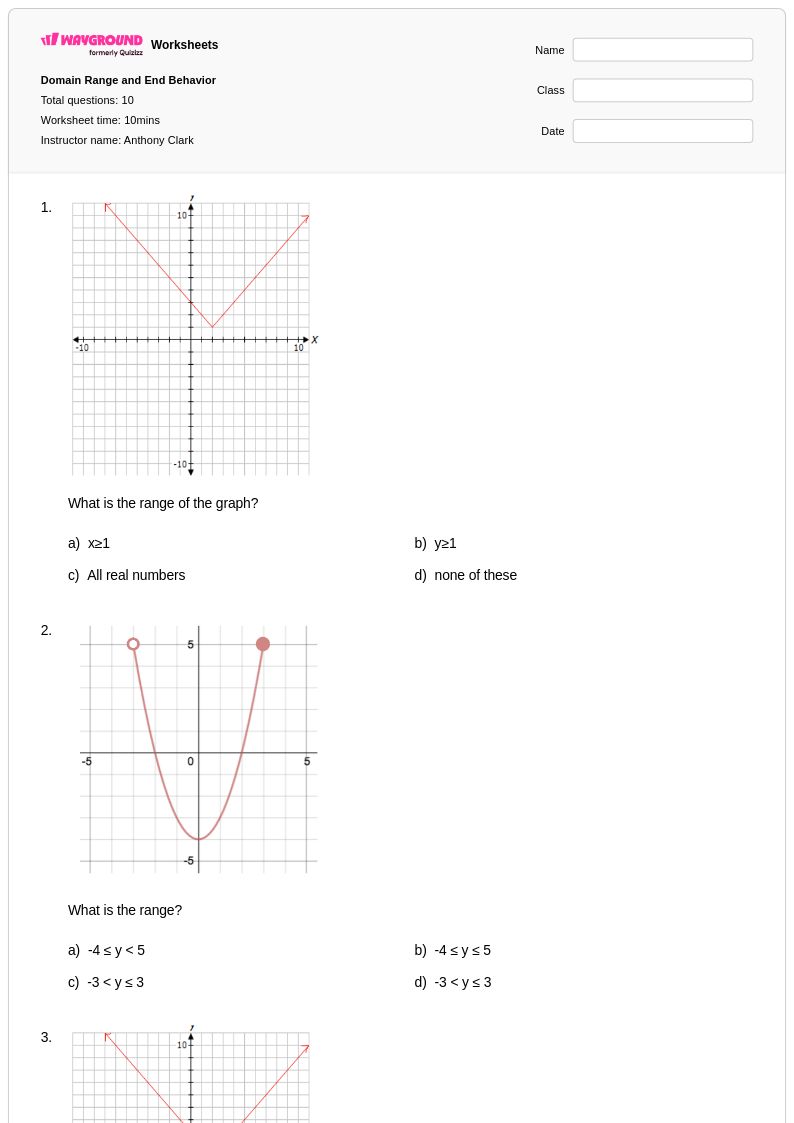
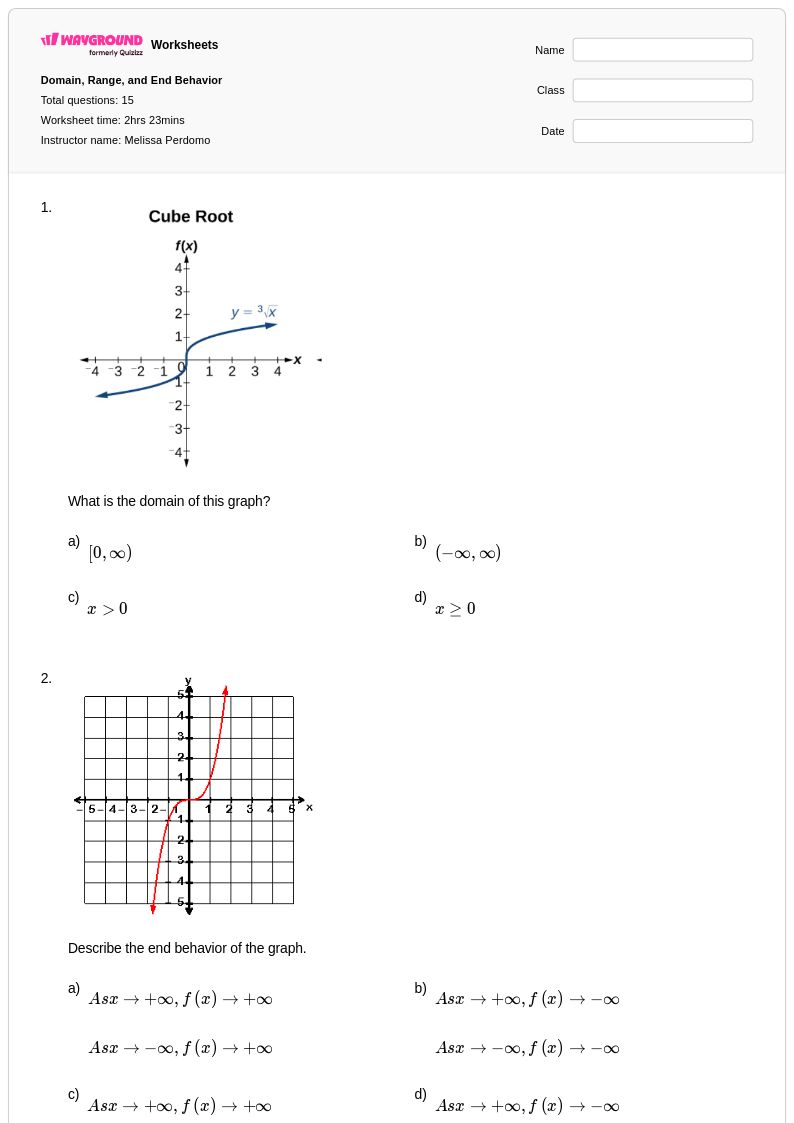
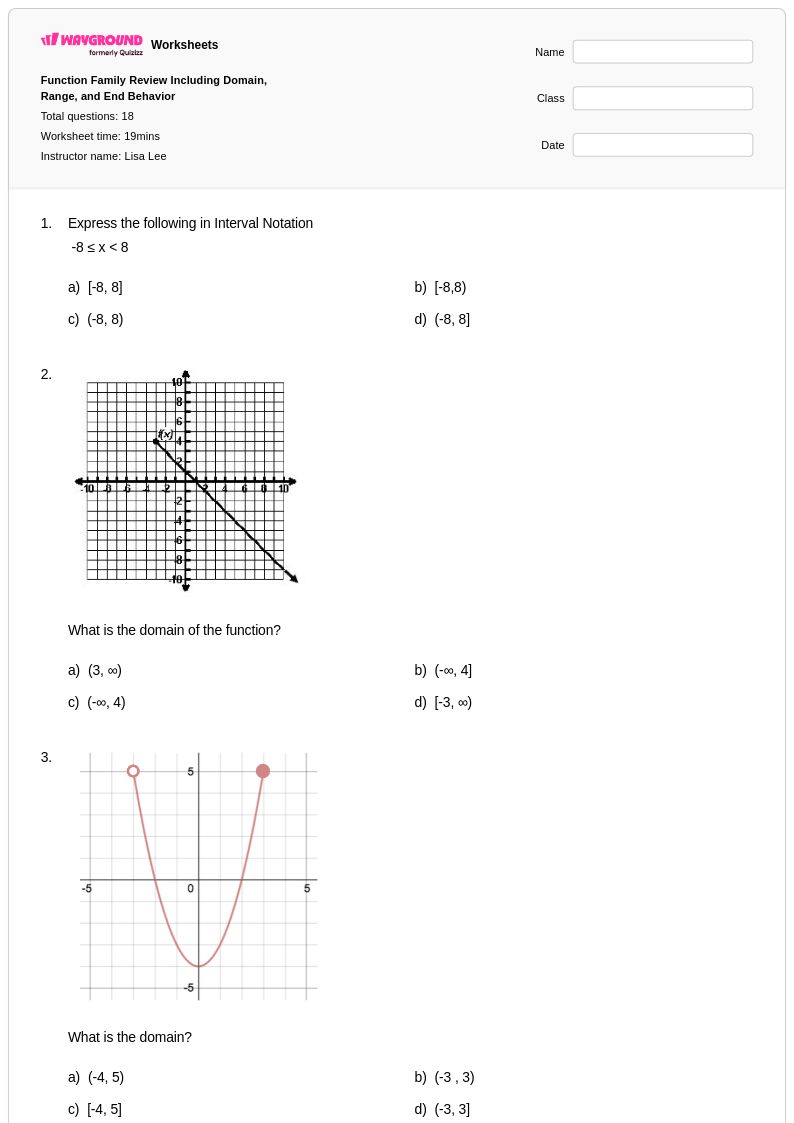
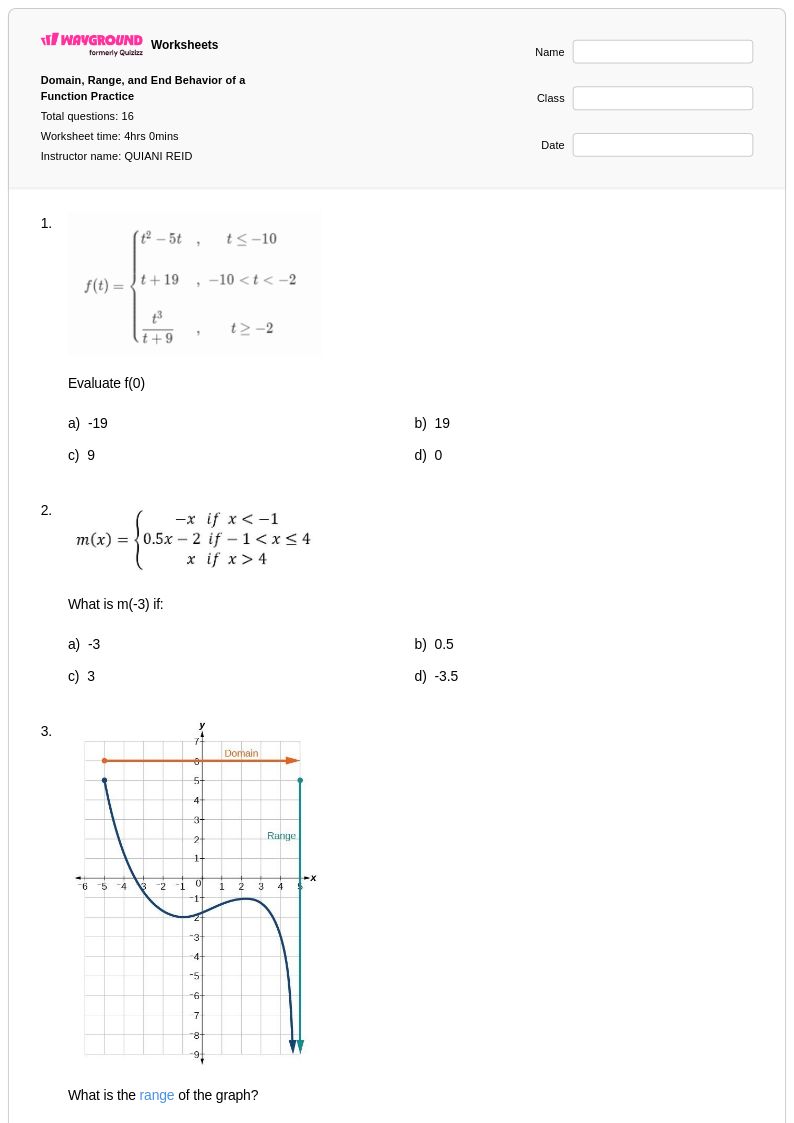
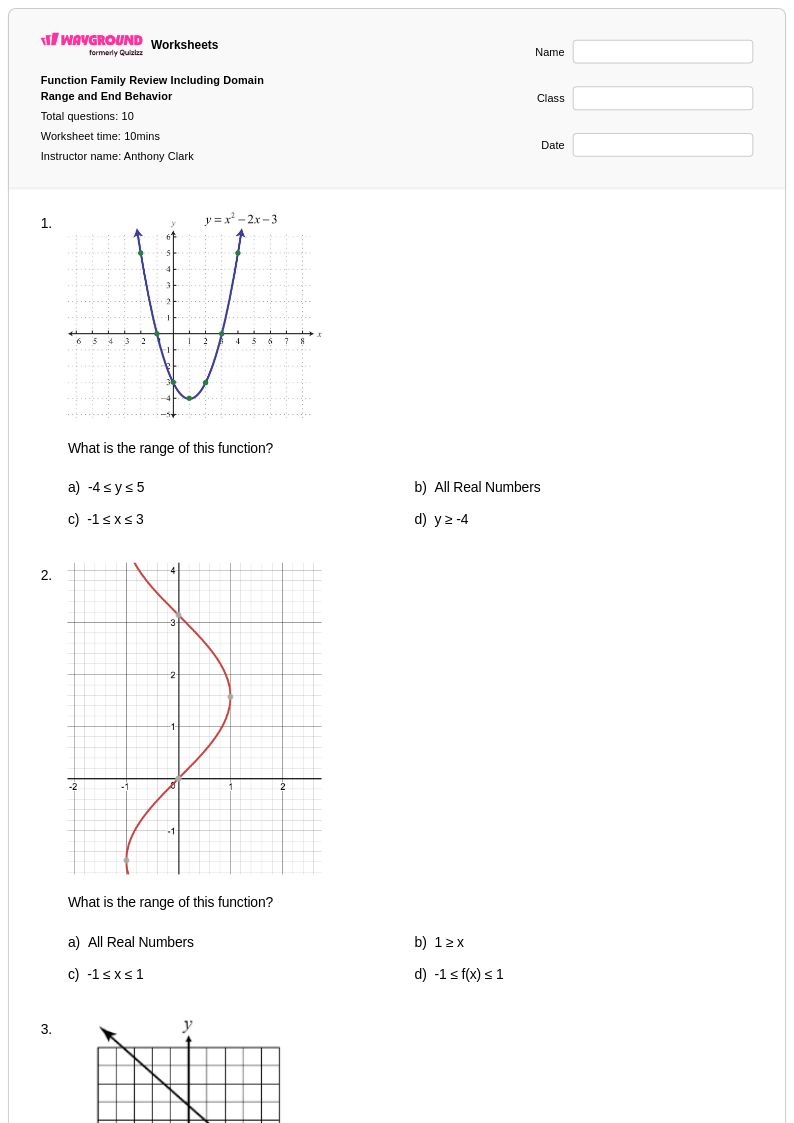
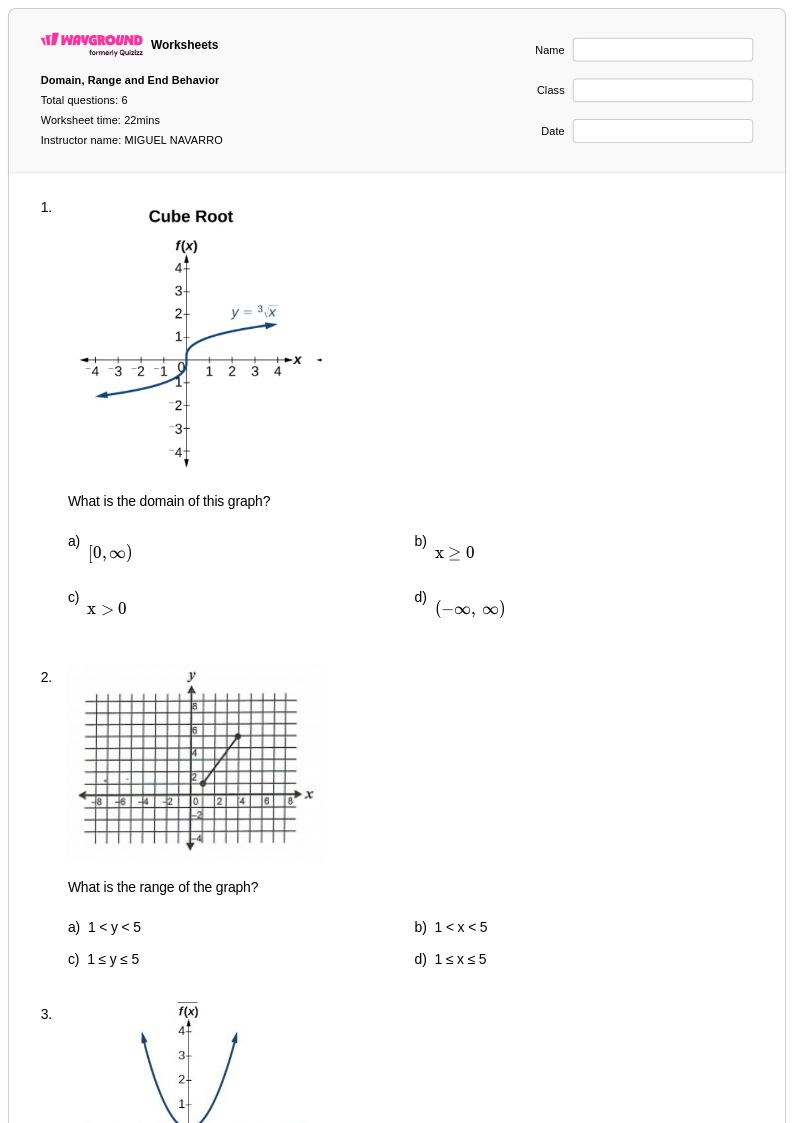
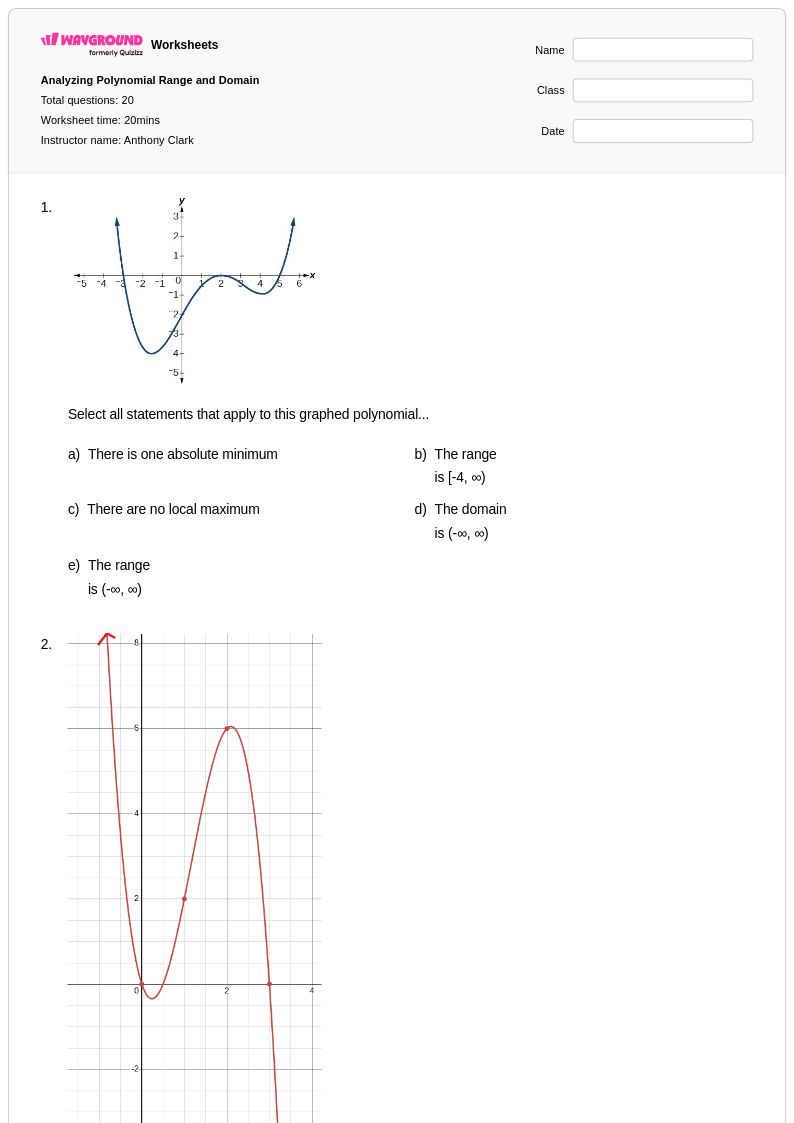
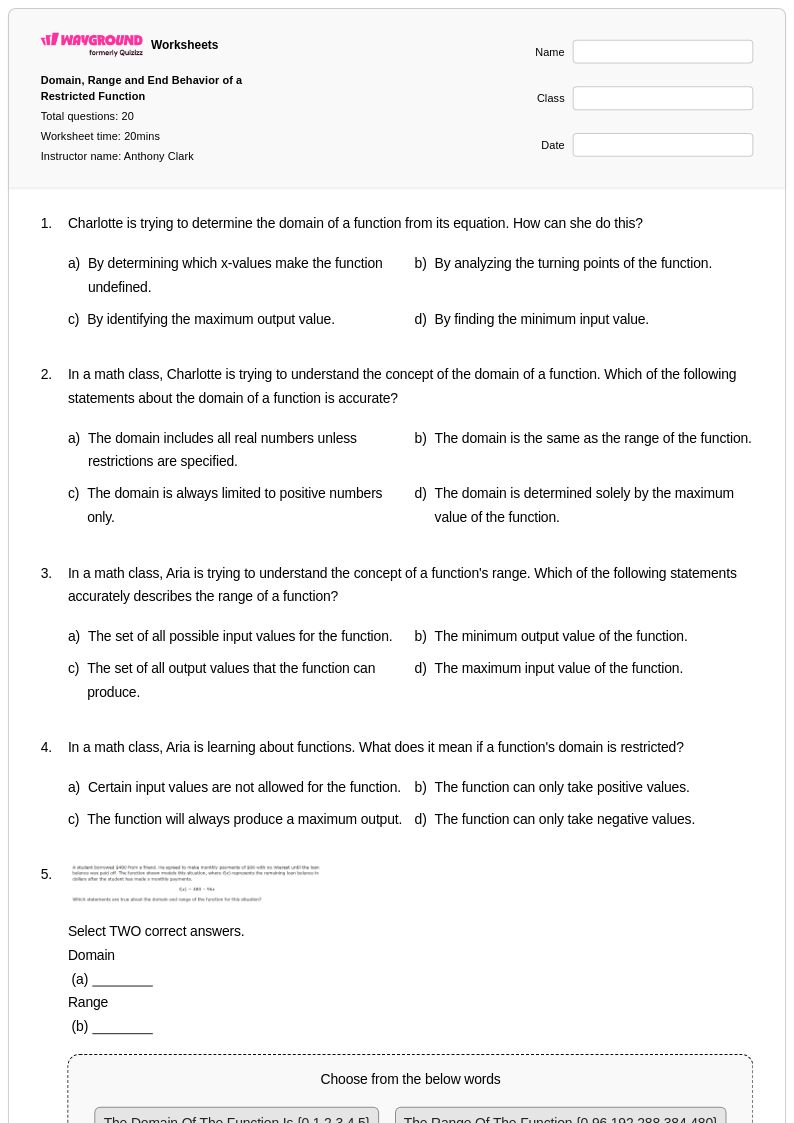
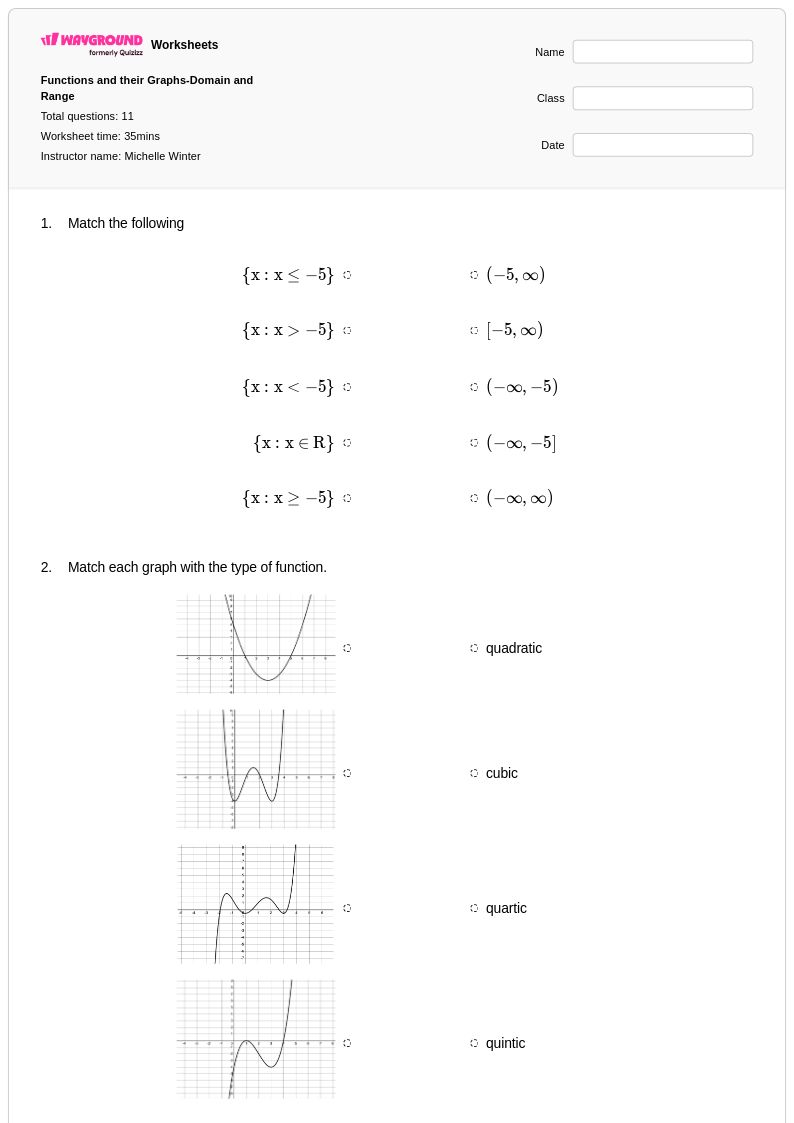
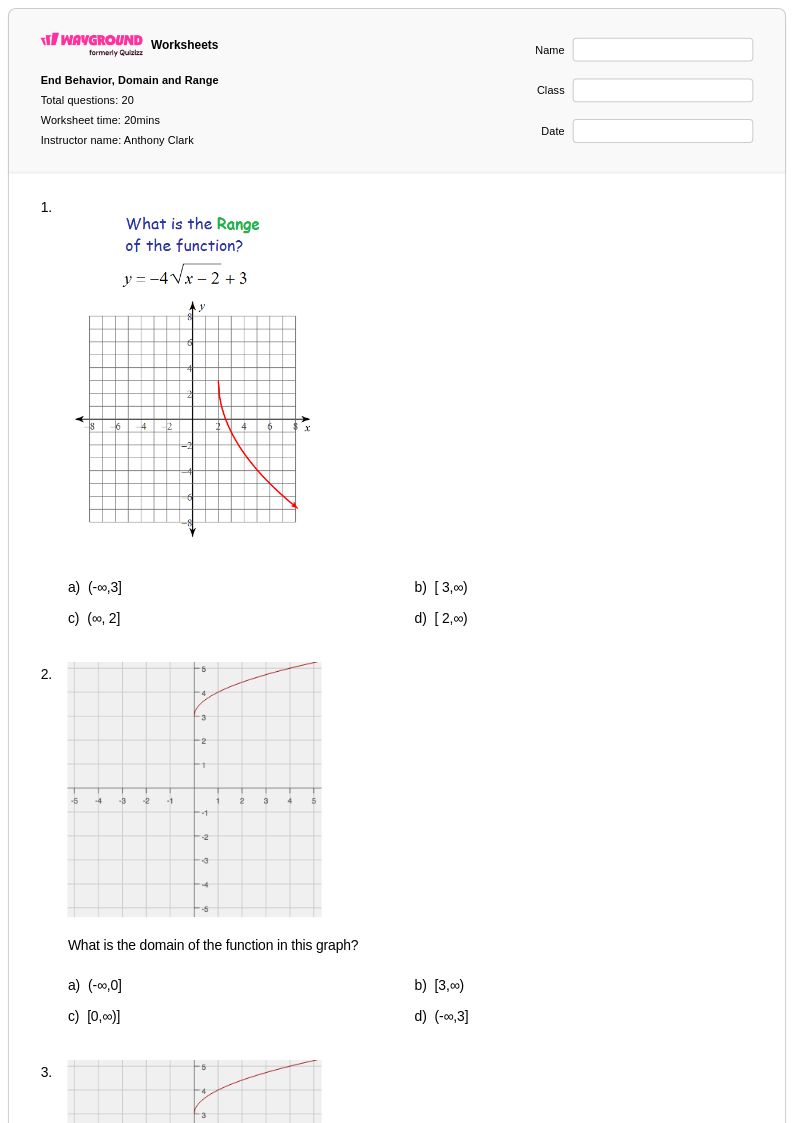
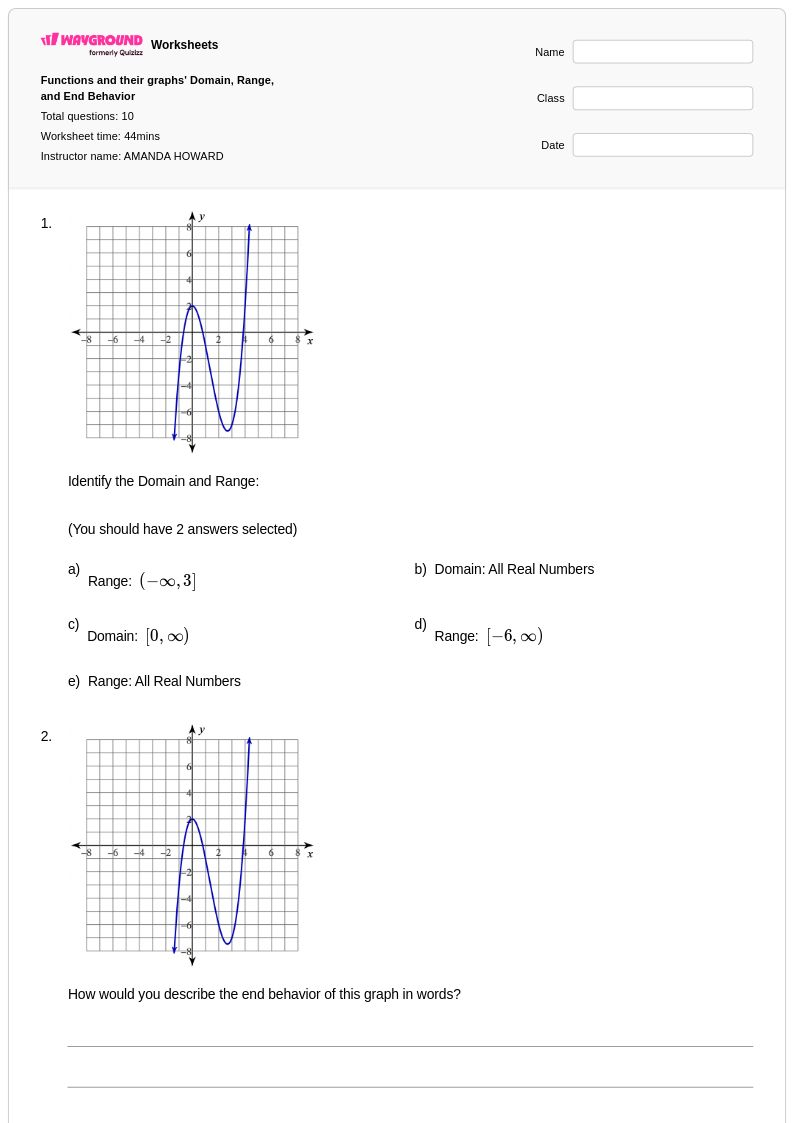
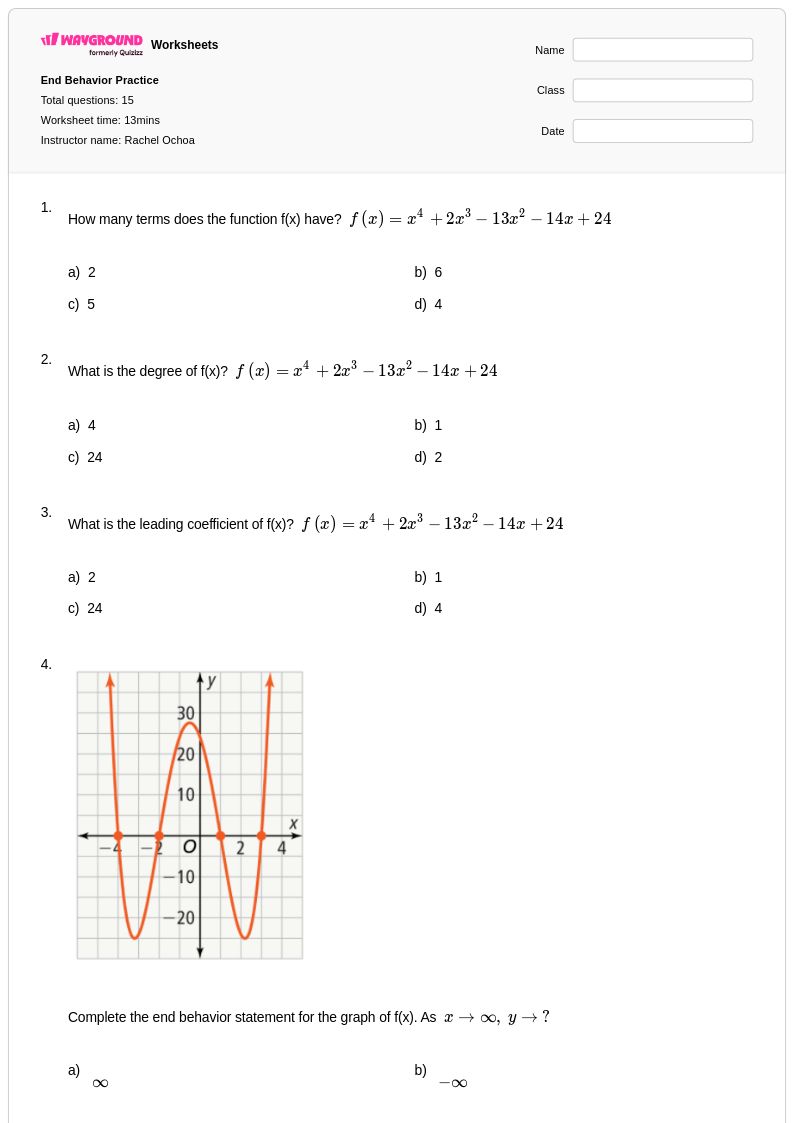
Domain, Range, and End Behavior worksheets for Class 11 mathematics provide comprehensive practice opportunities for students to master these fundamental concepts in function analysis. These carefully designed resources available through Wayground (formerly Quizizz) focus on developing students' ability to identify and describe the domain and range of various function types, including polynomial, rational, exponential, and logarithmic functions, while analyzing their end behavior patterns. The worksheets strengthen critical analytical skills through diverse practice problems that require students to interpret graphs, work with function notation, and make connections between algebraic representations and their corresponding domain restrictions. Each worksheet includes detailed answer keys and is available as free printable PDFs, making them accessible resources for both classroom instruction and independent study sessions.
Wayground (formerly Quizizz) empowers educators with an extensive collection of millions of teacher-created resources specifically designed for Class 11 function analysis topics. The platform's robust search and filtering capabilities allow teachers to quickly locate worksheets that align with state mathematics standards and match their students' specific learning needs for domain, range, and end behavior concepts. Advanced differentiation tools enable instructors to customize these materials for various skill levels, supporting both remediation for struggling learners and enrichment opportunities for advanced students. Available in both printable and digital formats including downloadable PDFs, these versatile worksheet collections streamline lesson planning while providing flexible options for skill practice, formative assessment, and targeted intervention strategies that help students build confidence in analyzing function behavior.
FAQs
How do I teach domain, range, and end behavior in Grade 11?
At Grade 11, students are working with logarithmic and exponential functions alongside polynomials and rationals, so the teaching focus is on function-specific domain restrictions and the connection between algebraic form and graphical behavior. For logarithmic functions, students need to internalize that the argument must be positive — a restriction that doesn't follow from the rules they learned for rationals or radicals. For end behavior, push students to articulate why a function behaves as it does, not just what it does: an exponential with base greater than 1 grows without bound in one direction and approaches zero (but never reaches it) in the other, and students should be able to explain that in terms of the function's structure.
What exercises help 11th graders practice domain, range, and end behavior?
At this level, the most productive practice involves connecting representations: give students a function algebraically and ask them to determine domain and range, then sketch the graph and verify. Problems that require interval notation — rather than inequality notation — sharpen precision. For end behavior, asking students to write limit-style descriptions ('as x → ∞, f(x) → ?') prepares them for calculus language without requiring formal limits. These worksheets cover polynomial, rational, exponential, and logarithmic functions with problems that require interpreting graphs, working with function notation, and identifying domain restrictions algebraically.
What mistakes do 11th graders make with domain, range, and end behavior?
Logarithmic functions are the biggest source of errors at this level. Students set the argument greater than or equal to zero instead of strictly greater than zero, missing that log(0) is undefined. For range, students often claim the range of an exponential function is all real numbers, forgetting the horizontal asymptote creates a bound. On end behavior, rational functions cause the most confusion: students describe the behavior near a vertical asymptote (local behavior) instead of what happens as x grows without bound (end behavior), conflating two distinct concepts.
How do I use these Grade 11 domain, range, and end behavior worksheets?
Each worksheet includes a complete answer key, making it straightforward to assign for independent practice or homework. You can host it as a digital quiz on Wayground for automatic scoring, or print the PDF for paper-based work — the Wayground for Teachers app lets you scan paper submissions for grading so you're not entering scores manually.
How does Common Core sequence domain, range, and end behavior by Grade 11?
By Grade 11, Common Core expects students to analyze functions across a broad family — polynomial, rational, exponential, logarithmic — and to interpret key features including domain, range, and end behavior from multiple representations. The progression from earlier grades has moved from identifying domain and range on simple functions to determining restrictions algebraically and connecting them to graphical features like asymptotes and intercepts. At this stage, end behavior analysis is expected to inform how students sketch and interpret graphs, not just describe them in isolation.
How can I differentiate domain, range, and end behavior practice for Grade 11 students?
Grade 11 classes often span students who are still consolidating rational function concepts and students ready for logarithmic and piecewise functions — so differentiation is genuinely useful here. Wayground lets you create alternate worksheet versions with adjusted font size or spacing for students who find notation-heavy problems visually overwhelming. For students who need it, the Read Aloud accommodation supports comprehension of multi-part problems, and you can assign extended time individually without disrupting the rest of the class.