Free Printable Domain, Range, and End Behavior Worksheets for Class 12
Class 12 mathematics worksheets help students master domain, range, and end behavior concepts through comprehensive printables featuring practice problems, step-by-step solutions, and answer keys available as free PDF downloads.
Explore printable Domain, Range, and End Behavior worksheets for Class 12
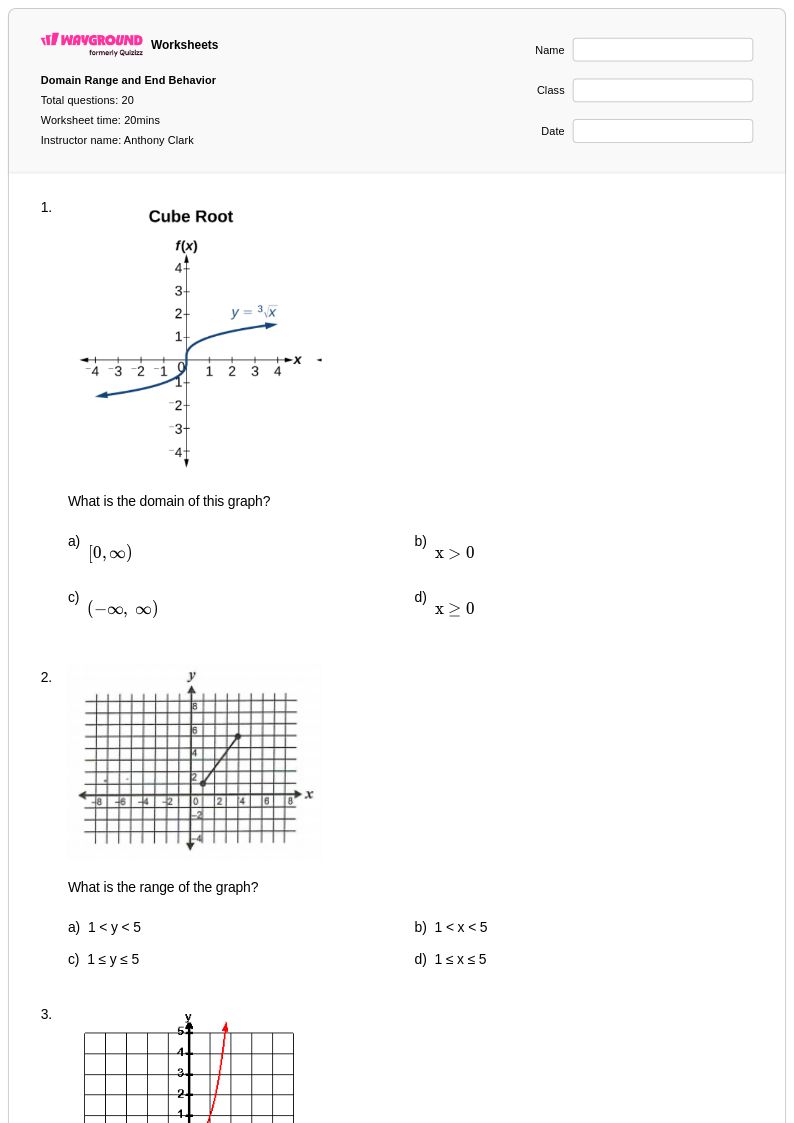
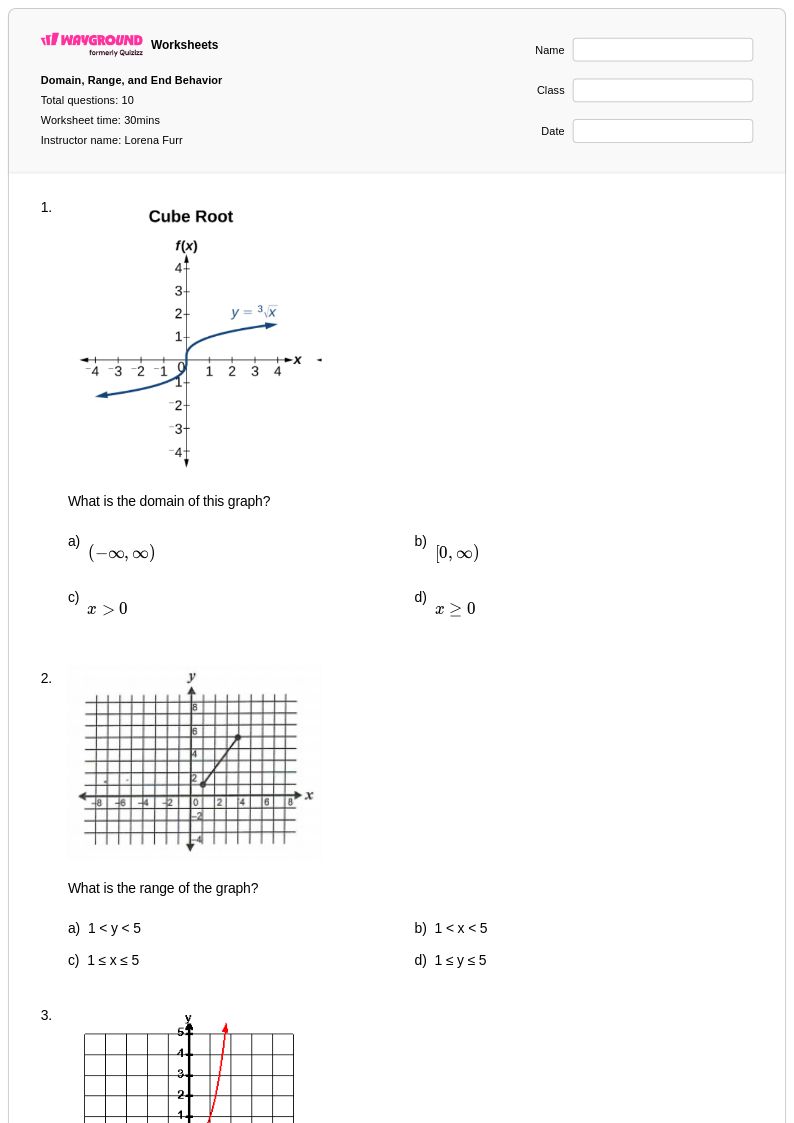
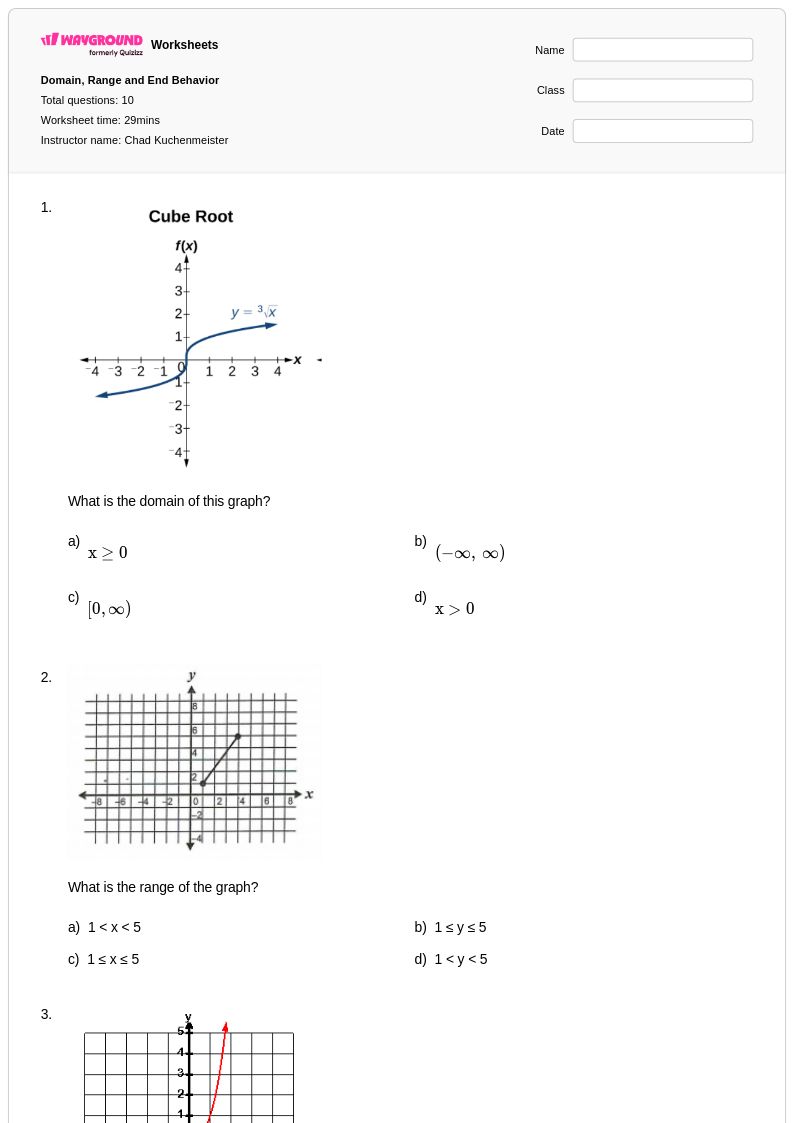
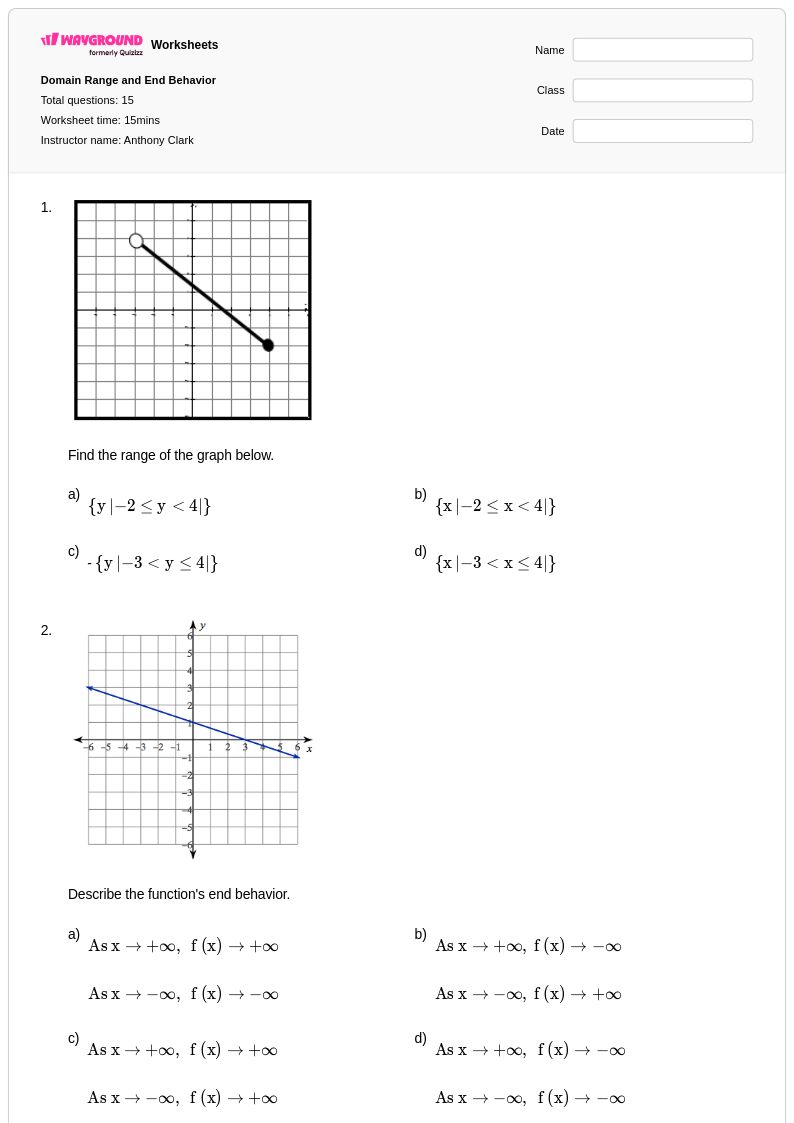
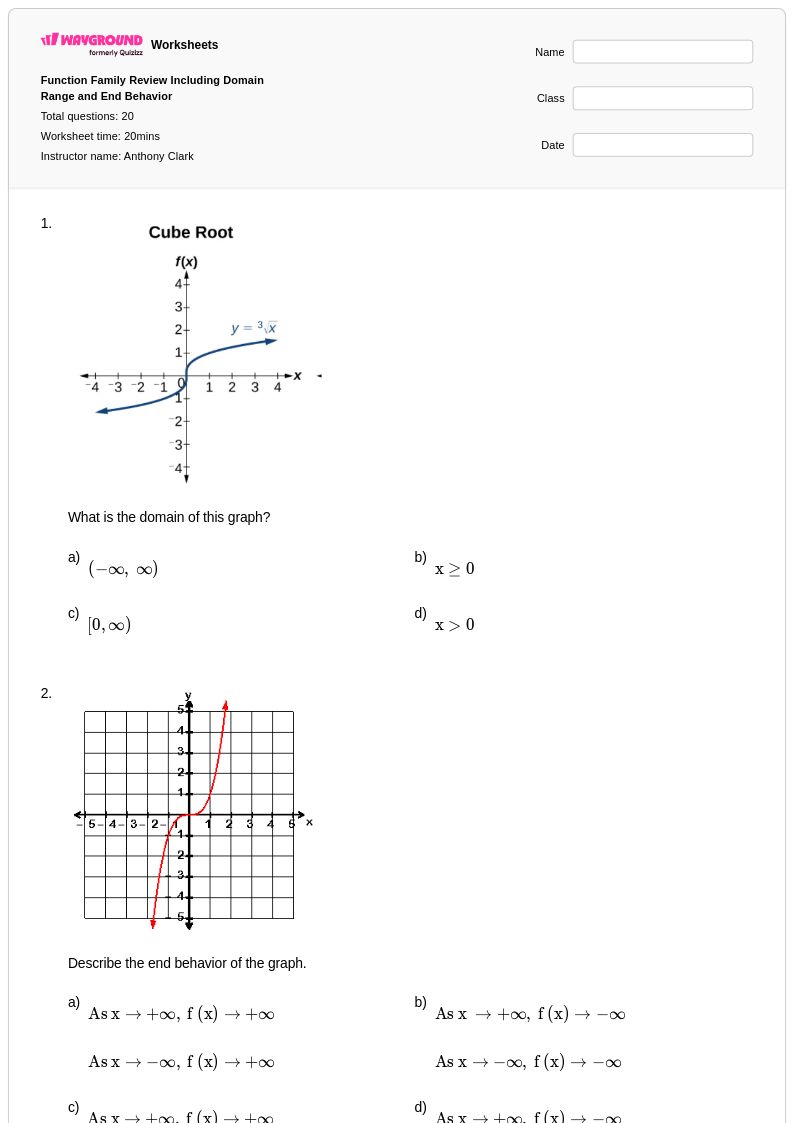
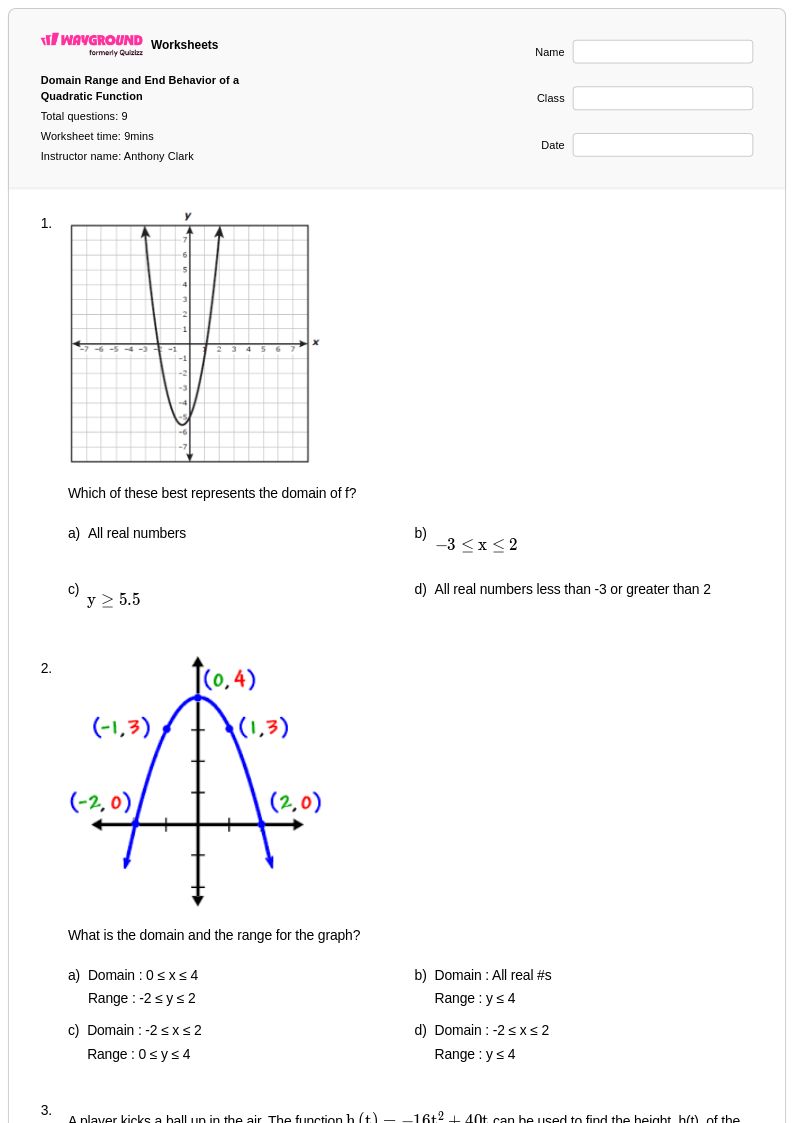
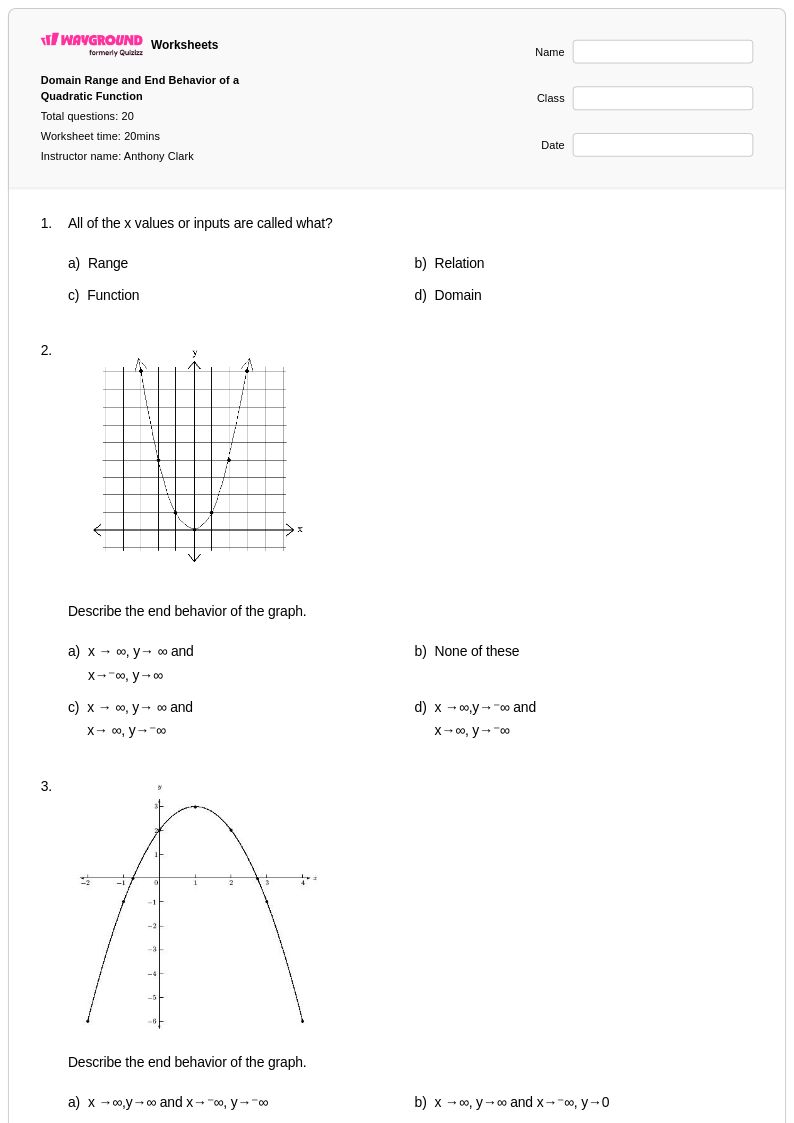
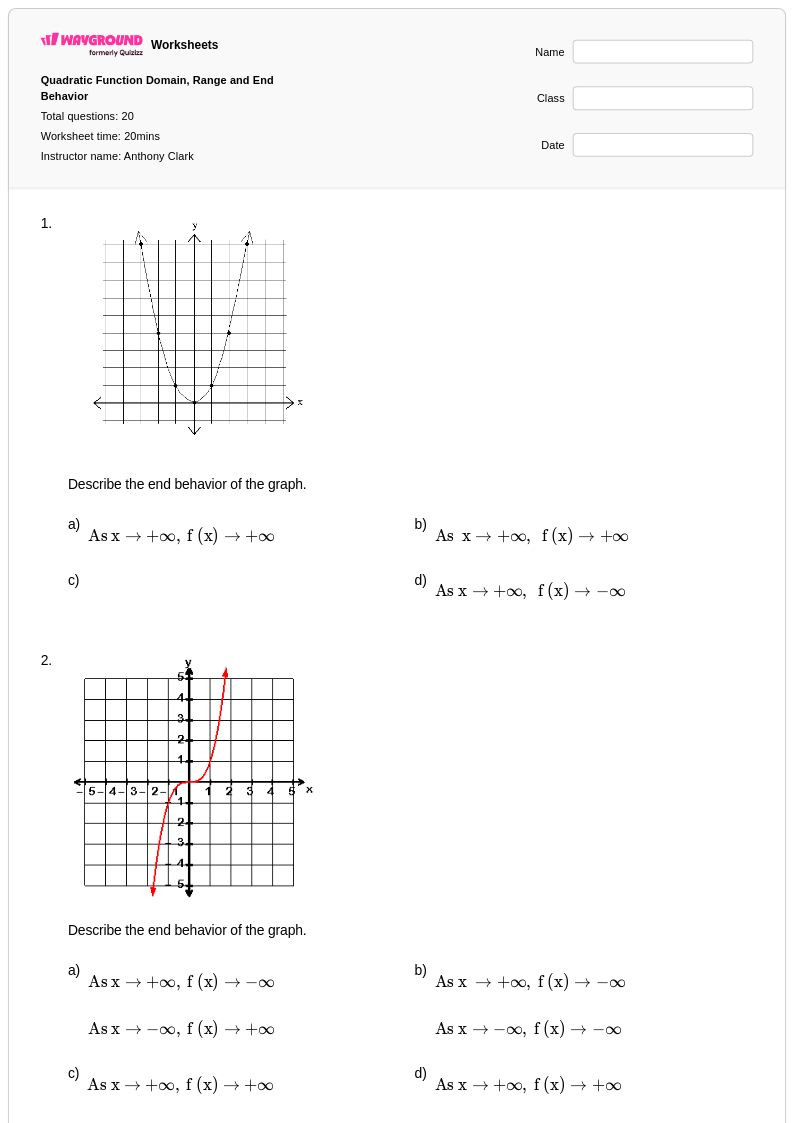
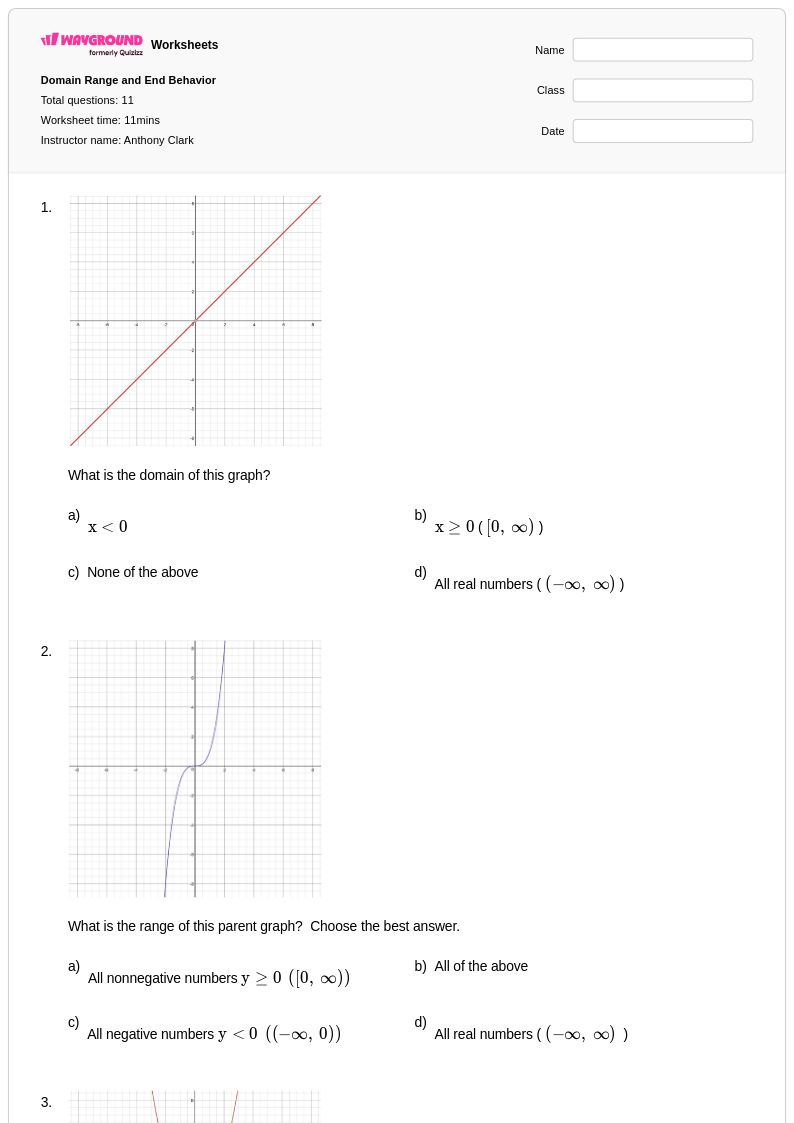
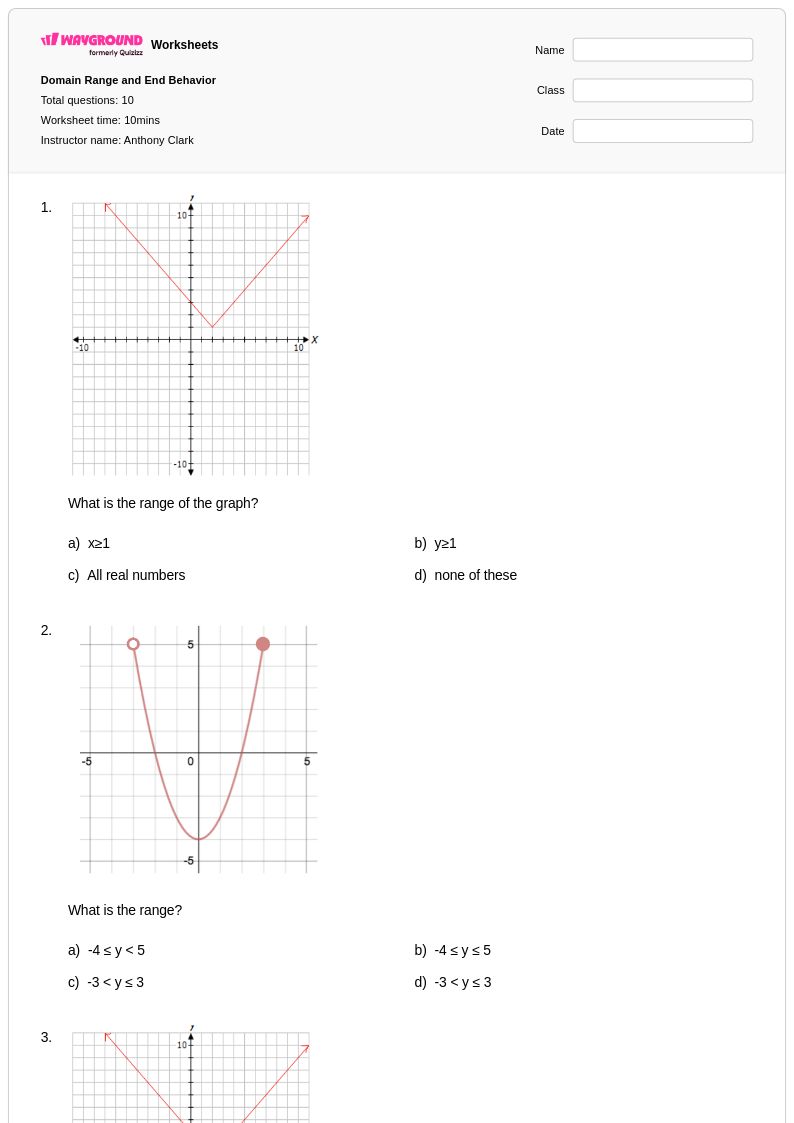
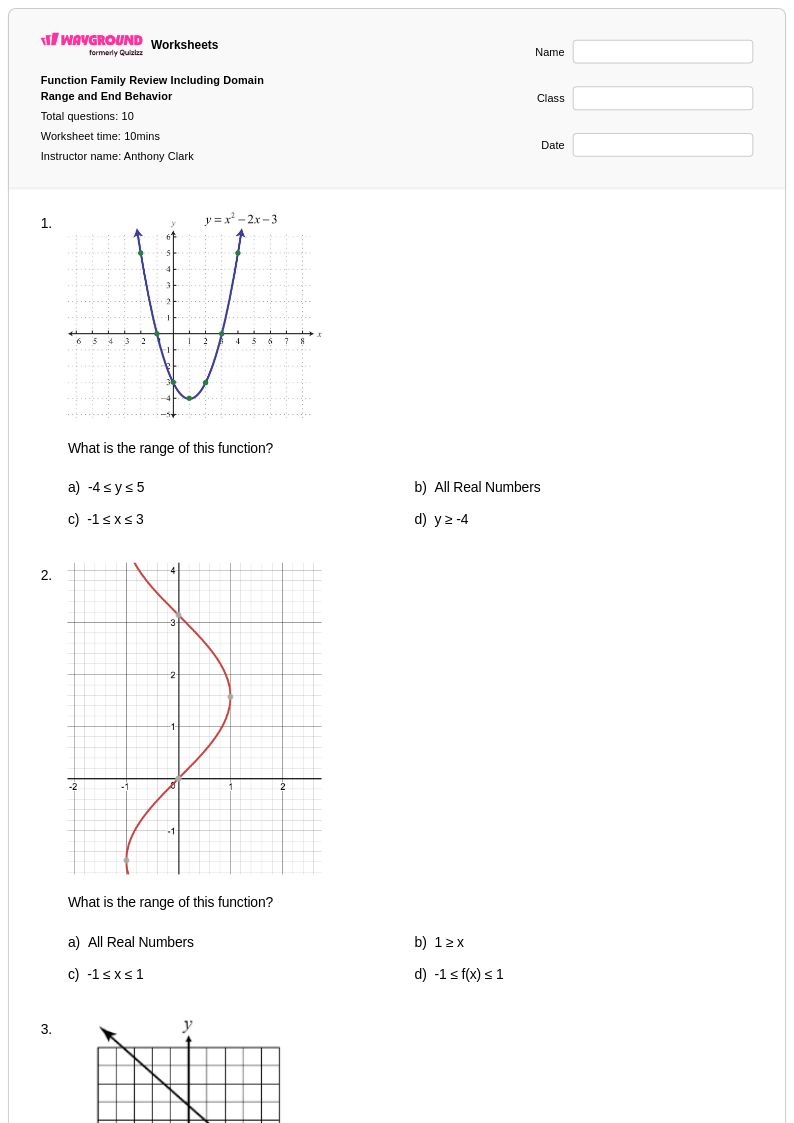
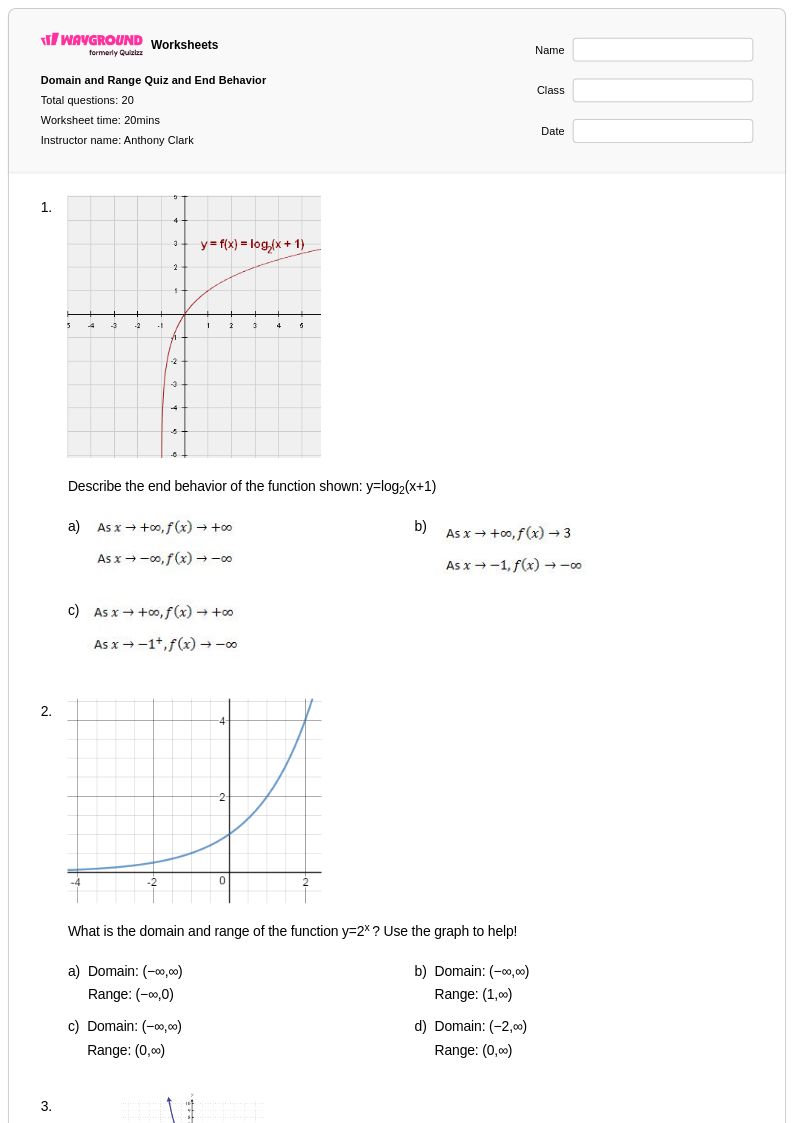
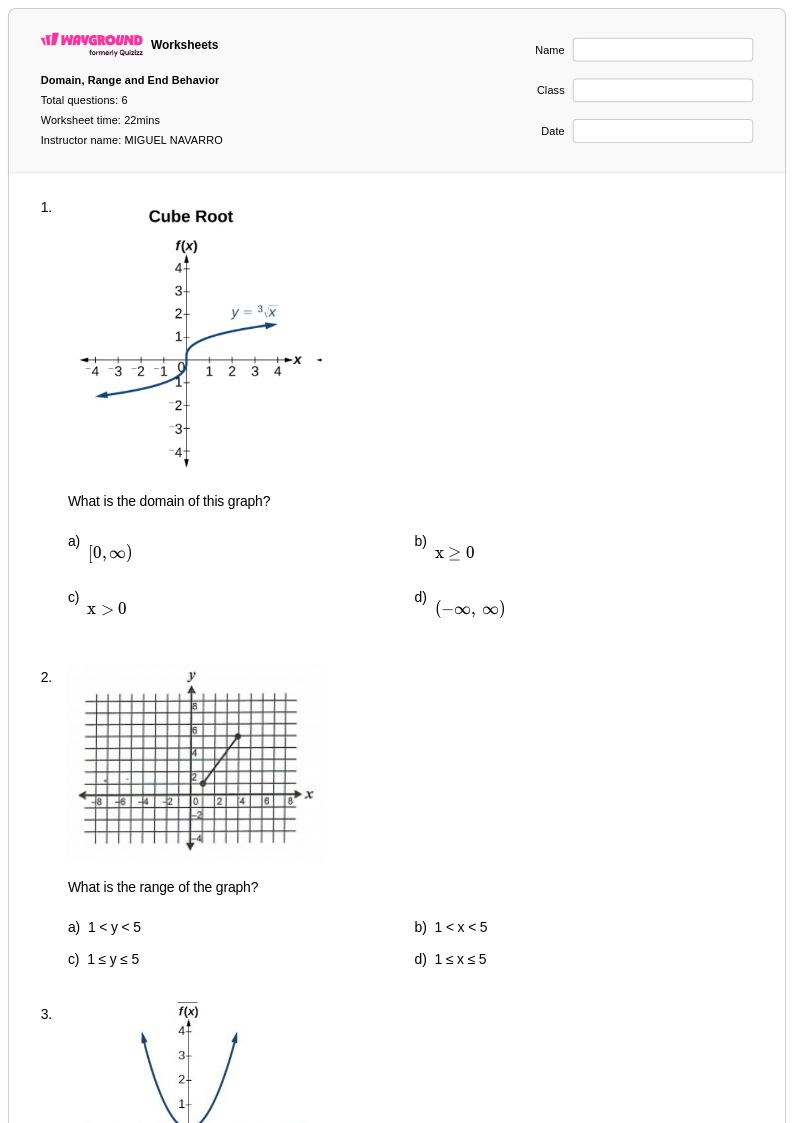
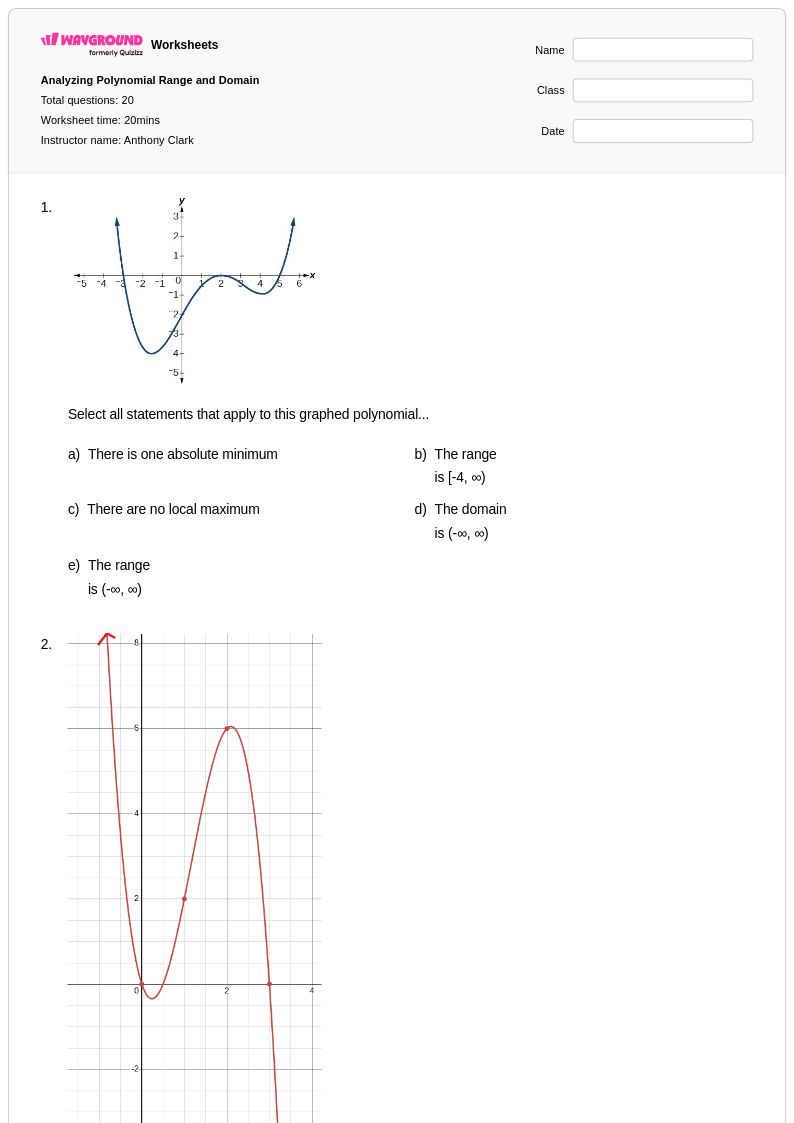
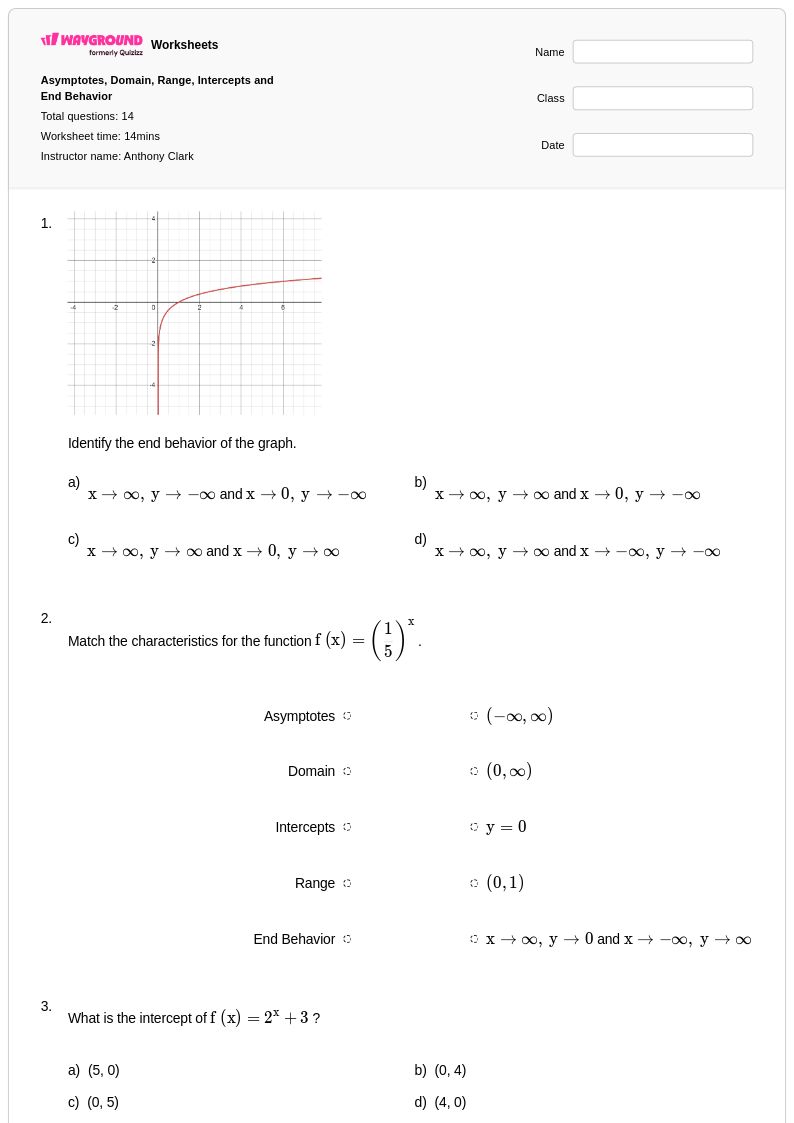
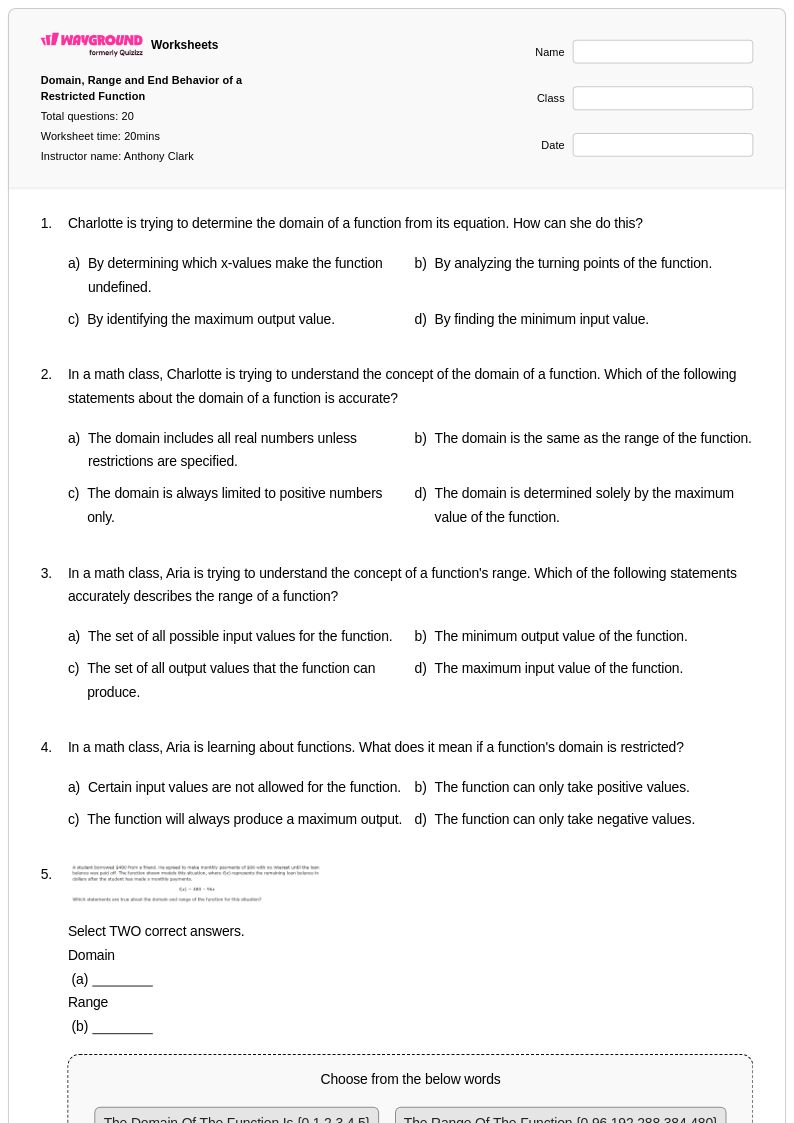
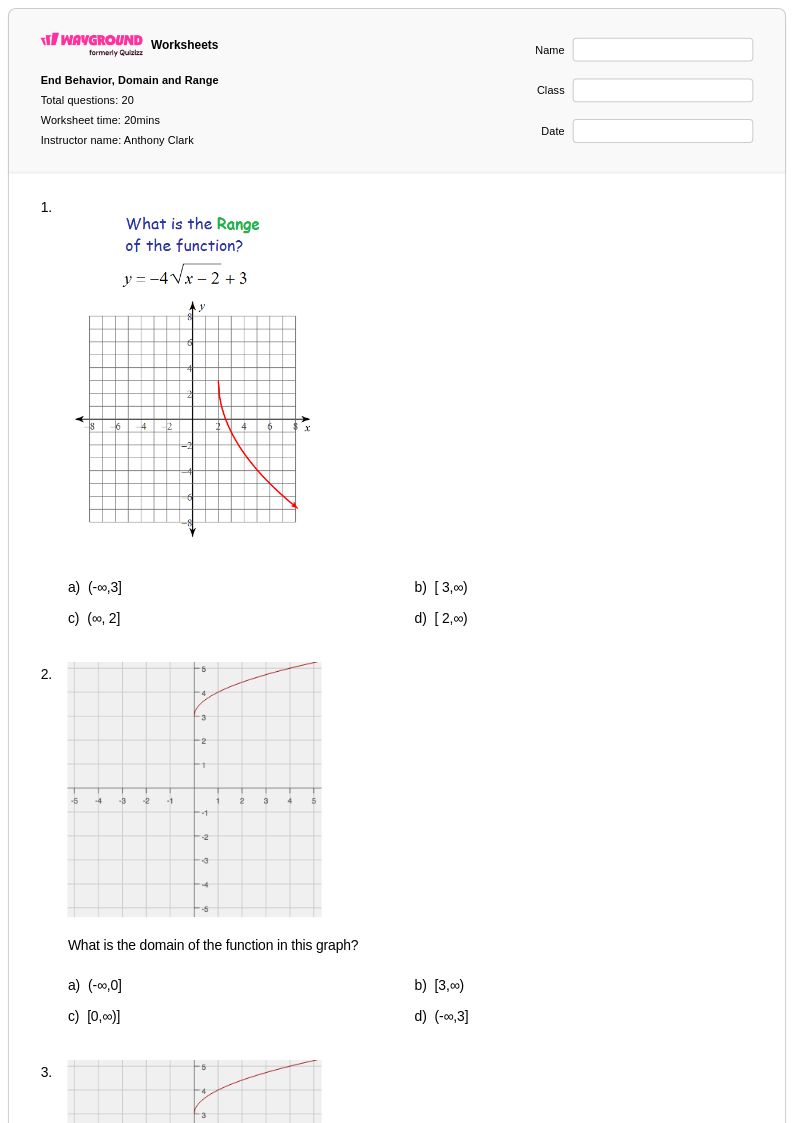
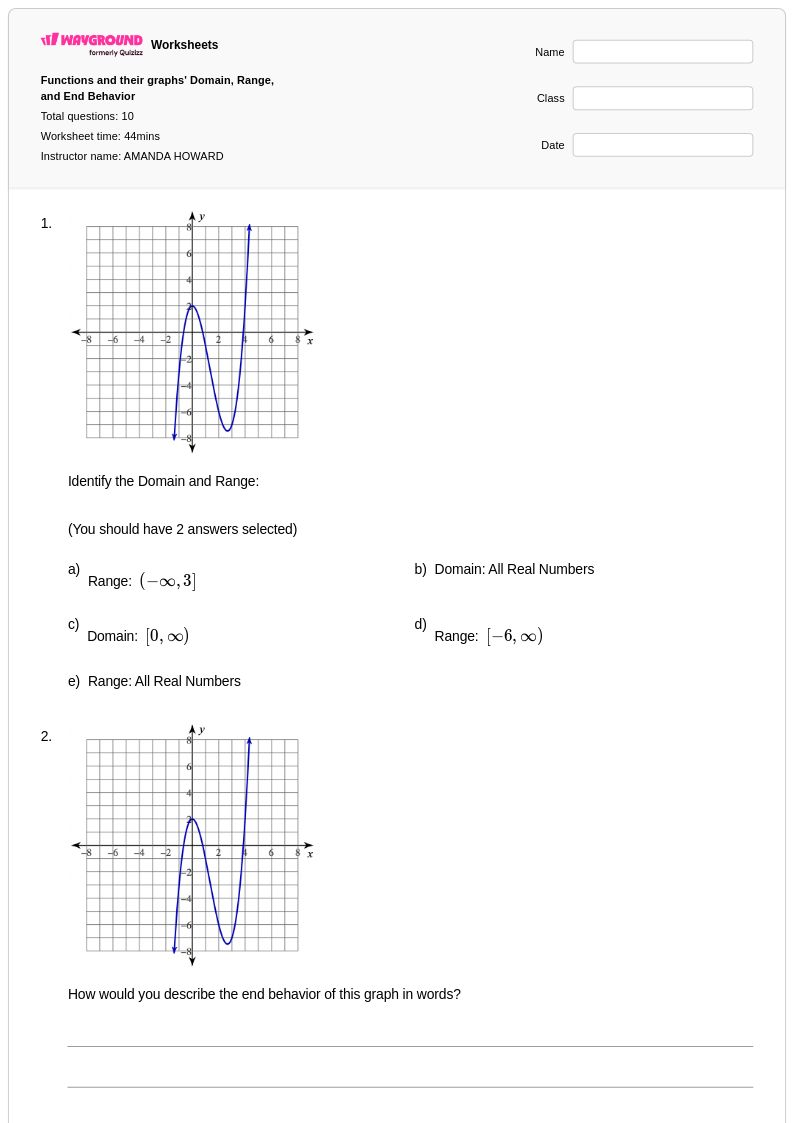
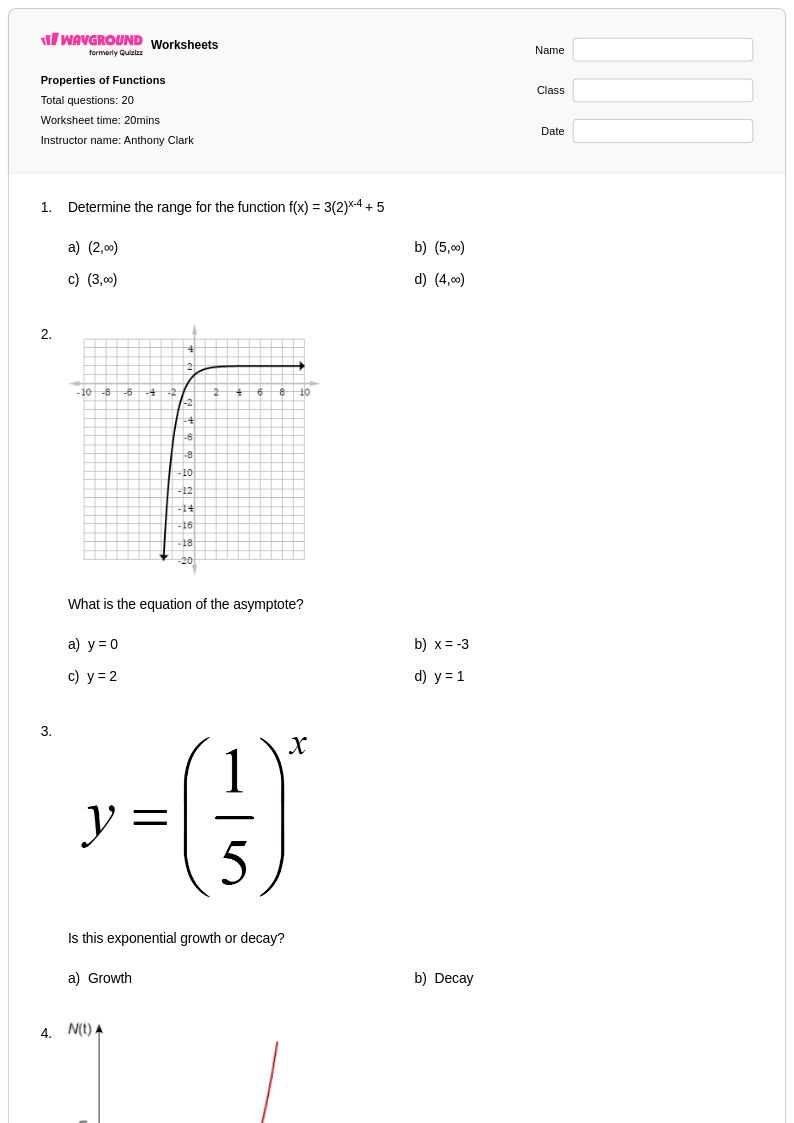
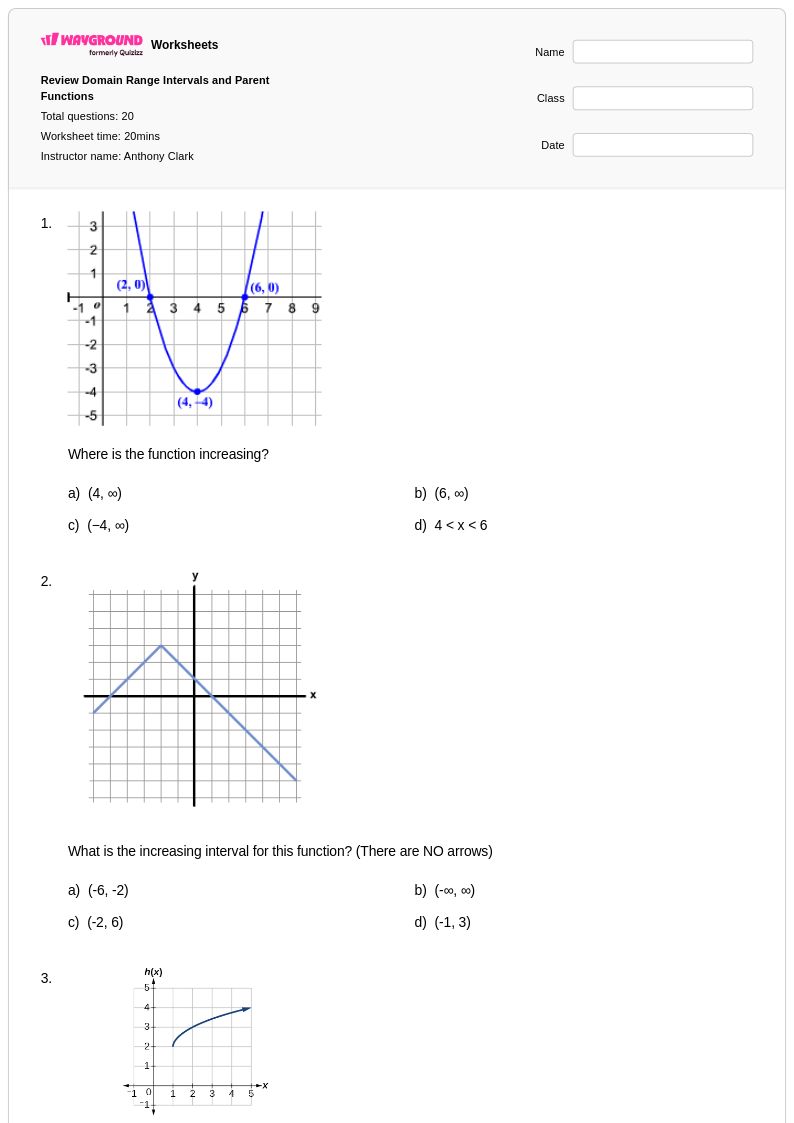
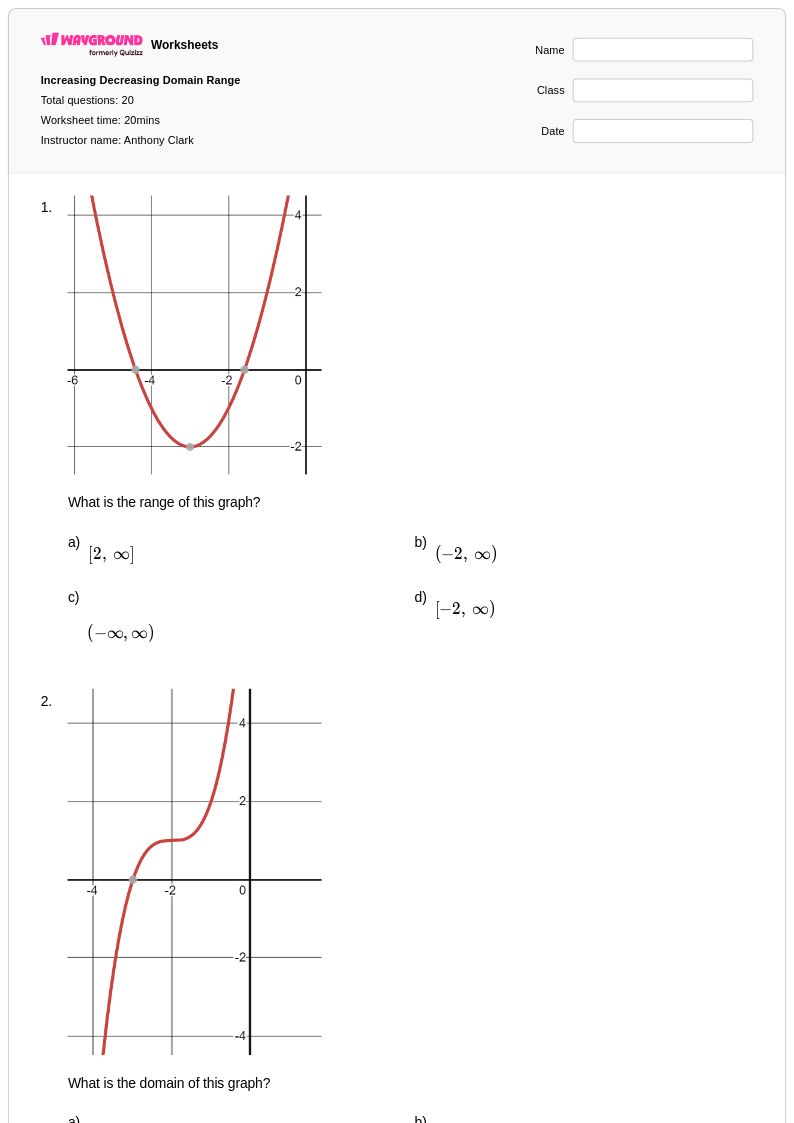
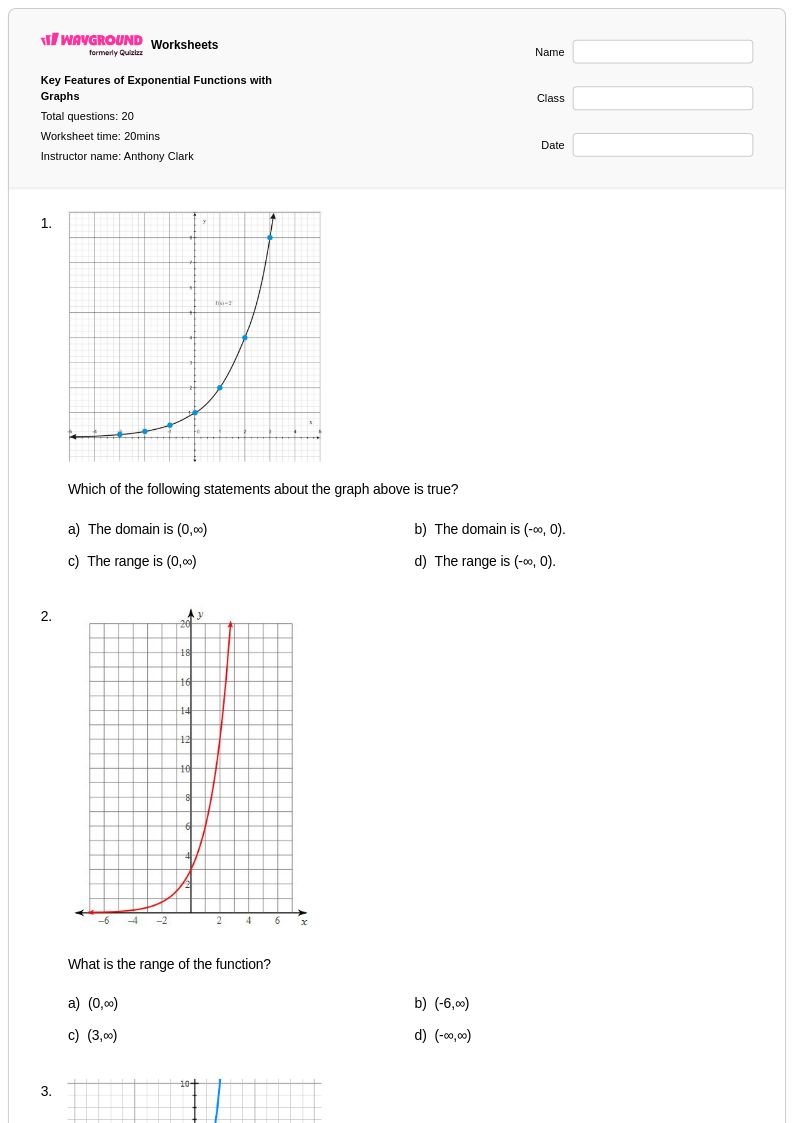
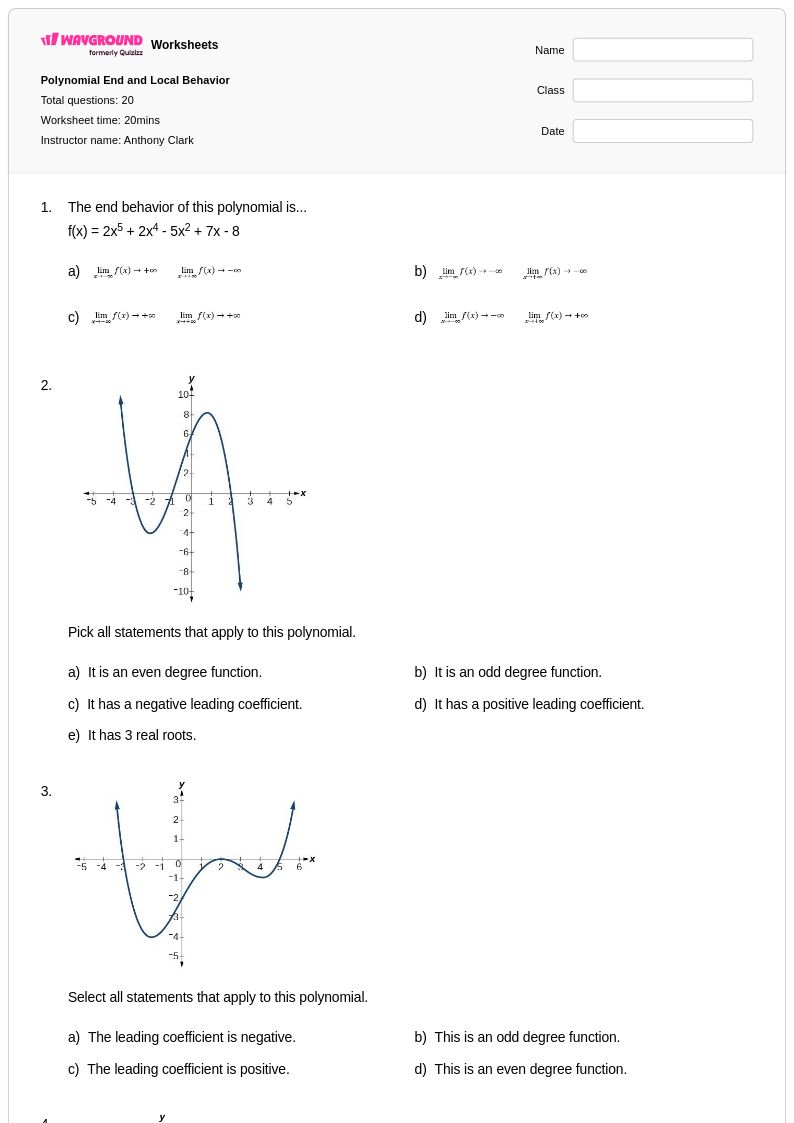
Domain, range, and end behavior worksheets for Class 12 mathematics provide comprehensive practice with advanced function analysis skills that form the foundation of calculus and higher-level mathematical reasoning. These carefully crafted worksheets available through Wayground (formerly Quizizz) guide students through identifying domain restrictions in complex functions including rational, radical, and logarithmic expressions, determining range using algebraic and graphical methods, and analyzing end behavior patterns in polynomial, exponential, and trigonometric functions. Students strengthen their ability to interpret function notation, work with interval notation, and connect algebraic representations to graphical behaviors through diverse practice problems that range from foundational exercises to challenging multi-step applications. Each worksheet collection includes detailed answer keys and is available as free printable pdf resources, allowing students to develop mastery through repeated practice with immediate feedback on their analytical reasoning skills.
Wayground (formerly Quizizz) empowers educators with millions of teacher-created domain, range, and end behavior worksheet resources that streamline lesson planning and provide targeted skill practice opportunities for Class 12 students. The platform's robust search and filtering capabilities enable teachers to locate worksheets aligned with specific curriculum standards while offering extensive differentiation tools to accommodate diverse learning needs within advanced mathematics classrooms. Teachers can customize existing worksheets or access ready-to-use materials in both printable and digital pdf formats, facilitating seamless integration into traditional and technology-enhanced learning environments. These comprehensive worksheet collections support effective remediation for students struggling with function analysis concepts, provide enrichment opportunities for advanced learners ready to explore more complex applications, and offer flexible practice options that help teachers address individual student needs while maintaining rigorous academic standards essential for college-level mathematics preparation.
FAQs
How do I teach domain, range, and end behavior in Grade 12?
At Grade 12, the goal is precision and fluency across all major function families — rational, radical, logarithmic, exponential, and trigonometric. Students should be working in interval notation as the default, not as an afterthought. For domain, the teaching emphasis shifts to composite and multi-restriction functions where students must apply multiple rules simultaneously (e.g., a rational function under a radical). For end behavior, connect the analysis explicitly to limits: describing end behavior as 'f(x) approaches L as x approaches infinity' is the language students will use in calculus, and Grade 12 is the right time to make that bridge.
What exercises help 12th graders practice domain, range, and end behavior?
Multi-step problems are the right level of challenge here: ask students to determine the domain of a composite function, or to find the range of a rational function by analyzing its horizontal asymptote and any holes. For end behavior, problems involving trigonometric functions are a useful extension — unlike polynomials, trig functions oscillate rather than diverging, and students need to describe that distinction precisely. These worksheets range from foundational exercises to challenging multi-step applications and include interval notation work throughout.
What mistakes do 12th graders still make with domain, range, and end behavior?
Even at Grade 12, two errors persist. First, students writing domain and range in set-builder notation when interval notation is expected (or vice versa) — a precision issue that costs points on AP and college placement exams. Second, students mishandling the range of rational functions: they identify the horizontal asymptote correctly but then include that y-value in the range, forgetting to check whether the function actually reaches it. For end behavior, trigonometric functions reliably cause confusion because students try to apply the polynomial leading-term rule to a function that doesn't diverge.
How do I use these Grade 12 domain, range, and end behavior worksheets?
These worksheets include complete answer keys and are available as printable PDFs or as digital quizzes hosted on Wayground. For paper practice — which is worth considering as students prepare for pencil-and-paper AP or placement exams — print the PDF and use the Wayground for Teachers app to scan and grade submissions. The digital format works well for formative checks where you want instant class-wide results.
How does Common Core approach domain, range, and end behavior at the Grade 12 level?
Common Core's high school Functions standards culminate in students being able to analyze and interpret the behavior of a wide range of function types, including determining domain restrictions algebraically, expressing range using interval notation, and describing end behavior in terms of the function's structure. By Grade 12, students are expected to connect these analytical skills across representations — graph, equation, and table — and to apply them to the complex function families that appear in precalculus and early calculus. The specific progression these worksheets support moves from identifying restrictions in rational and radical expressions to analyzing end behavior in polynomial, exponential, and trigonometric functions.
How can I differentiate these worksheets for advanced and struggling Grade 12 students?
In a Grade 12 class, the gap between students on track for calculus and those still consolidating Algebra 2 concepts can be significant. Wayground lets you create alternate worksheet versions — adjusting font size, spacing, or applying a dyslexia-friendly font — so the same core problems are accessible to students with different needs. For students who need more time on complex multi-step domain problems, extended time can be configured individually. Students who need scaffolding on notation can be given reduced answer choices on multiple-choice items, keeping the mathematical demand intact while lowering the response burden.