Free Printable Exponential Function Manipulation Worksheets for Class 12
Class 12 exponential function manipulation free worksheets and printables help students master advanced function transformations through comprehensive practice problems with detailed answer keys and downloadable PDF resources.
Explore printable Exponential Function Manipulation worksheets for Class 12
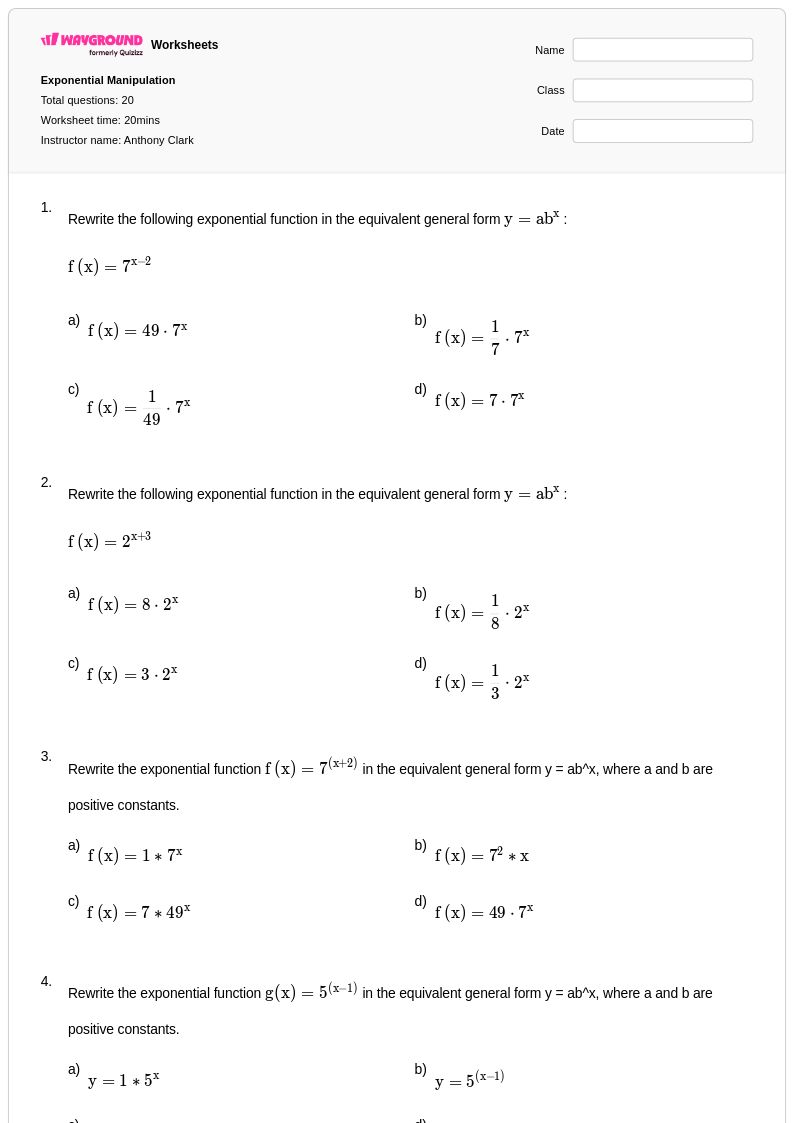
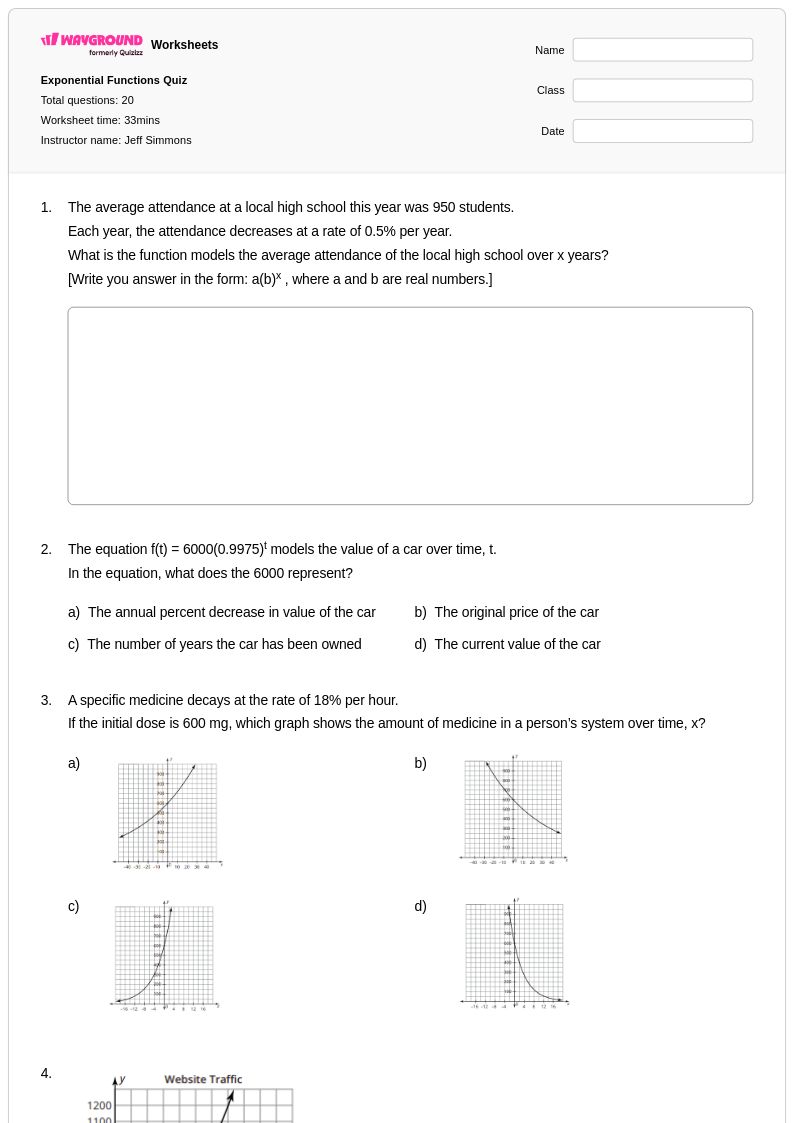
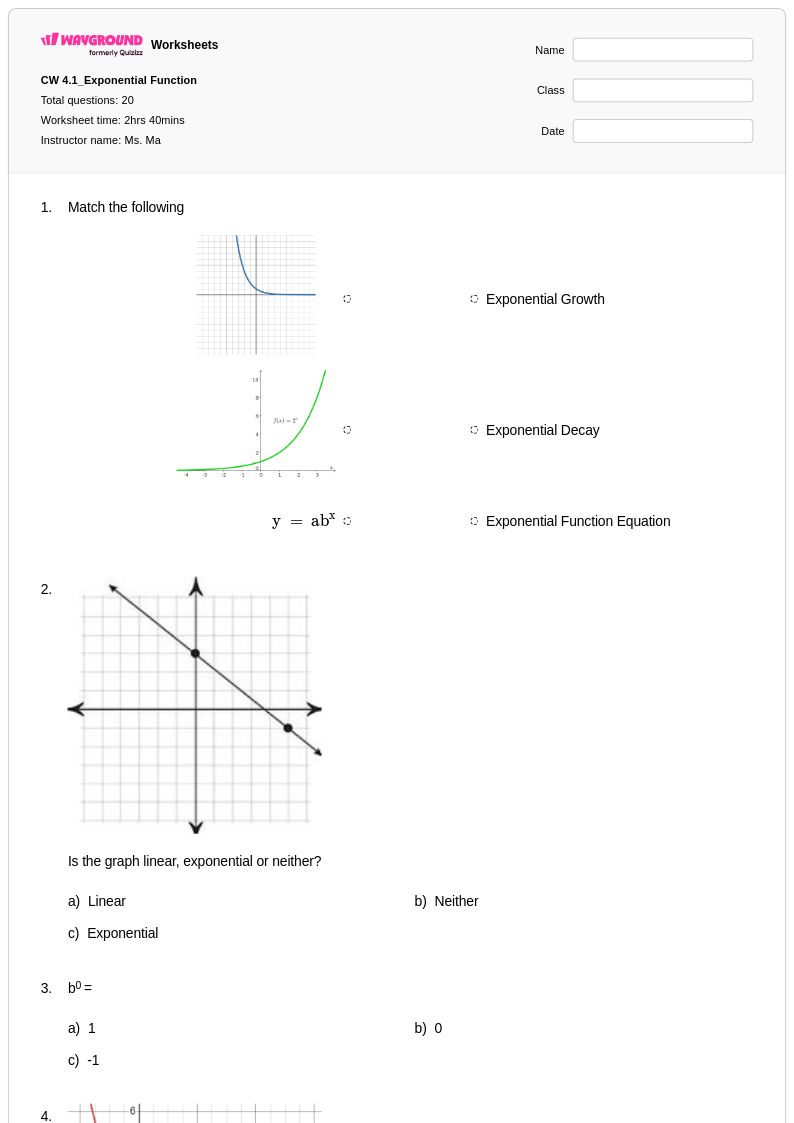
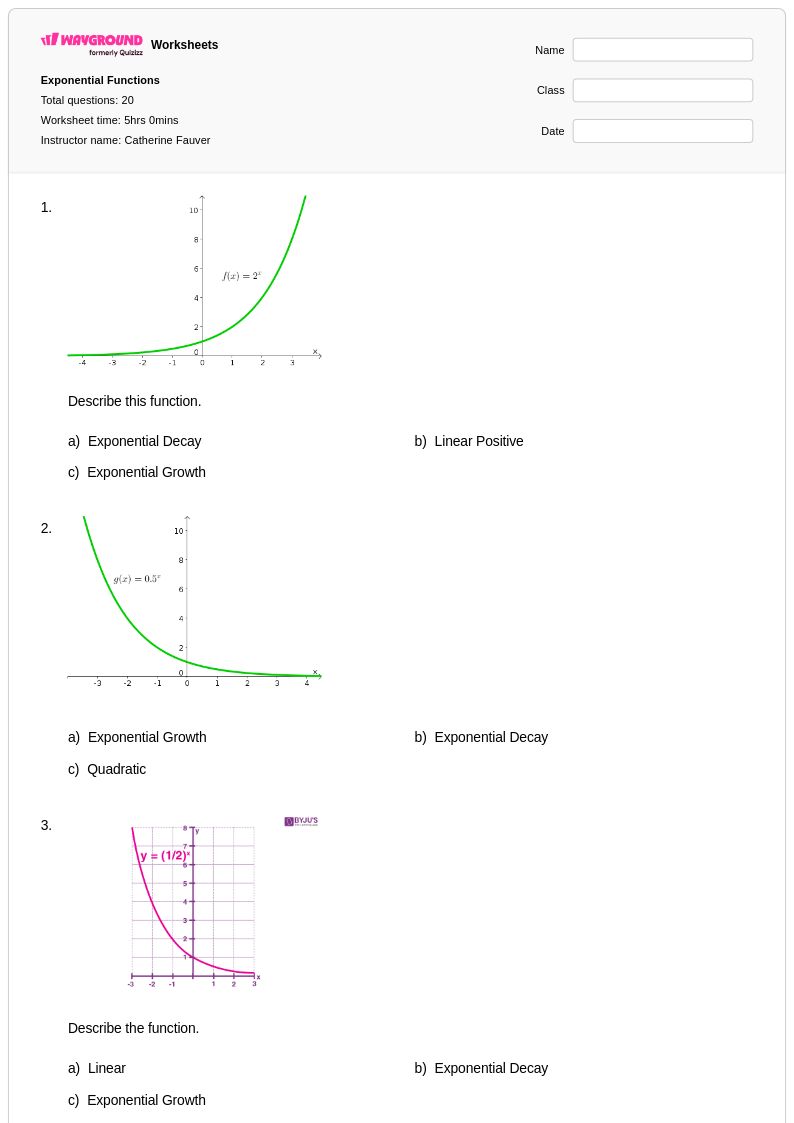
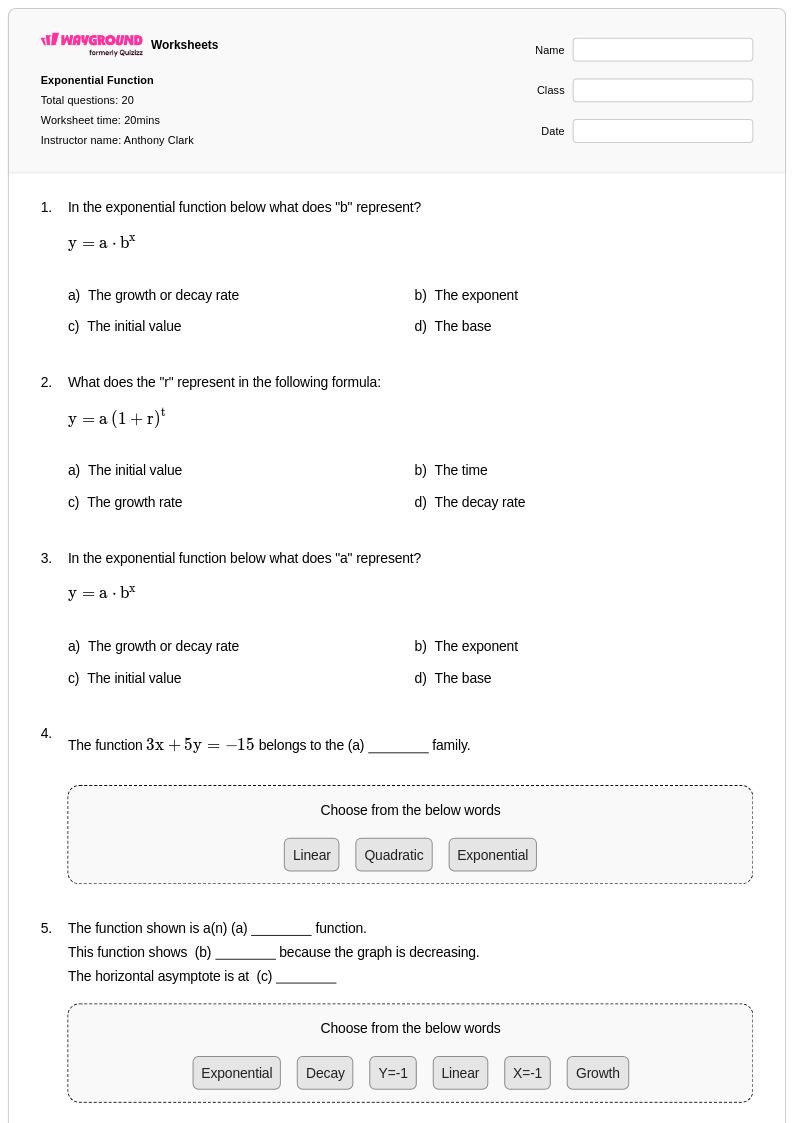
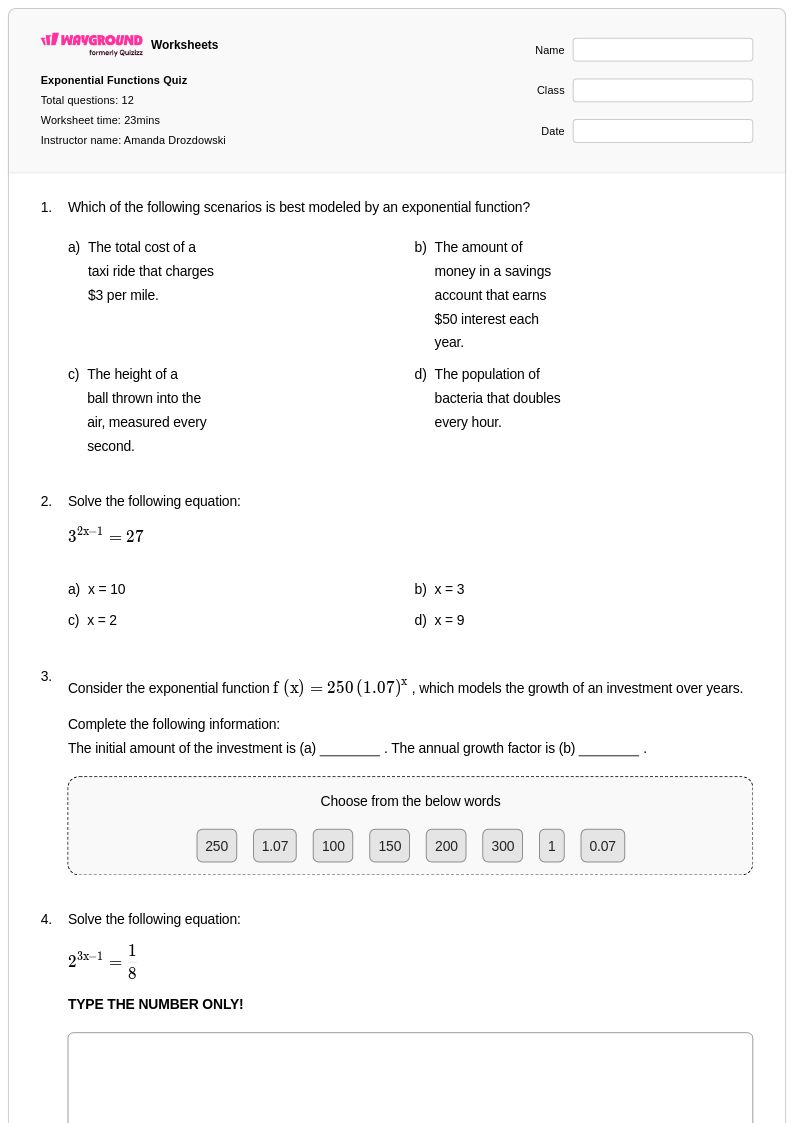
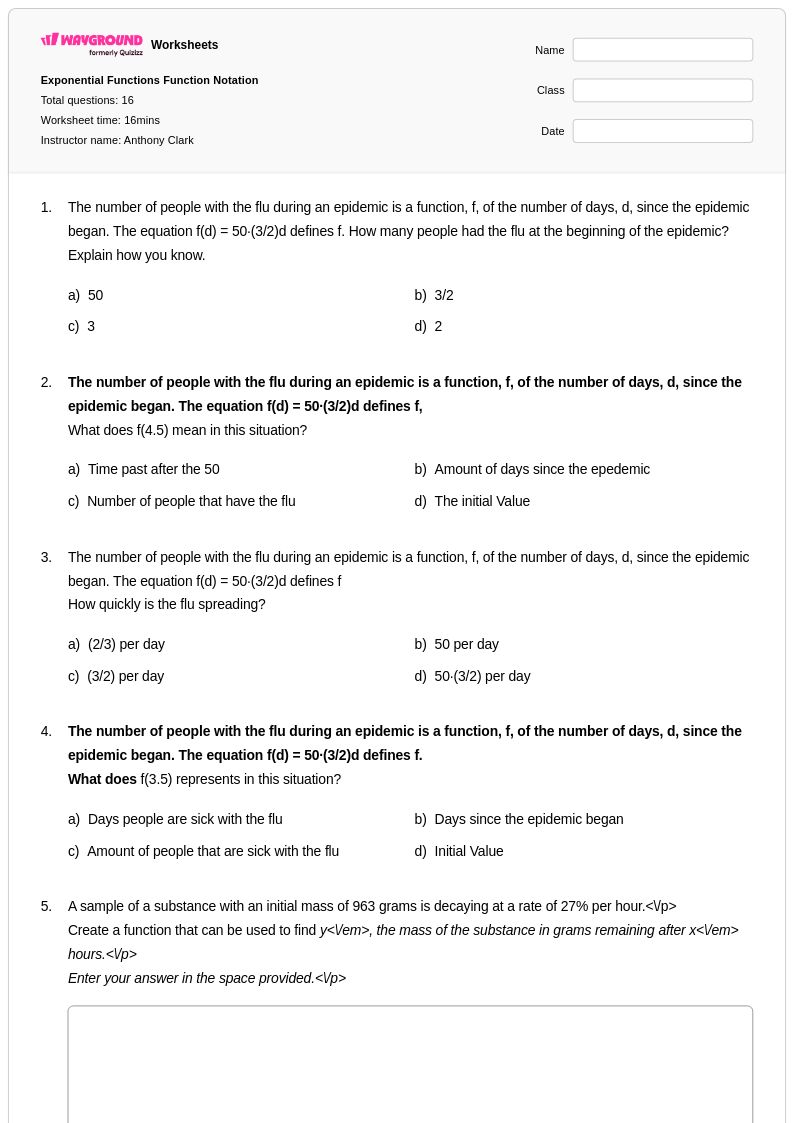
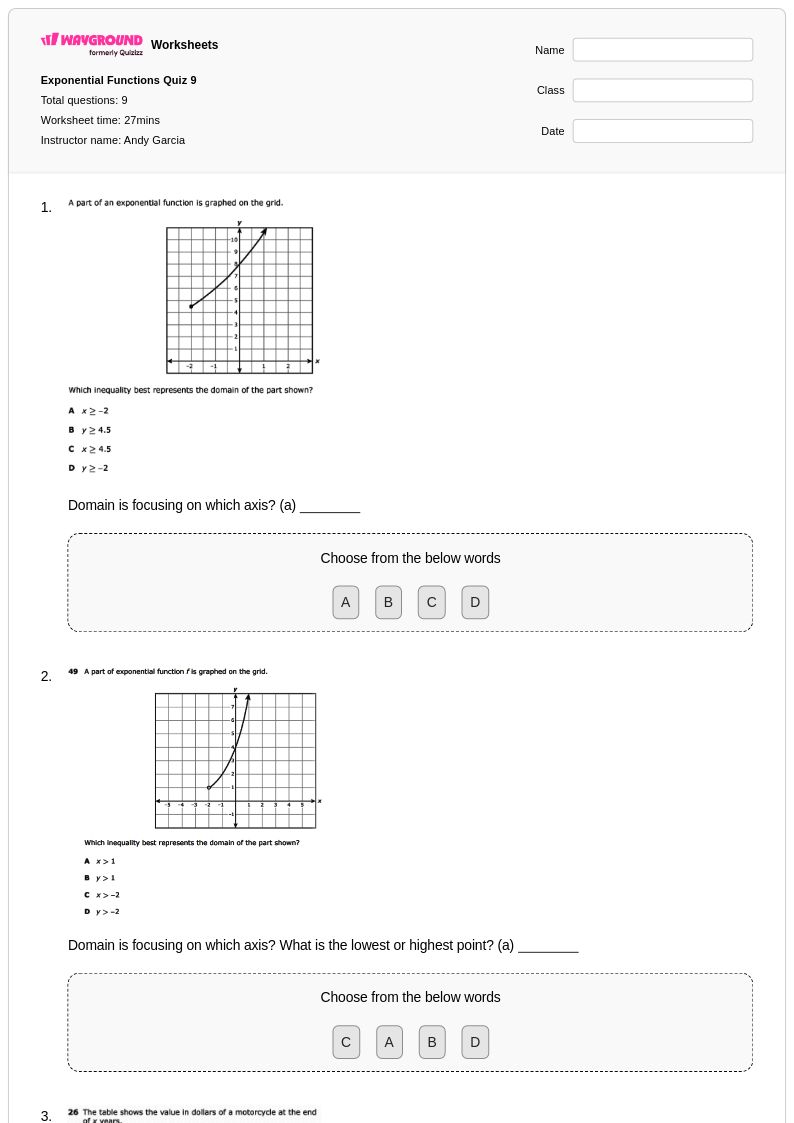
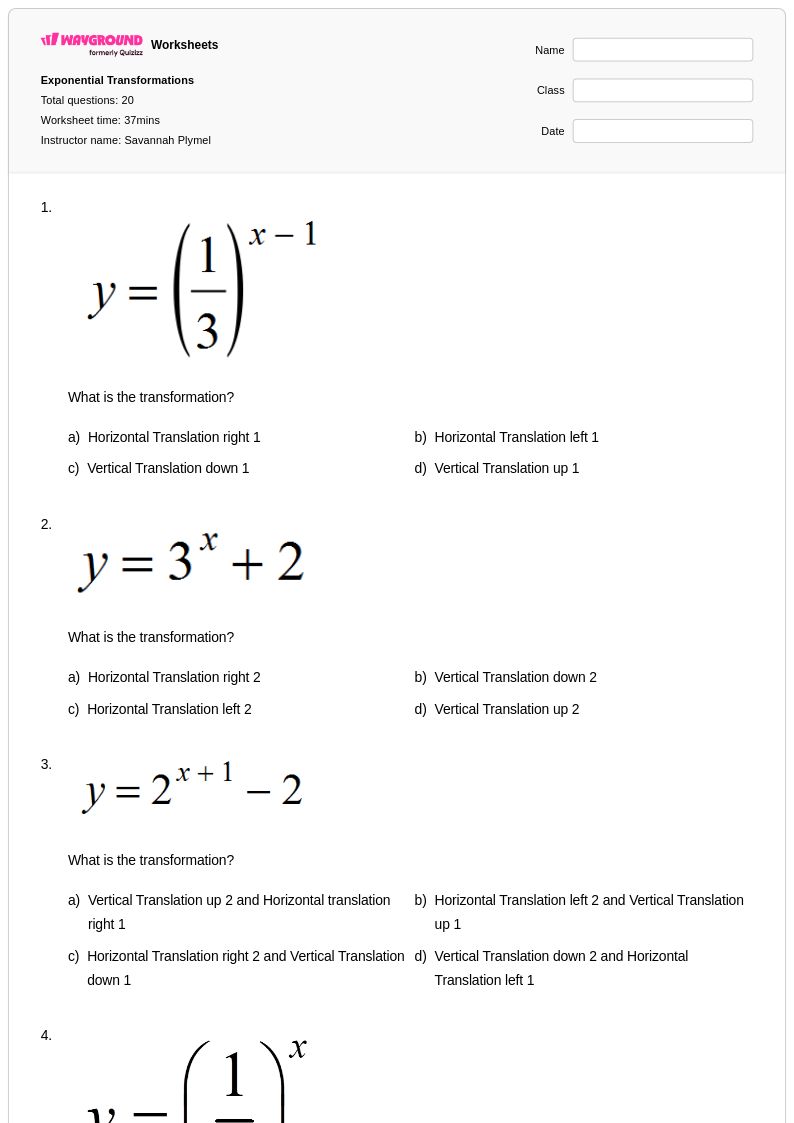
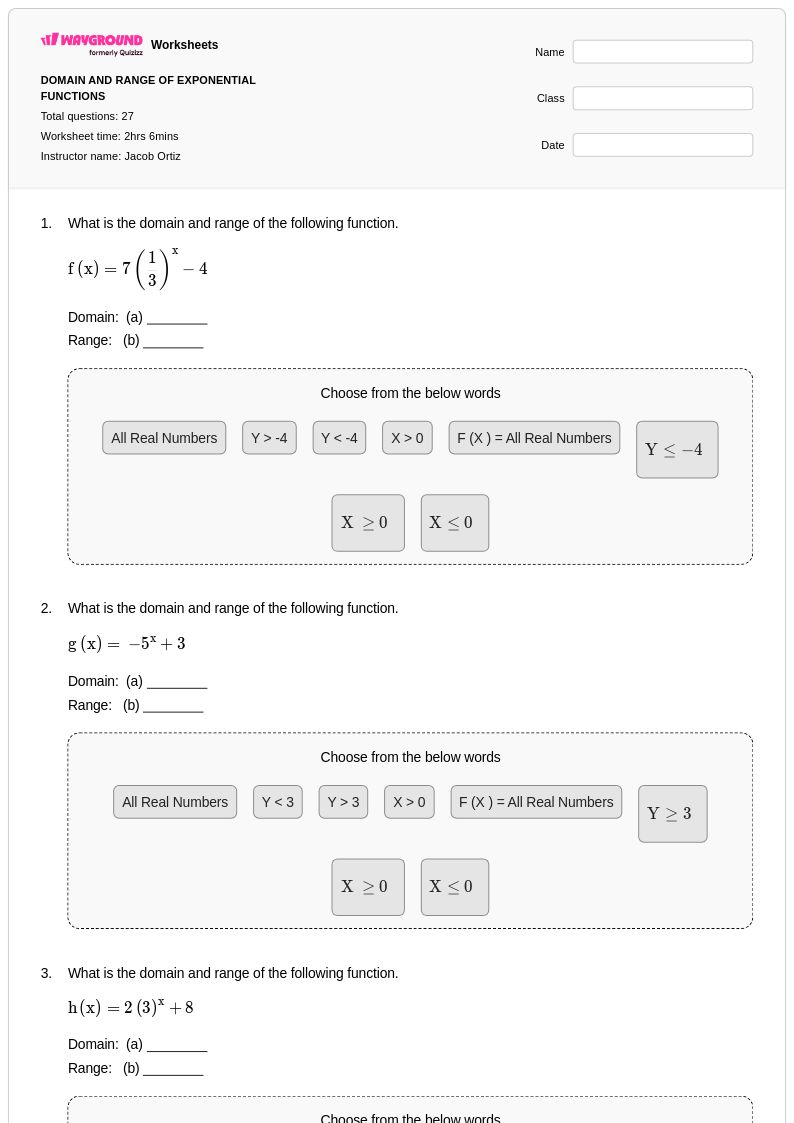
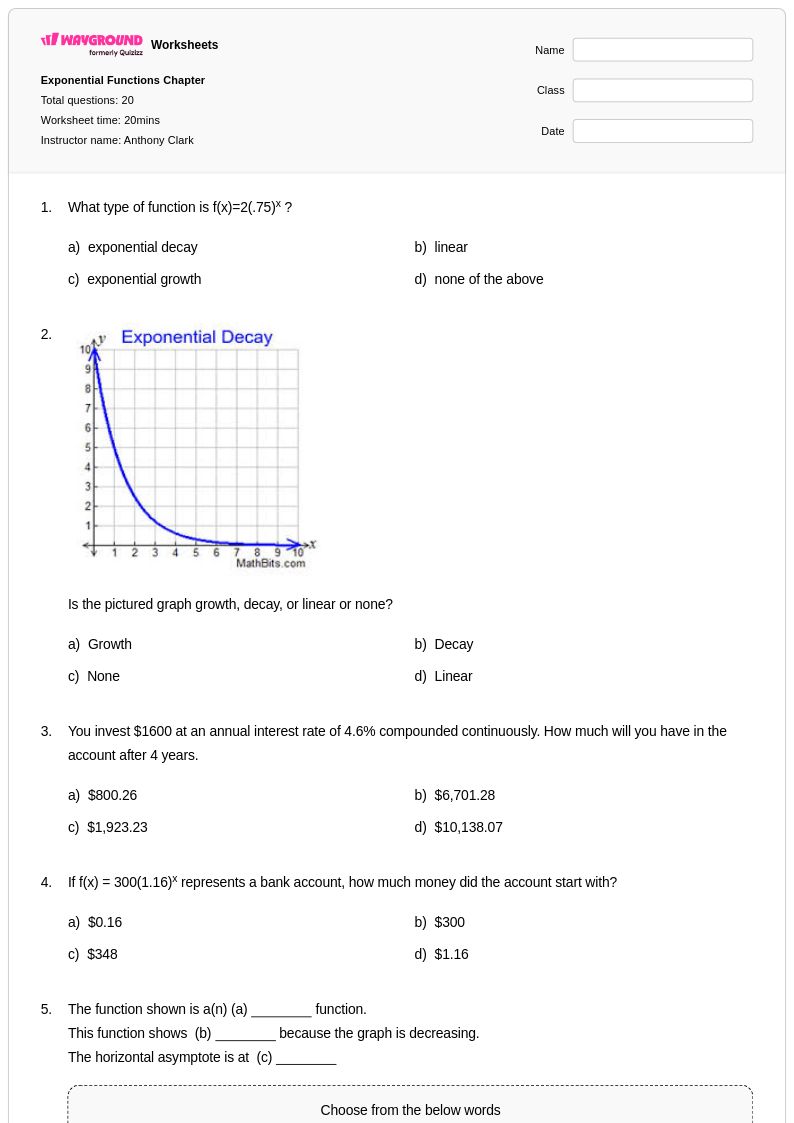
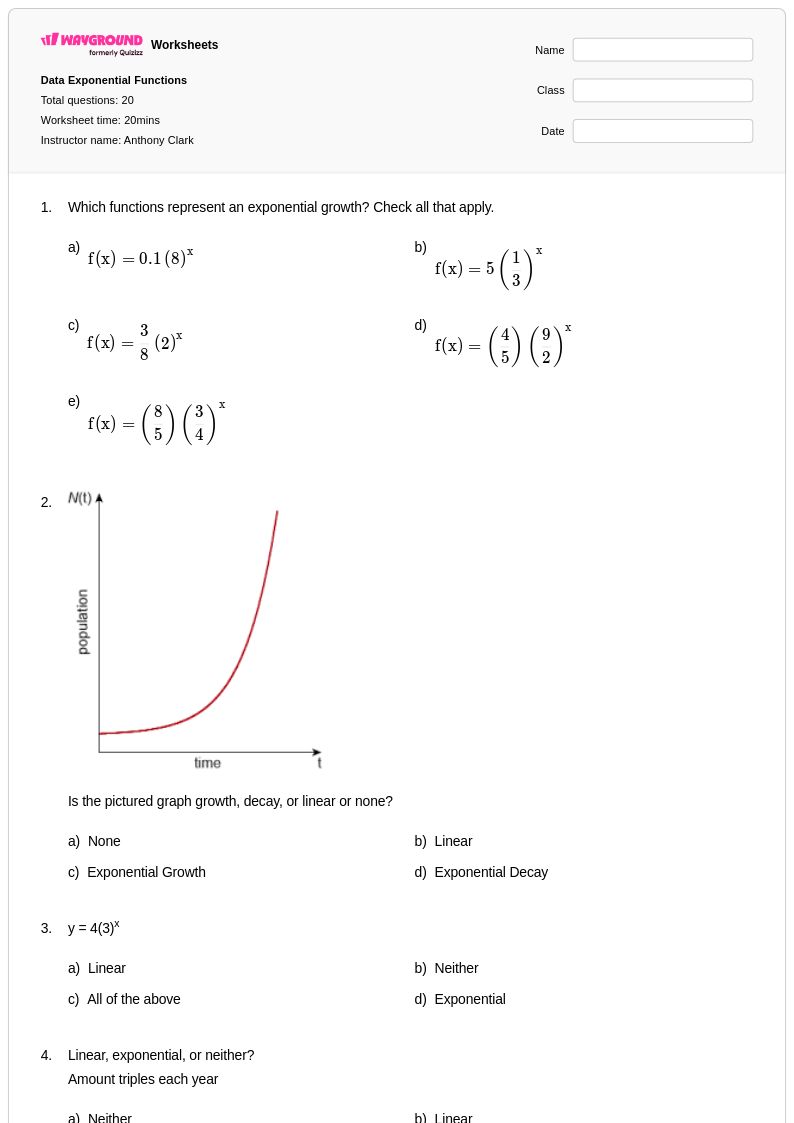
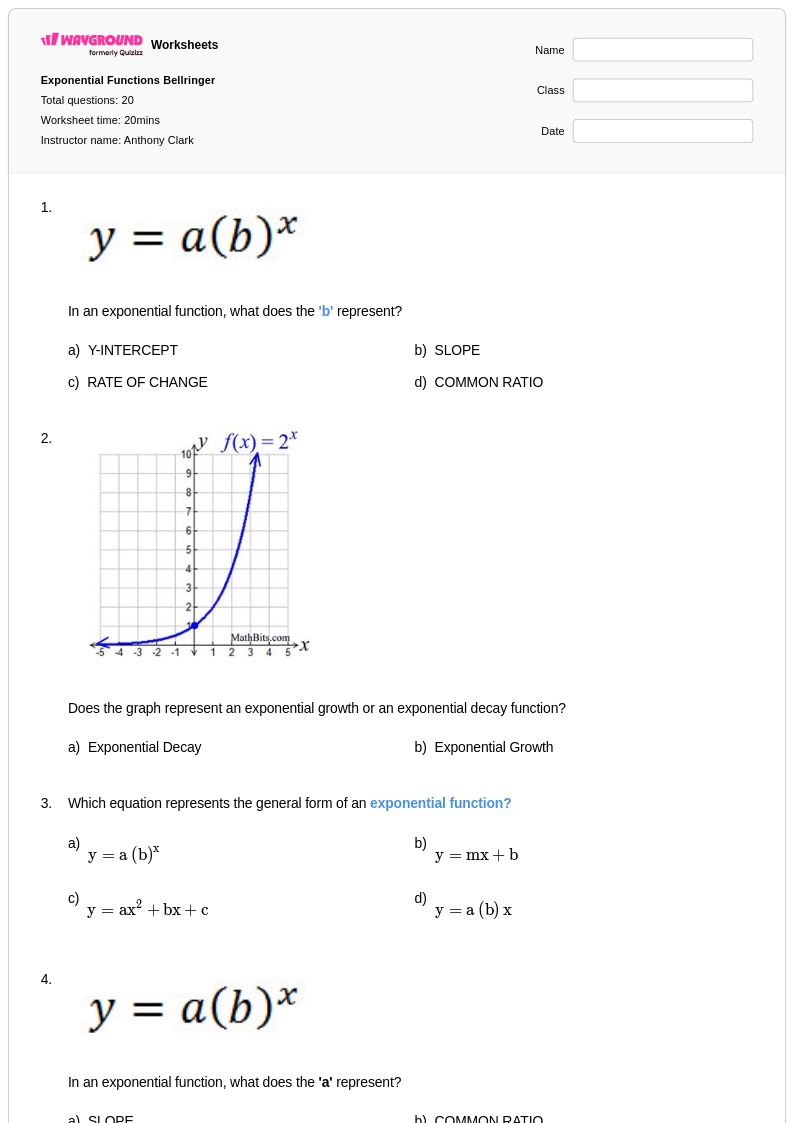
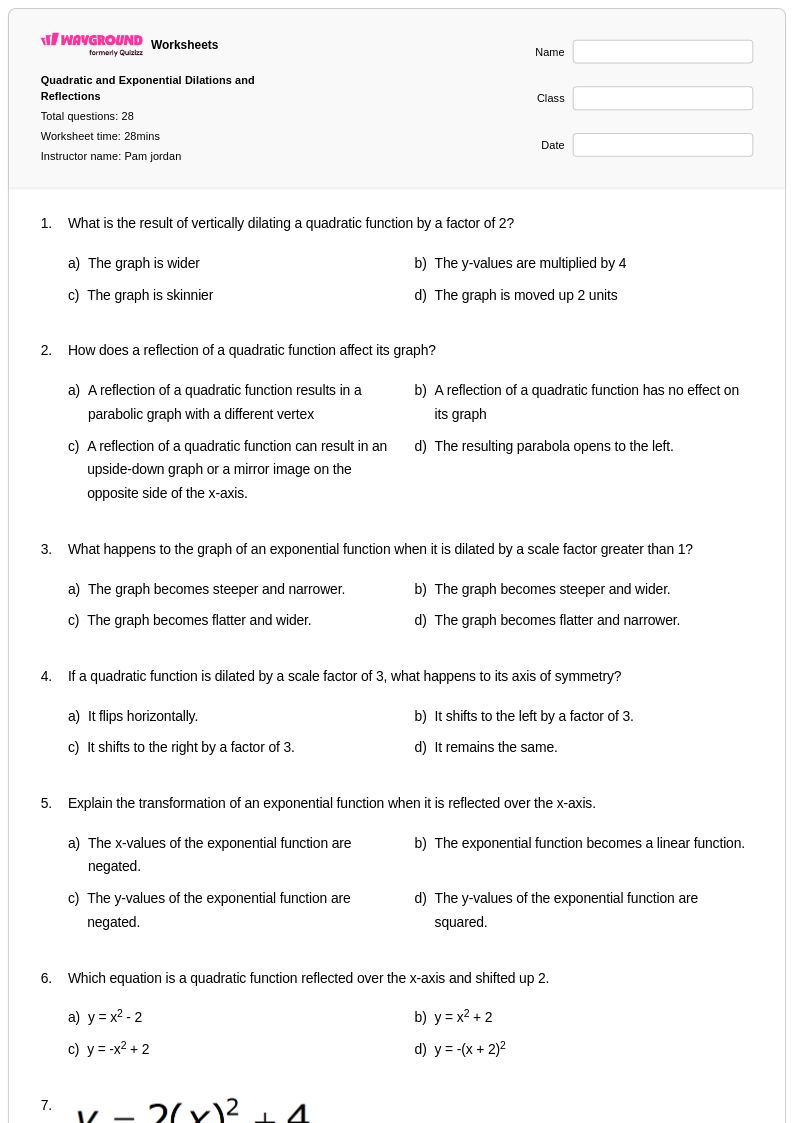
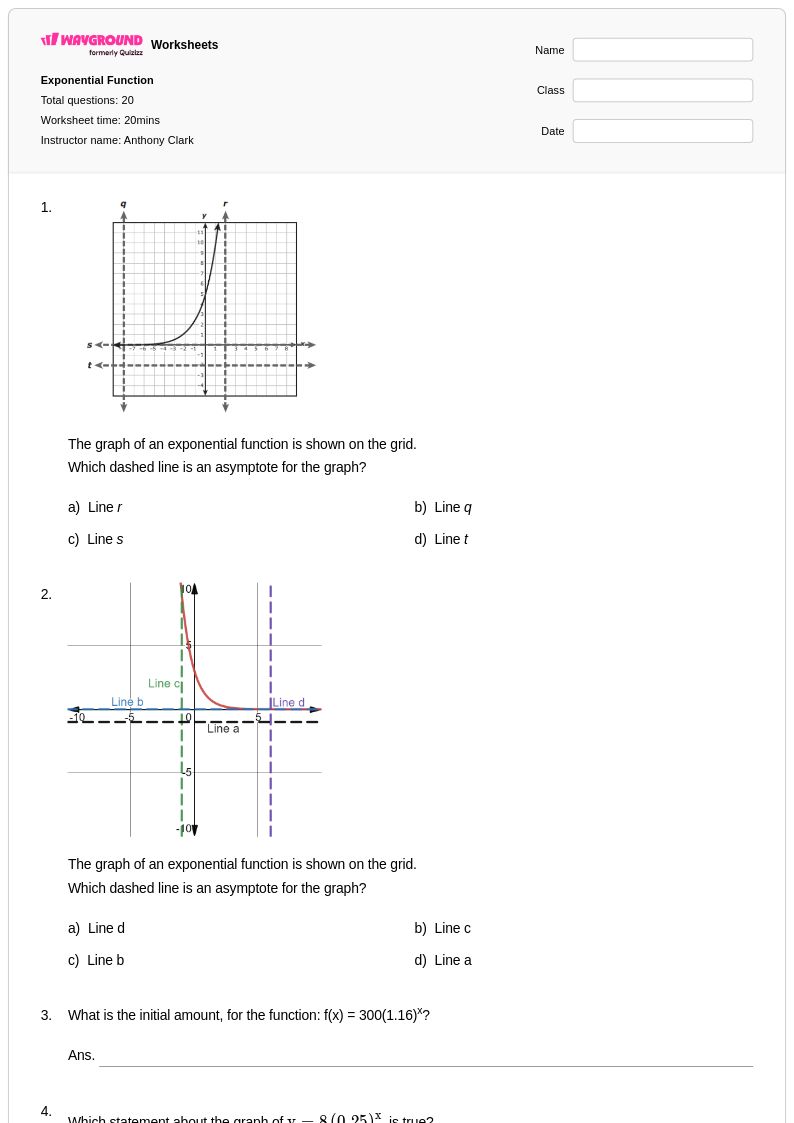
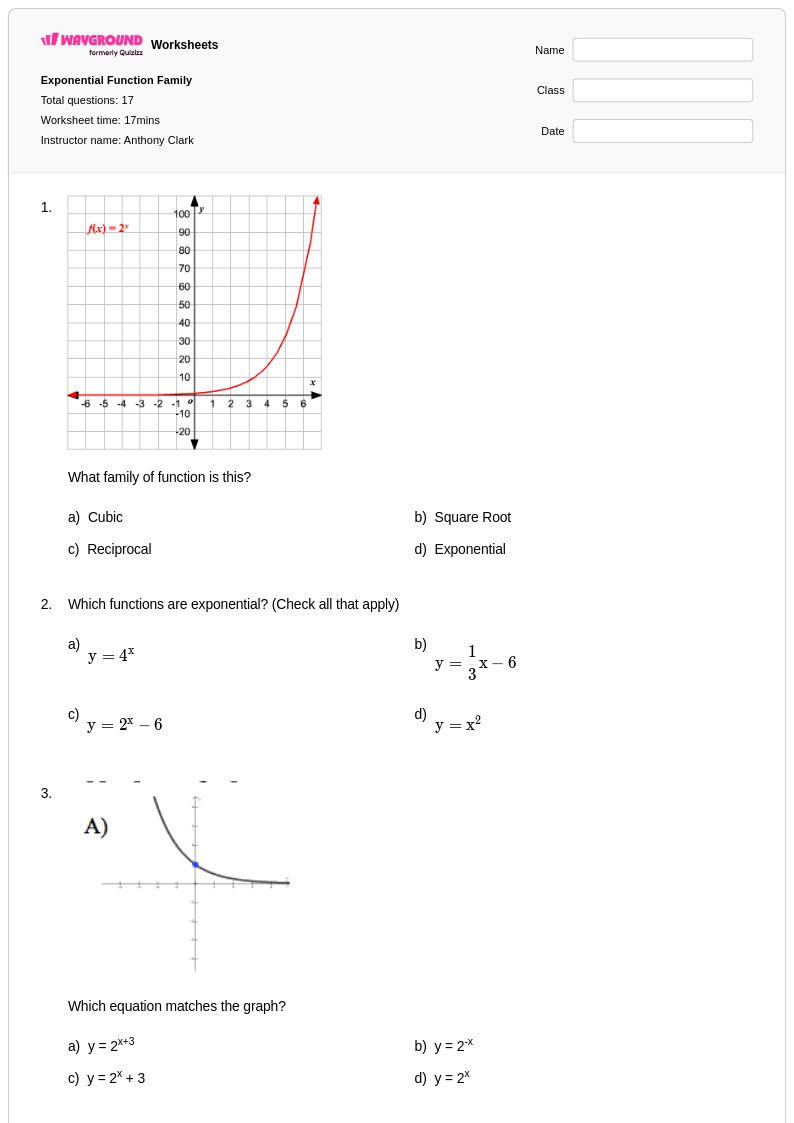
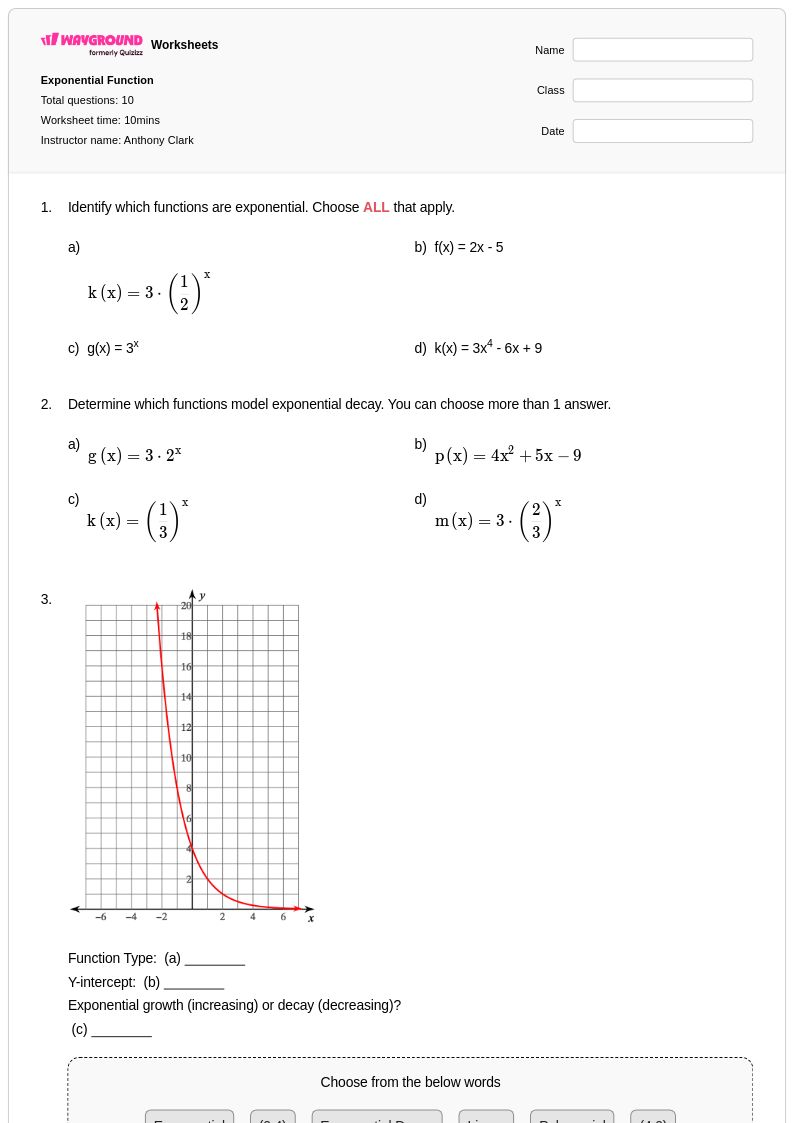
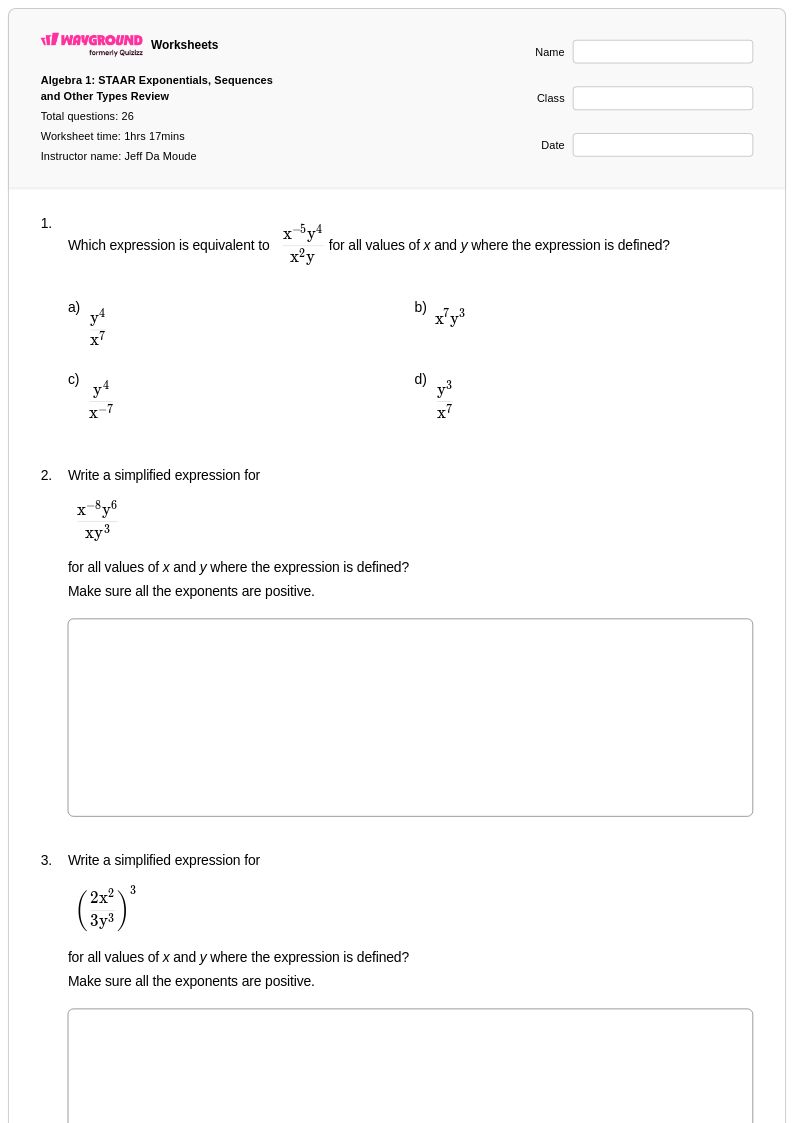
Exponential function manipulation worksheets for Class 12 students available through Wayground (formerly Quizizz) provide comprehensive practice in the advanced algebraic techniques essential for mastering exponential functions. These carefully structured worksheets guide students through complex operations including function composition, inverse function determination, logarithmic conversions, and exponential equation solving across multiple bases. Each worksheet collection includes detailed answer keys that support independent learning and self-assessment, while the free printable format ensures accessibility for all students. The practice problems systematically build proficiency in manipulating exponential expressions, transforming exponential functions through shifts and stretches, and applying exponential models to real-world scenarios that require sophisticated mathematical reasoning and computational fluency.
Wayground (formerly Quizizz) empowers mathematics educators with millions of teacher-created exponential function manipulation resources that streamline lesson planning and differentiated instruction for Class 12 courses. The platform's robust search and filtering capabilities allow teachers to quickly locate worksheets aligned with specific curriculum standards and learning objectives, while built-in customization tools enable educators to modify existing materials or create targeted practice sets for remediation and enrichment. Available in both digital and printable PDF formats, these worksheet collections support flexible classroom implementation and individual student needs, whether for in-class skill practice, homework assignments, or assessment preparation. The extensive library of exponential function resources helps teachers address diverse learning styles and mathematical readiness levels, ensuring all students develop the conceptual understanding and procedural fluency required for success in advanced mathematics and calculus preparation.
FAQs
How do I teach exponential function manipulation to 12th graders preparing for calculus?
At Grade 12, the goal is calculus readiness, which means students need to manipulate exponential functions quickly and accurately under conditions they haven't seen before. Focus on function composition and inverse determination — students should be able to find the inverse of a complex exponential function and verify it algebraically. Logarithmic conversions and solving equations across multiple bases should be automatic at this point, so instruction time is better spent on less routine problems: analyzing exponential models, working with the natural base e, and interpreting derivatives conceptually before they're formally introduced.
What practice problems are most valuable for 12th grade exponential function manipulation?
Problems that combine multiple skills in one question are the right level: compose an exponential function with a rational function, find the domain, then determine the inverse. Equation-solving problems that require students to choose between algebraic manipulation and logarithmic methods — rather than always signaling which approach to use — build the judgment calculus will demand. Applied problems involving compound interest, continuous growth (using e^(rt)), and half-life are also worth including because they appear on AP exams and in college coursework.
What errors do 12th graders still make with exponential functions?
Even strong students at this level sometimes conflate the natural exponential function e^x with other exponential bases when differentiating or integrating — a preview of a calculus error that starts here. More immediately, students make mistakes when determining inverse functions for composite exponential expressions, often because they rush the algebraic steps. A targeted set of inverse-function problems, with full worked solutions to compare against, catches these errors before they carry into AP or college coursework.
How do I use these Grade 12 worksheets effectively?
With answer keys and step-by-step solutions included, these worksheets work well as AP prep practice or pre-test review where students need to self-assess without teacher intervention. You can assign the printable PDF for focused, off-screen practice sessions — useful in the weeks before AP exams when you want students working through problems by hand. The Wayground for Teachers app lets you scan and grade paper submissions, so you still get a record of student performance without manual data entry.
How does Grade 12 exponential function manipulation connect to what comes next in math?
Calculus treats exponential functions as foundational: the derivative of e^x is one of the first results students encounter, and exponential models appear throughout differential equations. Students who arrive in calculus without fluent manipulation skills — particularly with function composition, inverse functions, and logarithmic conversions — hit a wall quickly because calculus instruction doesn't pause to reteach them. Grade 12 is the last opportunity to close those gaps before the stakes rise significantly.
How can I support diverse learners in a Grade 12 exponential function manipulation class?
For students managing learning differences alongside demanding content, Wayground's adjustable font size, spacing, and dyslexia-friendly font options reduce the visual complexity of problems that already carry heavy notation. For students who are strong mathematically but working in English as a second language, translating the worksheet into their home language lets them demonstrate what they actually know. These are worksheet-level settings, so you can apply them to one student's version without changing anything for the rest of the class.