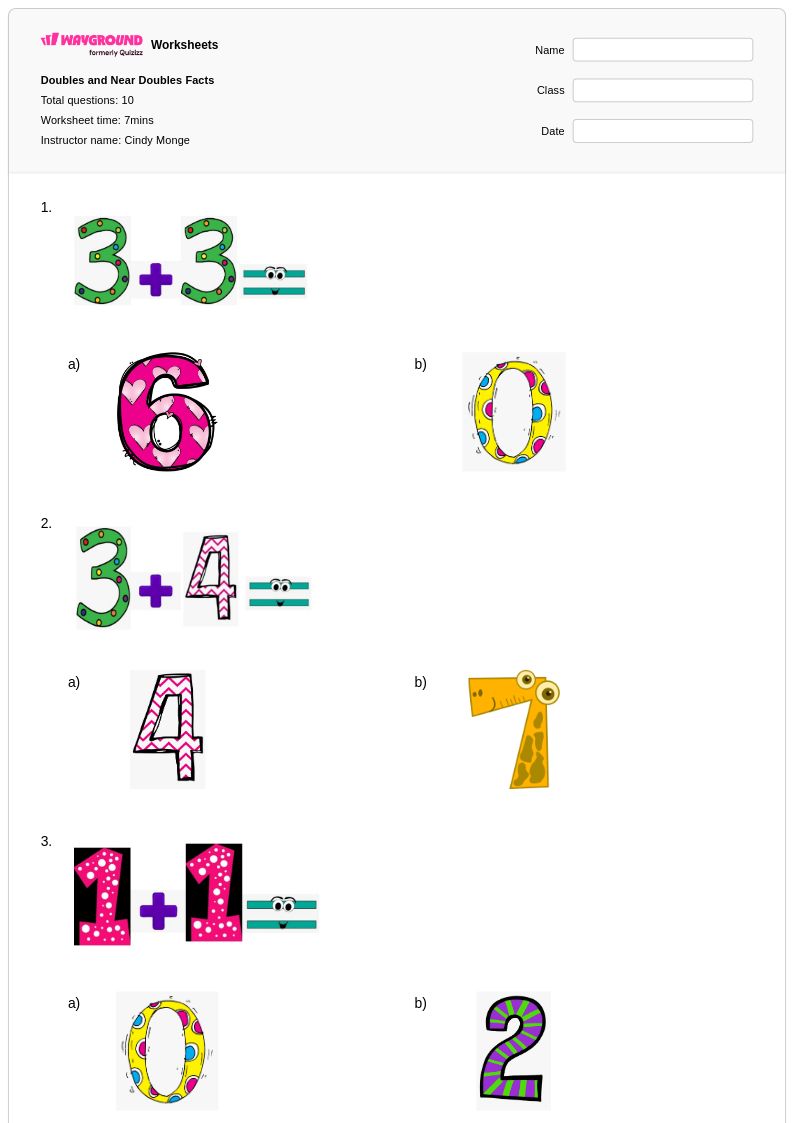
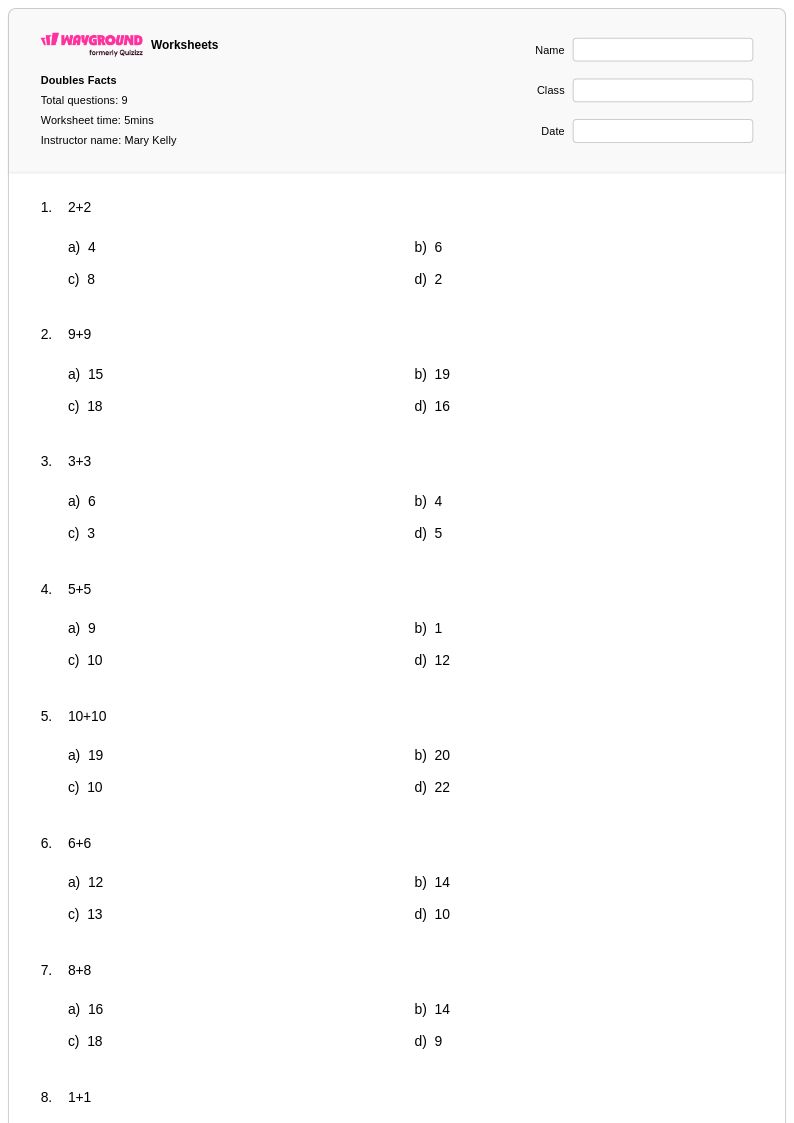
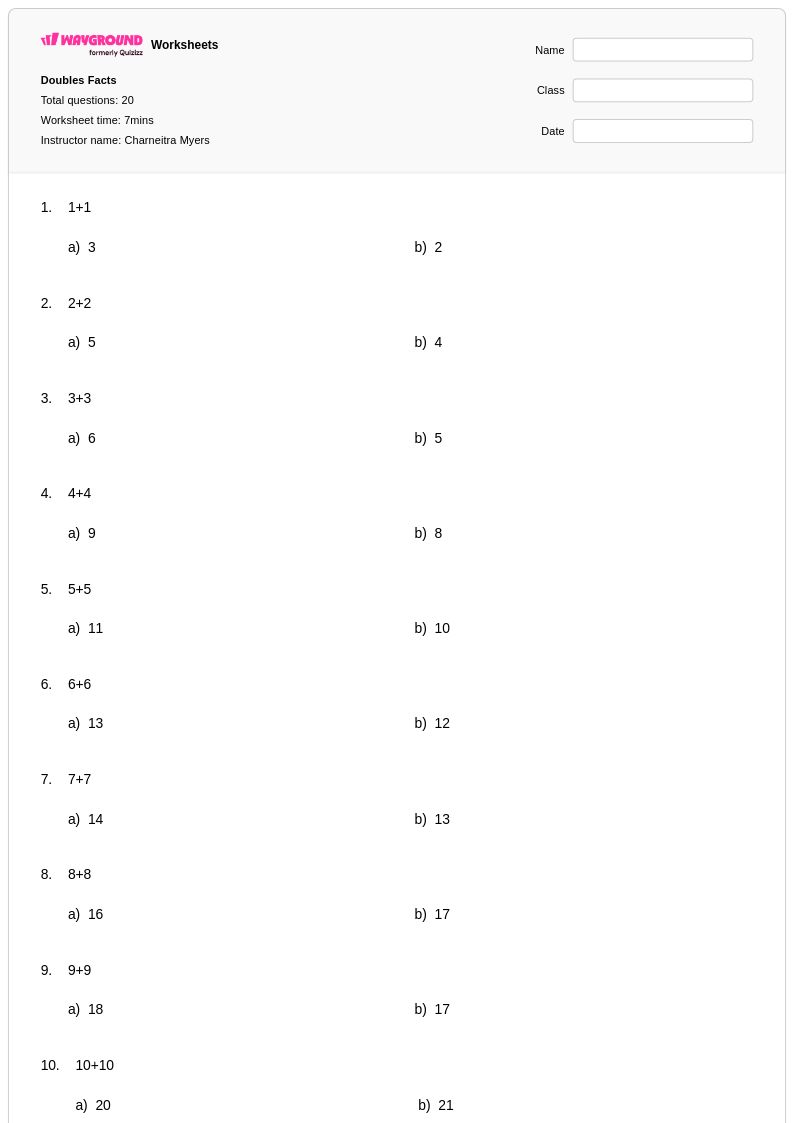
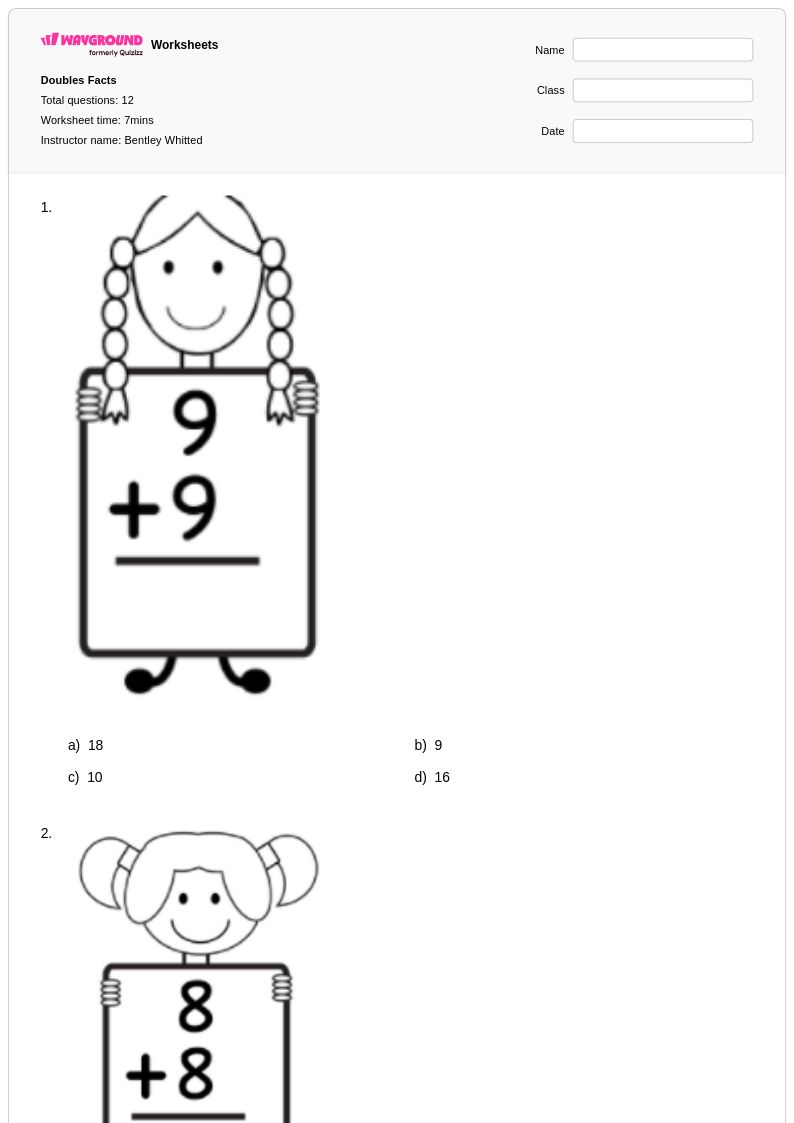
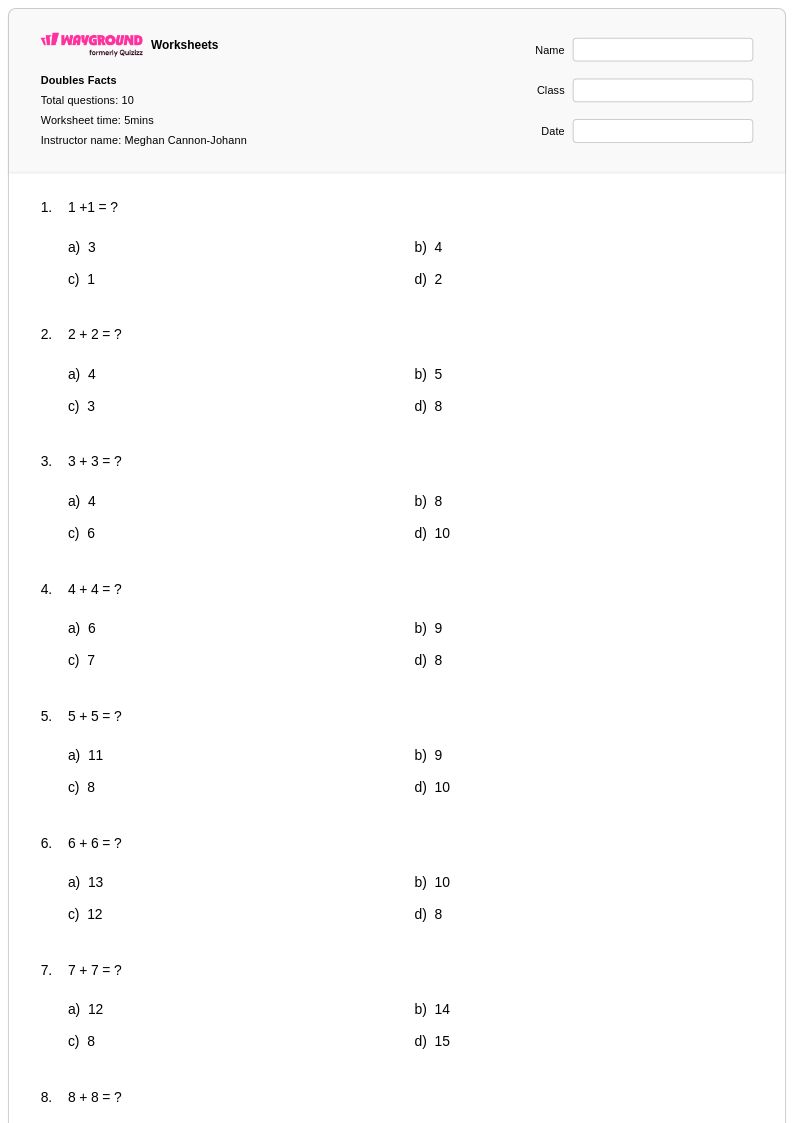
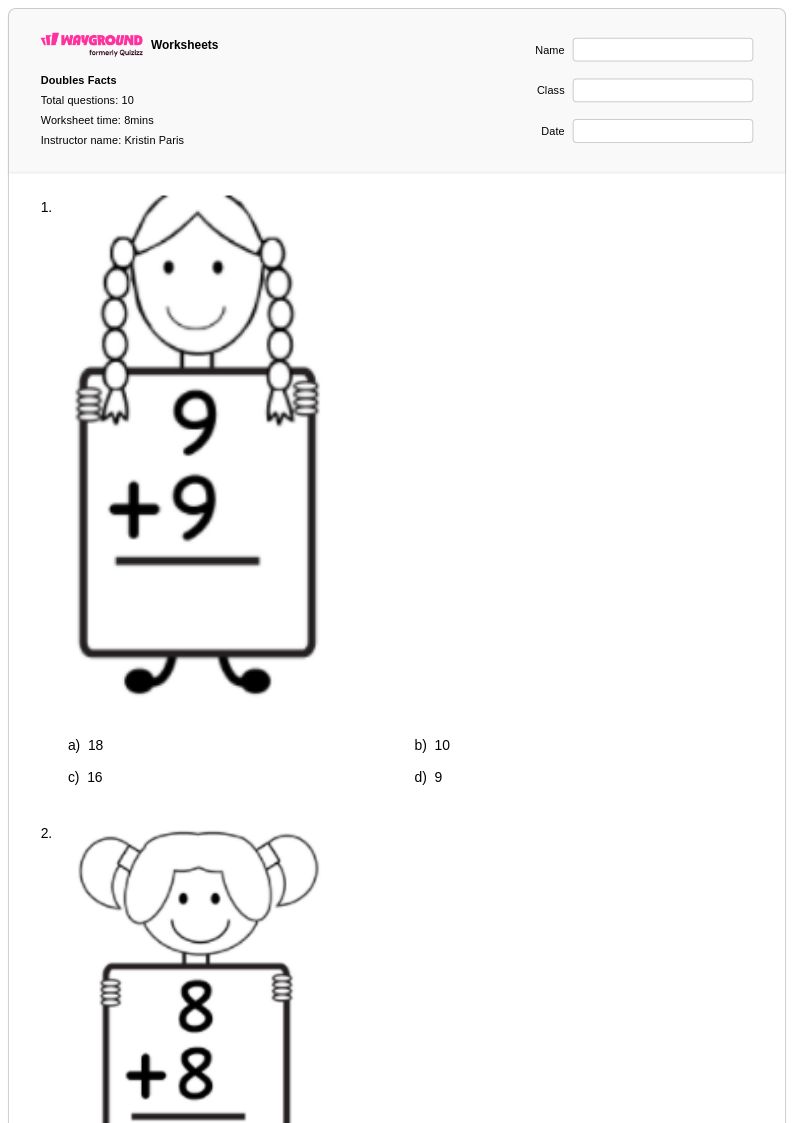
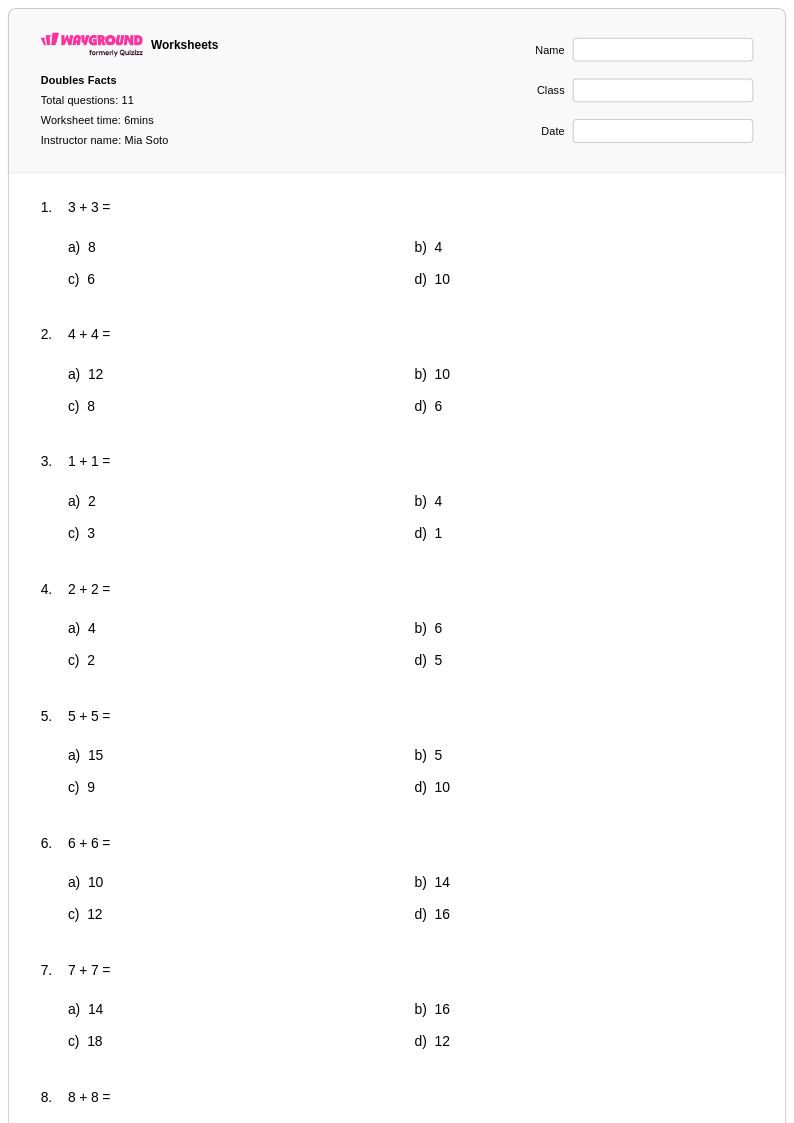
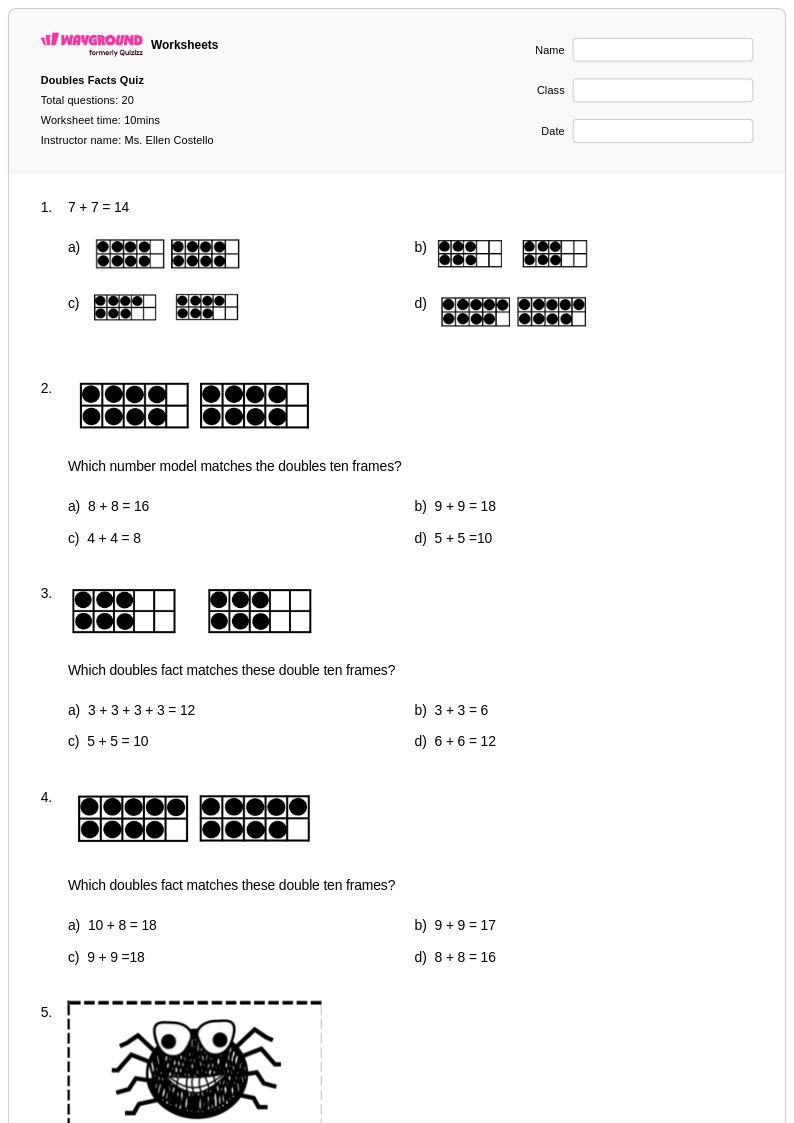
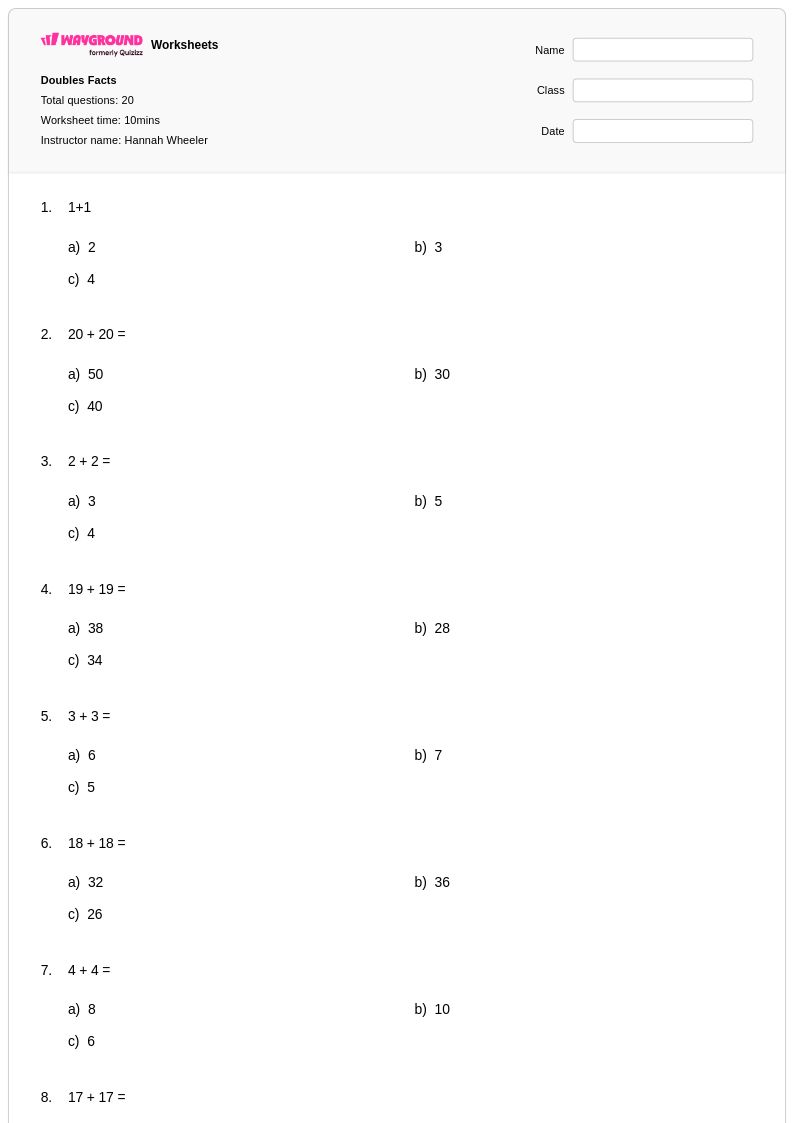
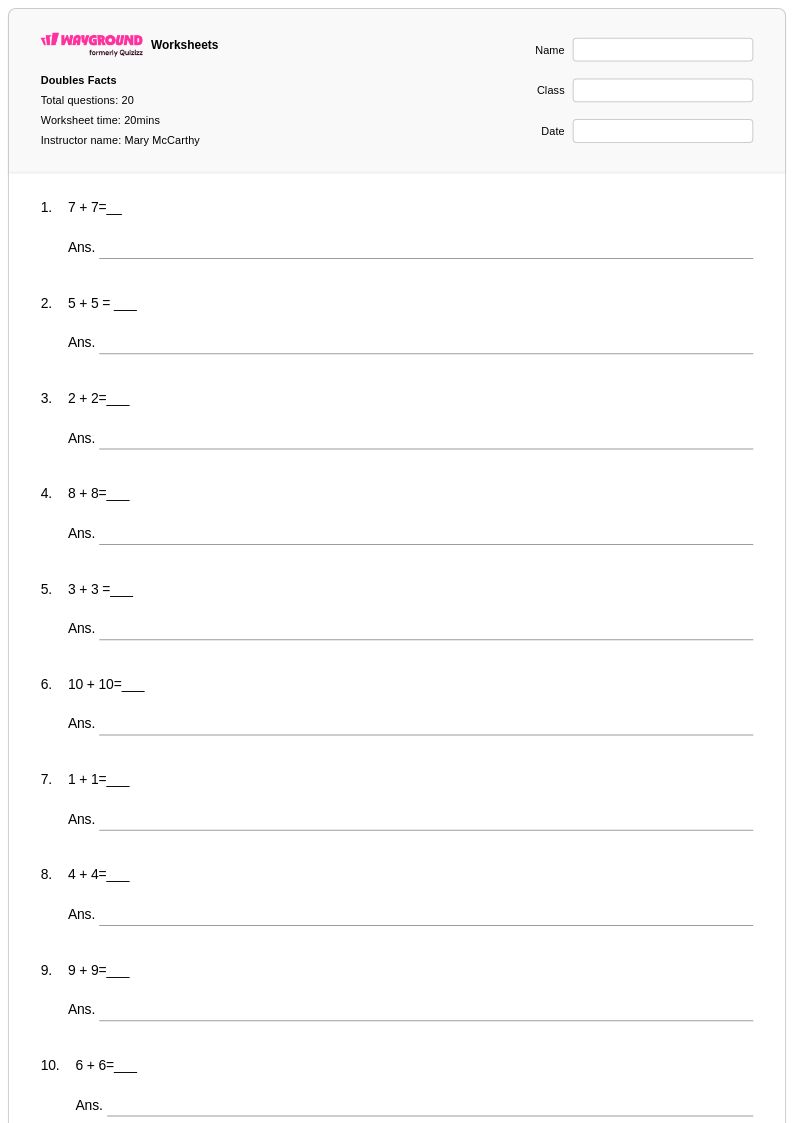
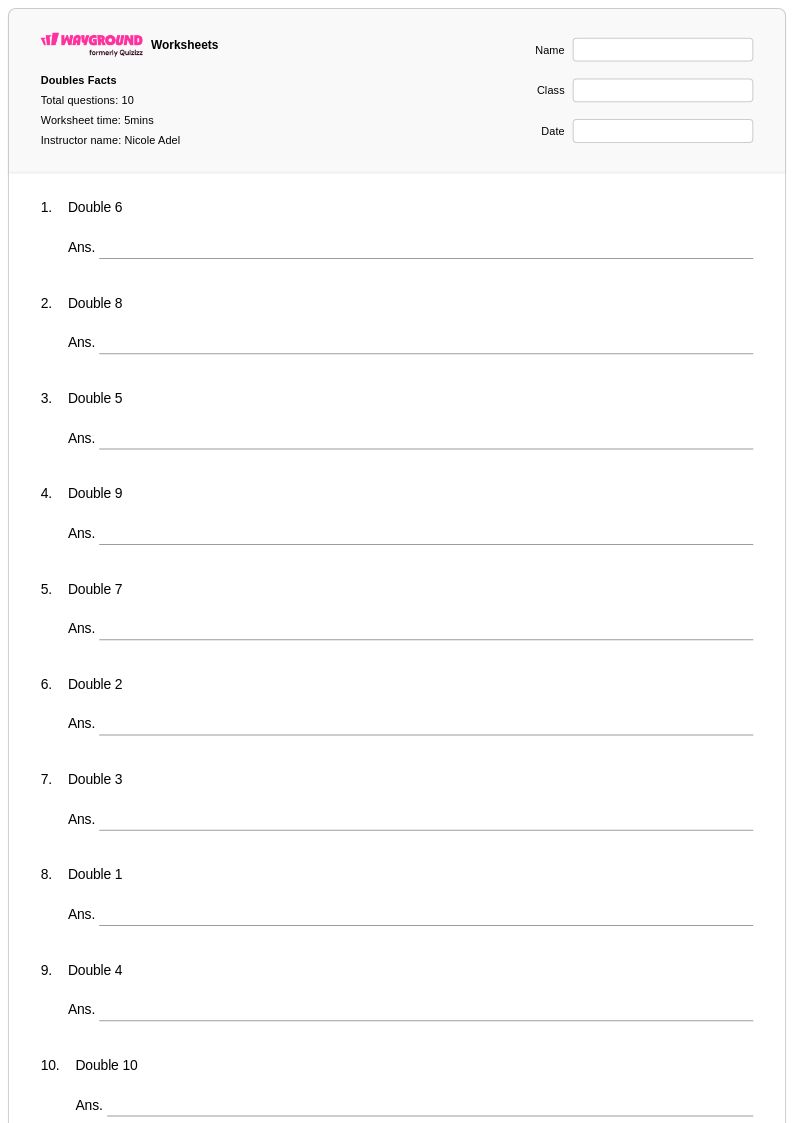
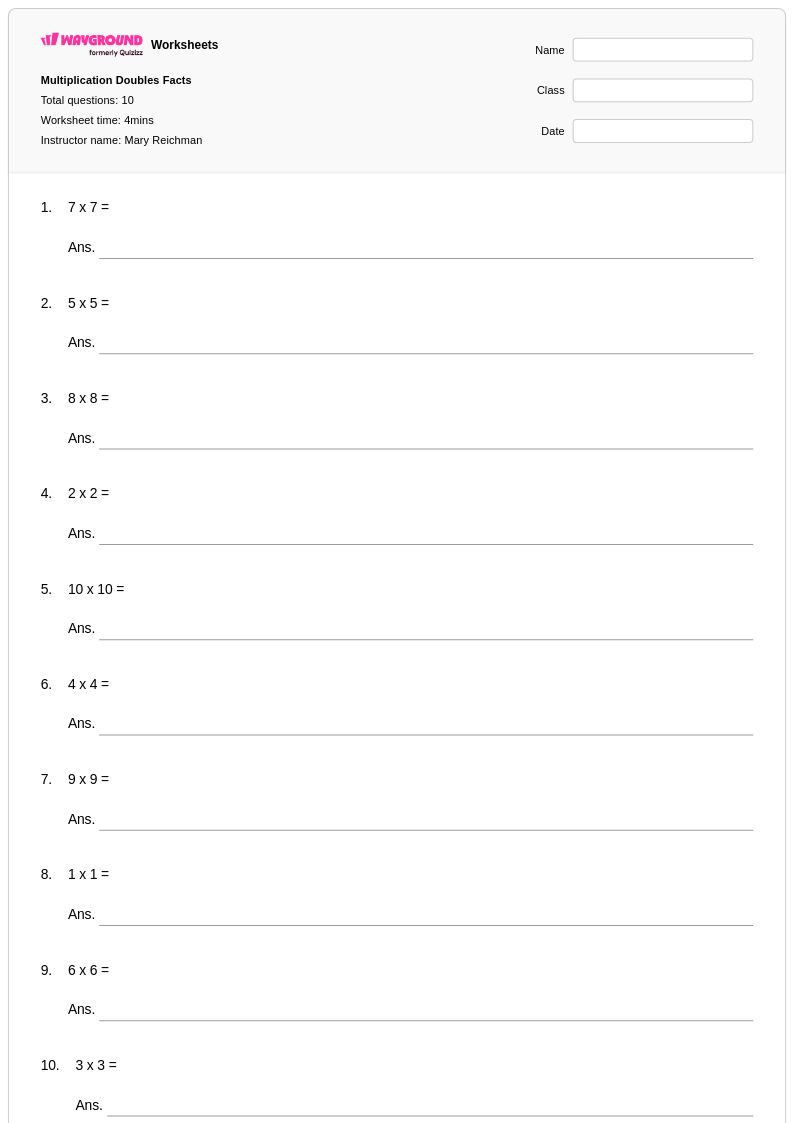
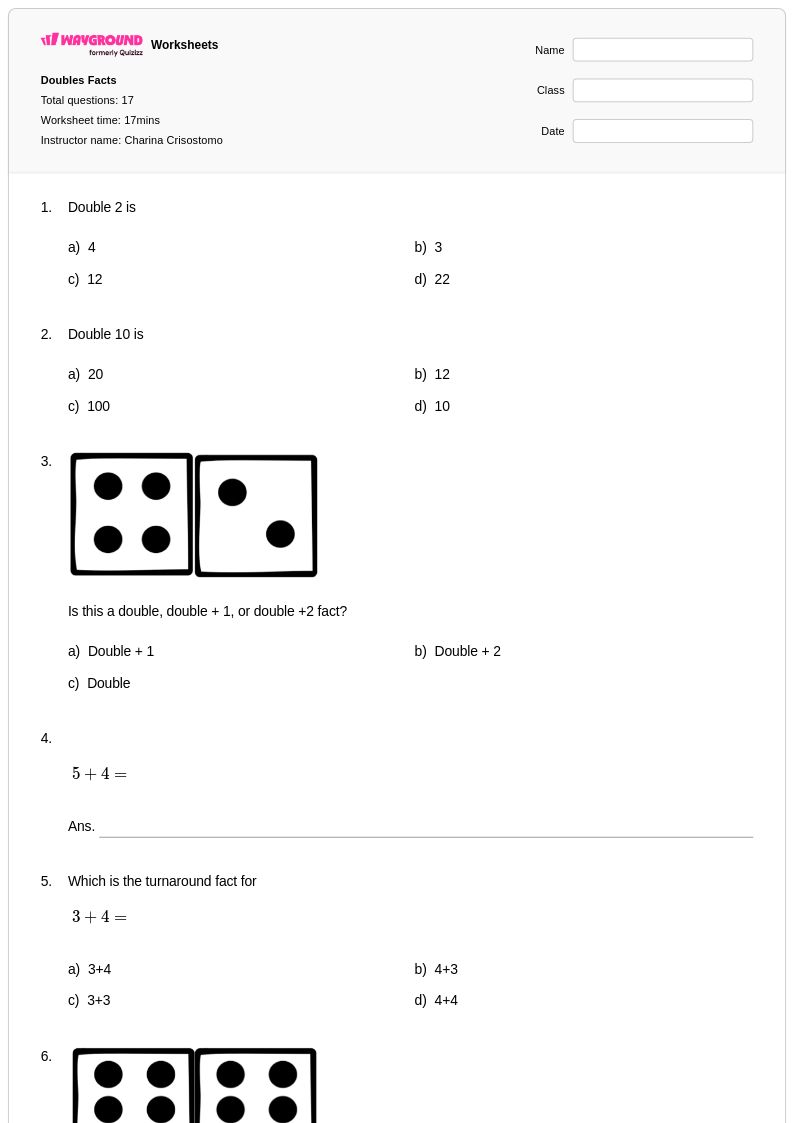
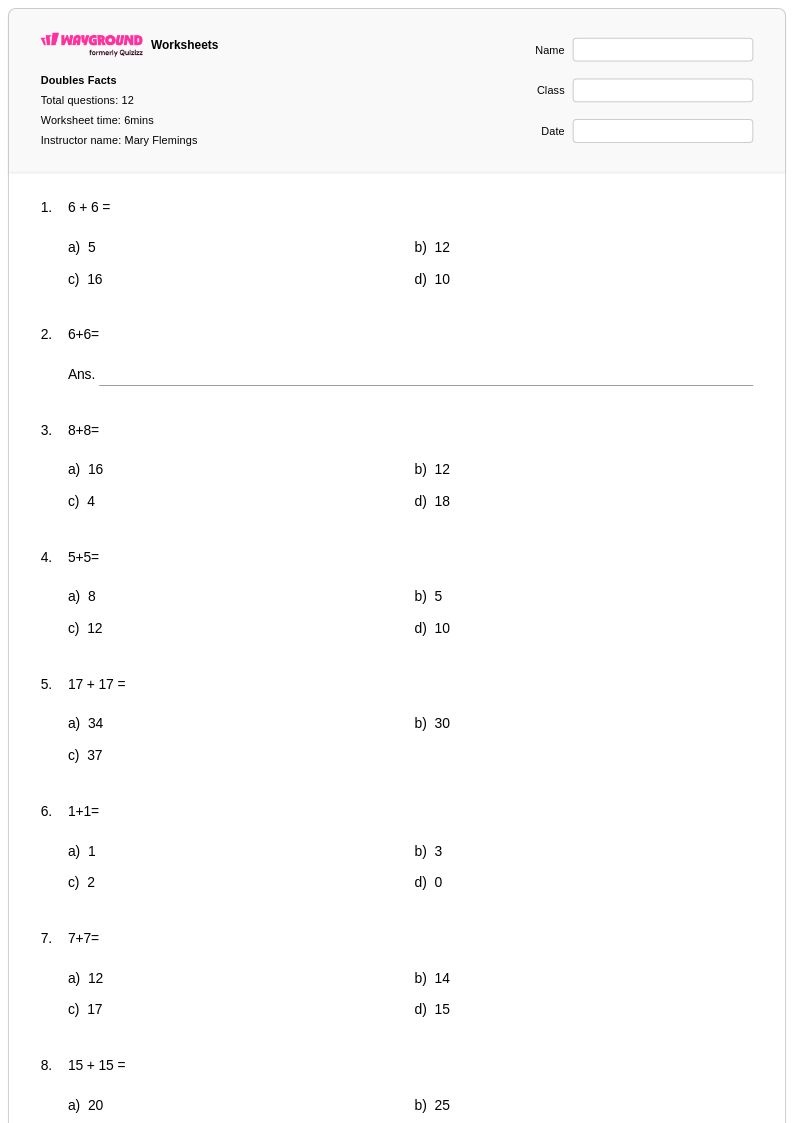
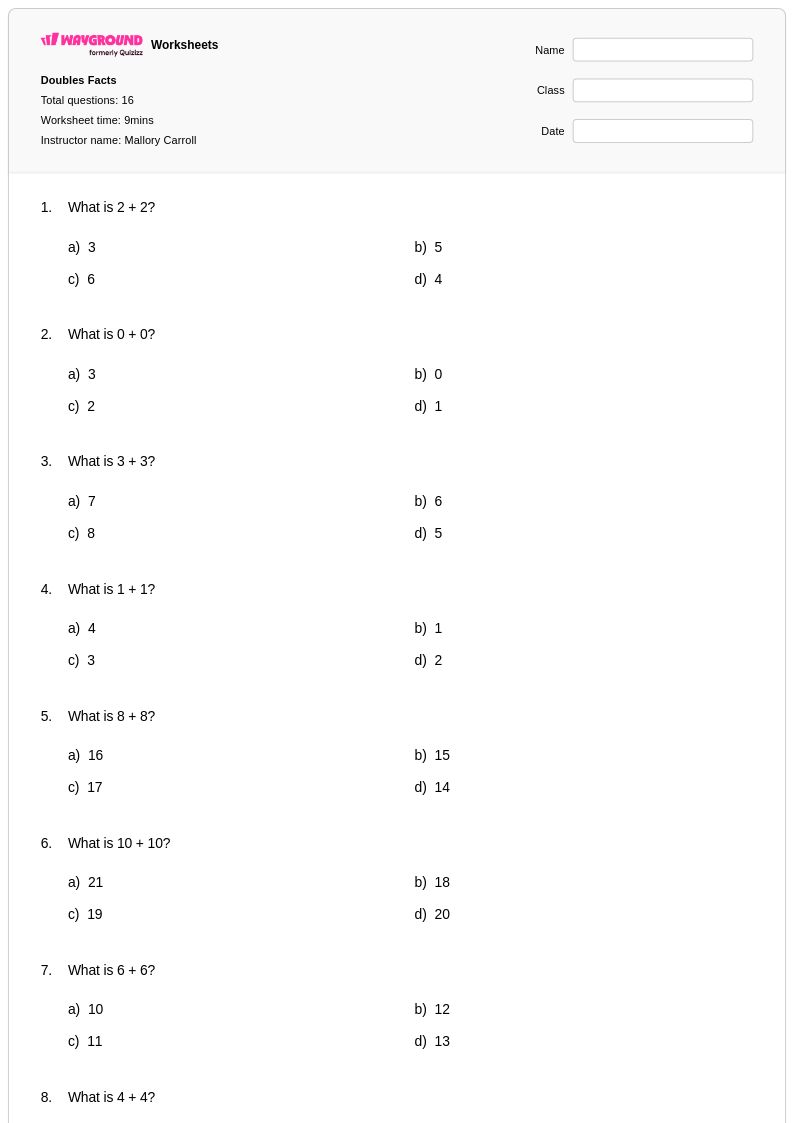
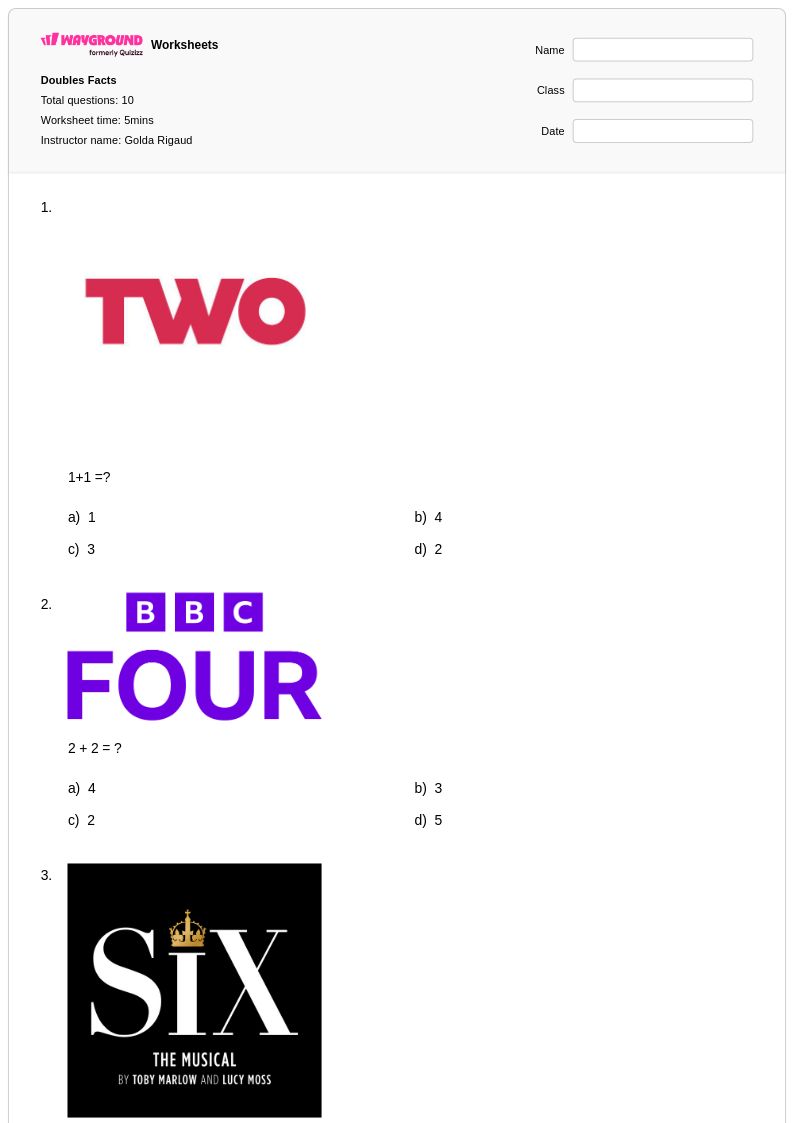
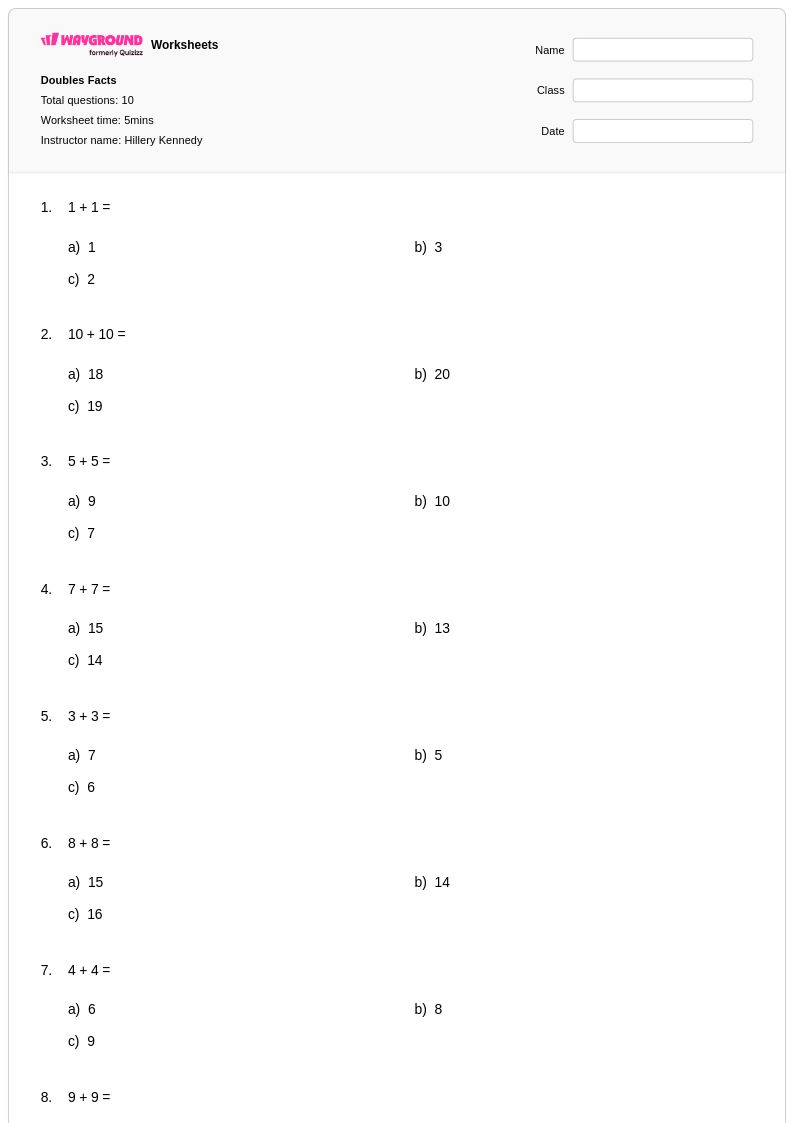
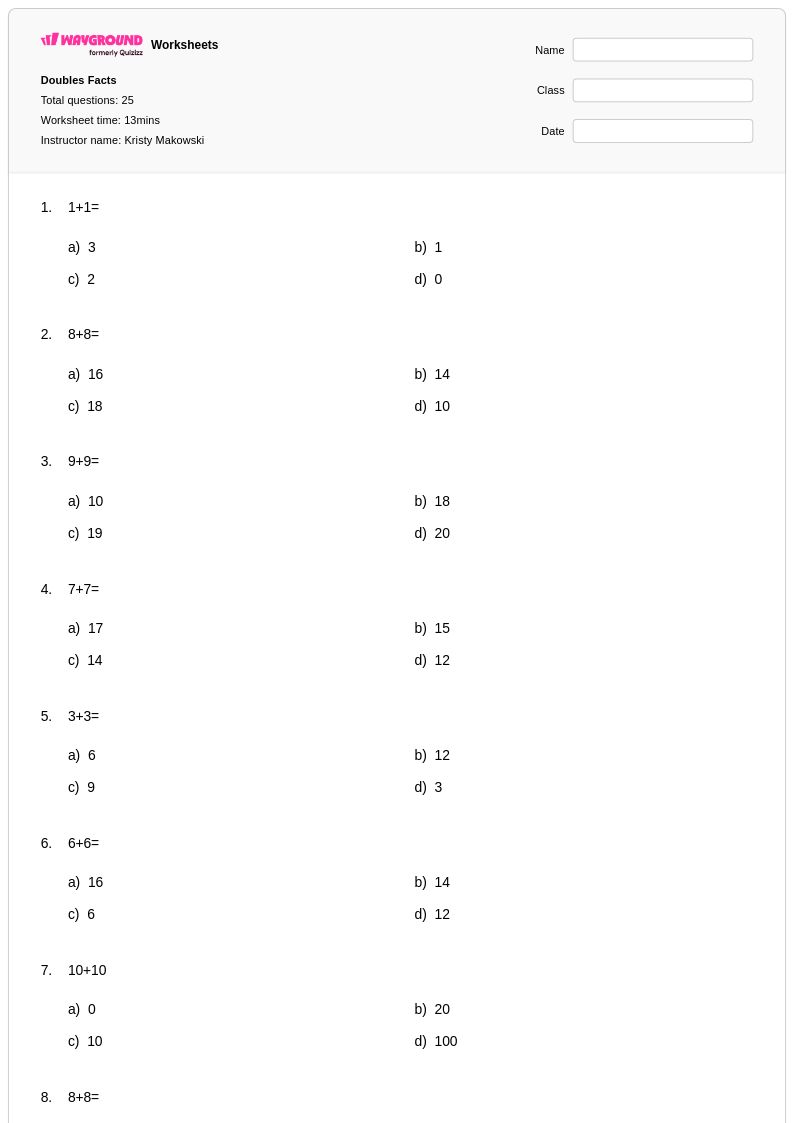
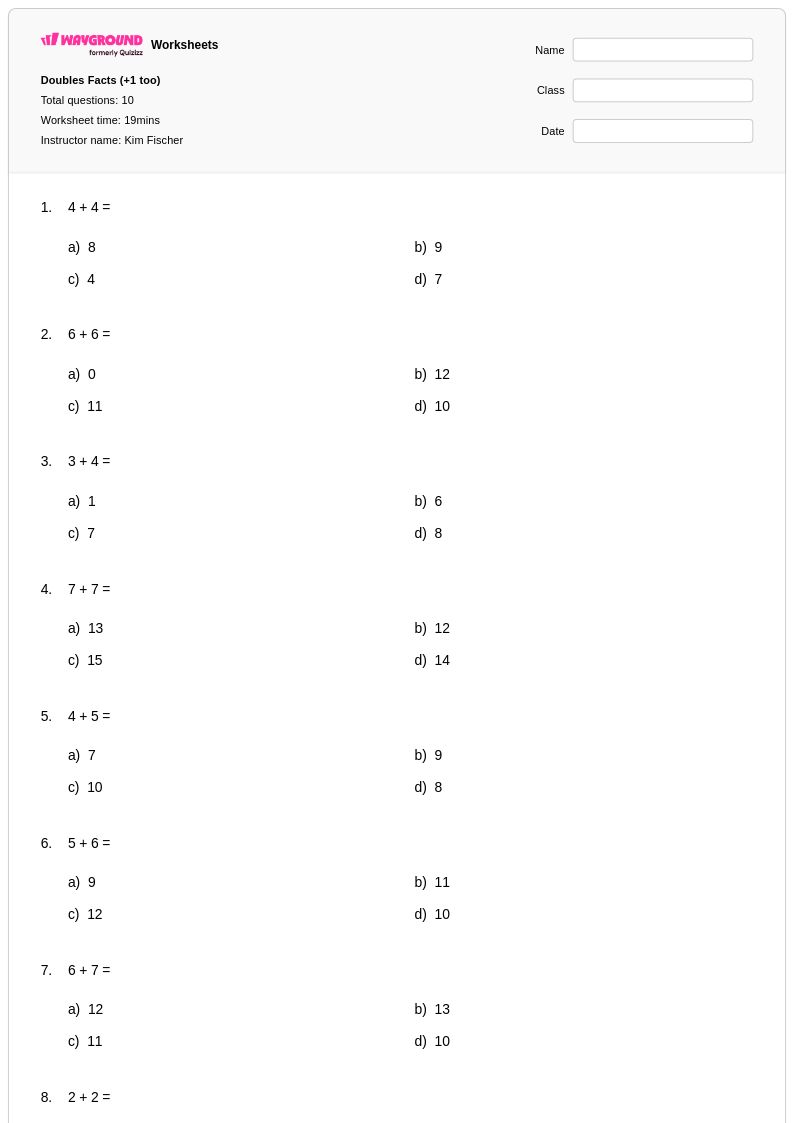
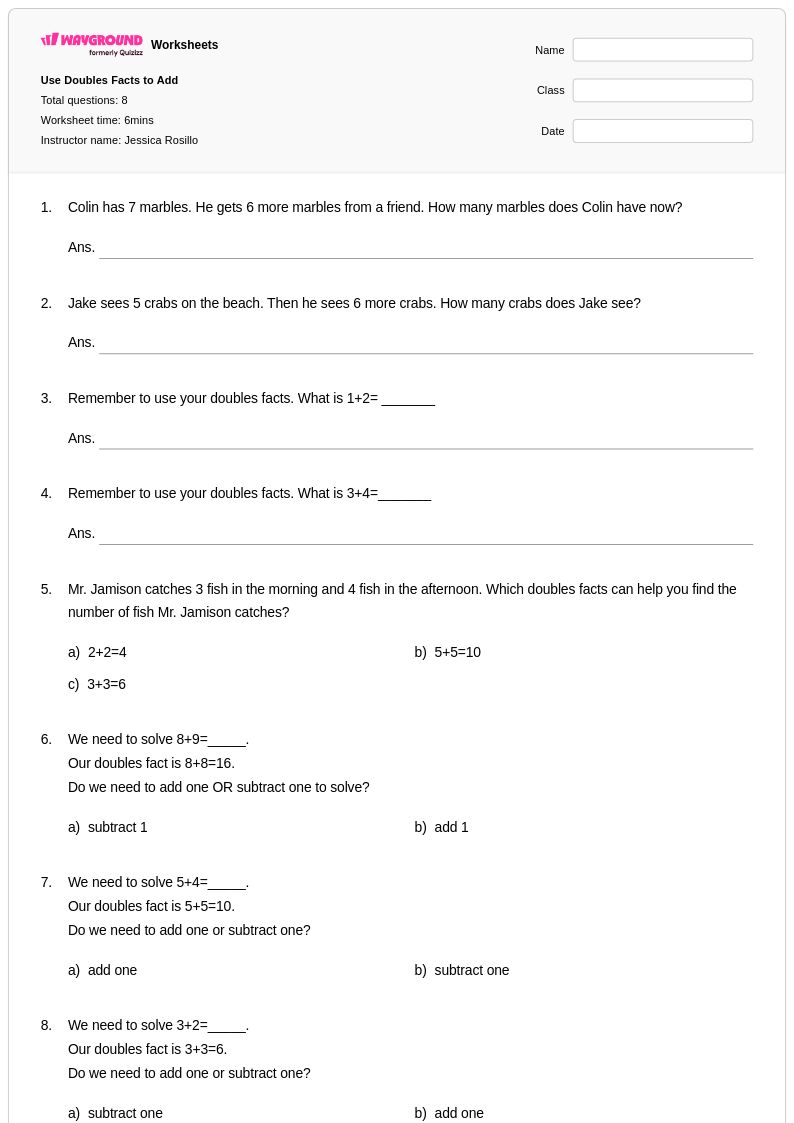
Discover free printable doubles facts worksheets with answer keys that help students master essential addition strategies through engaging practice problems and PDF resources available on Wayground.
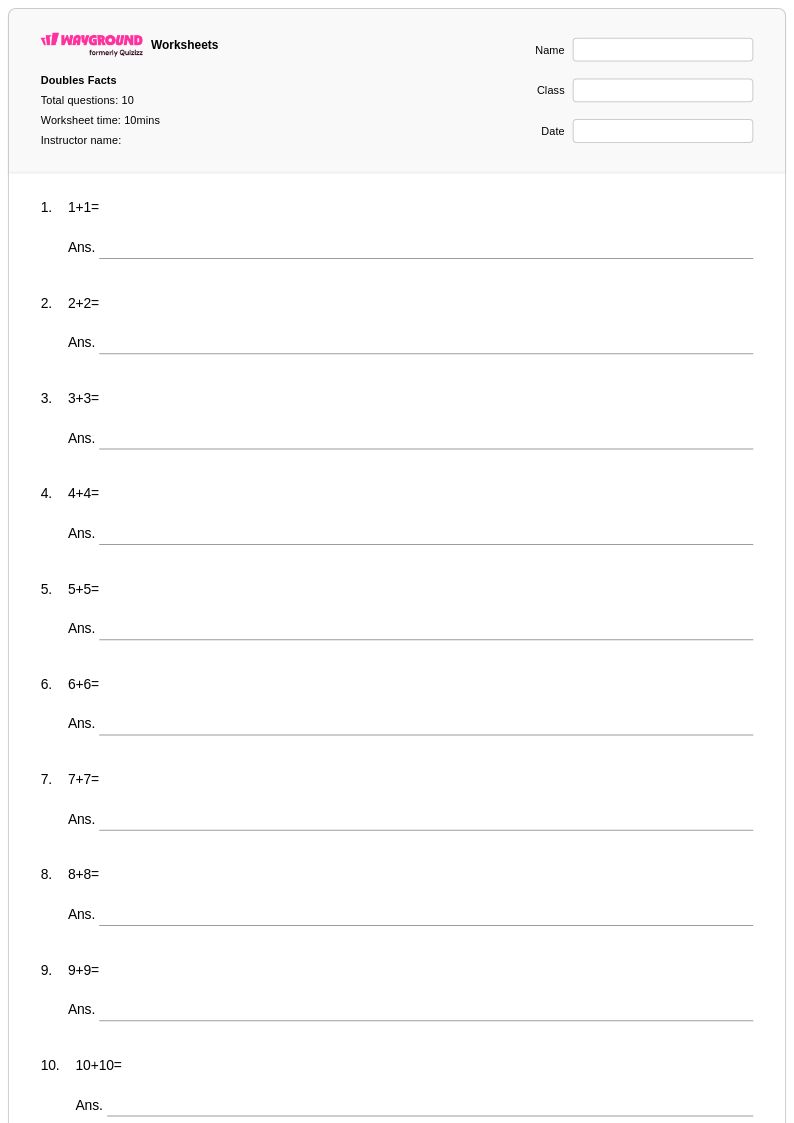
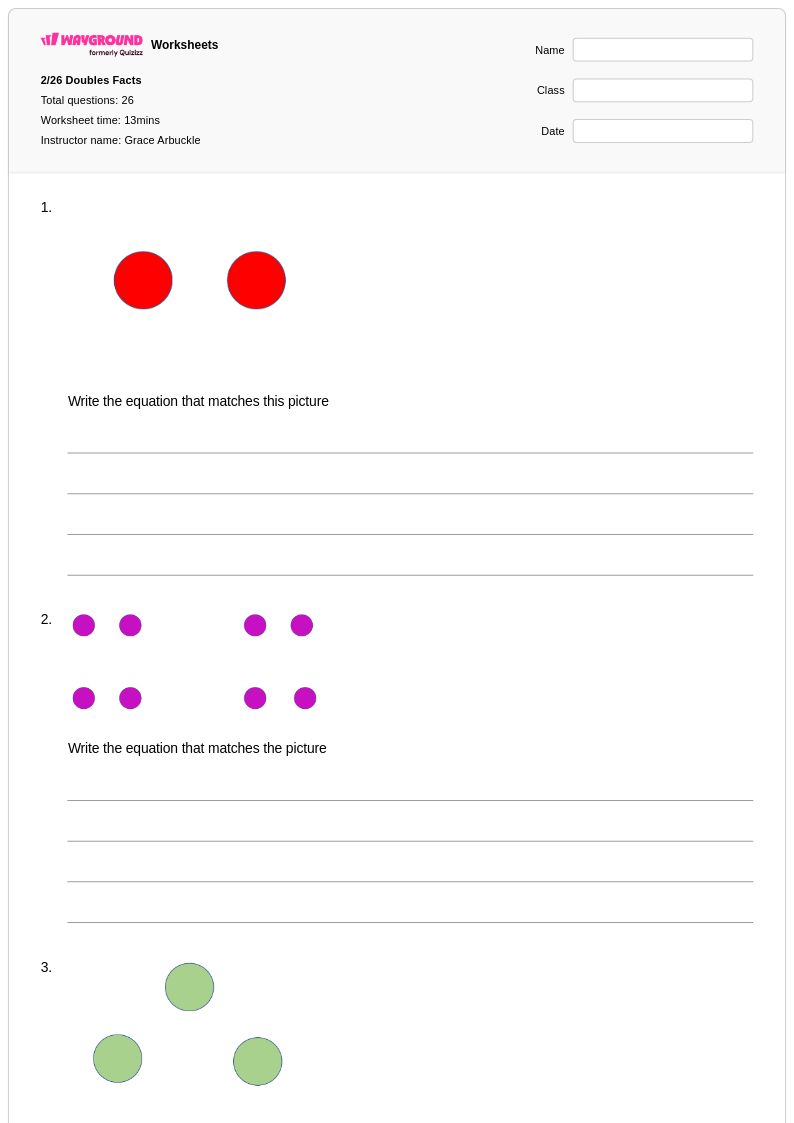
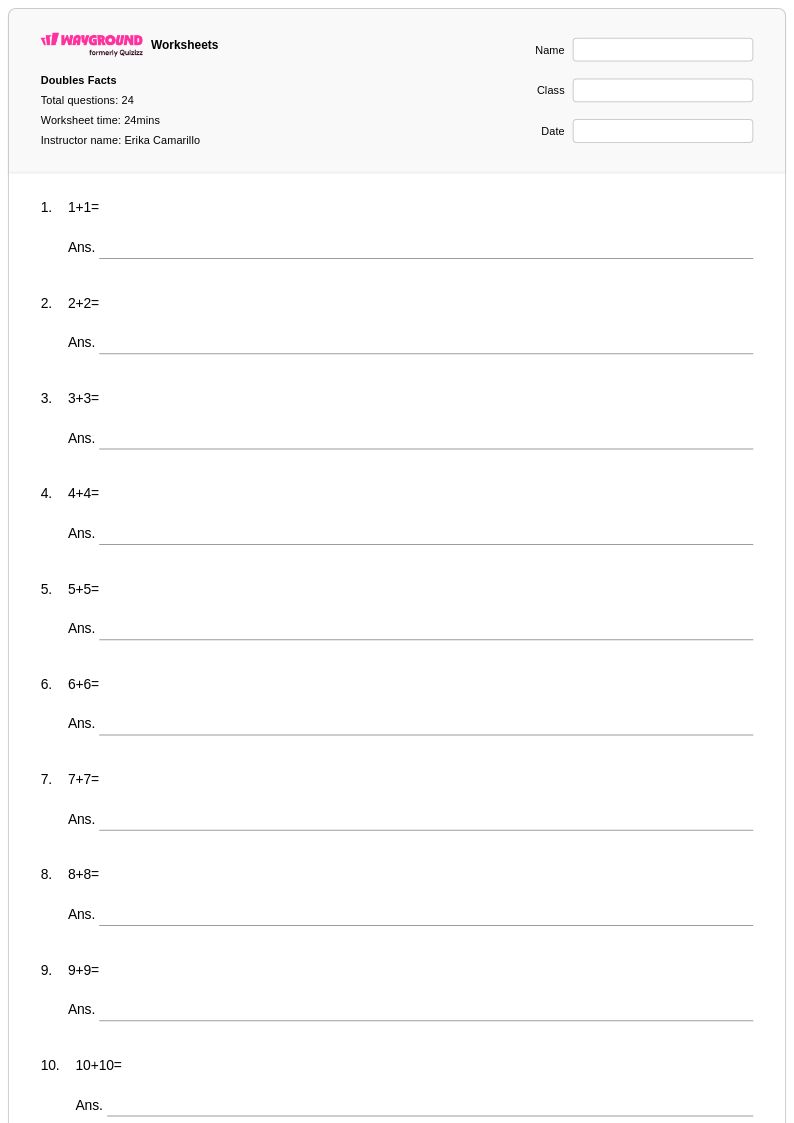
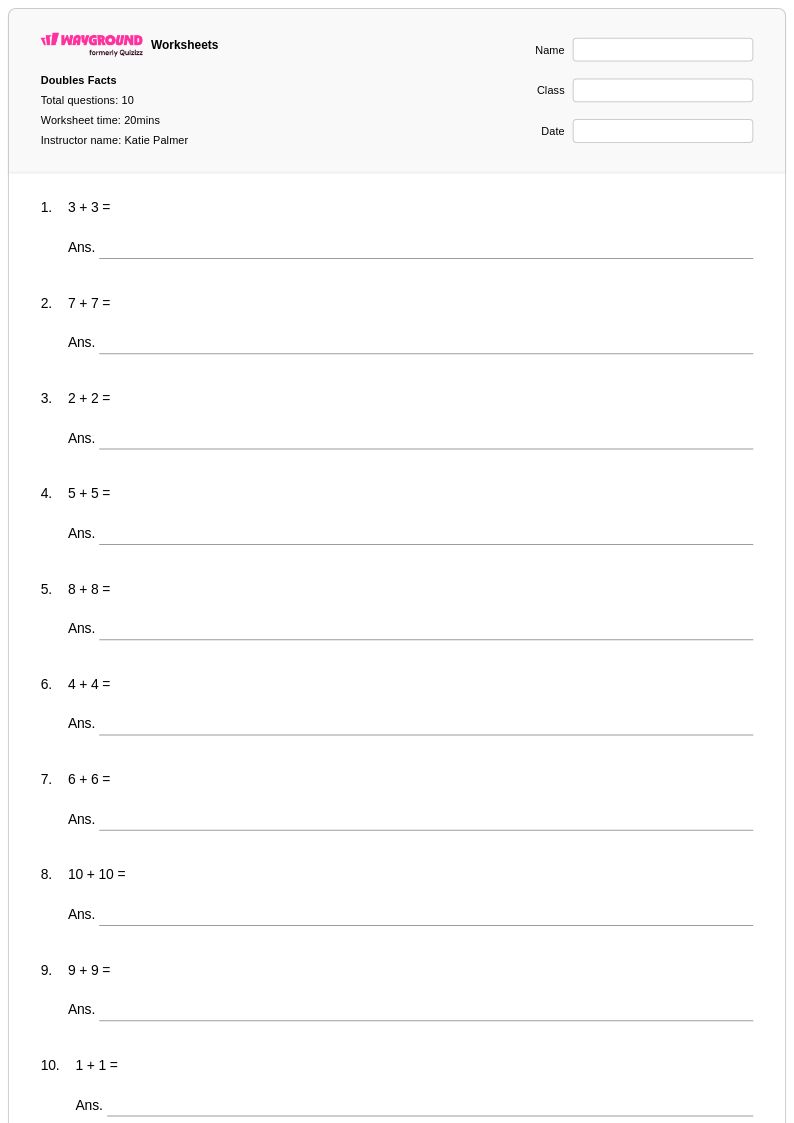
Doubles facts worksheets available through Wayground (formerly Quizizz) provide essential foundational practice for students mastering this critical addition strategy. These comprehensive resources focus on helping learners internalize number combinations where addends are identical, such as 3+3, 7+7, and 9+9, which serve as building blocks for more complex mathematical operations. The worksheet collections strengthen mental math fluency, number sense development, and automatic recall of basic addition facts through carefully structured practice problems. Each printable resource includes detailed answer keys and offers free access to methodically designed exercises that progress from concrete visual representations to abstract number work, ensuring students develop both conceptual understanding and computational speed with doubles combinations.
Wayground's extensive library supports educators with millions of teacher-created doubles facts resources that streamline lesson planning and differentiated instruction. The platform's robust search and filtering capabilities allow teachers to quickly locate materials aligned with specific learning standards and grade-appropriate skill levels. These versatile worksheet collections are available in both printable pdf formats and interactive digital versions, enabling flexible implementation across diverse classroom environments and learning modalities. Teachers can customize existing materials or create targeted practice sets for remediation and enrichment, ensuring every student receives appropriate challenge levels while building automaticity with doubles facts that accelerate overall addition proficiency and mathematical confidence.
FAQs
How do I teach doubles facts to elementary students?
The most effective approach is to make the pattern visible before asking students to memorize it. Start with physical objects — two equal groups of blocks or fingers — so students see that doubling means two identical sets. Then connect that image to the number sentence (4+4=8). Rhymes and visual anchors ("6+6 is a dozen eggs") help students lock in specific facts. Once a few facts are automatic, students can use them as anchors: if they know 5+5=10, they can reason about 6+6 without counting from scratch.
What exercises help students practice doubles facts?
Structured repetition with immediate feedback works best. Worksheets that mix equation completion (4+4=__), missing addend problems (__+__=14), and simple word problems give students multiple angles on the same facts. Timed practice builds automaticity, but untimed work builds accuracy first — sequence them in that order. Doubles facts worksheets on Wayground progress from concrete visual representations to abstract number work, so students aren't just memorizing; they're building number sense alongside recall.
What mistakes do students commonly make with doubles facts?
The most common error is confusing a doubles fact with its neighbor — writing 6+6=14 instead of 12, for example, because the student is skip-counting by twos and loses their place. A second pattern: students who haven't fully internalized the "same addend" concept will treat 3+4 as a doubles fact. When you see these errors, it usually signals the student is still counting rather than recalling, and needs more concrete work before timed drills.
How do I use Wayground's doubles facts worksheets in my classroom?
You can run the worksheet as a digital quiz hosted on Wayground — students work through it on a device and get instant feedback — or download the printable PDF and assign it on paper, which works well for schools managing screen time. Every worksheet includes a complete answer key. If you go the paper route, the Wayground for Teachers app lets you scan or capture student submissions for grading, so you're not scoring stacks of worksheets by hand.
Are doubles facts aligned to Common Core math standards?
Yes. Common Core introduces addition and subtraction within 20 in first grade, and doubles facts are explicitly called out as a strategy students should use to add — knowing 6+6=12 to quickly find 6+7, for instance. By second grade, the expectation shifts from strategy use to fluency: students should recall sums within 20 from memory. Doubles facts are the on-ramp to that fluency because they're the most regular, pattern-driven subset of addition facts students encounter.
How can I differentiate doubles facts practice for mixed-ability learners?
For students who are still building the concept, Wayground's Read Aloud accommodation reads questions aloud so decoding doesn't get in the way of the math. For students who get overwhelmed by a full problem set, reduced answer choices lowers the cognitive load on multiple-choice items. On the worksheet itself, you can apply a dyslexia-friendly font or increase font size for students who need it — all without creating a separate document. Students who have already mastered 0+0 through 5+5 can be pushed toward larger doubles (up to 12+12) while the rest of the class consolidates the basics.