
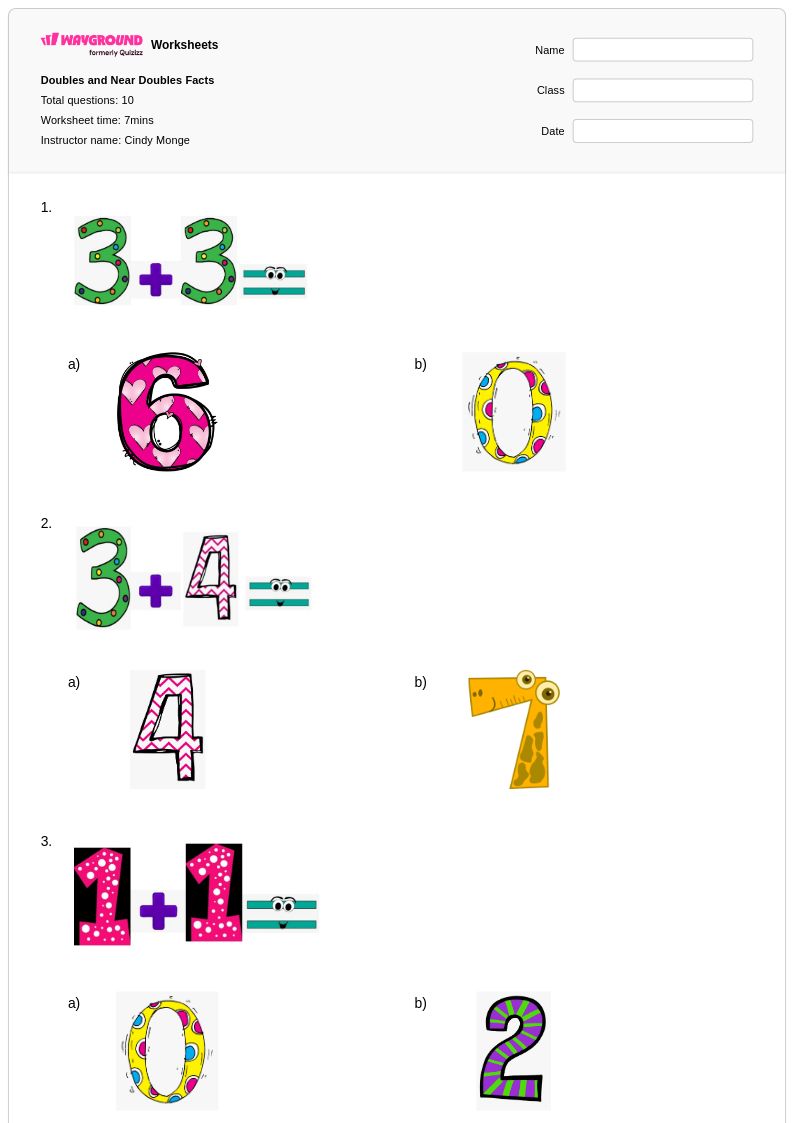
10 Q
1st
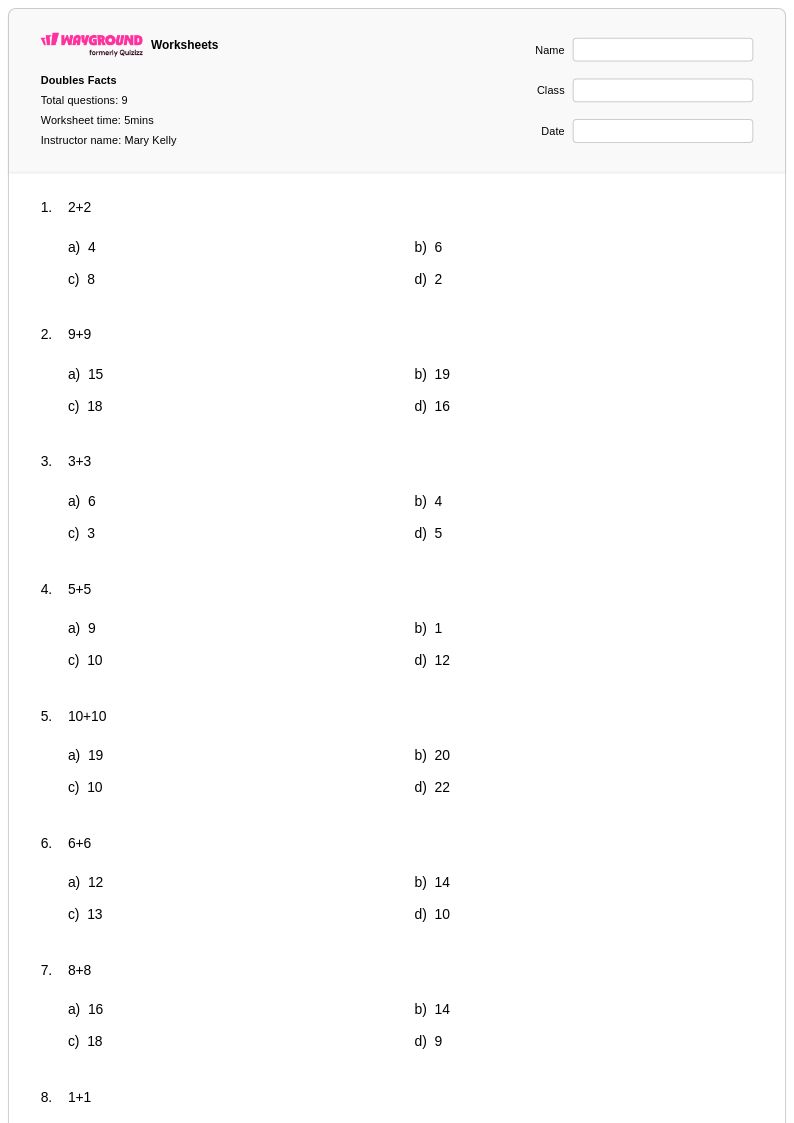
9 Q
1st - 2nd
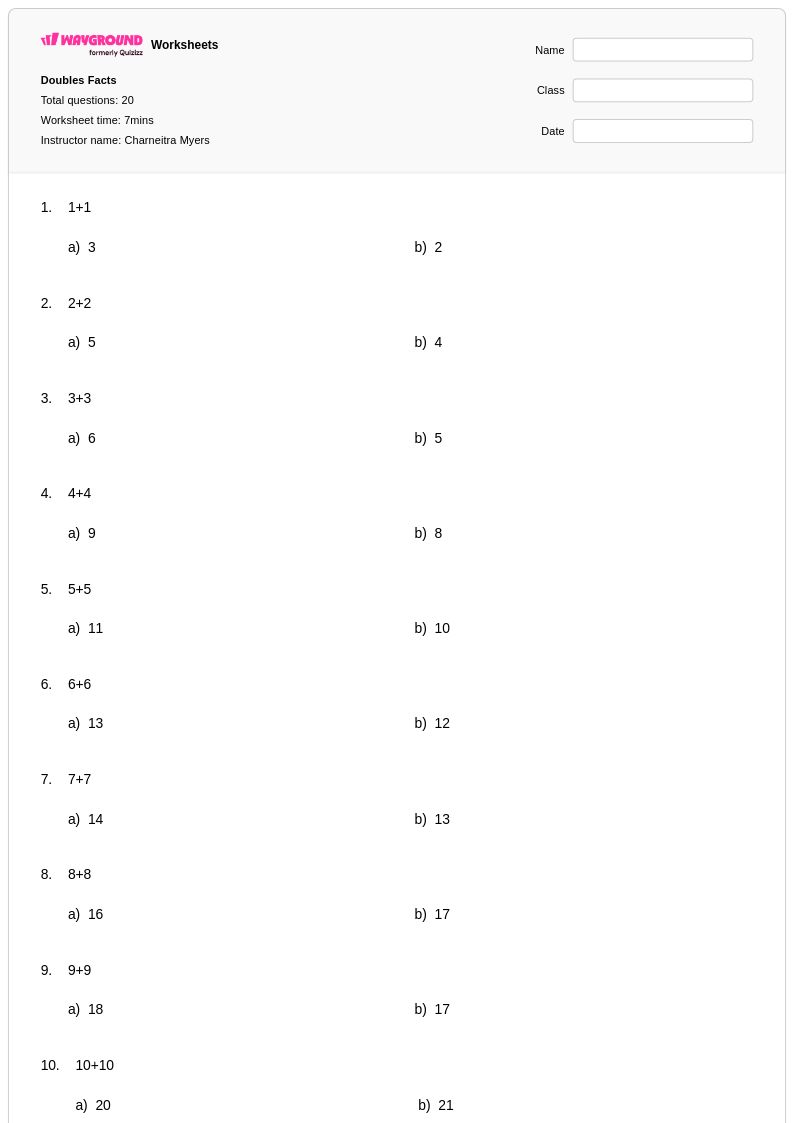
20 Q
2nd
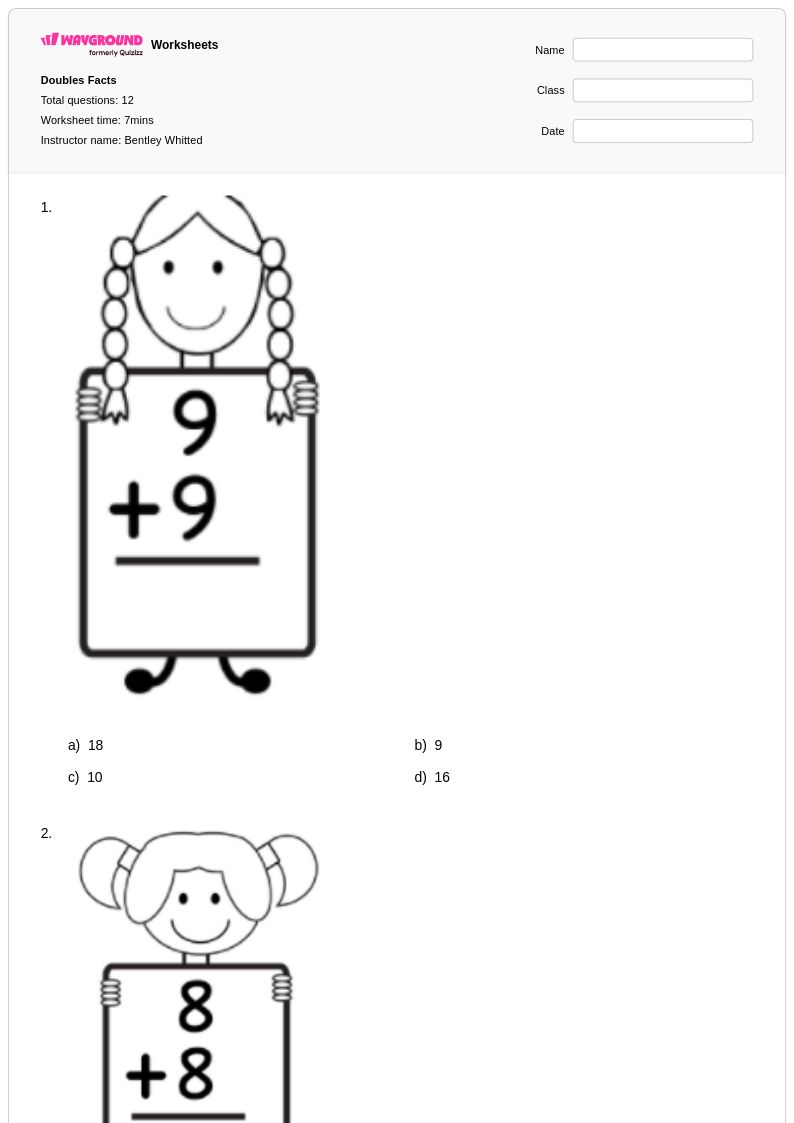
12 Q
2nd
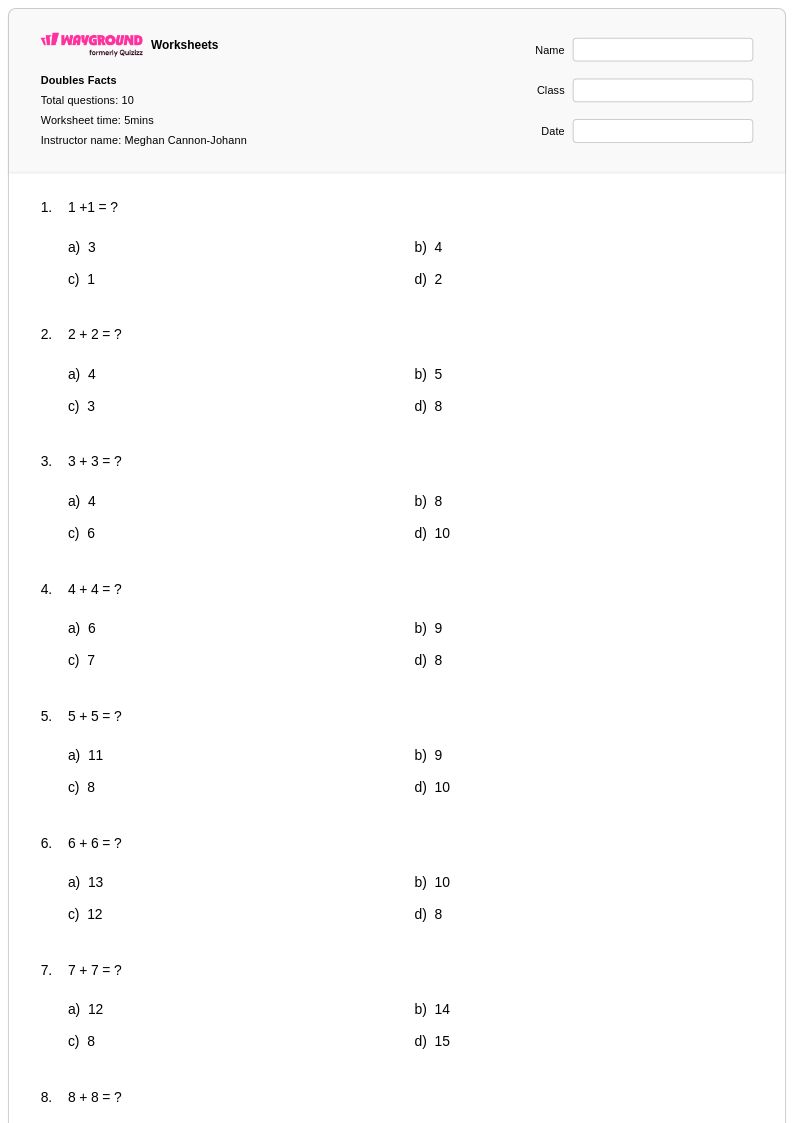
10 Q
KG - 2nd
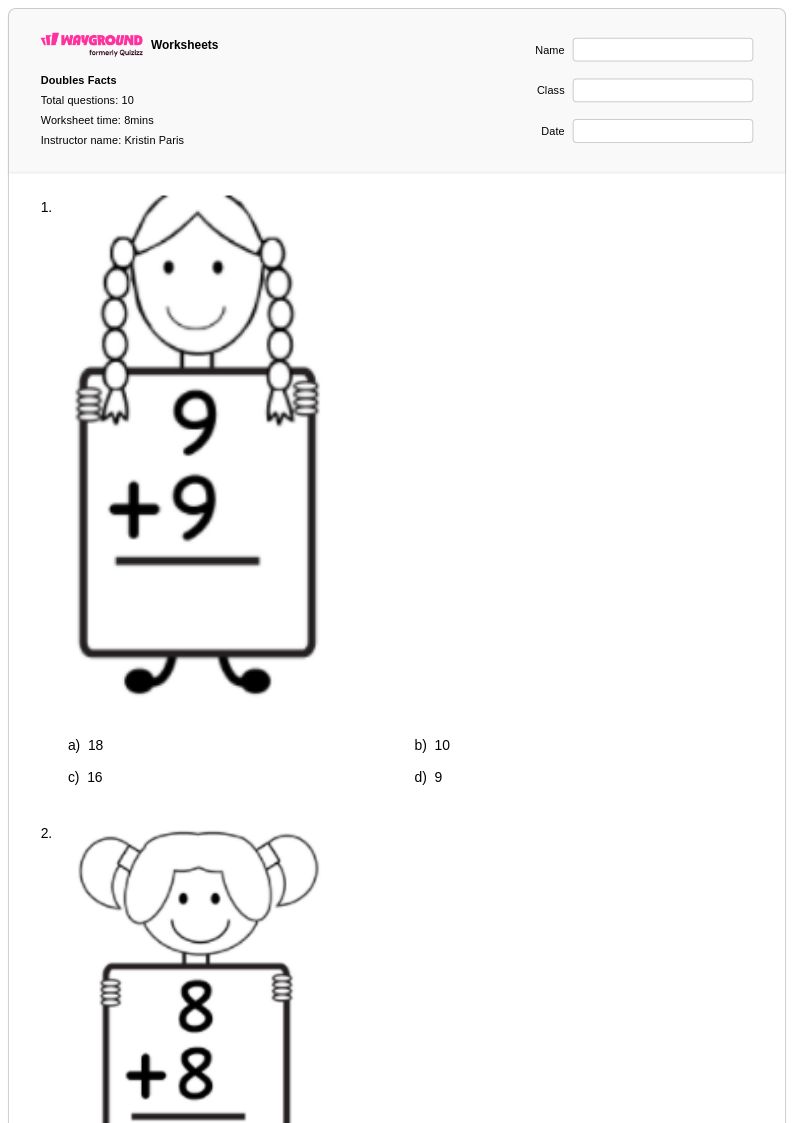
10 Q
KG - 1st
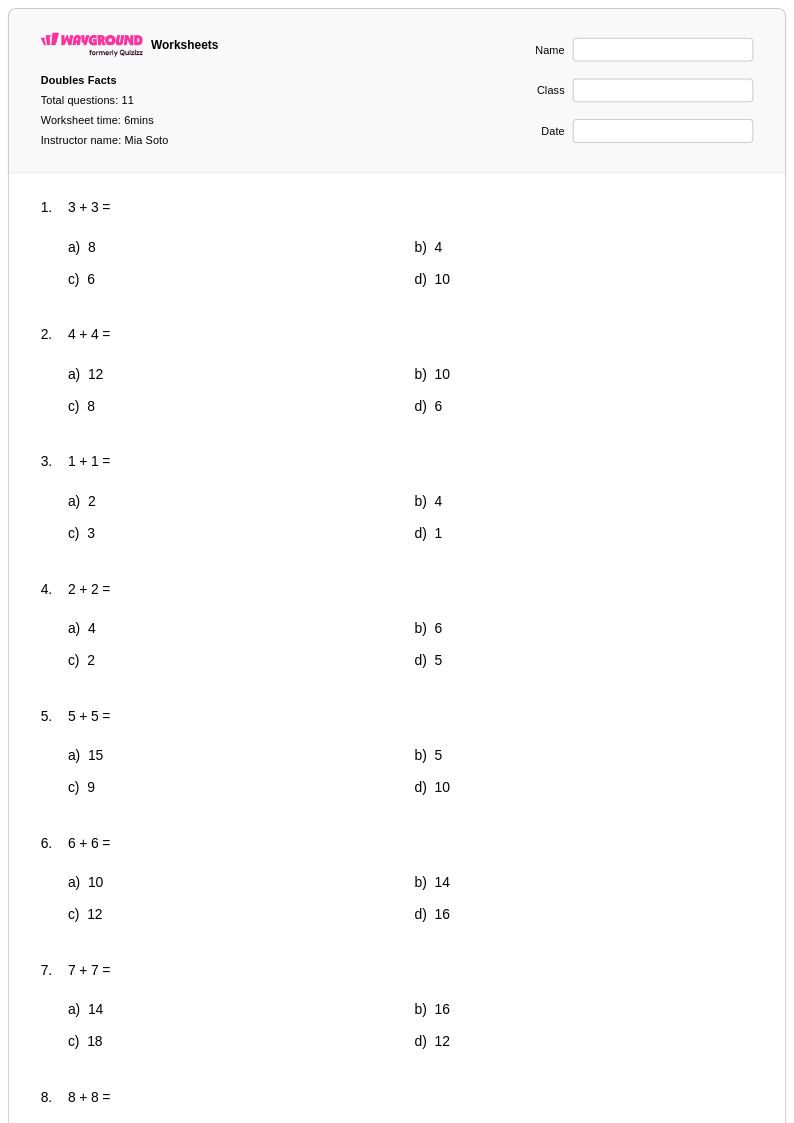
11 Q
1st
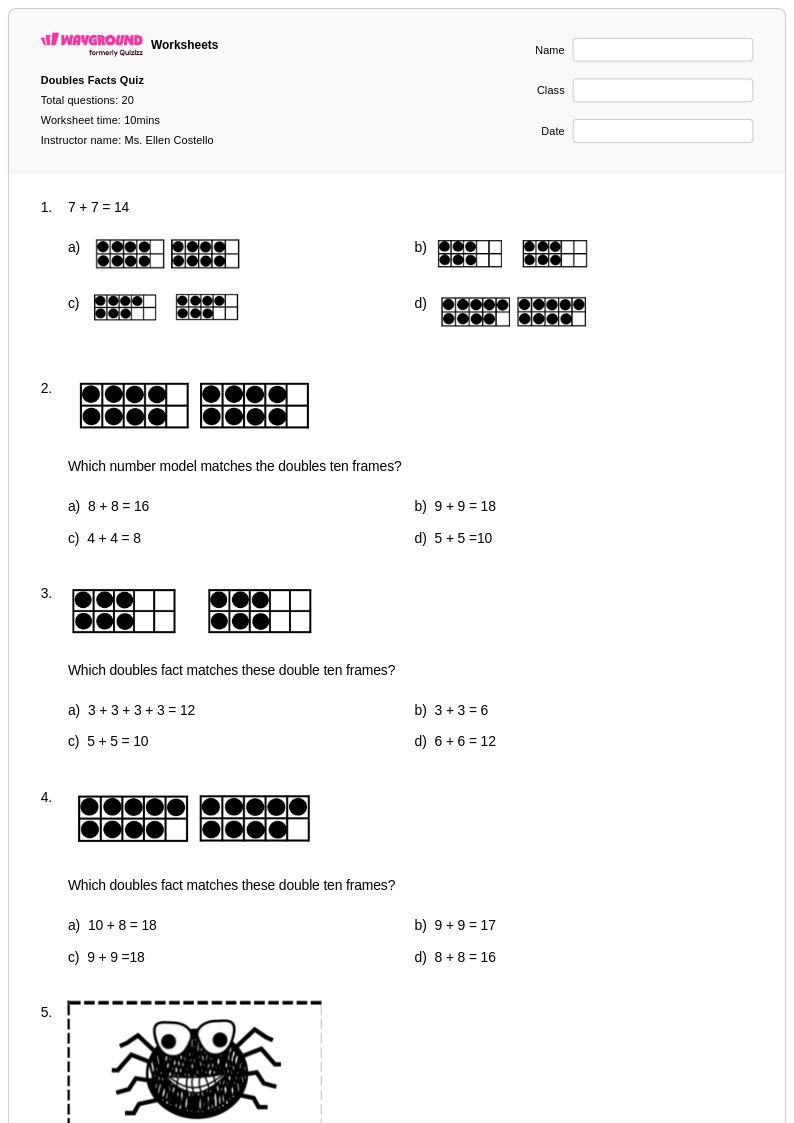
20 Q
1st - 2nd
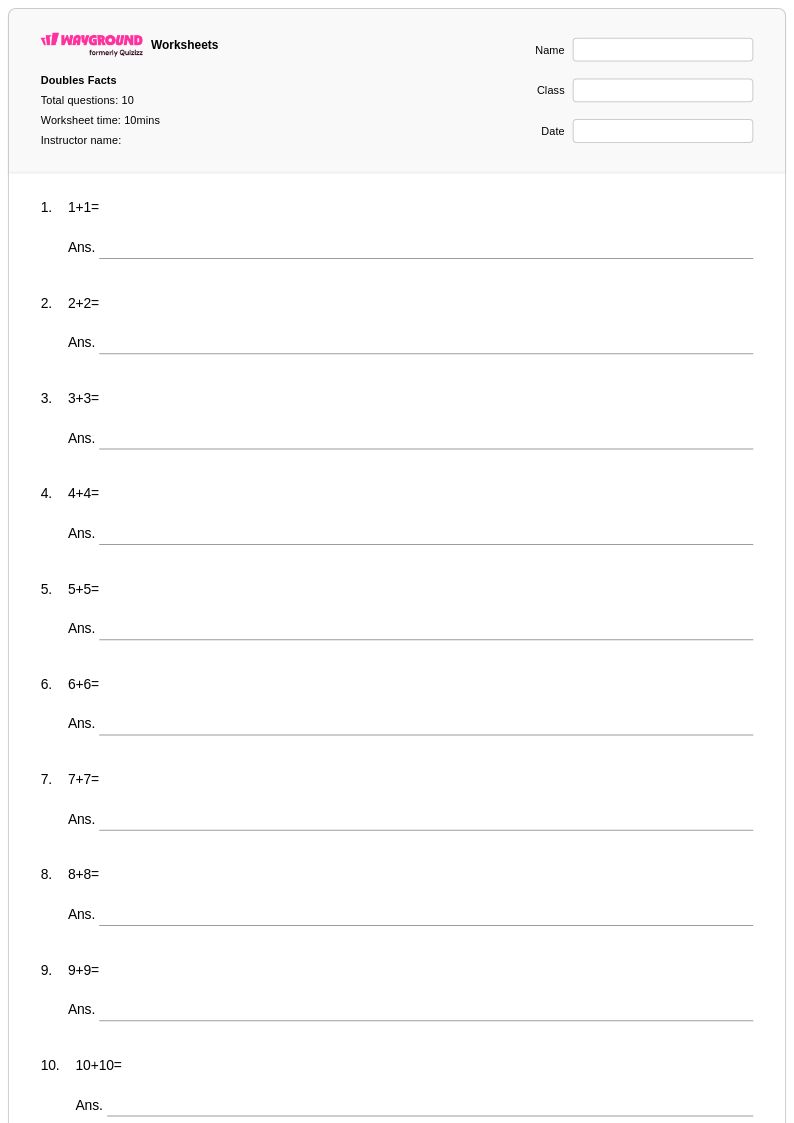
10 Q
3rd
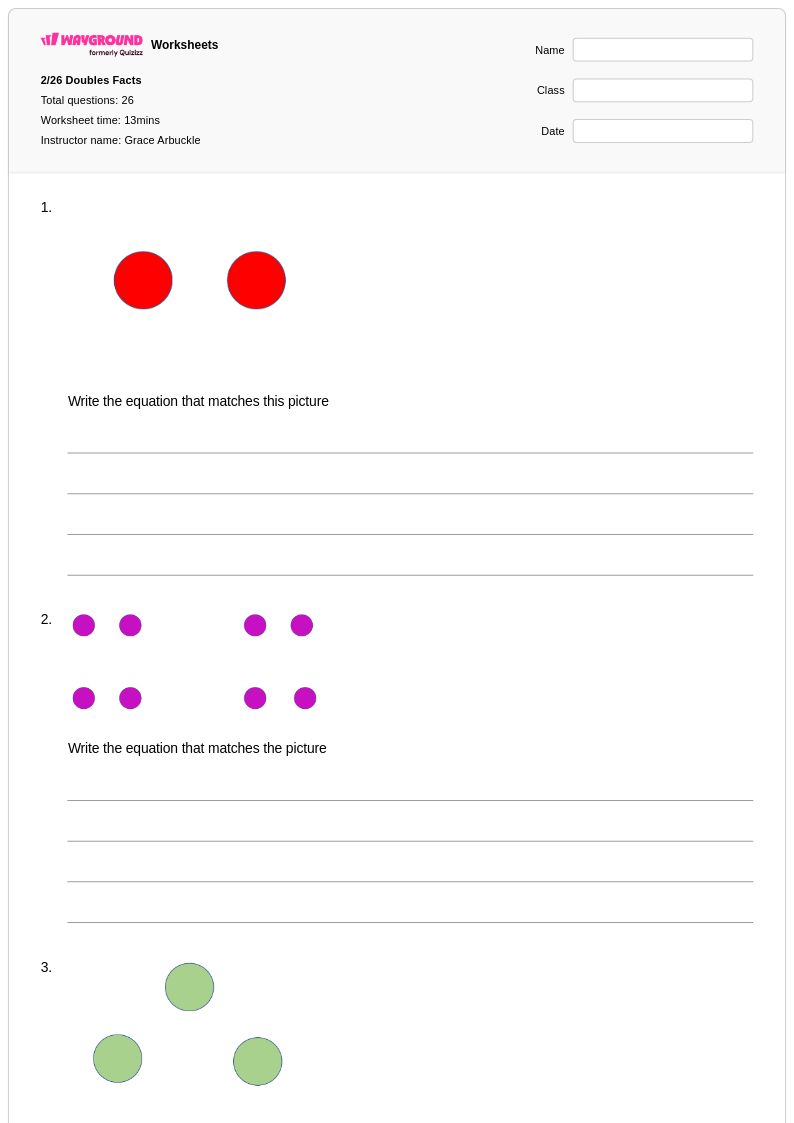
26 Q
1st
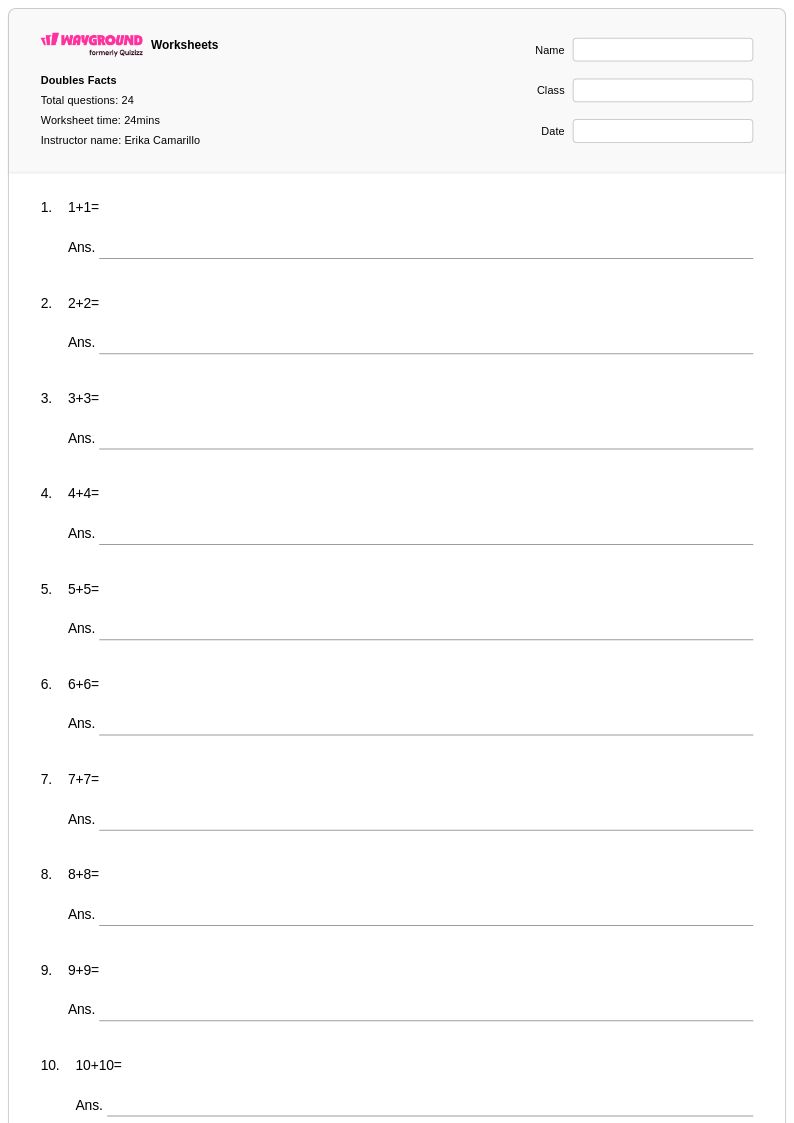
24 Q
2nd
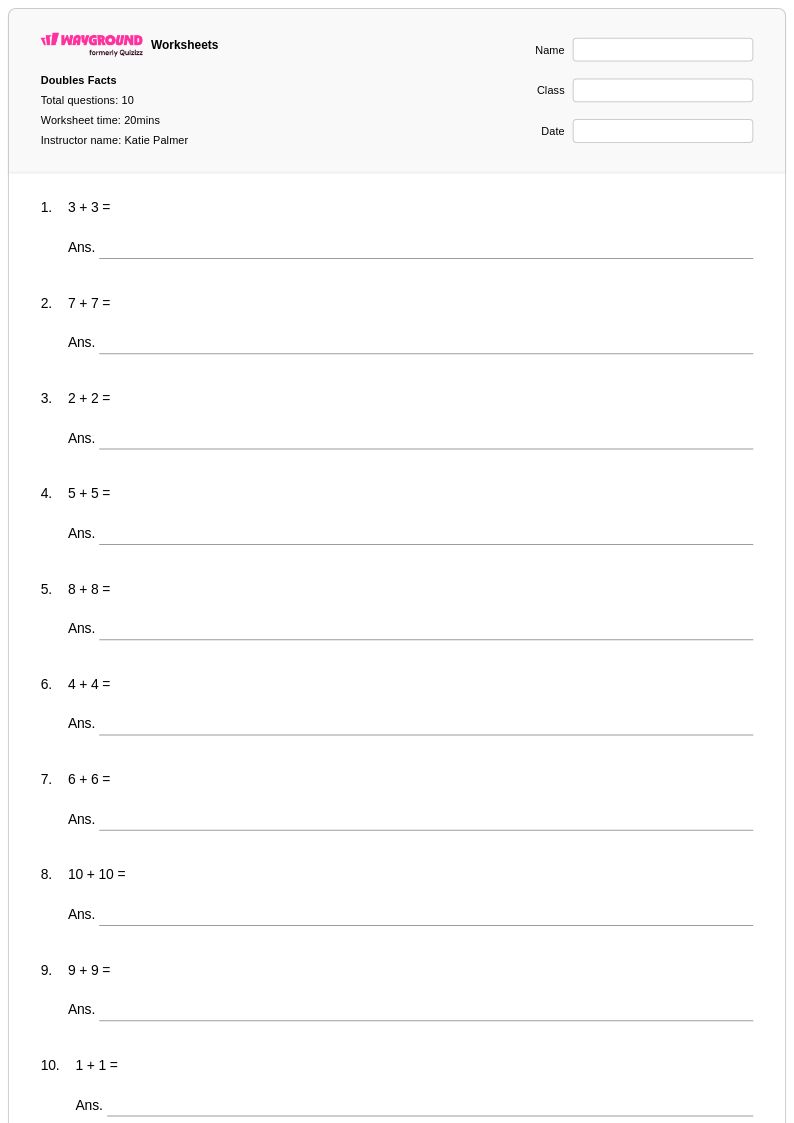
10 Q
1st
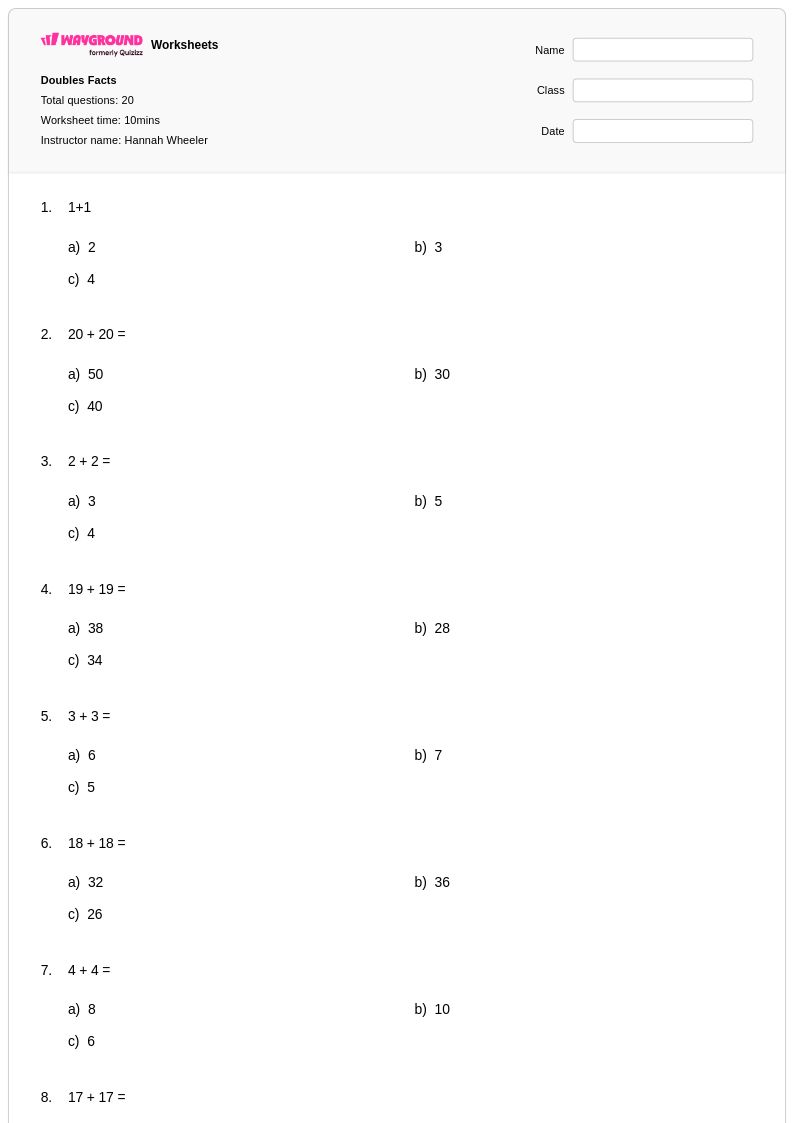
20 Q
KG - 3rd
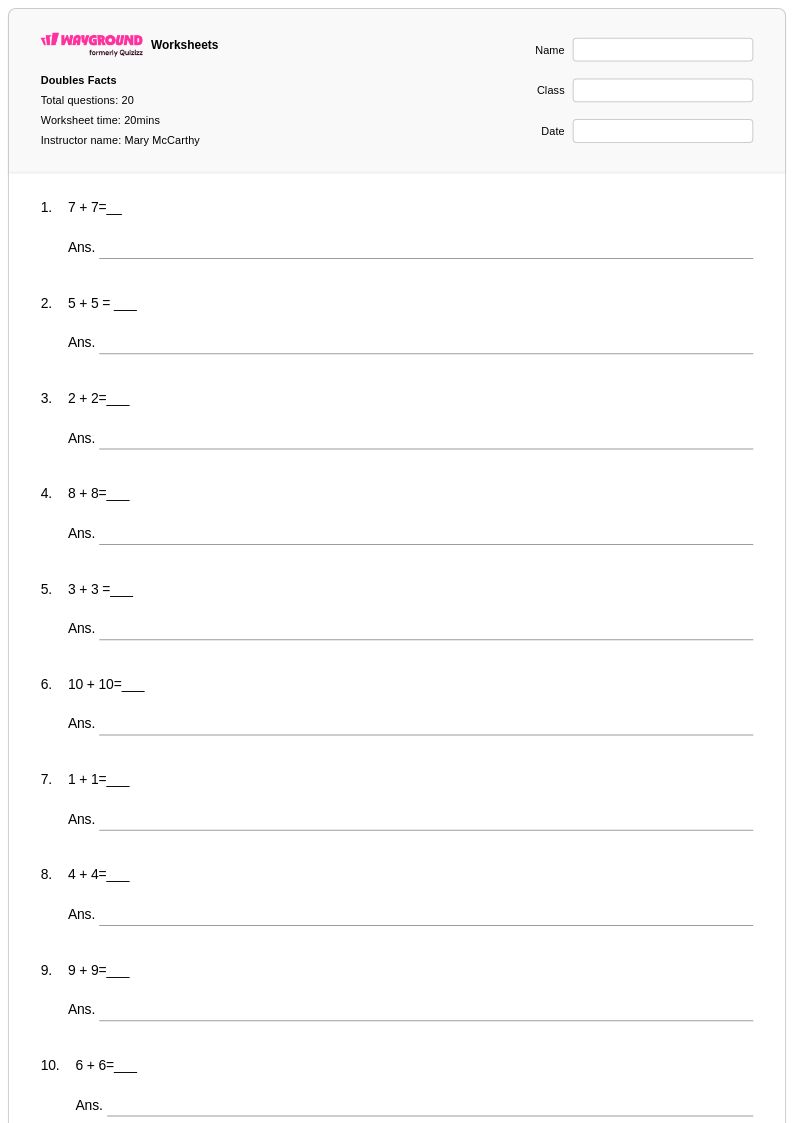
20 Q
1st - 2nd
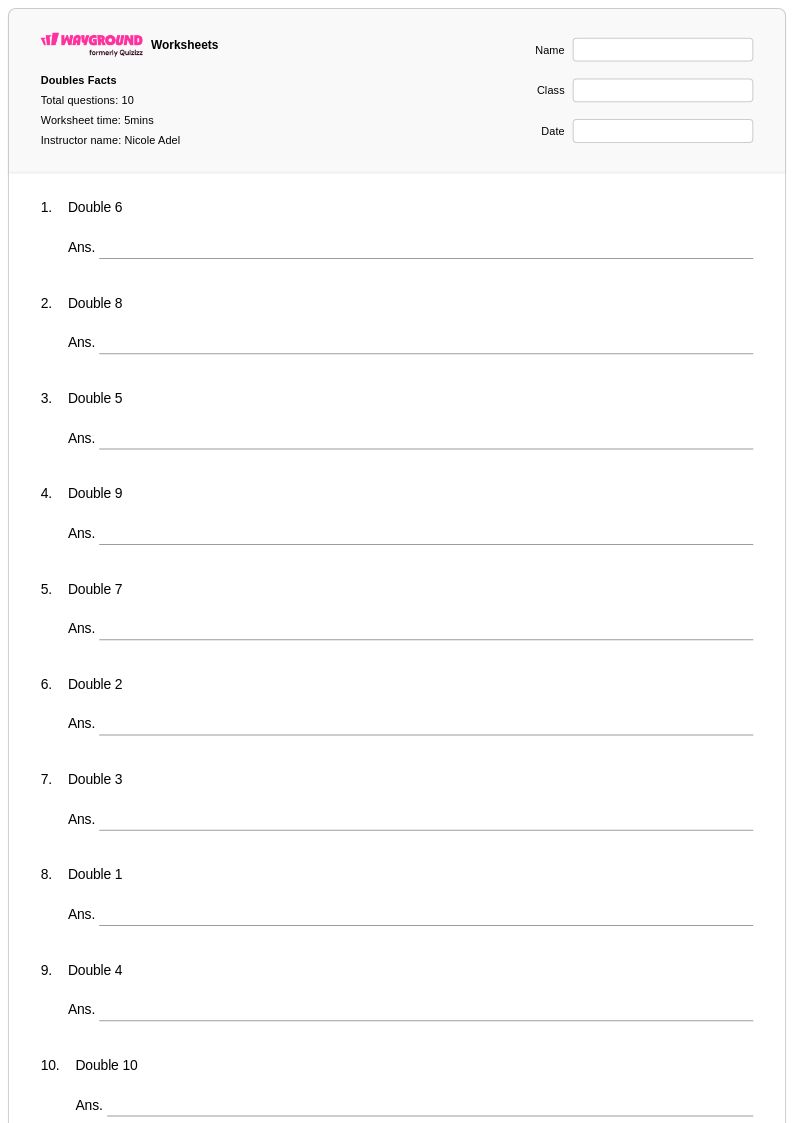
10 Q
1st - 2nd
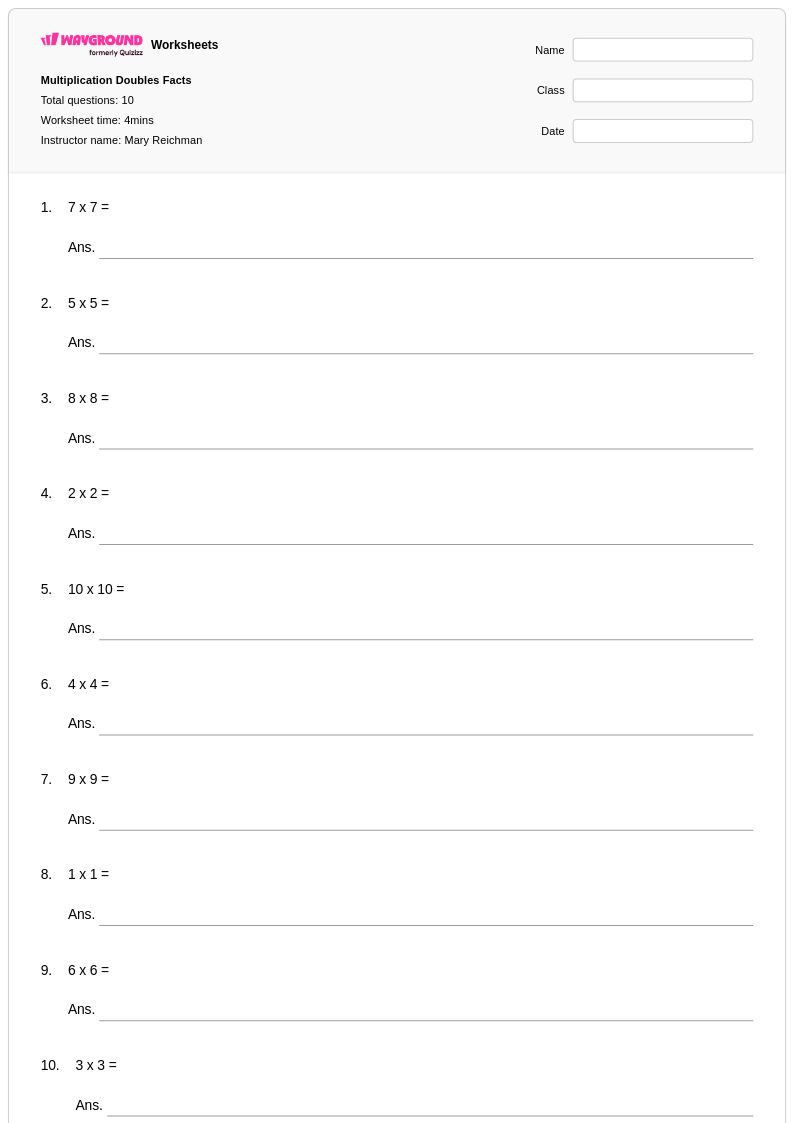
10 Q
3rd
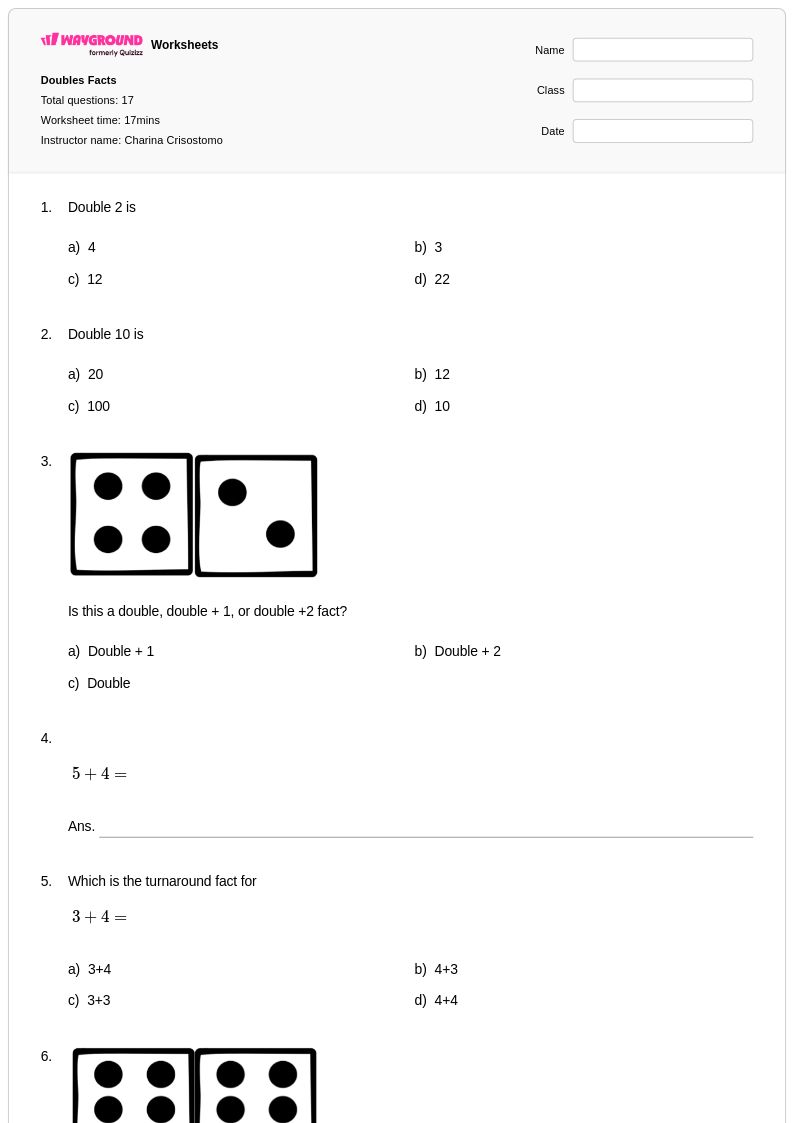
17 Q
1st
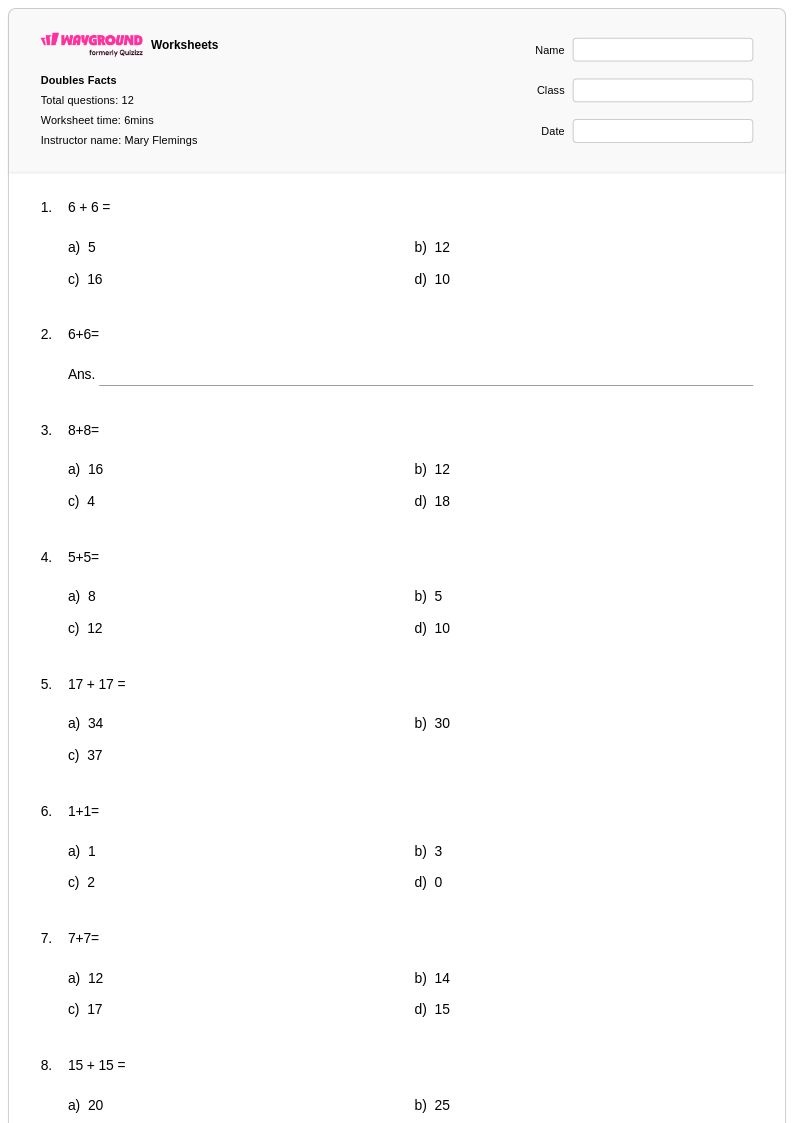
12 Q
2nd
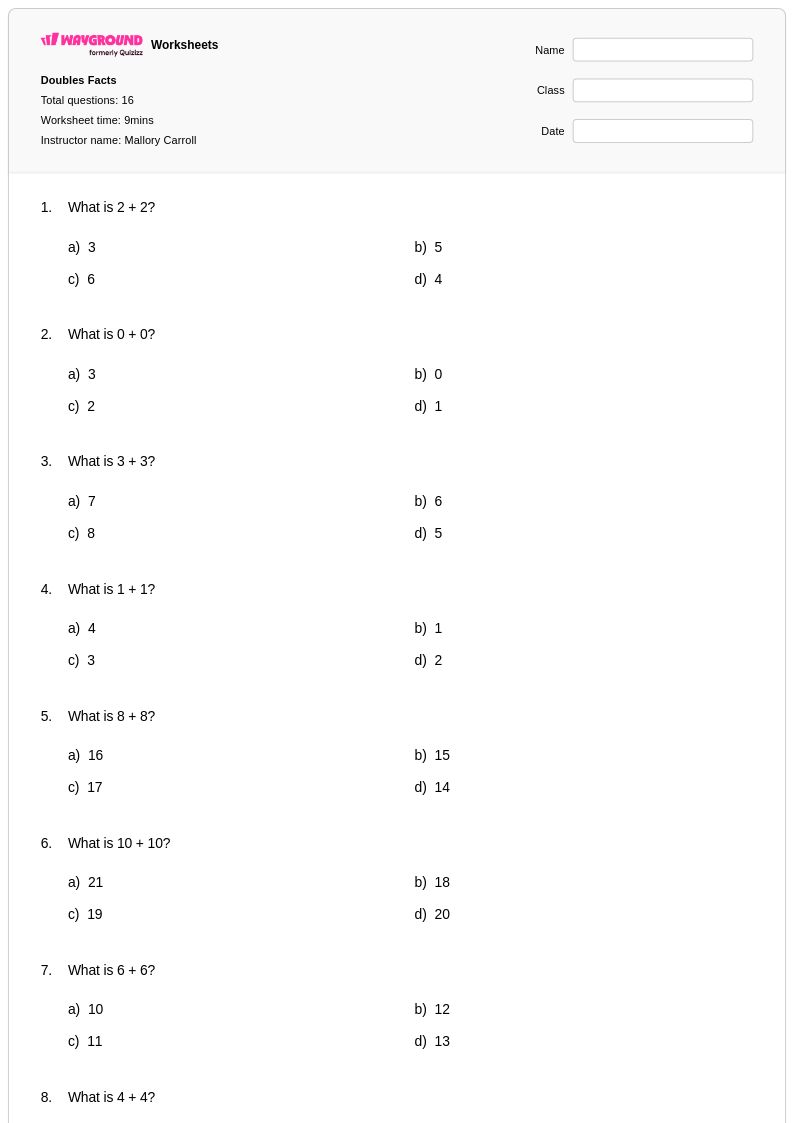
16 Q
1st
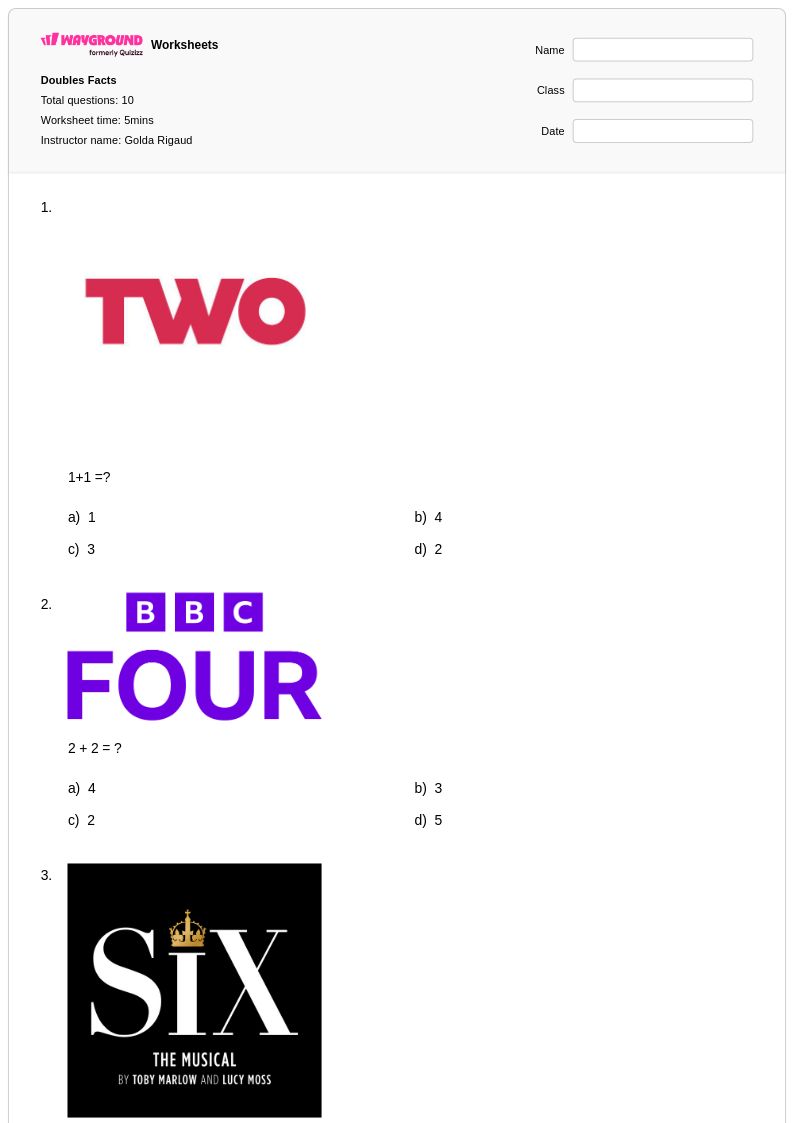
10 Q
1st
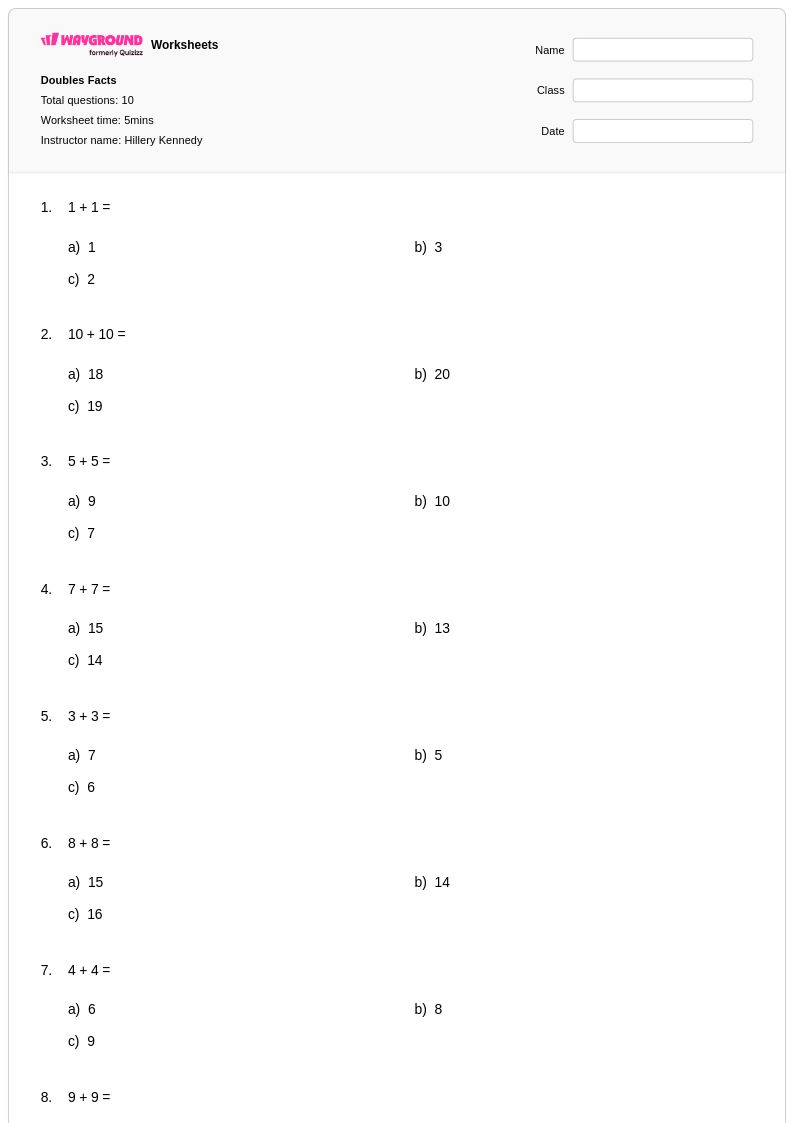
10 Q
1st - 2nd
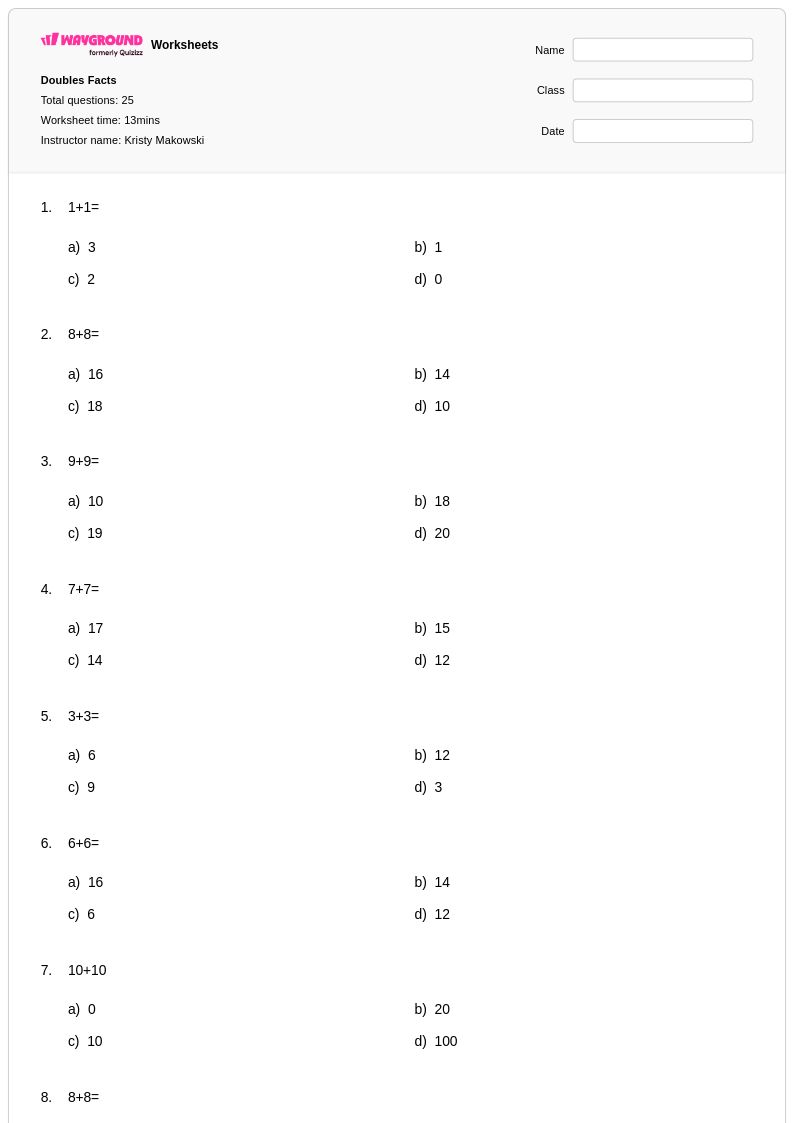
25 Q
1st - 3rd
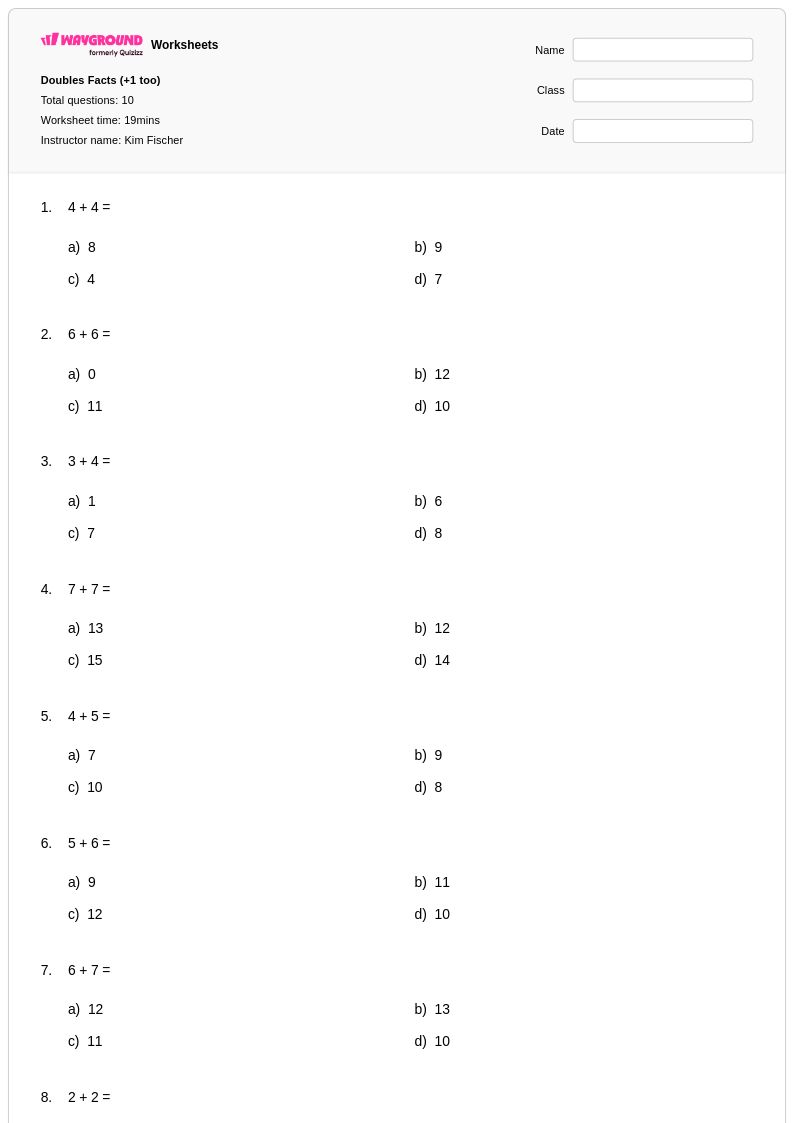
10 Q
KG - 2nd
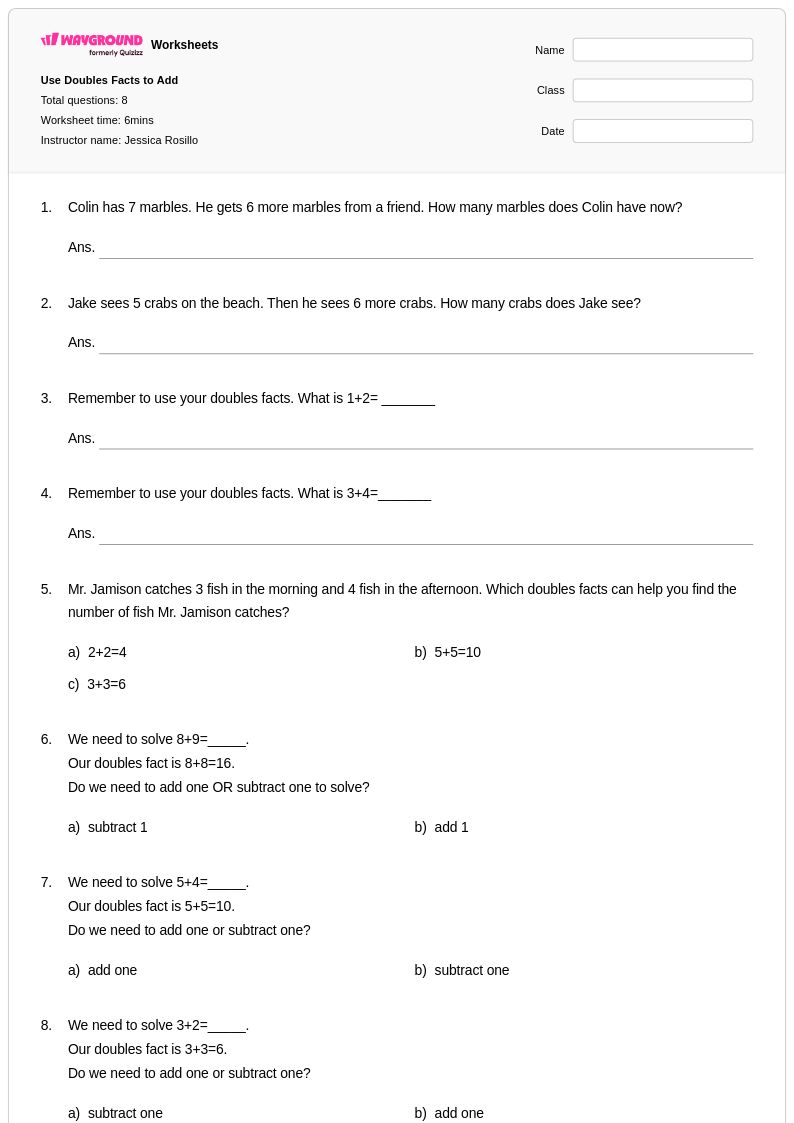
8 Q
2nd
Explore Doubles Facts Worksheets by Grades
Explore Other Subject Worksheets for kindergarten
Explore printable Doubles Facts worksheets for Kindergarten
Doubles facts worksheets for kindergarten provide young learners with essential foundational practice in recognizing and solving addition problems where both addends are identical, such as 1+1, 2+2, and 3+3. Through Wayground's comprehensive collection of doubles facts materials, kindergarten students develop crucial mathematical fluency and number sense that serves as a building block for more complex addition strategies. These carefully designed practice problems help children visualize mathematical relationships through concrete examples, manipulatives, and engaging activities that make abstract concepts accessible to developing minds. Each worksheet comes with a complete answer key and is available as a free printable pdf, allowing educators to seamlessly integrate doubles facts practice into daily math instruction while providing students with repeated exposure to these fundamental mathematical patterns.
Wayground, formerly Quizizz, empowers teachers with millions of educator-created resources specifically designed to support kindergarten mathematics instruction, including extensive doubles facts worksheet collections that align with early elementary standards. The platform's robust search and filtering capabilities enable teachers to quickly locate age-appropriate materials that match their students' developmental needs, while built-in differentiation tools allow for easy customization of difficulty levels and problem formats. These versatile resources are available in both printable and digital pdf formats, providing flexibility for classroom instruction, homework assignments, intervention programs, and enrichment activities. Teachers can efficiently plan targeted skill practice sessions, implement remediation strategies for struggling learners, and challenge advanced students through carefully scaffolded doubles facts exercises that build mathematical confidence and computational fluency in kindergarten students.
FAQs
How do I teach doubles facts to kindergarteners?
What doubles facts are appropriate for kindergarten?
What exercises help kindergarteners practice doubles facts?
What mistakes do kindergarteners make with doubles facts?
How do I use Wayground's kindergarten doubles facts worksheets?
How can I support diverse learners with kindergarten doubles facts practice?