Free Printable Earned Income Worksheets for Class 1
Discover free Class 1 earned income worksheets and printables that help young students understand how people earn money through jobs and work, complete with answer keys for easy practice.
Explore printable Earned Income worksheets for Class 1
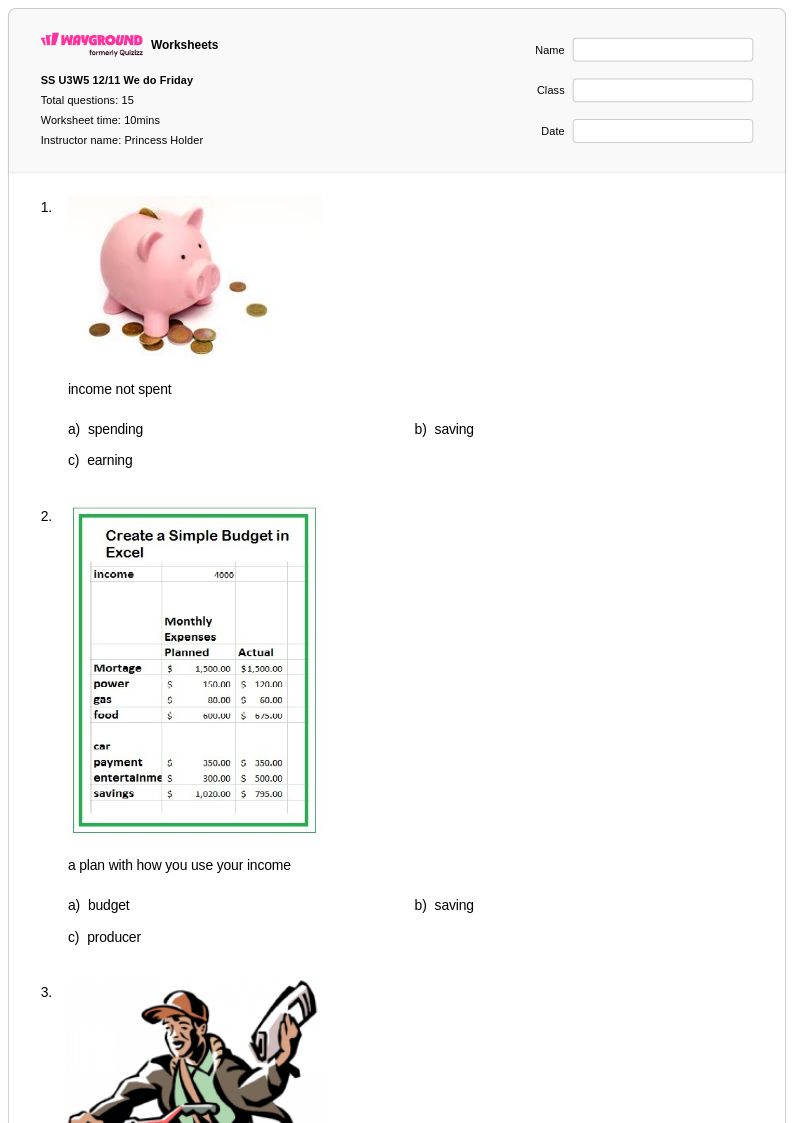
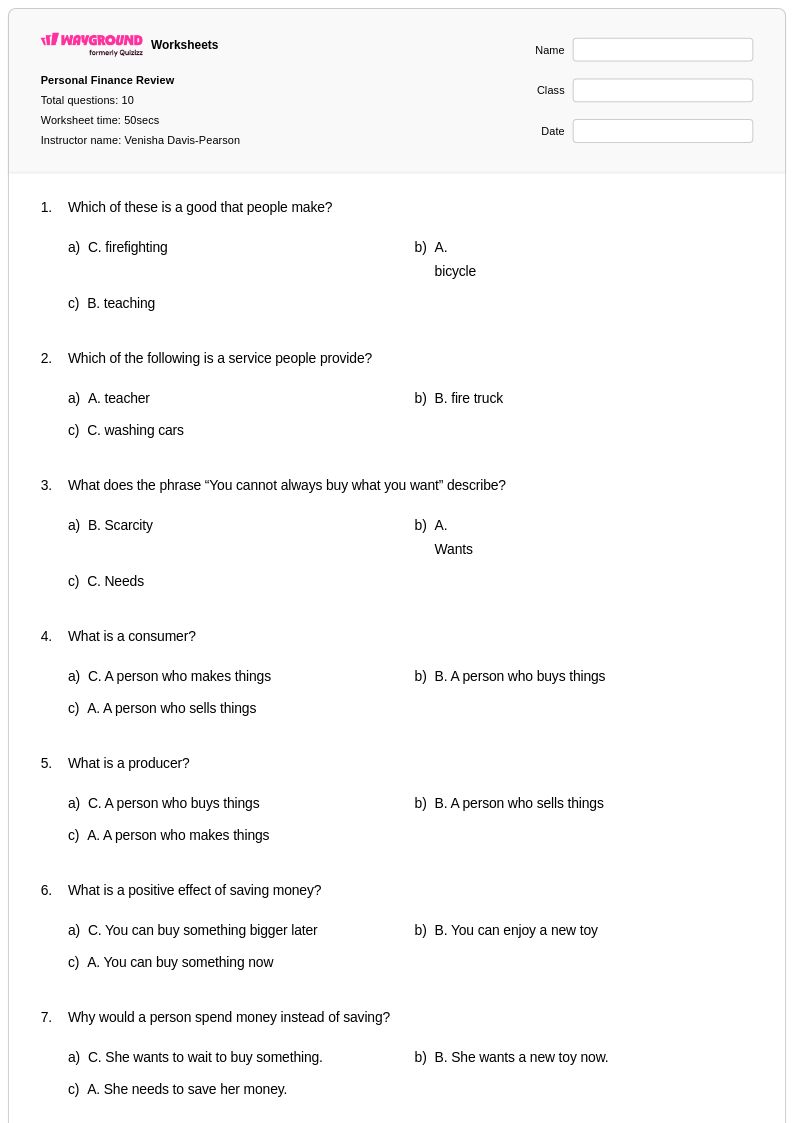
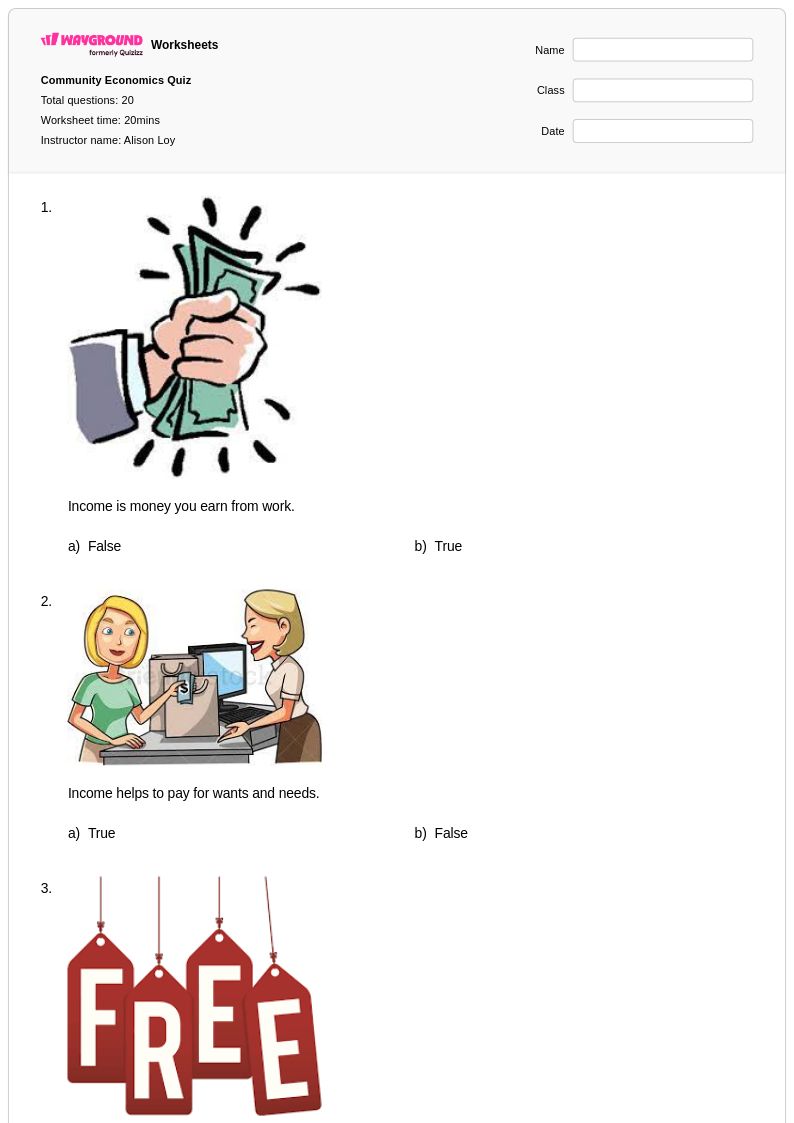
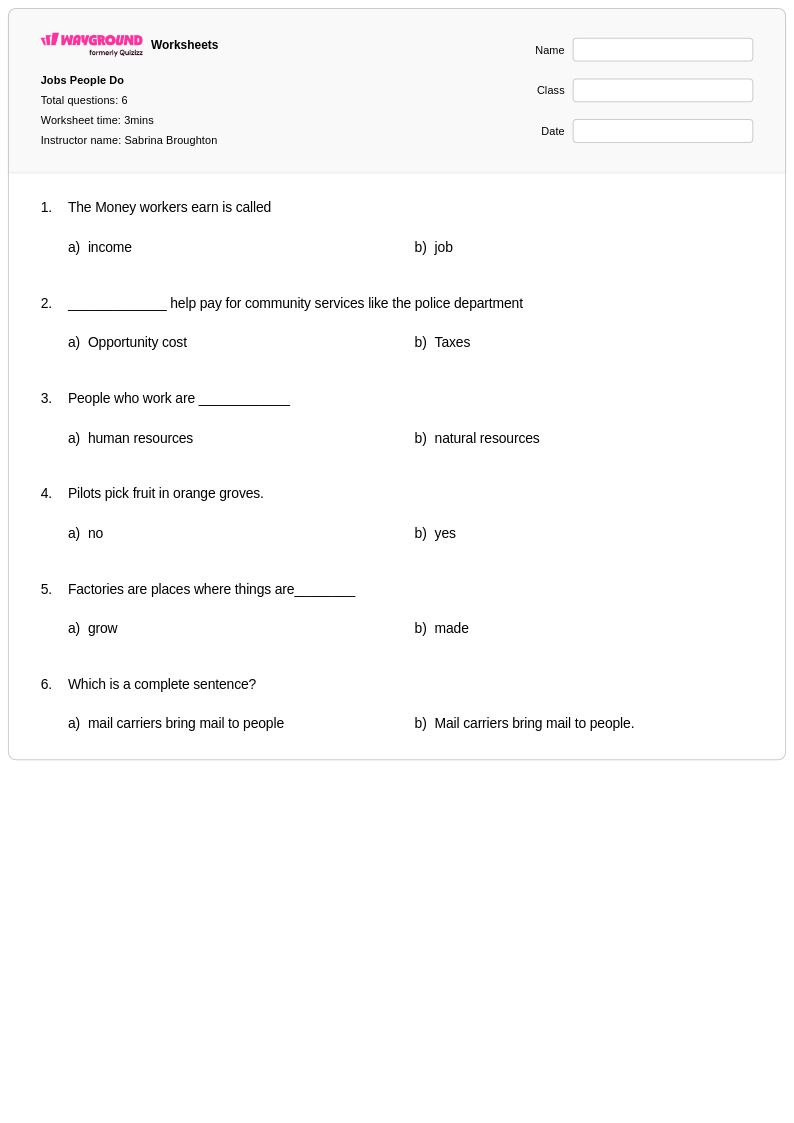
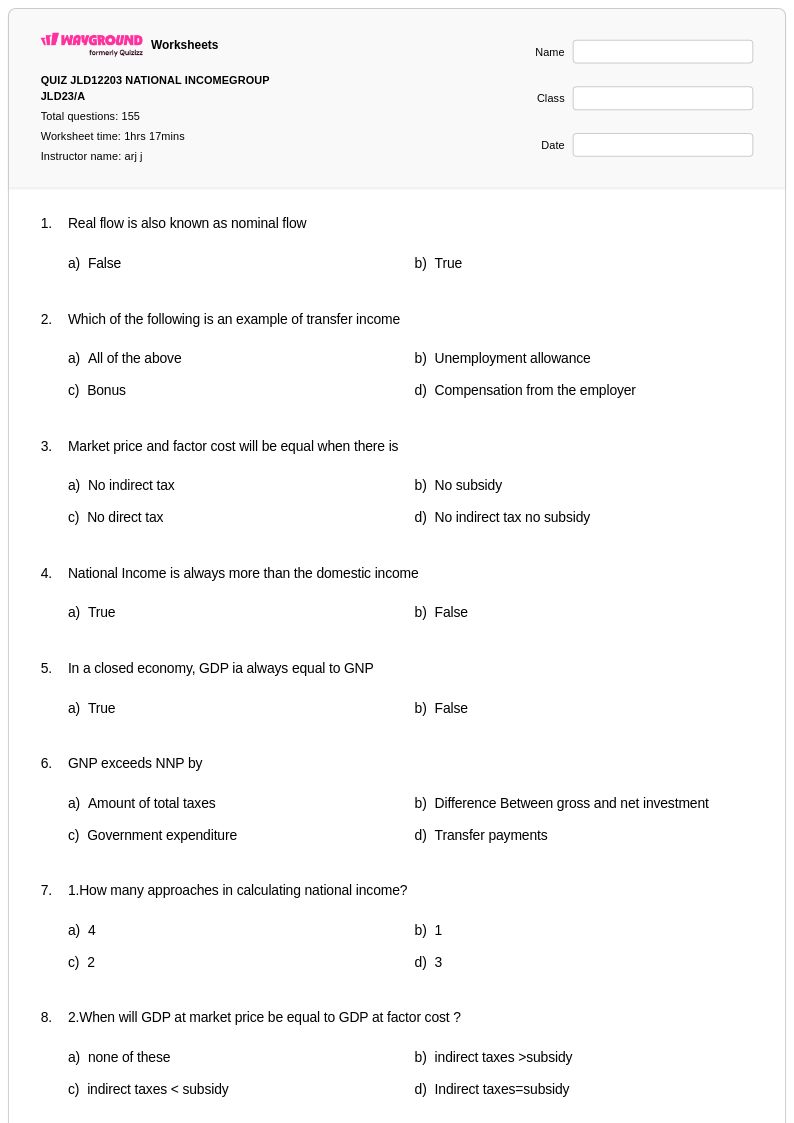
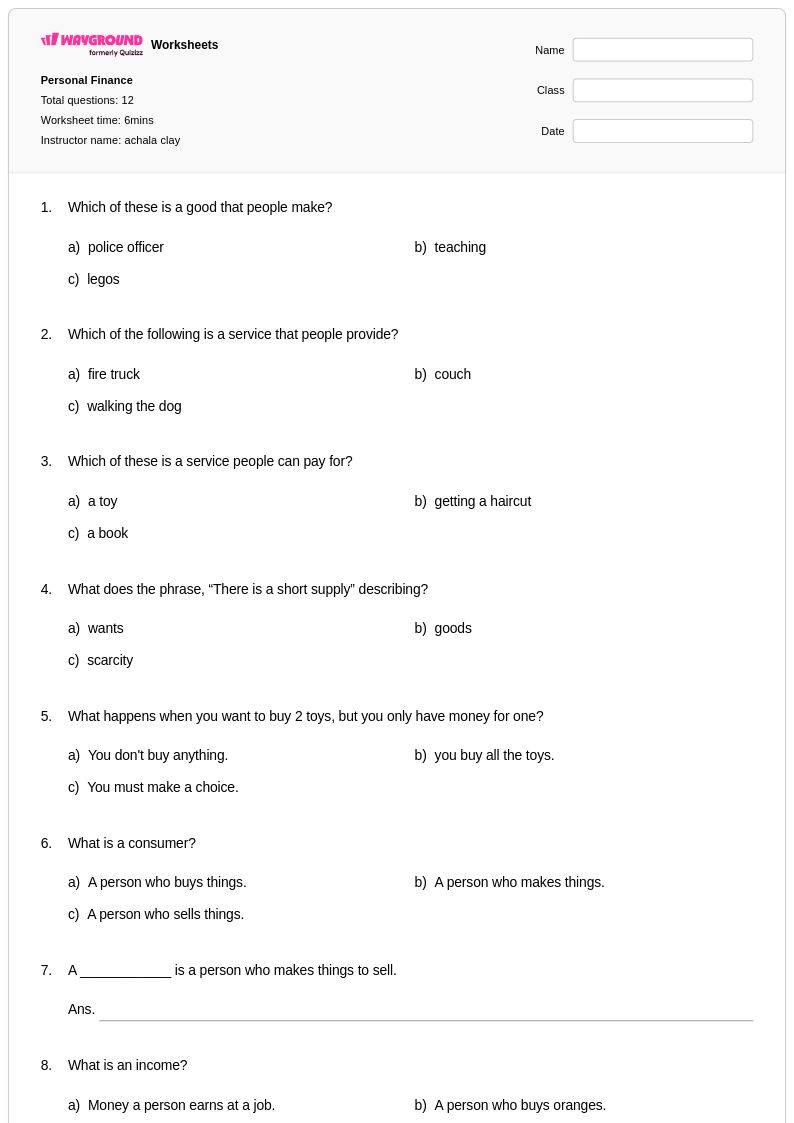
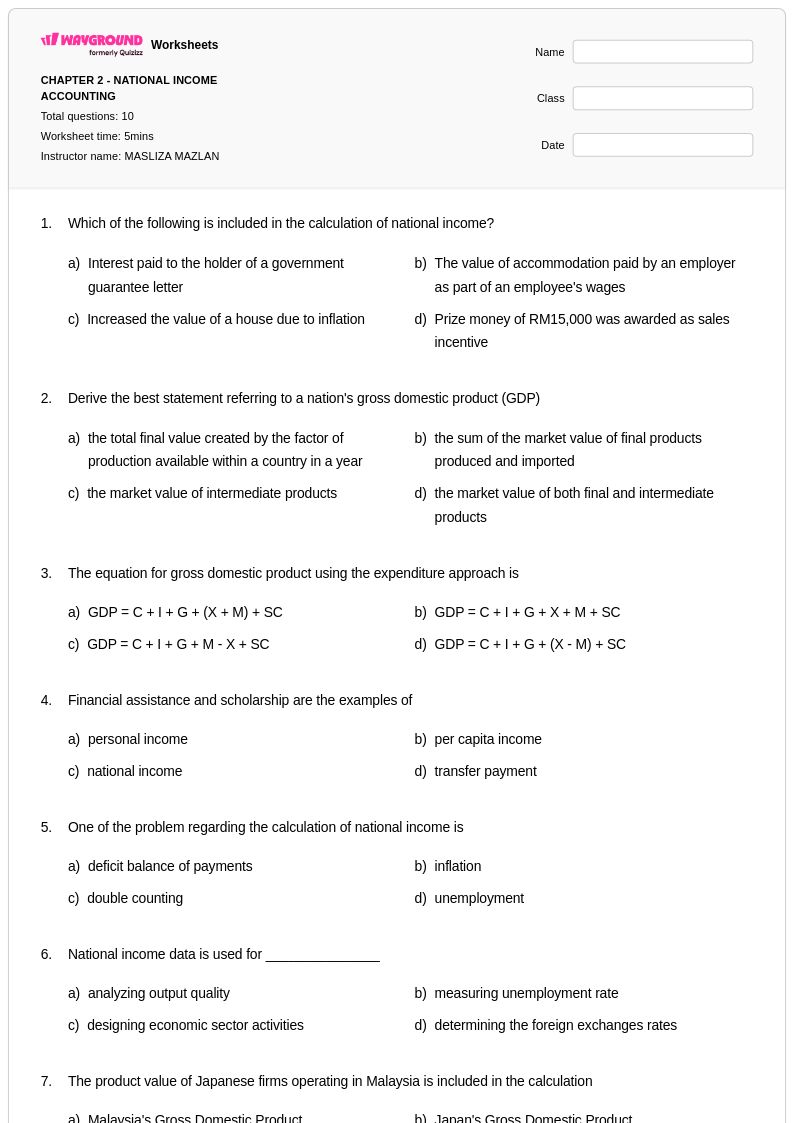
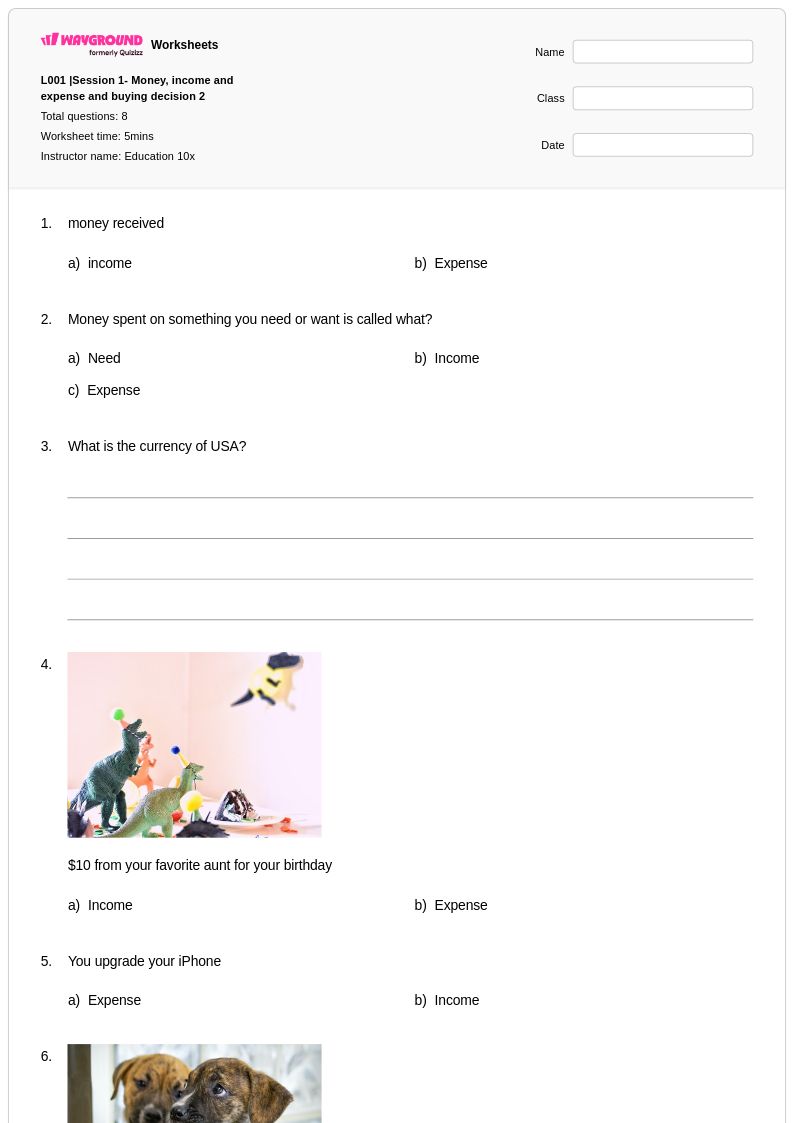
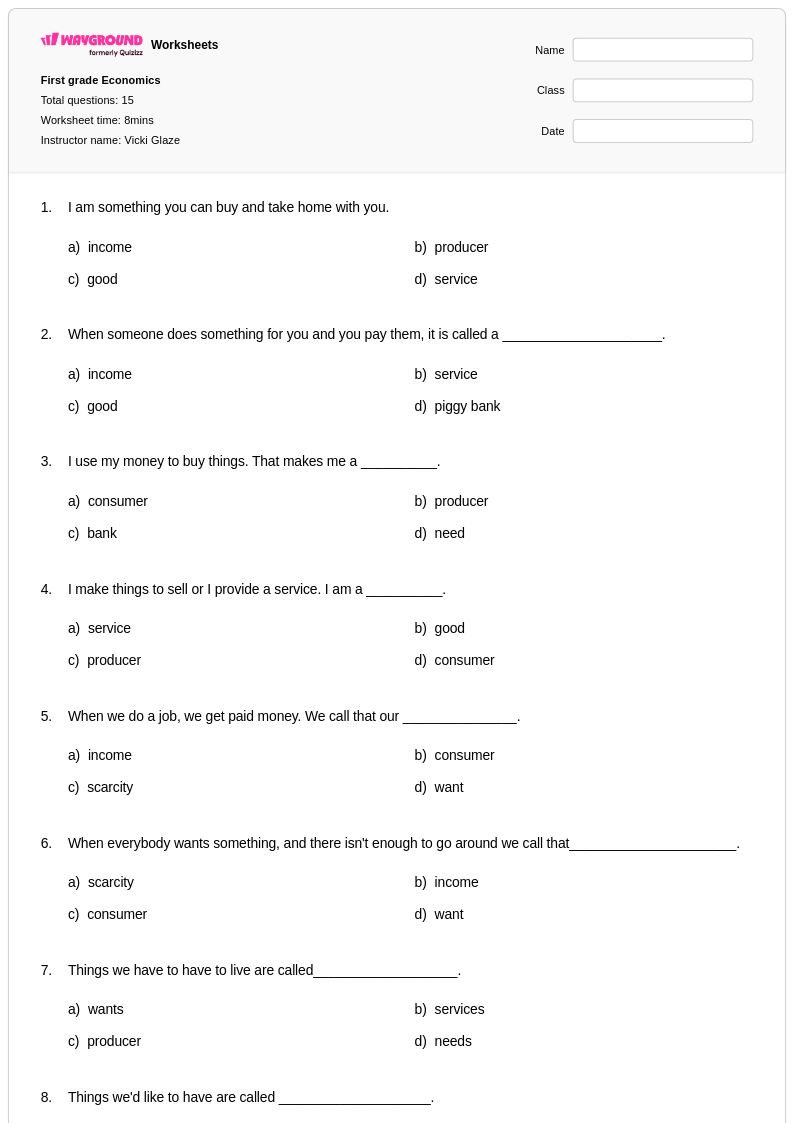
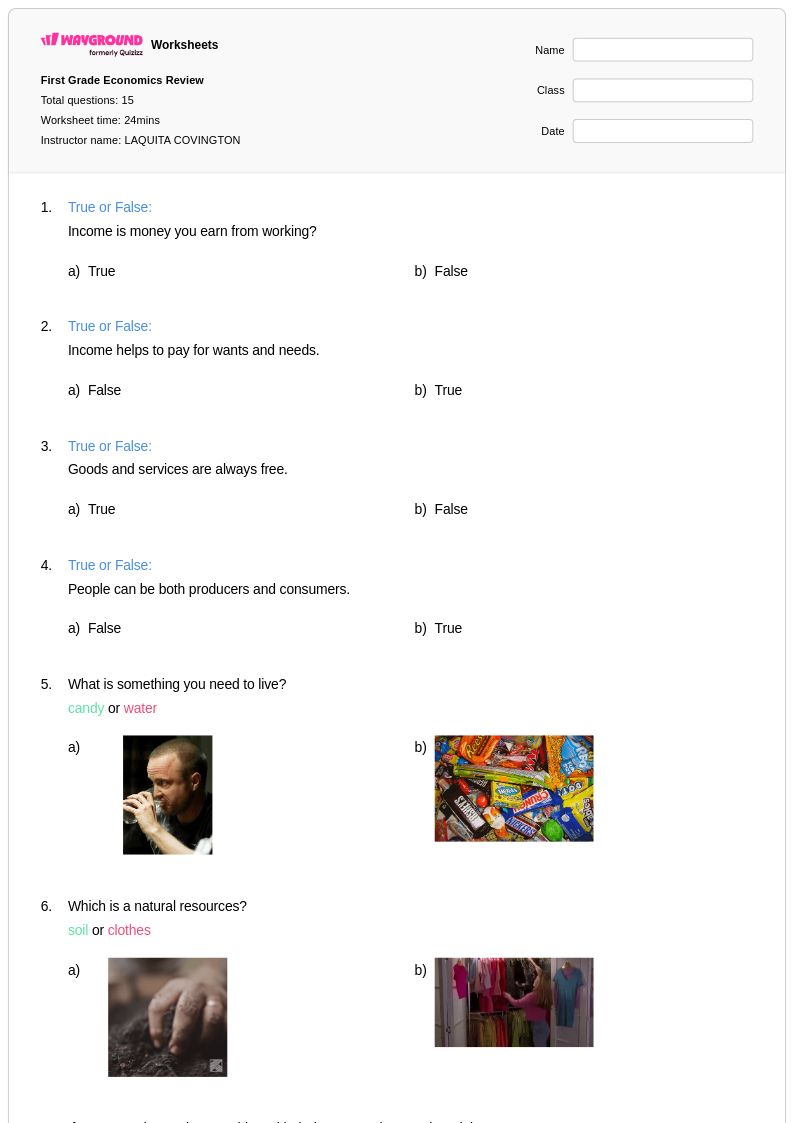
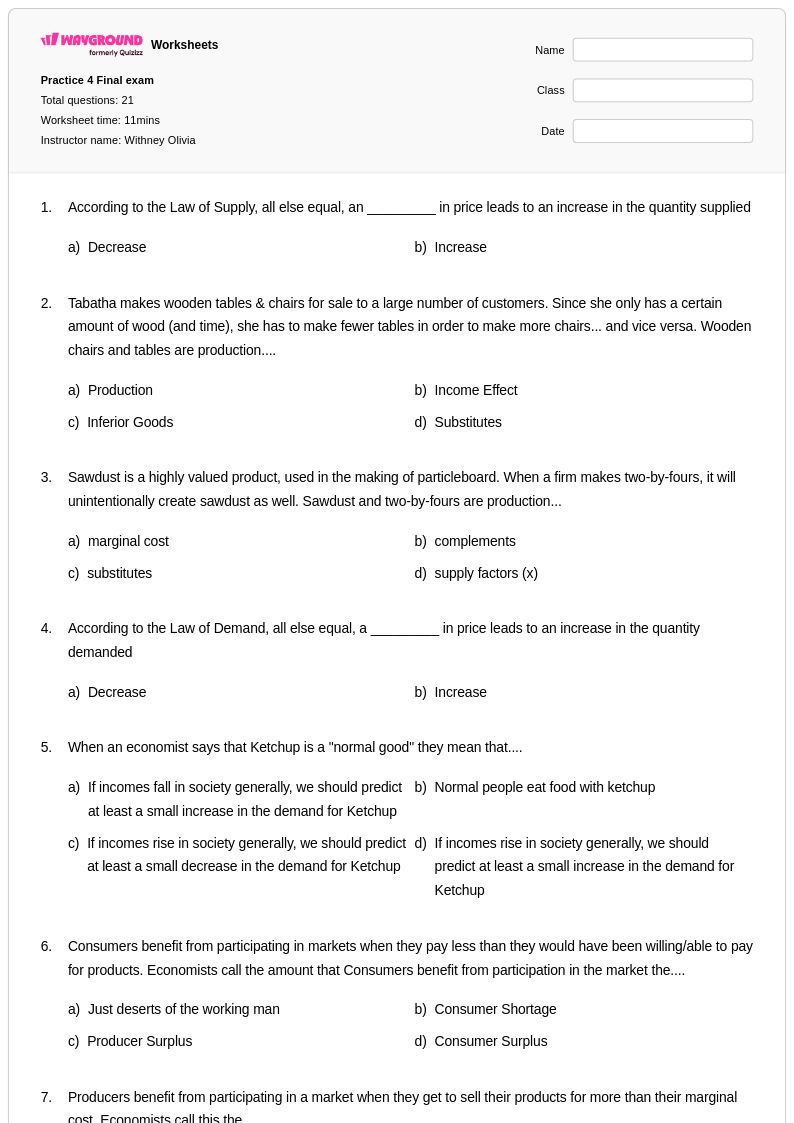
Class 1 earned income worksheets available through Wayground (formerly Quizizz) introduce young learners to fundamental economic concepts through age-appropriate activities that build foundational understanding of how people earn money for their work. These carefully designed educational resources help first-grade students recognize different types of jobs in their community while developing critical thinking skills about the relationship between work and payment. The worksheets feature engaging practice problems that encourage students to identify various occupations, match workers with their earnings, and understand basic concepts about wages and salaries. Teachers can access comprehensive answer keys and free printables that make lesson planning efficient while ensuring students receive structured practice with essential economic literacy concepts.
Wayground (formerly Quizizz) empowers educators with millions of teacher-created resources specifically designed for Class 1 economics instruction, offering robust search and filtering capabilities that help locate targeted earned income materials aligned with curriculum standards. The platform's differentiation tools enable teachers to customize worksheets for diverse learning needs, providing both remediation support for struggling students and enrichment opportunities for advanced learners. Flexible formatting options include printable pdf versions for traditional classroom use and digital formats for interactive learning experiences, making it simple for educators to incorporate these resources into various instructional settings. This comprehensive collection supports effective lesson planning by offering ready-to-use materials that strengthen students' economic understanding through systematic skill practice and reinforcement activities.
FAQs
How do I teach earned income to students who have no work experience?
Anchor instruction in relatable scenarios such as babysitting, lawn mowing, or part-time retail jobs before introducing formal employment concepts. Use concrete examples that show how hourly wages and salaries are calculated, then layer in gross versus net pay by walking students through a sample pay stub. Connecting earned income to students' near-future goals, like saving for a car or college, increases engagement and retention.
What's the best way to teach students the difference between gross pay and net pay?
Start with a simple hourly wage calculation so students understand how gross pay is determined, then introduce deductions line by line — federal and state taxes, Social Security, and any benefits contributions. Having students calculate net pay from a realistic gross amount makes the concept tangible and prevents the common misconception that a quoted salary equals what ends up in a paycheck. Practice problems that require students to work through both calculations side by side are especially effective.
What kinds of practice problems help students get better at earned income calculations?
Effective practice problems include calculating weekly pay from an hourly wage, converting annual salary to an hourly rate, and determining overtime pay at 1.5x the regular rate. Students also benefit from problems that require them to apply a tax rate to gross earnings and calculate net take-home pay. Layering these problem types in sequence — from straightforward to multi-step — builds the procedural fluency students need for real-world financial decision-making.
What mistakes do students commonly make when working with earned income problems?
The most frequent error is confusing gross pay with take-home pay, leading students to overestimate actual earnings. Students also struggle with overtime calculations, often applying the regular rate to all hours rather than only those beyond 40 per week. Another common mistake is failing to distinguish earned income from passive or investment income, which matters when students encounter tax forms or financial planning scenarios.
How can I differentiate earned income instruction for students at different skill levels?
For students who need additional support, focus on single-step calculations such as multiplying hours worked by an hourly wage before introducing deductions. More advanced students can tackle multi-variable problems involving benefits packages, 401(k) contributions, and net pay comparisons across different compensation structures. On Wayground, teachers can apply accommodations such as reduced answer choices to decrease cognitive load for individual students, or enable Read Aloud so that question text is read to students who need it, without affecting other students' experience.
How do I use Wayground's earned income worksheets in my classroom?
Wayground's earned income worksheets are available as printable PDFs for traditional classroom use and in digital formats for technology-integrated settings, including the option to host them as a live quiz on the platform. Teachers can use them for direct instruction, independent practice, homework assignments, or remediation sessions. Answer keys are included with every worksheet, so students can receive immediate feedback and teachers can quickly identify where additional instruction is needed.