Free Printable Engineering & Science Practices Worksheets for Kindergarten
Discover free kindergarten engineering and science practices worksheets and printables from Wayground that help young learners explore scientific thinking through hands-on activities, complete with answer keys for easy assessment.
Explore printable Engineering & Science Practices worksheets for Kindergarten
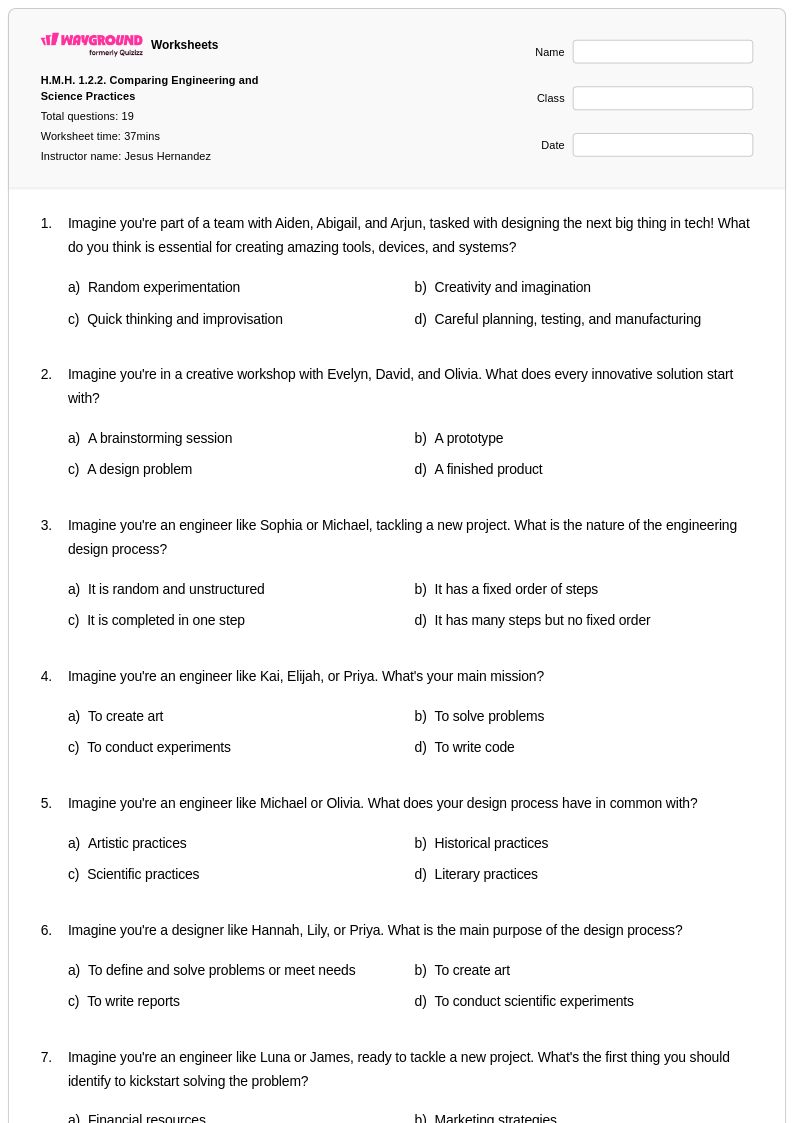
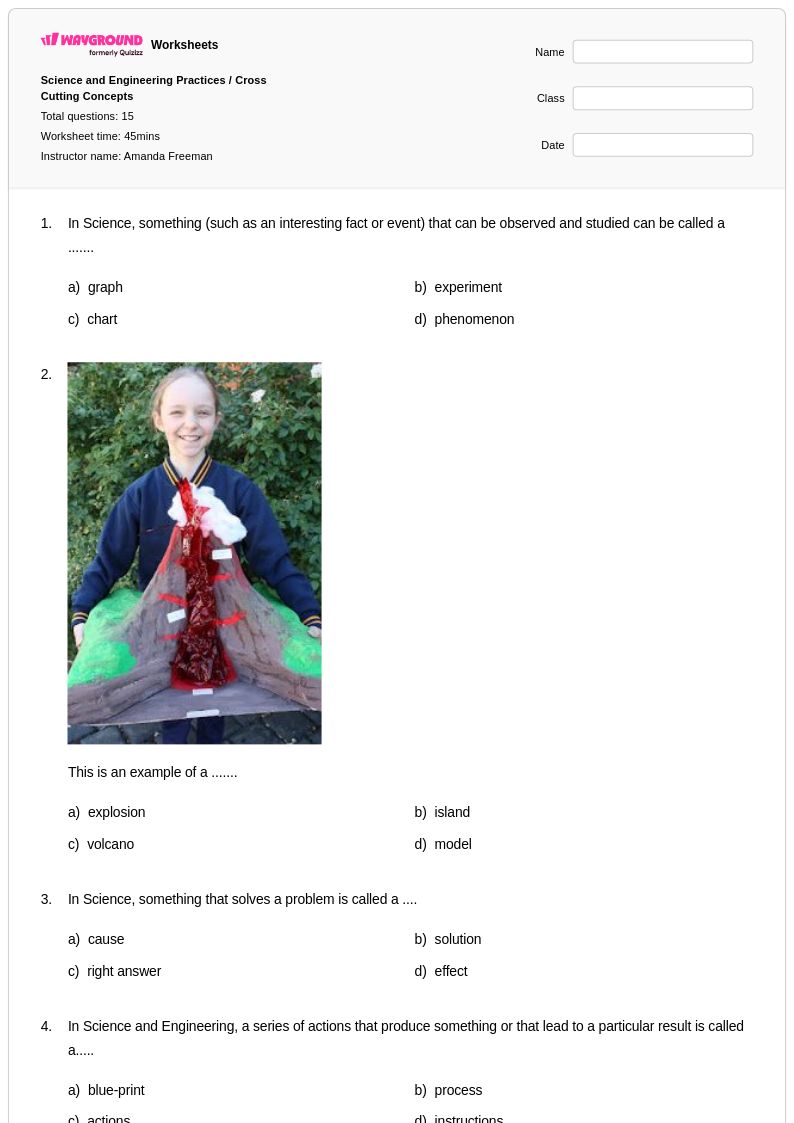
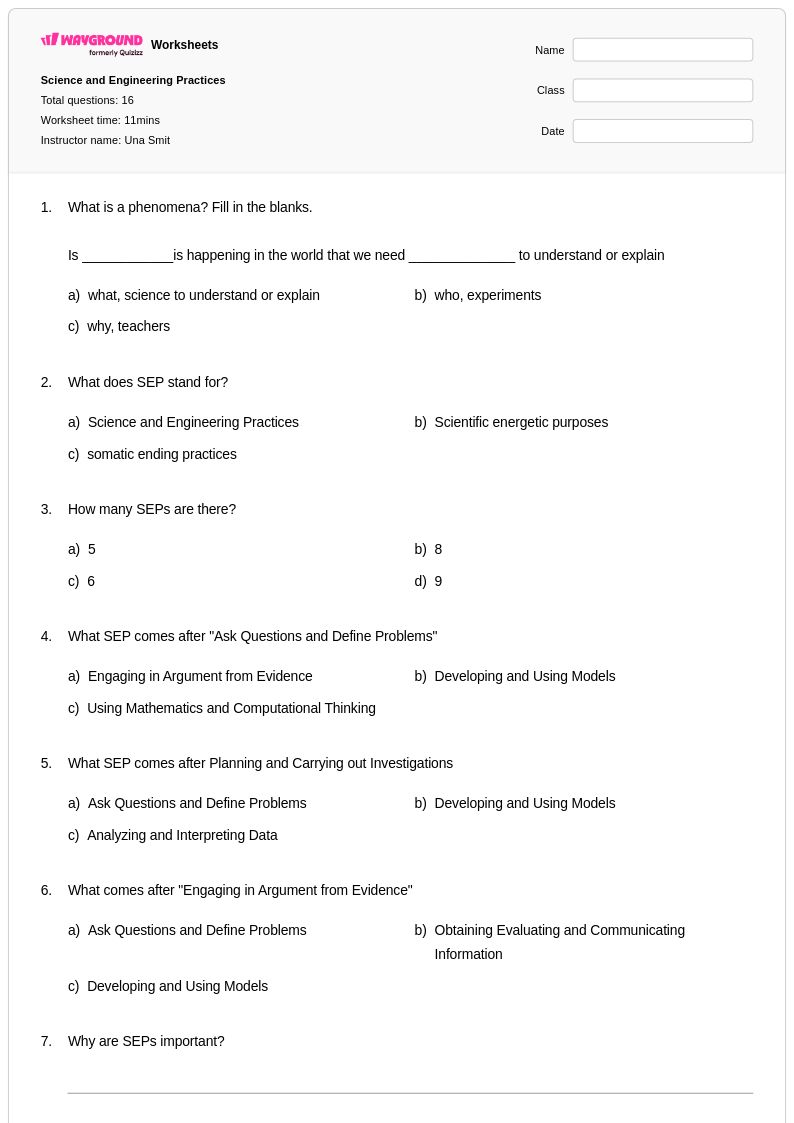
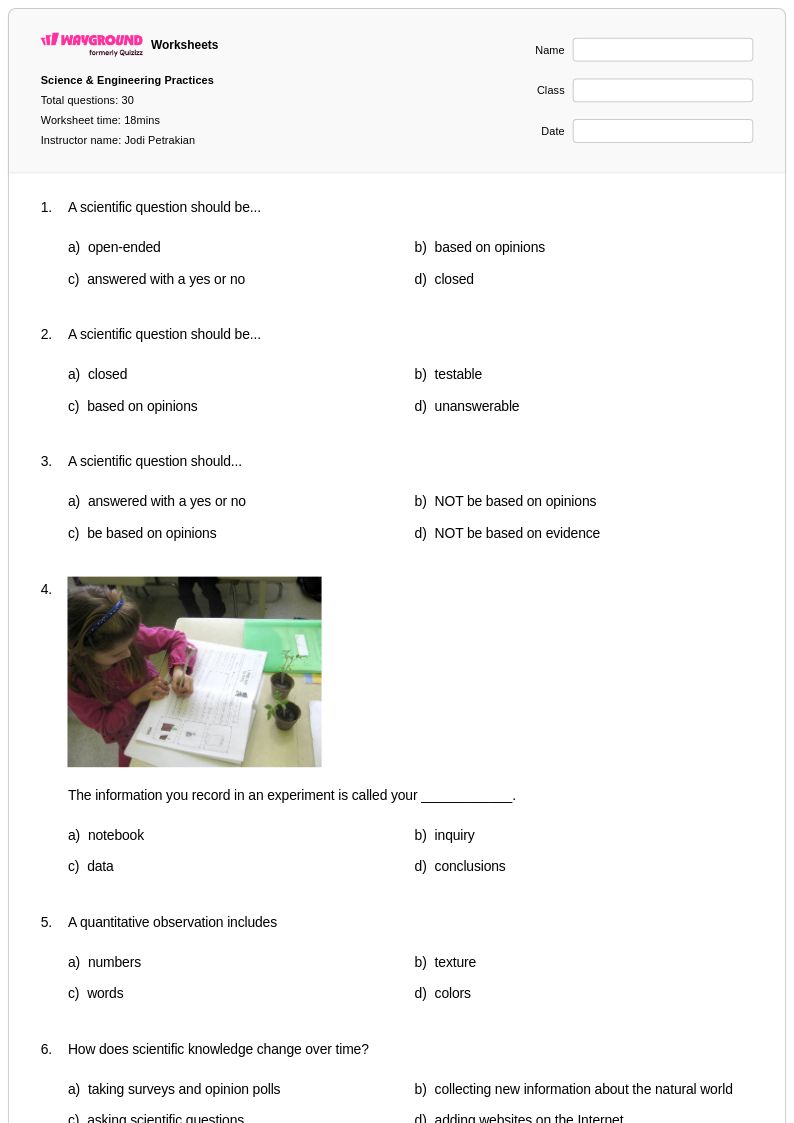
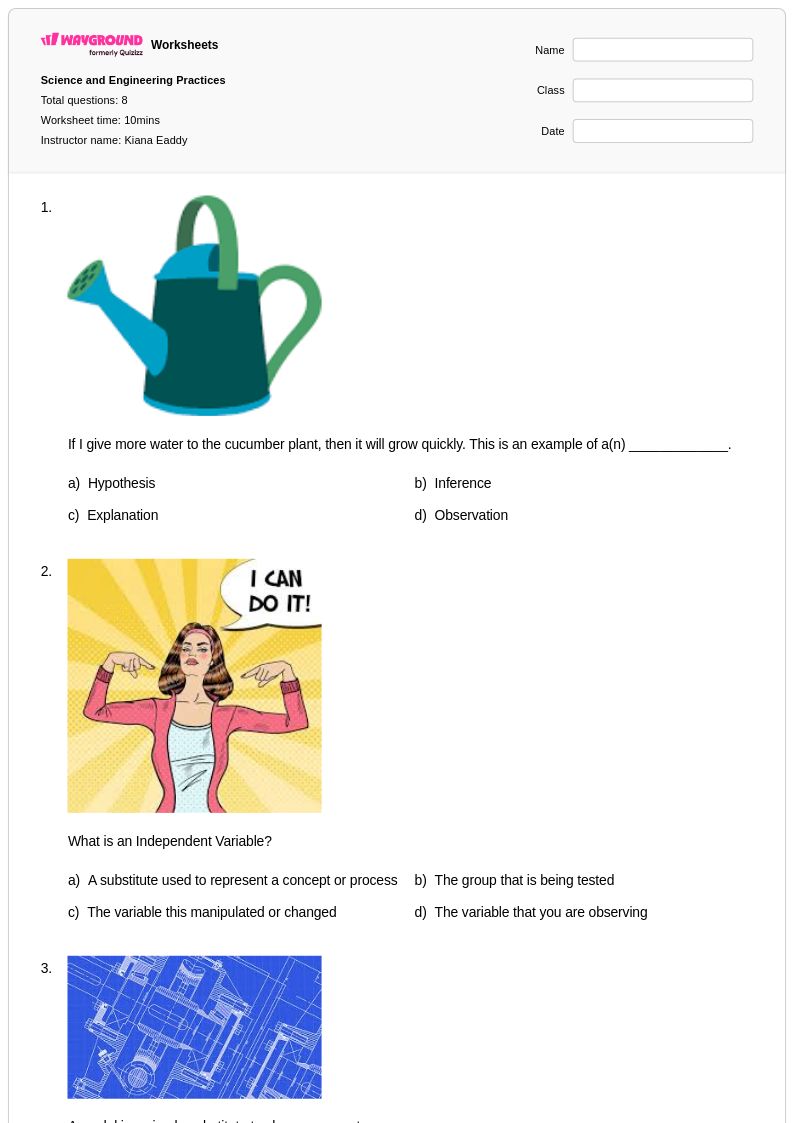
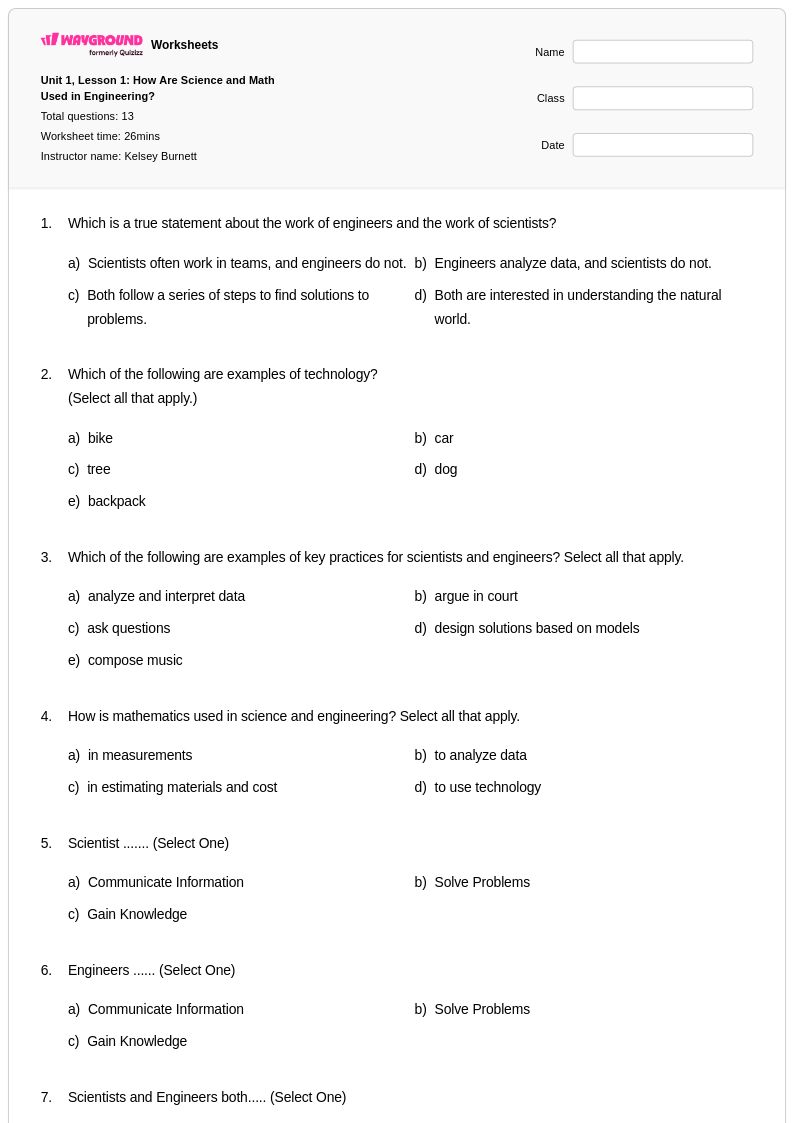
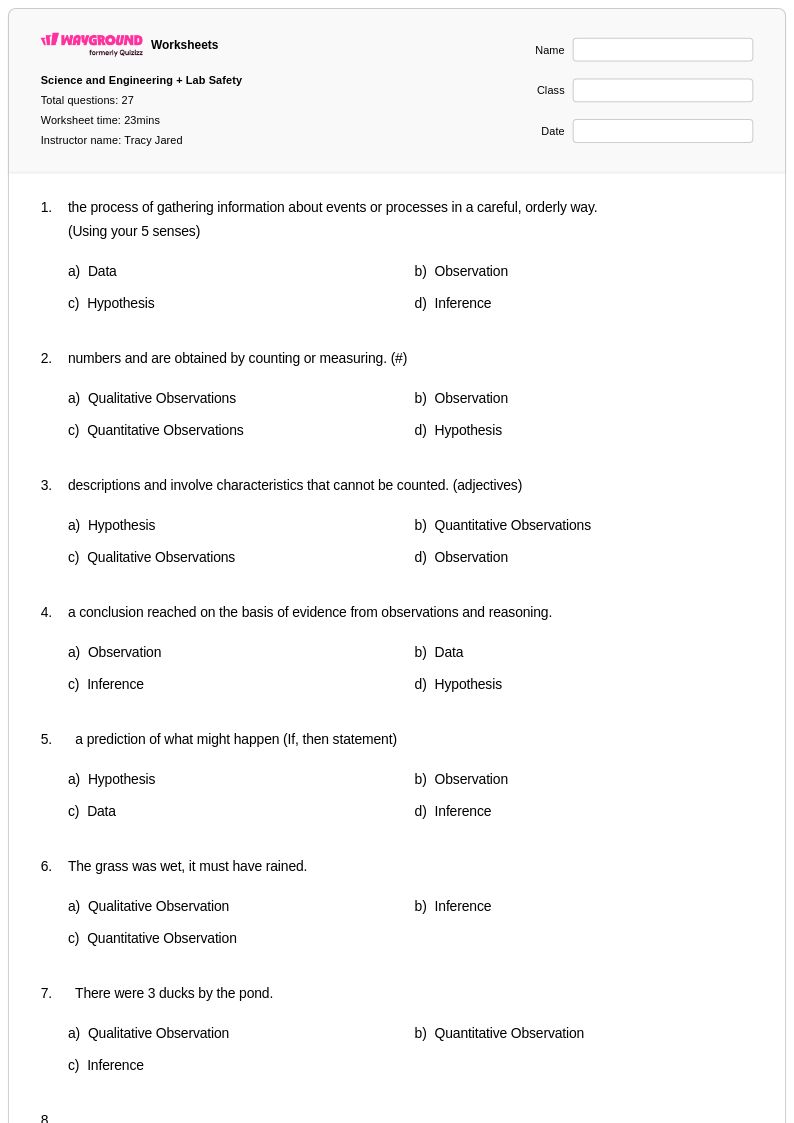
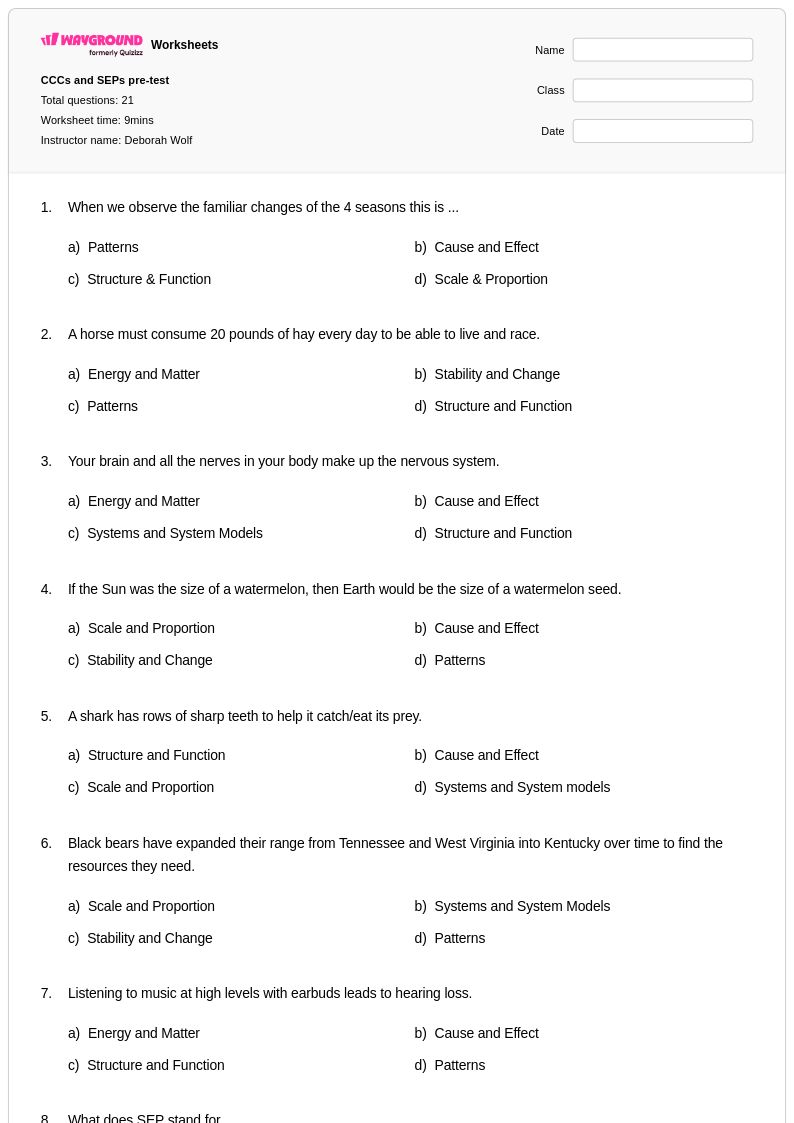
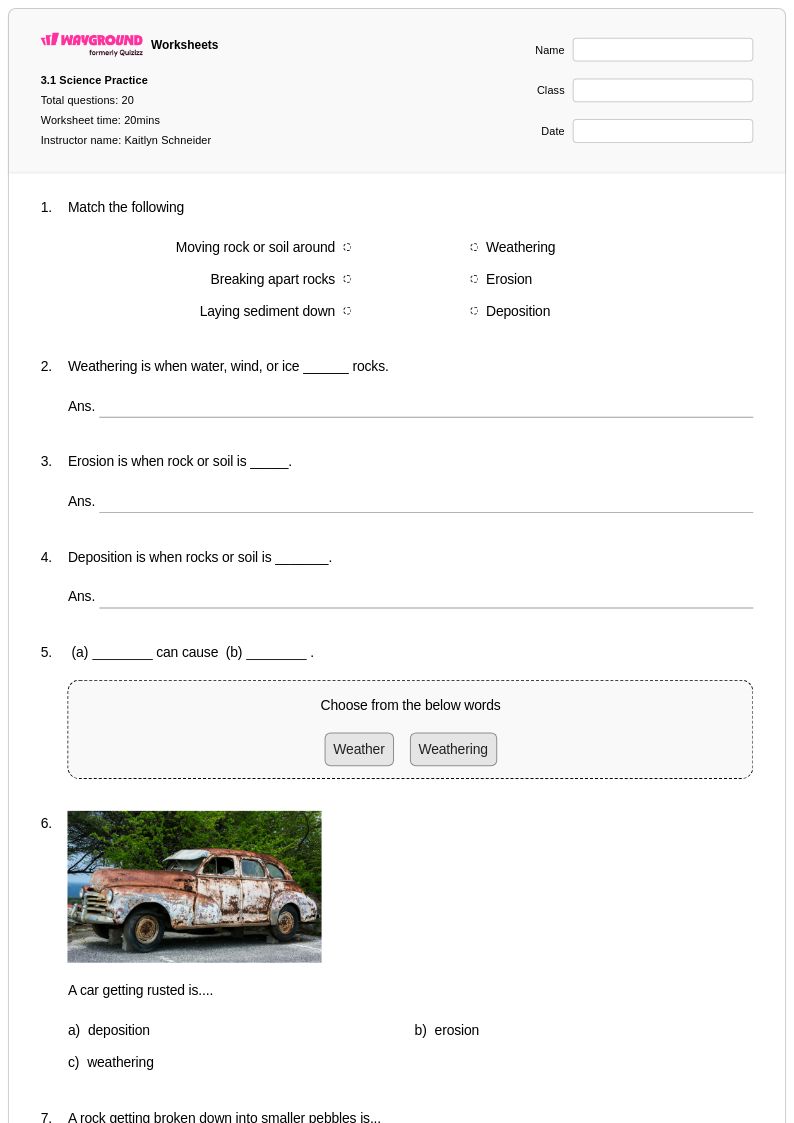
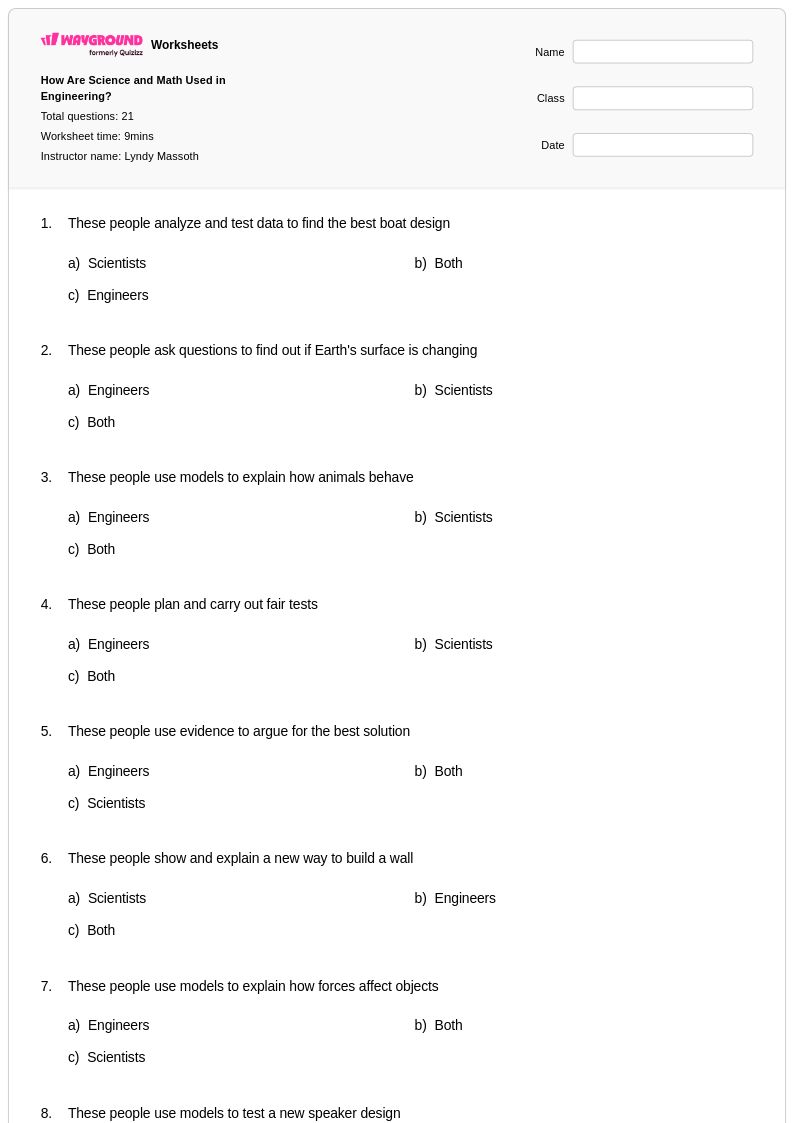
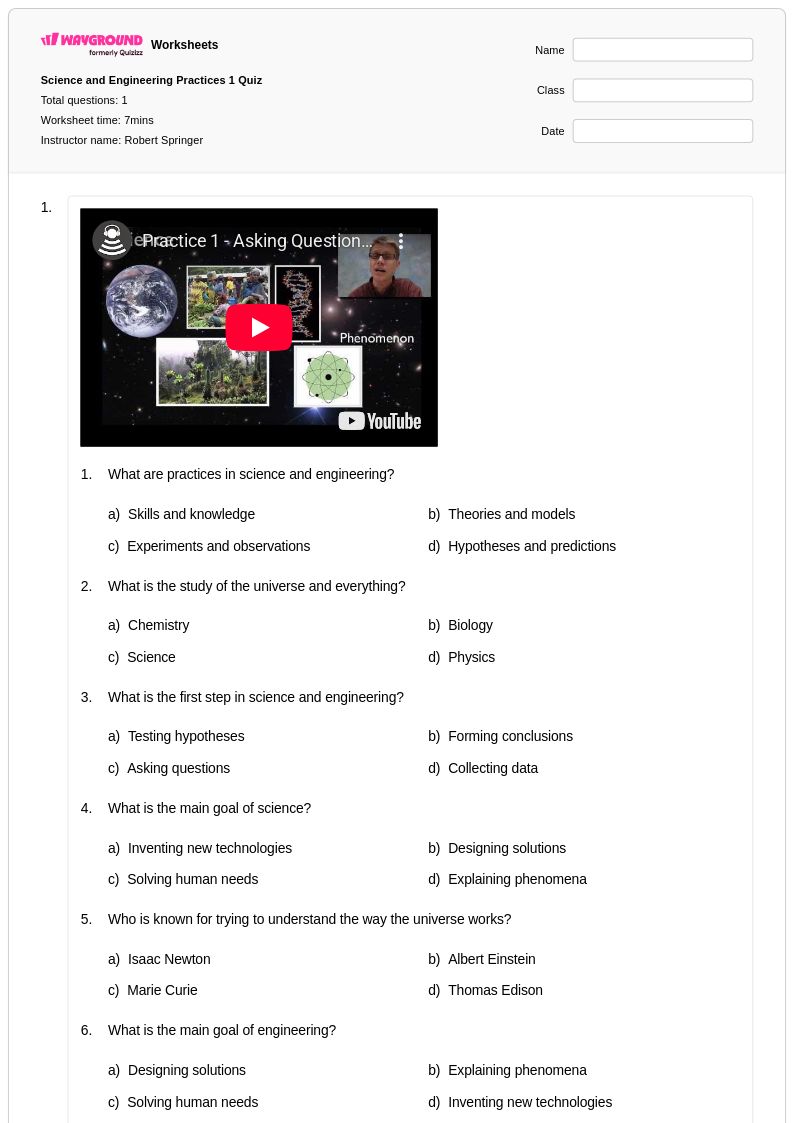
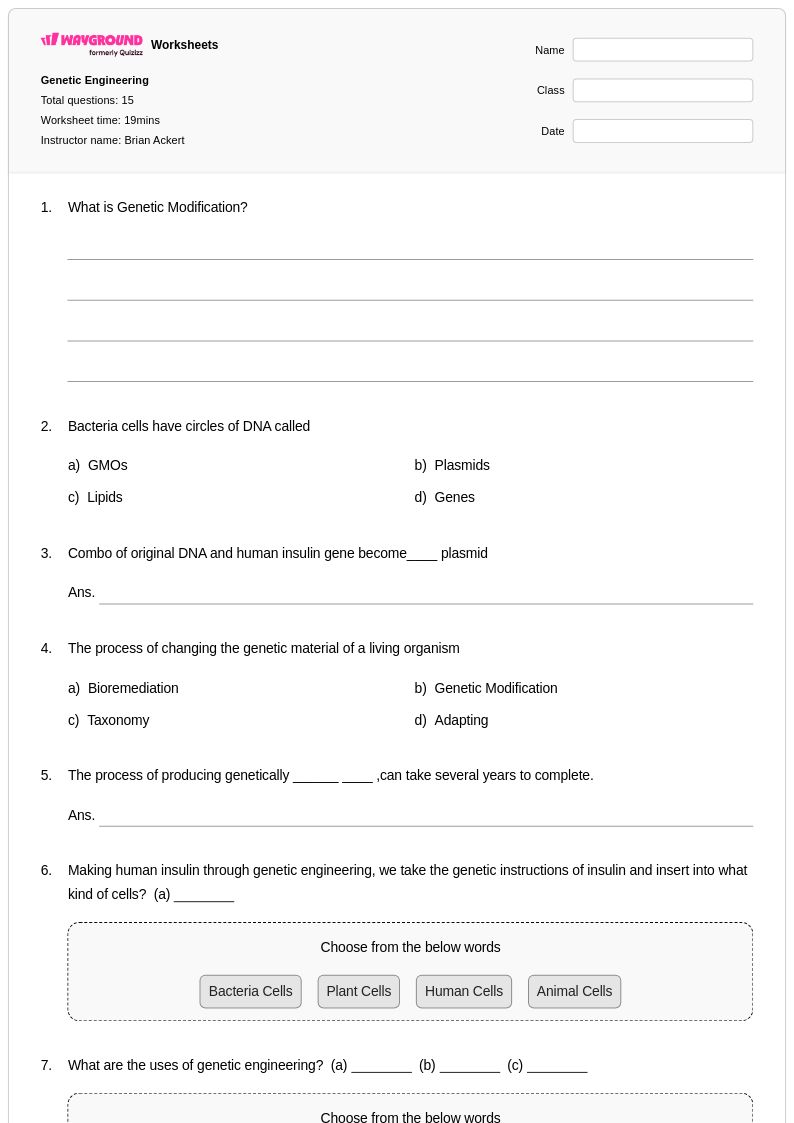
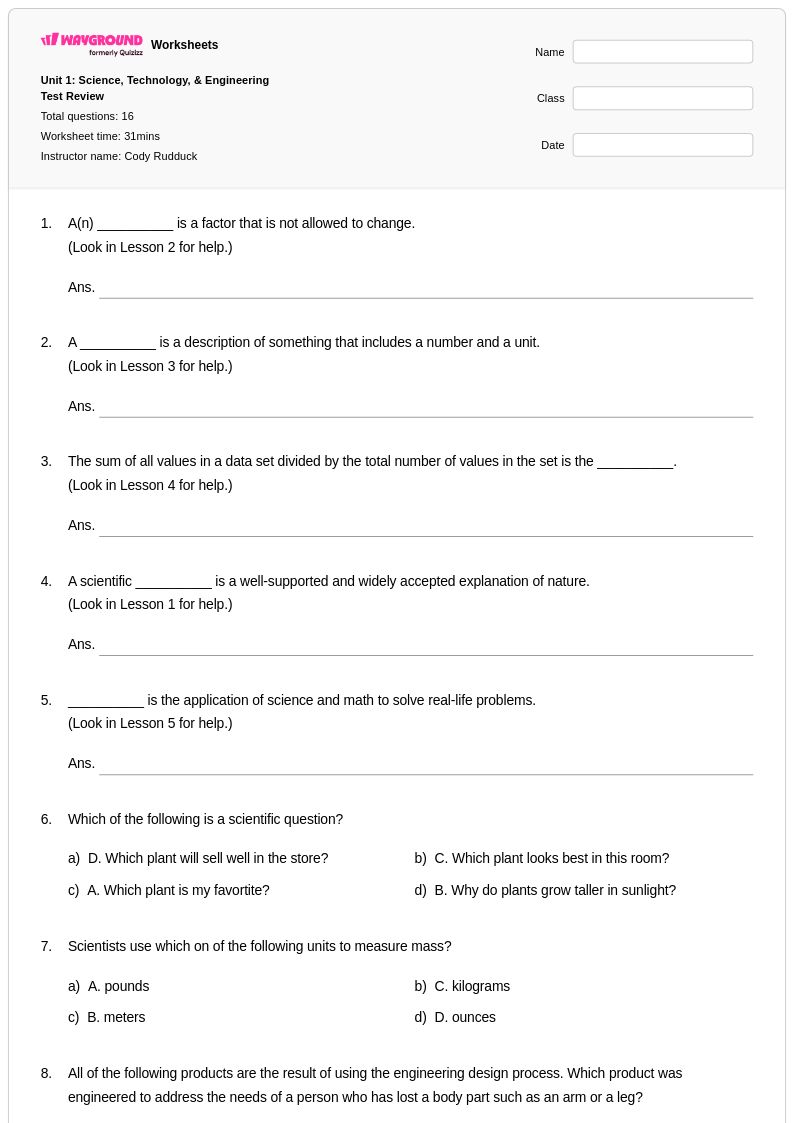
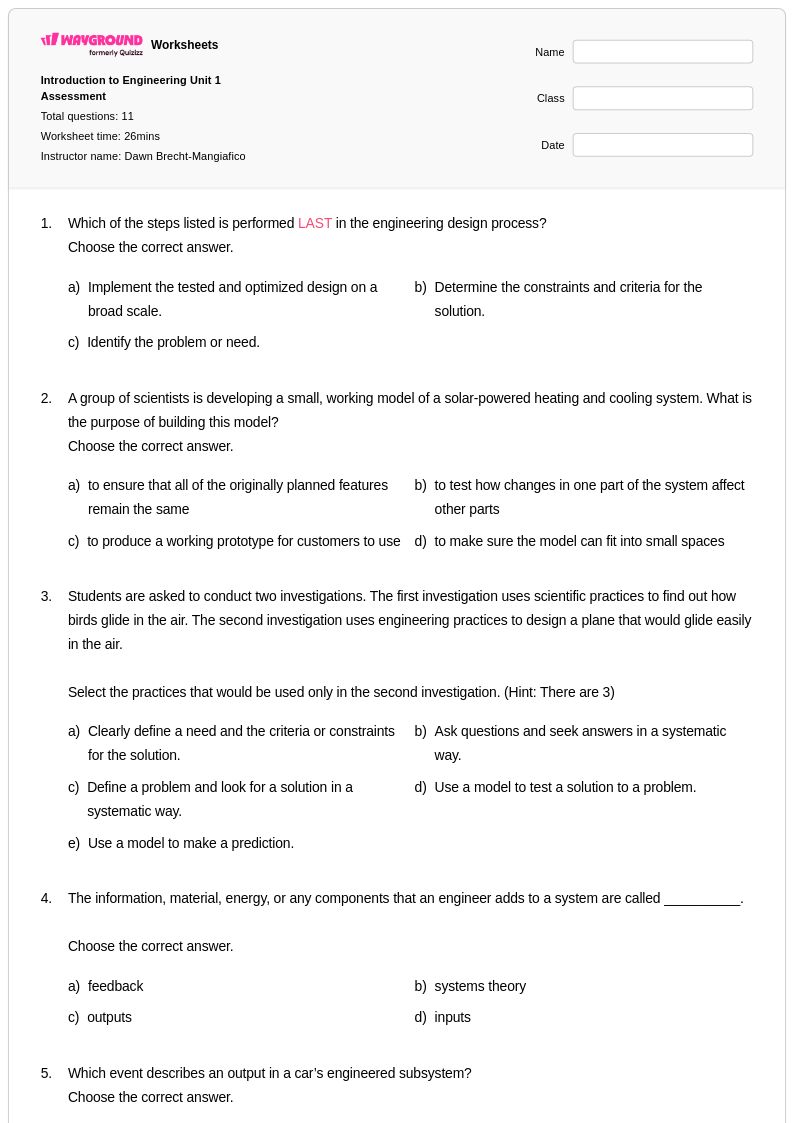
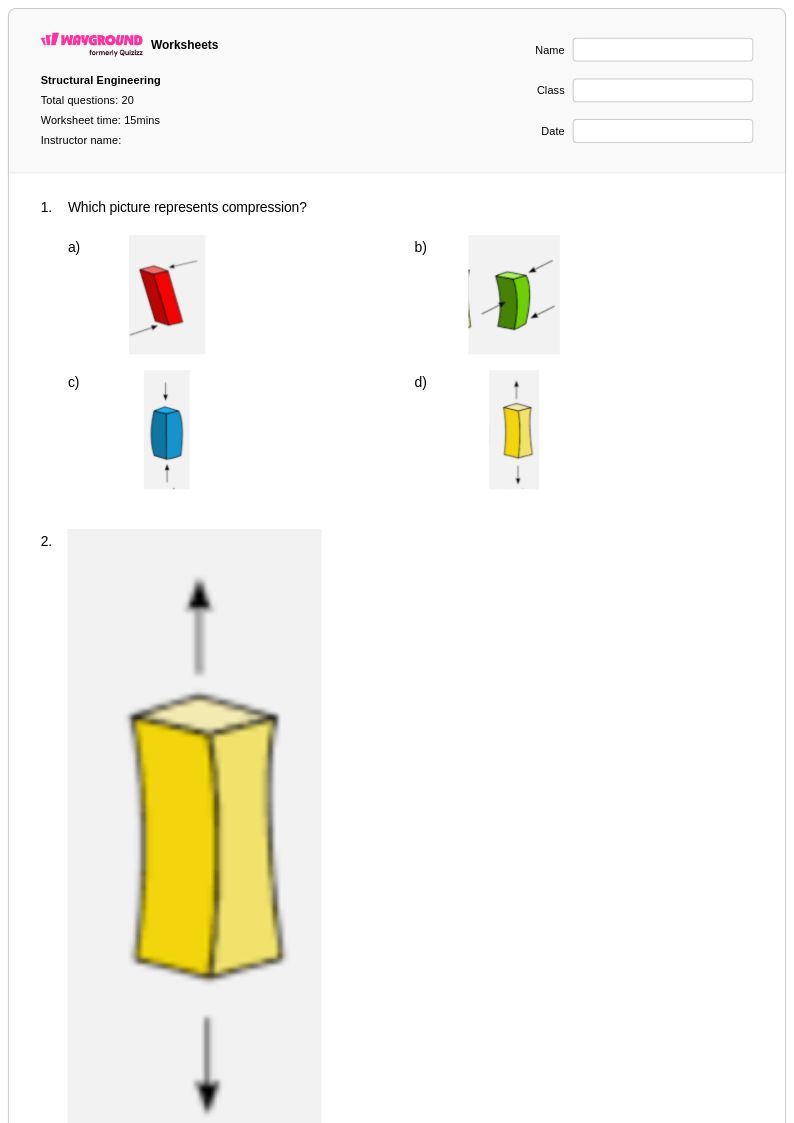
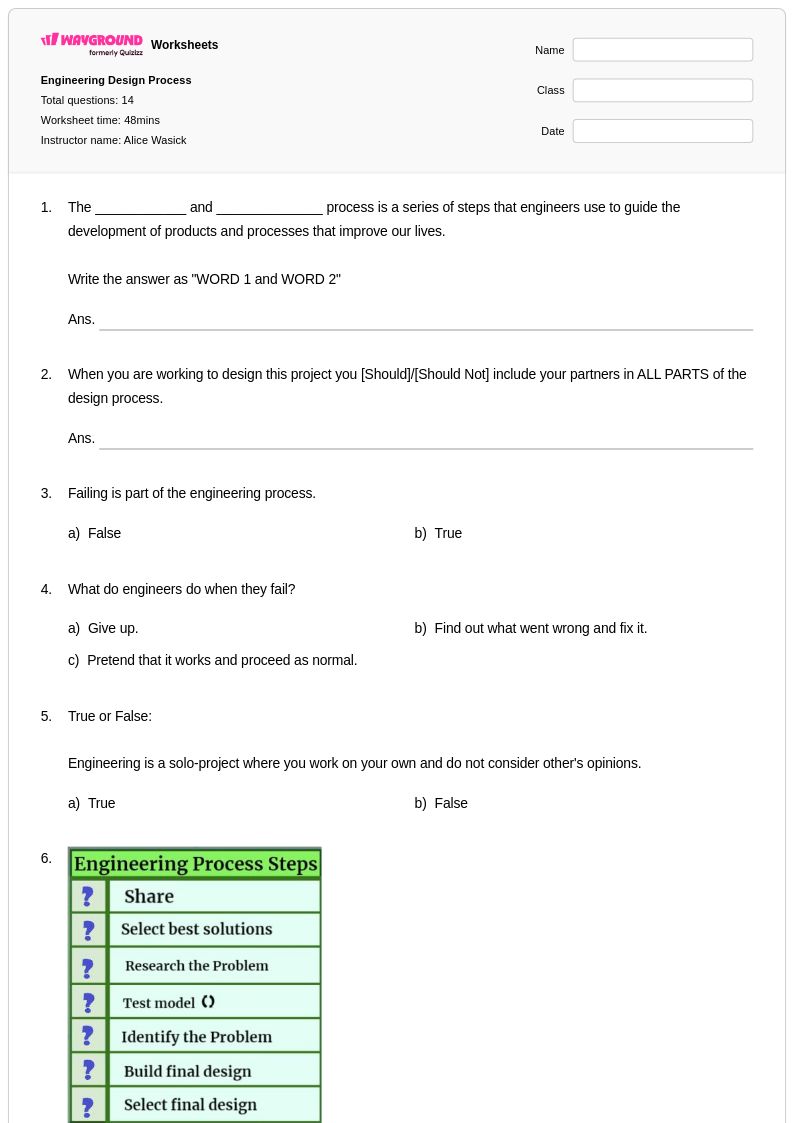
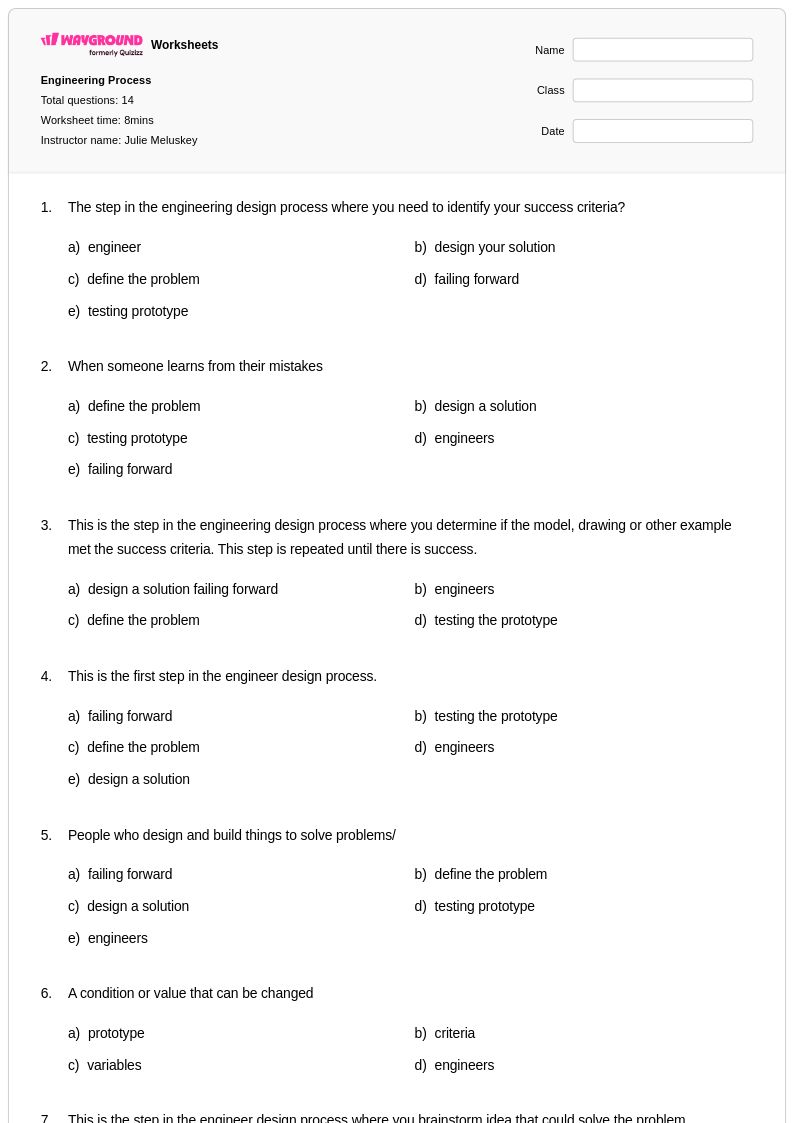
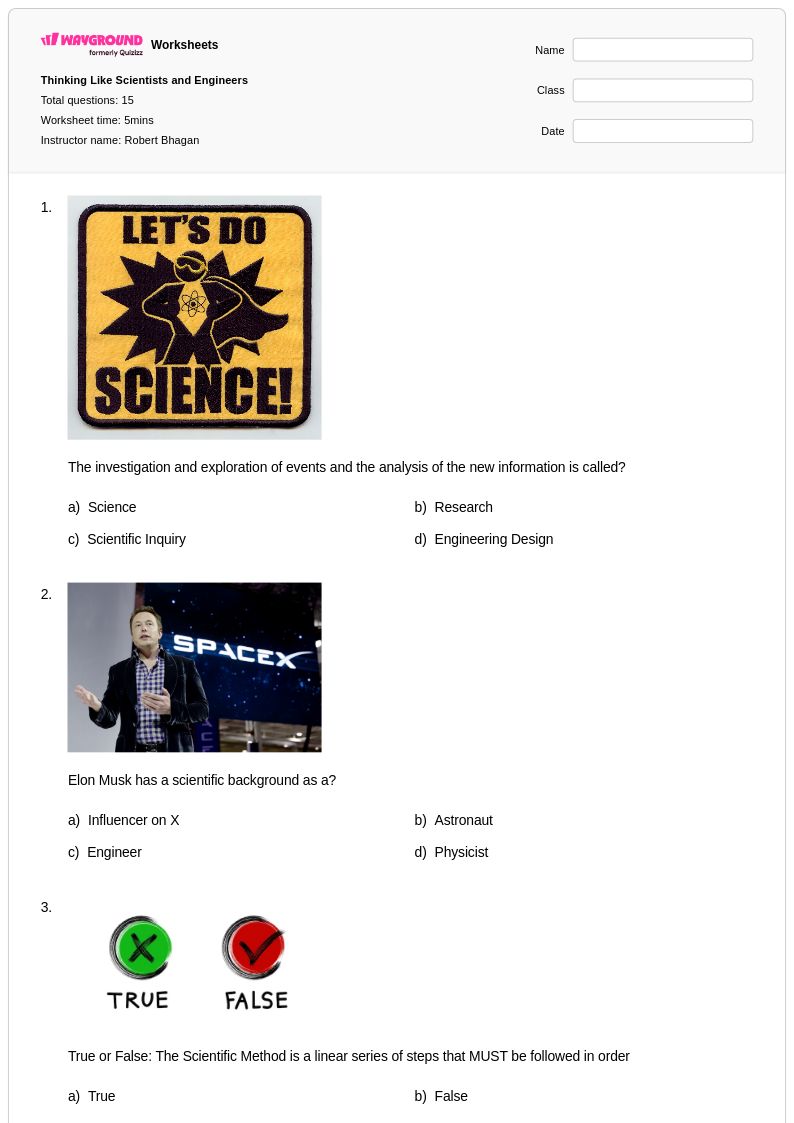
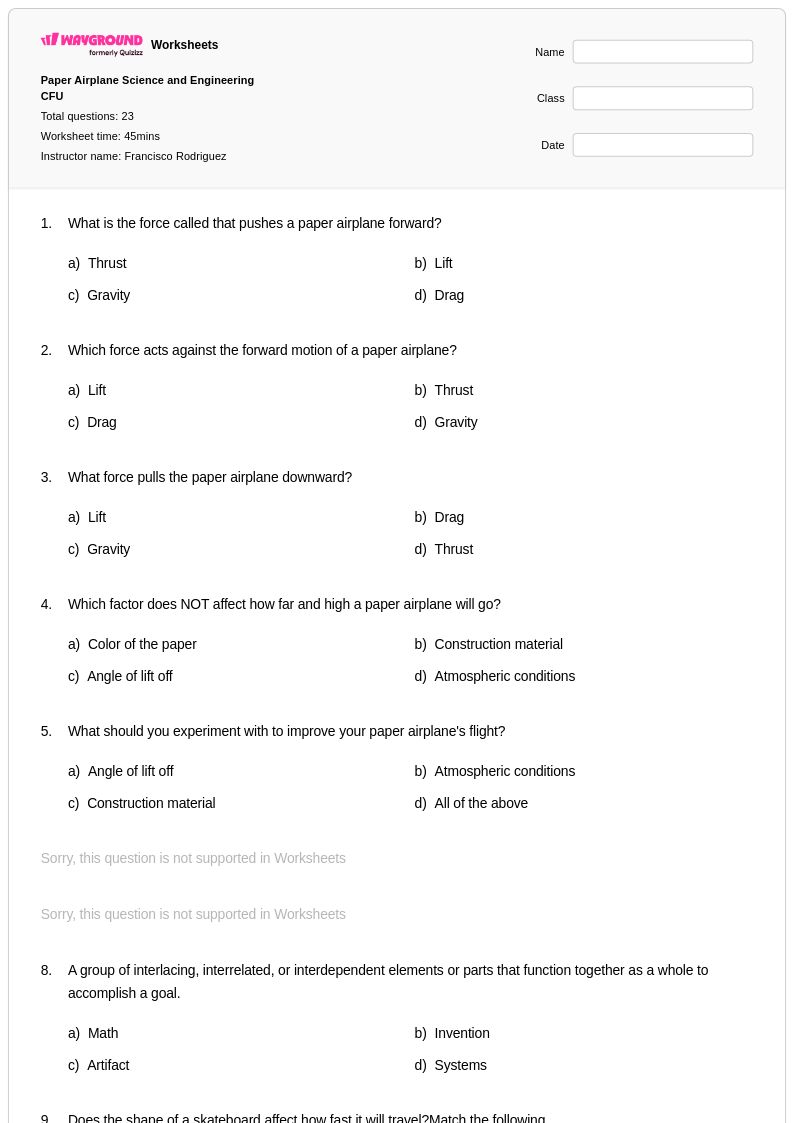
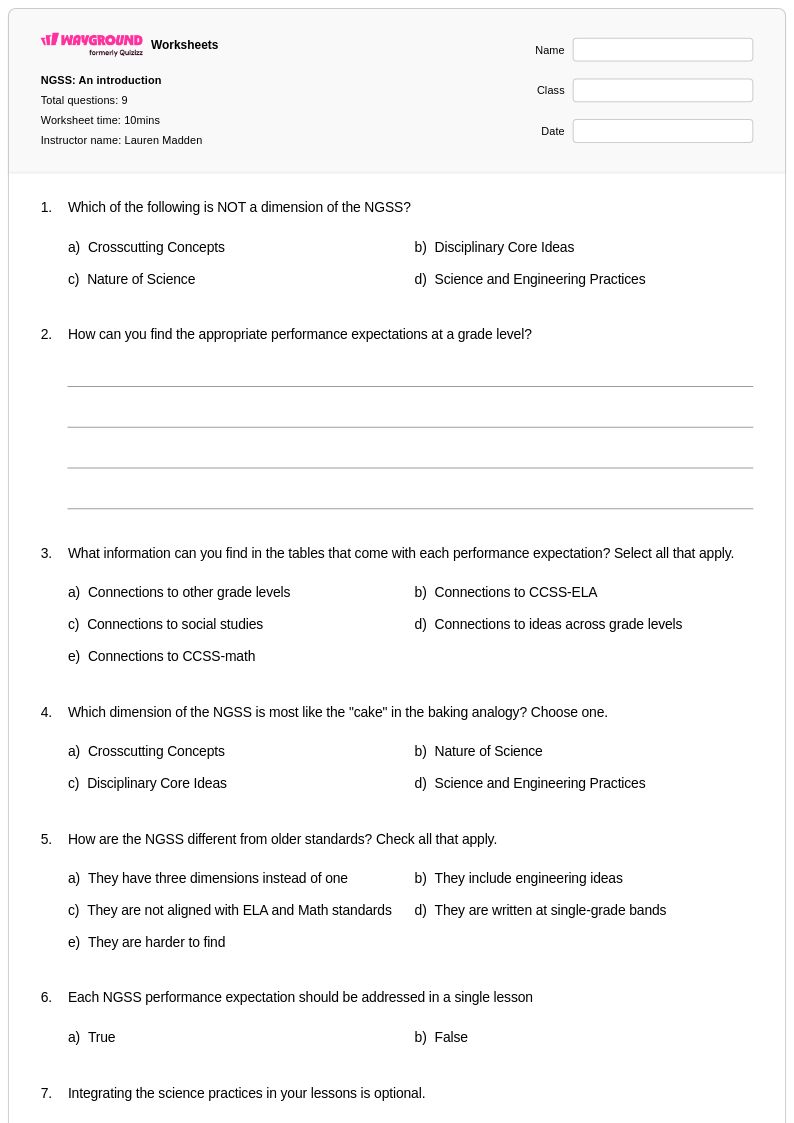
Engineering and Science Practices worksheets for kindergarten students available through Wayground (formerly Quizizz) introduce young learners to the foundational processes that scientists and engineers use to understand and solve problems in the world around them. These carefully designed printables focus on developing essential inquiry skills such as asking questions, making observations, planning simple investigations, and communicating findings through drawings and simple explanations. The worksheets strengthen critical thinking abilities while encouraging students to think like real scientists and engineers through hands-on activities, observation exercises, and basic problem-solving scenarios. Each resource includes comprehensive answer keys and is available as free pdf downloads, making it easy for educators to implement meaningful practice problems that align with early childhood science education goals.
Wayground (formerly Quizizz) supports kindergarten teachers with an extensive collection of millions of teacher-created Engineering and Science Practices resources that can be easily searched and filtered to match specific classroom needs and learning objectives. The platform's robust differentiation tools allow educators to customize worksheets for diverse learners, while standards alignment features ensure that materials meet curriculum requirements for early science education. Teachers can access these resources in both printable and digital pdf formats, providing flexibility for various instructional settings and learning preferences. This comprehensive approach to worksheet delivery enables effective lesson planning, targeted skill remediation, academic enrichment opportunities, and consistent practice in fundamental science and engineering thinking processes that build the foundation for future STEM learning.
FAQs
How do I teach the engineering design process in middle or high school science?
The engineering design process is best taught through iterative, hands-on cycles where students define a problem, brainstorm solutions, build a prototype, test it, and revise based on results. Structured worksheets that walk students through each stage help them internalize the process rather than treating it as a one-time activity. Embedding real-world constraints, such as limited materials or specific criteria, makes the process more authentic and prepares students for STEM contexts.
What's the difference between a hypothesis, a theory, and a law in science, and how do I explain it to students?
A hypothesis is a testable, falsifiable prediction made before an investigation; a theory is a well-substantiated explanation supported by extensive evidence from repeated testing; and a law describes a consistent, observed pattern in nature without explaining why it occurs. Students commonly confuse 'theory' with 'guess,' so it helps to emphasize that scientific theories, like the theory of evolution or cell theory, represent the strongest form of scientific explanation. Using direct comparison worksheets that ask students to classify examples as hypothesis, theory, or law reinforces the distinctions through repeated practice.
What exercises help students practice identifying independent and dependent variables?
The most effective exercises present students with short experiment scenarios and ask them to identify what the researcher changes (independent variable), what is measured as a result (dependent variable), and what is kept constant (controls). Scaffolded worksheets that progress from simple one-variable experiments to more complex multi-variable scenarios build this skill gradually. Having students also design their own experiments with labeled variables solidifies the concept beyond recognition-level tasks.
What mistakes do students commonly make when writing a hypothesis?
The most common error is writing a hypothesis as a question rather than a testable if-then prediction. Students also frequently write hypotheses that are too vague to test, such as 'plants will grow better,' rather than specifying what variable is being changed and what outcome is expected. Another frequent mistake is confusing the hypothesis with the conclusion, writing it after the experiment rather than before. Direct instruction on the if-then-because format, followed by practice with feedback, significantly reduces these errors.
How do I help students distinguish between qualitative and quantitative observations?
Qualitative observations describe characteristics that cannot be measured with a number, such as color, texture, or smell, while quantitative observations involve measurable data expressed with units, such as mass in grams or temperature in degrees Celsius. A common student misconception is that any observation involving a number is automatically quantitative, so it helps to emphasize the role of standard measurement units. Worksheet exercises that ask students to sort observation statements or rewrite qualitative descriptions as quantitative ones build precision in scientific communication.
How do I use Engineering and Science Practices worksheets in my classroom?
Engineering and Science Practices worksheets on Wayground are available as printable PDFs for traditional classroom use and in digital formats for technology-integrated or remote learning environments, including the option to host them as a quiz directly on the Wayground platform. Teachers can use them to introduce vocabulary before a lab, provide structured practice after direct instruction, or assign targeted remediation for students who struggle with specific skills like experimental design or data interpretation. Wayground's filtering tools allow teachers to search by subtopic, making it straightforward to locate materials on specific concepts such as lab safety, claim-evidence-reasoning, or scientific inquiry.
How can I support students who struggle with science practices vocabulary?
Students who struggle with science practices vocabulary often lack exposure to terms like 'inference,' 'procedure,' 'controlled variable,' and 'qualitative' in everyday language, so explicit vocabulary instruction paired with contextual practice is essential. Vocabulary worksheets that ask students to match terms to definitions, use words in sentences, or identify correct usage in experiment scenarios are more effective than flashcard memorization alone. On Wayground, teachers can enable the Read Aloud accommodation for students who need audio support when working through digital worksheet versions, reducing the barrier of decoding unfamiliar terminology while still engaging with the content.