
Recommended Topics for you
- Claim Evidence Reasoning
- Controls and Variables
- Curiosity
- Data Types
- Dependent Variable
- Engineering Design Process
- Experiment
- Experimental Design
- Hypothesis
- Hypothesis, Theory and Law
- Independent Variable
- Lab Safety
- Observation and Inference
- Procedure
- Qualitative and Quantitative Observations
- Reality Testing
- Safety Equipment
- Safety Rules and Symbols
- Science Practices Vocabulary
- Scientific Inquiry
- Scientific Observation
- Scientific Tools
30 Q
6th
30 Q
6th
20 Q
6th
8 Q
6th - 8th
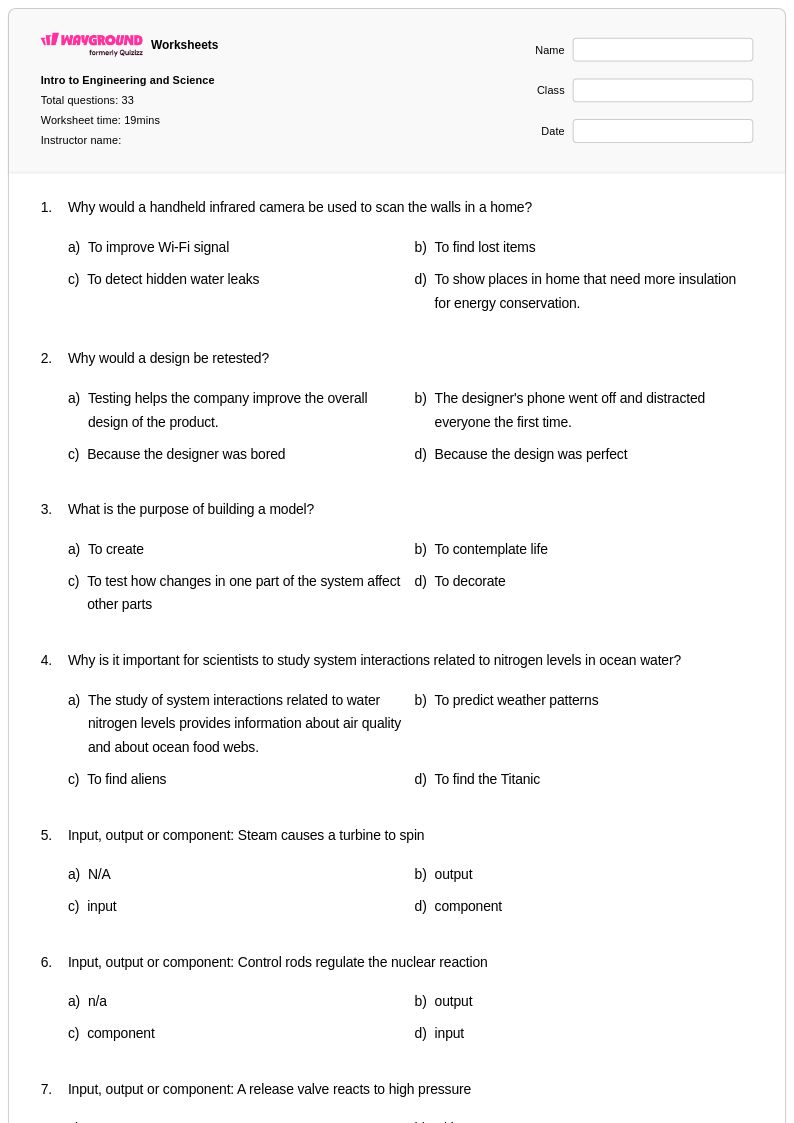
33 Q
6th
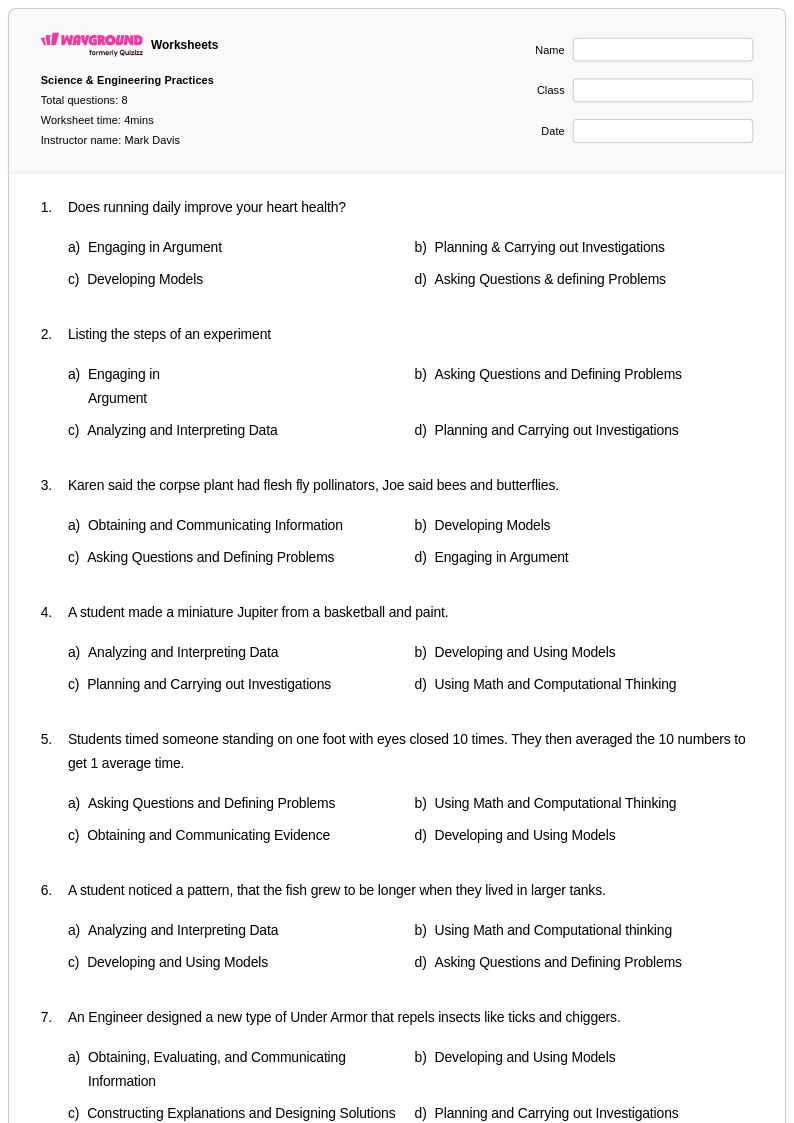
8 Q
6th - 8th
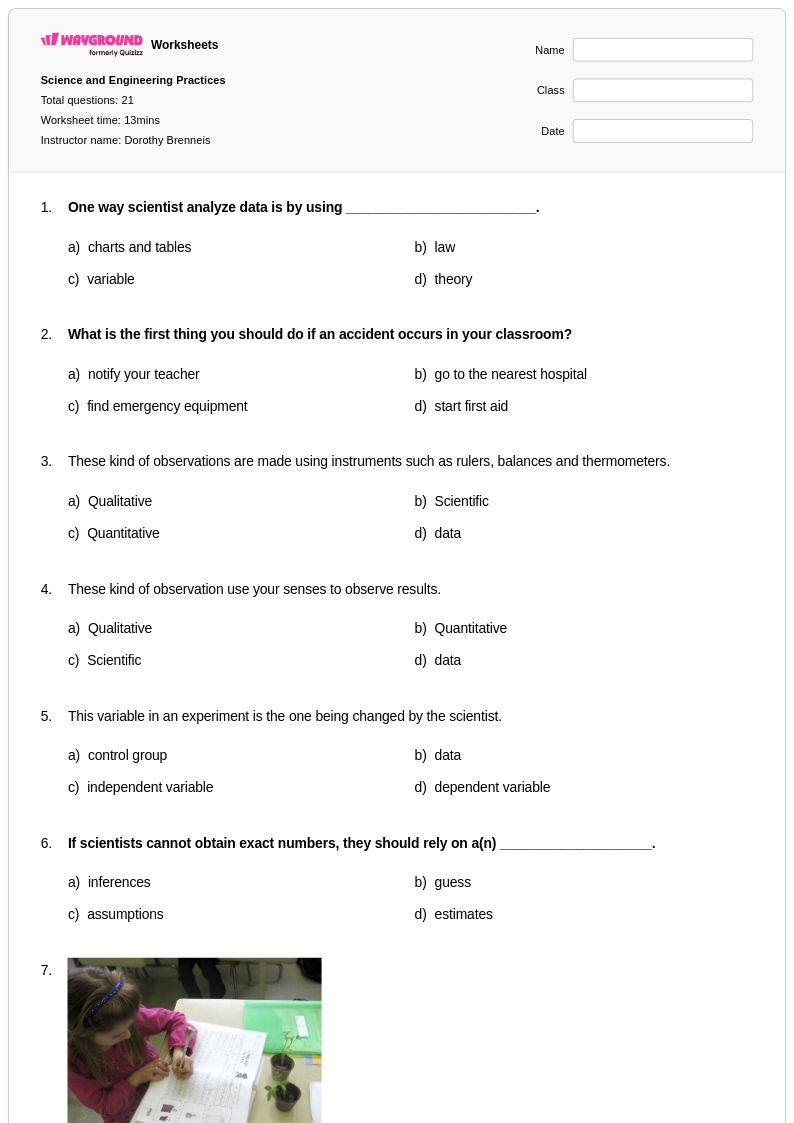
21 Q
5th - 8th
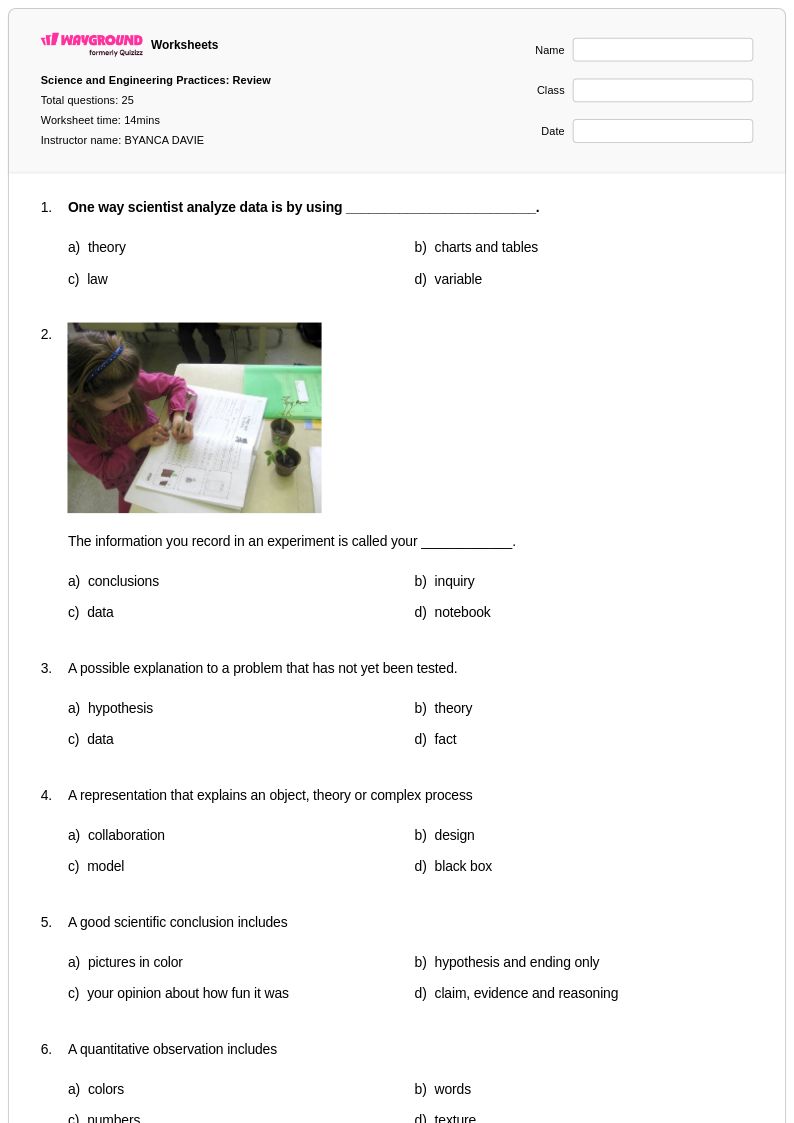
25 Q
6th
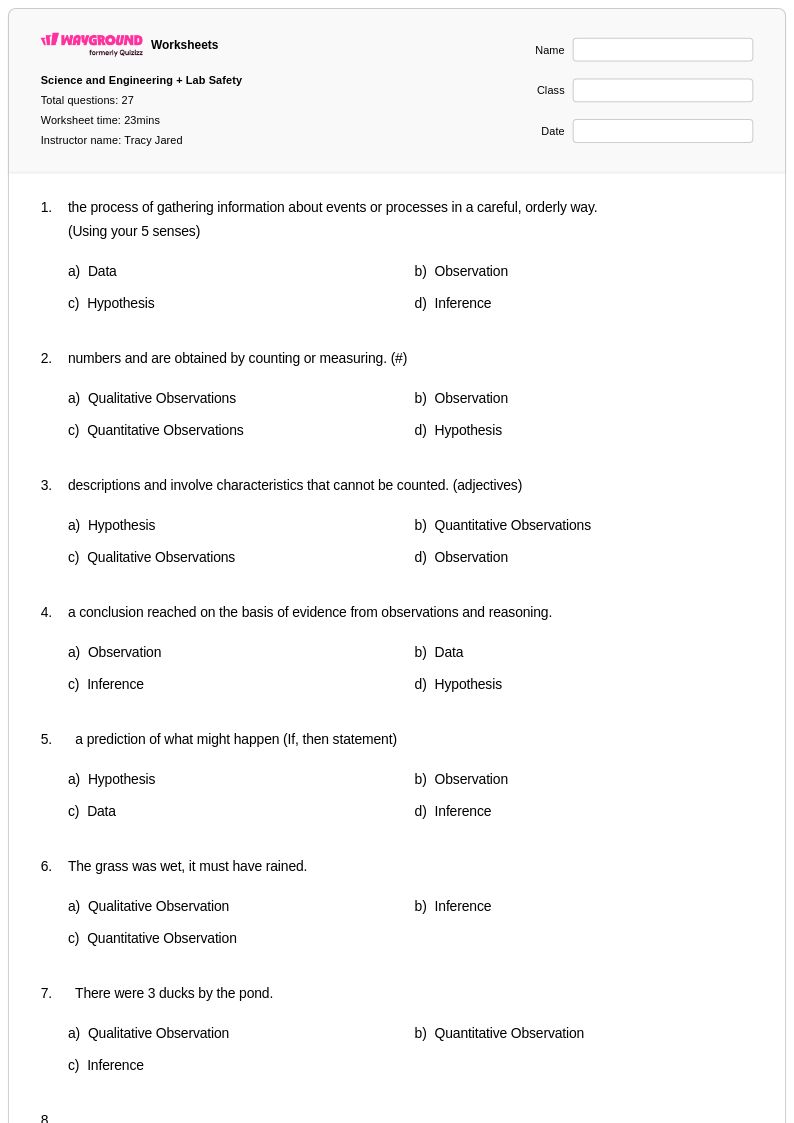
27 Q
6th
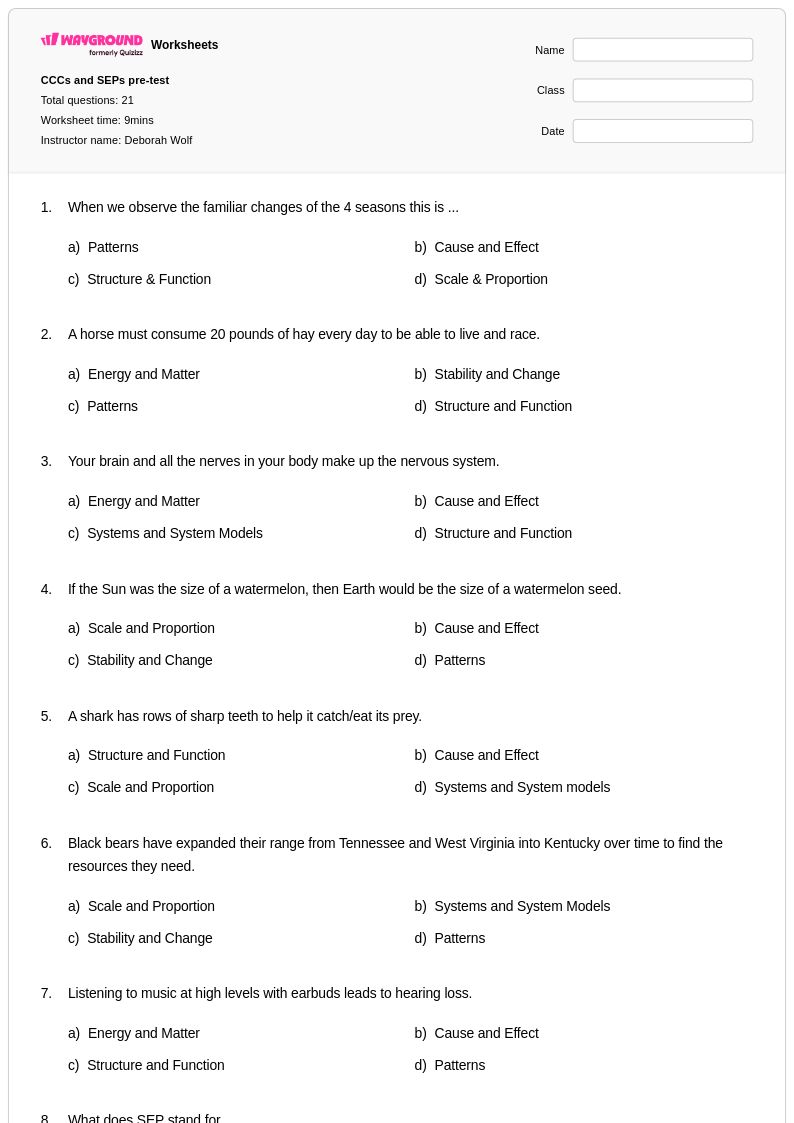
21 Q
6th
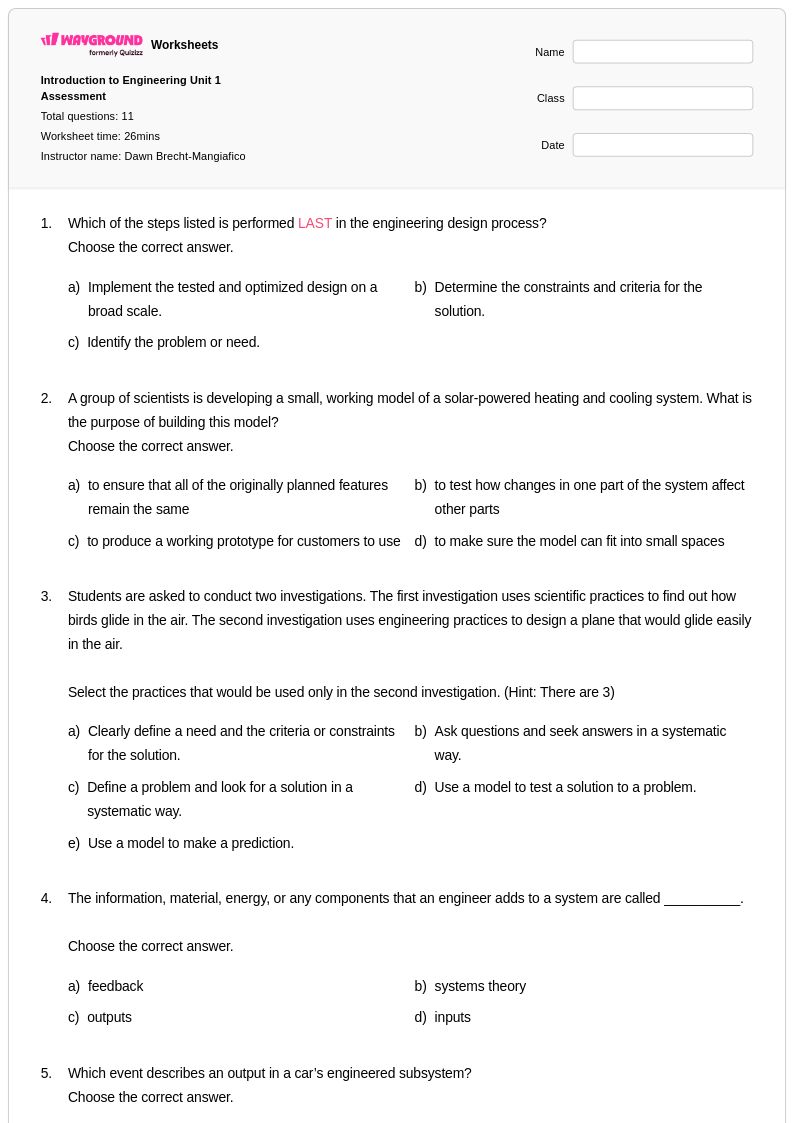
11 Q
6th
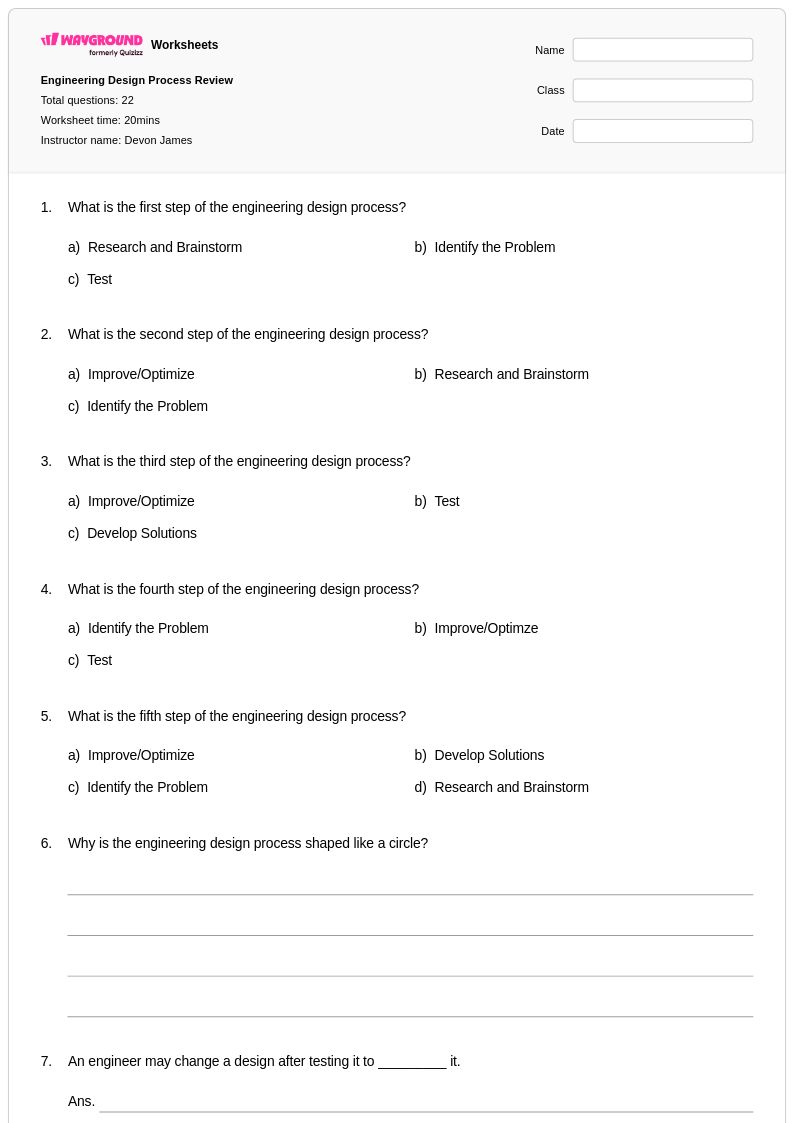
22 Q
6th
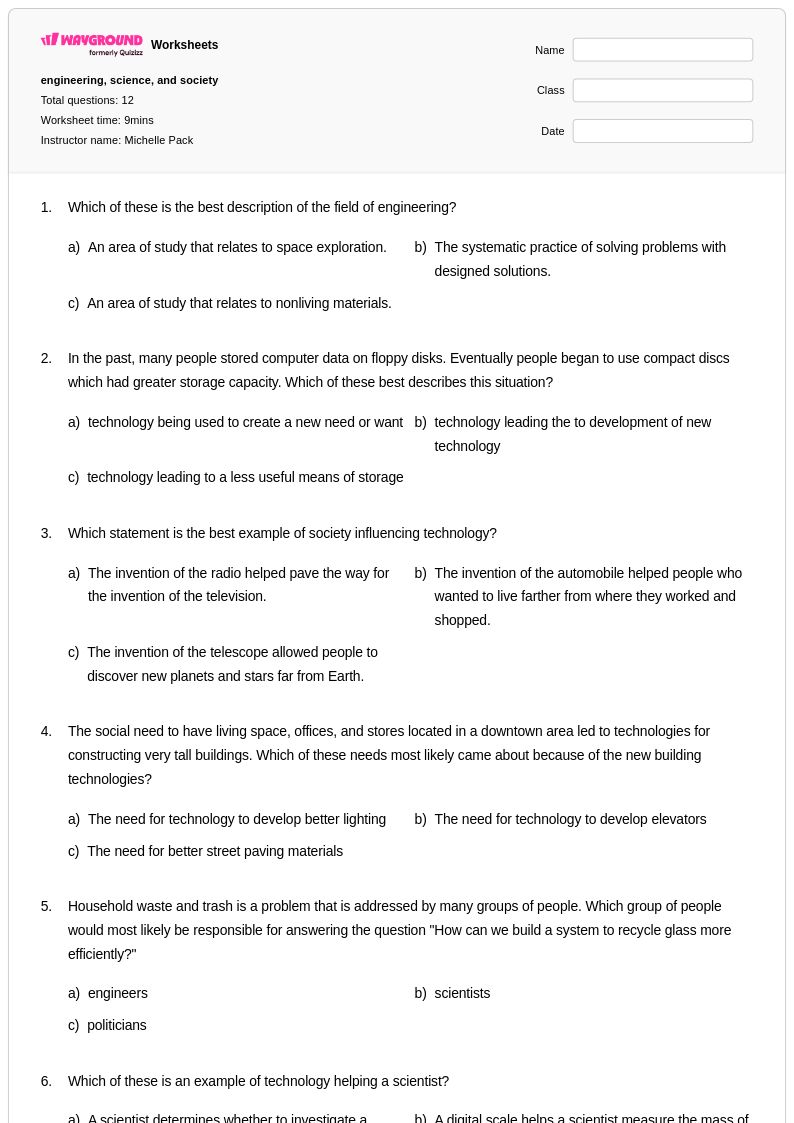
12 Q
6th
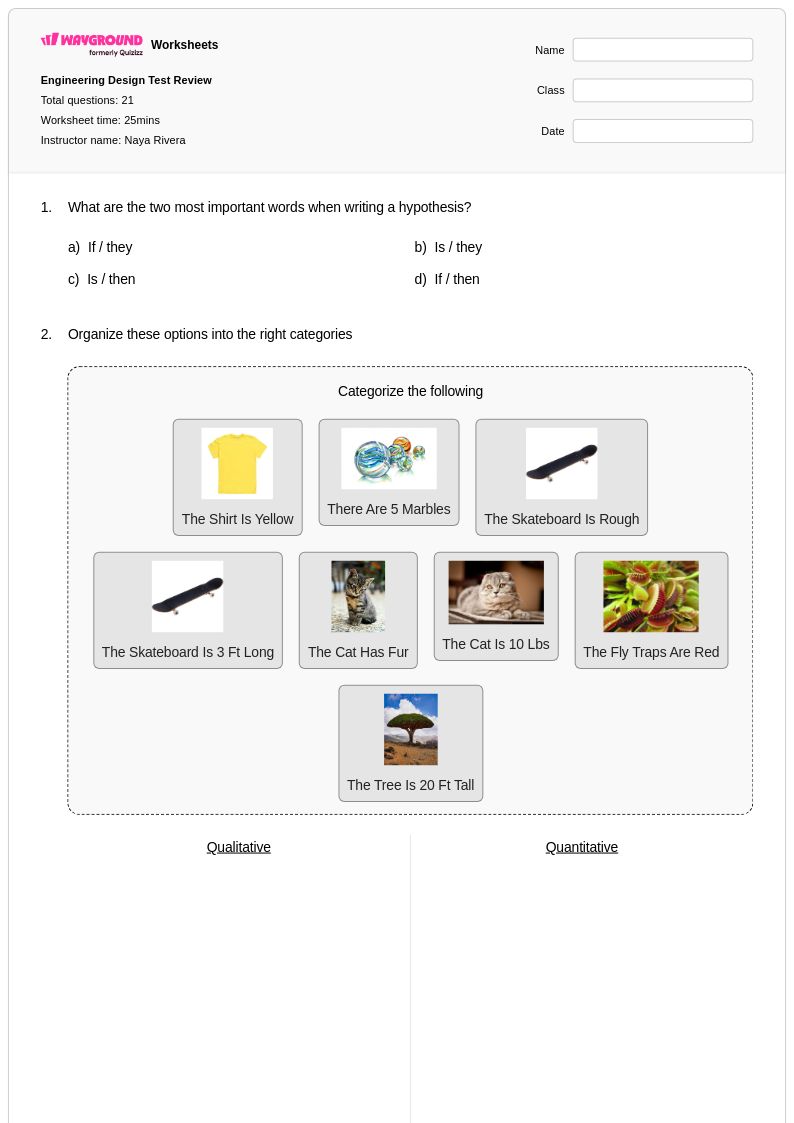
21 Q
6th - 8th
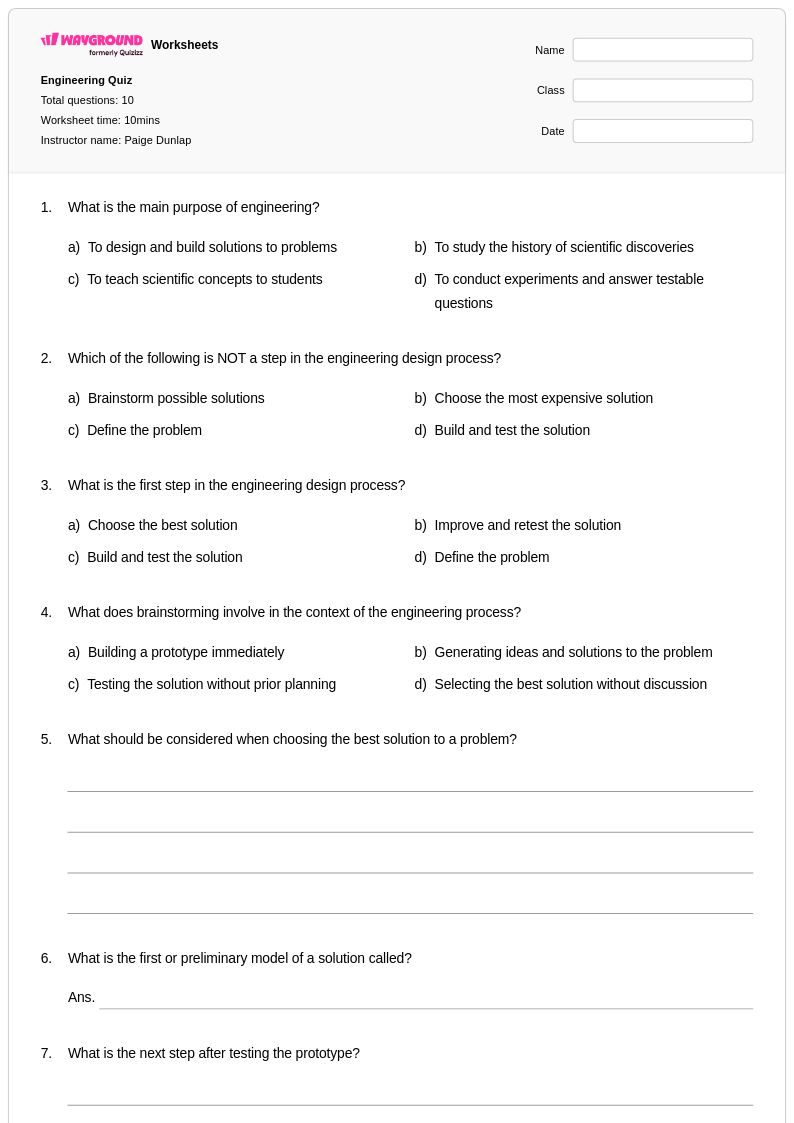
10 Q
6th
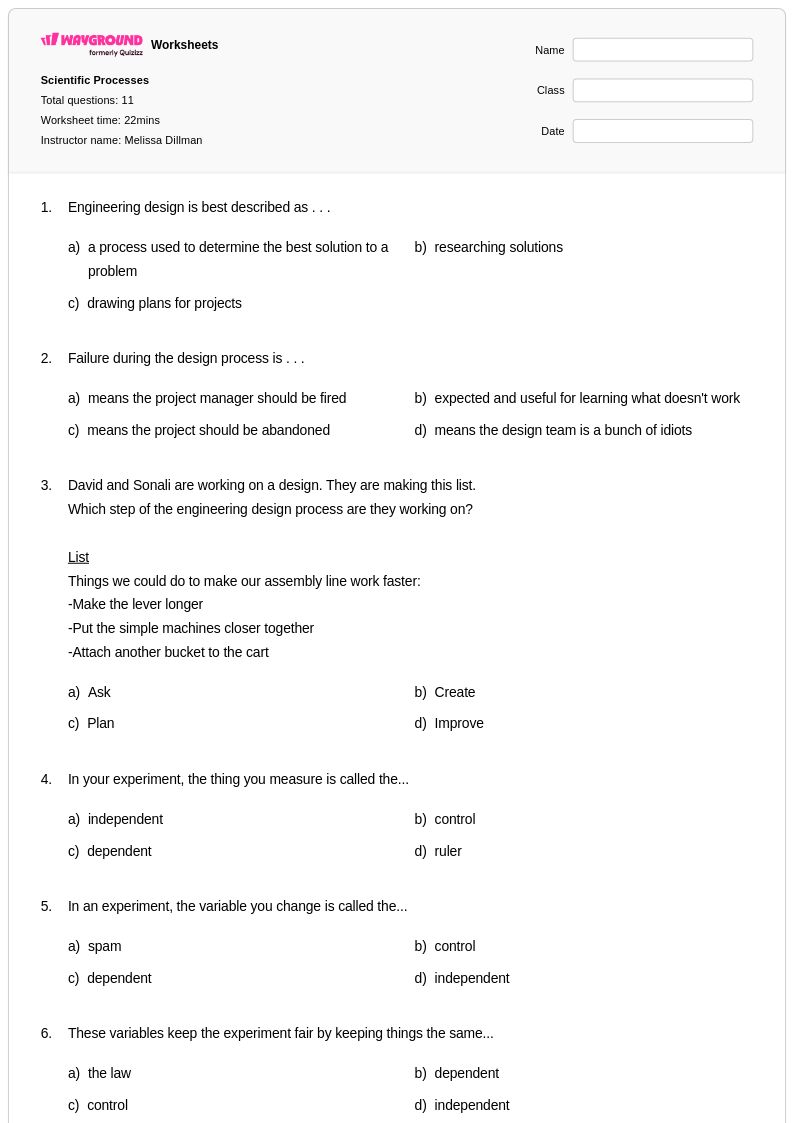
11 Q
6th
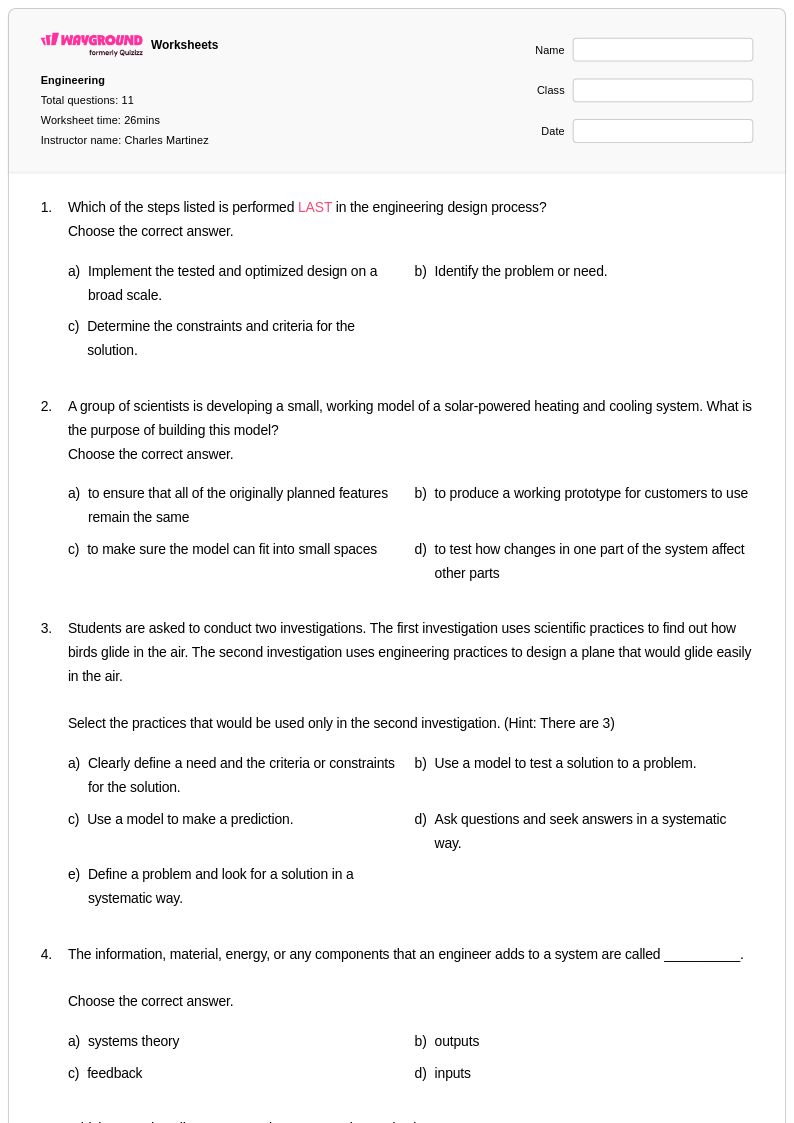
11 Q
6th
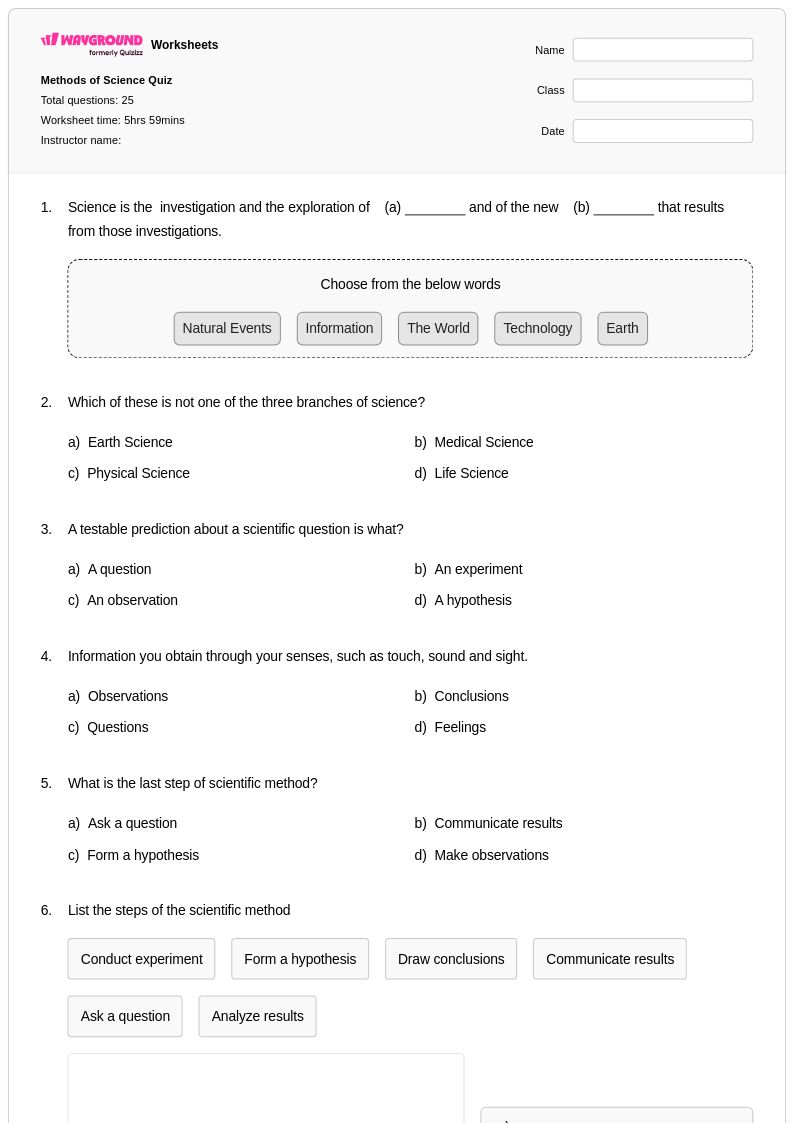
25 Q
6th
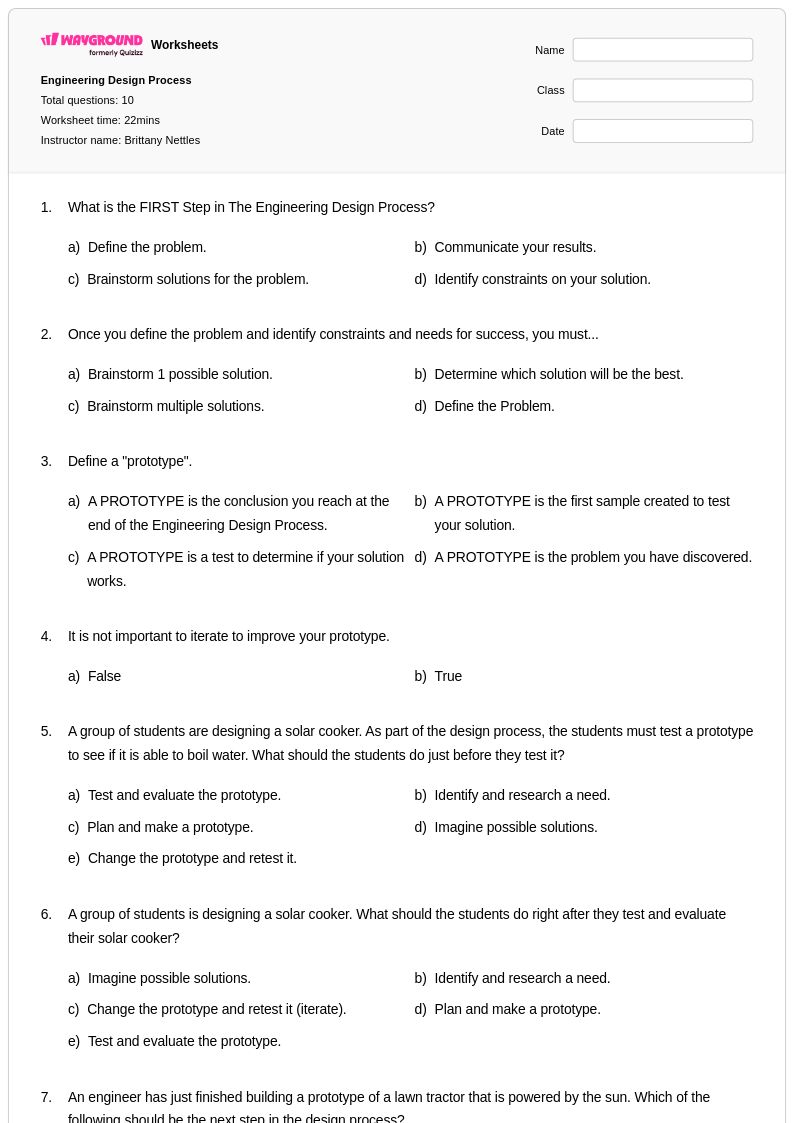
10 Q
6th
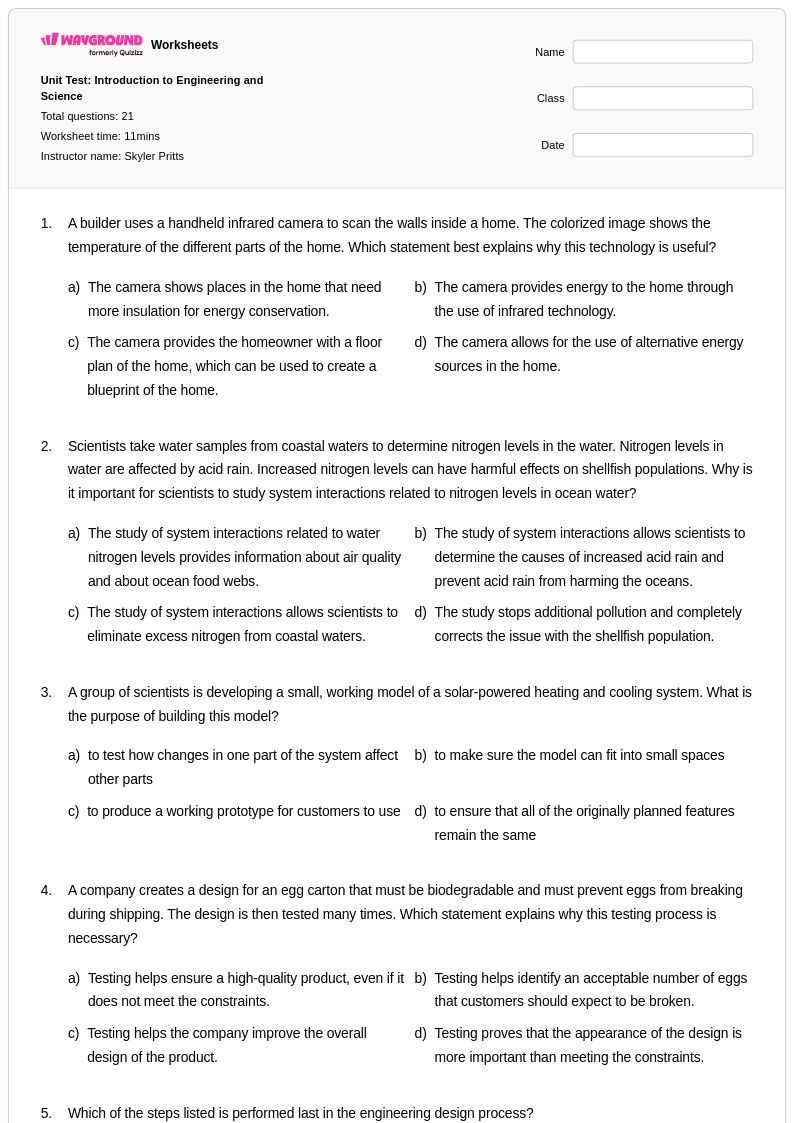
21 Q
6th
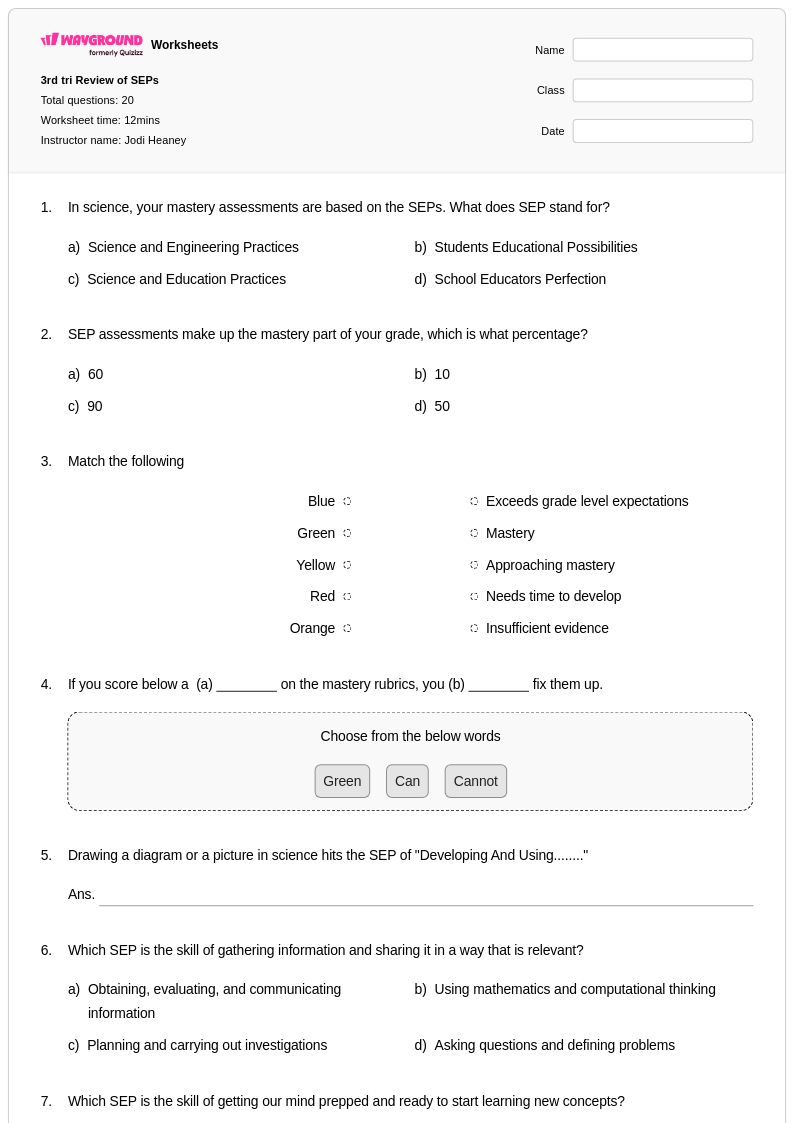
20 Q
4th - 6th
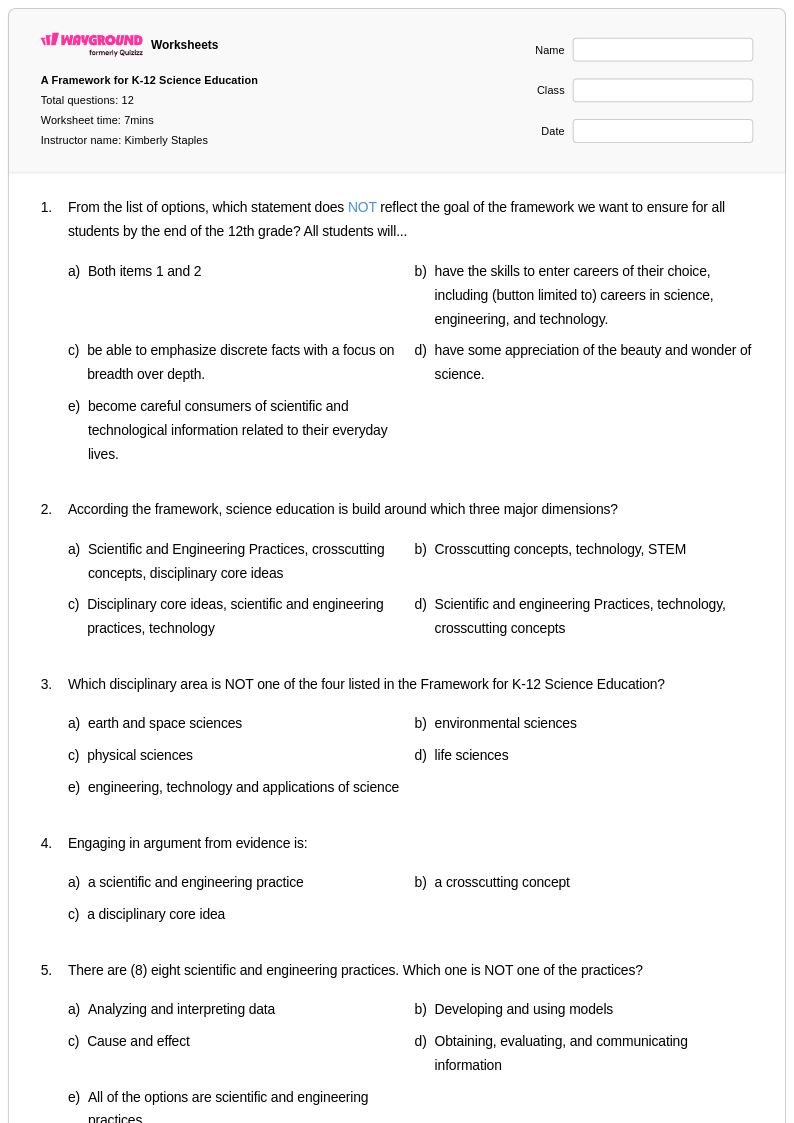
12 Q
6th - Uni
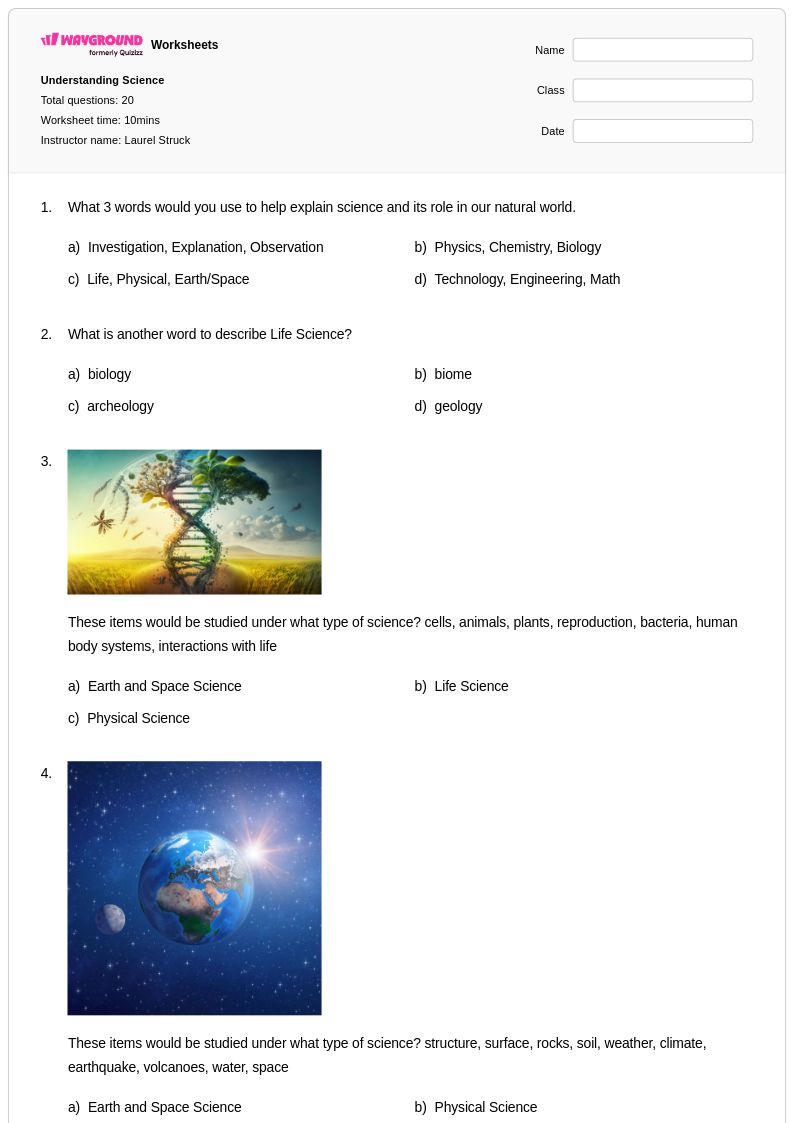
20 Q
6th - 8th
Explore Engineering & Science Practices Worksheets by Grades
Explore Engineering & Science Practices Worksheets for class 6 by Topic
- Claim Evidence Reasoning
- Controls and Variables
- Curiosity
- Data Types
- Dependent Variable
- Engineering Design Process
- Experiment
- Experimental Design
- Hypothesis
- Hypothesis, Theory and Law
- Independent Variable
- Lab Safety
- Observation and Inference
- Procedure
- Qualitative and Quantitative Observations
- Reality Testing
- Safety Equipment
- Safety Rules and Symbols
- Science Practices Vocabulary
- Scientific Inquiry
Explore Other Subject Worksheets for class 6
Explore printable Engineering & Science Practices worksheets for Class 6
Engineering and Science Practices worksheets for Class 6 available through Wayground provide students with essential hands-on learning opportunities that mirror real-world scientific inquiry and engineering design processes. These comprehensive resources strengthen critical thinking skills by guiding students through systematic observation, data collection, analysis, and evidence-based reasoning activities. Students engage with practice problems that emphasize asking questions, developing and using models, planning and carrying out investigations, and constructing explanations from evidence. Each worksheet includes detailed answer keys to support independent learning and self-assessment, while the free printable pdf format ensures accessibility for all learning environments. These materials help sixth-grade students develop the foundational scientific practices necessary for understanding how scientists and engineers approach complex problems and communicate their findings effectively.
Wayground's extensive collection of Engineering and Science Practices worksheets draws from millions of teacher-created resources, offering educators powerful tools to enhance their Class 6 science instruction. The platform's advanced search and filtering capabilities enable teachers to quickly locate materials aligned with specific learning standards and curricular goals, while built-in differentiation tools allow for seamless customization to meet diverse student needs. These worksheets are available in both printable and digital pdf formats, providing flexibility for classroom instruction, homework assignments, and remote learning scenarios. Teachers can effectively utilize these resources for lesson planning, targeted remediation of specific scientific practices, enrichment activities for advanced learners, and ongoing skill practice that reinforces the iterative nature of scientific inquiry and engineering design thinking throughout the academic year.
FAQs
How do I teach the engineering design process in middle or high school science?
What's the difference between a hypothesis, a theory, and a law in science, and how do I explain it to students?
What exercises help students practice identifying independent and dependent variables?
What mistakes do students commonly make when writing a hypothesis?
How do I help students distinguish between qualitative and quantitative observations?
How do I use Engineering and Science Practices worksheets in my classroom?
How can I support students who struggle with science practices vocabulary?