
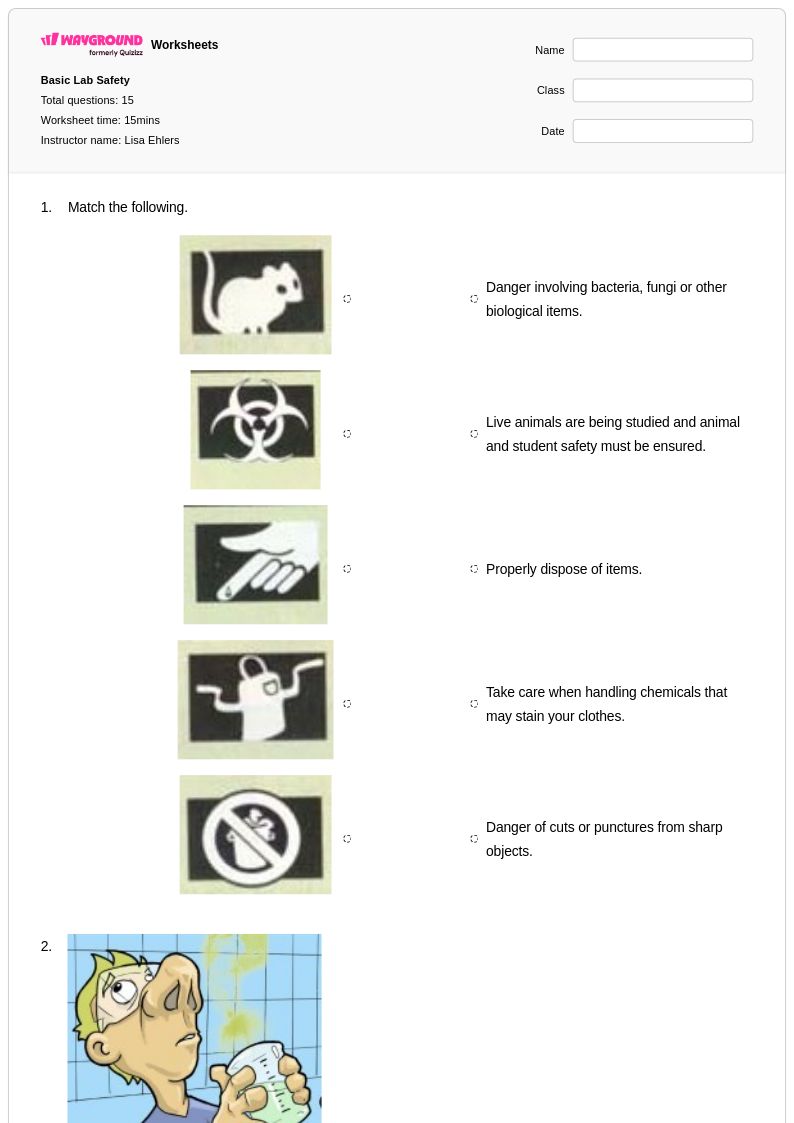
15 Q
6th - 7th
13 Q
6th
13 Q
6th - 8th
9 Q
5th - 7th
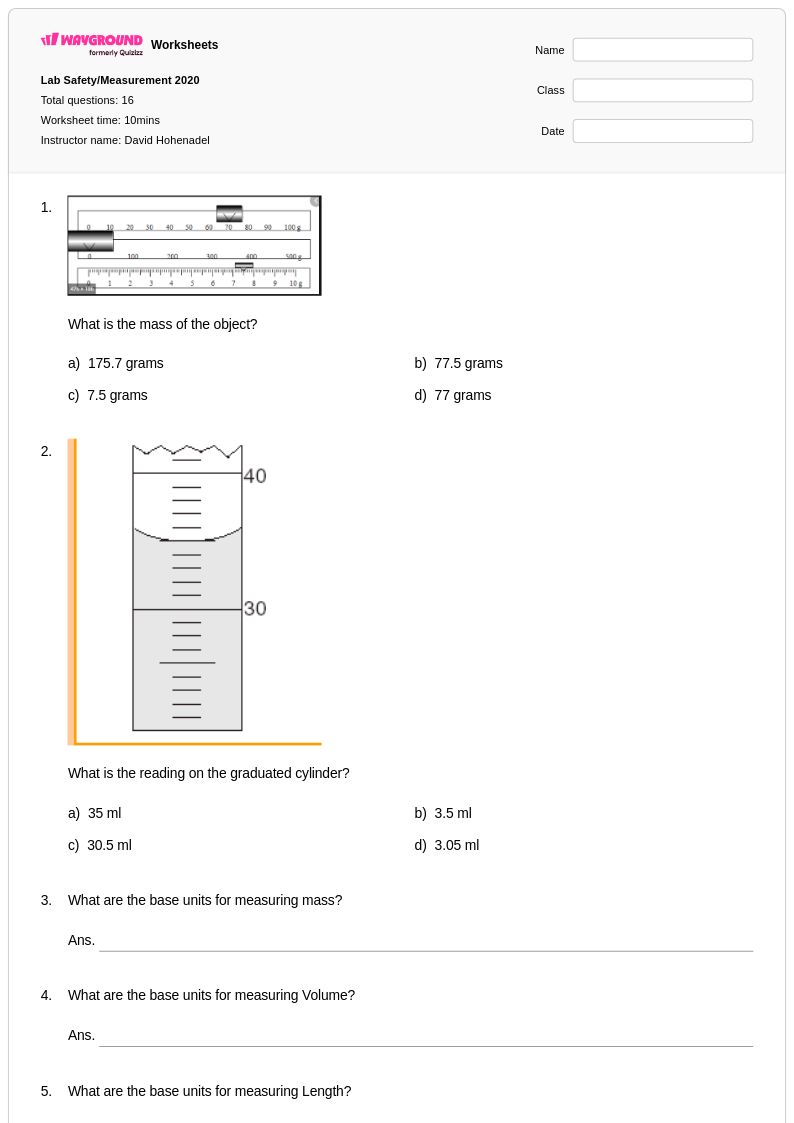
16 Q
6th
19 Q
6th
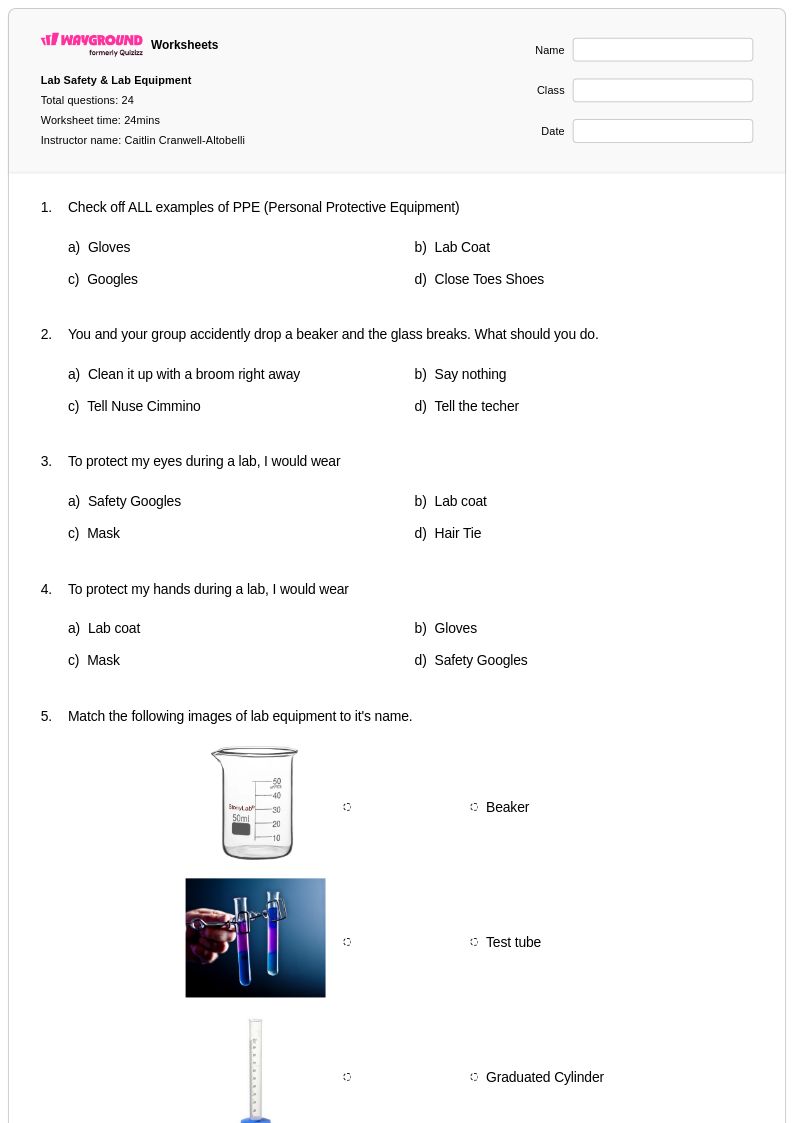
24 Q
6th
20 Q
6th - 8th
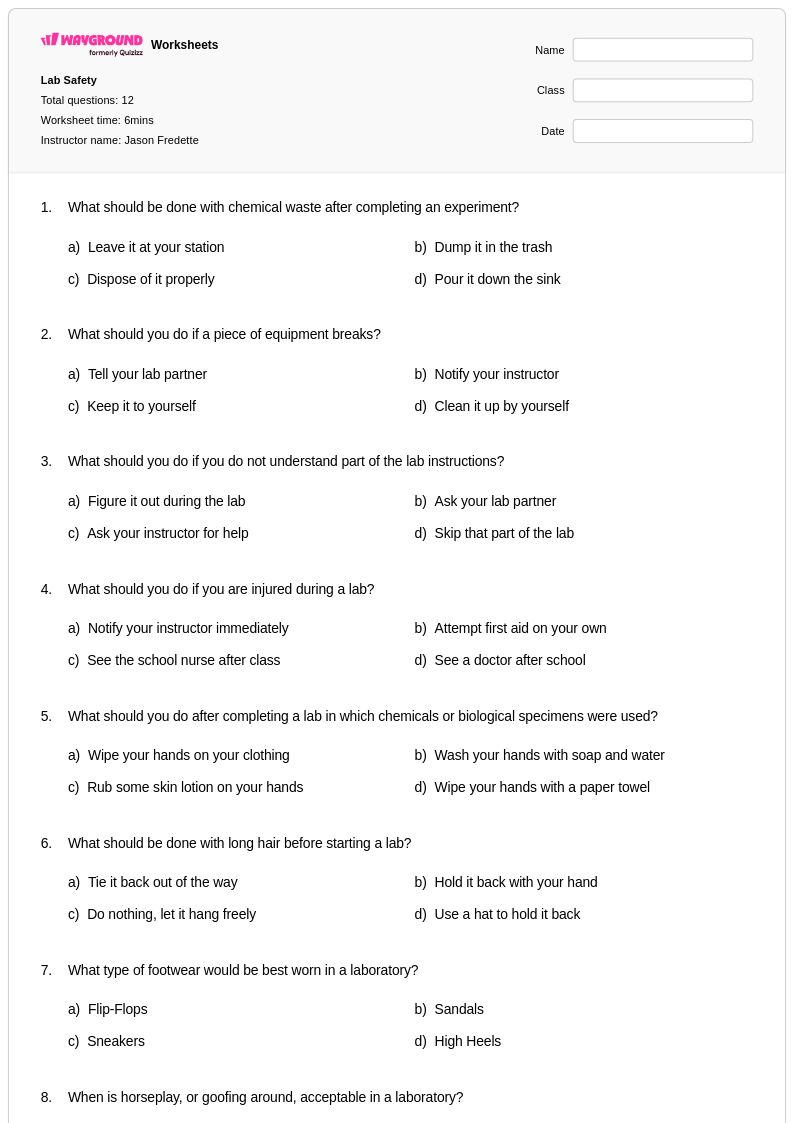
12 Q
6th - 12th
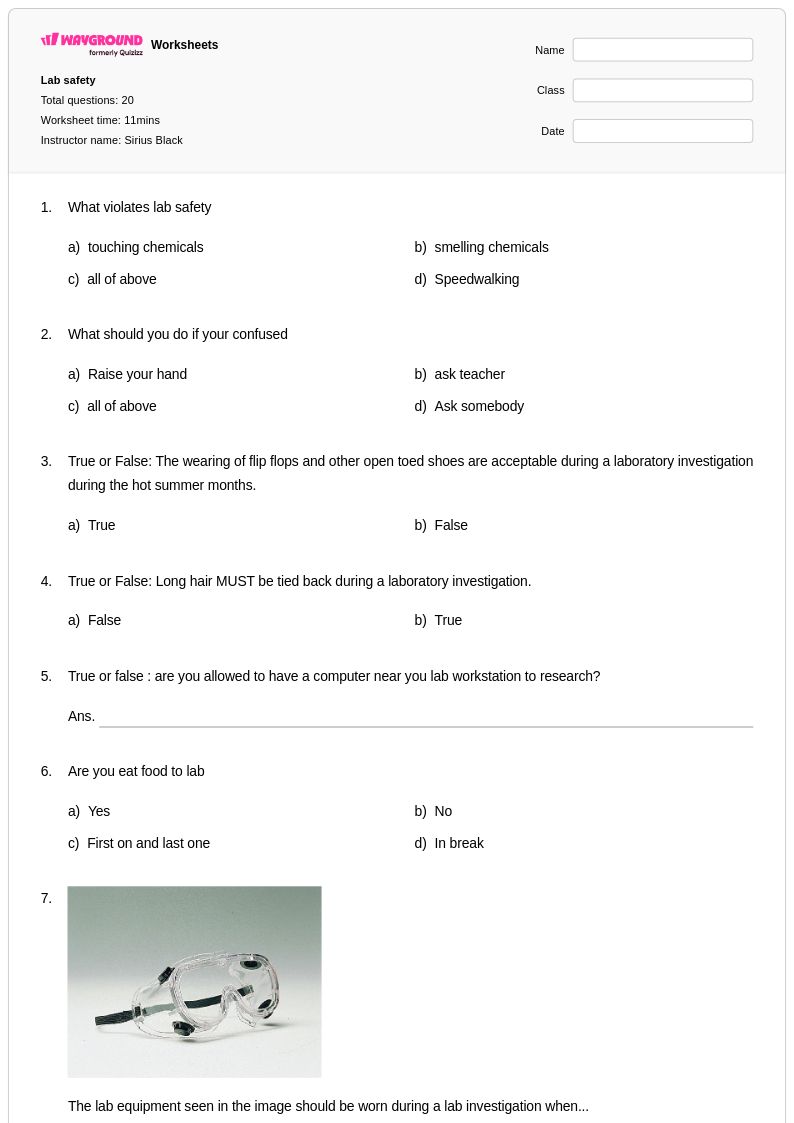
20 Q
5th - 10th
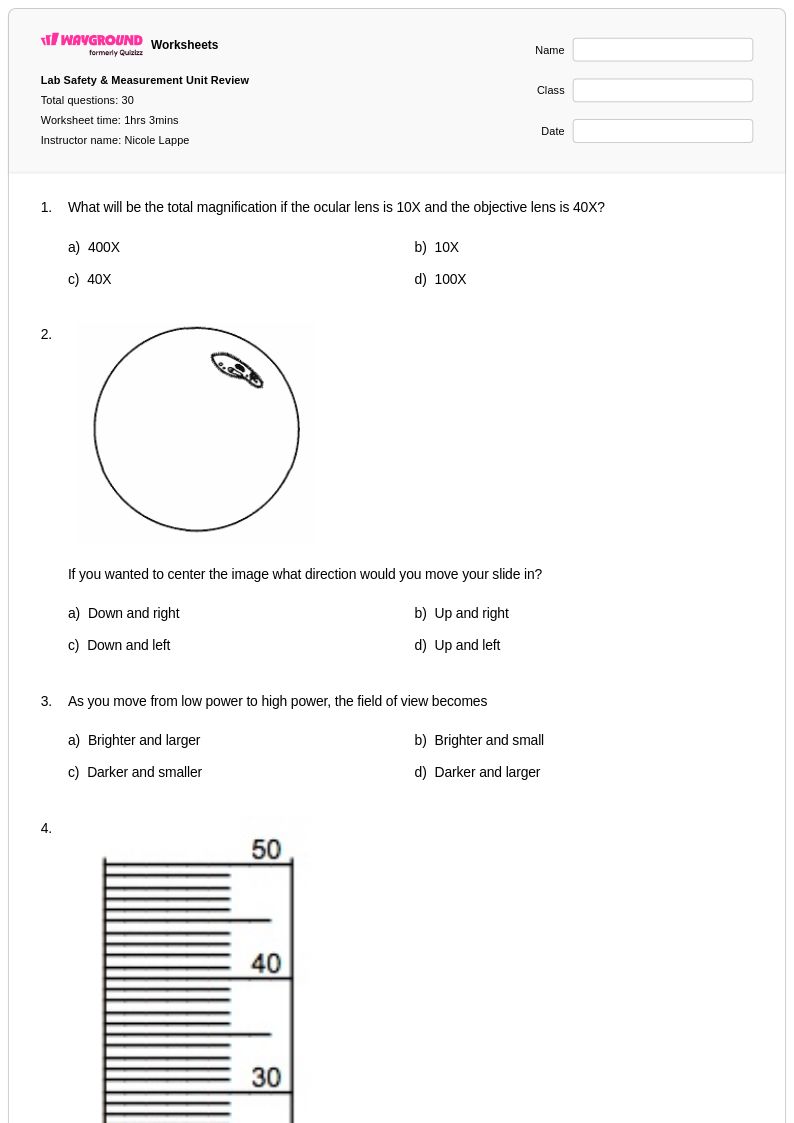
30 Q
6th
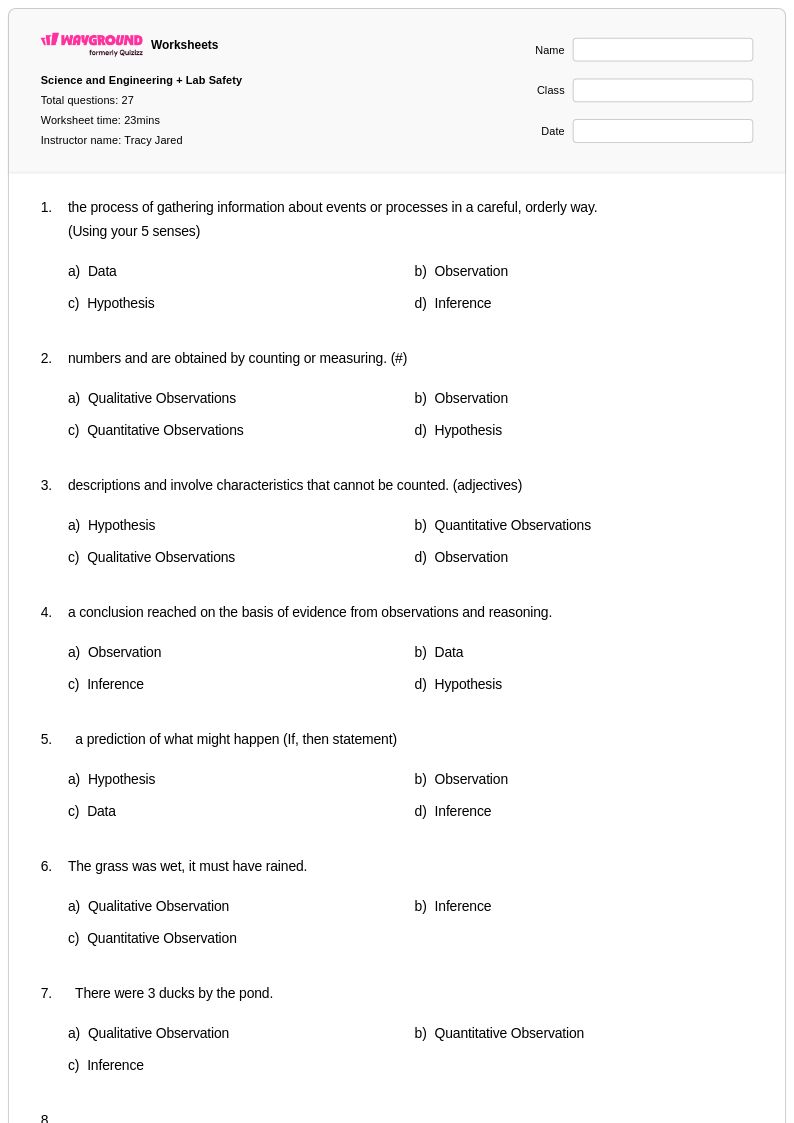
27 Q
6th
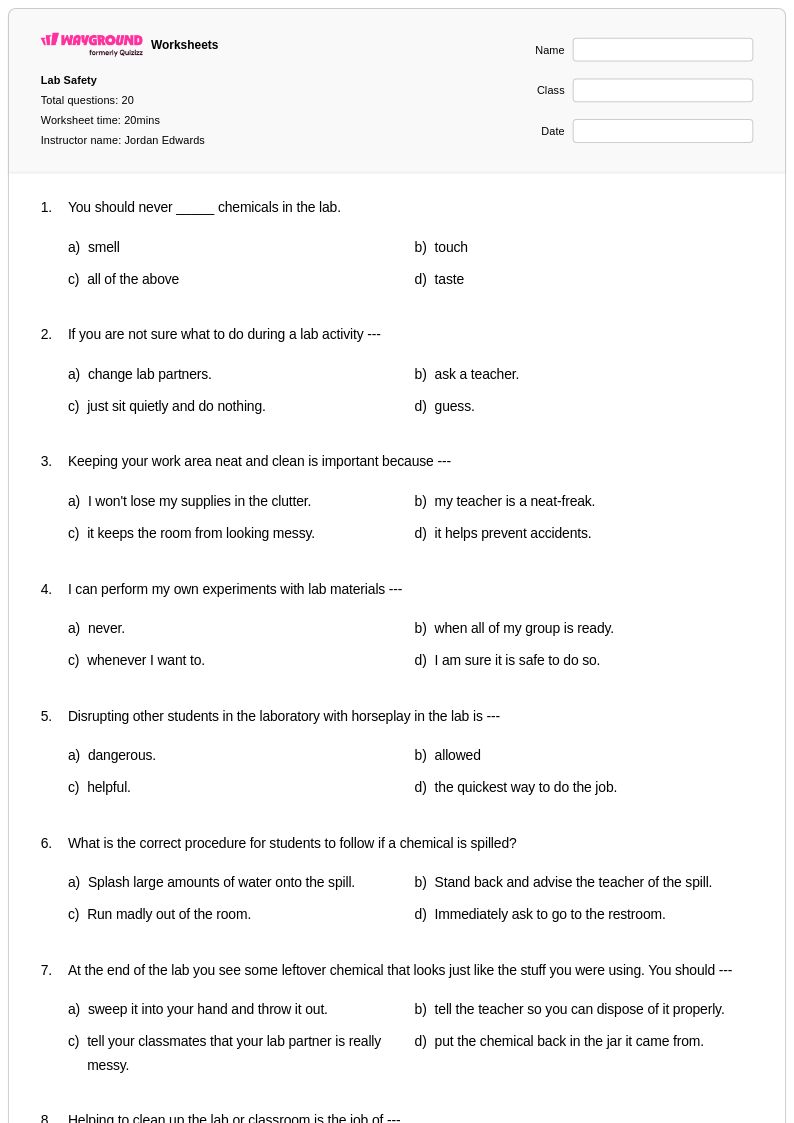
20 Q
6th - 7th
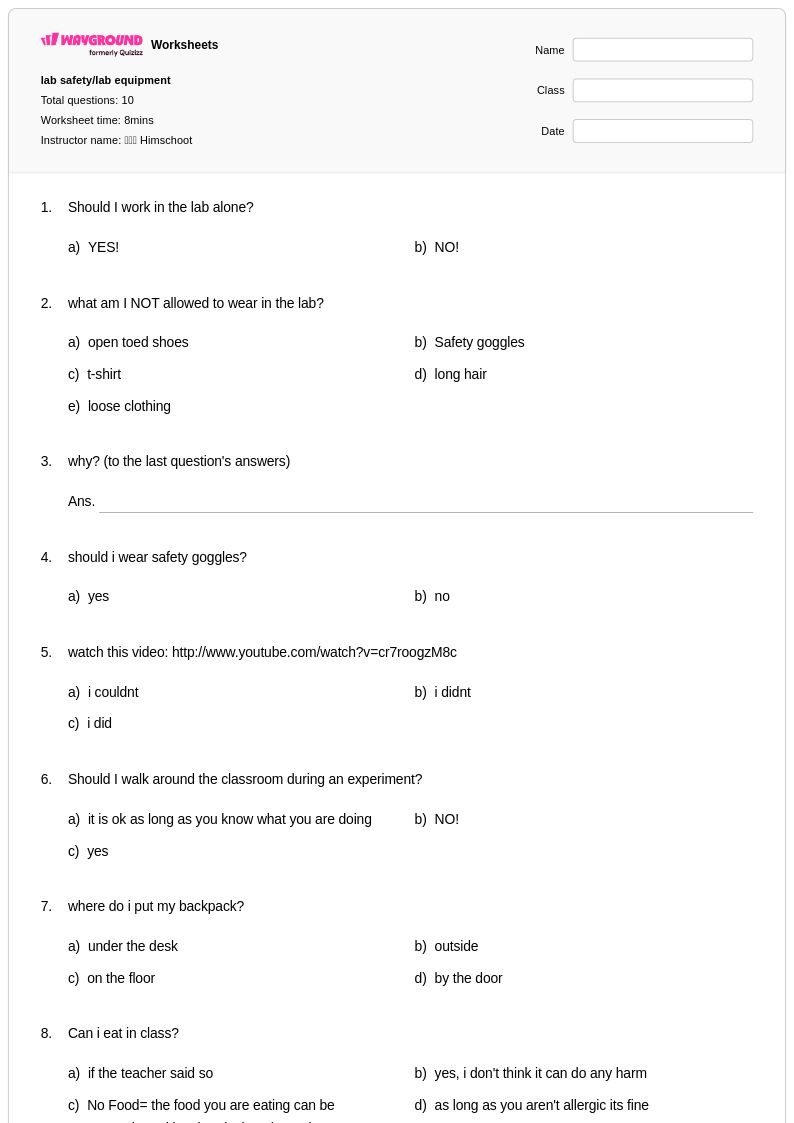
10 Q
5th - 6th
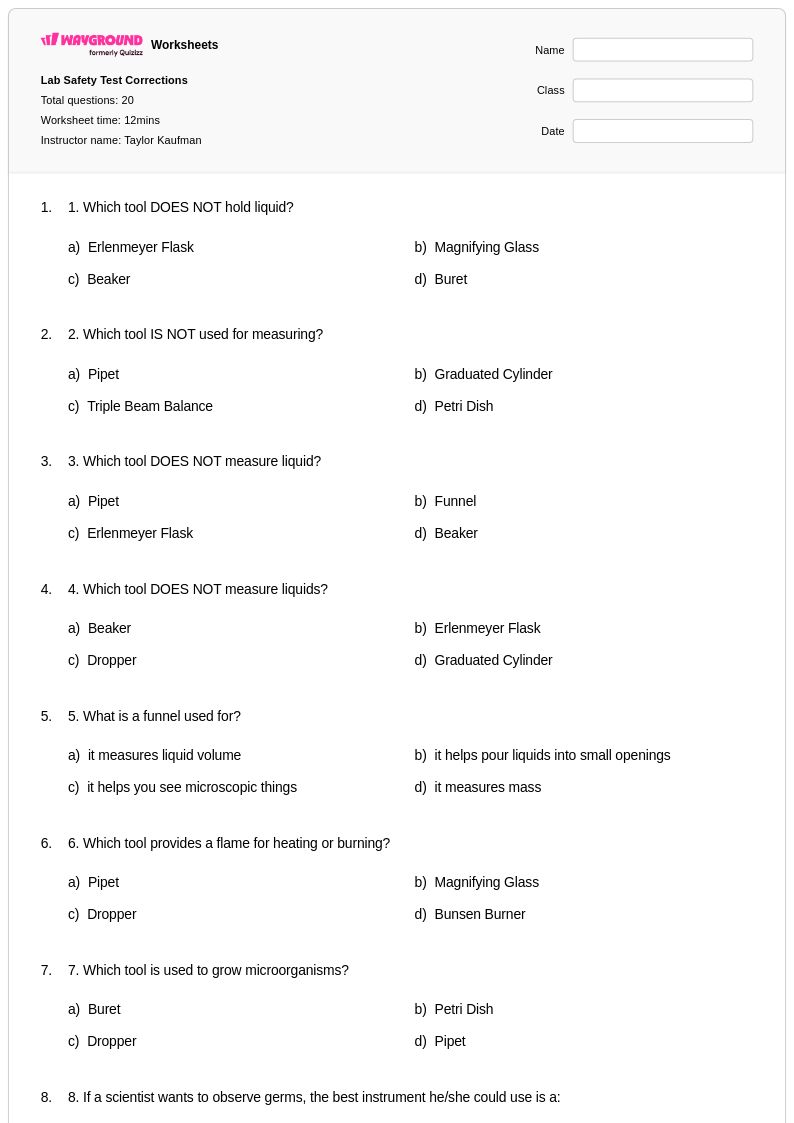
20 Q
6th
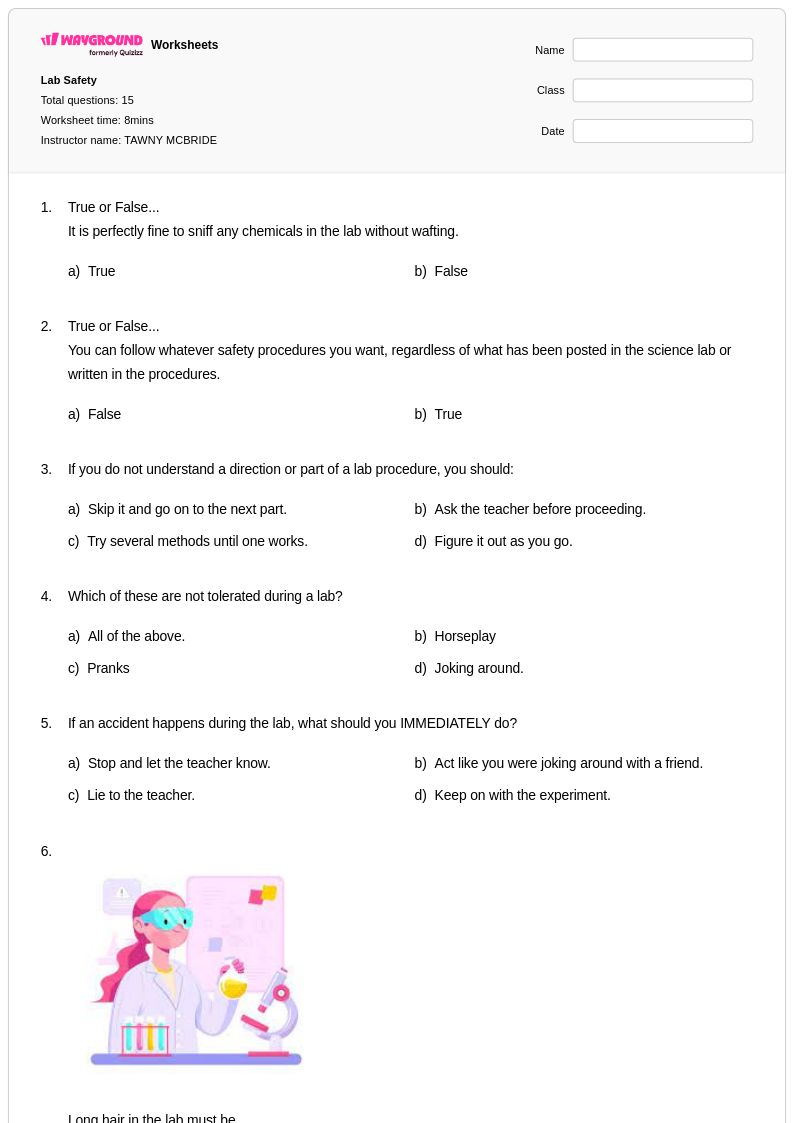
15 Q
6th
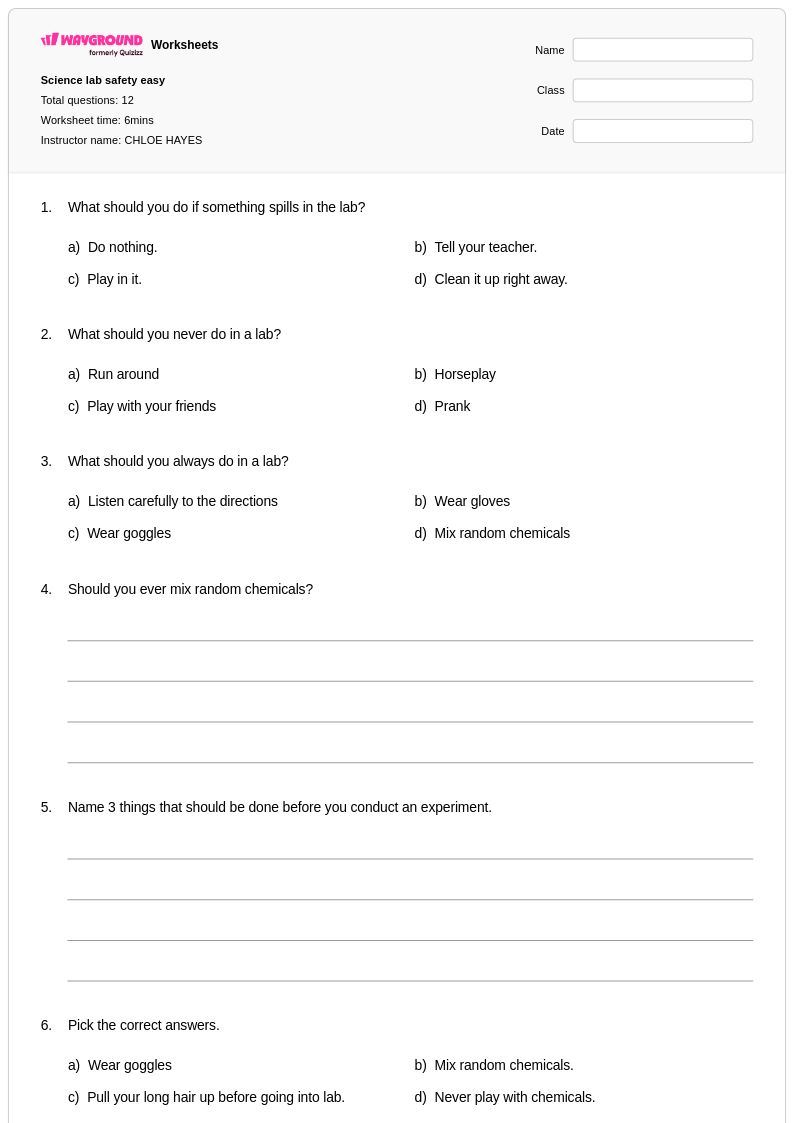
12 Q
6th - 8th
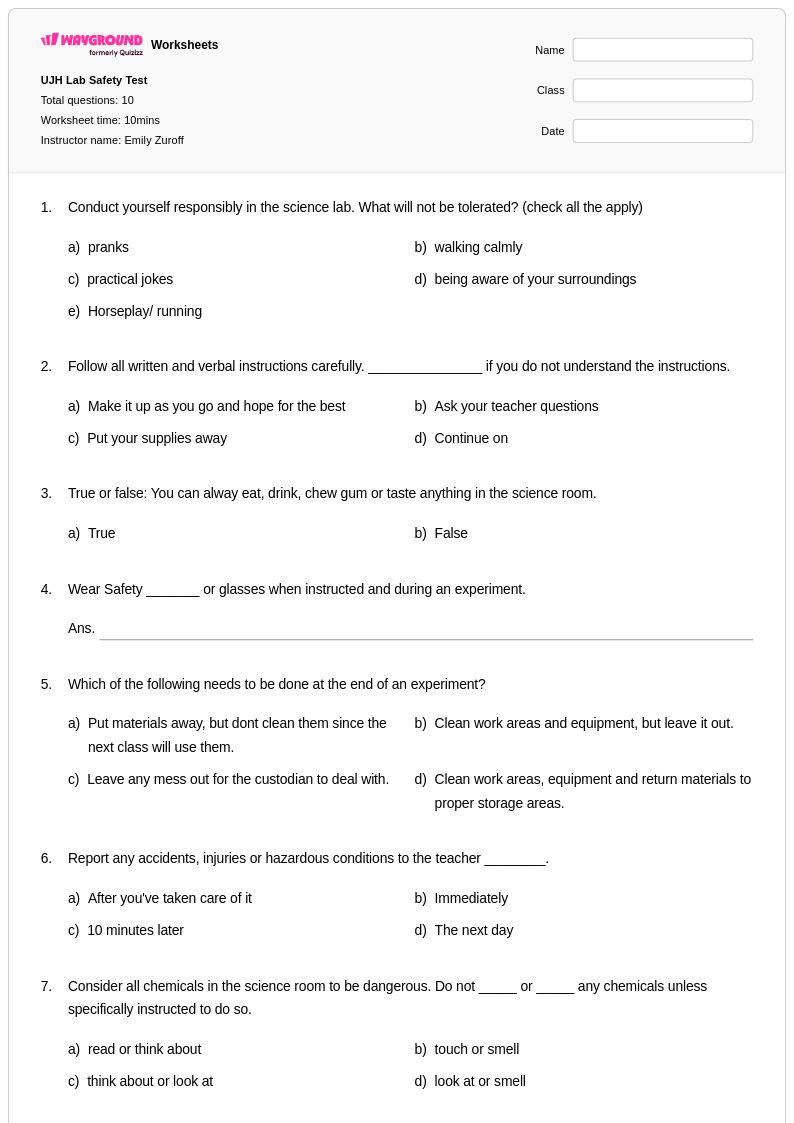
10 Q
6th - 8th
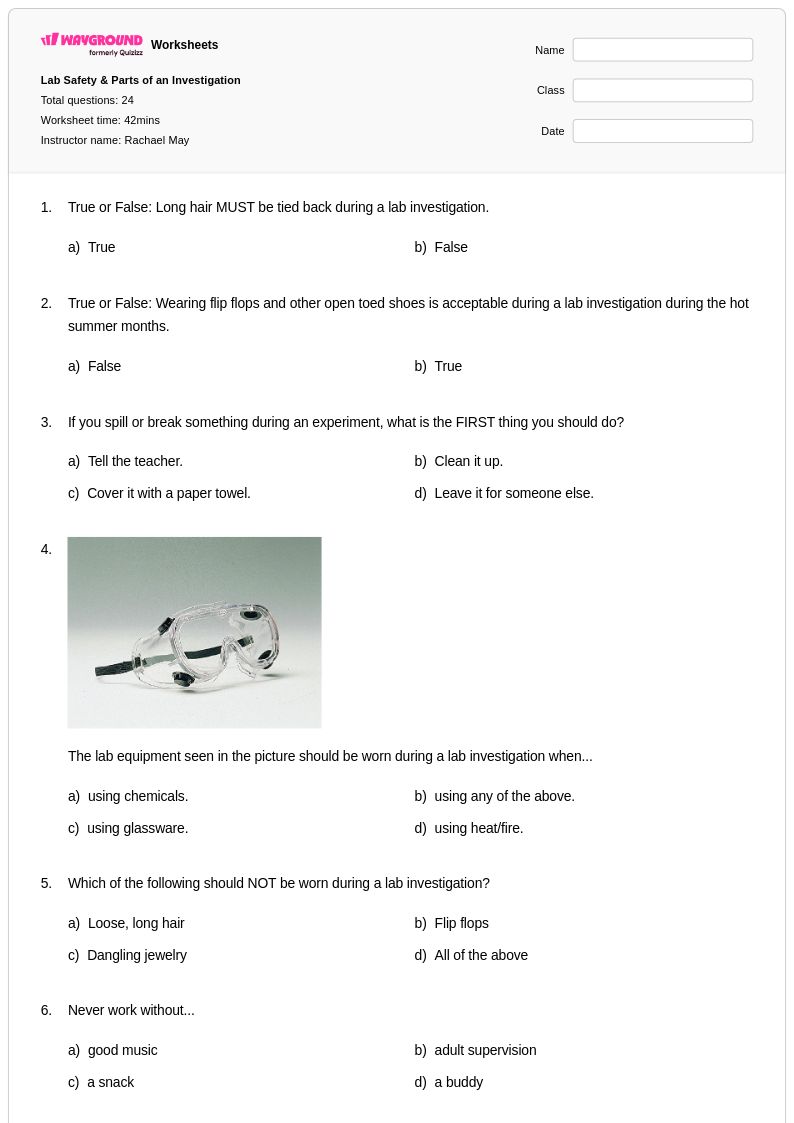
24 Q
6th
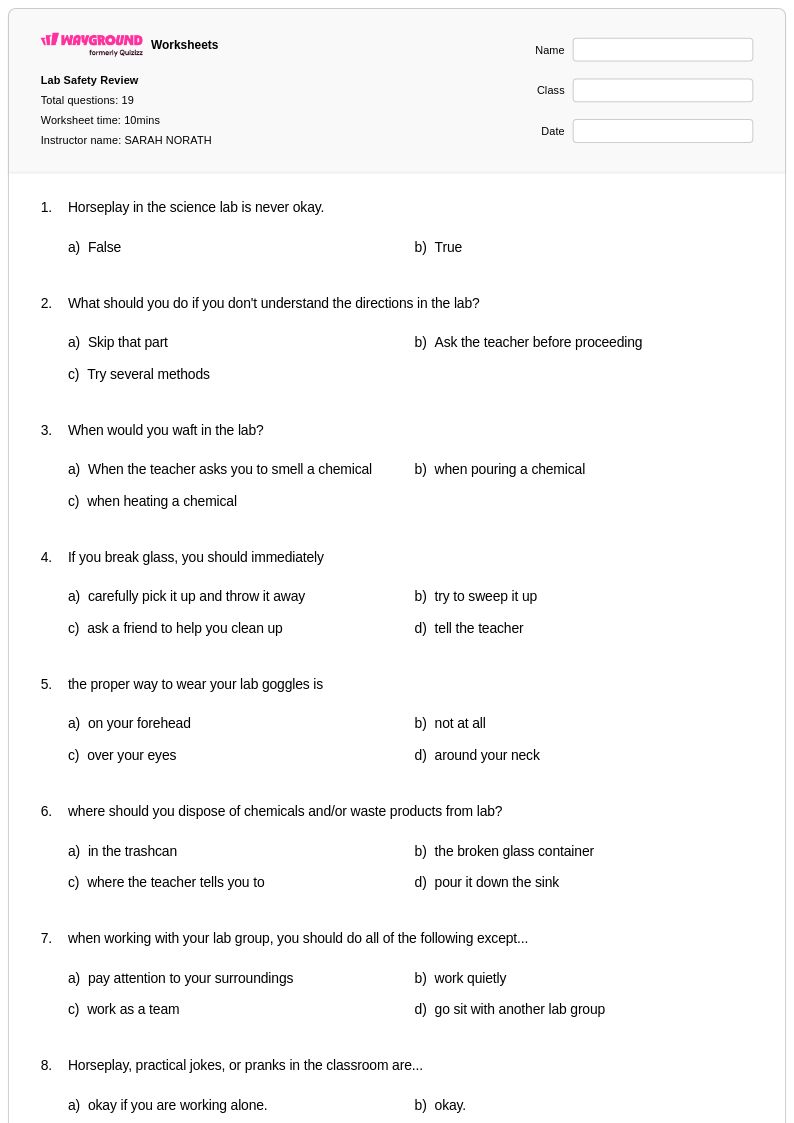
19 Q
6th - 8th
17 Q
6th
12 Q
6th
10 Q
6th - 8th
25 Q
5th - 6th
Explore Lab Safety Worksheets by Grades
Explore Other Subject Worksheets for class 6
Explore printable Lab Safety worksheets for Class 6
Lab safety worksheets for Class 6 students available through Wayground (formerly Quizizz) provide essential foundational training in proper laboratory procedures and hazard recognition that sixth-grade science students need before engaging in hands-on experiments. These comprehensive printables cover critical safety protocols including proper use of protective equipment, identification of laboratory symbols and warning signs, emergency procedures, and safe handling of common scientific instruments and materials. The practice problems within these free resources strengthen students' ability to assess potential risks, follow step-by-step safety procedures, and develop the cautious mindset necessary for scientific investigation, with each worksheet including a detailed answer key that helps educators verify student understanding of these vital safety concepts.
Wayground (formerly Quizizz) supports science educators with an extensive collection of teacher-created lab safety resources that can be easily customized to meet diverse classroom needs and learning objectives. The platform's millions of educational materials include worksheets that align with national science standards and can be filtered by specific safety topics, difficulty levels, and instructional goals, allowing teachers to quickly locate appropriate content for initial instruction, skill reinforcement, or remediation activities. These lab safety worksheets are available in both digital and printable pdf formats, enabling flexible implementation whether students are learning in traditional classrooms, laboratory settings, or remote environments, while the platform's differentiation tools help educators modify content complexity to support learners at various skill levels in developing essential safety awareness and practices.
FAQs
How do I teach lab safety to students who have never been in a science lab before?
What exercises help students practice identifying lab hazards?
What mistakes do students commonly make when learning lab safety rules?
How can I assess whether students understand lab safety before a practical experiment?
How do I use Wayground's lab safety worksheets in my classroom?
How do I differentiate lab safety instruction for students with different learning needs?