Explore Wayground's comprehensive collection of Class 6 technology worksheets featuring free printables, practice problems, and answer keys to help students master essential technological concepts and digital literacy skills.
Explore printable Technology worksheets for Class 6
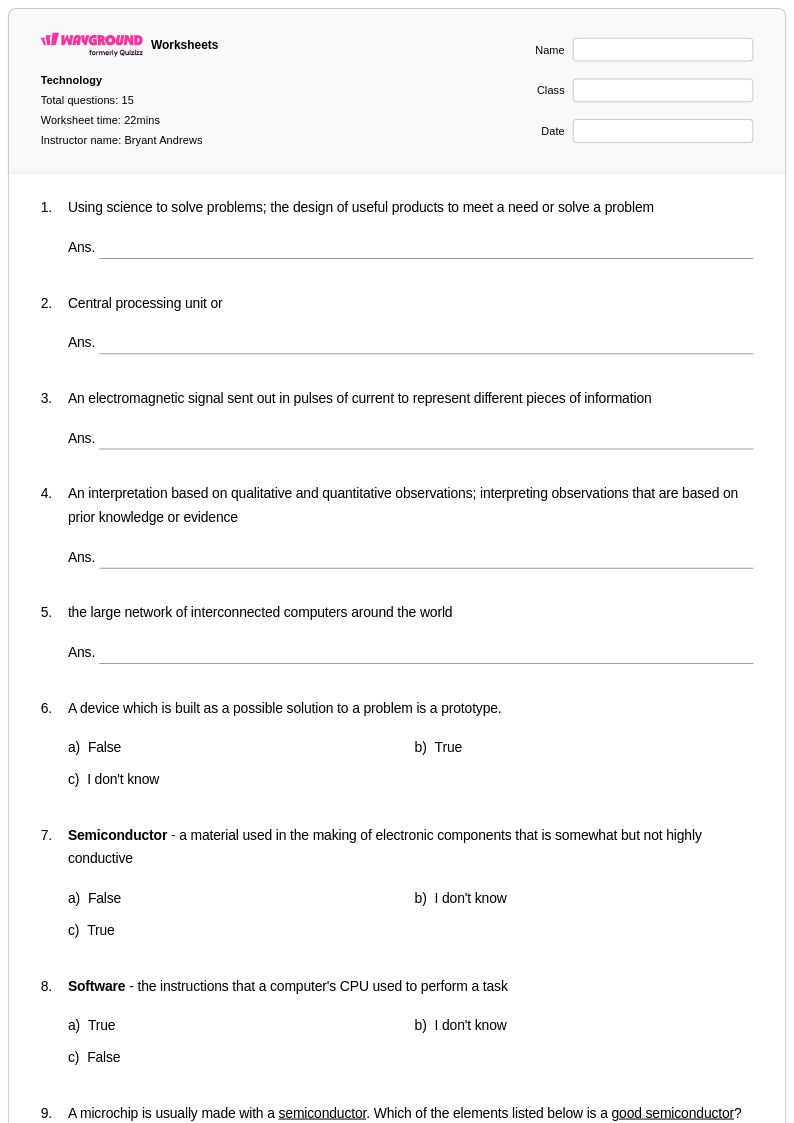
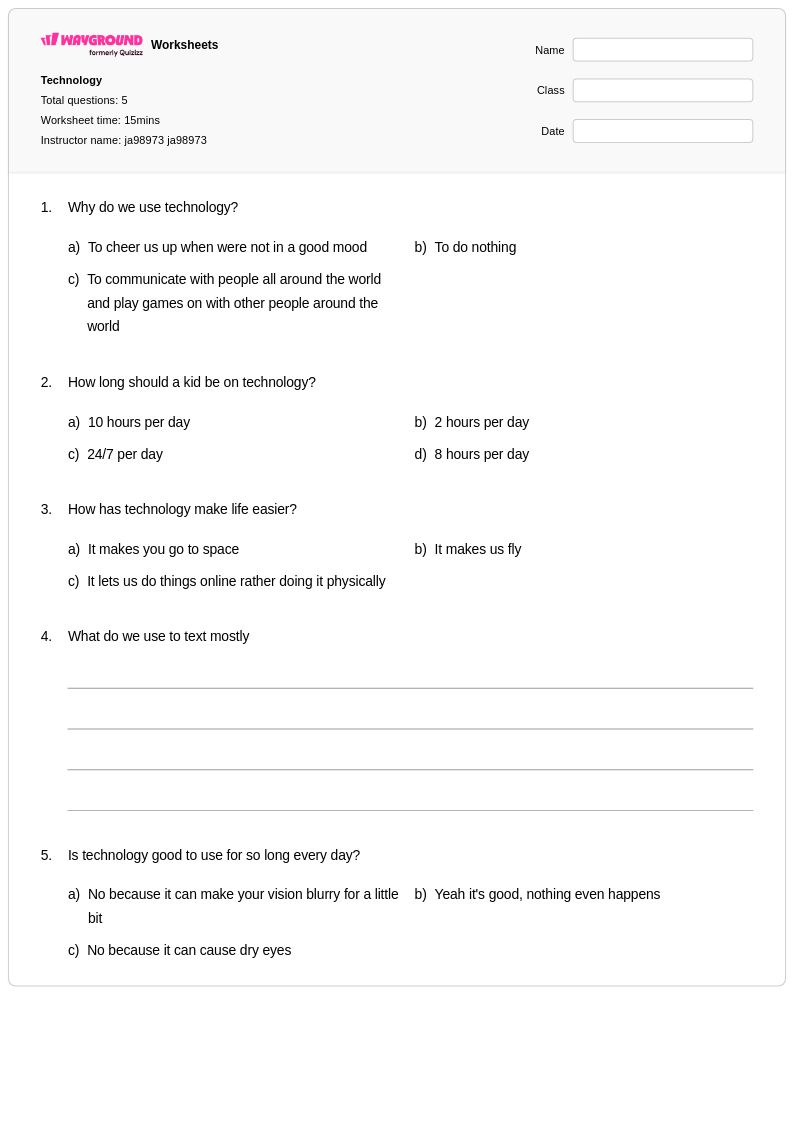
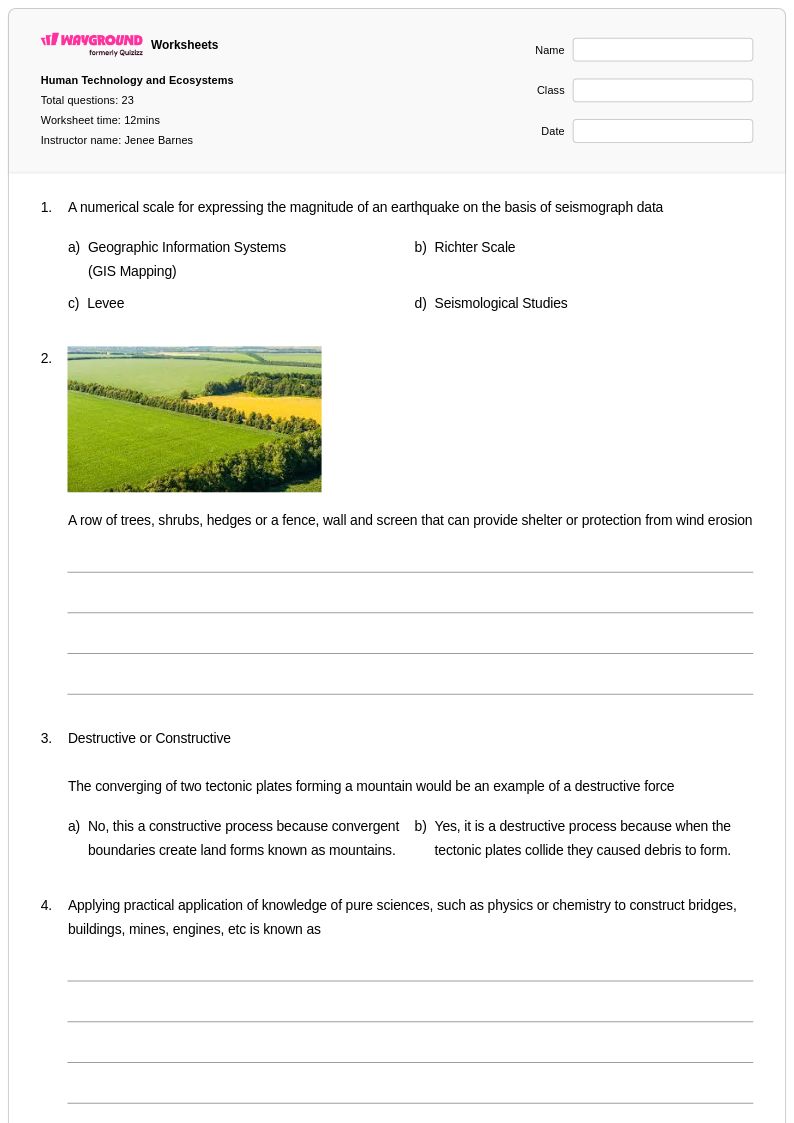
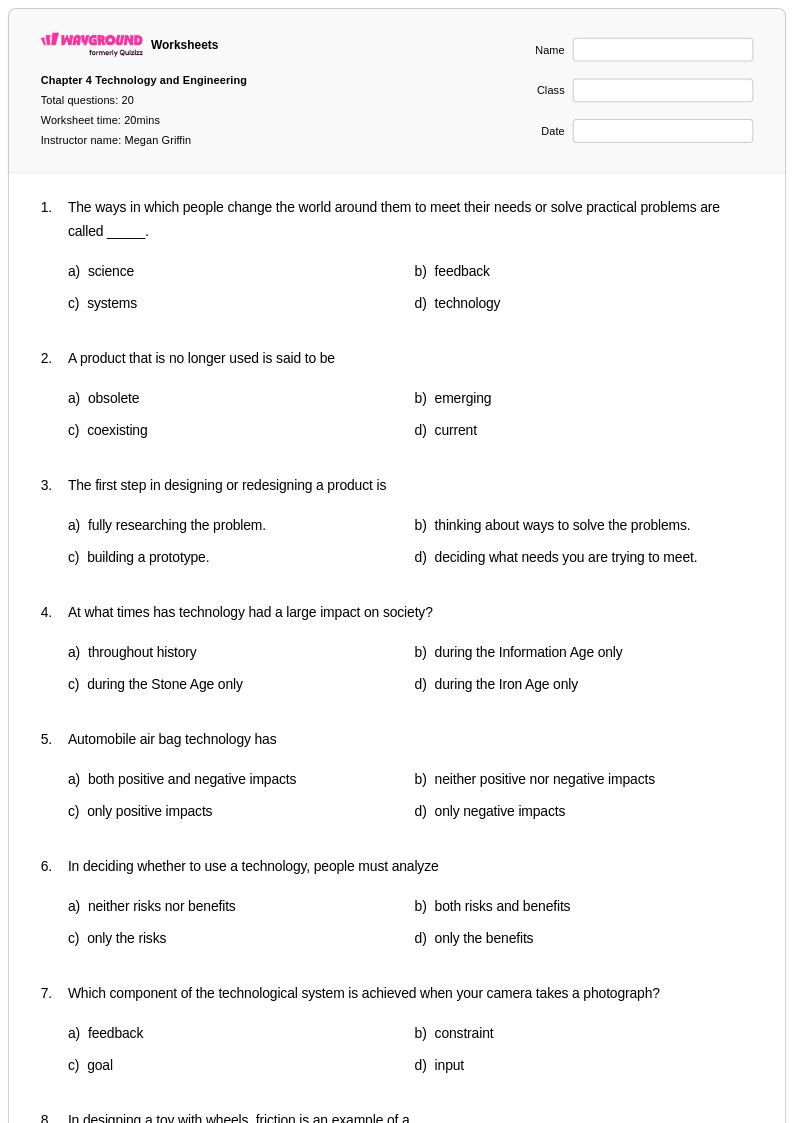
Class 6 technology worksheets through Wayground (formerly Quizizz) provide comprehensive practice materials that help students explore the intersection of scientific principles and technological applications. These carefully designed resources strengthen critical thinking skills by engaging students with hands-on problems involving simple machines, digital tools, engineering design processes, and the relationship between scientific discoveries and technological innovations. Students work through practice problems that challenge them to analyze how technology solves real-world problems, evaluate the benefits and drawbacks of different technological solutions, and understand the scientific concepts underlying common devices. Each worksheet includes detailed answer keys and is available as free printable pdf resources, making it easy for educators to assess student understanding of fundamental technology concepts while building essential problem-solving abilities.
Wayground (formerly Quizizz) supports educators with millions of teacher-created technology resources that can be easily searched, filtered, and customized to meet diverse classroom needs. The platform's robust collection includes materials aligned with educational standards, offering both printable pdf formats and interactive digital versions that accommodate different learning preferences and technological capabilities. Teachers can leverage sophisticated differentiation tools to modify worksheets for various skill levels, ensuring that both struggling learners and advanced students receive appropriate challenges in understanding technological concepts. These flexible resources streamline lesson planning while providing targeted support for remediation and enrichment activities, enabling educators to reinforce key technology principles through varied practice opportunities that connect scientific knowledge with practical applications in students' daily lives.
FAQs
How do I teach technology concepts like digital literacy and engineering design to K-12 students?
Effective technology instruction builds from concrete to abstract: start with how familiar devices work, then move into engineering design processes and problem-solving cycles. Anchoring lessons in real-world examples, such as evaluating the benefits and risks of a specific emerging technology, helps students connect abstract concepts to daily life. Structured practice that asks students to analyze, evaluate, and iterate reinforces the critical thinking skills central to technology education.
What exercises help students practice understanding computer parts and digital systems?
Labeling diagrams of computer components, matching hardware to its function, and tracing how data flows through a system are effective exercises for building foundational knowledge of computer parts. Practice problems that ask students to identify input, output, storage, and processing components in real devices help solidify understanding. Worksheets that combine identification tasks with short-answer questions about each component's role develop both recall and applied comprehension.
What common mistakes do students make when learning about technology and computer parts?
Students frequently confuse hardware and software, treating them as interchangeable rather than as distinct categories with different roles. Another common error is misidentifying storage and memory, conflating RAM with long-term storage like a hard drive. Students also tend to underestimate the iterative nature of engineering design, assuming that a first solution is a final one rather than a starting point for refinement.
How can I use technology worksheets to support students with different learning needs?
Differentiation in technology instruction can be supported through tiered worksheets that adjust complexity, such as providing simplified answer choices for students who need reduced cognitive load. On Wayground, teachers can apply individual accommodations including extended time, read-aloud support for students who struggle with text-heavy questions, and reduced answer choices, all configurable per student without notifying the rest of the class. These settings are reusable across future sessions, making it practical to maintain consistent support for diverse learners.
How do I use Wayground's technology worksheets in my classroom?
Wayground's technology worksheets are available as printable PDFs for traditional classroom use and in digital formats for technology-integrated or hybrid learning environments, including the option to host them as a quiz directly on Wayground. Teachers can use robust search and filtering tools to find materials aligned to specific topics like computer parts or engineering design, and all worksheets include complete answer keys. The platform also allows teachers to modify existing worksheets or create new ones to match their specific curriculum needs.
How do I assess whether students understand how technology impacts society?
Effective assessment goes beyond recall and asks students to evaluate trade-offs, such as weighing the benefits of a new technology against its societal risks or ethical implications. Short-answer and scenario-based questions that require students to justify their reasoning reveal the depth of their understanding more accurately than multiple-choice alone. Looking for whether students can apply the concept of unintended consequences or identify stakeholders affected by a technological decision is a strong indicator of genuine comprehension.