Free Printable Eyewitness Testimony Worksheets for Class 7
Discover free Class 7 eyewitness testimony worksheets and printables from Wayground that help students analyze the reliability and credibility of witness accounts in civic and legal contexts through engaging practice problems with answer keys.
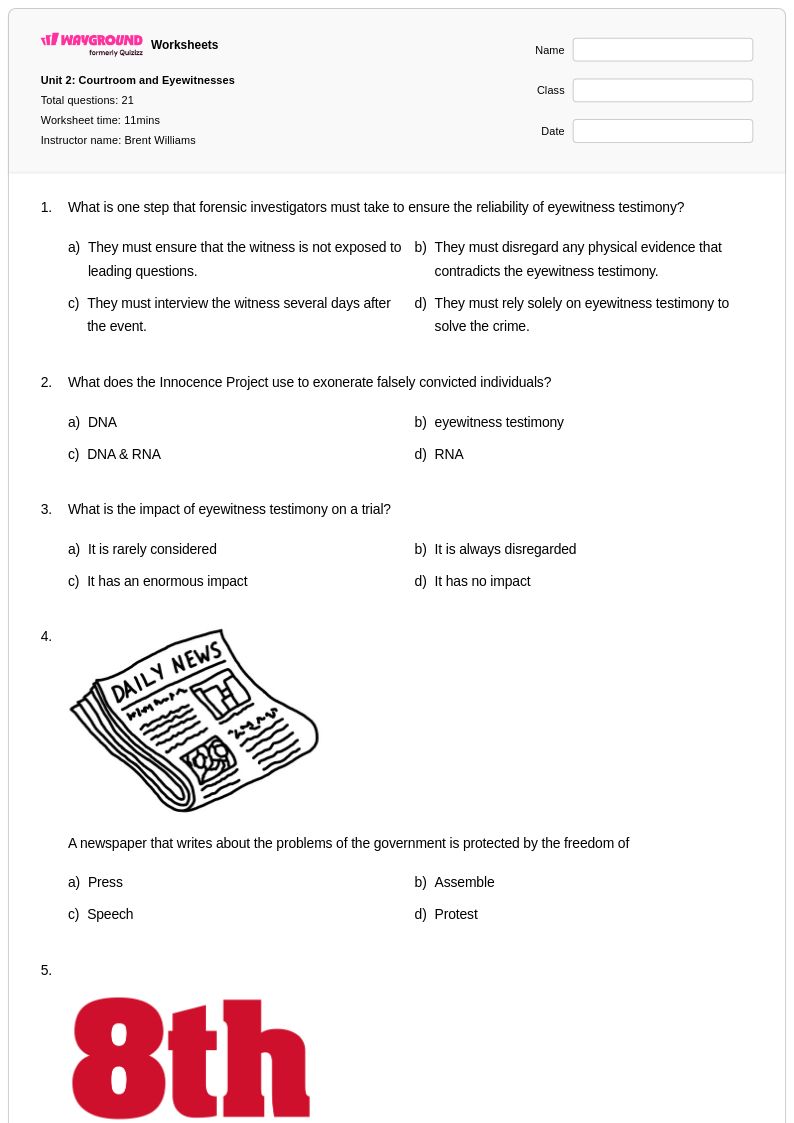
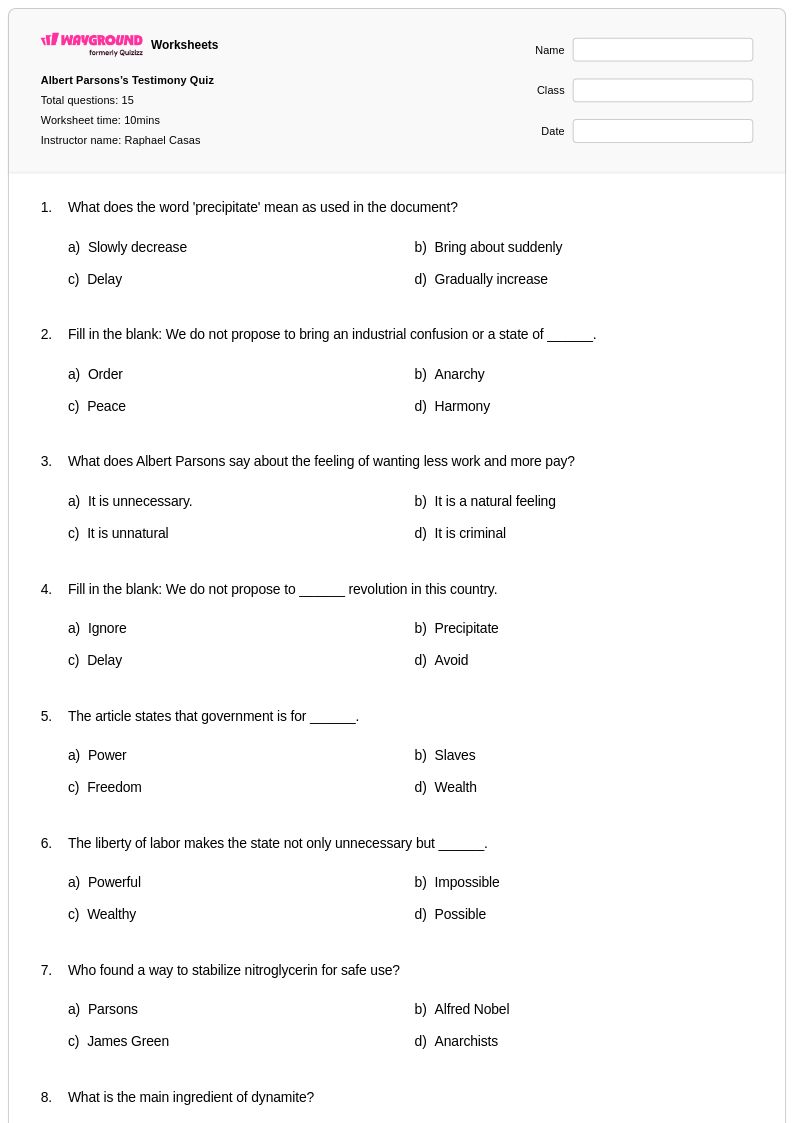
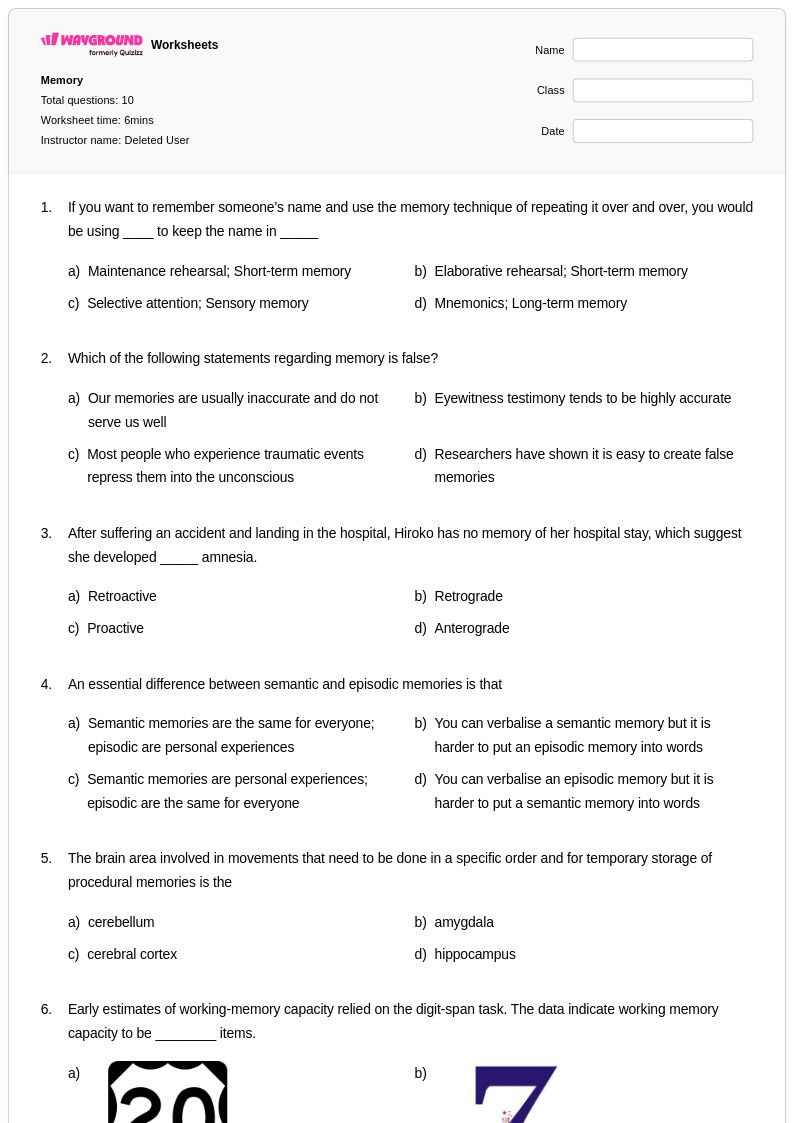
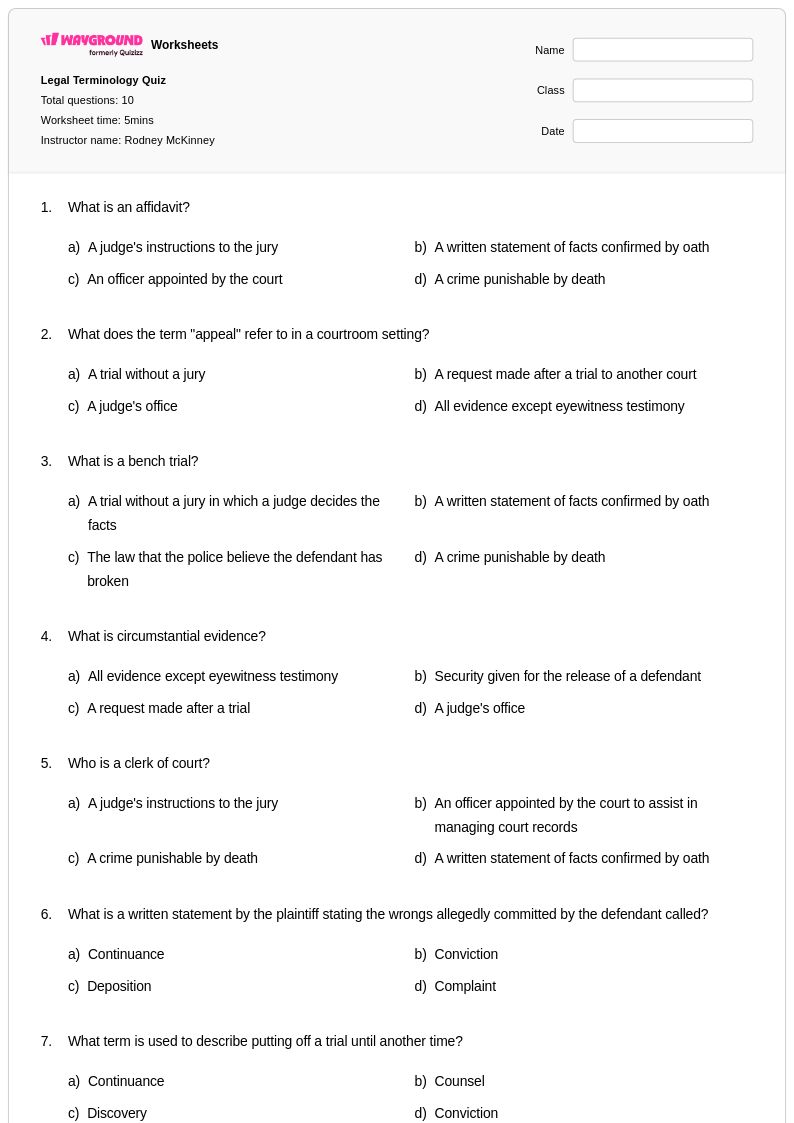
Explore printable Eyewitness Testimony worksheets for Class 7
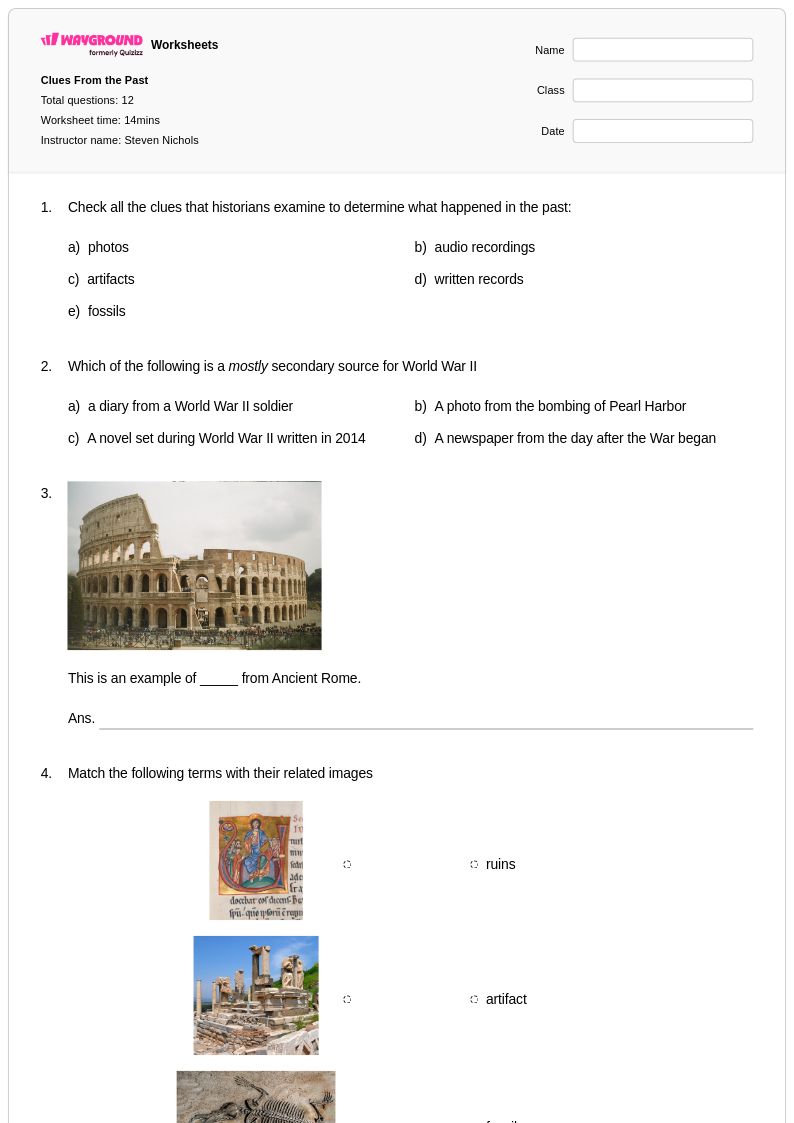
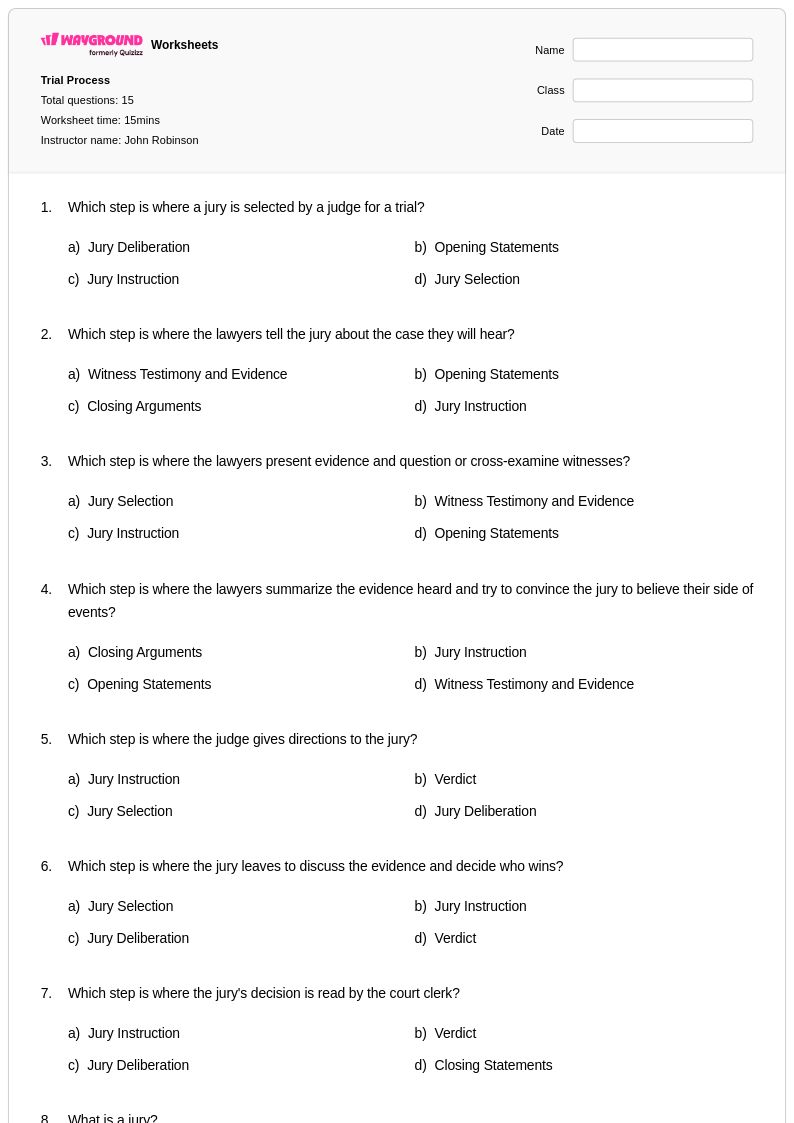
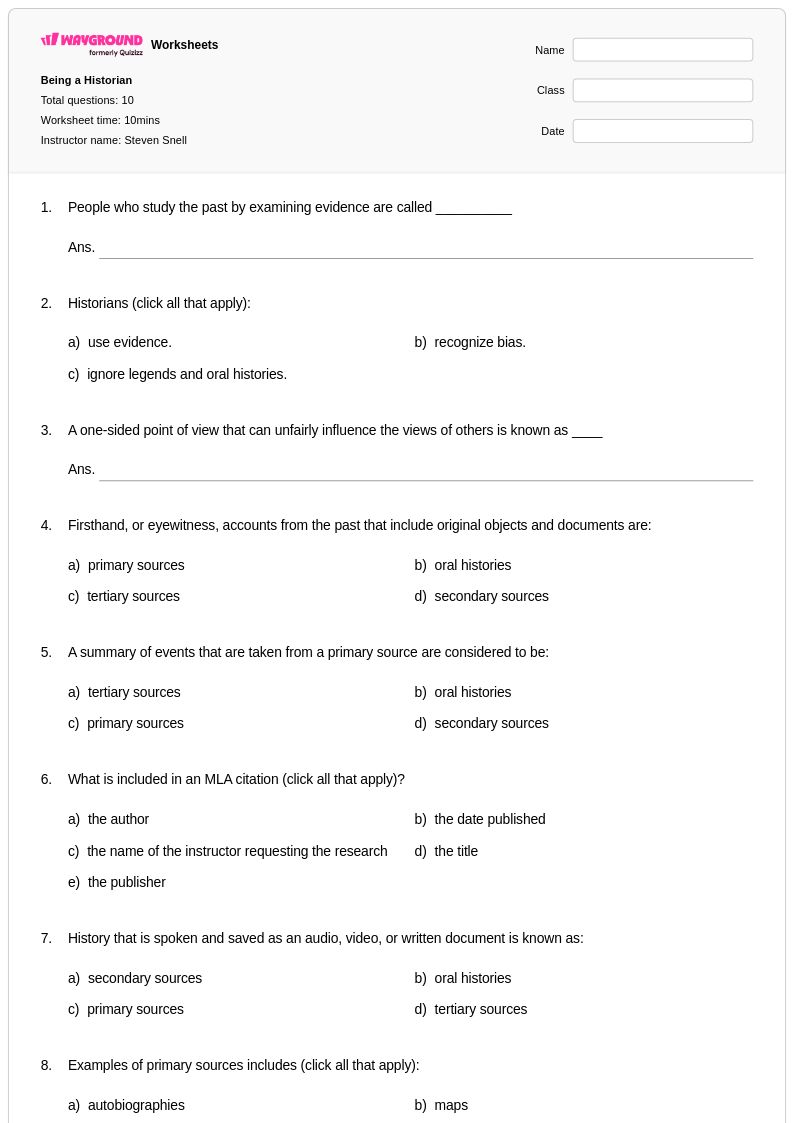
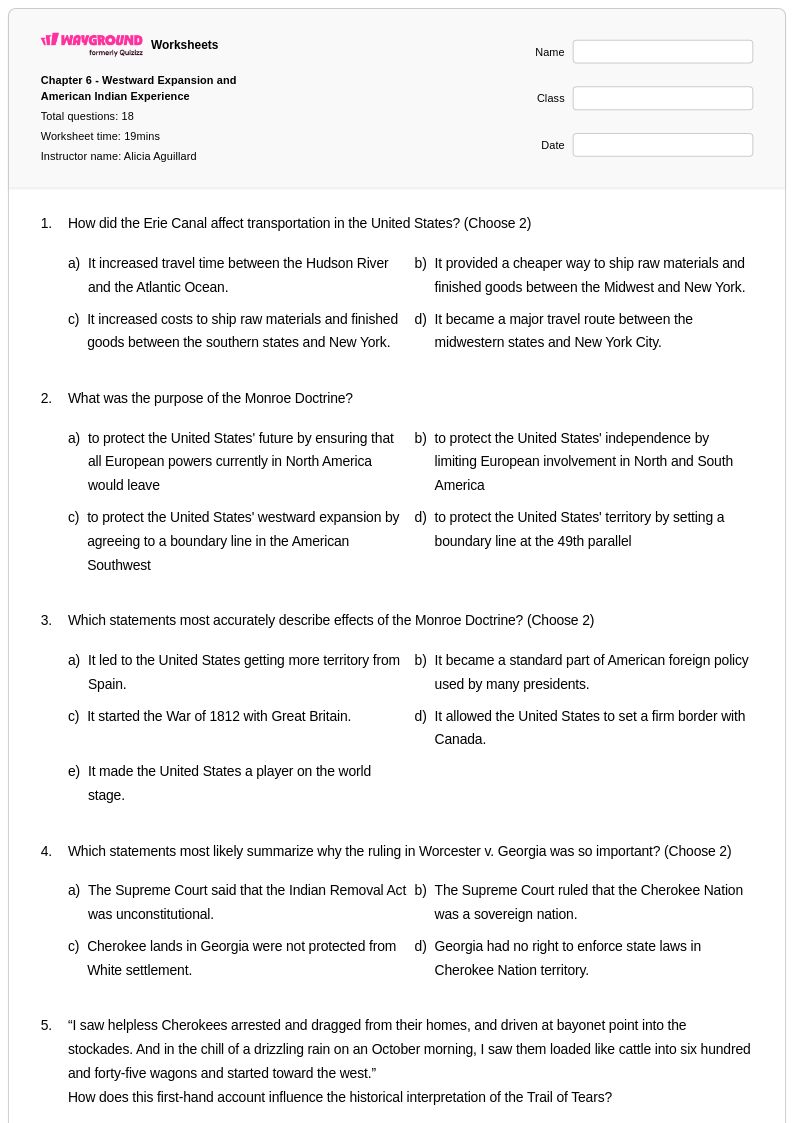
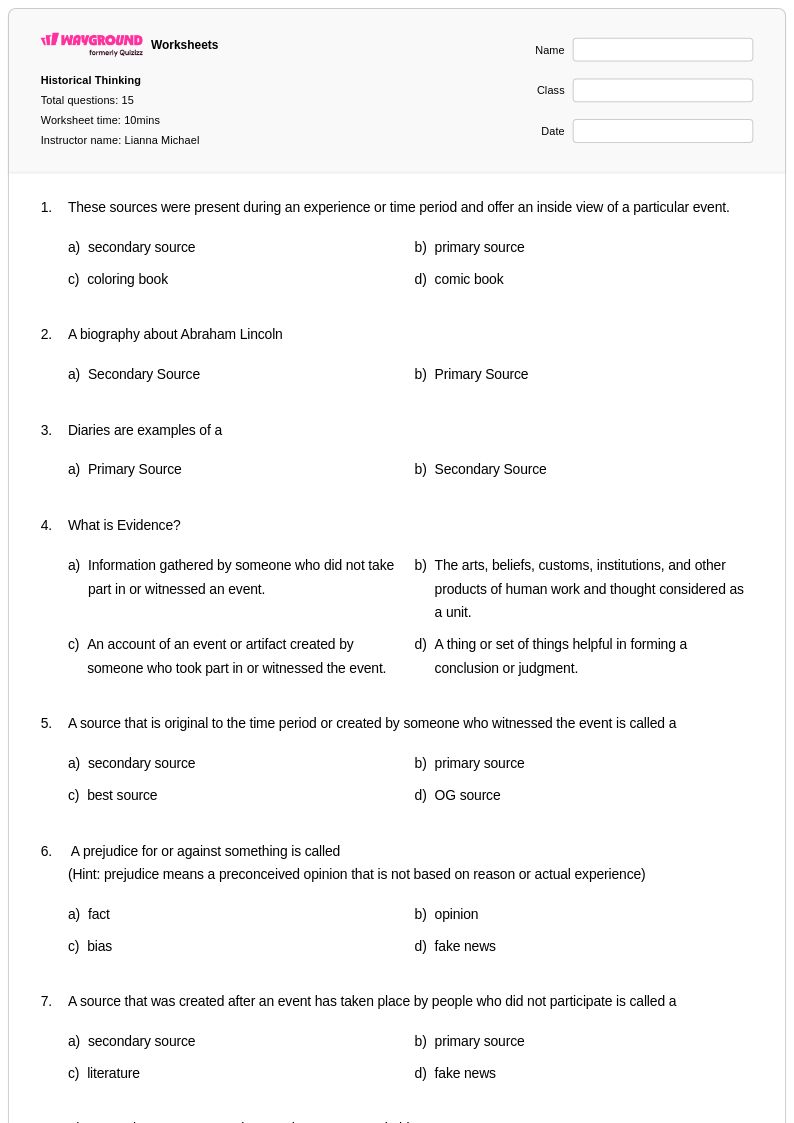
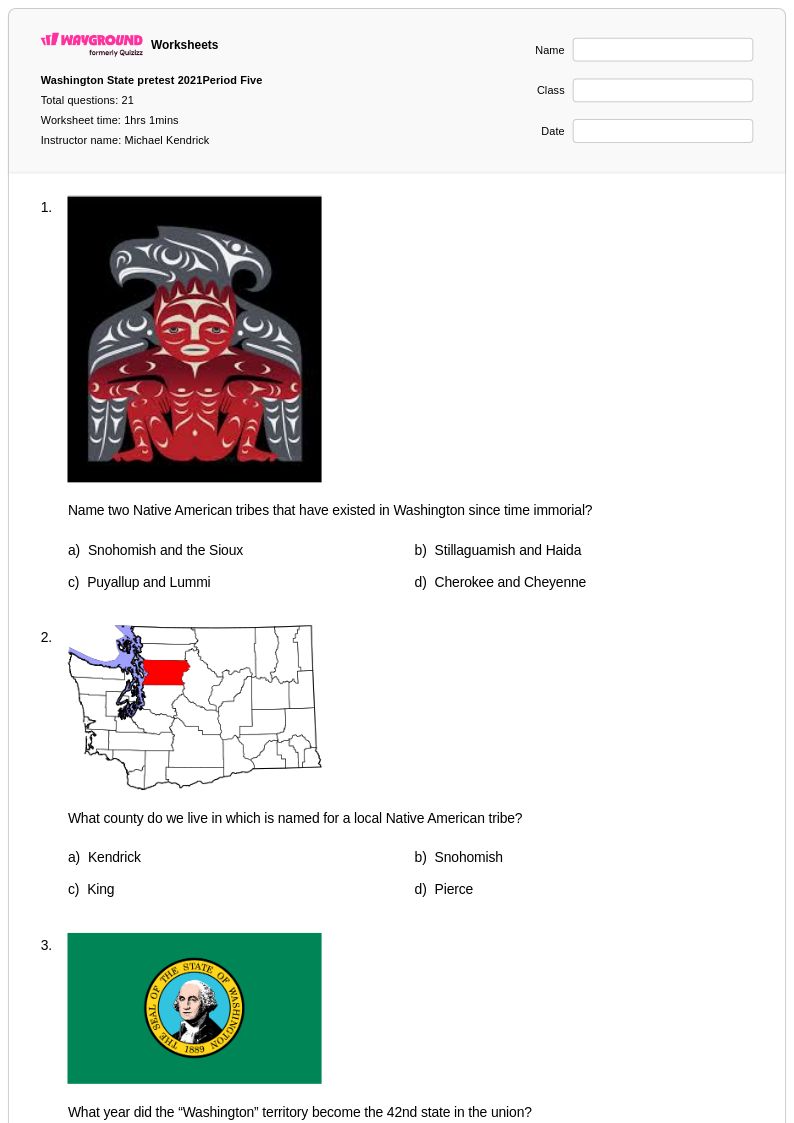
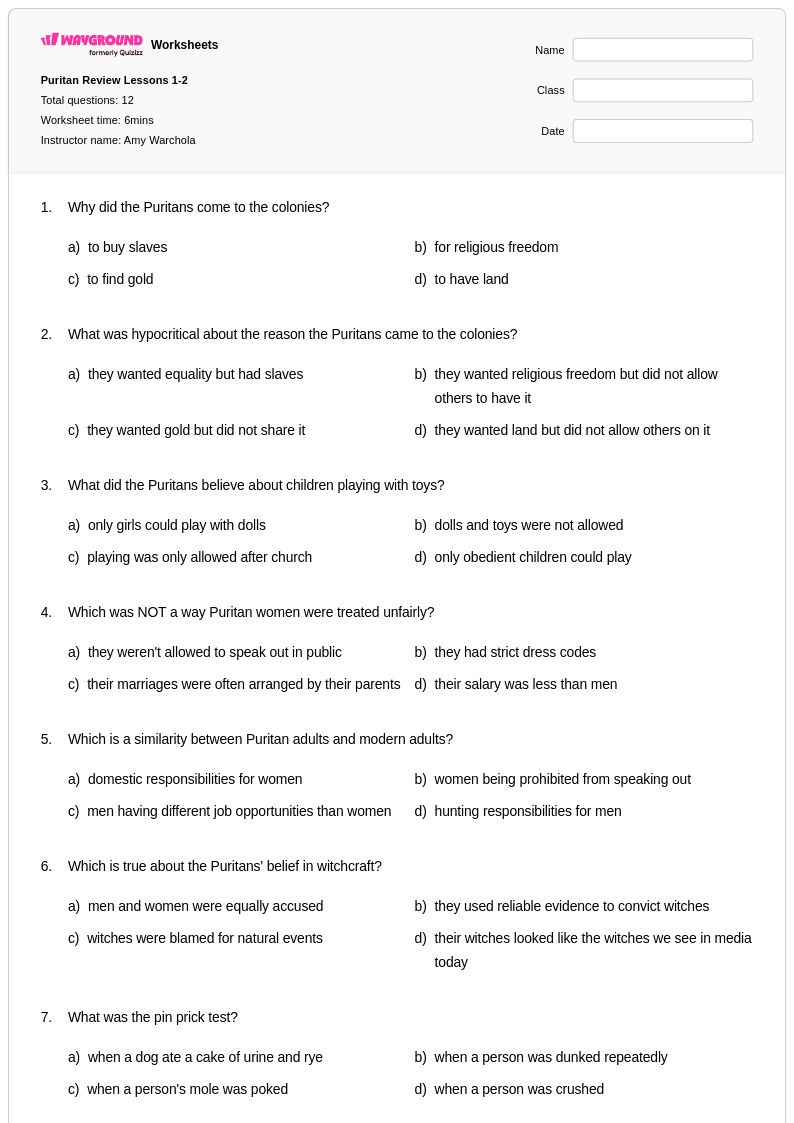
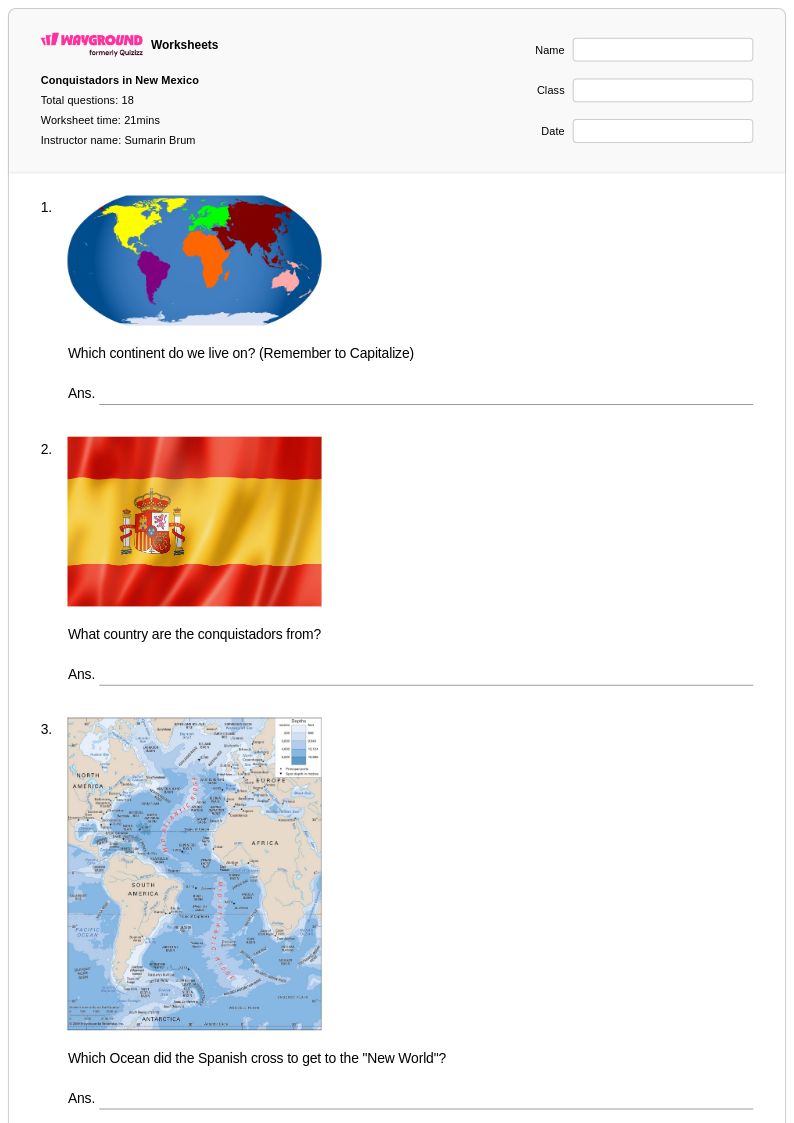
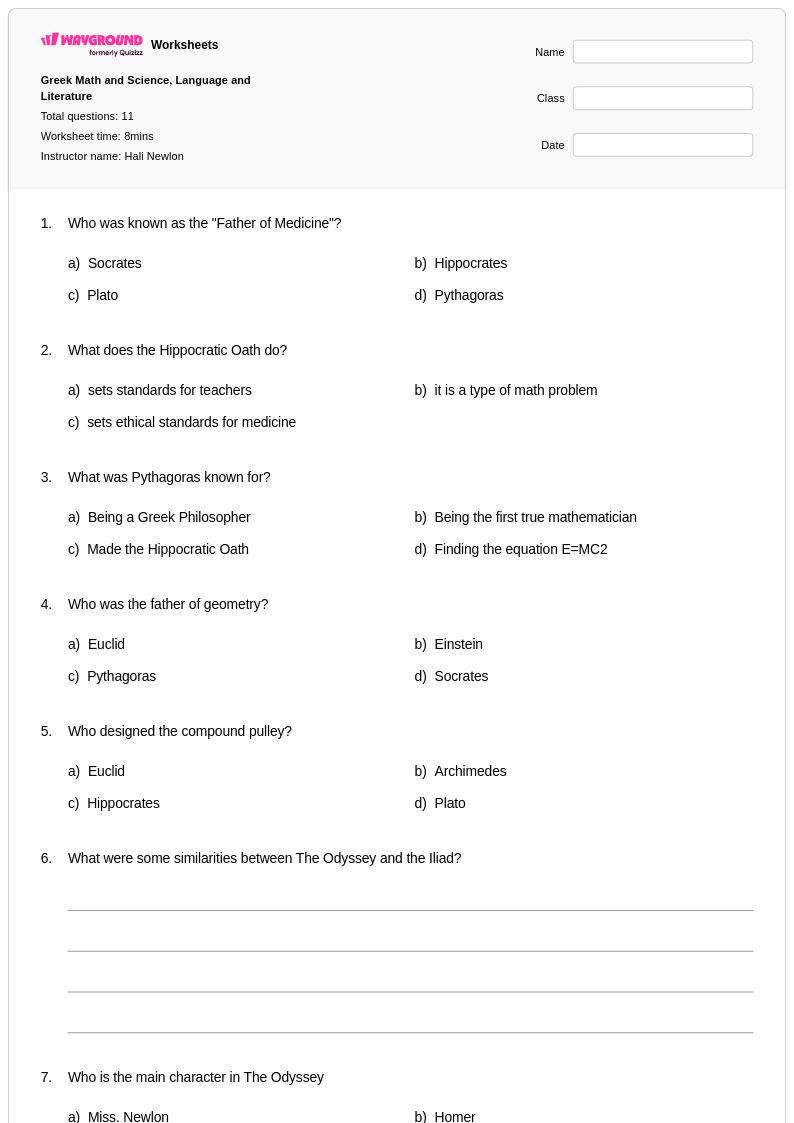
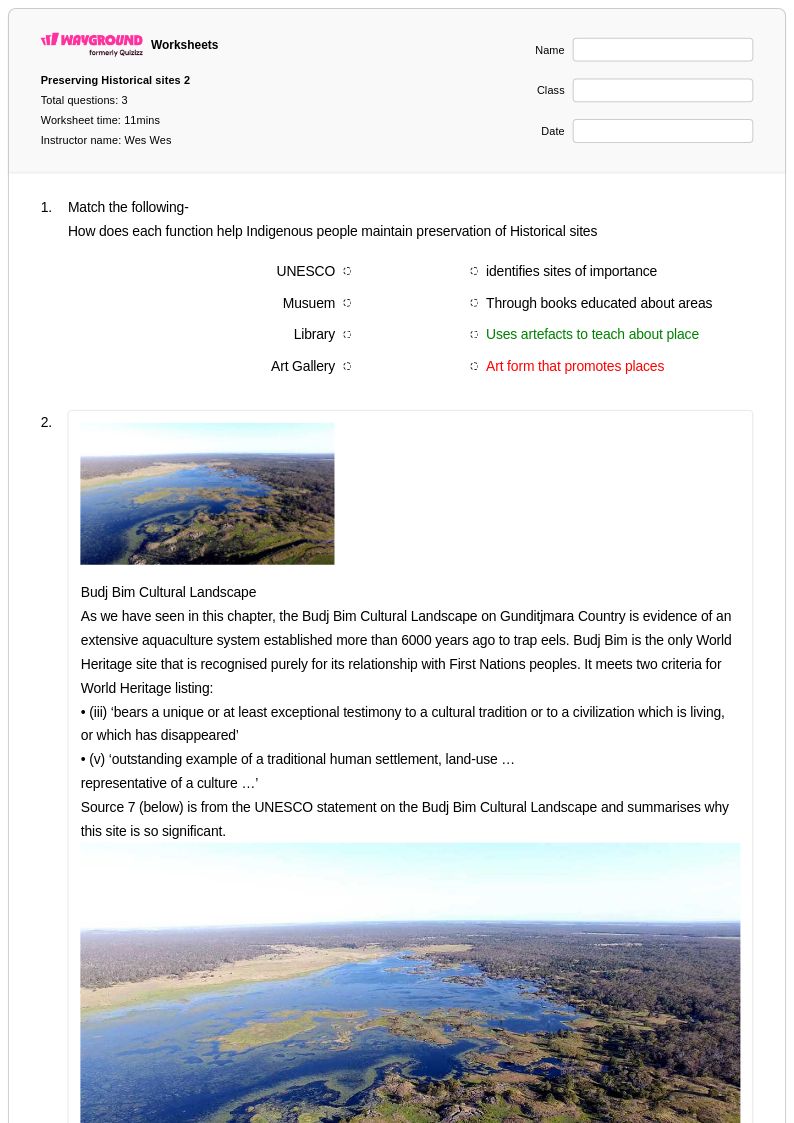
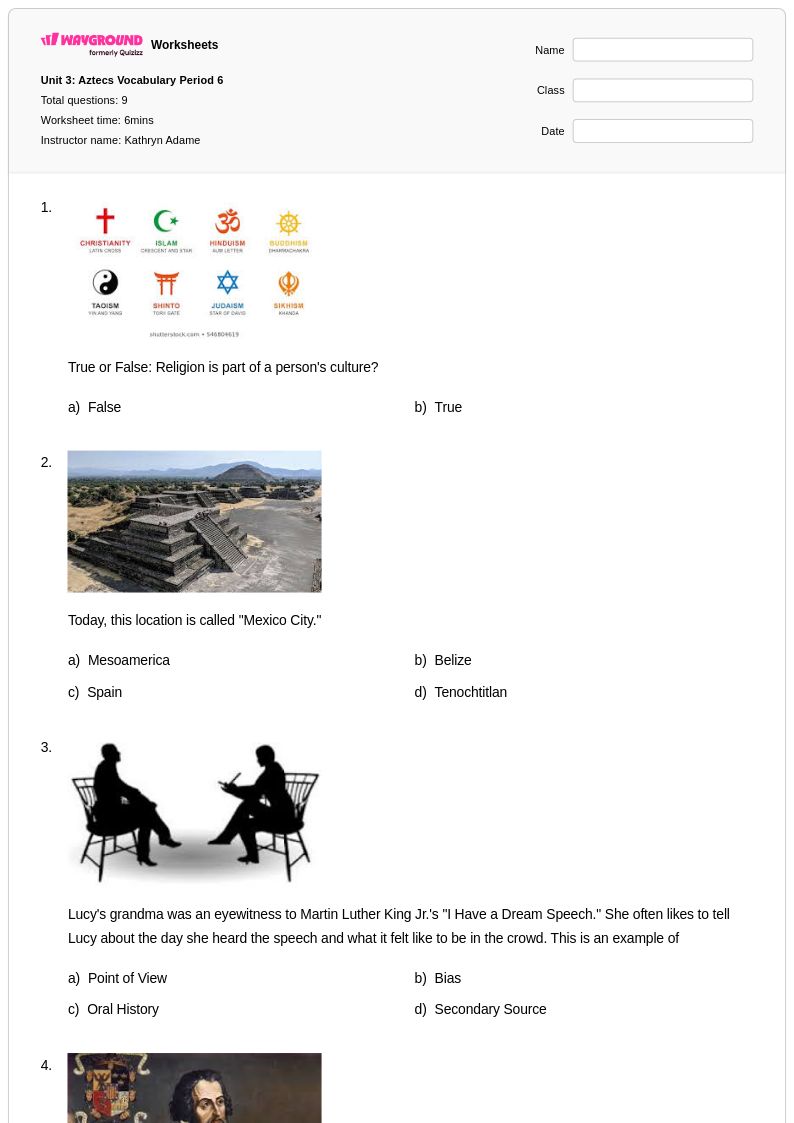
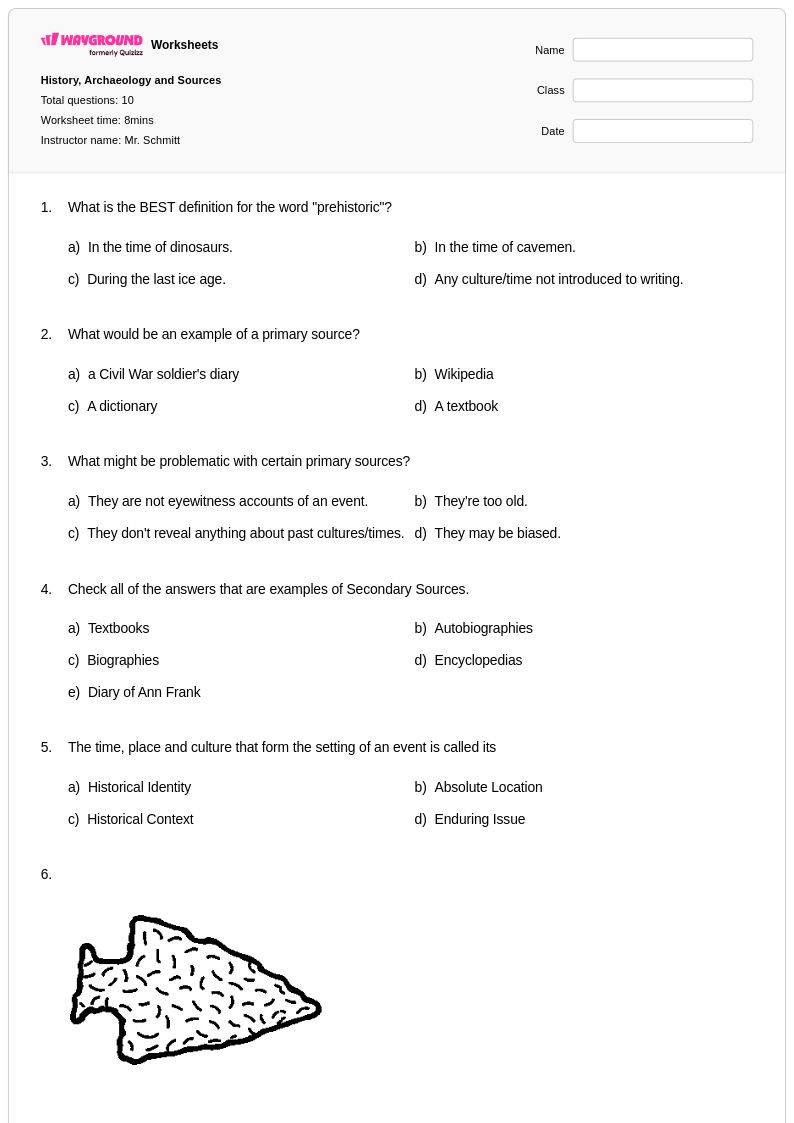
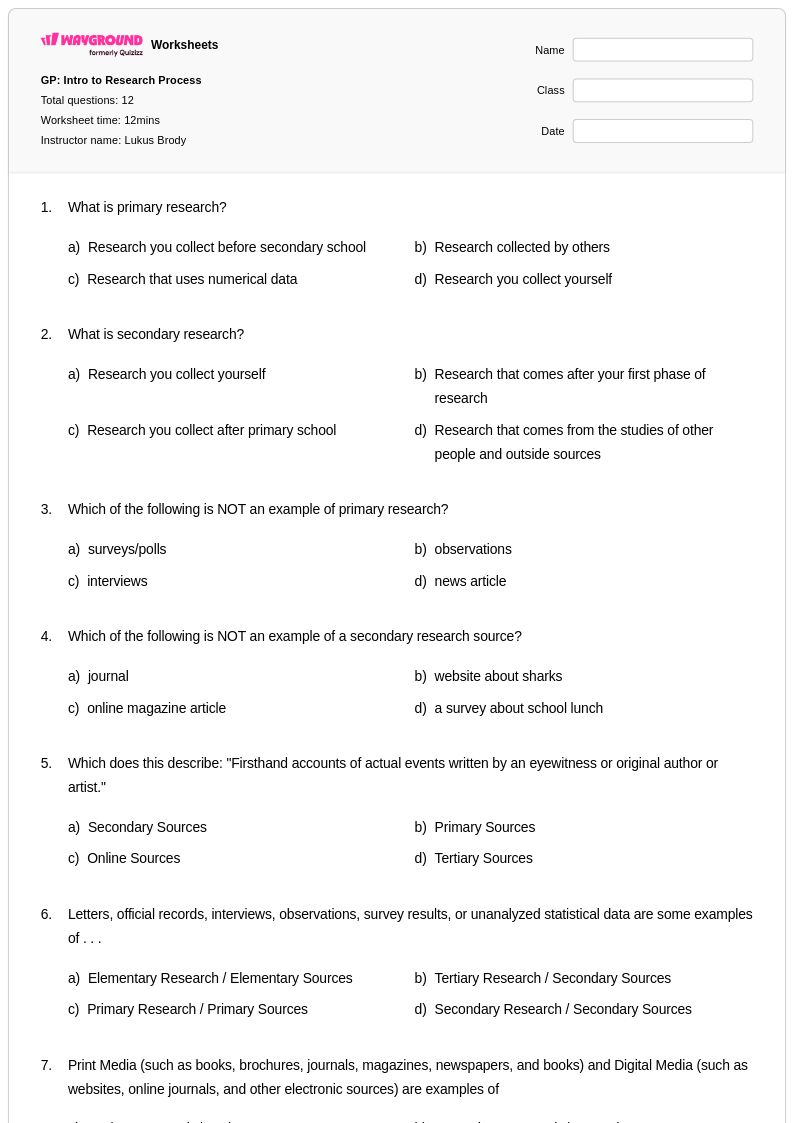
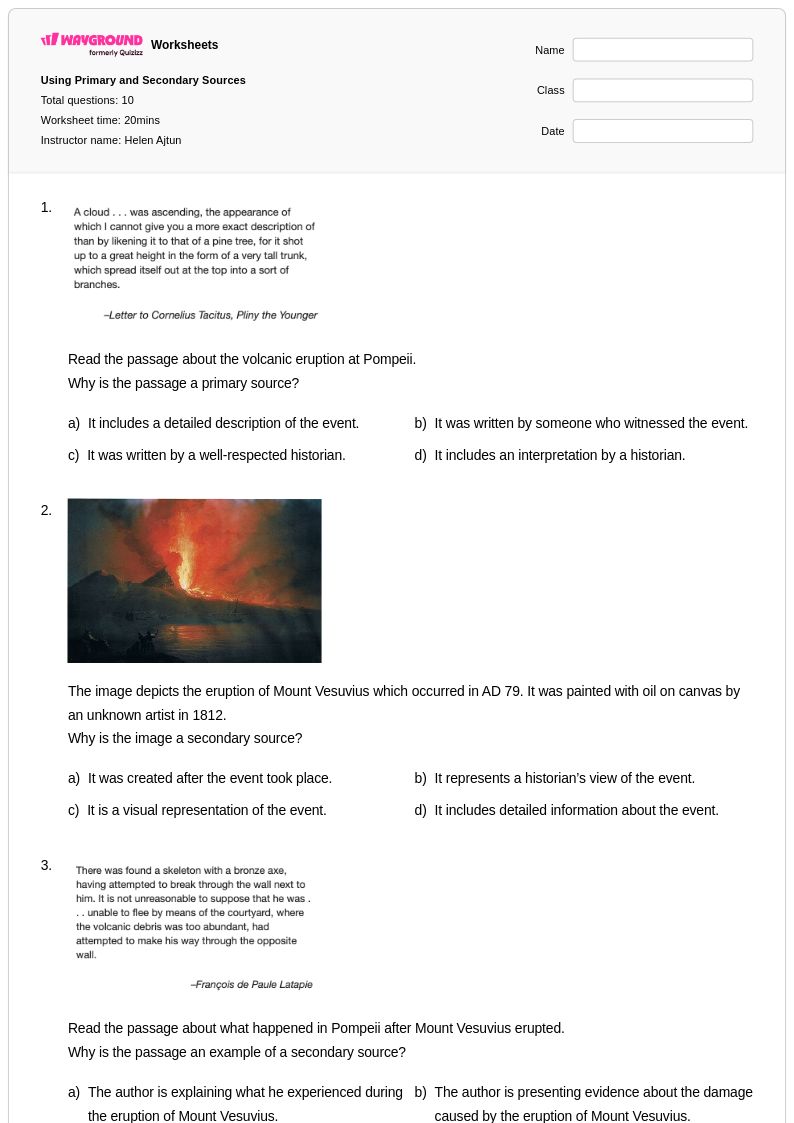
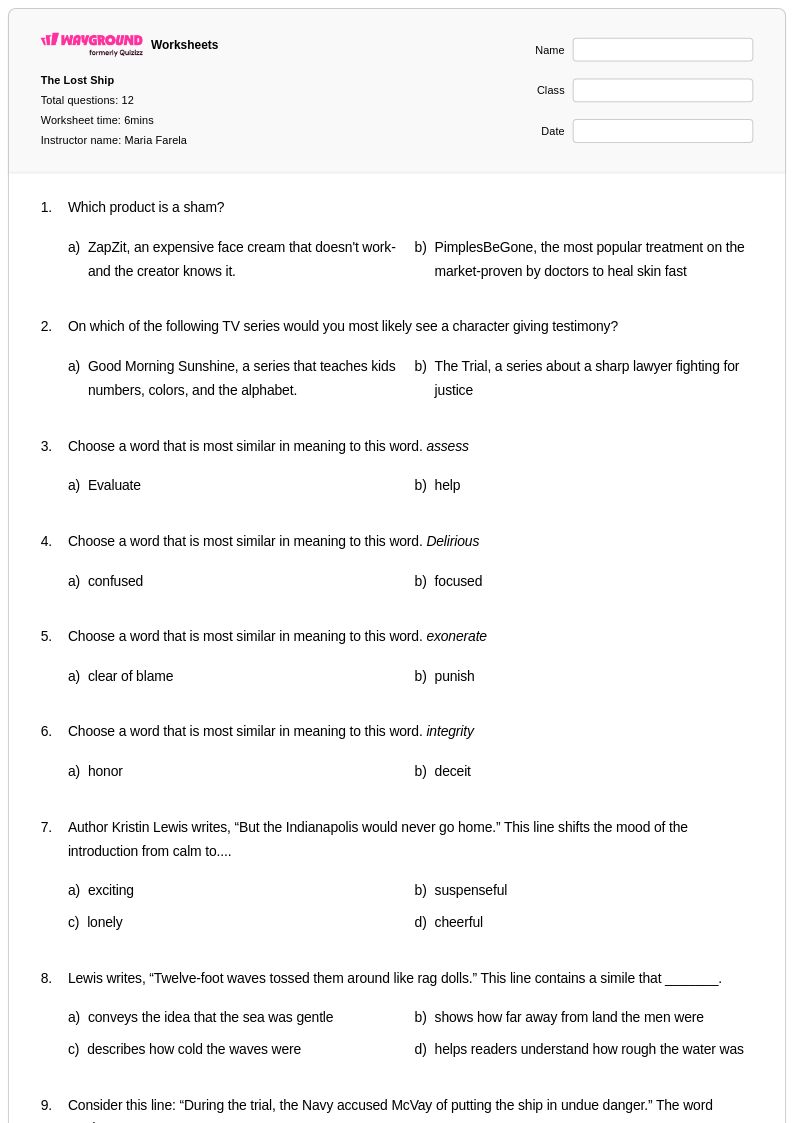
Eyewitness testimony worksheets for Class 7 students provide essential practice in evaluating the reliability and accuracy of firsthand accounts in legal and historical contexts. These comprehensive printables guide seventh graders through critical analysis of witness statements, helping them understand factors that can influence memory, perception, and recall. Students engage with real-world scenarios and case studies that demonstrate how eyewitness accounts can vary, conflict, or change over time. The worksheets strengthen analytical thinking skills while teaching students to identify potential biases, environmental factors, and psychological influences that affect witness reliability. Each resource includes detailed answer keys and structured practice problems that scaffold learning from basic comprehension to advanced evaluation techniques, ensuring students develop the critical thinking skills necessary for informed civic participation.
Wayground, formerly Quizizz, empowers educators with access to millions of teacher-created eyewitness testimony resources specifically designed for Class 7 civics and government instruction. The platform's robust search and filtering capabilities allow teachers to quickly locate worksheets that align with specific learning standards and curriculum requirements. These customizable materials are available in both digital and printable PDF formats, enabling seamless integration into diverse classroom environments and teaching styles. Teachers can easily differentiate instruction by selecting from worksheets that range in complexity and focus, whether targeting foundational concept introduction, skill remediation, or advanced enrichment activities. The extensive collection supports comprehensive lesson planning while providing flexible options for independent practice, group discussions, and assessment preparation that strengthen students' understanding of evidence evaluation in democratic society.
FAQs
How do I teach eyewitness testimony in a civics or psychology class?
Teaching eyewitness testimony works best when students first understand how memory is reconstructive rather than a perfect recording of events. Introduce factors that distort recall, such as stress, leading questions, time elapsed, and personal bias, then use case studies or real courtroom examples to show how these variables have affected legal outcomes. Structured discussion around conflicting witness accounts helps students grasp why corroborating evidence matters in the justice system.
What exercises help students practice analyzing the reliability of eyewitness accounts?
Effective practice exercises include comparing two conflicting witness statements about the same event and asking students to identify inconsistencies and possible explanations for them. Scenario-based activities that simulate courtroom situations, where students evaluate witness credibility and weigh testimony against physical evidence, build both analytical and legal reasoning skills. Having students rank the reliability of different witness accounts based on factors like proximity, stress level, and time since the event reinforces the core concepts systematically.
What misconceptions do students commonly have about eyewitness testimony?
The most widespread misconception is that confident witnesses are accurate witnesses. Research consistently shows that confidence and accuracy are poorly correlated, yet students and jurors alike tend to find high-confidence testimony more persuasive. Students also frequently assume that traumatic or high-stakes events produce clearer memories, when in fact acute stress impairs encoding and retrieval. Addressing these misconceptions directly, with evidence from wrongful conviction cases, is one of the most effective ways to shift student thinking.
How does leading questioning affect eyewitness memory, and how can I teach this concept?
Leading questions can alter a witness's memory of an event by introducing details that were never actually observed, a phenomenon documented extensively in cognitive psychology research. Elizabeth Loftus's classic car crash studies are a classroom-ready example: participants who were asked how fast cars were going when they 'smashed' into each other recalled significantly higher speeds and more broken glass than those asked using neutral language. Teachers can replicate this effect at a small scale by showing students a short video clip and then asking half the class a leading question while the other half receives a neutral one, then comparing responses.
How can I use eyewitness testimony worksheets in my classroom?
Eyewitness testimony worksheets on Wayground are available as printable PDFs for traditional classroom use and in digital formats for technology-integrated or hybrid learning environments, making them flexible across different instructional setups. Teachers can also host the worksheets as a quiz directly on Wayground, allowing for real-time student response tracking. Each worksheet includes a detailed answer key, so they work equally well for whole-class instruction, small-group analysis, or independent study assignments.
How can I differentiate eyewitness testimony instruction for students with different learning needs?
When using Wayground's digital format, teachers can apply student-level accommodations including Read Aloud for students who need text read to them, reduced answer choices to lower cognitive load for students who need it, and extended time per question for those who require it. These accommodations can be assigned to individual students while the rest of the class receives default settings, and they are saved for reuse across future sessions. For print-based instruction, pairing complex witness scenarios with graphic organizers or sentence starters helps scaffold analysis for students working below grade level.