Free Printable Presidential Election Worksheets for Class 7
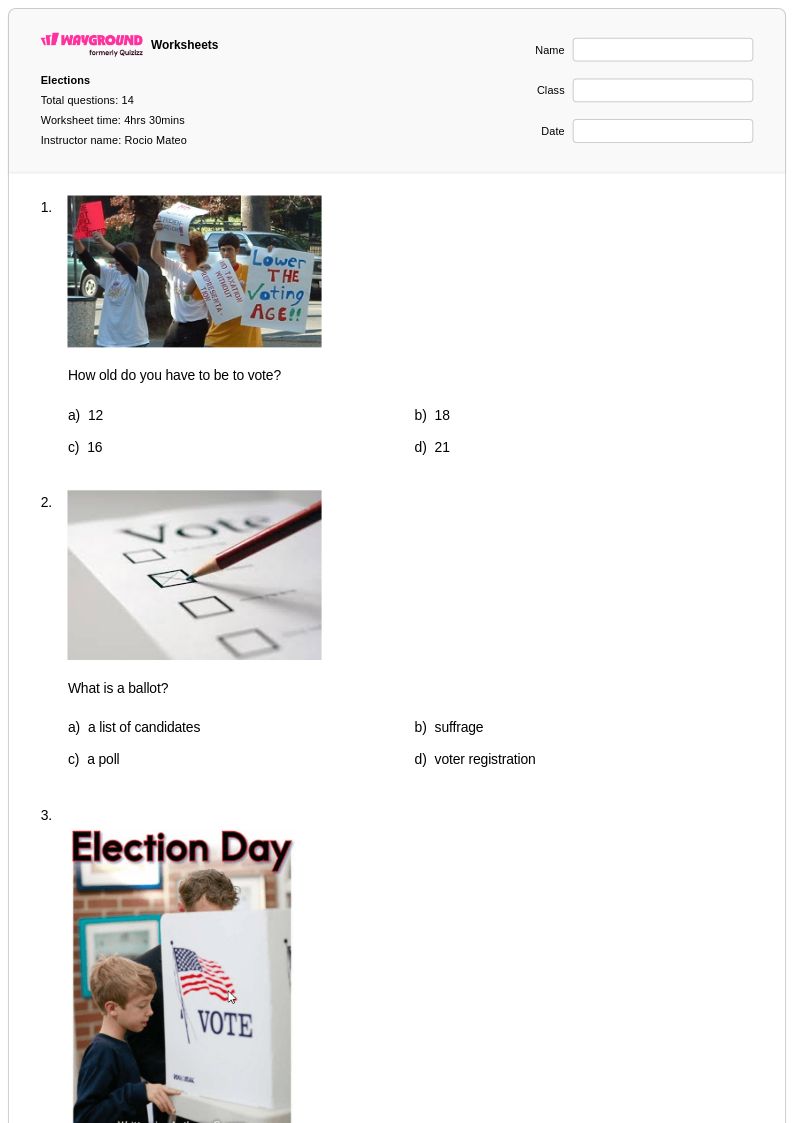
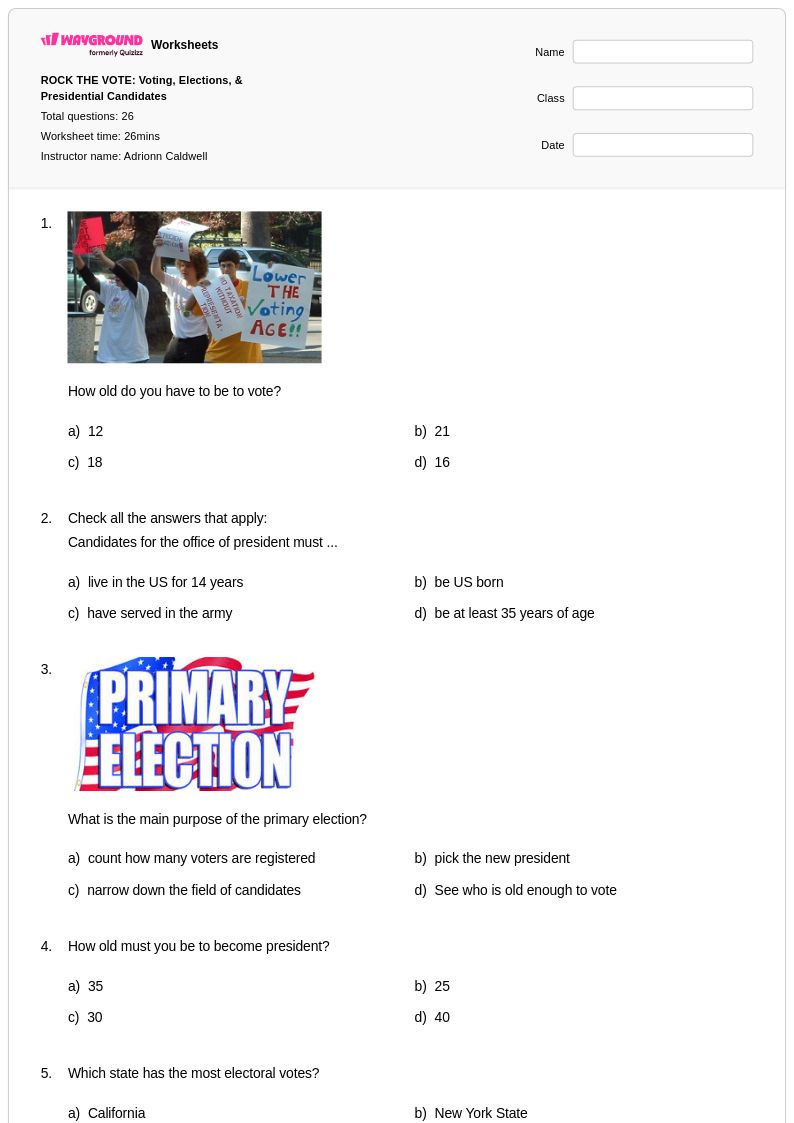
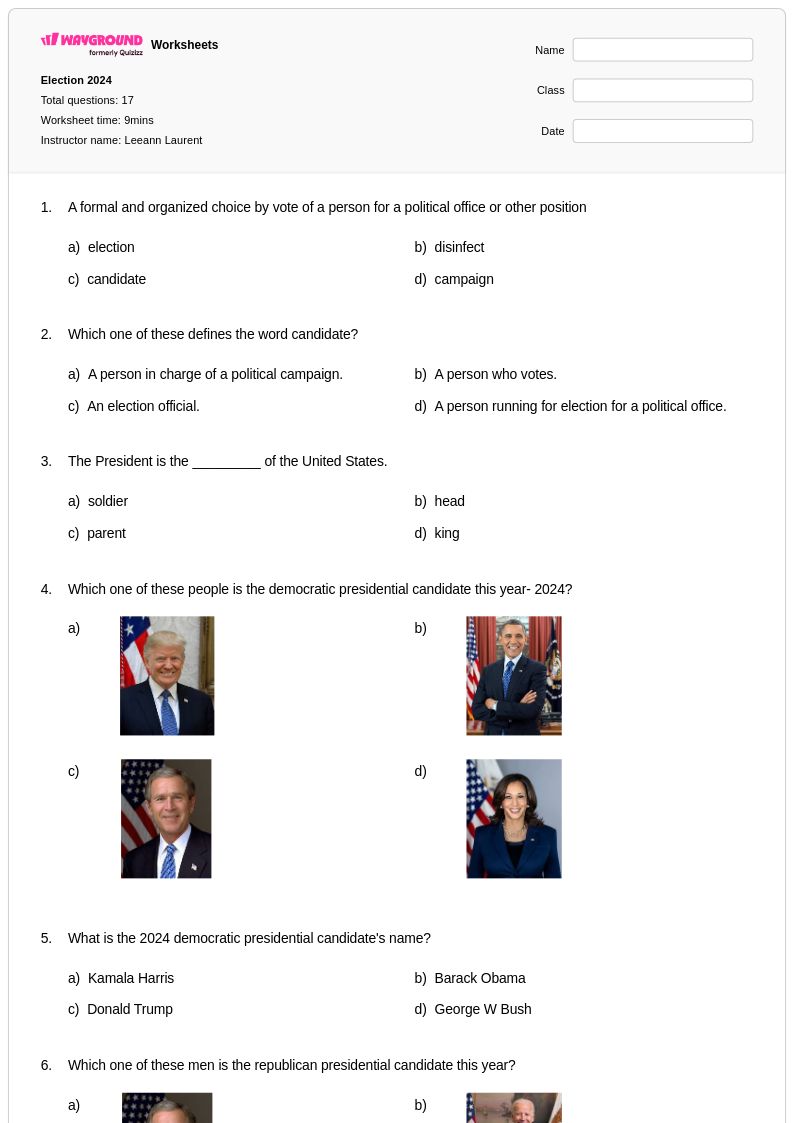
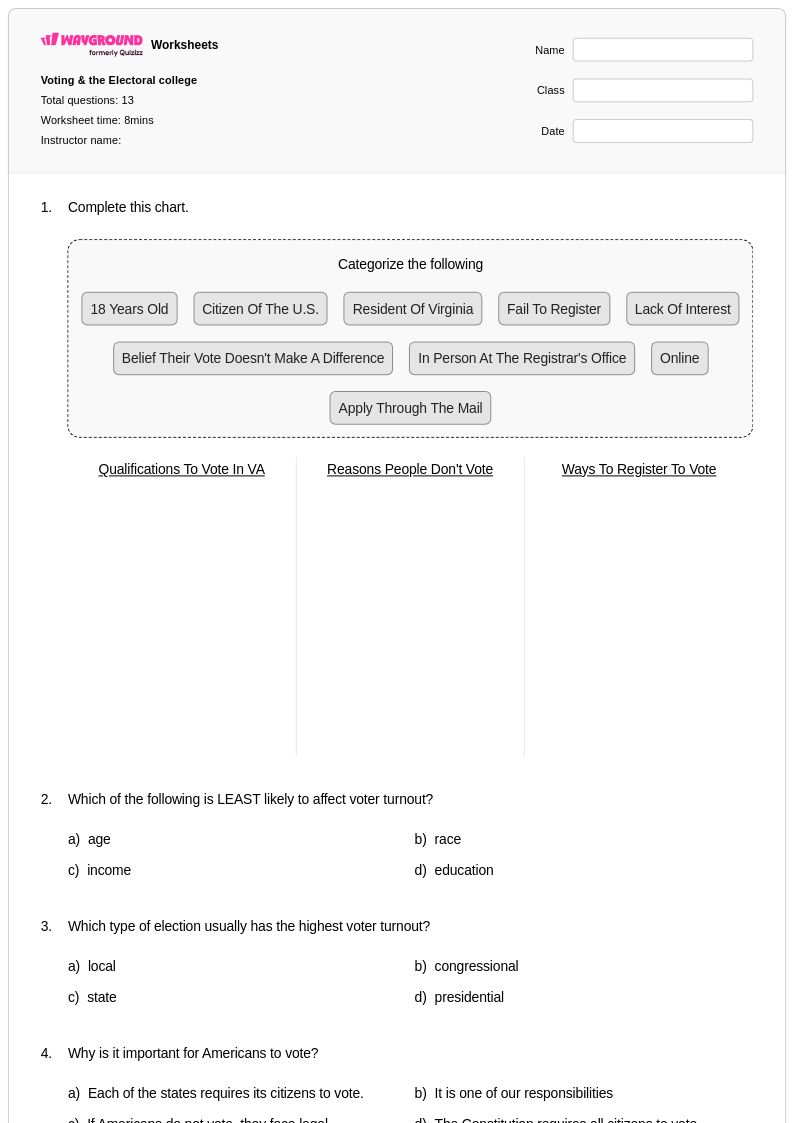
Class 7 presidential election worksheets and printables help students explore the electoral process, campaign strategies, and voting procedures through engaging practice problems and comprehensive answer keys available as free PDF downloads.
Explore printable Presidential Election worksheets for Class 7
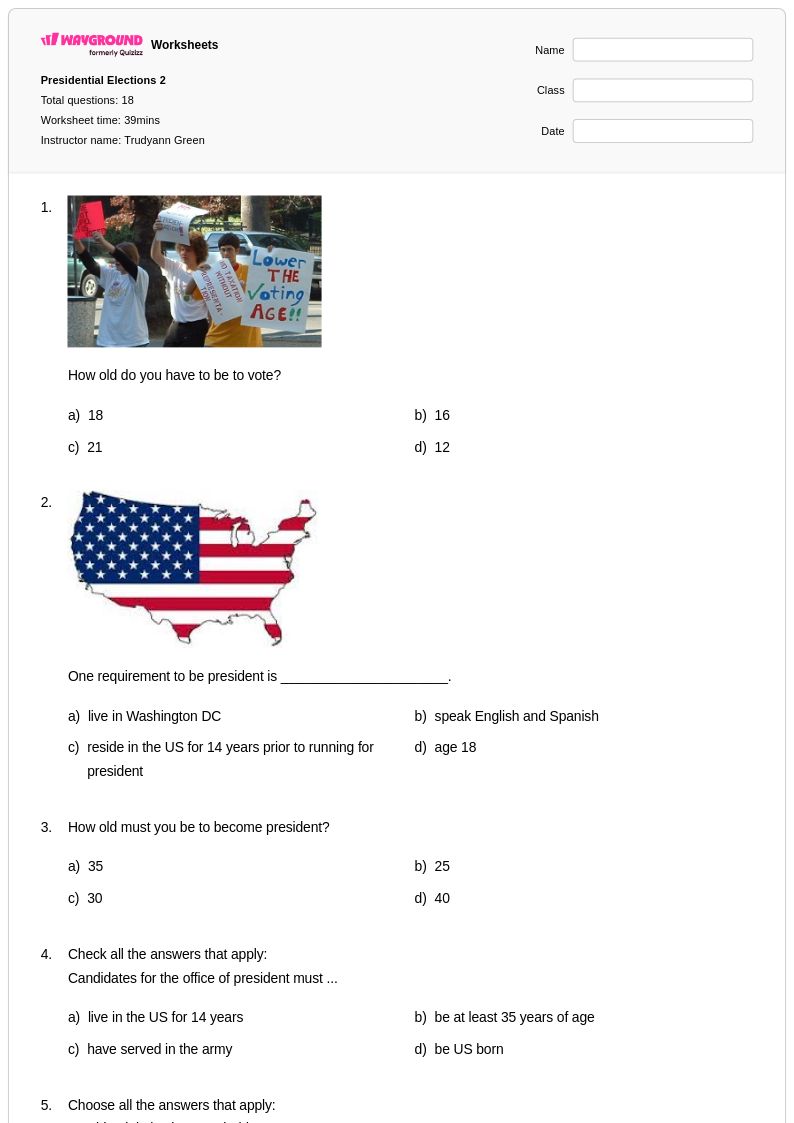
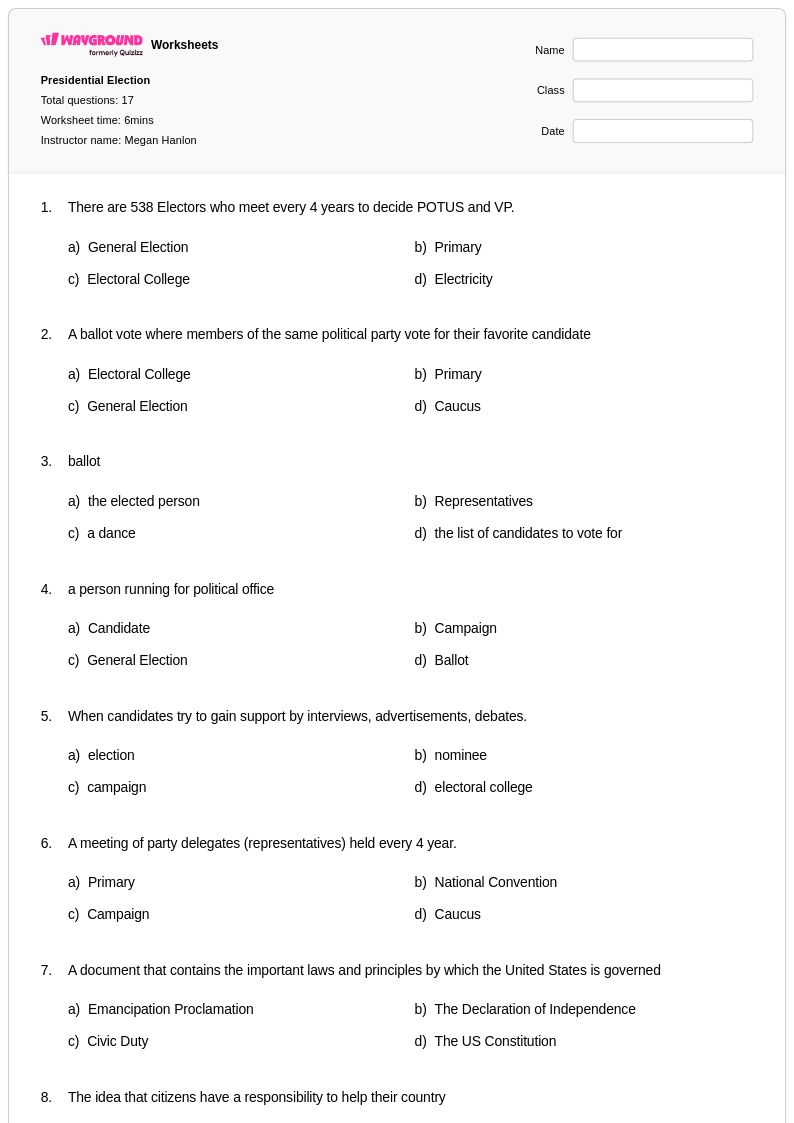
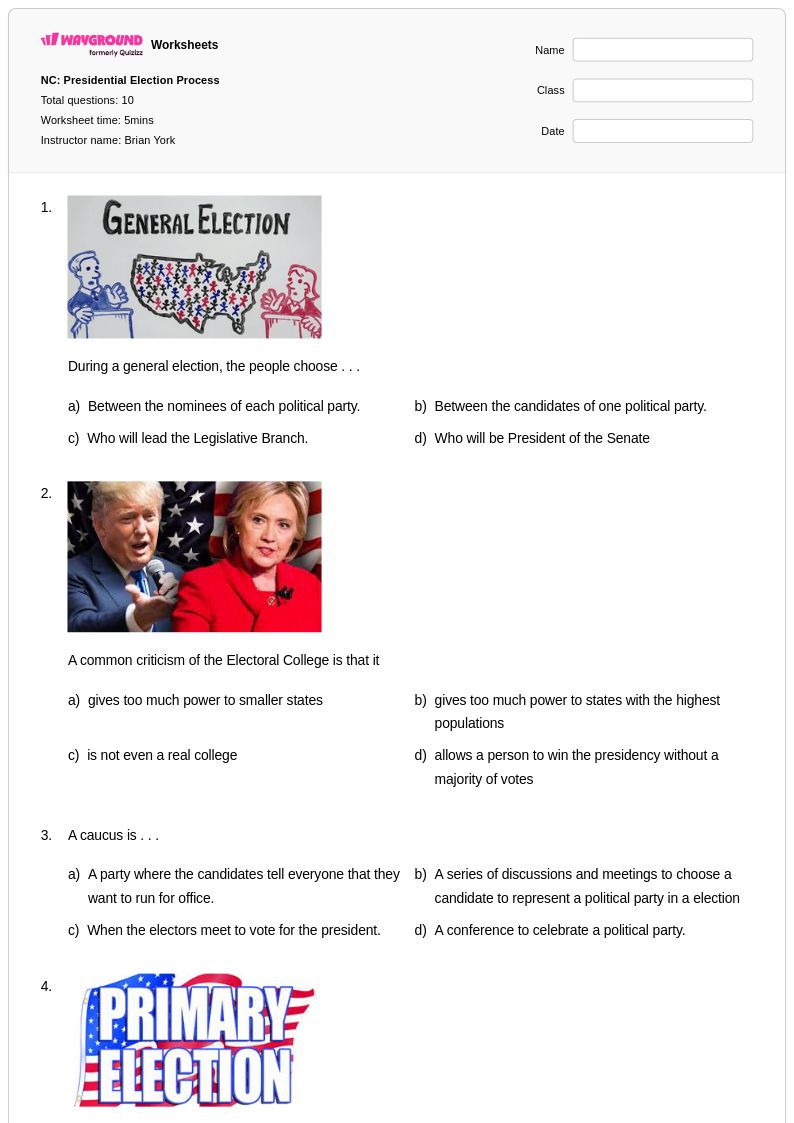
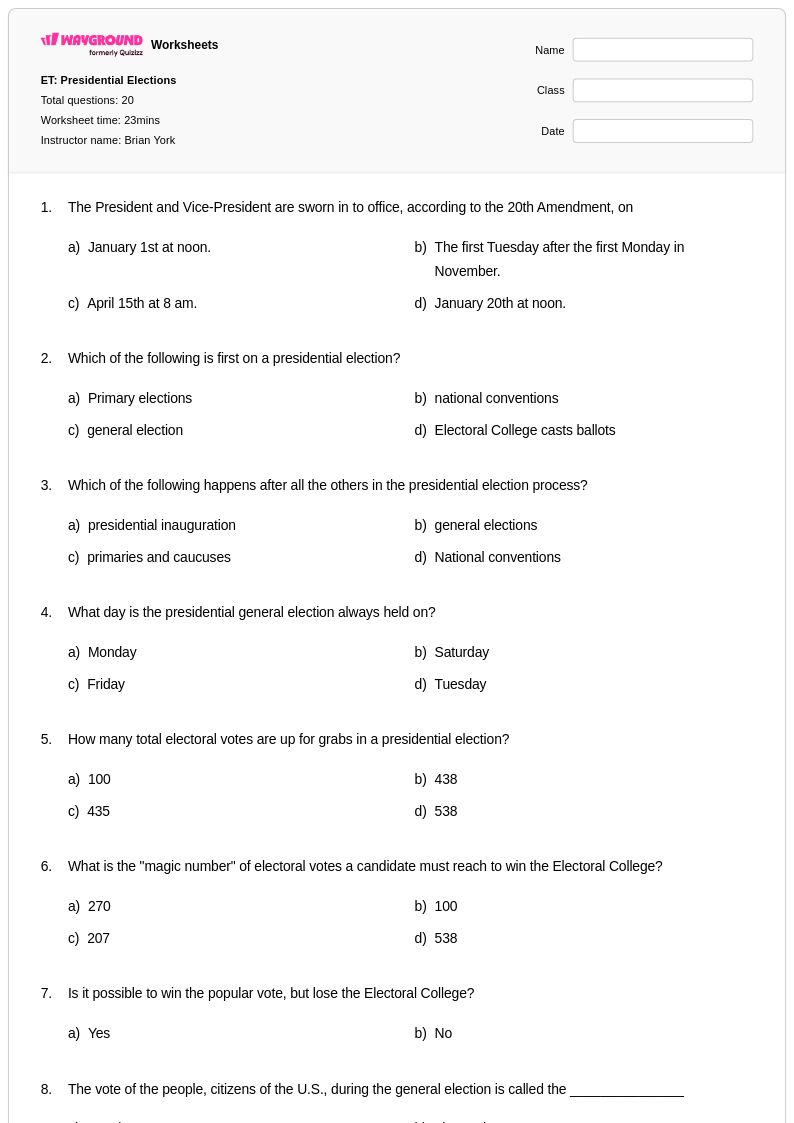
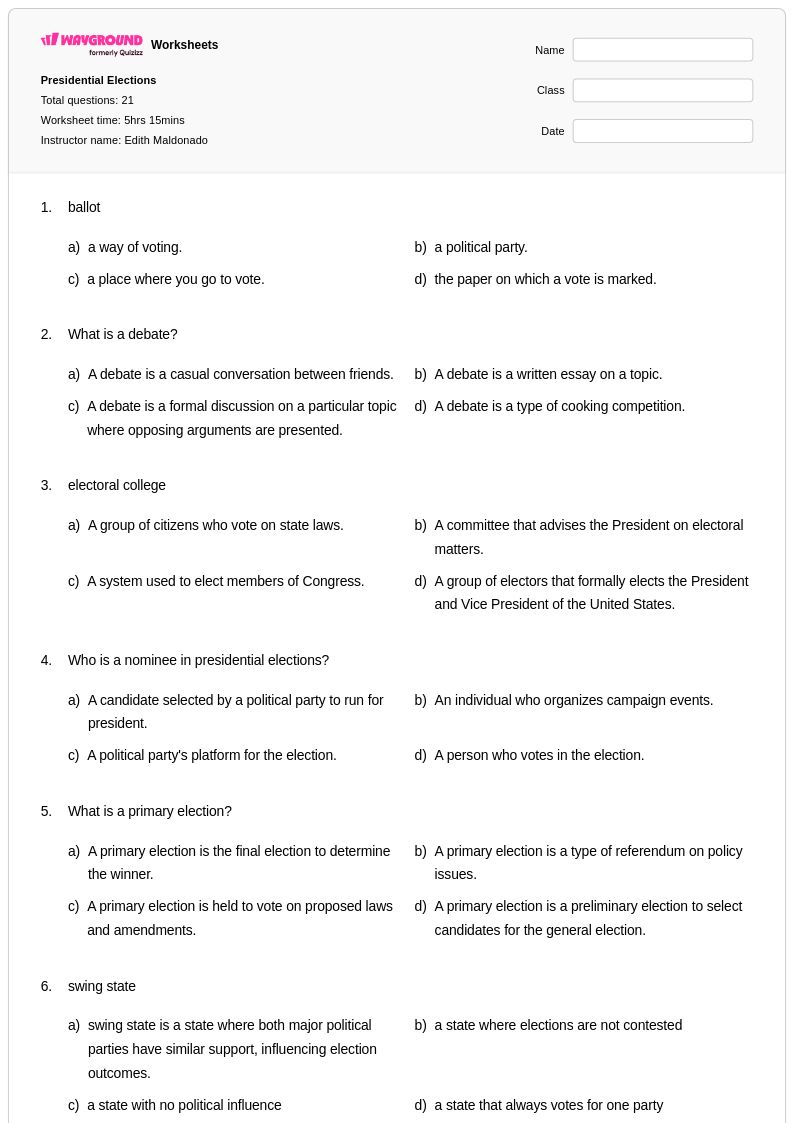
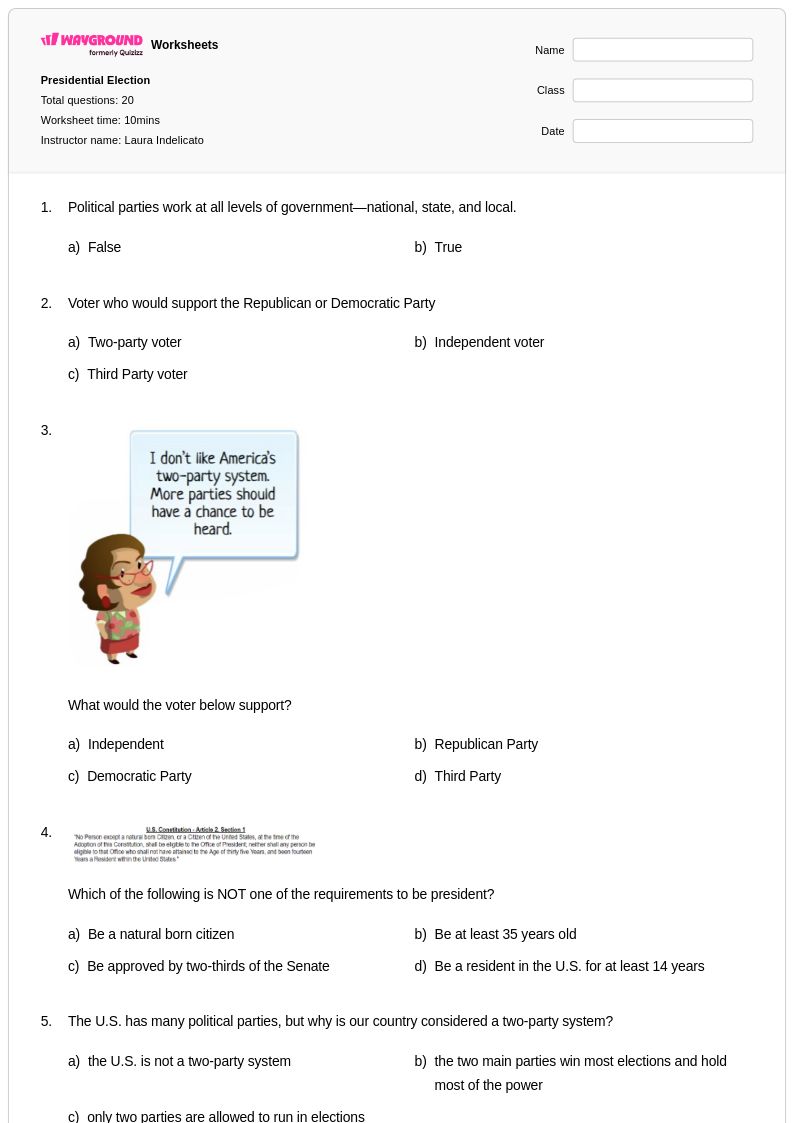
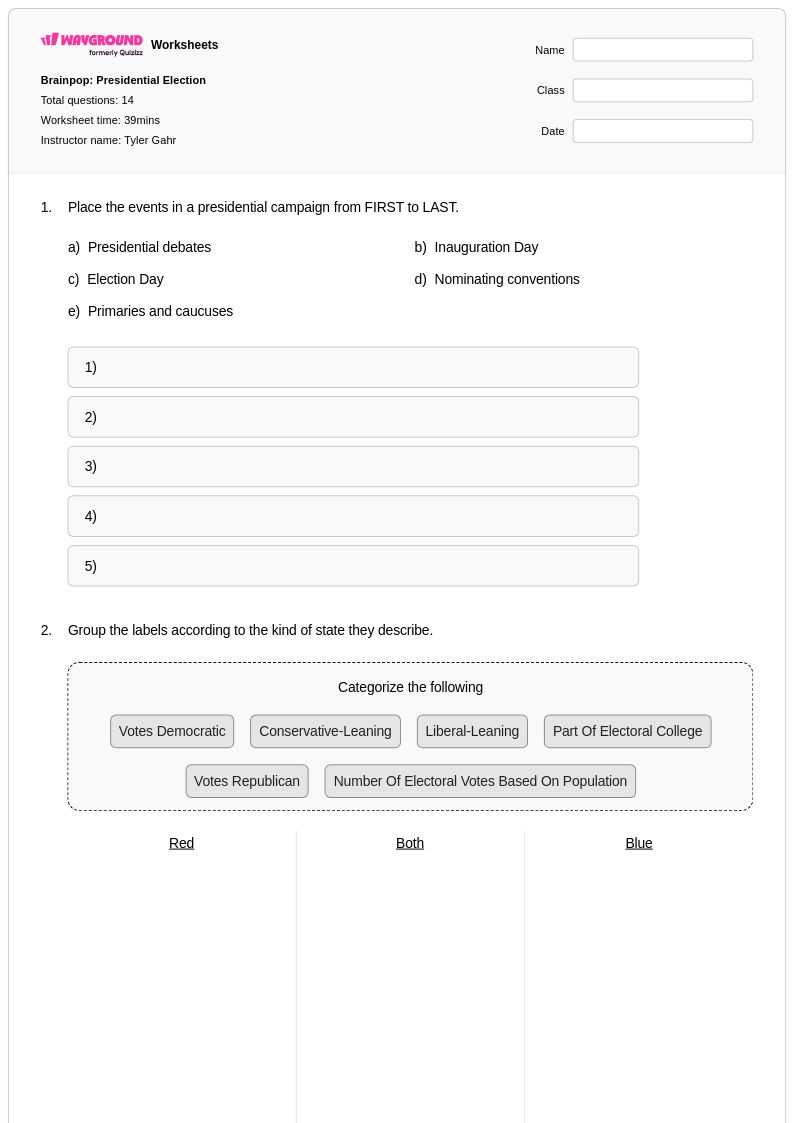
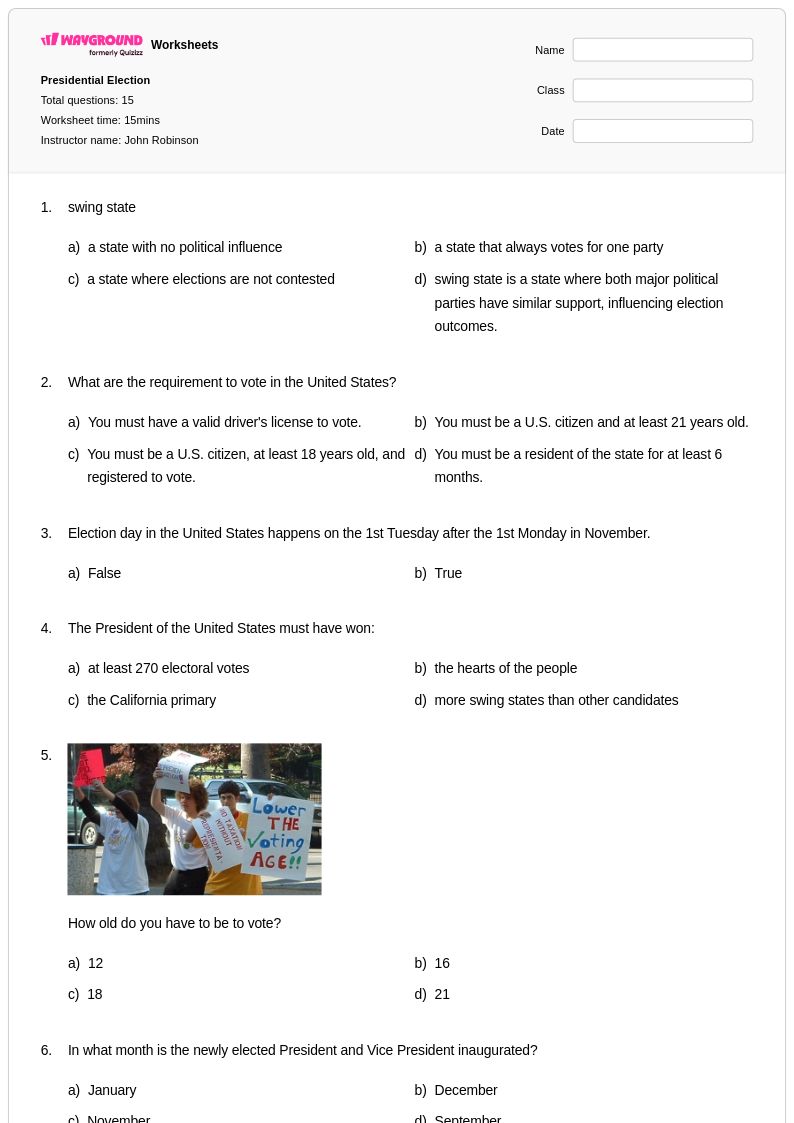
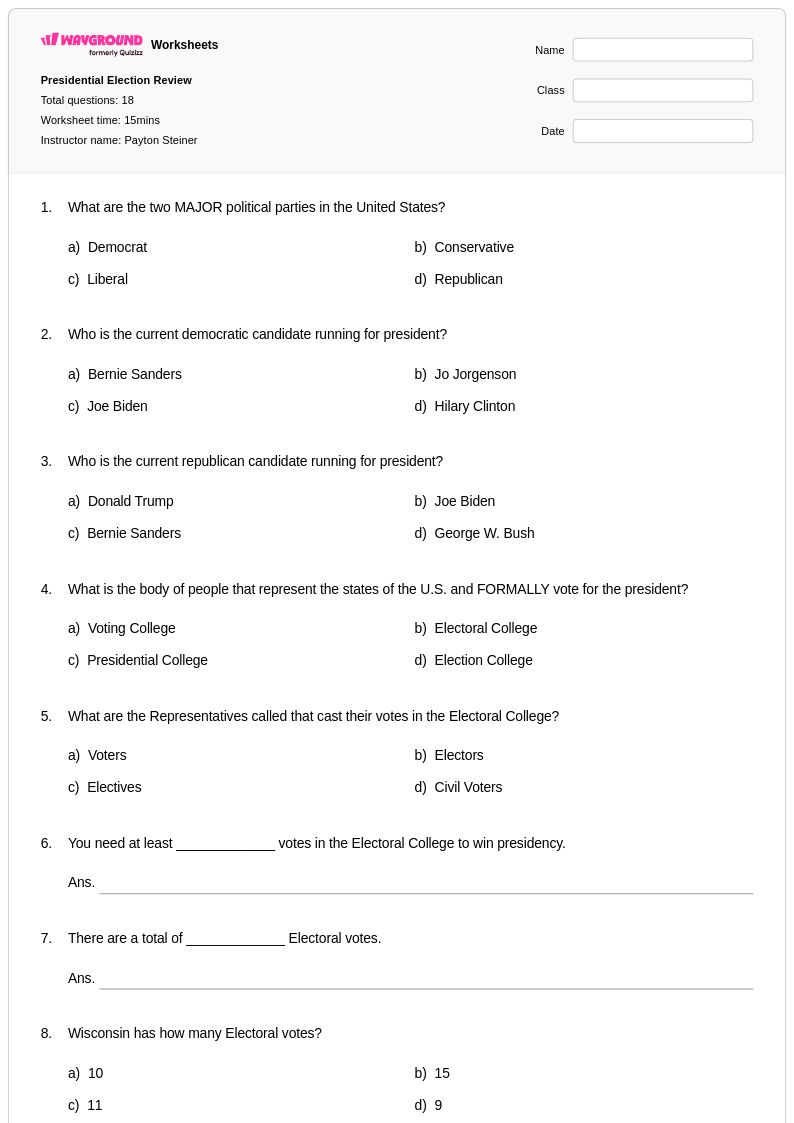
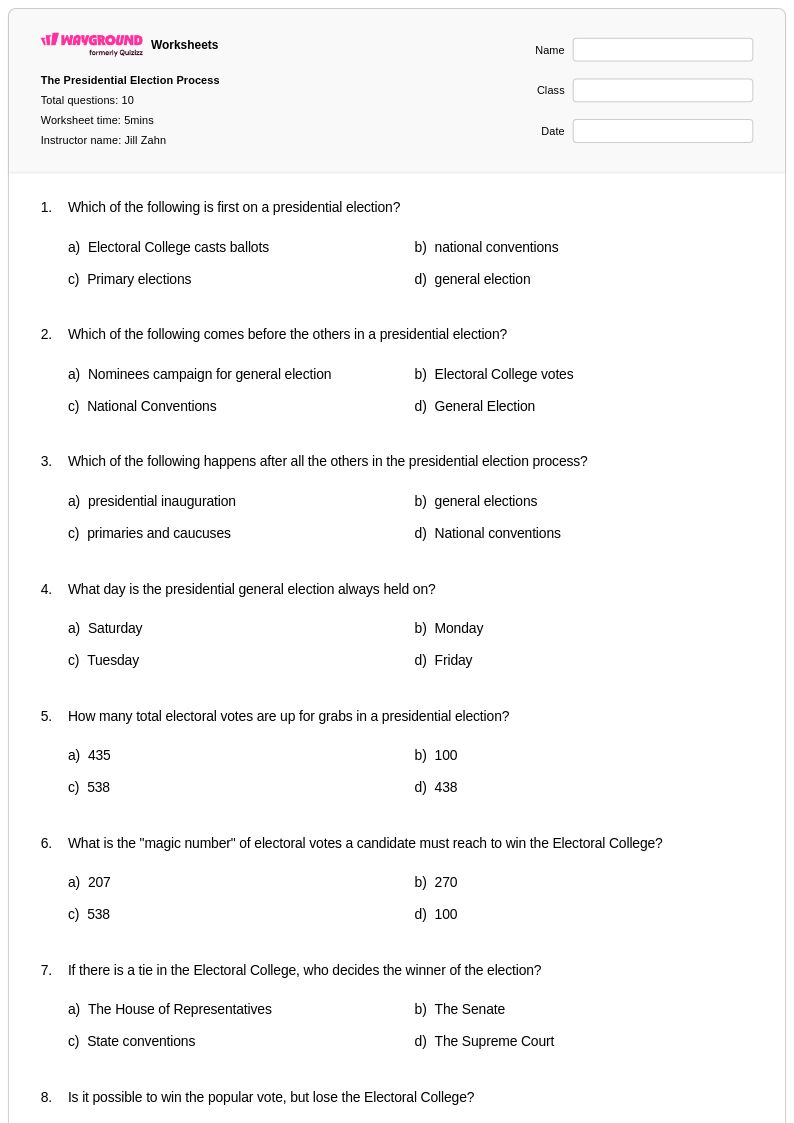
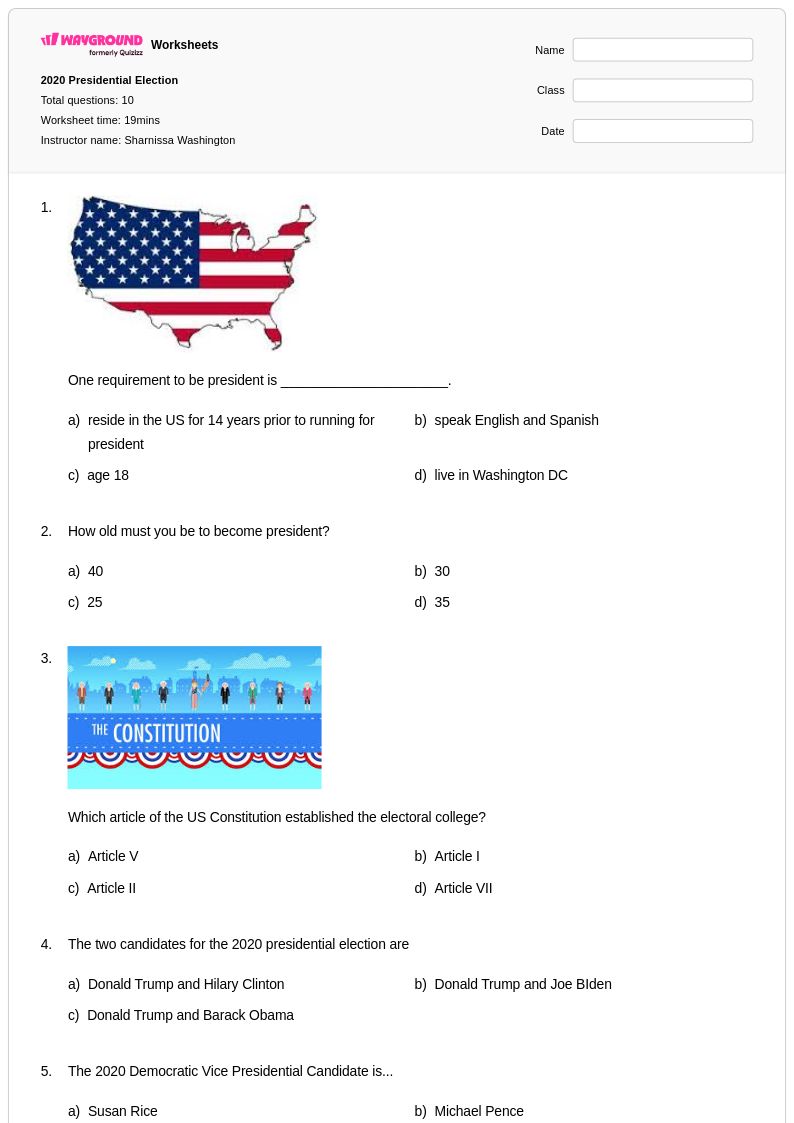
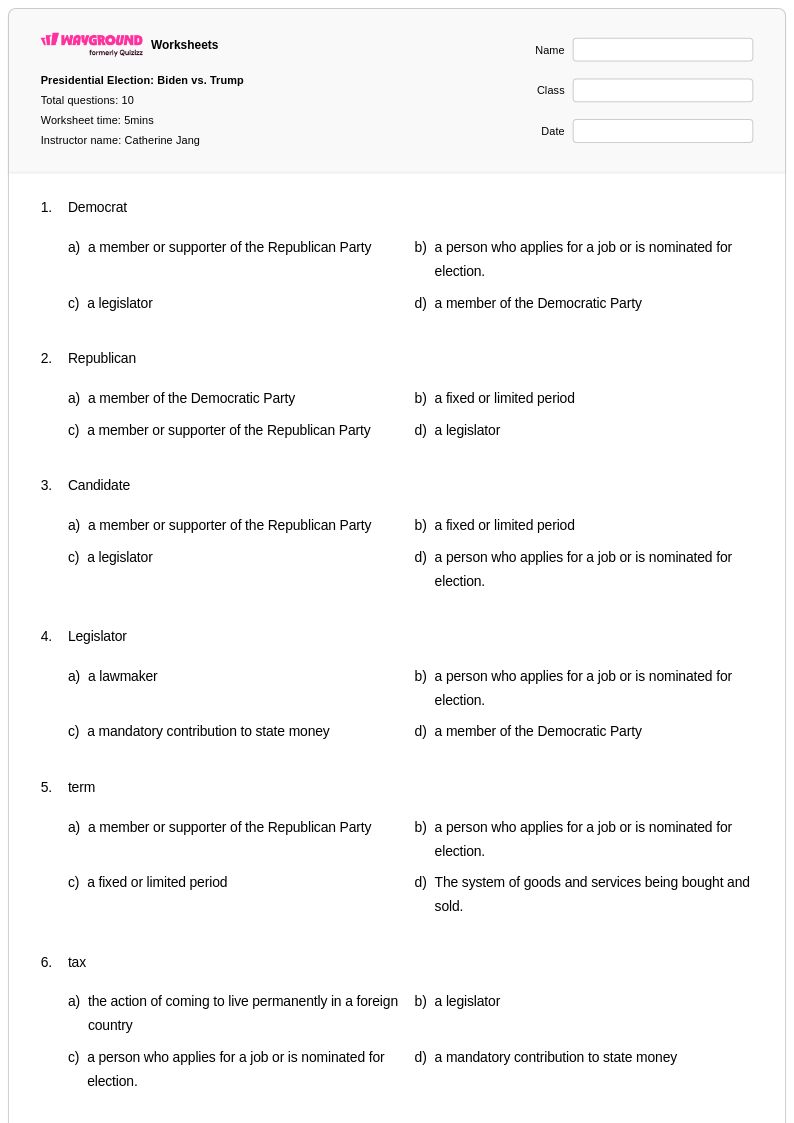
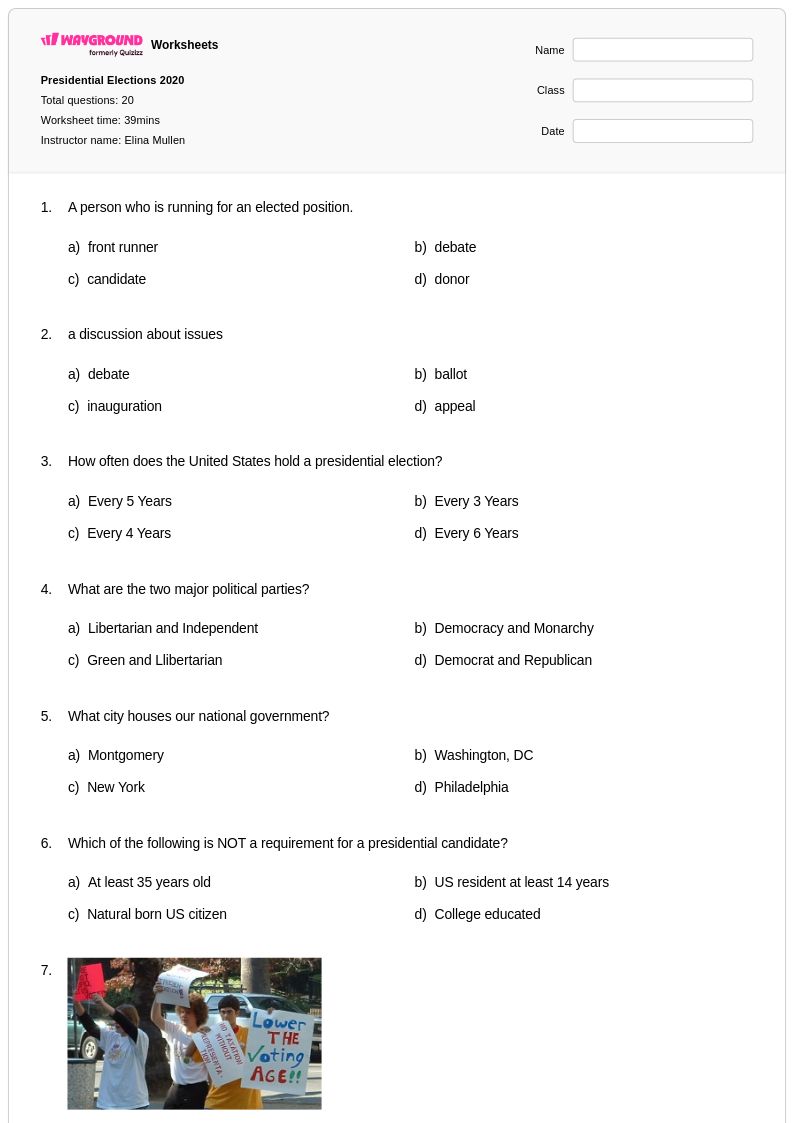
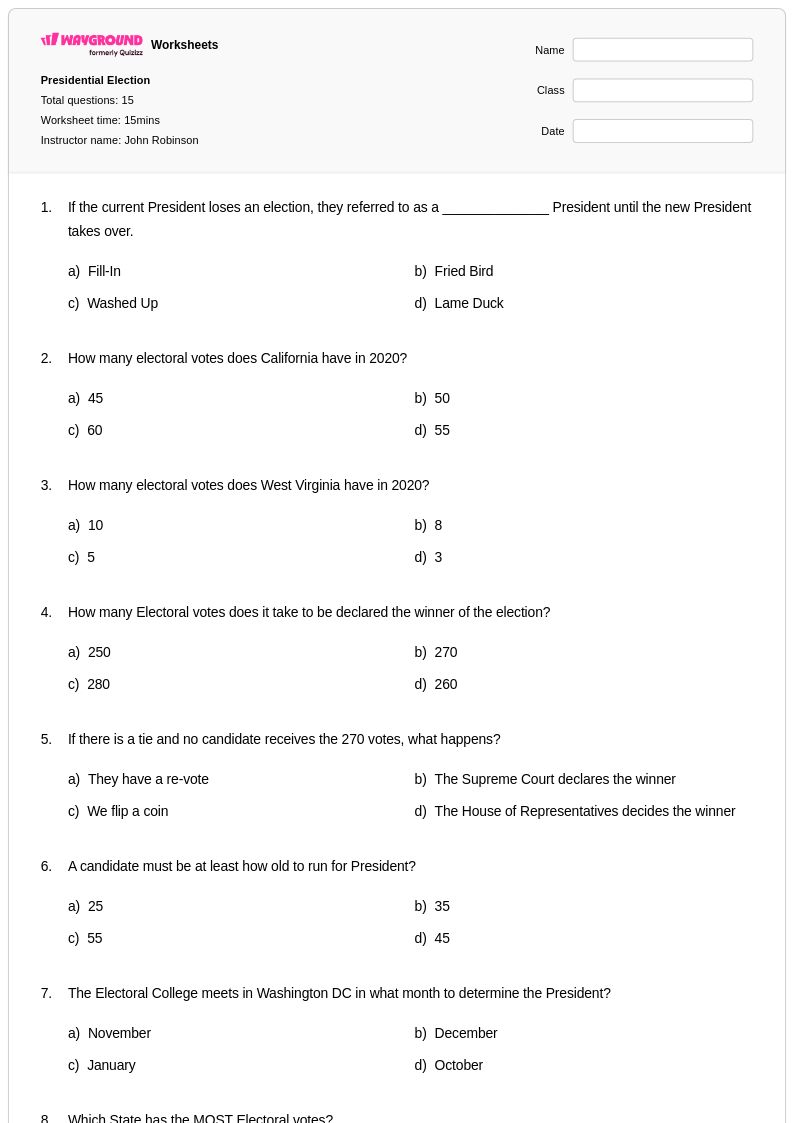
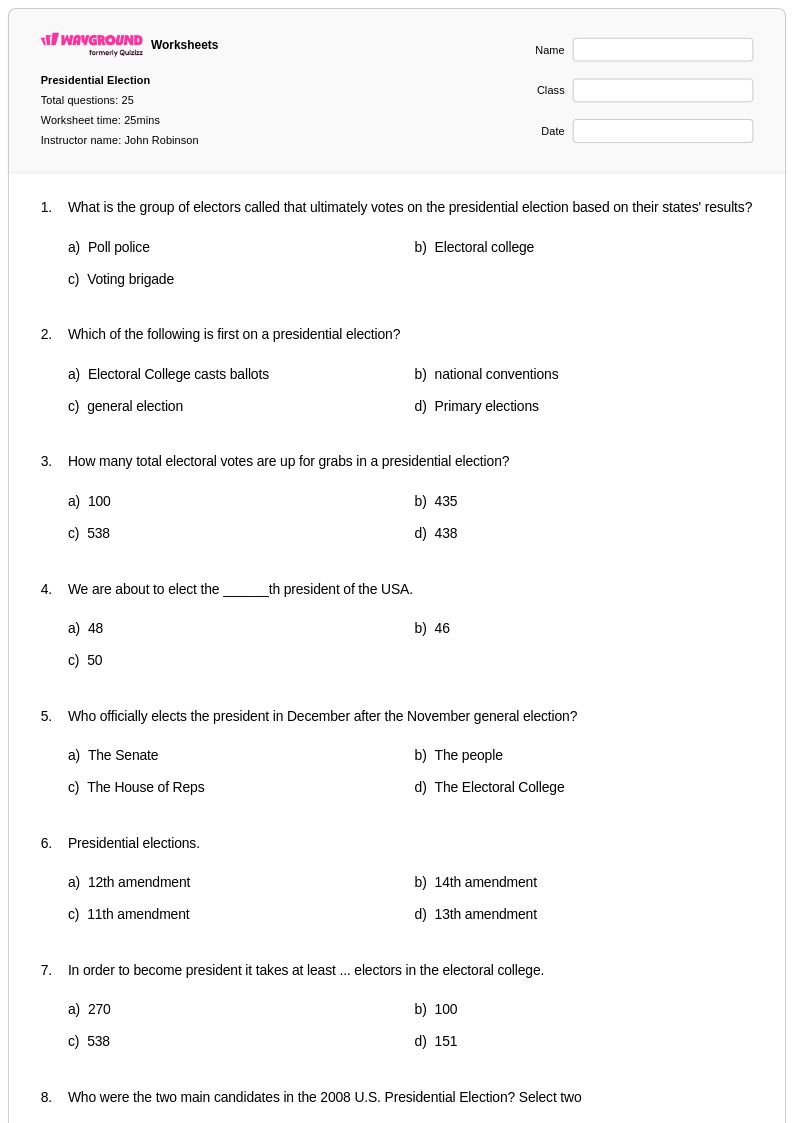
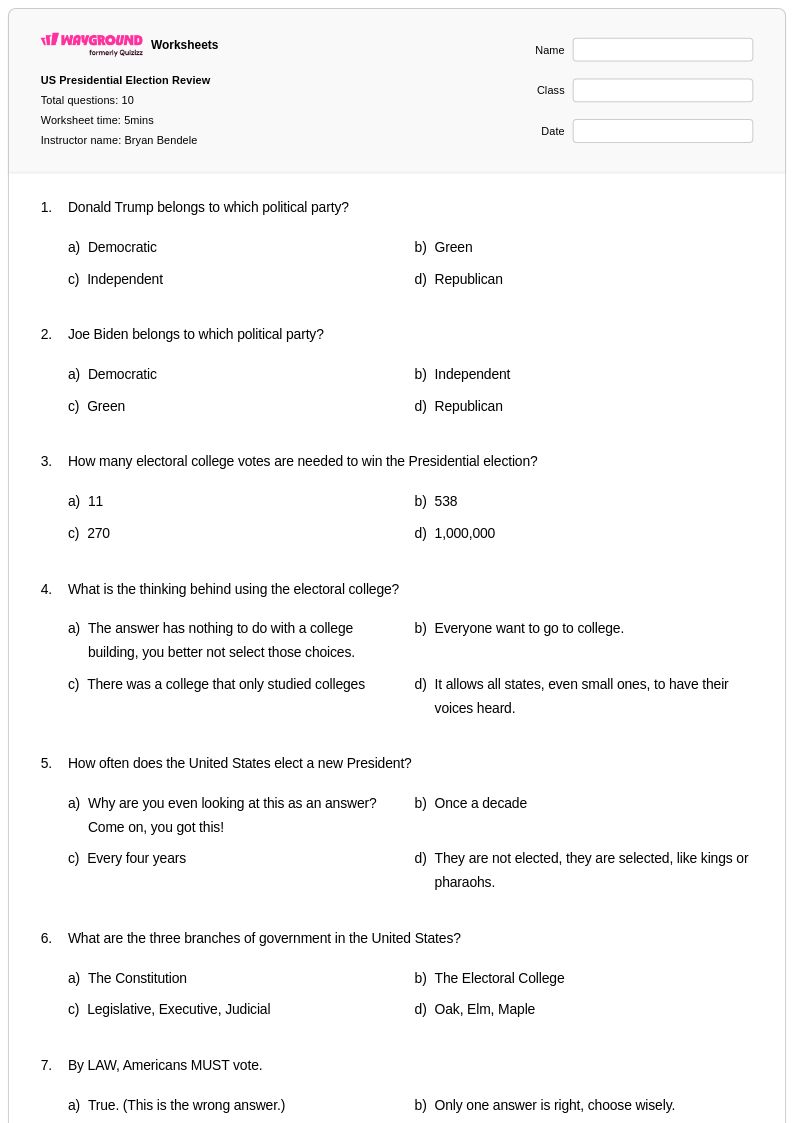
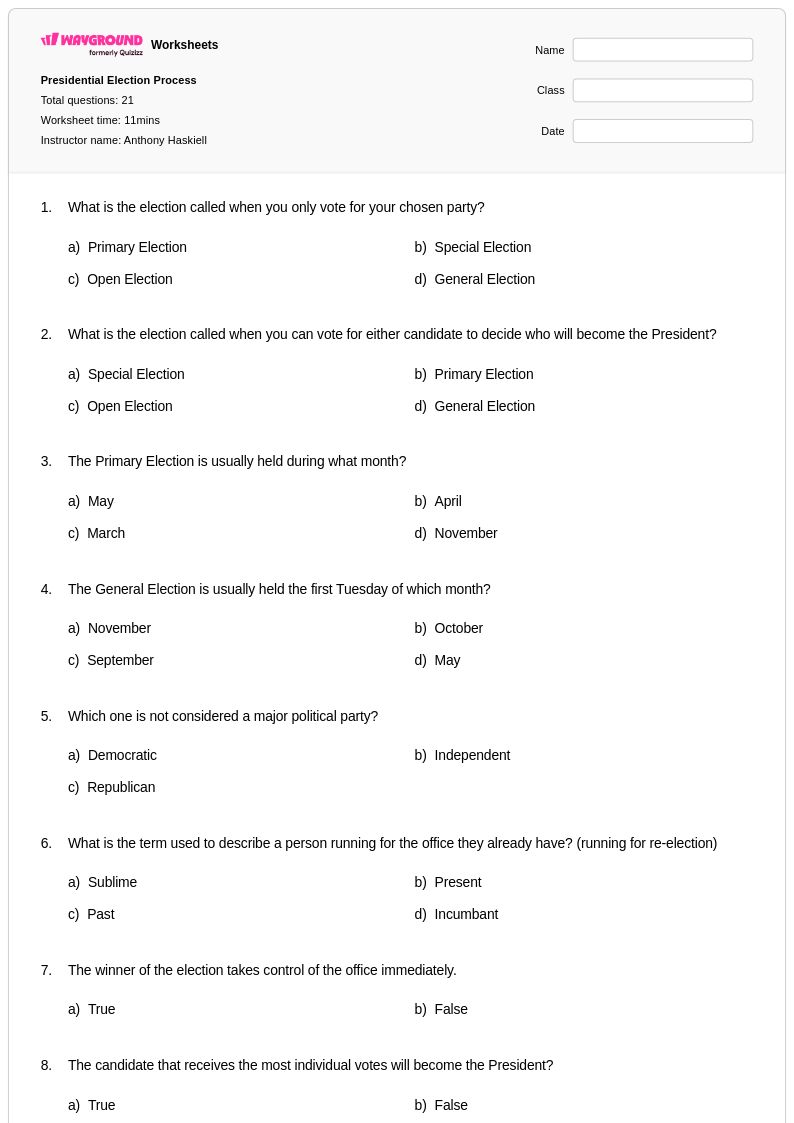
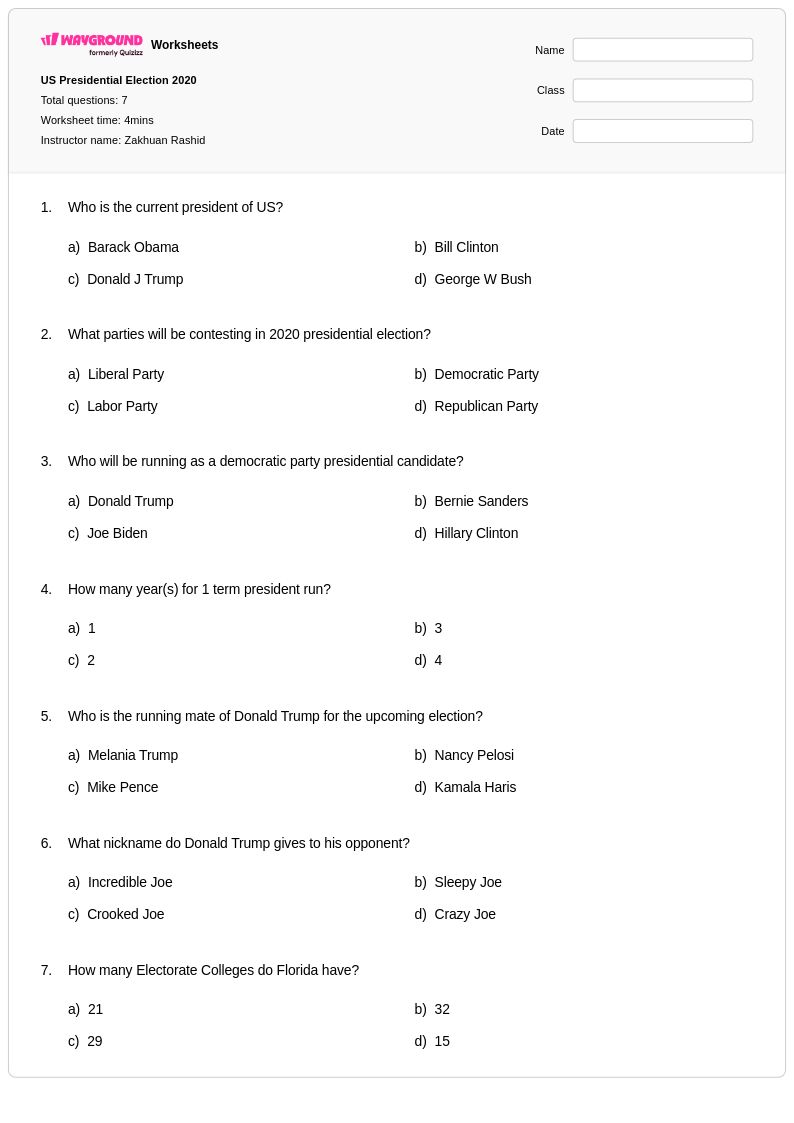
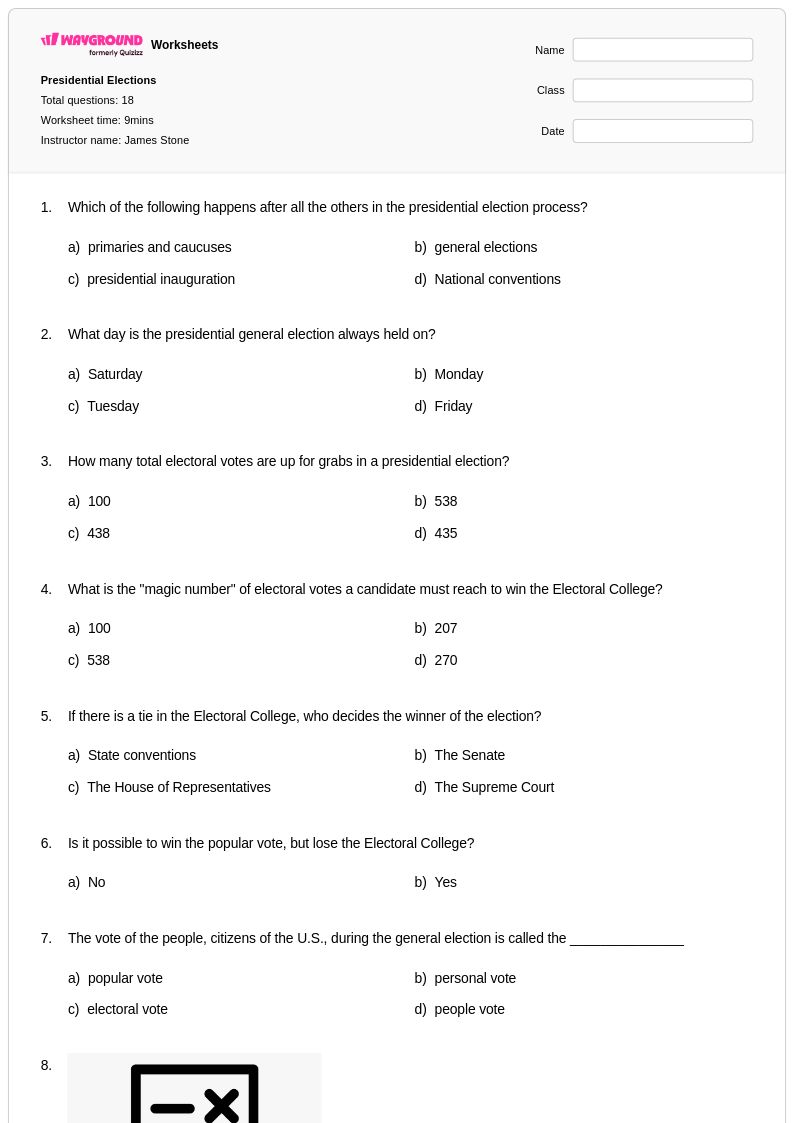
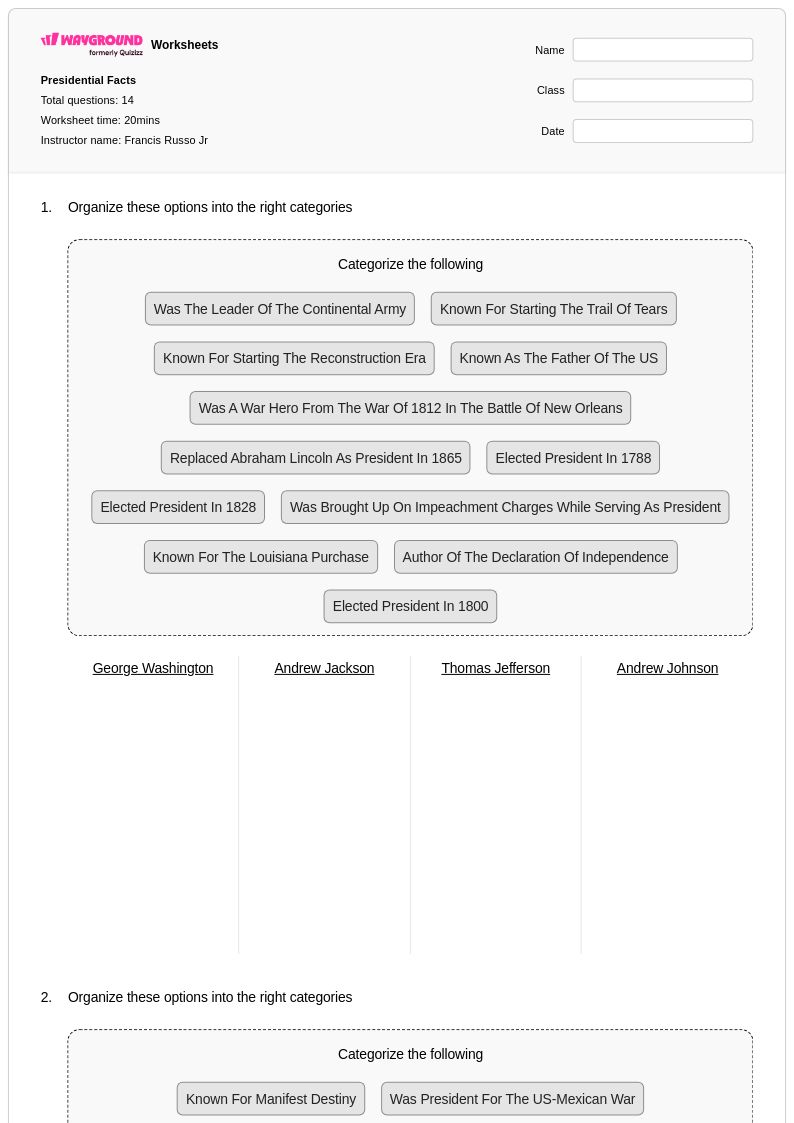
Presidential Election worksheets available through Wayground (formerly Quizizz) provide Class 7 students with comprehensive practice materials that demystify the complex process of electing the President of the United States. These carefully crafted resources guide students through essential concepts including the Electoral College system, primary elections, caucuses, campaign strategies, and the role of political parties in the democratic process. Students engage with practice problems that require them to analyze election maps, calculate electoral votes, and evaluate the impact of swing states on presidential outcomes. The worksheets strengthen critical thinking skills as students examine historical election data, compare candidate platforms, and understand the significance of voter turnout in different demographics. Each resource includes detailed answer keys that support both independent study and classroom instruction, with free printables available in convenient PDF format for immediate classroom implementation.
Wayground (formerly Quizizz) empowers educators with an extensive collection of millions of teacher-created resources specifically designed to enhance civics instruction at the middle school level. The platform's robust search and filtering capabilities allow teachers to quickly locate presidential election materials that align with state social studies standards and accommodate diverse learning needs within Class 7 classrooms. These differentiation tools enable educators to customize worksheets for varying ability levels, ensuring that advanced learners can tackle complex constitutional questions while struggling students receive scaffolded support through guided practice activities. The flexible format options, including both printable and digital versions with comprehensive PDF downloads, streamline lesson planning and provide versatile solutions for remediation sessions, enrichment opportunities, and regular skill practice that reinforces understanding of America's electoral system and democratic principles.
FAQs
How do I teach the presidential election process to students?
Teaching the presidential election process works best when broken into distinct phases: the primary and caucus system, party nominations, the general campaign, and the Electoral College vote. Start with constitutional requirements for candidates, then move into how the Electoral College translates popular votes into electoral votes. Connecting each phase to real historical or current examples helps students see the process as a living civic system rather than abstract procedure.
What concepts should students understand about the Electoral College?
Students should understand that the President is not elected by direct popular vote but through an Electoral College system in which each state holds a number of electors roughly proportional to its congressional representation. Key distinctions include the difference between popular vote totals and electoral vote outcomes, the winner-takes-all rule used by most states, and the significance of swing states in shaping campaign strategy. Misunderstanding these mechanics is one of the most common gaps in civic literacy at the middle and high school levels.
What are common misconceptions students have about presidential elections?
One of the most persistent misconceptions is that citizens directly elect the President through the popular vote, when in fact electors cast the decisive votes through the Electoral College. Students also frequently confuse primary elections with the general election, not recognizing that primaries determine party nominees rather than the president. Another common error is assuming the candidate with the most total votes nationwide always wins, which overlooks cases like the 2000 and 2016 elections where the Electoral College outcome differed from the popular vote result.
What exercises help students practice their understanding of the Electoral College and voting process?
Effective practice includes mapping exercises where students assign electoral votes to states and determine which combinations of states a candidate needs to reach 270, as well as scenario-based problems comparing popular vote totals to electoral vote outcomes. Analyzing historical elections where the popular and electoral vote diverged gives students concrete cases to apply their understanding. Worksheet activities that ask students to evaluate candidate platforms and explain how they appeal to key demographics also build analytical depth alongside procedural knowledge.
How can I use presidential election worksheets in both in-person and remote classroom settings?
Presidential election worksheets on Wayground are available as printable PDFs for traditional classroom distribution and in digital formats for remote or hybrid learning environments, and teachers can also host them as a quiz directly on Wayground. The included answer keys support independent study, making them practical for asynchronous assignments where direct teacher feedback isn't immediate. Both formats are designed to cover the same core content, so teachers can assign the same material consistently regardless of whether students are learning in person or online.
How do I differentiate presidential election instruction for students at different skill levels?
For struggling learners, simplify the entry point by focusing on the basic steps of the election cycle before introducing the Electoral College's state-by-state mechanics. Advanced students can engage with more complex scenarios, such as analyzing what would happen in a contested election or evaluating the arguments for and against abolishing the Electoral College. On Wayground, teachers can apply accommodations such as reduced answer choices or read-aloud support to individual students, ensuring that differentiation happens without disrupting the rest of the class.