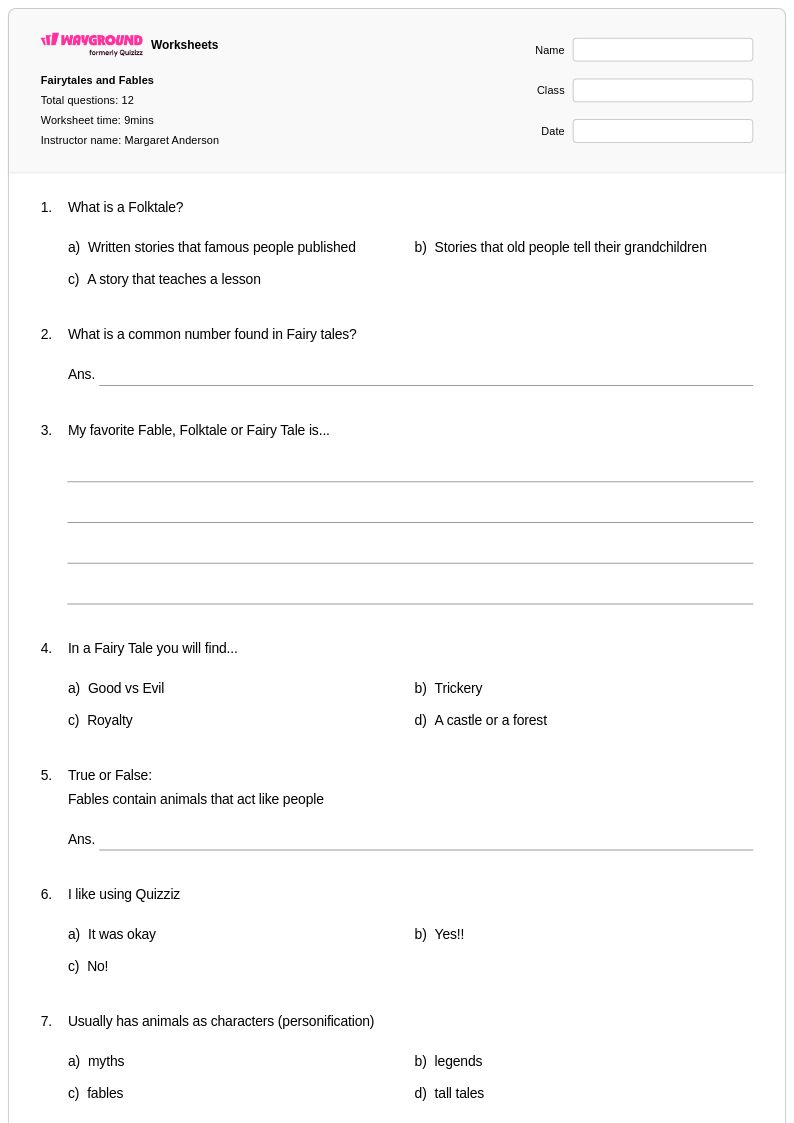
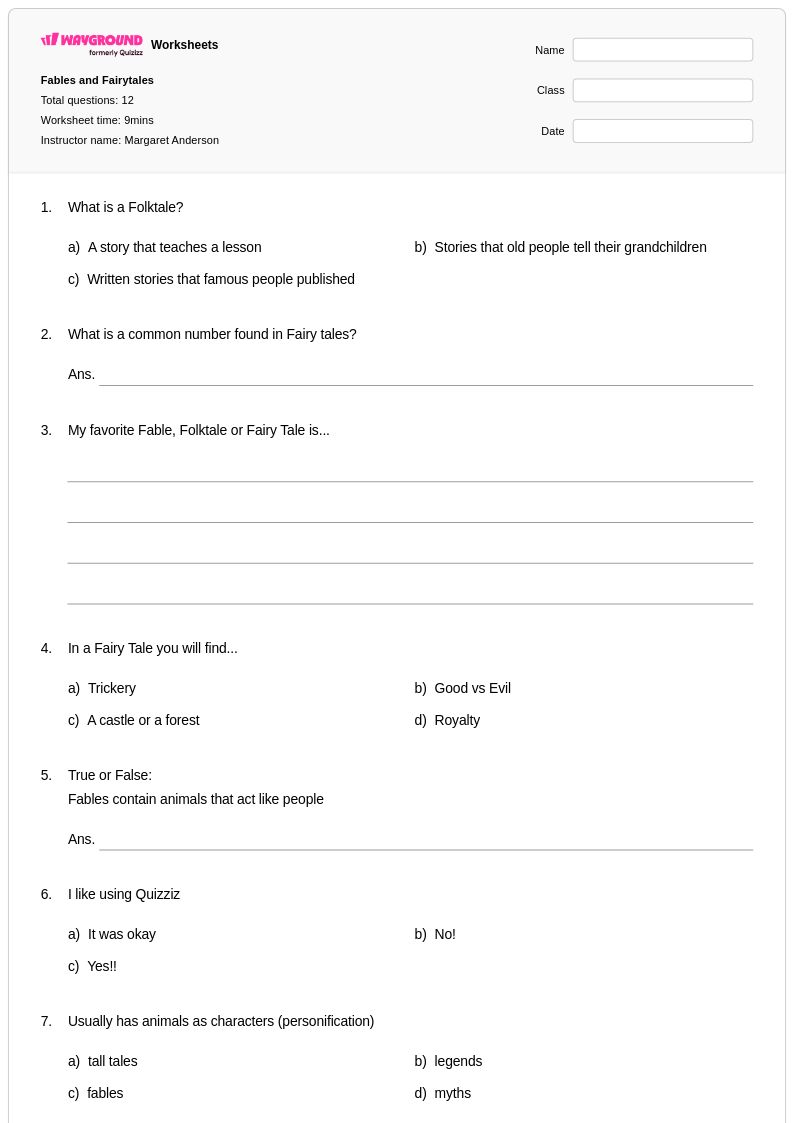
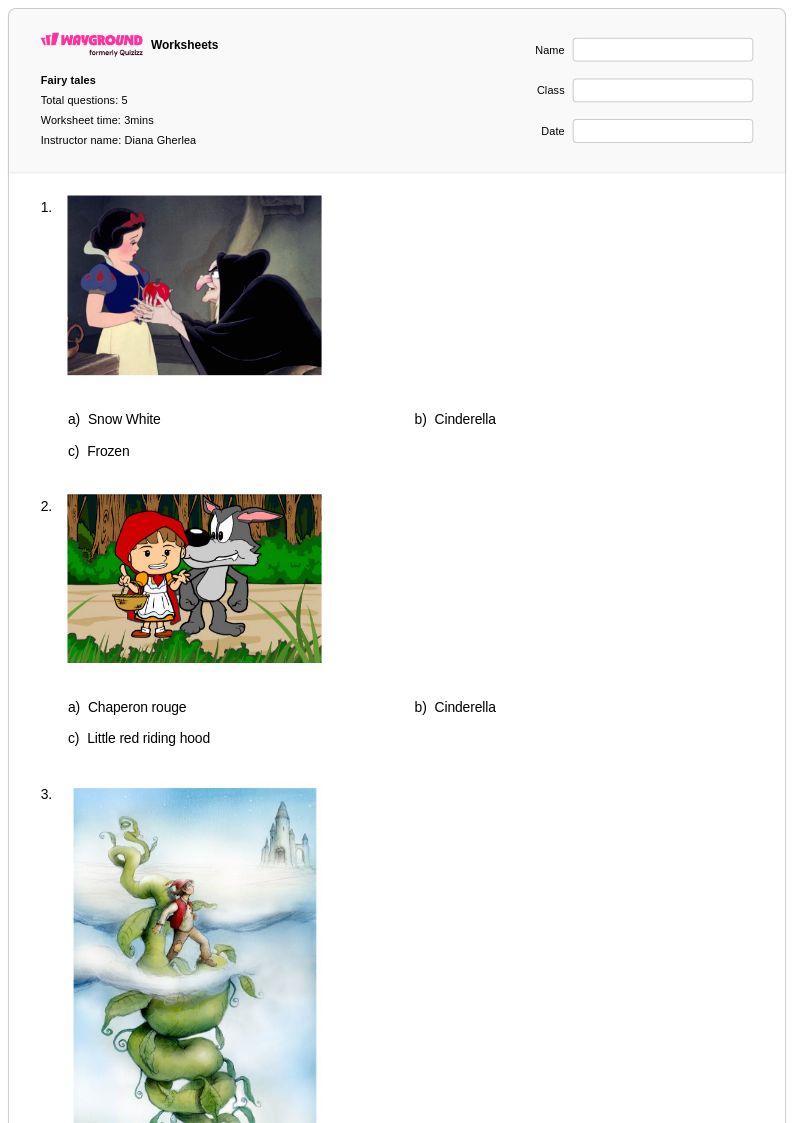
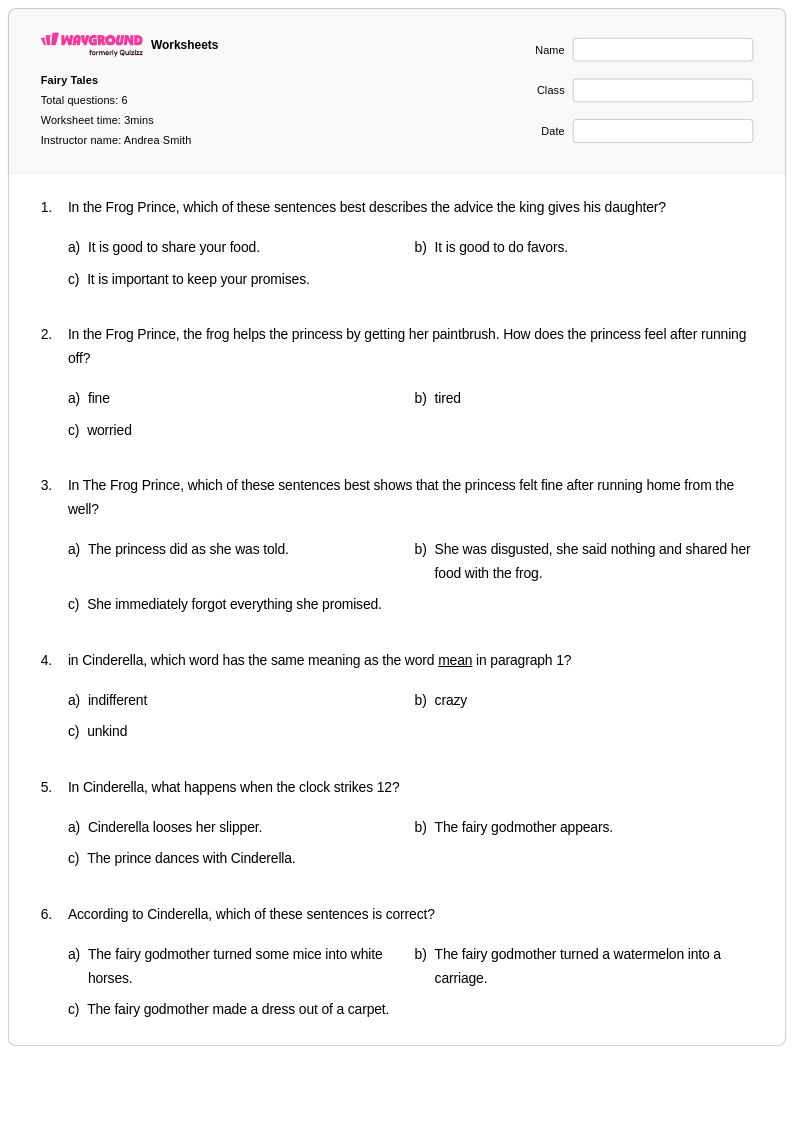
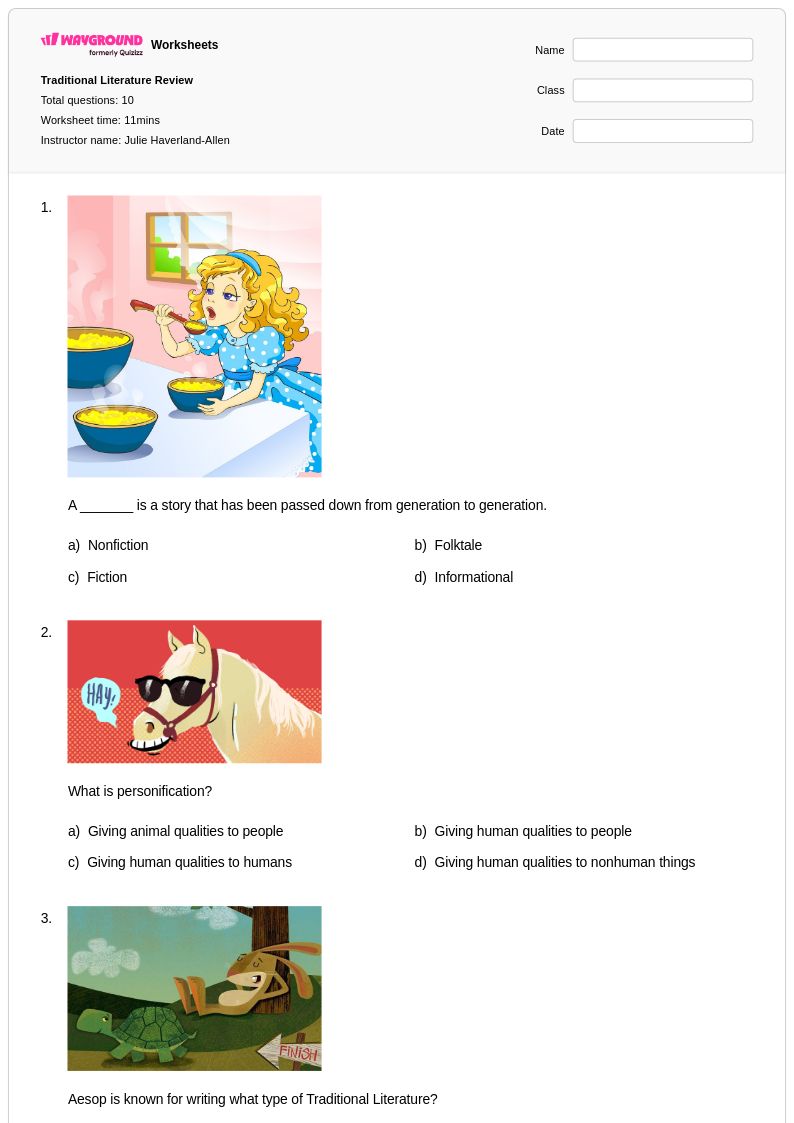
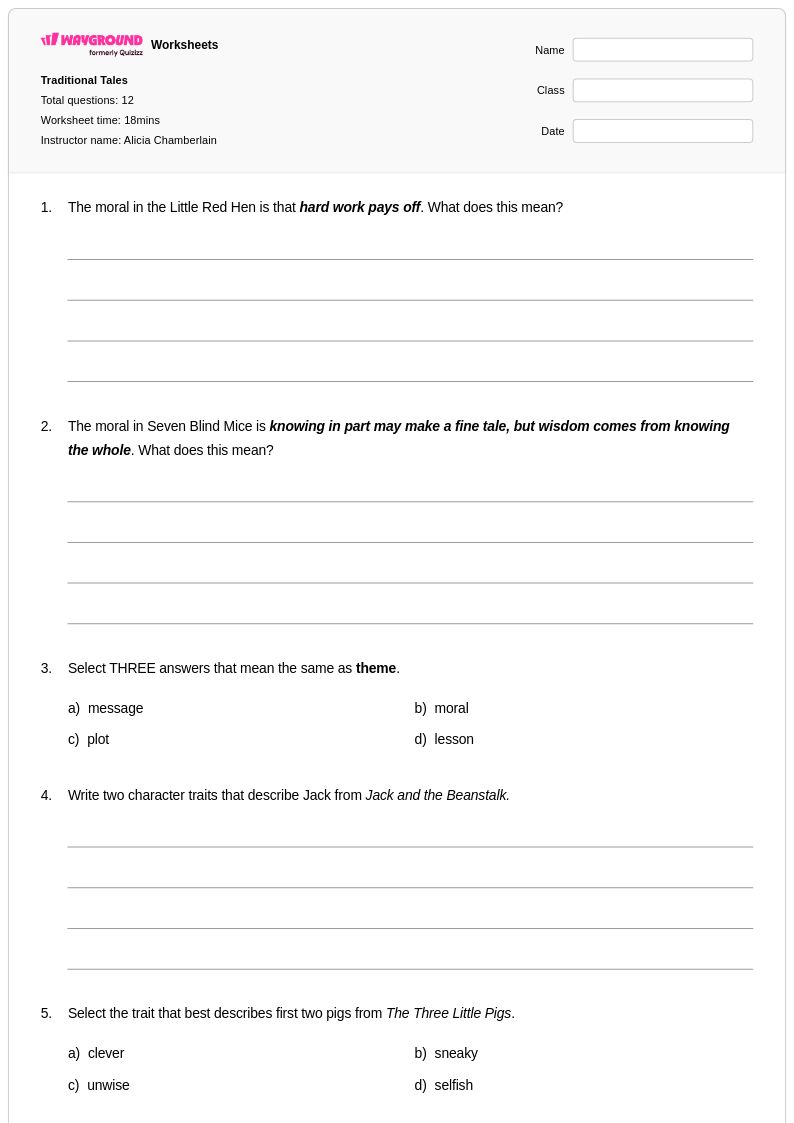
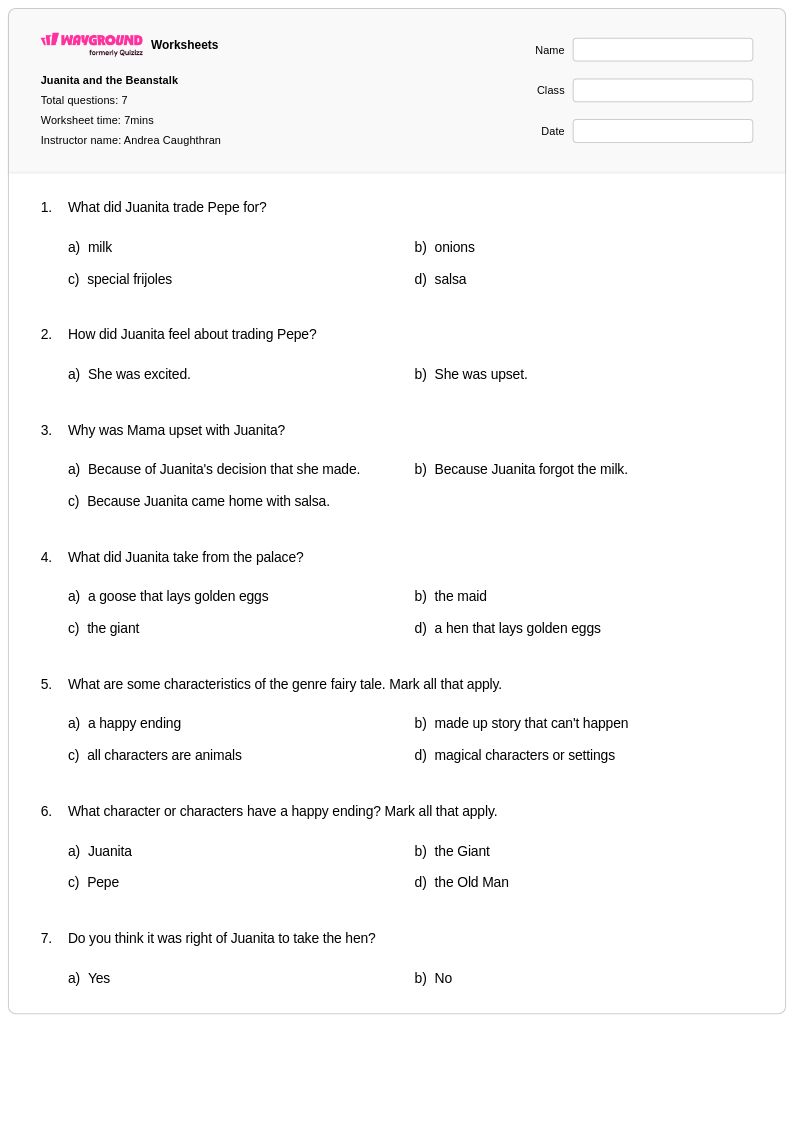
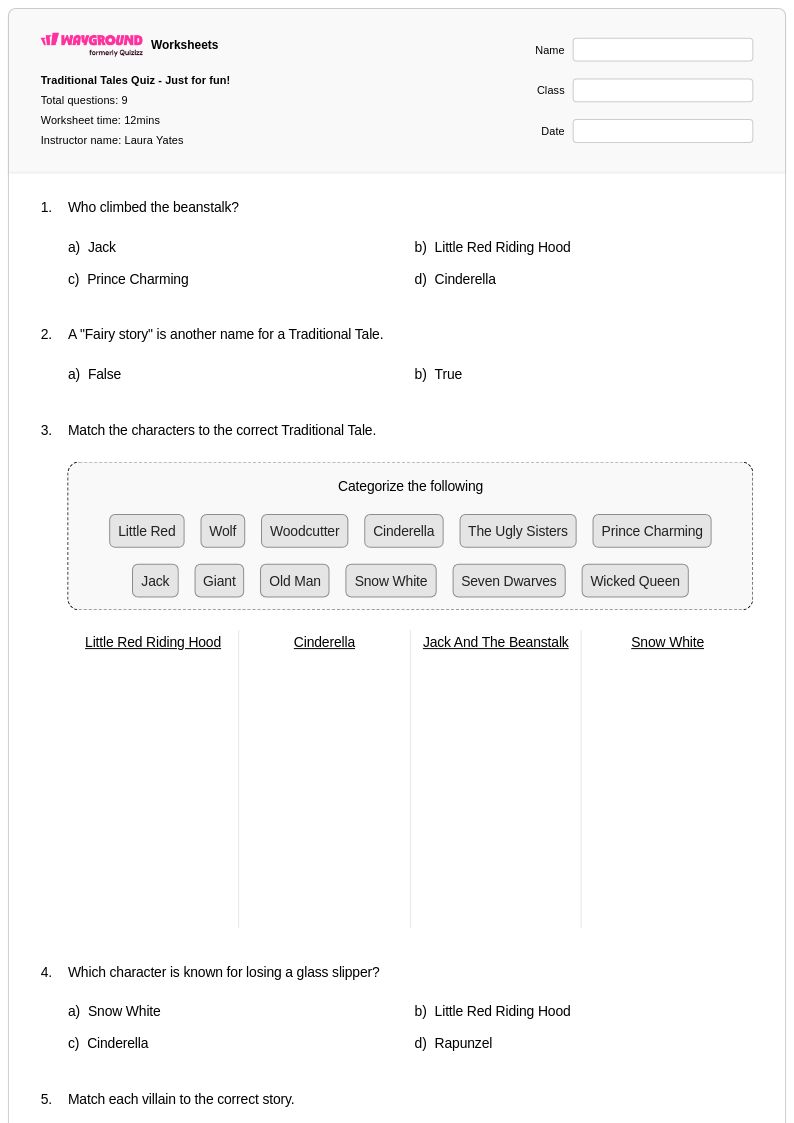
Discover free Class 3 fairy tales worksheets and printables from Wayground that help students explore magical stories, develop reading comprehension skills, and practice identifying story elements through engaging PDF activities with answer keys.
Explore printable Fairy Tales worksheets for Class 3
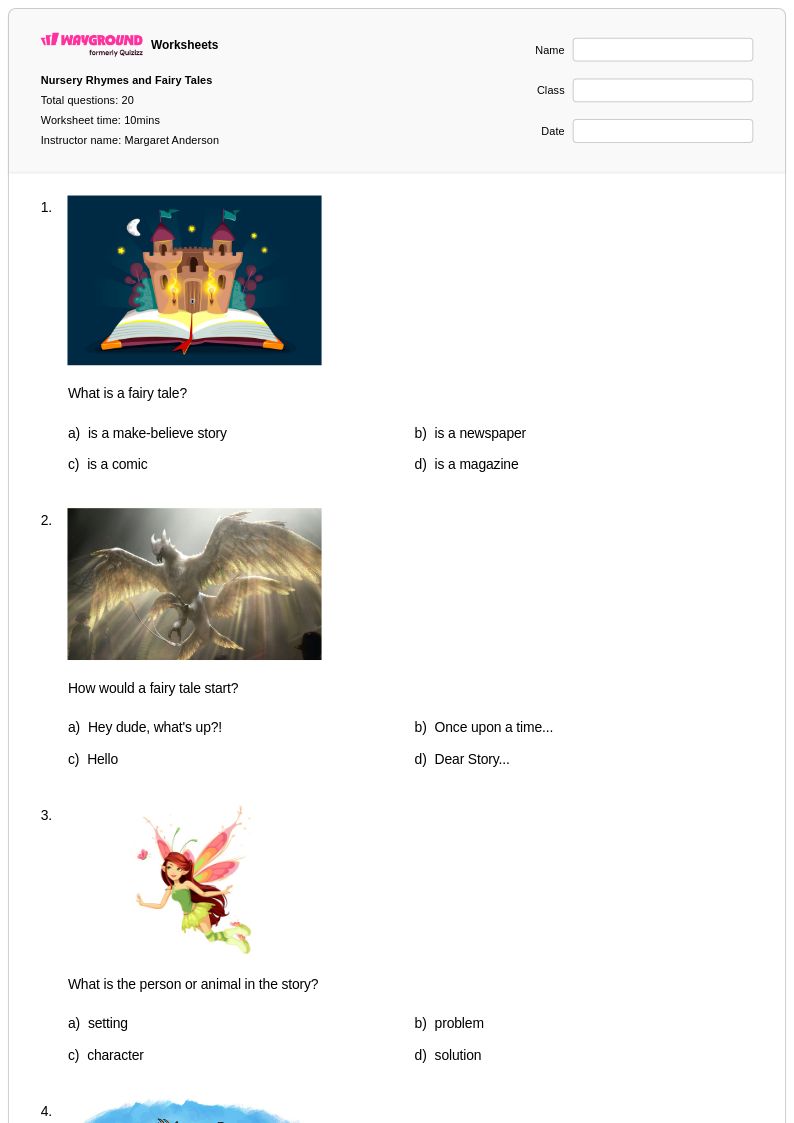
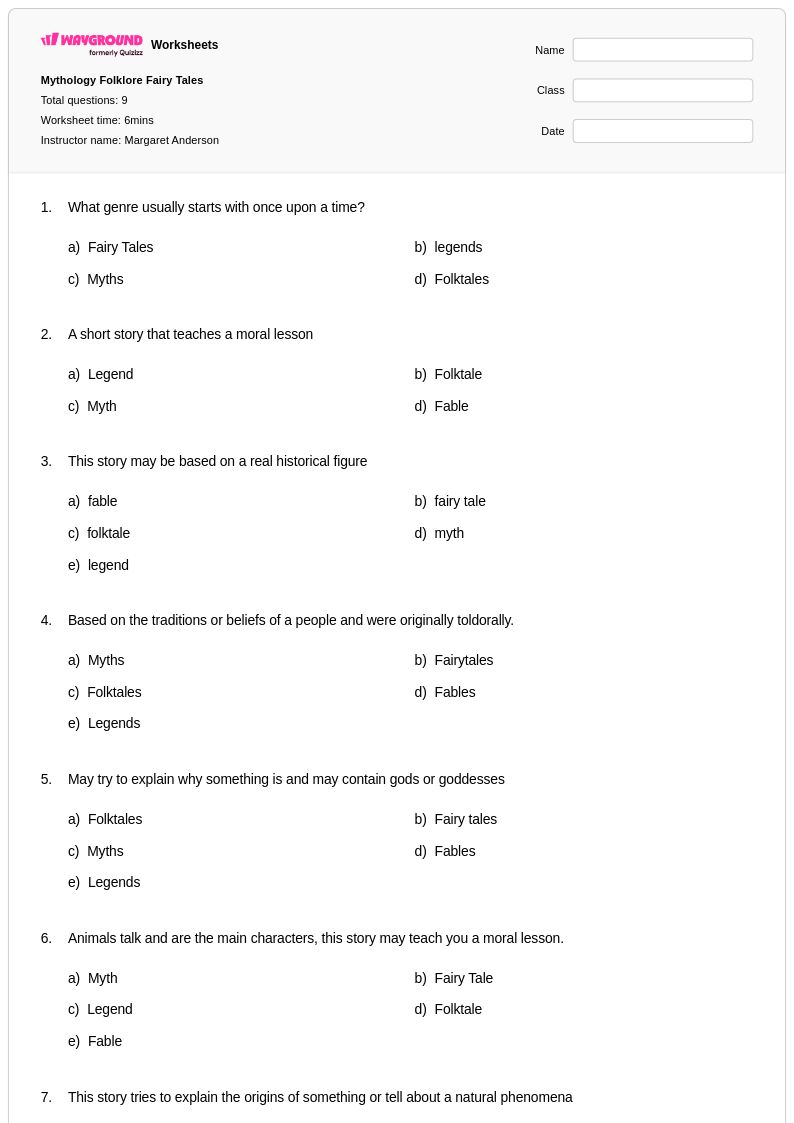
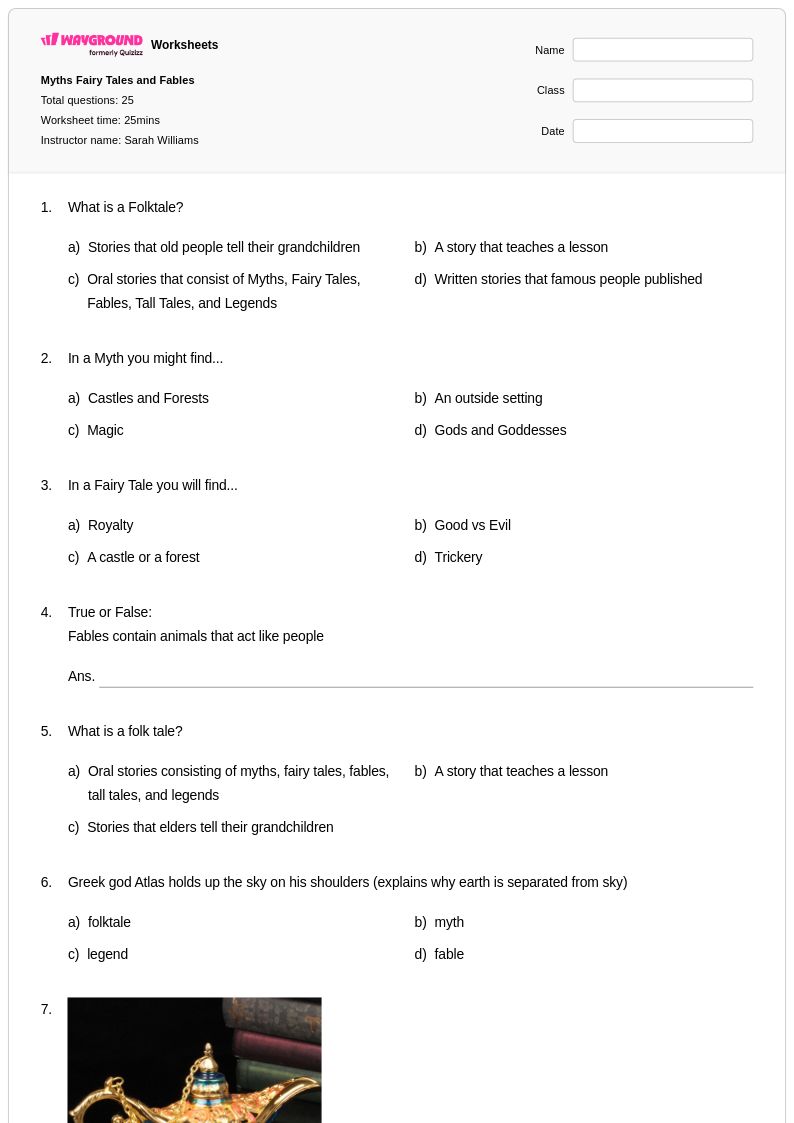
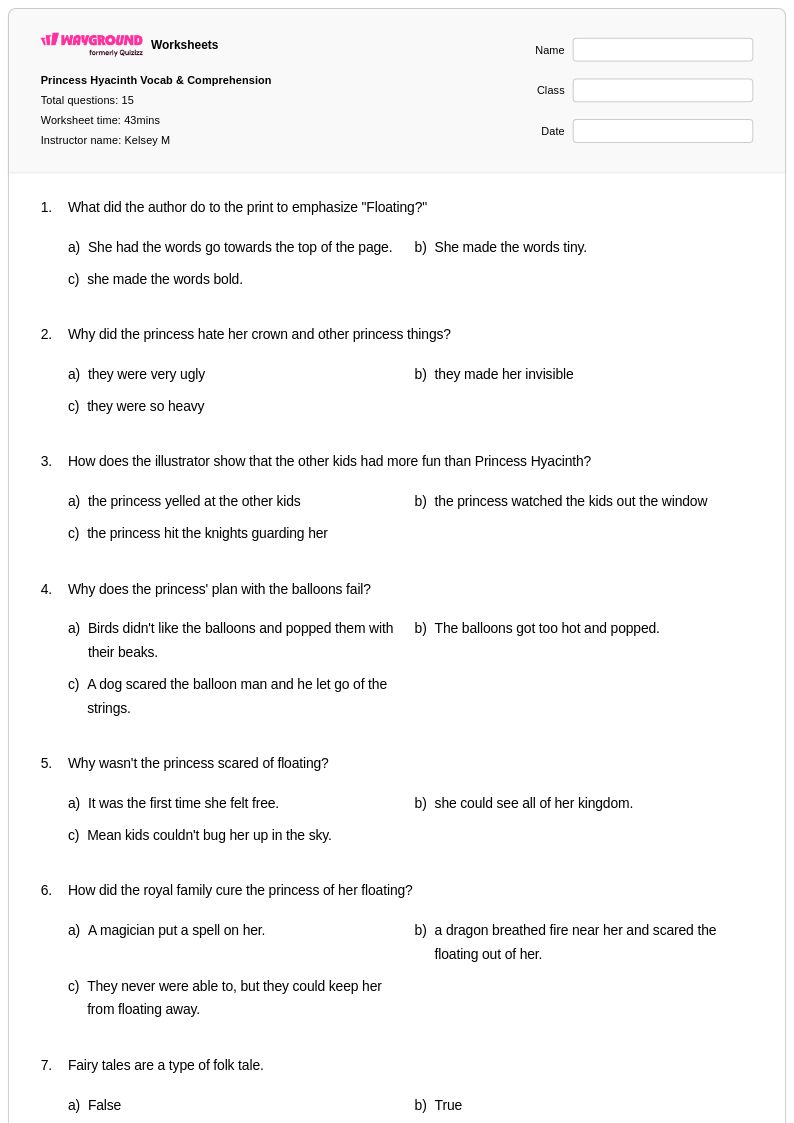
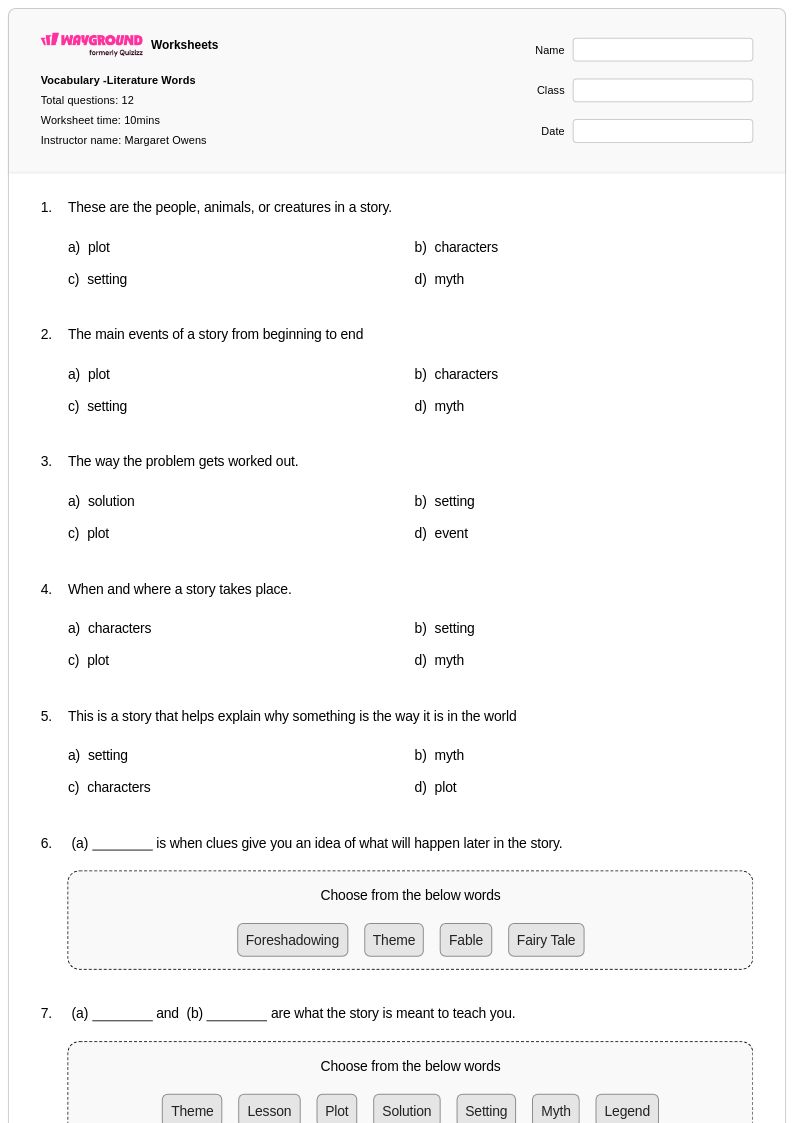
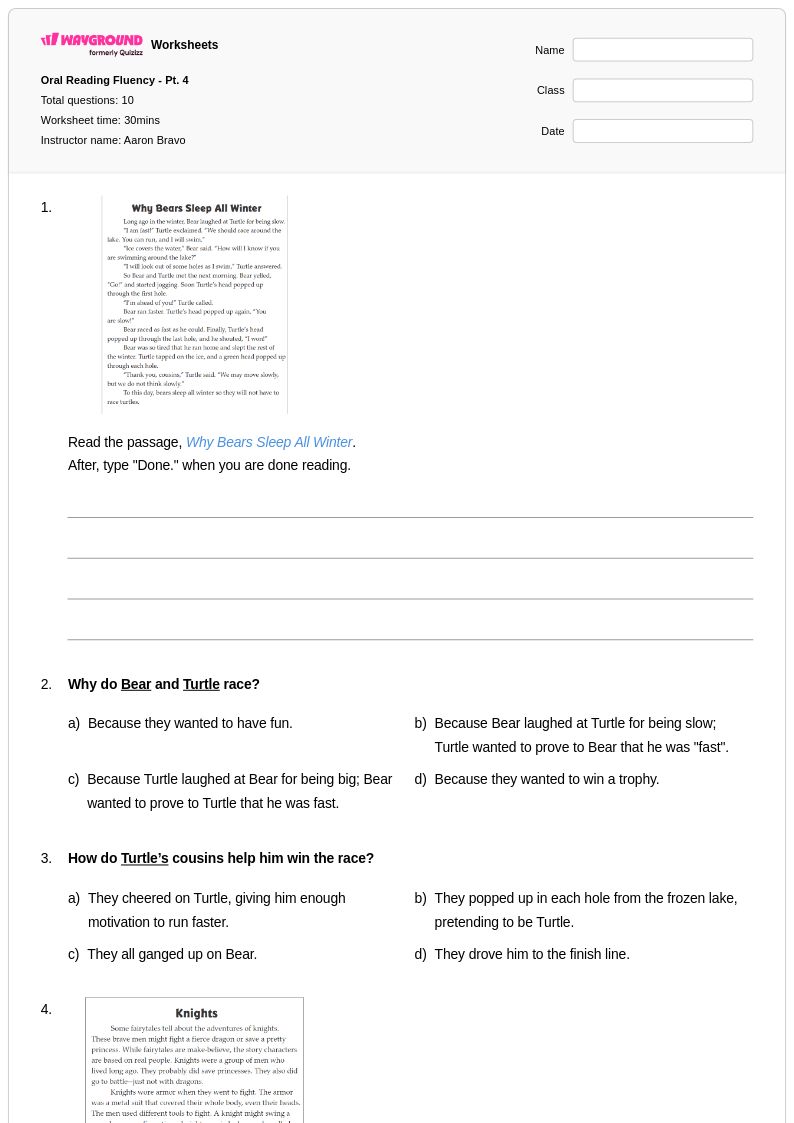
Fairy tales worksheets for Class 3 students through Wayground (formerly Quizizz) provide comprehensive resources that help young readers explore the magical world of traditional storytelling while developing critical reading comprehension skills. These carefully crafted printables guide students through the essential elements that define fairy tales, including identifying common characters like heroes, villains, and magical helpers, recognizing typical settings such as enchanted forests and faraway kingdoms, and understanding classic plot structures that feature conflicts between good and evil with satisfying resolutions. Each worksheet includes an answer key to support independent learning and assessment, while free practice problems encourage students to analyze familiar stories like Cinderella, The Three Little Pigs, and Jack and the Beanstalk alongside lesser-known tales from various cultures. Students strengthen their ability to distinguish fairy tales from other genres by examining recurring themes, magical elements, and the moral lessons that characterize these timeless narratives.
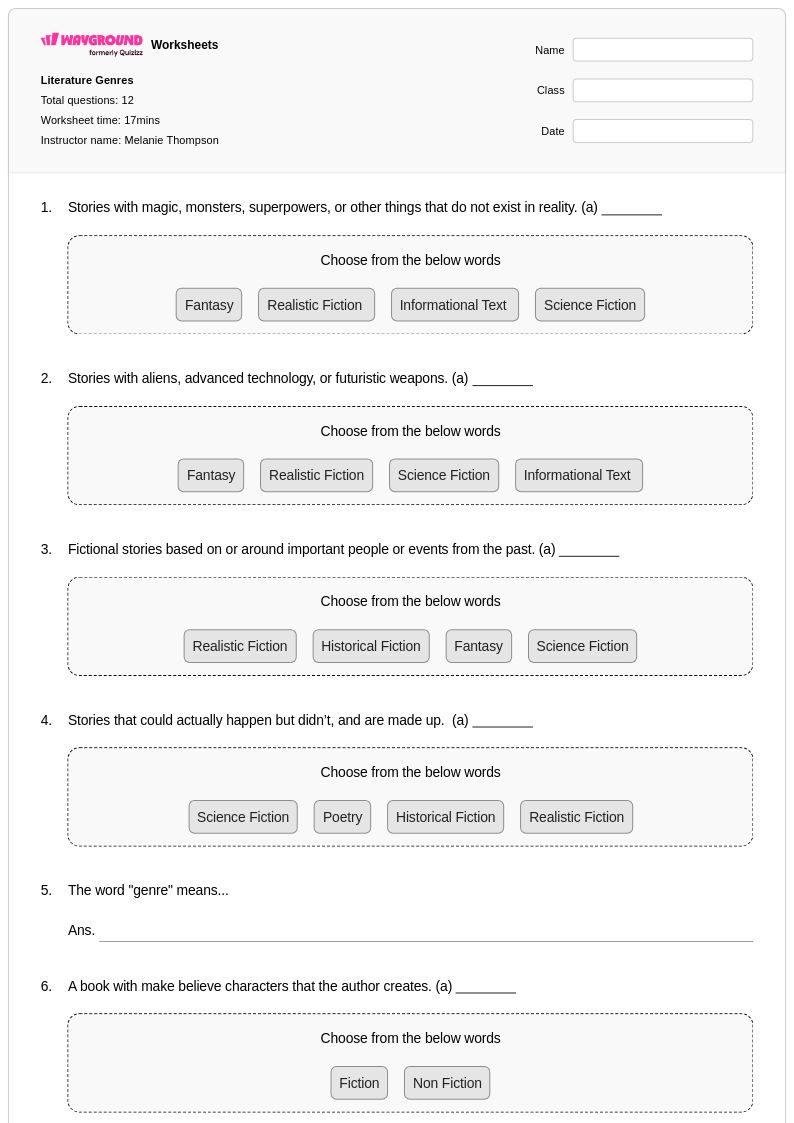
Wayground (formerly Quizizz) empowers educators with millions of teacher-created fairy tale resources that support comprehensive Class 3 reading instruction through robust search and filtering capabilities that allow quick access to materials aligned with specific learning standards. Teachers can easily differentiate instruction by selecting from worksheets that range from basic story element identification to more complex comparative analyses of different fairy tale versions, with flexible customization options that enable modifications to meet individual student needs. The platform's extensive collection is available in both printable pdf formats for traditional classroom use and digital formats for technology-integrated learning environments, making lesson planning more efficient while providing multiple options for skill practice, remediation, and enrichment activities. These comprehensive resources help educators create engaging learning experiences that build students' genre recognition abilities while fostering a deeper appreciation for the literary traditions that have shaped storytelling across cultures and generations.
FAQs
How do I teach fairy tales in my classroom?
Teaching fairy tales effectively starts with helping students recognize the defining features of the genre: magical elements, archetypal characters (heroes, villains, helpers), moral lessons, and conventional story structures like 'once upon a time' openings and 'happily ever after' conclusions. From there, teachers can deepen instruction by comparing multiple versions of the same tale across cultures, which builds analytical thinking and exposes students to how storytelling traditions vary globally. Pairing close reading with structured graphic organizers helps students move beyond surface-level plot recall toward genuine literary analysis.
What story elements should students be able to identify in a fairy tale?
Students analyzing fairy tales should be able to identify magical elements, archetypal characters such as heroes and villains, a central moral lesson, and the traditional structural markers that distinguish the genre. They should also recognize character motivations and transformations, since protagonists in fairy tales almost always undergo a meaningful change tied to the story's moral. Being able to spot these elements across different versions of a tale is a key comprehension skill at the elementary and middle school levels.
What exercises help students practice reading comprehension using fairy tales?
Effective practice exercises for fairy tale comprehension include story element identification tasks, character motivation analysis, and compare-and-contrast activities that place two versions of the same tale side by side. Having students trace the arc of a character's transformation or identify the moral lesson in their own words pushes beyond literal comprehension into inferential thinking. These exercises build the kind of analytical reading skills that transfer to other literary genres.
What mistakes do students commonly make when analyzing fairy tales?
One of the most frequent errors is confusing plot summary with analysis — students describe what happens rather than explaining why it matters or what it reveals about character or theme. Another common misconception is treating the moral lesson as obvious or universal, when in fact comparing cultural versions of the same tale often reveals that the moral shifts depending on the tradition. Students also tend to overlook character transformation, focusing on external events rather than internal change.
How can I differentiate fairy tale instruction for different reading levels?
Differentiation in fairy tale instruction can involve adjusting the complexity of the text, the depth of the analytical task, or the scaffolding provided. For struggling readers, simplified versions of classic tales paired with guided question prompts can lower the entry point without reducing the rigor of the thinking. On Wayground, teachers can apply accommodations such as Read Aloud, reduced answer choices, and extended time to individual students, allowing the same worksheet to serve the full range of learners in a classroom without drawing attention to who is receiving support.
How do I use Wayground's fairy tale worksheets in my classroom?
Wayground's fairy tale worksheets are available as printable PDFs for traditional classroom use and in digital formats for technology-integrated environments, so they work whether students are at desks or on devices. Teachers can also host worksheets directly as a quiz on Wayground, which adds interactivity and allows for real-time visibility into student responses. All worksheets include complete answer keys, making them practical for independent practice, small group work, or homework without requiring additional teacher preparation.