Free Printable Federalist Vs Anti-federalist Worksheets for Class 9
Explore Class 9 Federalist vs Anti-federalist worksheets and printables that help students understand the foundational debate over the Constitution through engaging practice problems, free PDF resources, and comprehensive answer keys.
Explore printable Federalist Vs Anti-federalist worksheets for Class 9
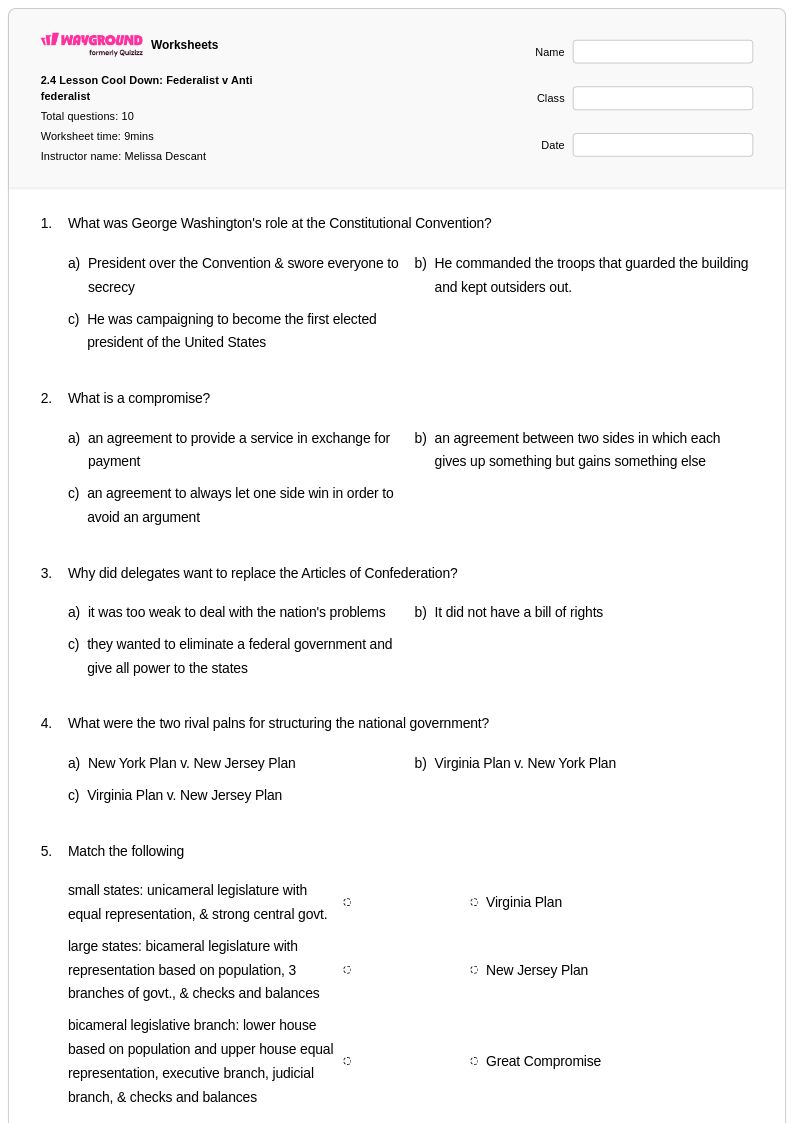
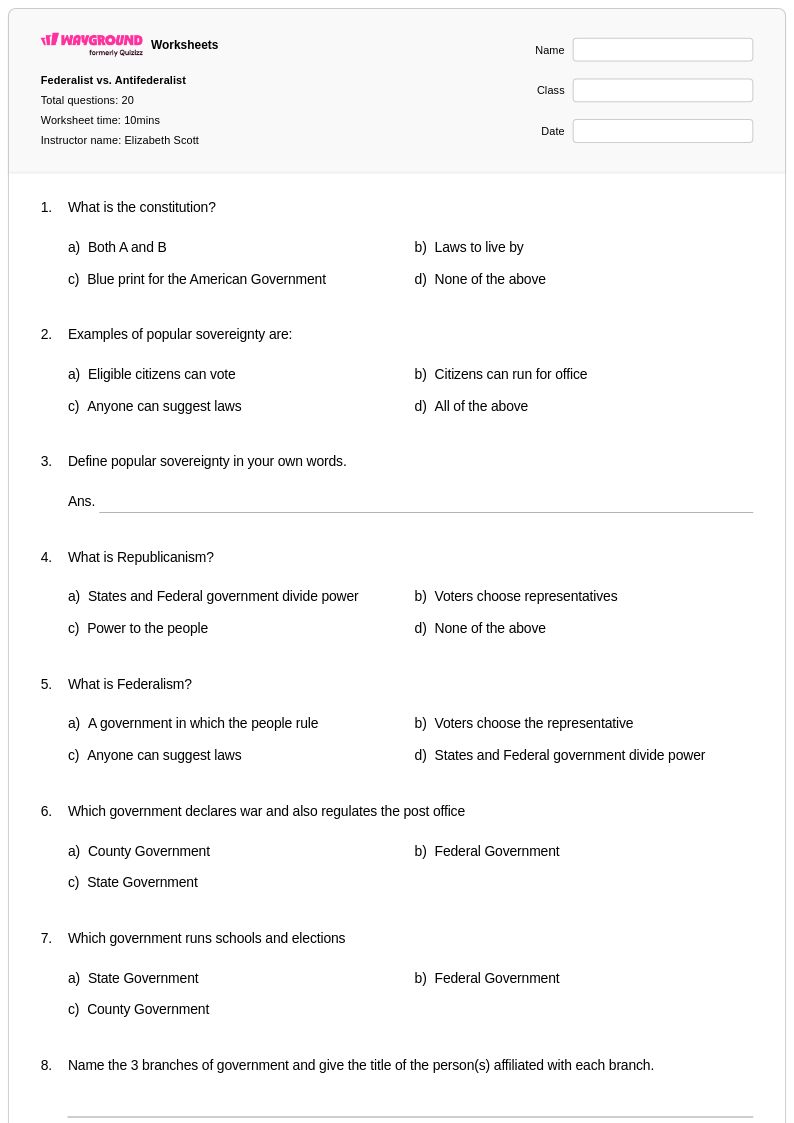
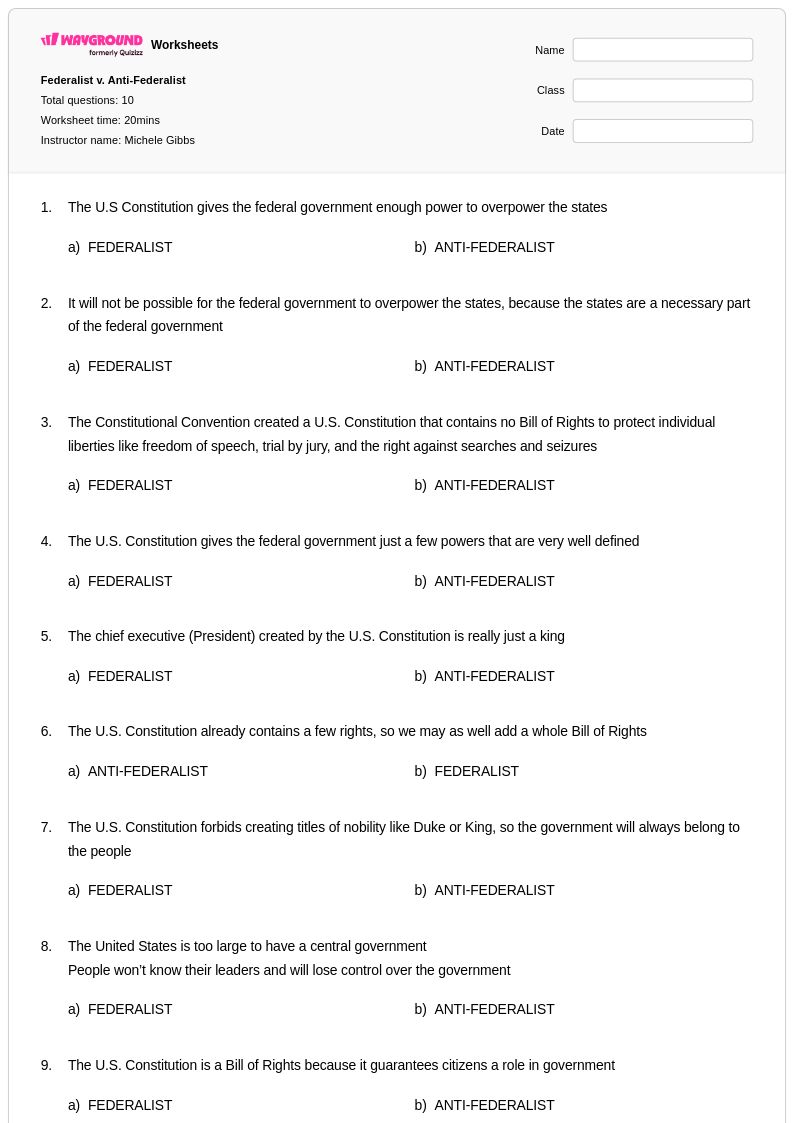
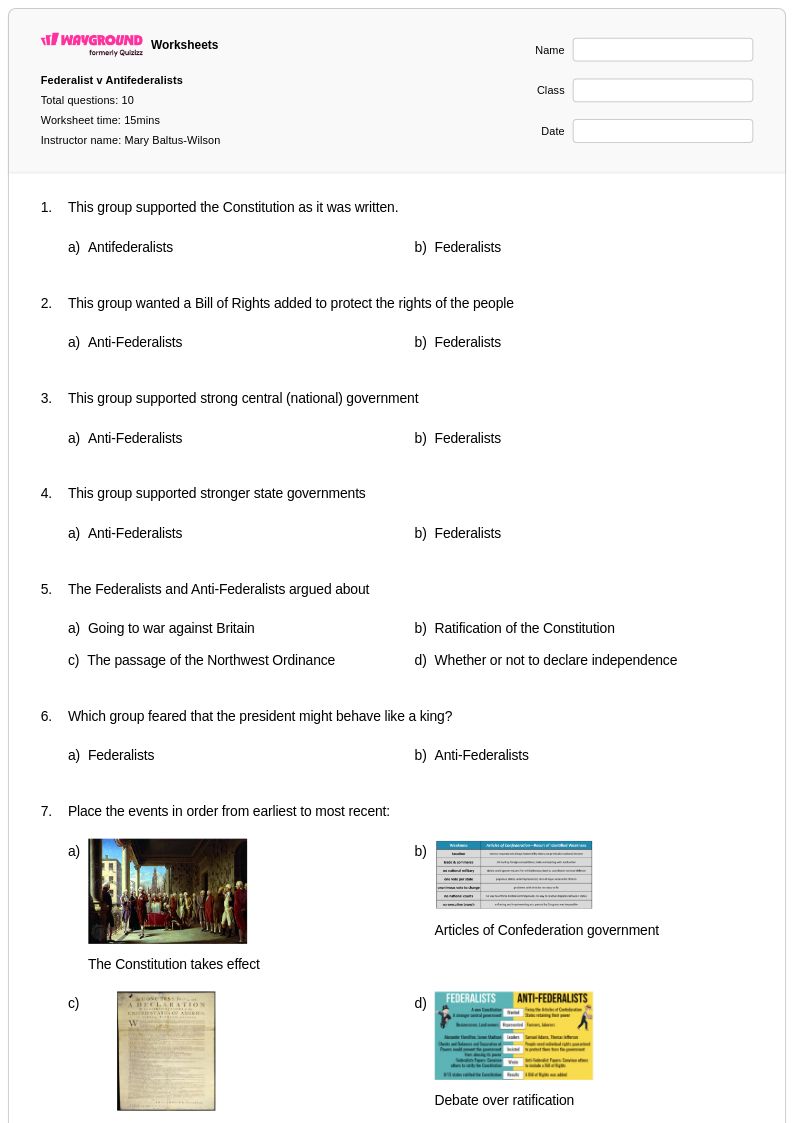
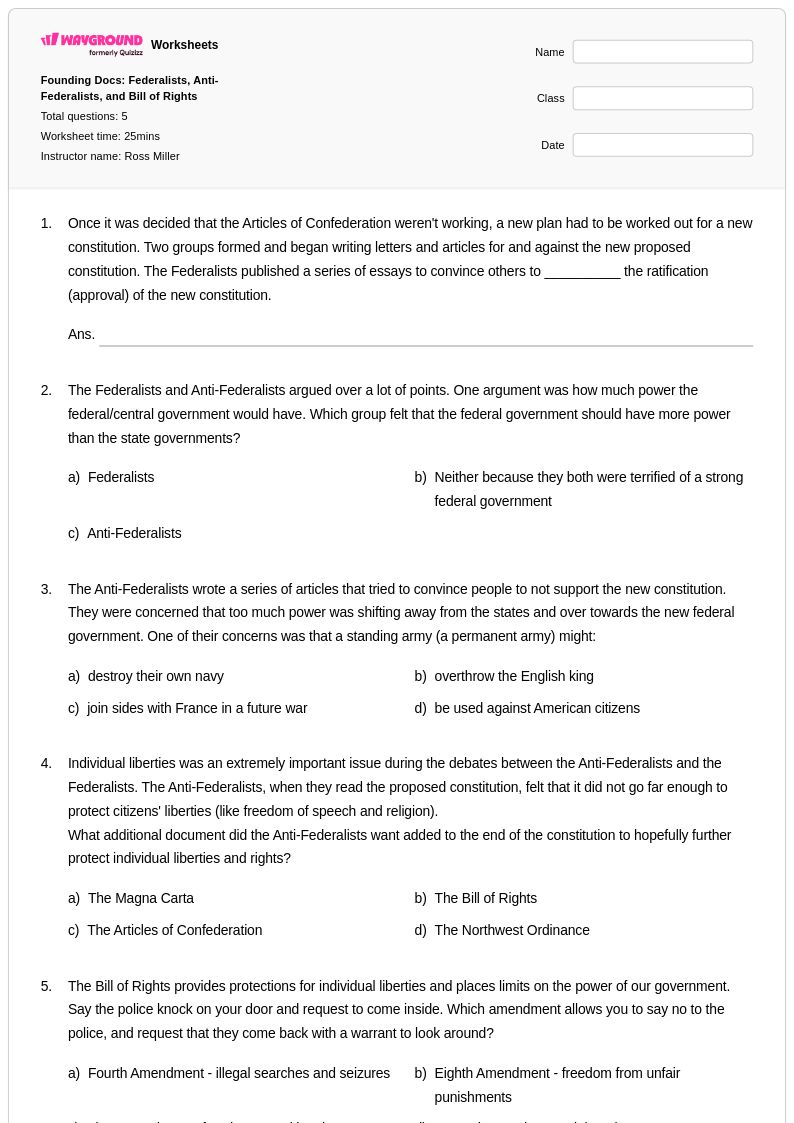
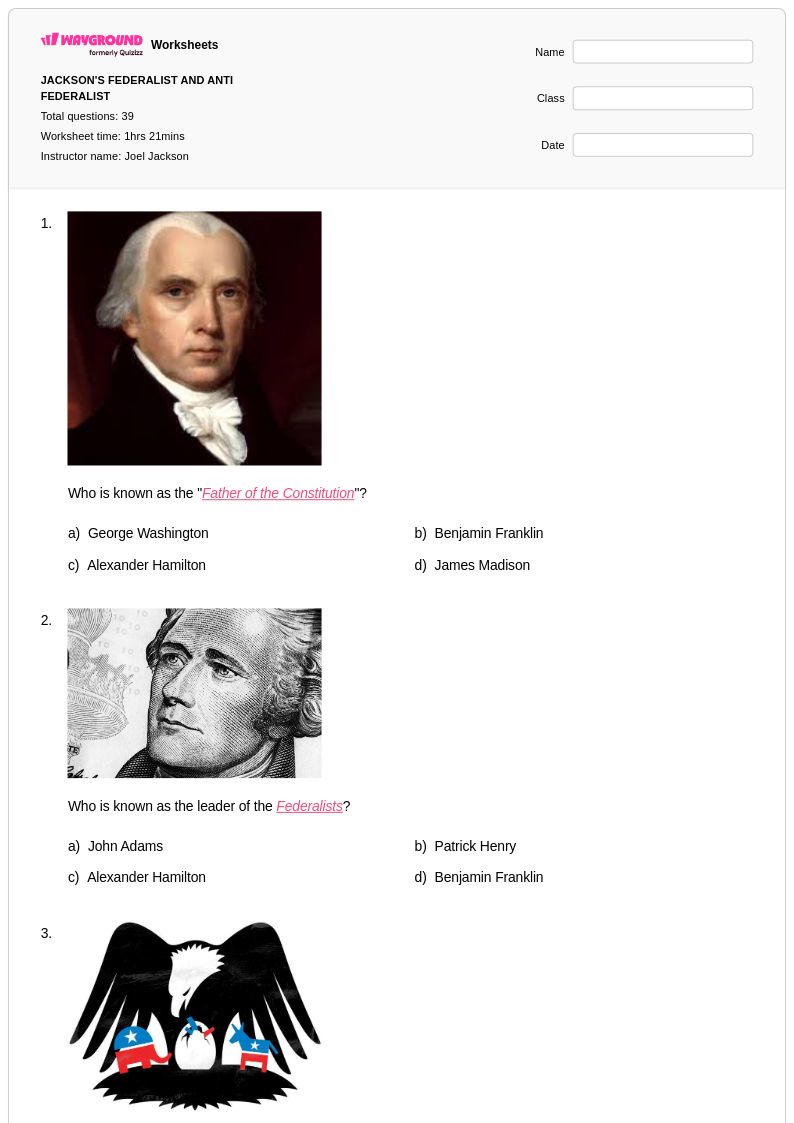
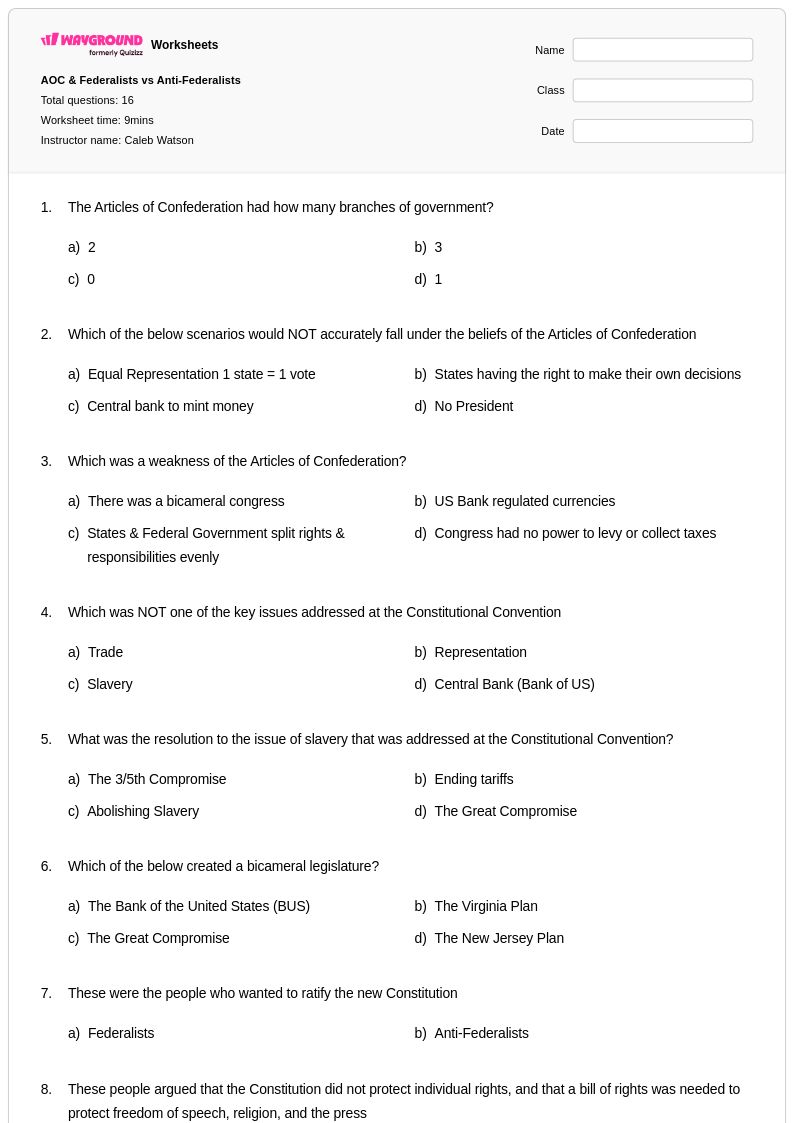
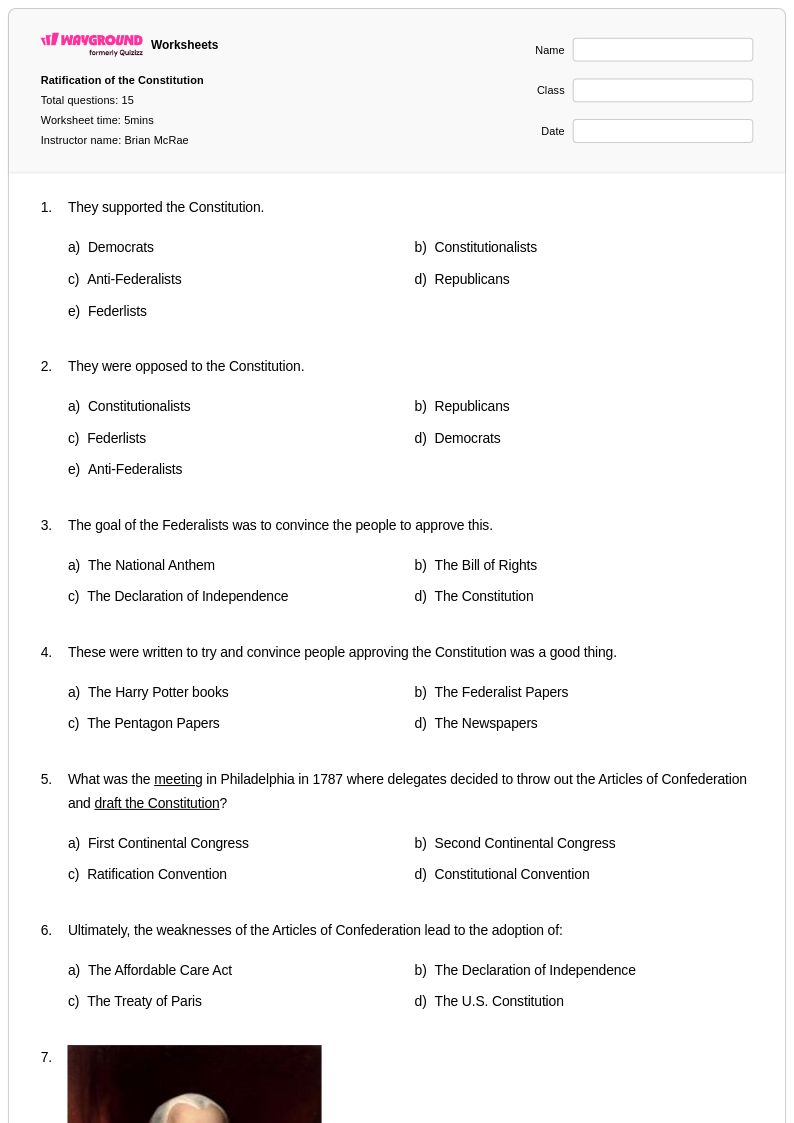
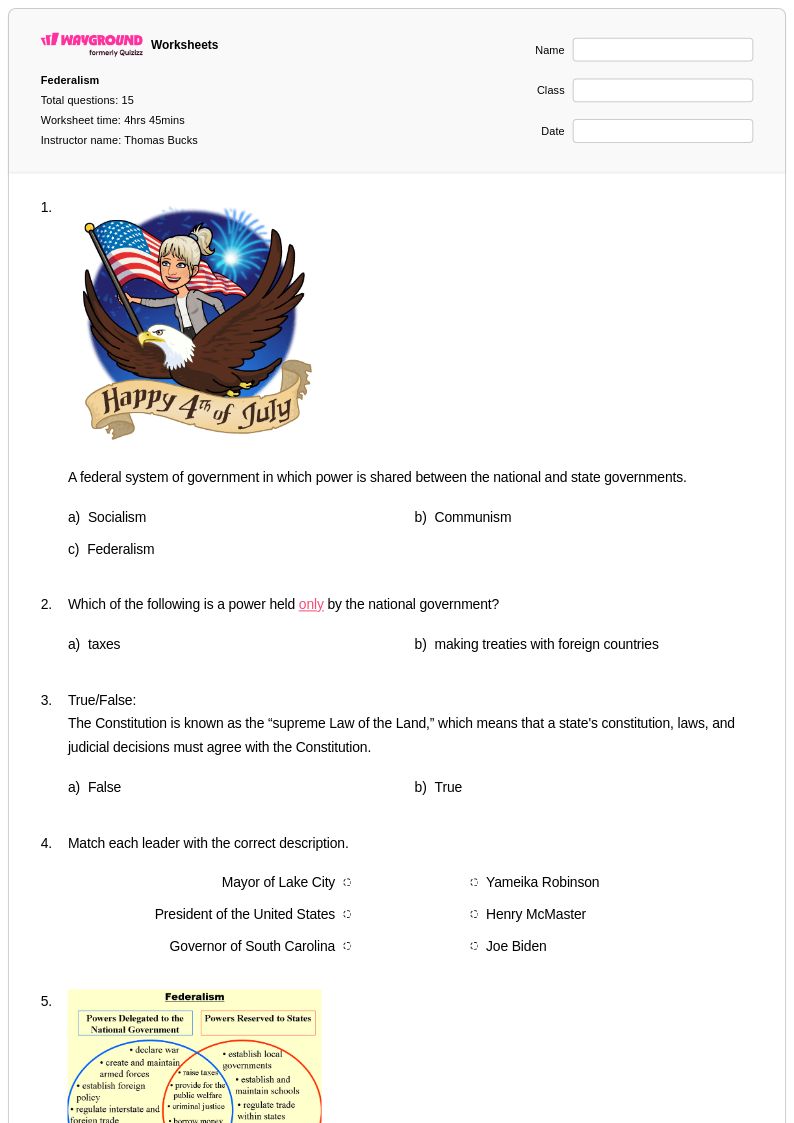
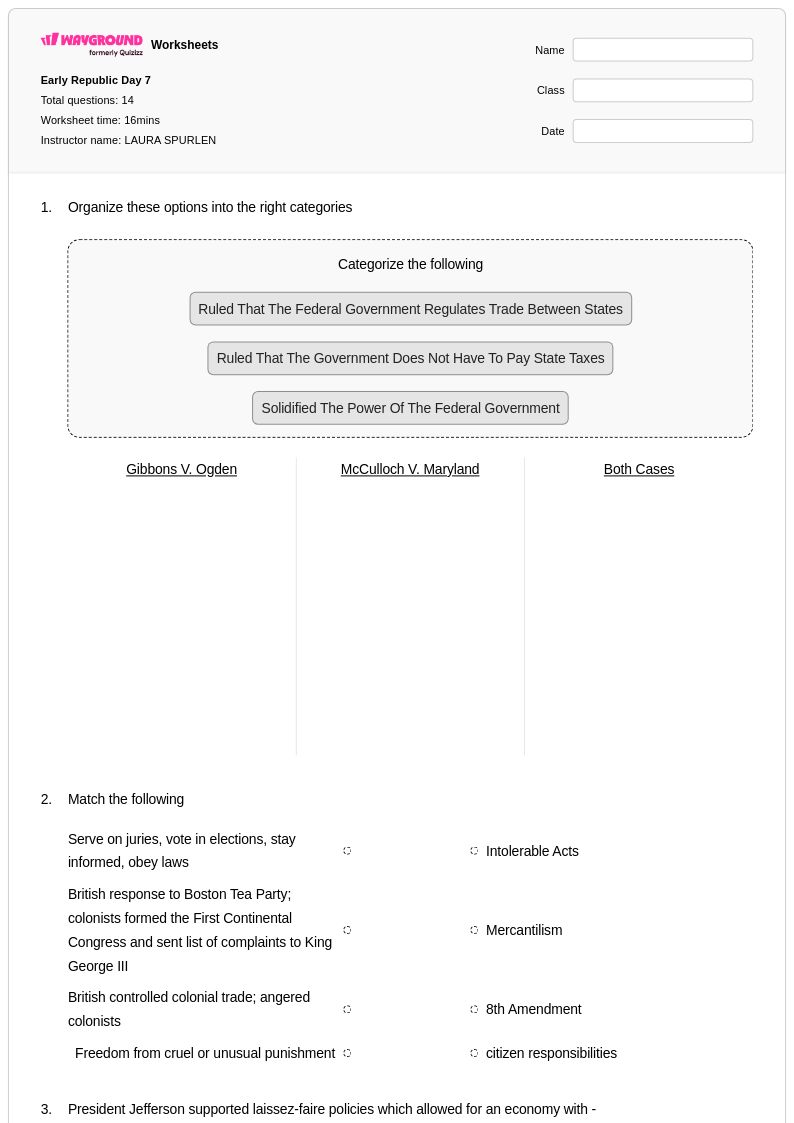
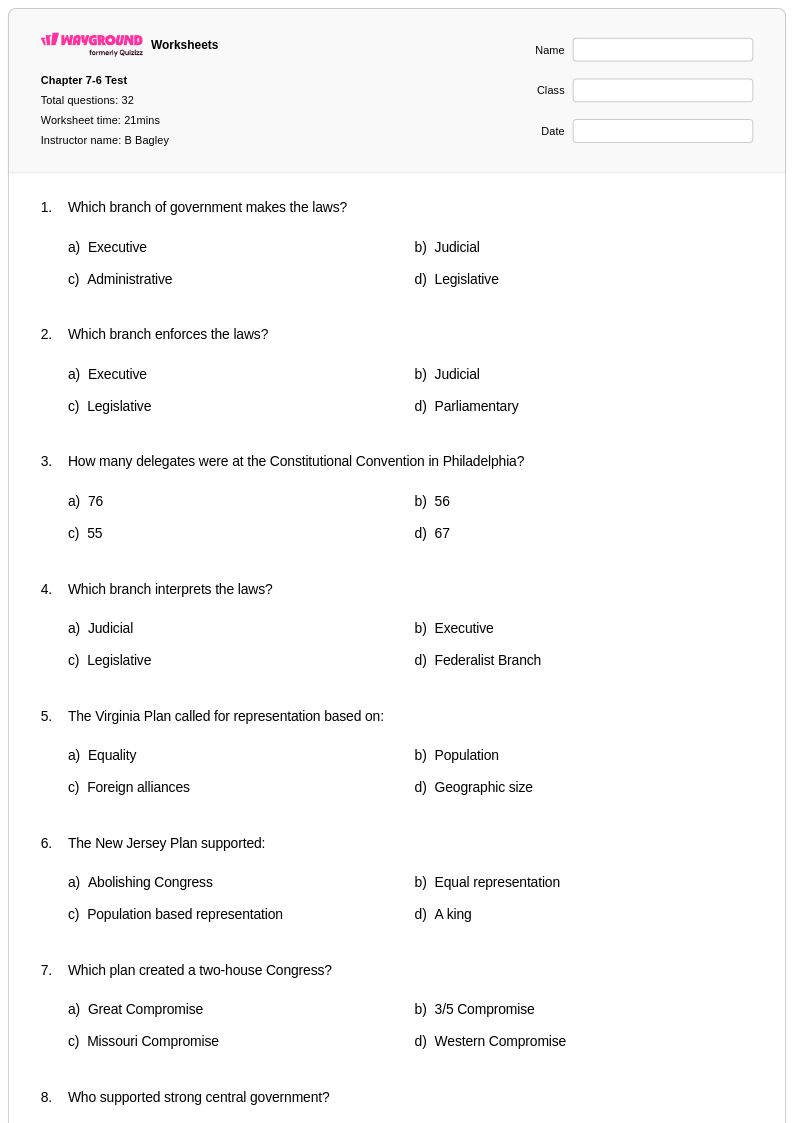
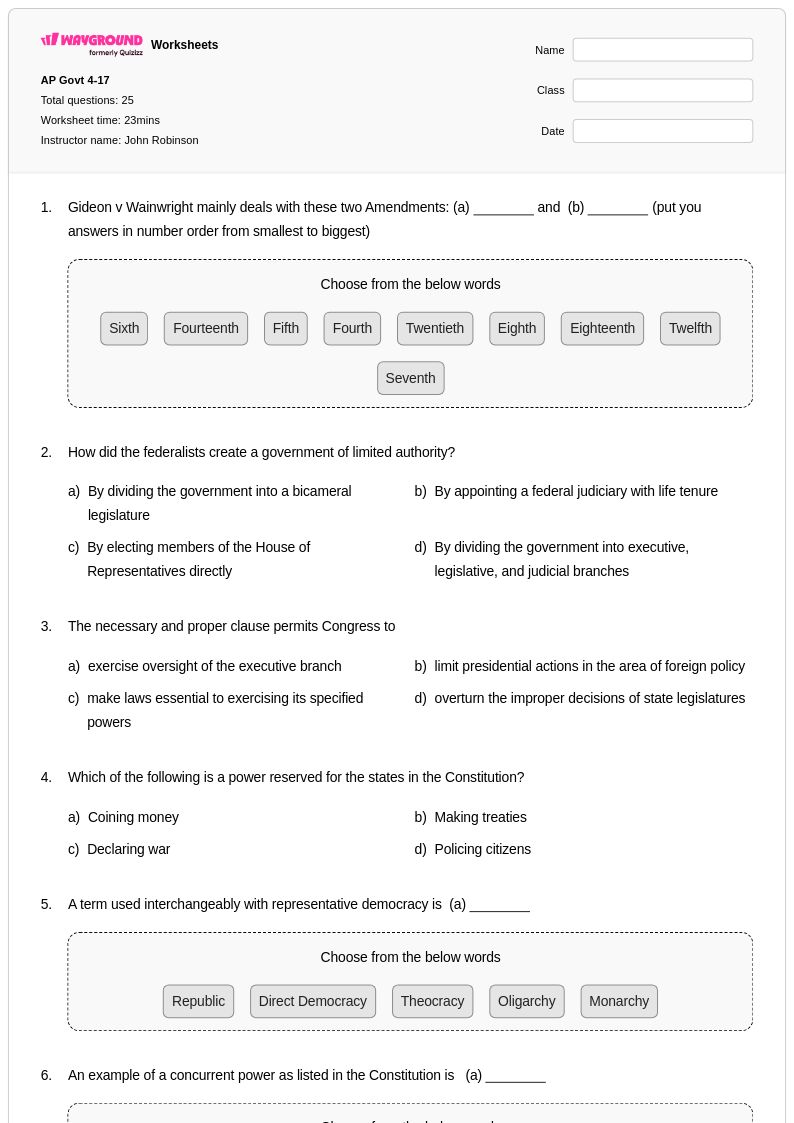
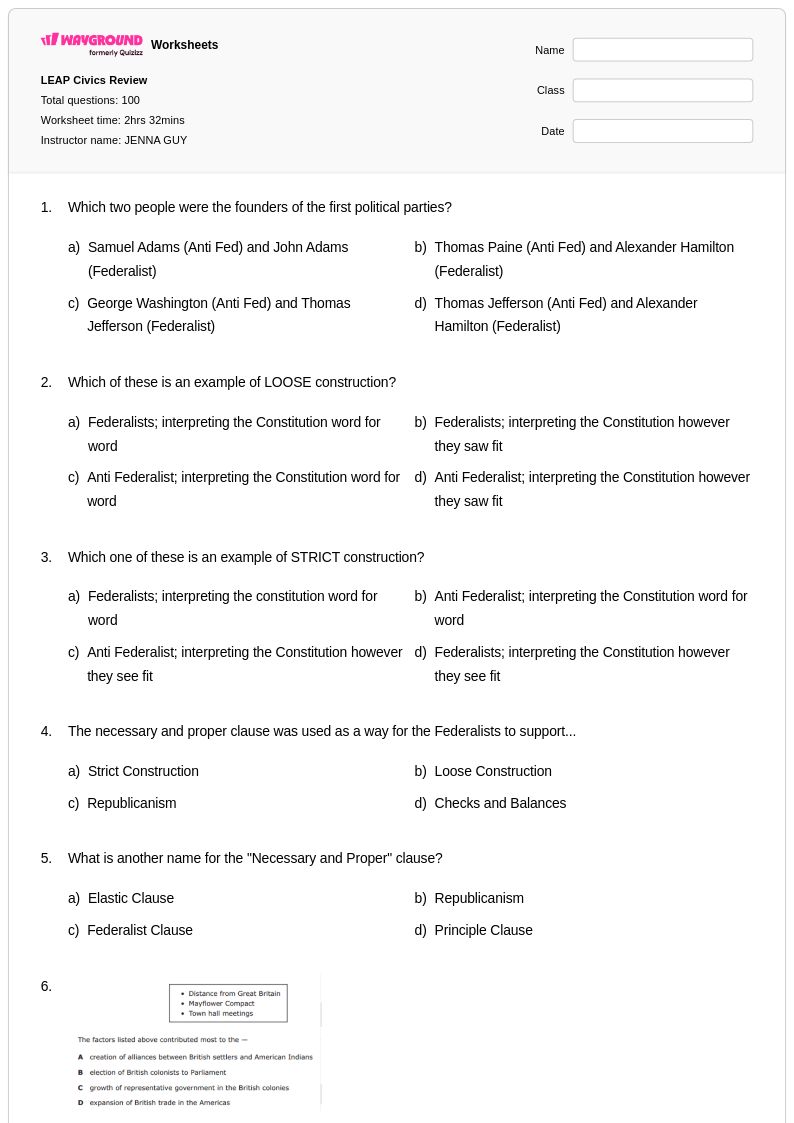
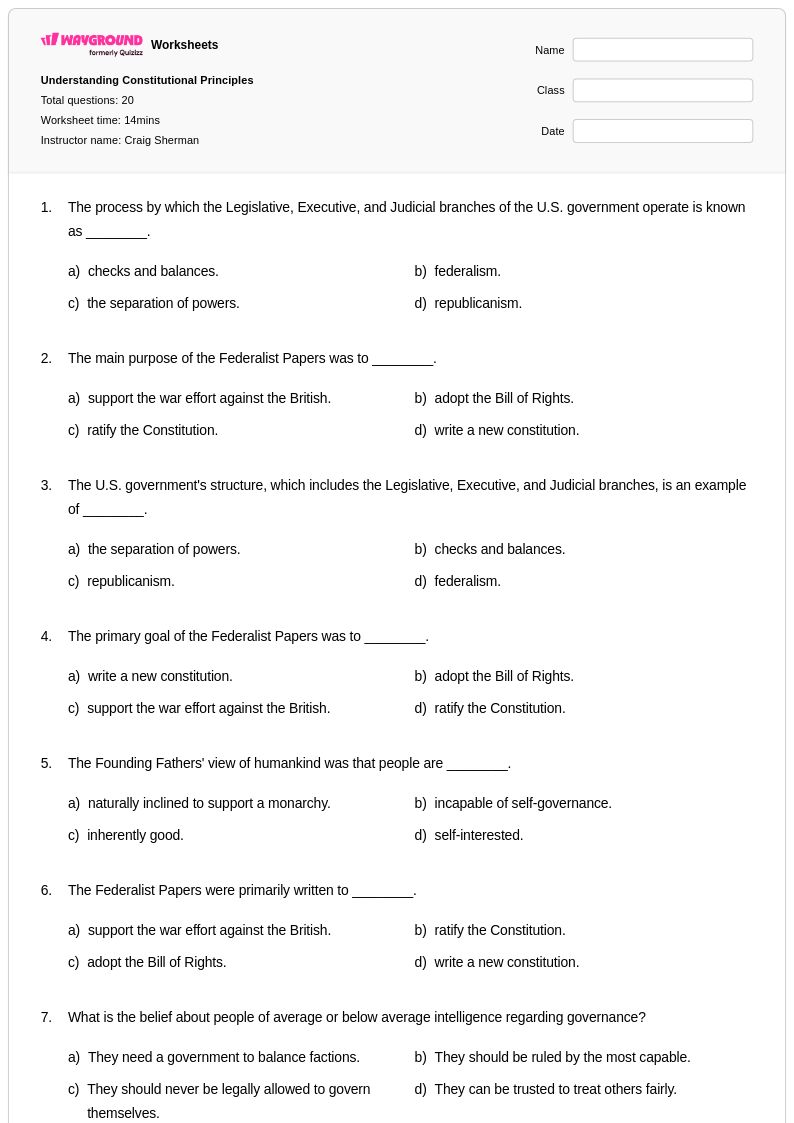
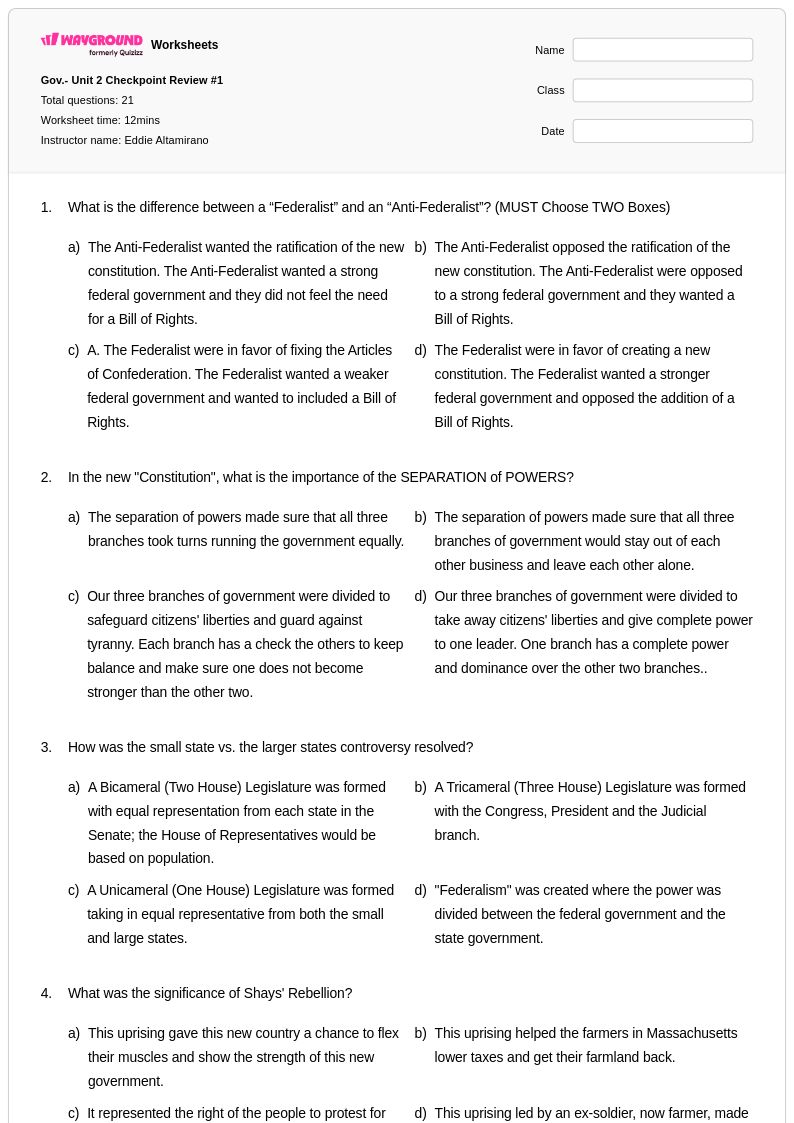
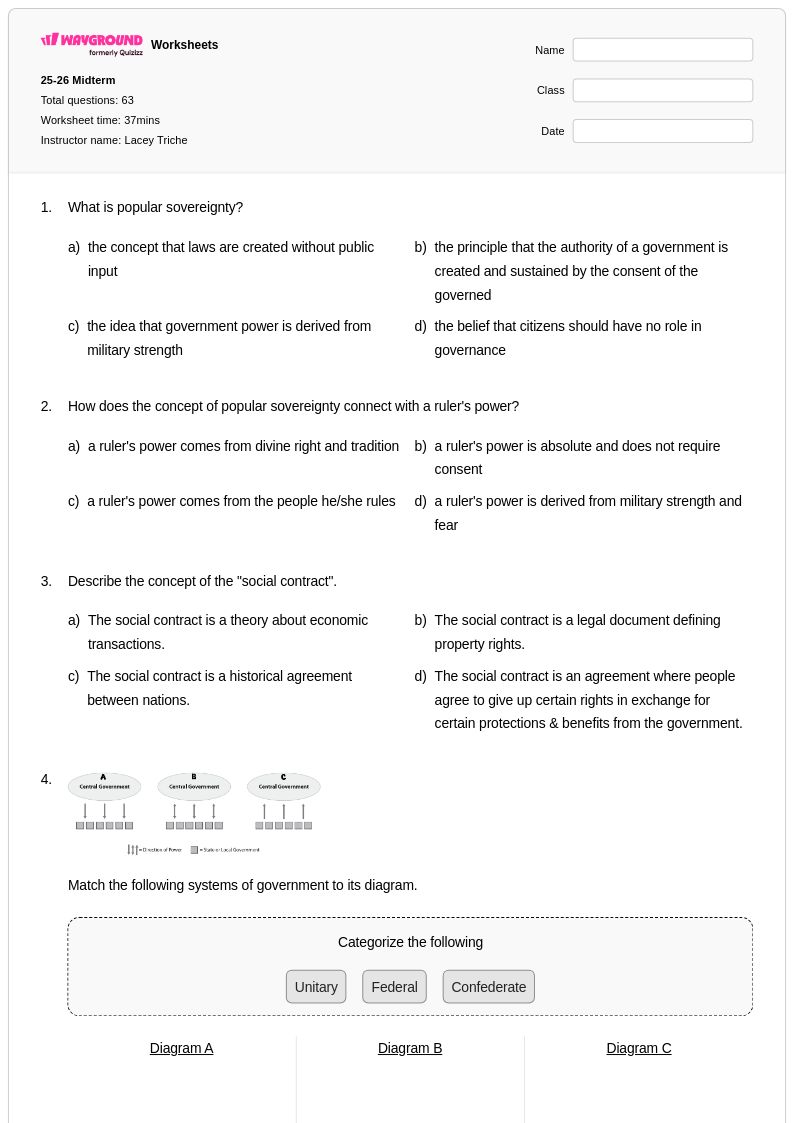
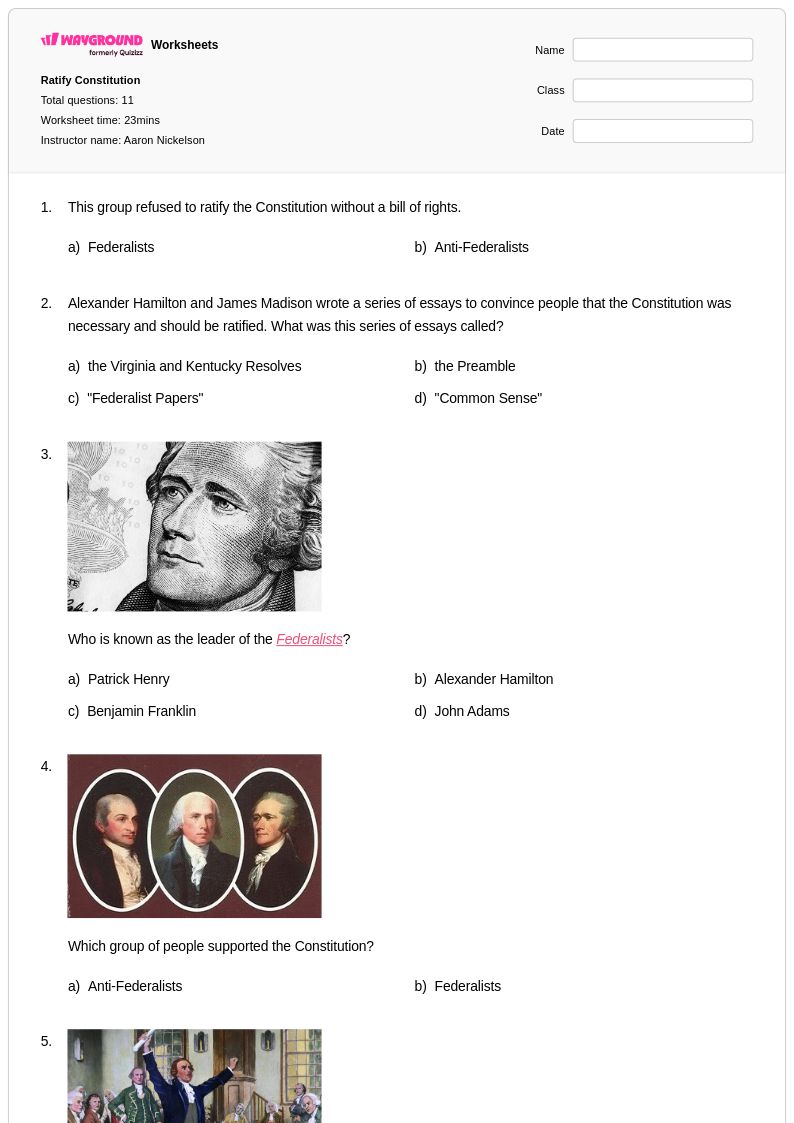
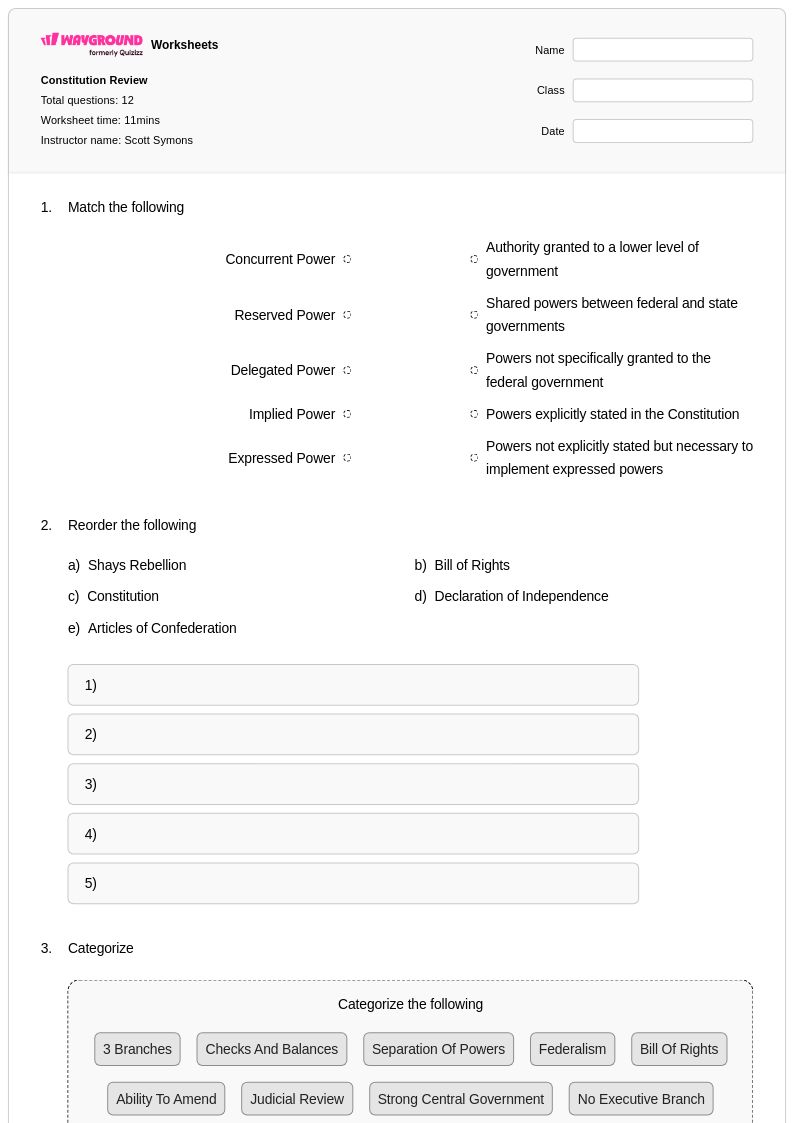
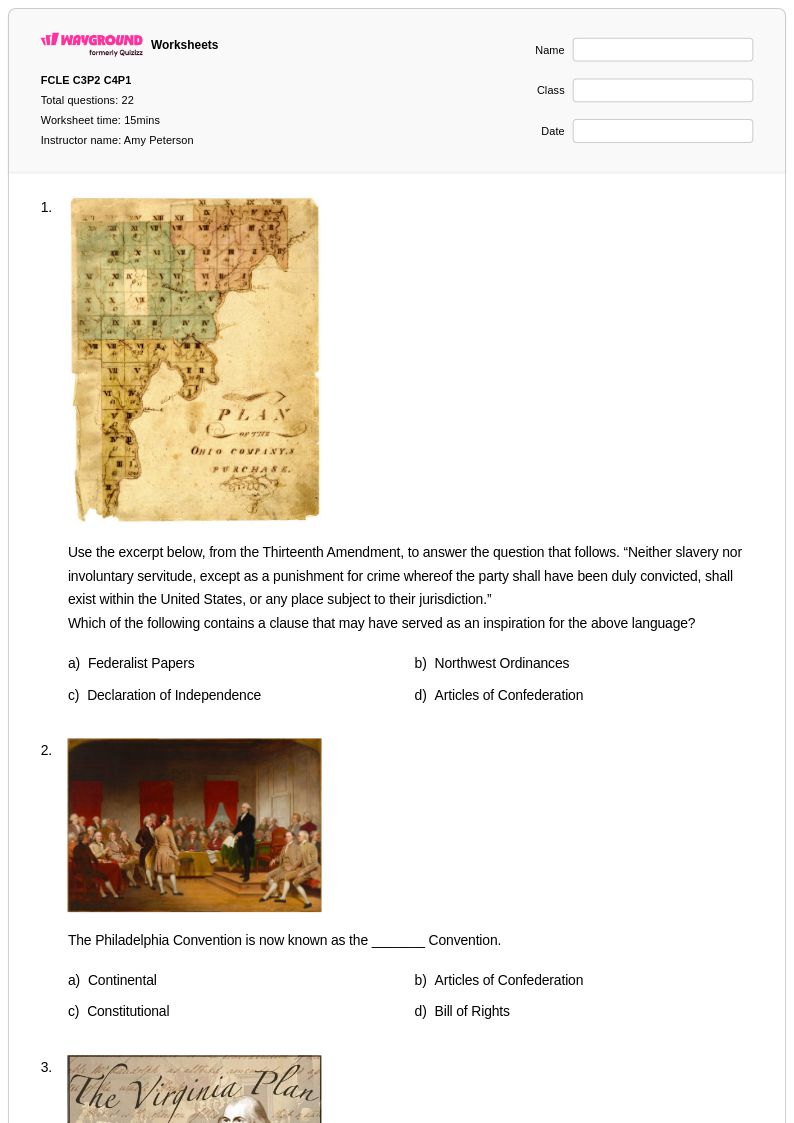
Federalist vs Anti-federalist worksheets for Class 9 provide students with essential practice analyzing one of the most pivotal debates in American constitutional history. These comprehensive educational resources guide ninth-grade students through the fundamental disagreements between supporters and opponents of the proposed Constitution, helping them understand the competing visions for America's federal government structure. The worksheets strengthen critical thinking skills by examining primary source documents, comparing arguments from both sides, and analyzing how these early political philosophies shaped the Bill of Rights and constitutional amendments. Each printable resource includes detailed answer keys and practice problems that challenge students to evaluate the validity of Federalist and Anti-federalist positions, while free pdf formats ensure accessibility for diverse classroom environments.
Wayground (formerly Quizizz) supports educators with an extensive collection of teacher-created Federalist vs Anti-federalist worksheets designed specifically for Class 9 Social Studies instruction. The platform's millions of educational resources include standards-aligned materials that address state curriculum requirements for U.S. History, with robust search and filtering capabilities that help teachers quickly locate age-appropriate content covering constitutional ratification debates, key figures like Alexander Hamilton and Patrick Henry, and the philosophical foundations of American federalism. Teachers benefit from flexible customization tools that allow differentiation for various learning levels, enabling effective planning for both remediation and enrichment activities. Available in both printable and digital formats including downloadable pdfs, these worksheet collections facilitate targeted skill practice whether used for in-class discussions, homework assignments, or assessment preparation.
FAQs
How do I teach the Federalist vs Anti-federalist debate in a way students actually understand?
Start by grounding students in the core disagreement: Federalists like Hamilton and Madison believed a strong central government was essential for national stability, while Anti-federalists like Patrick Henry feared it would erode state sovereignty and individual rights. Using primary source excerpts from the Federalist Papers and Anti-federalist writings alongside structured comparison activities helps students move beyond memorization and into genuine historical reasoning. Framing the debate as a real argument with stakes on both sides makes the content far more engaging than simply listing names and positions.
What exercises help students practice comparing Federalist and Anti-federalist arguments?
Side-by-side document analysis tasks are especially effective, where students read excerpts from both perspectives and identify each side's claim, evidence, and reasoning. Structured comparative charts help students organize contrasting positions on issues like federal power, a bill of rights, and state sovereignty before drawing their own conclusions. Practice problems that ask students to evaluate which argument is more persuasive on a given issue build critical thinking skills while reinforcing content knowledge.
What common mistakes do students make when learning about the Federalist vs Anti-federalist debate?
A frequent misconception is that Anti-federalists were simply opposed to government — in reality, they supported strong state governments and were primarily concerned about protecting individual liberties from an overpowered central authority. Students also often conflate the Federalist Party (a later political party) with the Federalists in the ratification debate, which creates confusion about timelines and figures. Addressing these distinctions early prevents compounding errors during assessments.
How does the Federalist vs Anti-federalist debate connect to the Bill of Rights?
The Bill of Rights was a direct outcome of Anti-federalist pressure during the ratification debate. Anti-federalists refused to support the Constitution without explicit protections for individual liberties, arguing that the original document left citizens too vulnerable to federal overreach. James Madison, originally a Federalist, ultimately drafted the first ten amendments as a compromise to secure ratification, making the Bill of Rights one of the most consequential legacies of this ideological conflict.
How can I use Federalist vs Anti-federalist worksheets in my classroom?
These worksheets are available as printable PDFs for traditional classroom use and in digital formats for technology-integrated or remote learning environments, and they can also be hosted as a quiz on Wayground for interactive assessment. Teachers can use them to introduce the debate, guide primary source analysis, facilitate structured comparison activities, or assess student understanding after instruction. Complete answer keys are included, which streamlines grading and makes the materials practical for both direct instruction and independent study assignments.
How do I differentiate Federalist vs Anti-federalist instruction for students with different learning needs?
Scaffolding primary source texts with vocabulary supports and guided annotation frames helps struggling readers access complex historical arguments without losing the rigor of the content. On Wayground, teachers can apply individual accommodations such as read aloud, extended time, and reduced answer choices to specific students, so advanced learners receive full challenge while others get targeted support — all within the same assignment and without drawing attention to the difference.