Free Printable Mexican-american War Worksheets for Class 9
Explore Wayground's free Class 9 Mexican-American War worksheets and printables that help students master key historical events, causes, and consequences through engaging practice problems and comprehensive answer keys.
Explore printable Mexican-american War worksheets for Class 9
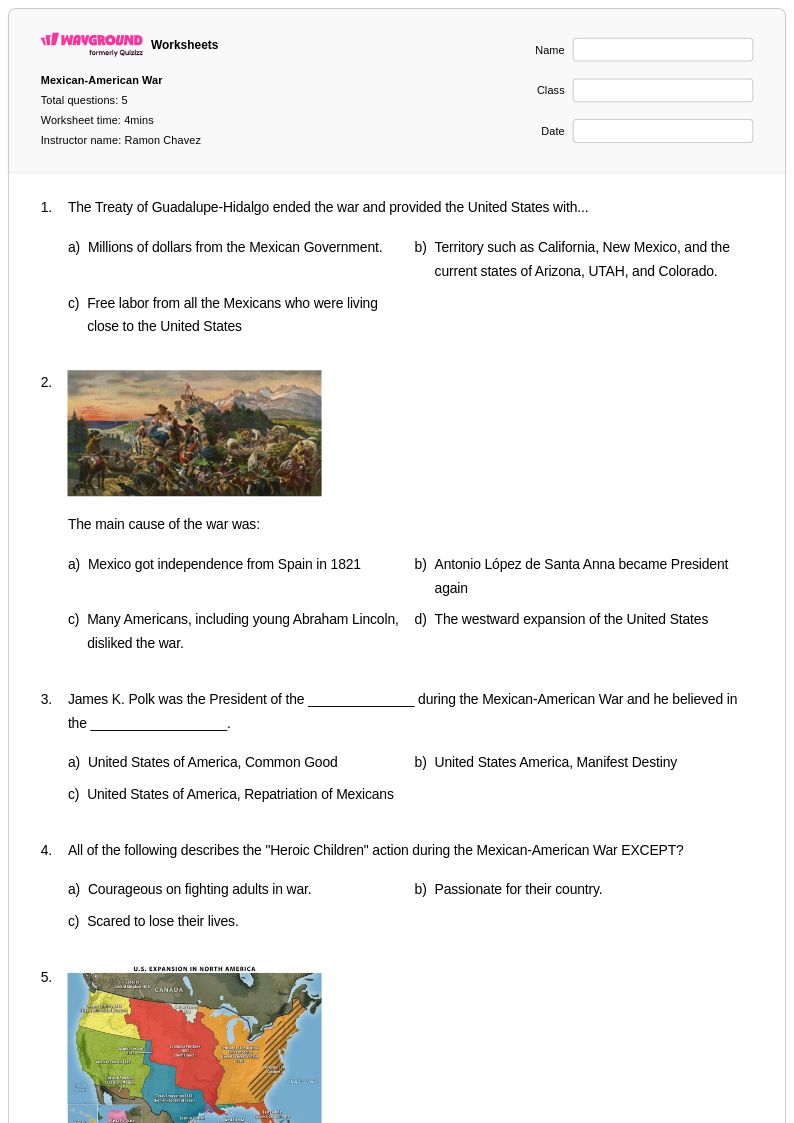
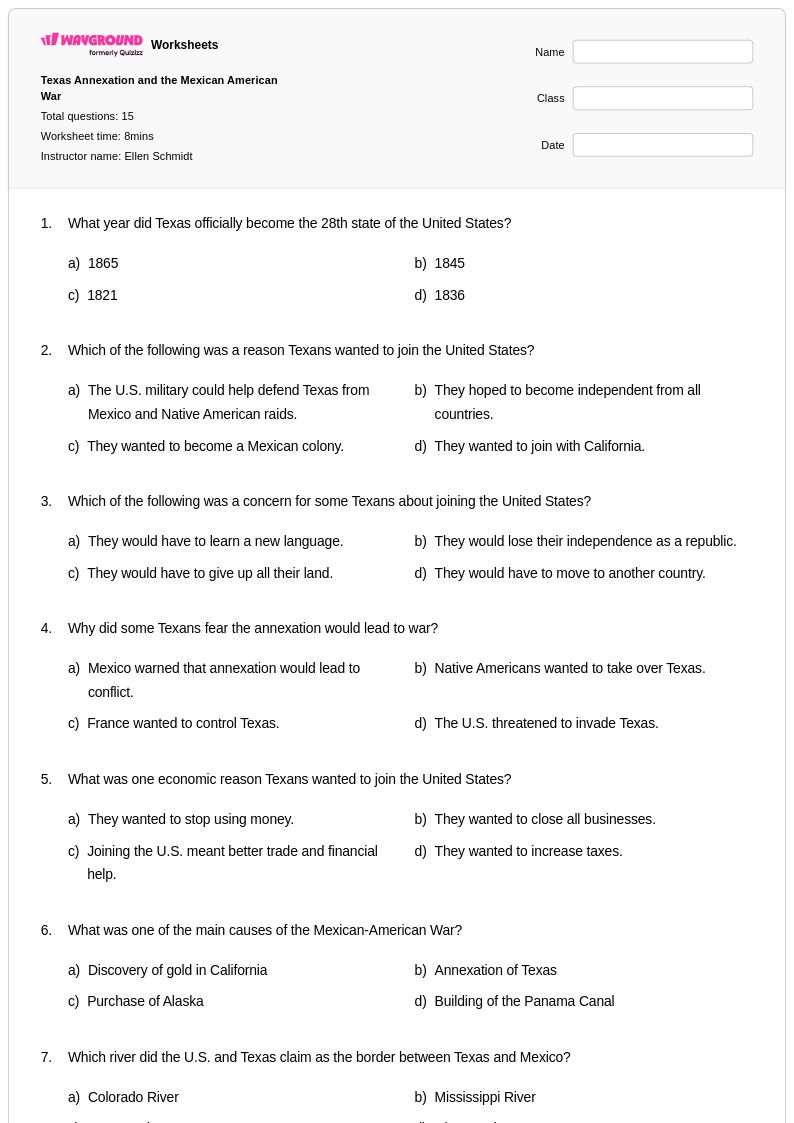
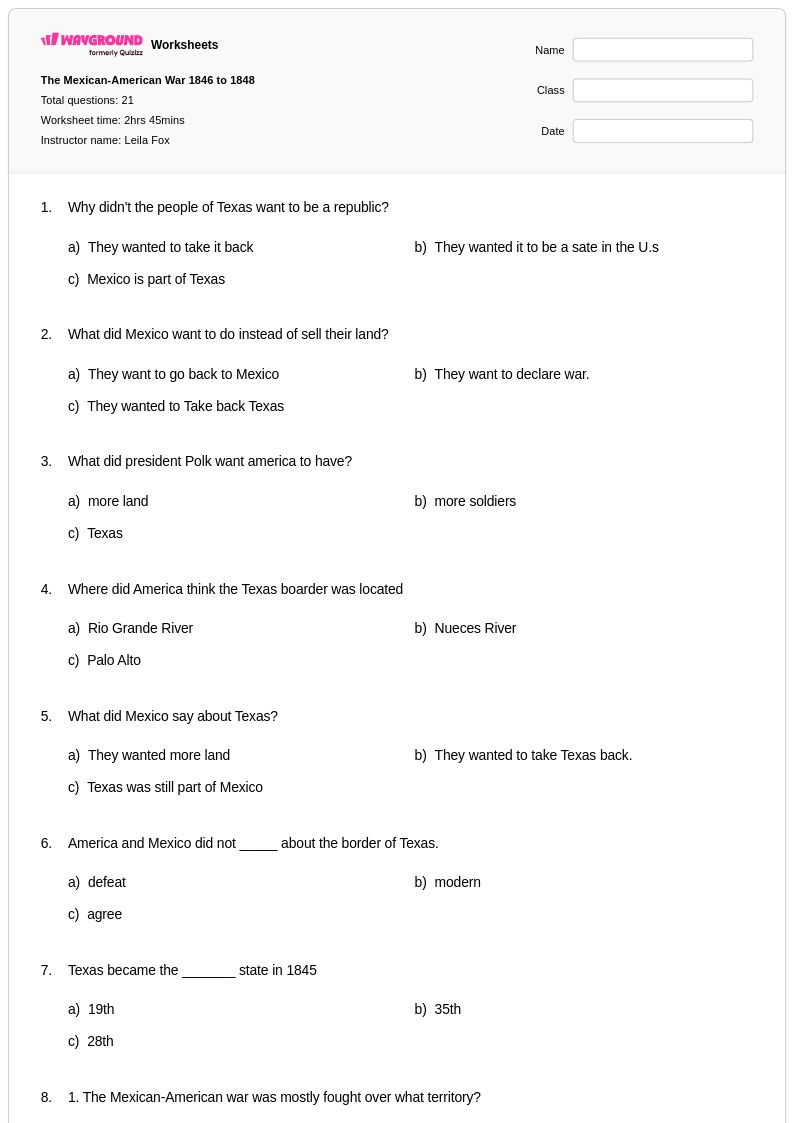
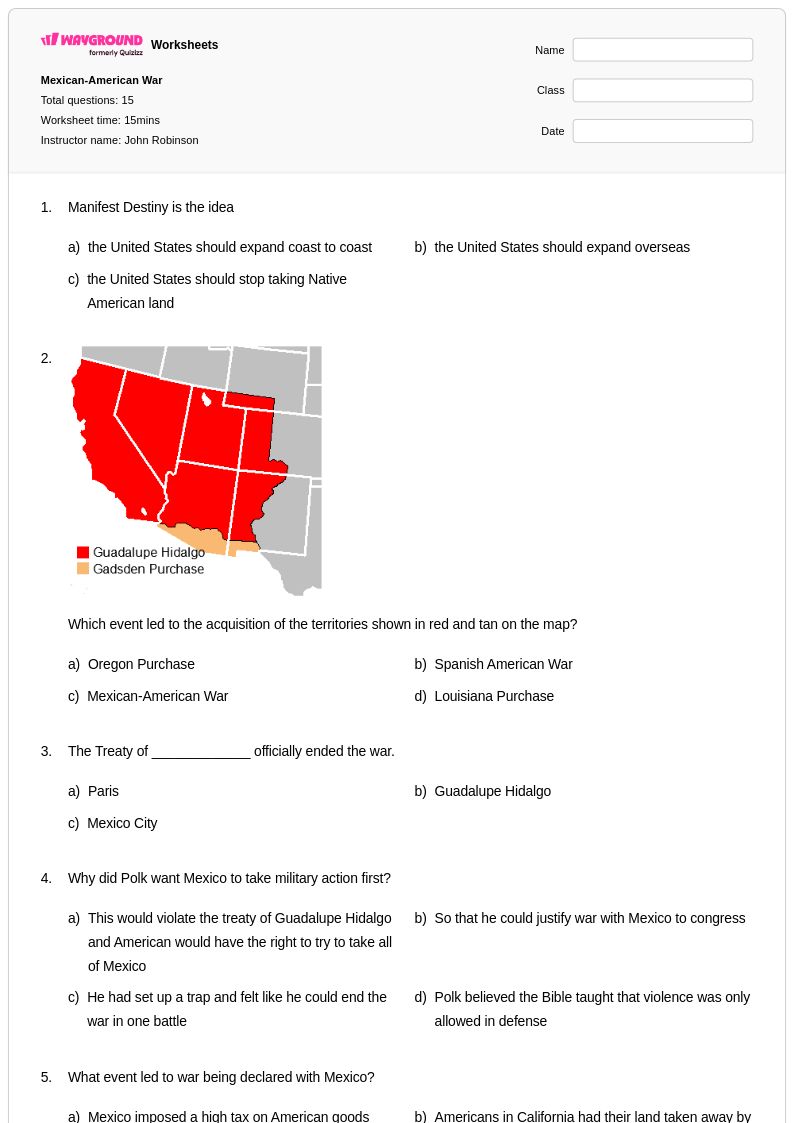
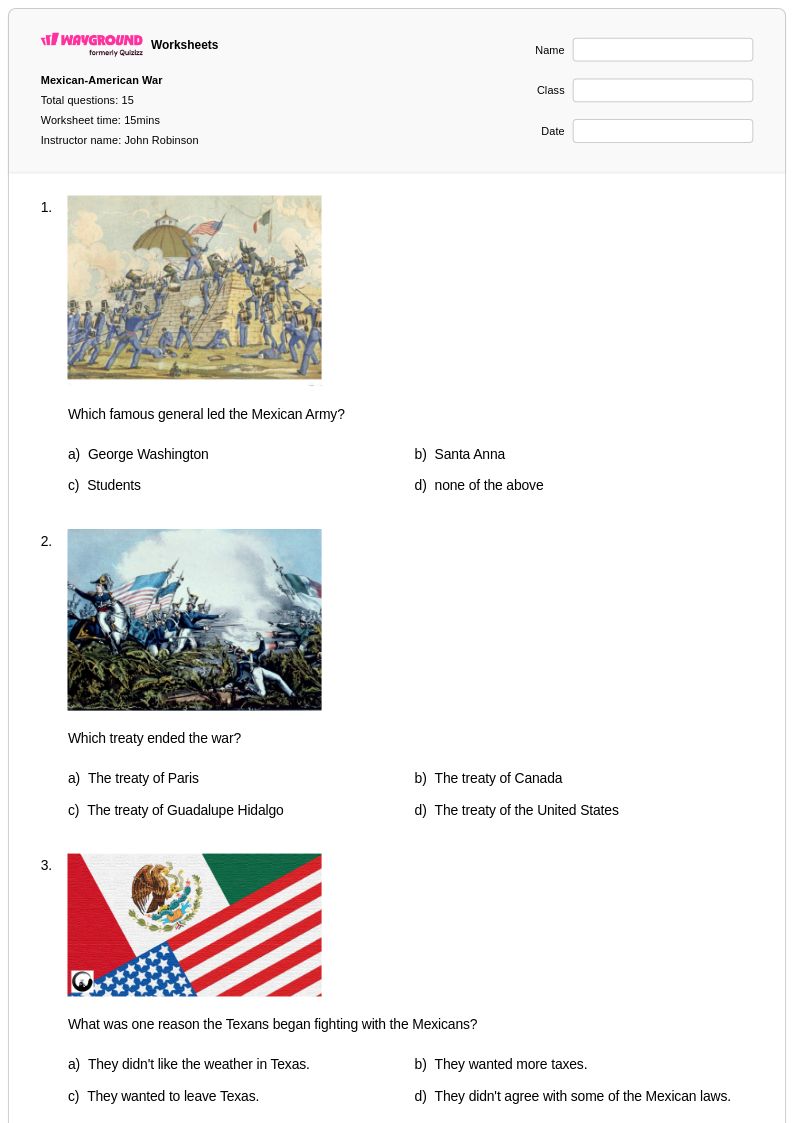
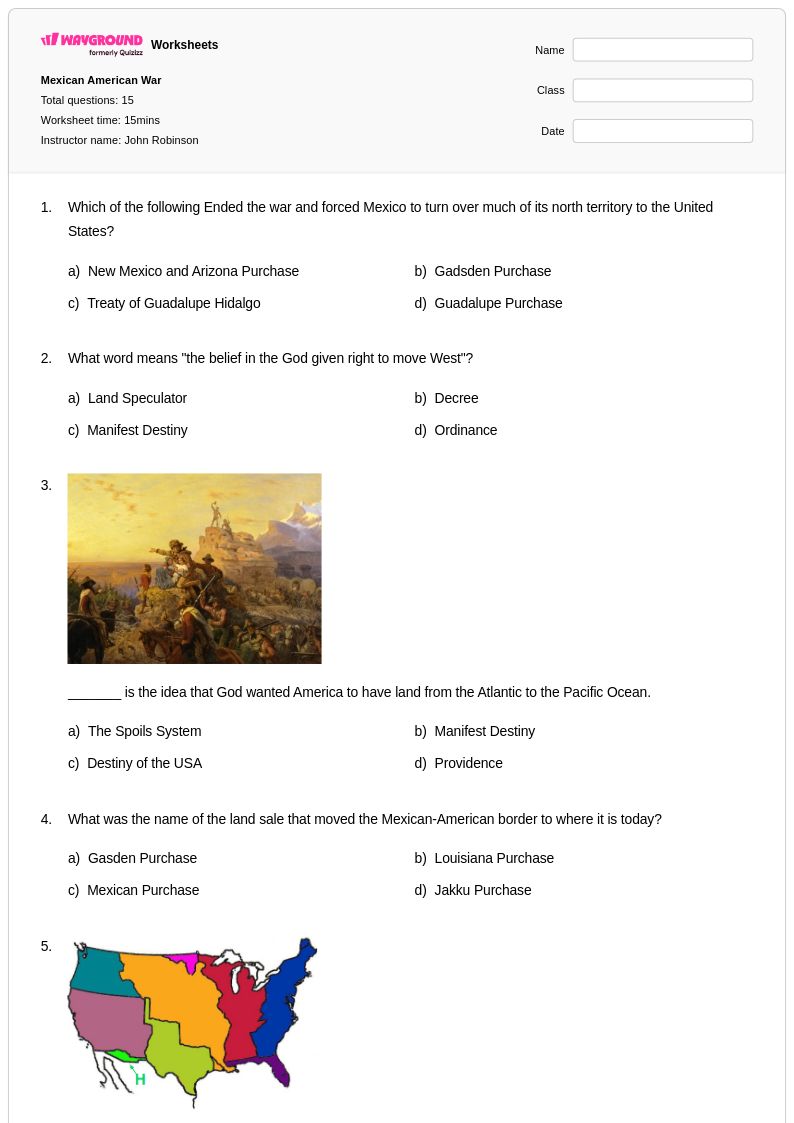
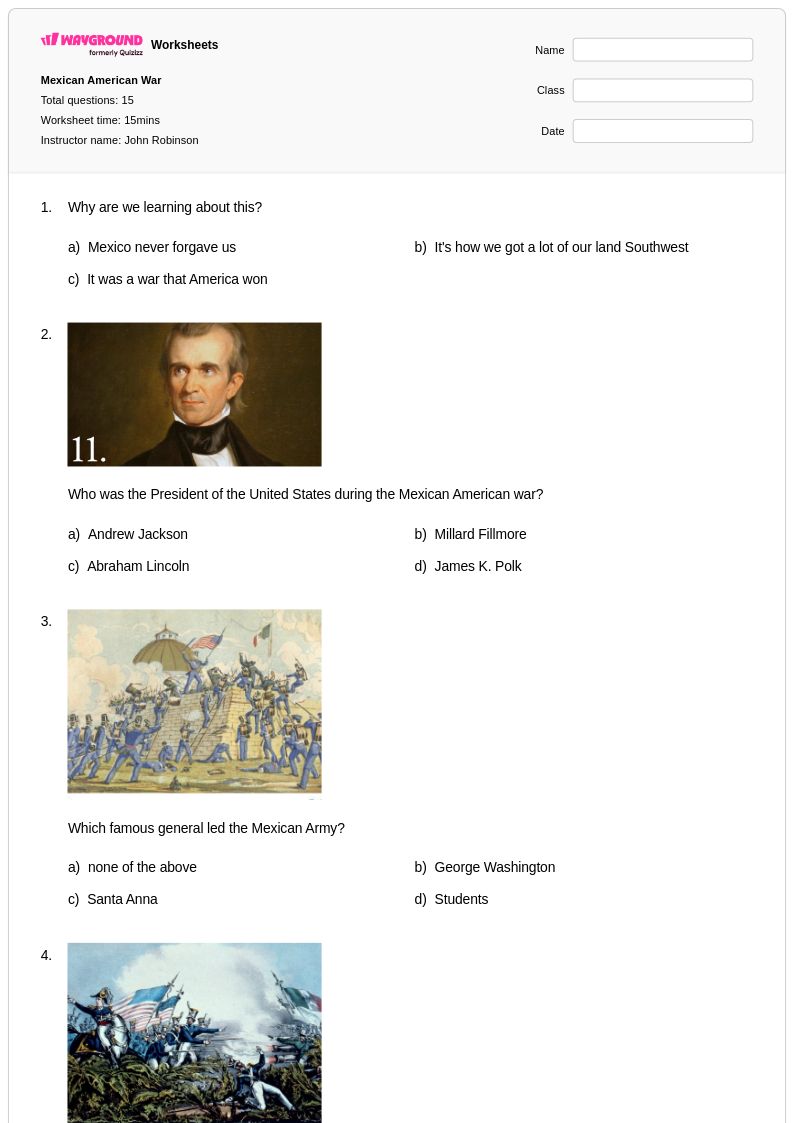
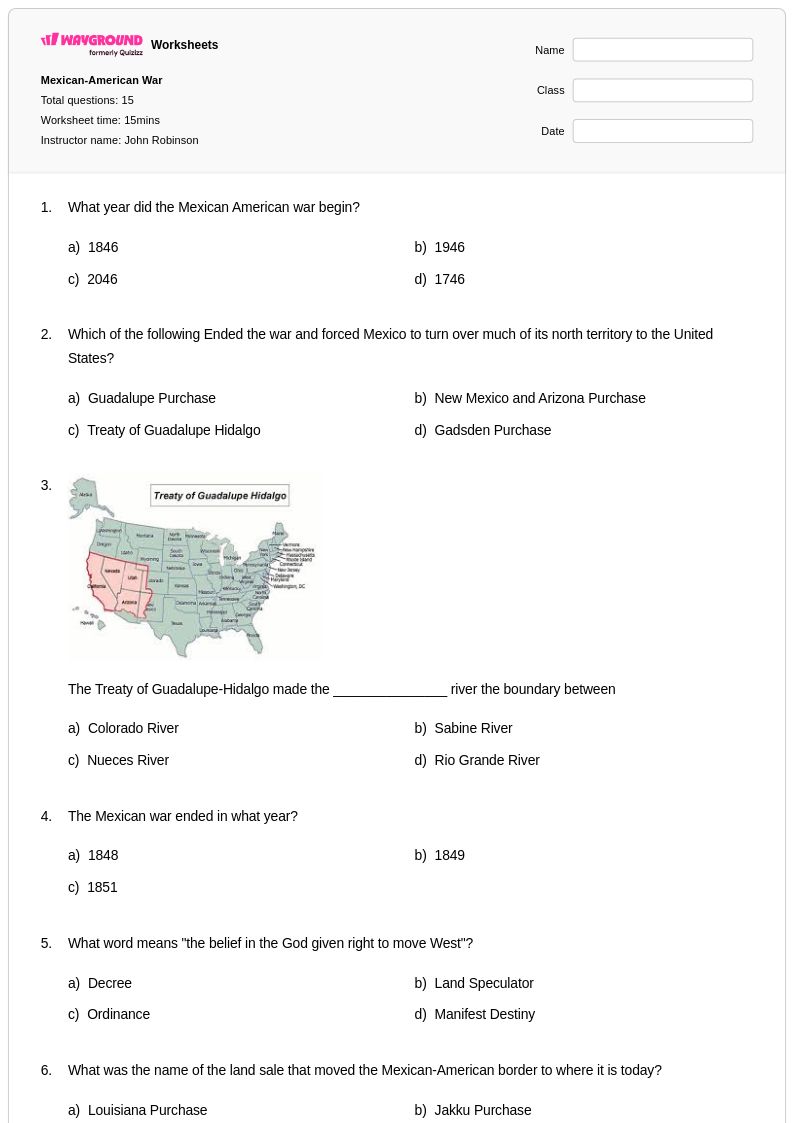
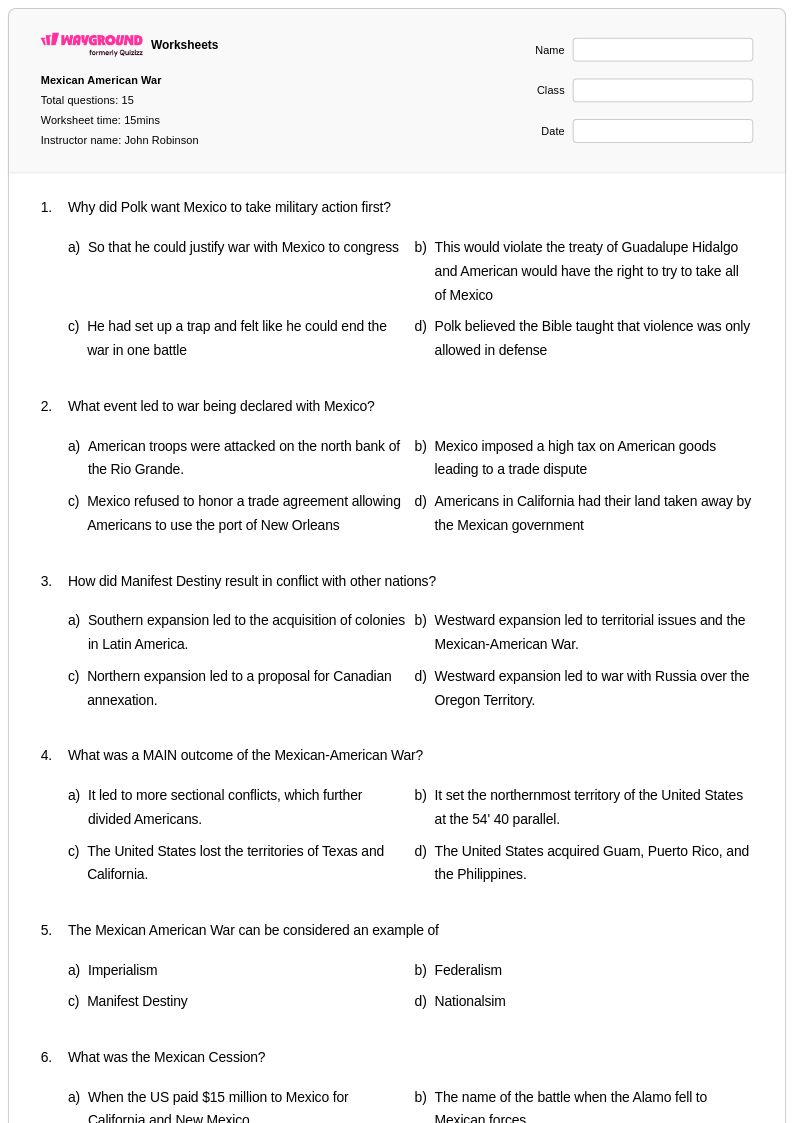
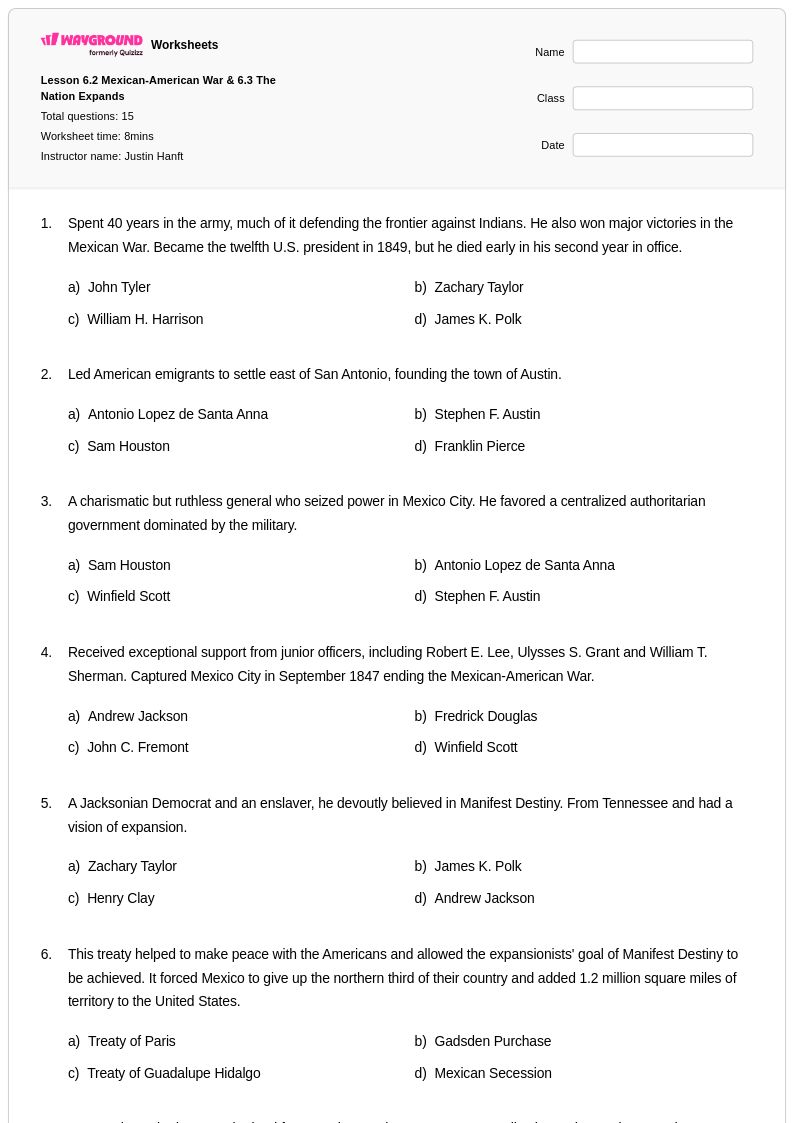
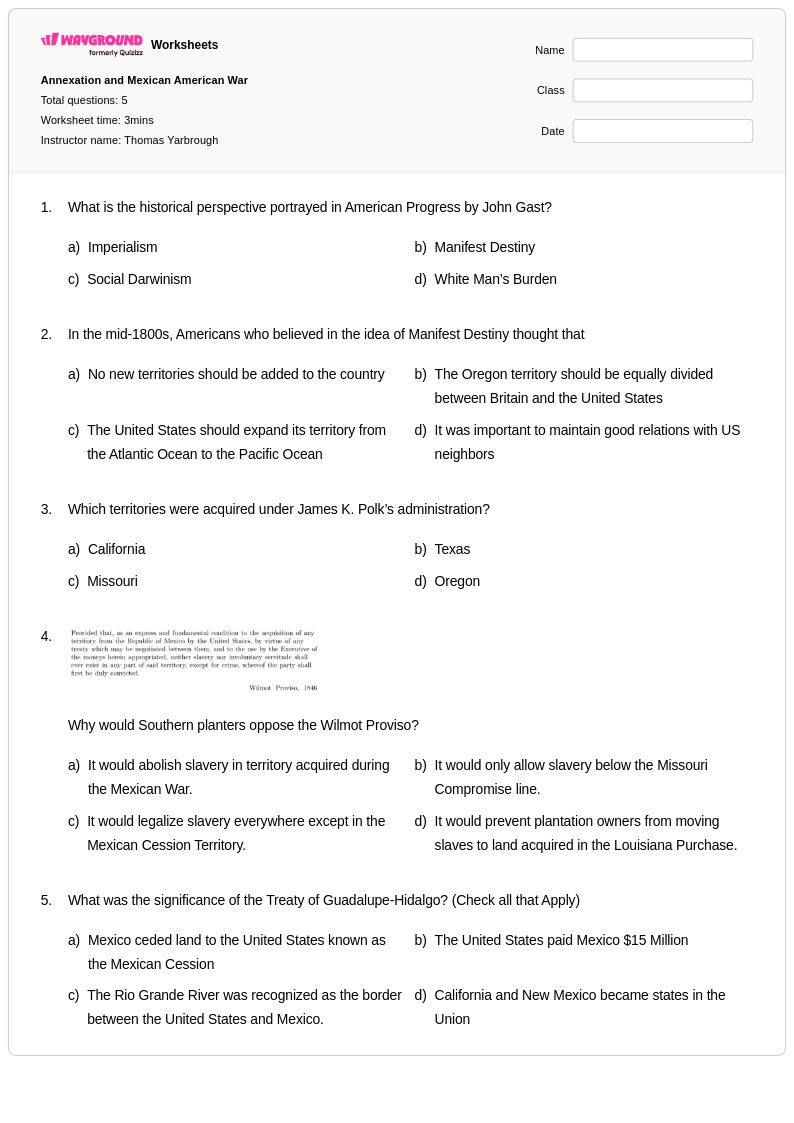
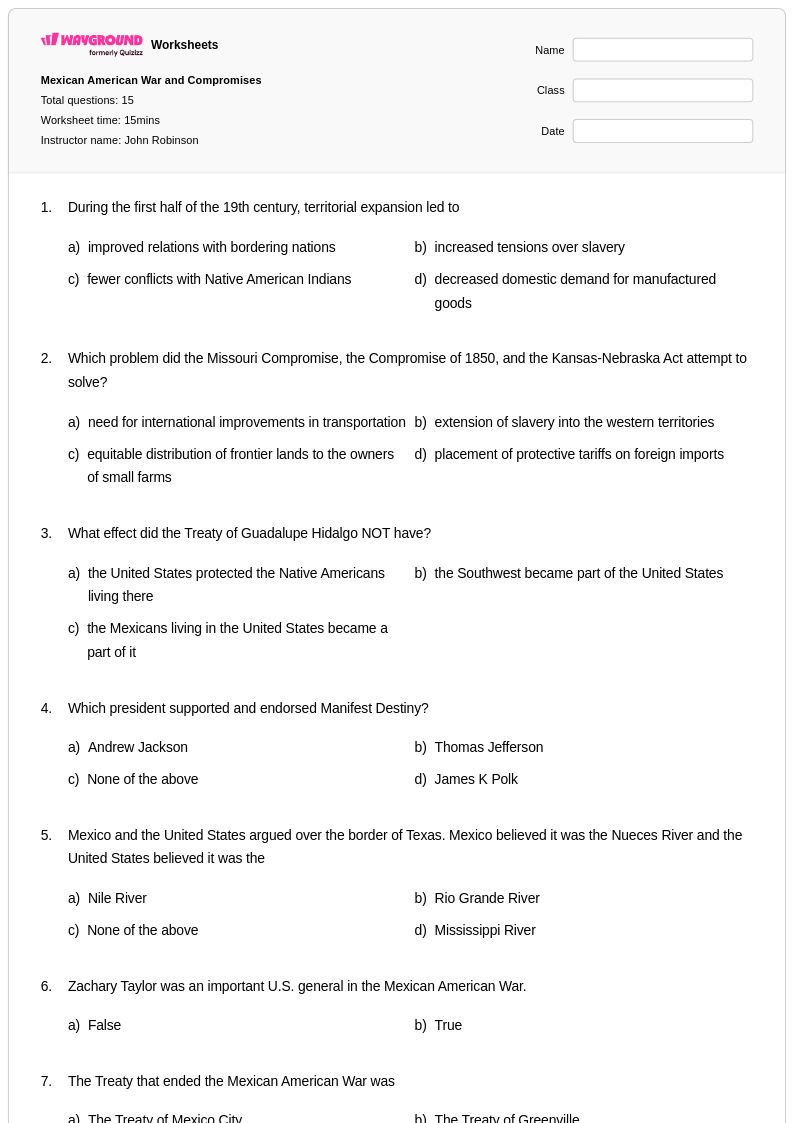
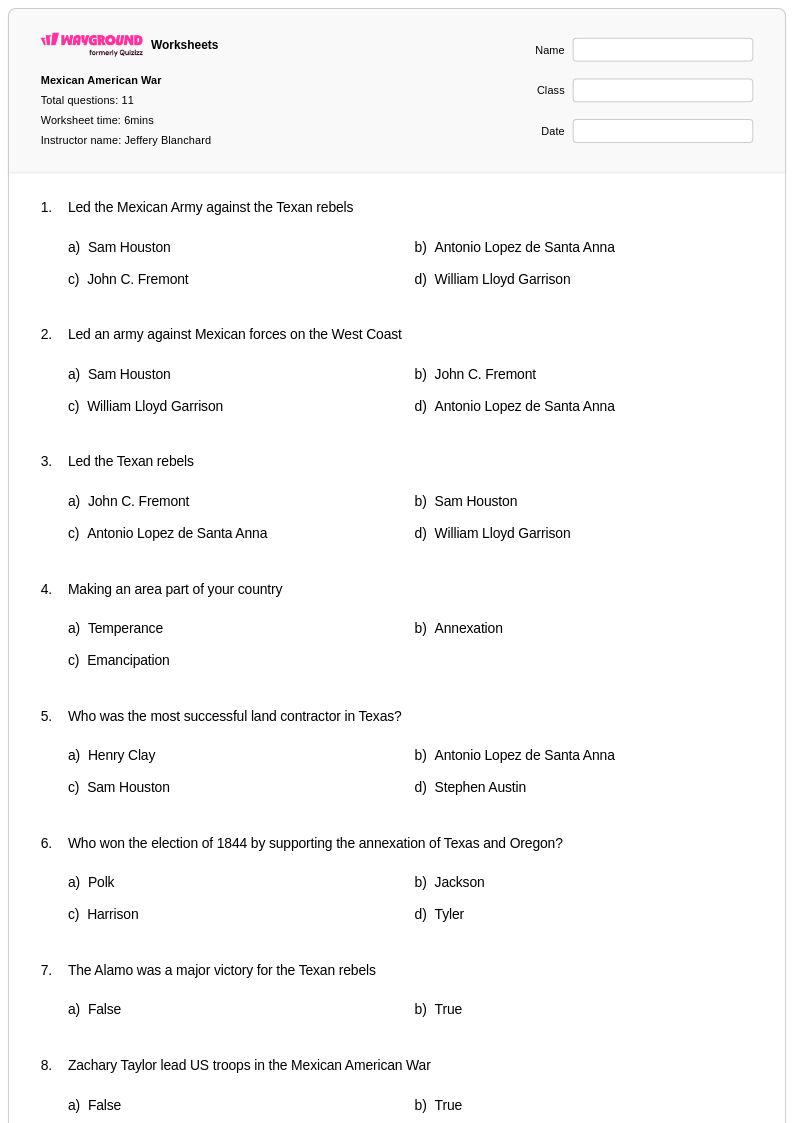
Mexican-American War worksheets for Class 9 students available through Wayground (formerly Quizizz) provide comprehensive coverage of this pivotal 1846-1848 conflict that reshaped North American borders and national identity. These educational resources strengthen critical thinking skills by examining the complex causes of the war, including Manifest Destiny ideology, territorial disputes over Texas annexation, and border conflicts along the Rio Grande. Students engage with primary source documents, analyze military campaigns from the battles of Palo Alto to the capture of Mexico City, and evaluate the war's profound consequences through practice problems that explore the Treaty of Guadalupe Hidalgo's terms and territorial acquisitions. The collection includes detailed answer keys and free printables in PDF format, enabling educators to assess student comprehension of how this conflict influenced American expansion, intensified sectional tensions over slavery, and affected Mexican and Native American populations in the newly acquired territories.
Wayground (formerly Quizizz) supports educators with millions of teacher-created Mexican-American War resources that feature robust search and filtering capabilities aligned with state social studies standards for Class 9 curriculum requirements. The platform's differentiation tools allow teachers to customize worksheets based on individual student needs, offering both printable PDF versions for traditional classroom use and digital formats for interactive learning experiences. These comprehensive collections facilitate effective lesson planning by providing varied question types, from basic comprehension exercises to advanced analytical assessments that examine the war's role in American territorial expansion and its connection to subsequent conflicts like the Civil War. Teachers utilize these resources for targeted remediation of struggling students, enrichment activities for advanced learners, and regular skill practice that reinforces understanding of key historical concepts, military strategies, and the lasting political and social implications of American-Mexican relations in the mid-19th century.
FAQs
How do I teach the Mexican-American War to middle or high school students?
Teaching the Mexican-American War effectively means grounding students in the causes before moving to military events and consequences. Start with the annexation of Texas in 1845 and the ideological push of Manifest Destiny, then trace how border disputes along the Rio Grande escalated into open conflict in 1846. Use primary source documents, political cartoons, and maps of territorial changes to help students evaluate competing perspectives from U.S. and Mexican viewpoints. Culminate the unit with the Treaty of Guadalupe Hidalgo and a discussion of how the Mexican Cession reshaped American expansion and intensified sectional tensions over slavery.
What worksheets and activities work best for practicing Mexican-American War content?
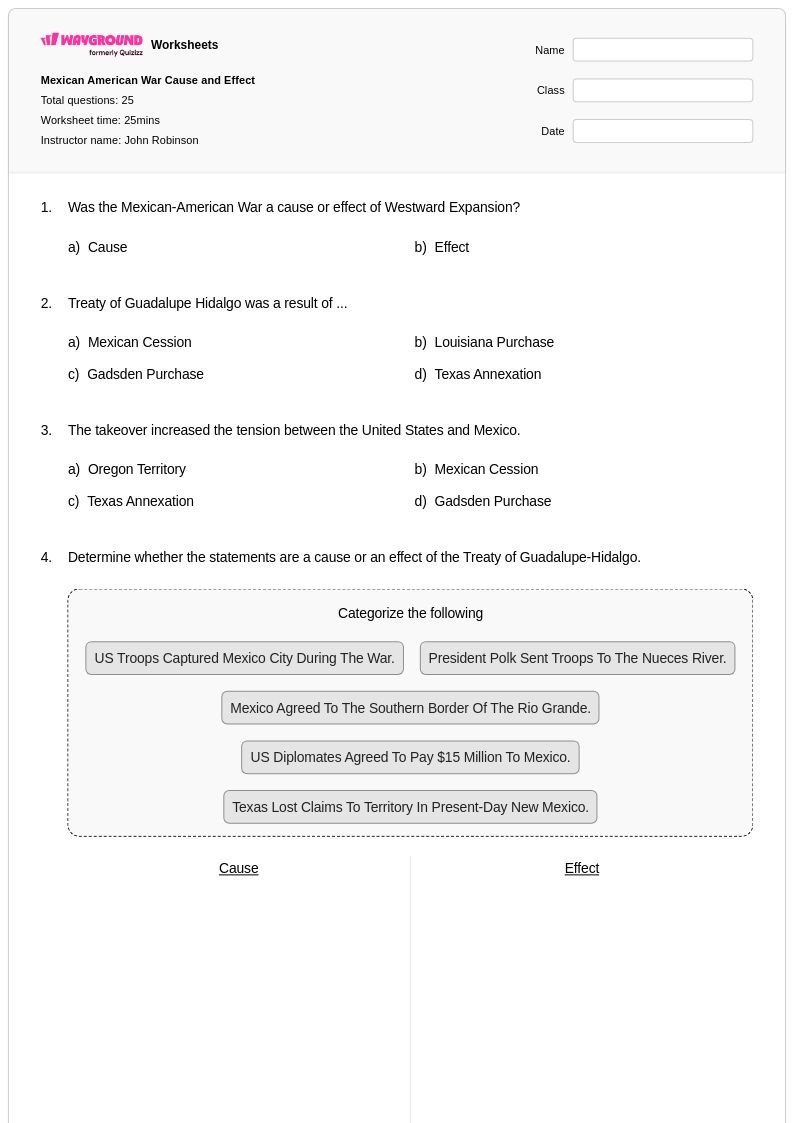
Cause-and-effect graphic organizers are particularly effective for helping students connect Texas annexation, Manifest Destiny, and the Polk administration's policies to the outbreak of war. Timeline activities that sequence key battles such as the Battle of Buena Vista and the siege of Veracruz reinforce chronological reasoning. Map analysis worksheets that show territorial changes resulting from the Mexican Cession build spatial thinking alongside content knowledge. Primary source analysis tasks using speeches by President Polk or congressional debates over the war declaration challenge students to practice evidence-based historical argumentation.
What common mistakes do students make when studying the Mexican-American War?
Students frequently oversimplify the causes of the war by treating it as solely a border dispute rather than understanding the broader ideological and political forces, particularly Manifest Destiny and U.S. expansionist ambitions under President Polk. Another common error is conflating the annexation of Texas with the start of the war itself, when nearly a year passed between annexation in 1845 and the formal declaration of war in 1846. Students also tend to overlook the domestic opposition to the war, including figures like Abraham Lincoln and Henry David Thoreau, which is critical for understanding the conflict's political complexity. Finally, many students underestimate the long-term significance of the Treaty of Guadalupe Hidalgo and its connection to later sectional crises over the expansion of slavery.
How do I use Mexican-American War worksheets effectively in my classroom?
Mexican-American War worksheets on Wayground are available as printable PDFs for traditional classroom use and in digital formats for technology-integrated environments, and teachers can also host them as a quiz directly on the Wayground platform. For in-class instruction, printable map and timeline activities work well as guided notes or structured pair work during direct instruction. Digital formats are well-suited for independent practice, homework assignments, or formative assessment in a 1:1 device environment. Wayground also supports student-level accommodations including read aloud, extended time, and reduced answer choices, which can be applied individually so that all learners access the same rigorous content with appropriate support.
How do I differentiate Mexican-American War instruction for students at different skill levels?
For struggling learners, focus on scaffolded cause-and-effect charts that break the path to war into discrete, sequenced steps, and use maps with labeled territories to reduce the cognitive load of abstract geography. Advanced students benefit from primary source comparison tasks that ask them to evaluate U.S. and Mexican accounts of the Rio Grande border incident or analyze congressional debates over President Polk's war message. On Wayground, teachers can apply differentiation settings such as reduced answer choices for students who need support and can assign more complex document analysis tasks to advanced students, all within the same digital assignment. Layering complexity rather than assigning entirely different tasks keeps the class working within the same historical context while meeting varied skill needs.
What key figures and events should students know for the Mexican-American War?
Students should know President James K. Polk as the driving political force behind U.S. expansionism and the declaration of war, and General Winfield Scott as the commander who led U.S. forces to Mexico City in 1847. Key battles include the Battle of Buena Vista, where General Zachary Taylor repelled a larger Mexican force, and the siege of Veracruz, which opened Scott's overland campaign to the capital. The Treaty of Guadalupe Hidalgo in 1848 is the essential concluding document, transferring over 500,000 square miles of territory to the United States through the Mexican Cession. Understanding these figures and events as interconnected rather than isolated facts helps students build a coherent narrative of the war's causes, conduct, and consequences.