
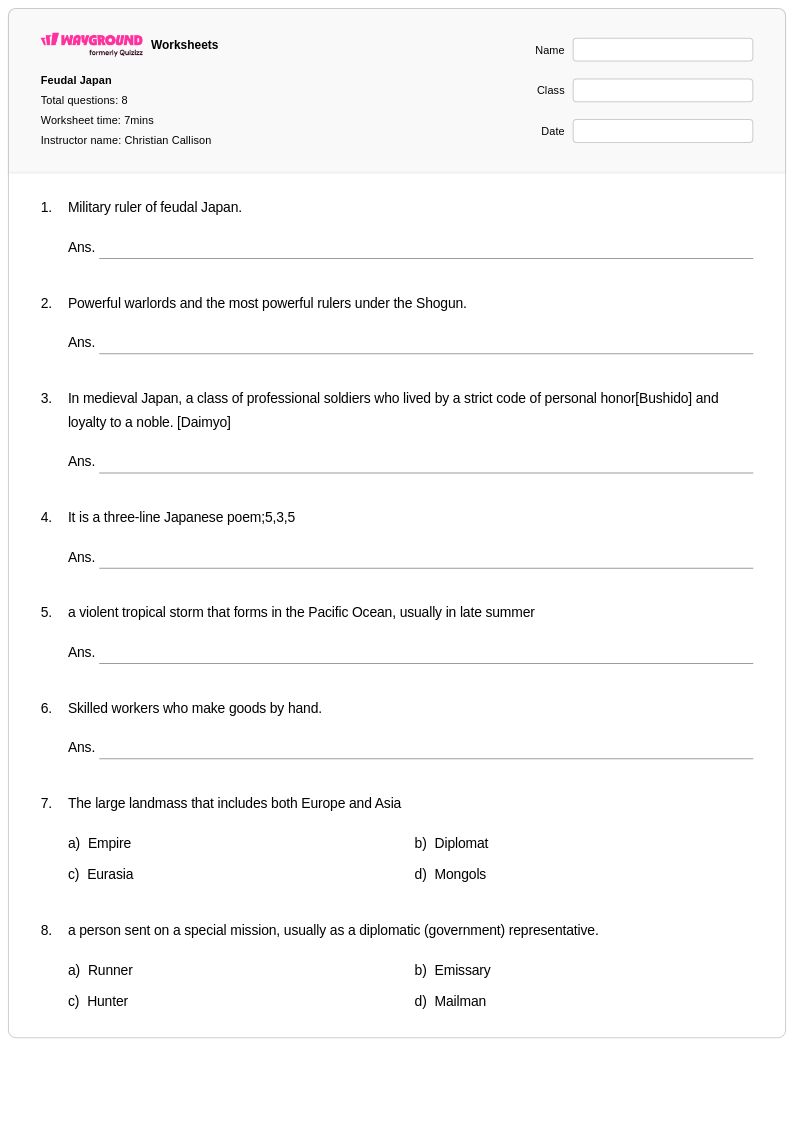
8 Q
7th - Uni
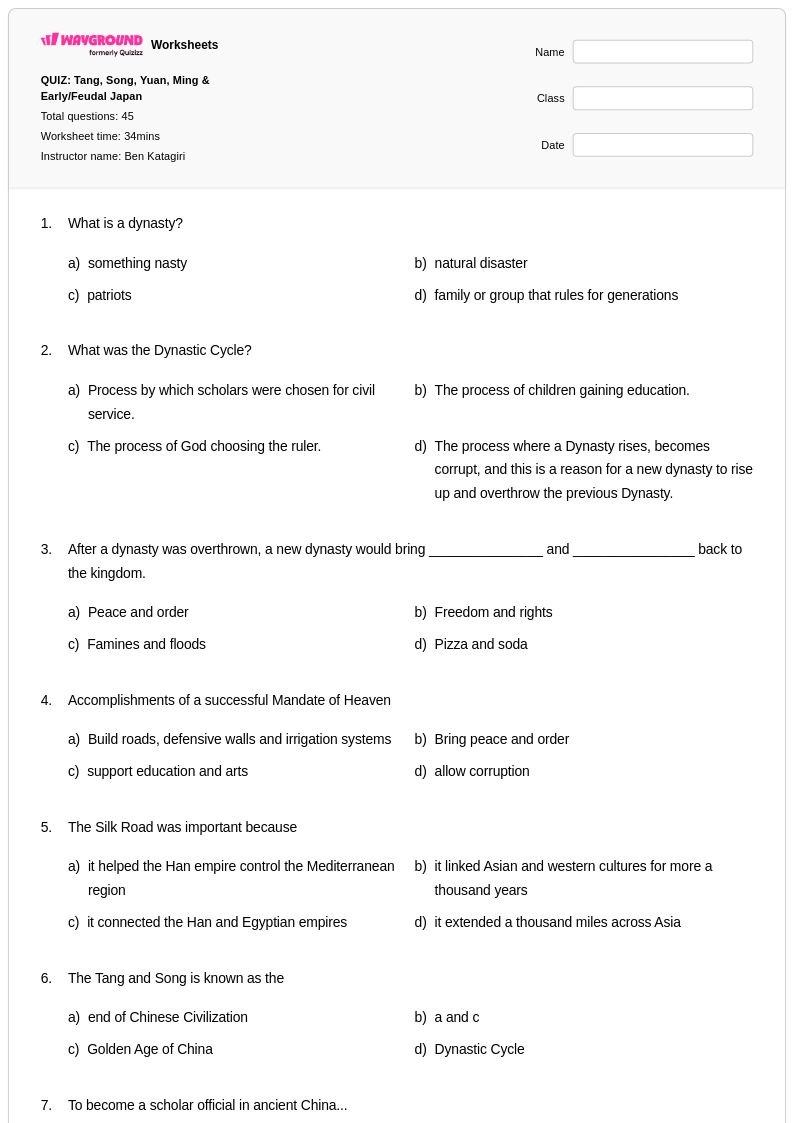
45 Q
9th - 12th
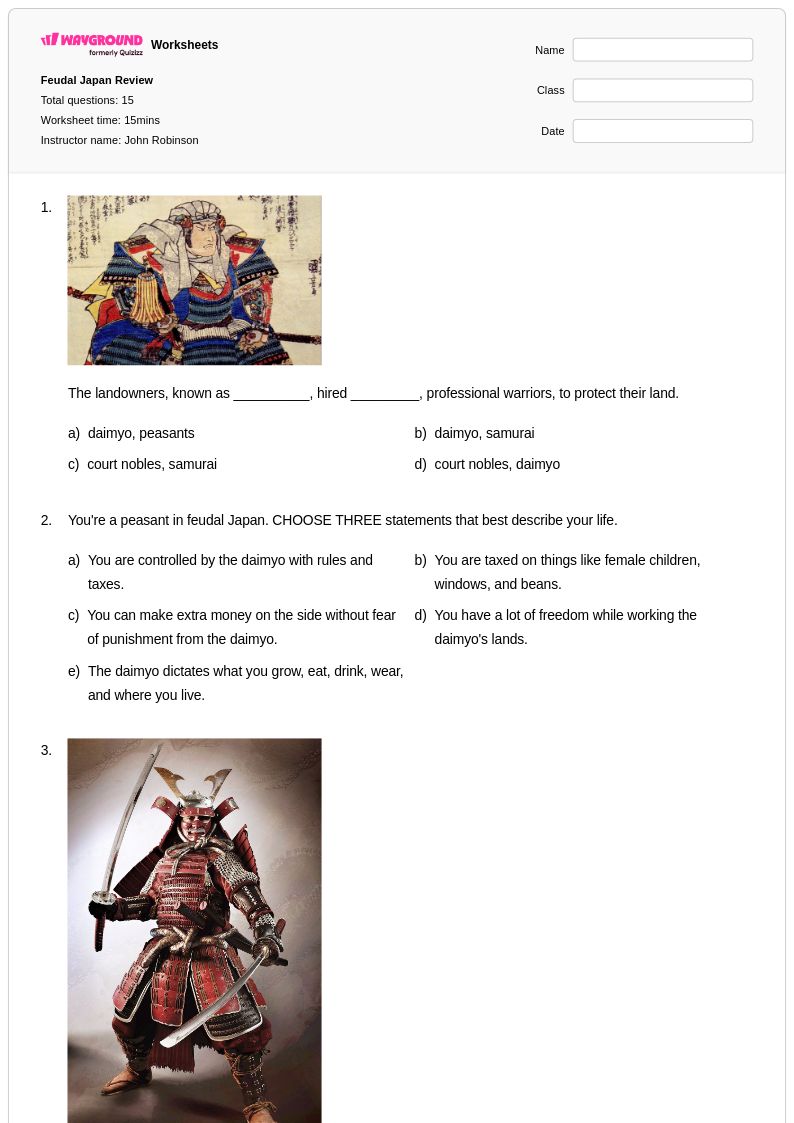
15 Q
7th - Uni
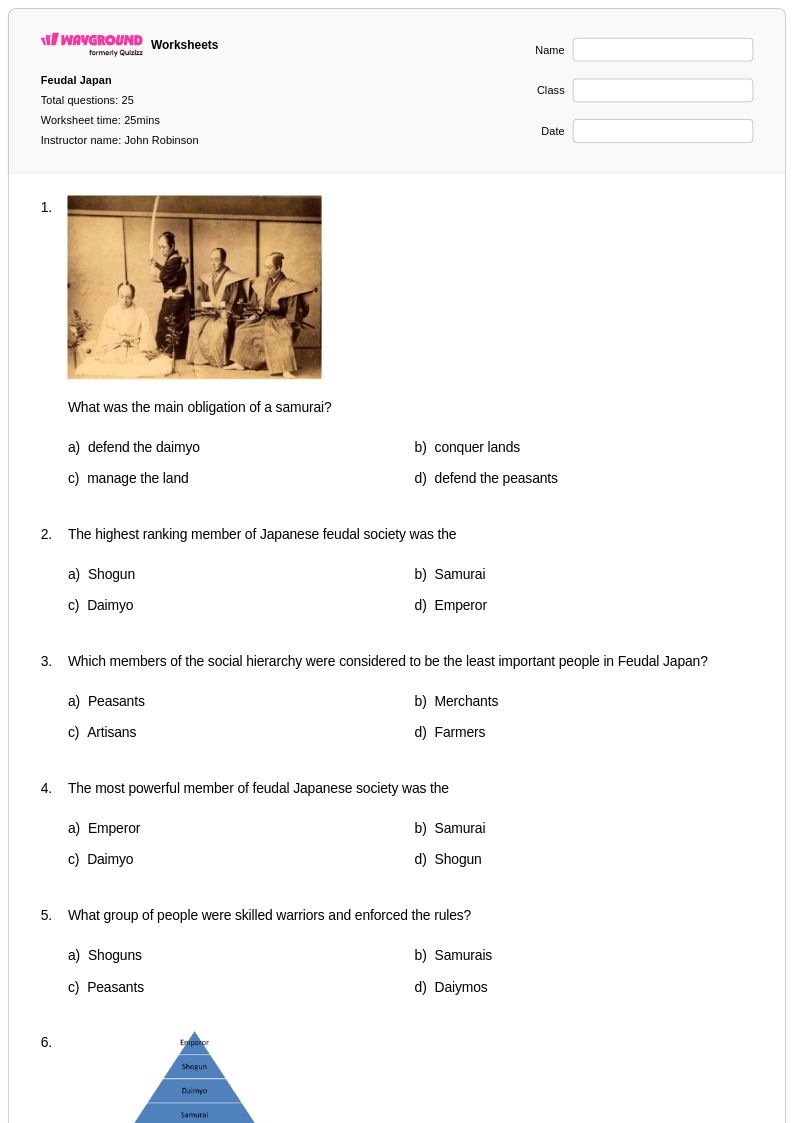
25 Q
7th - Uni
15 Q
7th - Uni
9 Q
9th - 12th
20 Q
9th - 12th
21 Q
9th - 12th
6 Q
9th - 12th
30 Q
6th - Uni
25 Q
7th - Uni
15 Q
7th - Uni
15 Q
7th - Uni
35 Q
9th - Uni
15 Q
7th - Uni
25 Q
7th - Uni
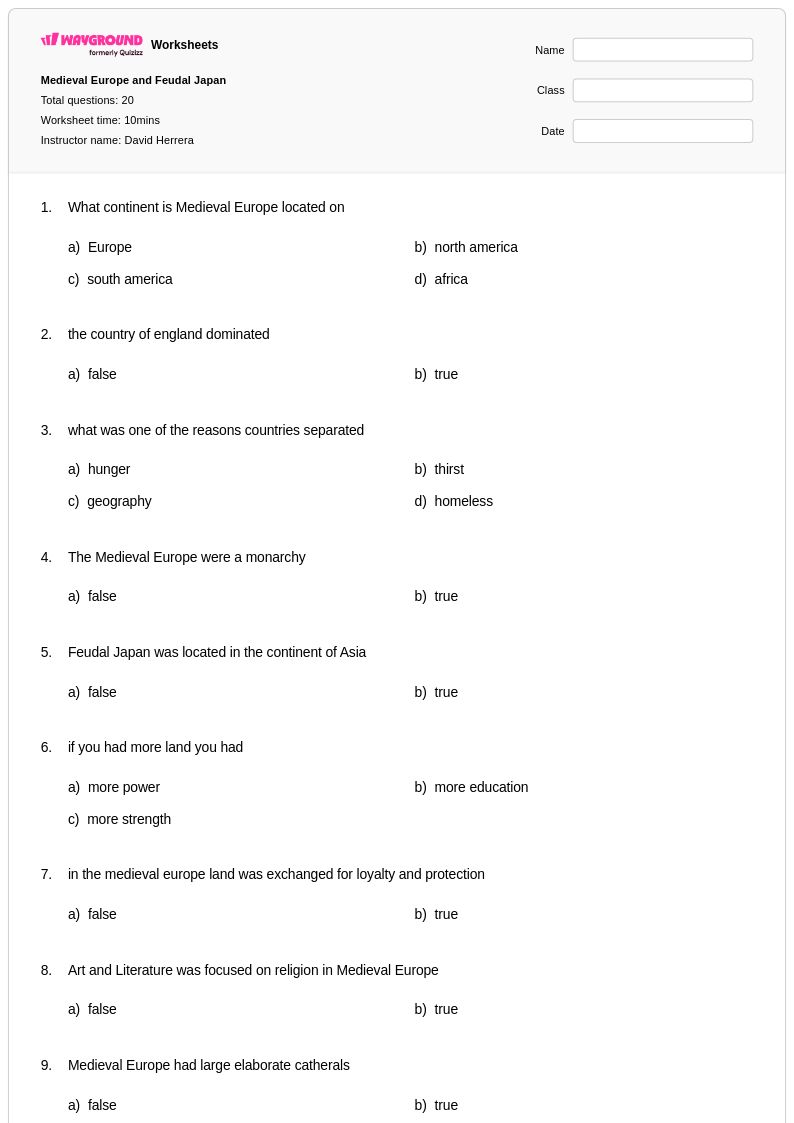
20 Q
1st - PD
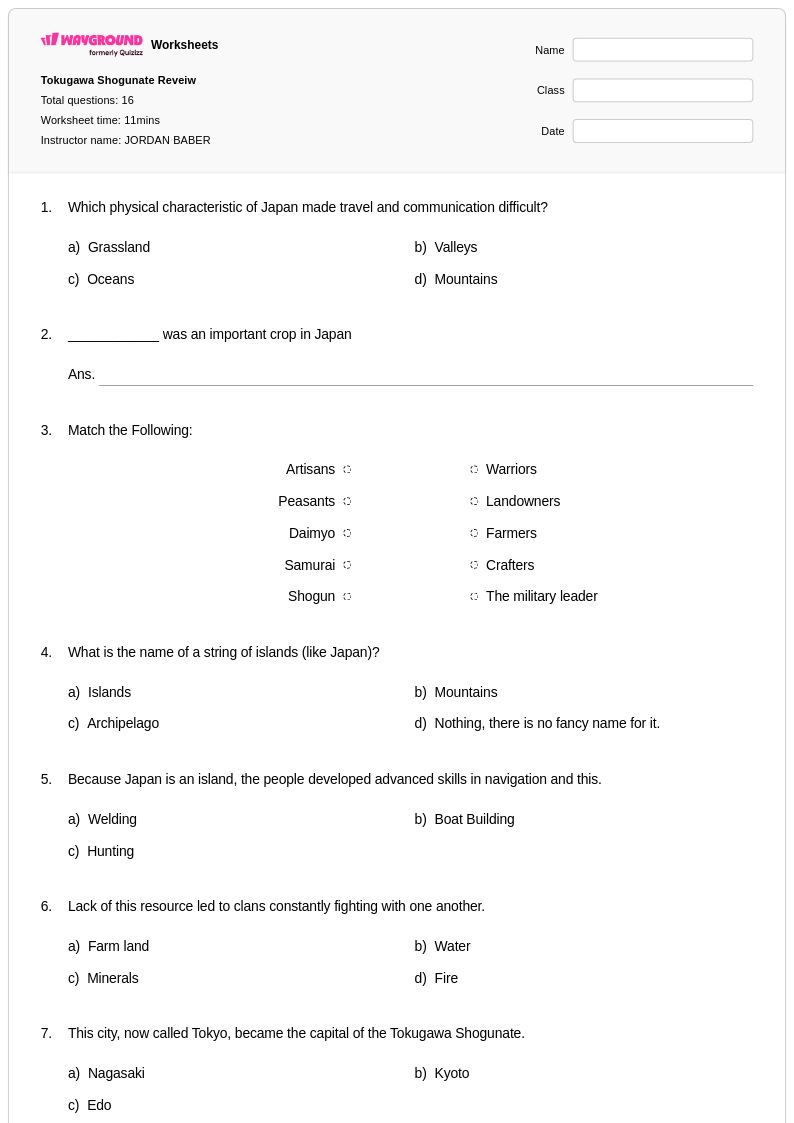
16 Q
6th - Uni
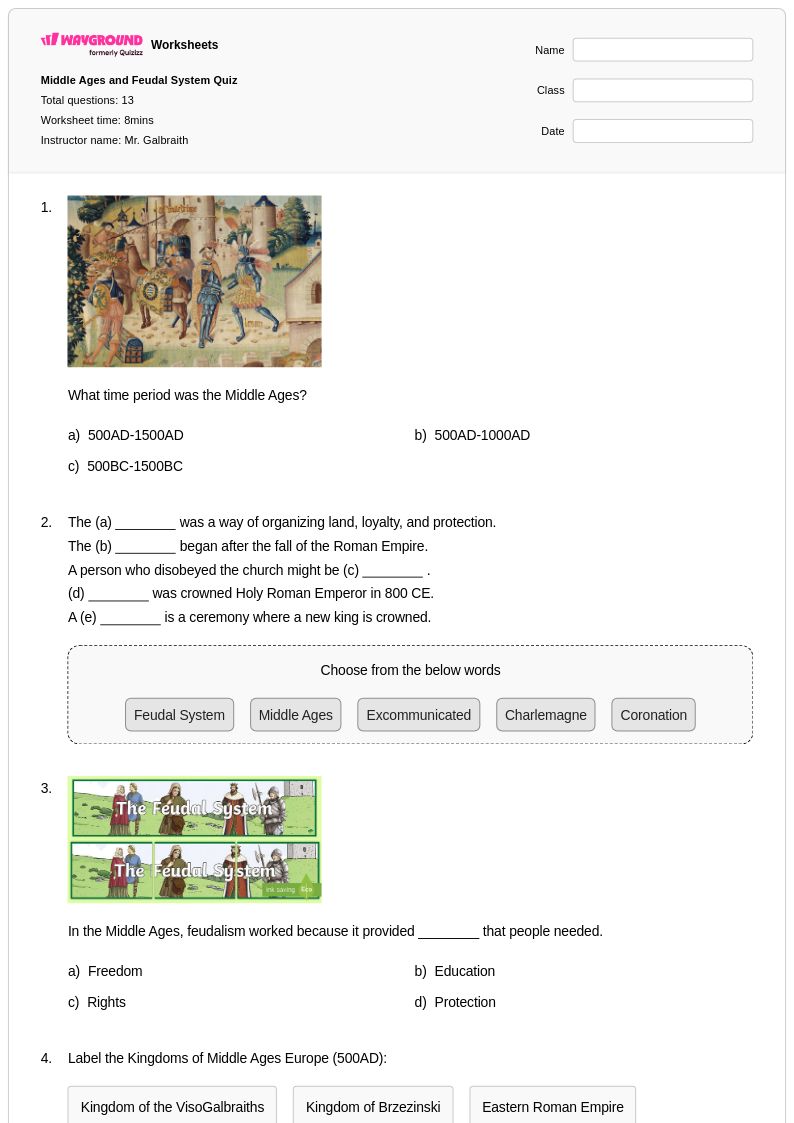
13 Q
6th - Uni
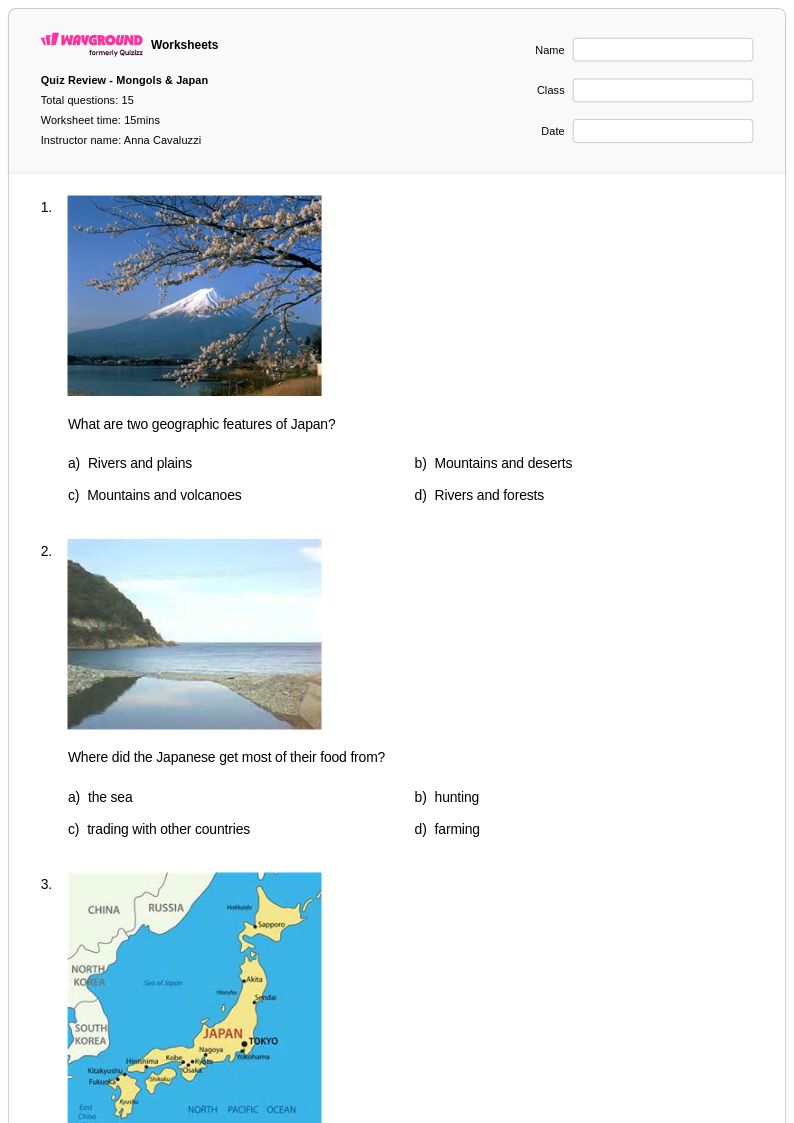
15 Q
9th - 12th
15 Q
7th - Uni
25 Q
7th - Uni
35 Q
9th - 12th
25 Q
7th - Uni
Explore Other Subject Worksheets for class 12
Explore printable Feudal Japan worksheets for Class 12
Feudal Japan worksheets for Class 12 students available through Wayground (formerly Quizizz) provide comprehensive exploration of Japan's complex hierarchical society from the Heian period through the Tokugawa shogunate. These educational resources strengthen critical thinking skills as students analyze the intricate relationships between emperors, shoguns, daimyo, samurai, and peasants that defined Japanese civilization for nearly seven centuries. The worksheets incorporate primary source documents, political structure diagrams, and comparative analysis activities that challenge advanced students to examine how geographic isolation, Confucian philosophy, and military governance shaped Japan's unique feudal system. Each printable resource includes detailed answer keys and practice problems that guide students through complex concepts such as the Mandate of Heaven, bushido code, and the cyclical nature of political power, while free pdf formats ensure accessibility for diverse learning environments.
Wayground (formerly Quizizz) empowers educators with an extensive collection of teacher-created resources specifically designed for advanced social studies instruction, featuring millions of worksheets that undergo rigorous quality standards and curriculum alignment reviews. The platform's sophisticated search and filtering capabilities allow teachers to locate materials that precisely match state and national history standards, while differentiation tools enable seamless customization for varying skill levels within Class 12 classrooms. Teachers benefit from flexible formatting options that support both digital integration and traditional printable assignments, facilitating effective lesson planning whether addressing remediation needs or providing enrichment opportunities for accelerated learners. The comprehensive nature of these feudal Japan resources supports systematic skill practice in historical analysis, source evaluation, and cross-cultural comparison, enabling educators to scaffold complex learning objectives while maintaining rigorous academic expectations appropriate for college-bound seniors.
FAQs
How do I teach the feudal Japan social hierarchy to middle school students?
What activities help students practice understanding the feudal Japan social system?
What common mistakes do students make when learning about feudal Japan?
How can I use feudal Japan worksheets to compare medieval societies across cultures?
How do I use Wayground's feudal Japan worksheets in my classroom?
How can I differentiate feudal Japan instruction for students at different levels?