Free Printable The Byzantine Empire Worksheets for Class 12
Explore Class 12 Byzantine Empire worksheets and printables through Wayground that help students master medieval history with comprehensive practice problems, free PDF resources, and detailed answer keys.
Explore printable The Byzantine Empire worksheets for Class 12
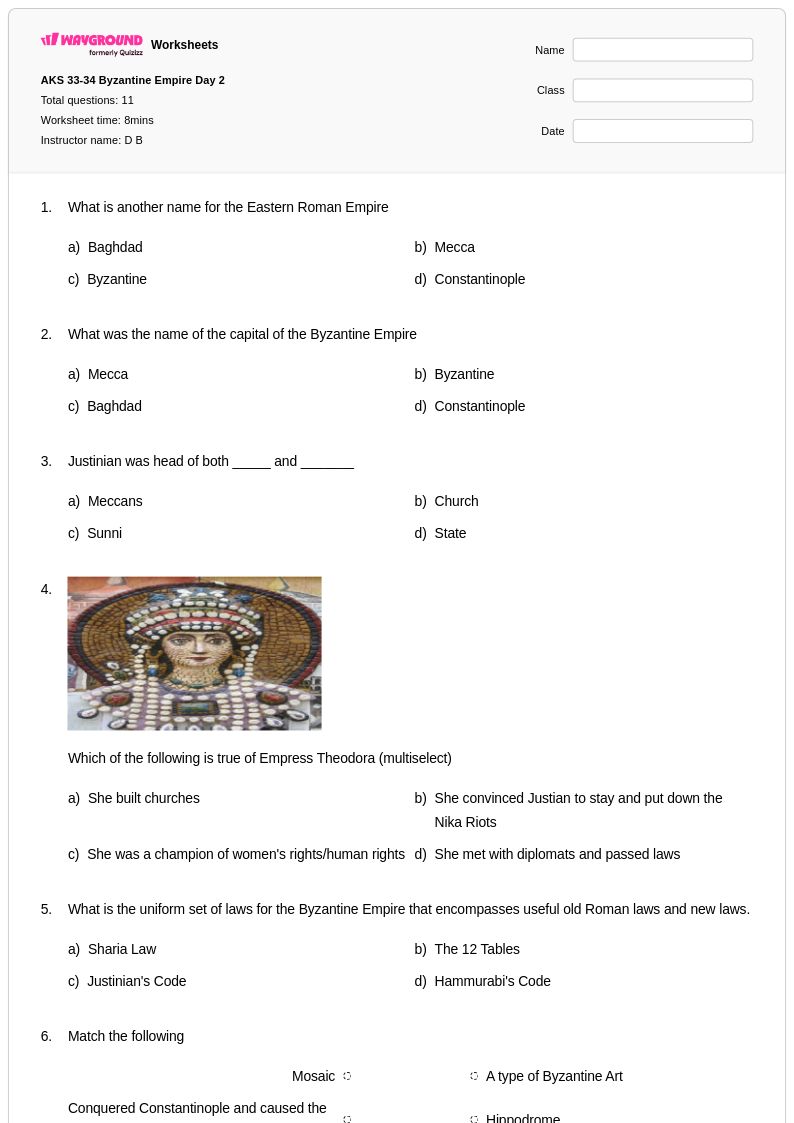
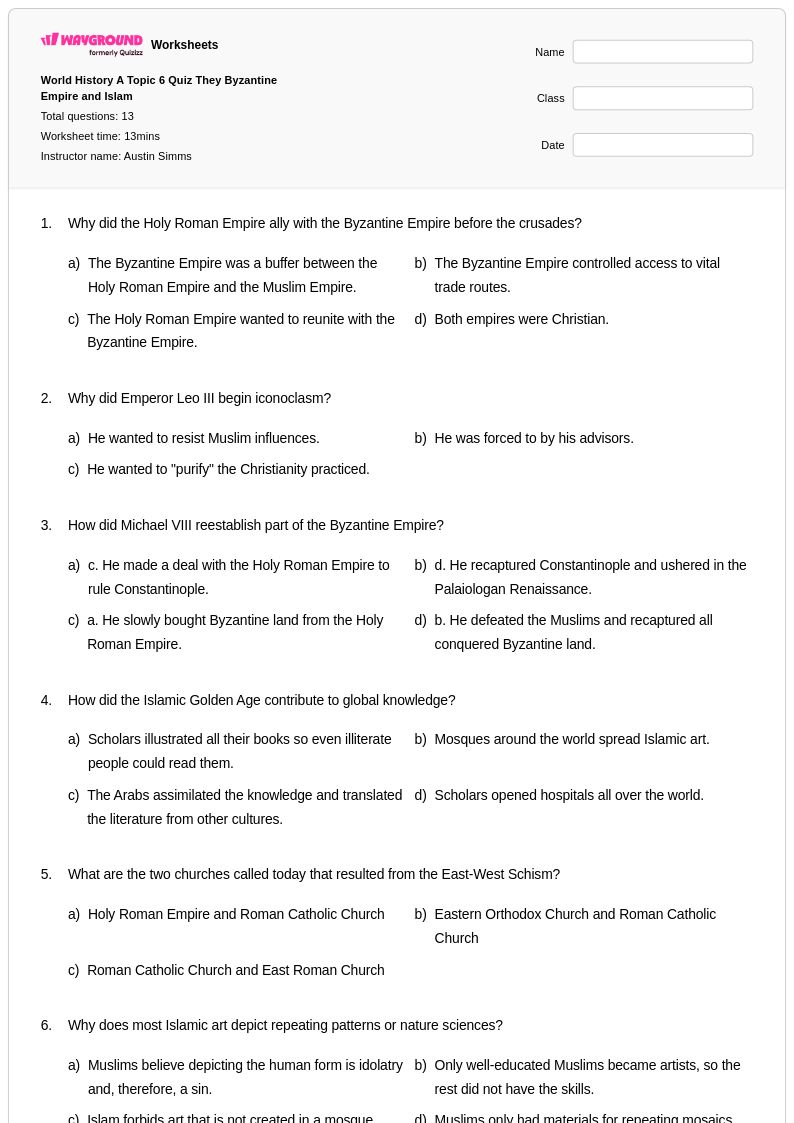
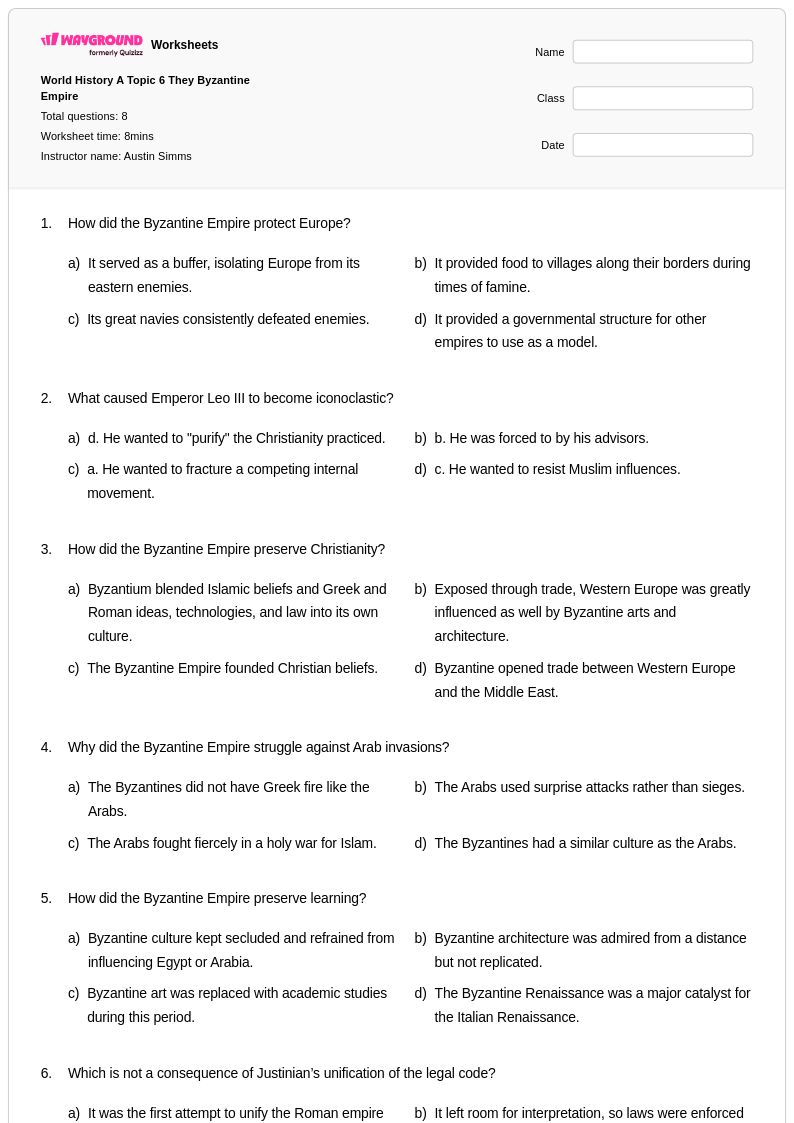
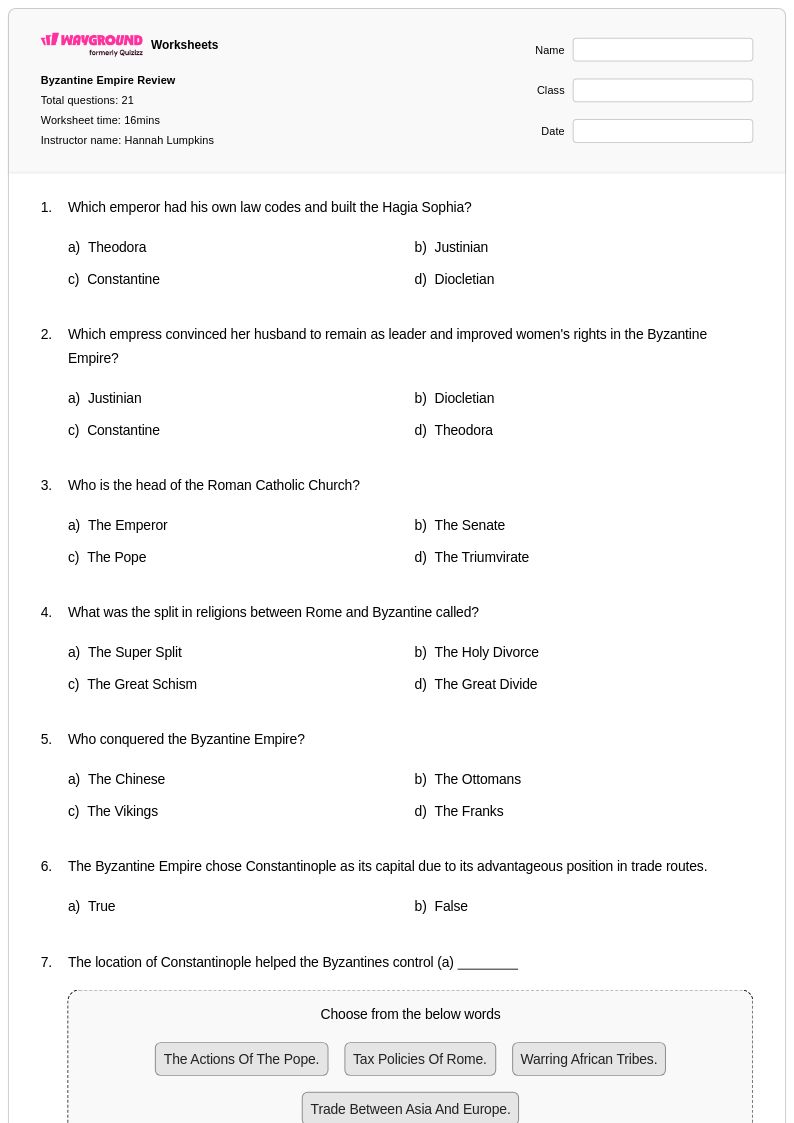
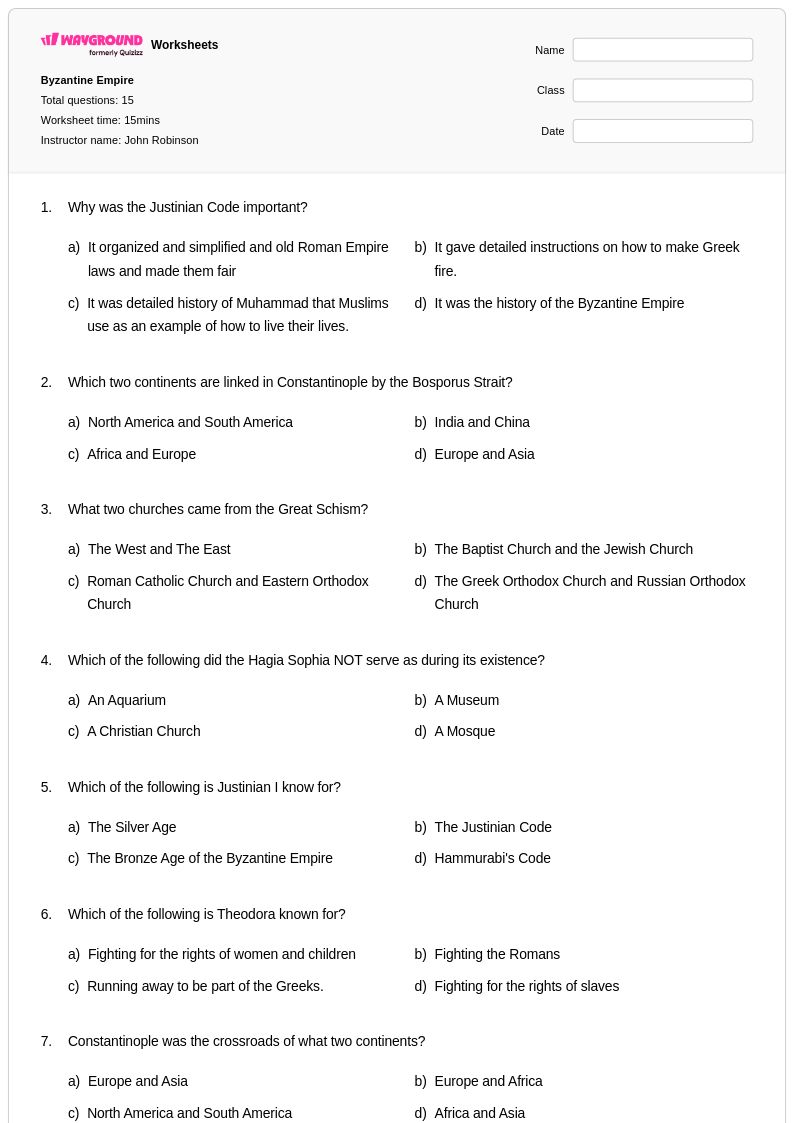
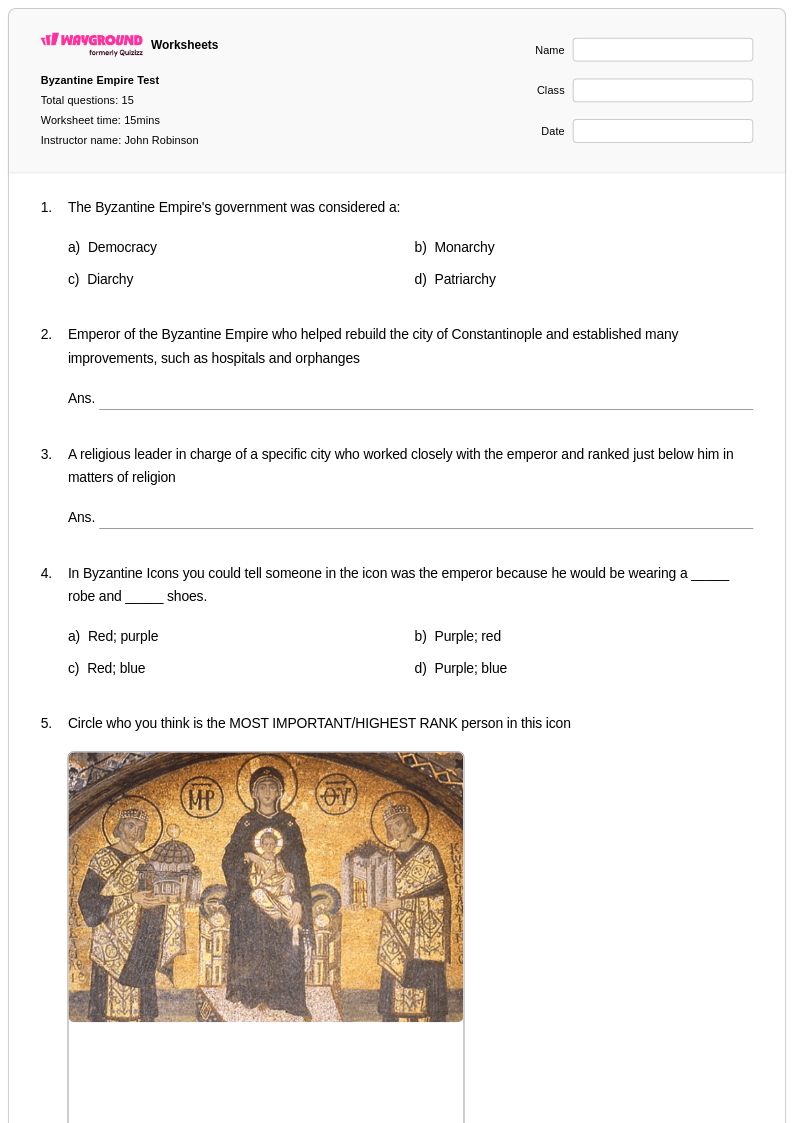
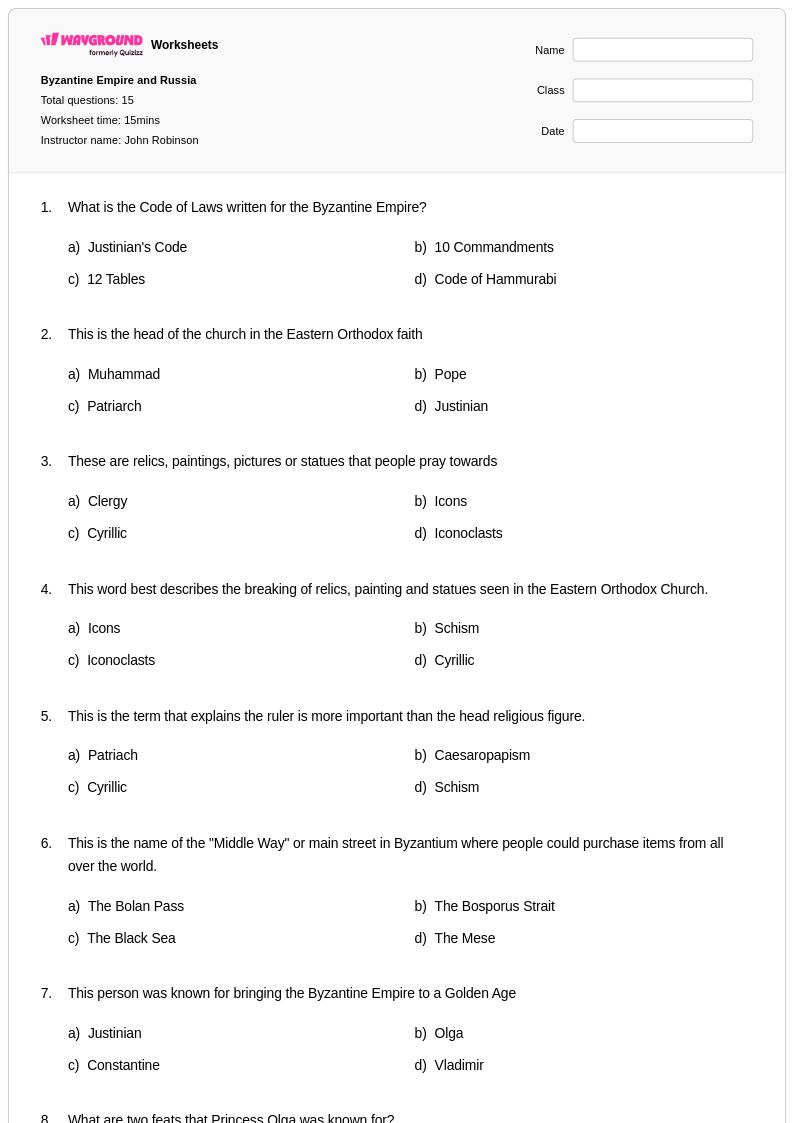
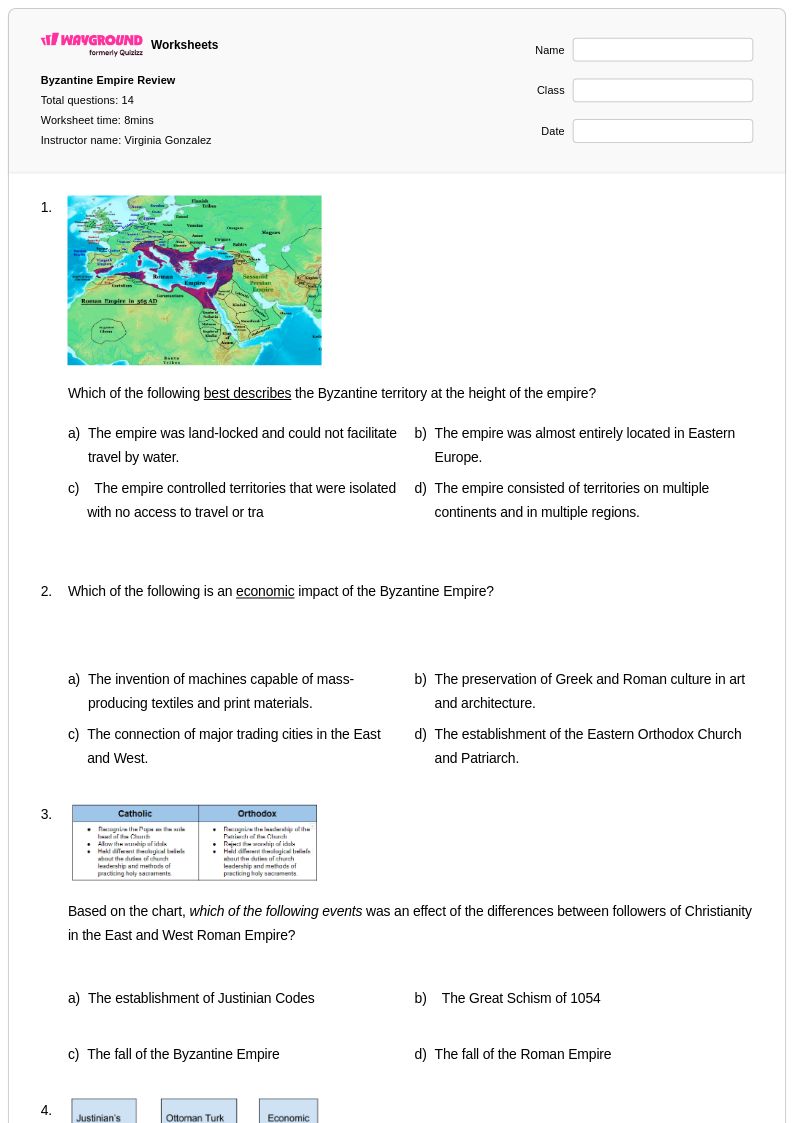
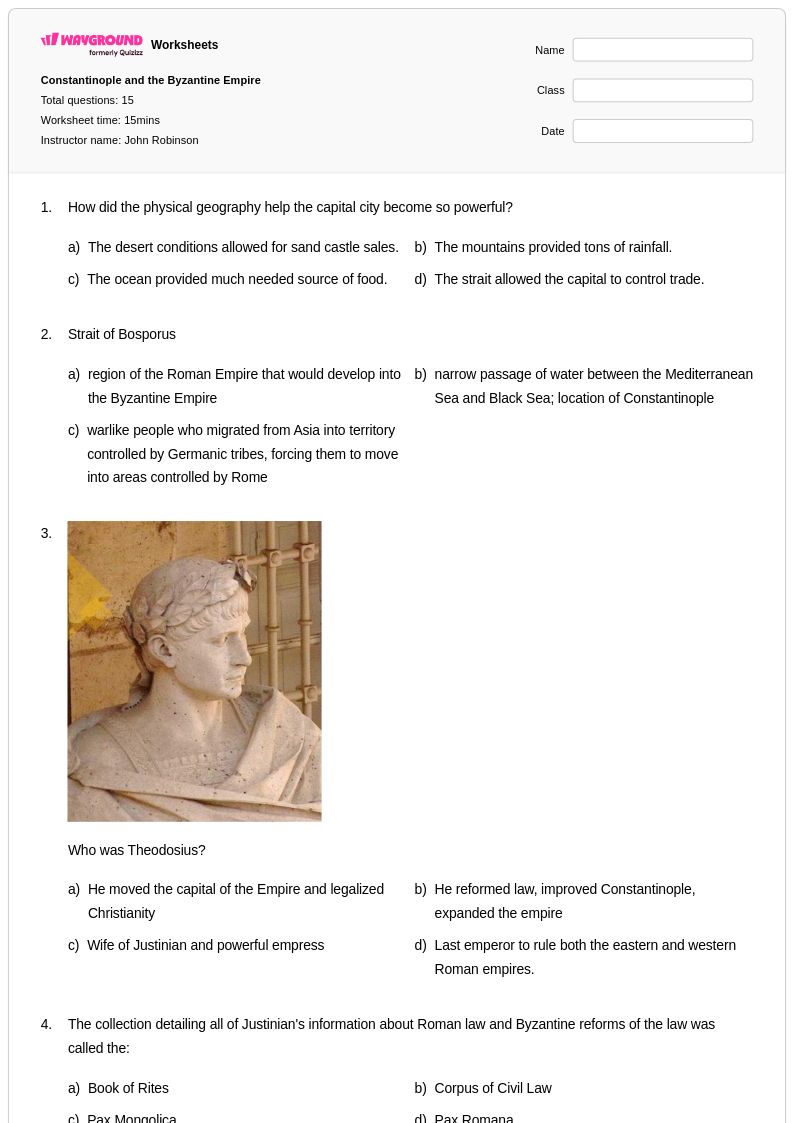
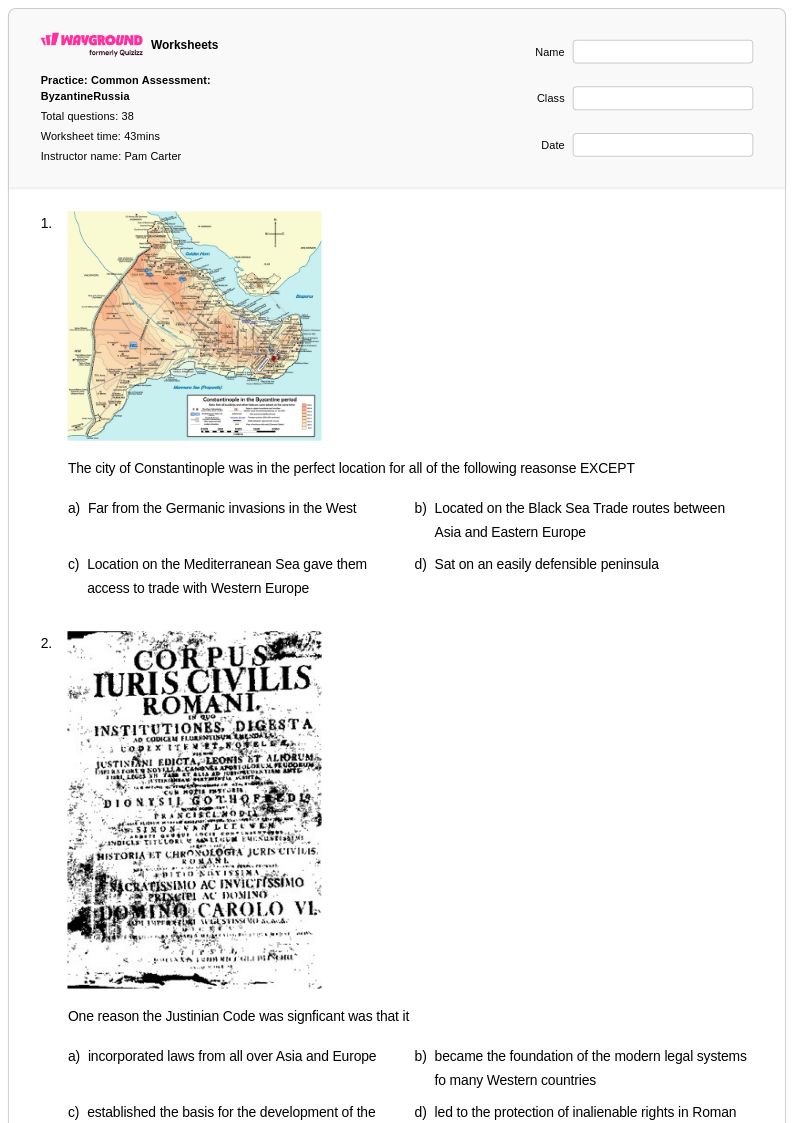
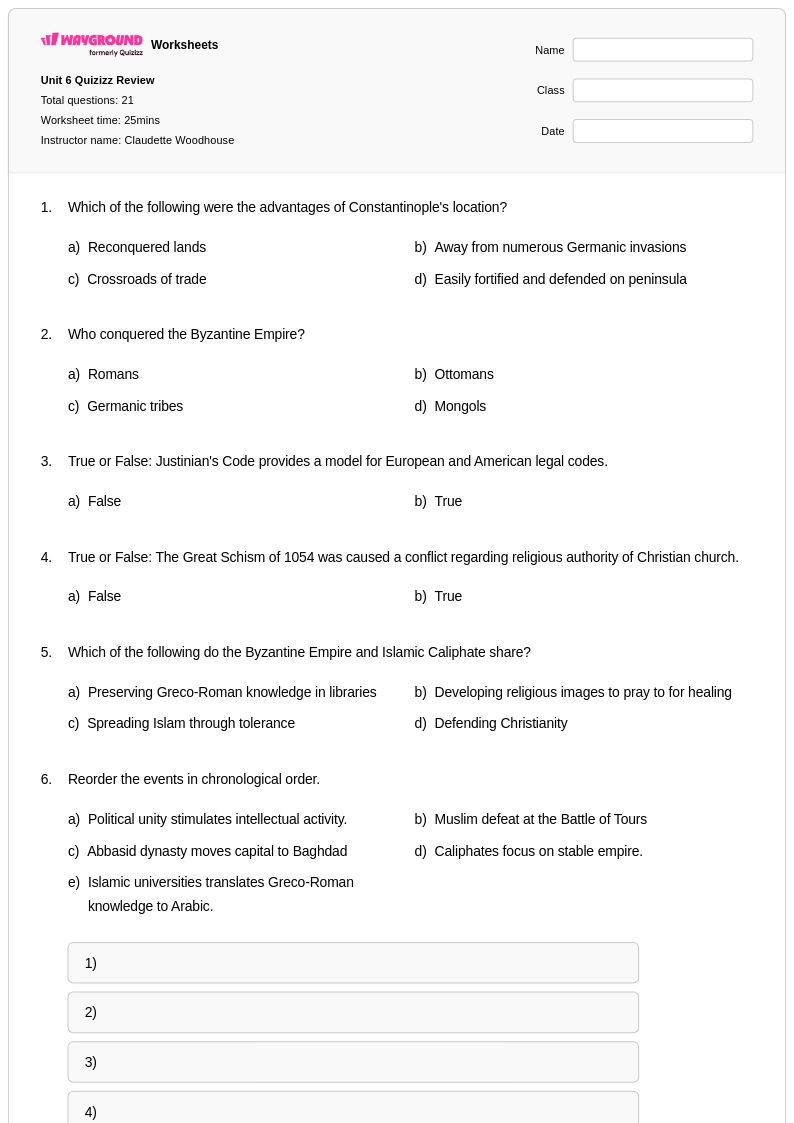
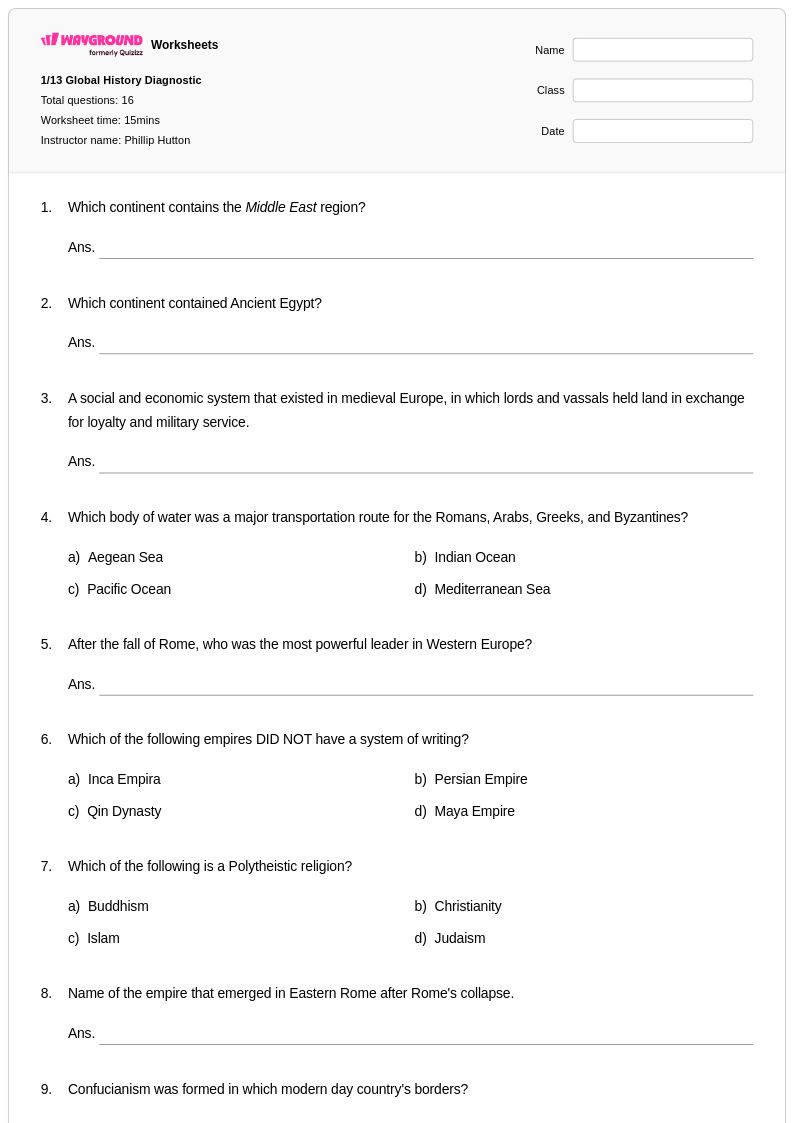
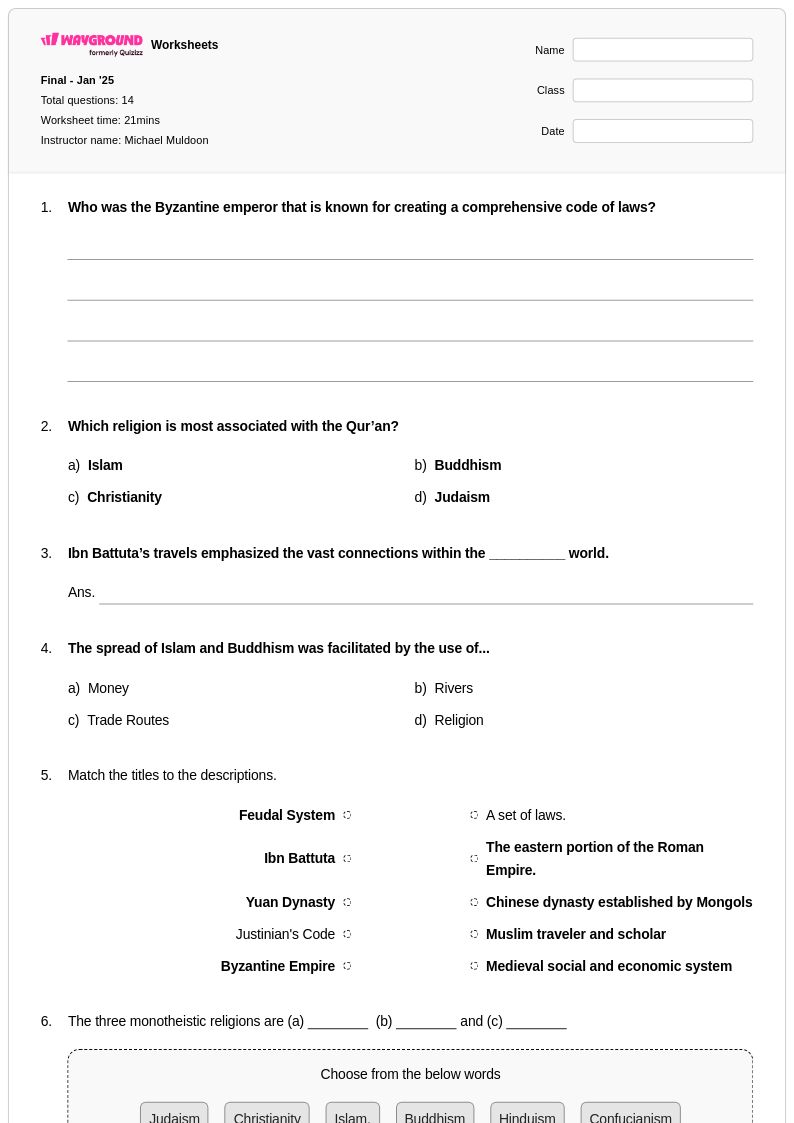
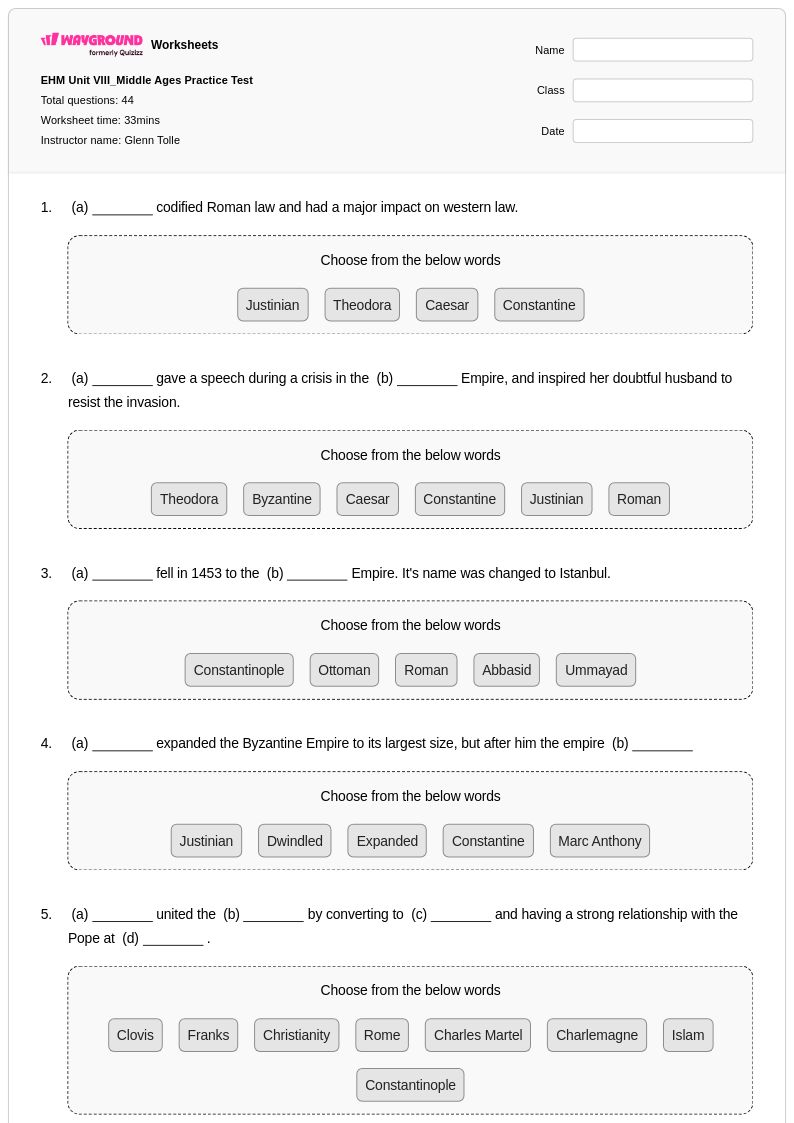
The Byzantine Empire worksheets available through Wayground (formerly Quizizz) provide Class 12 students with comprehensive materials to explore one of history's most influential civilizations that bridged the ancient and medieval worlds. These expertly crafted worksheets strengthen critical analytical skills by guiding students through the empire's thousand-year evolution from Constantinople's founding in 330 CE to its fall in 1453, examining key figures like Justinian I and his legal codifications, the development of Eastern Orthodox Christianity, and the empire's unique blend of Roman, Greek, and Christian traditions. Students engage with primary source documents, analyze political and religious conflicts including the Iconoclastic controversies, and evaluate the Byzantine Empire's role in preserving classical knowledge during Europe's Dark Ages. Each worksheet includes detailed answer keys and practice problems that reinforce understanding of complex historical concepts, with free printable pdf formats ensuring accessibility for diverse learning environments.
Wayground (formerly Quizizz) empowers educators with millions of teacher-created resources specifically designed for Byzantine Empire instruction, featuring robust search and filtering capabilities that allow teachers to quickly locate materials aligned with specific learning standards and curriculum requirements. The platform's differentiation tools enable seamless customization of worksheet difficulty levels, supporting both remediation for struggling students and enrichment opportunities for advanced learners exploring topics like Byzantine art, architecture, and diplomatic relations with neighboring Islamic and Western European powers. Teachers can access these comprehensive worksheet collections in both printable and digital pdf formats, facilitating flexible lesson planning whether for traditional classroom instruction, hybrid learning environments, or independent study assignments. The extensive resource library supports targeted skill practice in historical analysis, chronological reasoning, and synthesis of multiple historical perspectives, while standards alignment features ensure that Byzantine Empire worksheets meet rigorous academic expectations for Class 12 social studies curricula.
FAQs
How do I teach the Byzantine Empire to middle or high school students?
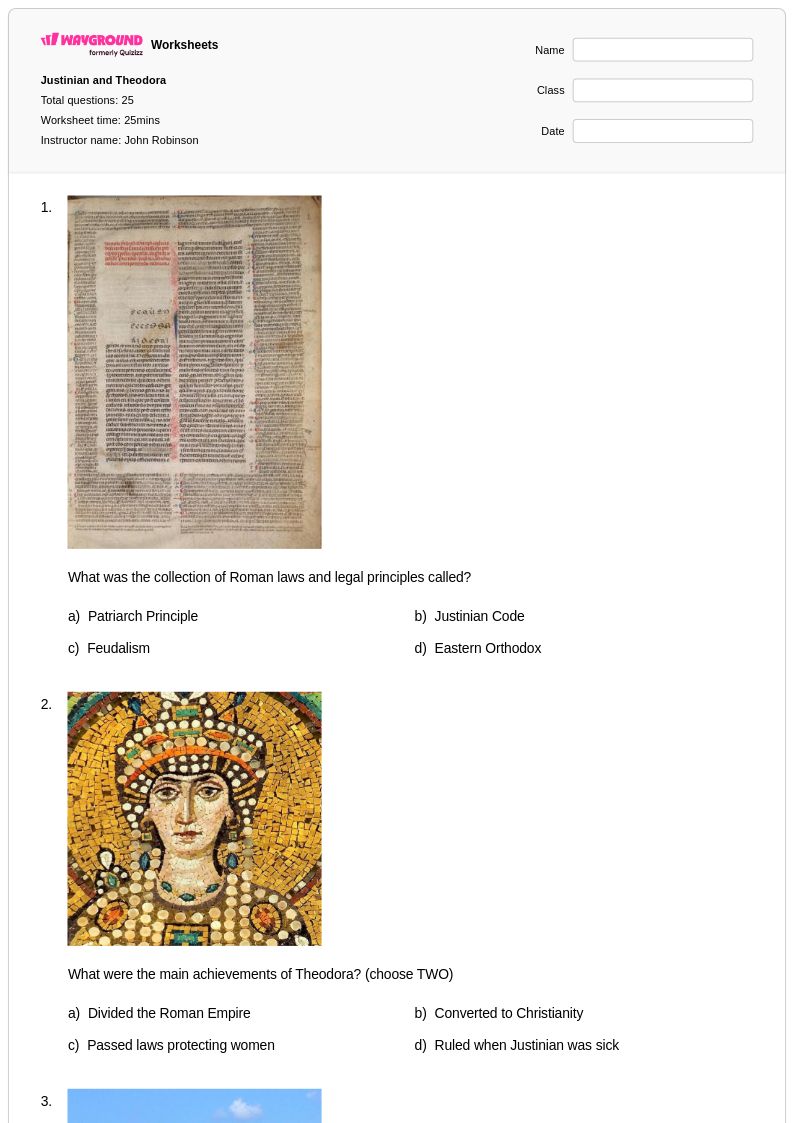
Start by establishing the Byzantine Empire's continuity with Rome — many students are surprised to learn it lasted over 1,000 years after Rome's western fall. Anchor instruction around key figures like Justinian I and Theodora, whose reign illustrates the empire's legal, religious, and political ambitions. From there, trace the cultural synthesis of Greek, Roman, and Christian traditions that made Byzantium distinct. Using primary source excerpts alongside structured worksheets helps students move from surface-level recall to genuine historical analysis.
What exercises help students practice analyzing the Byzantine Empire?
Effective practice exercises include cause-and-effect mapping of major events like the Nika Revolt or the Great Schism, comparison charts contrasting the Eastern and Western Roman Empires, and document analysis tasks focused on Justinian's legal code. Short-answer and critical thinking prompts that ask students to evaluate Byzantine contributions to art, architecture, and governance push beyond memorization and build the analytical habits historians use. Worksheets that integrate visual analysis of Byzantine mosaics or church architecture are especially effective for connecting abstract concepts to concrete evidence.
What are the most common misconceptions students have about the Byzantine Empire?
The most persistent misconception is that the Byzantine Empire was simply a diminished version of Rome rather than a distinct and powerful civilization in its own right. Students also frequently confuse the timing and causes of Rome's fall, not realizing the Eastern Empire continued for nearly a millennium after 476 CE. Another common error is treating the Great Schism as a sudden break rather than the result of centuries of theological, political, and cultural divergence between Rome and Constantinople. Addressing these misconceptions explicitly — and early — prevents students from building flawed mental frameworks that are hard to correct later.
How can I use Byzantine Empire worksheets to support different ability levels in my classroom?
Differentiation works well when you pair tiered worksheets with targeted accommodations. For struggling learners, scaffolded versions with sentence starters, word banks, or reduced answer choices reduce cognitive load without removing the core historical thinking task. Advanced students benefit from open-ended analysis prompts that ask them to evaluate the empire's long-term influence on Eastern Orthodox Christianity or medieval European law. On Wayground, teachers can assign individual accommodations such as extended time, read aloud support, and reduced answer choices to specific students, so the rest of the class receives standard settings without disruption.
How do I use Wayground's Byzantine Empire worksheets in my classroom?
Wayground's Byzantine Empire worksheets are available as printable PDFs for traditional classroom use and in digital formats for technology-integrated environments, making them flexible for in-person, hybrid, or remote instruction. Teachers can also host worksheets directly as a quiz on Wayground, enabling real-time student responses and automatic grading. Each worksheet includes a complete answer key, so they work equally well for guided instruction, independent practice, or homework assignments. The platform's filtering tools let you quickly locate materials aligned to specific topics like the fall of Constantinople, Byzantine art, or Justinian's legal reforms.
What is the significance of the fall of Constantinople, and how do I help students understand it?
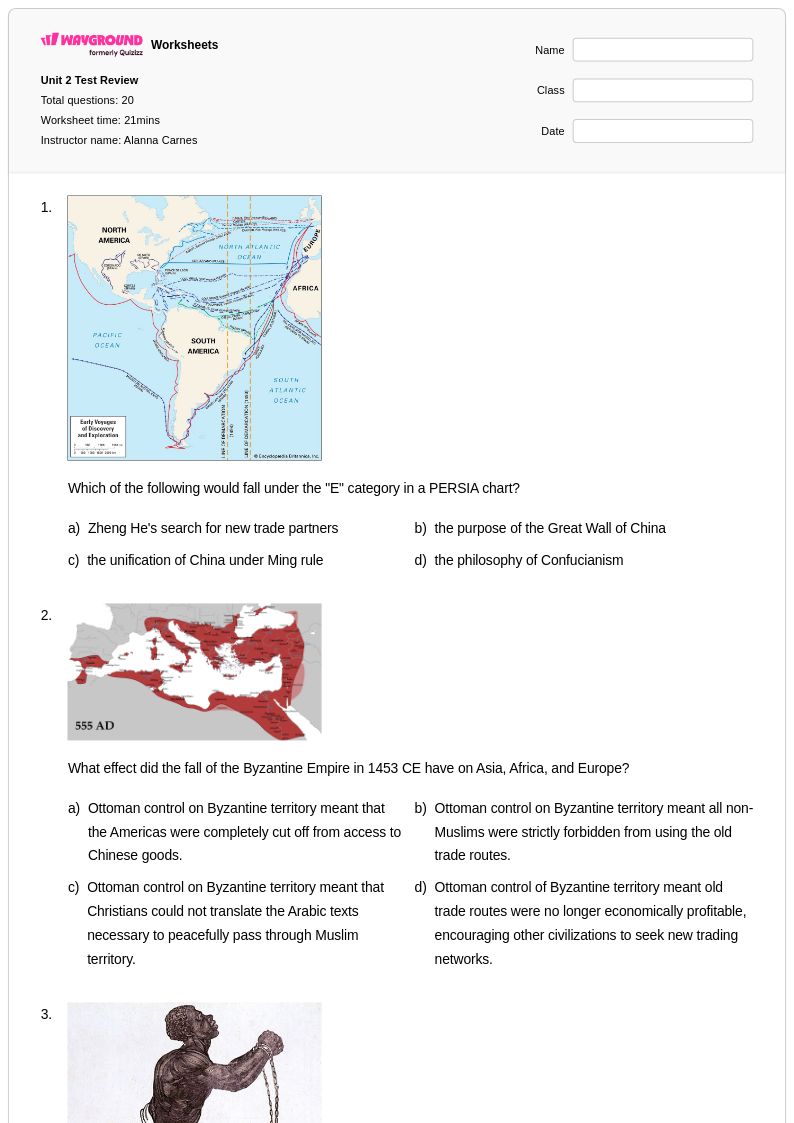
The fall of Constantinople in 1453 marks the end of the Byzantine Empire and is widely considered a turning point between the medieval and early modern periods. For students, the challenge is understanding why it mattered beyond the event itself — the fall disrupted established trade routes, accelerated the movement of Greek scholars into Western Europe, and contributed to conditions that fed the Renaissance. Structured worksheet activities that ask students to trace causes and consequences across political, economic, and cultural dimensions are the most effective way to build this kind of contextual understanding.