Free Printable Pacific Theater of World War 2 Worksheets for Class 12
Class 12 Pacific Theater of World War 2 worksheets and printables help students analyze key battles, strategies, and turning points through engaging practice problems with comprehensive answer keys available as free PDF downloads.
Explore printable Pacific Theater of World War 2 worksheets for Class 12
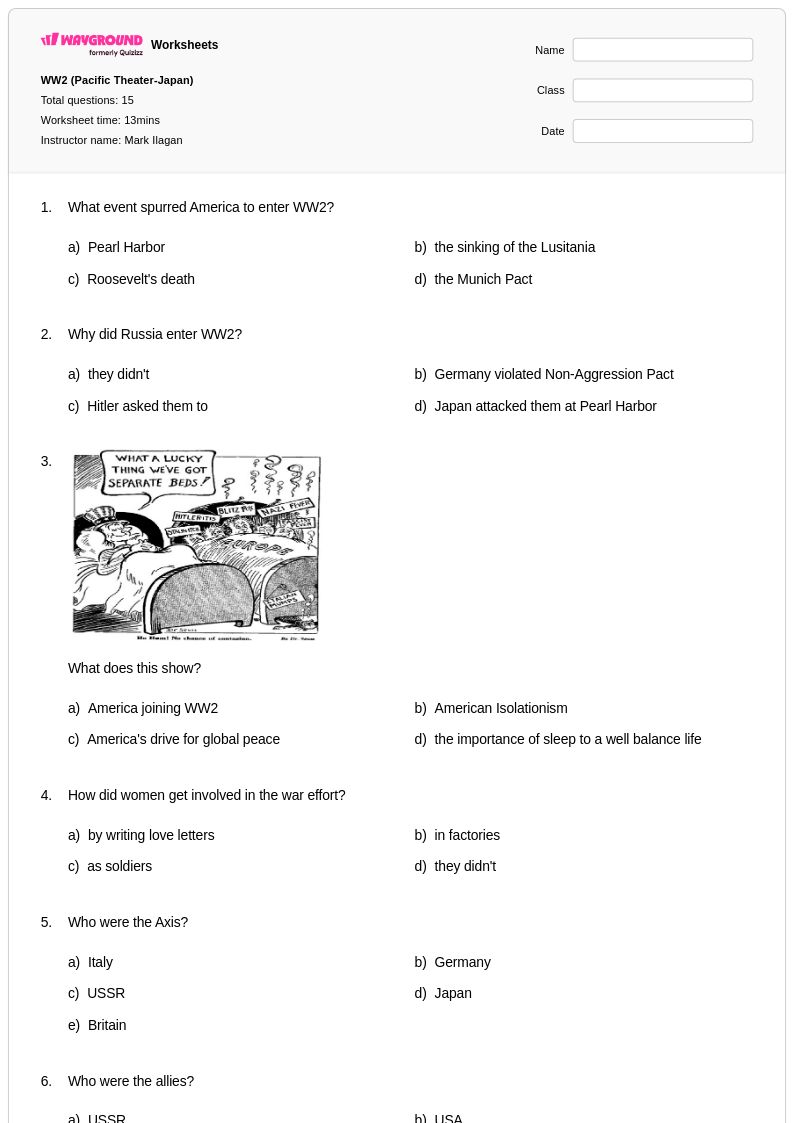
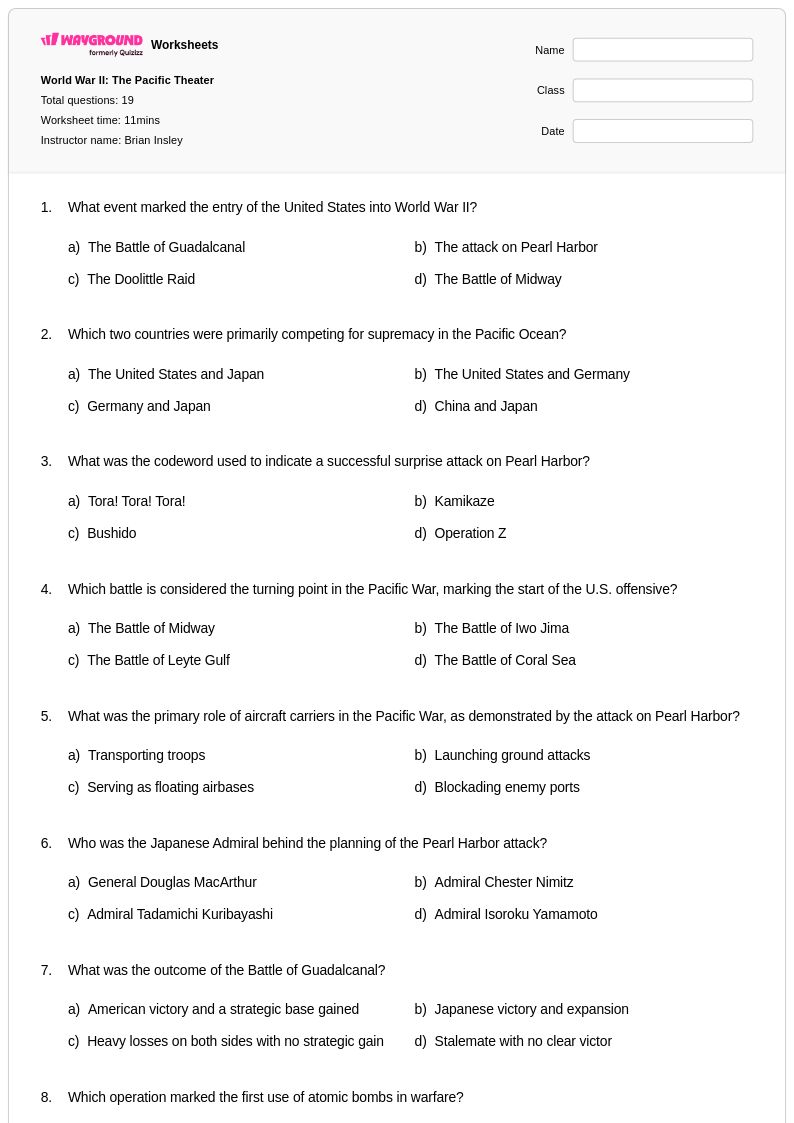
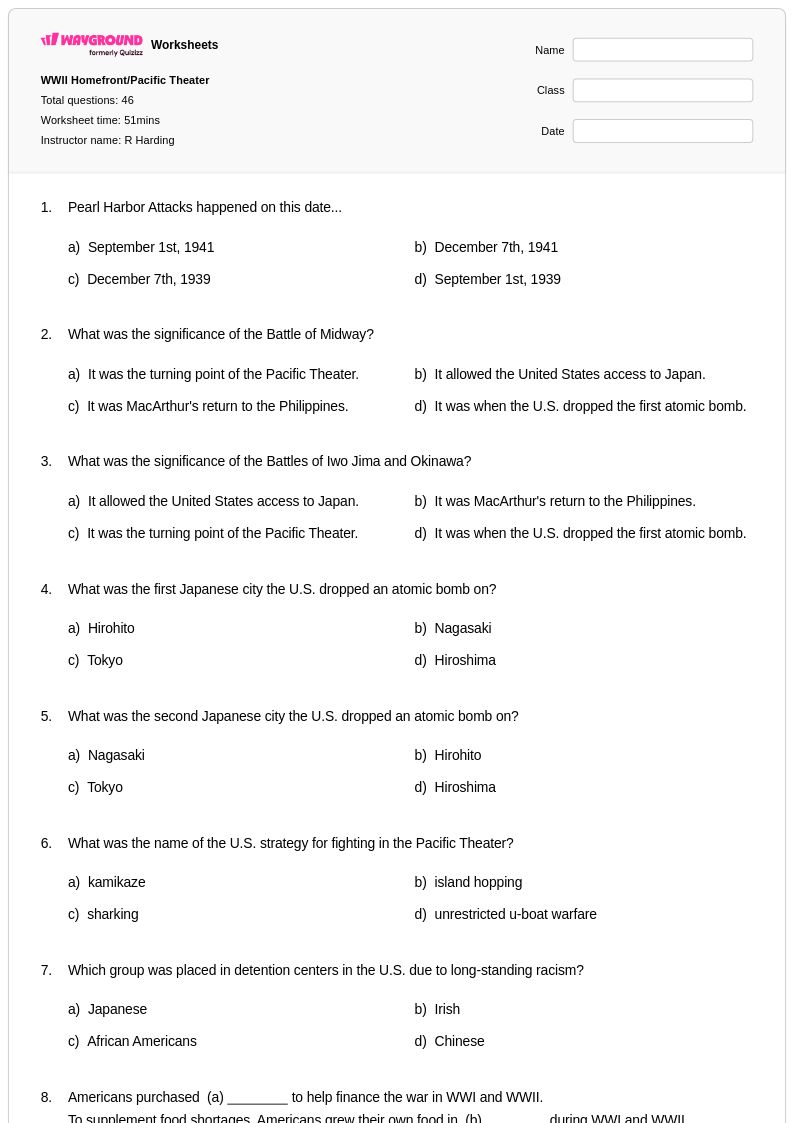
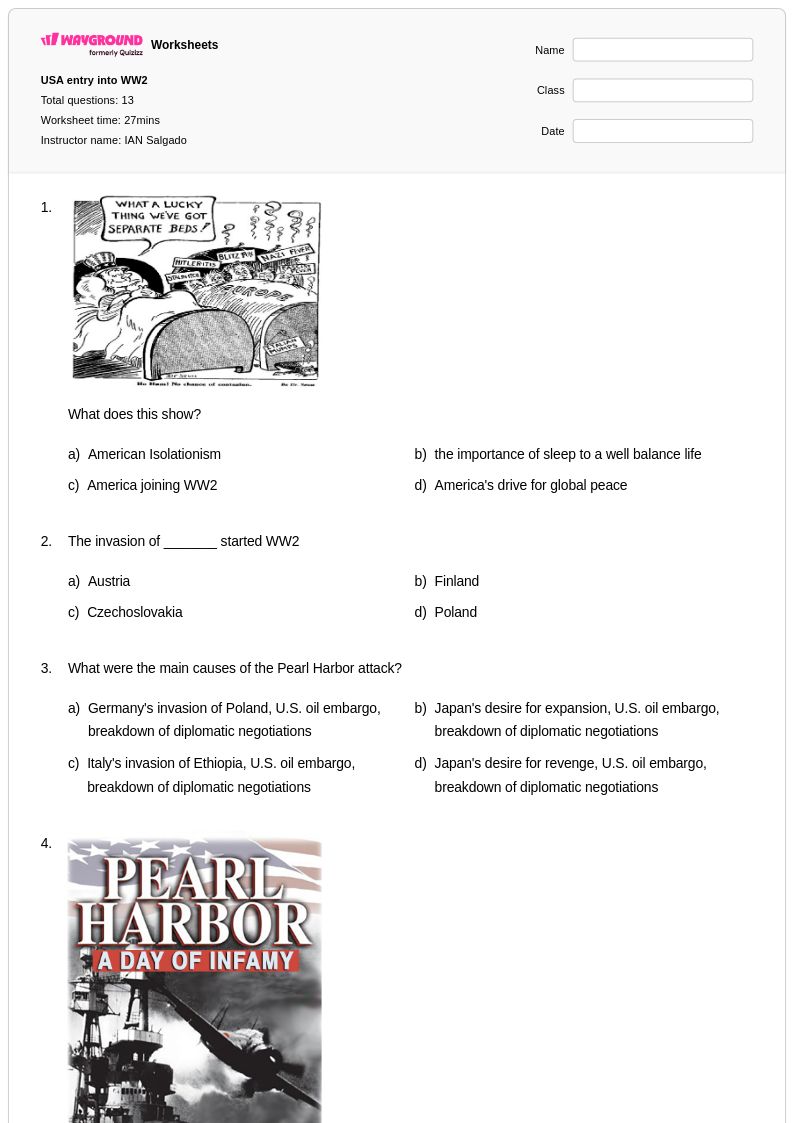
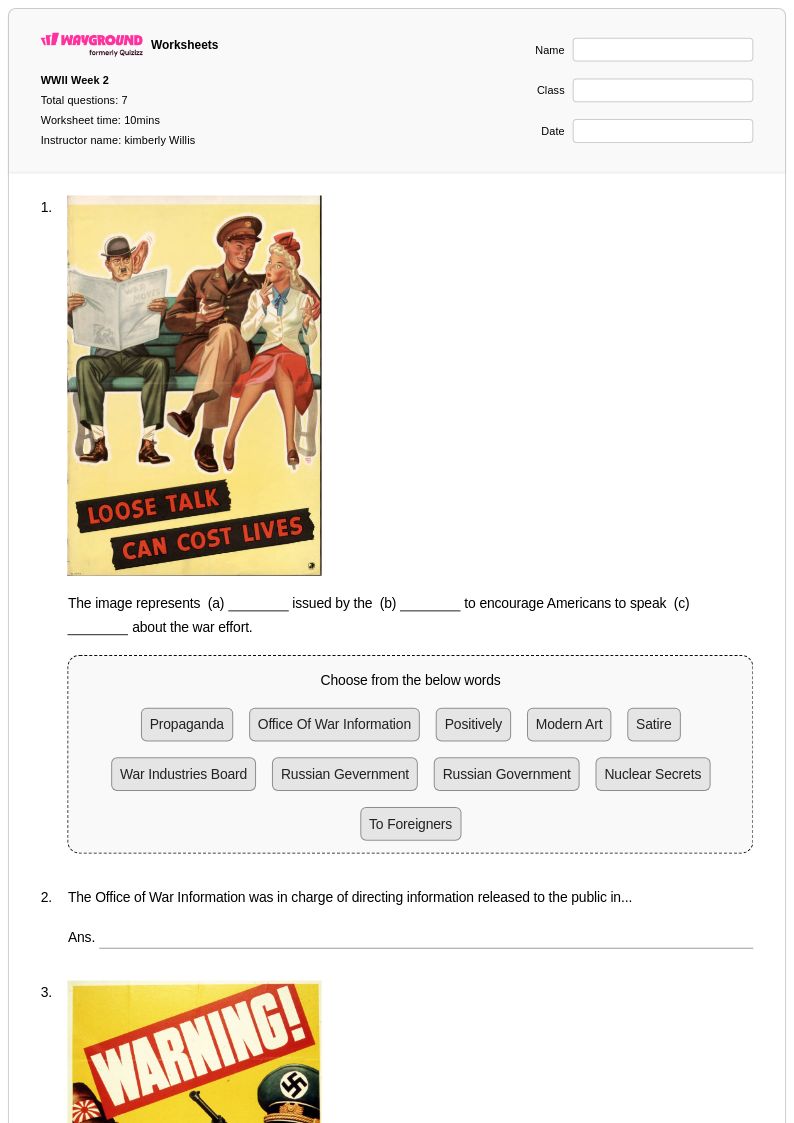
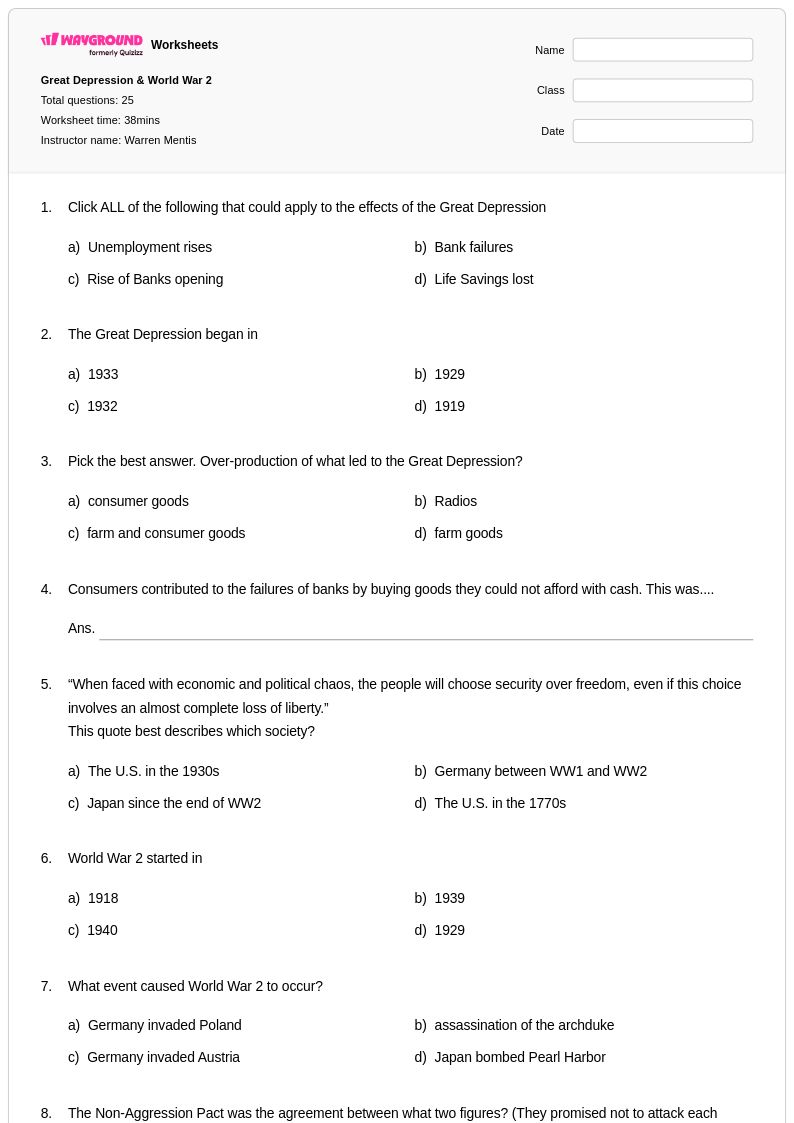
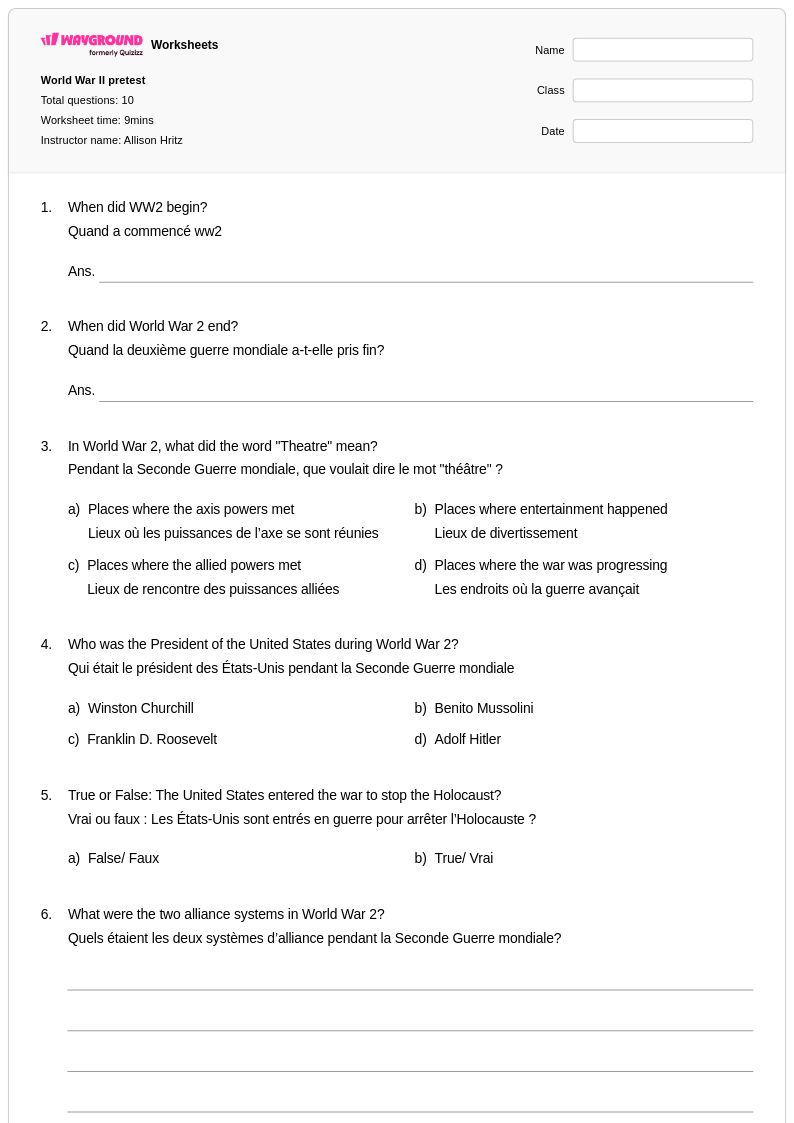
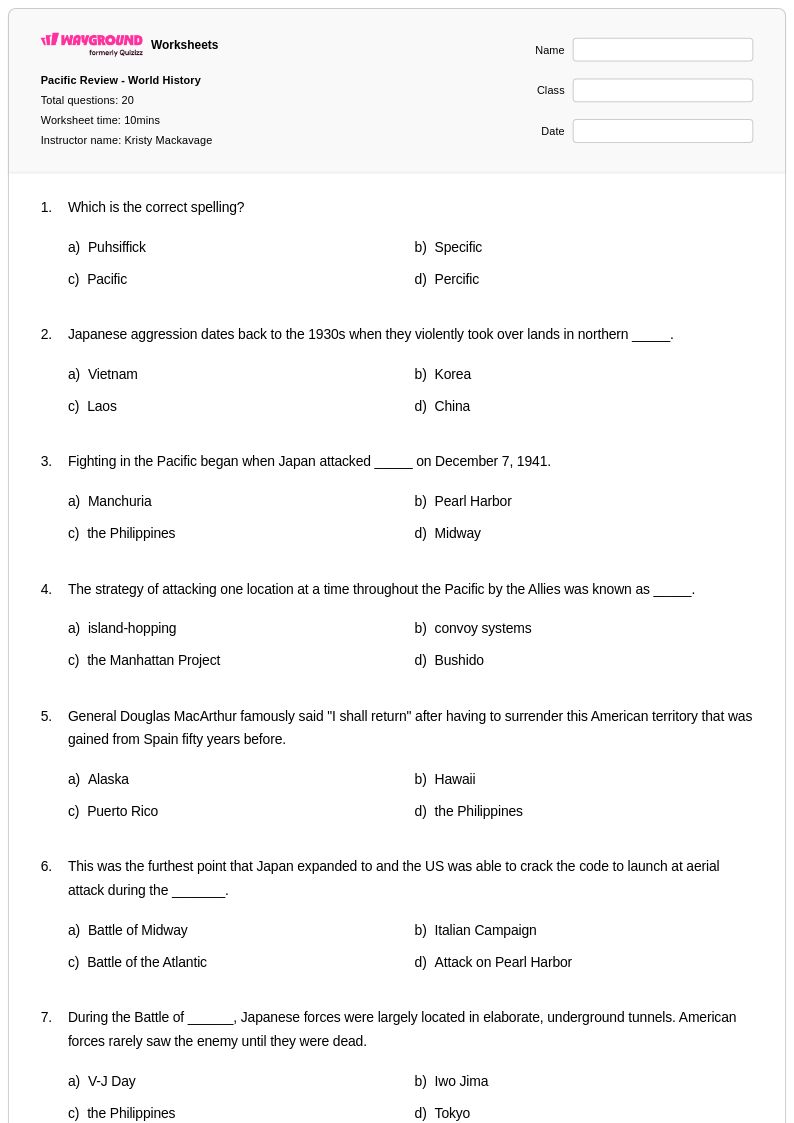
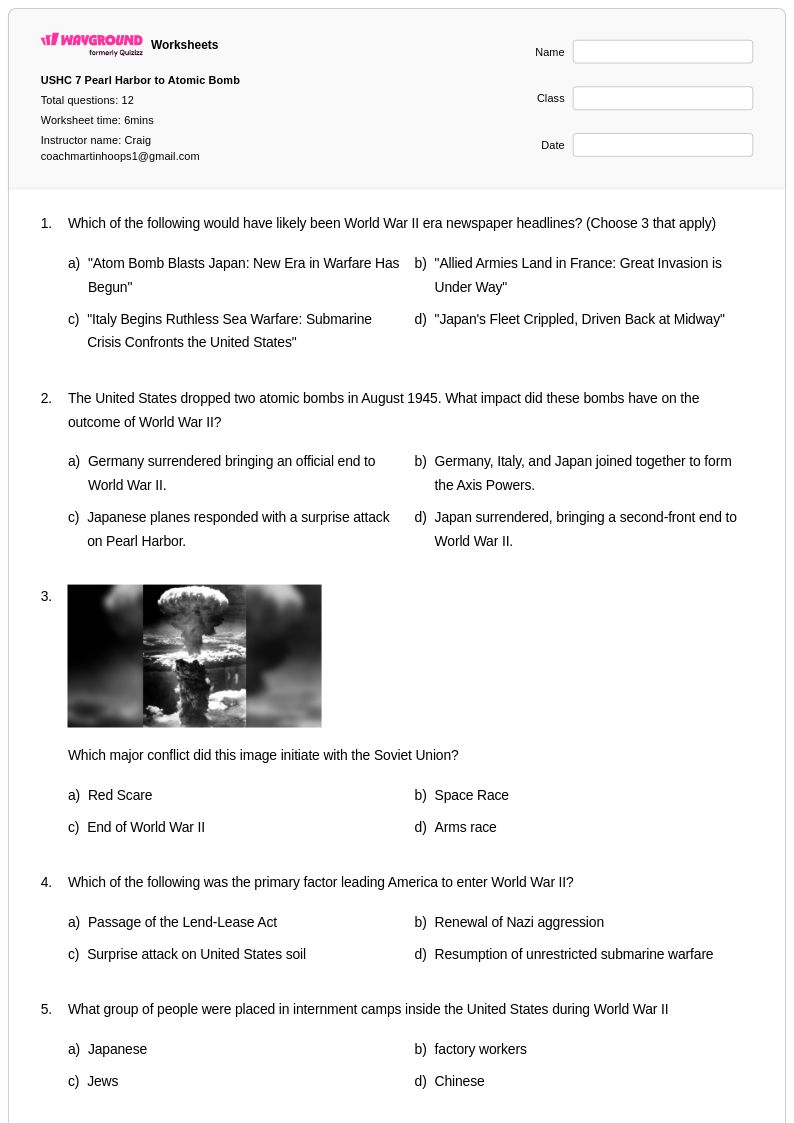
Pacific Theater of World War 2 worksheets for Class 12 students available through Wayground (formerly Quizizz) provide comprehensive coverage of this pivotal military campaign that reshaped the global balance of power from 1941 to 1945. These expertly designed resources strengthen critical thinking skills as students analyze major battles including Pearl Harbor, Midway, Guadalcanal, and the island-hopping campaigns that led to Japan's surrender. The worksheets feature detailed practice problems examining military strategies, technological innovations like radar and aircraft carriers, key figures such as General MacArthur and Admiral Nimitz, and the complex diplomatic relationships between Allied nations. Each printable resource includes answer keys and supporting materials that help students understand the interconnected nature of Pacific naval warfare, amphibious assaults, and the strategic decisions that ultimately determined the war's outcome in this theater.
Wayground (formerly Quizizz) empowers educators with an extensive collection of teacher-created Pacific Theater worksheets drawn from millions of high-quality resources that align with advanced social studies standards for Class 12 instruction. The platform's sophisticated search and filtering capabilities allow teachers to quickly locate materials targeting specific battles, campaigns, or analytical skills, while differentiation tools enable customization for students with varying academic needs and learning styles. These flexible resources are available in both digital and pdf formats, supporting diverse classroom environments and teaching approaches whether used for initial skill practice, targeted remediation of challenging concepts, or enrichment activities for advanced learners. The comprehensive nature of these worksheet collections streamlines lesson planning by providing educators with ready-to-use materials that can be seamlessly integrated into units covering American military history, global conflict analysis, and the geopolitical consequences of World War 2's Pacific campaigns.
FAQs
How do I teach the Pacific Theater of World War 2 to my students?
Teaching the Pacific Theater effectively means building a chronological framework that starts with the attack on Pearl Harbor in December 1941 and traces the conflict through key turning points like Midway, the island-hopping campaigns, and the atomic bombings of Hiroshima and Nagasaki. Pair direct instruction with primary source analysis to help students understand both the strategic decisions made by leaders like General MacArthur and Admiral Nimitz and the human experience of soldiers and civilians. Using maps alongside battle studies helps students visualize why geography was so central to Pacific strategy.
What exercises help students practice their knowledge of the Pacific Theater?
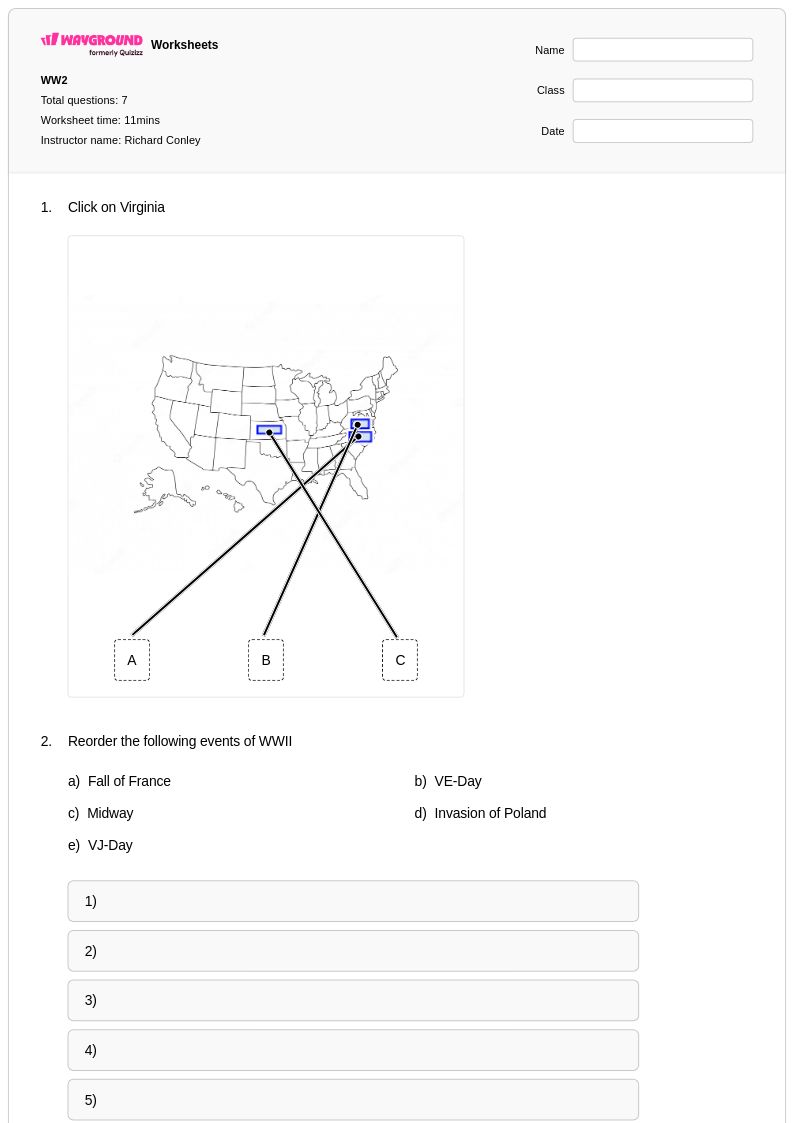
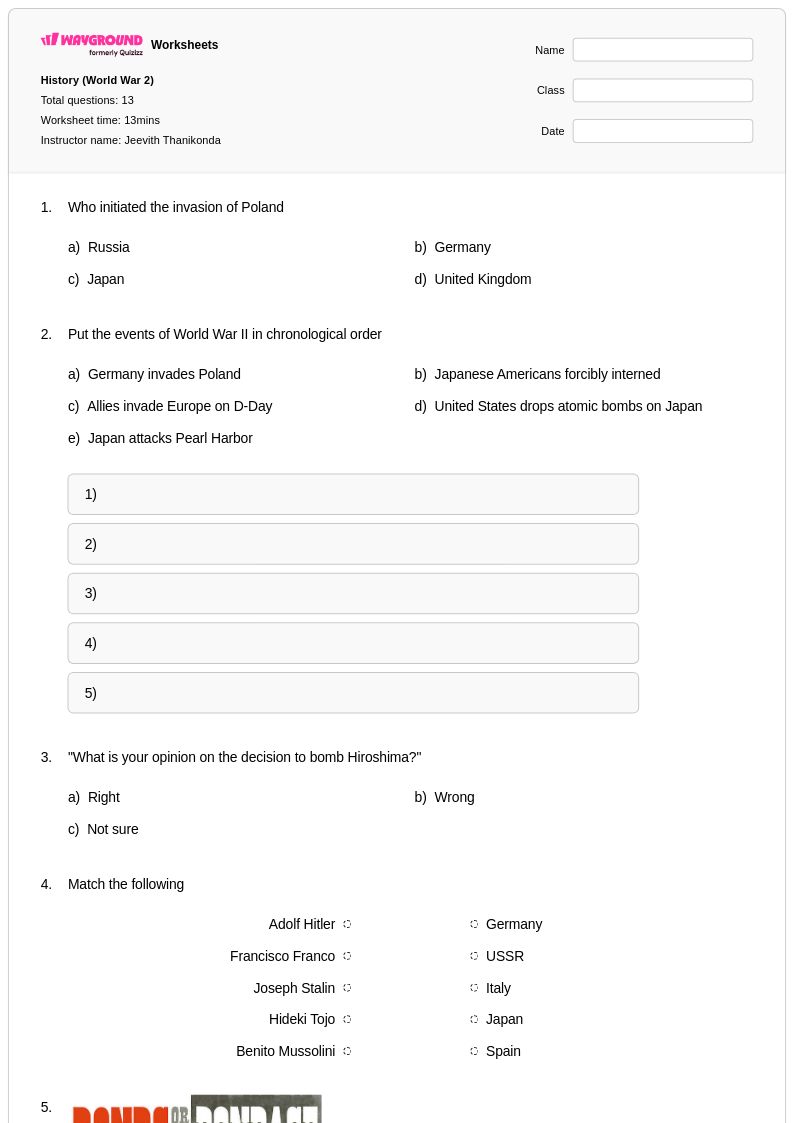
Practice exercises that work well for the Pacific Theater include timeline sequencing activities, cause-and-effect analysis of major battles, and document-based questions using primary sources from the era. Students benefit from comparing military strategies across different campaigns, such as analyzing why island-hopping was chosen over a direct assault approach. Matching activities that connect key figures like MacArthur and Nimitz to their roles and decisions reinforce content retention effectively.
What are the most common misconceptions students have about the Pacific Theater of World War 2?
One of the most persistent misconceptions is that the Pacific war began only with Pearl Harbor, when in fact Japan had been engaged in military expansion across Asia since the early 1930s. Students also frequently underestimate the scale and duration of the Pacific conflict, often treating it as secondary to the European Theater. Another common error is conflating the decision to use atomic bombs as a sudden or simple choice, rather than understanding it within the broader context of projected casualties from a land invasion of Japan.
How do I help students understand the significance of the island-hopping campaign?
Start by having students examine a map of the Pacific to make the distances and island geography concrete before explaining the strategy. The island-hopping campaign, formally called 'leapfrogging,' was designed to bypass heavily fortified Japanese positions and capture strategically vital islands to establish air bases closer to Japan, cutting off supply lines in the process. Students grasp the concept more deeply when they can compare the cost of battles like Iwo Jima against the strategic gains those islands provided for Allied air operations.
How can I use Pacific Theater of World War 2 worksheets in my classroom?
Pacific Theater worksheets on Wayground are available as printable PDFs for traditional classroom use and in digital formats for technology-integrated learning environments, and teachers can also host them as a quiz directly on Wayground. This flexibility makes them suitable for in-class assignments, homework, sub plans, or review sessions before assessments. The included answer keys allow teachers to assess student understanding efficiently and provide targeted feedback on specific battles, figures, or strategic concepts.
How do I differentiate Pacific Theater instruction for students with different learning needs?
For students who need additional support, Wayground offers built-in accommodation tools including read-aloud functionality, reduced answer choices to lower cognitive load, and extended time settings that can be applied to individual students without alerting the rest of the class. These settings are reusable across sessions and can be configured from the Students tab or session settings page. For advanced learners, worksheets that include primary source analysis and questions about military strategy provide appropriate challenge and depth.