
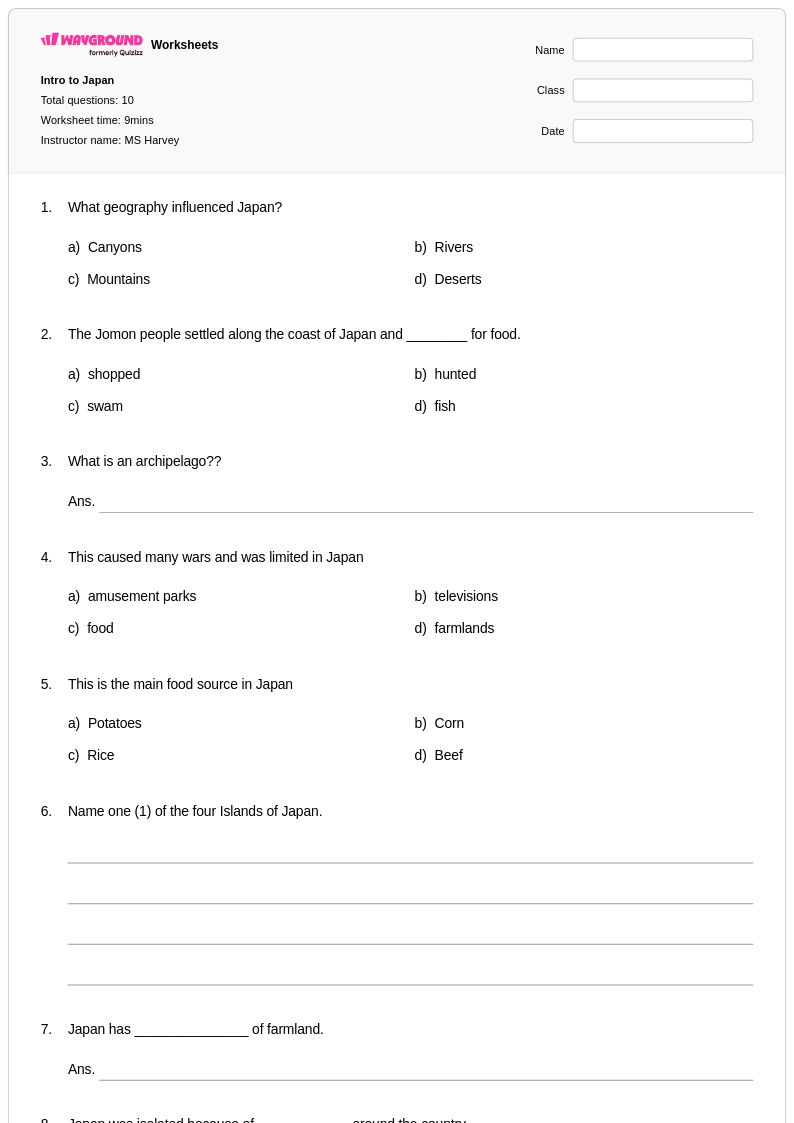
10 Q
6th - 8th
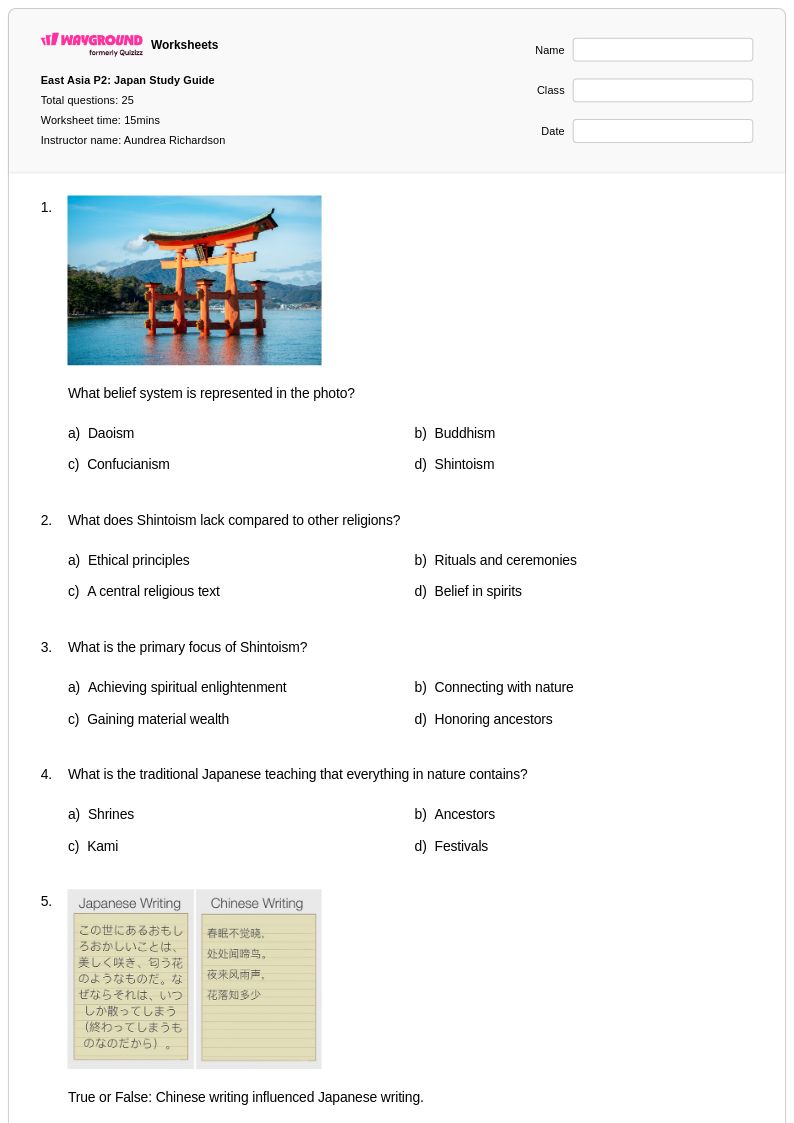
25 Q
6th - 8th
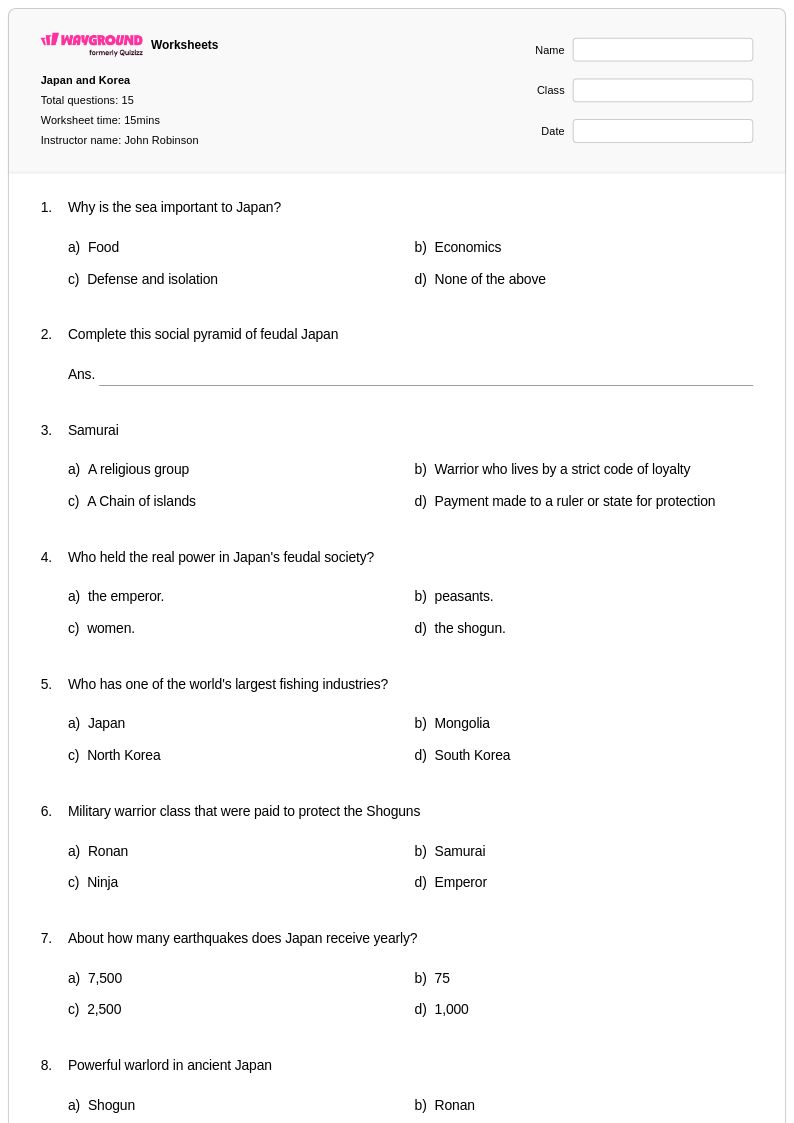
15 Q
7th - Uni
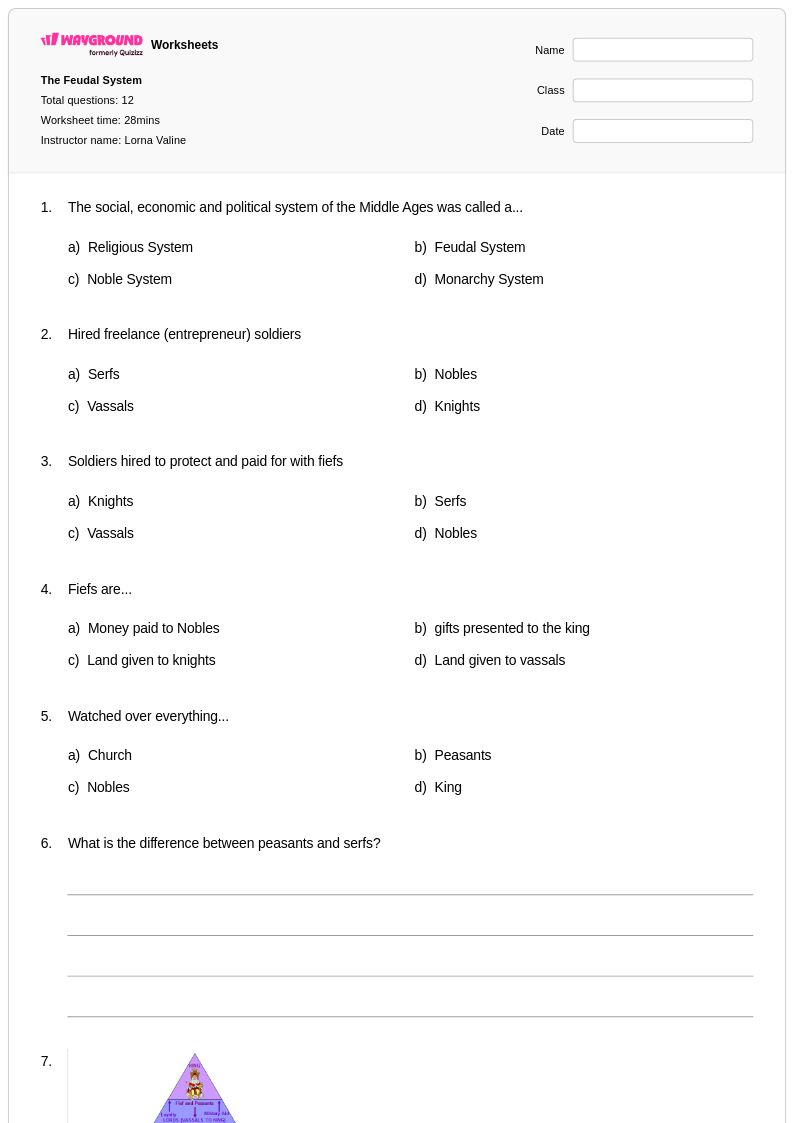
12 Q
8th
14 Q
6th - 8th
16 Q
6th - 8th
60 Q
8th
11 Q
6th - 8th
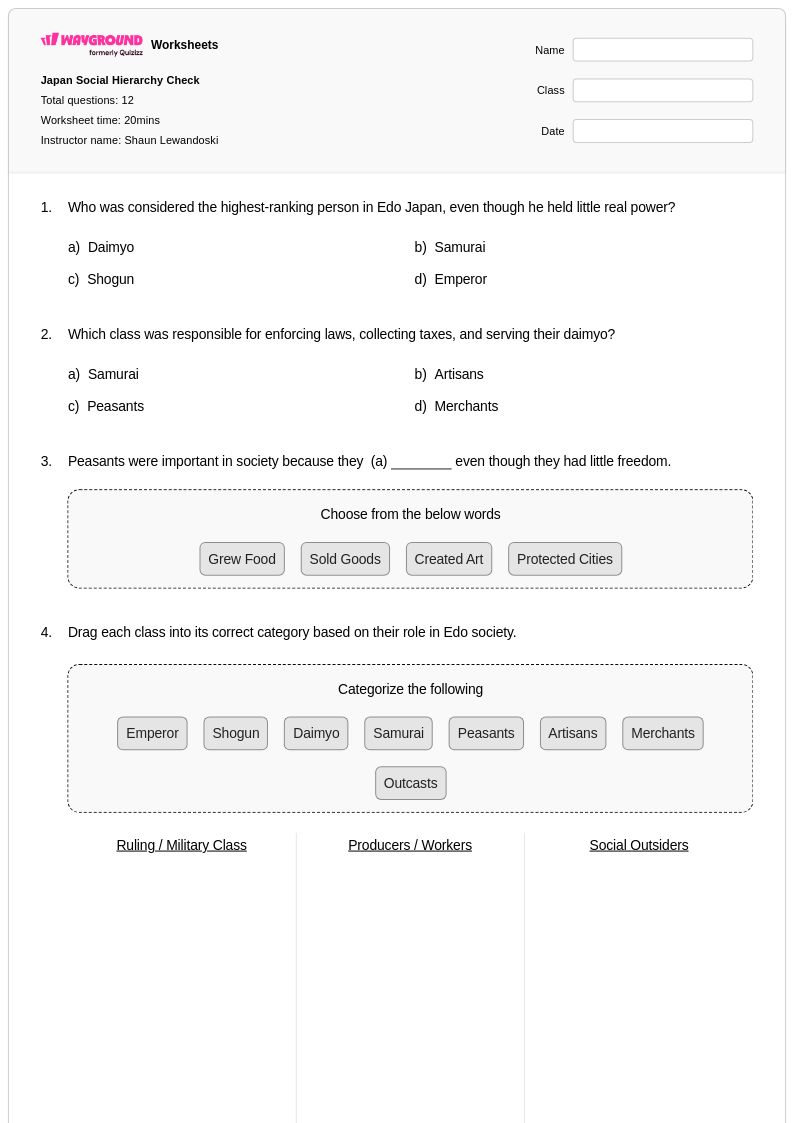
12 Q
8th
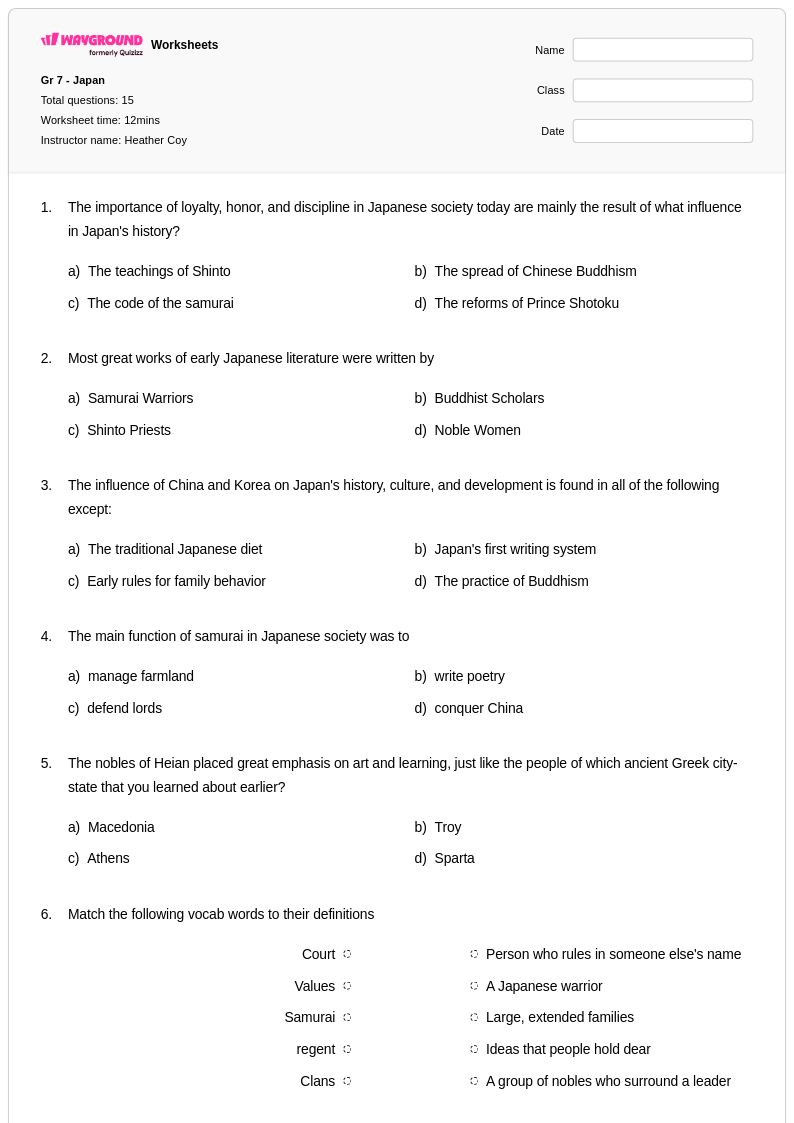
15 Q
6th - 8th
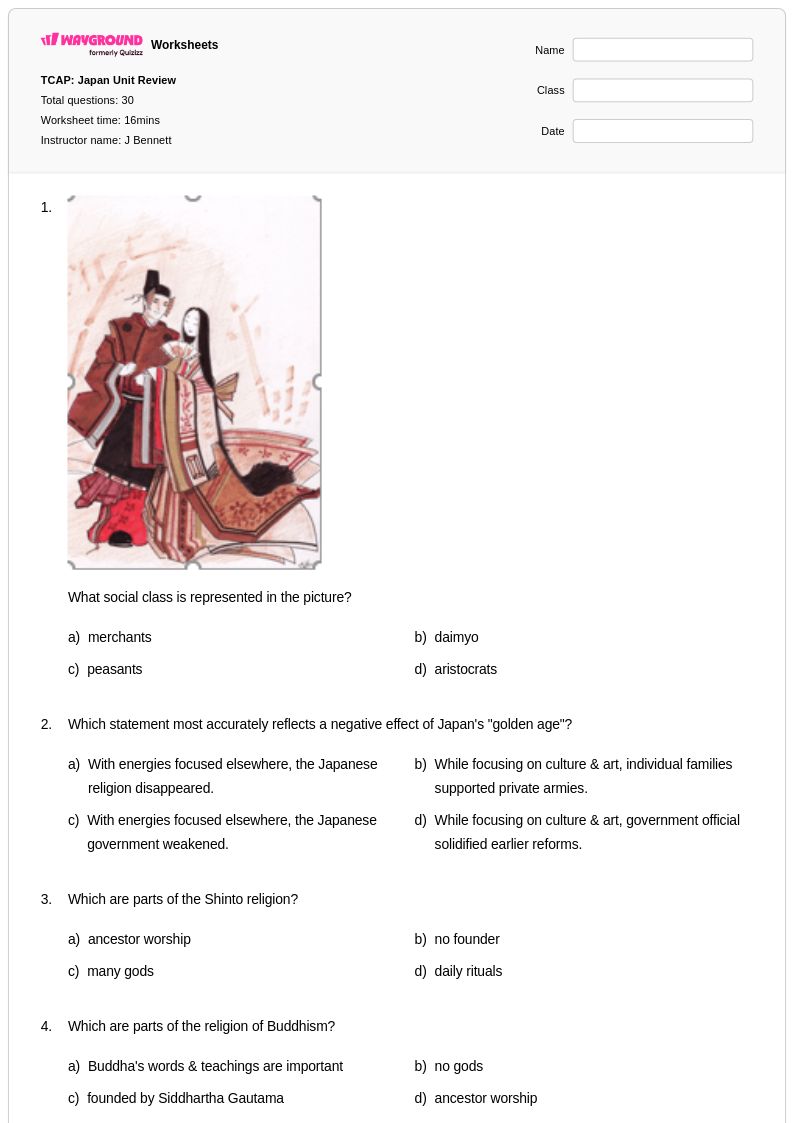
30 Q
7th - 9th
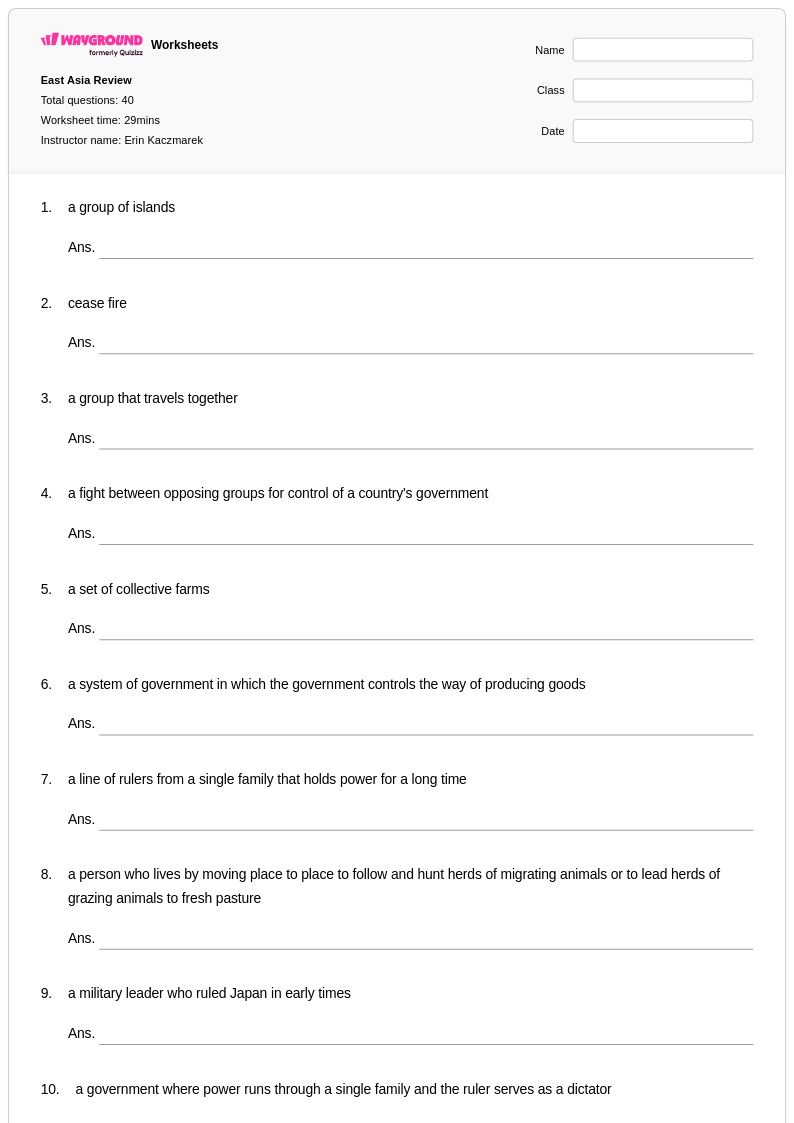
40 Q
6th - 8th
18 Q
8th
40 Q
6th - 8th
10 Q
6th - 8th
18 Q
6th - 11th
24 Q
6th - 8th
25 Q
7th - Uni
21 Q
8th
21 Q
8th - 9th
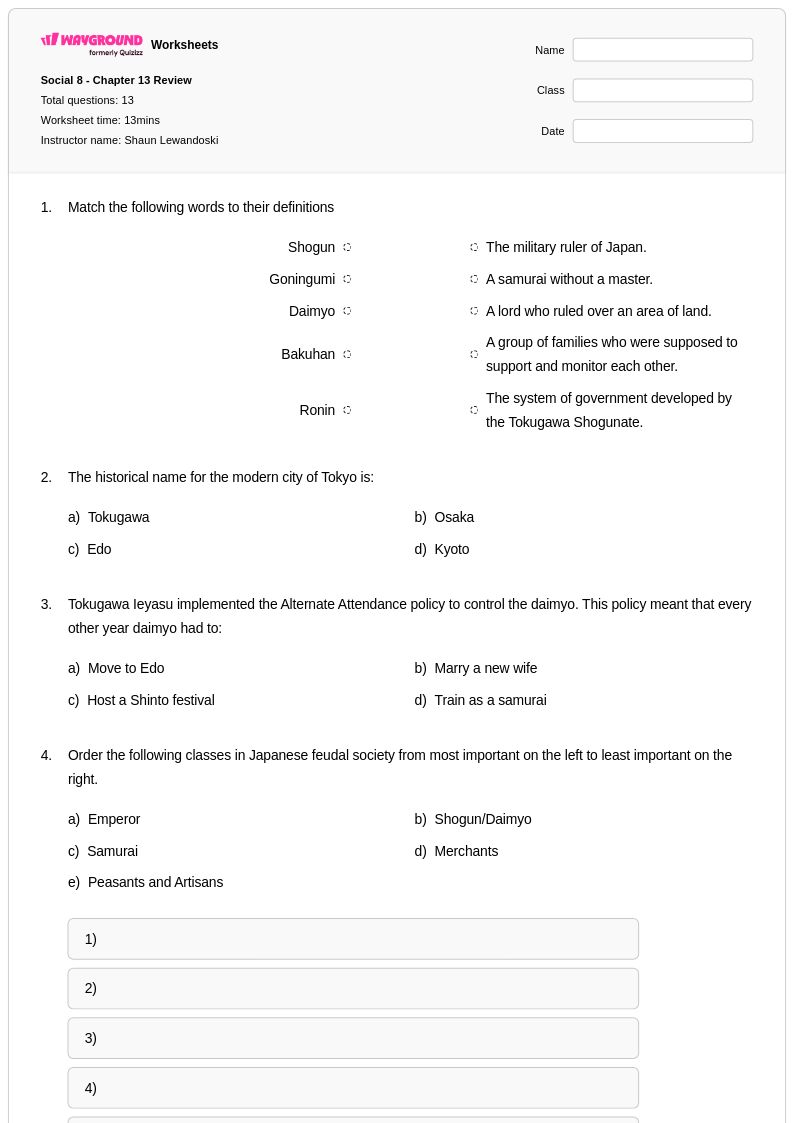
13 Q
8th
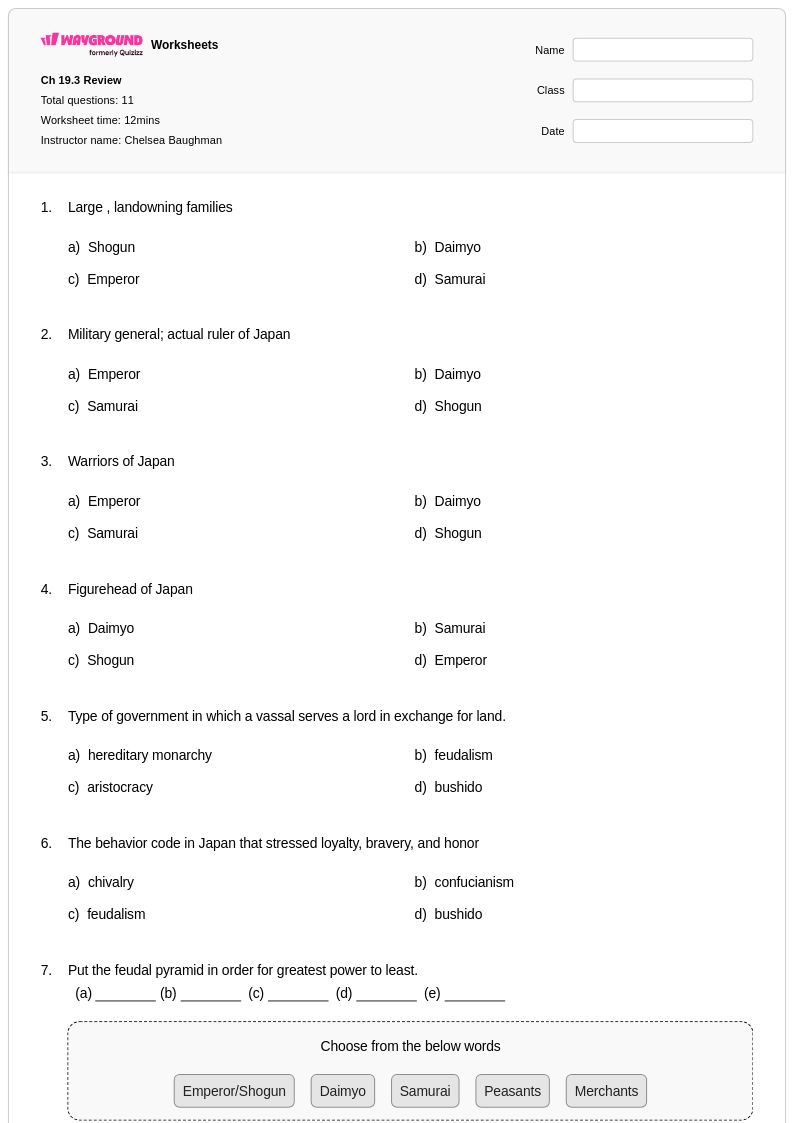
11 Q
6th - 8th
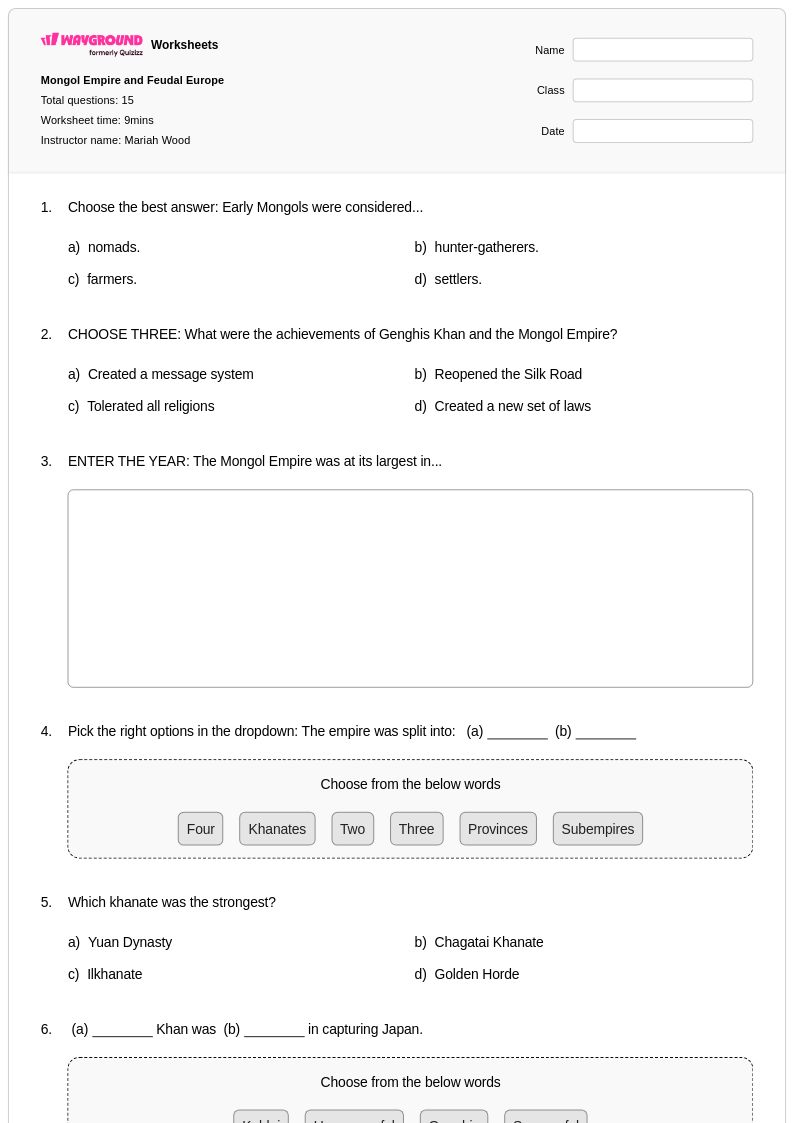
15 Q
6th - 8th
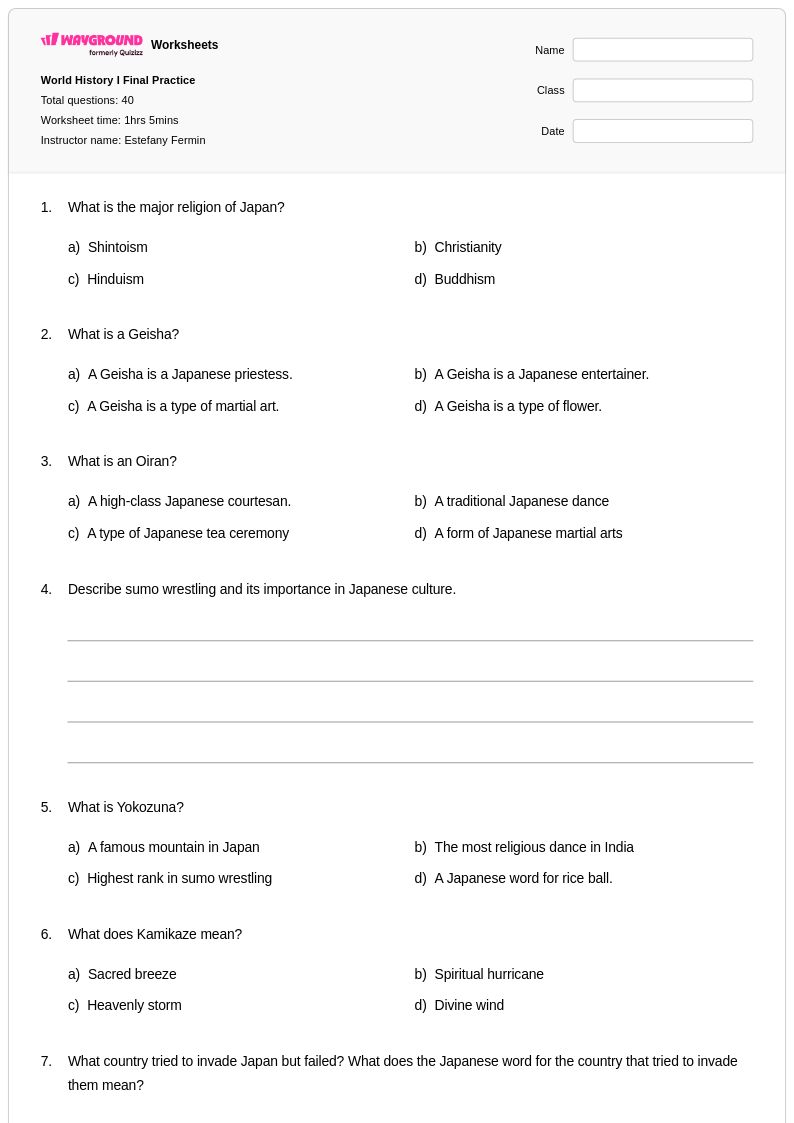
40 Q
8th
Explore Other Subject Worksheets for class 8
Explore printable Feudal Japan worksheets for Class 8
Feudal Japan worksheets for Class 8 students available through Wayground (formerly Quizizz) provide comprehensive exploration of this fascinating period in Japanese history, covering the complex social hierarchy, samurai culture, and political structures that defined medieval Japan from roughly 1185 to 1603. These carefully designed educational materials strengthen students' analytical thinking skills as they examine primary sources, interpret historical maps, and analyze the relationships between different social classes including the emperor, shogun, daimyo, samurai, farmers, artisans, and merchants. The worksheets feature varied practice problems that challenge students to compare feudal systems across cultures, evaluate the role of Buddhism and Shintoism in shaping society, and assess the impact of isolation policies on Japanese development. Each worksheet collection includes detailed answer keys to support both independent study and classroom instruction, with free printable materials available in convenient PDF format for easy distribution and use.
Wayground (formerly Quizizz) empowers educators with an extensive library of millions of teacher-created resources specifically designed to enhance Class 8 feudal Japan instruction through robust search and filtering capabilities that allow teachers to locate materials perfectly matched to their curriculum needs and standards alignment requirements. The platform's differentiation tools enable instructors to customize worksheets for diverse learning levels within the same classroom, providing enrichment opportunities for advanced students while offering additional scaffolding for those requiring remediation support. Teachers can access these materials in both printable PDF format for traditional classroom use and digital formats for interactive online learning, making lesson planning more efficient and flexible. This comprehensive approach supports effective skill practice across multiple learning modalities, helping educators create engaging feudal Japan units that develop students' historical thinking skills while maintaining alignment with social studies standards and learning objectives.
FAQs
How do I teach the feudal Japan social hierarchy to middle school students?
What activities help students practice understanding the feudal Japan social system?
What common mistakes do students make when learning about feudal Japan?
How can I use feudal Japan worksheets to compare medieval societies across cultures?
How do I use Wayground's feudal Japan worksheets in my classroom?
How can I differentiate feudal Japan instruction for students at different levels?