Free Printable Feudal Japan Worksheets for Class 9
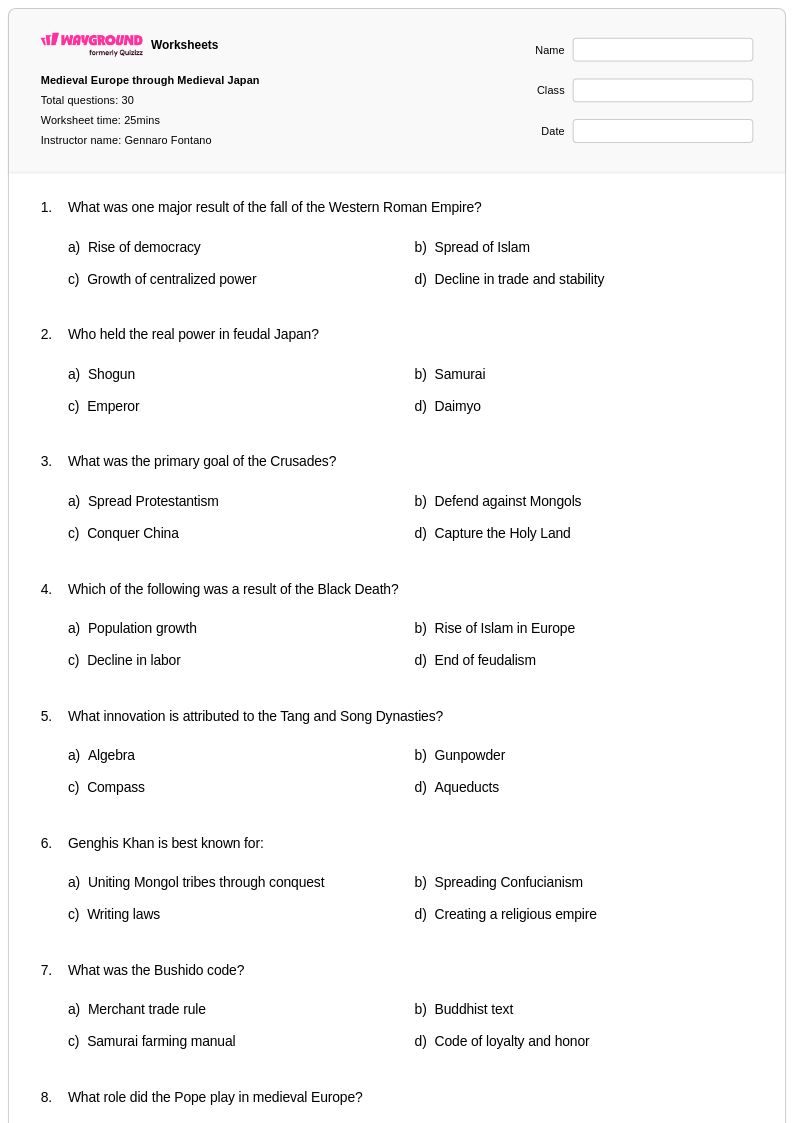
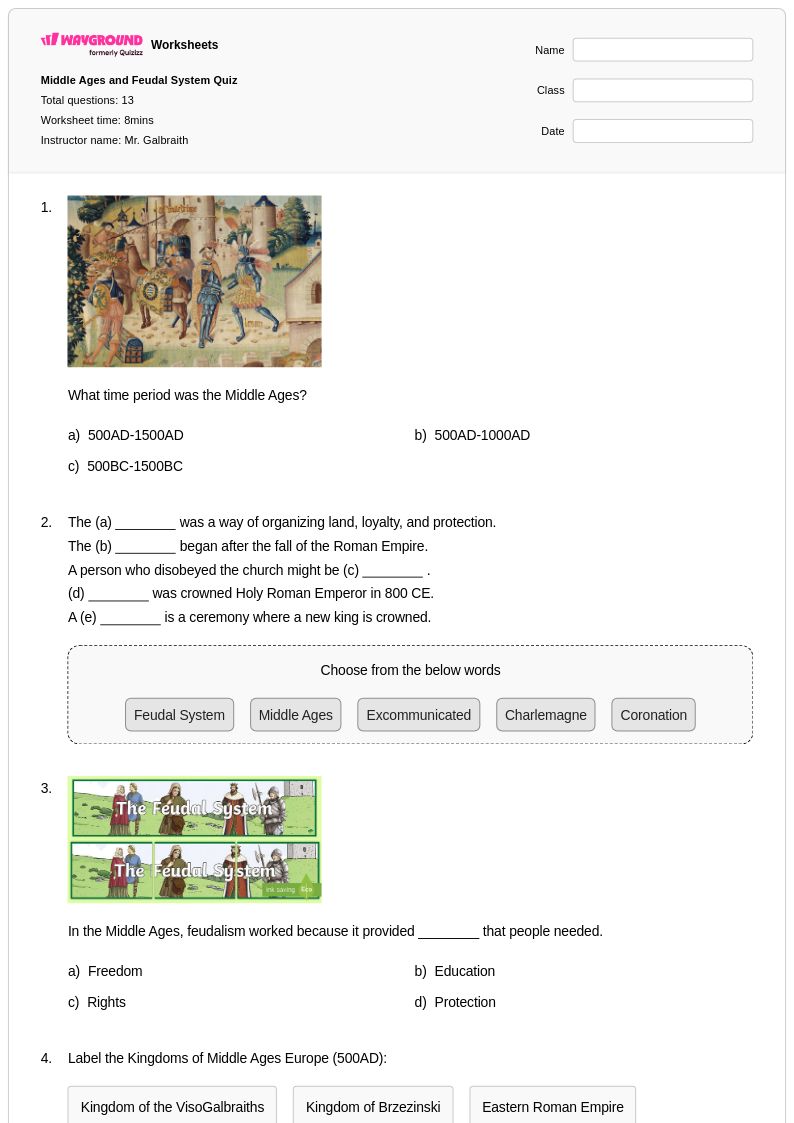
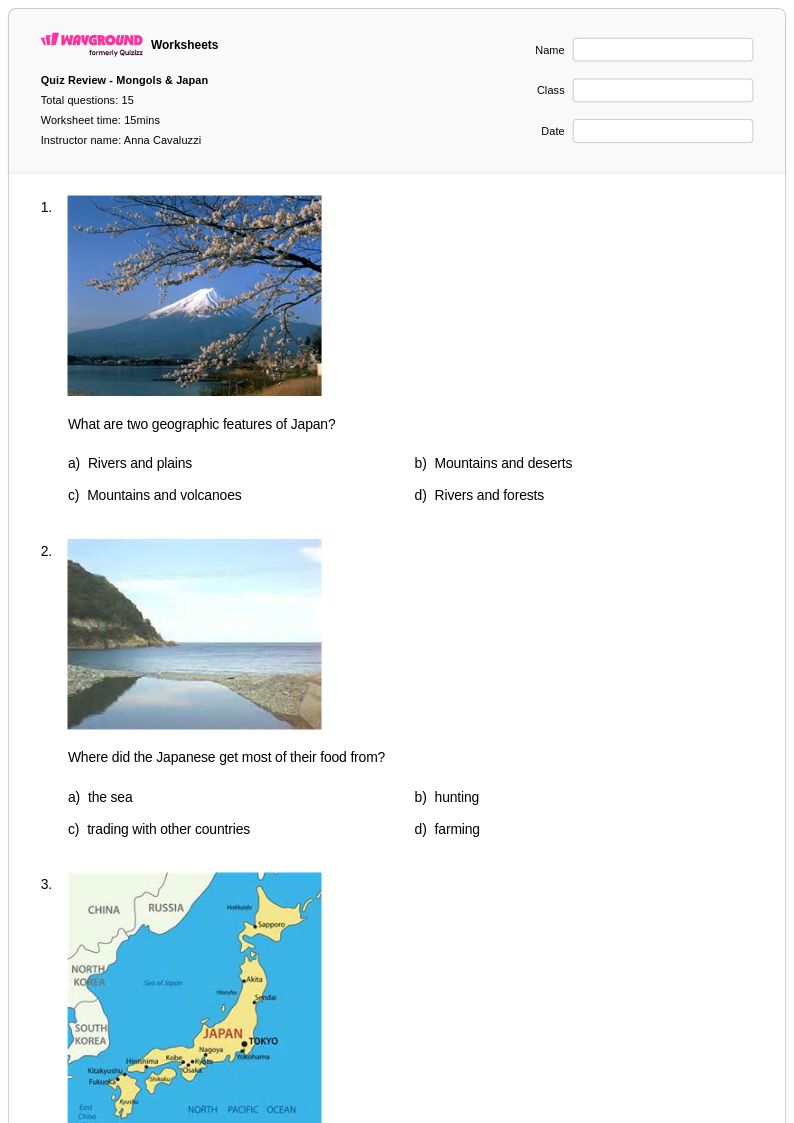
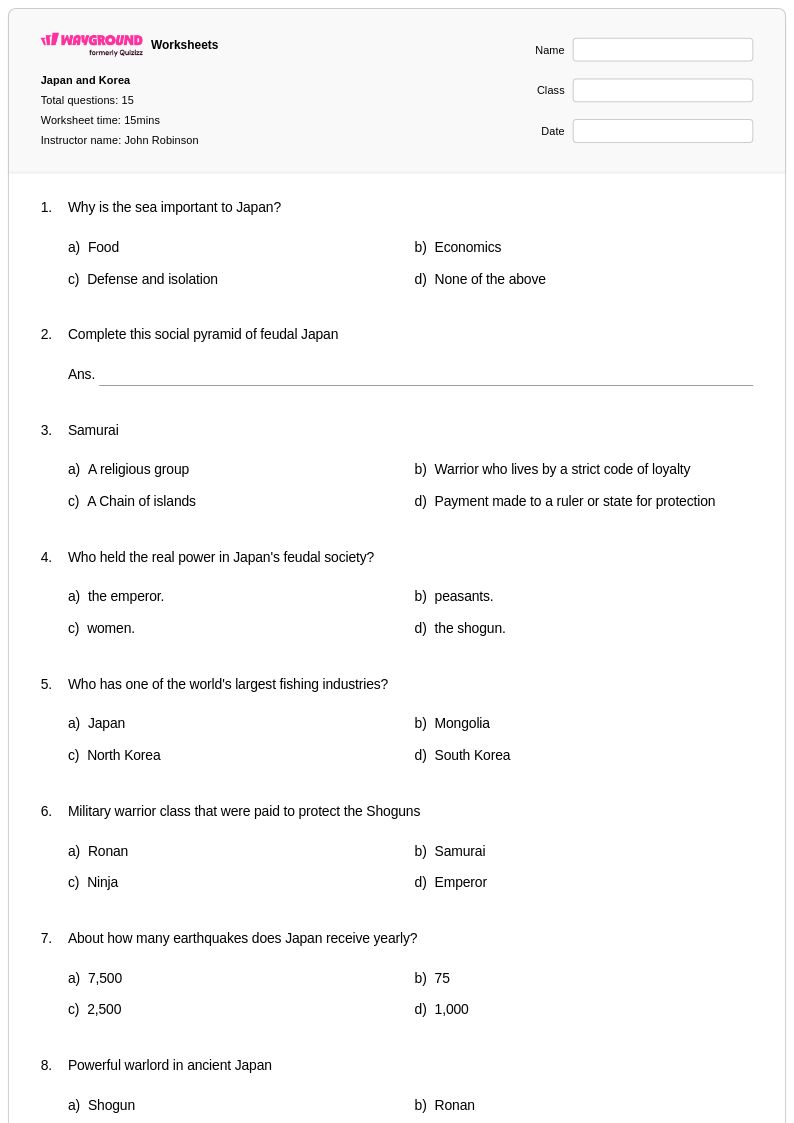
Explore Class 9 Feudal Japan worksheets and printables from Wayground that help students master samurai culture, shogunate systems, and medieval Japanese society through engaging practice problems with comprehensive answer keys.
Explore printable Feudal Japan worksheets for Class 9
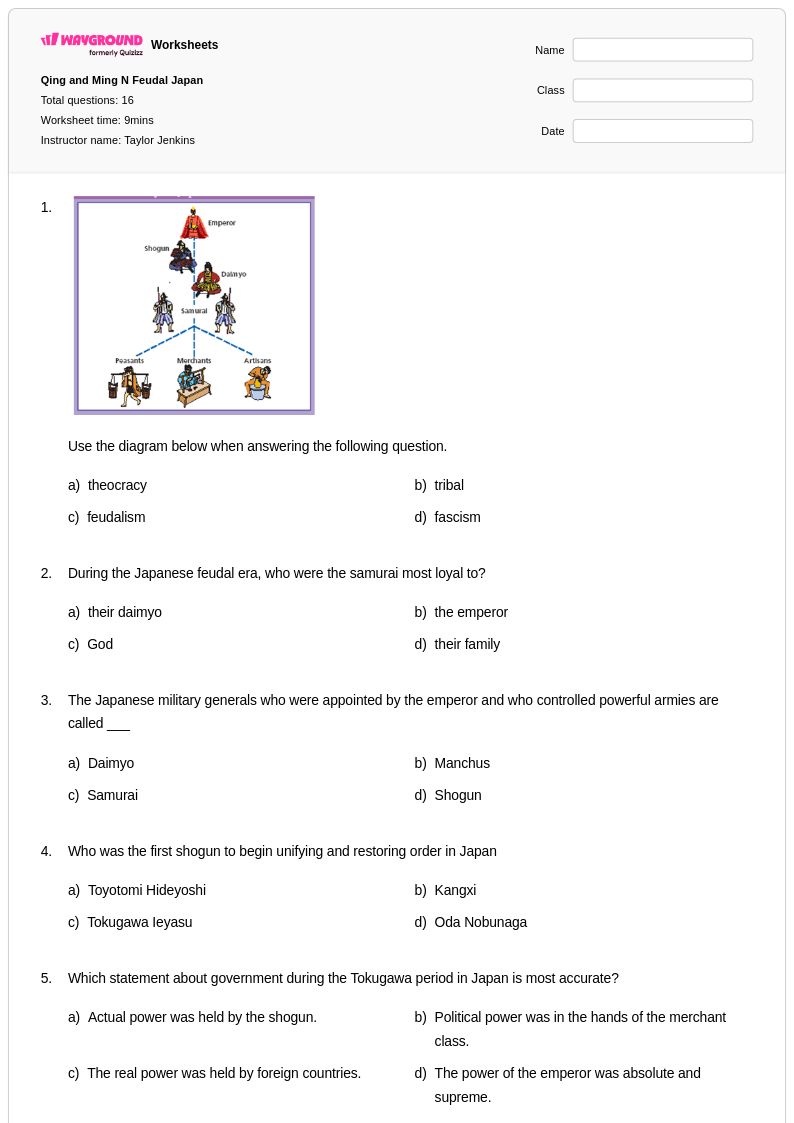
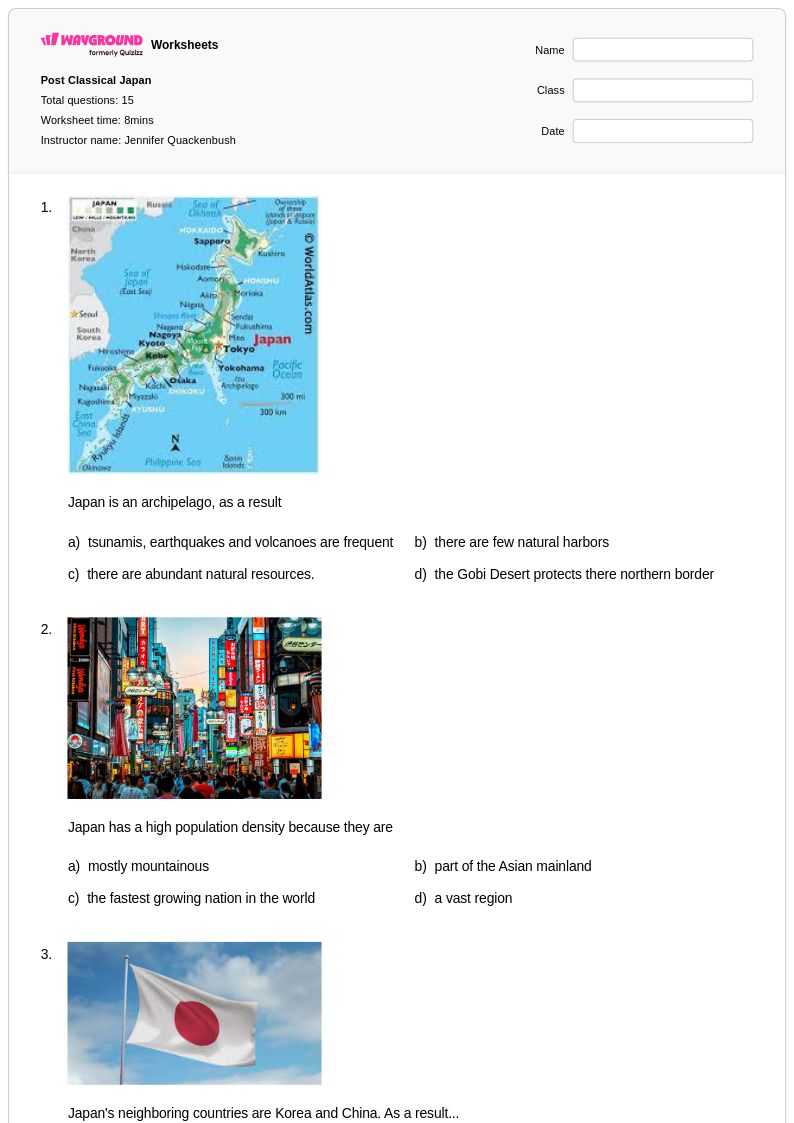
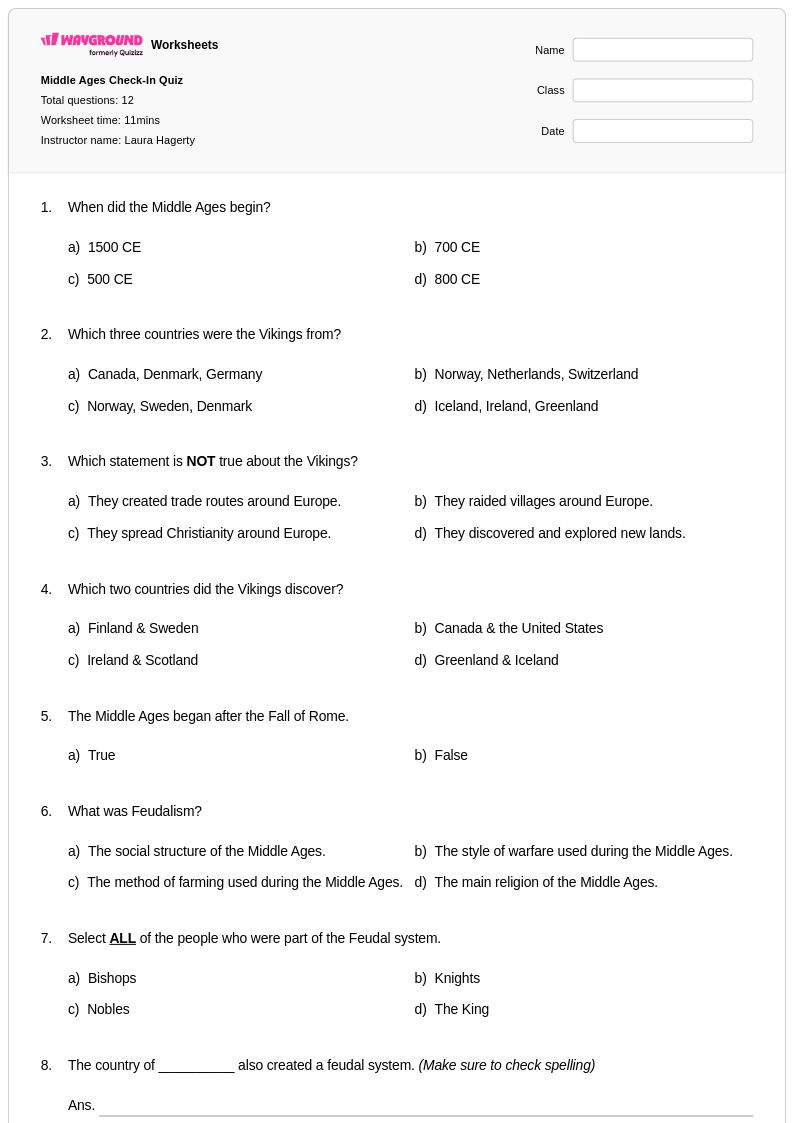
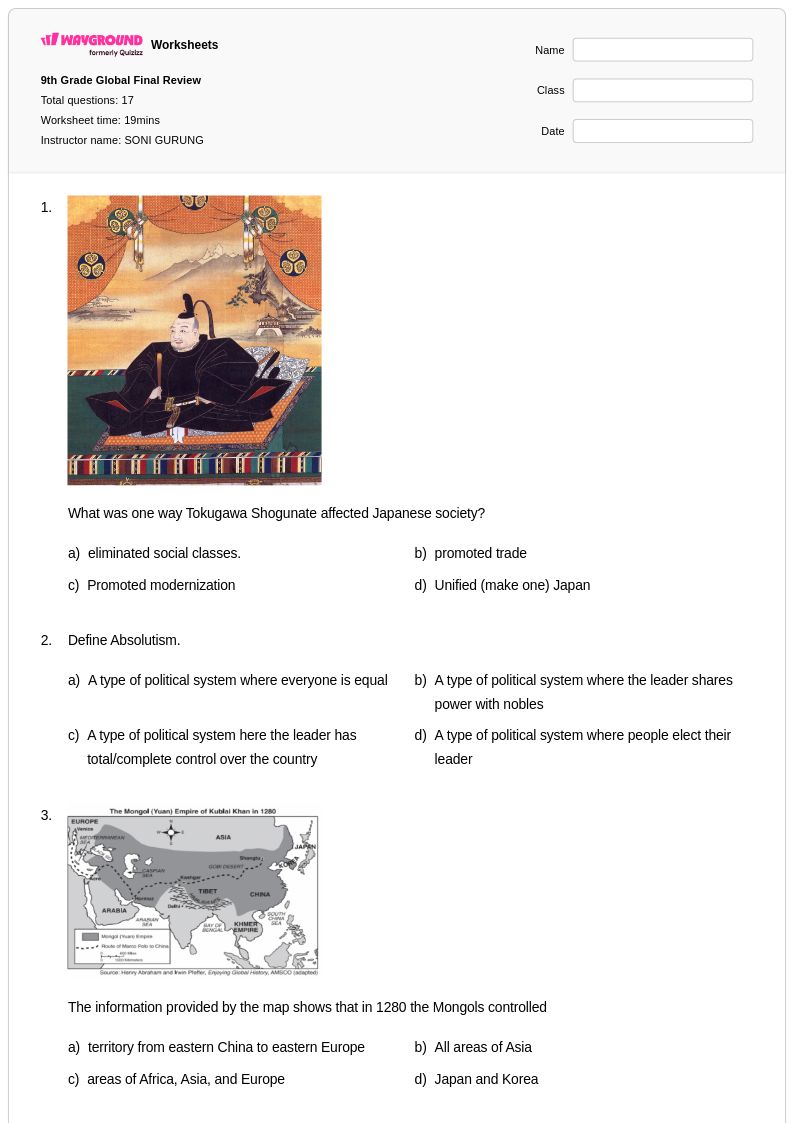
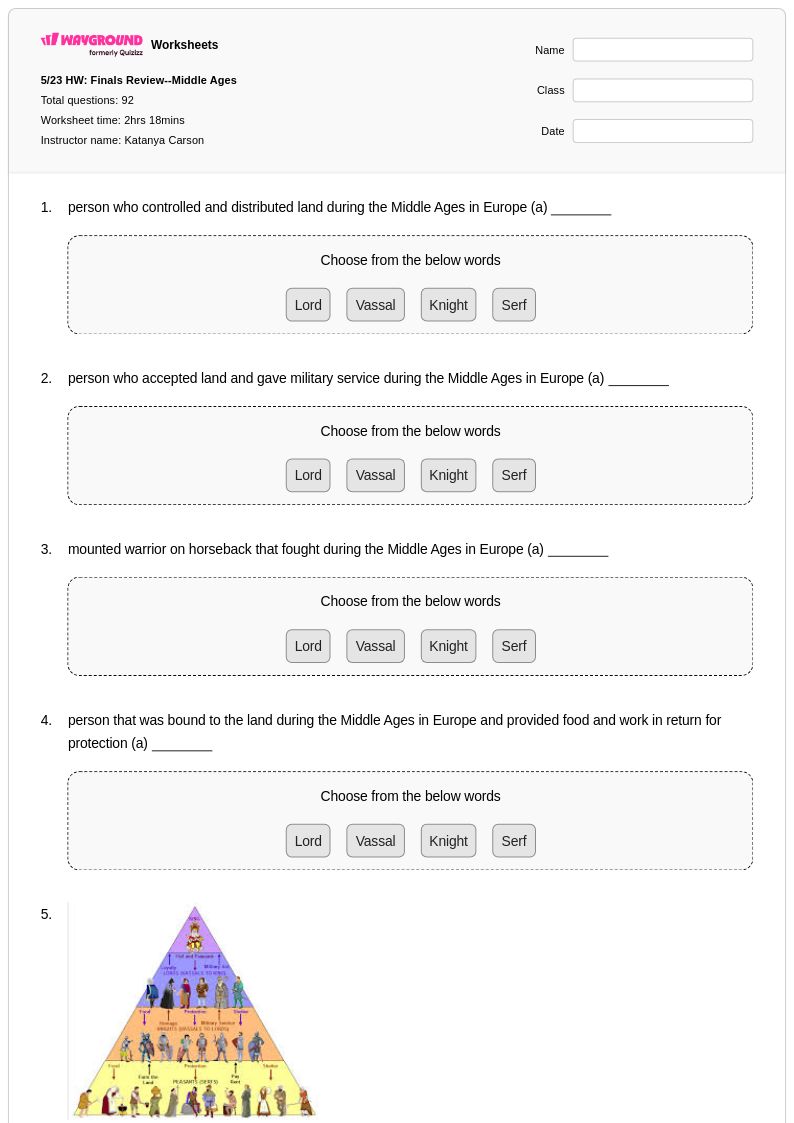
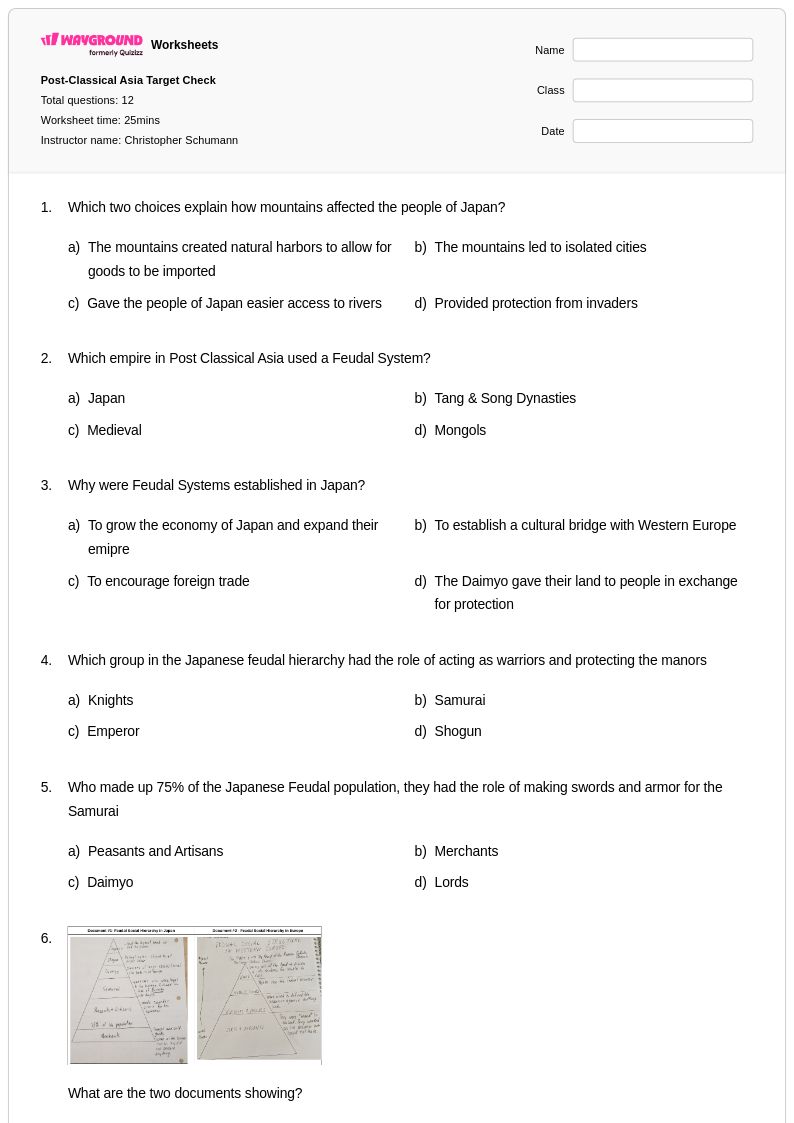
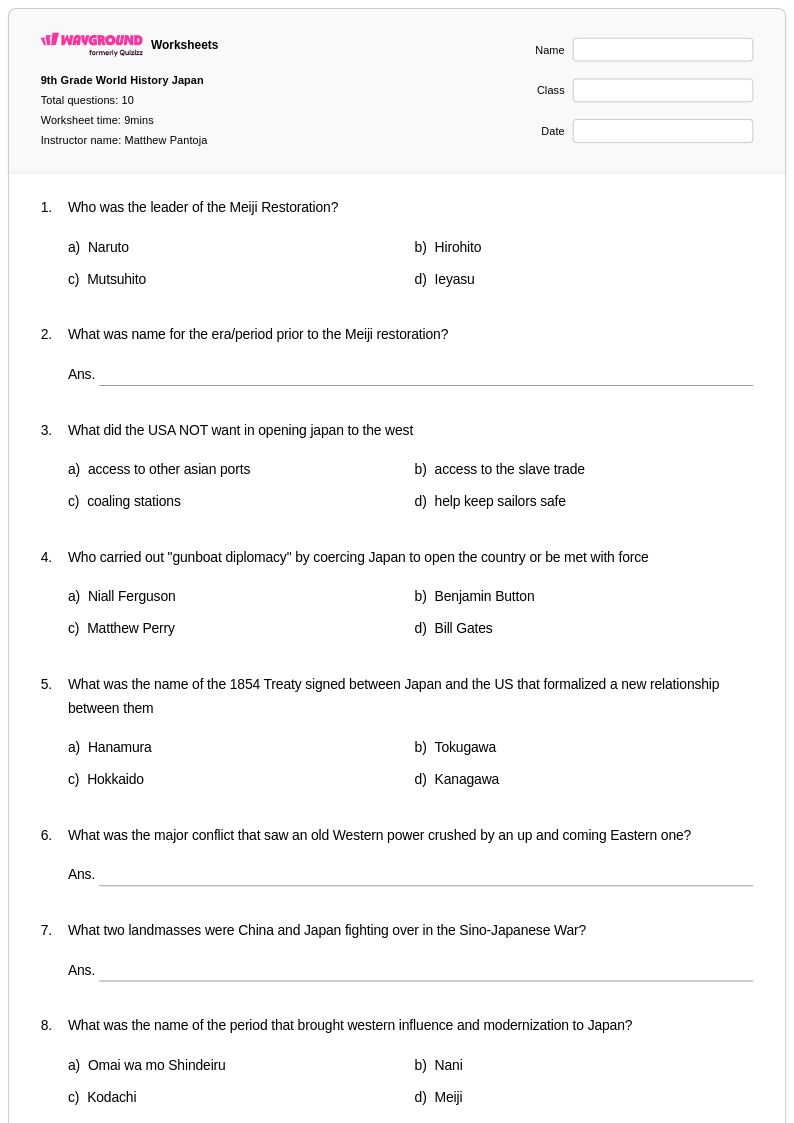
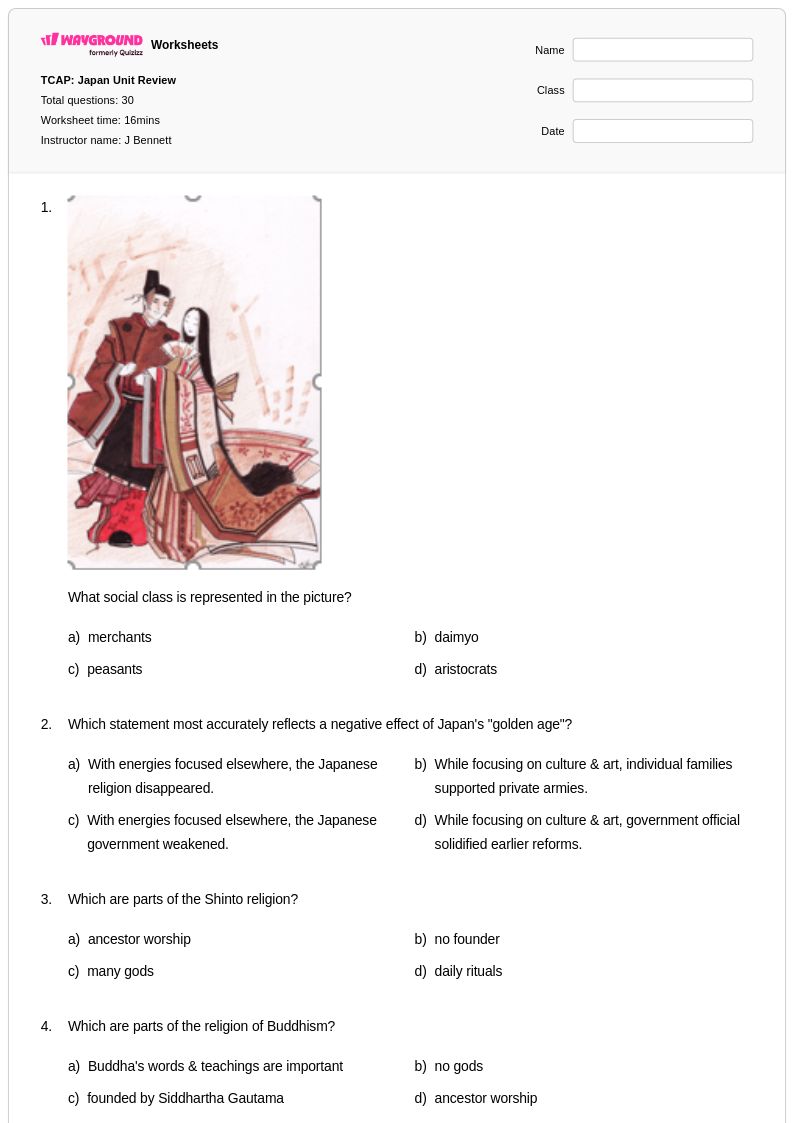
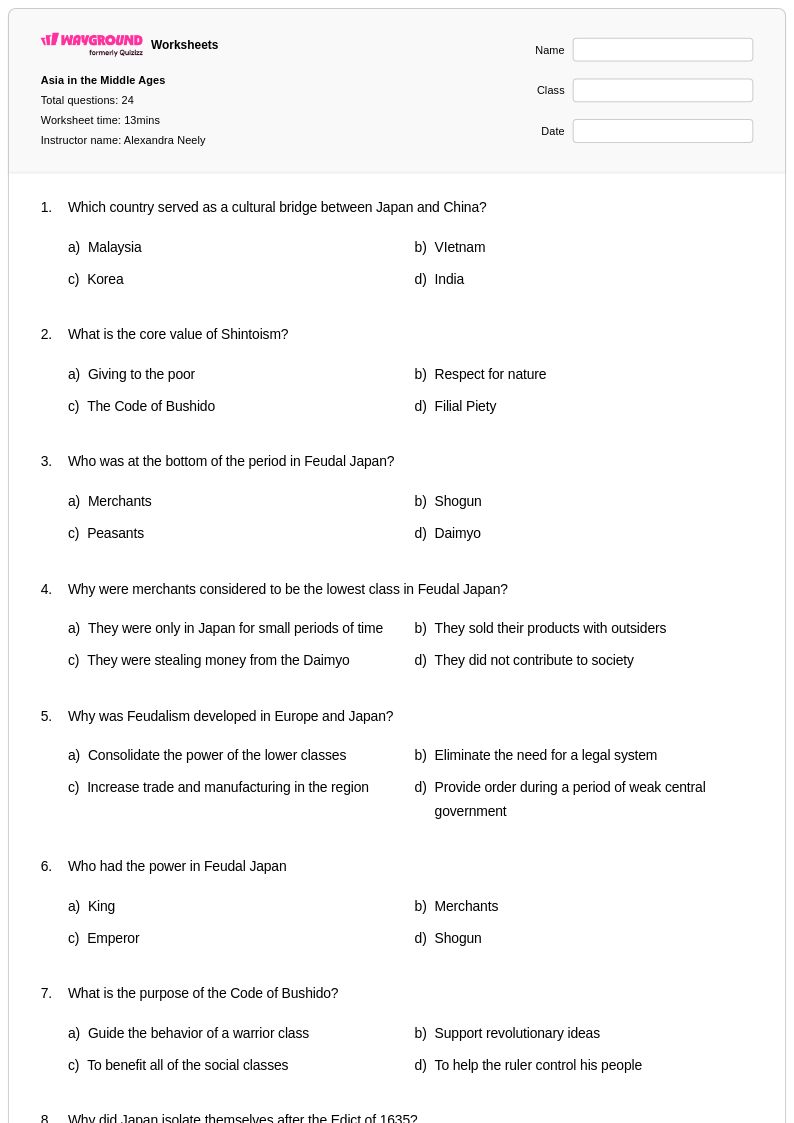
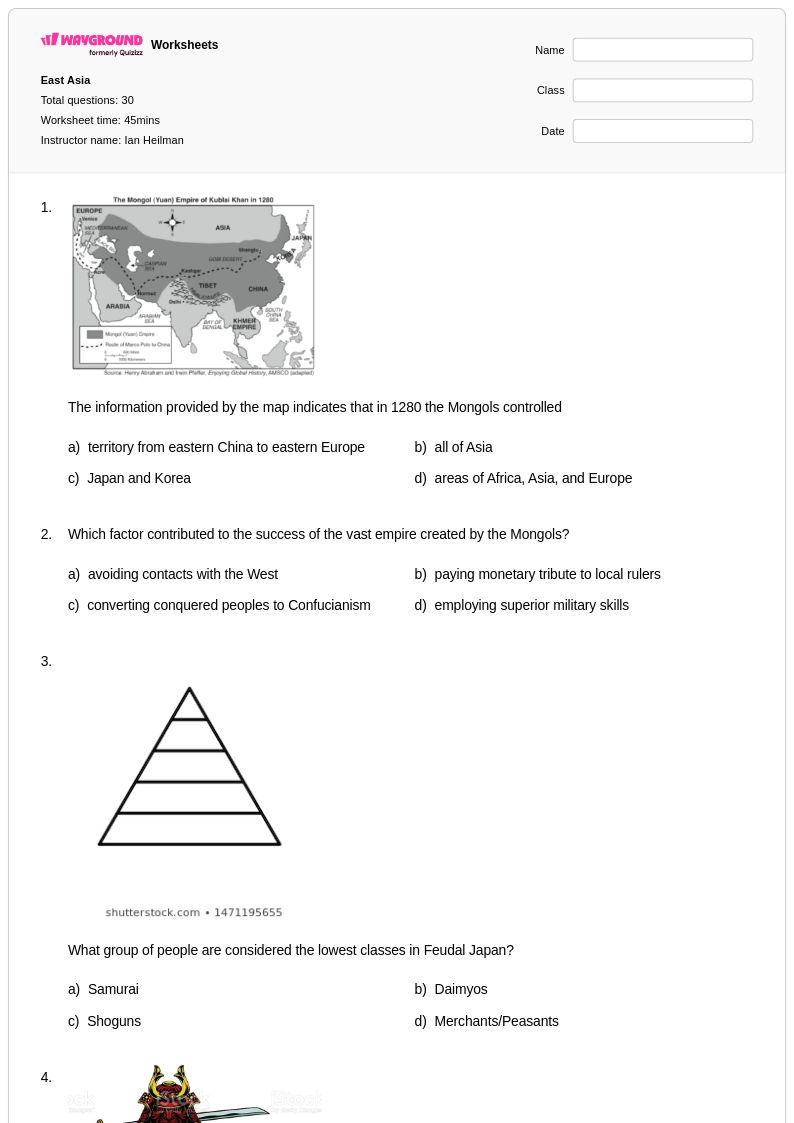
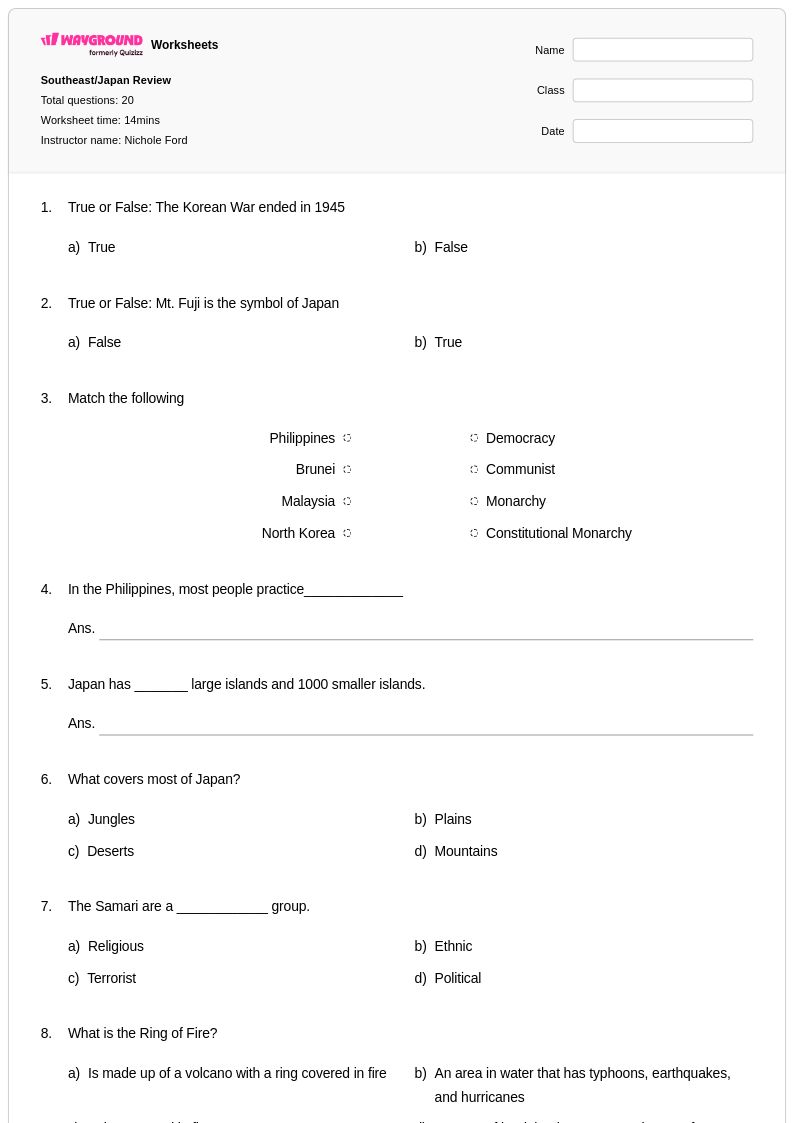
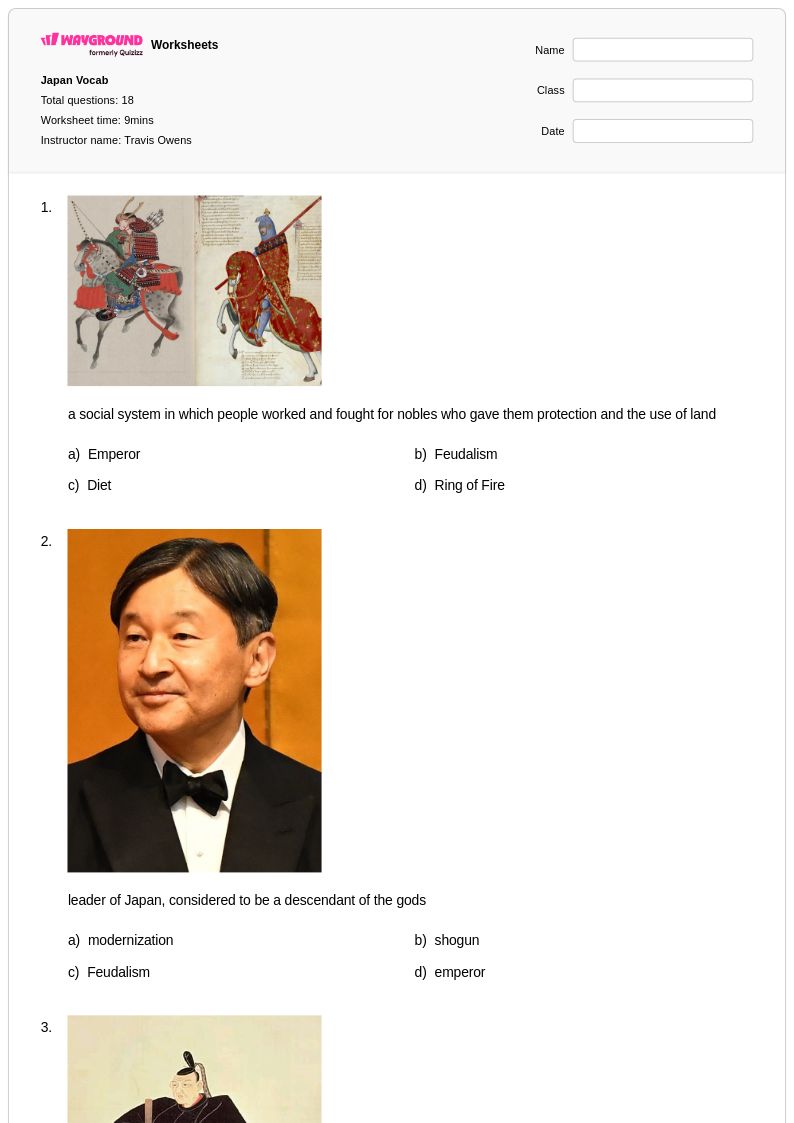
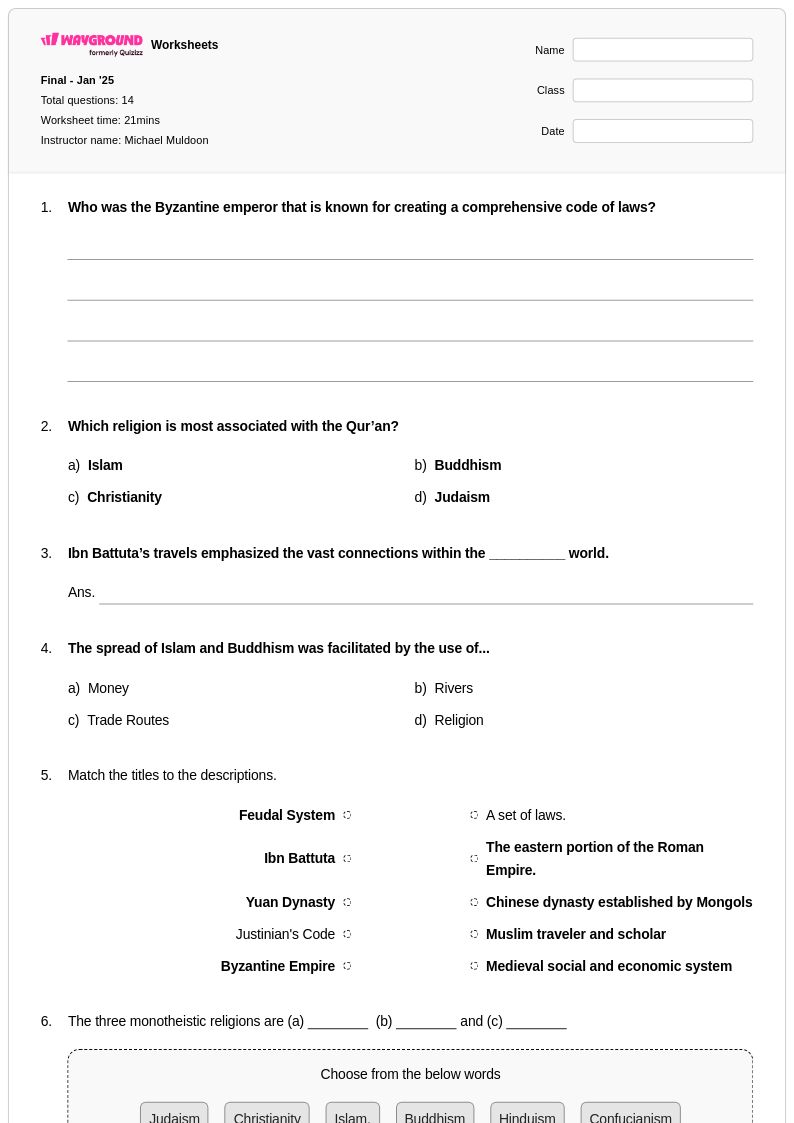
Feudal Japan worksheets for Class 9 students available through Wayground (formerly Quizizz) provide comprehensive exploration of this fascinating period in Japanese history, spanning from approximately 1185 to 1603. These carefully designed resources help students master key concepts including the hierarchical social structure of samurai, daimyo, and peasants, the rise of military government under the shogunate system, and the cultural developments that emerged during this era of decentralized power. The worksheets strengthen critical thinking skills through analysis of primary sources, comparison of feudal systems across different civilizations, and examination of how geography influenced Japan's unique political development. Each printable resource includes detailed answer keys to support both independent study and classroom instruction, while practice problems reinforce understanding of complex topics such as the role of Buddhism and Shintoism in feudal society, the significance of the warrior code of bushido, and the economic relationships between lords and vassals in medieval Japan.
Wayground (formerly Quizizz) empowers educators with access to millions of teacher-created Feudal Japan resources specifically designed for Class 9 social studies instruction. The platform's robust search and filtering capabilities allow teachers to quickly locate materials that align with curriculum standards and match their students' specific learning needs. These differentiation tools enable seamless adaptation of content for diverse learners, while flexible customization options permit educators to modify existing worksheets or create entirely new assessments focusing on particular aspects of Japanese feudalism. Available in both printable PDF format and interactive digital versions, these resources support varied instructional approaches from traditional paper-based activities to technology-enhanced learning experiences. Teachers can efficiently plan comprehensive units that address everything from the Kamakura period's establishment through the Tokugawa shogunate's rise, while utilizing targeted practice materials for remediation and enrichment opportunities that deepen students' understanding of this pivotal era in world history.
FAQs
How do I teach the feudal Japan social hierarchy to middle school students?
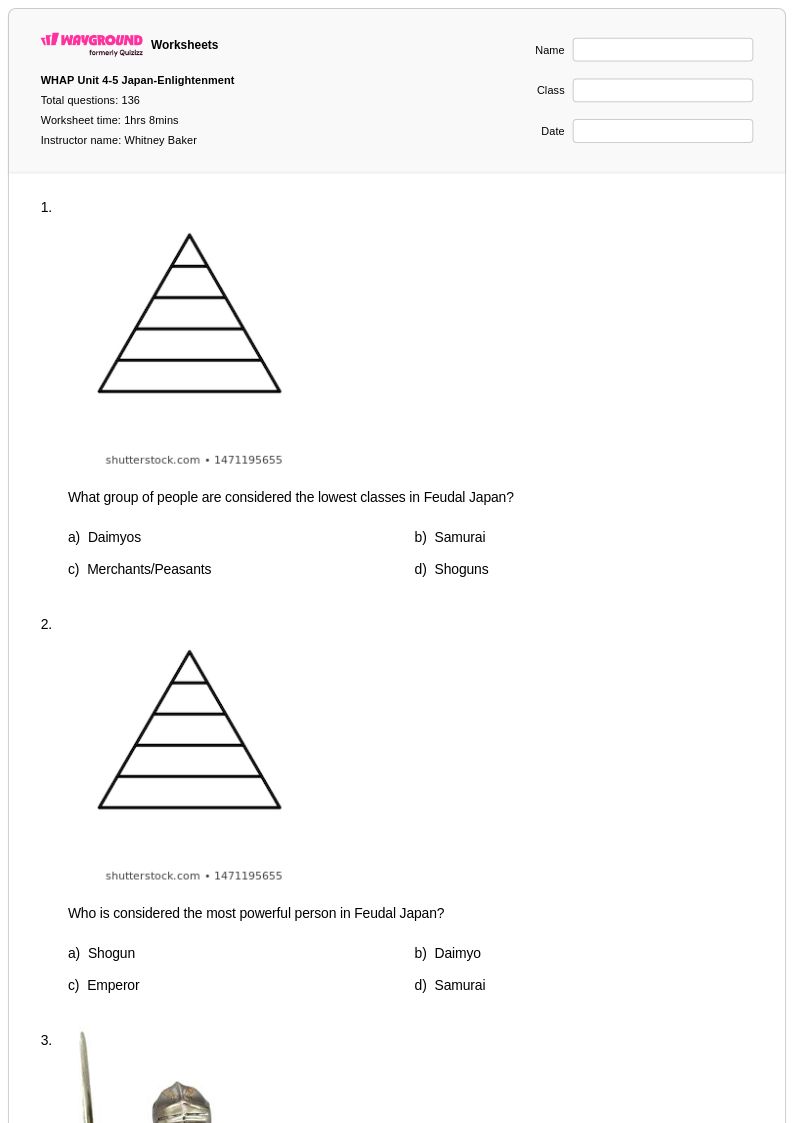
Start by anchoring the lesson around a visual pyramid showing the shogun at the top, followed by daimyo lords, samurai warriors, and peasants at the base. Help students draw comparisons to European feudalism, since the parallel structure makes the hierarchy more intuitive and memorable. Primary source documents, maps, and visual artifacts are especially effective for grounding abstract power structures in real historical evidence.
What activities help students practice understanding the feudal Japan social system?
Timeline activities that reinforce chronological thinking are highly effective for building a structured understanding of feudal Japan's development. Comparative exercises that ask students to analyze similarities and differences between Japanese and European feudal systems deepen analytical thinking. Scenario-based activities that place students in historical roles, such as a samurai serving a daimyo, bring social hierarchies to life in an engaging way.
What common mistakes do students make when learning about feudal Japan?
Students frequently conflate the roles of the shogun and the emperor, misunderstanding that the emperor held ceremonial power while the shogun wielded actual military and political authority. Another common error is treating samurai culture as monolithic, when in practice samurai obligations, codes, and daily lives varied across regions and time periods. Examining primary source documents and artifacts directly helps students move beyond oversimplified characterizations.
How can I use feudal Japan worksheets to compare medieval societies across cultures?
Cross-cultural comparison activities work well when students examine shared features, such as land-based power, warrior classes, and strict social stratification, between feudal Japan and medieval Europe. Structured graphic organizers or Venn diagrams prompt students to identify both similarities and meaningful differences, such as the role of religion, the status of merchants, and the nature of loyalty obligations. This comparative approach builds broader historical thinking skills beyond a single civilization.
How do I use Wayground's feudal Japan worksheets in my classroom?
Wayground's feudal Japan worksheets are available as printable PDFs for traditional classroom use and in digital formats for technology-integrated learning environments. Teachers can also host worksheets as quizzes directly on Wayground, making them suitable for in-class review, formative assessment, or independent practice. Each worksheet includes a complete answer key, supporting both teacher-led correction and student self-assessment.
How can I differentiate feudal Japan instruction for students at different levels?
For students who need additional support, scaffolded materials with visual aids and simplified primary source excerpts help reduce cognitive load while keeping content rigorous. Advanced students benefit from enrichment tasks that ask them to analyze deeper historical connections, such as how the samurai code influenced modern Japanese values. On Wayground, teachers can apply individual accommodations including read aloud, extended time, and reduced answer choices to meet diverse learner needs without disrupting the rest of the class.