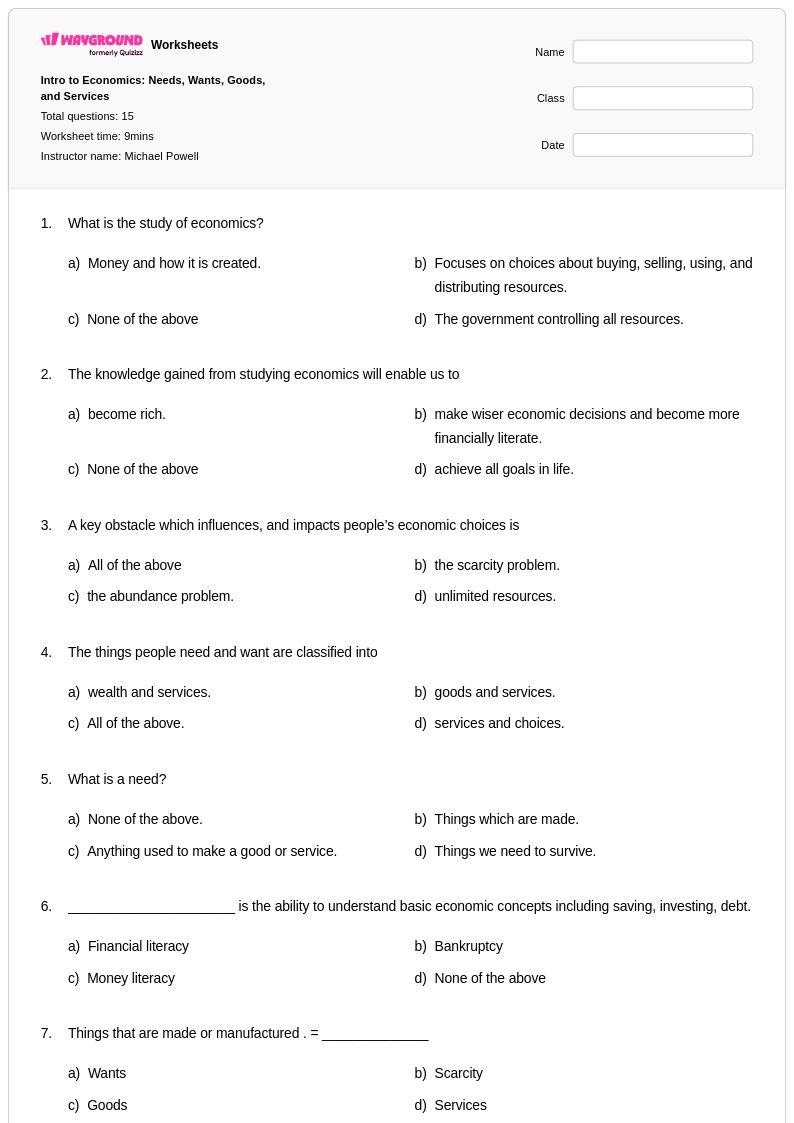
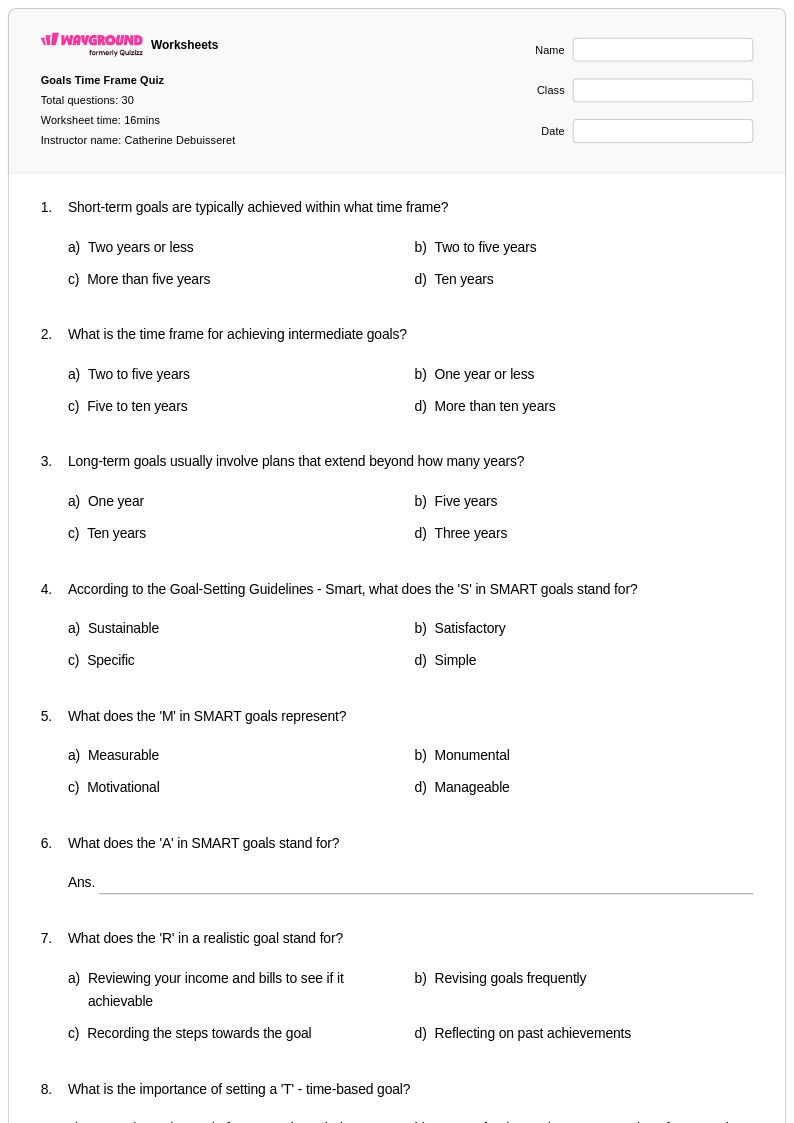
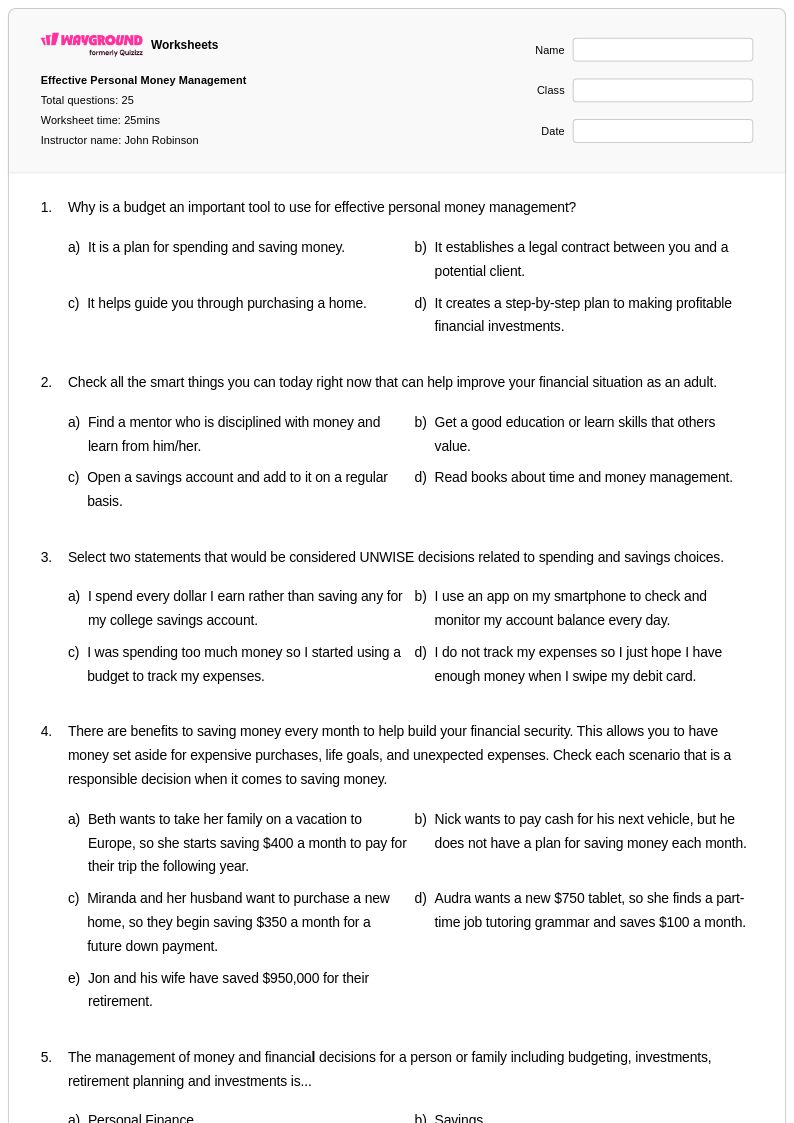
Free Printable Financial Goals Worksheets for Class 9
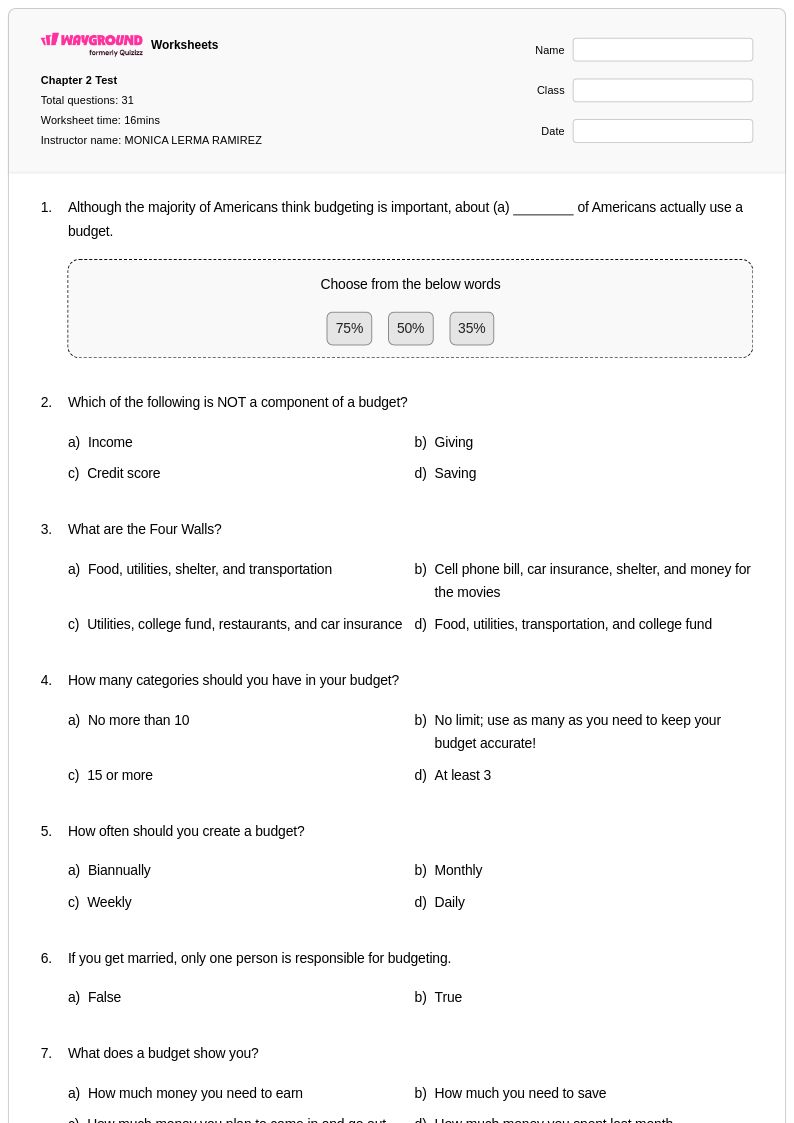
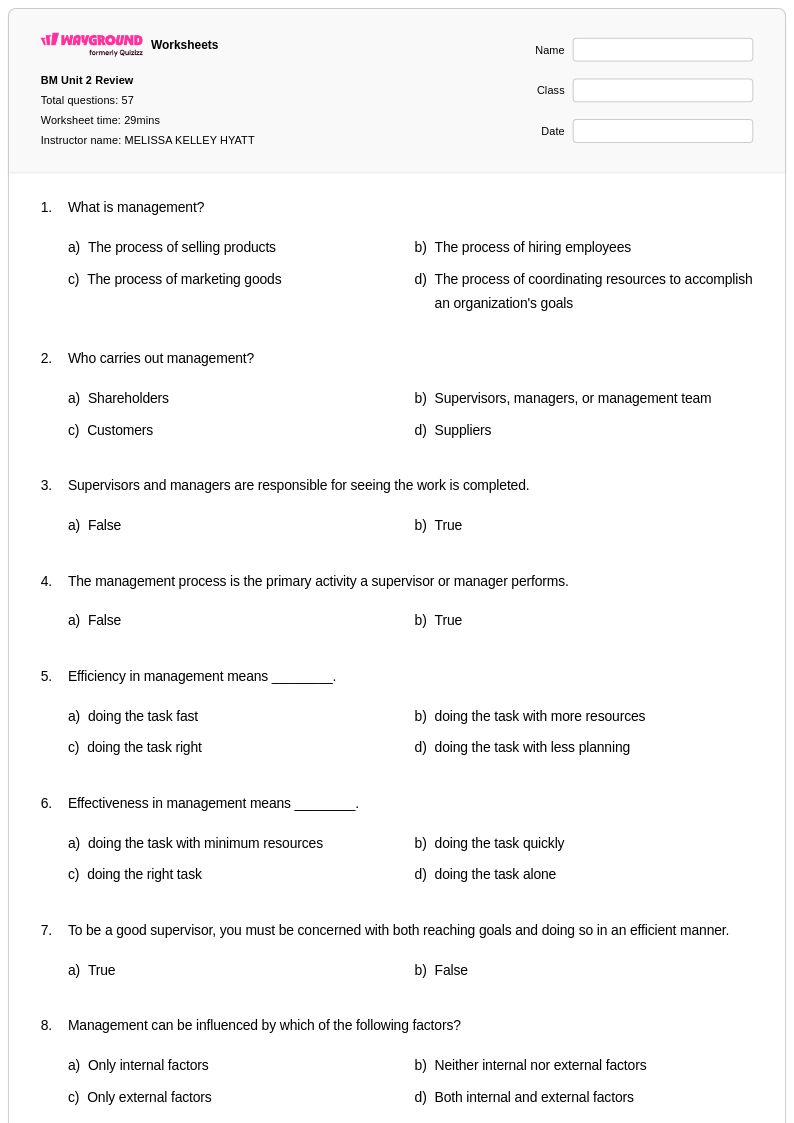
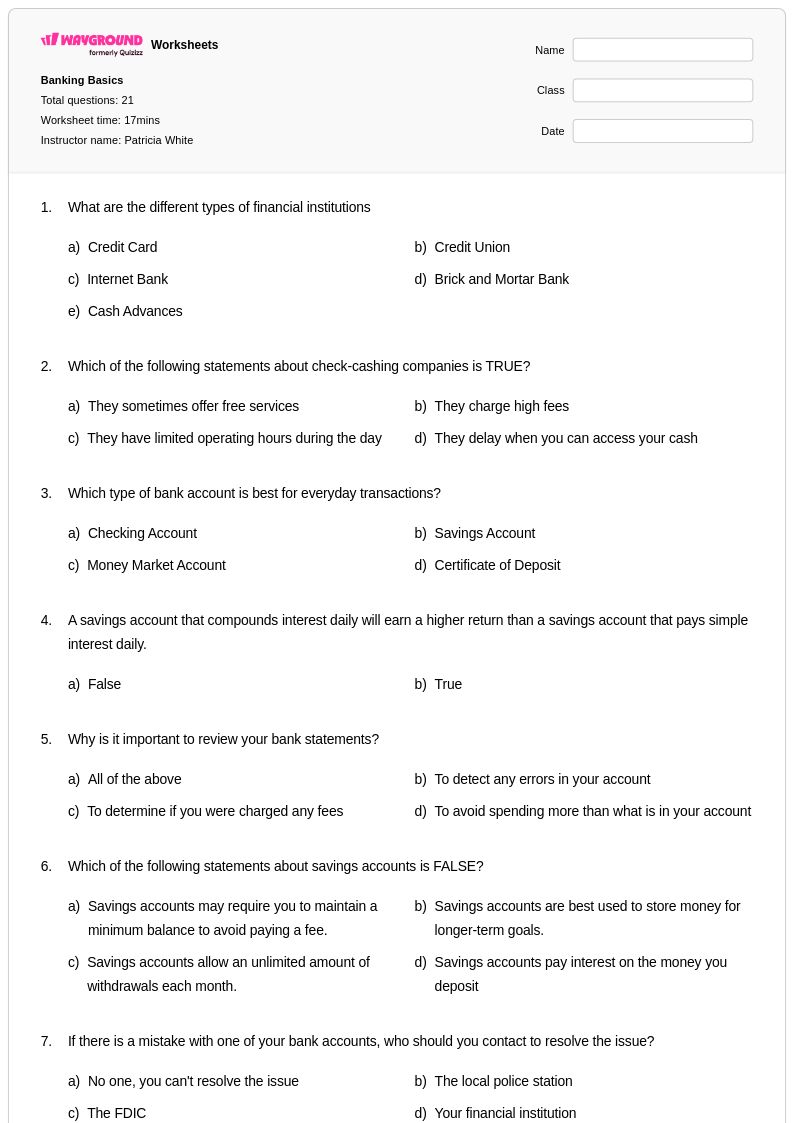
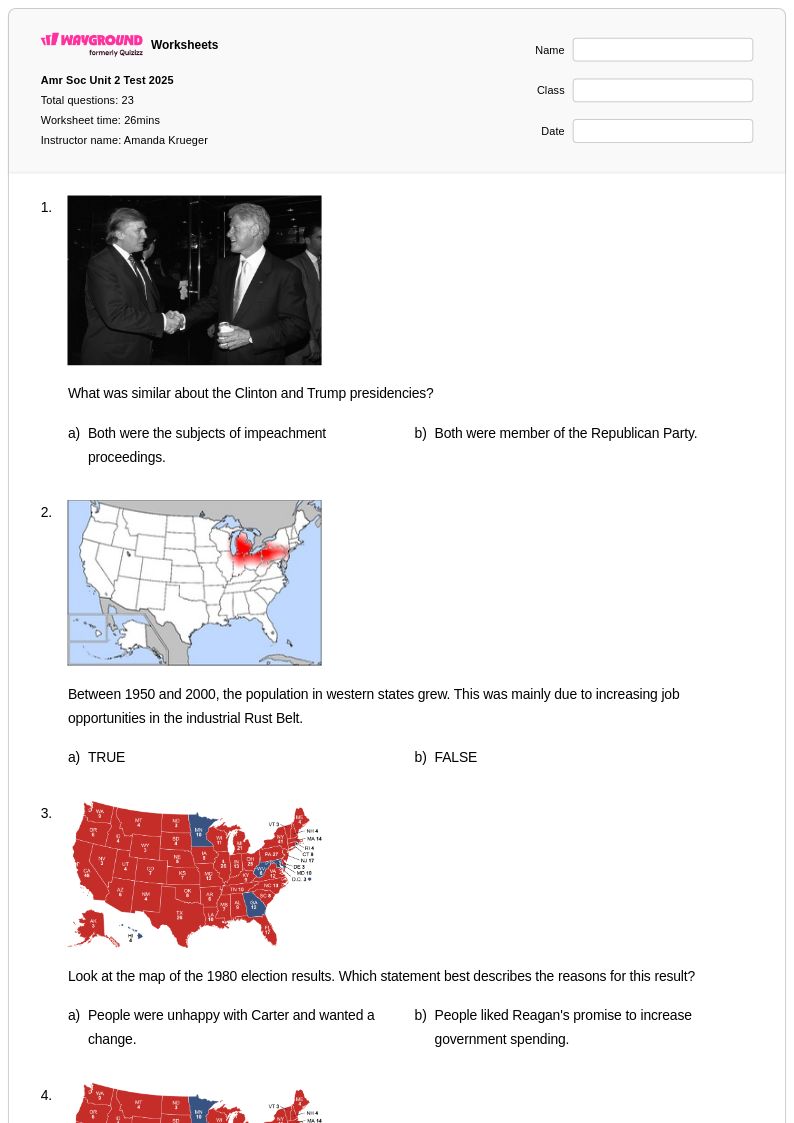
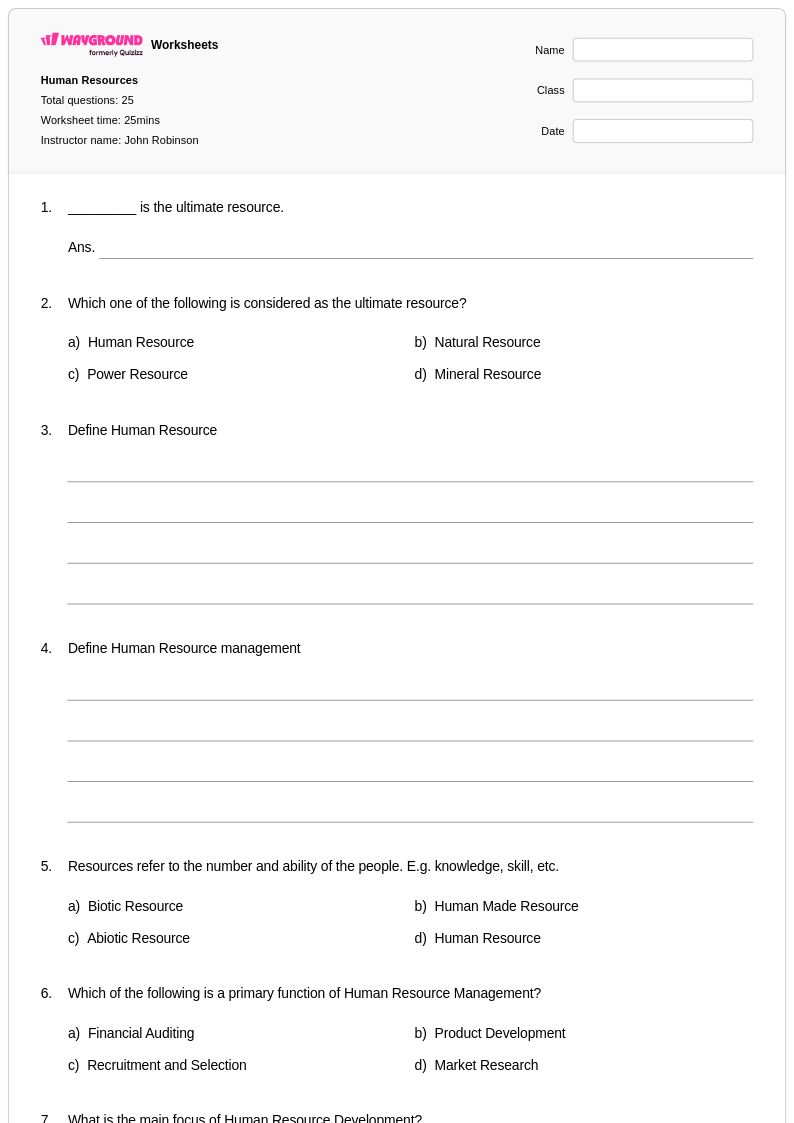
Free Class 9 financial goals worksheets and printables help students master personal finance planning through engaging practice problems, covering budgeting, saving strategies, and long-term financial planning with comprehensive answer keys.
Explore printable Financial Goals worksheets for Class 9
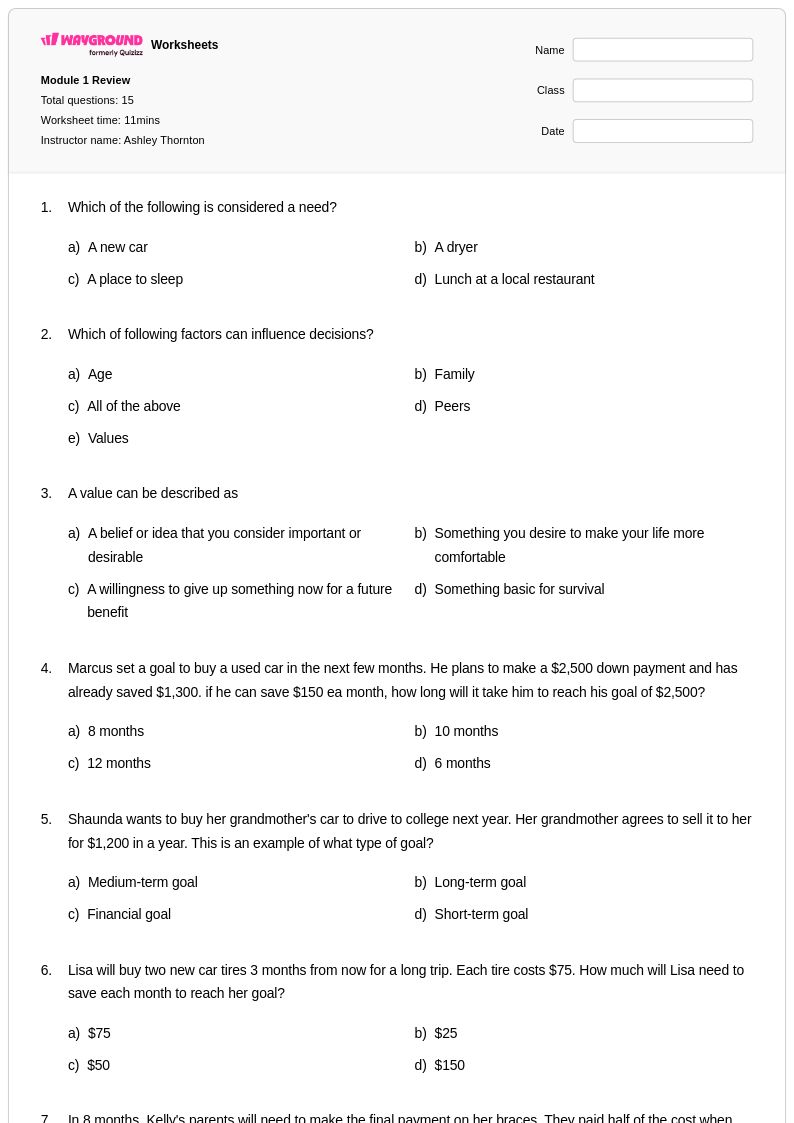
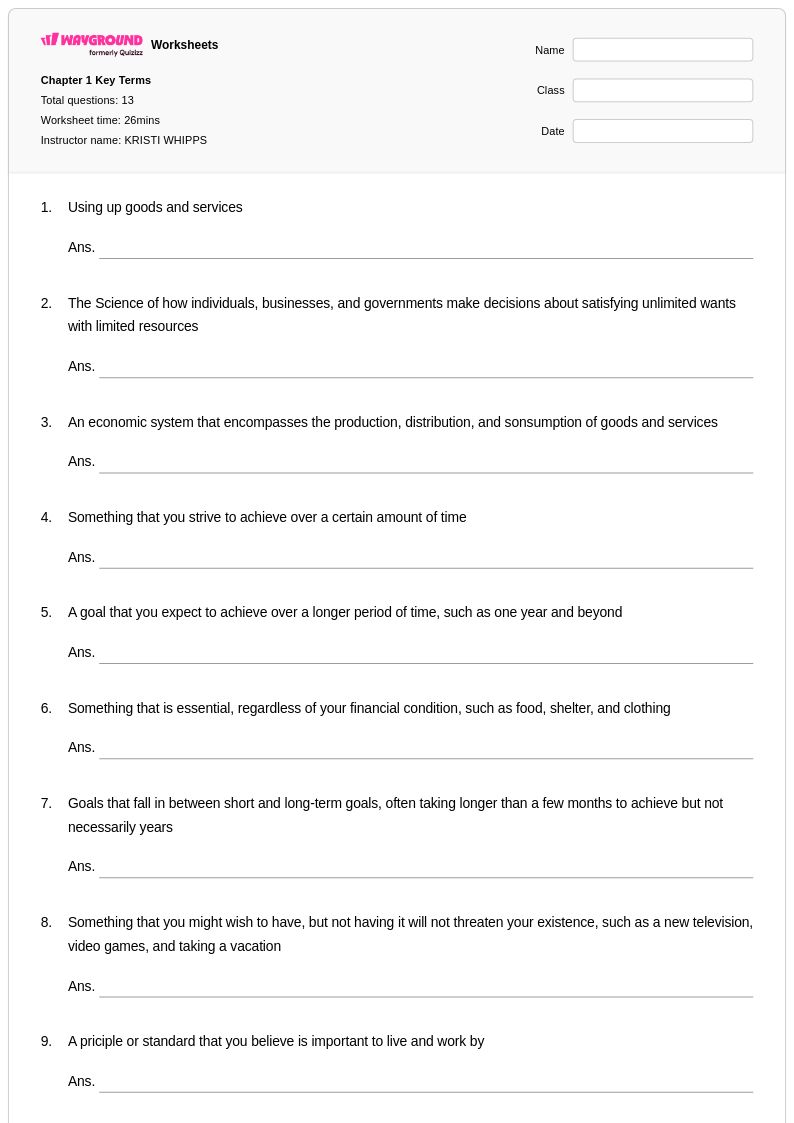
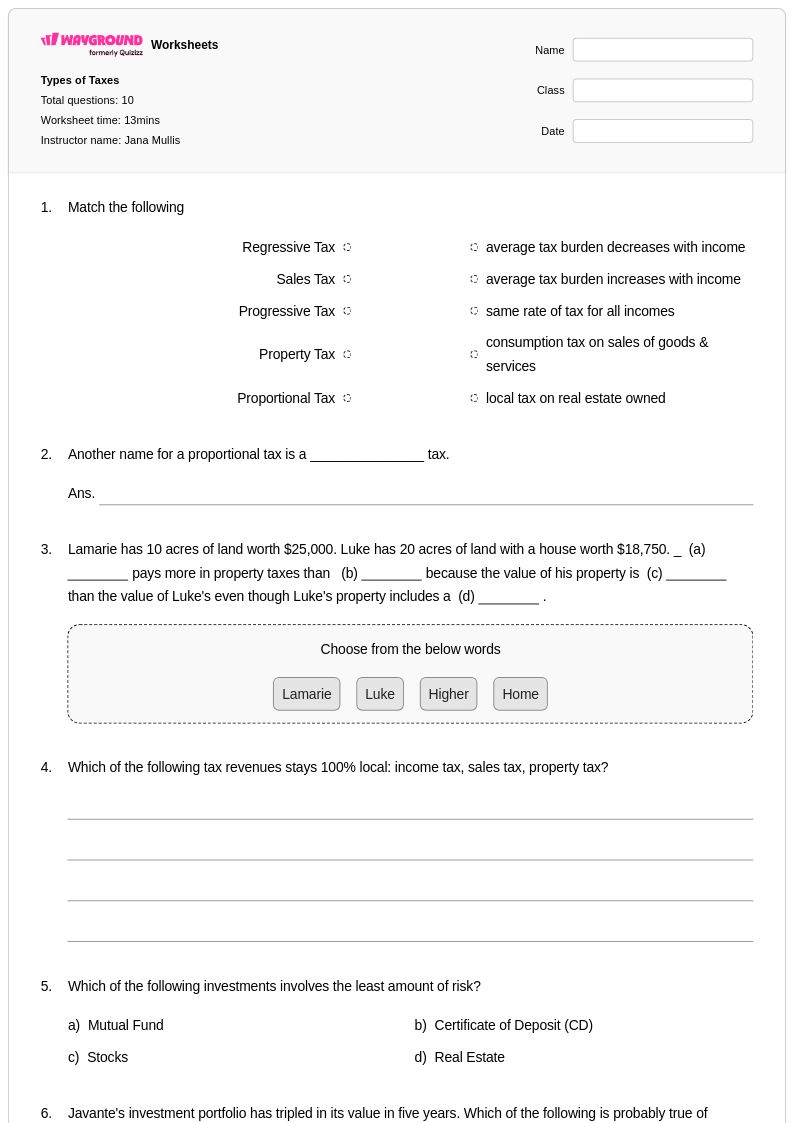
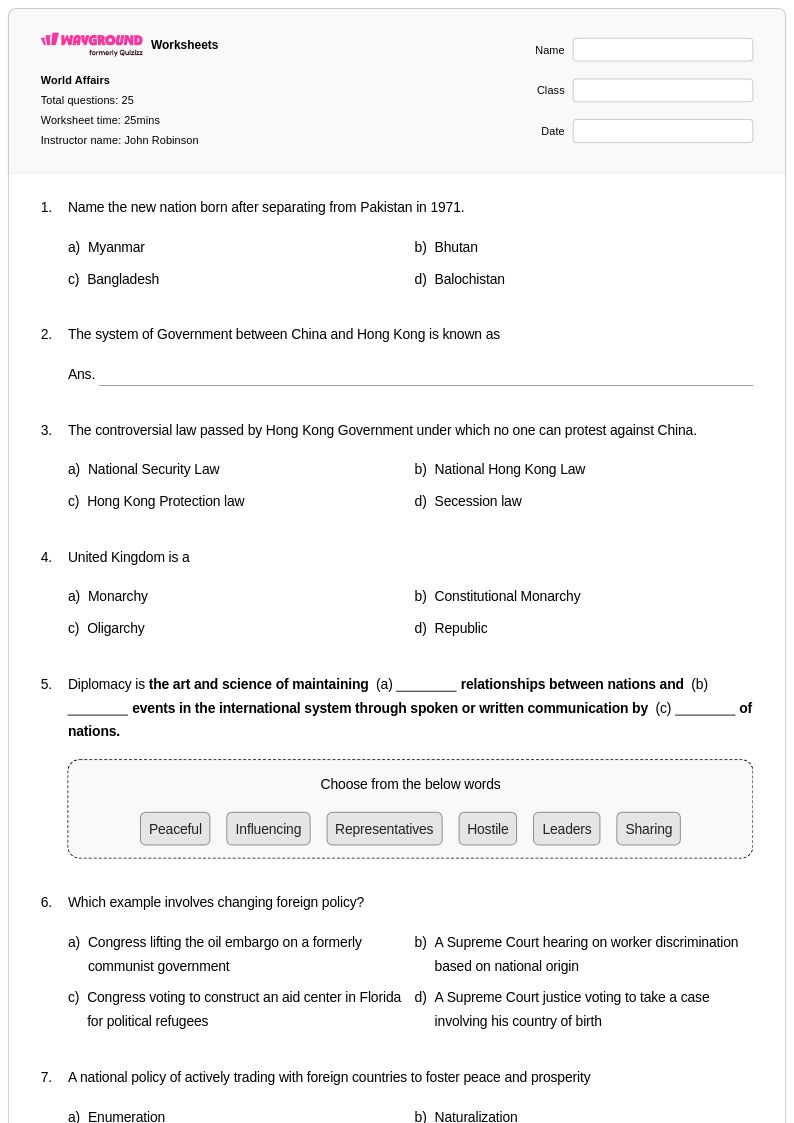
Financial goals worksheets for Class 9 students through Wayground (formerly Quizizz) provide comprehensive practice in understanding and developing personal financial planning strategies essential for economic literacy. These educational resources strengthen critical skills including distinguishing between short-term and long-term financial objectives, calculating savings requirements for specific goals, analyzing opportunity costs of financial decisions, and creating realistic budget plans that align with individual aspirations. Students engage with practice problems that simulate real-world scenarios such as saving for college, purchasing a car, or building an emergency fund, while comprehensive answer keys support independent learning and enable educators to efficiently assess student comprehension of fundamental economic principles presented in accessible pdf formats.
Wayground (formerly Quizizz) supports educators with an extensive collection of teacher-created financial goals worksheets that leverage millions of educational resources designed specifically for Class 9 economics instruction. The platform's robust search and filtering capabilities allow teachers to quickly locate materials that align with state and national economics standards, while differentiation tools enable customization for diverse learning needs and skill levels. These flexible resources are available in both printable and digital formats, including downloadable pdf versions, making them ideal for classroom instruction, homework assignments, remediation support, and enrichment activities that help students master essential financial literacy concepts and develop practical money management skills that will serve them throughout their academic and professional careers.
FAQs
How do I teach students to set financial goals?
Effective financial goals instruction begins by helping students distinguish between short-term goals (saving for a purchase within months) and long-term goals (college tuition or home ownership). Teachers typically use structured planning frameworks that ask students to identify a goal, estimate its cost, assess income sources, and calculate a realistic savings timeline. Connecting these steps to students' own lives increases engagement and makes abstract economic concepts concrete and actionable.
What exercises help students practice financial goal-setting skills?
Practice exercises that are most effective include calculating savings rates based on sample income scenarios, comparing the cost of delayed versus immediate saving, and evaluating trade-offs between competing financial priorities. Worksheets that walk students through budgeting decisions — such as allocating a monthly income across needs, wants, and savings — give students repeated practice with the underlying math and decision-making process. These structured problem sets help students internalize goal-setting as a repeatable skill rather than a one-time activity.
What mistakes do students commonly make when learning about financial goals?
One of the most common misconceptions is that students treat saving as what is left over after spending, rather than as a fixed, intentional allocation. Students also frequently underestimate the impact of interest accumulation and the time value of money, leading them to undervalue early saving habits. Another recurring error is failing to account for unexpected expenses when projecting savings timelines, which causes students to set unrealistic goals.
How can I differentiate financial goals instruction for students at different levels?
For students new to economic concepts, foundational worksheets that focus on simple budgeting and short-term goal-setting provide an accessible entry point before introducing compound interest or multi-year planning. Advanced learners benefit from more complex scenarios involving trade-offs between competing goals, variable income, or the time value of money. On Wayground, teachers can apply individual accommodations such as reduced answer choices or read-aloud support for students who need additional scaffolding, while the rest of the class works with default settings.
How do I use Wayground's financial goals worksheets in my classroom?
Wayground's financial goals worksheets are available as printable PDFs for traditional classroom use and in digital formats for technology-integrated or remote learning environments, and teachers can also host them as a quiz directly on Wayground. Each worksheet includes a complete answer key, so teachers can use them for guided practice, independent work, or formative assessment without additional preparation. The platform's search and filtering tools allow educators to quickly find materials aligned with specific curriculum standards and learning objectives.
How do financial goals worksheets support economic literacy development?
Financial goals worksheets build economic literacy by requiring students to apply real-world skills such as analyzing income sources, calculating savings rates, and evaluating competing financial priorities within structured problem-solving contexts. This combination of mathematical application and decision-making develops the critical thinking skills students need to navigate personal financial decisions throughout their lives. Regular practice with these concepts helps students move from passive awareness of financial principles to active competency in applying them.