Free Printable Finding Average Worksheets for Class 5
Free Class 5 finding average worksheets and printables help students master calculating mean values through engaging practice problems, complete with answer keys and downloadable PDFs from Wayground.
Explore printable Finding Average worksheets for Class 5
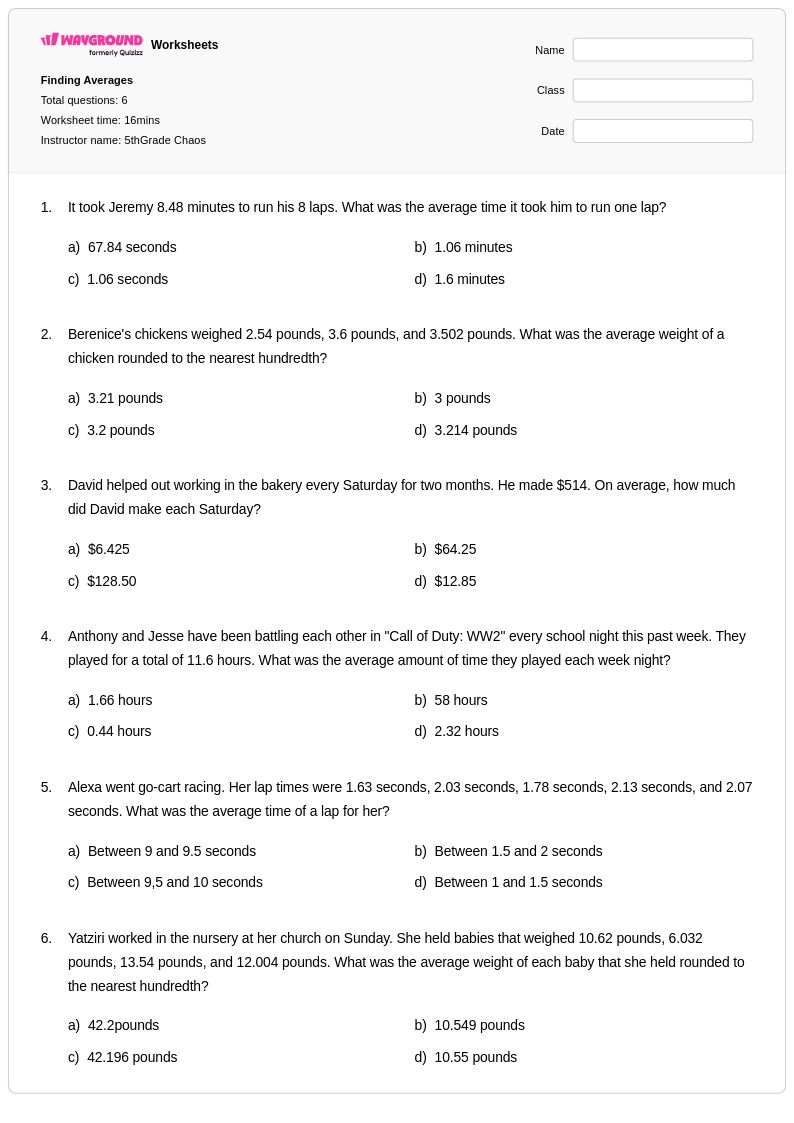
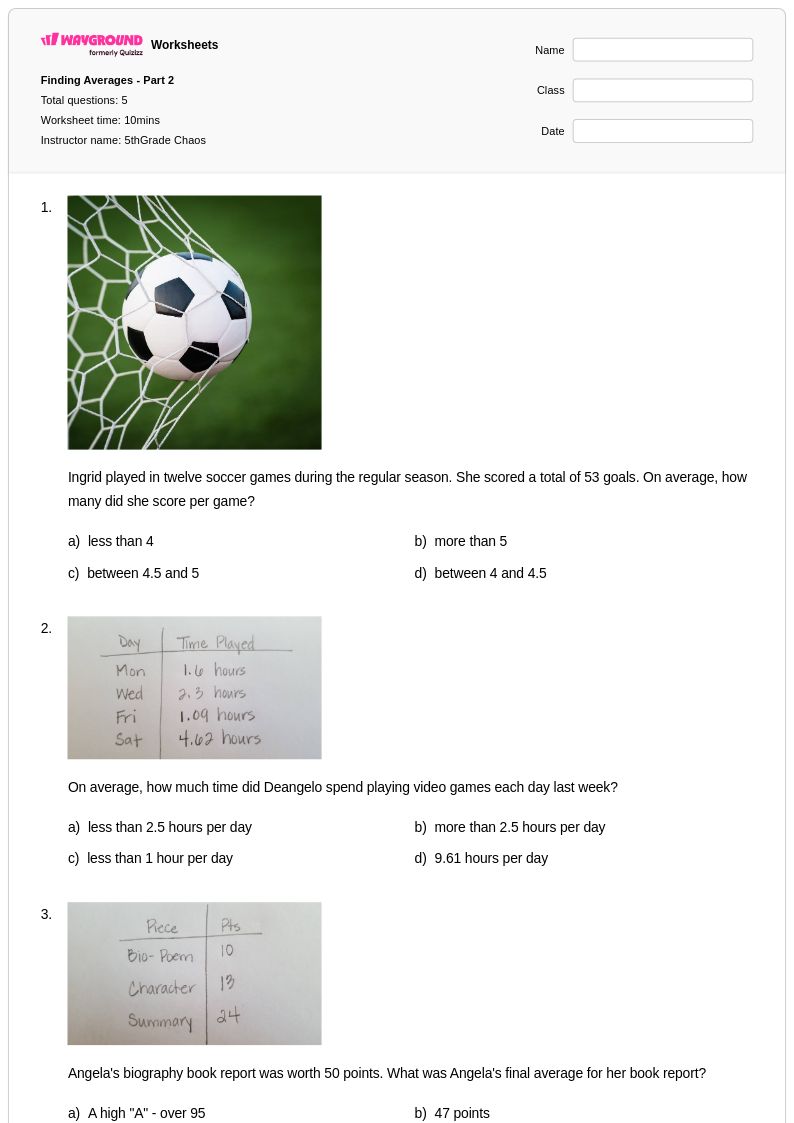
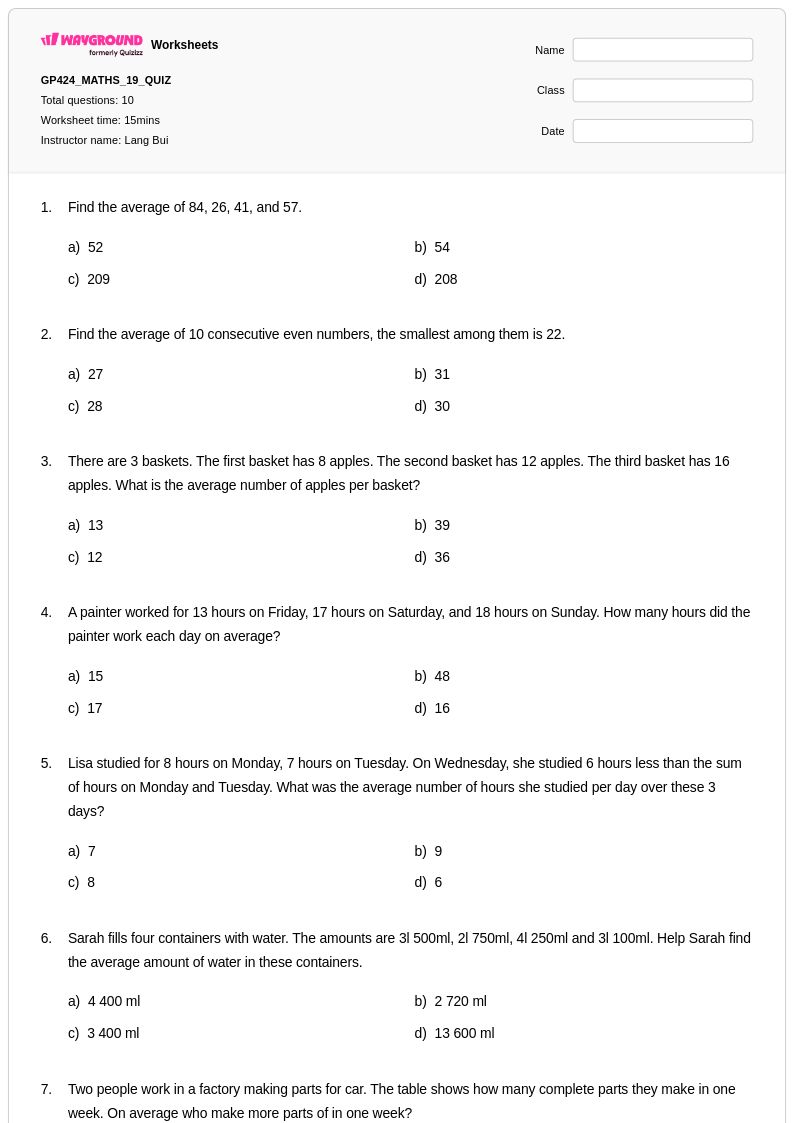
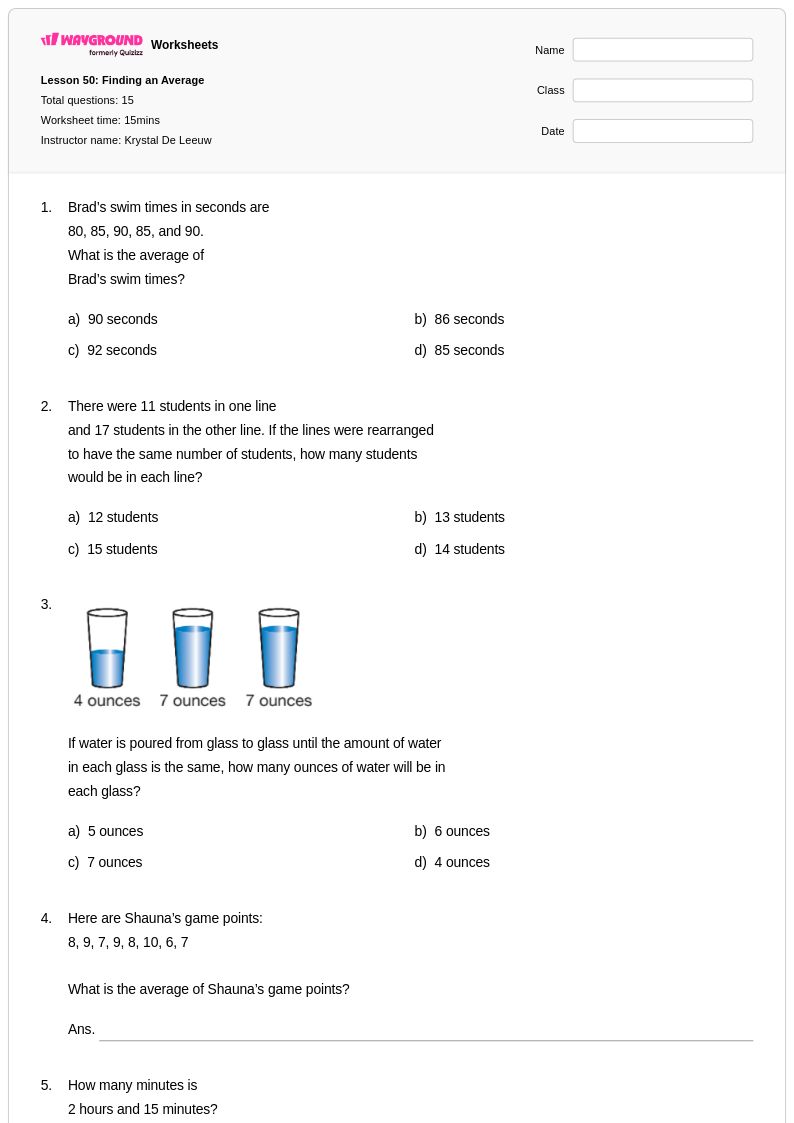
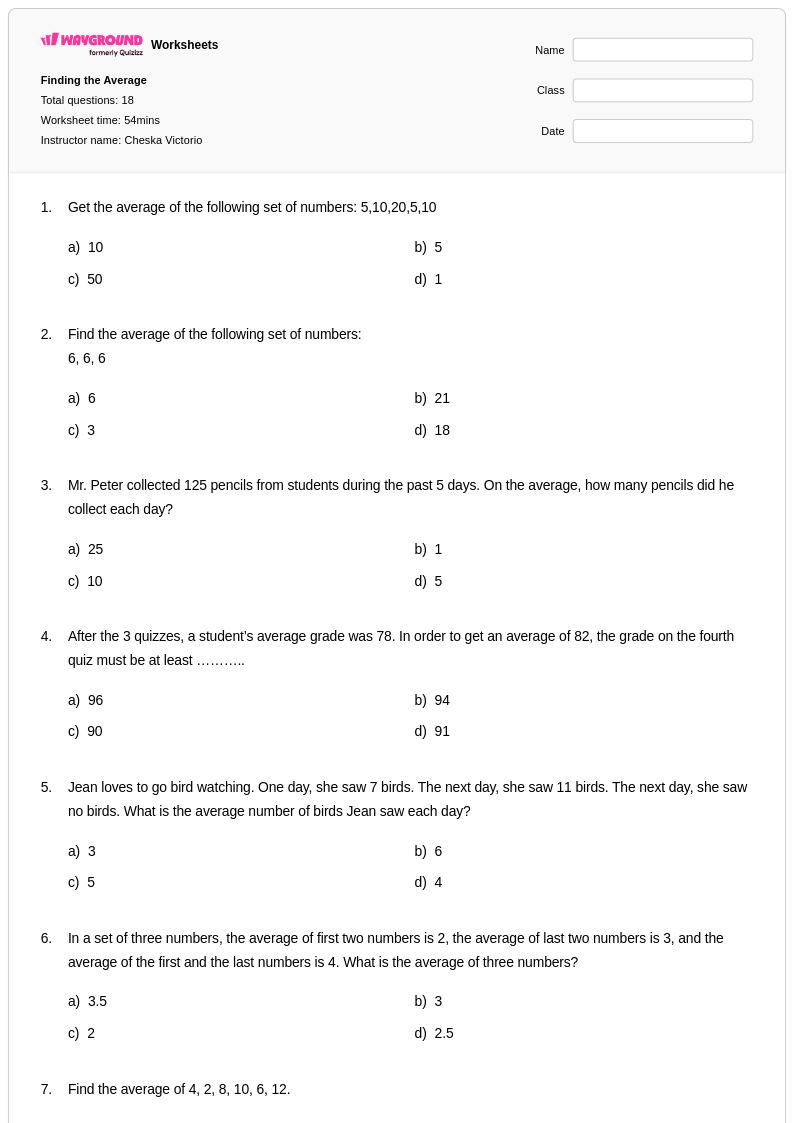
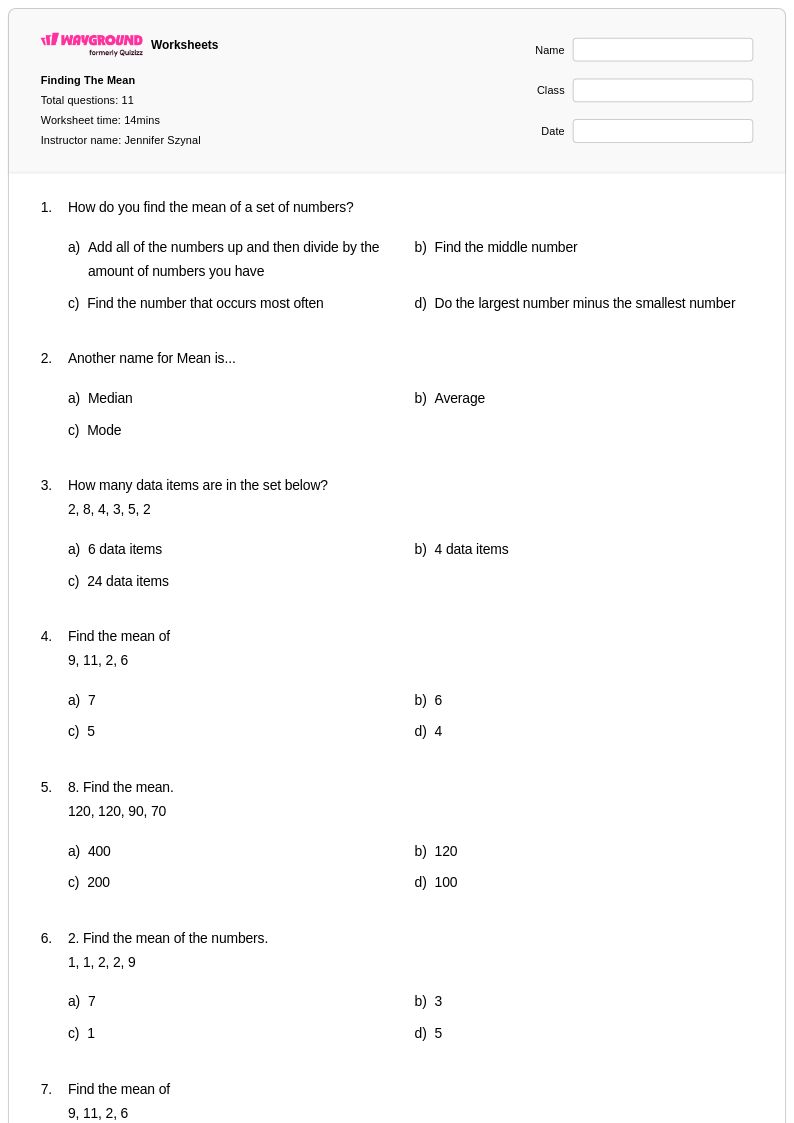
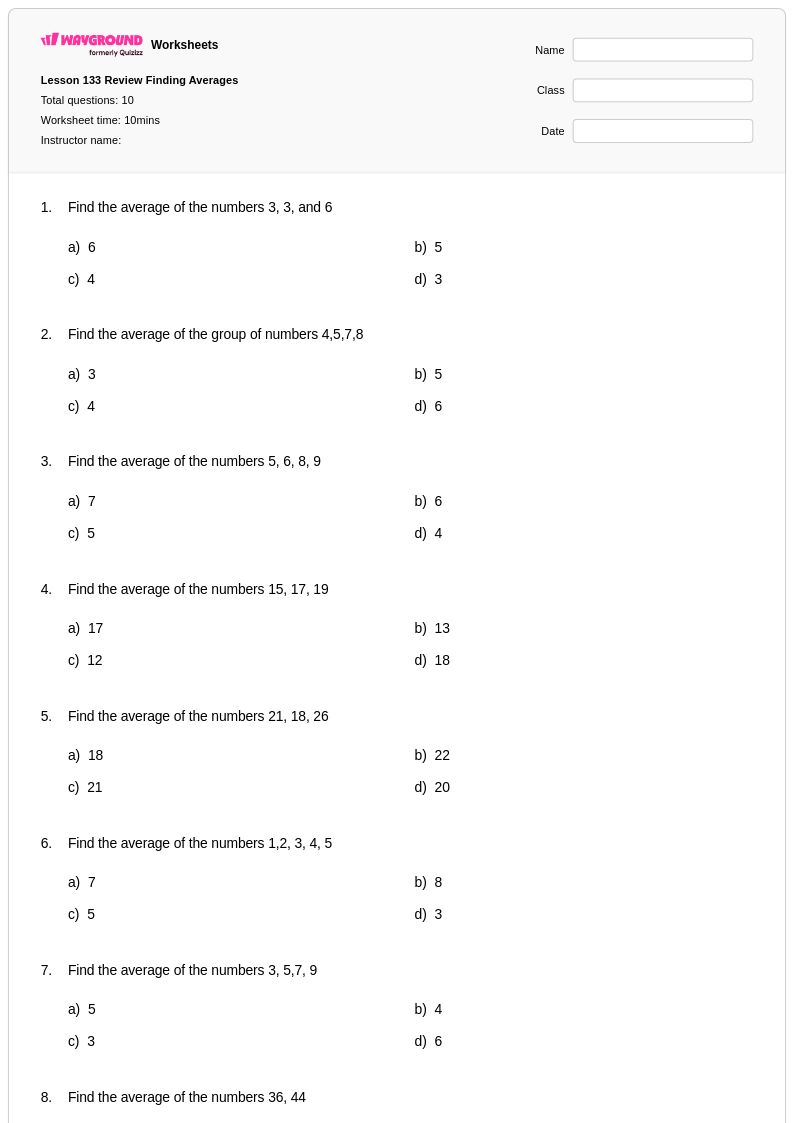
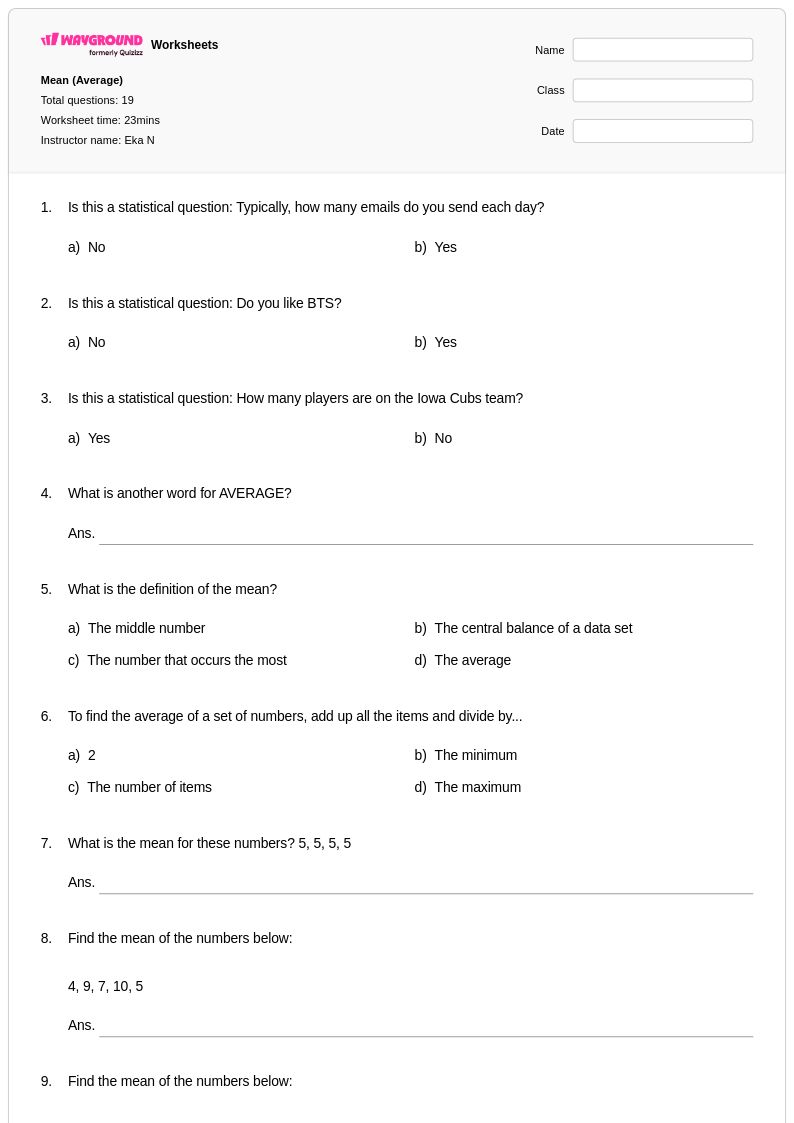
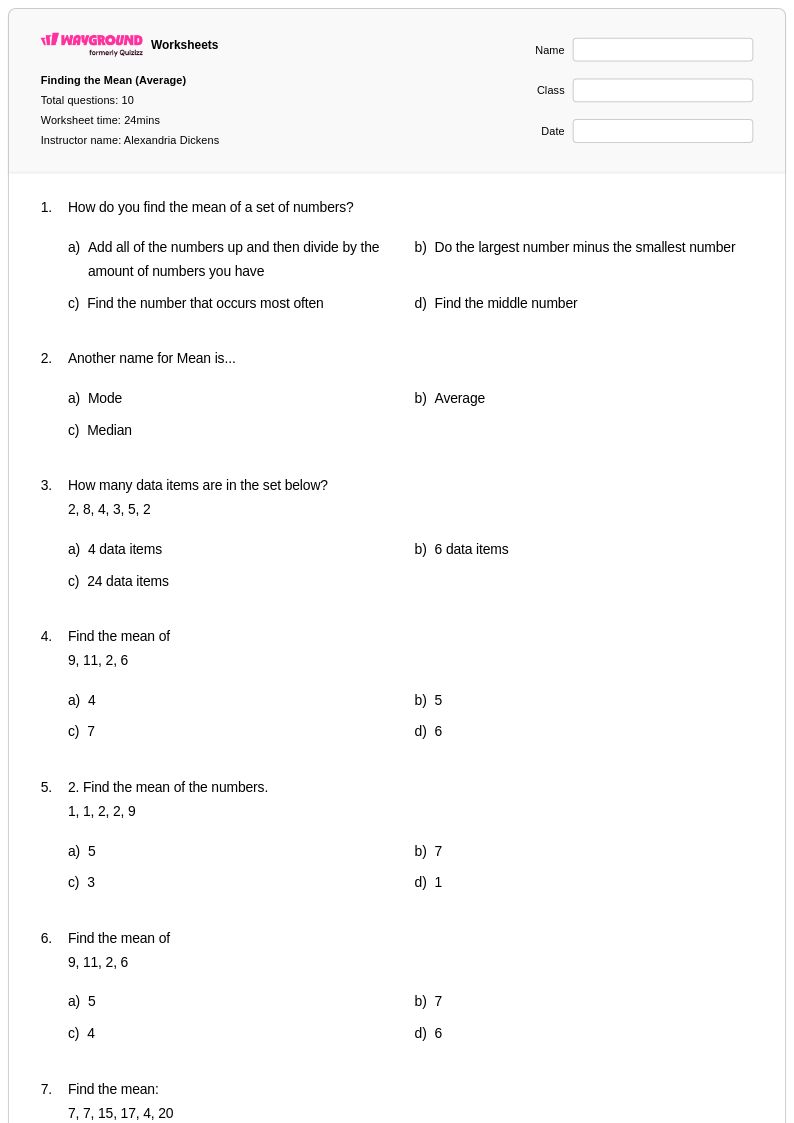
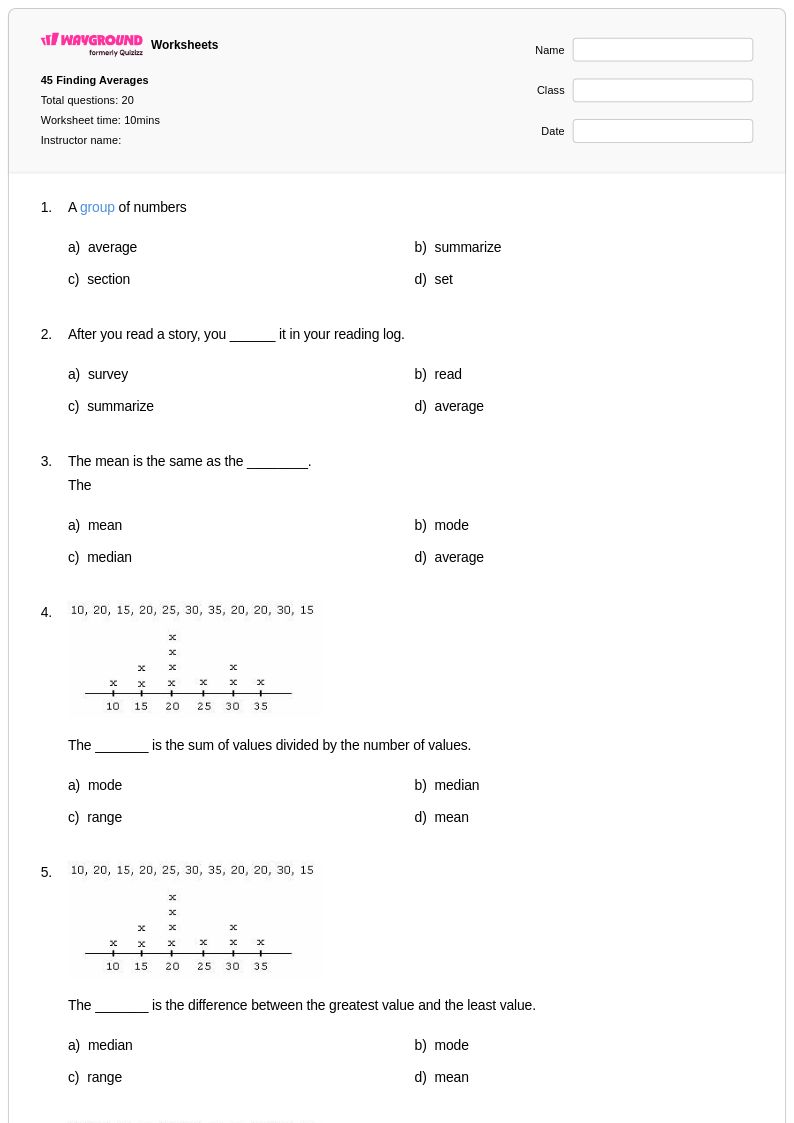
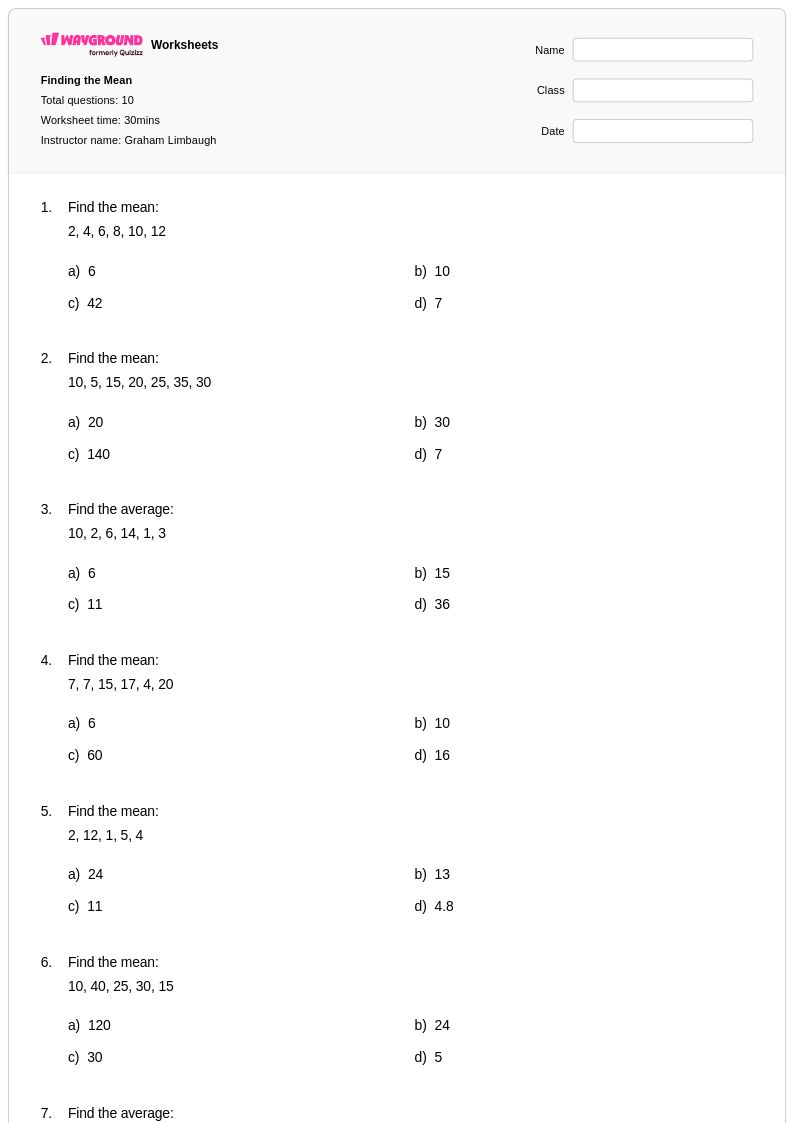
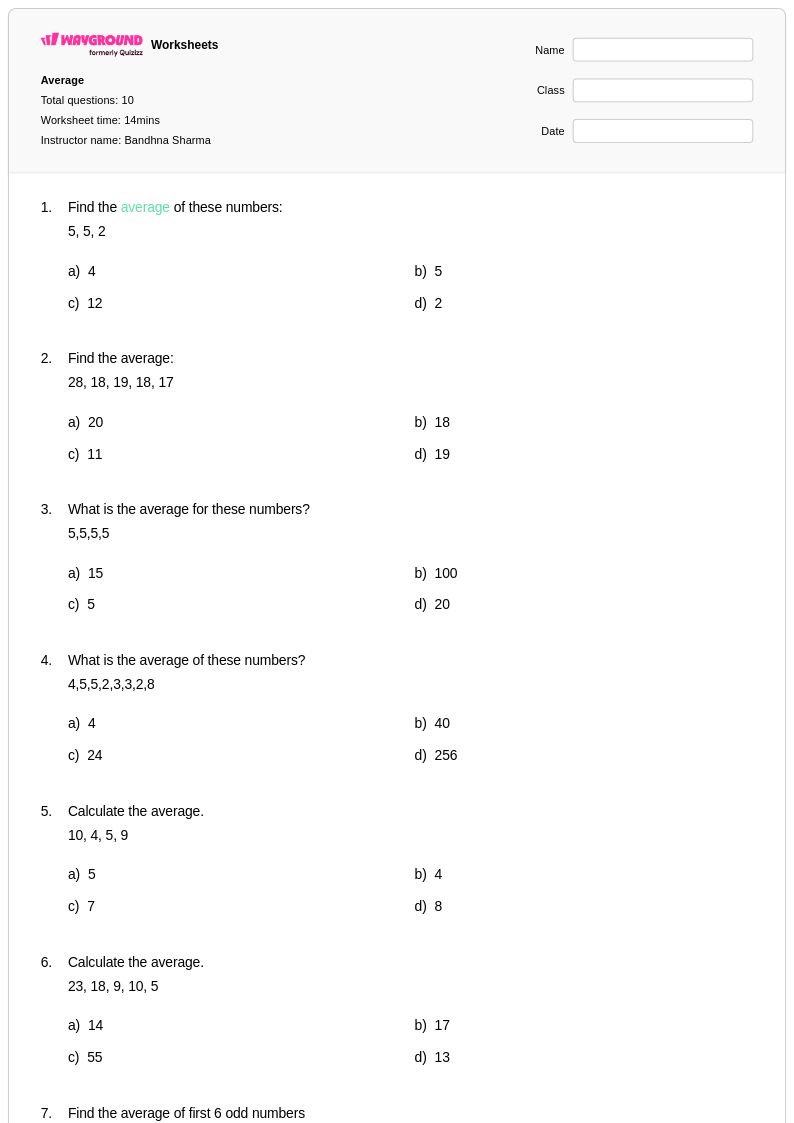
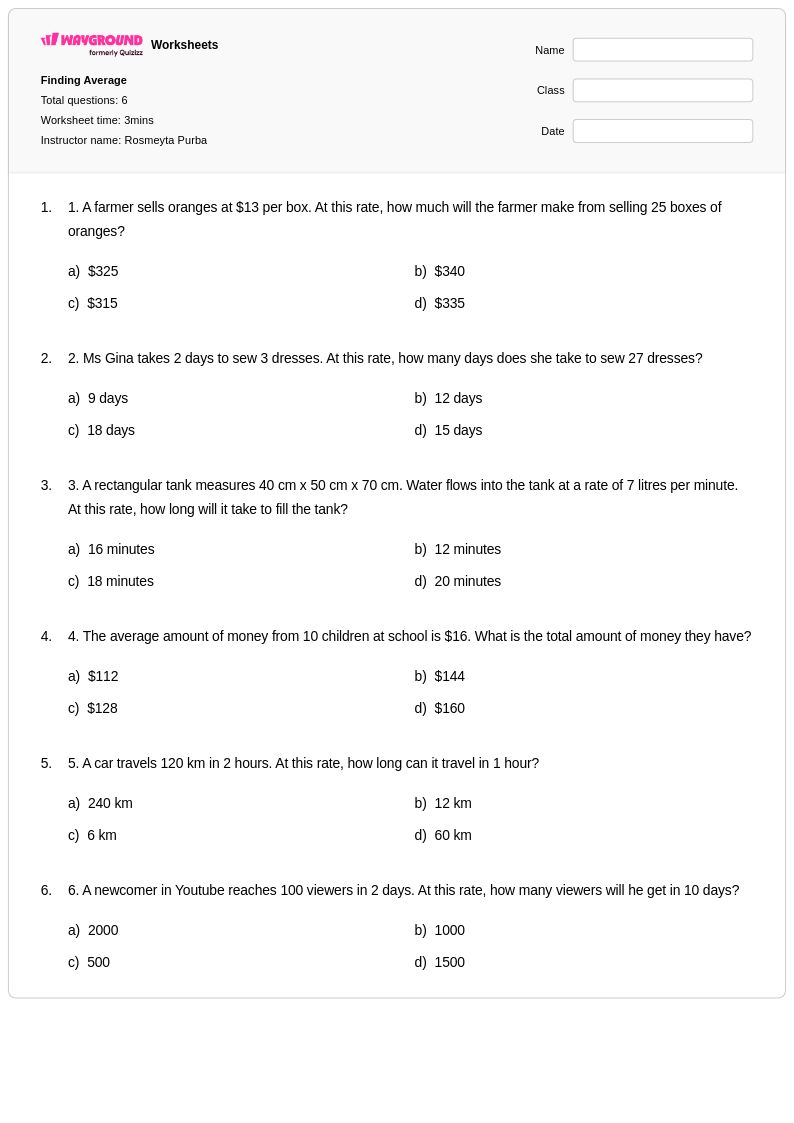
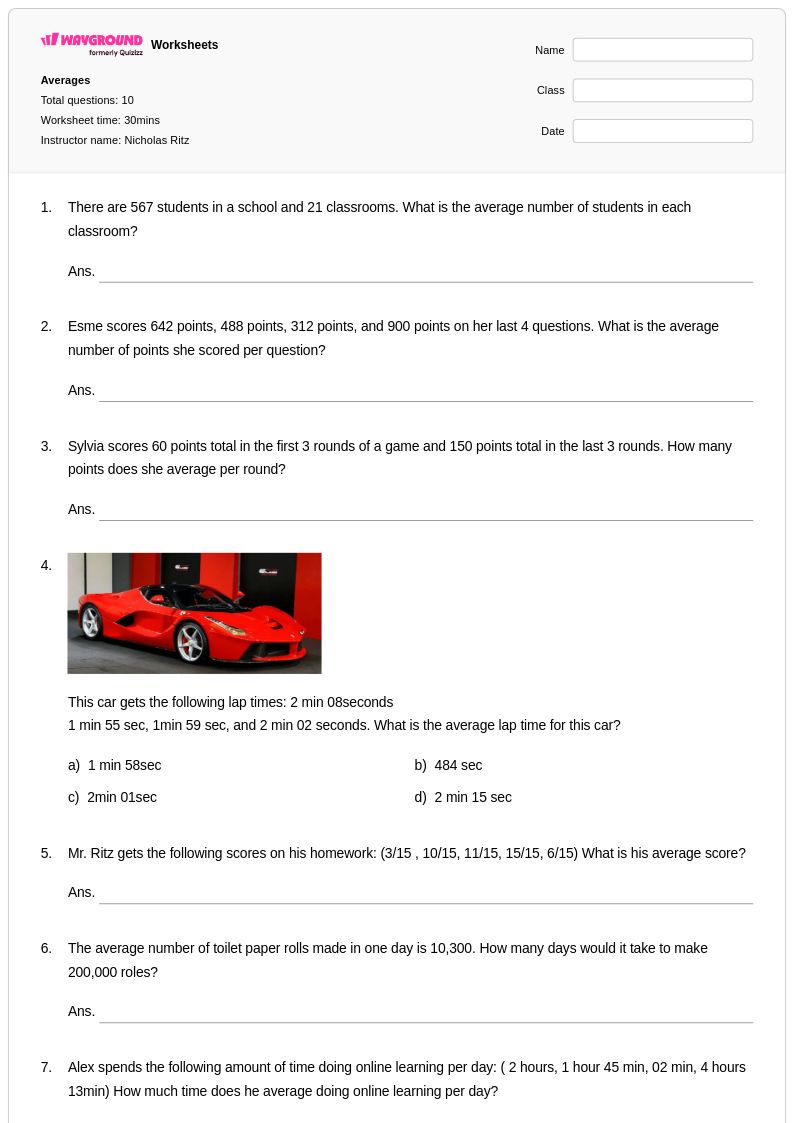
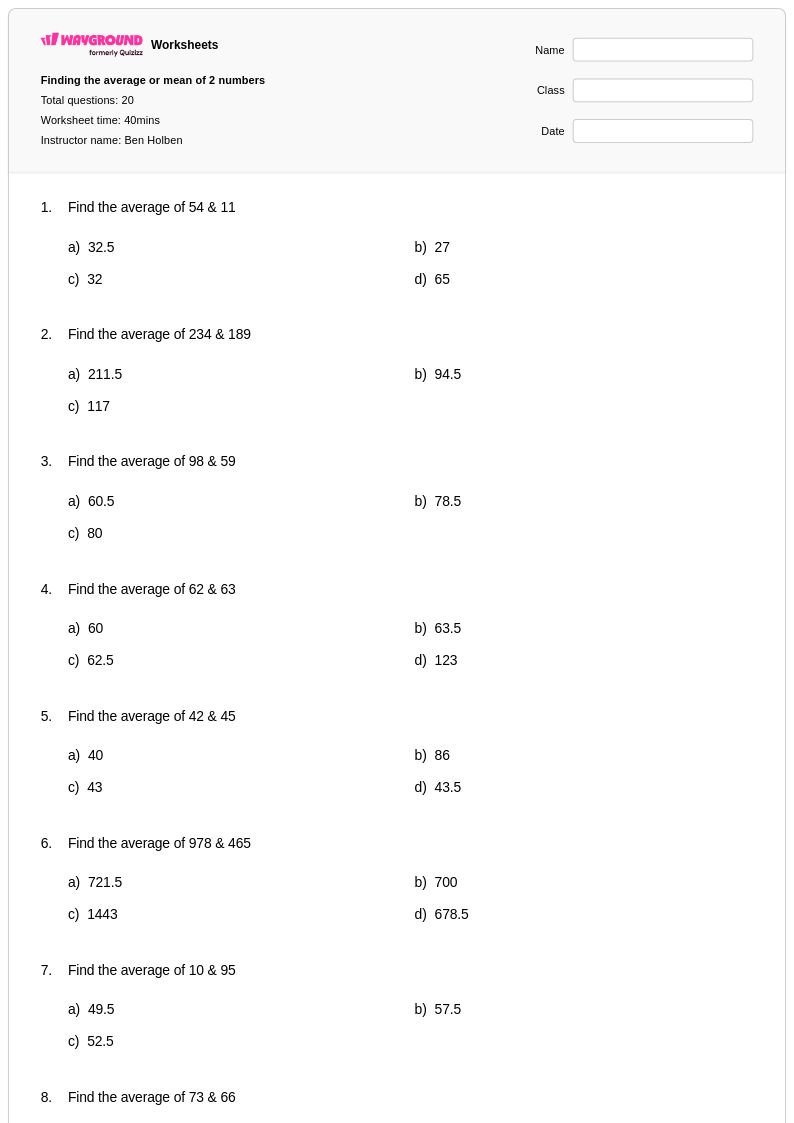
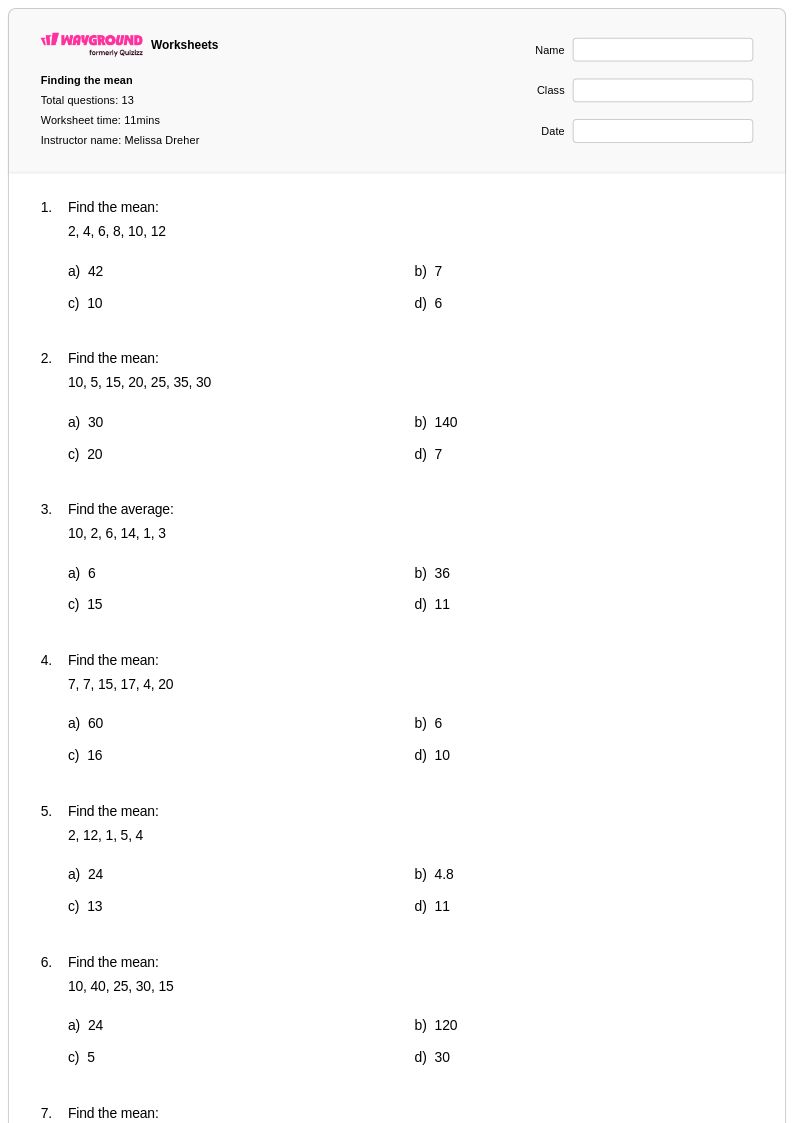
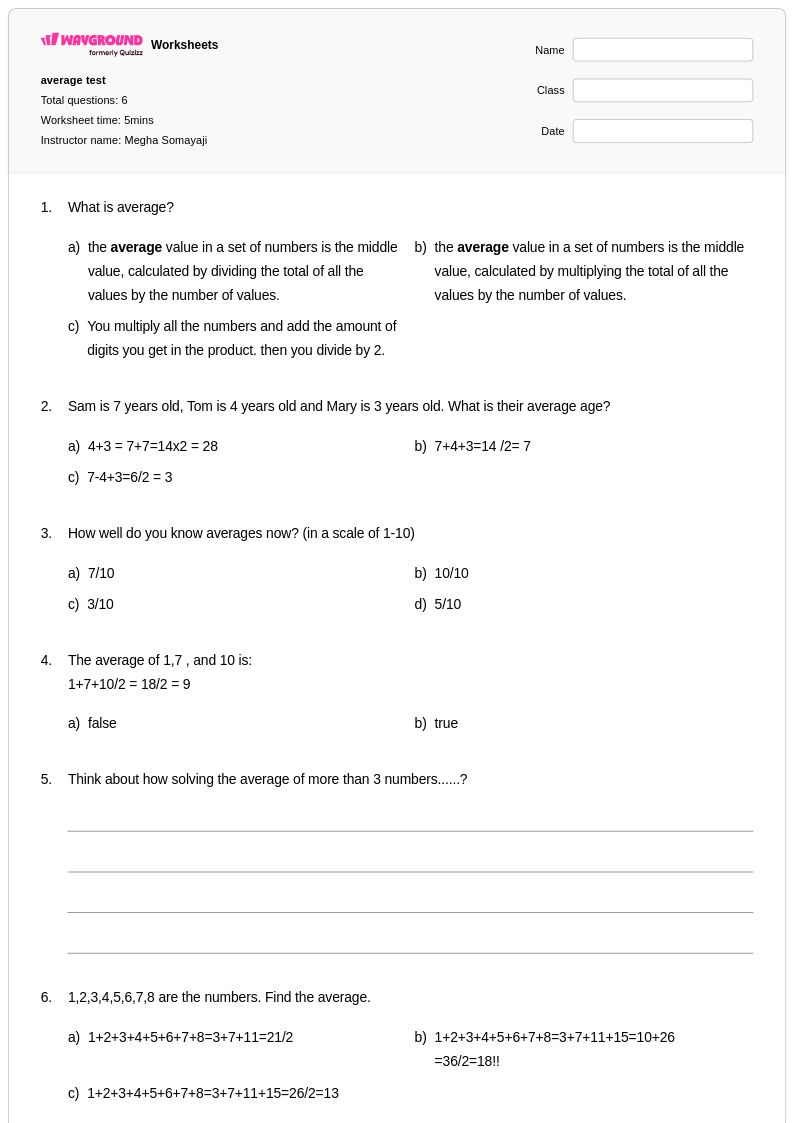
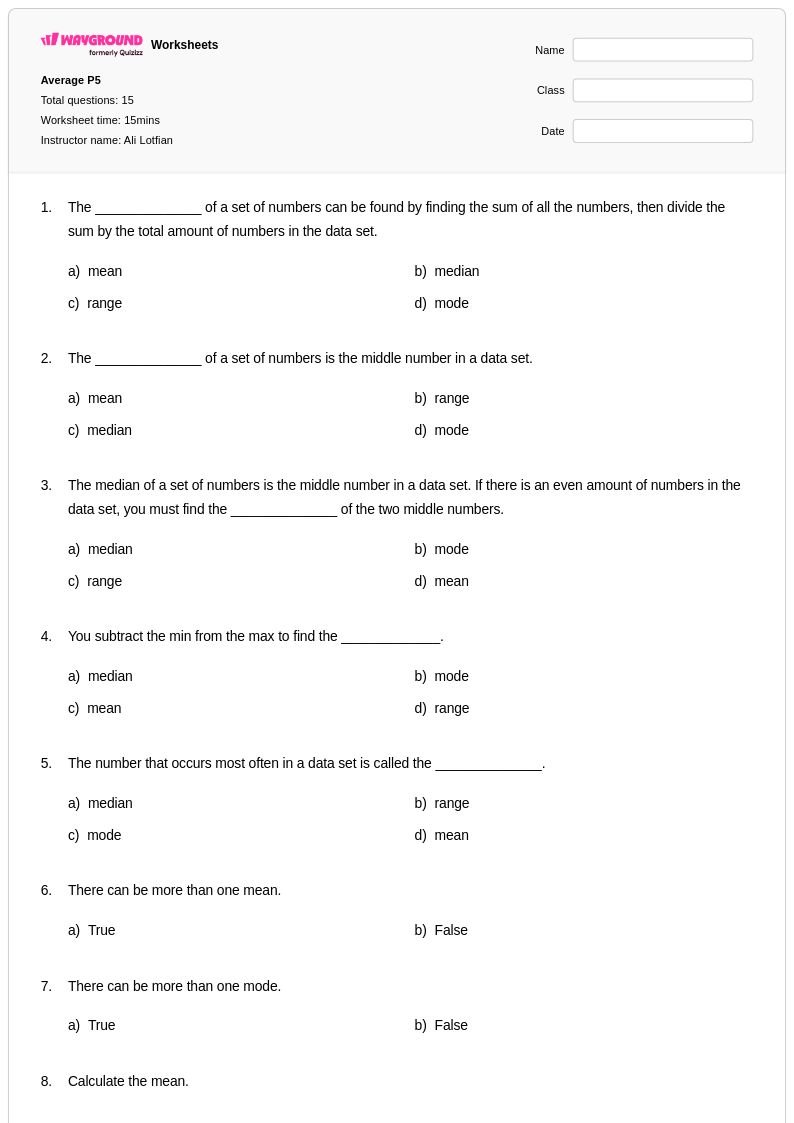
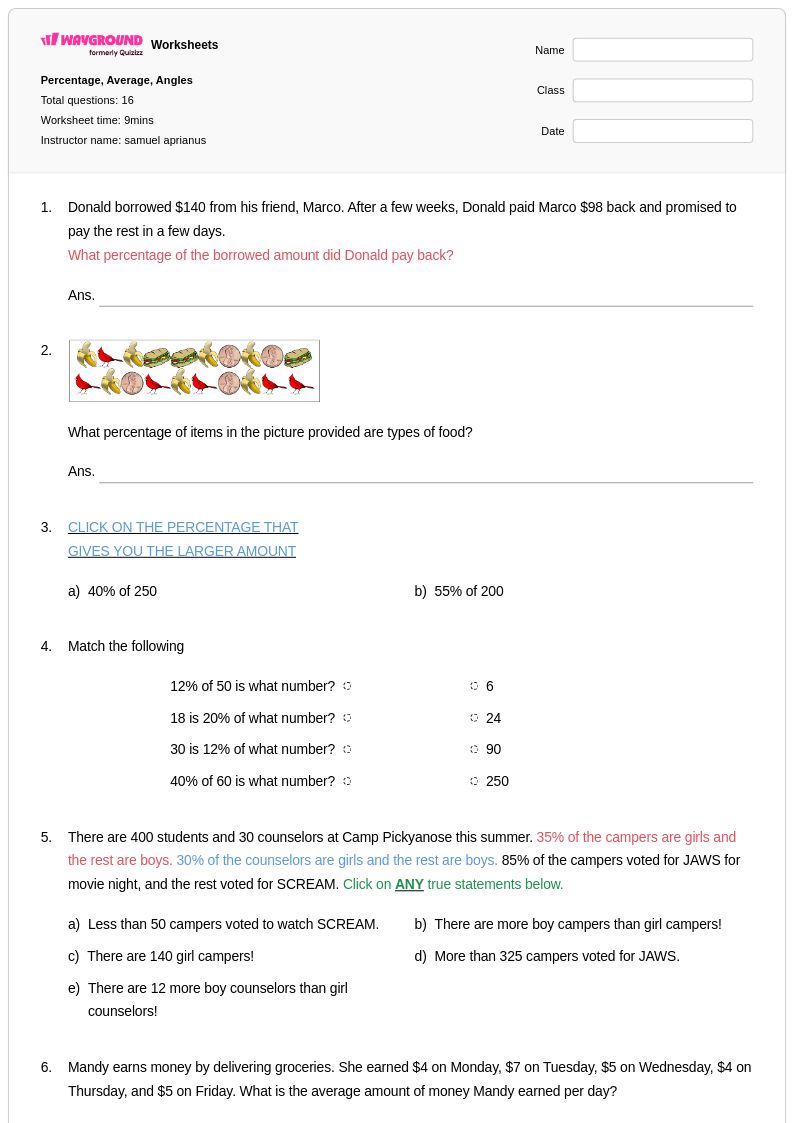
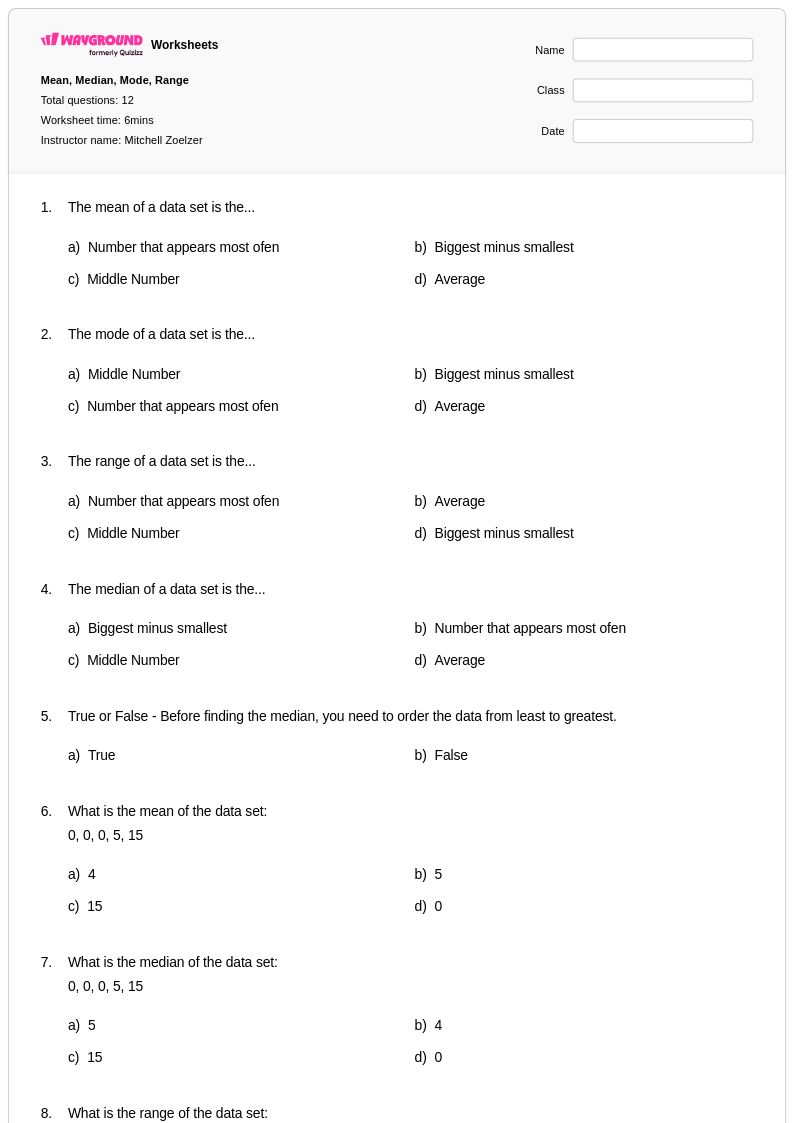
Finding average worksheets for Class 5 students available through Wayground (formerly Quizizz) provide essential practice in calculating mean values, a fundamental concept that bridges basic arithmetic and more advanced statistical thinking. These carefully designed worksheets strengthen students' ability to add multiple numbers and divide by the count of values, while developing their understanding of how averages represent typical or central values in data sets. Students work through practice problems that range from finding the average of simple number sets to real-world scenarios involving test scores, temperatures, and measurements, with each worksheet including a comprehensive answer key to support independent learning and self-assessment. The free printable resources offer varied difficulty levels and problem types, ensuring students build confidence with this crucial mathematical skill through repeated, meaningful practice.
Wayground (formerly Quizizz) supports mathematics educators with an extensive collection of teacher-created finding average worksheets, drawing from millions of high-quality resources that align with Class 5 mathematics standards and curriculum requirements. The platform's robust search and filtering capabilities allow teachers to quickly locate worksheets that match their students' specific needs, whether for initial instruction, remediation, or enrichment activities. Each worksheet collection offers flexible customization options and differentiation tools that enable educators to modify content complexity and adjust problem types to accommodate diverse learning styles and abilities. Available in both printable pdf format and digital versions, these finding average resources streamline lesson planning while providing teachers with reliable materials for skill practice, formative assessment, and targeted intervention to ensure all students master this essential mathematical concept.
FAQs
How do I teach finding averages to Grade 5 students?
Fifth graders are ready to move beyond whole-number data sets and start working with decimals and larger values, so the teaching focus shifts from introducing the concept to building fluency and flexibility. A good lesson sequence: review the add-and-divide procedure with a familiar context (test scores, temperatures), then introduce a problem where the average is given and a missing value must be found — this reversal deepens understanding more than additional forward calculations. Emphasize that the mean is a model of the data, not just an answer, so students start thinking critically about whether an average makes sense.
What exercises help Grade 5 students practice finding averages?
At Grade 5, practice should include: computing the mean of data sets with 5–8 values, including decimals; finding a missing data point when the average and remaining values are known; and comparing the averages of two groups to draw a simple conclusion. Problems set in real contexts — average rainfall across months, average points scored per game — are more effective than naked number sets because they require students to identify what to add and what to count.
What mistakes do Grade 5 students make when calculating averages?
The most persistent error at this level is mishandling decimals in the addition step, which throws off the division even when the procedure is understood. Students also struggle with the missing-value problem type — they often try to average the known values rather than working backward from the given mean. A quick diagnostic: give students one forward problem and one missing-value problem side by side; how they approach the second one tells you a lot about conceptual depth.
How do I use Wayground's Grade 5 average worksheets in my class?
Host the worksheet as a digital quiz on Wayground so students get immediate feedback as they work through problems — useful for independent practice stations or homework review. Prefer paper? Print the PDF; every worksheet includes a complete answer key, and schools looking to reduce screen time get the same rigorous practice off-device. Either way, the Wayground for Teachers app lets you capture and grade printed submissions without re-entering student answers manually.
How does finding averages connect to Grade 5 math standards?
Common Core places the formal introduction of mean as a measure of center in Grade 6, but Grade 5 is when students develop the decimal operations and multi-step problem-solving that make that introduction possible. Practicing averages in Grade 5 gives students a meaningful application for decimal addition and division — skills they're actively building — and ensures they arrive in sixth grade ready to compare mean, median, and mode rather than learning the arithmetic from scratch alongside the statistics.
How can I support struggling and advanced learners with the same worksheet?
Wayground lets you generate alternate versions of a worksheet with larger font, wider spacing, or a dyslexia-friendly font for students who need it — same math, reduced formatting friction. For students who need procedural support, the Read Aloud accommodation removes the reading barrier so they can focus on the calculation. Advanced students can be assigned problems involving decimals or missing-value scenarios while others work with whole-number sets; Wayground's digital format makes it easy to assign different versions to different students without making the differentiation obvious to the class.