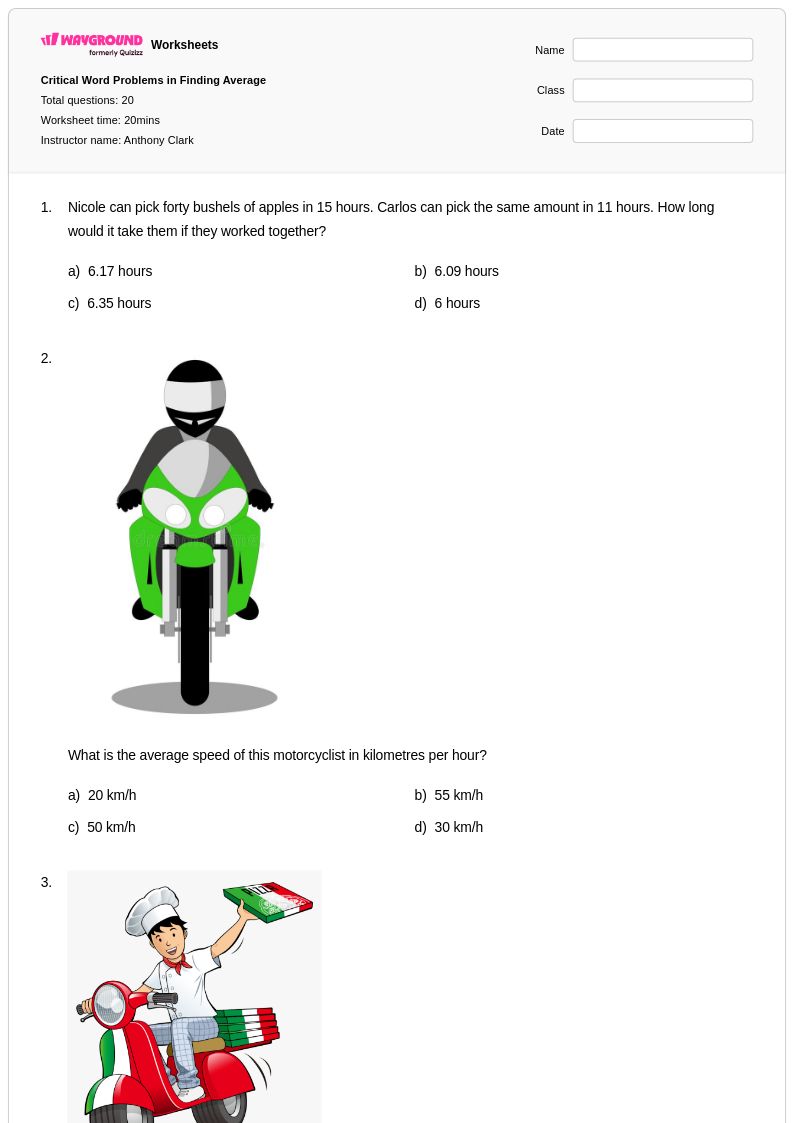
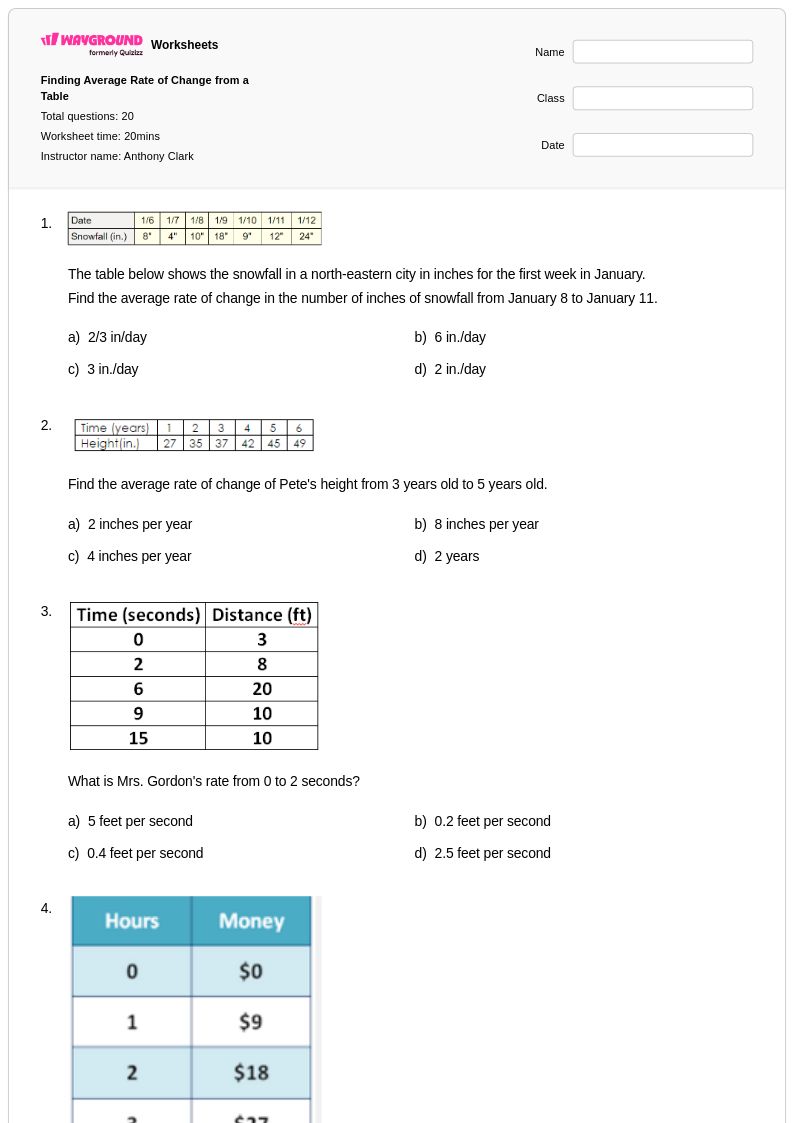
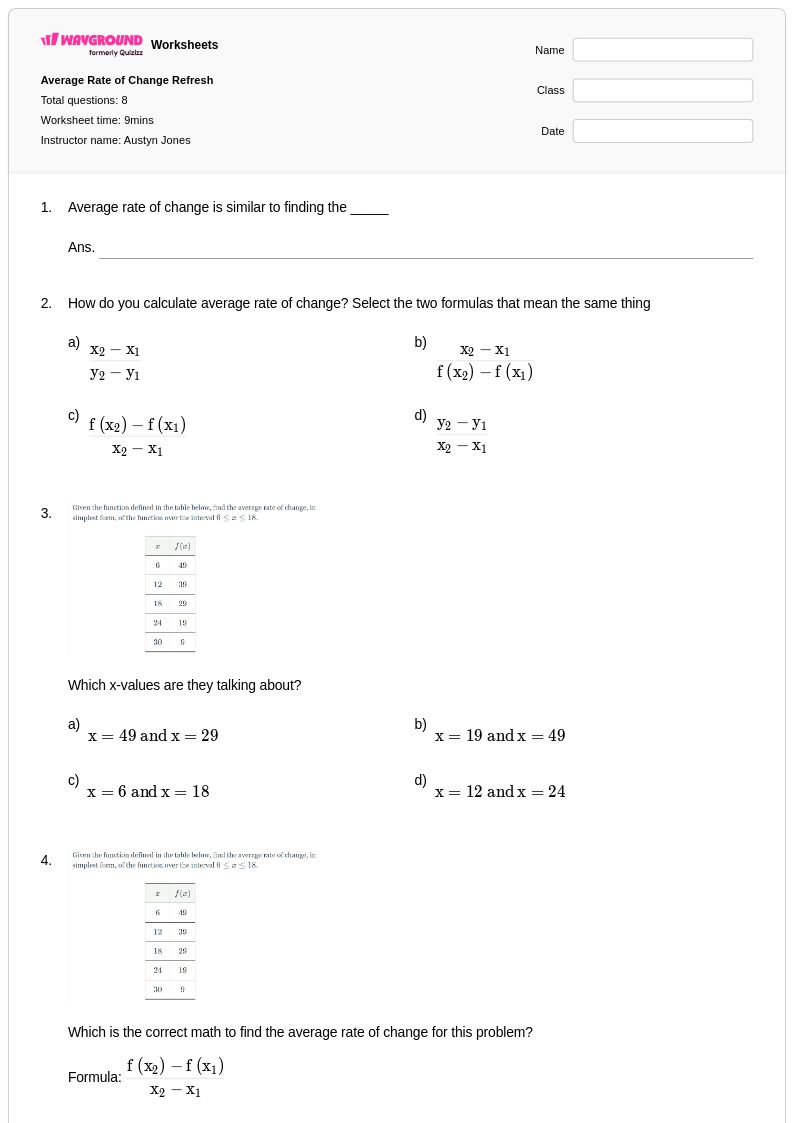
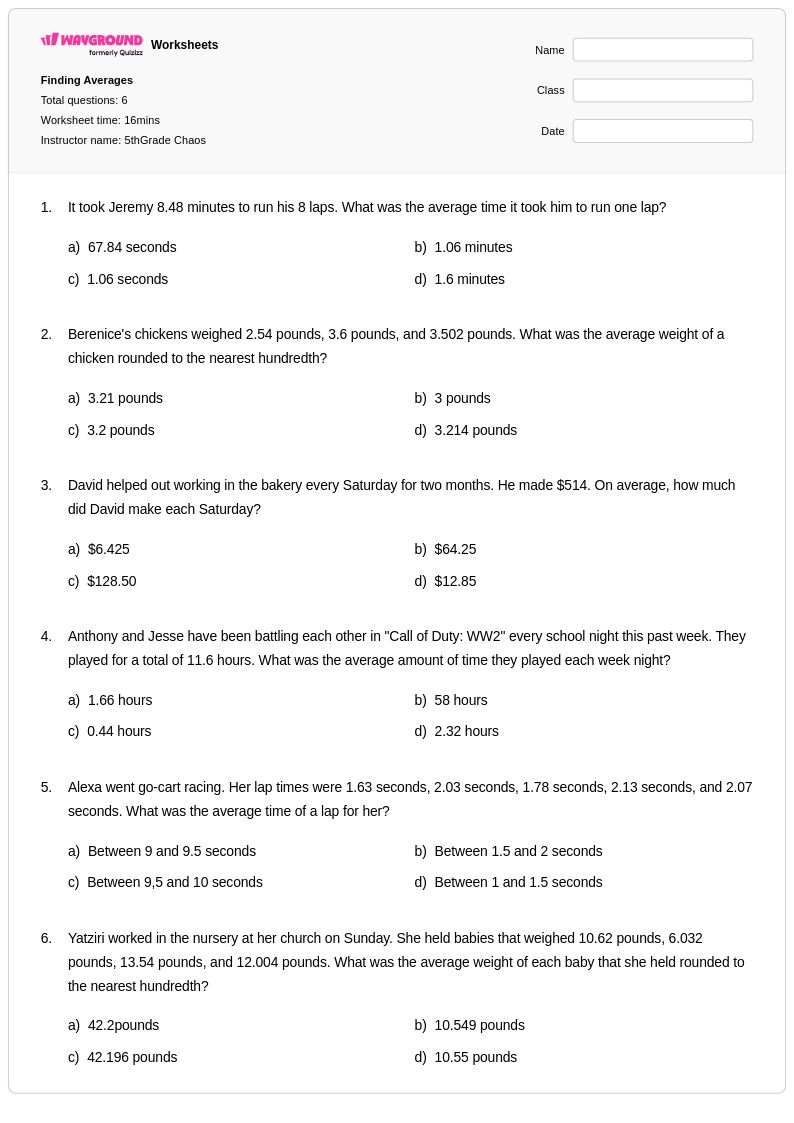
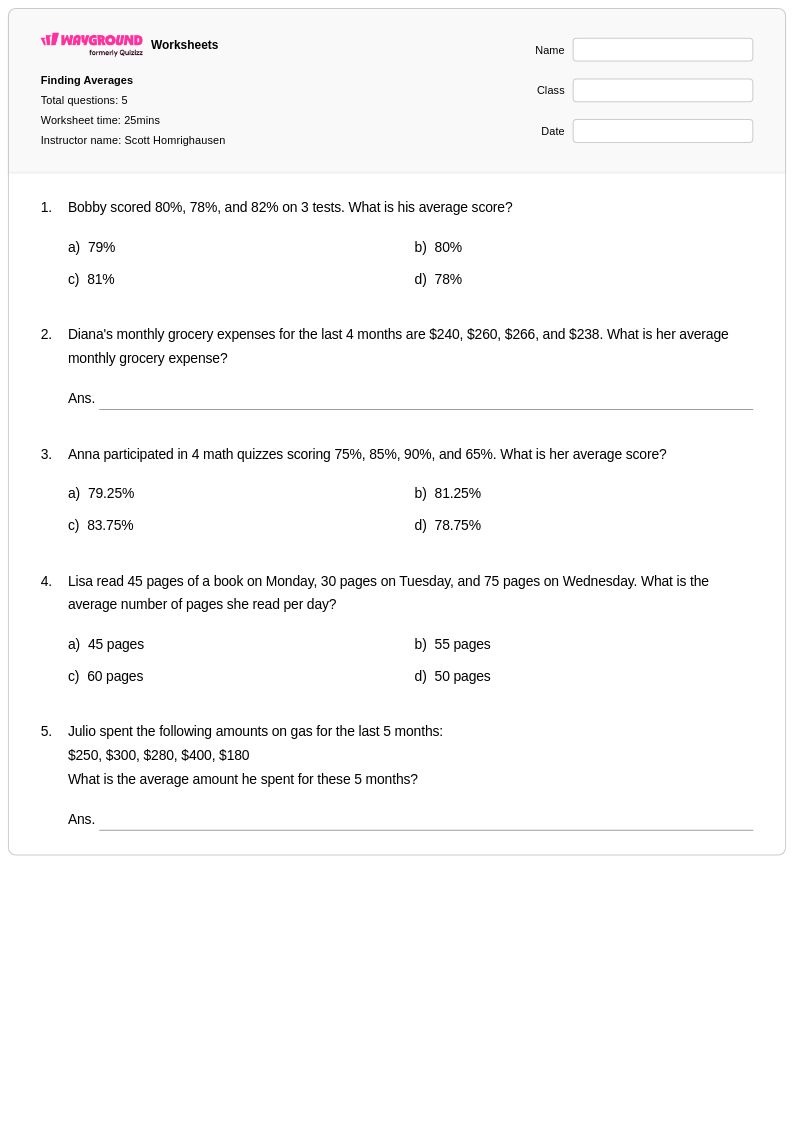
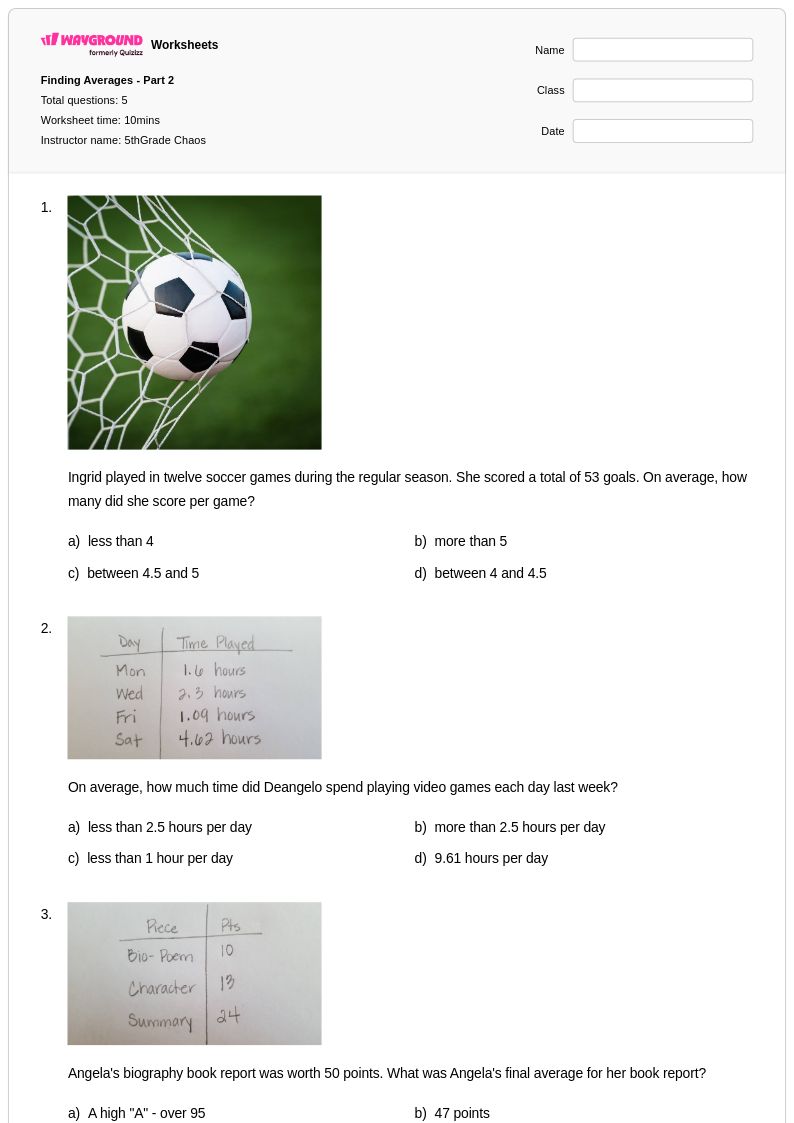
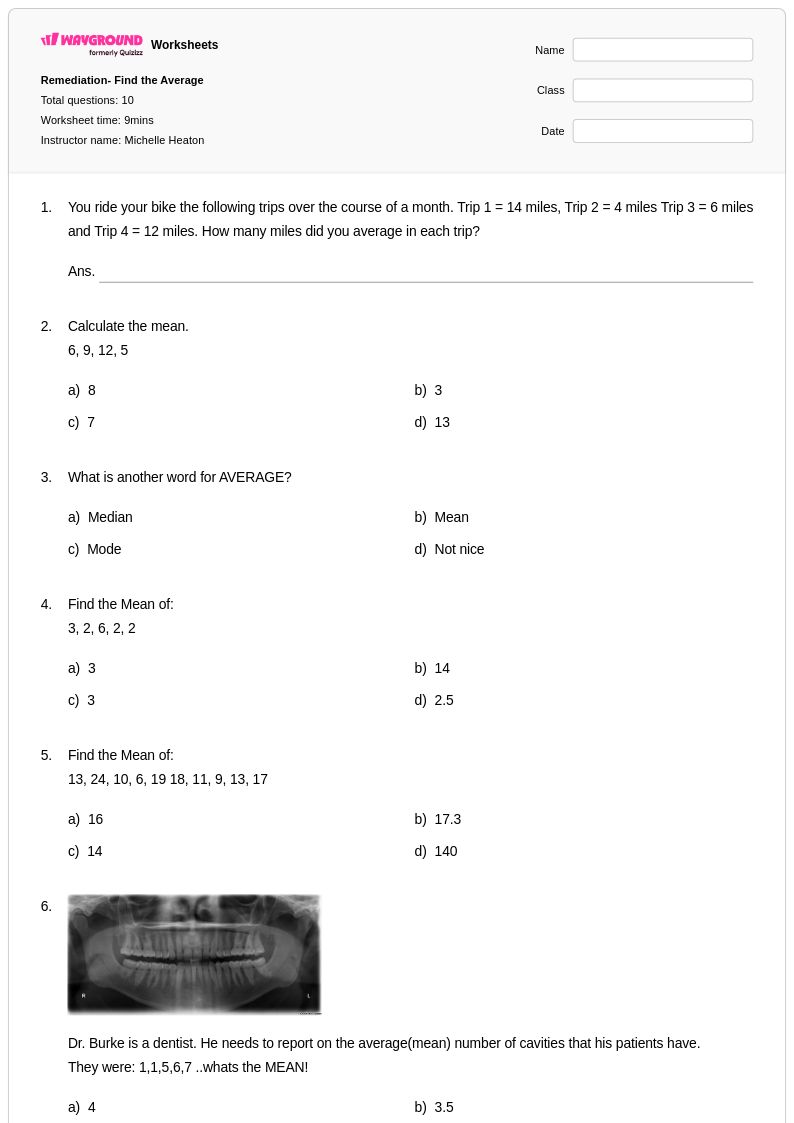
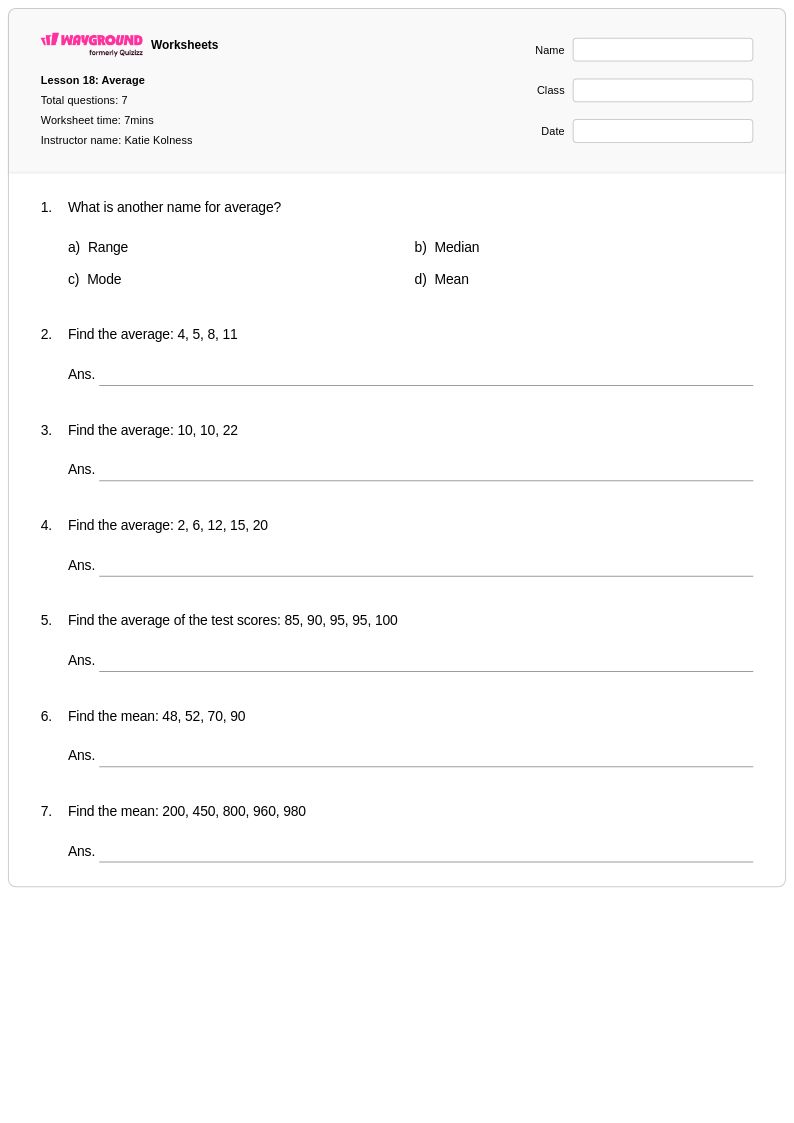
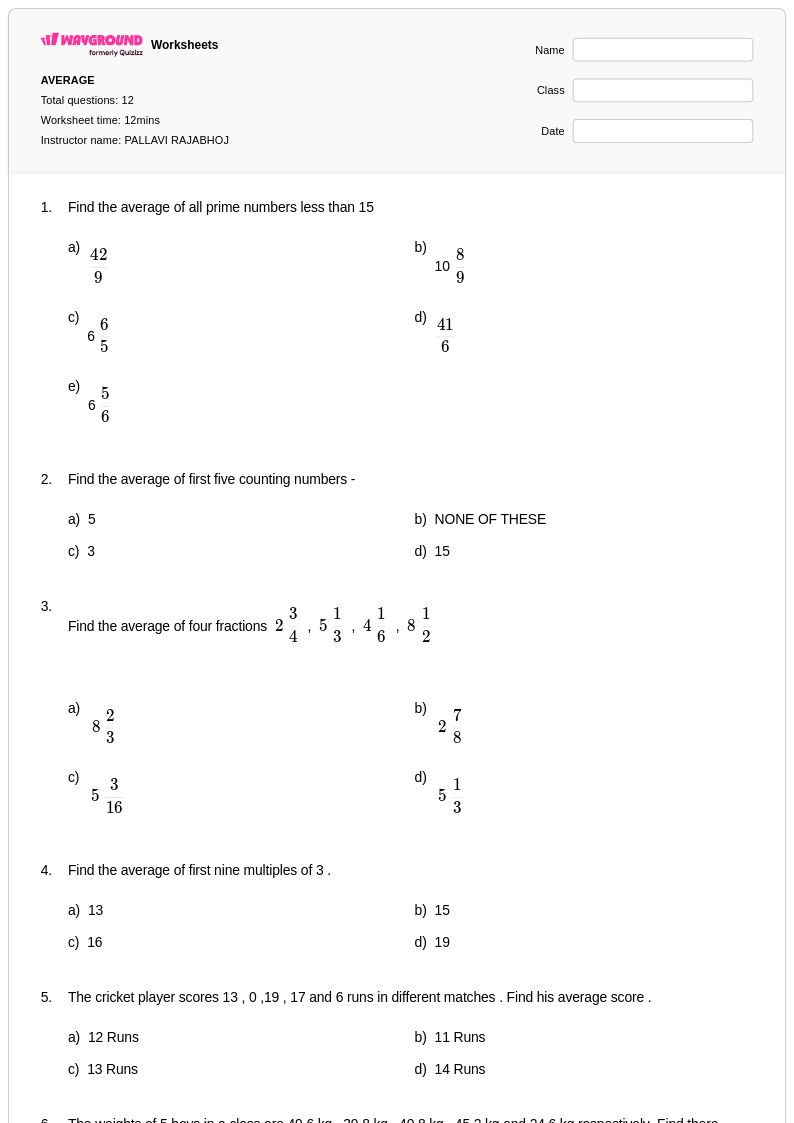
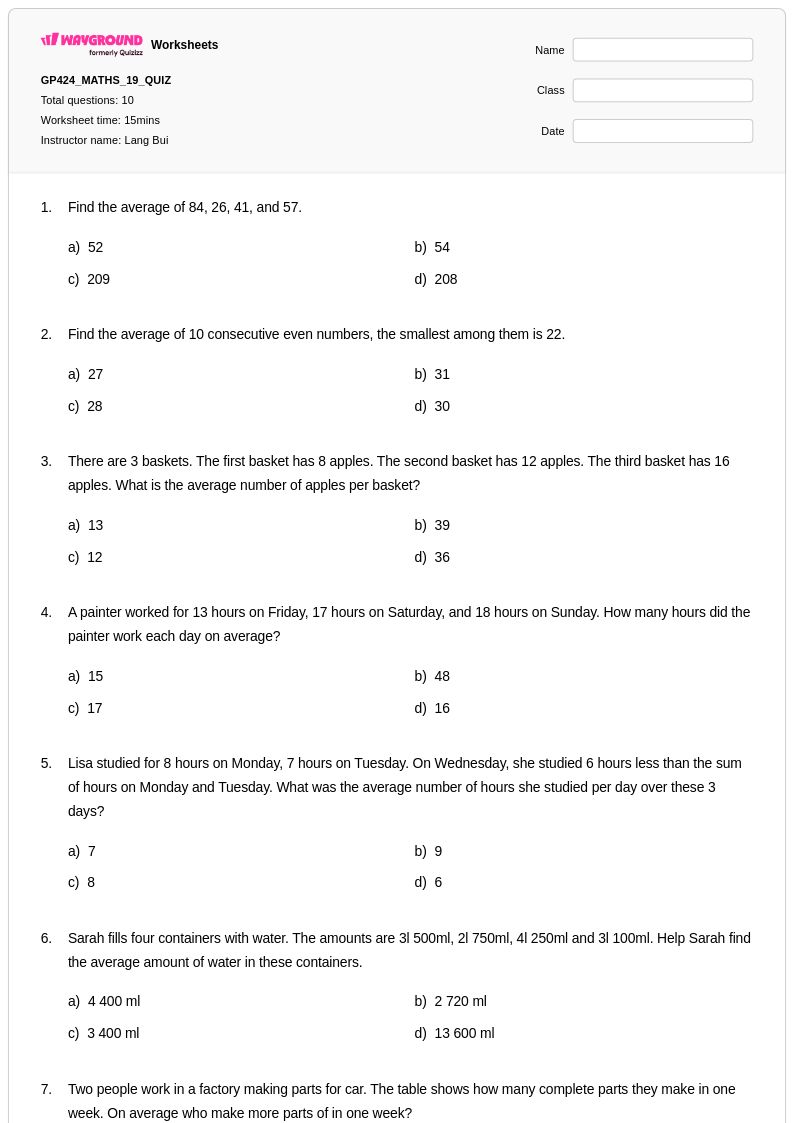
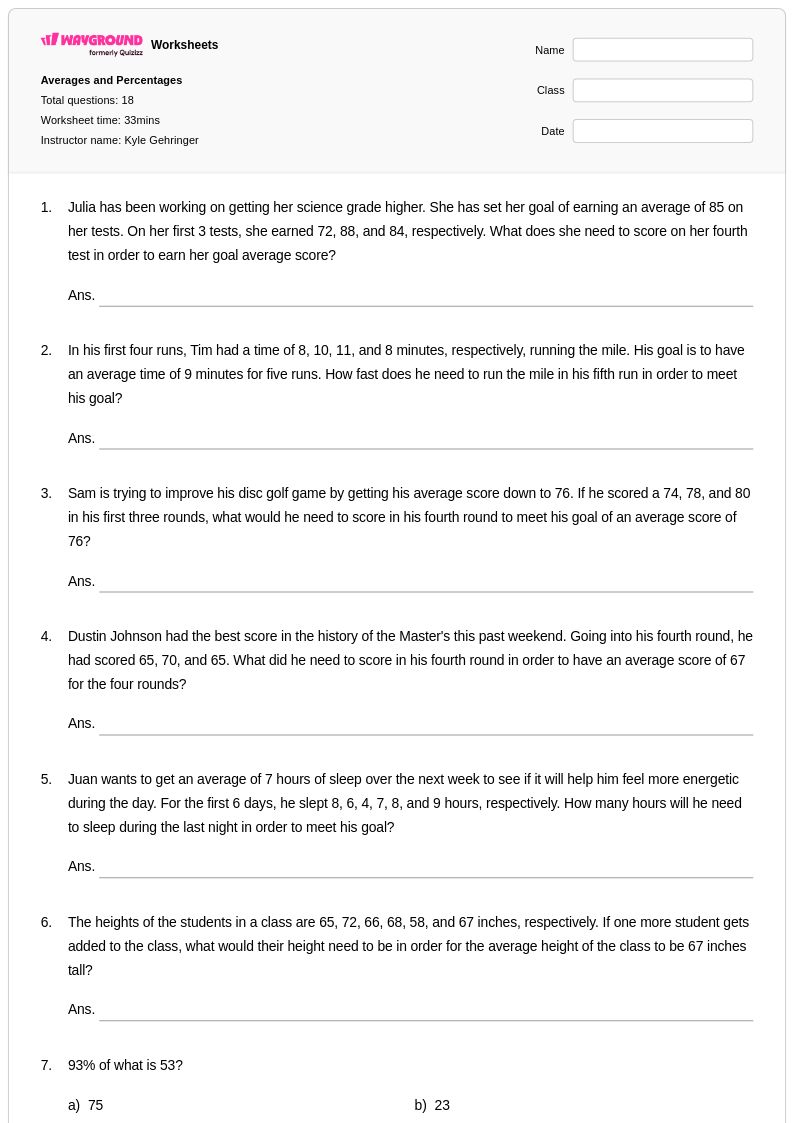
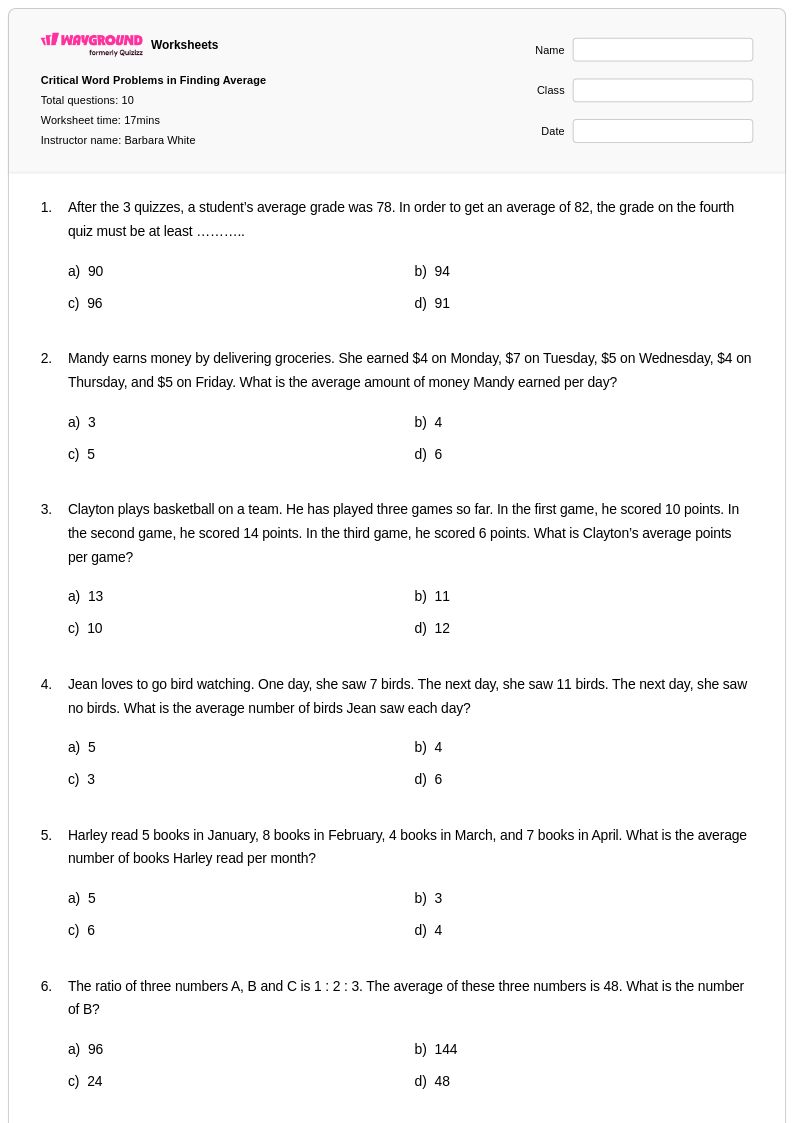
Discover free printable worksheets and practice problems focused on finding average in probability and statistics, complete with answer keys to help students master essential mathematical concepts through comprehensive PDF resources.
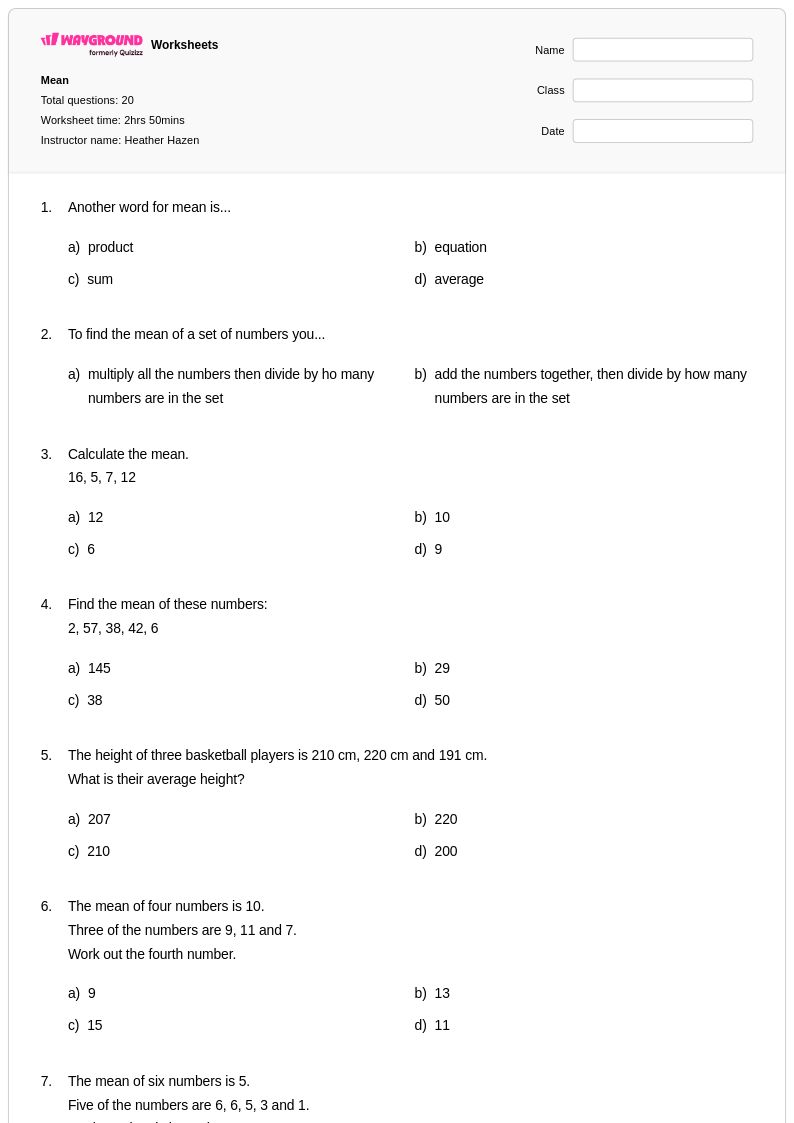
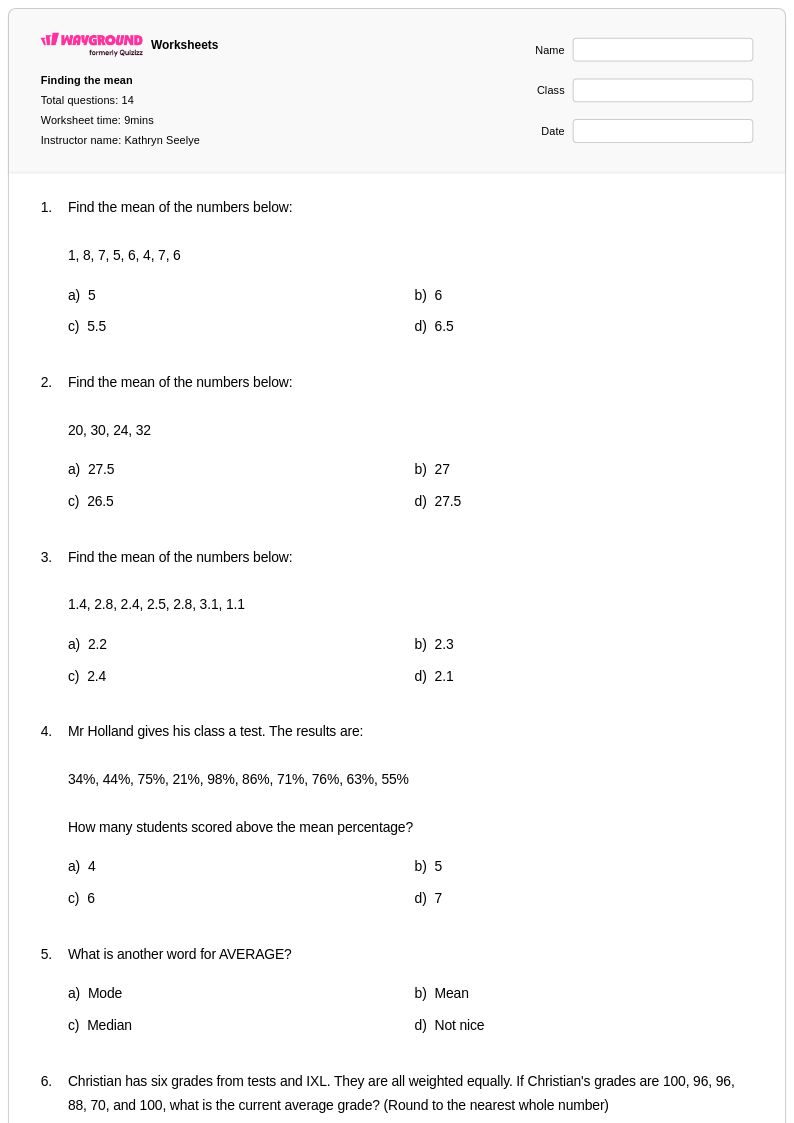
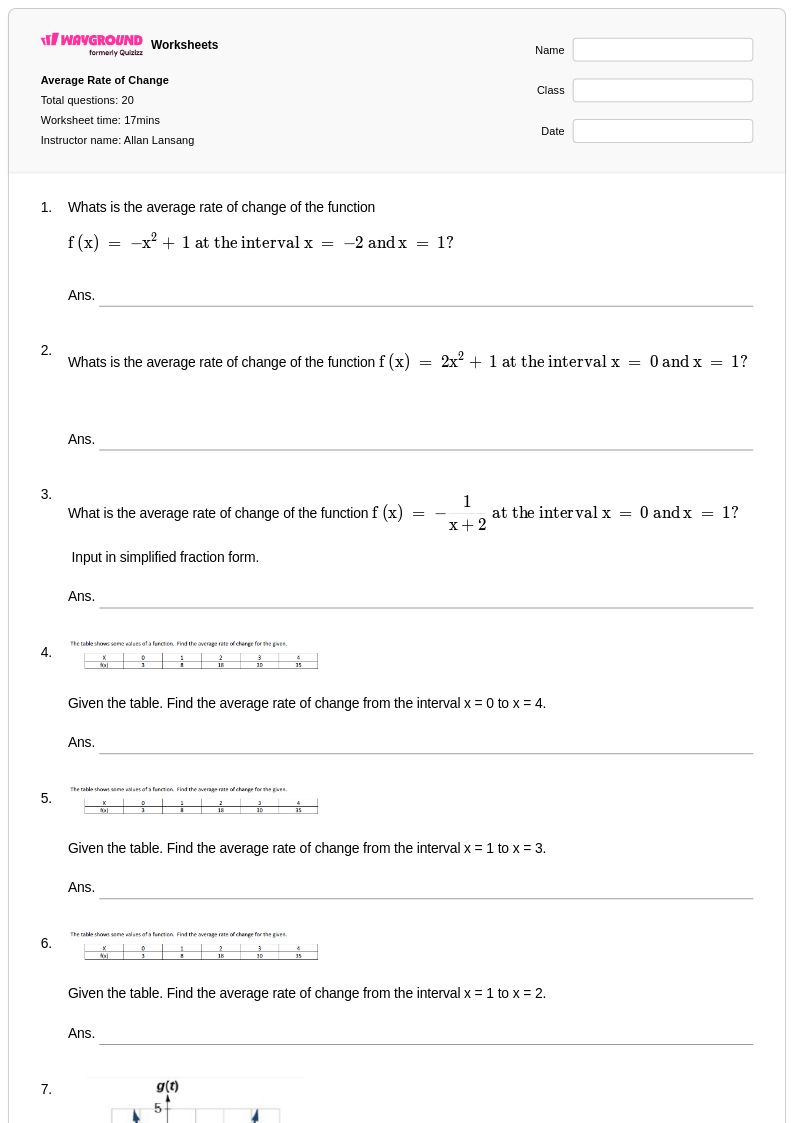
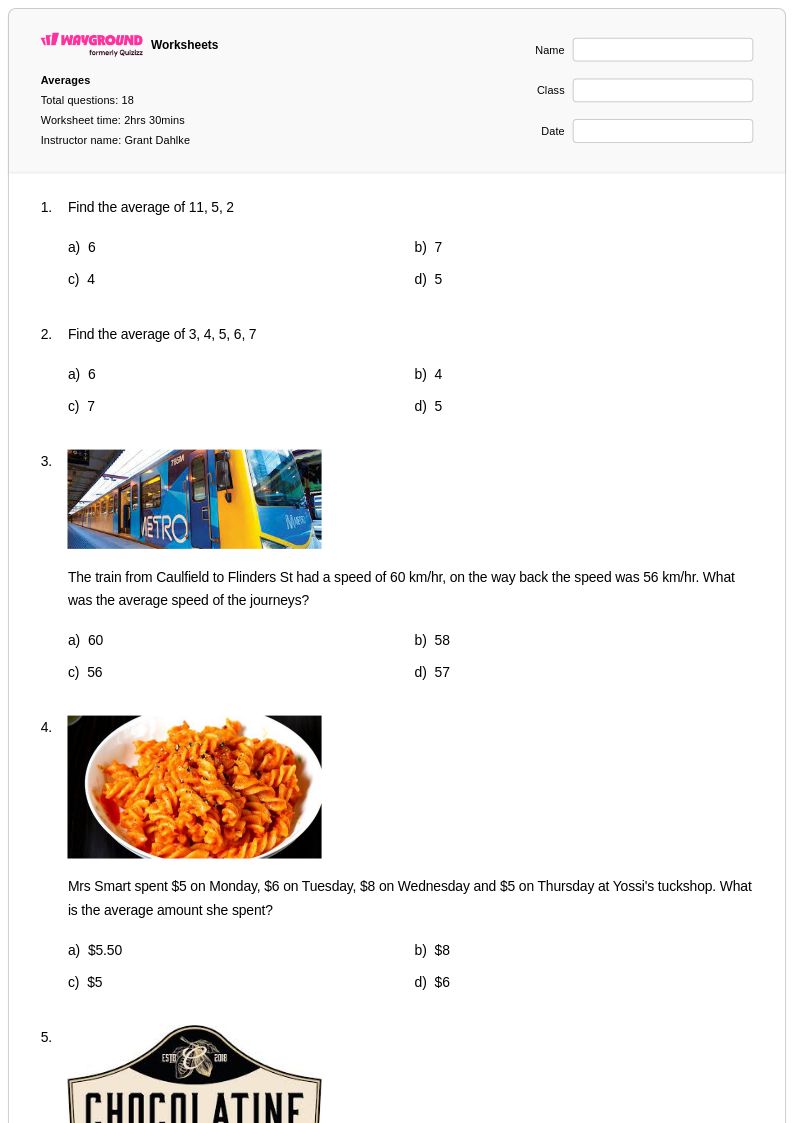
Finding average worksheets available through Wayground (formerly Quizizz) provide comprehensive practice opportunities for students to master this fundamental concept in probability and statistics. These carefully designed resources strengthen essential mathematical skills including calculating mean values, interpreting data sets, and understanding measures of central tendency. Students work through diverse practice problems that range from basic arithmetic mean calculations to more complex scenarios involving weighted averages and real-world applications. Each worksheet comes complete with detailed answer keys that support both independent study and classroom instruction, while the free printable format ensures accessibility for all learning environments. These pdf resources systematically build computational fluency and conceptual understanding through structured problem-solving exercises.
Wayground (formerly Quizizz) empowers educators with millions of teacher-created finding average worksheets that can be seamlessly integrated into mathematics instruction across various skill levels. The platform's robust search and filtering capabilities allow teachers to quickly locate resources that align with specific curriculum standards and learning objectives, while built-in differentiation tools enable customization for diverse student needs. Whether delivered in printable pdf format for traditional pencil-and-paper practice or through interactive digital assignments, these worksheets support flexible lesson planning and targeted skill development. Teachers can efficiently address remediation needs, provide enrichment opportunities for advanced learners, and create structured practice sessions that reinforce statistical reasoning and computational accuracy in finding averages across multiple mathematical contexts.
FAQs
How do I teach students to find the average (mean)?
Start concrete before going procedural. Have students physically level out unequal groups — for example, redistribute stacks of blocks so every stack is the same height — then connect that action to the add-and-divide algorithm. Once students see that the mean represents a fair share, the steps make sense rather than just being a rule to memorize. From there, move to real data sets (class scores, daily temperatures) so students practice interpreting what the average actually tells them, not just computing it.
What kinds of problems help students practice finding averages?
A well-rounded practice set should include: finding the mean of small whole-number data sets to build the core procedure; working backward from a known average to find a missing value; and applying averages to real-world contexts like test scores or weekly temperatures. That last type is especially important — it forces students to decide what to add and what to divide by, rather than just following a template.
What mistakes do students commonly make when calculating averages?
The most frequent error is dividing by the wrong number — students often divide by the largest value in the set, or forget to count a data point, rather than dividing by how many values there are. A second common mistake is adding incorrectly when the data set is long, which throws off the final answer even when the concept is understood. Having students write out their addition step separately before dividing catches both errors quickly.
How do I use Wayground's finding average worksheets in my class?
Each worksheet is available as a printable PDF or as a digital quiz hosted on Wayground — same problems, either format. For digital sessions, students submit answers directly on the platform. For paper practice, print the PDF and use the included answer key to review; you can also capture completed student work in the Wayground for Teachers app to grade submissions without manual re-entry. Both formats include a complete answer key, so independent practice and self-checking are built in.
How does finding averages fit into the math curriculum progression?
Common Core introduces mean as a measure of center in the statistics and probability strand, where students first learn to summarize data sets with a single representative value. Finding the average builds directly on multi-digit addition and division — skills students have been developing since early elementary — and sets the foundation for comparing mean, median, and mode, and eventually for understanding variability and distributions in later grades. In other words, it's the bridge between arithmetic fluency and statistical reasoning.
How can I differentiate average practice for mixed-ability students?
Wayground lets you create alternate versions of the same worksheet with adjusted font size, wider spacing, or a dyslexia-friendly font, so struggling readers aren't tripped up by formatting before they even reach the math. For students who need more support with the procedure itself, the Read Aloud accommodation reads question text aloud, and Reduced Answer Choices lowers the cognitive load on multiple-choice items. Advanced students can be directed to problems involving decimals or missing-value scenarios while the rest of the class works with whole-number sets.