Free Printable Flat Stanley Worksheets for Class 2
Explore Wayground's free Class 2 Flat Stanley worksheets and printables that help students practice reading comprehension skills through engaging activities, complete with answer keys and downloadable PDF formats.
Explore printable Flat Stanley worksheets for Class 2
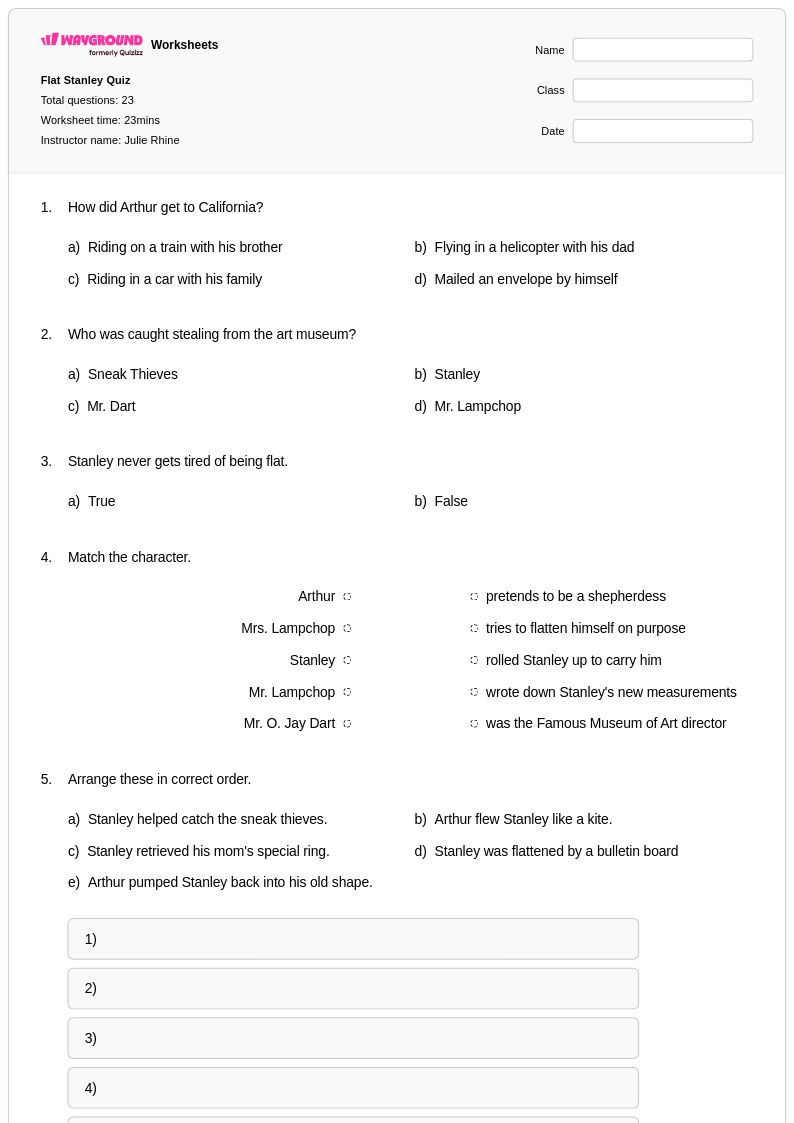
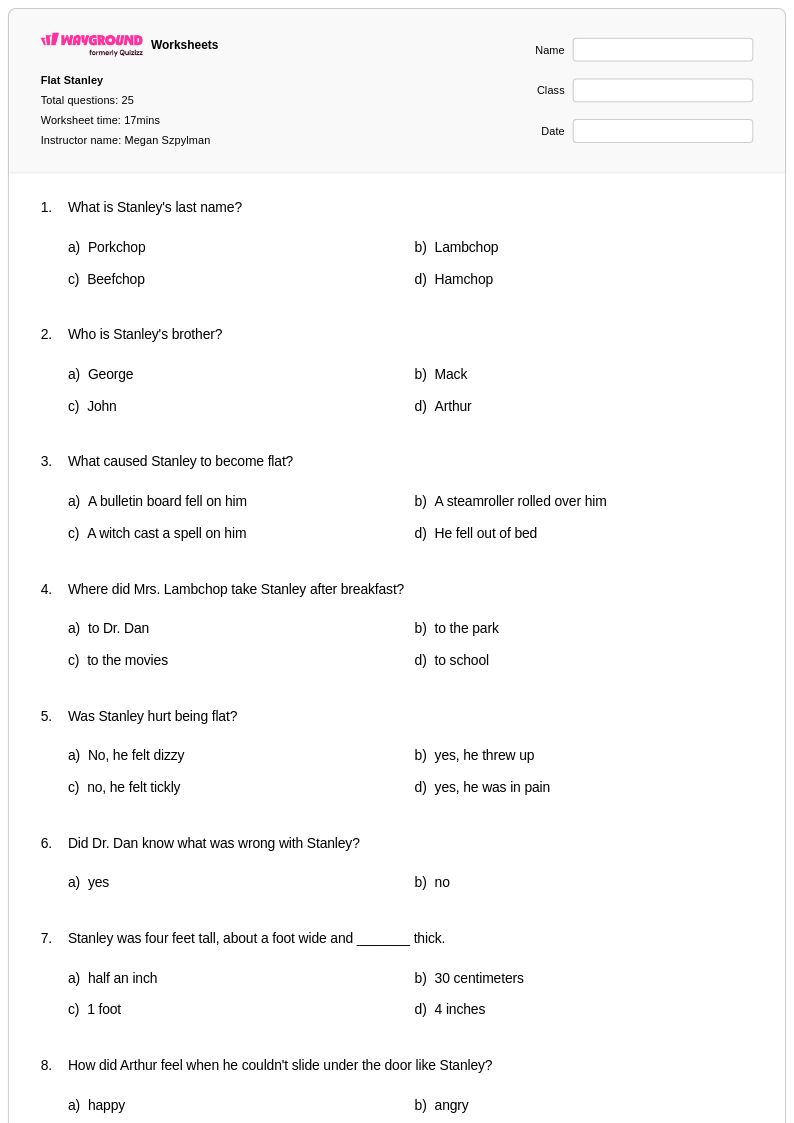
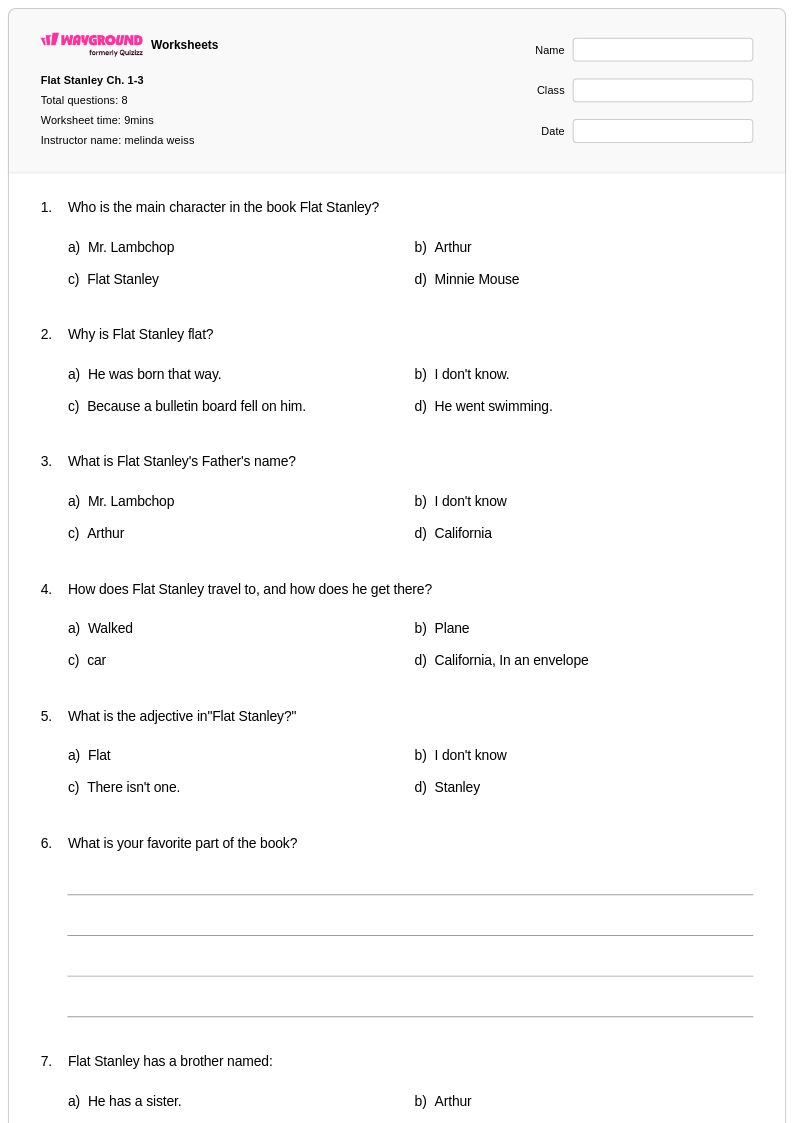
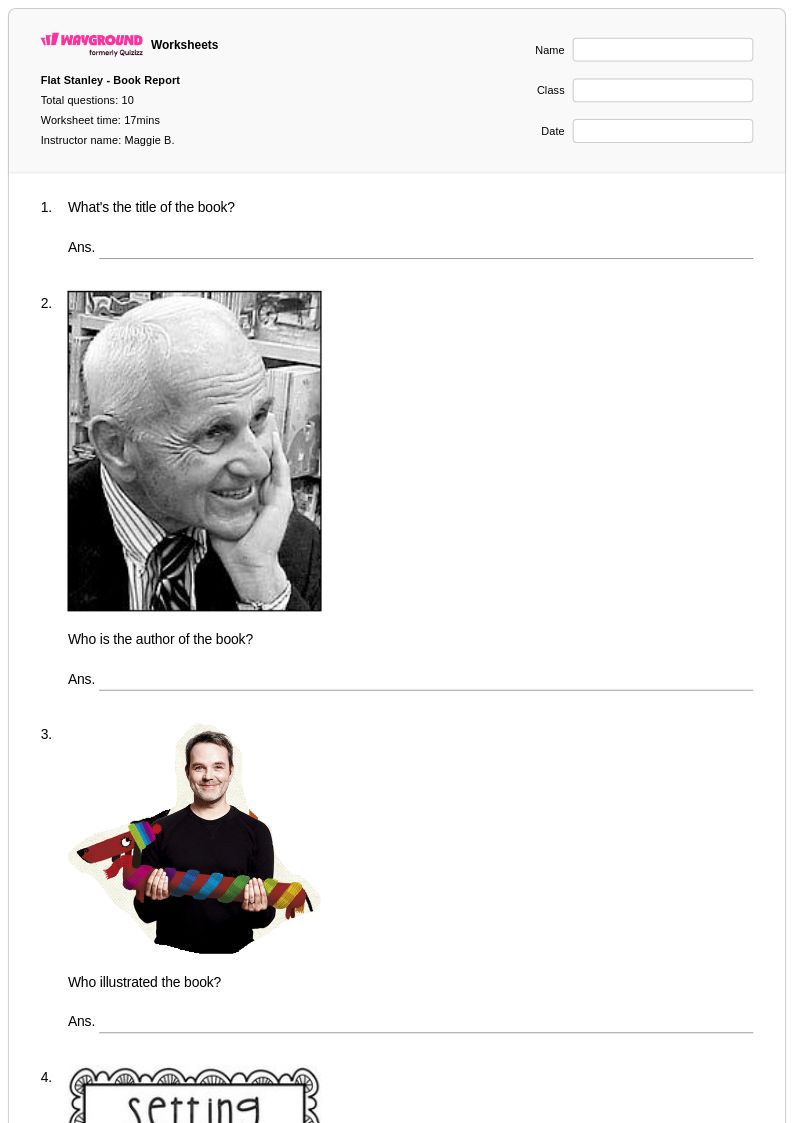
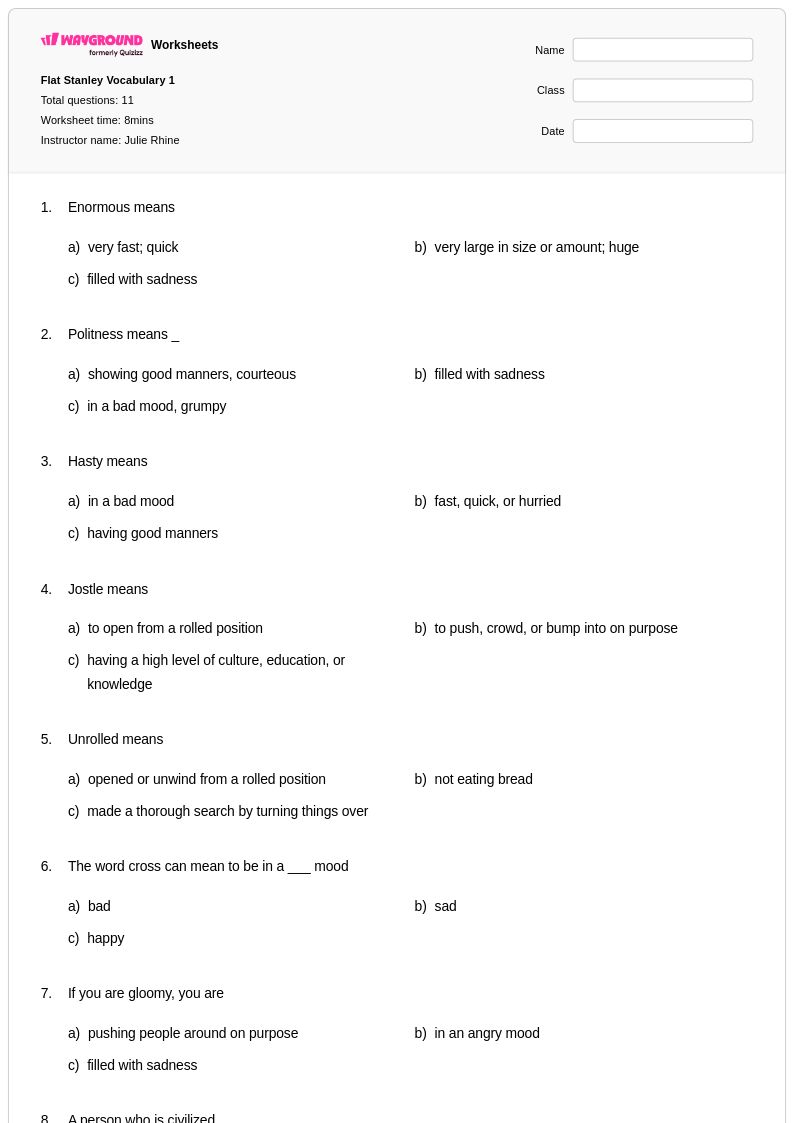
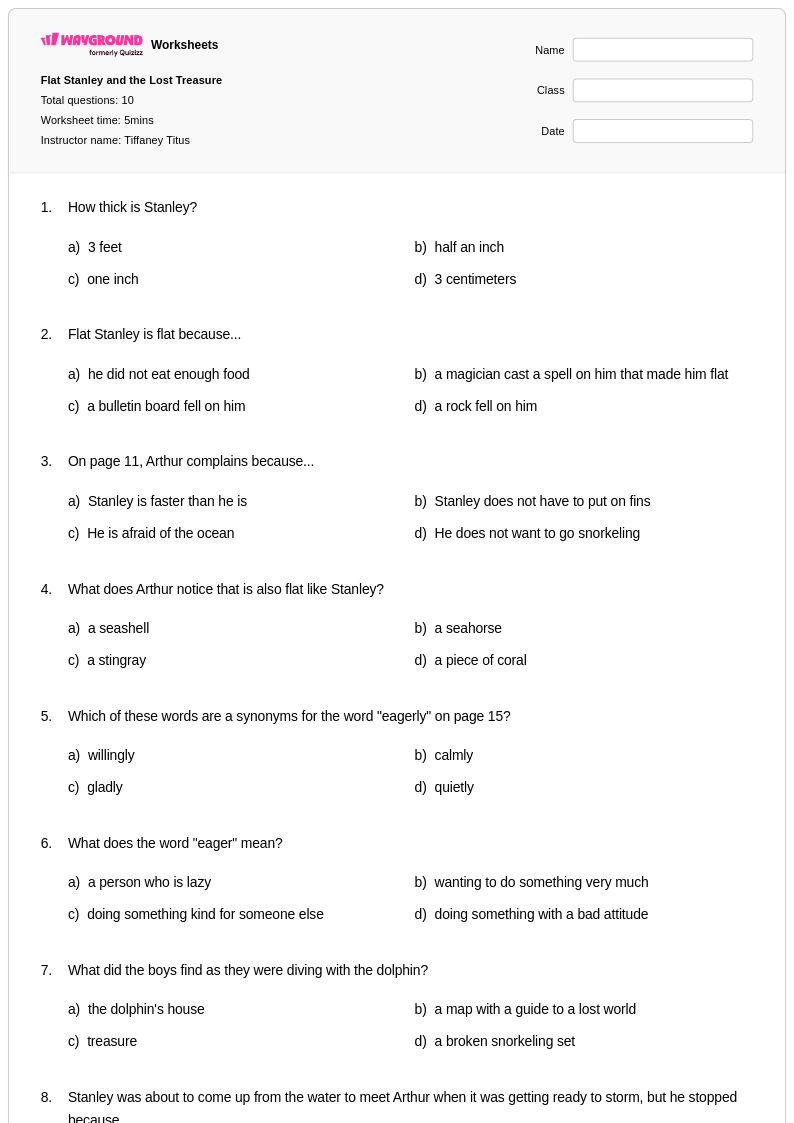
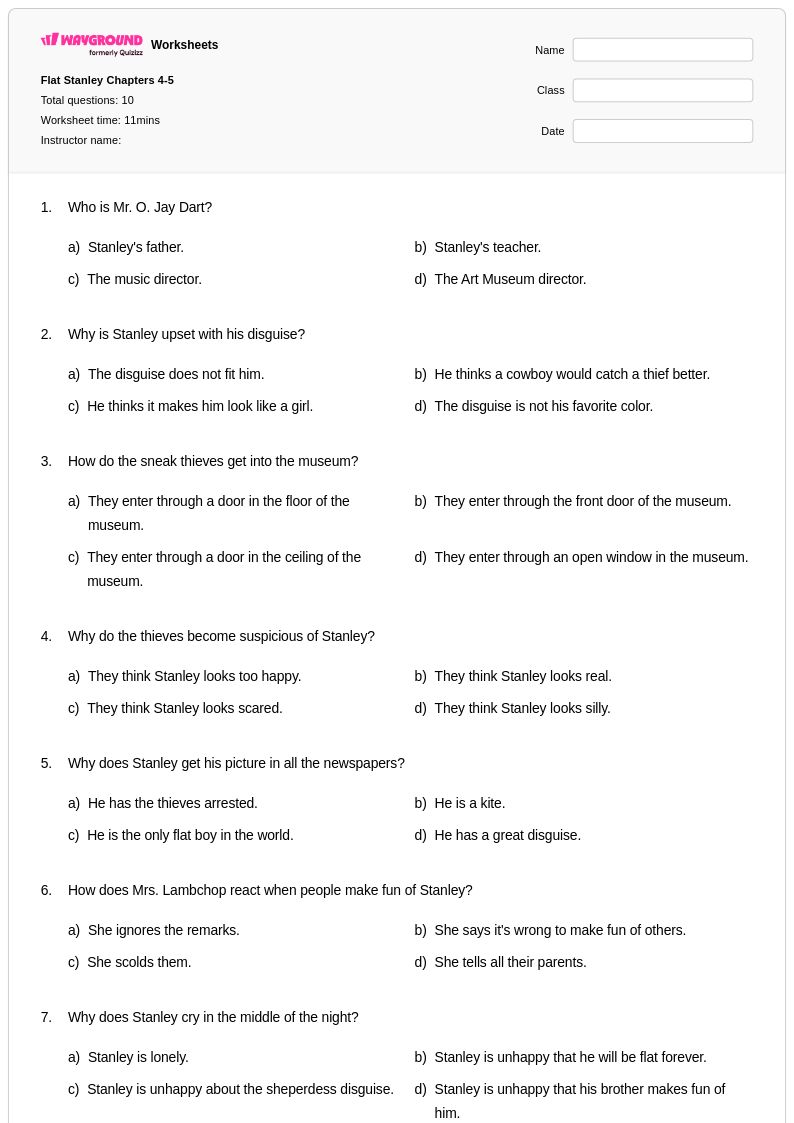
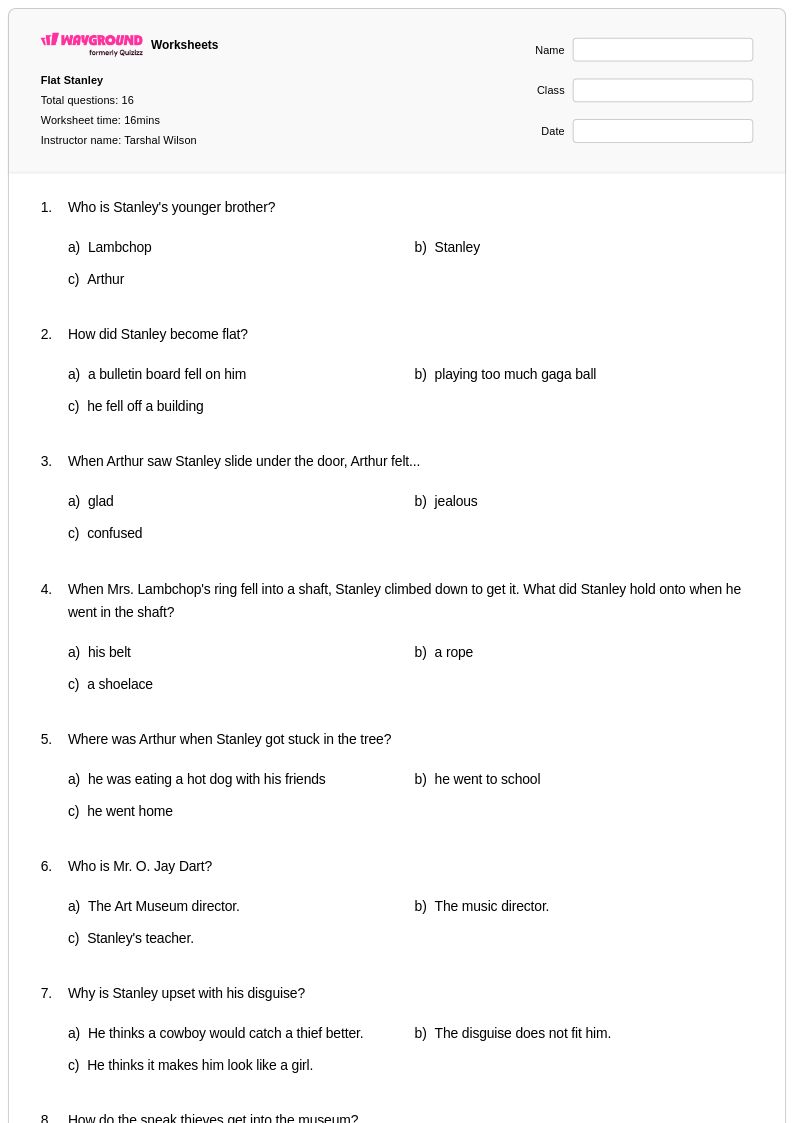
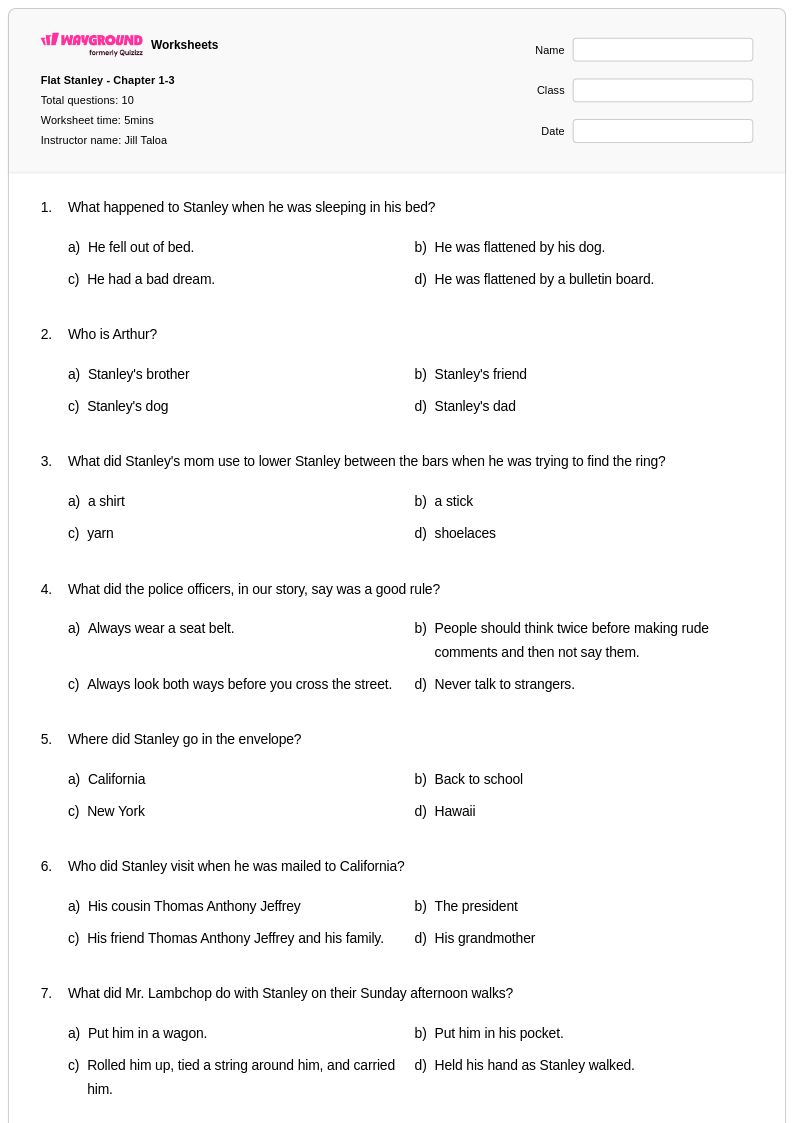
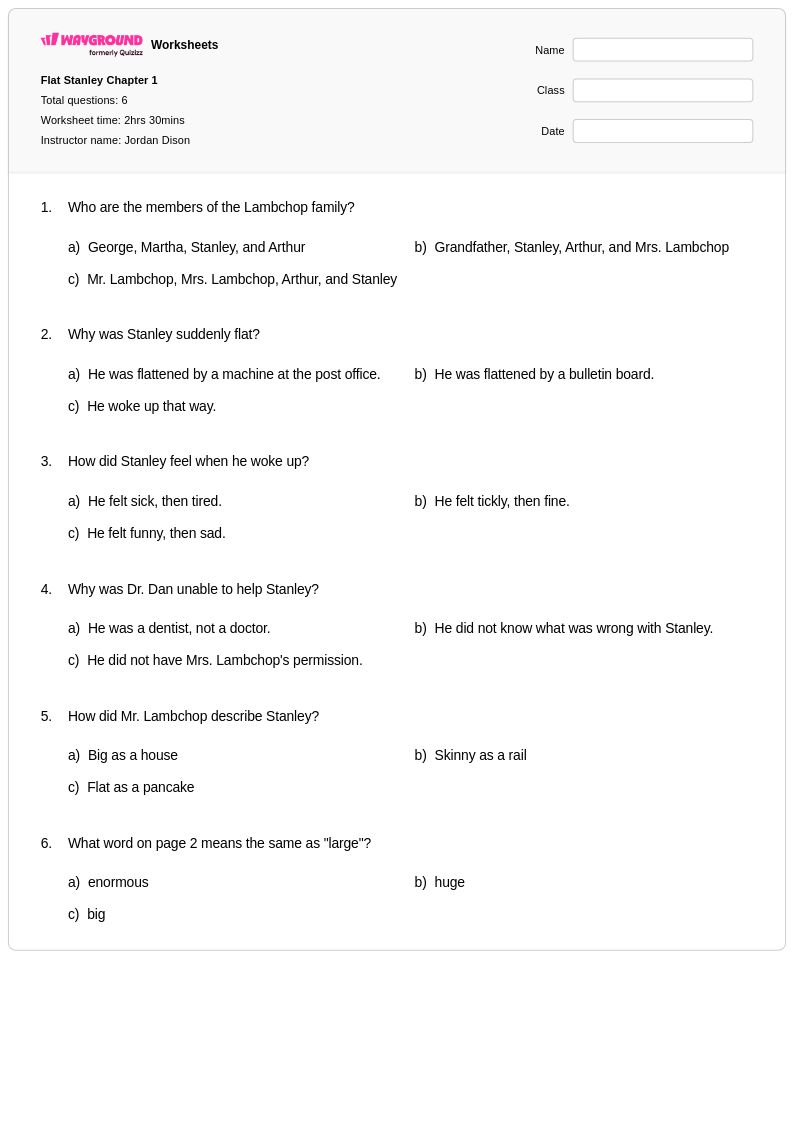
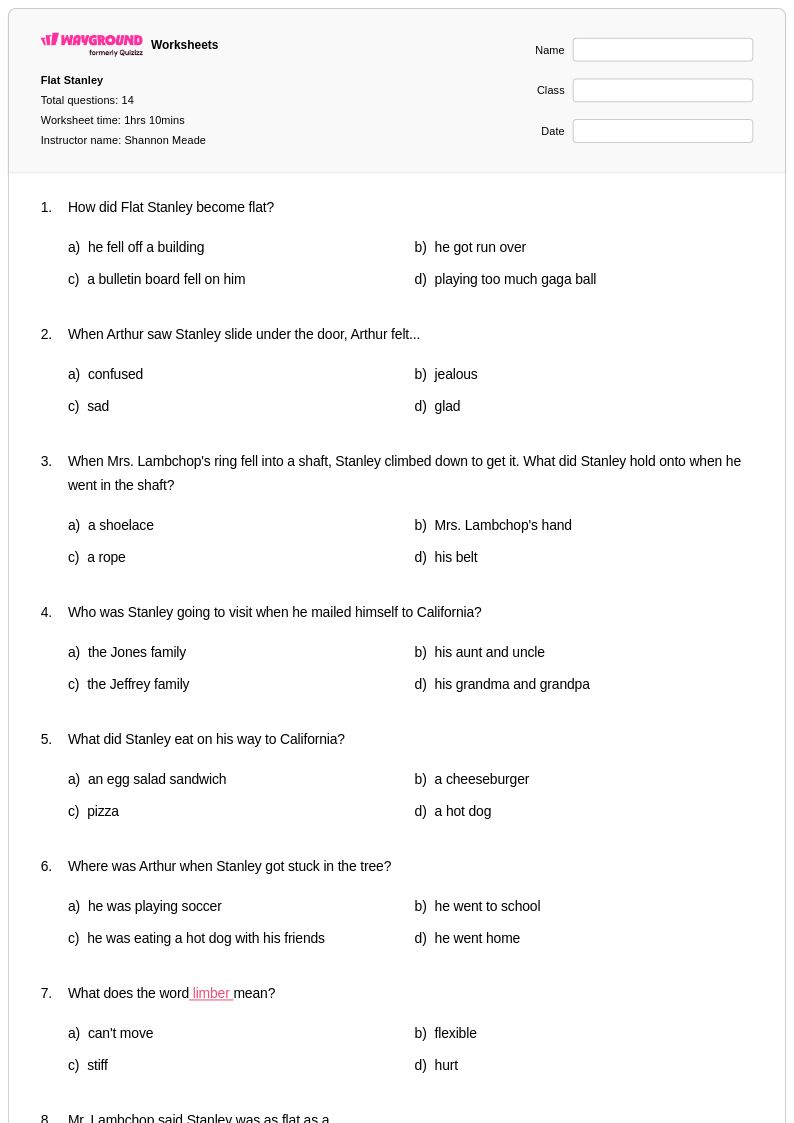
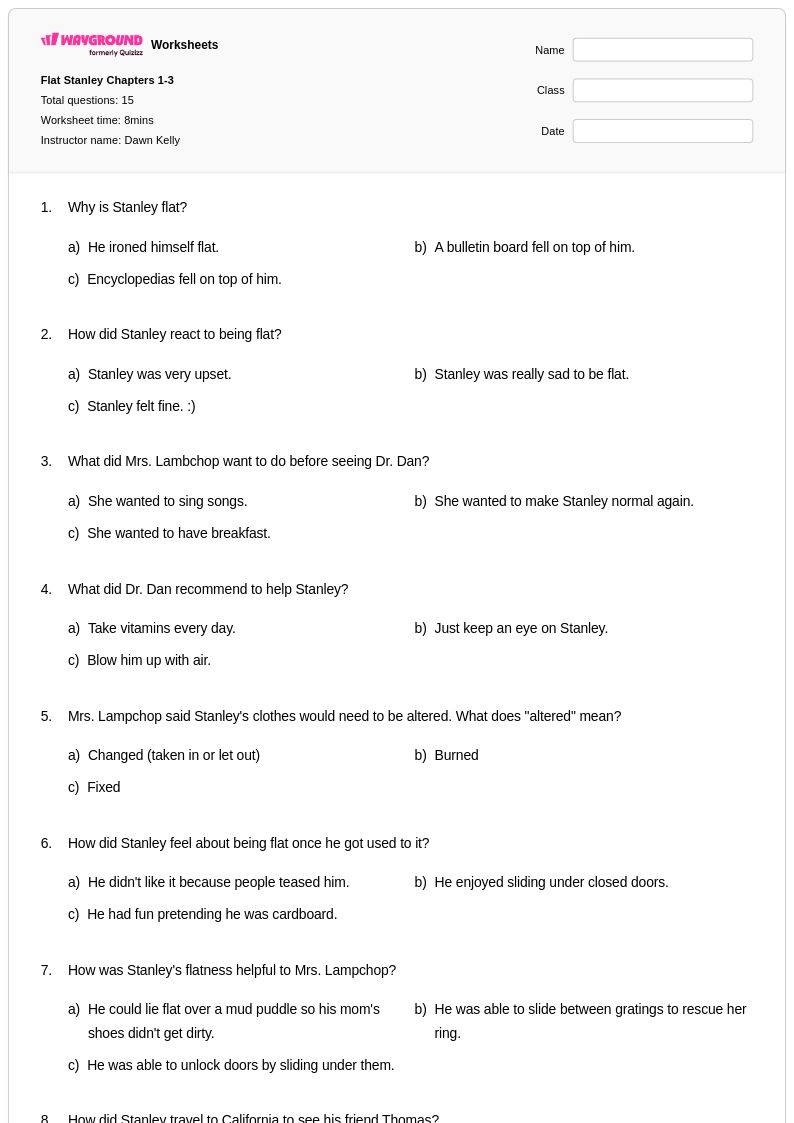
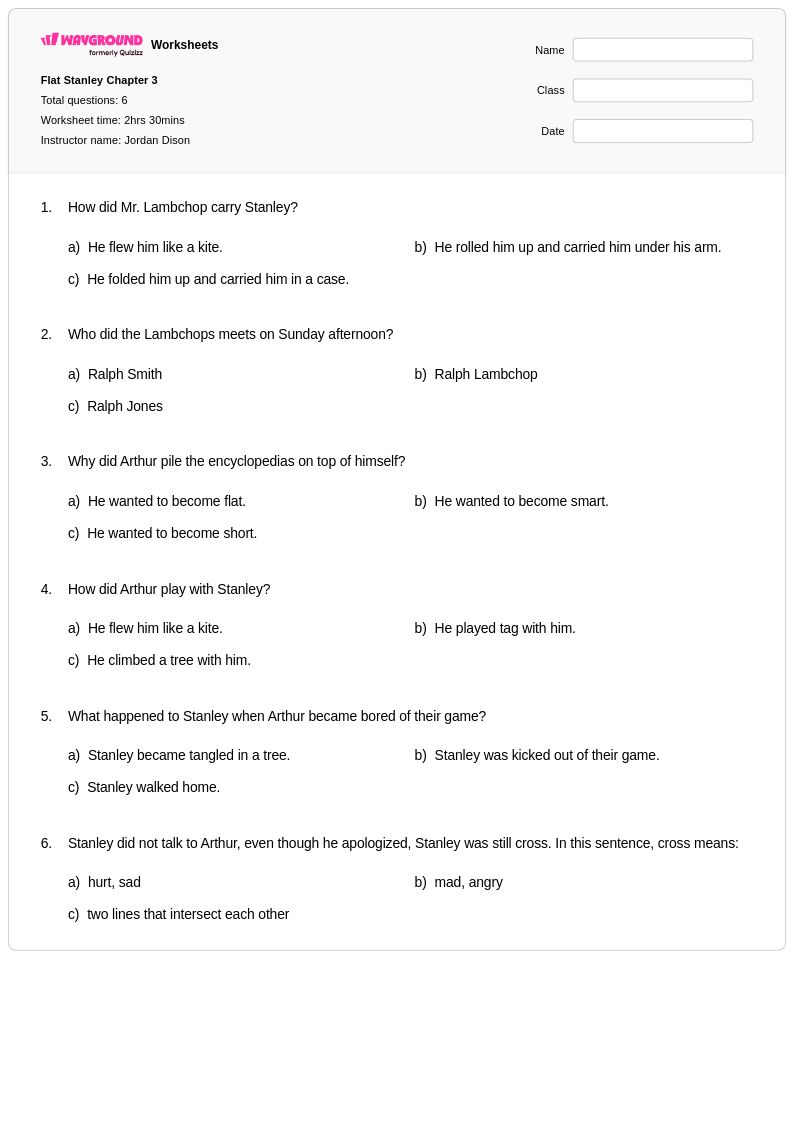
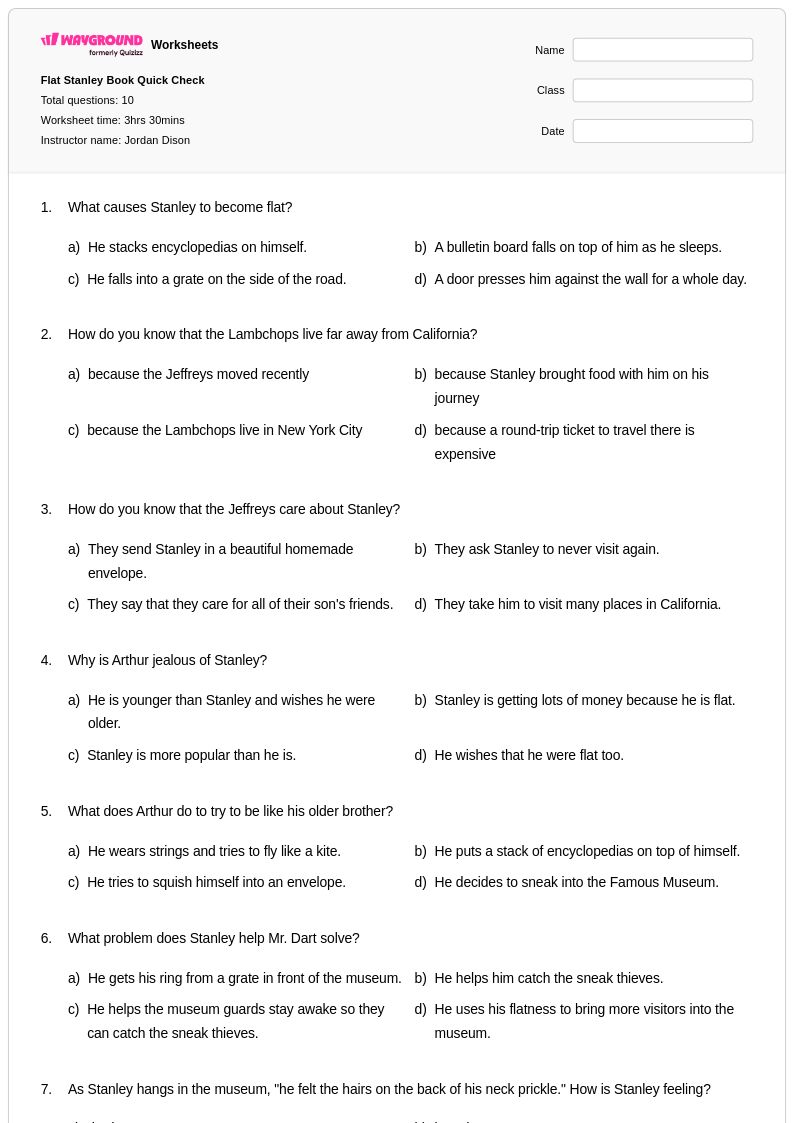
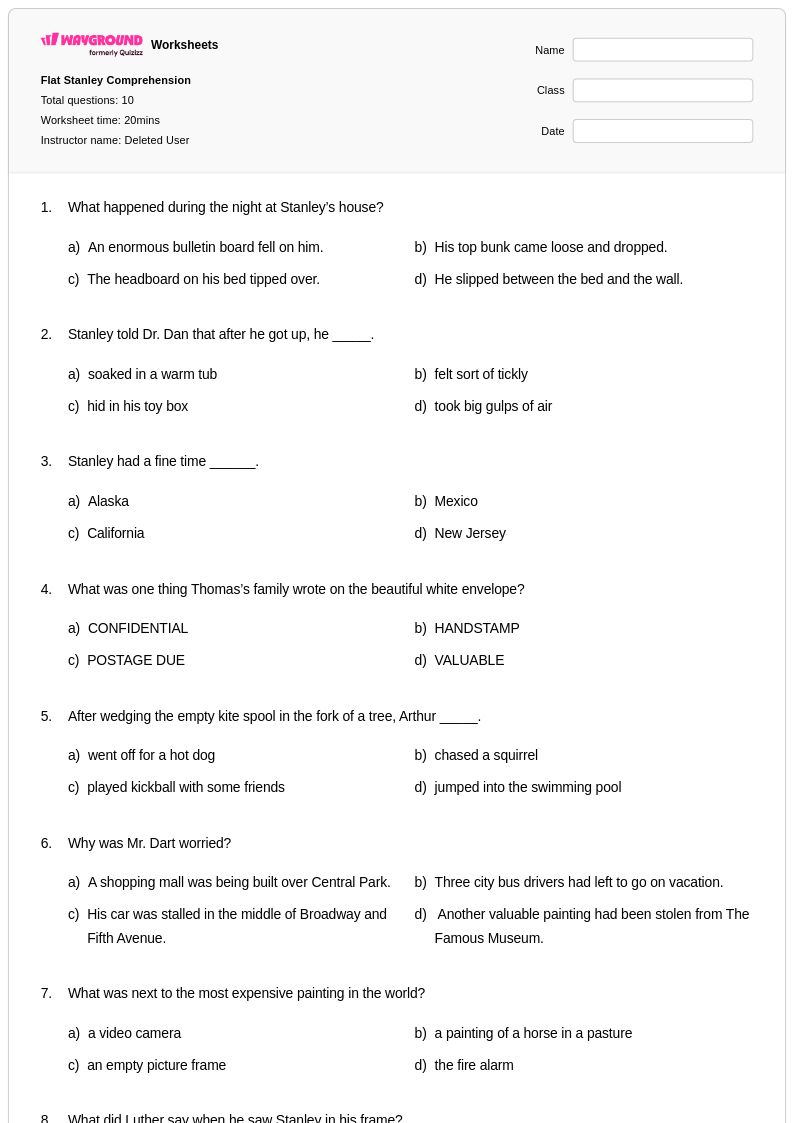
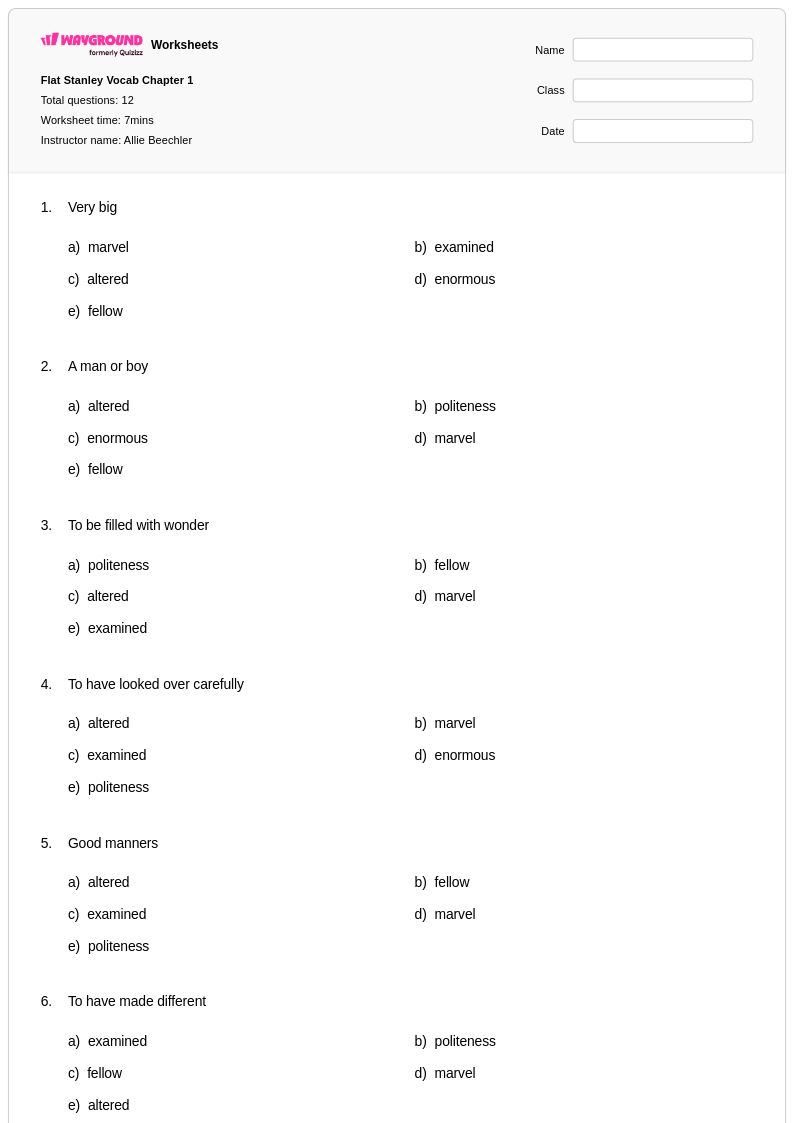
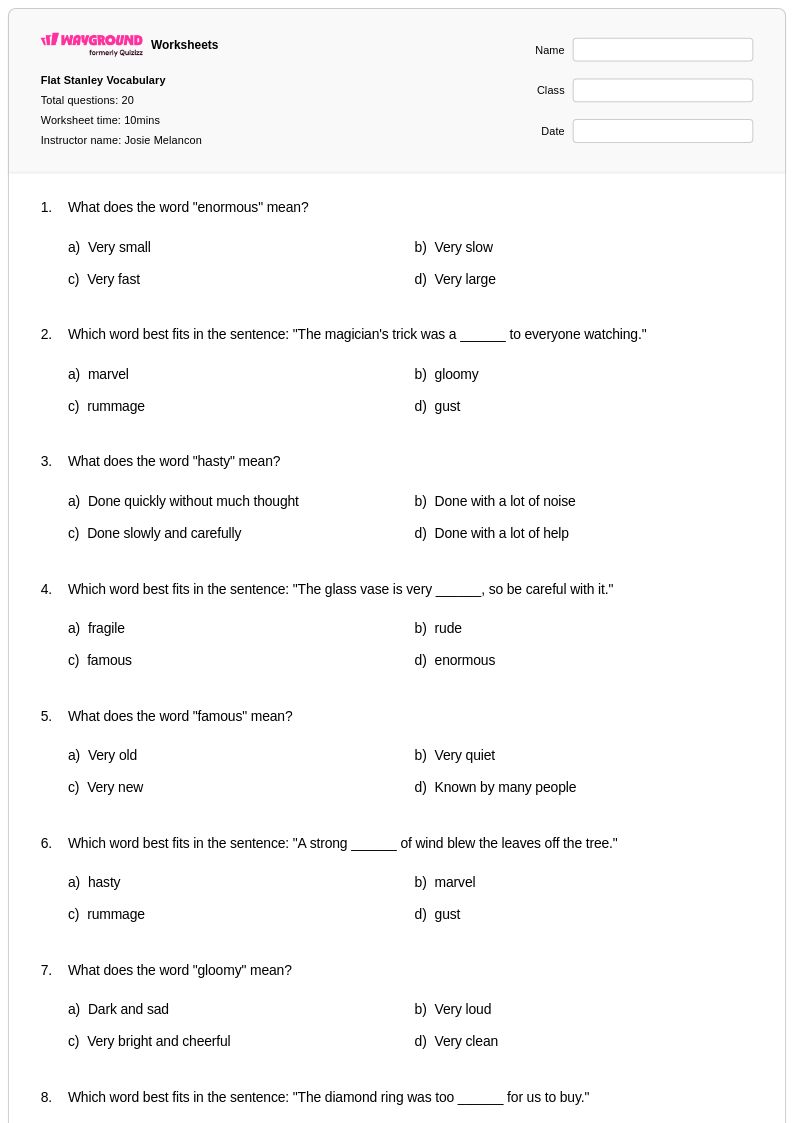
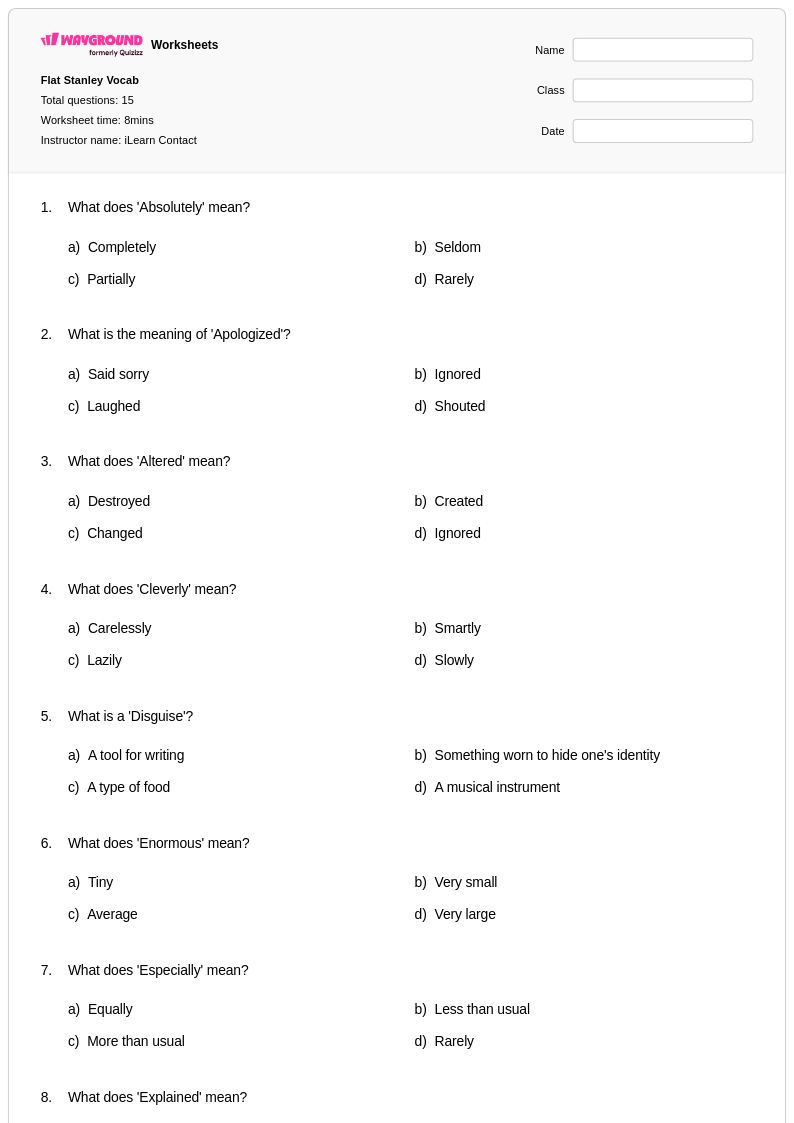
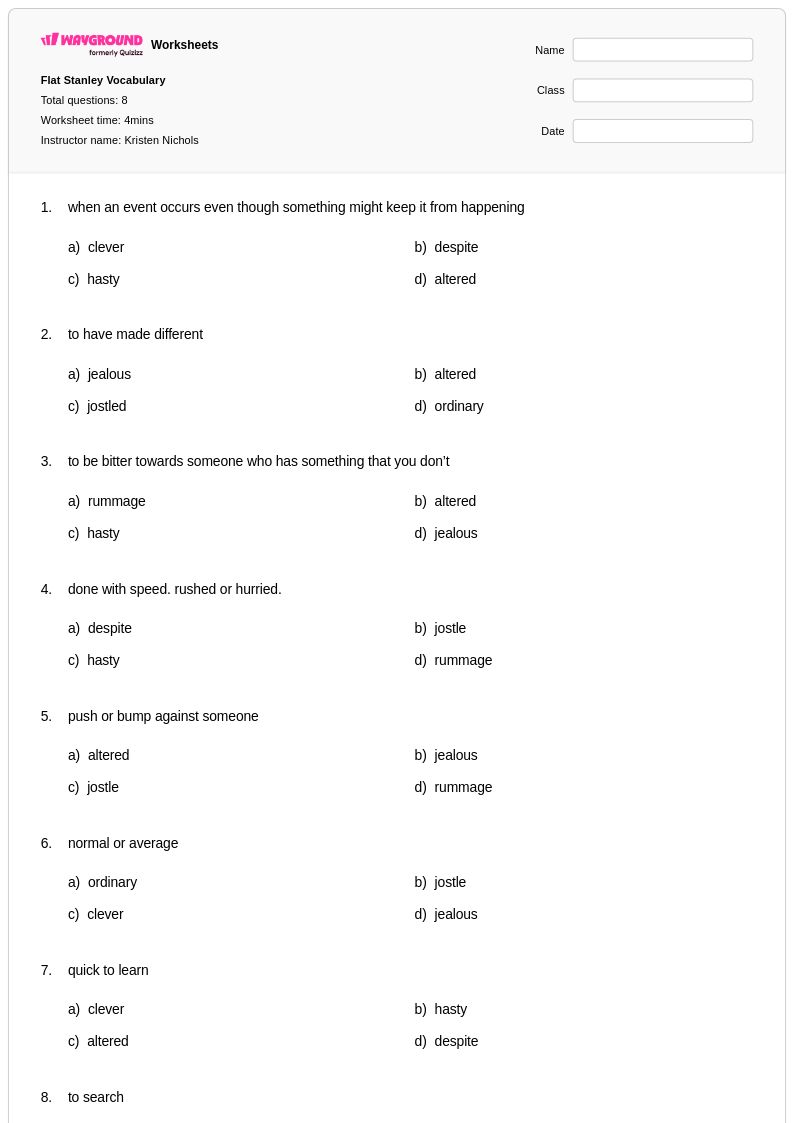
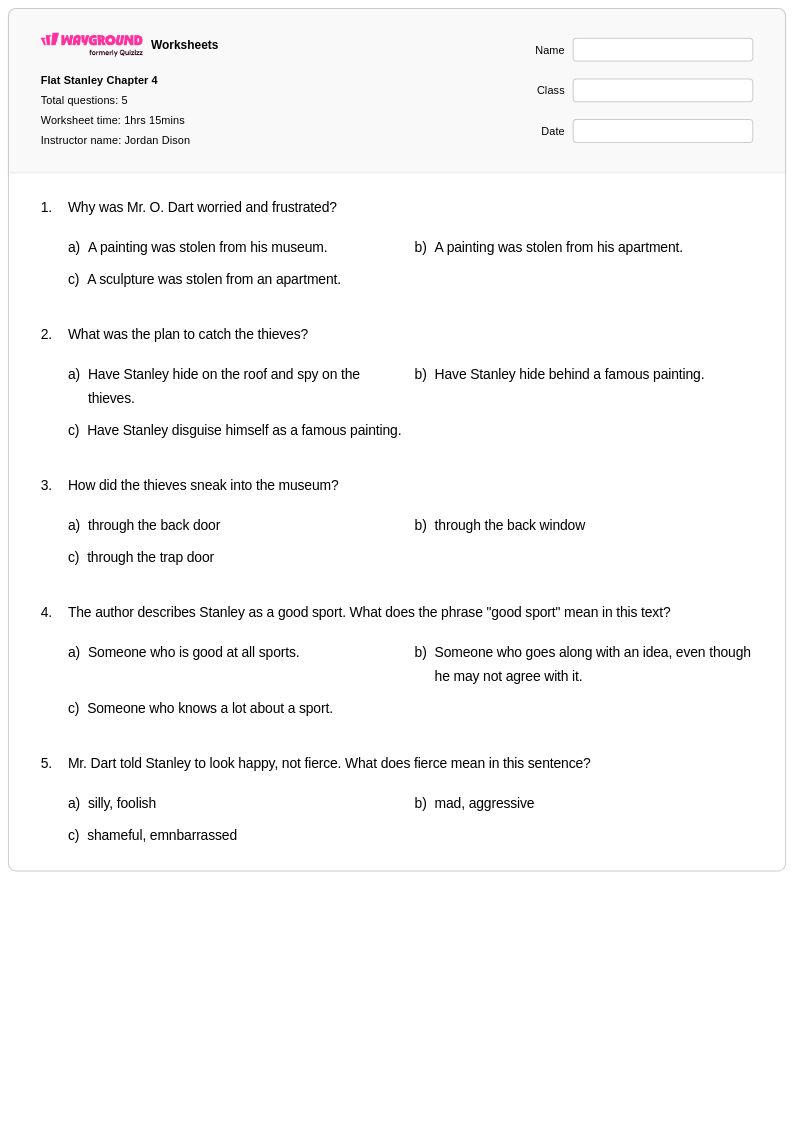
Flat Stanley worksheets for Class 2 students available through Wayground (formerly Quizizz) provide engaging reading comprehension activities centered around Jeff Brown's beloved character who becomes flat after a bulletin board falls on him. These carefully crafted educational resources help second-grade learners develop critical reading skills including character analysis, plot sequencing, and story comprehension while exploring this classic children's literature. The worksheet collection includes practice problems that encourage students to identify story elements, make predictions, and connect Flat Stanley's adventures to their own experiences. Teachers can access comprehensive answer keys alongside each printable activity, making assessment and instruction seamless. These free resources are available in convenient pdf format, allowing educators to easily distribute materials for both classroom use and take-home practice.
Wayground's extensive library supports teachers with millions of educator-created Flat Stanley and reading genre resources that can be filtered by grade level, skill focus, and learning objective. The platform's robust search functionality enables teachers to quickly locate materials that align with reading comprehension standards while offering differentiation tools to meet diverse learning needs within Class 2 classrooms. Educators can customize existing worksheets or combine multiple resources to create comprehensive lesson plans that support remediation for struggling readers and enrichment opportunities for advanced students. Whether used as printable handouts for independent practice or integrated into digital learning environments, these flexible materials help teachers provide targeted skill practice that builds reading fluency and comprehension strategies essential for early elementary success.
FAQs
How do I teach Flat Stanley in a way that builds real reading comprehension skills?
Flat Stanley works well as an anchor text for teaching narrative elements because the story's simple premise makes abstract concepts like character motivation, plot sequencing, and cause-and-effect relationships accessible to younger readers. Start by having students map Stanley's journey, identifying how each event connects to the next, before moving into character analysis discussions. The contrast between realistic settings and the fantastical premise also makes it an effective entry point for teaching the difference between realistic and fictional story elements.
What reading skills can students practice using Flat Stanley worksheets?
Flat Stanley worksheets typically target plot sequencing, character analysis, story structure, and genre recognition. Because the series follows a clear narrative arc with a distinctive protagonist, students can practice identifying character traits using text evidence, tracking how Stanley changes across events, and distinguishing between realistic and non-realistic fiction. These are foundational comprehension skills that transfer directly to other literary texts students will encounter.
What comprehension mistakes do students commonly make when reading Flat Stanley?
A common error is treating Flat Stanley as purely silly or fantastical and missing the underlying narrative logic, which causes students to struggle with cause-and-effect questions and plot sequencing. Students also frequently describe Stanley using surface-level observations rather than inferring character traits from his actions and dialogue. Targeted practice with text-evidence prompts helps students move beyond literal recall toward genuine literary analysis.
How can I use Flat Stanley to teach genre recognition?
Flat Stanley occupies a useful middle ground between realistic fiction and fantasy, making it an ideal mentor text for genre recognition lessons. Students can identify which elements of the story could happen in real life, such as mailing a letter or visiting a museum, and which elements are clearly fictional, such as a boy being flattened by a bulletin board. This comparison builds the analytical vocabulary students need to classify and discuss genre across a wider range of texts.
How do Wayground's Flat Stanley worksheets work in the classroom?
Wayground's Flat Stanley worksheets are available as printable PDFs for traditional classroom use and in digital formats for technology-integrated learning environments, including the option to host them as a quiz directly on Wayground. Each worksheet includes a complete answer key, making them practical for independent reading practice, homework assignments, or guided small-group instruction. Teachers can also apply student-level accommodations such as Read Aloud, extended time, or reduced answer choices to support diverse learners within the same assignment.
How do I differentiate Flat Stanley reading activities for students at different skill levels?
For below-grade readers, focus on plot sequencing and literal comprehension questions before introducing inferential tasks like character motivation or theme. More advanced students can be challenged with comparative analysis across multiple books in the series or with prompts that ask them to evaluate how Jeff Brown uses humor to develop character. On Wayground, teachers can apply individual accommodations such as reduced answer choices or Read Aloud to support struggling readers without singling them out in front of the class.