
7 Q
2nd

10 Q
KG - 12th

10 Q
KG - 3rd
14 Q
2nd

10 Q
1st - PD
8 Q
2nd
8 Q
2nd

20 Q
2nd - 4th

12 Q
1st - 5th

11 Q
KG - 5th

14 Q
1st - 5th

15 Q
1st - 3rd

20 Q
KG - 6th

12 Q
KG - 7th

5 Q
2nd - 11th
15 Q
2nd
15 Q
2nd - 6th
20 Q
2nd
15 Q
2nd
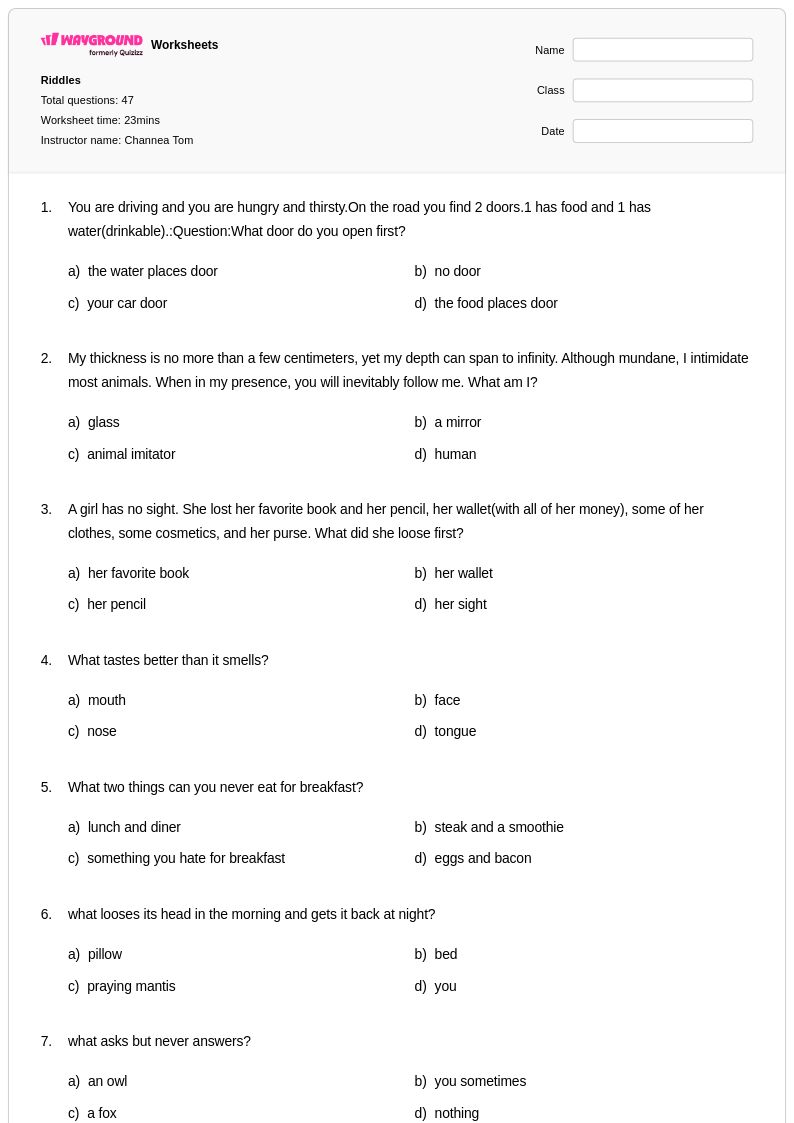
47 Q
2nd
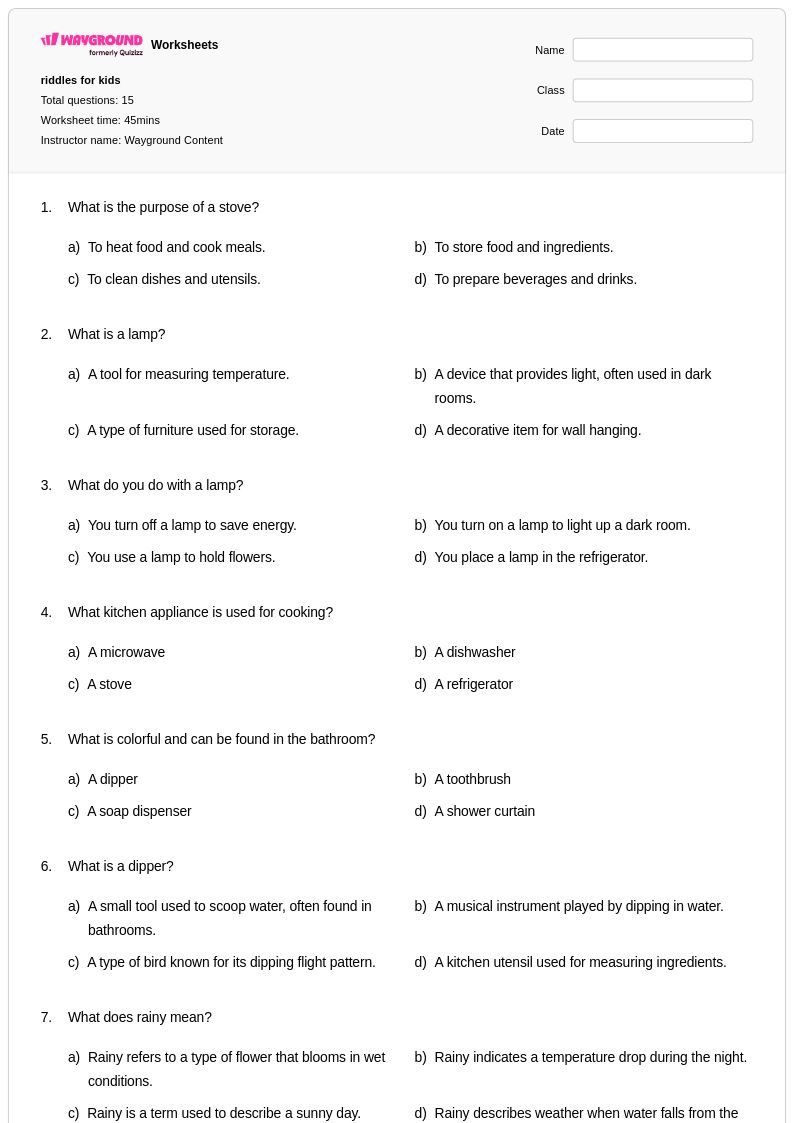
15 Q
2nd - 5th
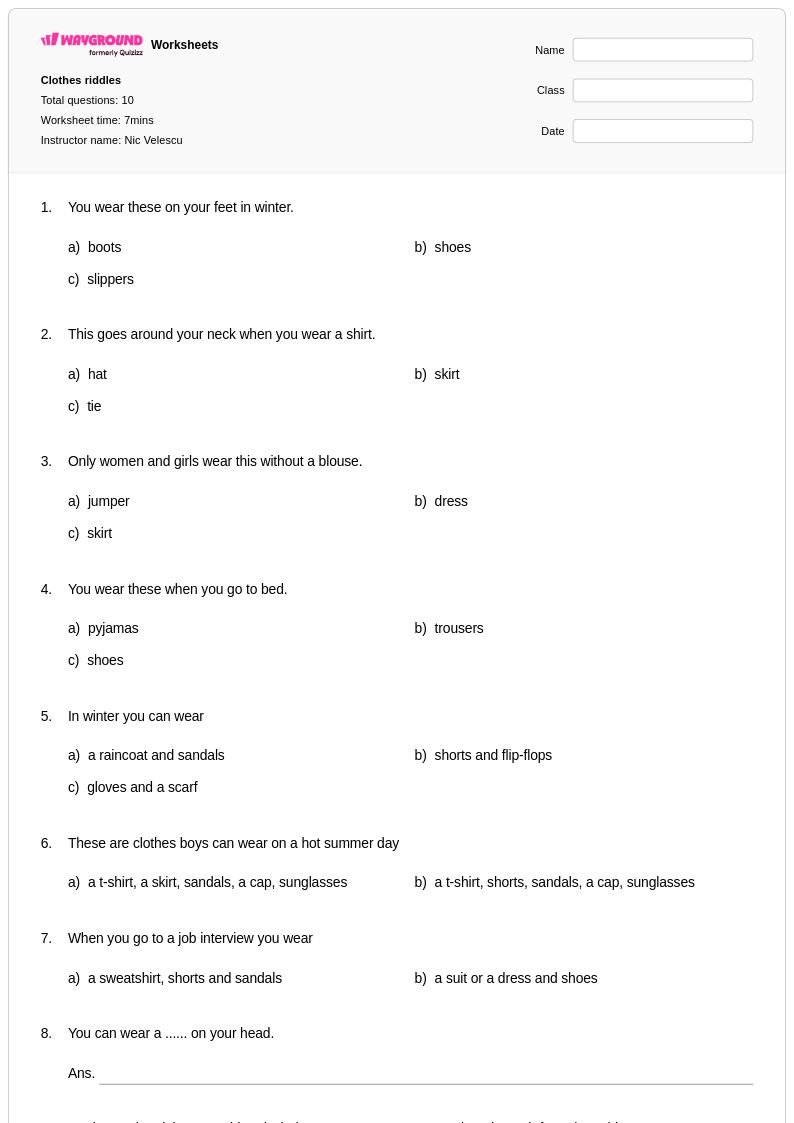
10 Q
2nd - 4th
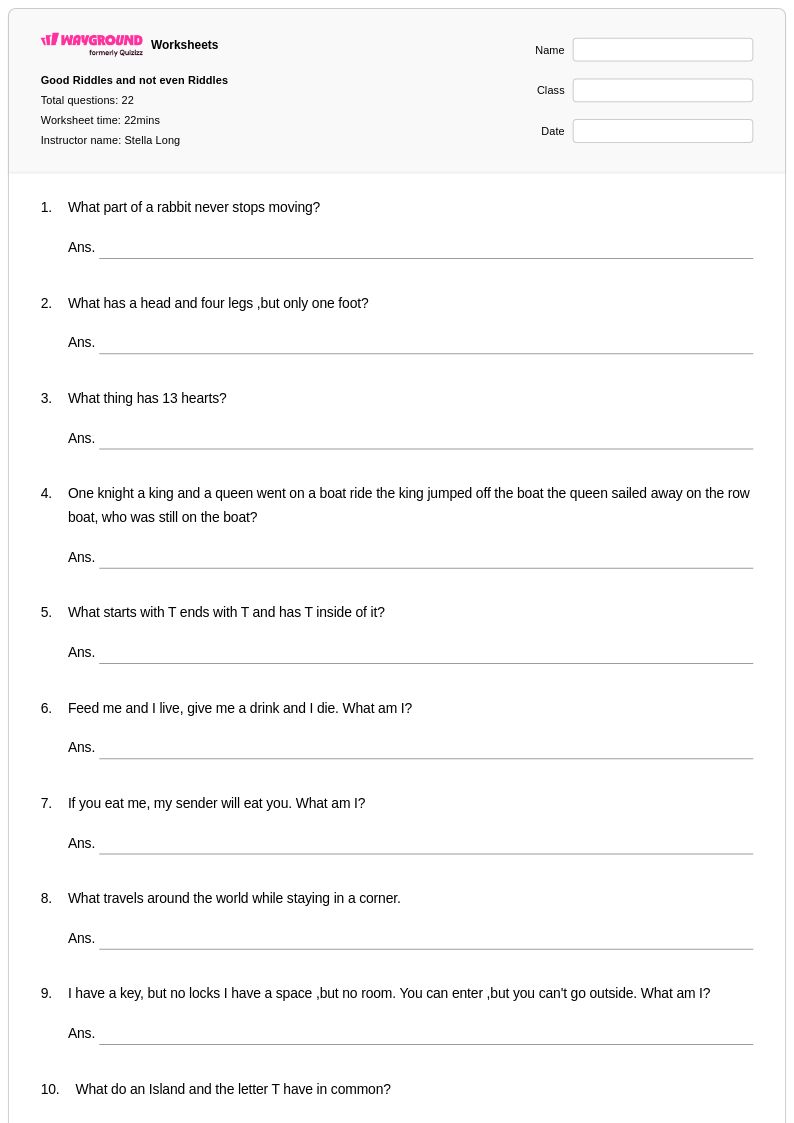
22 Q
1st - 5th
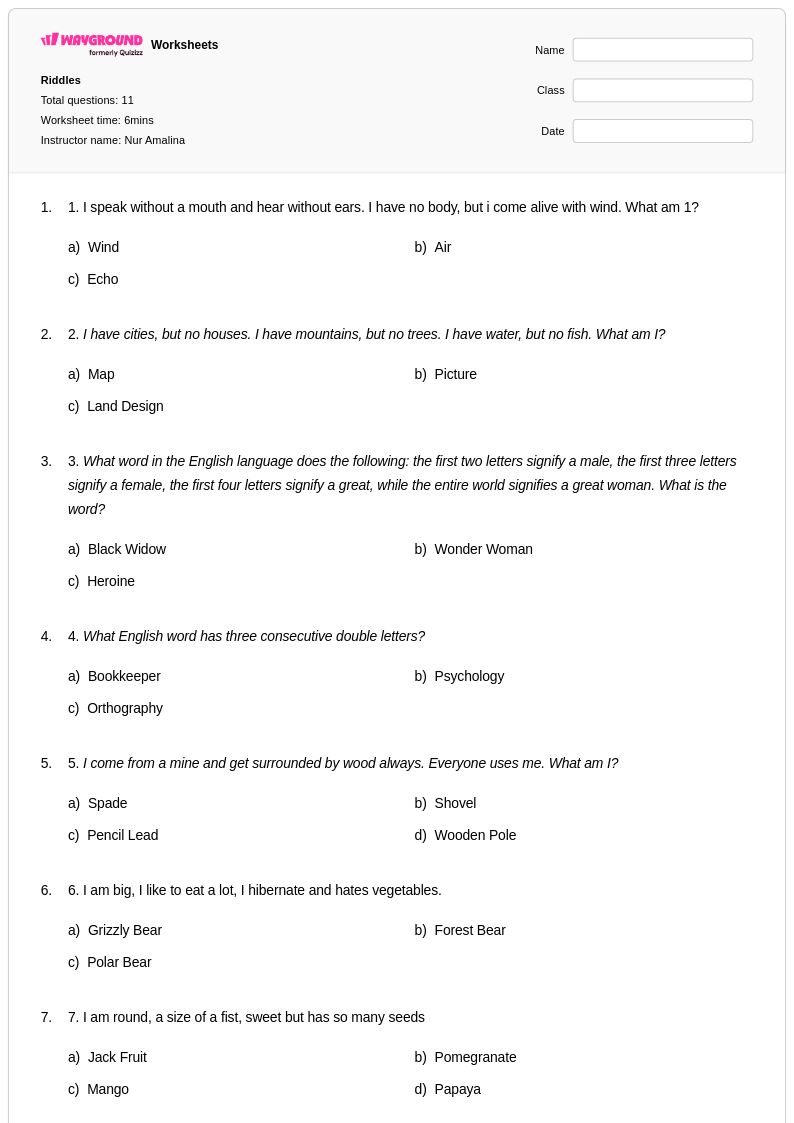
11 Q
1st - 12th
Explore Other Subject Worksheets for class 2
Explore printable Riddles worksheets for Class 2
Riddles for Class 2 students represent a delightful intersection of critical thinking and reading comprehension that helps young learners develop essential cognitive skills. Wayground's extensive collection of Class 2 riddle worksheets transforms these brain-teasing puzzles into structured learning experiences that strengthen problem-solving abilities, vocabulary development, and logical reasoning. These carefully crafted printables challenge students to analyze clues, make inferences, and draw conclusions while building confidence in their reading abilities. Each worksheet comes complete with an answer key, making it easy for educators to facilitate independent practice or guided instruction. The free resources available through the platform include a diverse range of riddle types, from simple word play to more complex scenario-based puzzles, ensuring that students encounter varied practice problems that keep them engaged while reinforcing fundamental reading and thinking skills.
Wayground, formerly Quizizz, empowers educators with millions of teacher-created riddle worksheets specifically designed for Class 2 learners, supported by robust search and filtering capabilities that streamline lesson planning and resource selection. Teachers can easily locate materials aligned with curriculum standards while utilizing differentiation tools to meet diverse learning needs within their classrooms. The platform's flexible customization options allow educators to modify existing riddle worksheets or combine multiple resources to create comprehensive skill practice sessions tailored to their students' specific requirements. Available in both printable pdf format and interactive digital versions, these riddle collections support various instructional approaches, from traditional paper-based activities to technology-enhanced learning experiences. This versatility proves invaluable for remediation efforts with struggling readers, enrichment opportunities for advanced students, and regular skill practice that reinforces reading comprehension strategies across different learning environments.
FAQs
How do I teach riddles in the classroom?
What skills do riddle worksheets help students practice?
What mistakes do students commonly make when solving riddles?
How can riddles be used for reading comprehension practice?
How do I use Wayground's riddle worksheets in my classroom?
How can I differentiate riddle activities for students with different ability levels?