Free Printable Future Continuous Tense Worksheets for Class 8
Class 8 students can master future continuous tense with Wayground's comprehensive collection of free worksheets, printable PDFs, and practice problems featuring detailed answer keys for effective grammar learning.
Explore printable Future Continuous Tense worksheets for Class 8
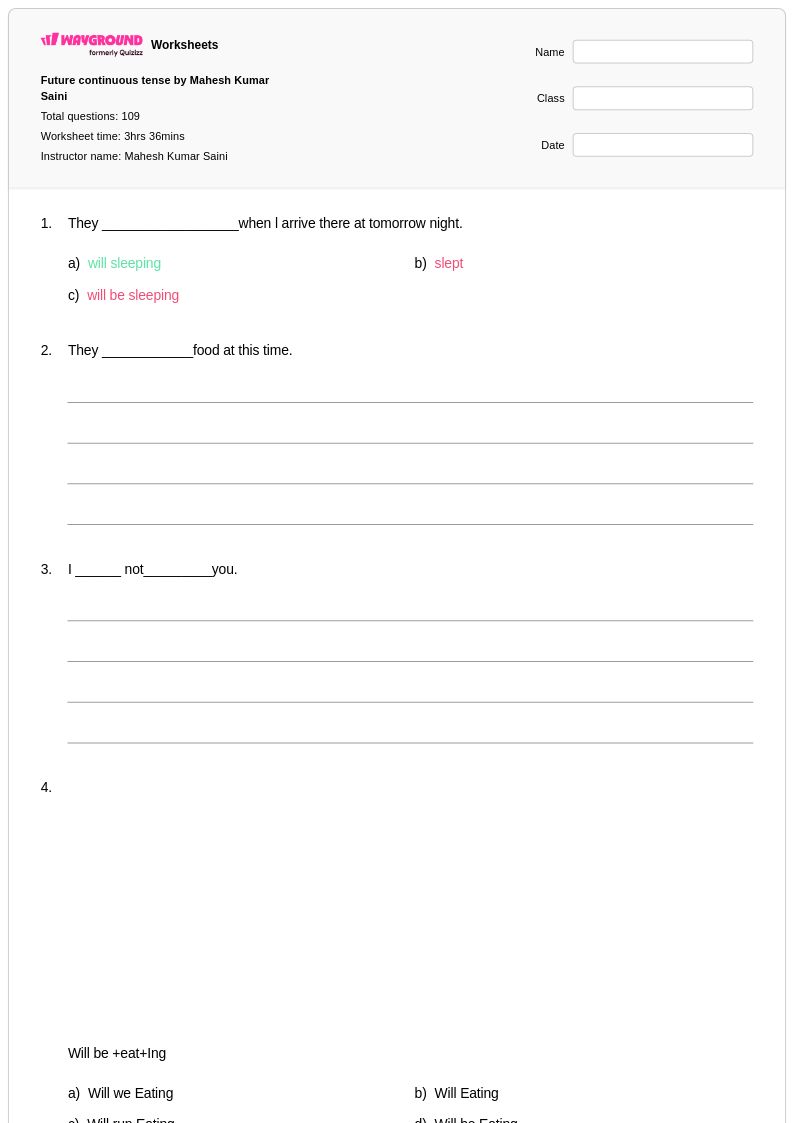
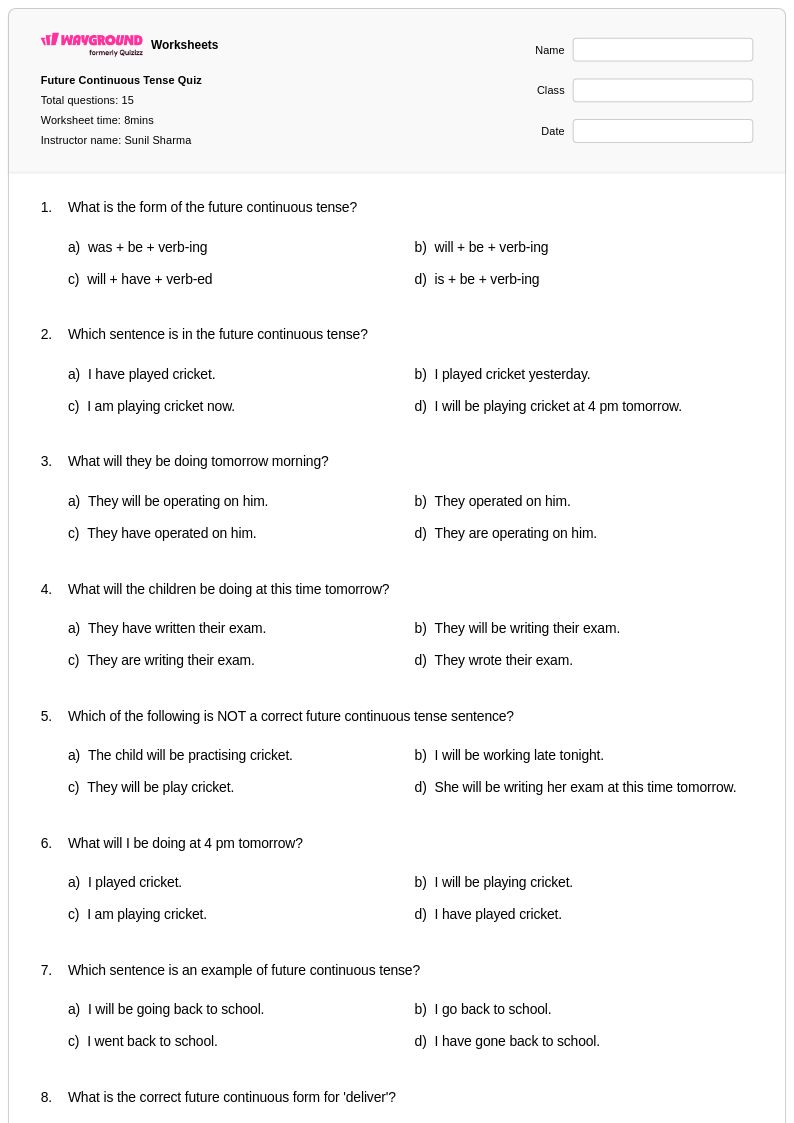
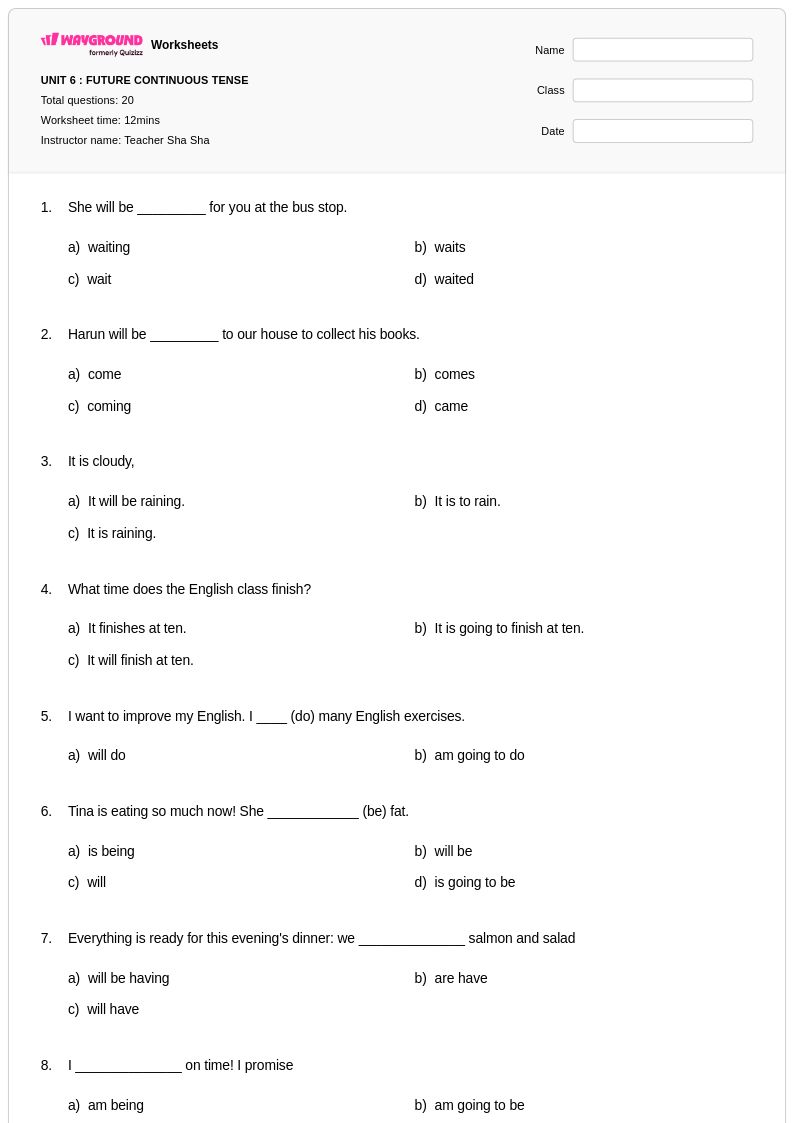
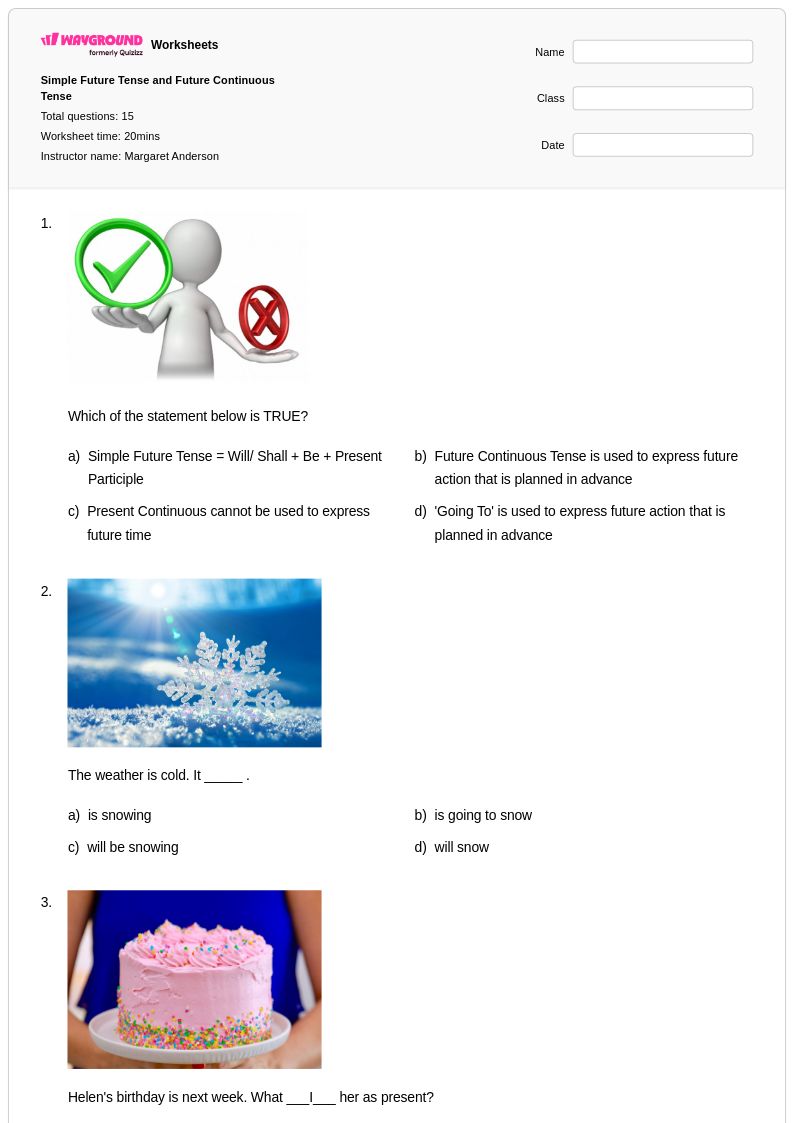
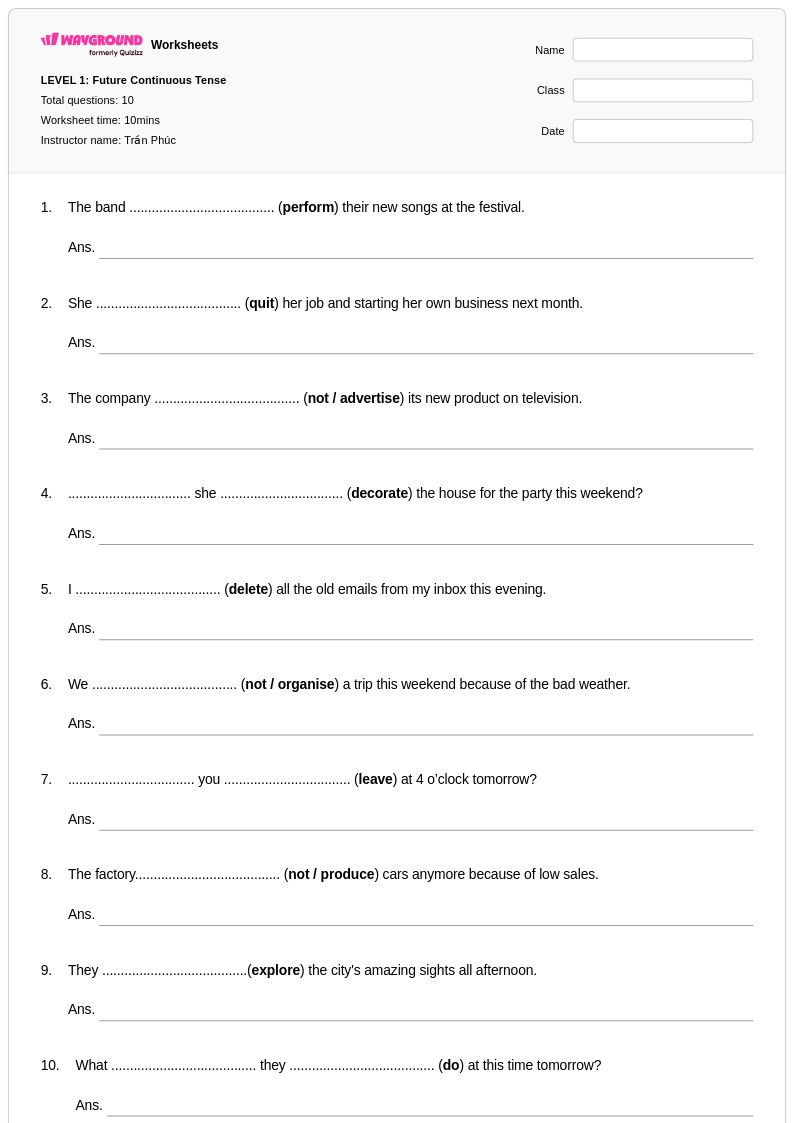
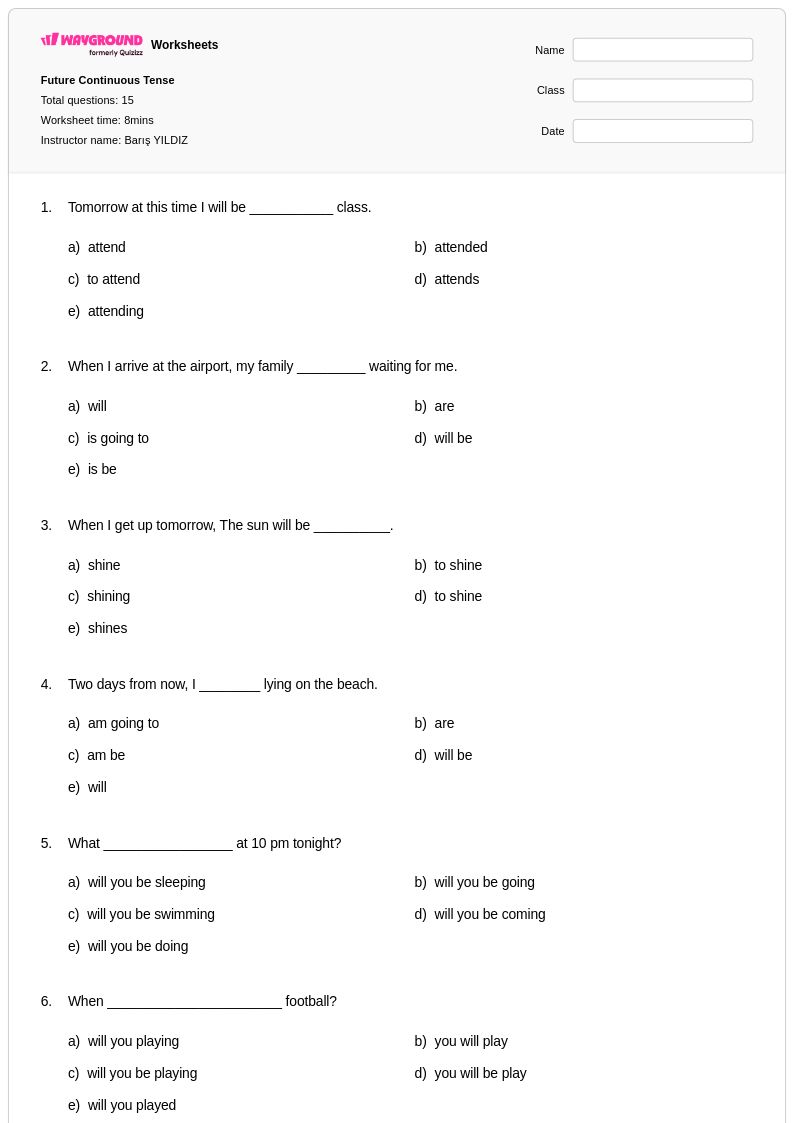
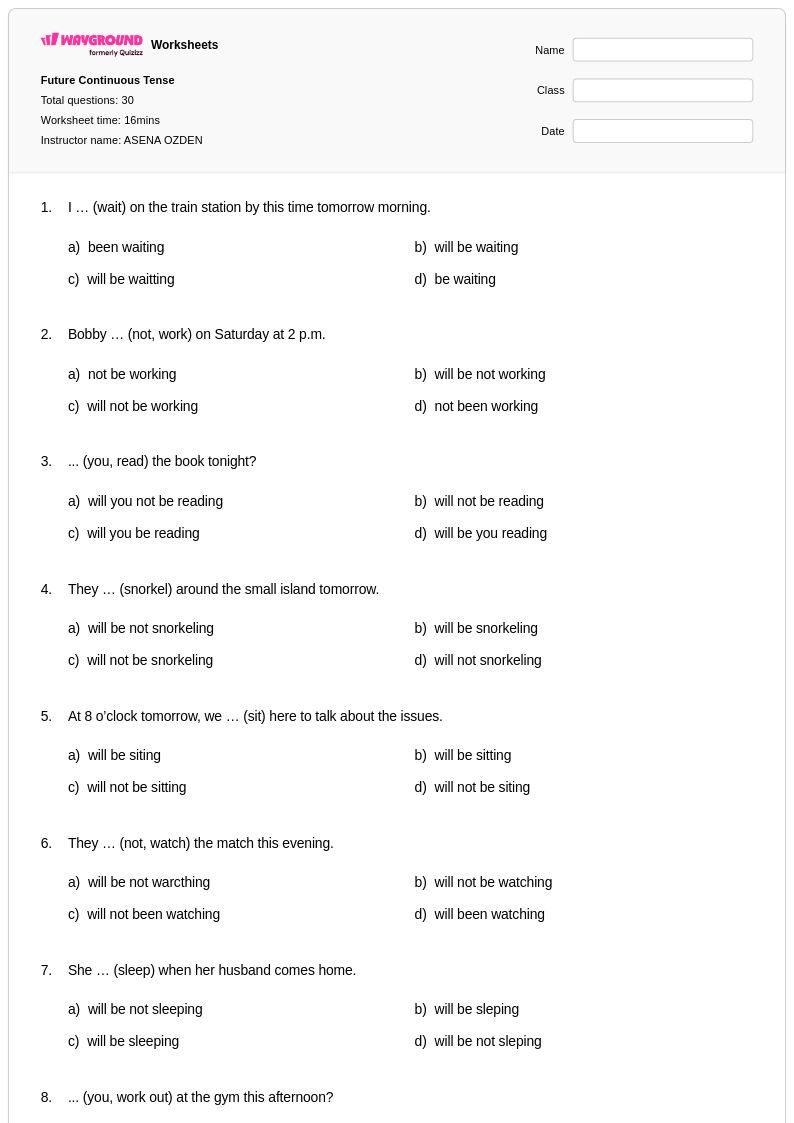
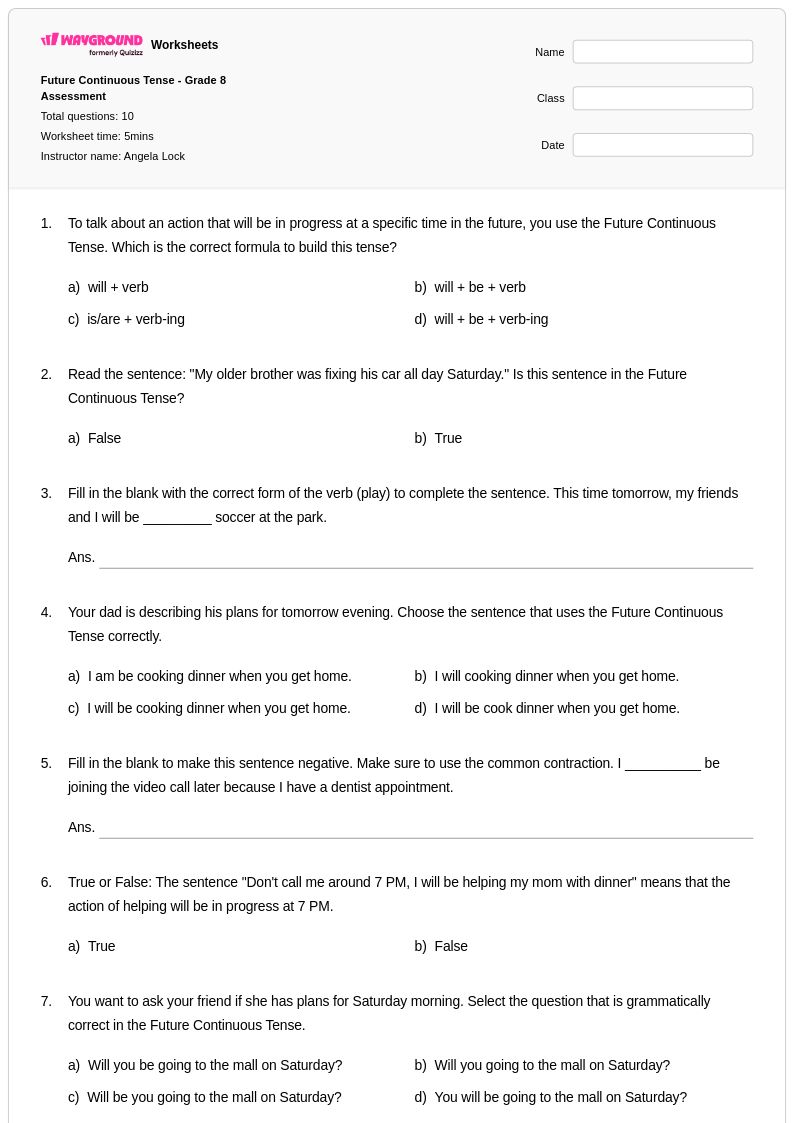
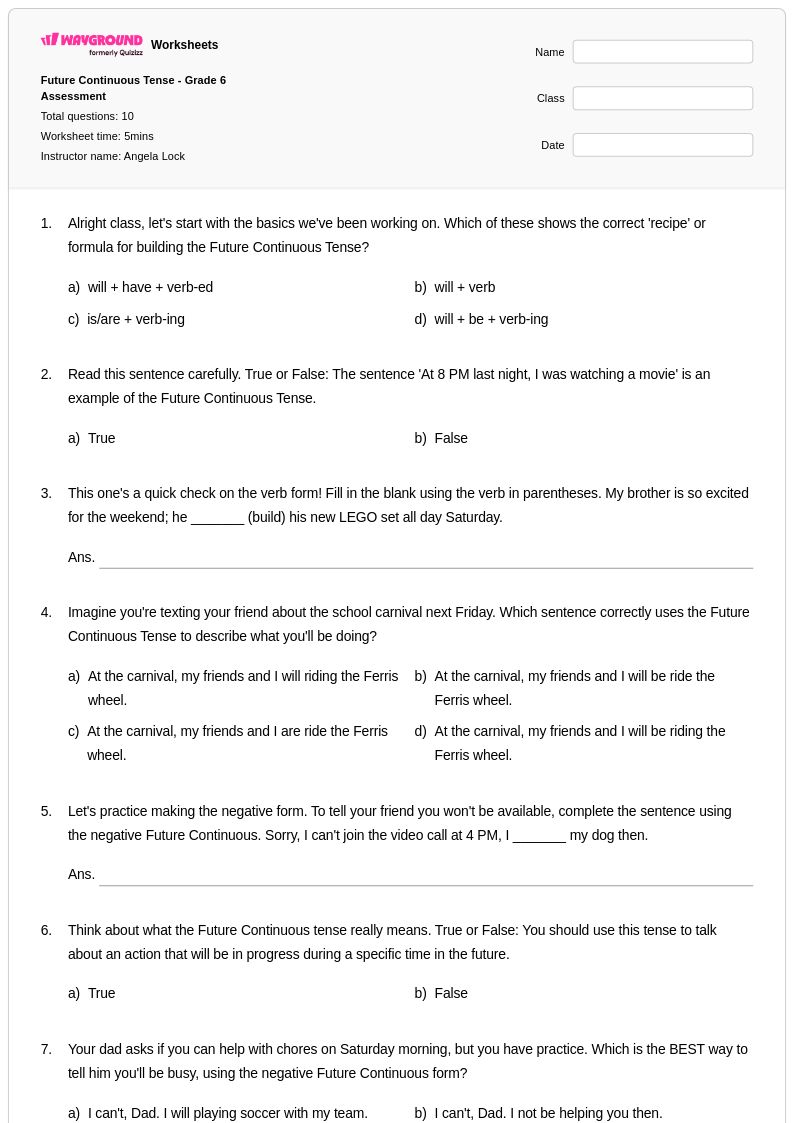
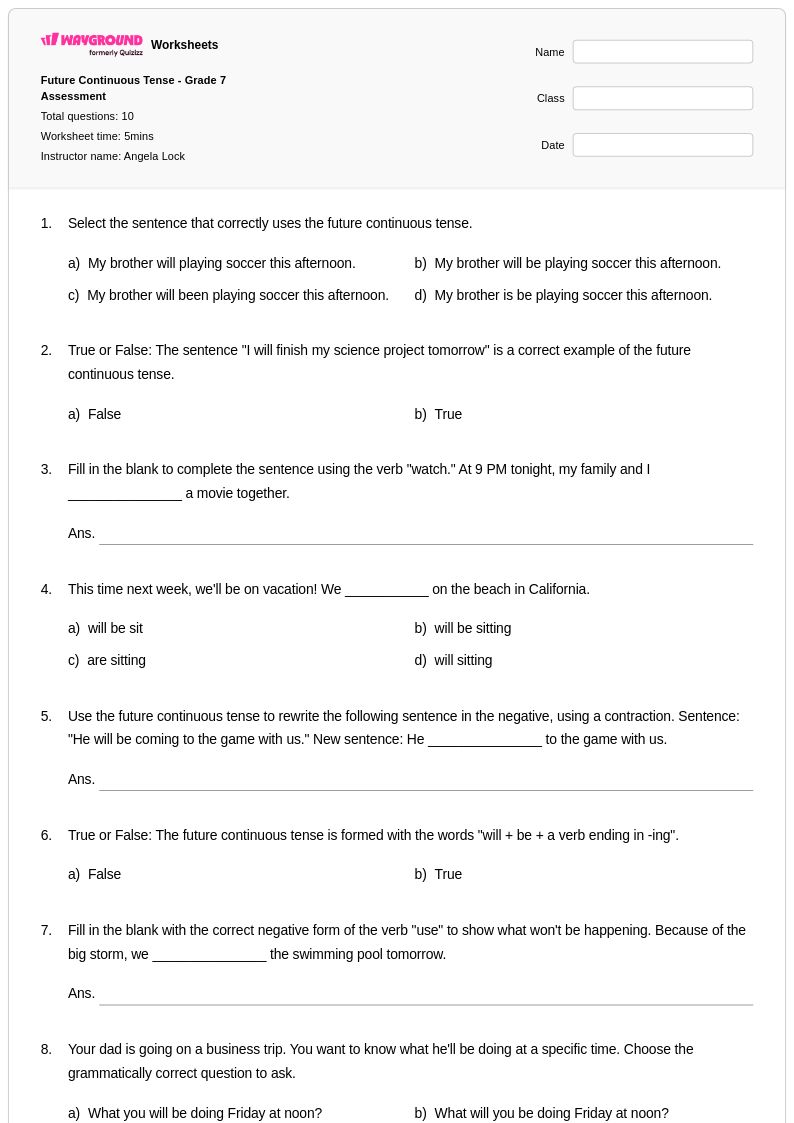
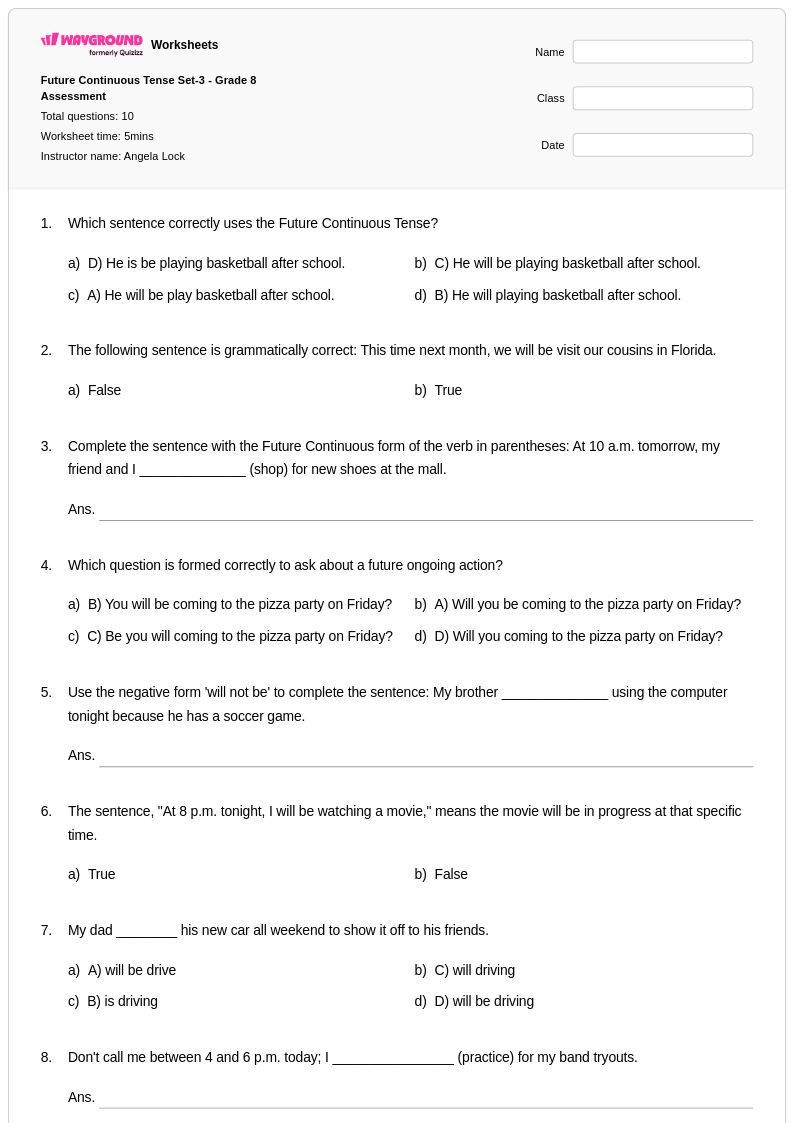
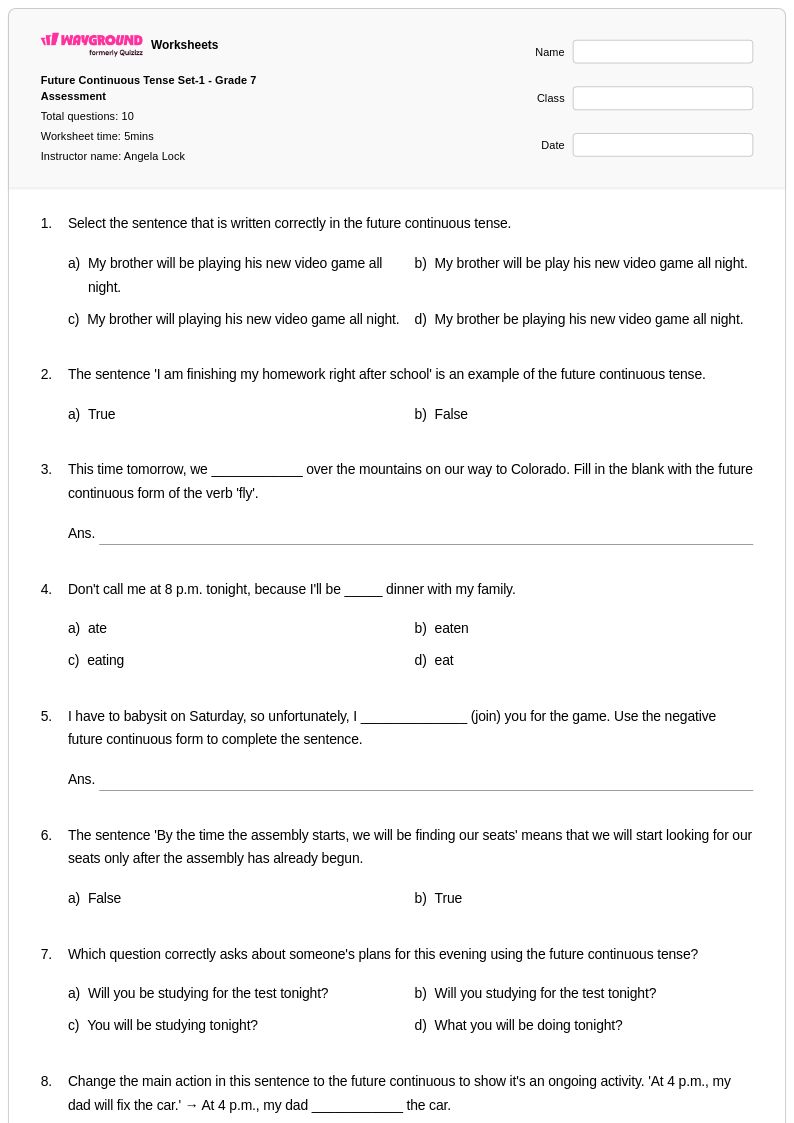
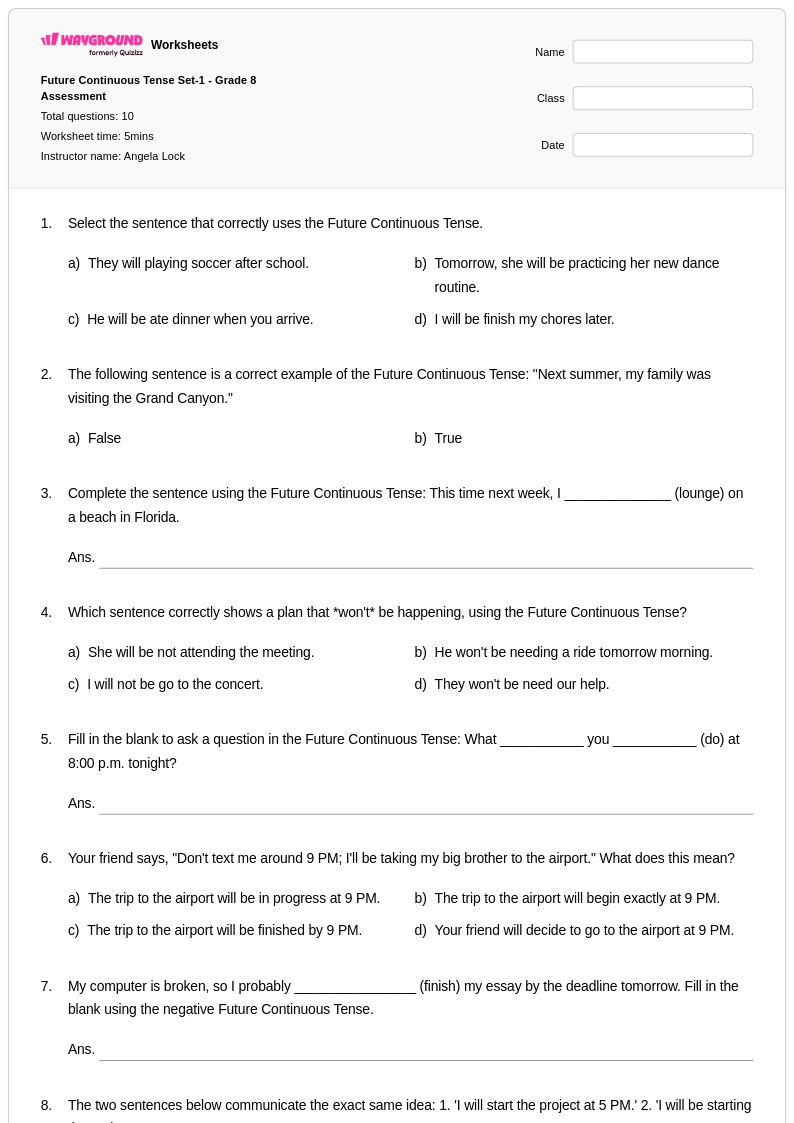
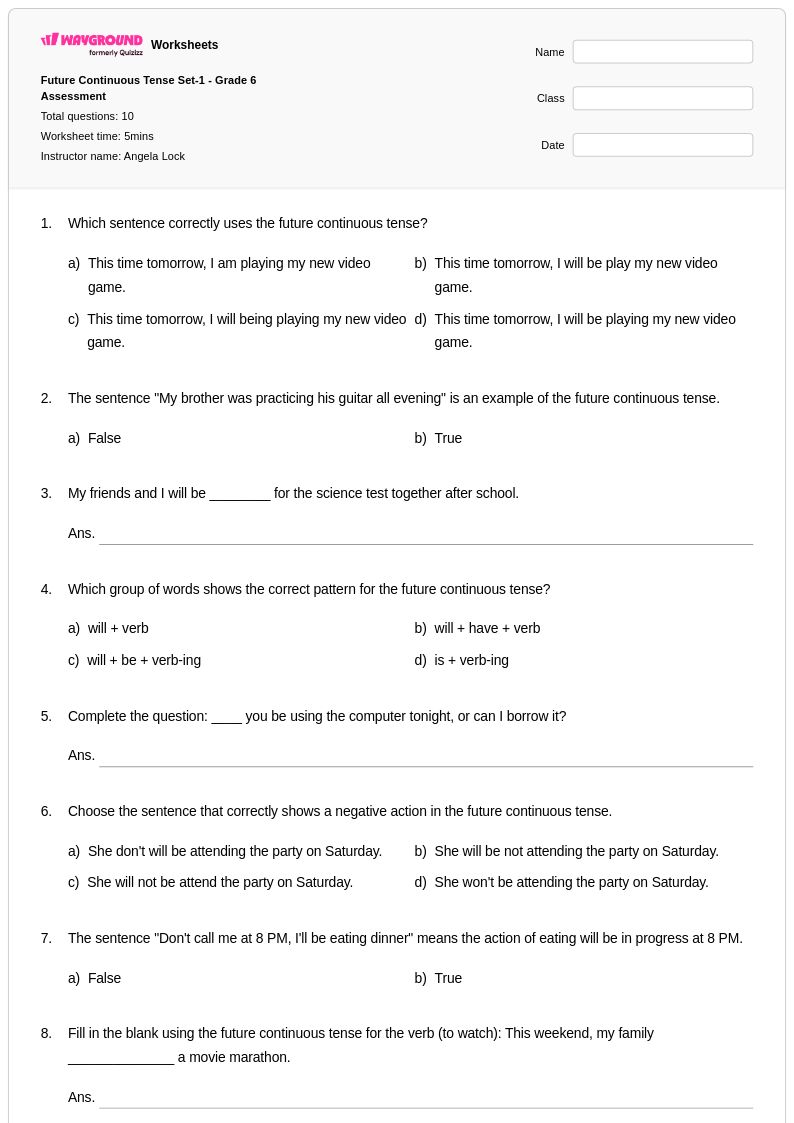
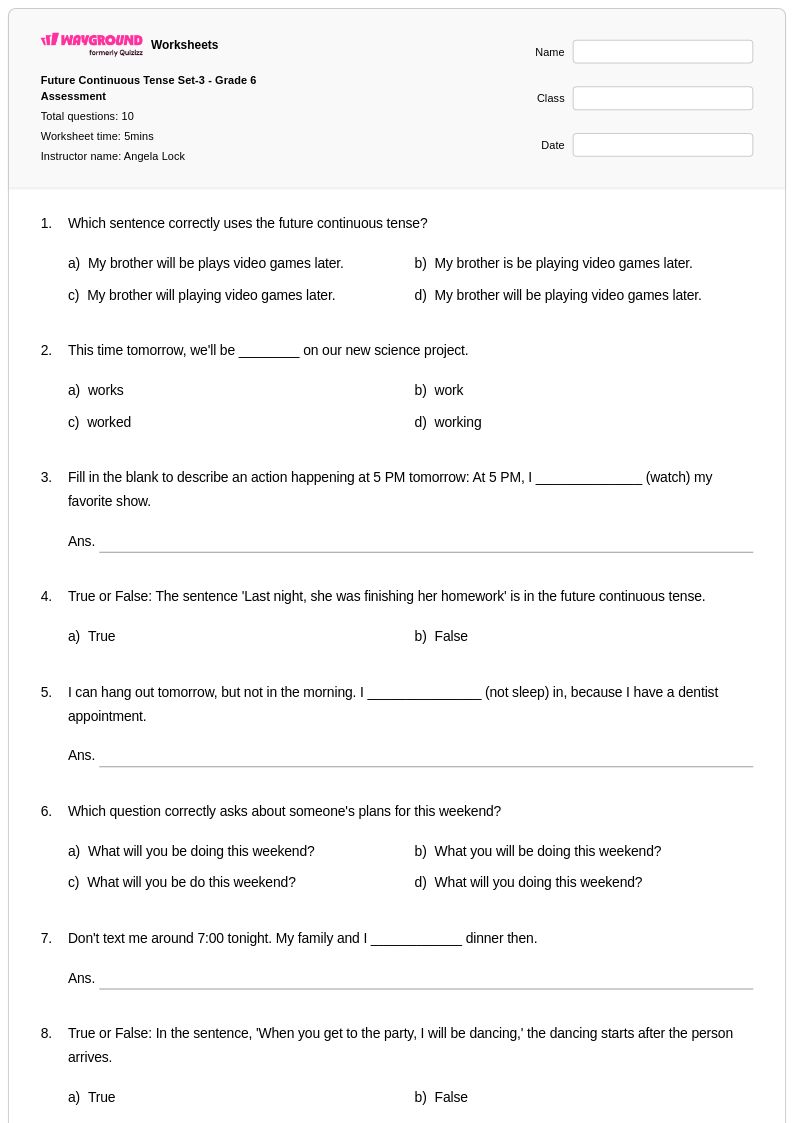
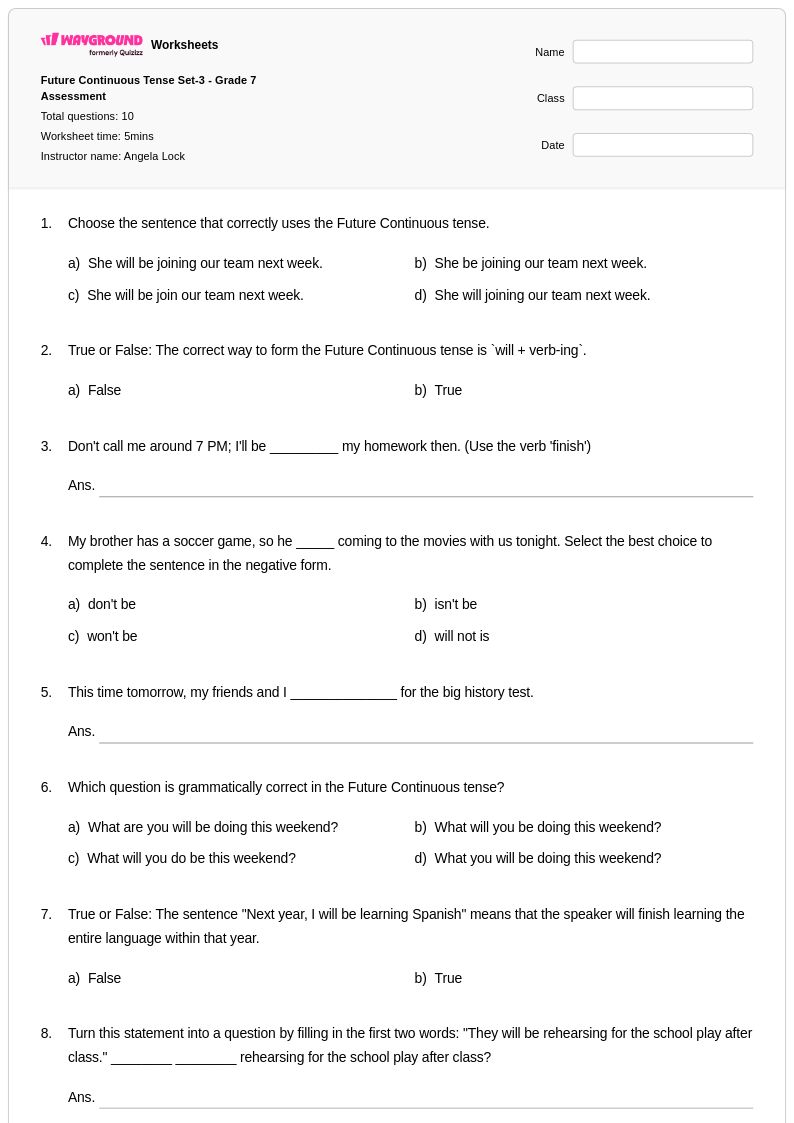
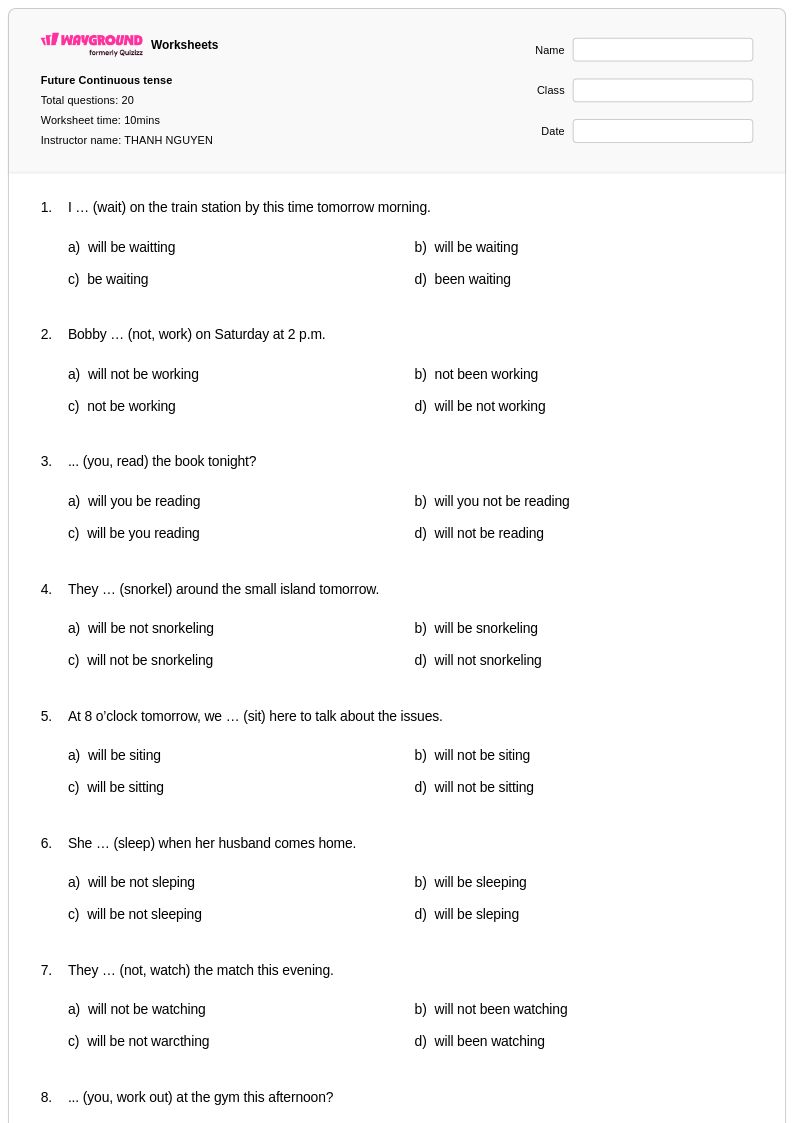
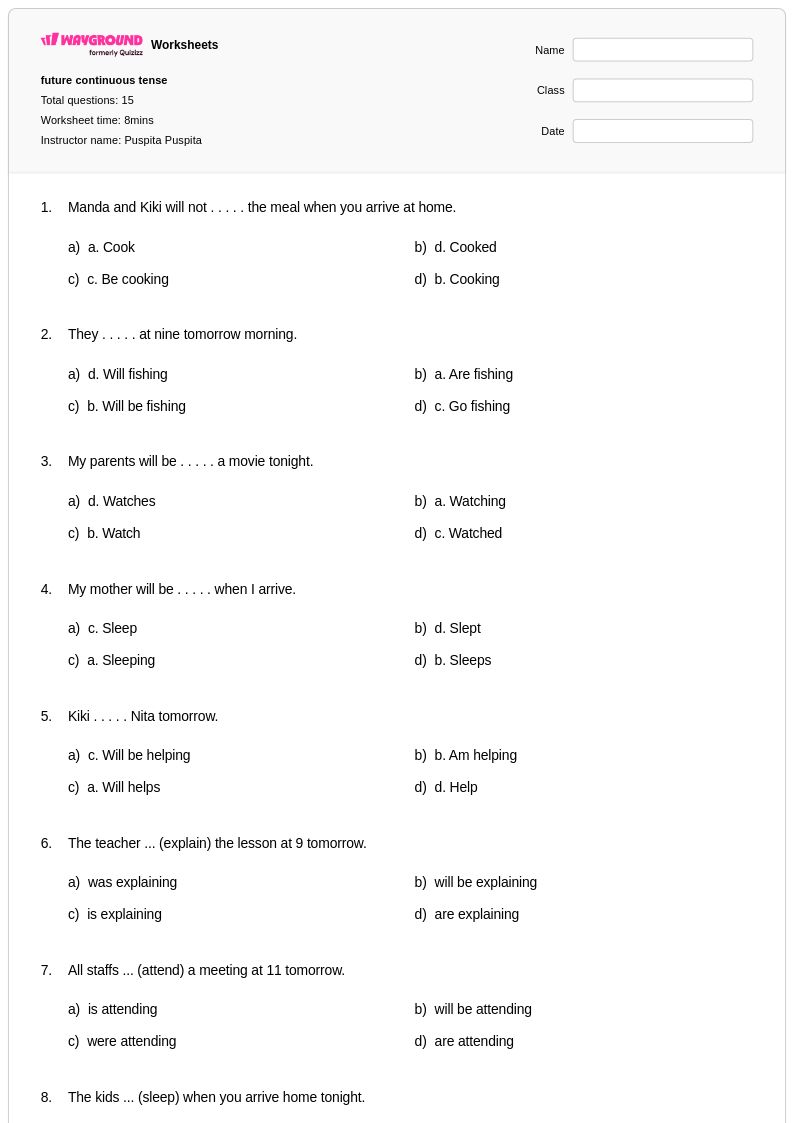
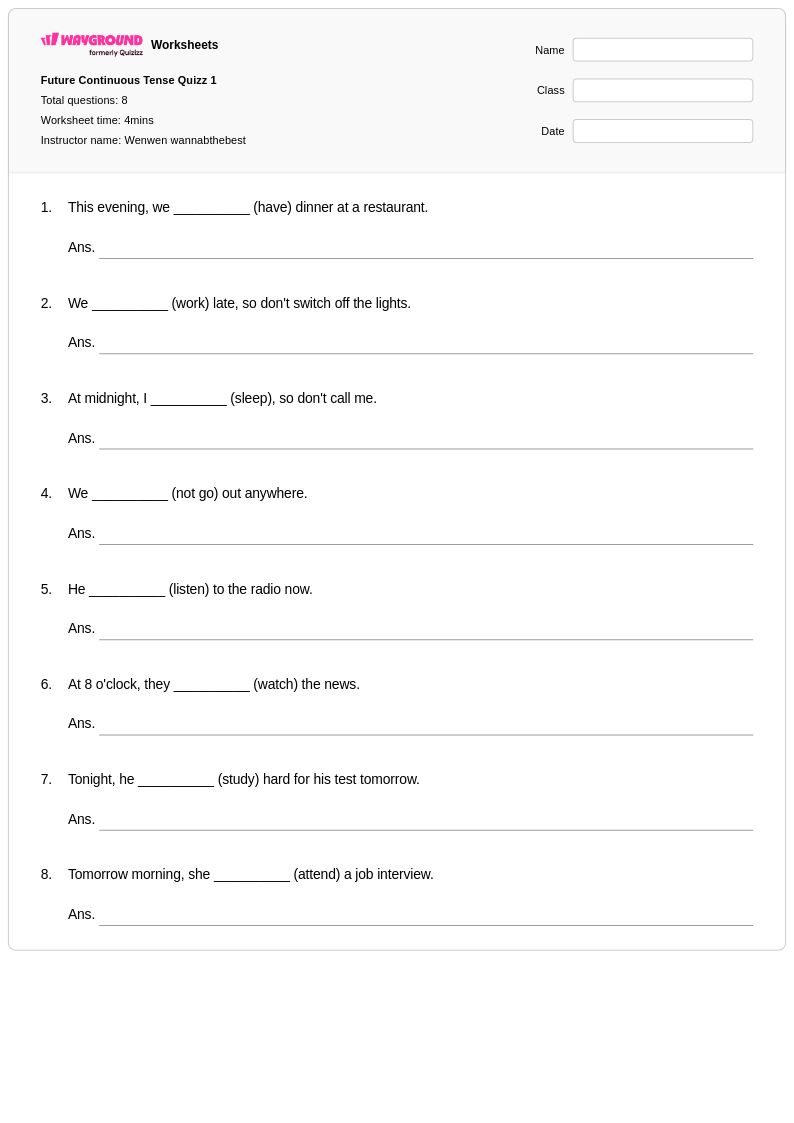
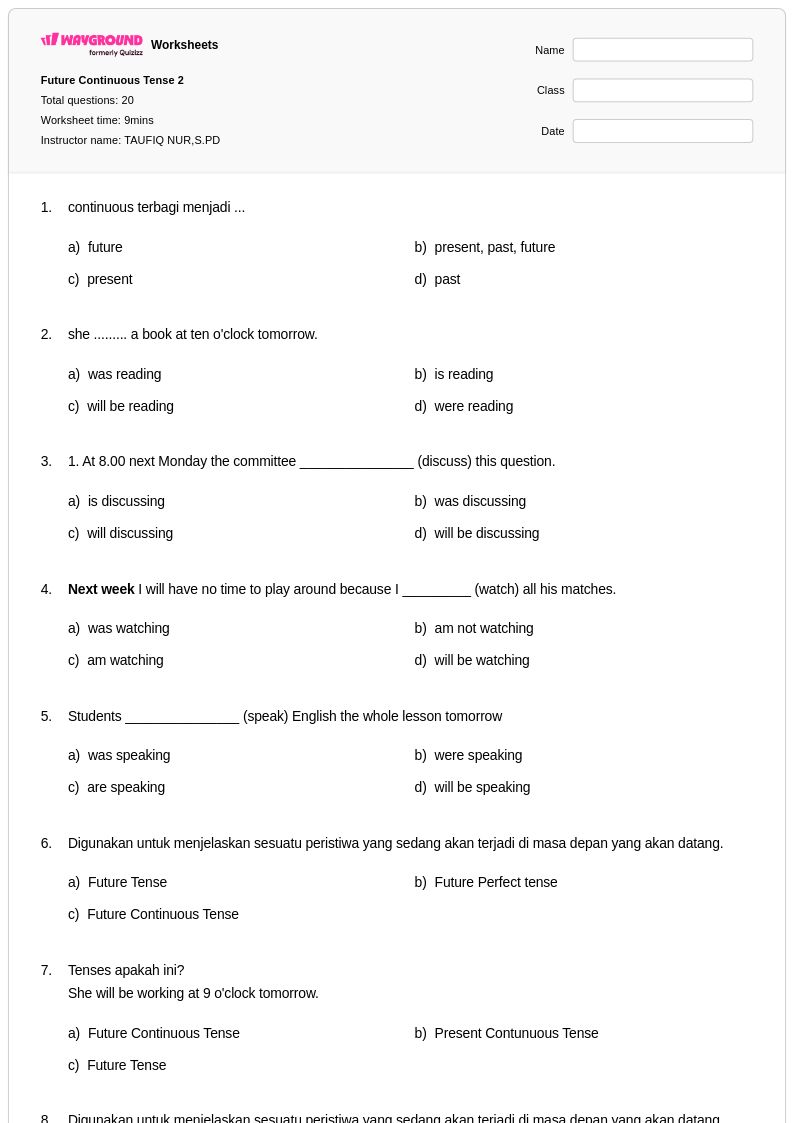
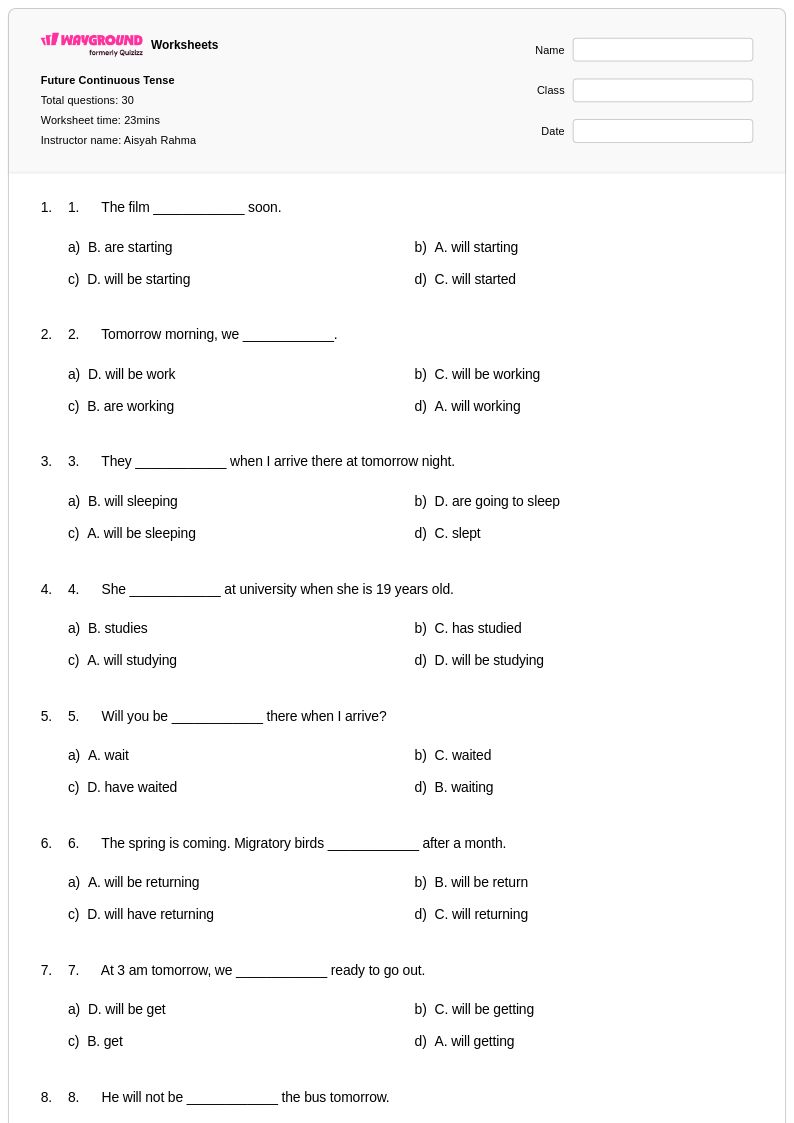
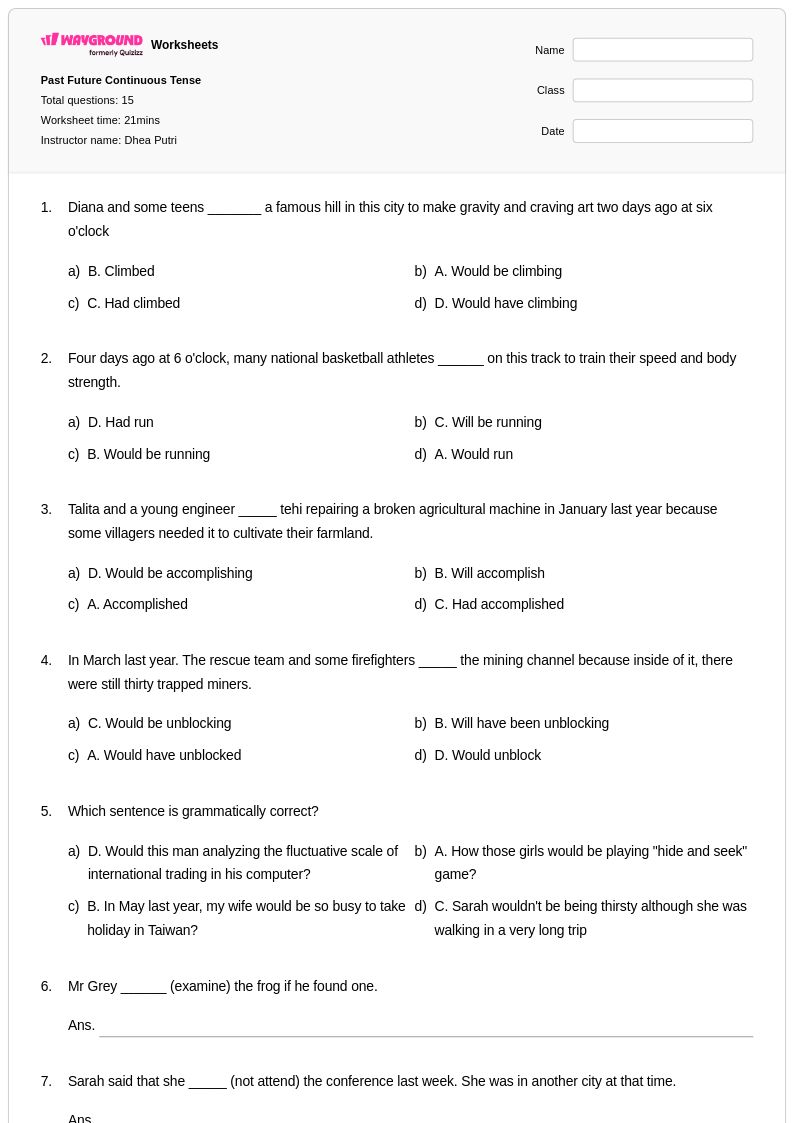
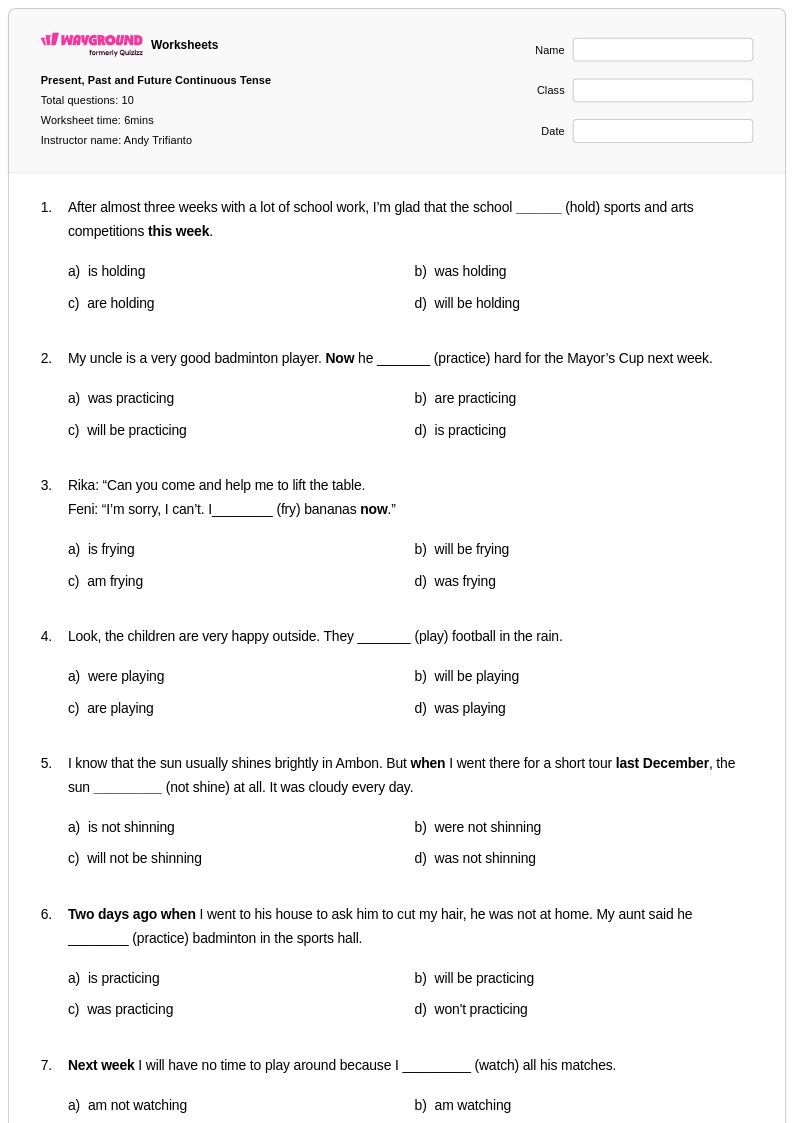
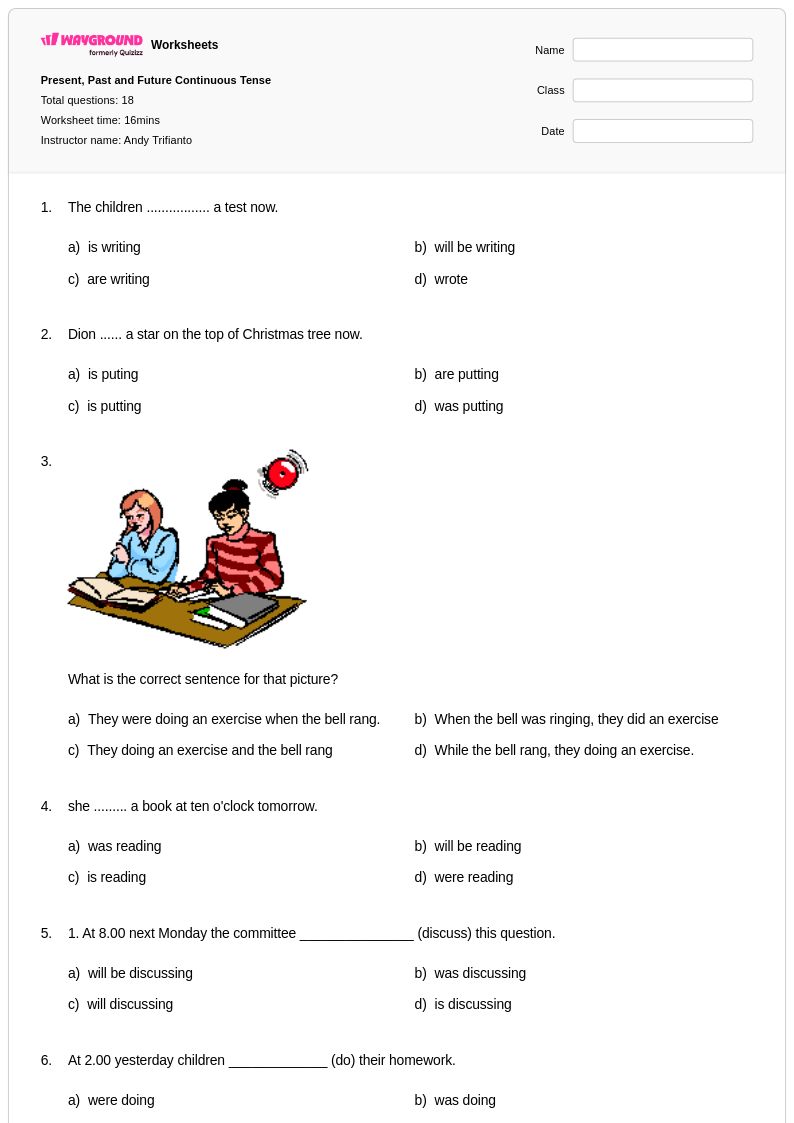
Future continuous tense worksheets available through Wayground provide Class 8 students with comprehensive practice in understanding and applying this essential verb form that describes ongoing actions in the future. These carefully designed resources help students master the structure of future continuous tense using "will be" plus the present participle, enabling them to express actions that will be in progress at specific future times. The worksheets strengthen critical grammar skills through varied practice problems that challenge students to identify, construct, and correctly use future continuous tense in multiple contexts, from simple sentence completion exercises to complex paragraph writing tasks. Each printable resource includes detailed answer keys that support independent learning and self-assessment, while the free pdf format ensures easy access and distribution for both classroom and home use.
Wayground's extensive collection of future continuous tense materials draws from millions of teacher-created resources, providing educators with robust search and filtering capabilities to locate worksheets perfectly aligned with Class 8 curriculum standards and individual student needs. The platform's differentiation tools allow teachers to customize content difficulty levels, ensuring appropriate challenges for learners across the achievement spectrum, while flexible formatting options support both digital classroom integration and traditional printable assignments. These comprehensive worksheet collections facilitate effective lesson planning by offering ready-to-use materials for initial instruction, targeted remediation for struggling students, and enrichment activities for advanced learners. Teachers can seamlessly incorporate these resources into grammar units, writing workshops, and skill practice sessions, creating multiple opportunities for students to develop confidence and proficiency with future continuous tense construction and usage.
FAQs
How do I teach future continuous tense to English learners?
Start by establishing the structure 'will be + verb-ing' with clear, relatable examples such as 'I will be studying at 8 p.m.' before moving to more complex contexts. Contrast future continuous with simple future early on, since students often conflate the two — future continuous emphasizes an action in progress at a specific future moment, while simple future focuses on a completed event. Visual timelines are particularly effective for showing the ongoing nature of the action.
What exercises help students practice future continuous tense?
Sentence completion exercises, error correction activities, and contextual usage scenarios are among the most effective practice formats for future continuous tense. Sentence completion tasks reinforce the 'will be + present participle' structure, while error correction trains students to identify incorrect verb forms or missing temporal markers. Contextual scenarios, such as describing what characters will be doing at a specific time, push students to apply the tense meaningfully rather than mechanically.
What's the difference between future continuous and simple future, and how do I explain it to students?
Simple future ('will + base verb') describes an action that will happen at some point, while future continuous ('will be + -ing') emphasizes that an action will be in progress at a specific future moment. A useful classroom contrast is: 'I will call you tomorrow' versus 'I will be calling a client when you arrive.' Teaching students to identify time expressions like 'at this time tomorrow' or 'by 3 o'clock' helps them recognize when future continuous is the appropriate choice.
What mistakes do students commonly make with future continuous tense?
The most common error is omitting 'be' and writing 'will + -ing' instead of the correct 'will be + -ing' form. Students also frequently confuse future continuous with present continuous used for future plans, or misuse it where simple future is more appropriate. Another common mistake involves stative verbs — students sometimes write 'I will be knowing the answer,' not recognizing that stative verbs like 'know' and 'believe' do not take progressive forms.
How can I use future continuous tense worksheets in my classroom?
Future continuous tense worksheets on Wayground are available as printable PDFs for traditional classroom use and in digital formats for technology-integrated environments, giving teachers flexibility in how they deploy practice materials. Teachers can assign worksheets as guided in-class activities, independent practice, or homework, and can also host them as a quiz directly on Wayground for instant formative assessment. Each worksheet includes a complete answer key, so both self-assessment and teacher-led review are straightforward.
How do I support struggling students when teaching future continuous tense?
For students who need additional support, breaking the structure into discrete steps — first establishing 'will be' as a fixed unit, then adding the -ing form — reduces cognitive load compared to presenting the full construction at once. On Wayground, teachers can enable accommodations such as read aloud for students who need questions read to them, reduced answer choices to simplify multiple-choice items, and extended time for students who need more processing time. These settings can be applied to individual students without affecting the experience of the rest of the class.