Free Printable Ghost by Jason Reynolds Worksheets for Class 7
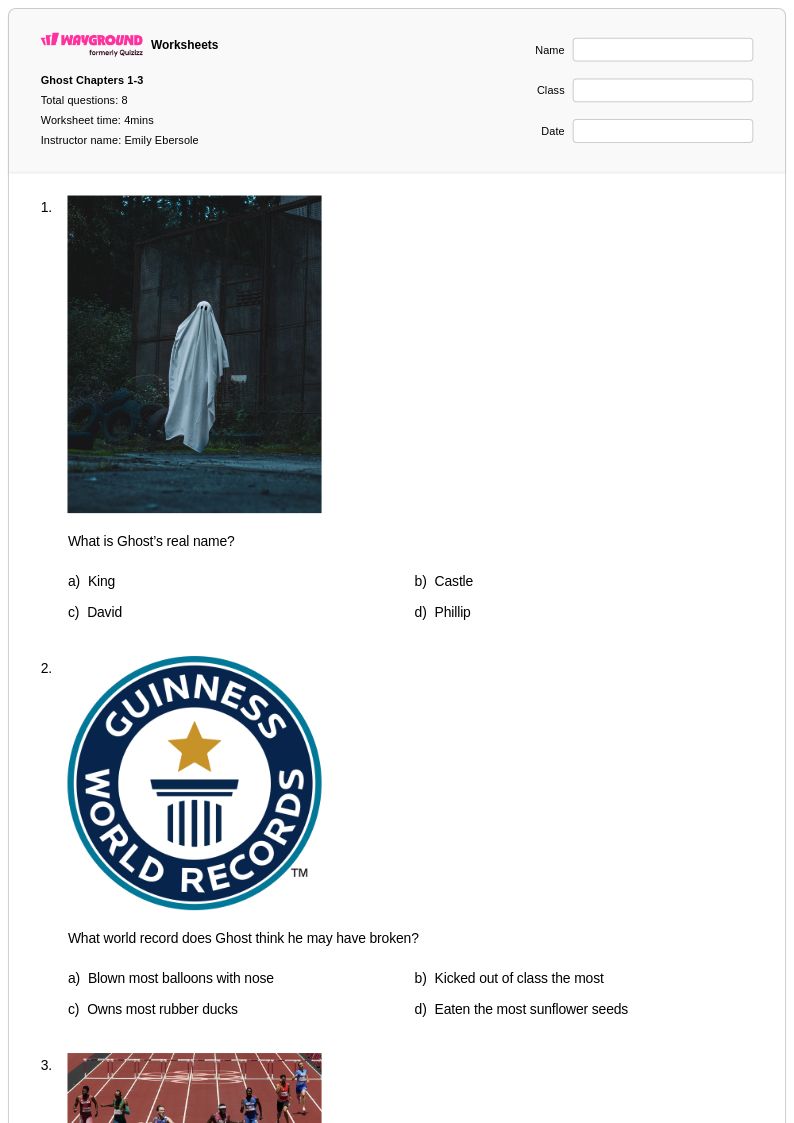
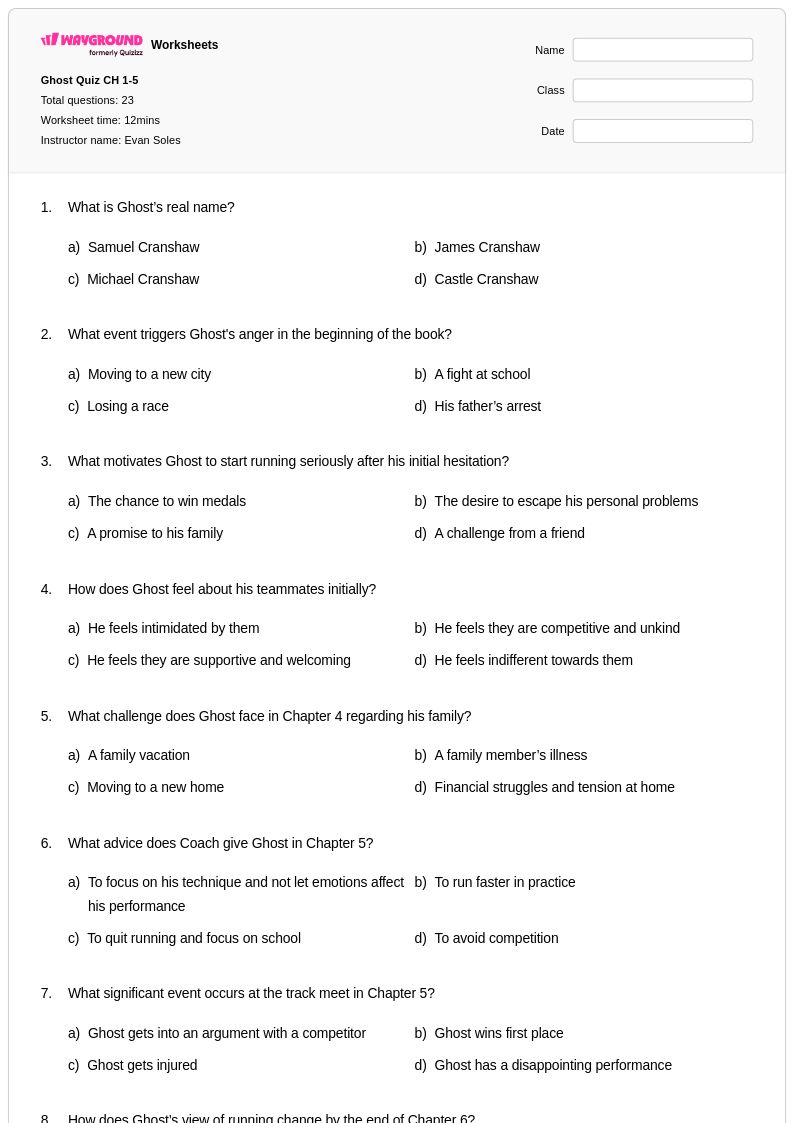
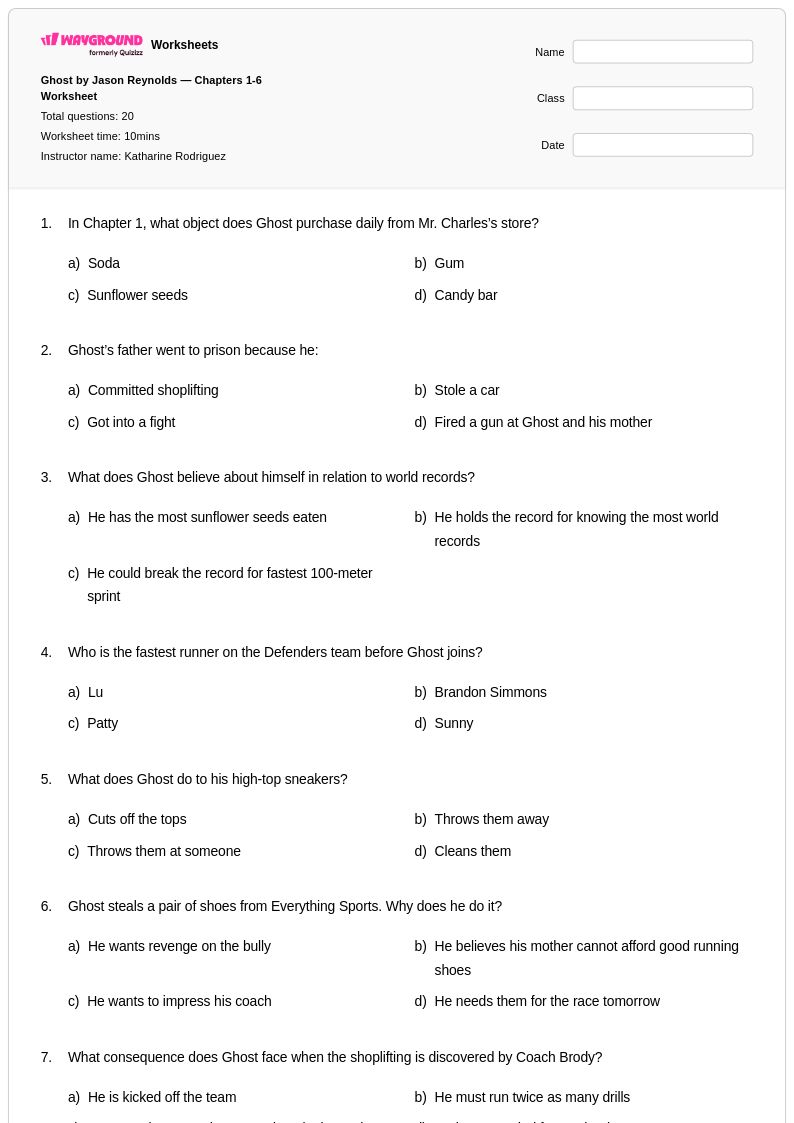
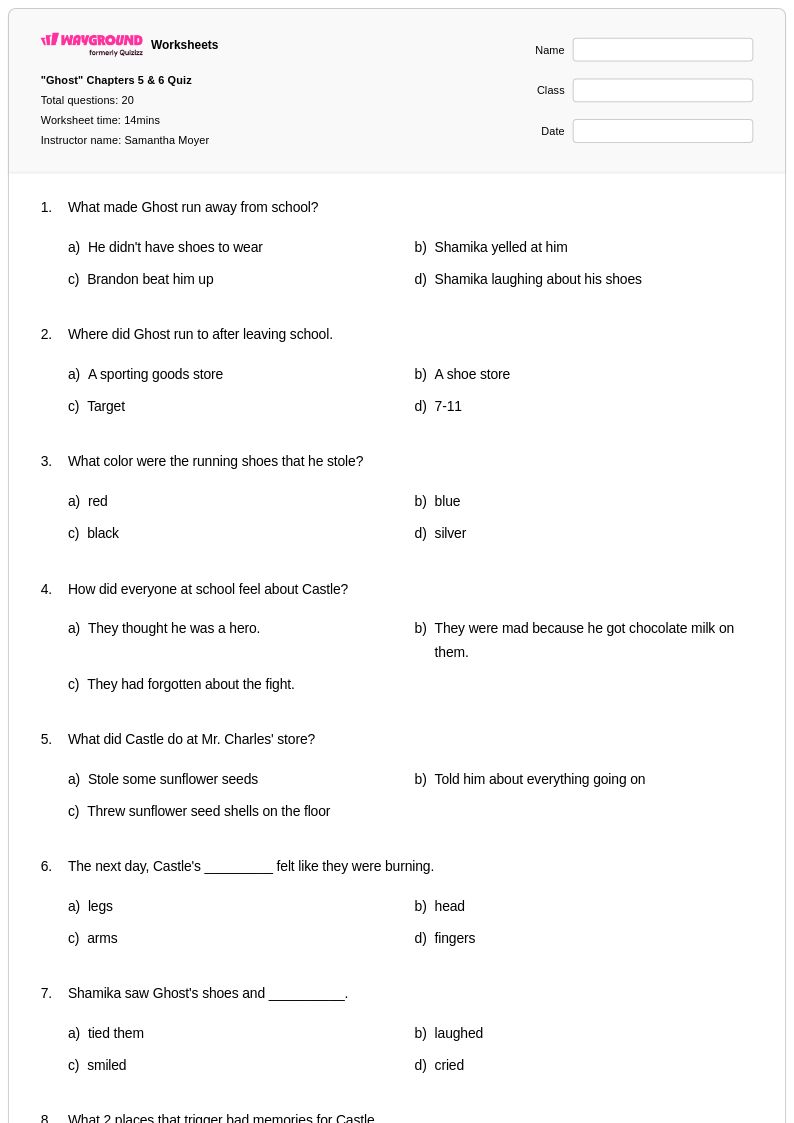
Explore Class 7 literature with free printable worksheets on Ghost by Jason Reynolds, featuring practice problems and answer keys to help students analyze character development, themes, and narrative techniques.
Explore printable Ghost by Jason Reynolds worksheets for Class 7
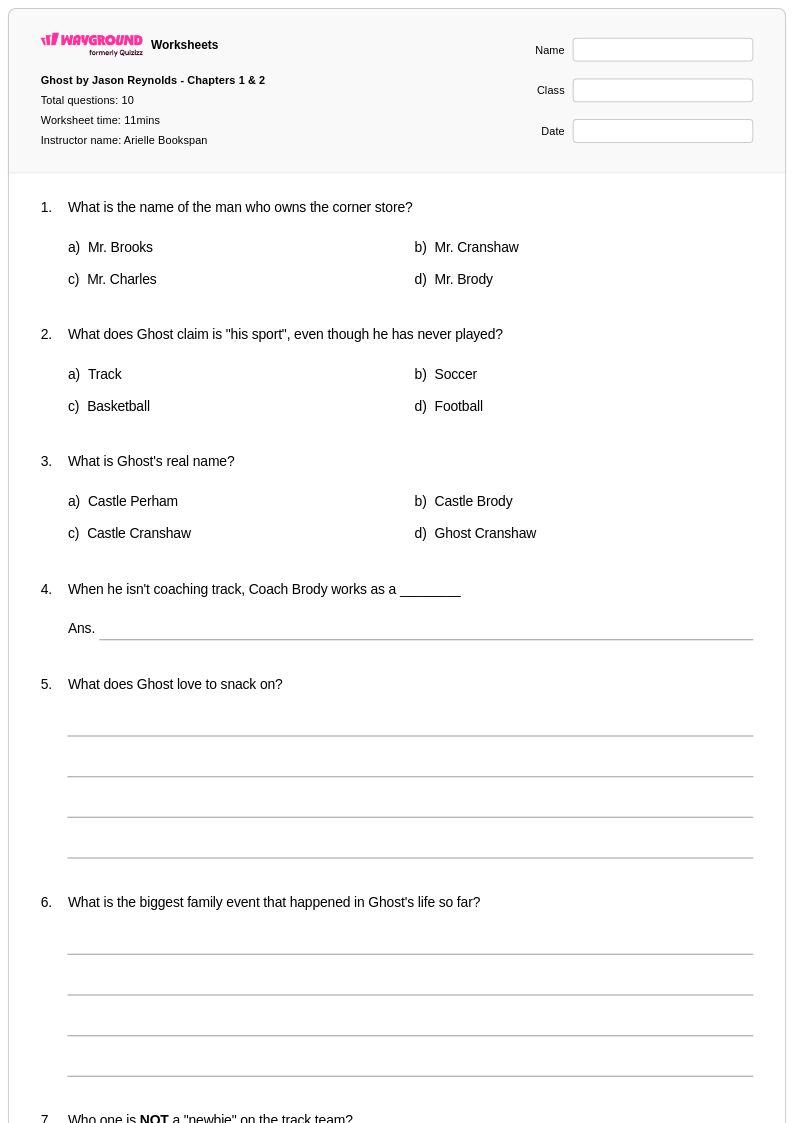
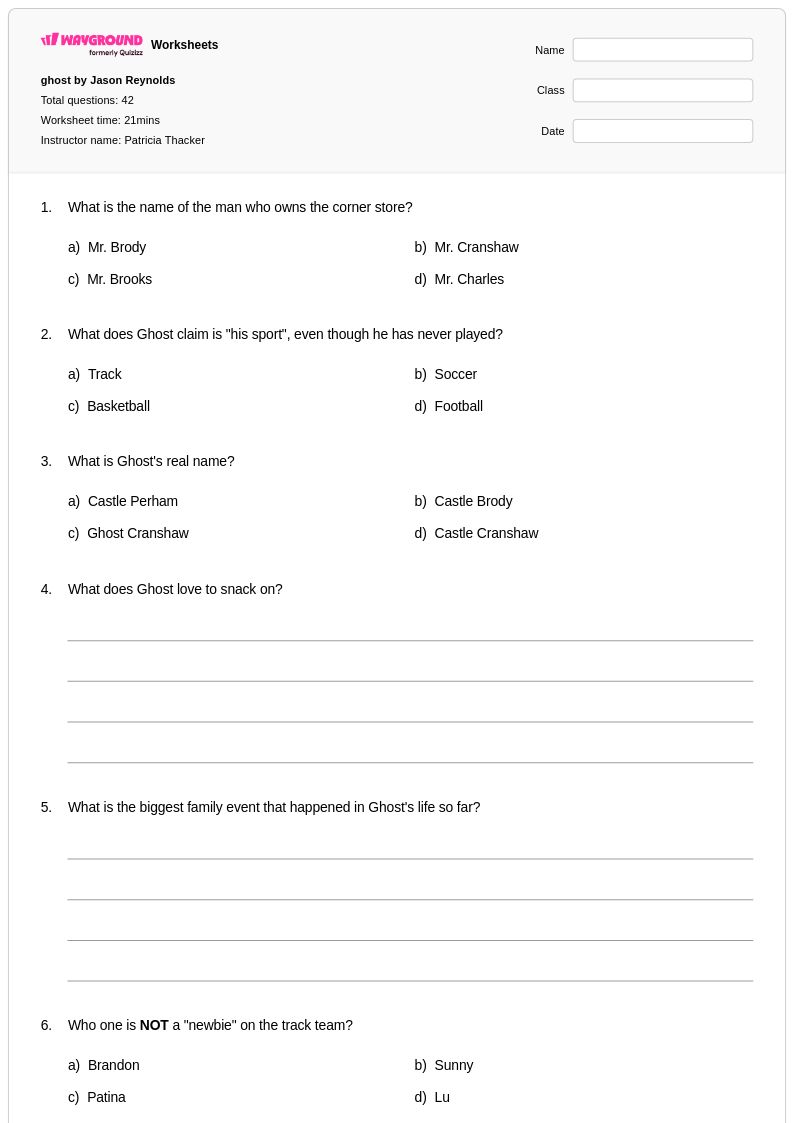
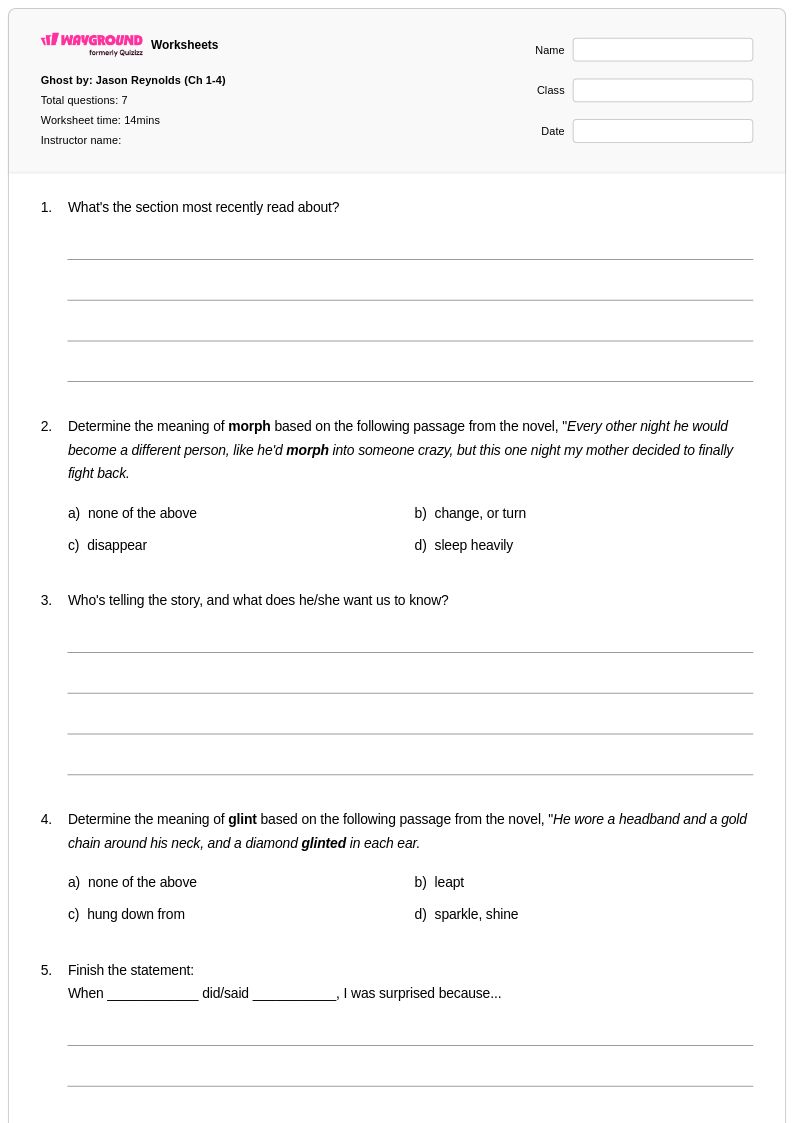
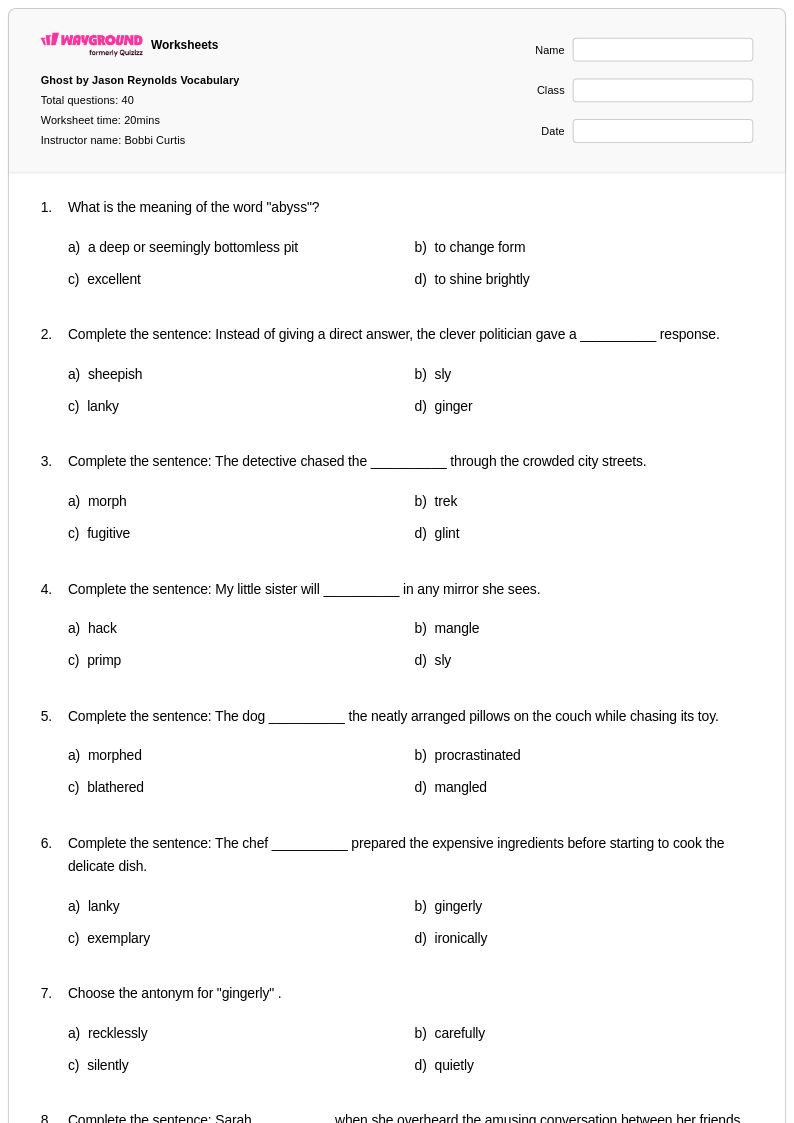
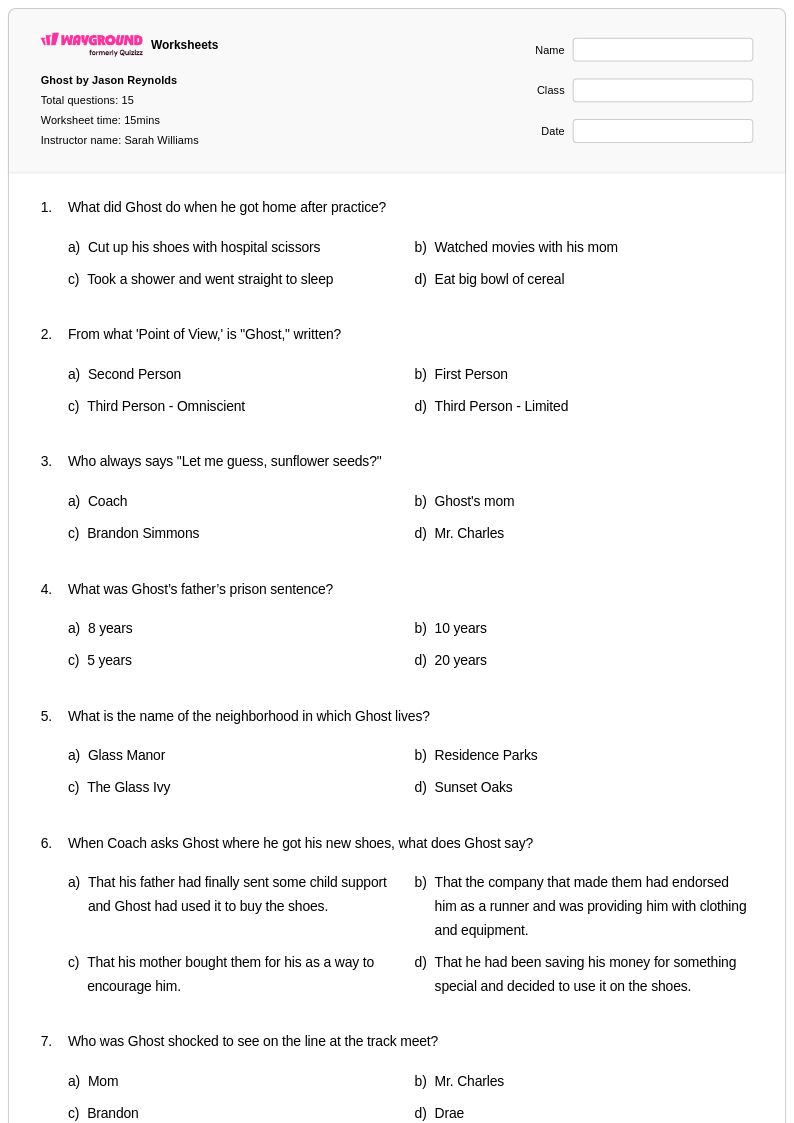
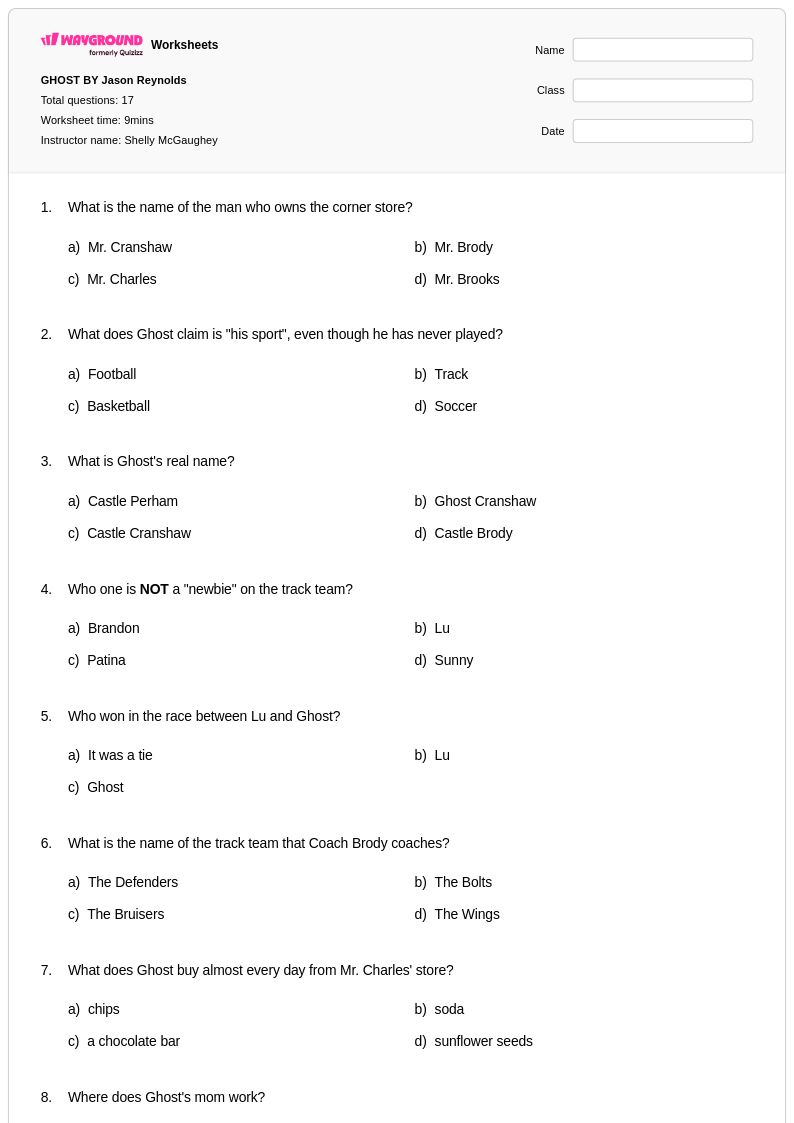
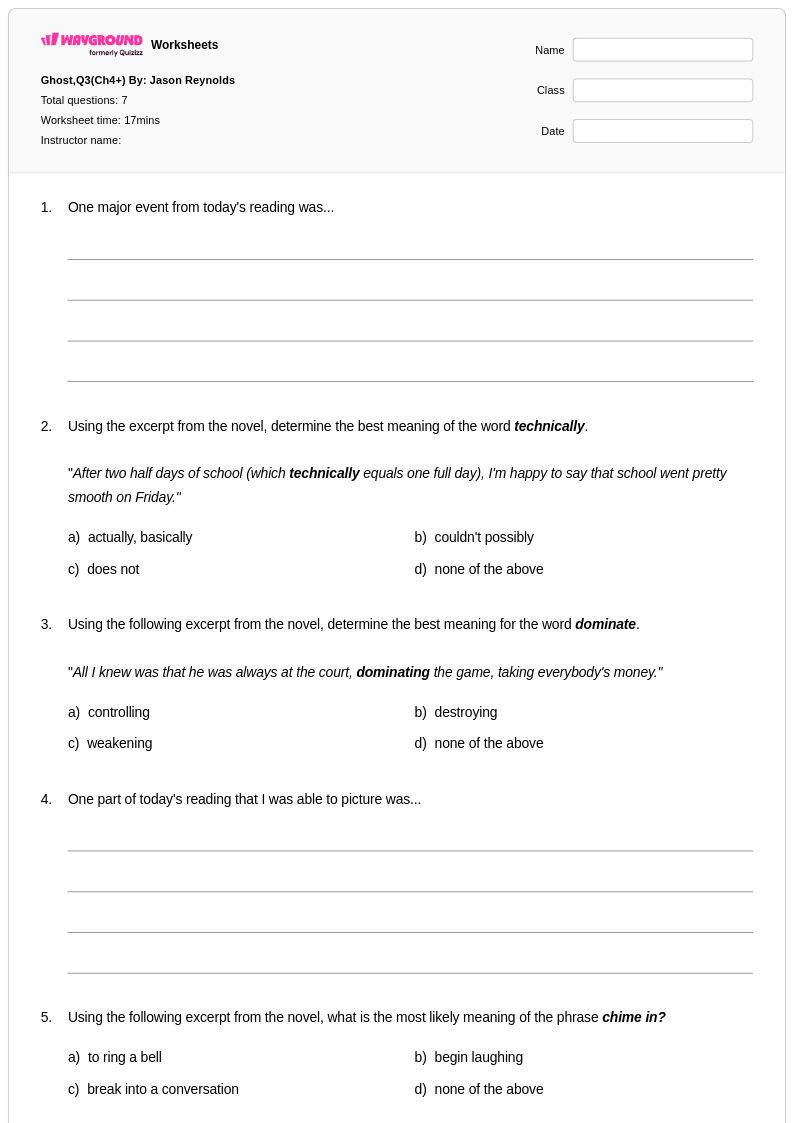
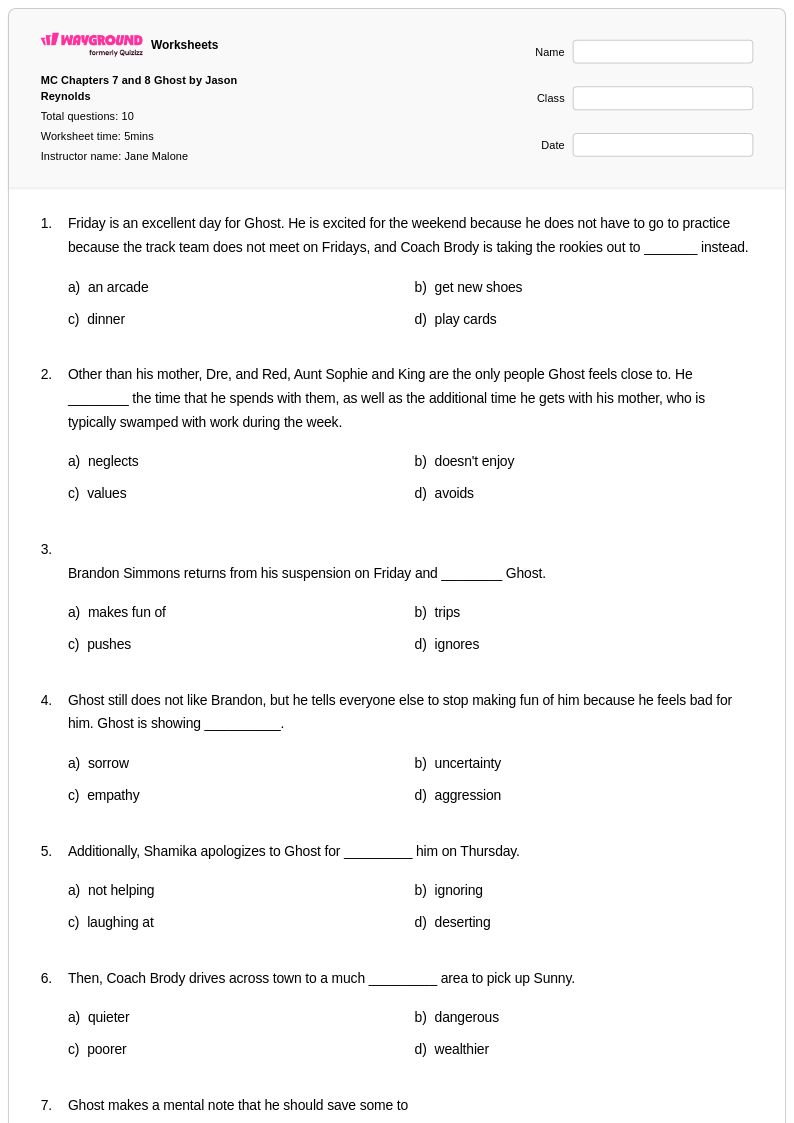
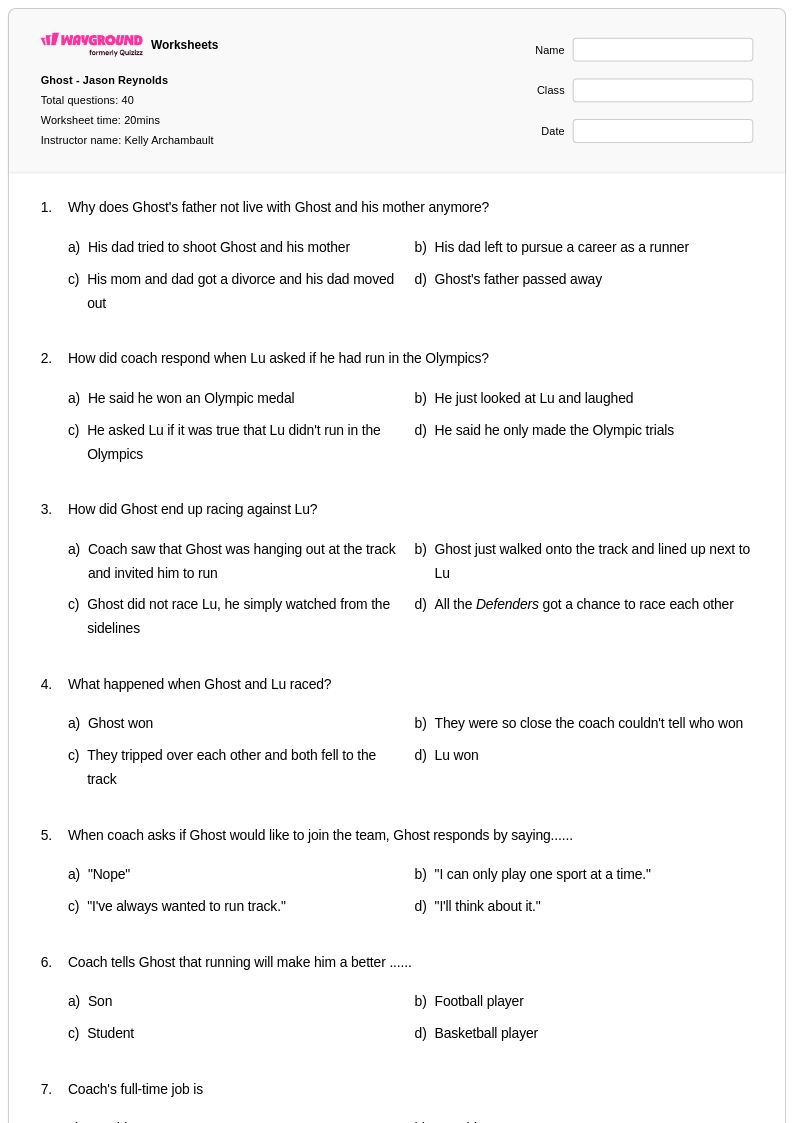
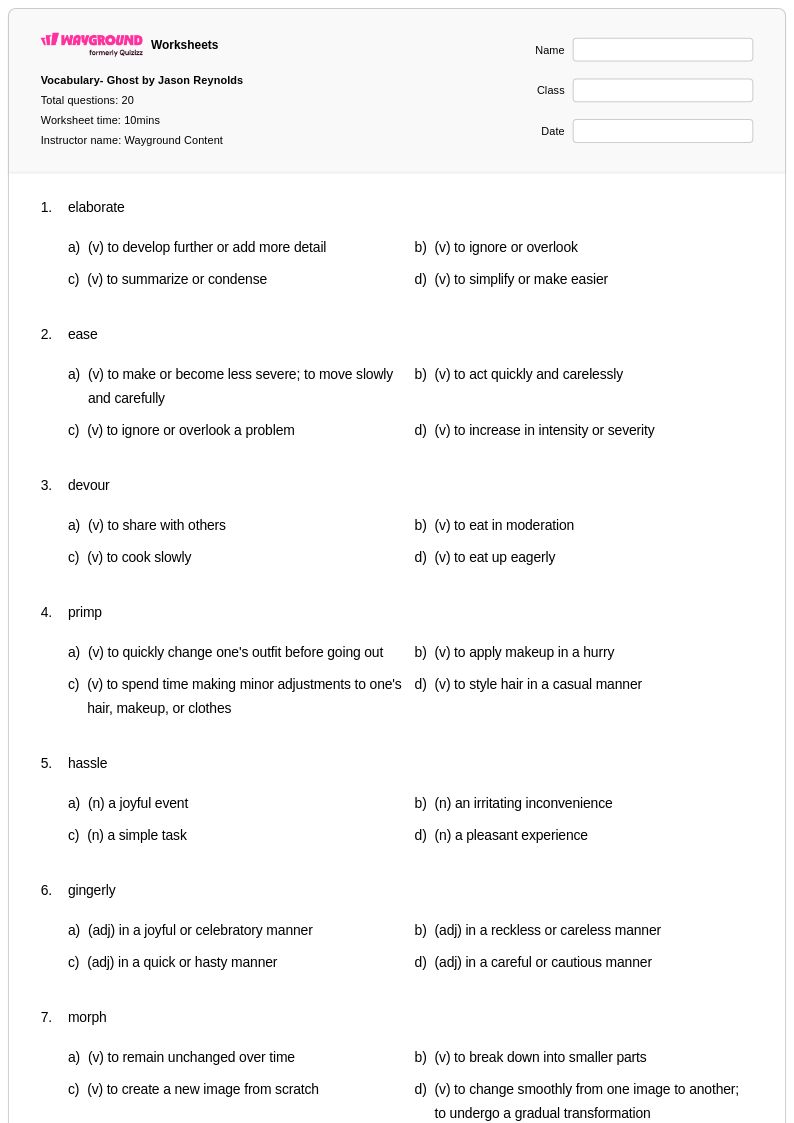
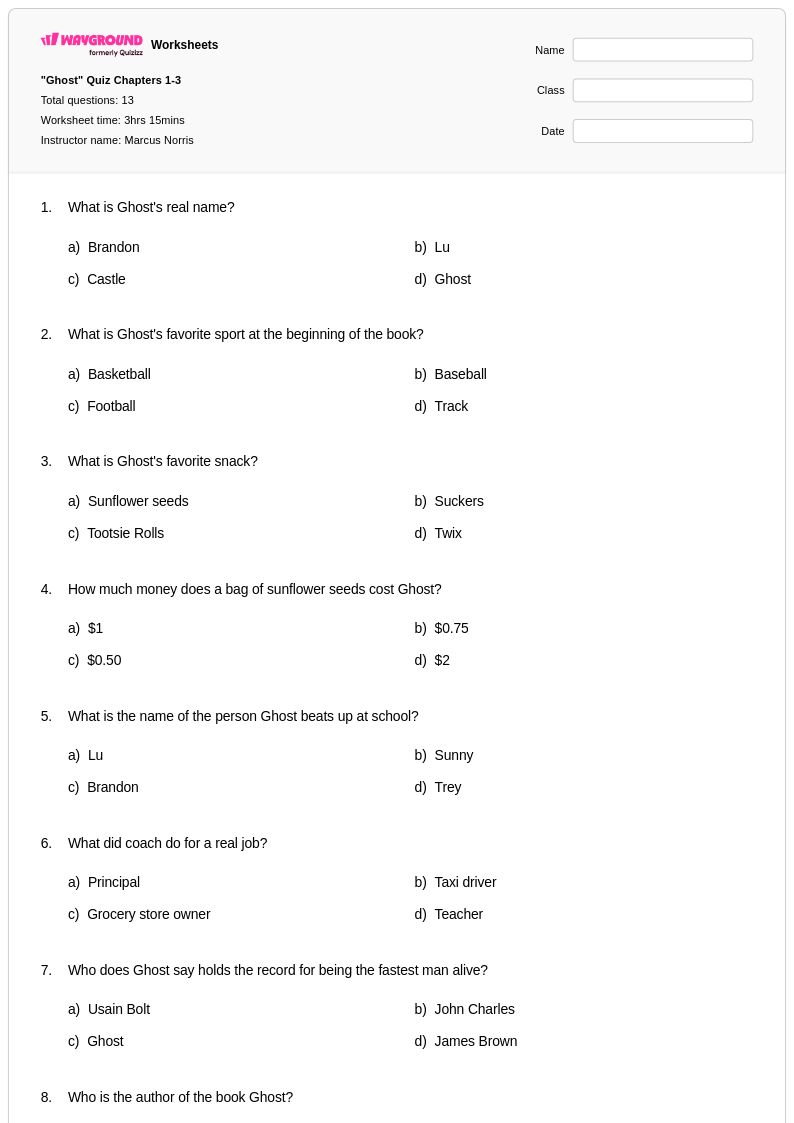
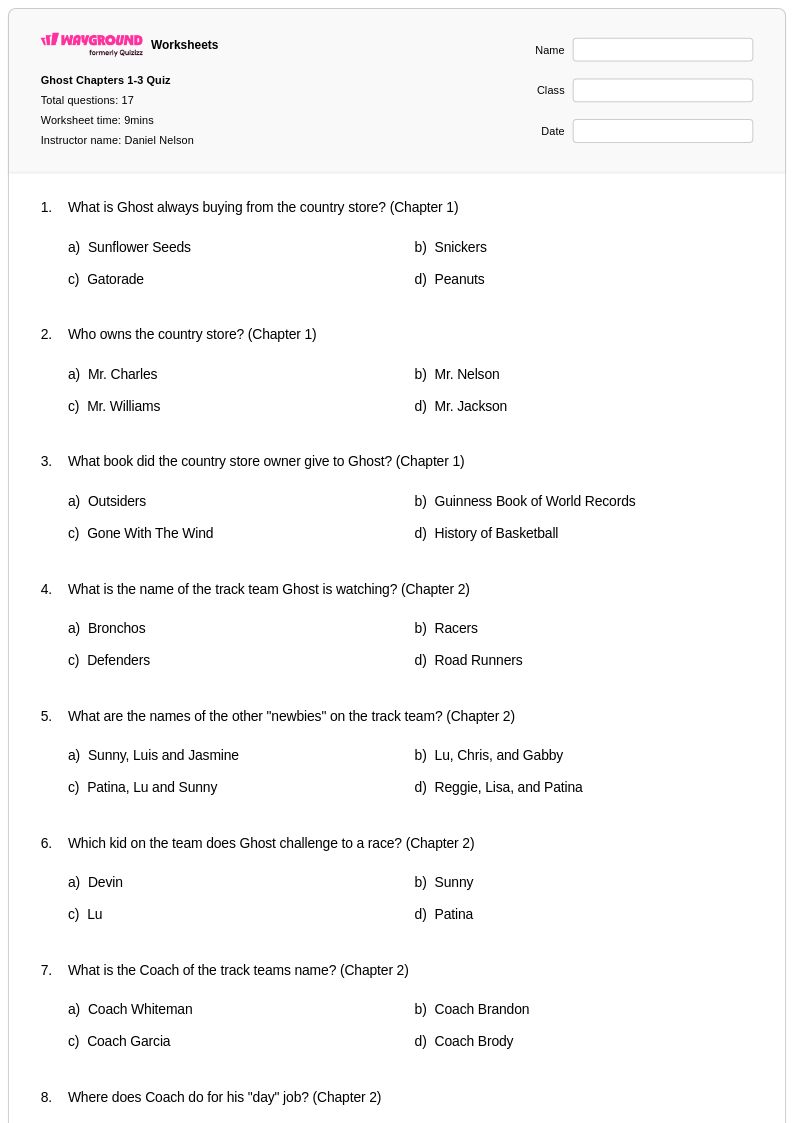
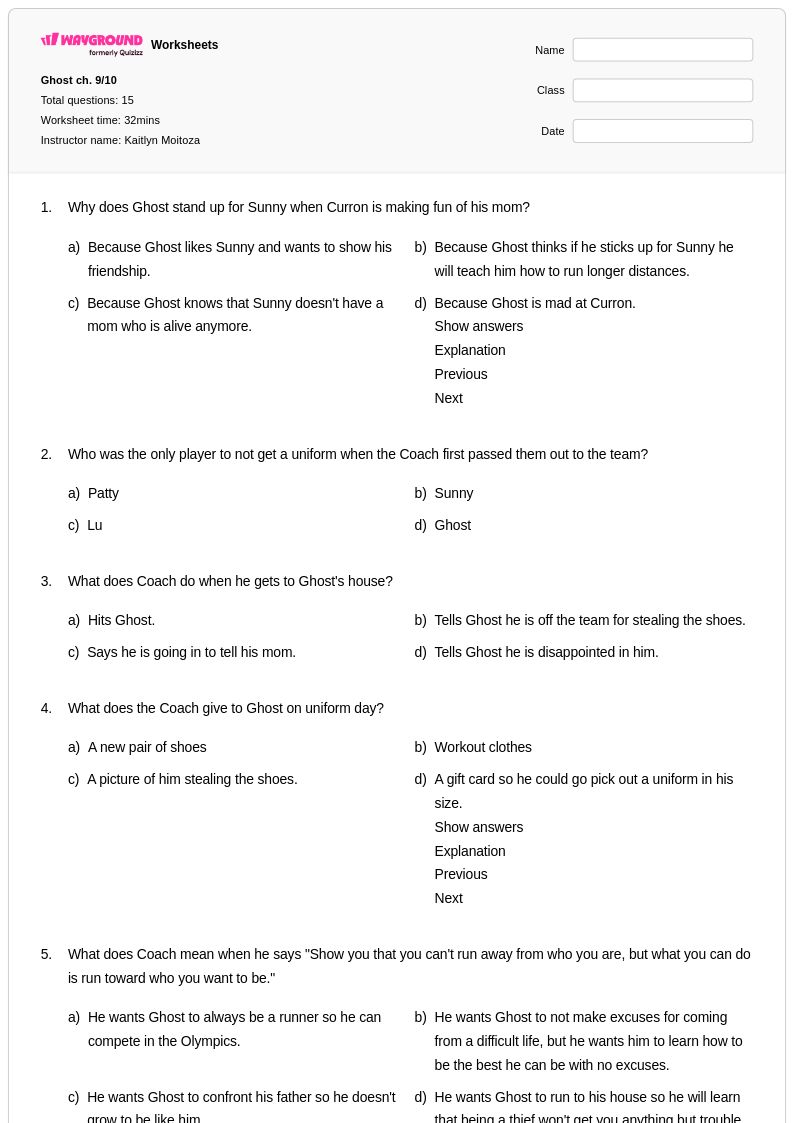
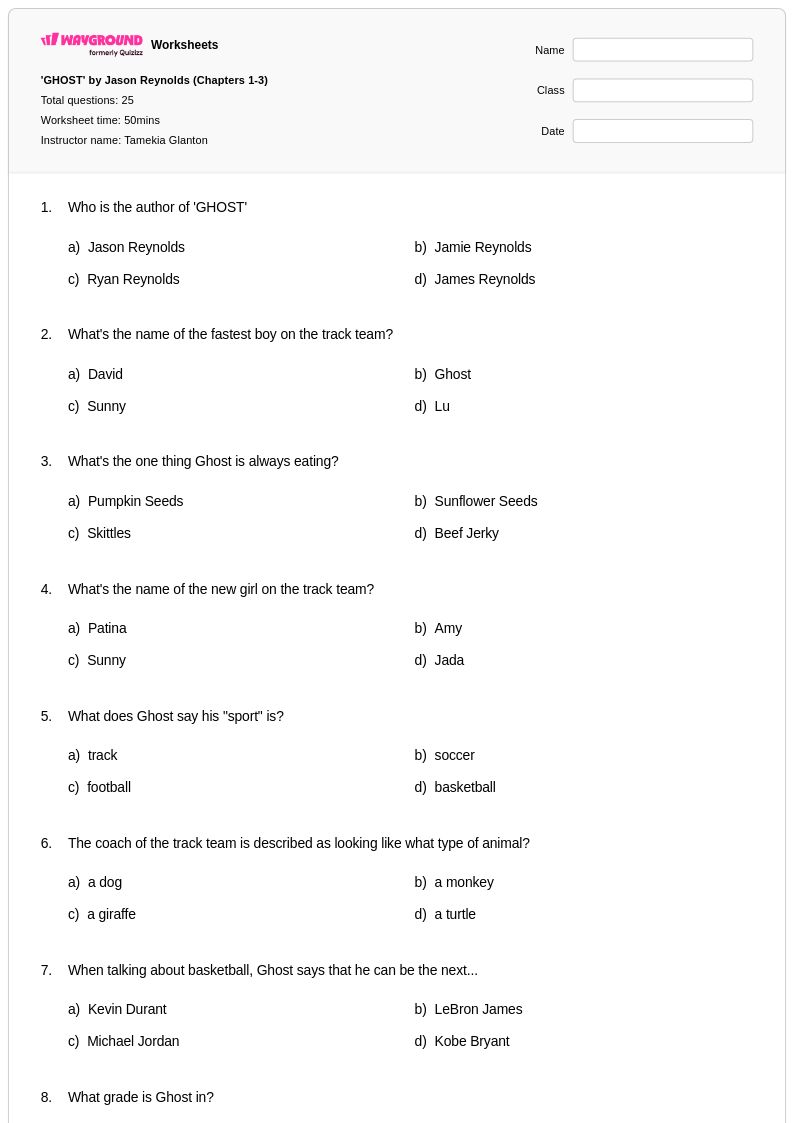
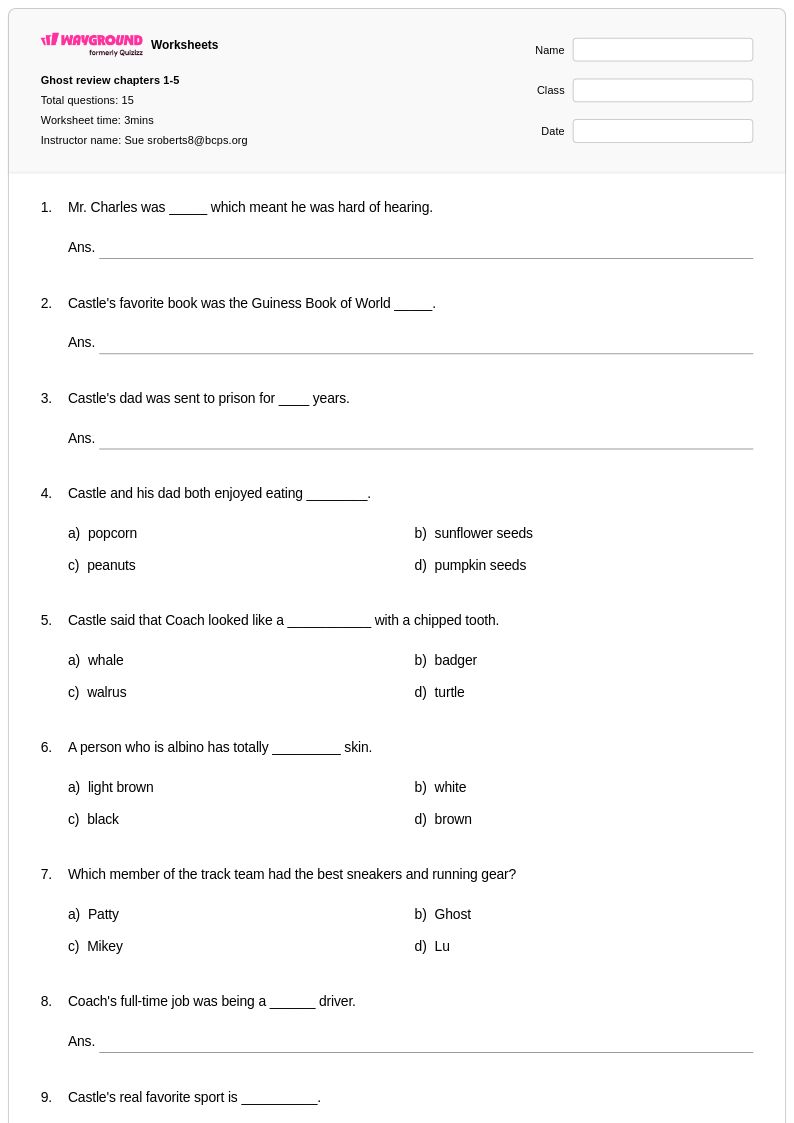
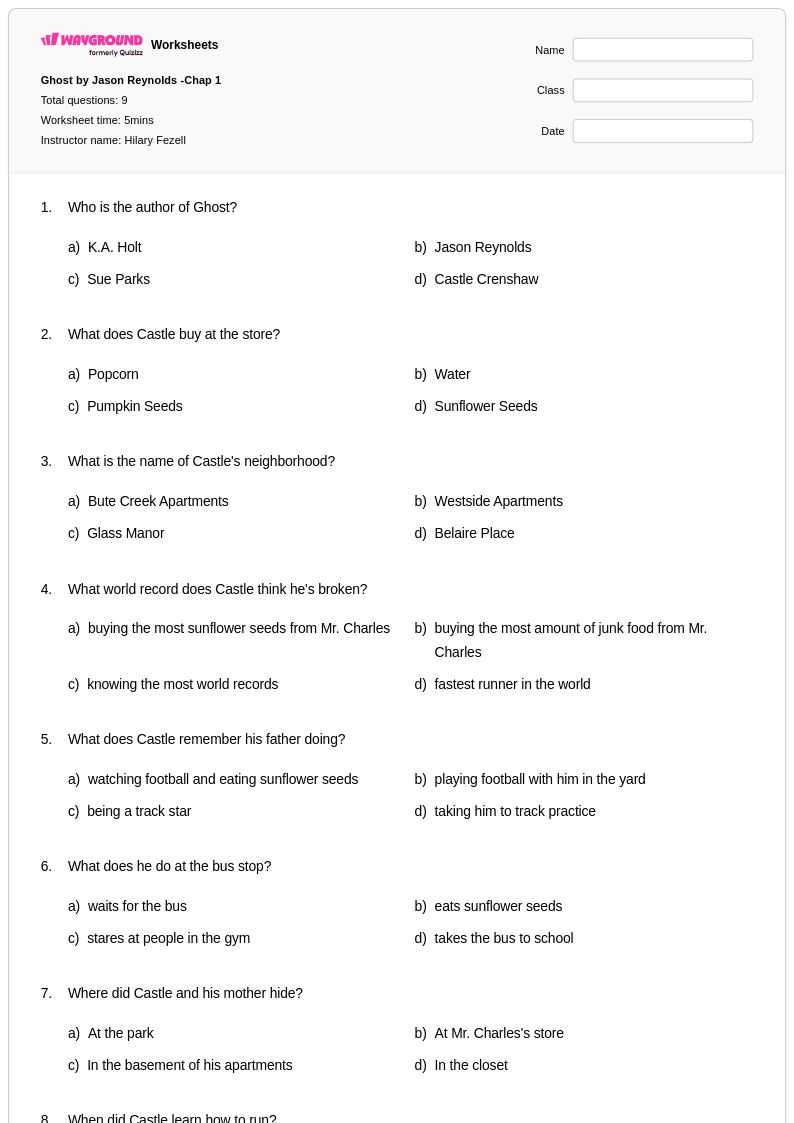
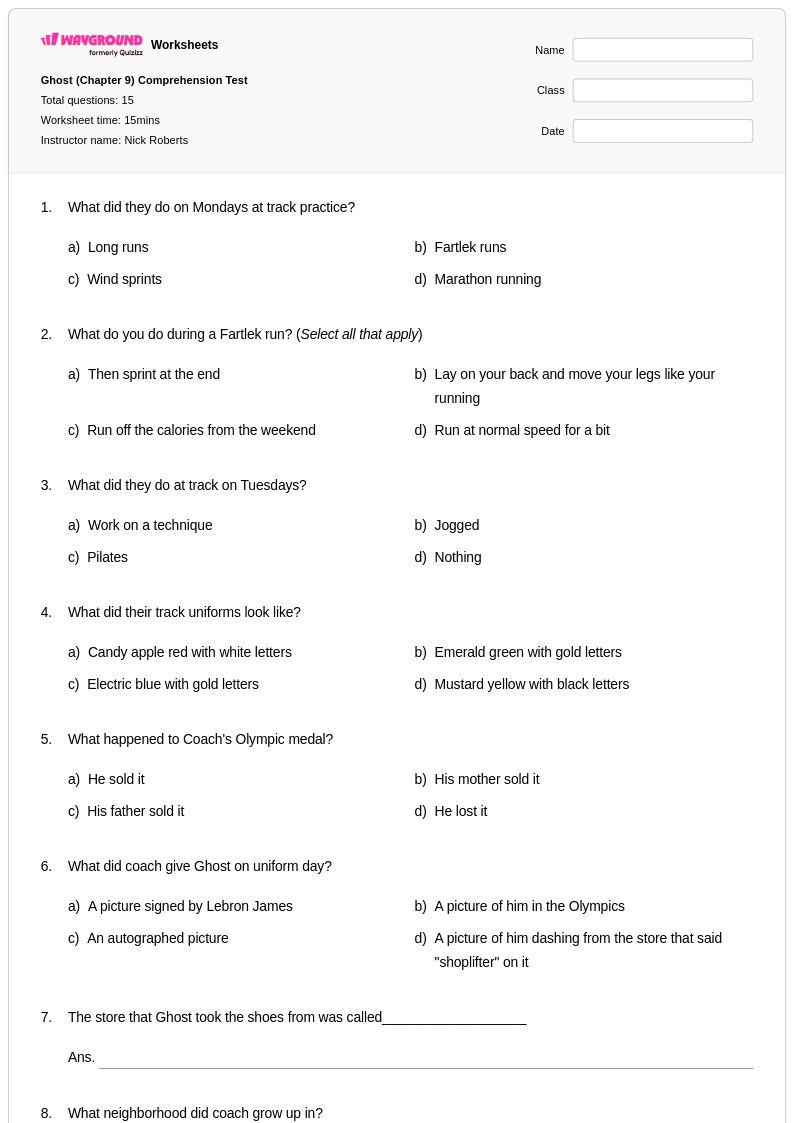
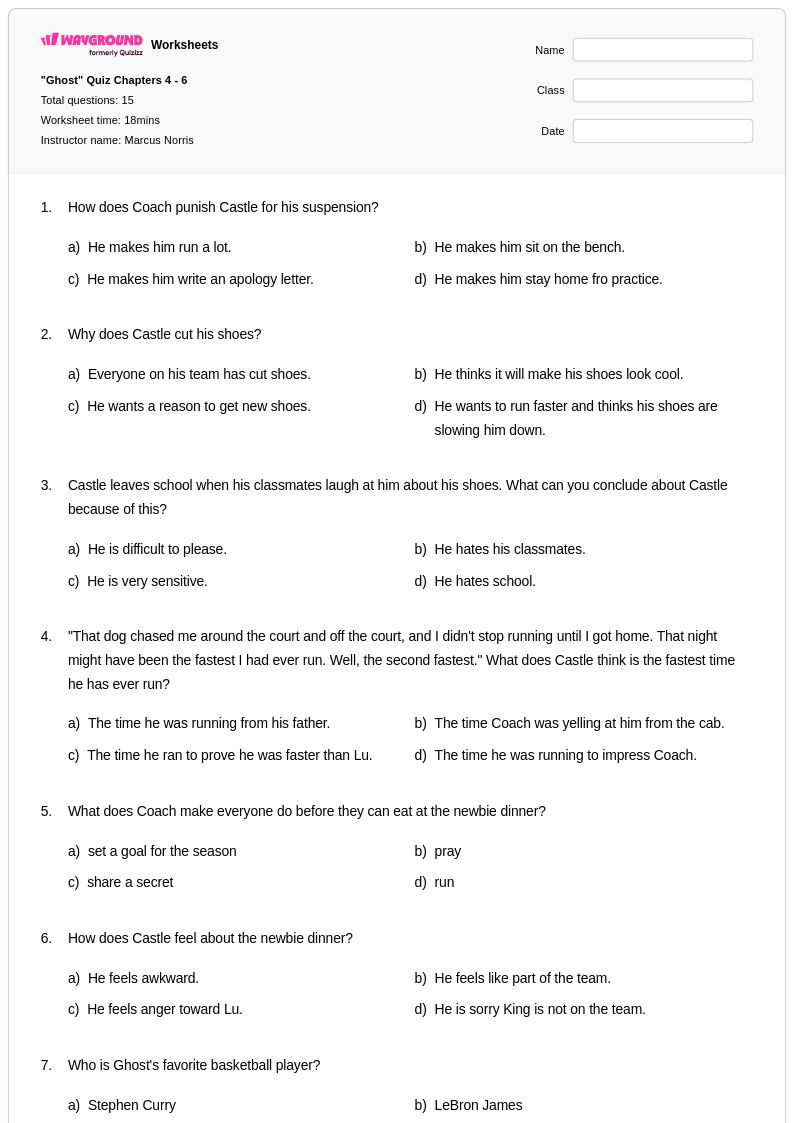
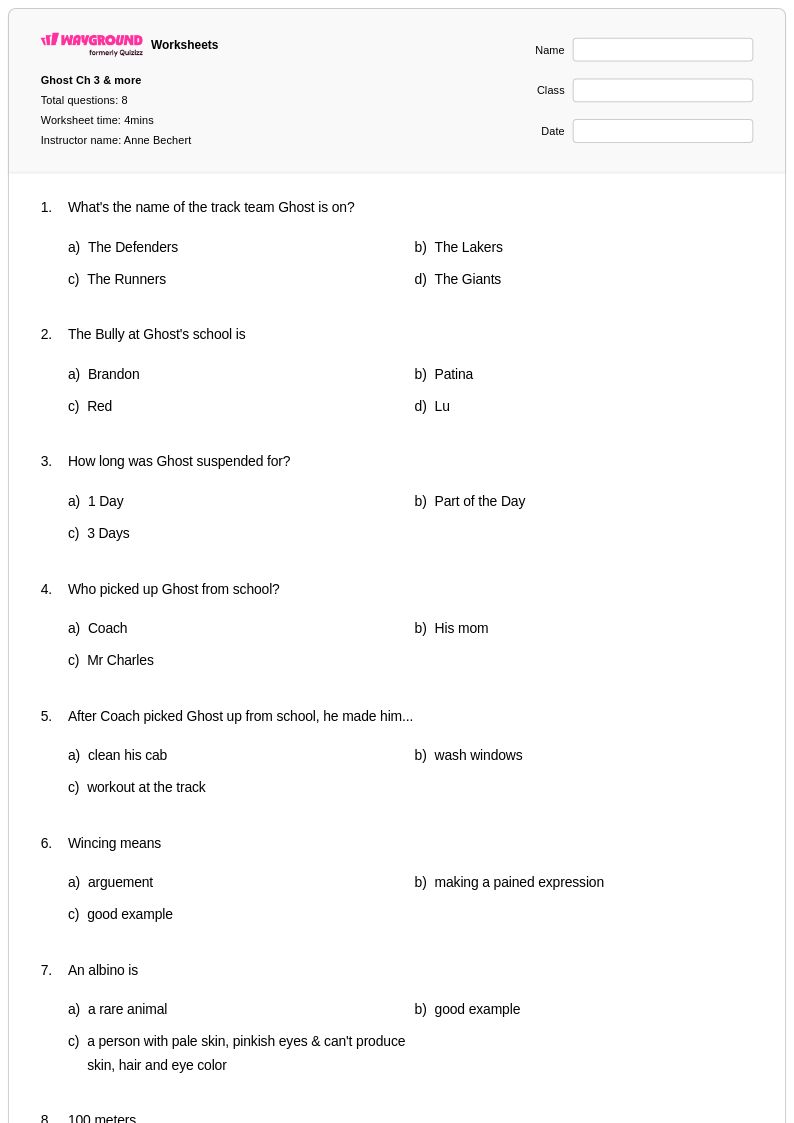
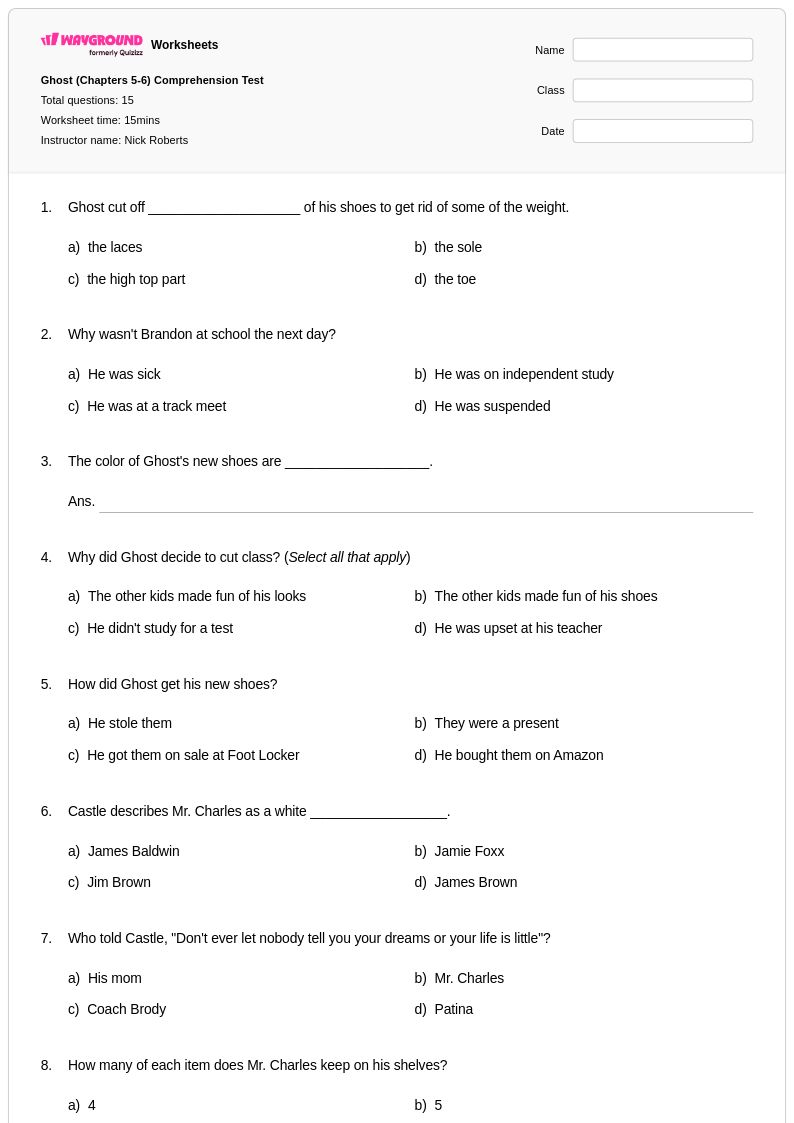
Ghost by Jason Reynolds worksheets for Class 7 students provide comprehensive literary analysis and reading comprehension activities designed to deepen understanding of this powerful young adult novel. These educational resources strengthen critical thinking skills through character analysis exercises, plot structure examinations, and thematic exploration activities that help students connect with Ghost's journey as a talented runner overcoming personal challenges. The collection includes vocabulary building exercises, discussion questions, and creative writing prompts that encourage students to examine themes of perseverance, family dynamics, and self-discovery. Teachers can access answer keys and printable pdf materials that support both independent practice problems and guided classroom discussions, making these free resources invaluable for developing Class 7 students' literary analysis capabilities.
Wayground, formerly Quizizz, supports educators with an extensive library of millions of teacher-created resources specifically designed for Ghost by Jason Reynolds and other Class 7 literature studies. The platform's robust search and filtering capabilities allow teachers to quickly locate materials aligned with curriculum standards, while differentiation tools enable customization based on individual student reading levels and learning needs. These versatile worksheets are available in both printable pdf format and interactive digital versions, providing flexibility for classroom instruction, homework assignments, and remote learning environments. Teachers can efficiently plan comprehensive literature units, implement targeted remediation for struggling readers, offer enrichment opportunities for advanced students, and provide consistent skill practice that builds reading comprehension and analytical writing abilities throughout their Ghost novel study.
FAQs
How do I teach Ghost by Jason Reynolds in a middle school ELA classroom?
Teaching Ghost works best when instruction is anchored in Castle Cranshaw's voice and his dual journey — processing past trauma while discovering identity through competitive running. Start with pre-reading activities that surface students' own experiences with belonging and family instability, then use close-reading tasks focused on Reynolds' first-person narration and dialogue to help students track how Ghost's self-perception shifts across the novel. Pairing character analysis with theme work on perseverance and personal growth keeps literary skill-building connected to the emotional core of the story.
What are good activities for practicing literary analysis skills with Ghost by Jason Reynolds?
Effective practice activities for Ghost include character development tracking charts that follow Castle's arc from chapter to chapter, theme journals where students gather textual evidence around topics like trauma, family, and resilience, and literary device annotation tasks focused on Reynolds' use of first-person narration, figurative language, and urban setting details. Dialogue analysis exercises are particularly valuable because Reynolds uses conversational language as a primary tool for character revelation, giving students rich, accessible material to work with.
What reading comprehension mistakes do students commonly make with Ghost by Jason Reynolds?
Students frequently misread Ghost's bravado as confidence rather than as a defense mechanism rooted in trauma, which leads to shallow character analysis that misses the novel's emotional depth. A second common error is treating the track team plotline as the central conflict rather than recognizing it as the context in which Ghost confronts his past and develops self-worth. Teachers should also watch for students who struggle to distinguish between Castle's present-tense narration and his memories, as Reynolds blends these fluidly without heavy signposting.
How can I use Ghost by Jason Reynolds worksheets to support students with different reading levels?
Ghost worksheets can be differentiated by adjusting the complexity of analysis prompts — struggling readers benefit from scaffolded graphic organizers that chunk the text and guide evidence gathering, while advanced students can tackle open-ended literary essays or comparative tasks that connect Ghost's themes to other coming-of-age texts. On Wayground, teachers can apply built-in accommodation settings such as Read Aloud, extended time, and reduced answer choices to individual students, allowing each learner to access the same core content at an appropriate challenge level.
How do I use Ghost by Jason Reynolds worksheets from Wayground in my classroom?
Wayground's Ghost worksheets are available as printable PDFs for traditional classroom use and in digital formats for technology-integrated or remote learning environments, and teachers can also host them directly as a quiz on Wayground. Answer keys are included with the materials, making them suitable for independent student work, guided class discussion, or formative assessment. Teachers can filter materials by skill focus — such as character analysis, theme, or literary devices — to find worksheets that align with specific lesson objectives.
How do I assess student understanding of theme in Ghost by Jason Reynolds?
Assessing theme comprehension in Ghost requires tasks that push students beyond identifying themes to explaining how Reynolds develops them through specific narrative choices. Effective assessment formats include short constructed-response questions asking students to trace a single theme across multiple chapters with textual evidence, or passage-based analysis tasks where students explain how a specific scene — such as Ghost's memory of his father's arrest — connects to the novel's broader themes of trauma and resilience. Watching for unsupported thematic claims or surface-level responses is key, as strong theme analysis in this novel requires students to connect character behavior to authorial intent.