Free Printable The Legend of Sleepy Hollow Worksheets for Class 7
Class 7 students can master Washington Irving's classic tale with Wayground's comprehensive collection of The Legend of Sleepy Hollow worksheets, featuring free printables, practice problems, and answer keys to enhance literature comprehension skills.
Explore printable The Legend of Sleepy Hollow worksheets for Class 7
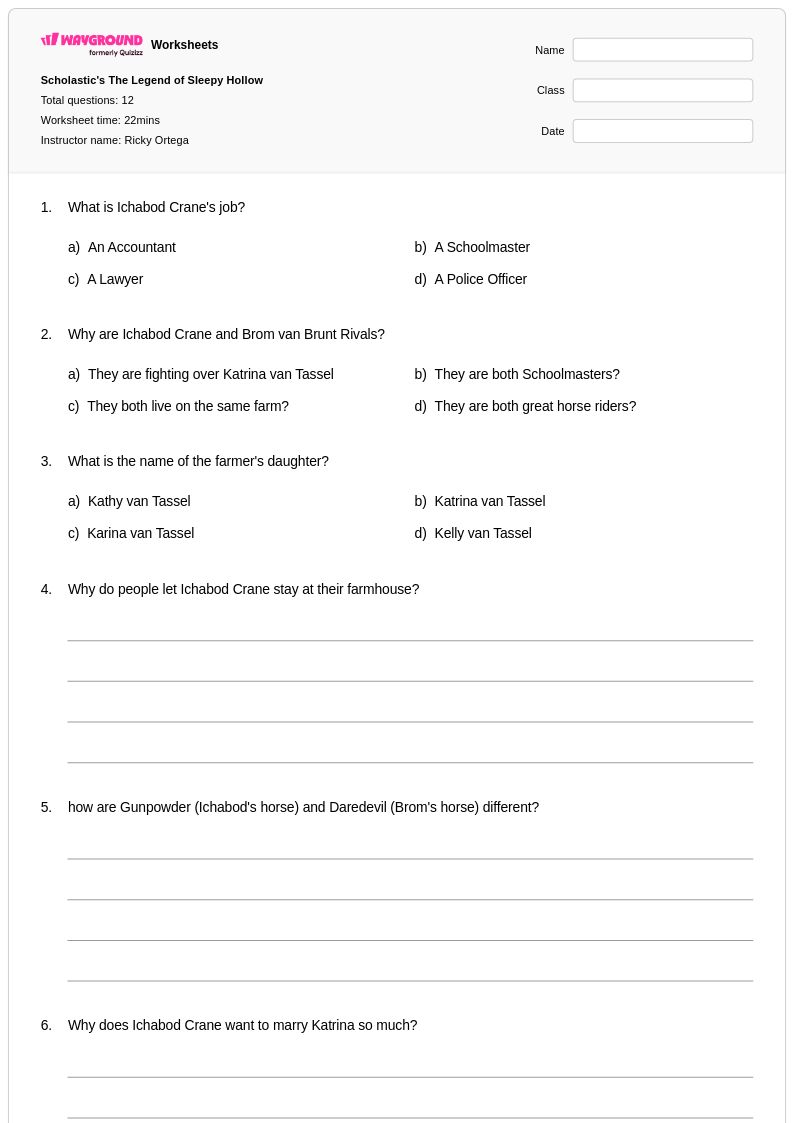
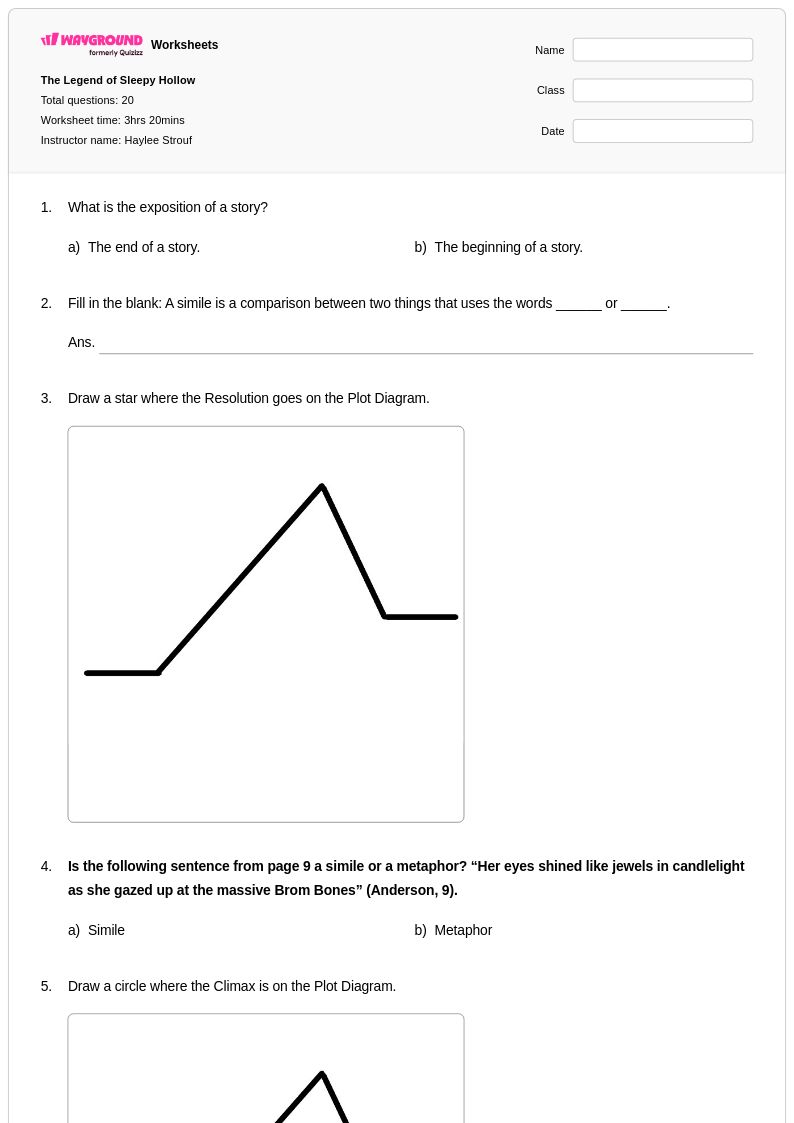
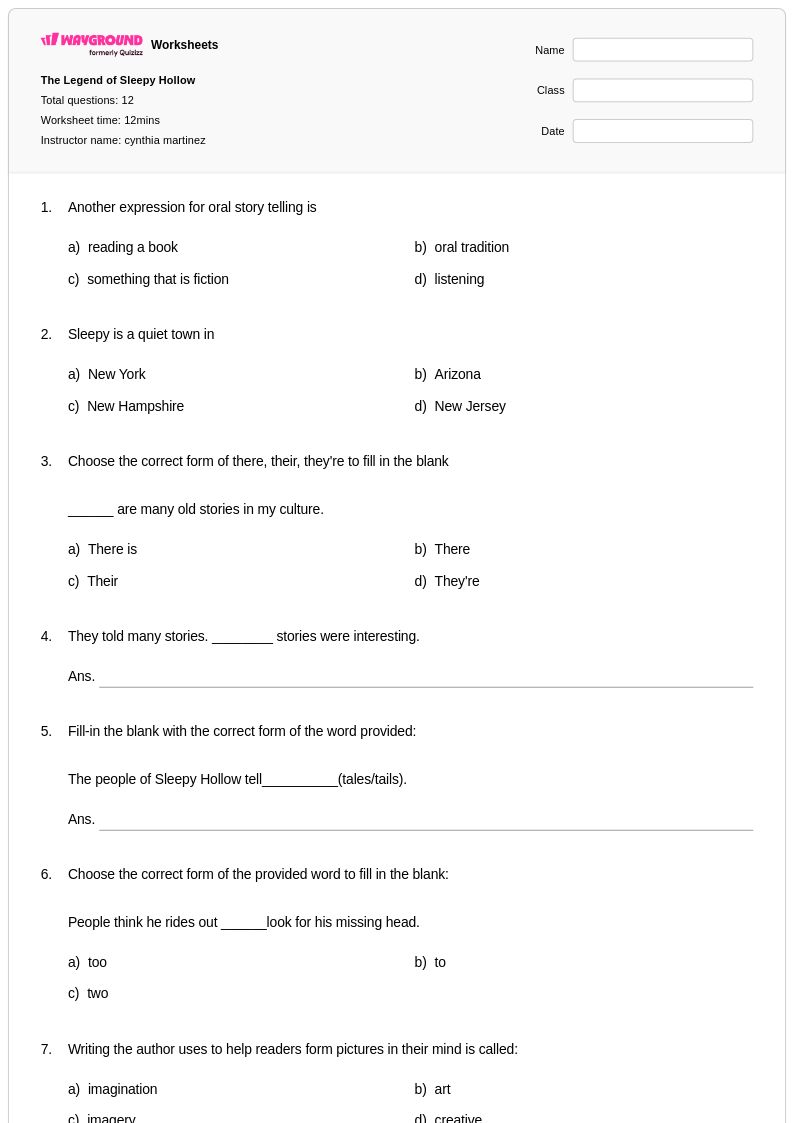
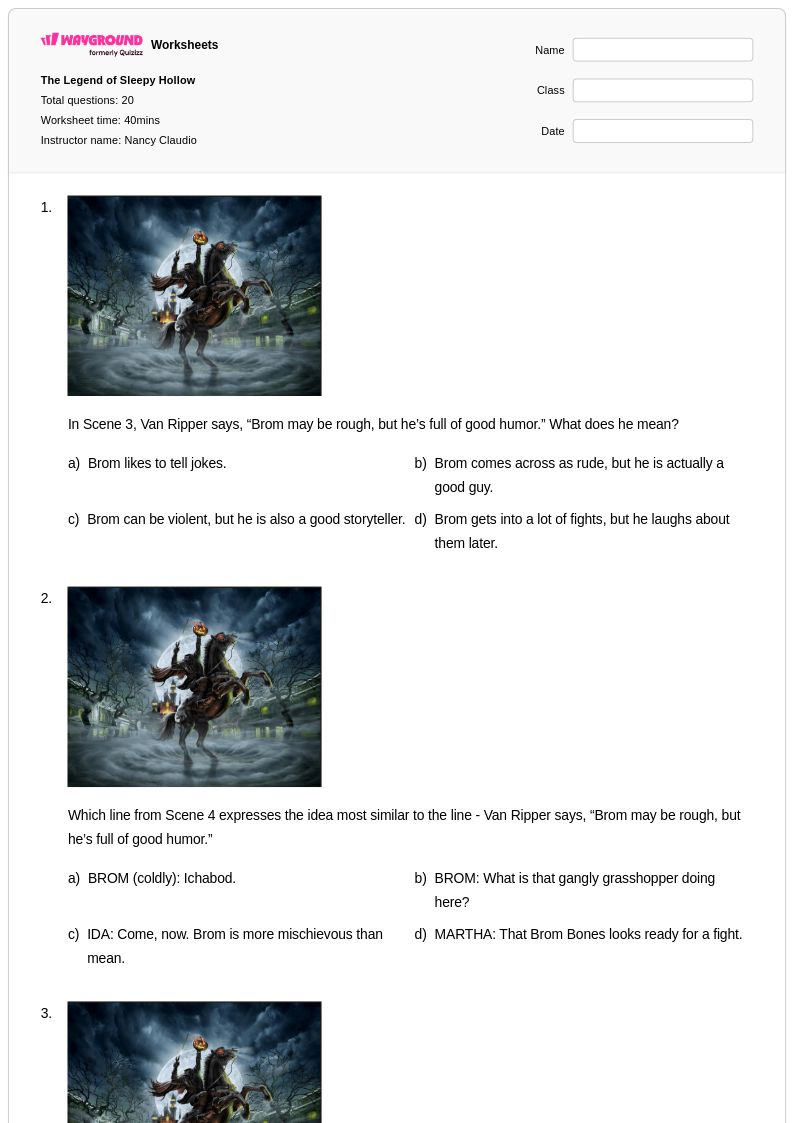
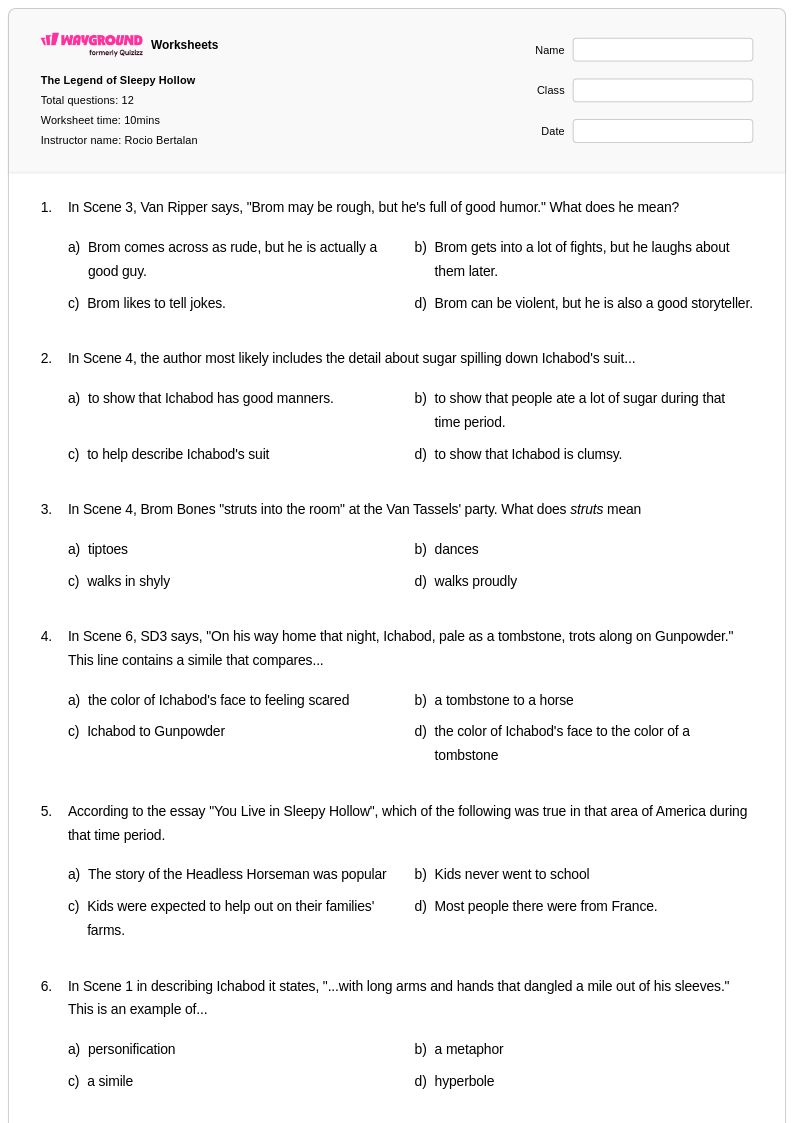
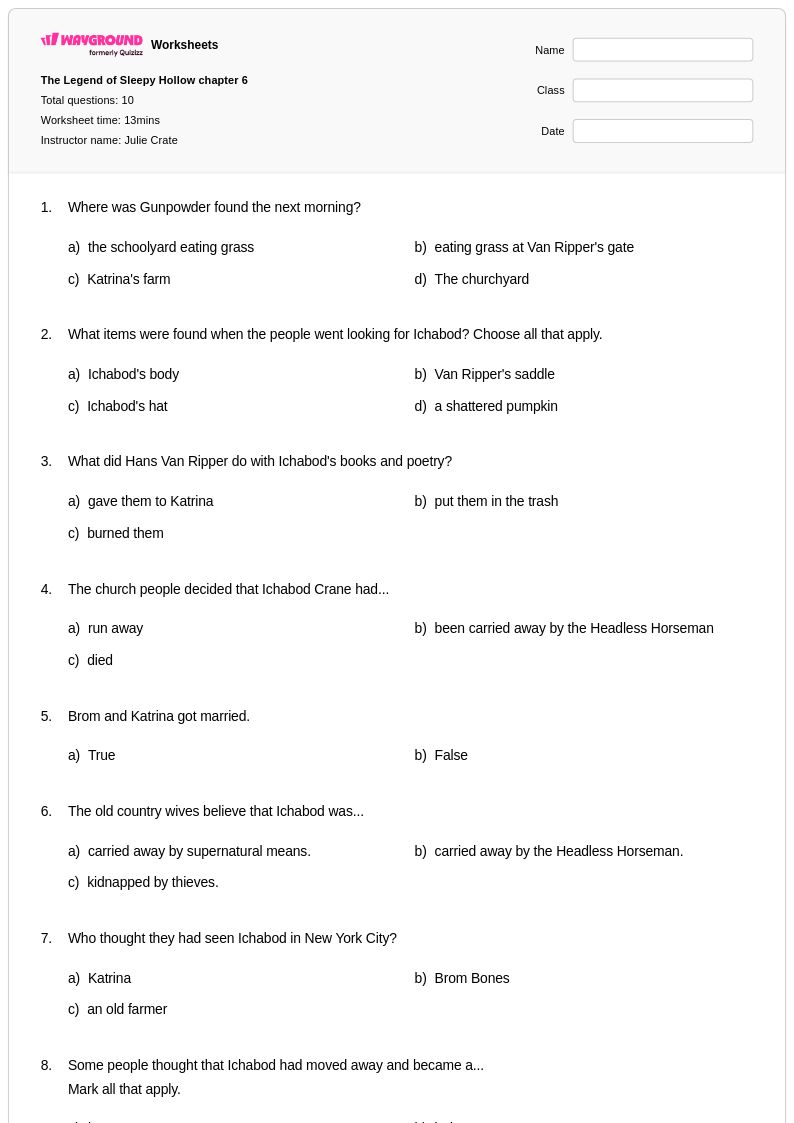
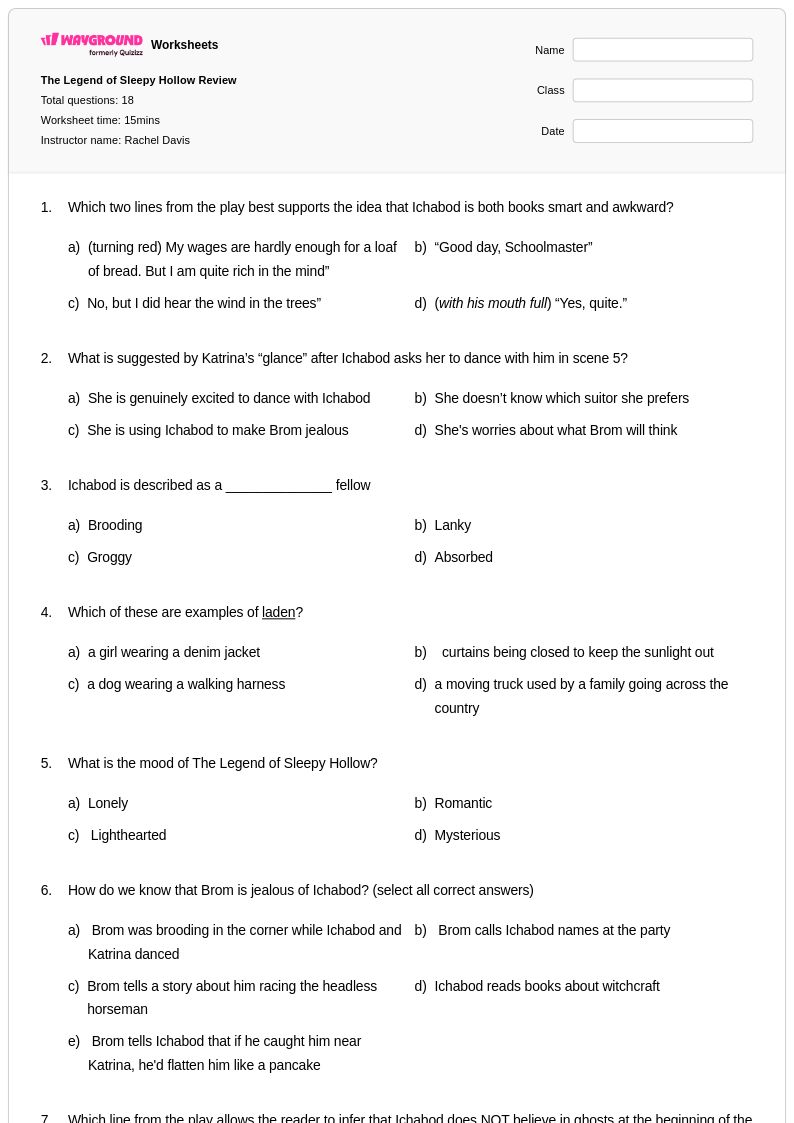
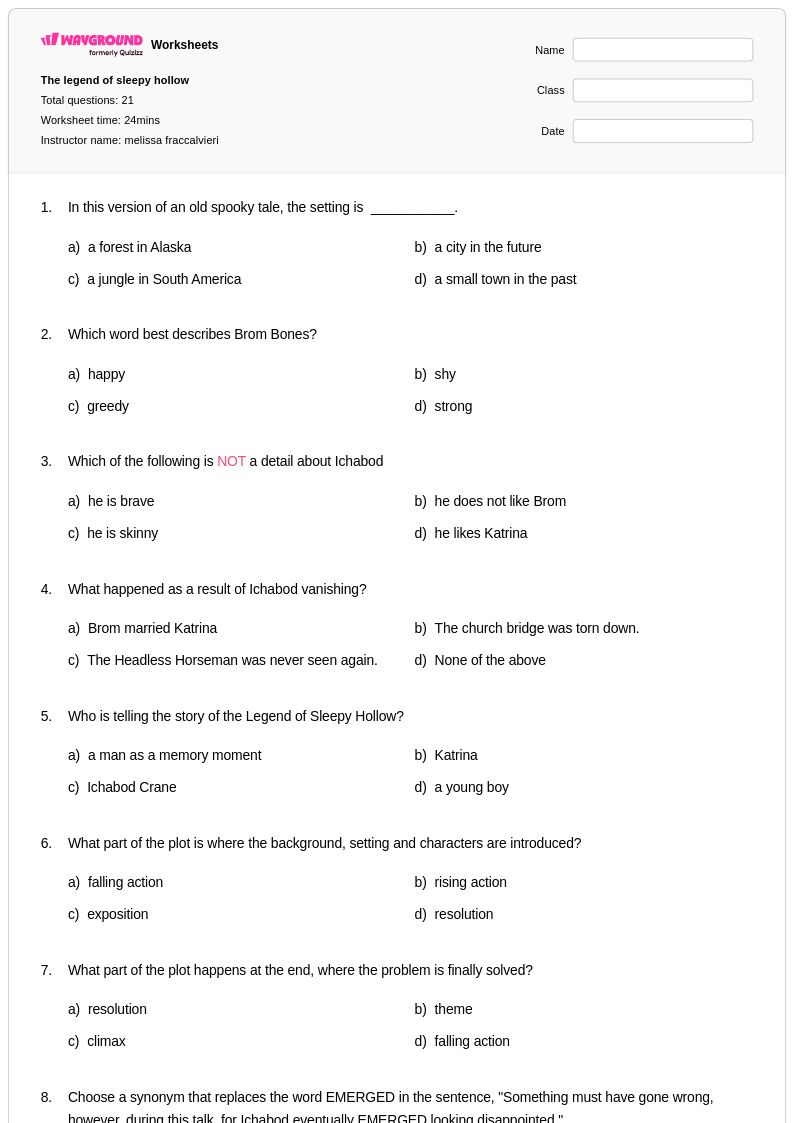
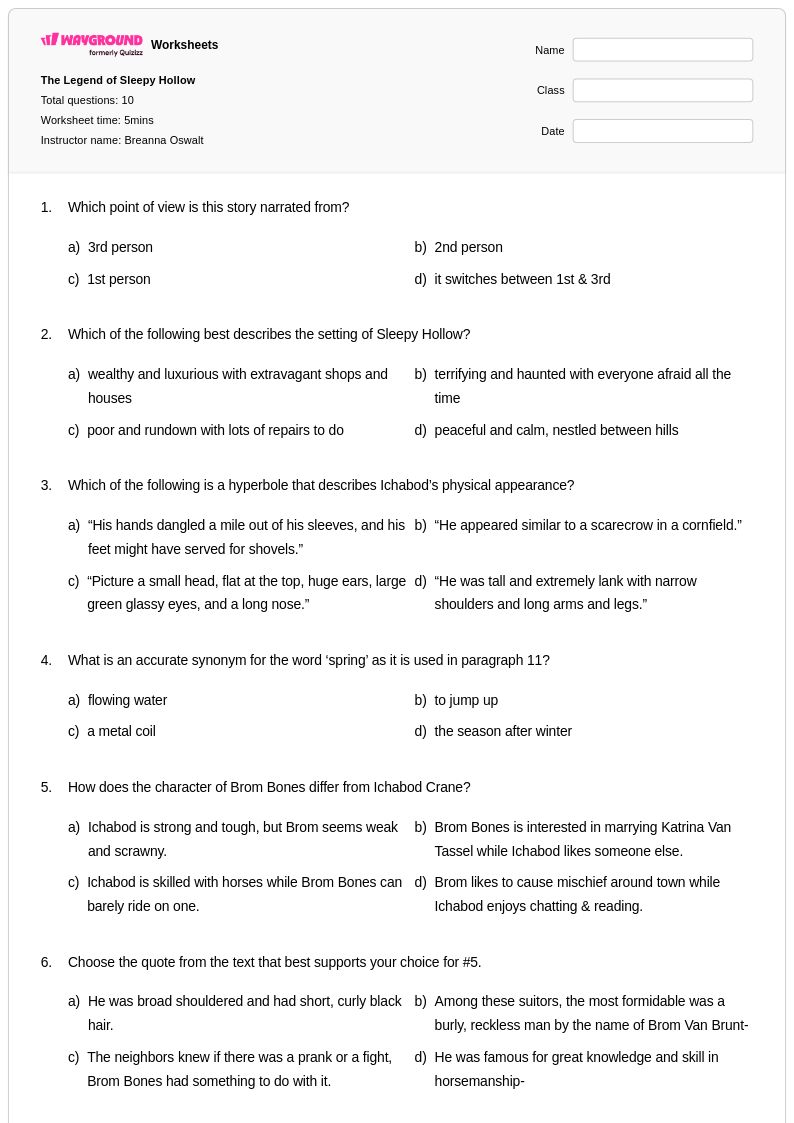
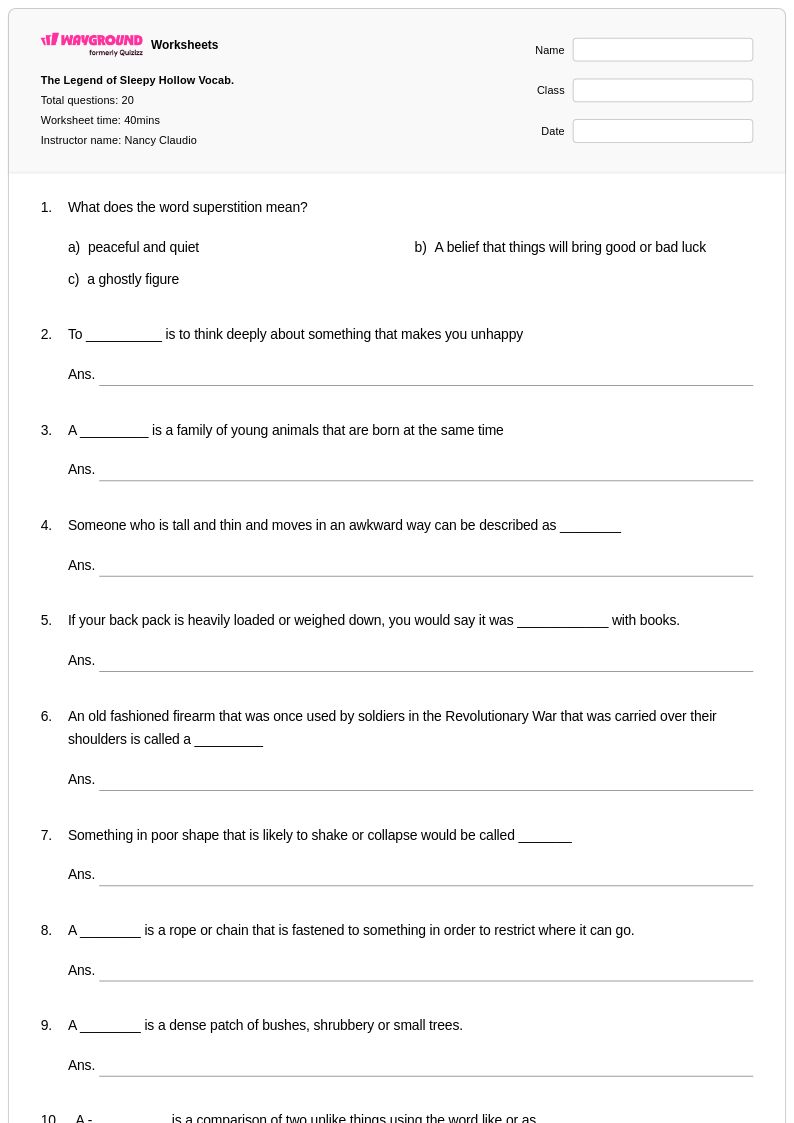
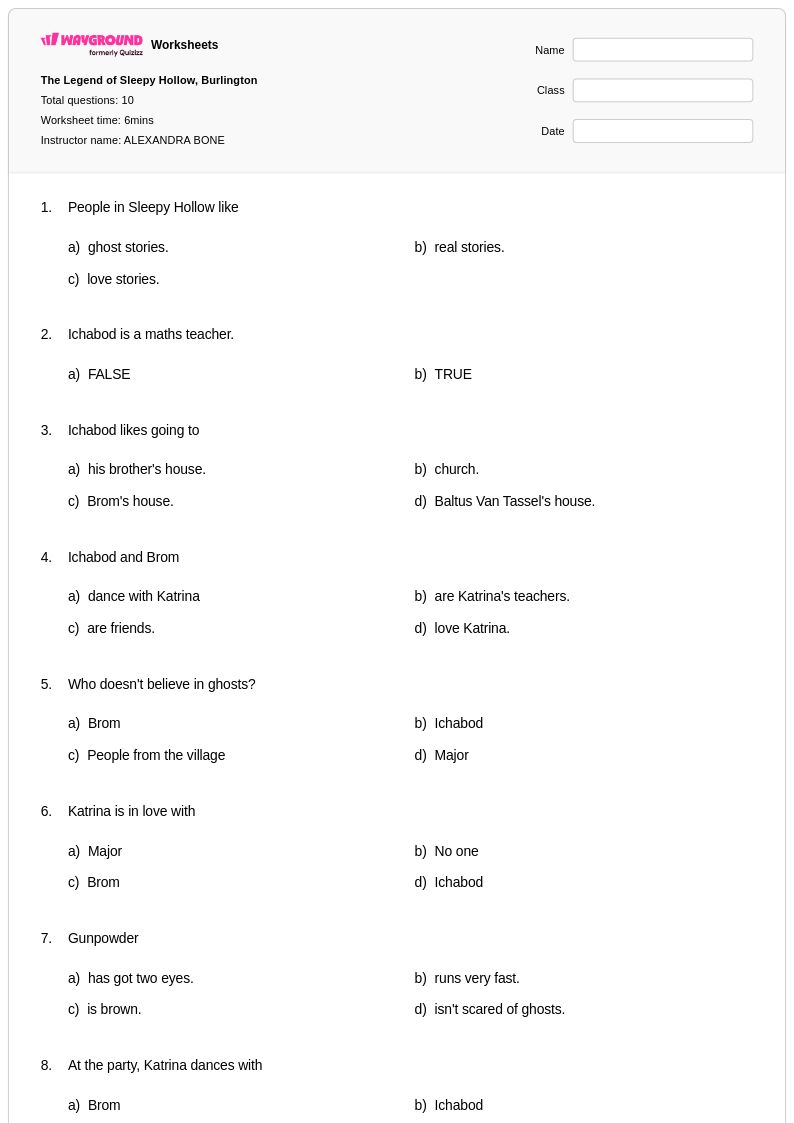
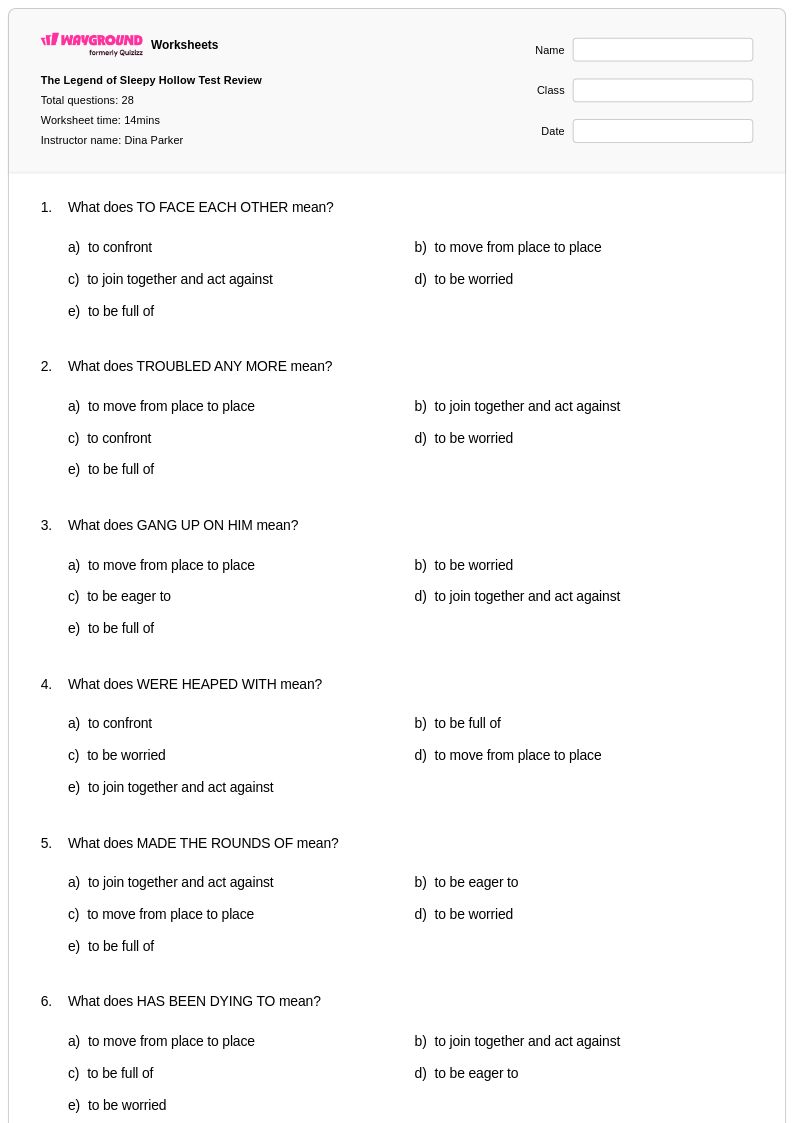
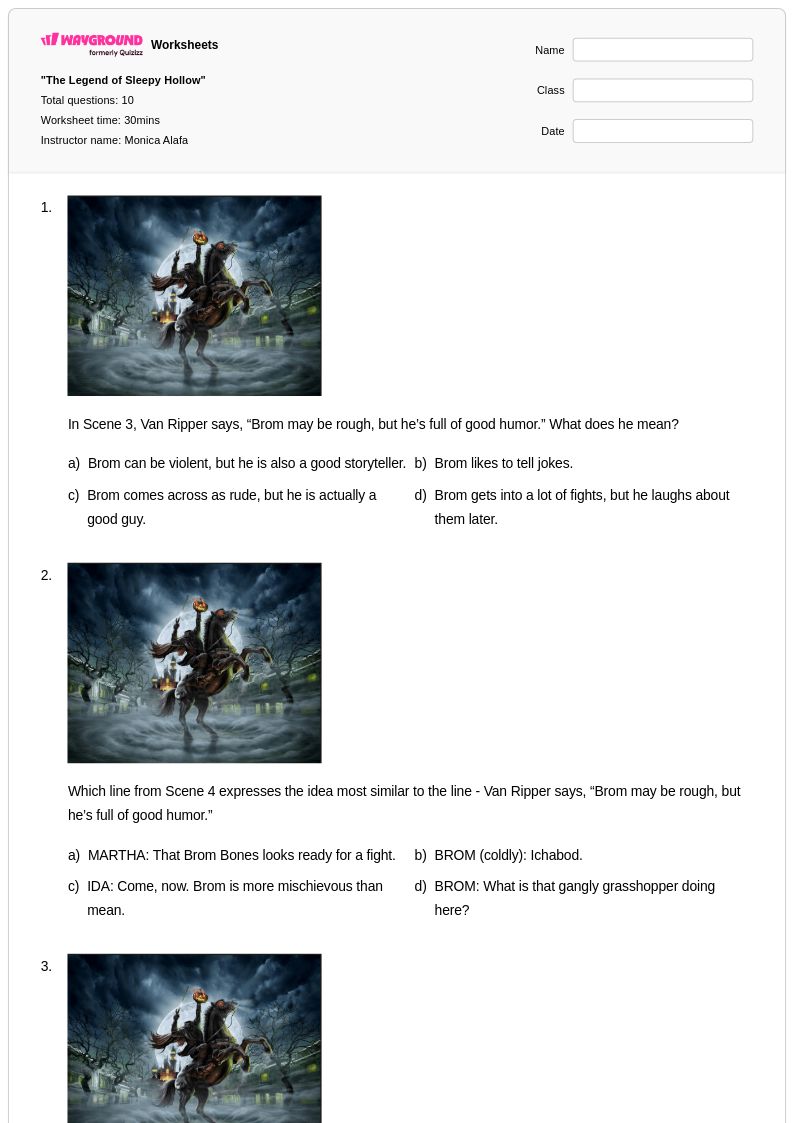
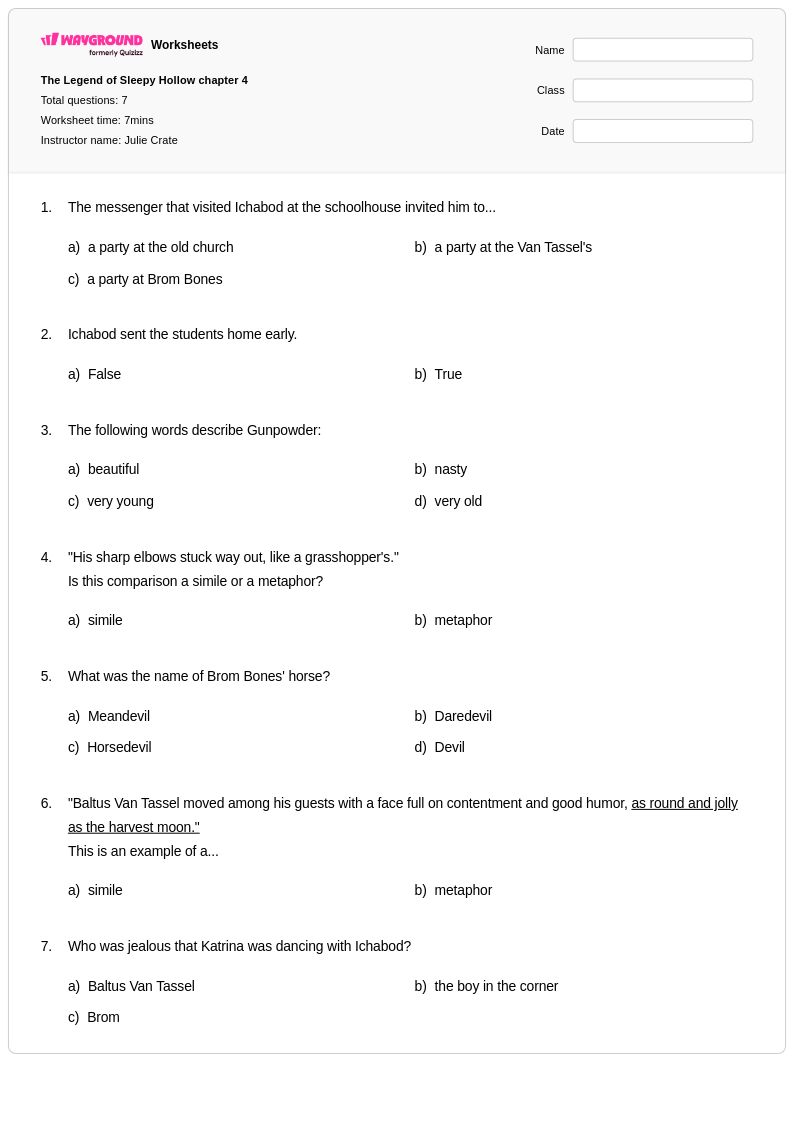
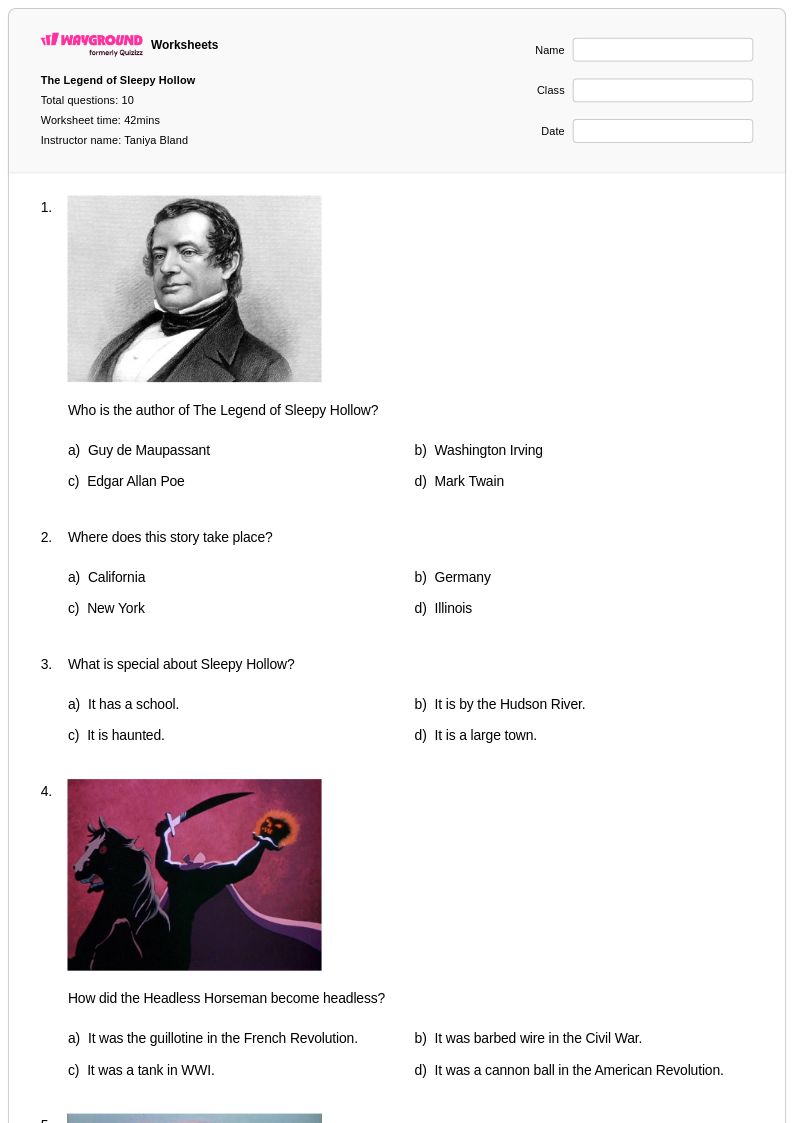
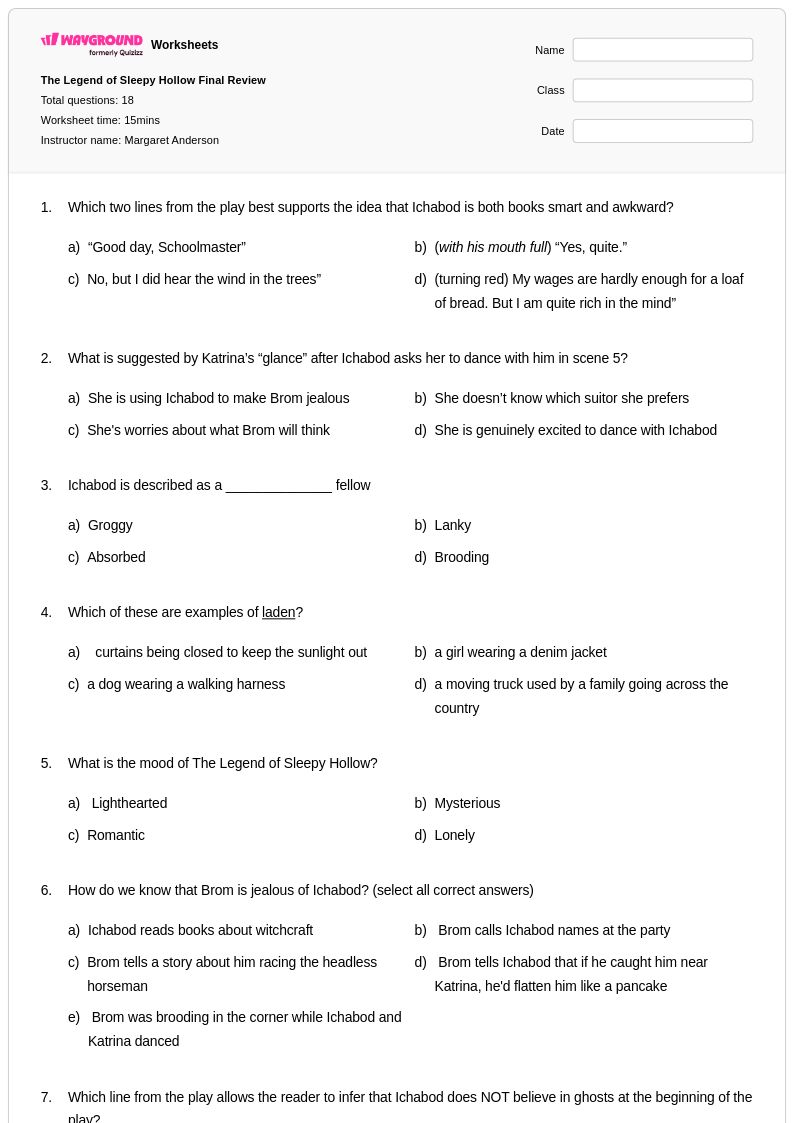
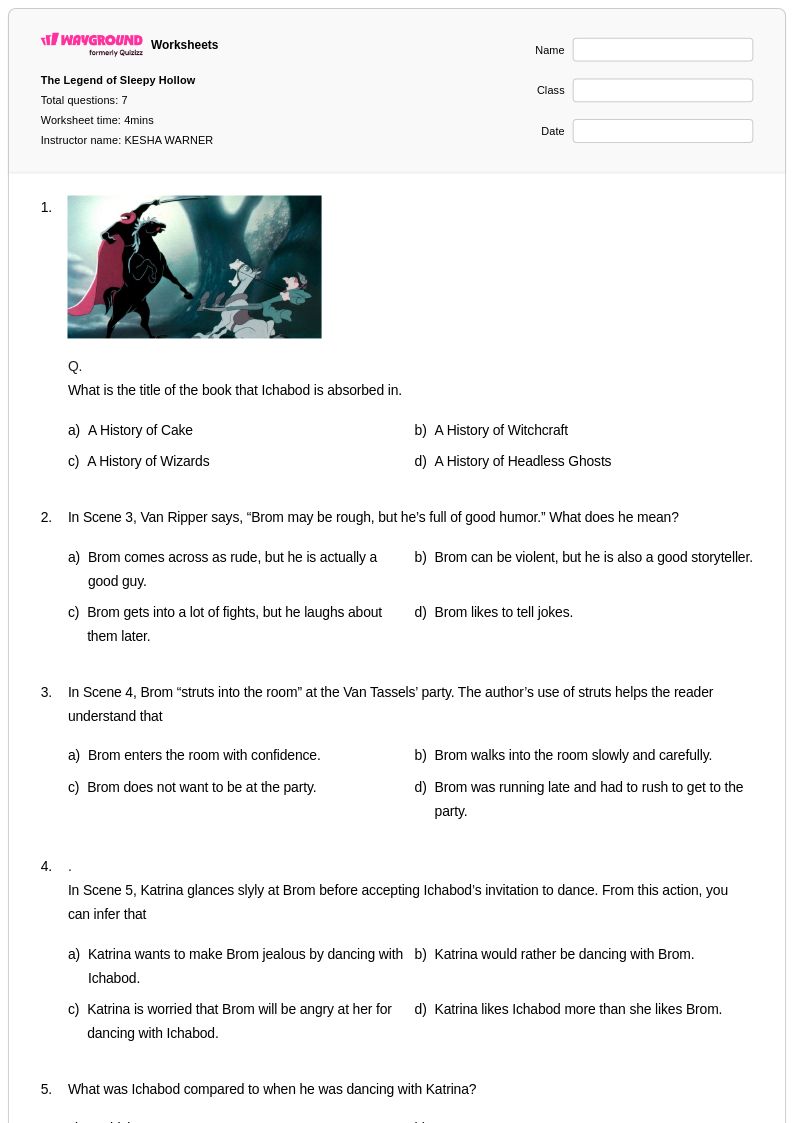
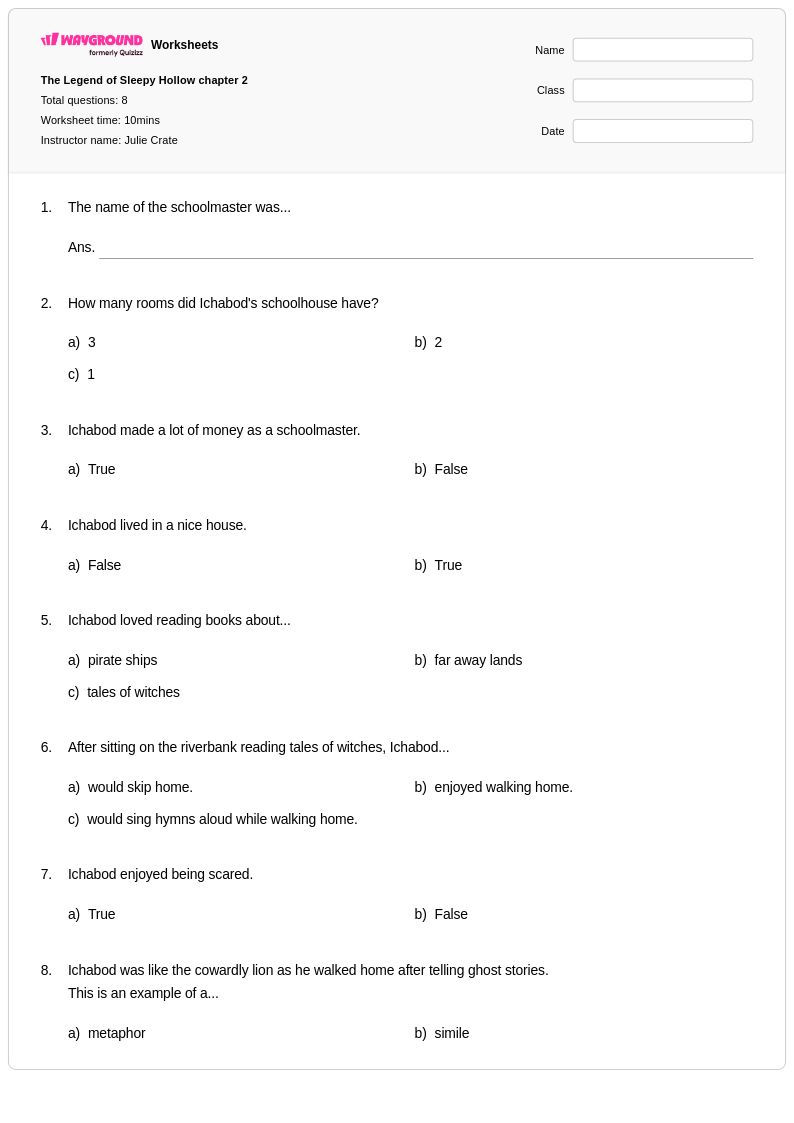
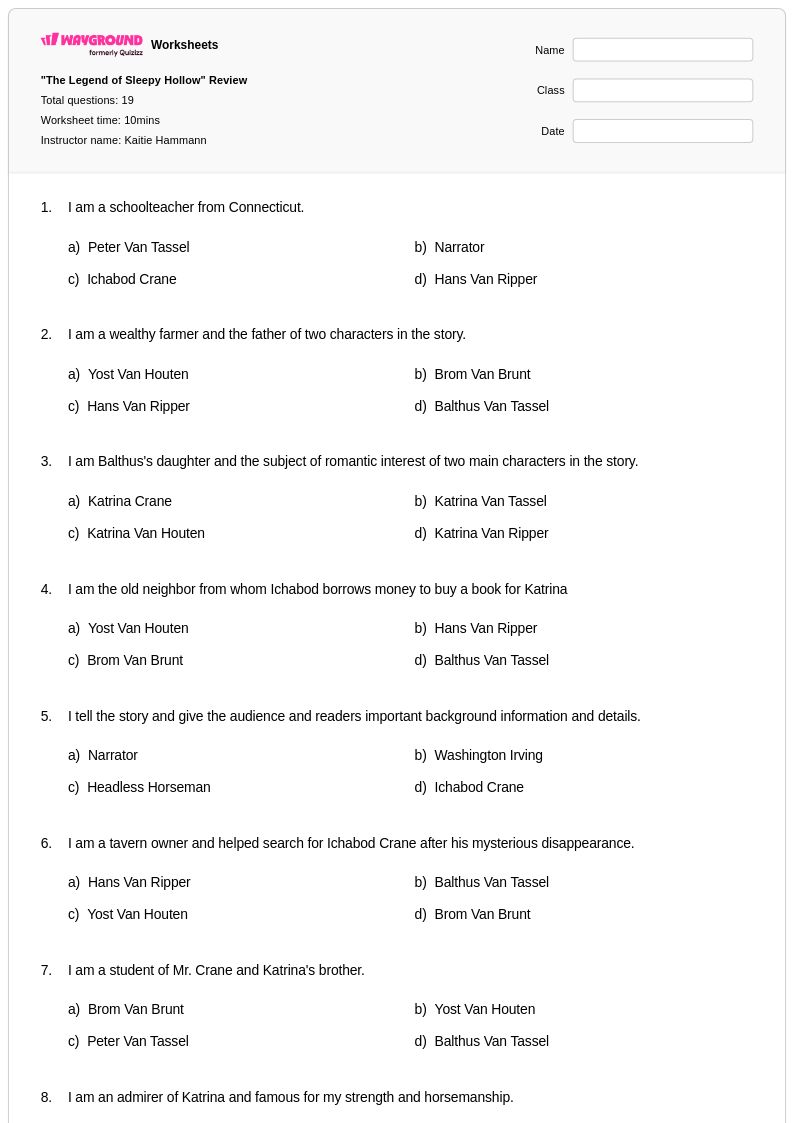
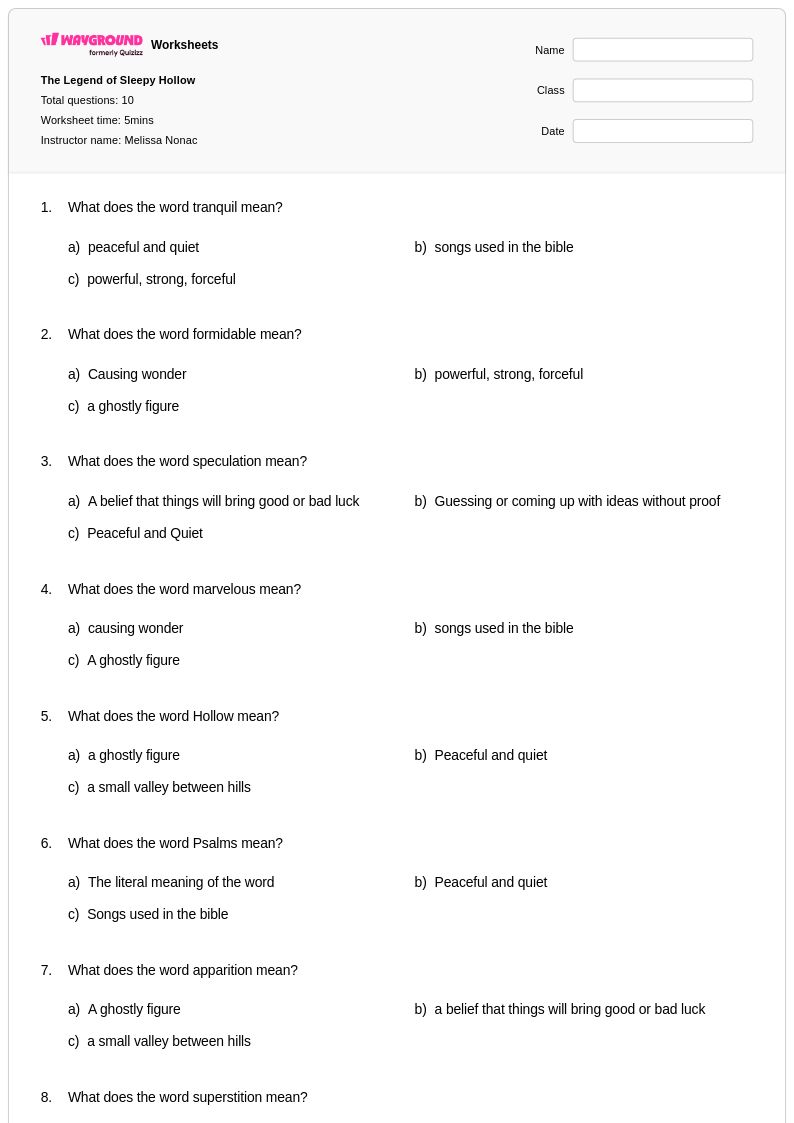
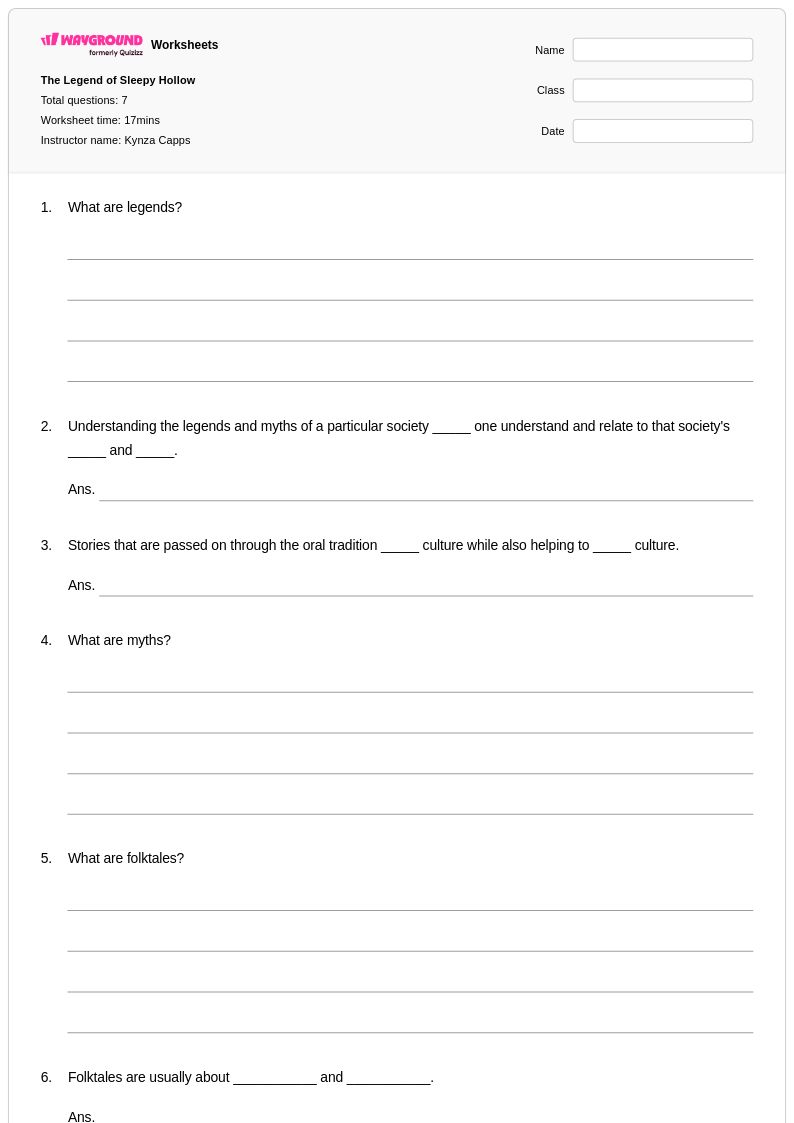
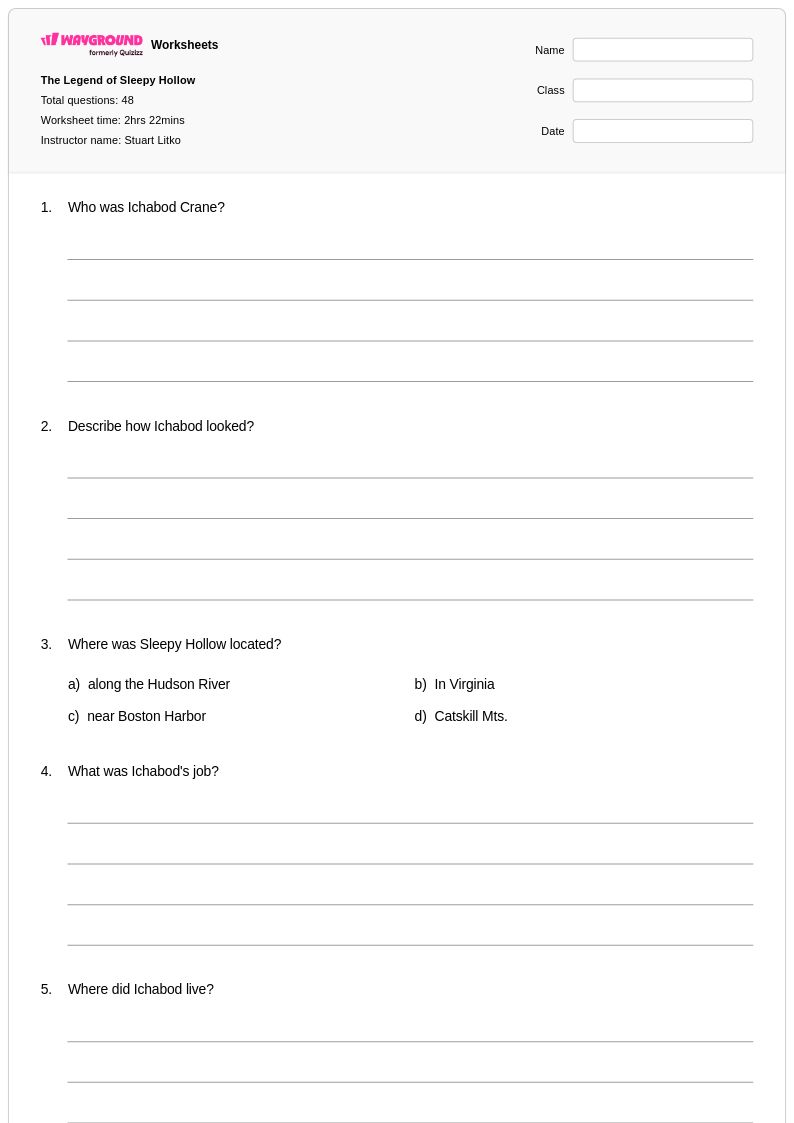
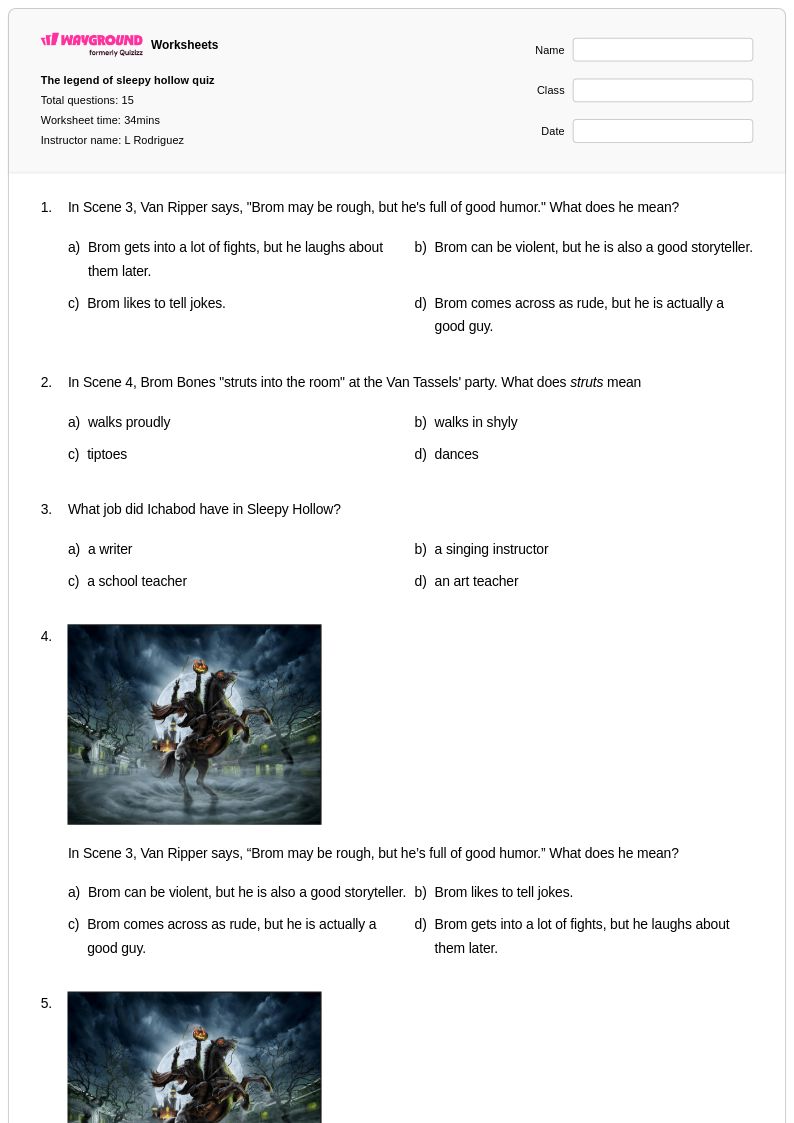
The Legend of Sleepy Hollow worksheets available through Wayground provide Class 7 students with comprehensive practice materials to deepen their understanding of Washington Irving's classic American short story. These educational resources focus on critical literary analysis skills including character development, setting analysis, mood and atmosphere, symbolism, and narrative techniques that make Irving's tale so enduringly captivating. Students engage with practice problems that examine Ichabod Crane's characterization, the supernatural elements woven throughout the story, and the cultural significance of this foundational piece of American literature. Each worksheet comes with a complete answer key and is available as a free printable pdf, allowing students to work through complex literary concepts at their own pace while building essential reading comprehension and analytical writing skills.
Wayground's extensive collection of The Legend of Sleepy Hollow materials draws from millions of teacher-created resources, offering educators powerful search and filtering capabilities to locate worksheets perfectly aligned with their curriculum standards and student needs. The platform's differentiation tools enable teachers to customize content for various reading levels within their Class 7 classrooms, ensuring that both struggling readers and advanced students can access appropriate challenge levels when exploring Irving's masterpiece. Available in both printable pdf format and interactive digital versions, these resources support flexible lesson planning whether teachers need quick remediation exercises, enrichment activities for early finishers, or structured skill practice for whole-class instruction. The comprehensive nature of these materials allows educators to seamlessly integrate close reading strategies, vocabulary development, and literary analysis techniques while helping students connect this 19th-century tale to broader themes in American literature and cultural history.
FAQs
How do I teach The Legend of Sleepy Hollow in a literature class?
Teaching The Legend of Sleepy Hollow works best when you frame it around two competing worldviews: Ichabod Crane's superstitious nature versus Brom Bones' rational pragmatism. Start by grounding students in the historical and cultural context of early 19th-century America and the Hudson Valley, then move into close reading of Irving's Gothic atmosphere and unreliable narration. Guided annotation activities that ask students to track evidence of the supernatural versus logical explanations help build the critical reading skills the text demands.
What literary devices should students focus on when analyzing The Legend of Sleepy Hollow?
Students should focus on Irving's use of Gothic atmosphere, foreshadowing, irony, and characterization as the story's primary literary devices. The setting functions almost as a character itself, with Irving using vivid sensory language to blur the line between the eerie and the comic. Close reading exercises that ask students to identify specific textual evidence for each device help them move beyond surface-level plot comprehension into genuine literary analysis.
What reading comprehension exercises help students understand The Legend of Sleepy Hollow?
Effective comprehension exercises for this story include character motivation charts, sequence-of-events timelines, and cause-and-effect analysis of the climactic chase scene. Because the story's ending is deliberately ambiguous, structured response activities that ask students to support multiple interpretations with textual evidence are especially valuable. These exercises train students to distinguish between what the narrator states directly and what is implied, a skill central to understanding Irving's narrative style.
What mistakes do students commonly make when analyzing The Legend of Sleepy Hollow?
The most common error is reading the ending literally rather than recognizing its ambiguity. Students often conclude definitively that Brom Bones was the Headless Horseman without acknowledging that Irving never confirms this, which misses the story's thematic point about superstition and credulity. A second common mistake is treating Ichabod Crane as a straightforward protagonist rather than an ironic one, overlooking Irving's satirical portrayal of Ichabod's greed, vanity, and cowardice.
How do I use The Legend of Sleepy Hollow worksheets in my classroom?
The Legend of Sleepy Hollow worksheets on Wayground are available as printable PDFs for traditional classroom use and in digital formats for technology-integrated environments, including the option to host them as a quiz directly on Wayground. Each worksheet includes a complete answer key, making them practical for independent practice, guided reading sessions, or assessment. The digital format also allows teachers to apply student-level accommodations such as read aloud support, extended time, or reduced answer choices for students who need additional scaffolding.
How do I differentiate instruction for The Legend of Sleepy Hollow for students at different reading levels?
For struggling readers, scaffolded close reading guides with sentence stems, vocabulary support, and chunked text passages help build access to Irving's complex prose. Advanced students benefit from comparative analysis tasks, such as examining how Irving's story shaped the broader Gothic tradition or comparing the original text to later adaptations. Wayground's differentiation tools allow teachers to customize worksheet difficulty and apply individual accommodations, such as read aloud or adjusted font sizes through reading mode, to support diverse learners without singling students out.