Free Printable Giving Directions Worksheets for Kindergarten
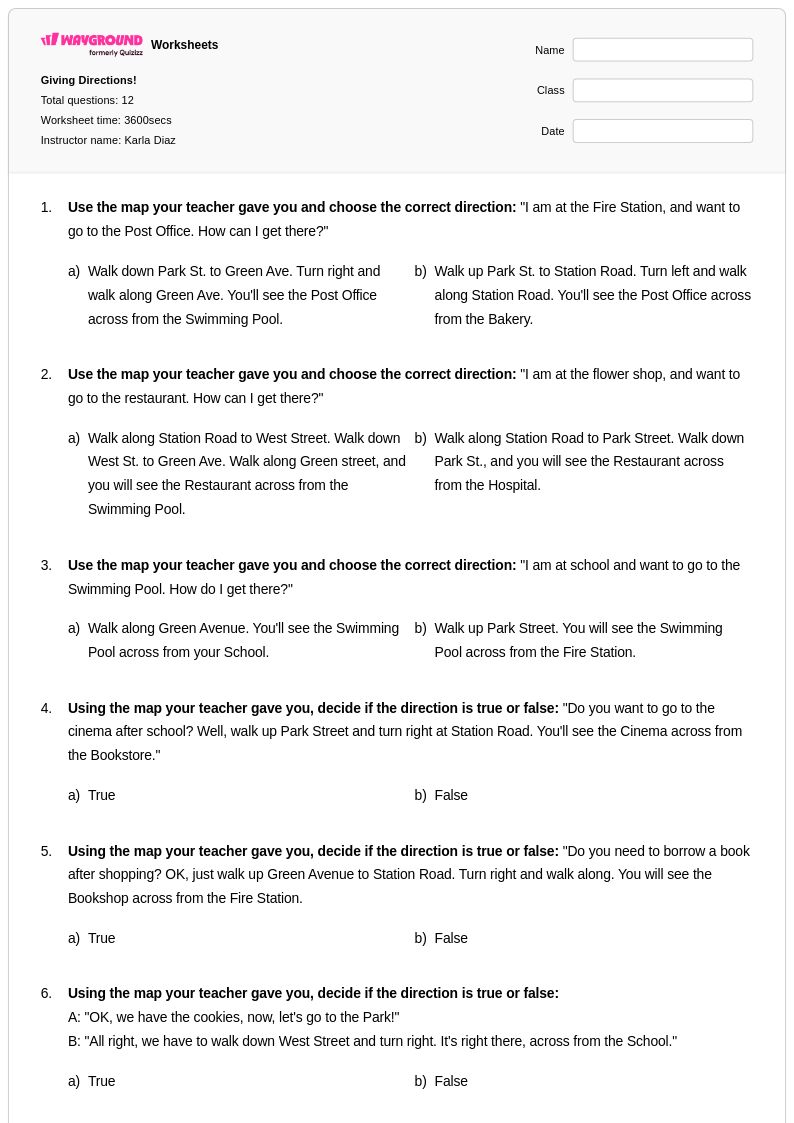
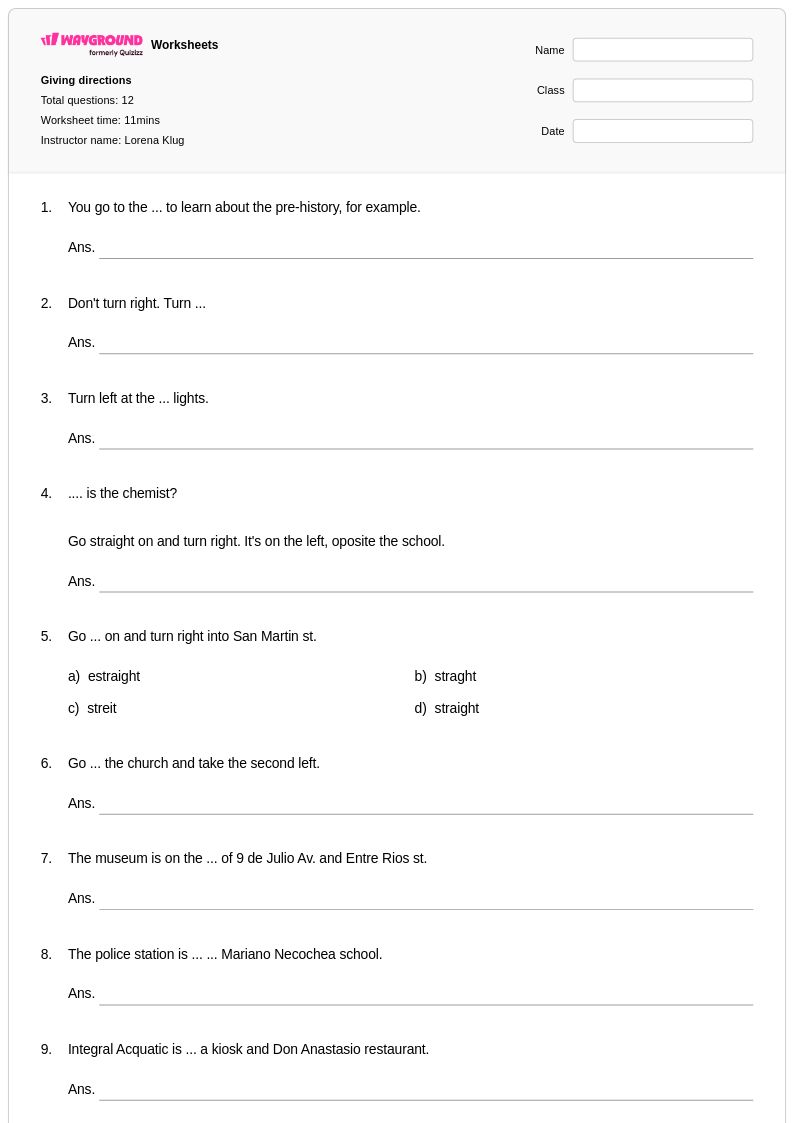
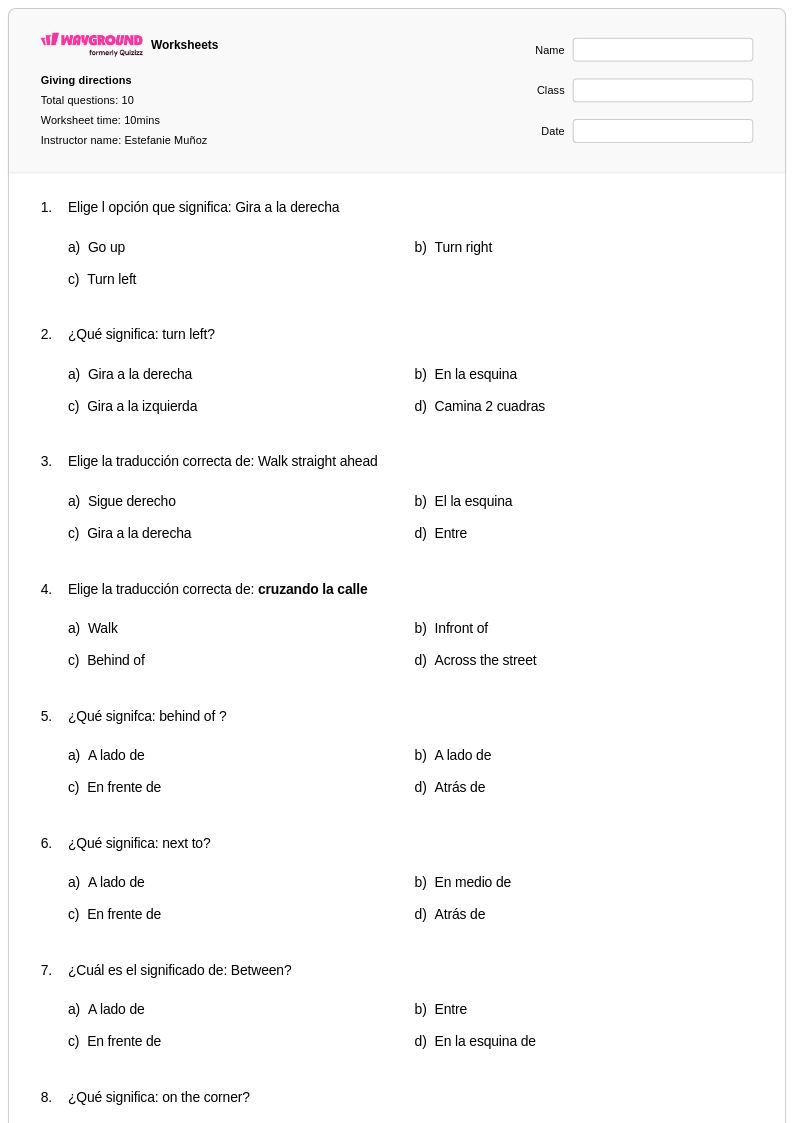
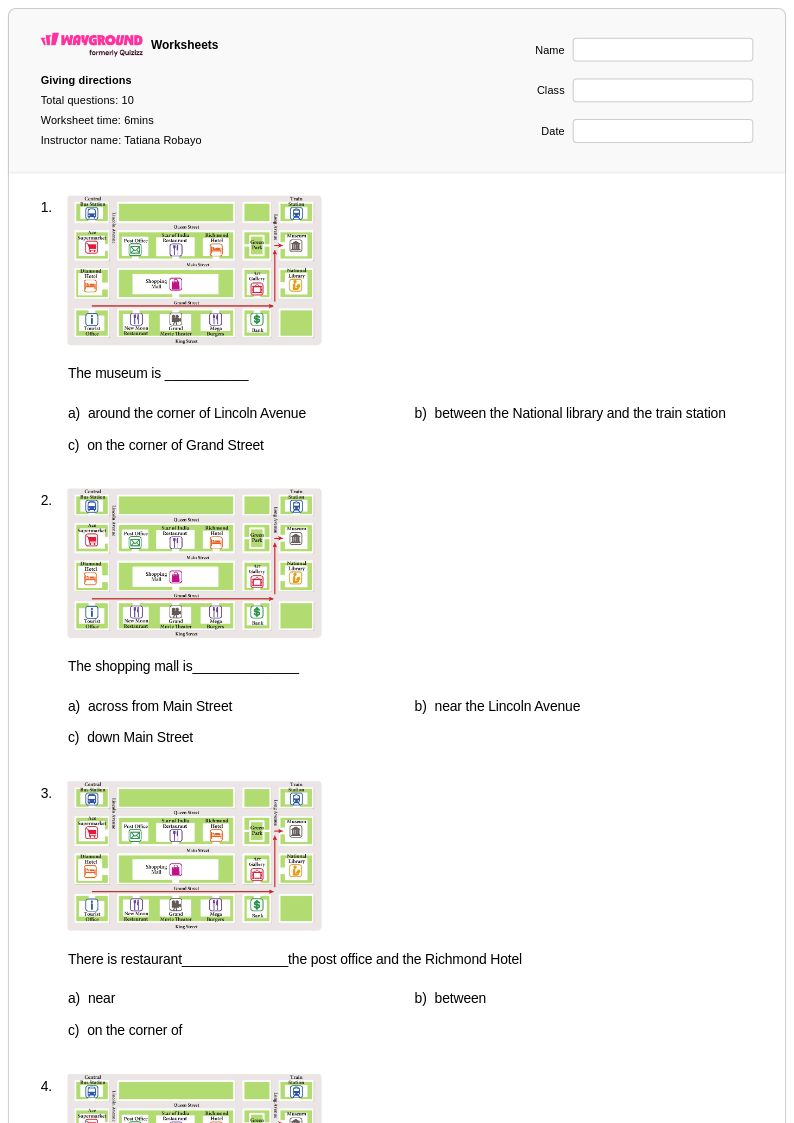
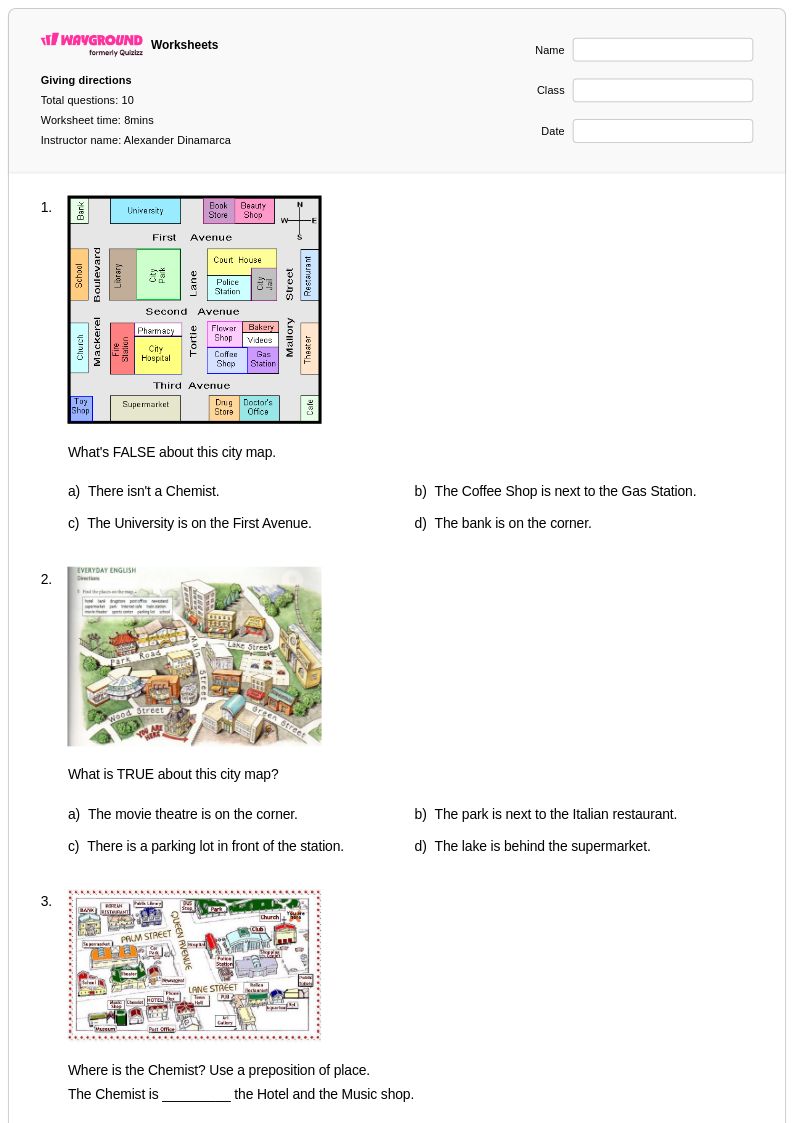
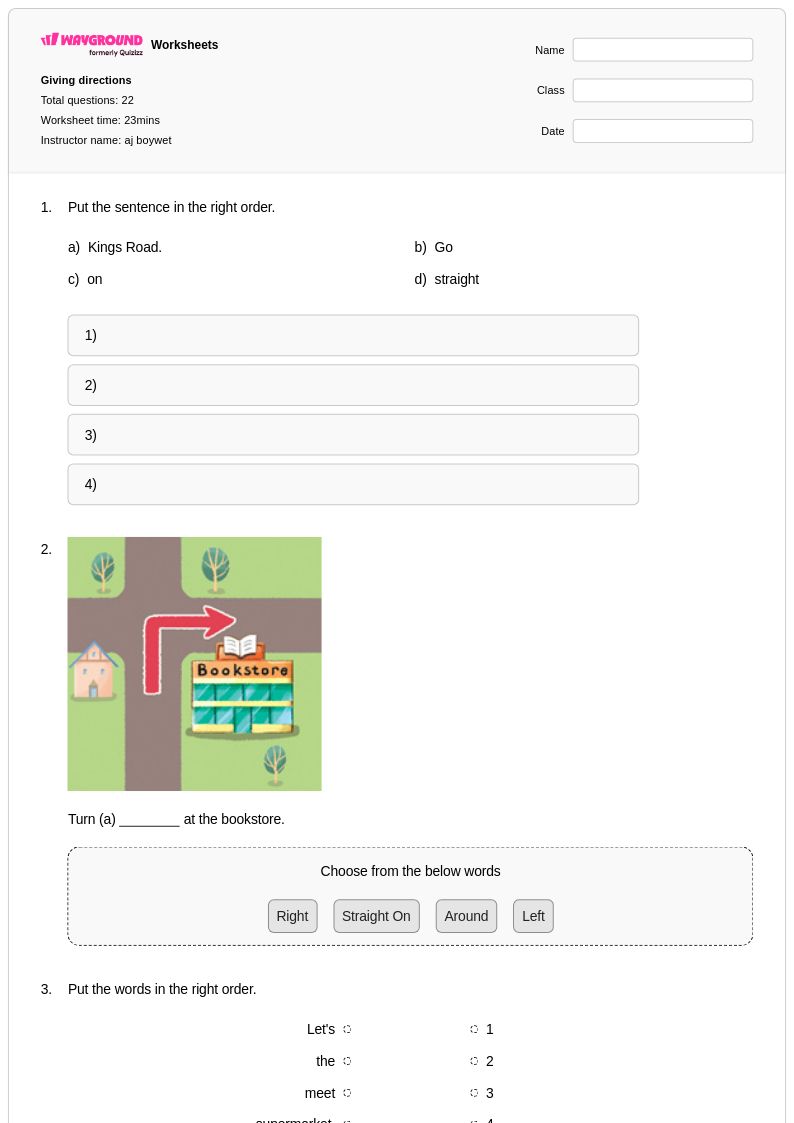
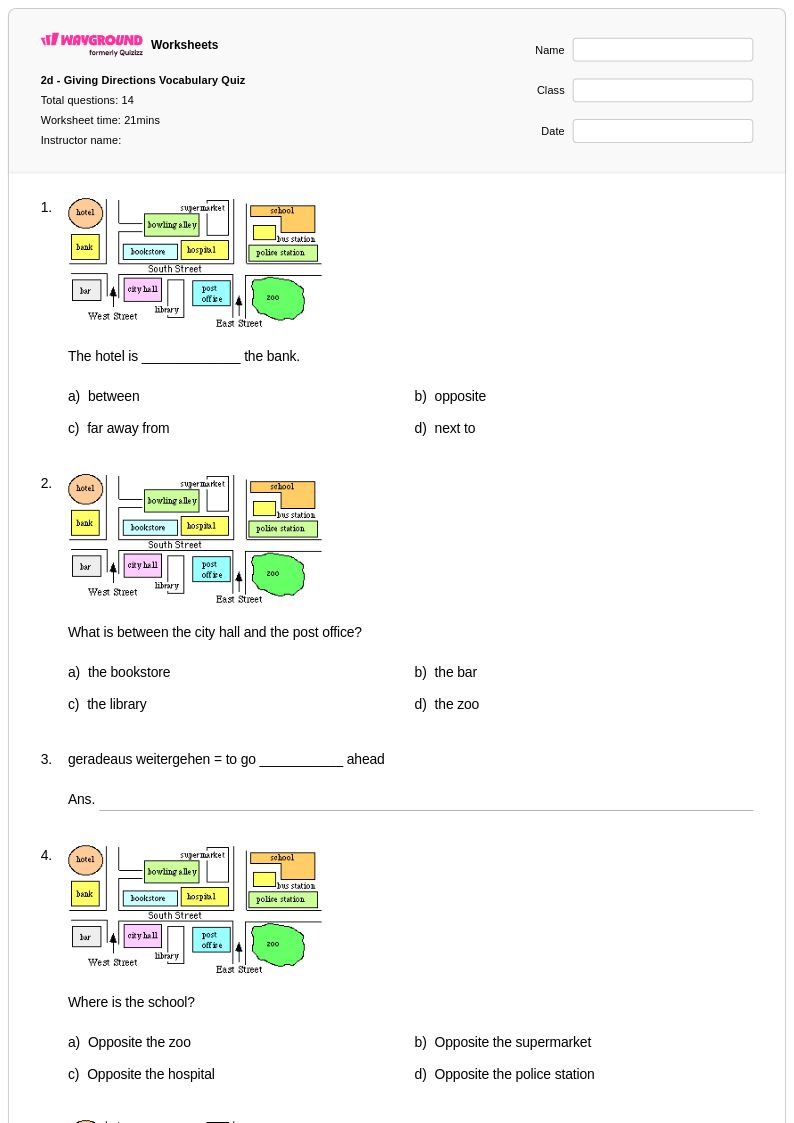
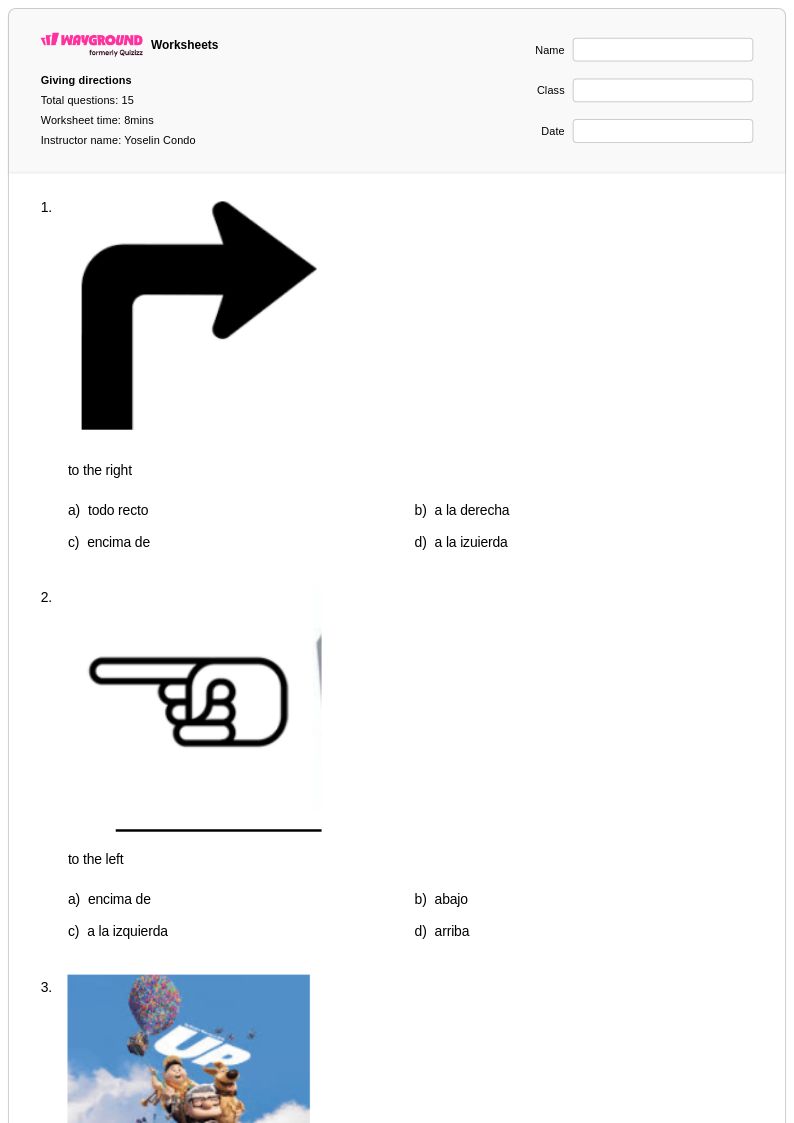
Help kindergarten students master giving directions with Wayground's free worksheets and printables that teach clear instruction writing through engaging practice problems and comprehensive answer keys.
Explore printable Giving Directions worksheets for Kindergarten
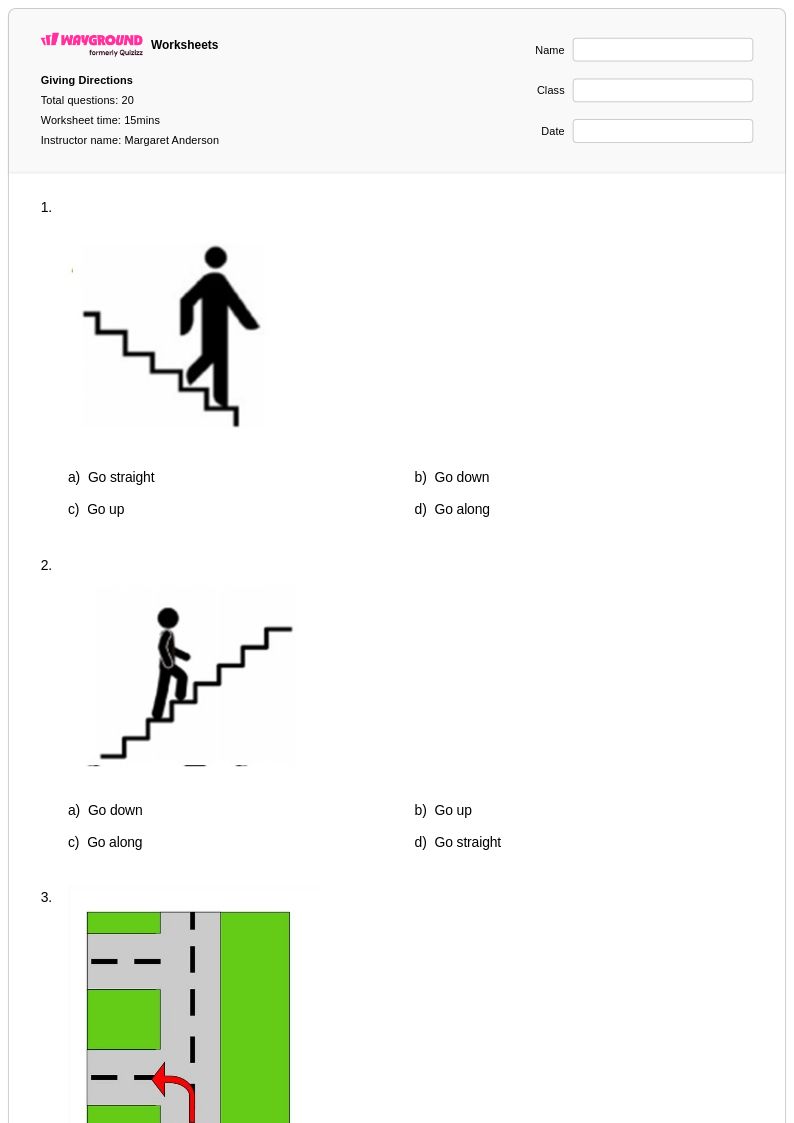
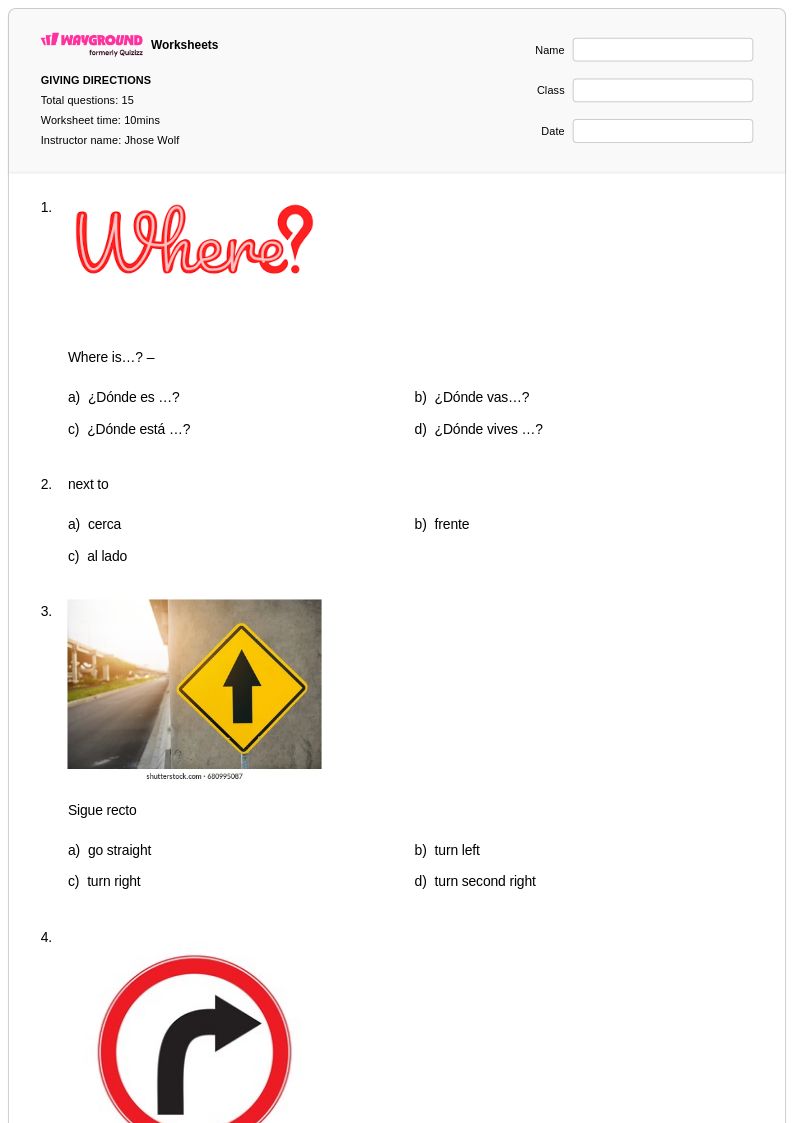
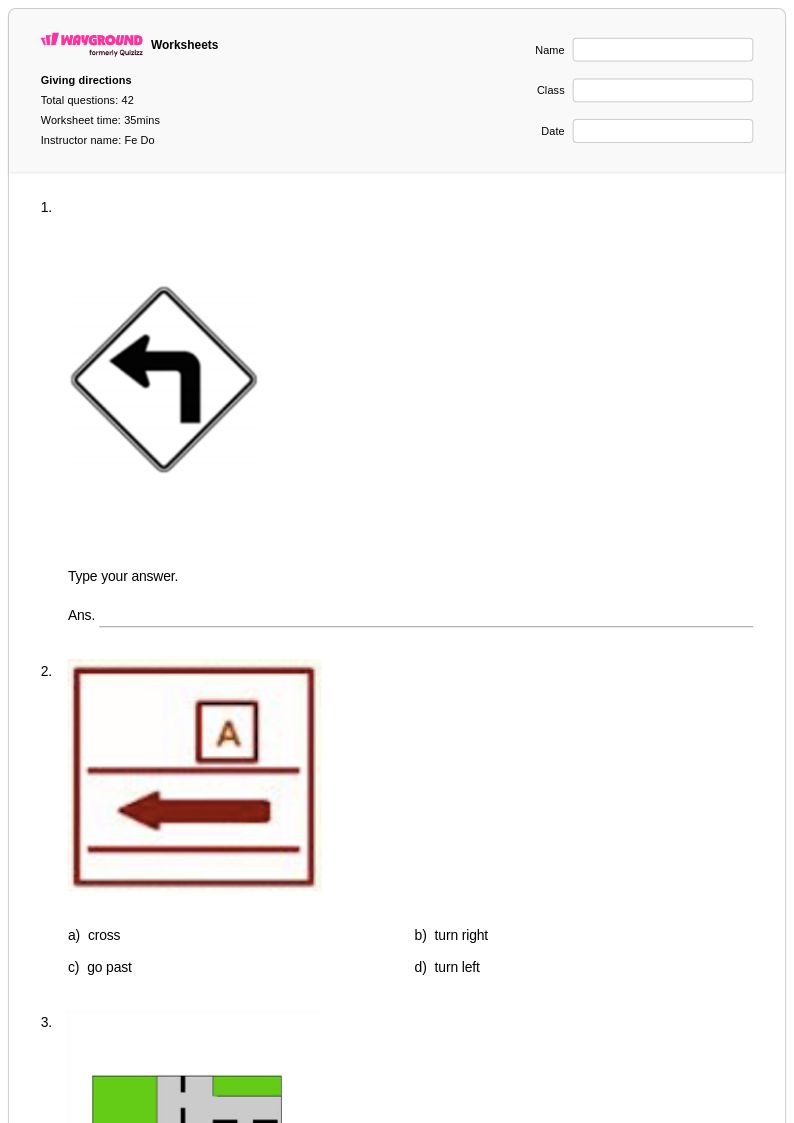
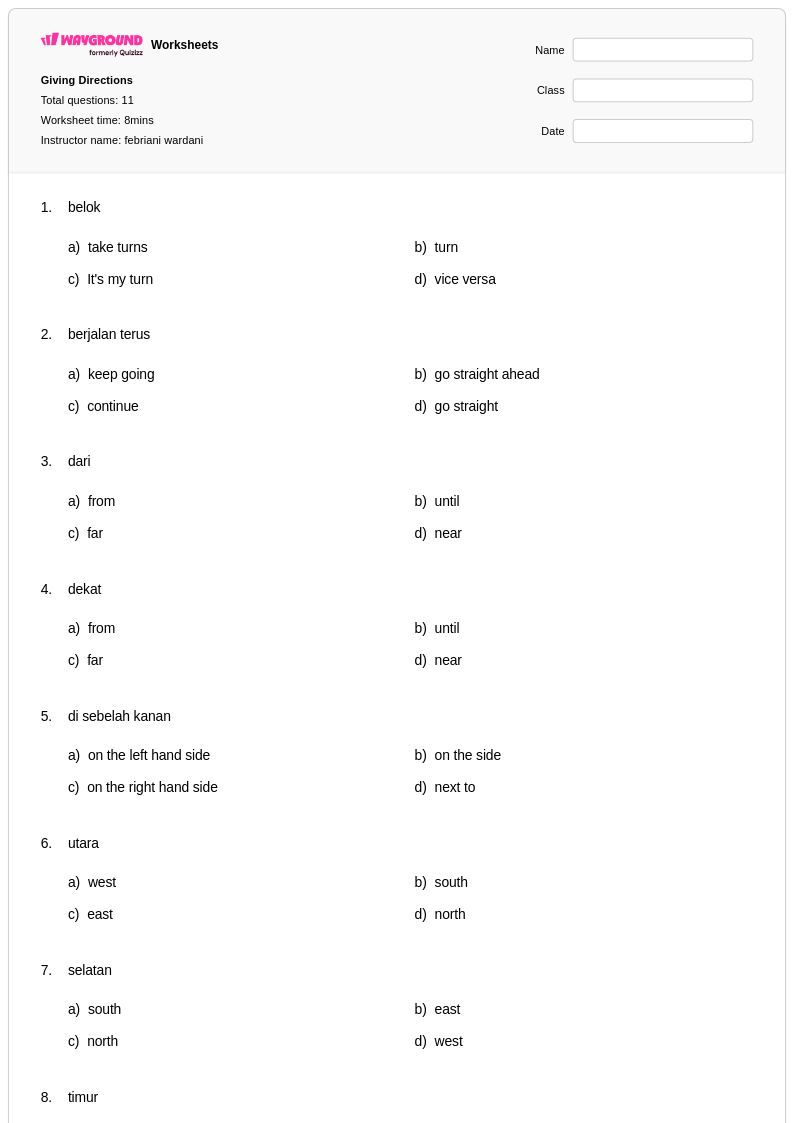
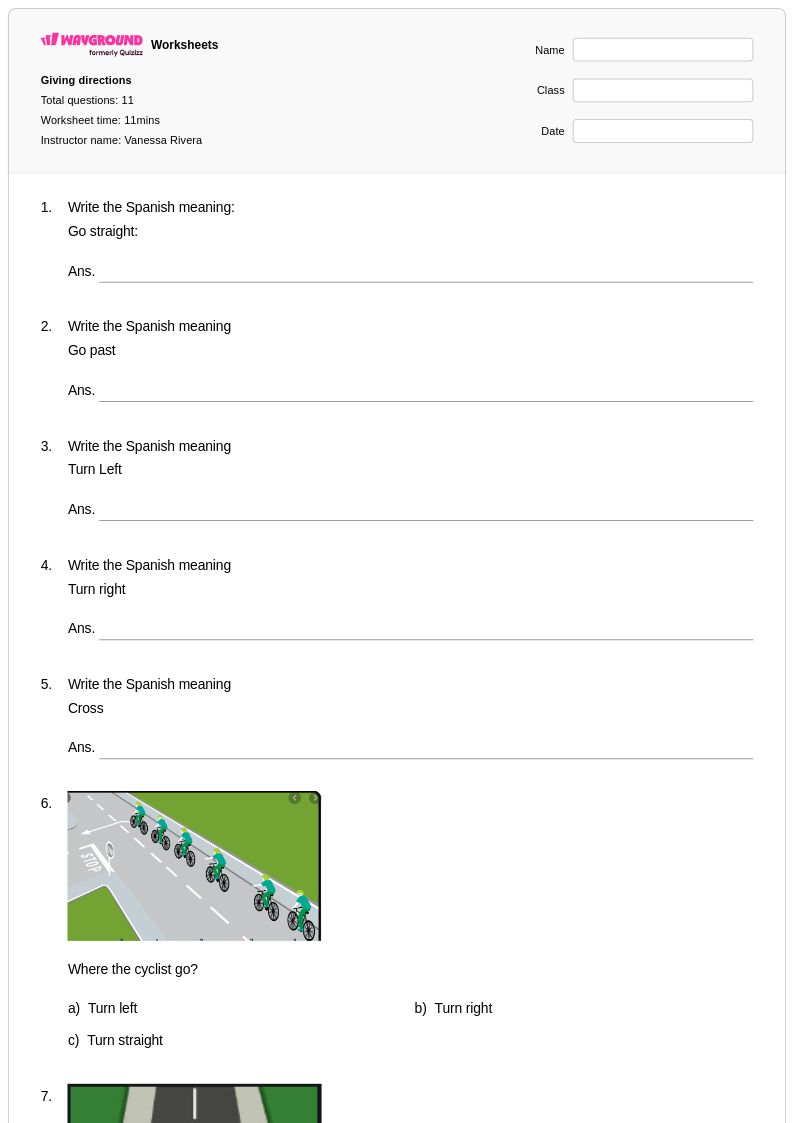
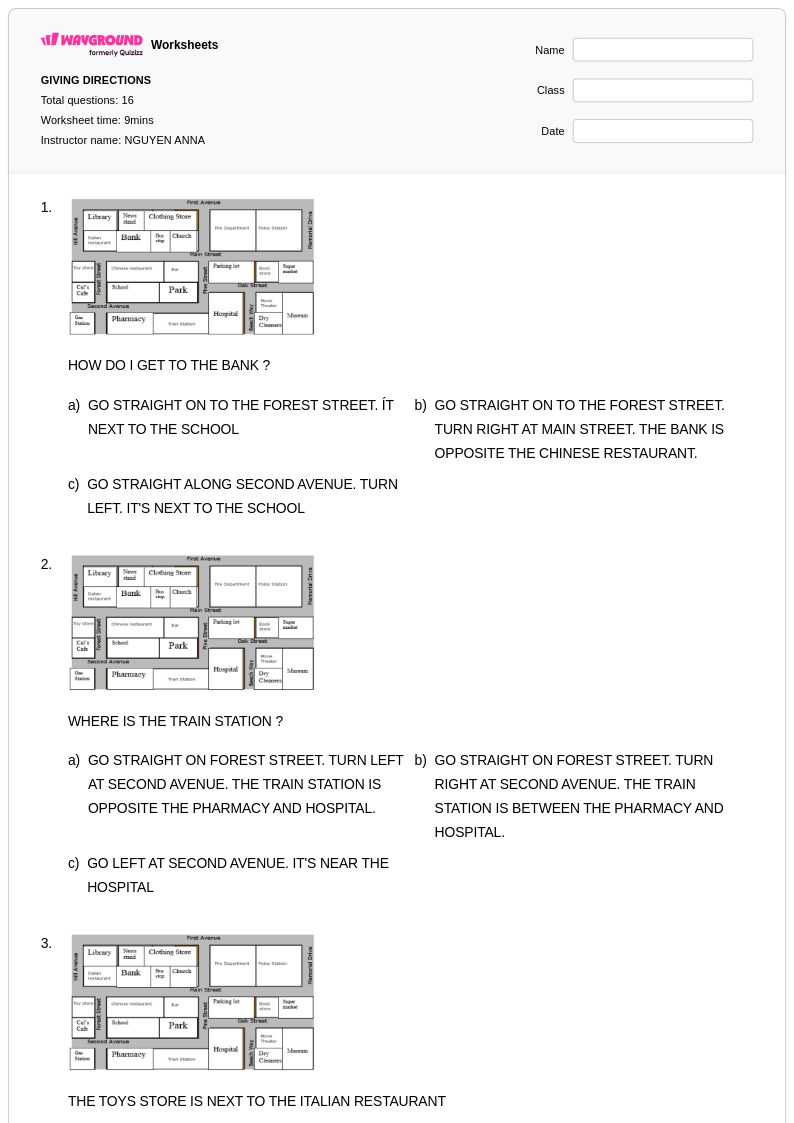
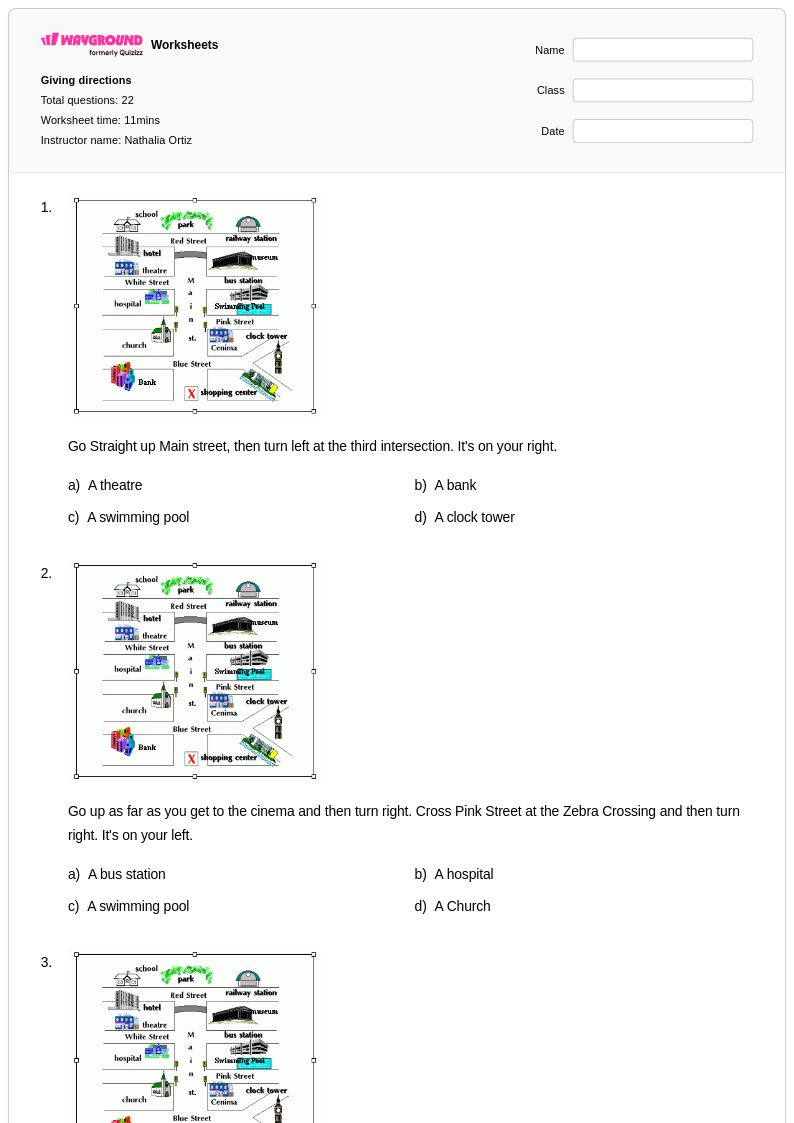
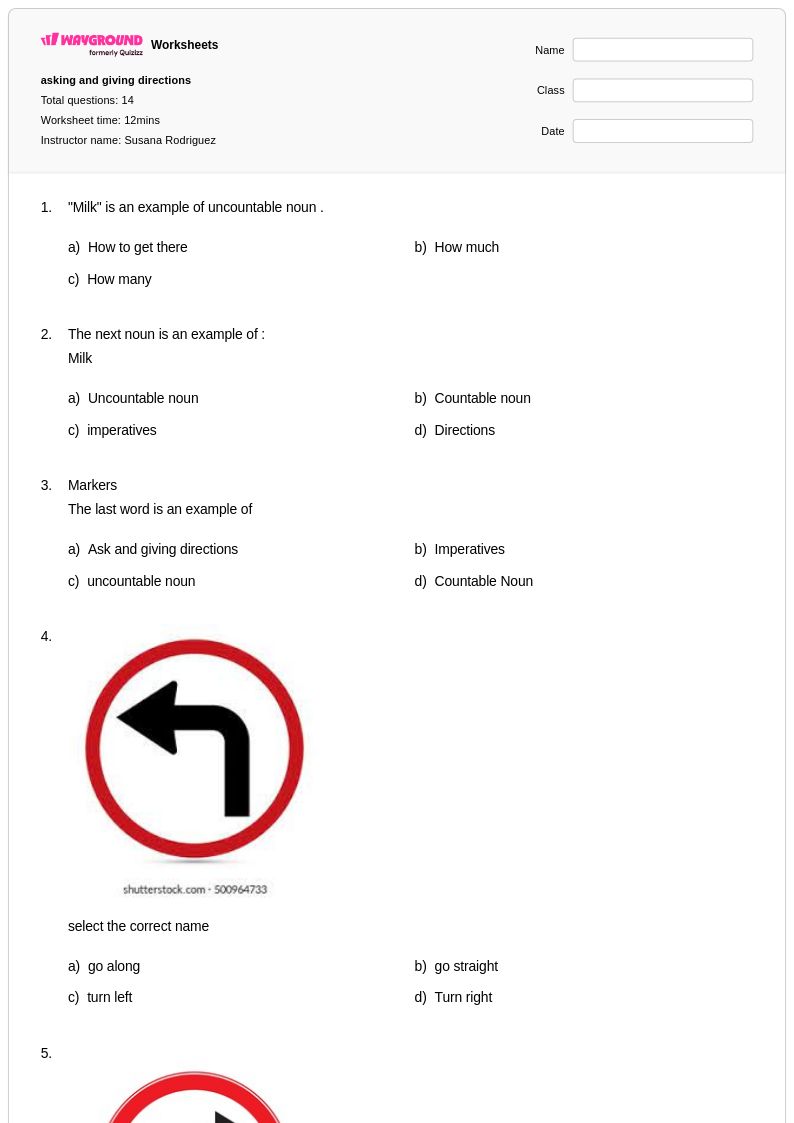
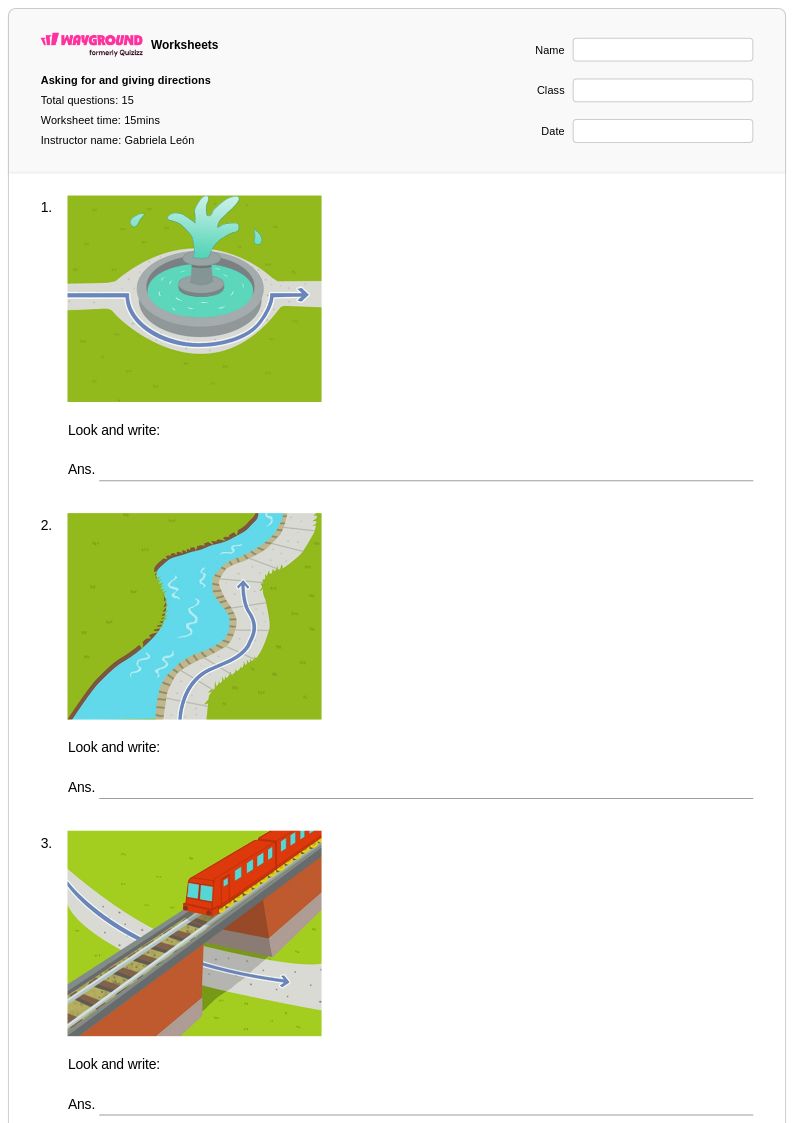
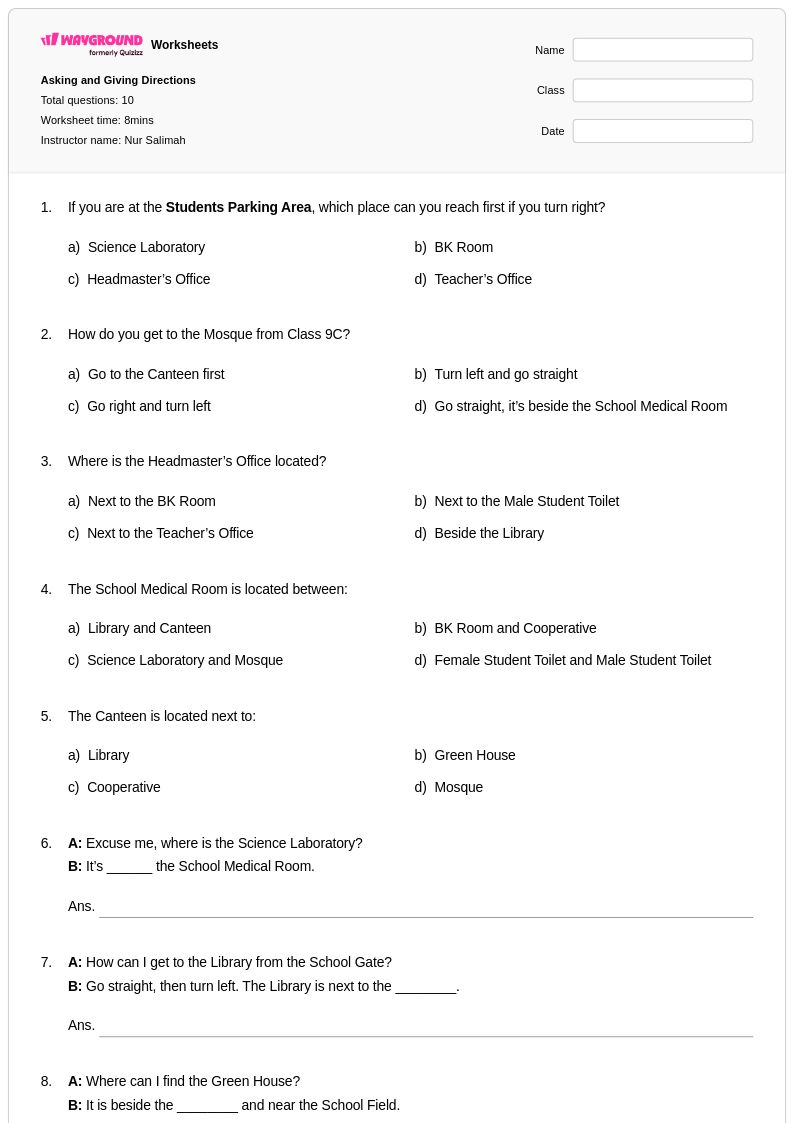
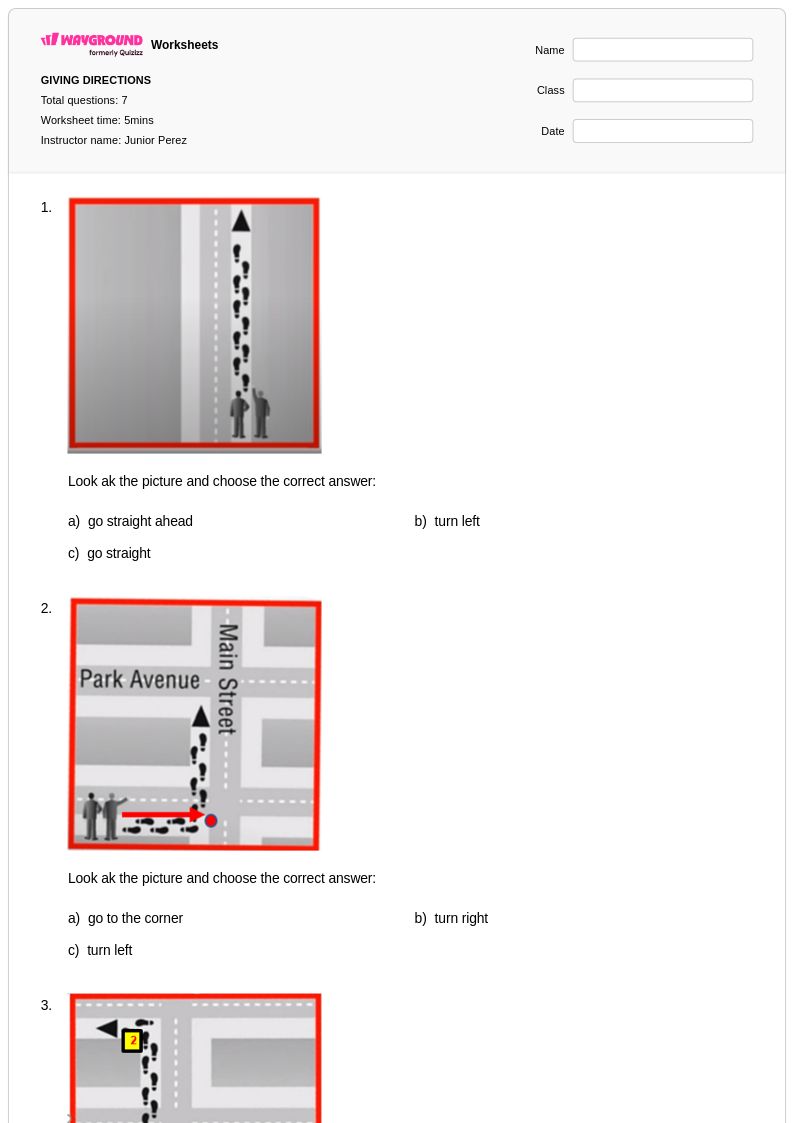
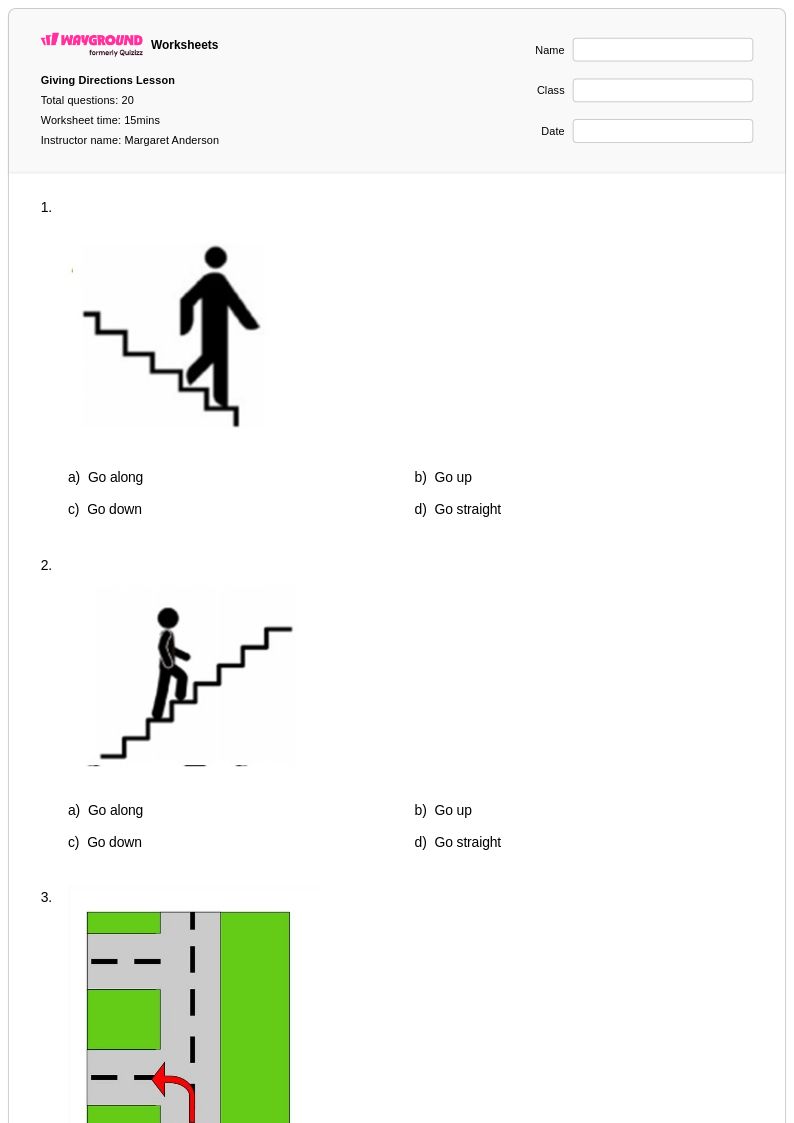
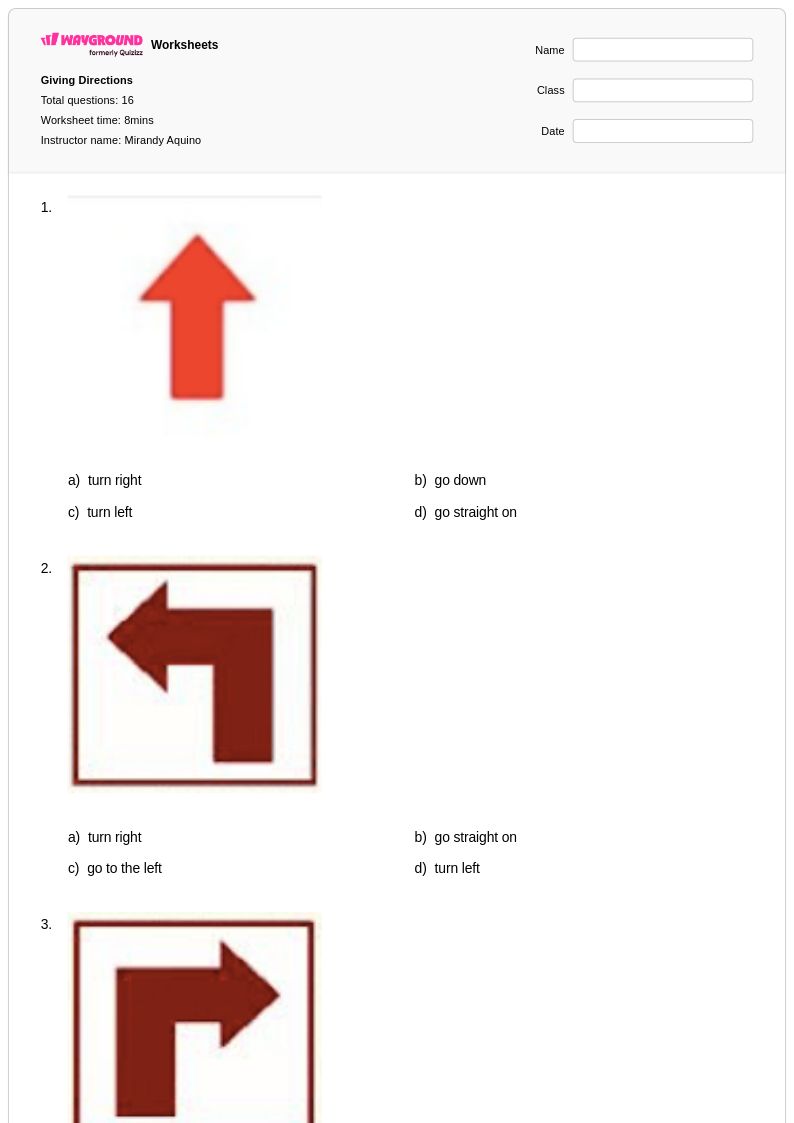
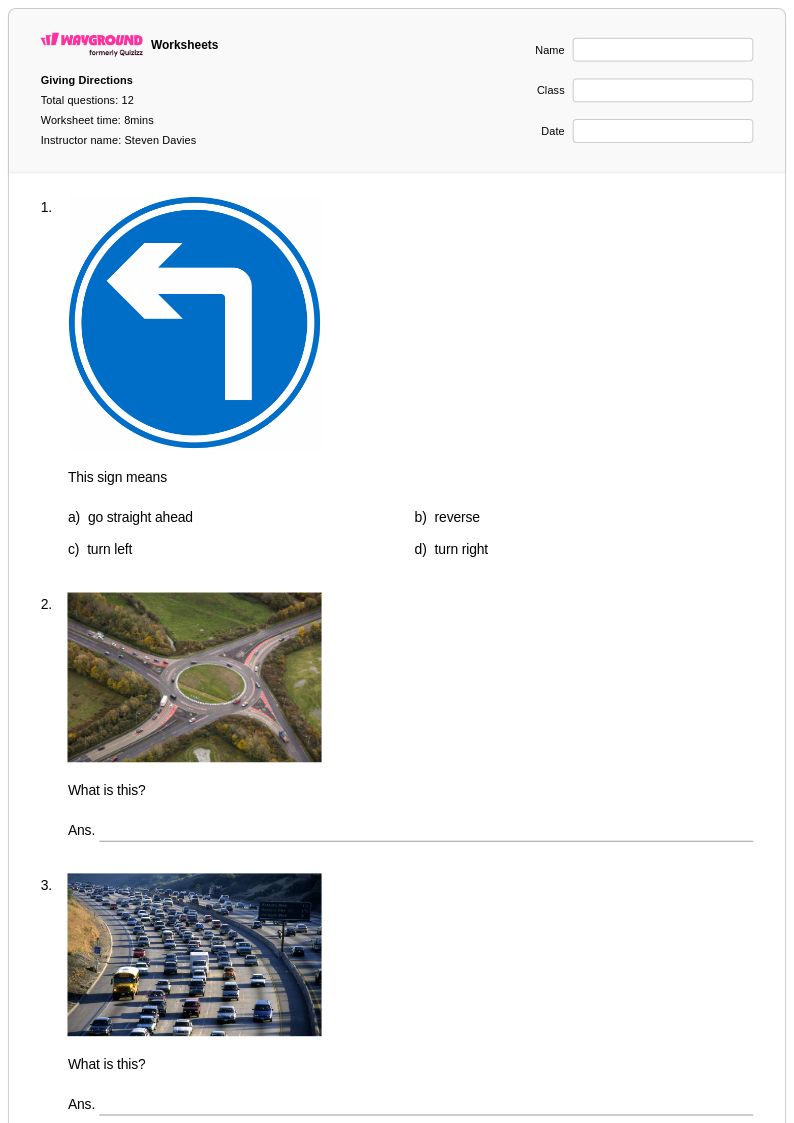
Giving directions worksheets for kindergarten students through Wayground (formerly Quizizz) introduce young learners to the fundamental nonfiction writing skill of providing clear, sequential instructions. These engaging printables help kindergarteners develop essential communication abilities by practicing how to break down simple tasks into step-by-step processes, using appropriate sequence words like "first," "next," and "last." Each worksheet focuses on building vocabulary related to spatial concepts and action words while strengthening students' ability to organize their thoughts logically. The practice problems typically involve familiar activities such as making a sandwich, brushing teeth, or following a simple recipe, making the learning relevant and accessible. These free resources include comprehensive answer keys that support both independent work and guided instruction, ensuring students receive proper feedback as they develop their directional writing skills.
Wayground's extensive collection of teacher-created giving directions worksheets provides educators with millions of differentiated resources specifically designed for kindergarten-level instruction. The platform's robust search and filtering capabilities allow teachers to quickly locate materials that align with specific learning objectives and standards requirements, while customization tools enable modifications to meet diverse student needs. These versatile resources are available in both printable pdf formats and interactive digital versions, offering flexibility for various classroom environments and learning preferences. Teachers can seamlessly integrate these worksheets into lesson planning for initial skill introduction, targeted remediation for struggling writers, or enrichment activities for advanced students, creating a comprehensive approach to developing kindergarteners' nonfiction writing foundations through structured direction-giving practice.
FAQs
How do I teach students to write clear step-by-step directions?
Start by modeling the process with a familiar task, such as making a sandwich or sharpening a pencil, and think aloud as you write each step. Emphasize the importance of chronological order, imperative verbs, and precise vocabulary so the reader can follow without guessing. Having students swap directions with a partner and attempt to follow them is one of the most effective ways to reveal gaps in clarity before final revision.
What writing skills do giving directions worksheets help students practice?
Giving directions worksheets build several interconnected nonfiction writing skills, including logical sequencing, transitional word usage, imperative verb selection, and audience awareness. Because directional writing requires the writer to anticipate what the reader doesn't already know, it also strengthens the broader skill of writing for a specific purpose. Regular practice with varied scenarios, from simple task instructions to multi-step processes, helps students internalize these skills and apply them independently.
What mistakes do students commonly make when writing directions?
The most common error is skipping steps that feel obvious to the writer but are essential for the reader, a problem rooted in weak audience awareness. Students also frequently omit transitional words like 'first,' 'next,' and 'finally,' which causes their instructions to read as disconnected fragments rather than a coherent sequence. Overuse of vague language, such as 'put it there' instead of naming a specific location or object, is another frequent issue that undermines the clarity of the directions.
How do I use giving directions worksheets effectively in my classroom?
Giving directions worksheets on Wayground are available as printable PDFs for traditional classroom use and in digital formats for technology-integrated environments, including the option to host them as a quiz directly on Wayground. For whole-class instruction, the printable version works well as a guided writing activity or as a structured independent practice task. The digital format is particularly useful for stations, homework, or remote learning, and the included answer keys allow students to self-assess the clarity and completeness of their own work.
How do I differentiate giving directions writing instruction for students at different skill levels?
For students who struggle with sequencing, begin with highly scaffolded worksheets that provide sentence starters or a partial list of steps to complete before moving to open-ended prompts. More advanced students benefit from complex, multi-step scenarios that require them to anticipate reader confusion and revise accordingly. On Wayground, teachers can apply individual accommodations such as read aloud support or reduced answer choices to meet specific student needs without disrupting the rest of the class.
What types of scenarios are useful for practicing directional writing?
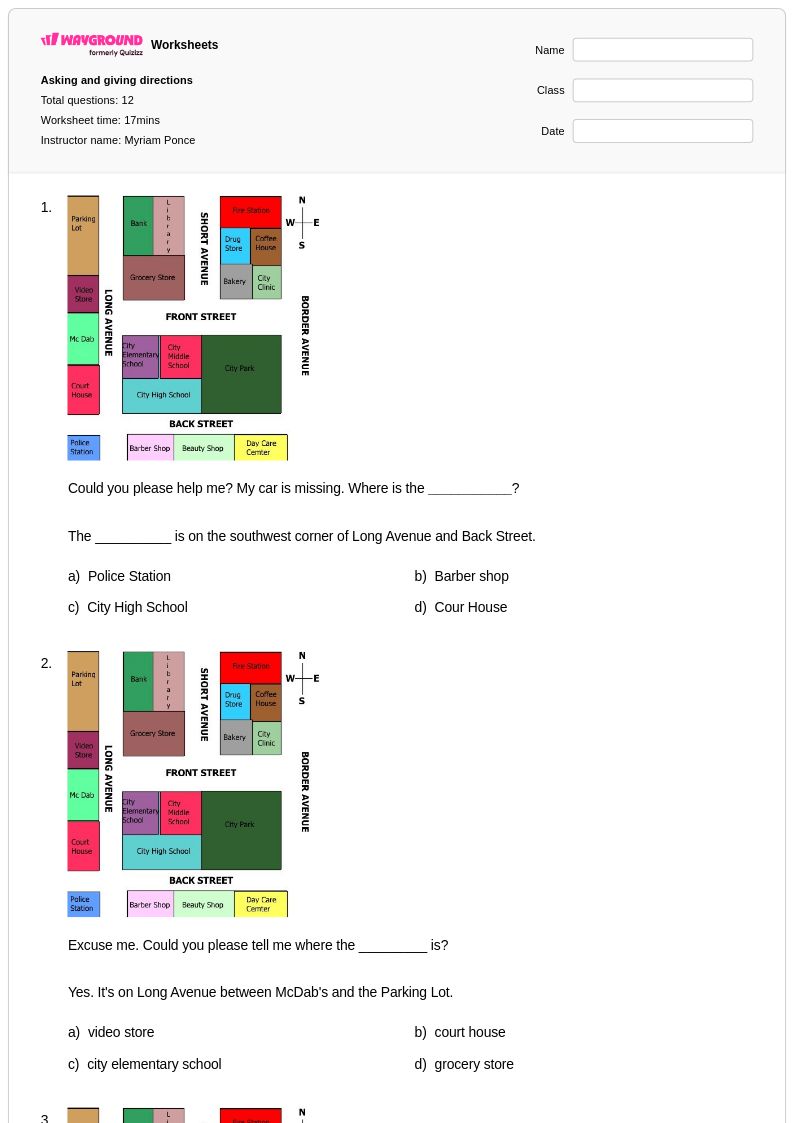
Effective scenarios for directional writing practice range from everyday procedural tasks, such as tying shoes or following a recipe, to navigational instructions like giving directions from one location to another. The variety matters because different scenario types require students to apply transitional language and sequencing in distinct ways, which deepens their overall understanding of procedural text. Moving from simple single-task instructions to complex multi-step processes also builds progressive complexity that mirrors how this skill develops across grade levels.