Free Printable Government Budget Worksheets for Class 10
Explore our comprehensive Class 10 Government Budget worksheets and printables that help students master fiscal policy concepts through engaging practice problems, free PDF resources, and detailed answer keys.
Explore printable Government Budget worksheets for Class 10
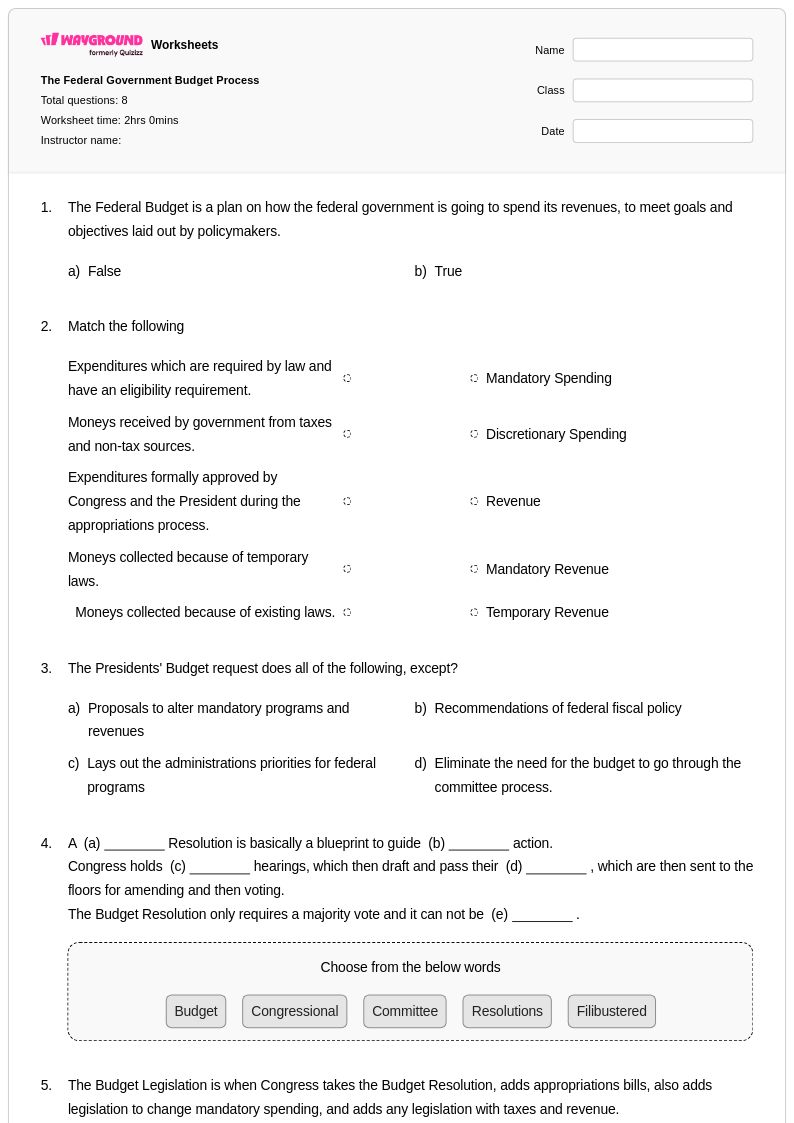
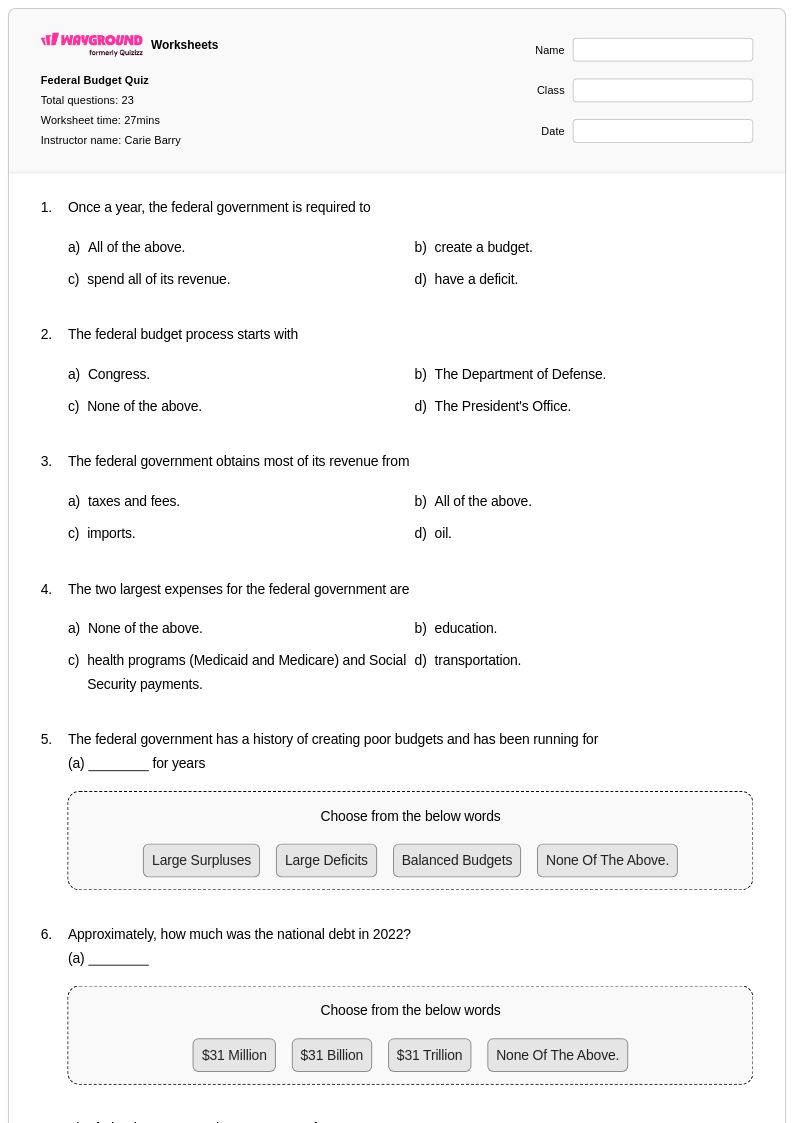
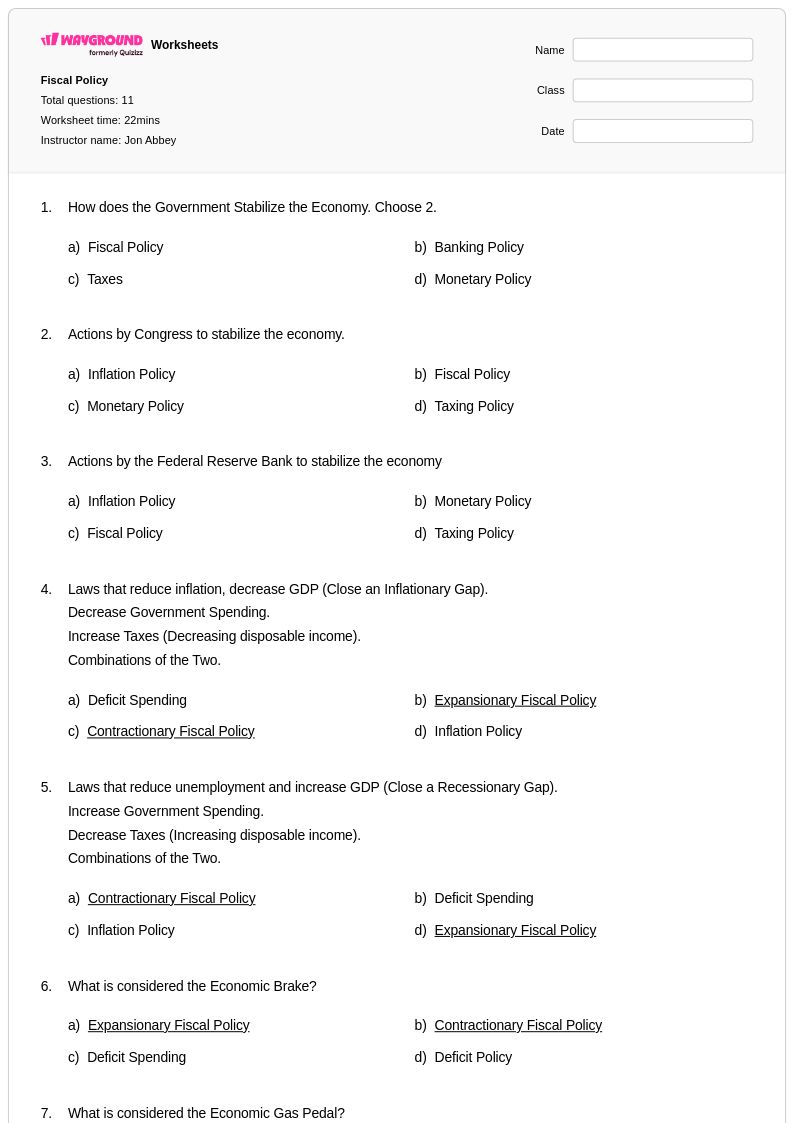
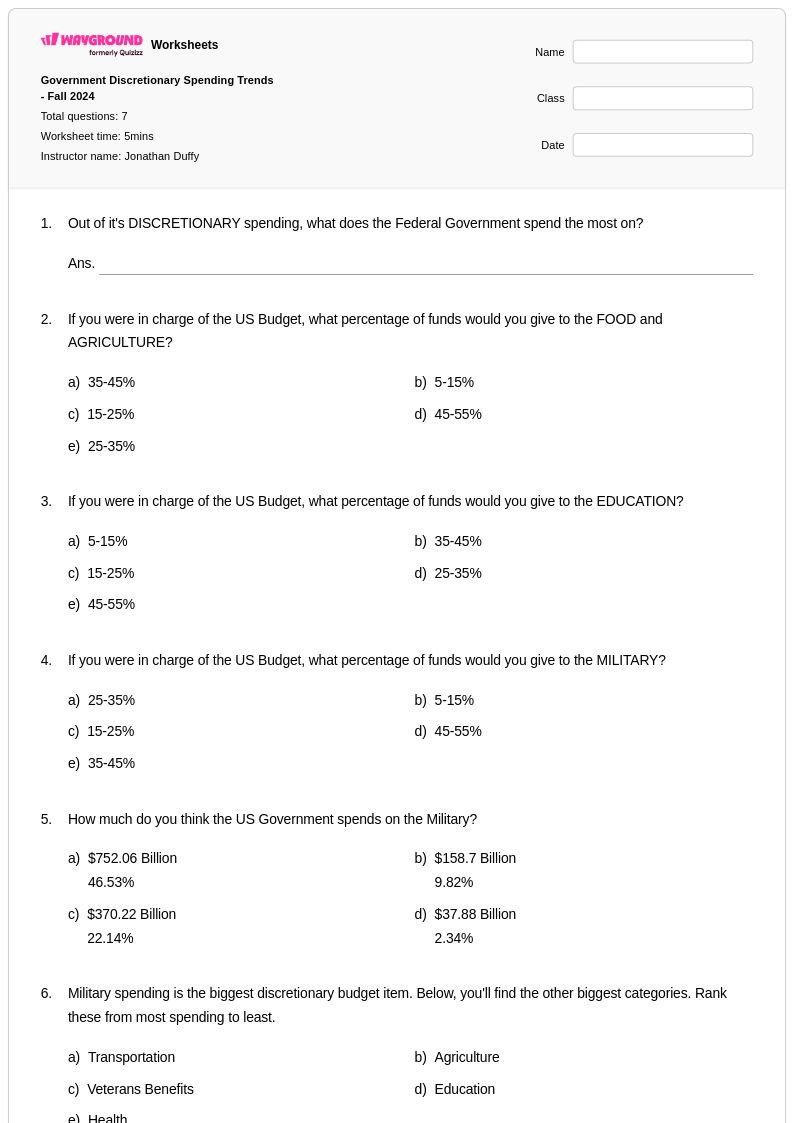
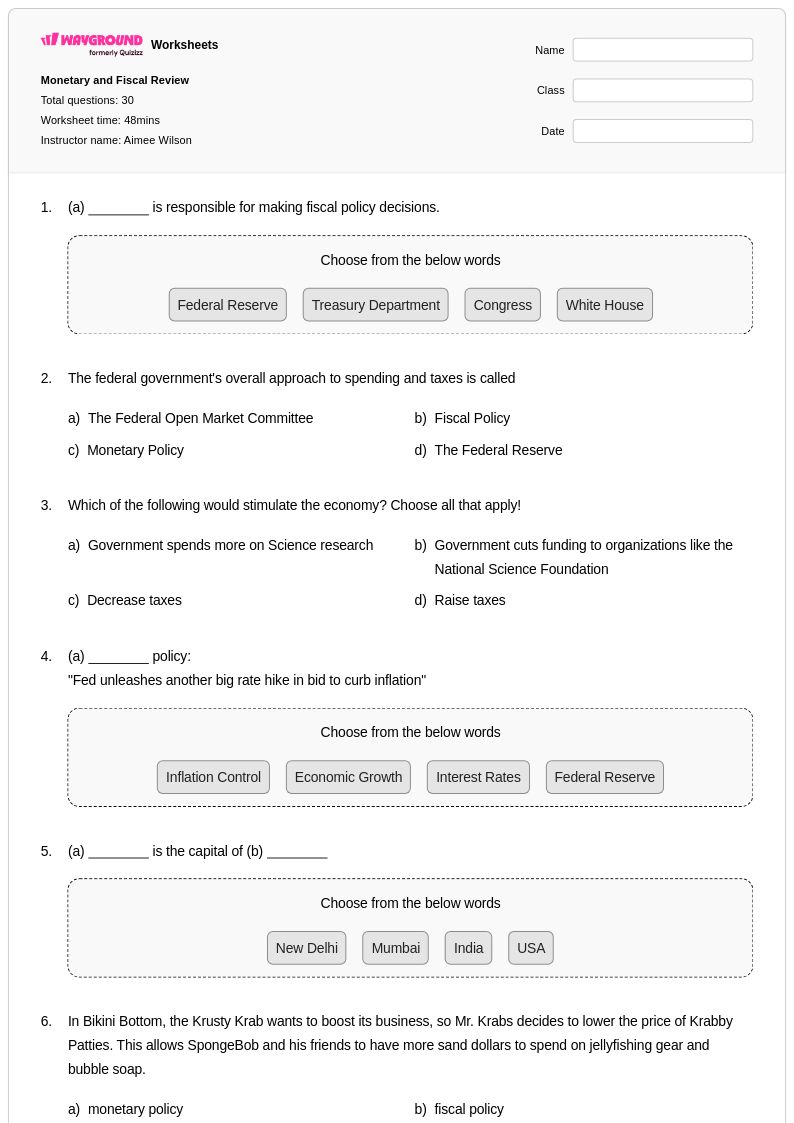
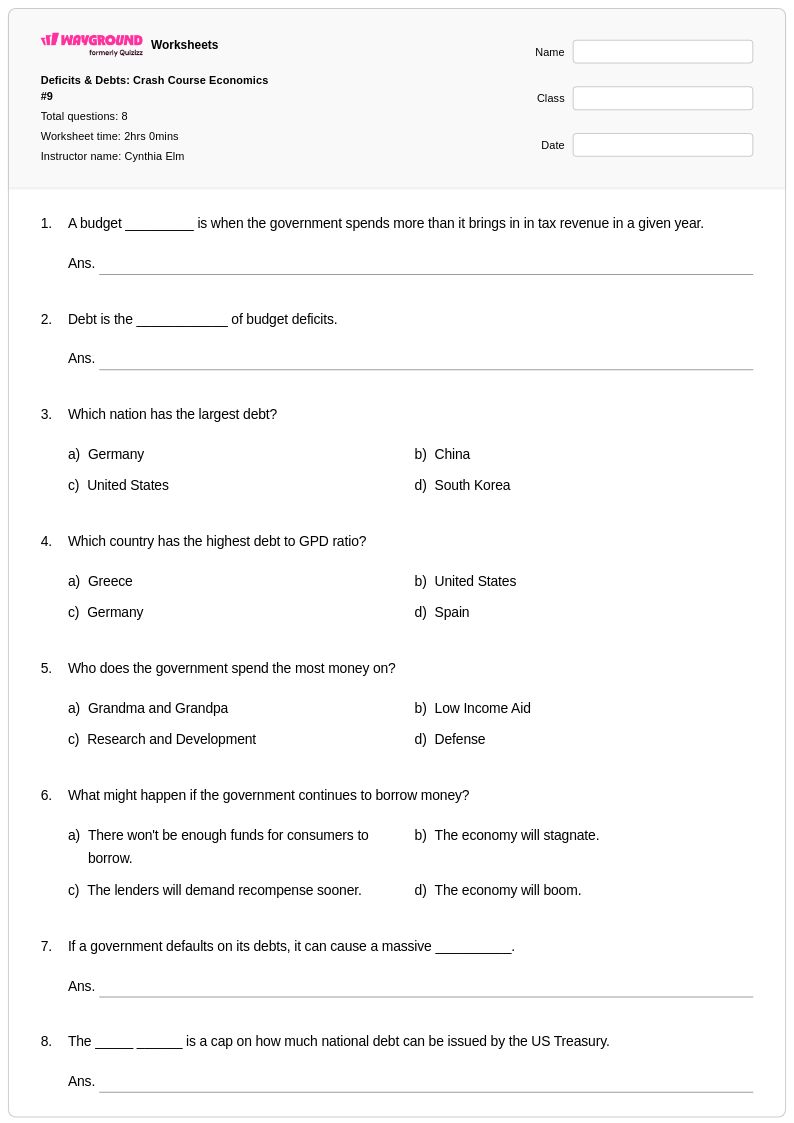
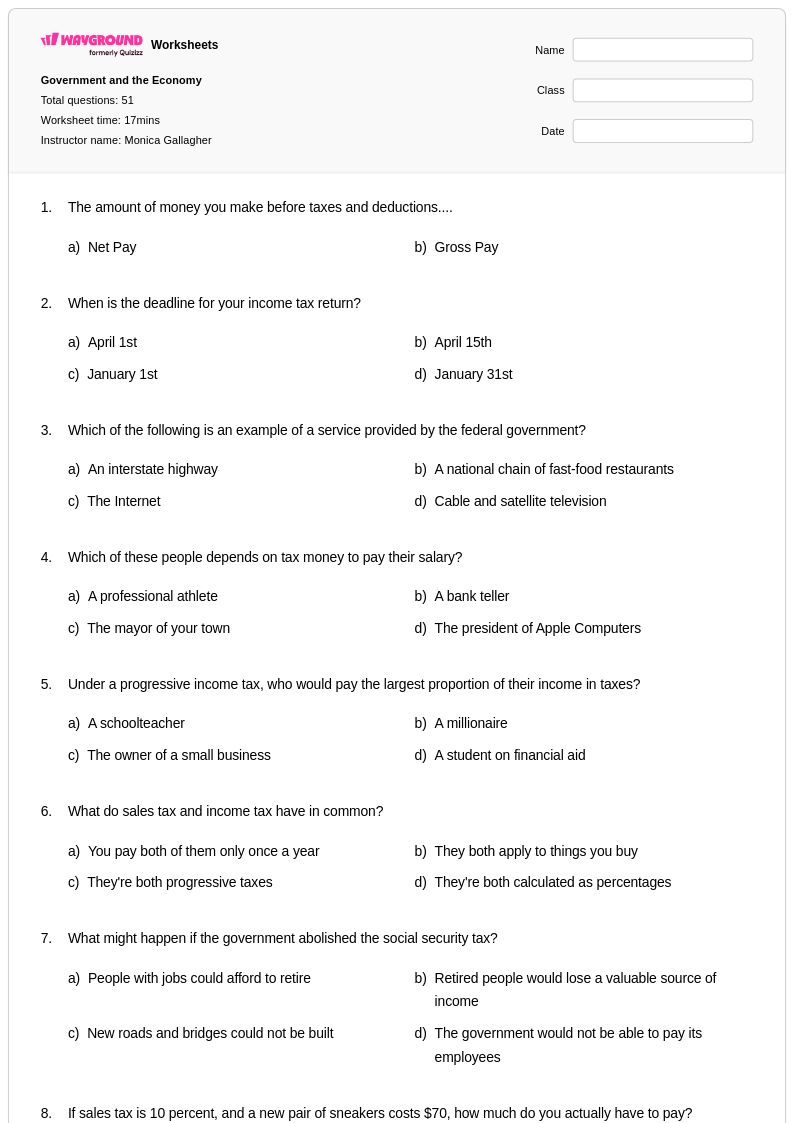
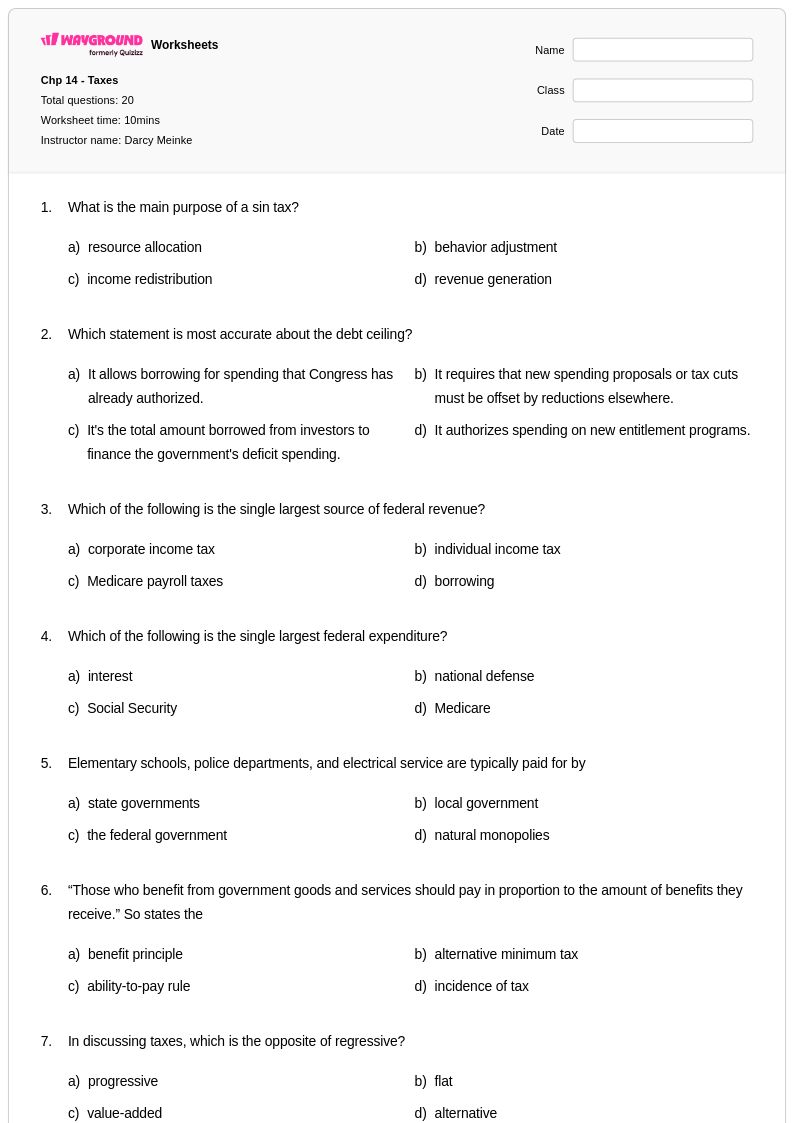
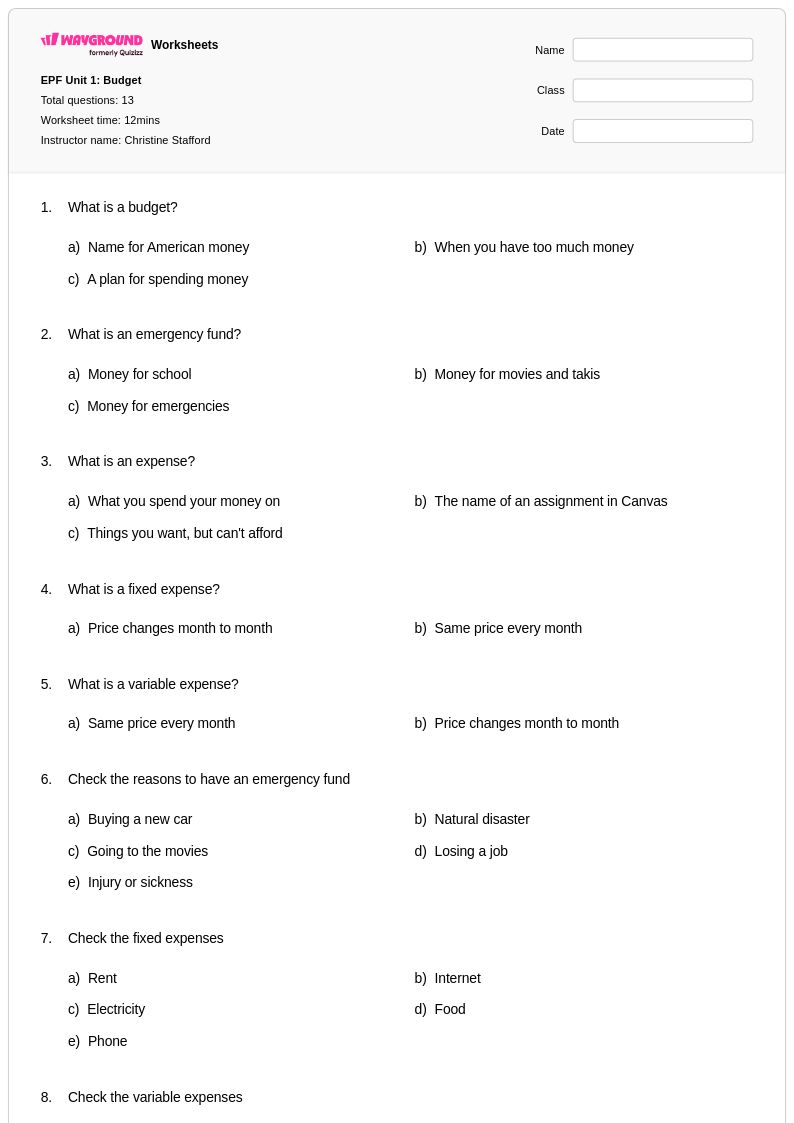
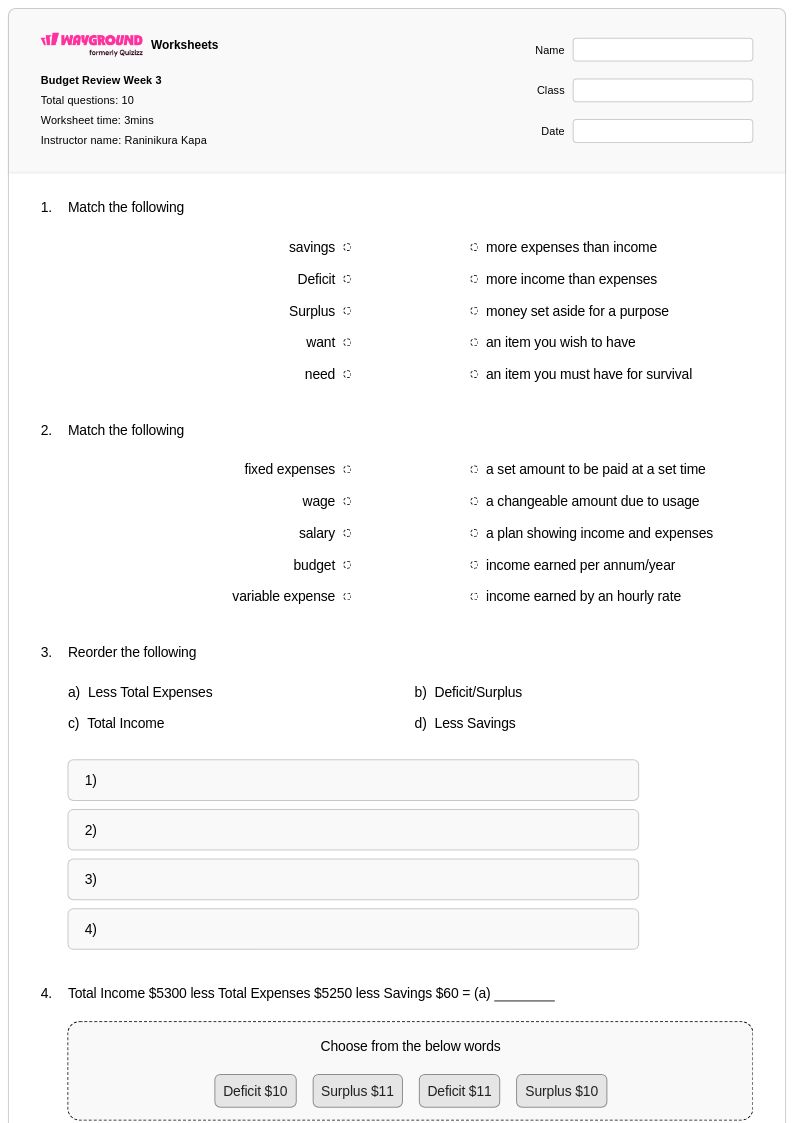
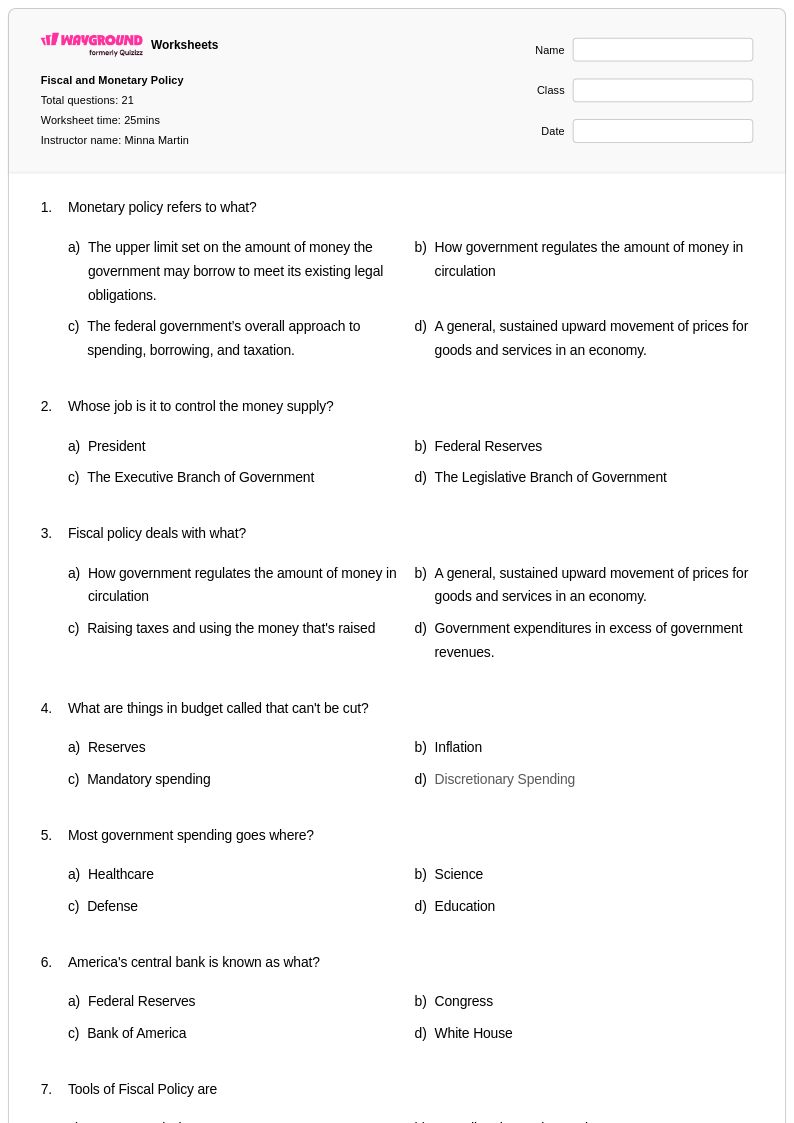
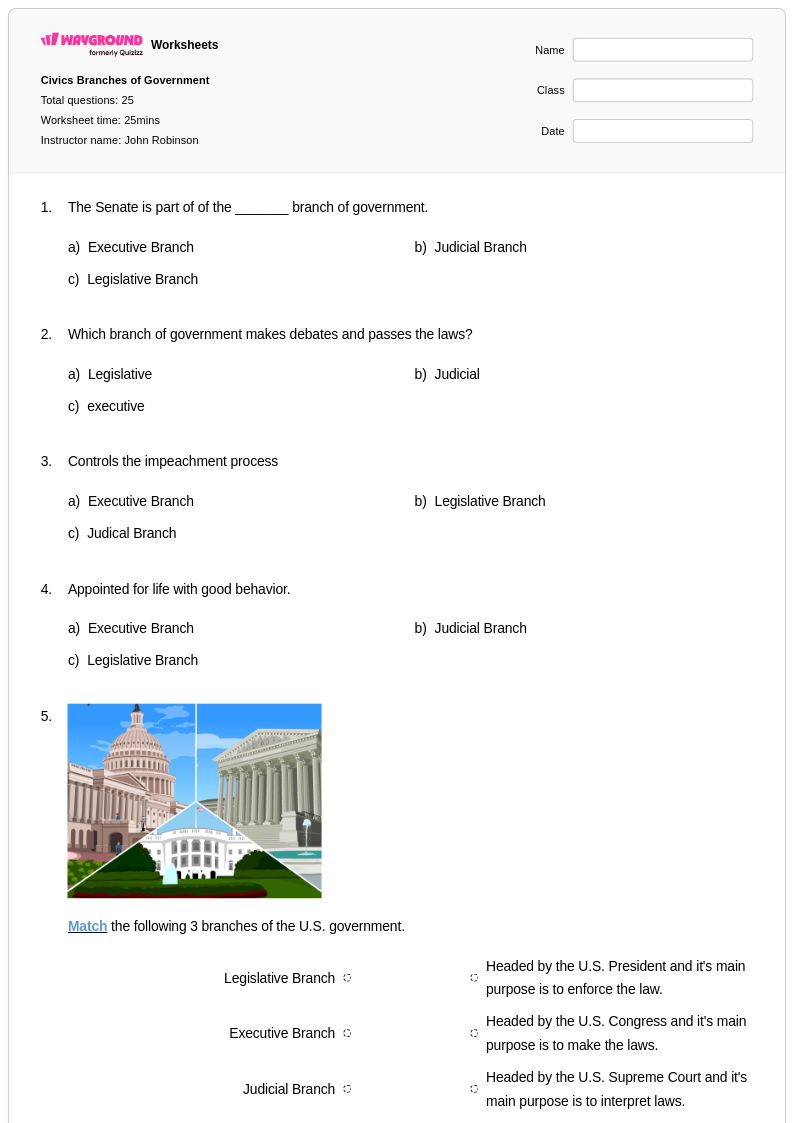
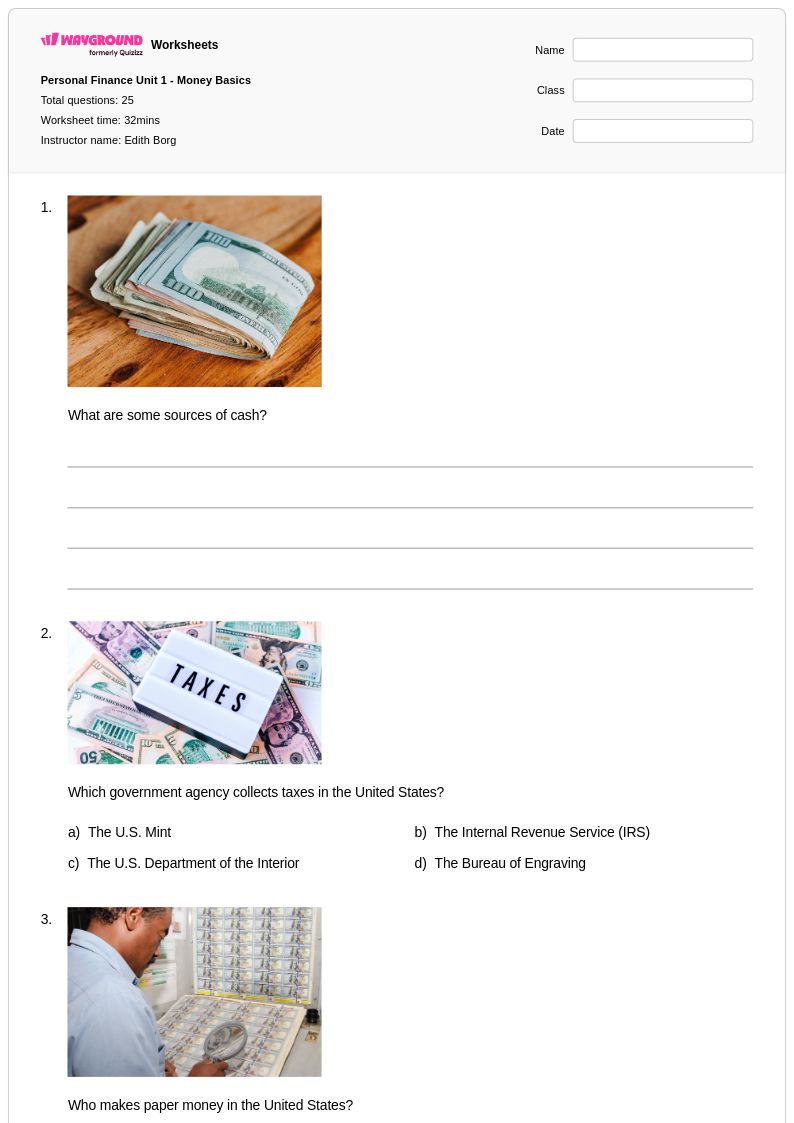
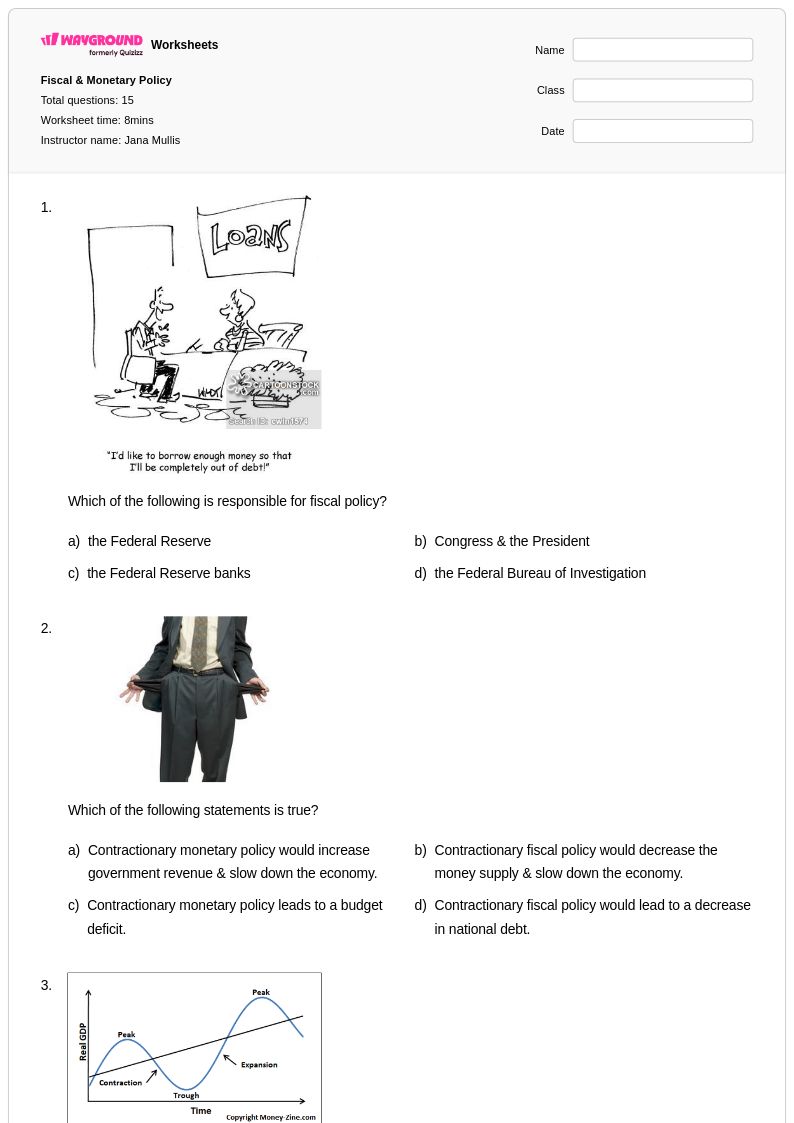
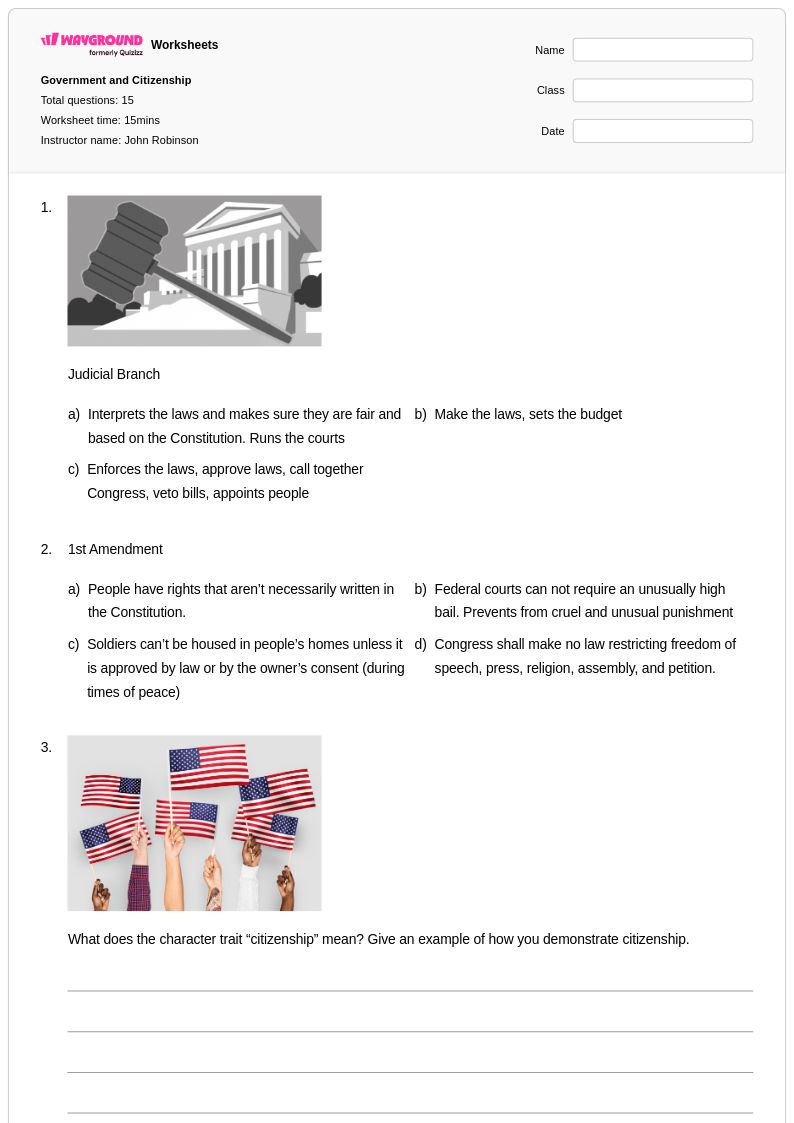
Government budget worksheets for Class 10 students available through Wayground provide comprehensive practice materials that help students master the fundamental concepts of how governments manage public finances. These educational resources guide students through critical topics including revenue sources, expenditure categories, deficit and surplus calculations, and the economic impact of fiscal policy decisions. The worksheets strengthen analytical skills as students work through practice problems involving budget allocation scenarios, tax revenue projections, and the relationship between government spending and economic growth. Each worksheet comes with a detailed answer key to support independent learning, and the materials are available as free printable pdf resources that teachers can easily incorporate into their economics curriculum.
Wayground's extensive collection of government budget worksheets draws from millions of teacher-created resources, ensuring educators have access to high-quality materials that align with Class 10 economics standards. The platform's robust search and filtering capabilities allow teachers to quickly locate worksheets that match their specific instructional needs, whether focusing on federal budgeting processes, state and local government finances, or comparative budget analysis. These versatile resources are available in both printable and digital pdf formats, supporting differentiated instruction for students with varying learning preferences and abilities. Teachers can customize the worksheets to target specific skill gaps during remediation sessions or provide enrichment opportunities for advanced learners, making these materials invaluable for comprehensive lesson planning and ongoing skill practice in government budget concepts.
FAQs
How do I teach government budget concepts to students?
Teaching government budget concepts effectively starts with grounding students in the difference between revenue and expenditure, then building toward deficit and surplus analysis. Use real-world federal or state budget data to make abstract fiscal policy tangible, asking students to identify trade-offs in spending allocations. From there, introduce how fiscal policy decisions ripple into broader economic outcomes like employment and inflation. Scaffolding from concrete data before moving to policy evaluation helps students develop genuine analytical fluency.
What kinds of practice problems help students understand government budgets?
Effective practice problems for government budgets ask students to calculate deficits and surpluses from revenue and expenditure data, allocate a fixed budget across competing government programs, and interpret charts showing trends in public spending. Scenario-based problems that simulate real policy trade-offs, such as choosing between tax increases and program cuts to close a deficit, build the critical thinking skills most closely aligned with fiscal literacy. These problem types move students beyond rote recall toward genuine economic reasoning.
What mistakes do students commonly make when learning about government budgets?
One of the most common misconceptions is that a government deficit always signals poor financial management, when in practice deficits are sometimes deliberate fiscal policy tools used during economic downturns. Students also frequently confuse the national debt with an annual deficit, treating them as the same figure rather than understanding the cumulative relationship between the two. Another error is assuming government revenue comes exclusively from income taxes, overlooking sources like corporate taxes, tariffs, and fees. Addressing these misconceptions directly in instruction prevents them from compounding into larger misunderstandings about fiscal policy.
How can I use government budget worksheets to assess student understanding?
Government budget worksheets are well-suited for formative assessment when used to evaluate whether students can correctly interpret spending data, calculate budget balances, and articulate policy trade-offs in writing. Look for errors in surplus versus deficit calculations and watch for students who can compute figures but cannot explain the policy implications, as this gap often signals surface-level understanding. Using the same worksheet type at the start and end of a unit also provides a clear measure of conceptual growth.
How do I use Wayground's government budget worksheets in my classroom?
Wayground's government budget worksheets are available as printable PDFs for traditional classroom use and in digital formats for technology-integrated environments, giving teachers flexibility across different instructional settings. You can also host any worksheet as a live quiz directly on Wayground, which allows for real-time student responses and immediate feedback. Each worksheet includes a detailed answer key, supporting both teacher-led review and independent student practice.
How can I differentiate government budget instruction for students at different skill levels?
For students who struggle with fiscal concepts, reduce cognitive load by focusing on single-variable problems, such as calculating a surplus before introducing multi-factor budget scenarios. Advanced students benefit from open-ended tasks like drafting and defending a hypothetical government budget with constrained revenue. On Wayground, teachers can apply individual accommodations such as reduced answer choices or read-aloud support for specific students, while the rest of the class receives standard settings without disruption.