Free Printable Money and Banking Worksheets for Class 10
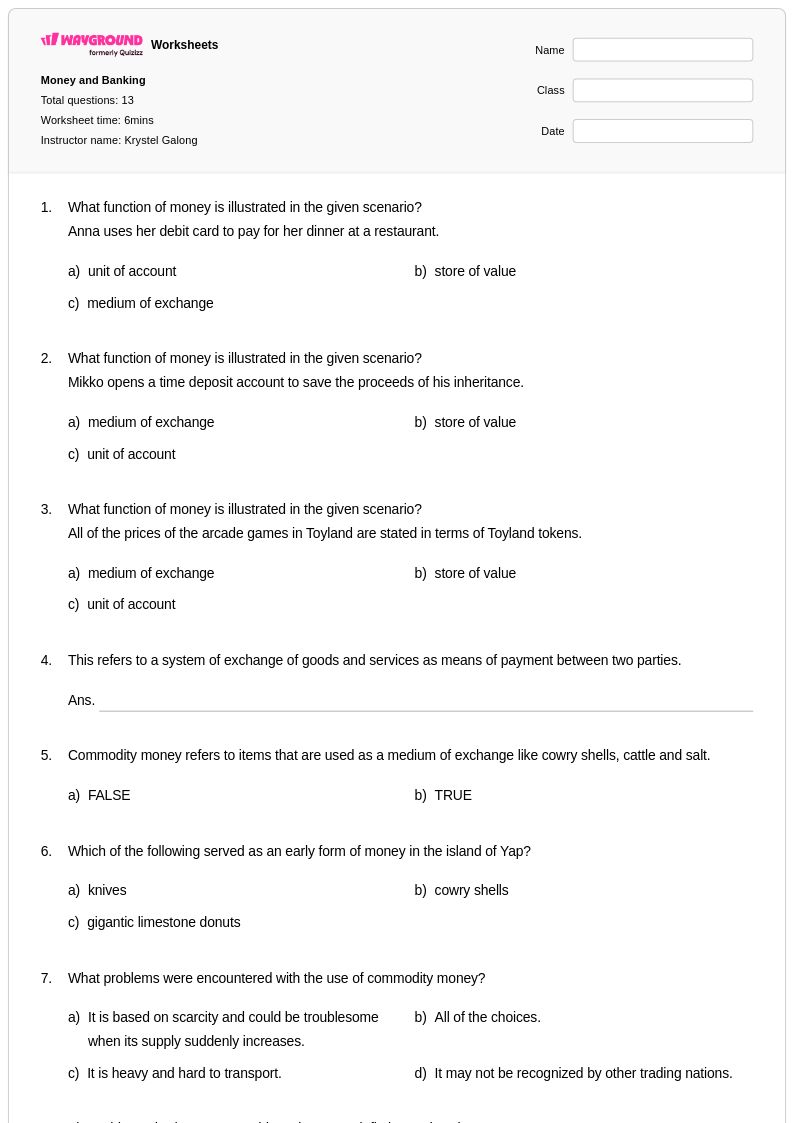
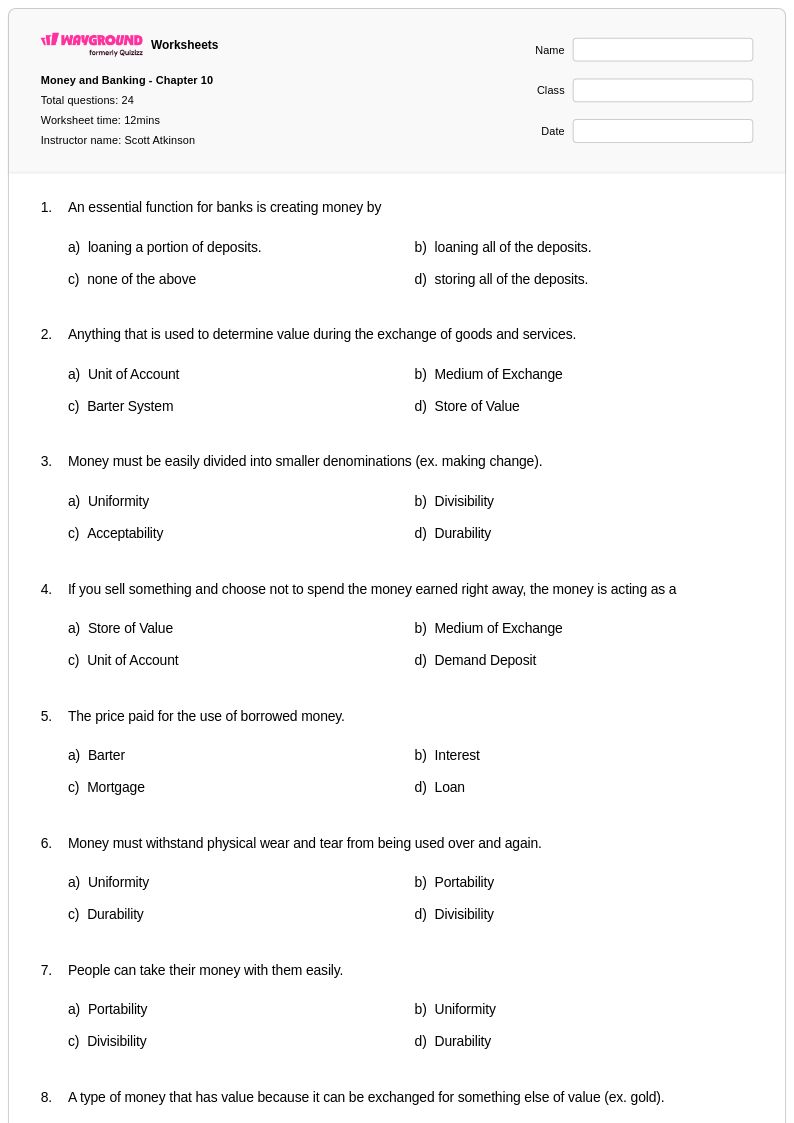
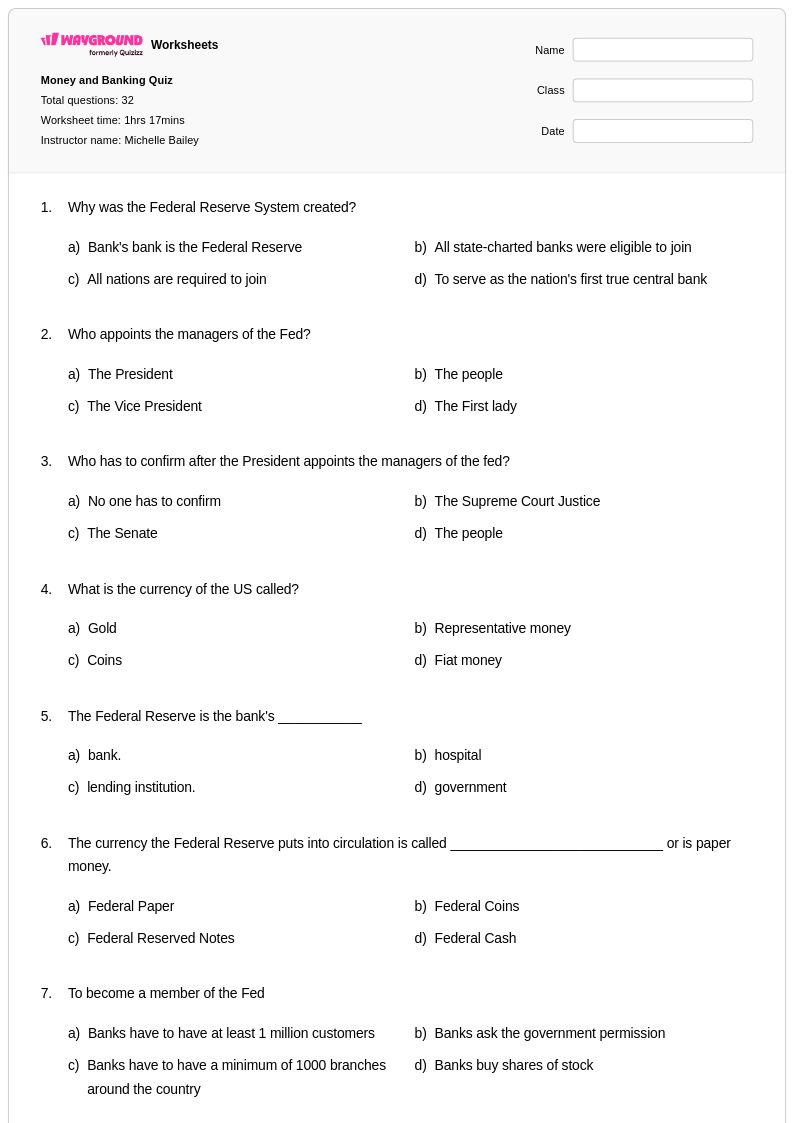
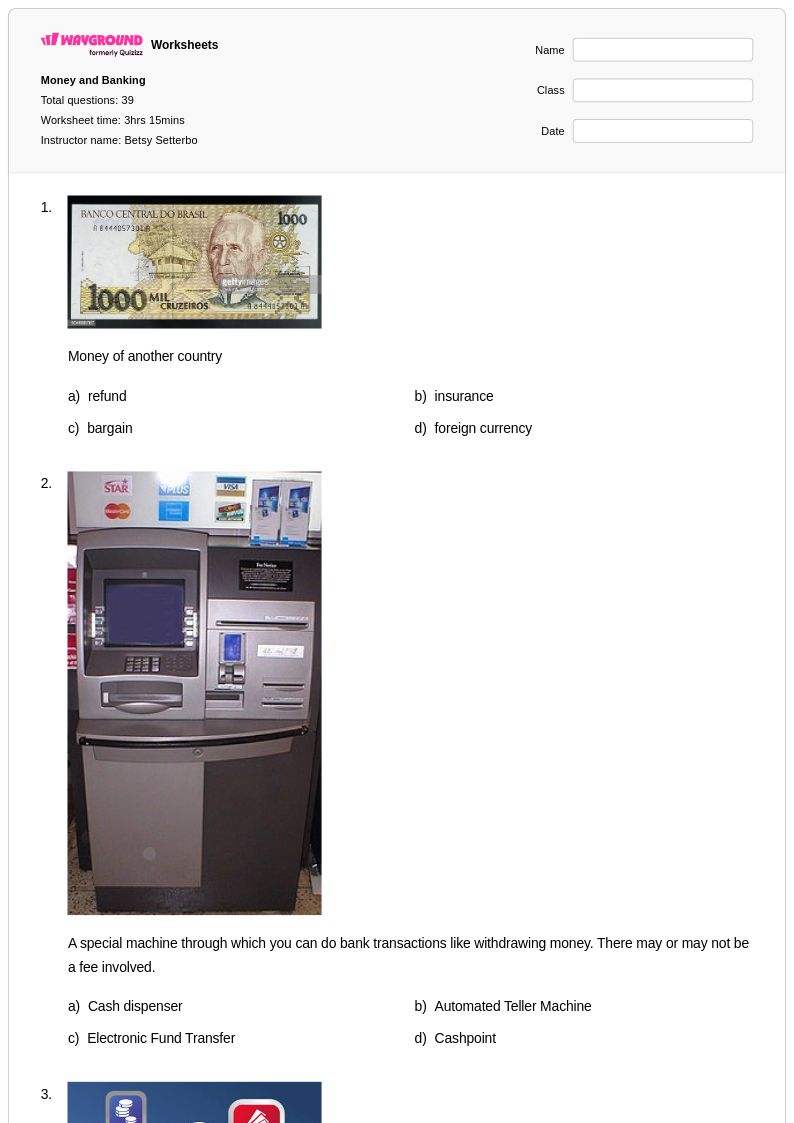
Explore Class 10 Money and Banking worksheets and printables that help students master financial institutions, monetary systems, and banking principles through engaging practice problems with comprehensive answer keys.
Explore printable Money and Banking worksheets for Class 10
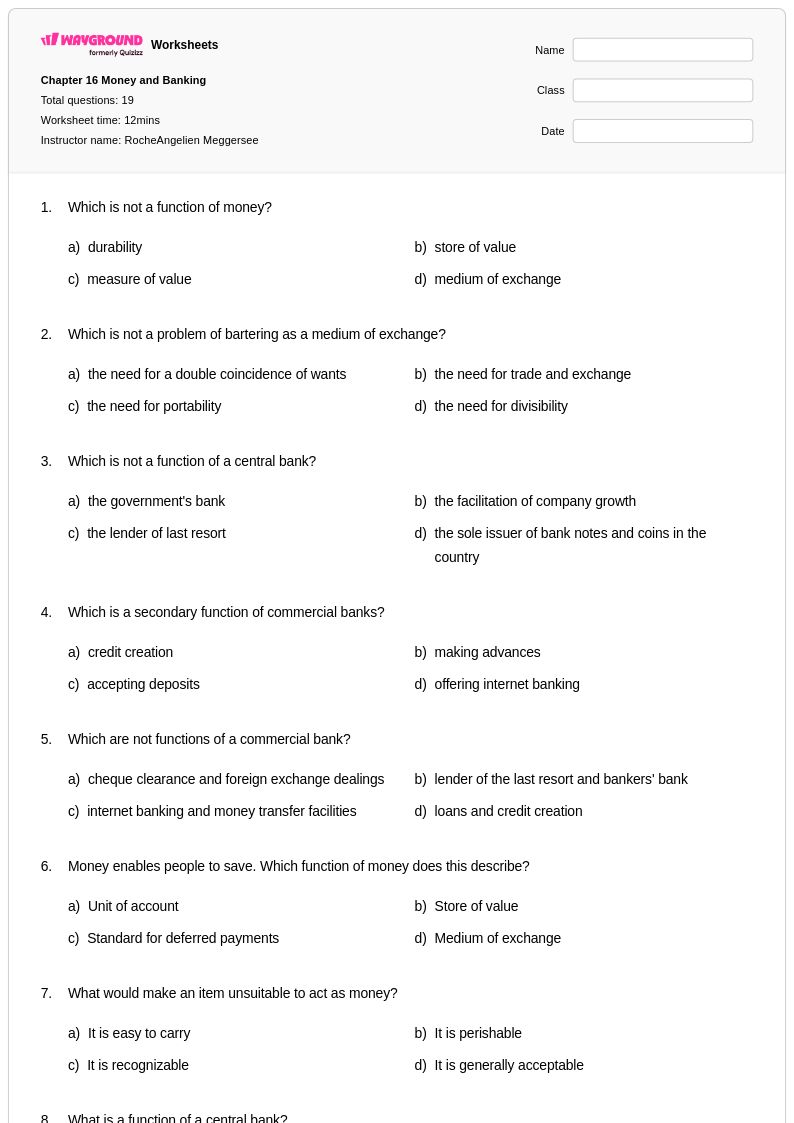
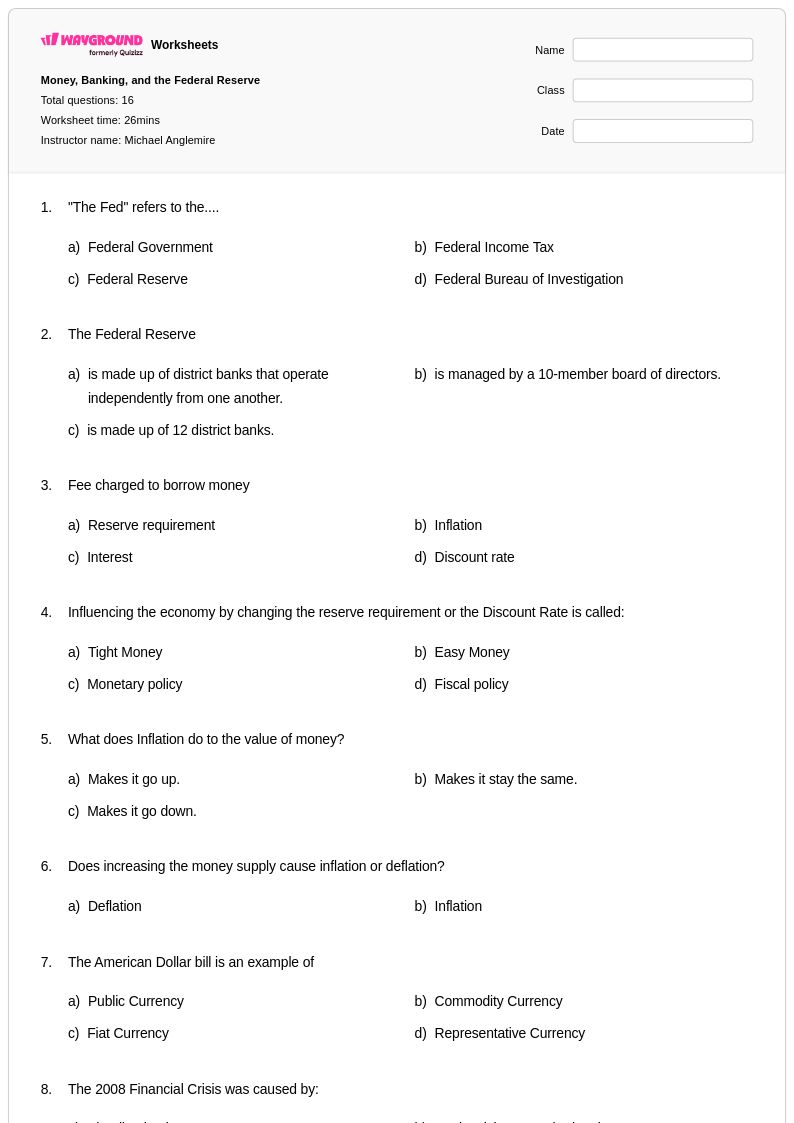
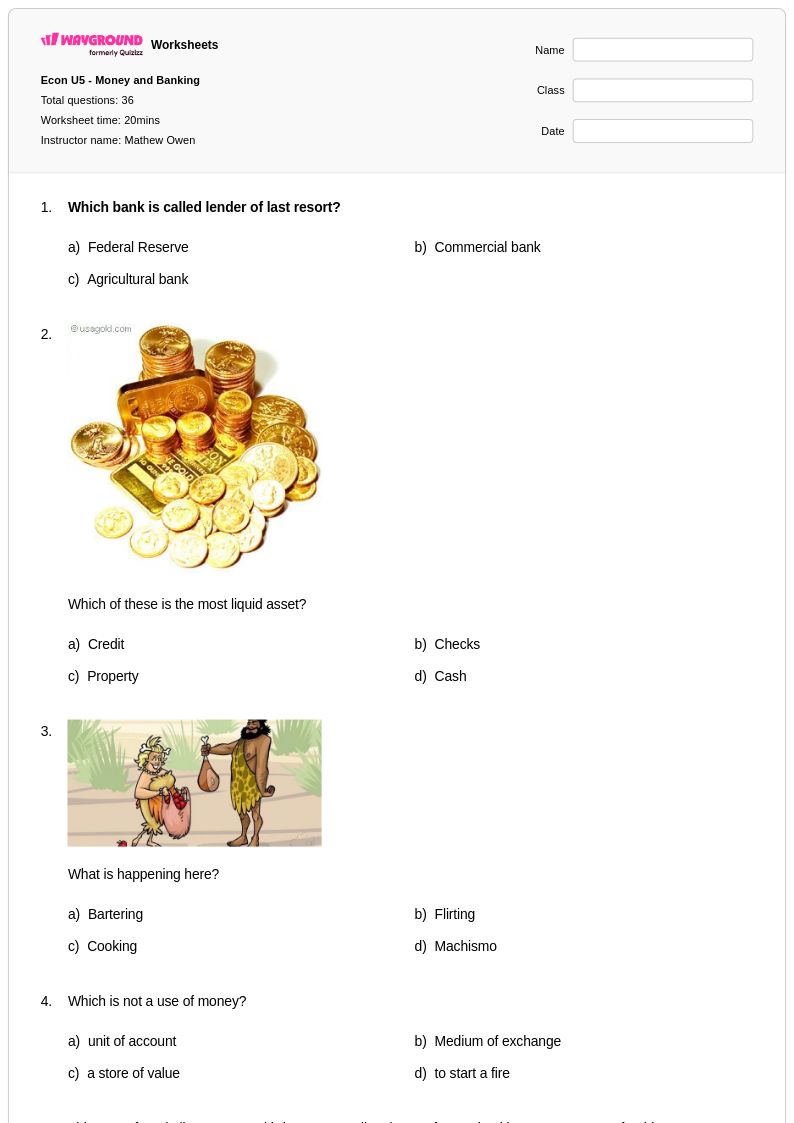
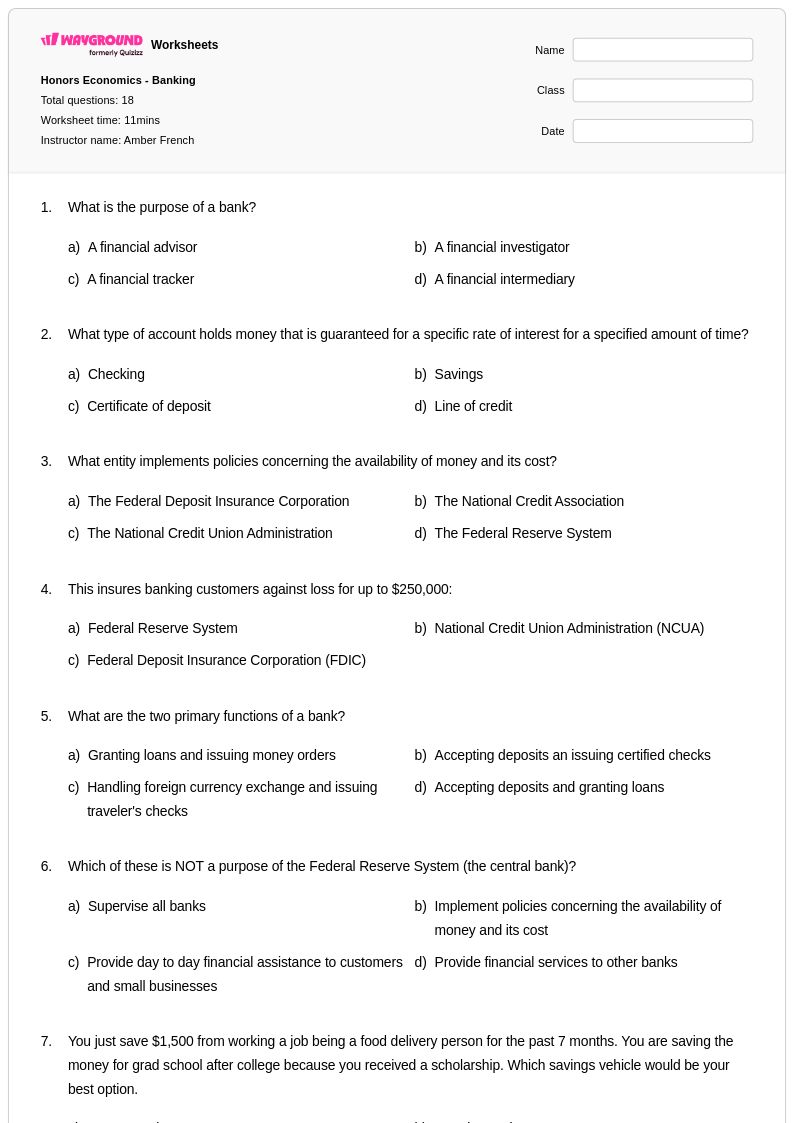
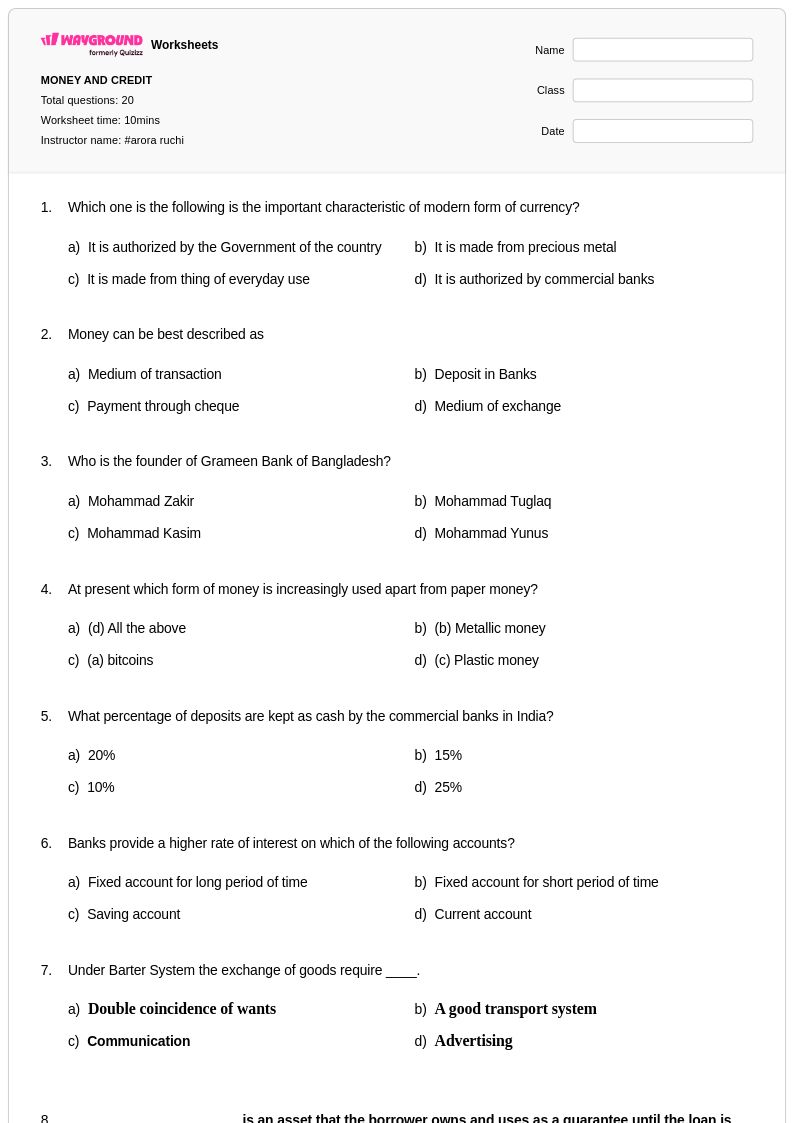
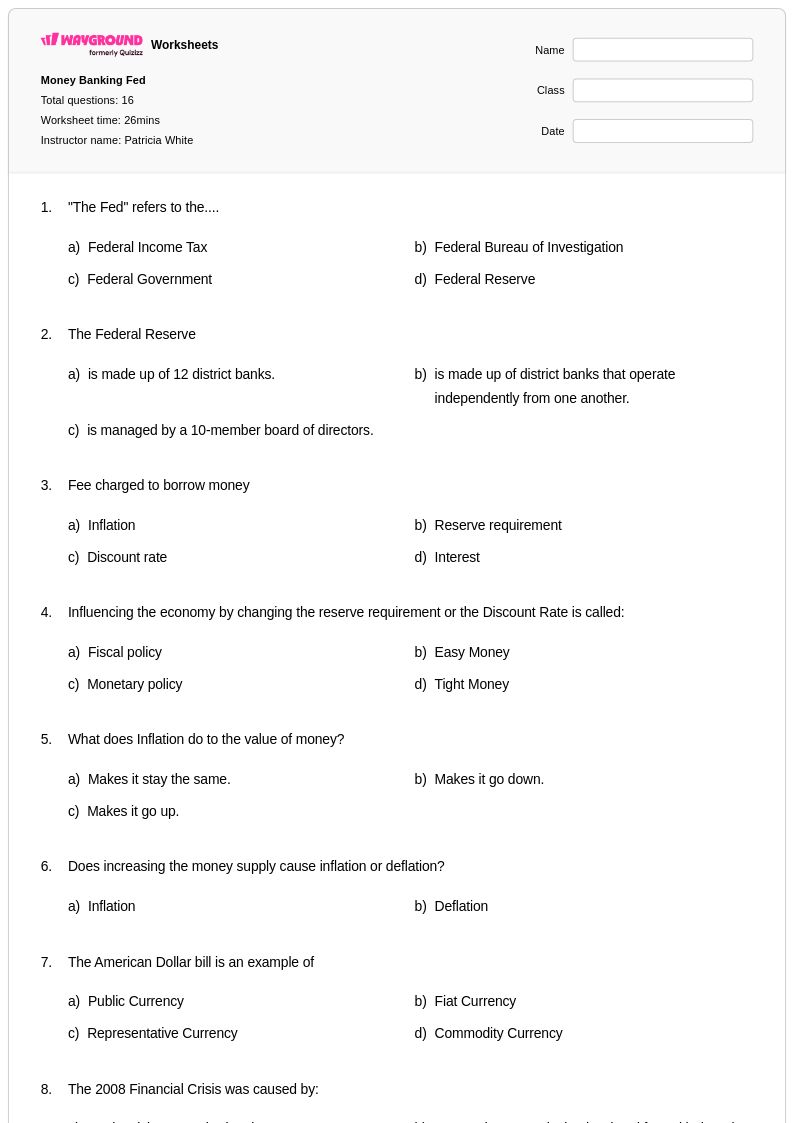
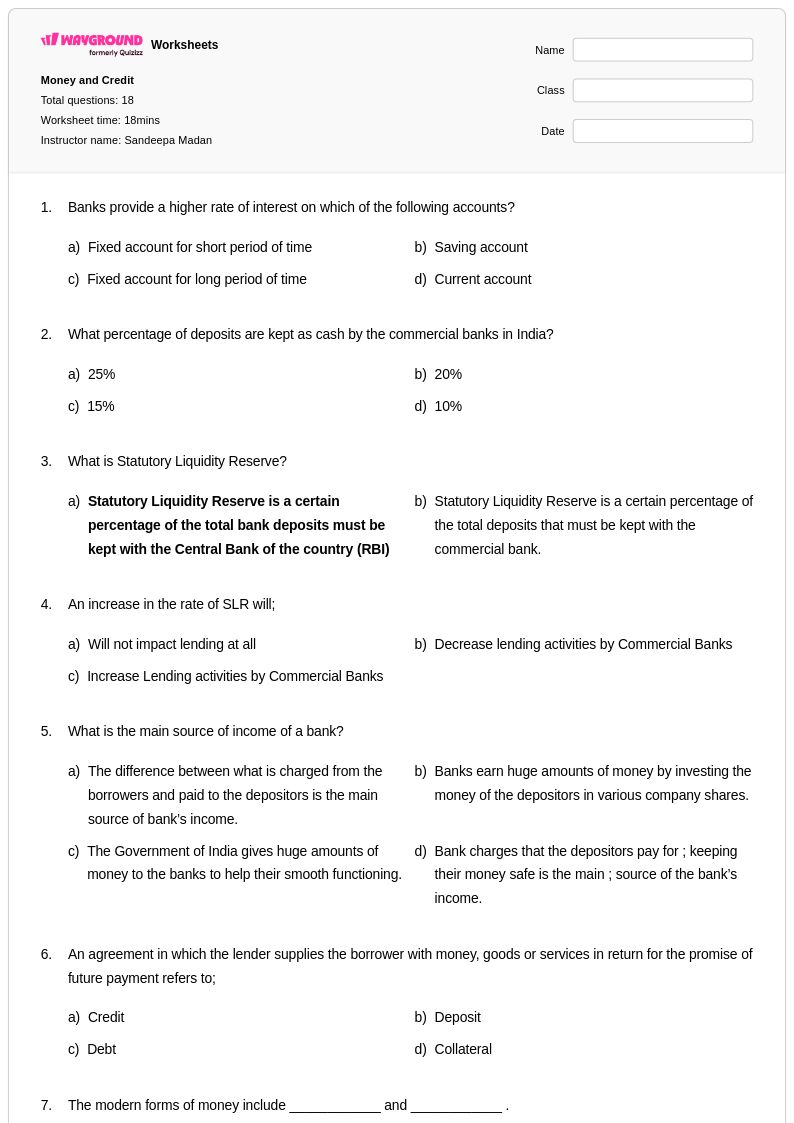
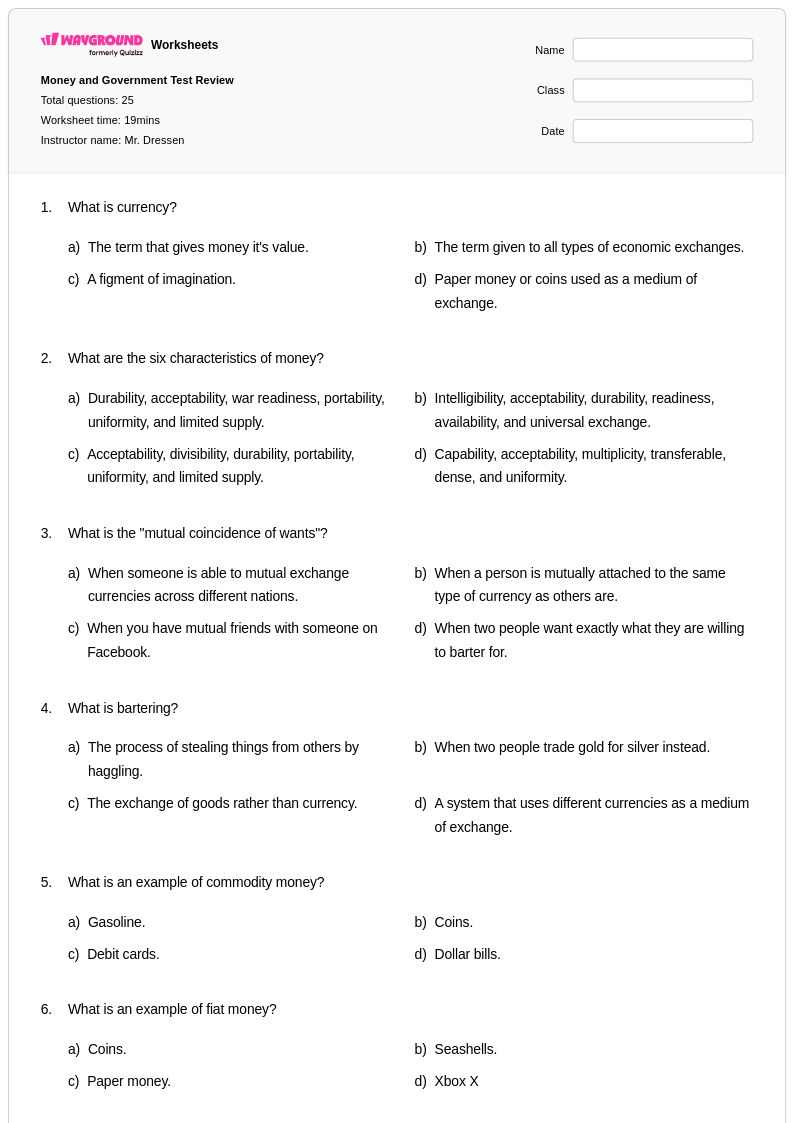
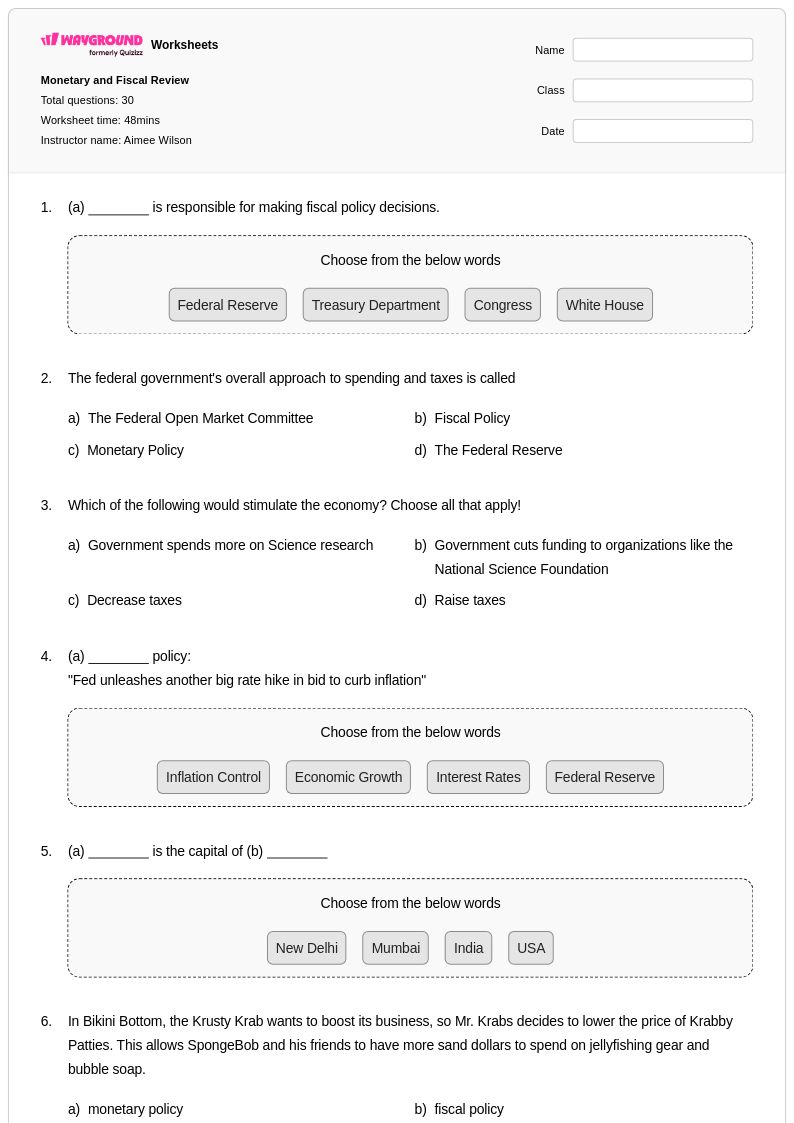
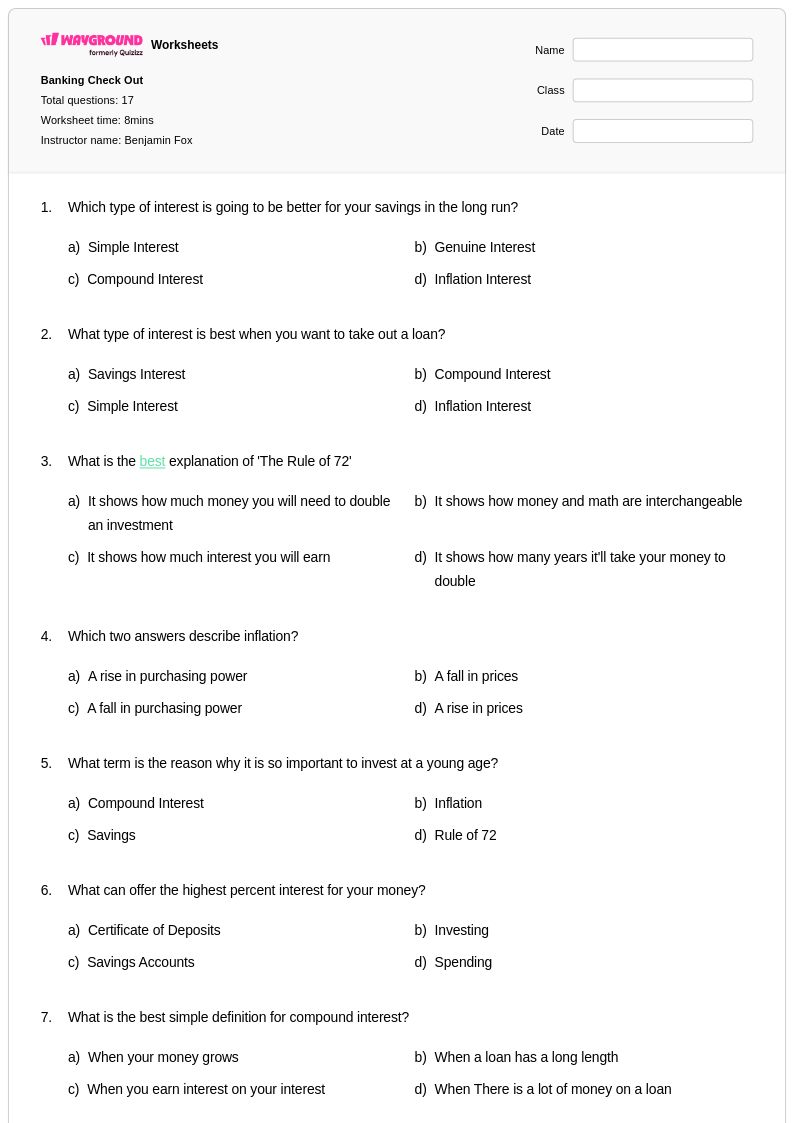
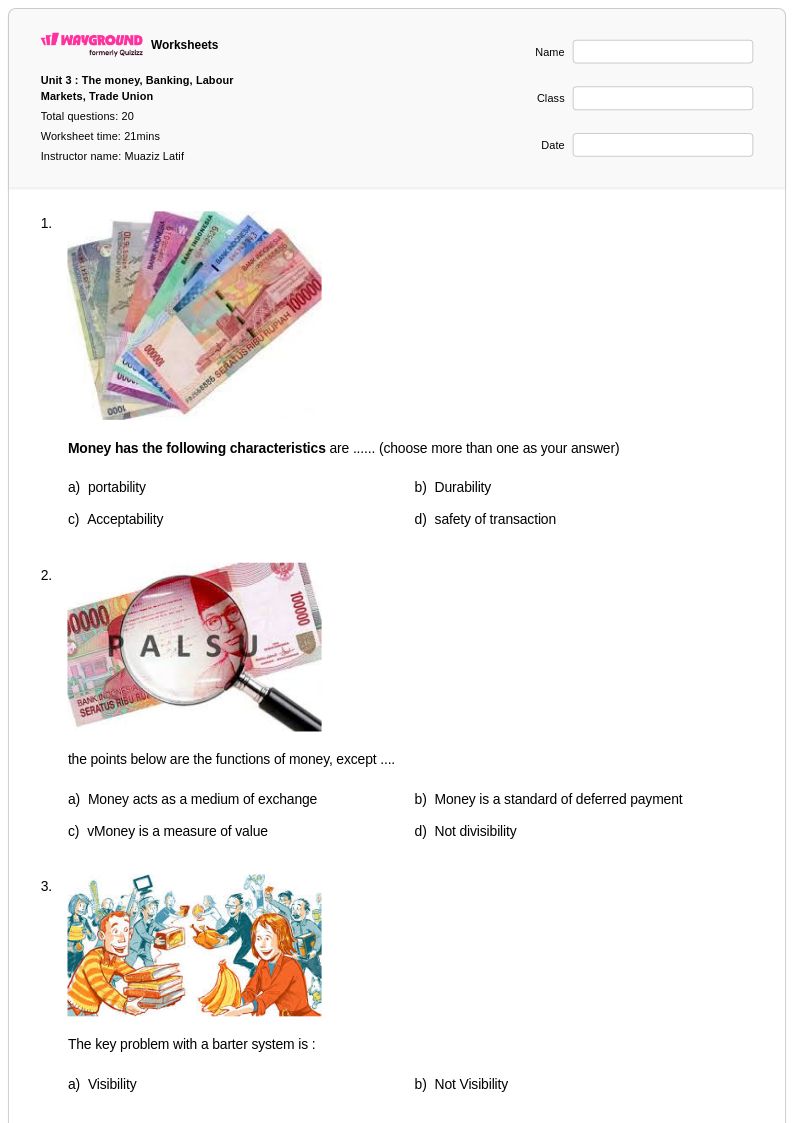
Class 10 Money and Banking worksheets available through Wayground (formerly Quizizz) provide comprehensive coverage of fundamental financial concepts that form the backbone of economic literacy. These expertly crafted resources guide students through essential topics including the functions of money, Federal Reserve operations, commercial banking systems, interest rates, and monetary policy mechanisms. The worksheets strengthen critical analytical skills by engaging students with real-world scenarios involving checking and savings accounts, loan calculations, inflation effects, and central bank decision-making processes. Each printable resource includes detailed answer keys and practice problems designed to reinforce understanding of complex banking relationships, while free pdf formats ensure accessibility for diverse classroom needs and independent study sessions.
Wayground (formerly Quizizz) empowers educators with millions of teacher-created Money and Banking resources that seamlessly integrate into Class 10 Social Studies curricula through robust search and filtering capabilities aligned with state and national economics standards. The platform's differentiation tools enable teachers to customize worksheets for varying skill levels, supporting both remediation for struggling learners and enrichment opportunities for advanced students ready to explore sophisticated banking concepts. Available in both printable and digital formats including downloadable pdfs, these resources streamline lesson planning while providing flexible options for in-class instruction, homework assignments, and assessment preparation. Teachers can efficiently locate targeted materials for specific banking topics, modify existing content to match their pedagogical approach, and utilize the comprehensive collection to build sequential learning experiences that develop students' financial literacy and economic reasoning abilities.
FAQs
How do I teach money and banking concepts to students?
Effective money and banking instruction starts with grounding students in the core functions of money — as a medium of exchange, store of value, and unit of account — before introducing how financial institutions fit into the broader economy. From there, teachers can build toward more complex topics like interest rates, loans, and savings accounts using real-world scenarios that make abstract concepts tangible. Scaffolding lessons from currency identification through to basic banking operations helps students develop financial literacy progressively rather than all at once.
What exercises help students practice money and banking skills?
Practice exercises that work well for money and banking include identifying and counting currency denominations, calculating simple interest on savings accounts or loans, and analyzing how different types of banks serve different economic roles. Structured problem sets that move from recognition tasks to application problems — such as comparing the cost of a loan under different interest rates — push students to apply their understanding rather than just recall definitions. Worksheets that combine reading comprehension with numerical practice are especially effective for building both conceptual and computational fluency.
What misconceptions do students commonly have about money and banking?
One of the most common misconceptions is that banks simply store deposits and lend out the exact same money, when in reality banks create money through the lending process as part of a fractional reserve system. Students also frequently confuse interest earned on savings with interest charged on loans, not recognizing that these serve opposite roles for the consumer. Another frequent error is conflating the terms 'currency' and 'money,' not understanding that money is a broader concept that includes non-physical forms like digital balances and checks.
How can I differentiate money and banking worksheets for students at different skill levels?
For students who need additional support, simplify tasks to focus on currency recognition, basic vocabulary, and single-step problems before introducing multi-step scenarios involving interest or loan comparisons. Advanced learners can be challenged with open-ended analysis tasks, such as evaluating the pros and cons of different savings strategies or interpreting simple banking data. On Wayground, teachers can further support individual students by enabling accommodations such as reduced answer choices to lower cognitive load, read aloud for students who need audio support, and extended time — all configurable per student without affecting the rest of the class.
How do I use Wayground's money and banking worksheets in my classroom?
Wayground's money and banking worksheets are available as printable PDFs for traditional classroom use and in digital formats for technology-integrated environments, giving teachers flexibility to assign them as in-class practice, homework, or assessments. Teachers can also host worksheets directly as a quiz on Wayground, making it easy to track student responses and review results in one place. Each worksheet includes a complete answer key, so grading and review are straightforward whether you're working with a whole class or supporting individual students.
What financial literacy standards do money and banking worksheets typically address?
Money and banking worksheets commonly align with personal finance and economics standards that expect students to understand the functions and characteristics of money, the role of financial institutions, and the mechanics of saving, borrowing, and interest. Many state and national frameworks — including those tied to Jump$tart Coalition benchmarks and NGPF standards — emphasize that students should be able to evaluate financial decisions and understand how banking systems influence individual and economic outcomes. Selecting worksheets that address currency systems, banking operations, and interest calculations covers the foundational competencies most standards prioritize.