
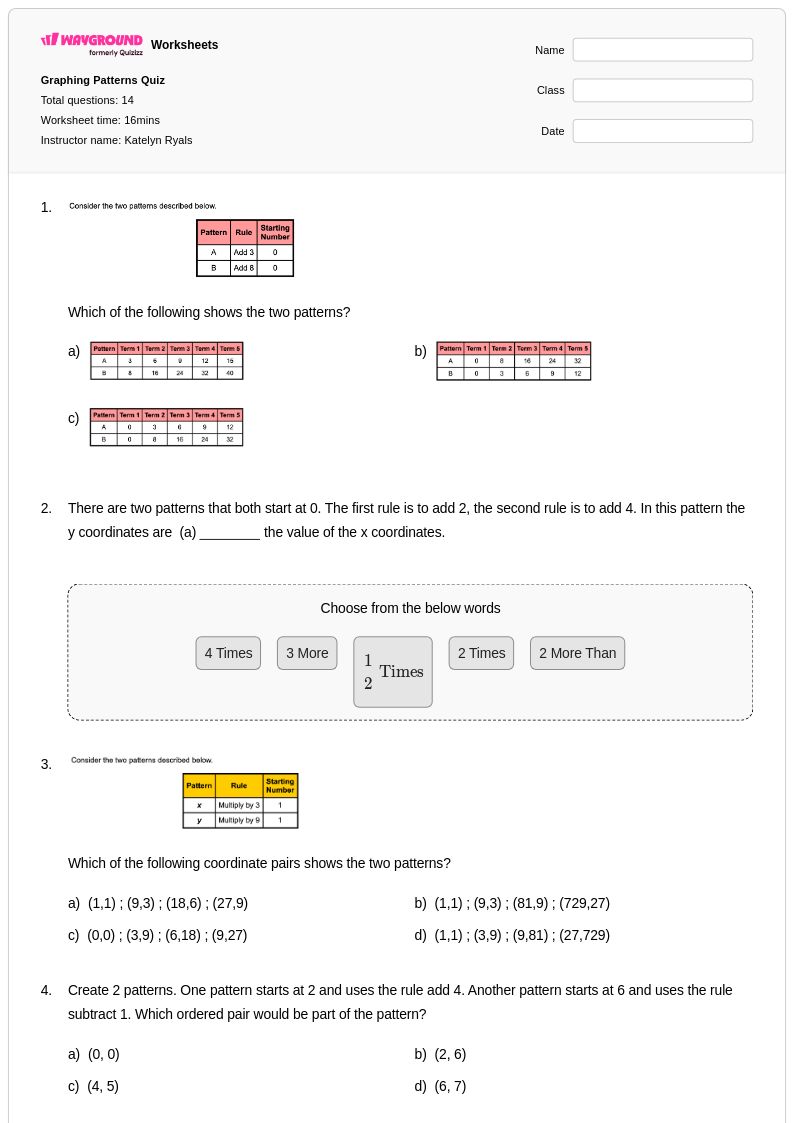
14 Q
5th
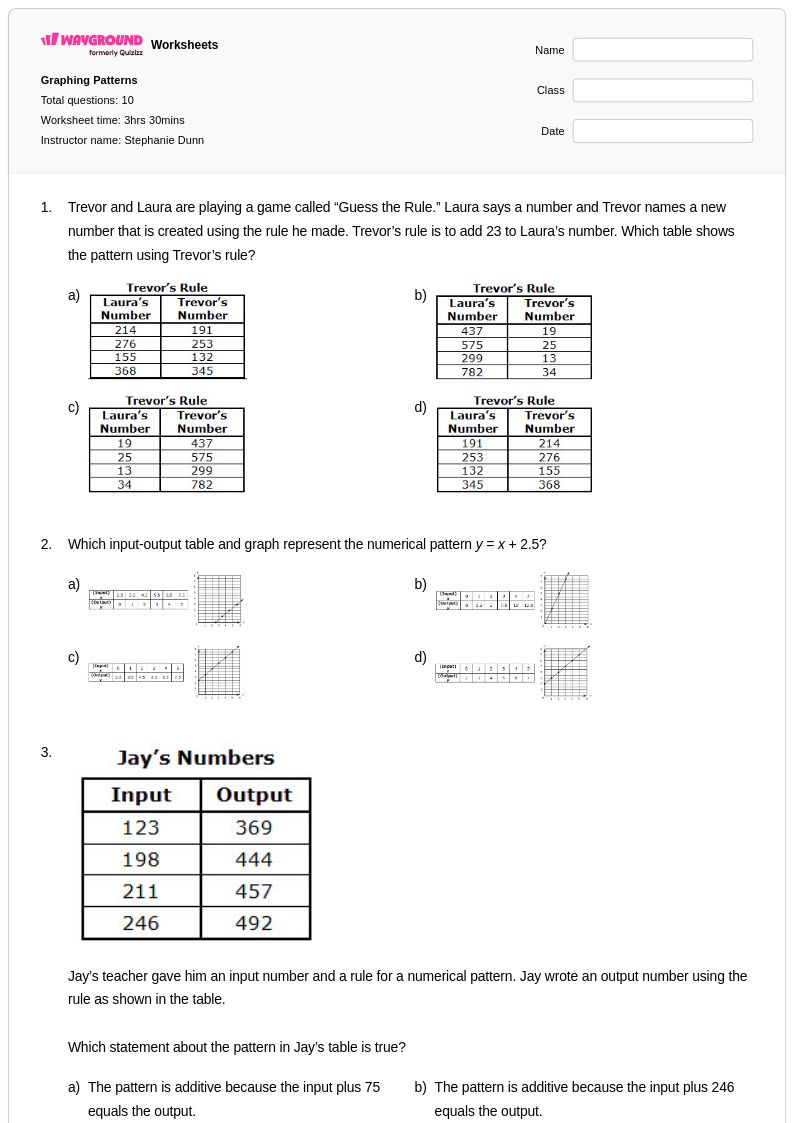
10 Q
5th
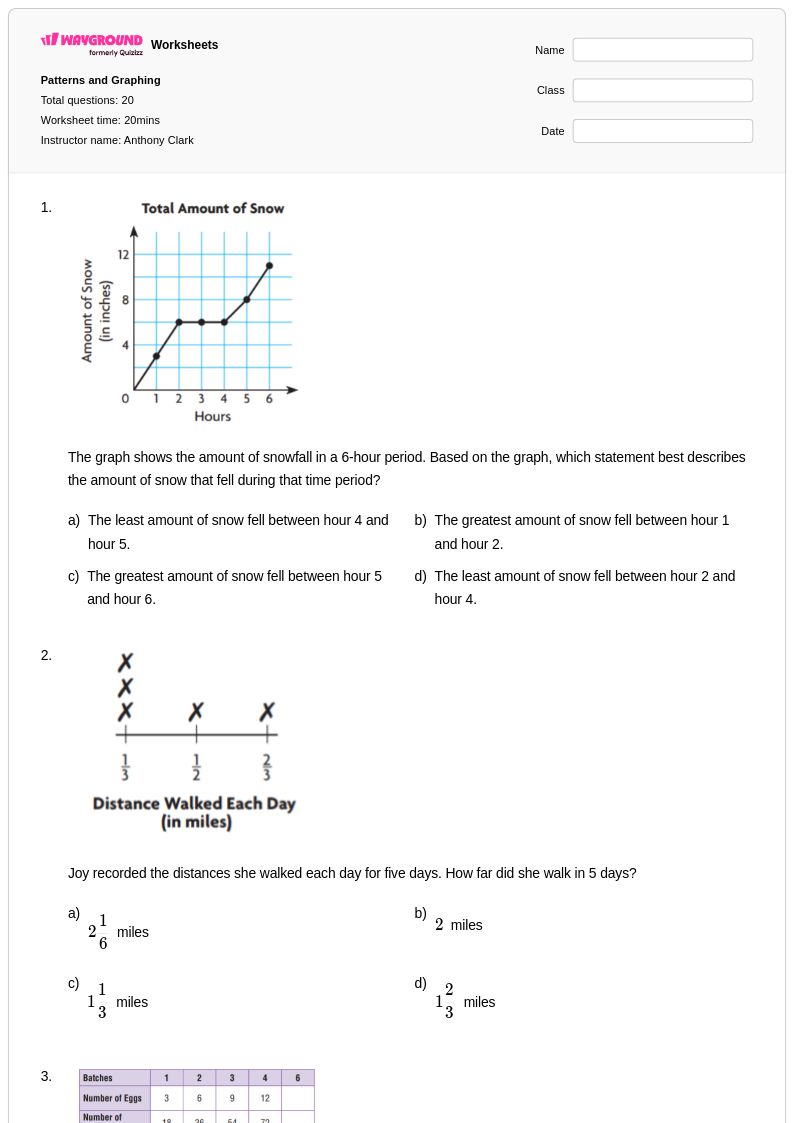
20 Q
5th - Uni
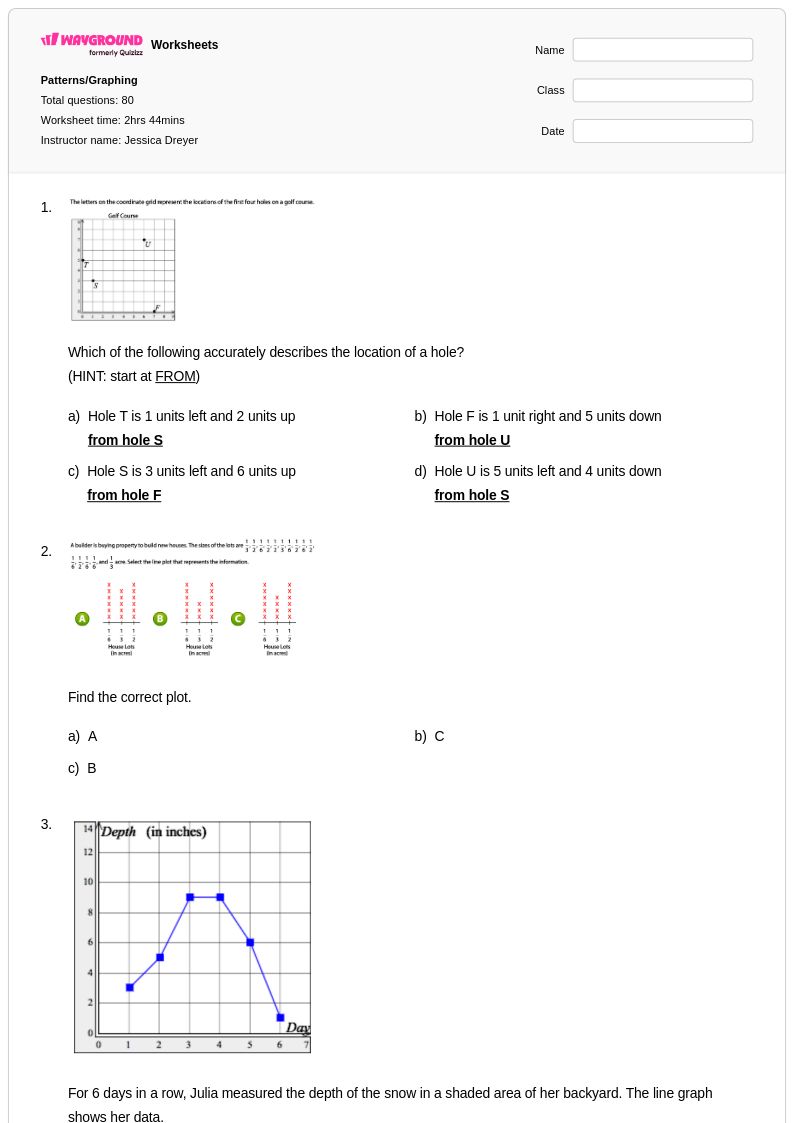
80 Q
5th
18 Q
5th
15 Q
5th
14 Q
5th
10 Q
5th
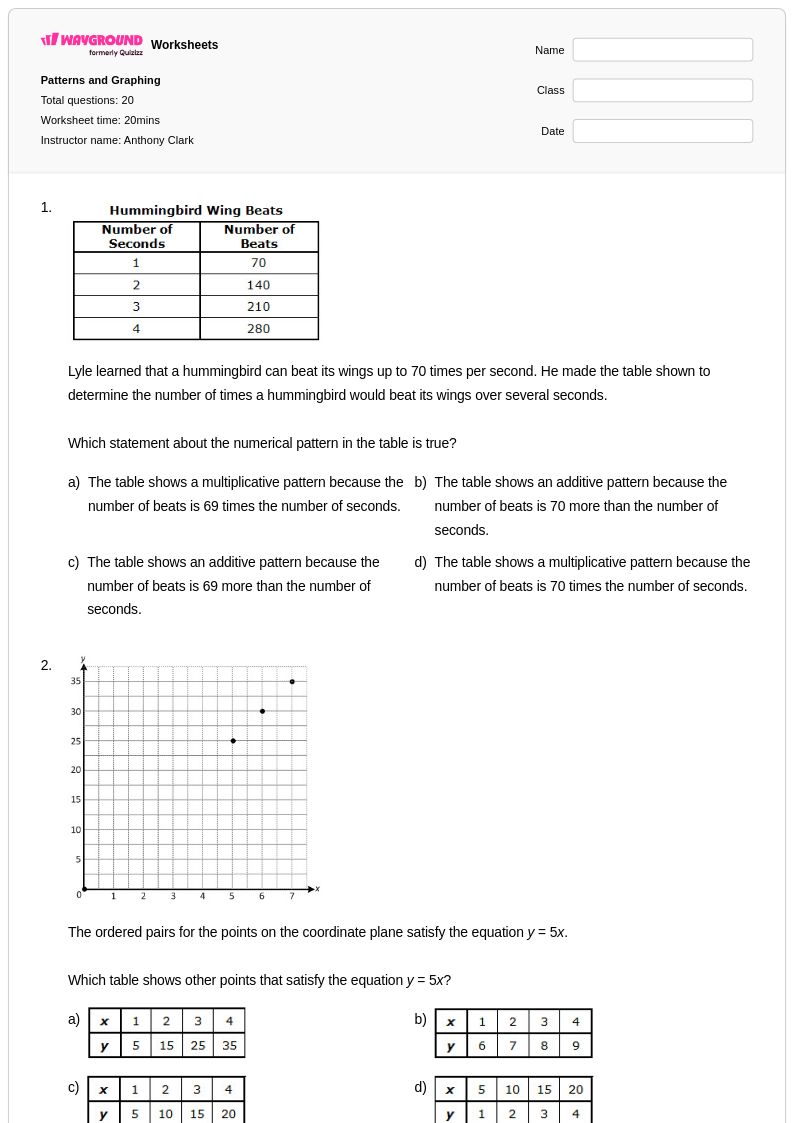
20 Q
5th - Uni
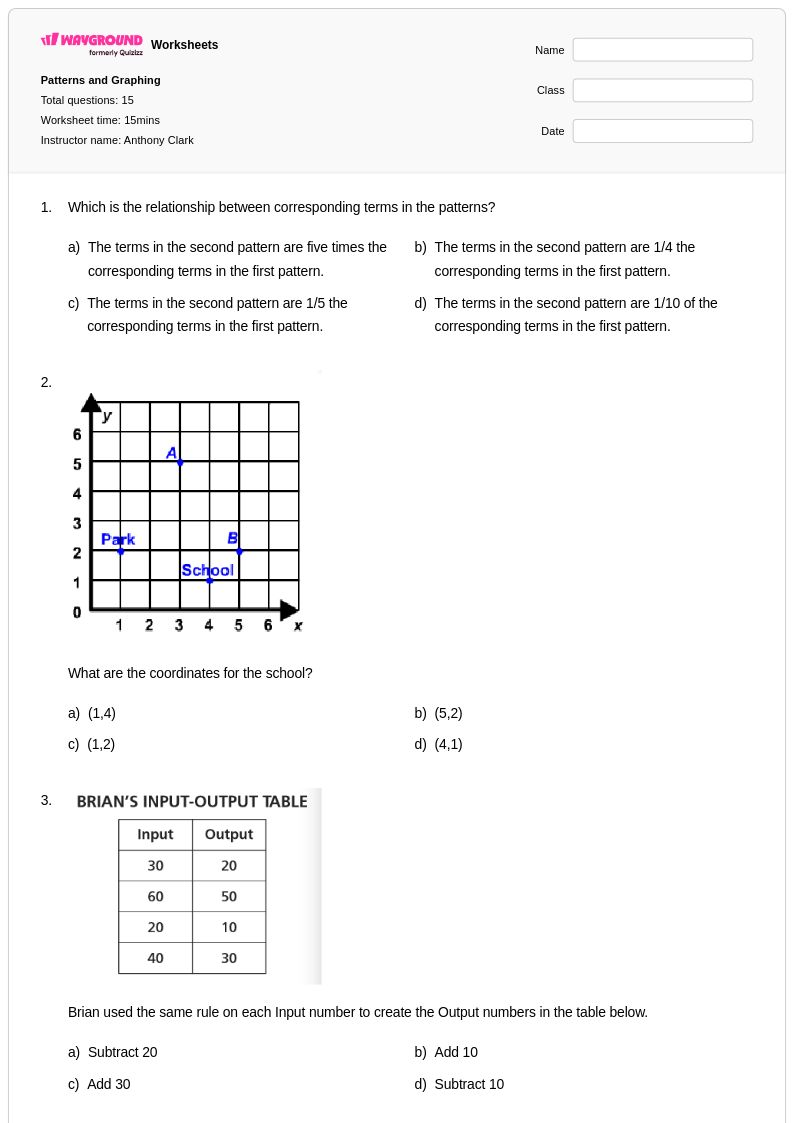
15 Q
5th - Uni
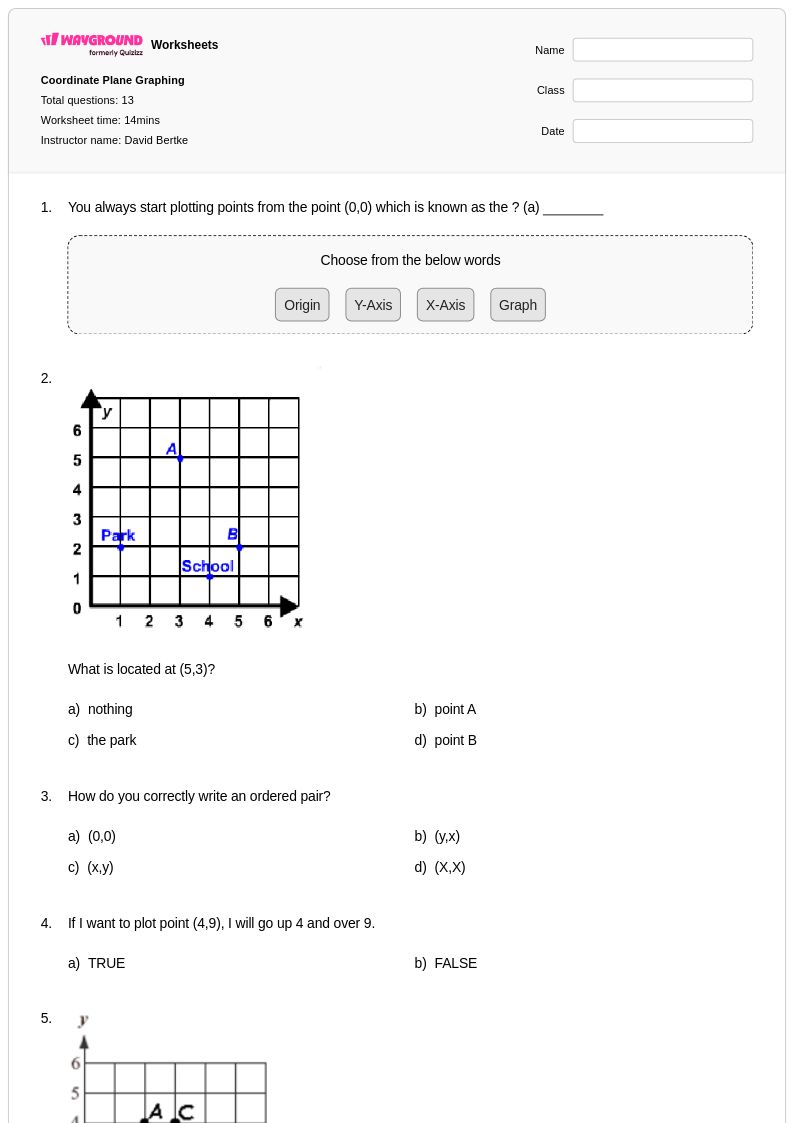
13 Q
5th
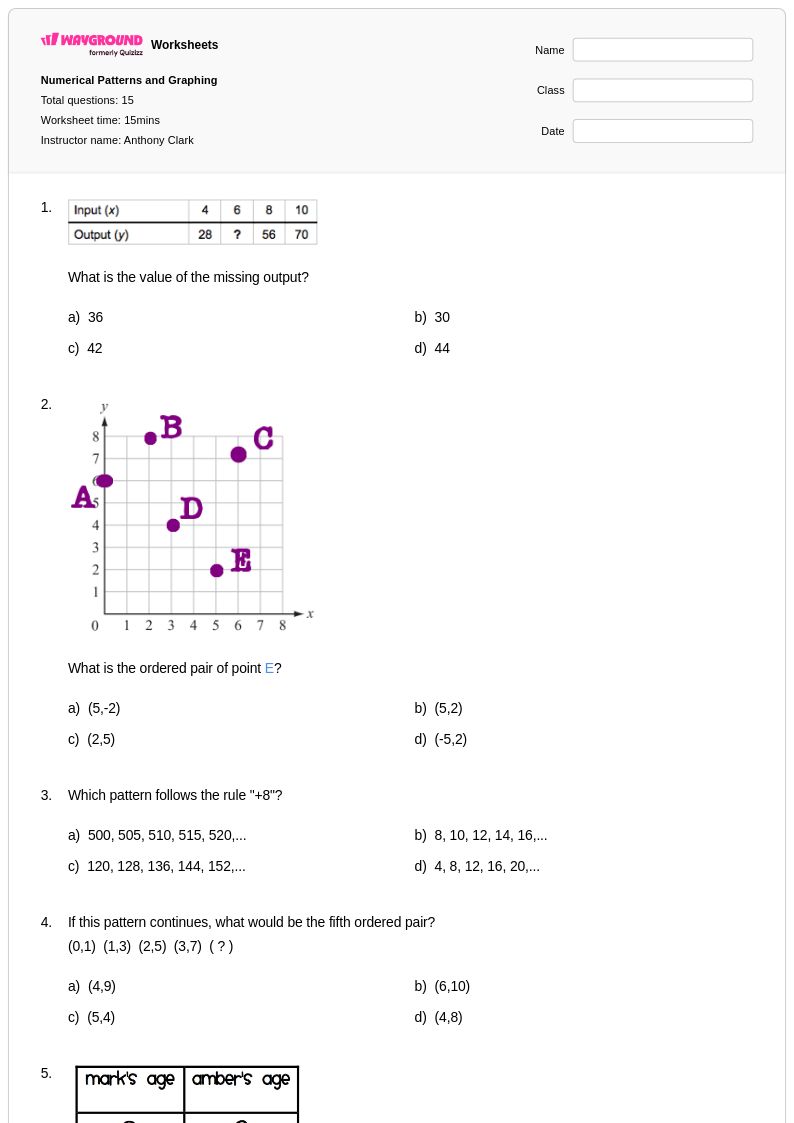
15 Q
5th - Uni
20 Q
5th - Uni
14 Q
5th - Uni
10 Q
5th
32 Q
5th
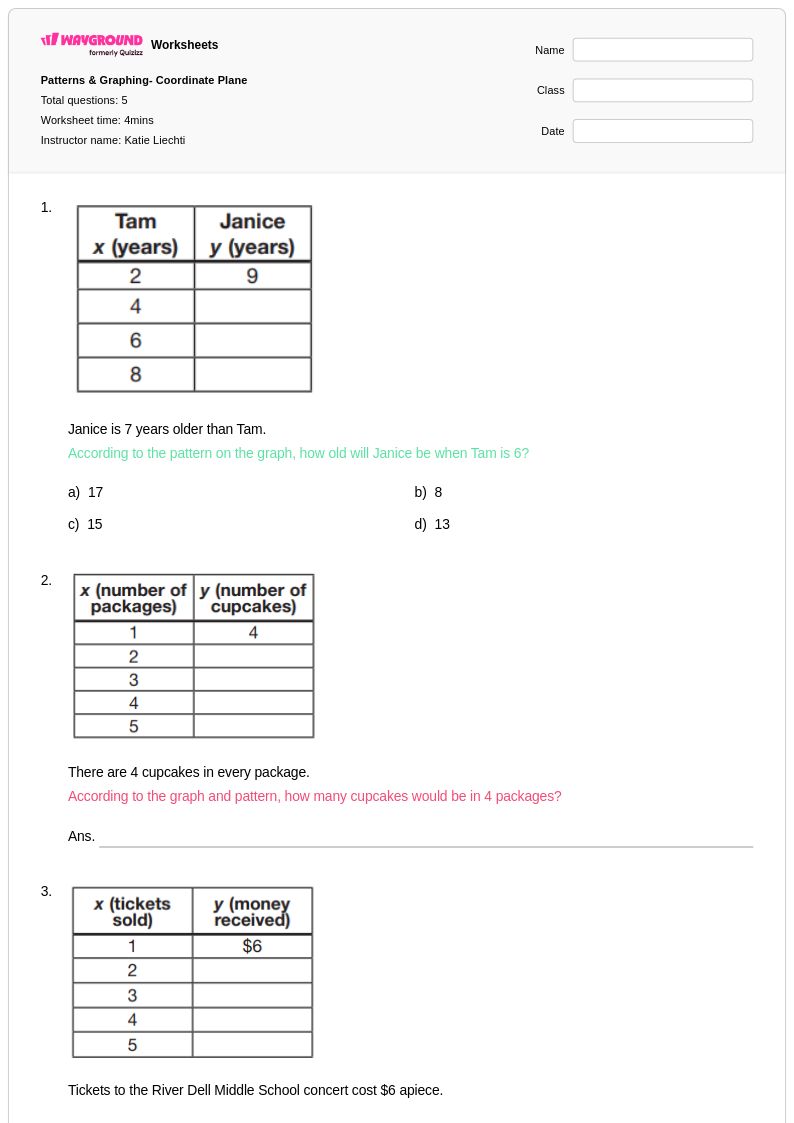
5 Q
5th
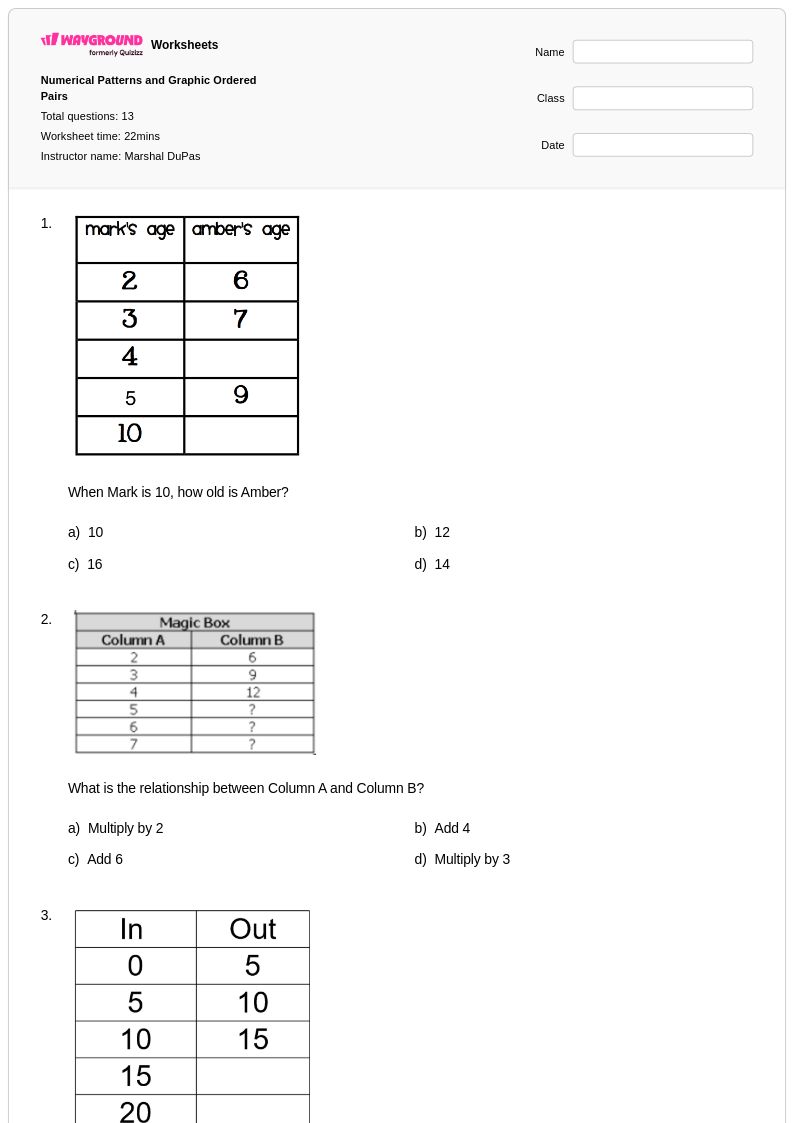
13 Q
5th
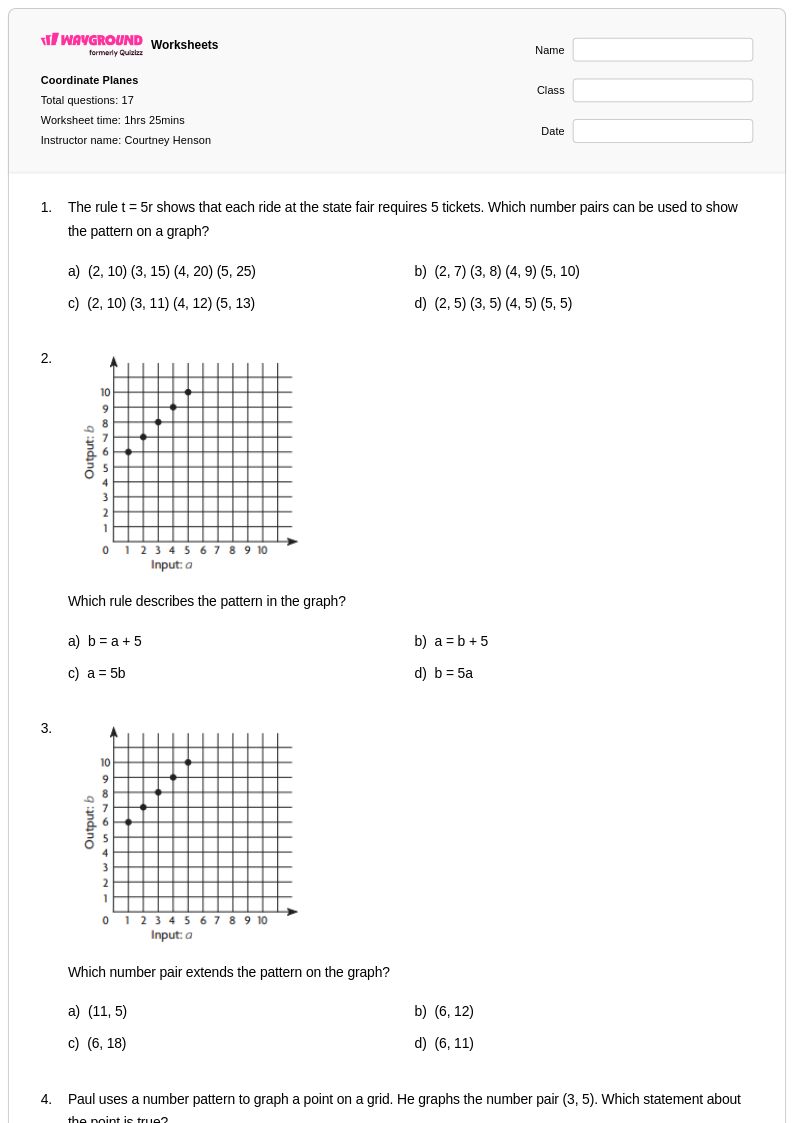
17 Q
5th
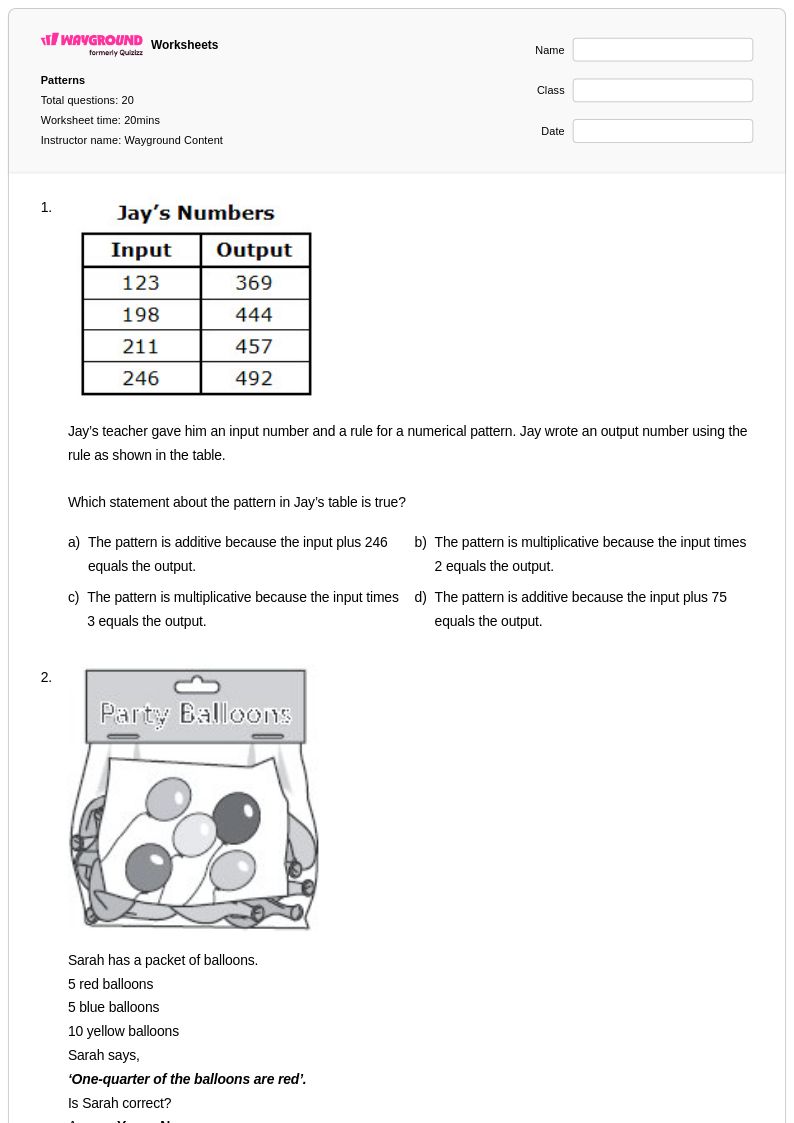
20 Q
5th
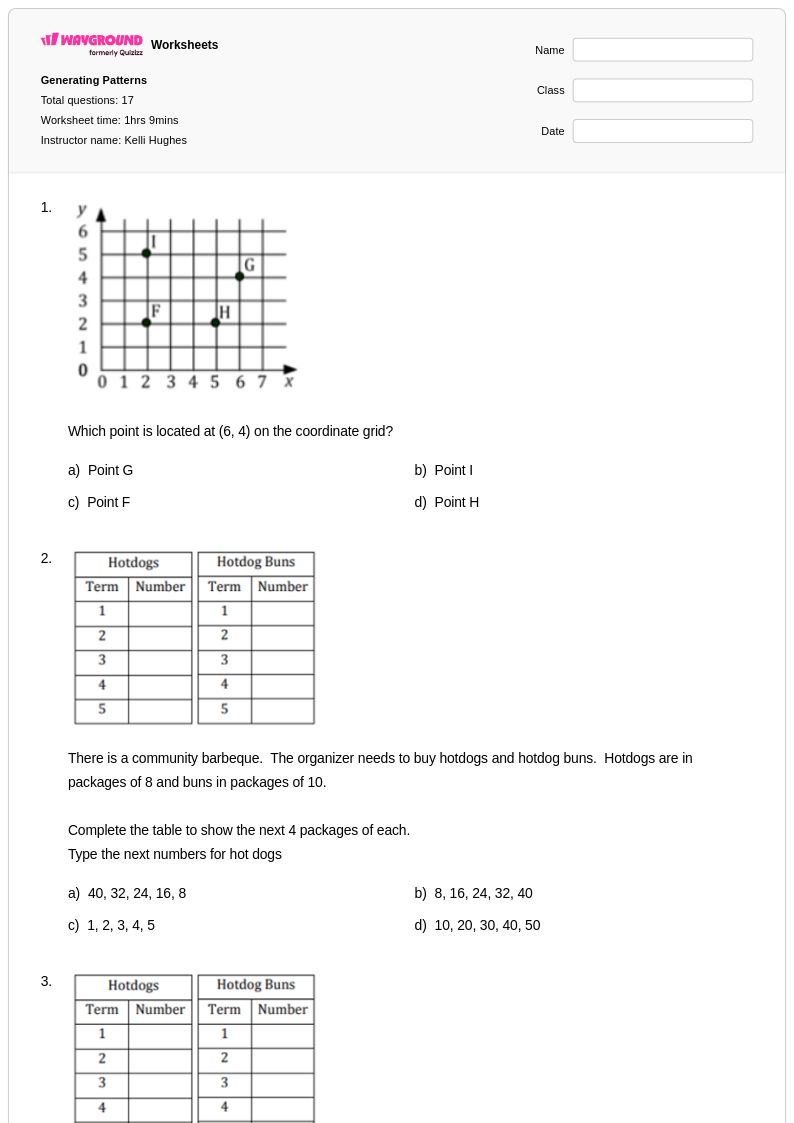
17 Q
5th
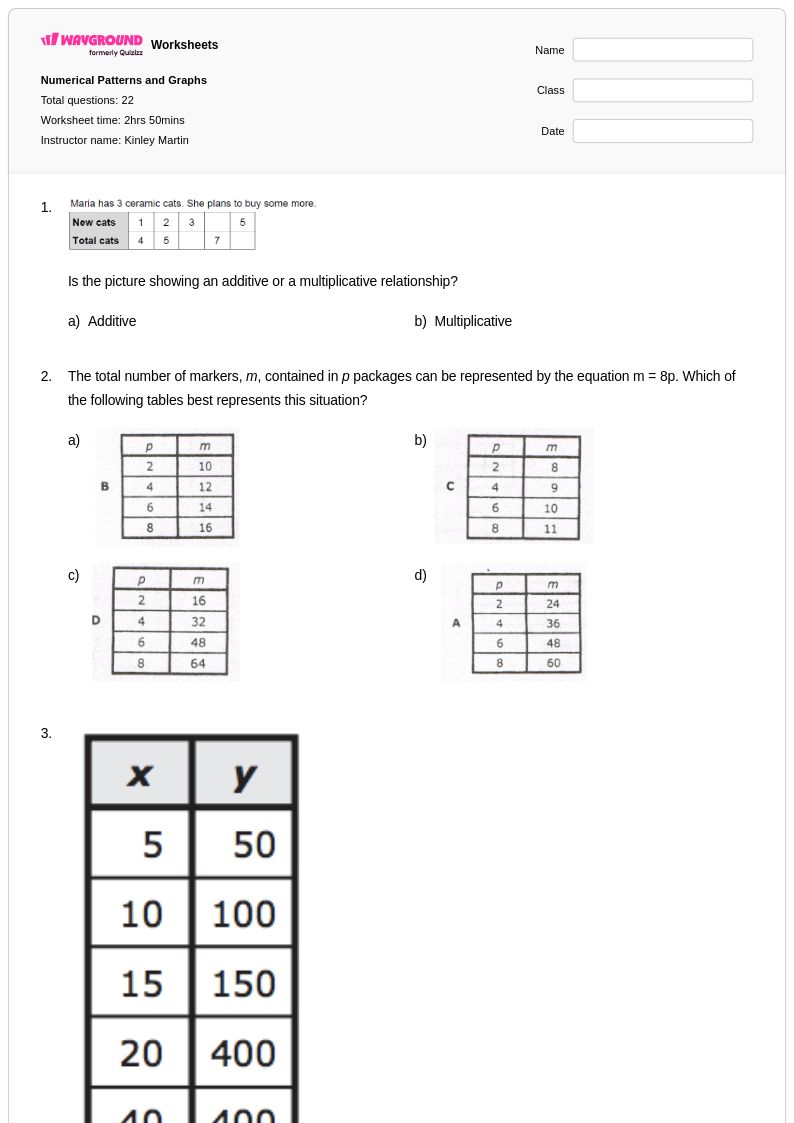
22 Q
5th
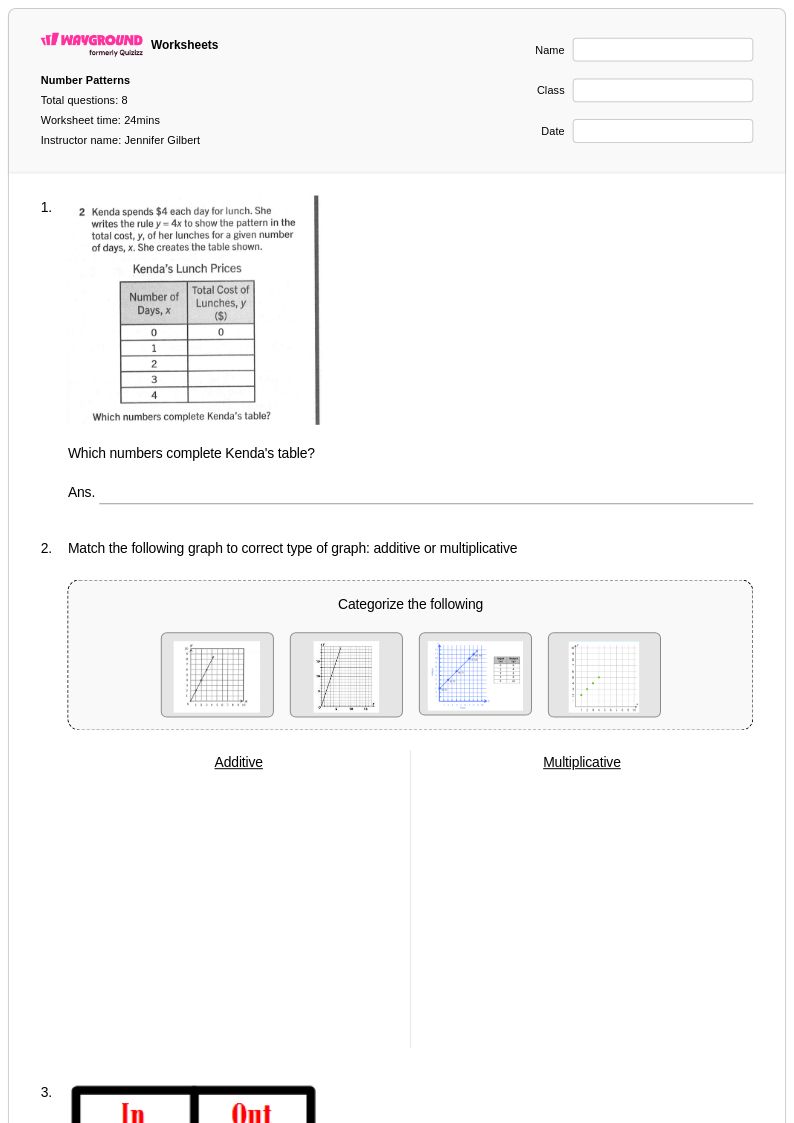
8 Q
5th
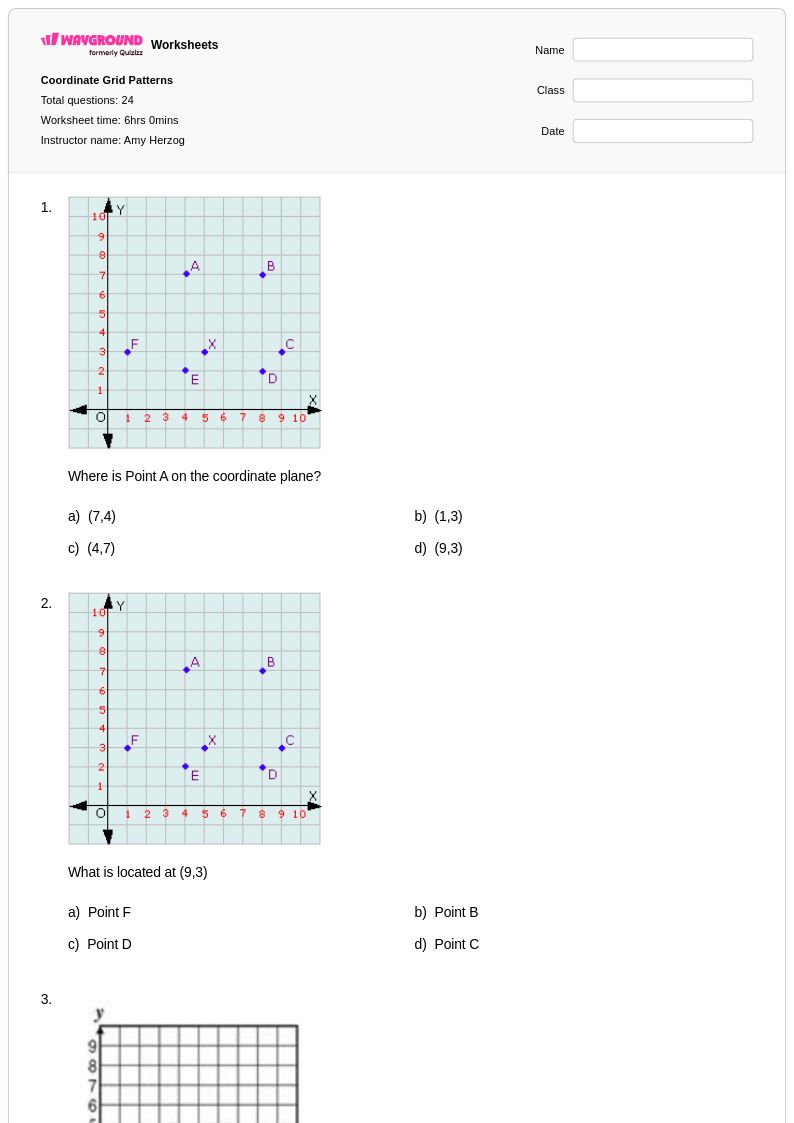
24 Q
5th
Explore Other Subject Worksheets for class 5
Explore printable Graphing Patterns worksheets for Class 5
Graphing patterns worksheets for Class 5 students available through Wayground (formerly Quizizz) provide essential practice in recognizing, extending, and creating visual representations of mathematical sequences and relationships. These comprehensive worksheets strengthen students' analytical thinking skills as they work with coordinate grids, bar graphs, line graphs, and pictographs to identify recurring patterns and predict future values. Students engage with practice problems that require them to plot points following specific rules, interpret data trends, and draw conclusions from graphical information. Each worksheet collection includes detailed answer keys and is available as free printables in convenient PDF format, allowing educators to seamlessly integrate pattern recognition activities into their mathematics instruction while building foundational skills for algebraic thinking.
Wayground (formerly Quizizz) empowers teachers with millions of educator-created resources specifically designed for graphing patterns instruction, featuring robust search and filtering capabilities that allow quick access to grade-appropriate materials aligned with mathematical standards. The platform's differentiation tools enable teachers to customize worksheets based on individual student needs, whether for remediation support or enrichment challenges, while flexible formatting options provide both printable PDF versions for traditional classroom use and digital formats for interactive learning environments. These comprehensive worksheet collections support effective lesson planning by offering varied problem types and complexity levels, helping teachers provide targeted skill practice that builds students' confidence in interpreting visual data patterns and develops their mathematical reasoning abilities through systematic, scaffolded instruction.
FAQs
What are the expectations for graphing patterns in 5th grade?
How do I teach graphing relationships between two patterns?
What exercises help 5th graders connect patterns to coordinate graphing?
What are common errors when 5th graders graph ordered pairs from patterns?
How can I use these 5th grade worksheets in my classroom?
How does this 5th grade topic align with Common Core standards?