Free Printable Gross Domestic Product Worksheets for Class 11
Explore Wayground's free Class 11 Gross Domestic Product worksheets and printables with answer keys to help students master GDP calculations, economic indicators, and national income measurement through engaging practice problems and PDF resources.
Explore printable Gross Domestic Product worksheets for Class 11
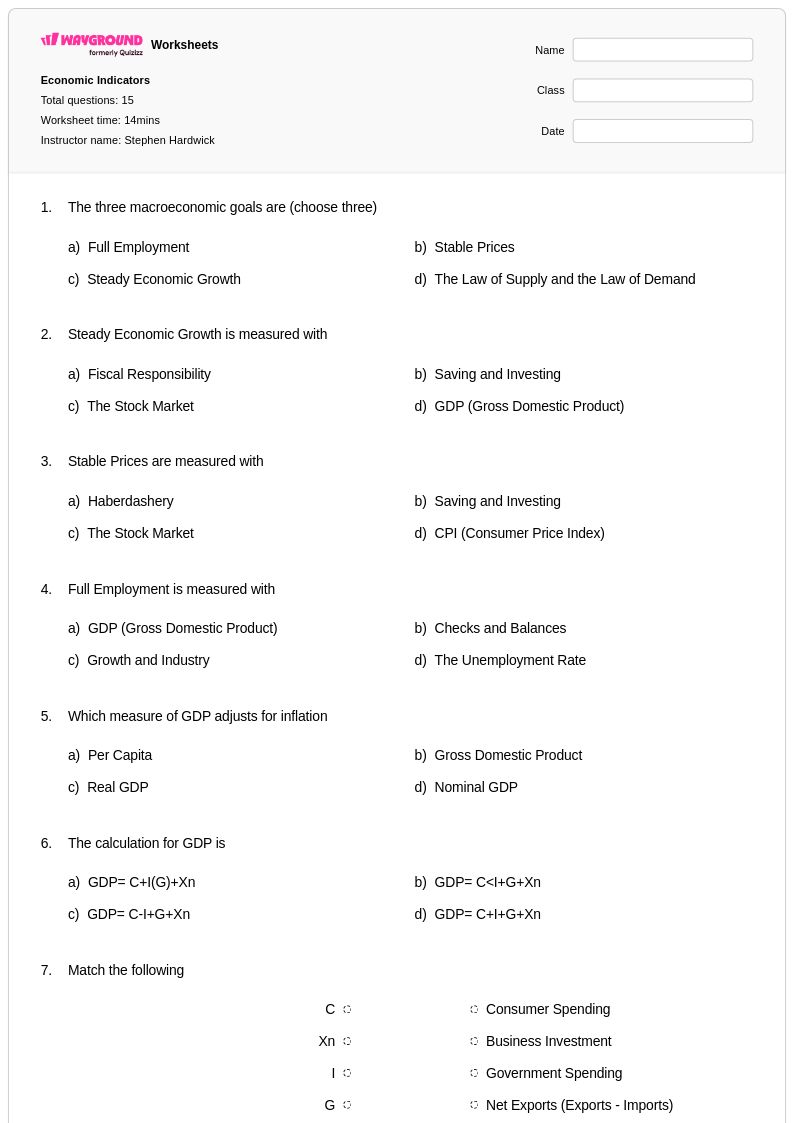
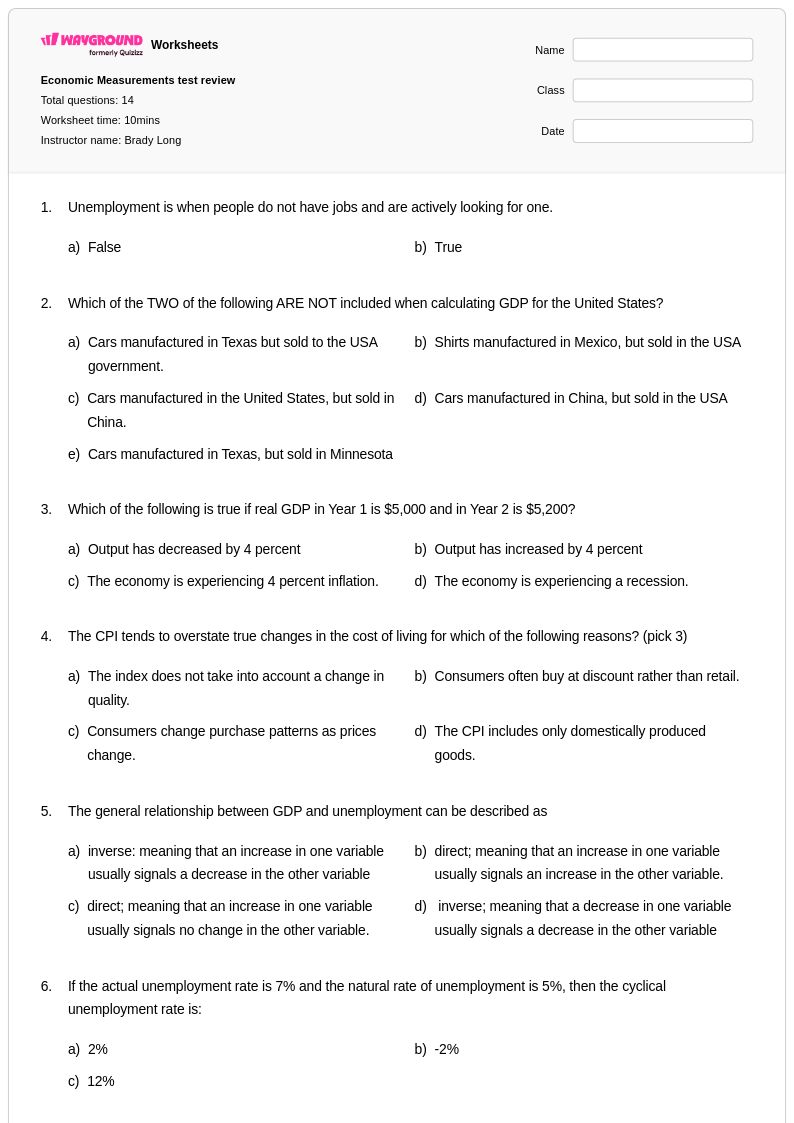
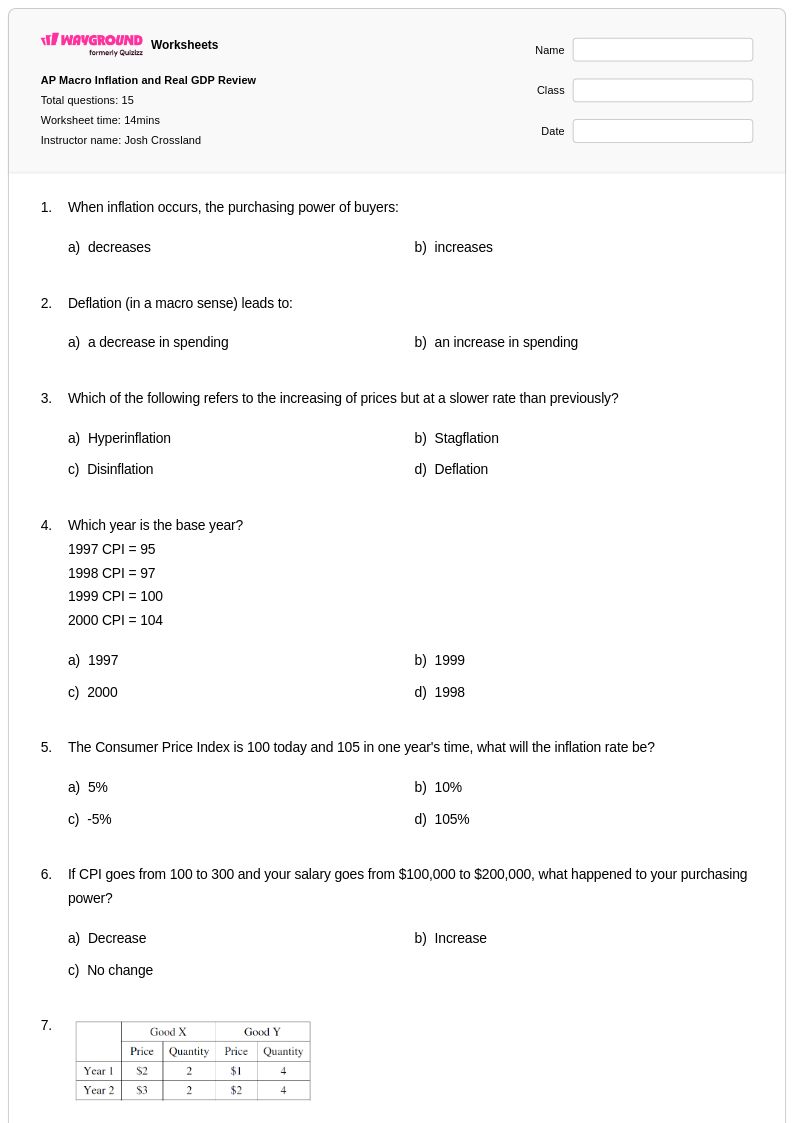
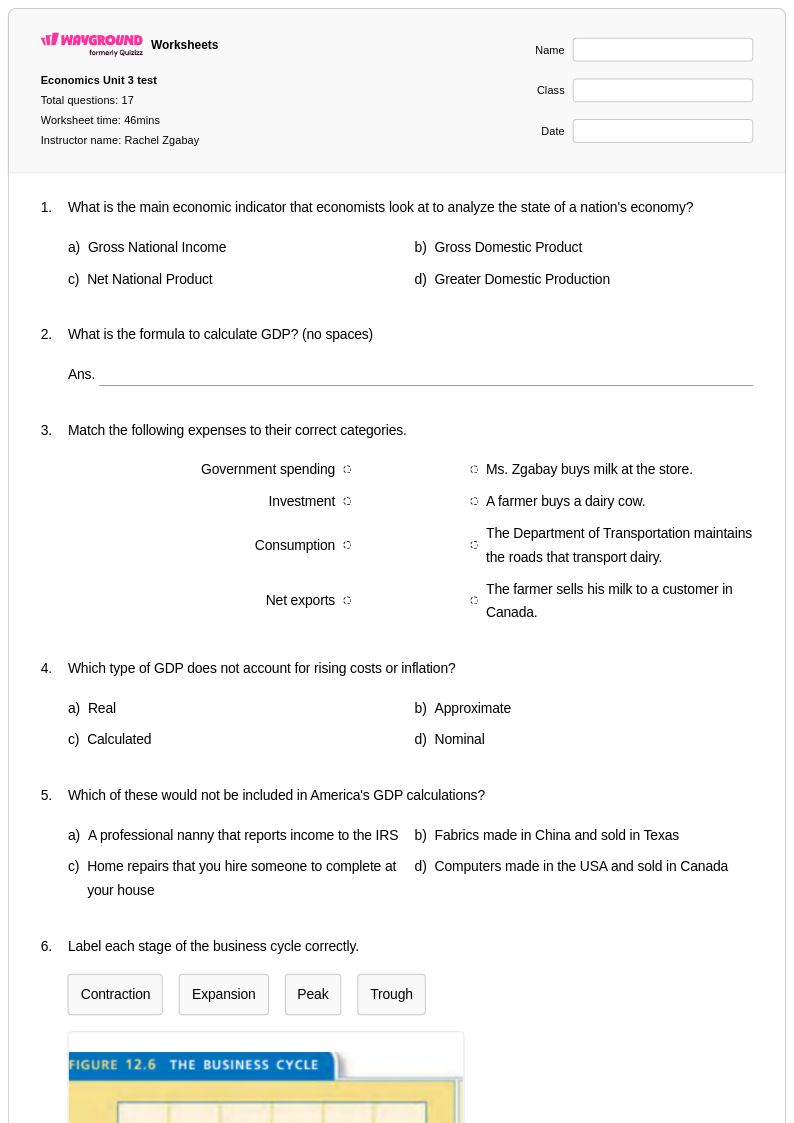
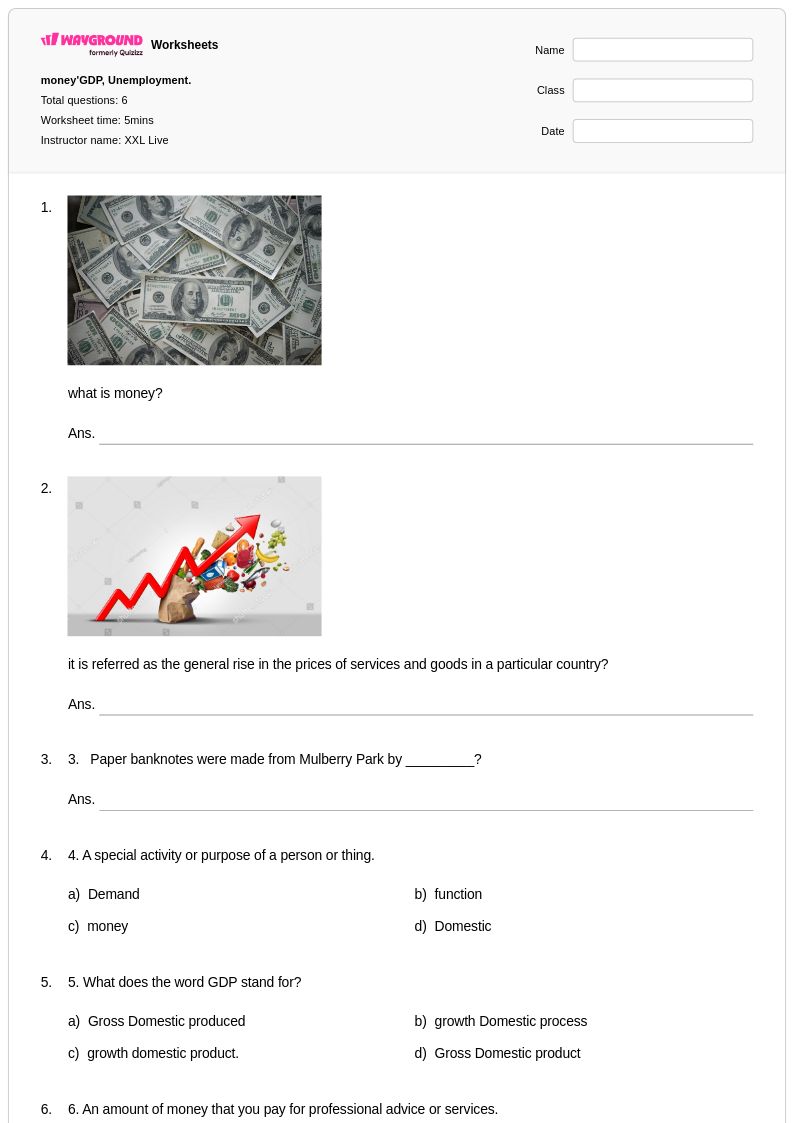
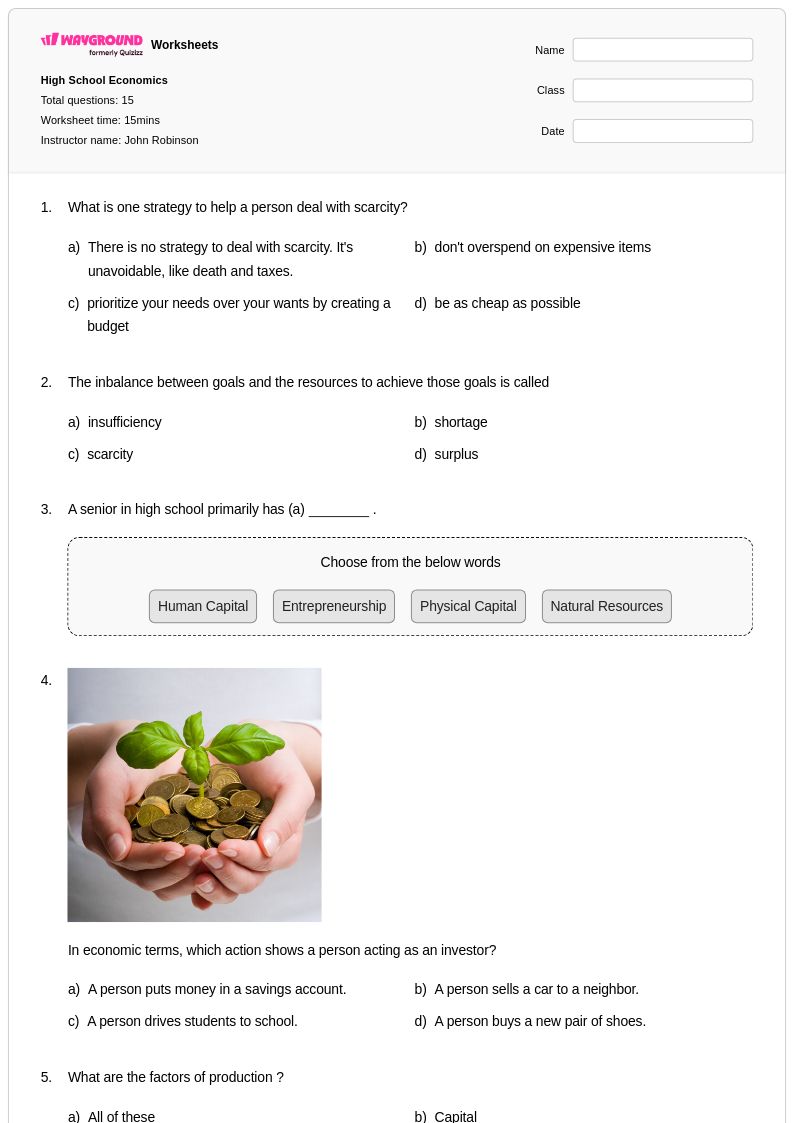
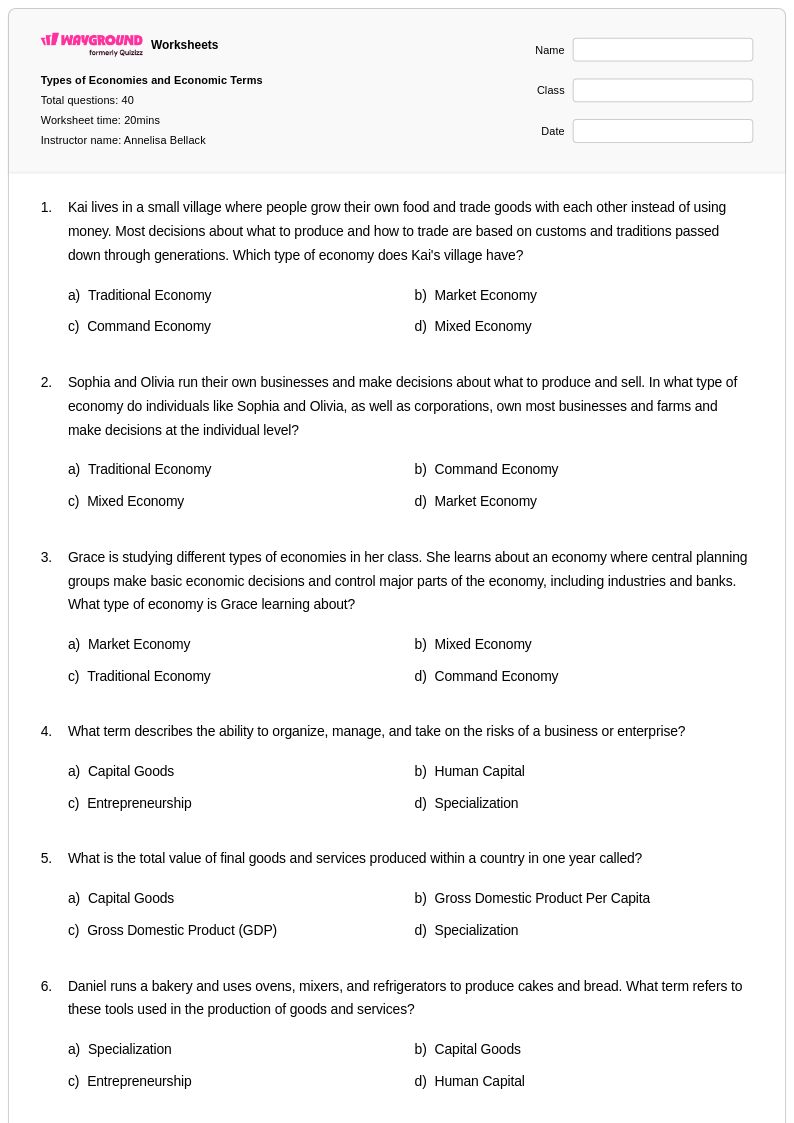
Gross Domestic Product worksheets for Class 11 students available through Wayground provide comprehensive practice with one of economics' most fundamental measurements of national economic performance. These educational resources strengthen students' analytical skills as they explore GDP calculation methods, interpret economic data, and understand the relationship between GDP and standard of living indicators. The worksheet collection includes practice problems that guide students through real-world GDP scenarios, from calculating nominal versus real GDP to analyzing quarterly growth rates and international comparisons. Each printable resource comes with a detailed answer key that supports independent learning and allows teachers to efficiently assess student comprehension of this complex economic concept. The free pdf formats ensure accessibility while maintaining the mathematical rigor necessary for advanced high school economics coursework.
Wayground's extensive library of teacher-created GDP worksheets offers educators millions of professionally developed resources with robust search and filtering capabilities that streamline lesson planning and curriculum alignment. Teachers can easily locate materials that match specific learning objectives, from introductory GDP concepts to advanced applications involving price indices and economic forecasting. The platform's differentiation tools enable instructors to customize worksheets for varying skill levels within their Class 11 classrooms, supporting both remediation for struggling learners and enrichment activities for advanced students. Available in both digital and printable pdf formats, these standards-aligned resources provide flexibility for in-class instruction, homework assignments, and assessment preparation, ensuring that educators have comprehensive tools to reinforce essential economic literacy skills throughout their GDP instruction units.
FAQs
How do I teach Gross Domestic Product to students?
Start by grounding students in what GDP measures: the total monetary value of all goods and services produced within a country in a given period. From there, introduce the three methods of calculating GDP (expenditure, income, and production approaches) using relatable examples like household spending and government investment. Connecting GDP to real-world comparisons between countries helps students grasp why it matters as a macroeconomic indicator. Incorporating practice problems that involve nominal versus real GDP early on prevents conceptual confusion later.
What exercises help students practice calculating GDP?
Effective GDP practice includes calculating nominal versus real GDP using price deflators, computing GDP per capita by dividing national output by population, and comparing GDP figures across countries or time periods to analyze economic trends. Worksheets that present raw economic data and require students to apply the expenditure formula (C + I + G + NX) build procedural fluency alongside conceptual understanding. Practice problems that tie GDP figures to standard of living discussions push students beyond computation into critical analysis.
What mistakes do students commonly make when learning about GDP?
One of the most frequent errors is confusing nominal GDP with real GDP, particularly failing to account for inflation when making comparisons over time. Students also often misinterpret GDP per capita as a measure of individual income rather than an average output figure, which leads to oversimplified conclusions about quality of life. Another common misconception is assuming that a higher GDP always means a better standard of living, without considering income distribution or non-market factors. Targeted practice that explicitly addresses these distinctions helps students develop more accurate economic reasoning.
How do I differentiate GDP instruction for students at different levels?
For students who need additional support, reduce complexity by focusing first on the expenditure approach and using simplified data sets before introducing comparisons across countries or time periods. More advanced students can be challenged with problems that require adjusting for inflation, analyzing GDP growth rates, or evaluating the limitations of GDP as a welfare measure. On Wayground, teachers can apply accommodations such as reduced answer choices or read-aloud settings for individual students, ensuring that differentiation happens at the student level without singling anyone out.
How can I use Gross Domestic Product worksheets from Wayground in my classroom?
Wayground's GDP worksheets are available as printable PDFs for traditional classroom use and in digital formats for technology-integrated or hybrid learning environments, including the option to host them as a quiz directly on the Wayground platform. This flexibility makes them suitable for in-class skill practice, homework assignments, remediation sessions, or enrichment activities. Each worksheet includes a complete answer key, which supports both teacher-led review and independent student learning.
How does GDP connect to other economics concepts students need to know?
GDP is a foundational concept that links directly to inflation, unemployment, fiscal policy, and monetary policy, making it a critical anchor point in any macroeconomics unit. Understanding real versus nominal GDP prepares students to interpret price indices like the CPI, while GDP per capita serves as a gateway to discussions about income inequality and human development. Teaching GDP in context, rather than in isolation, helps students build the analytical framework needed for broader economic literacy.