Free Printable Types of Unemployment Worksheets for Class 11
Explore Wayground's comprehensive Class 11 types of unemployment worksheets and printables that help students master economic concepts through engaging practice problems, free PDF resources, and detailed answer keys.
Explore printable Types of Unemployment worksheets for Class 11
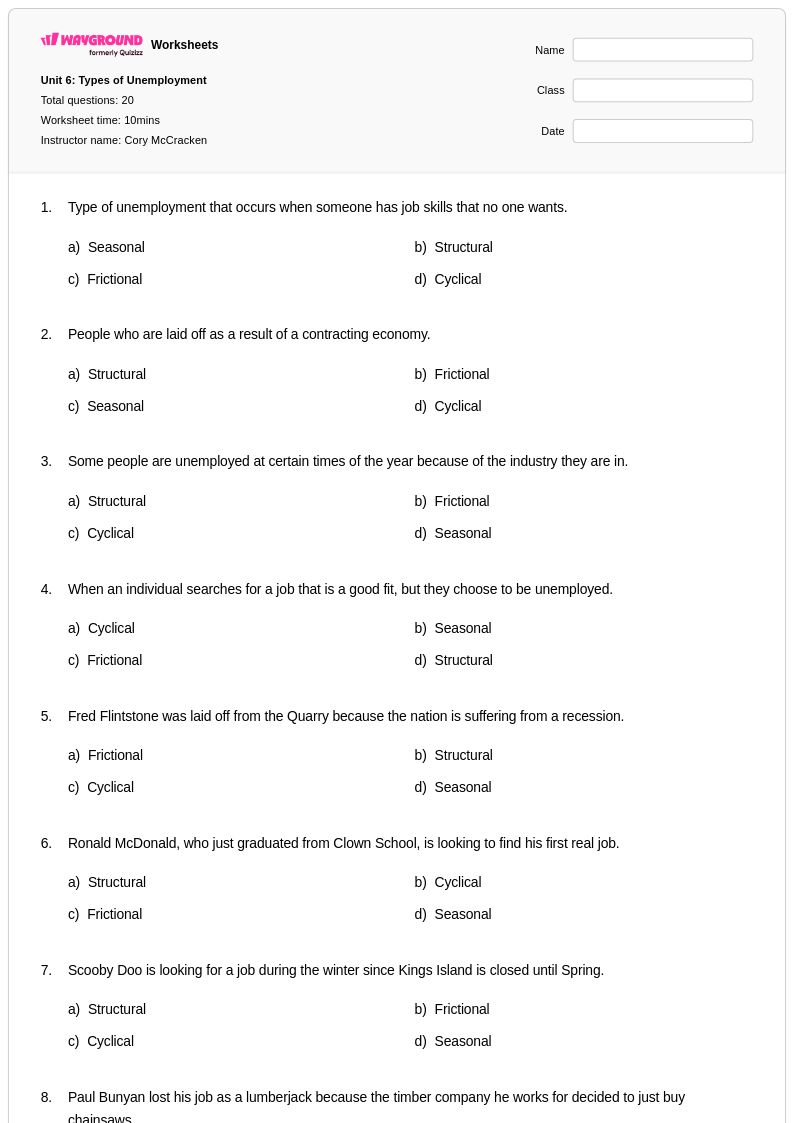
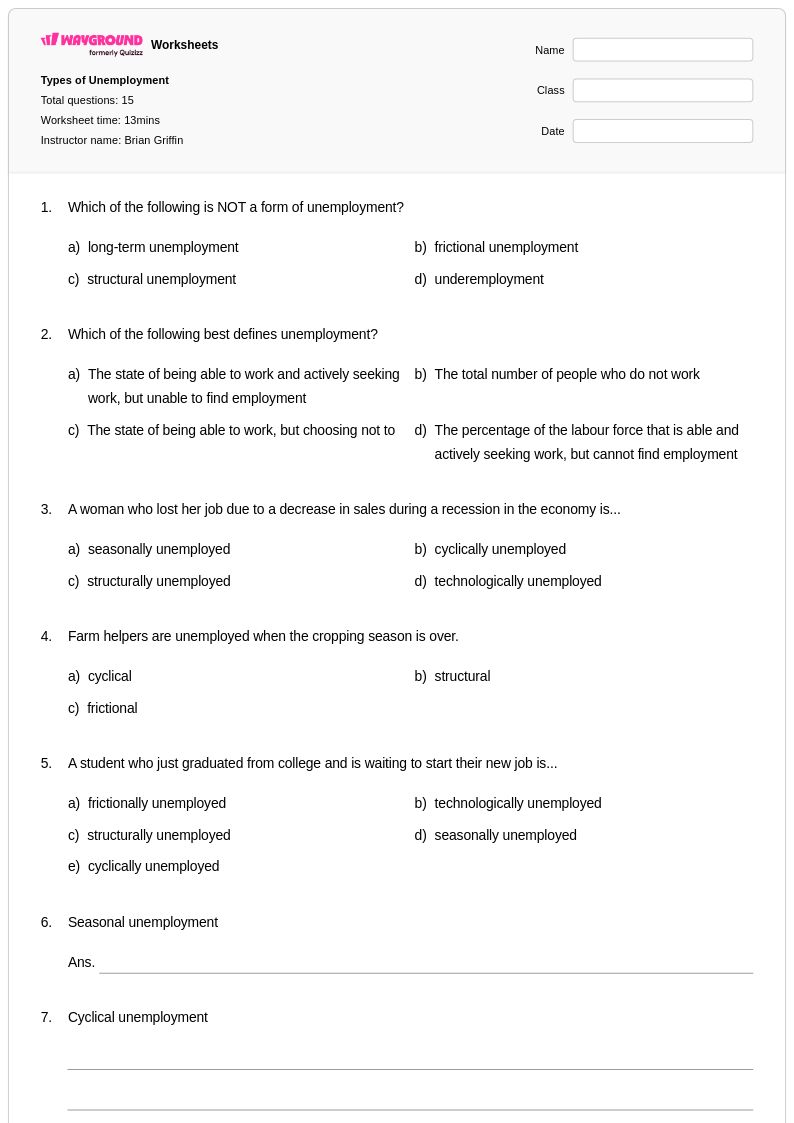
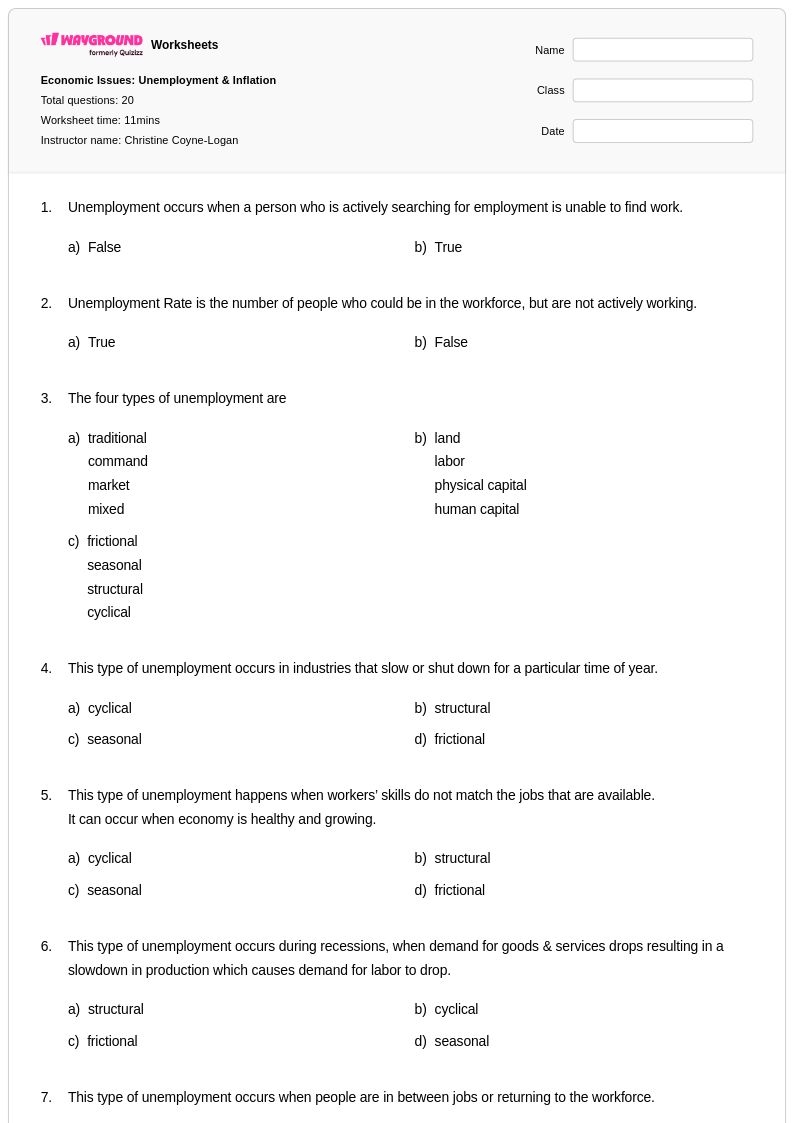
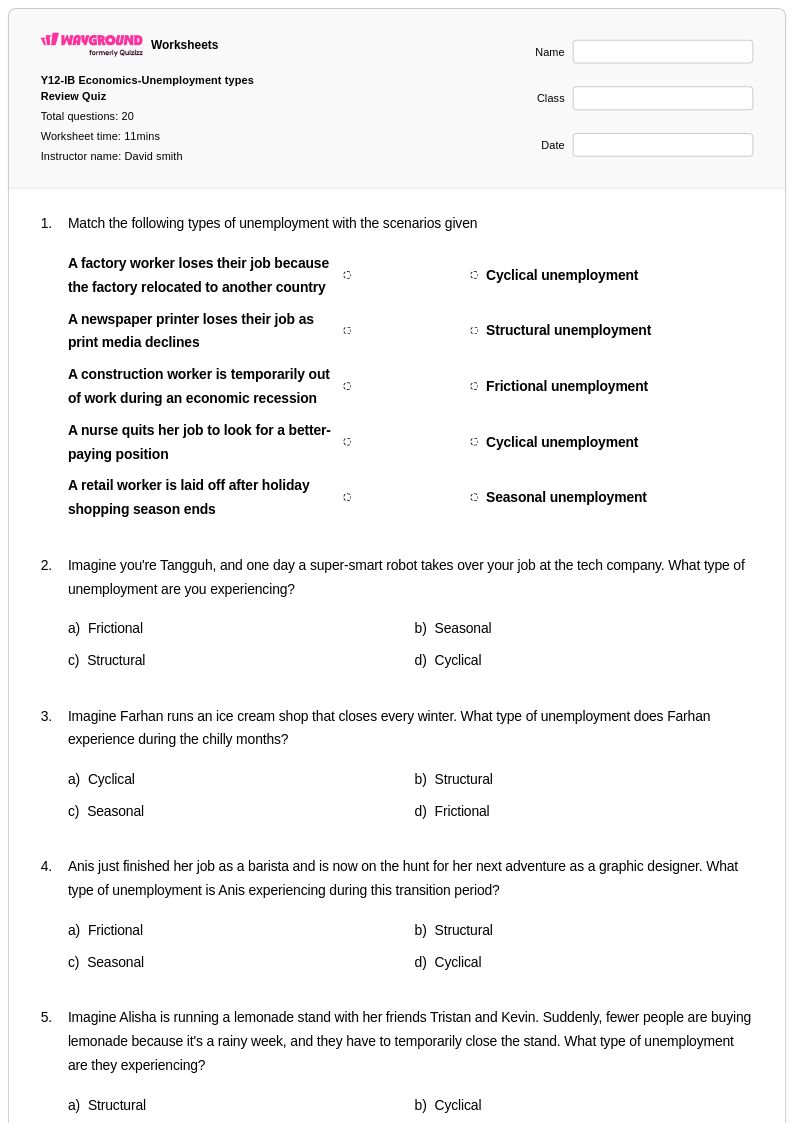
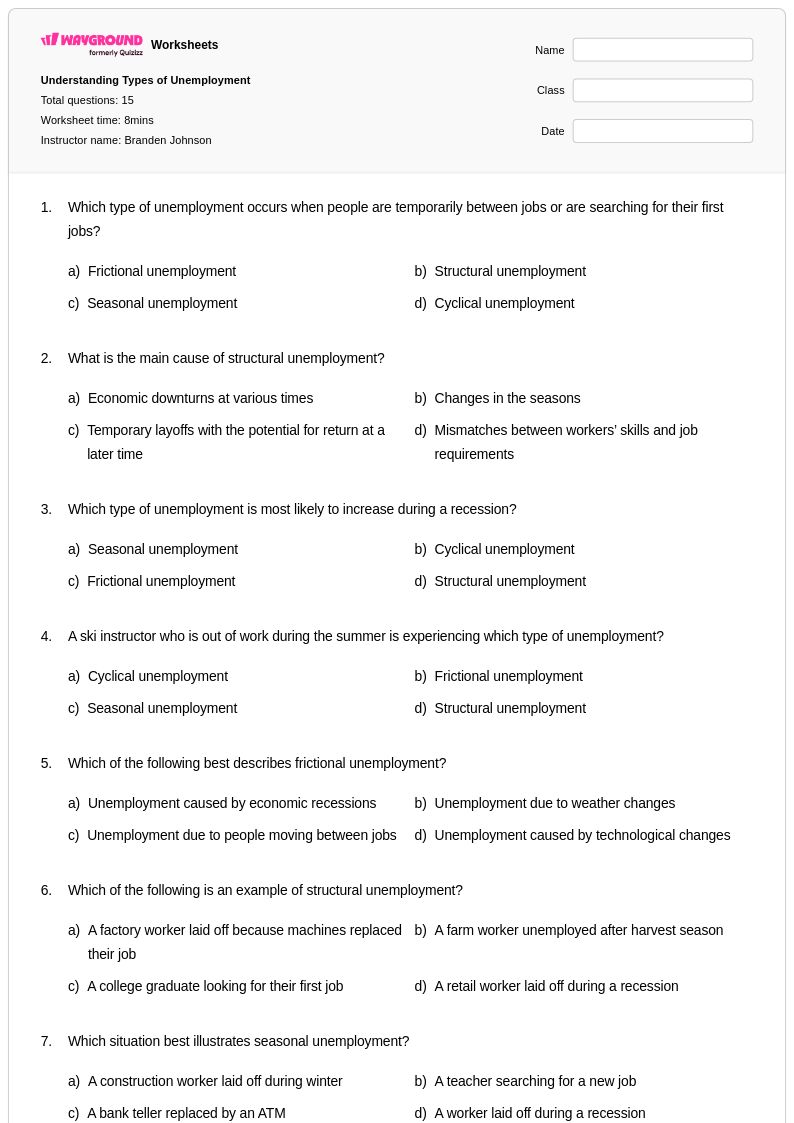
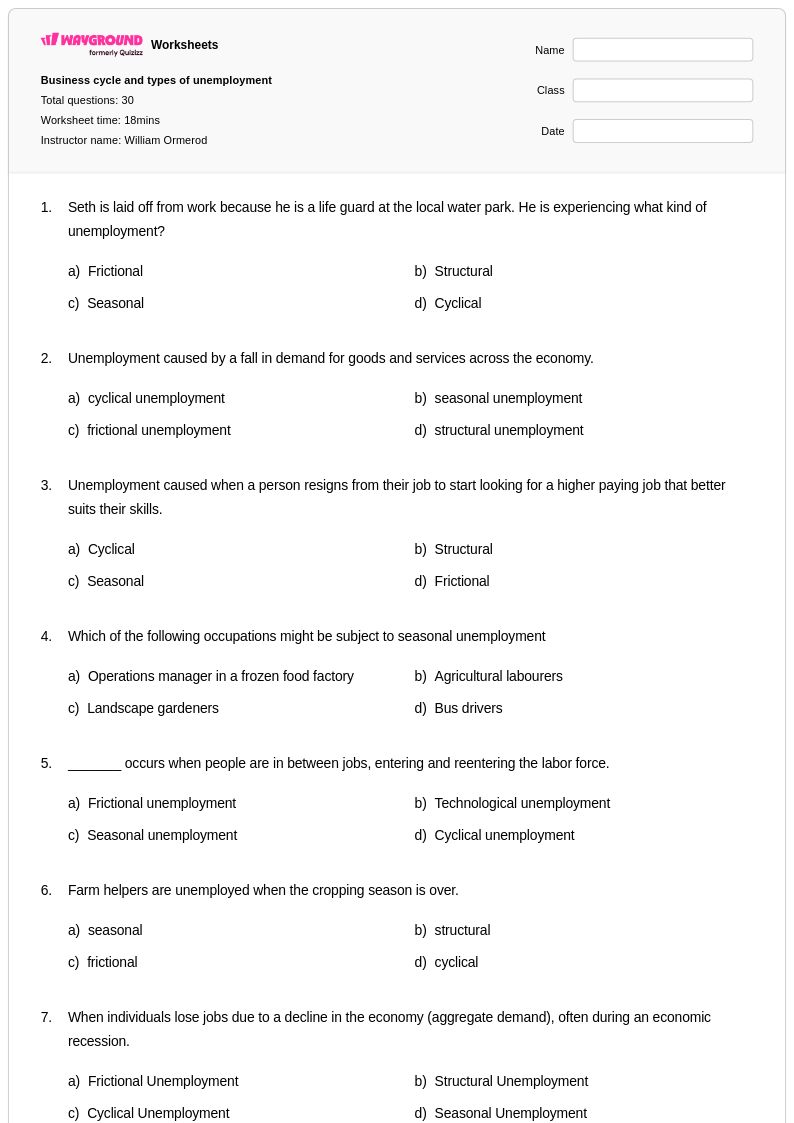
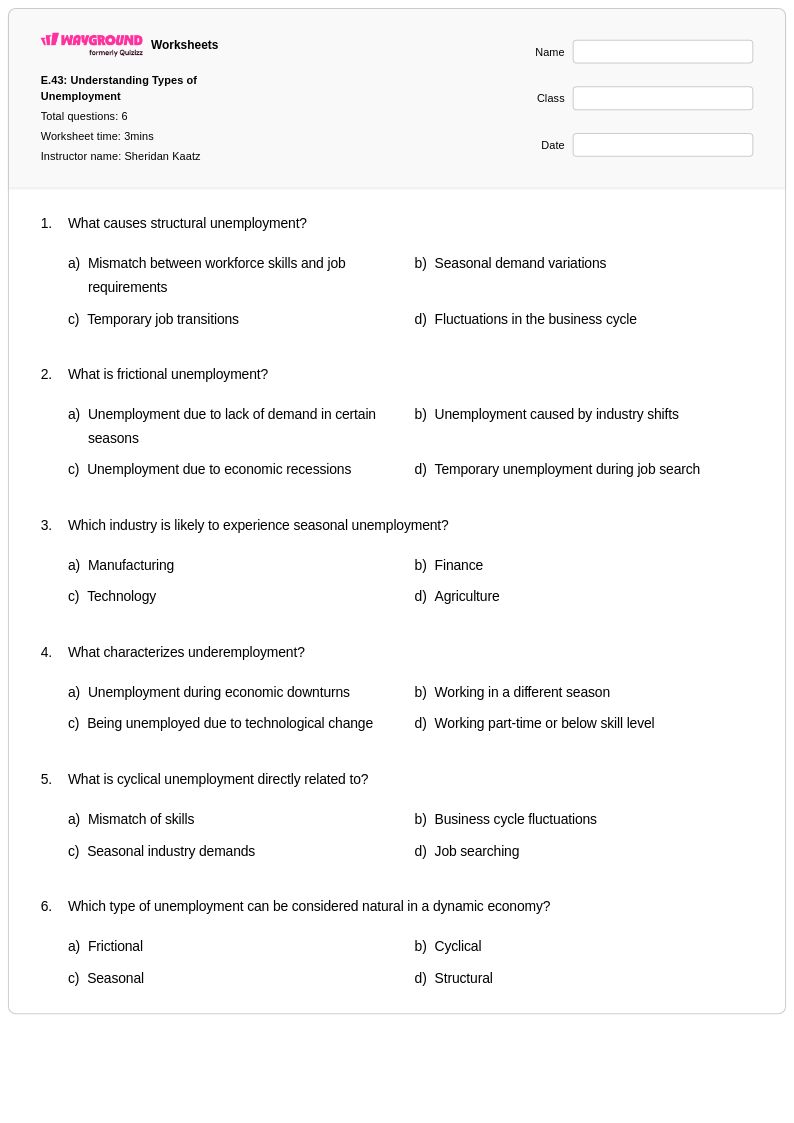
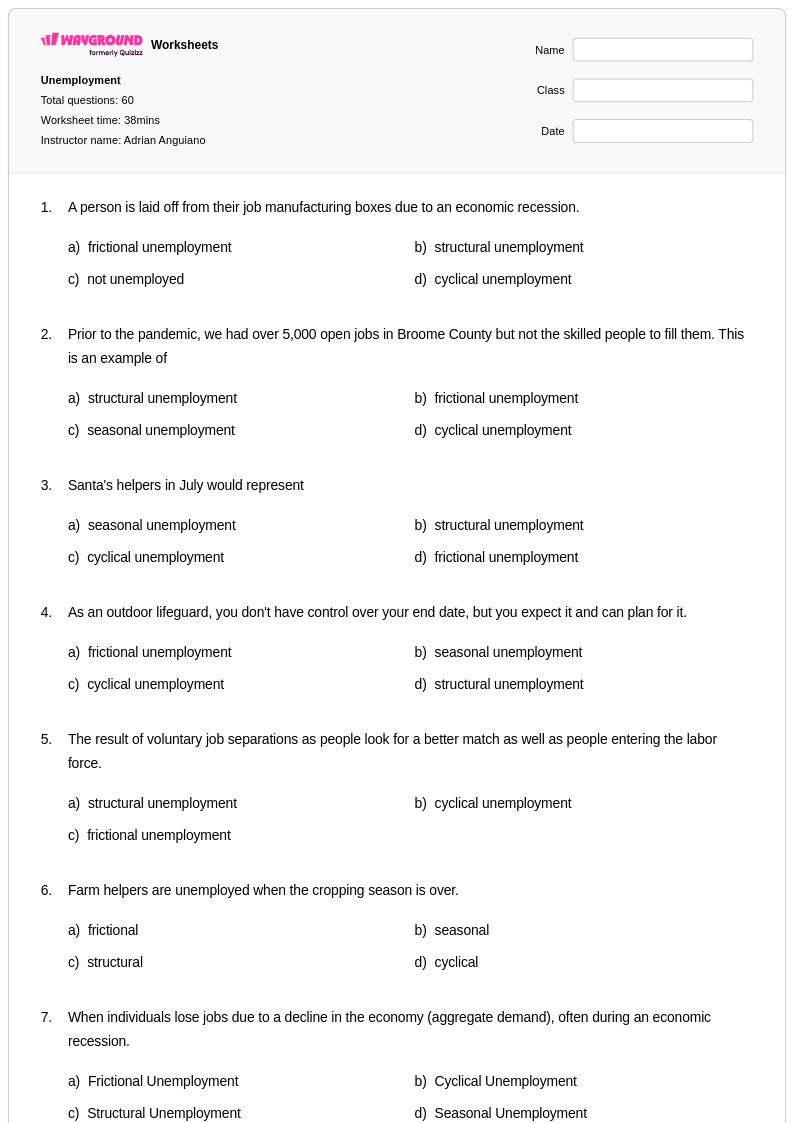
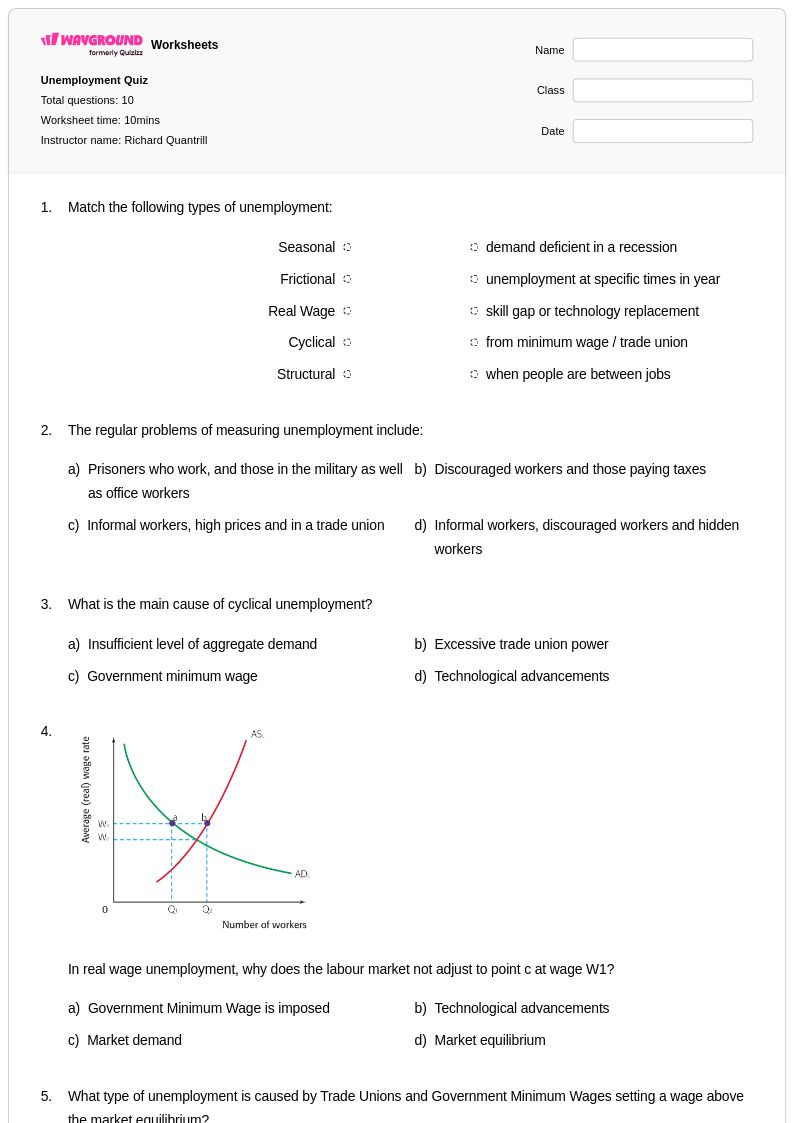
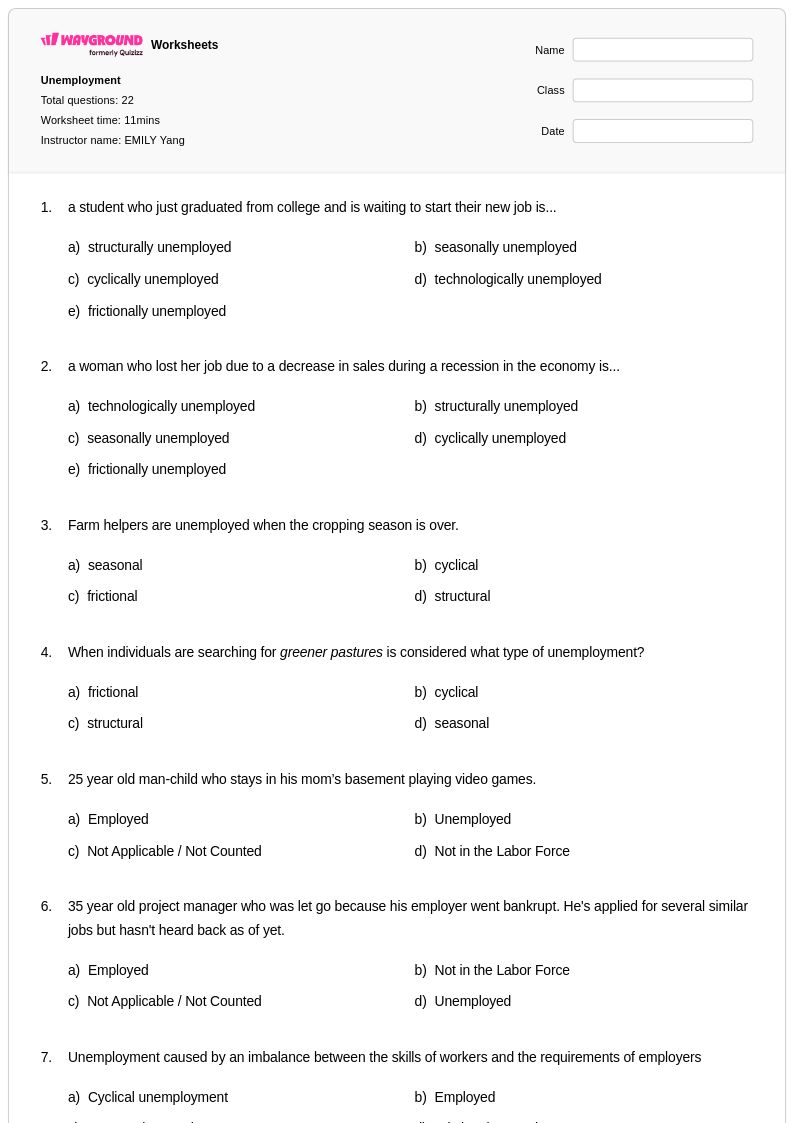
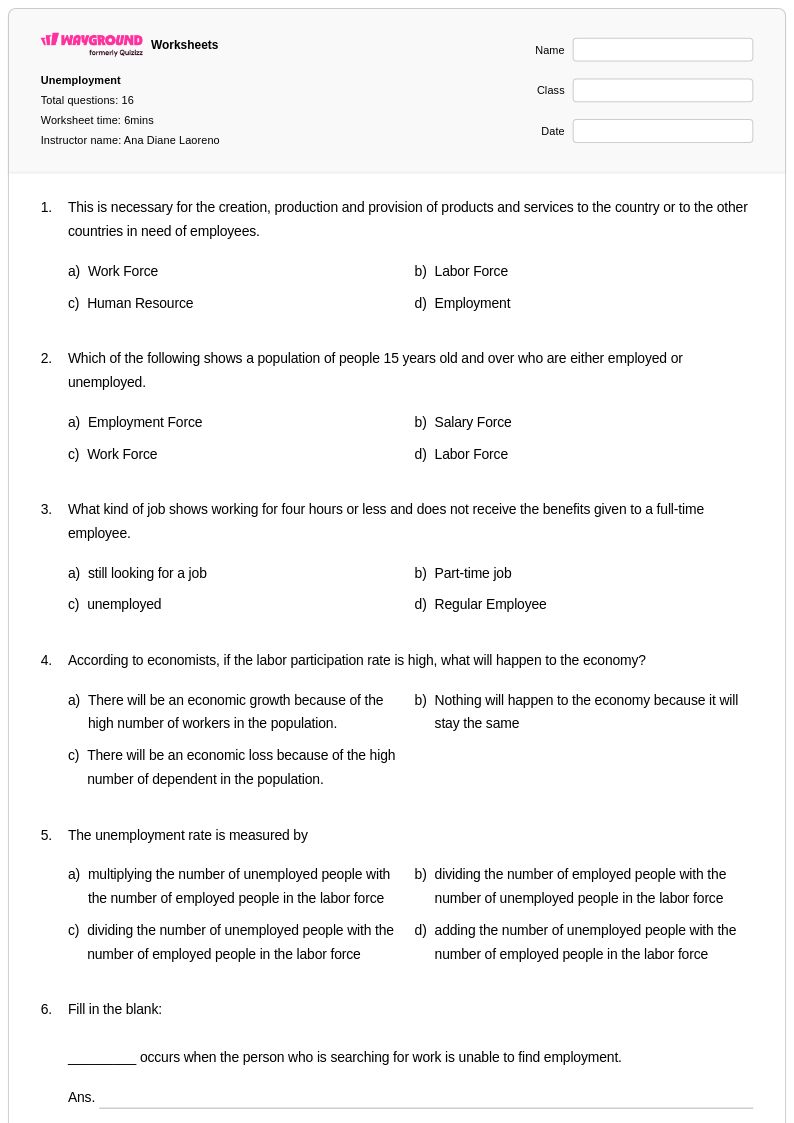
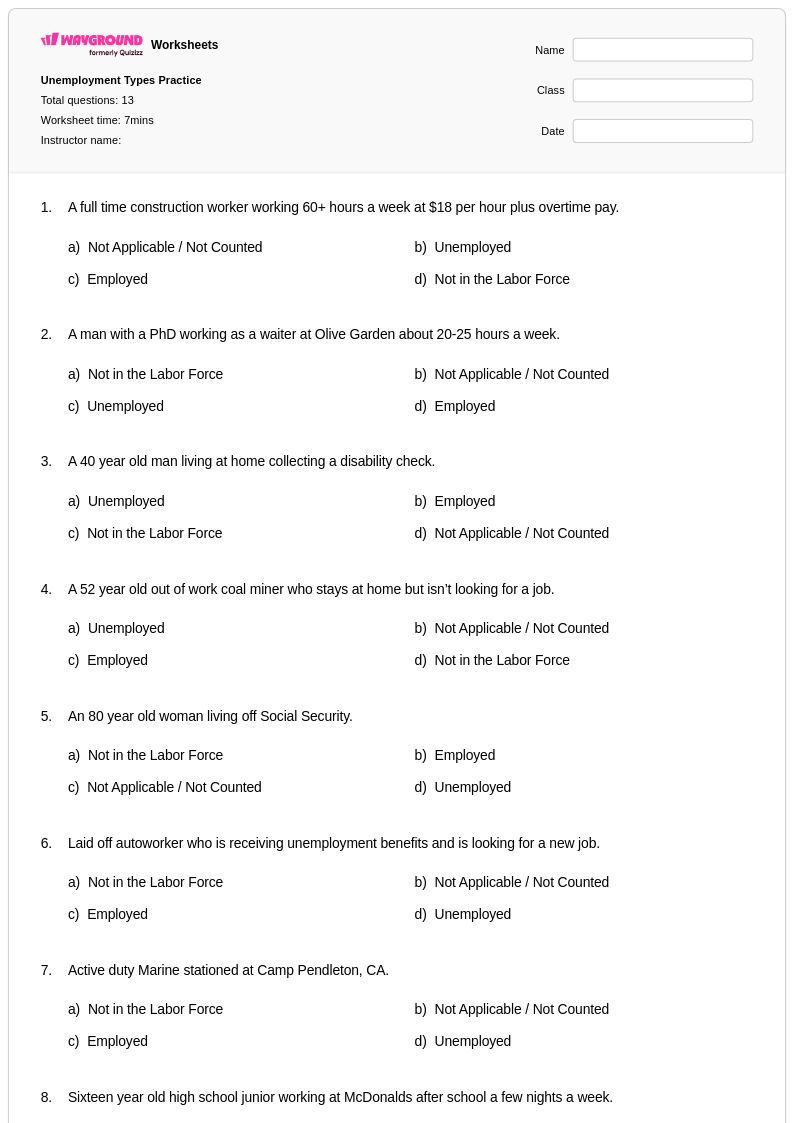
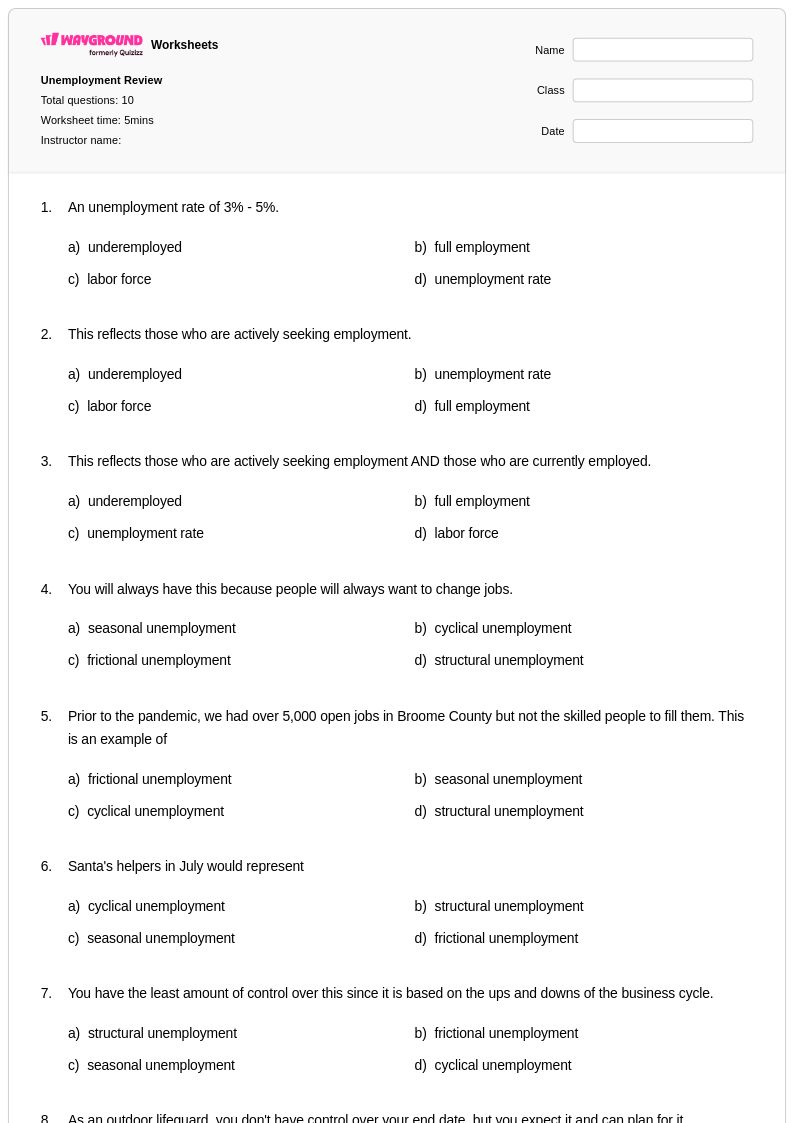
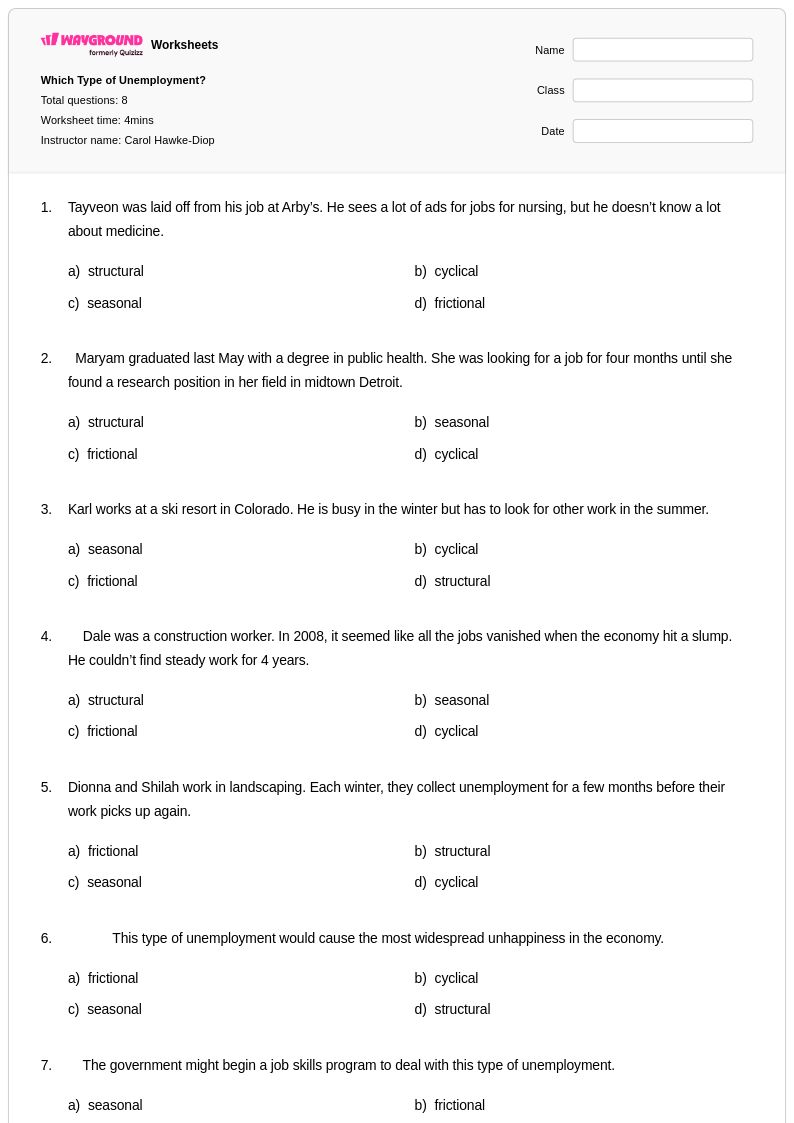
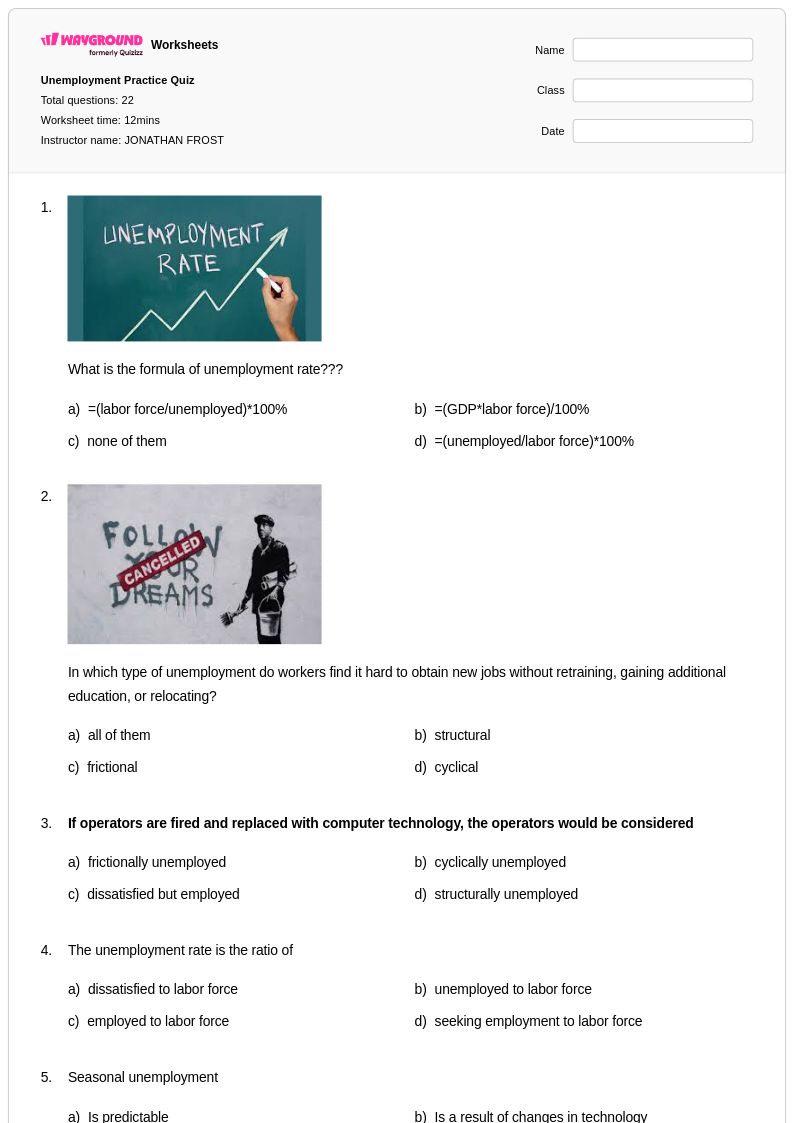
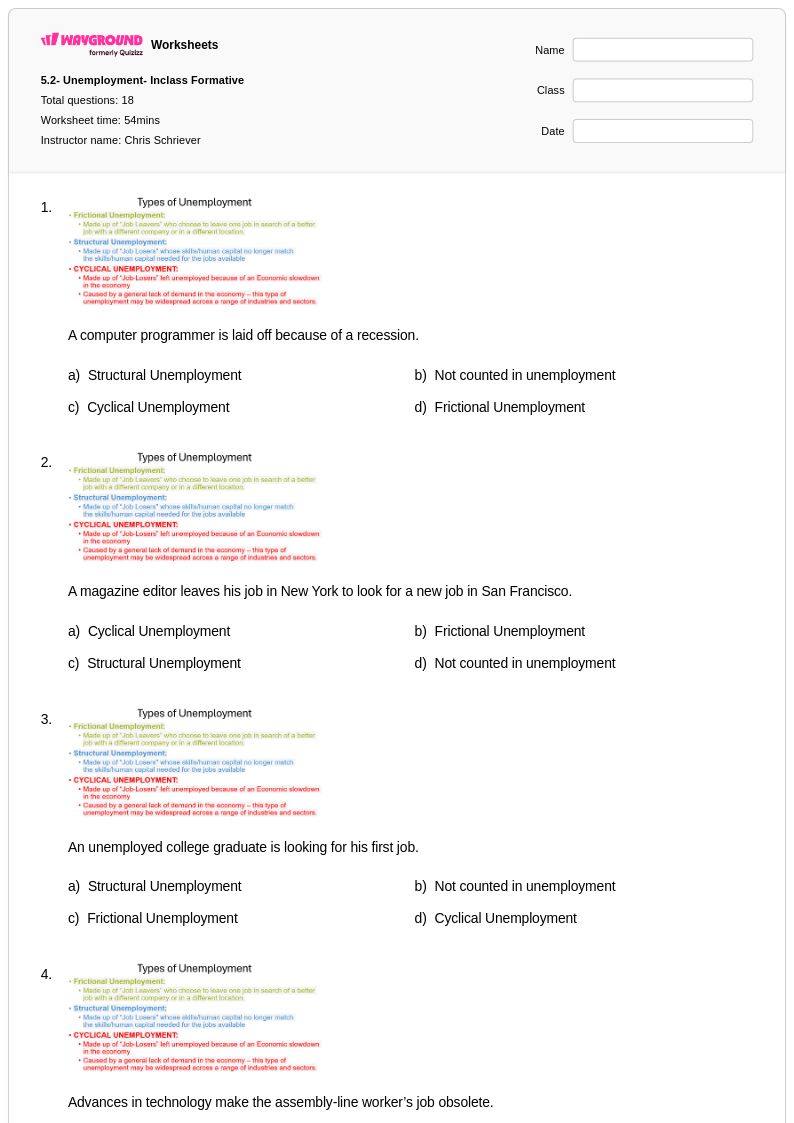
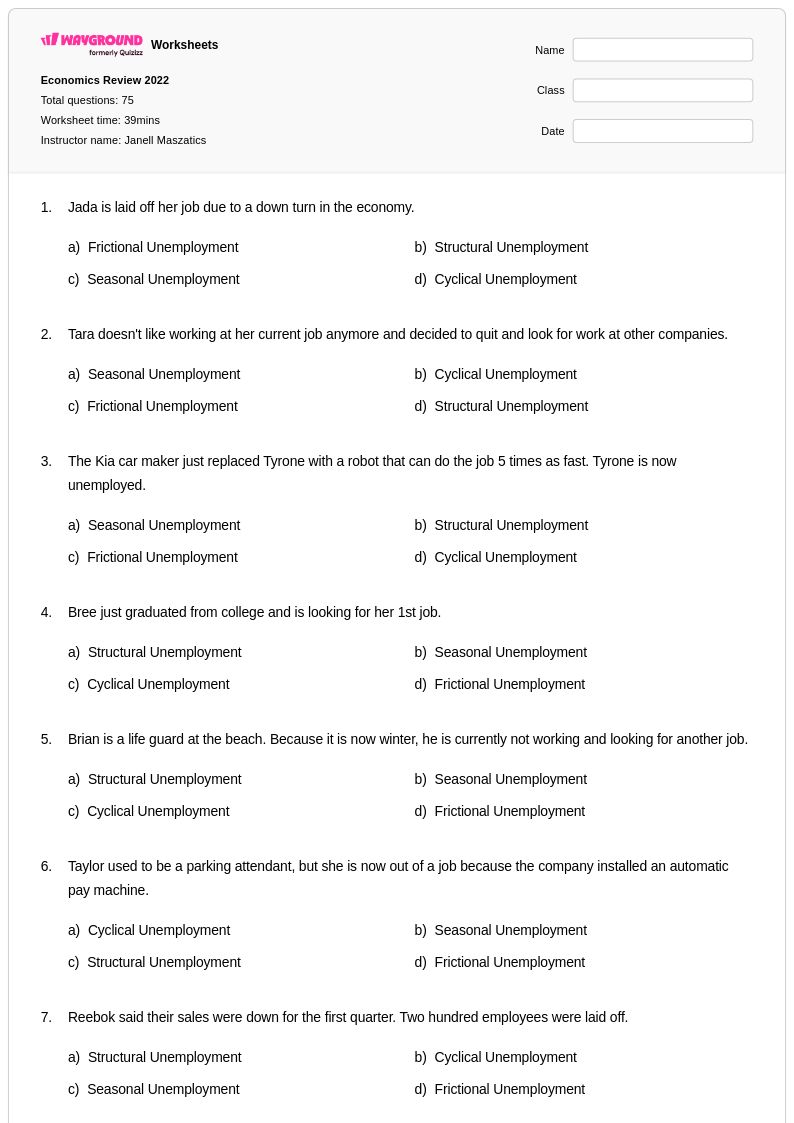
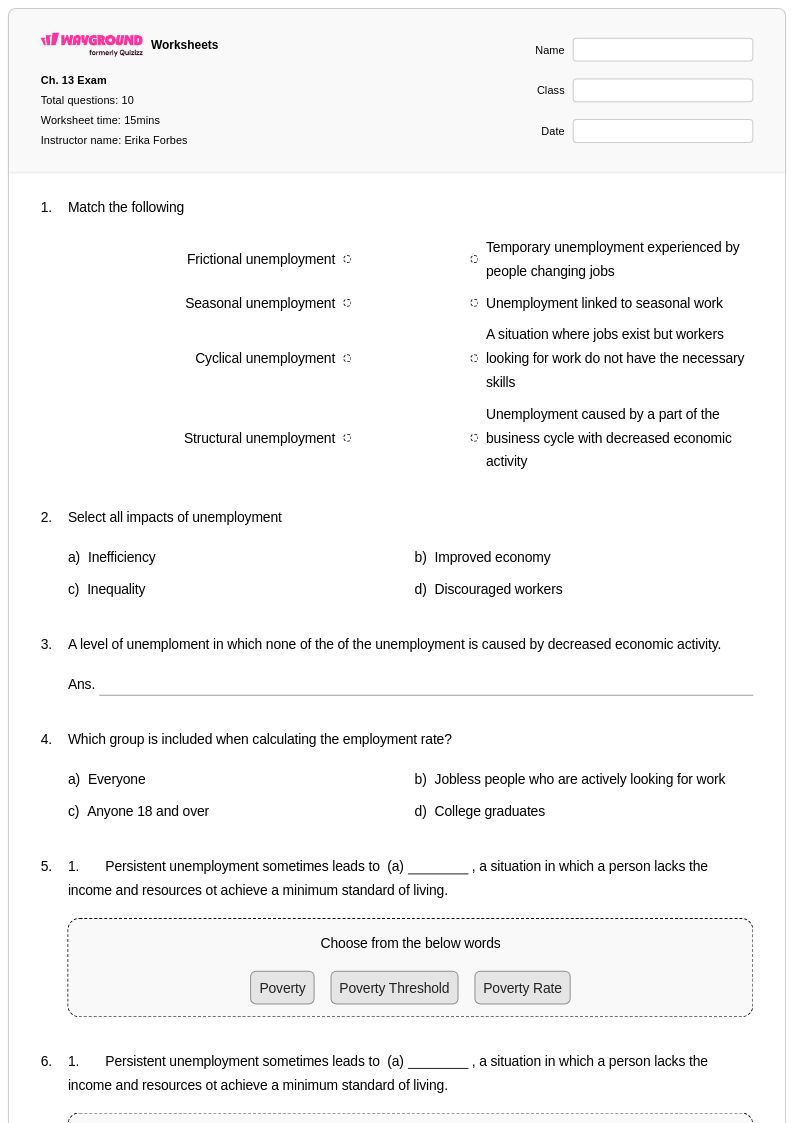
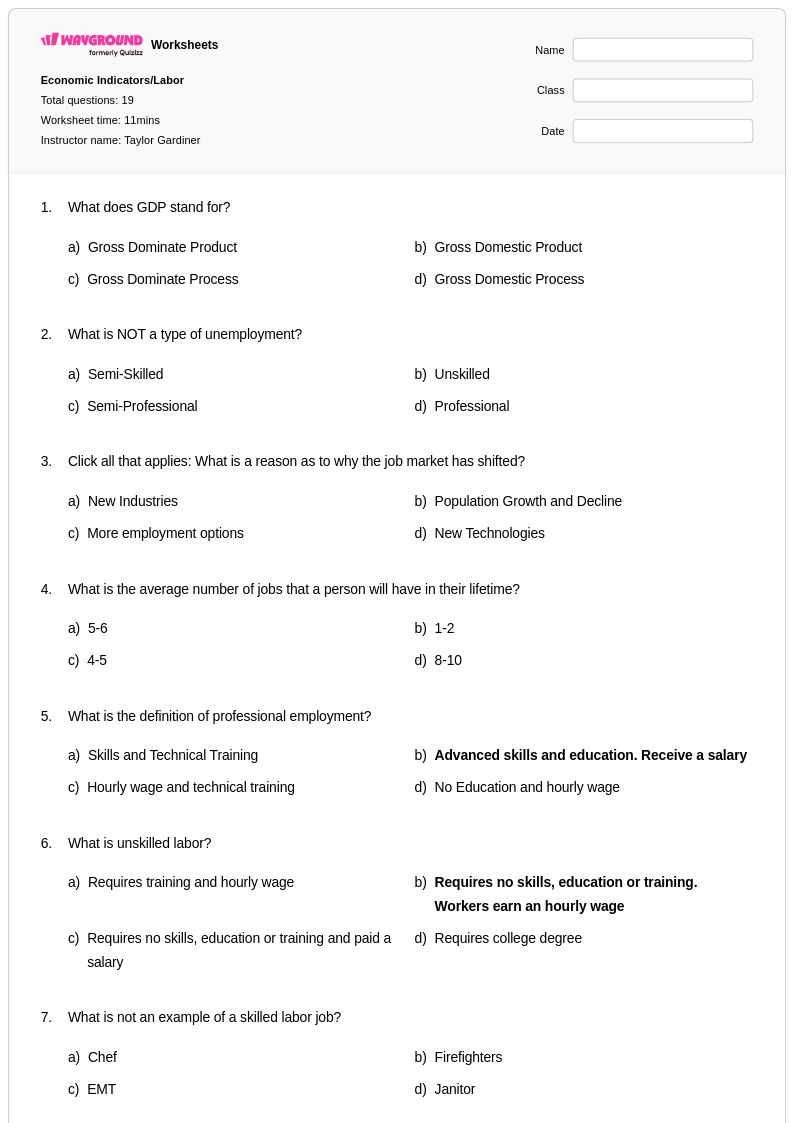
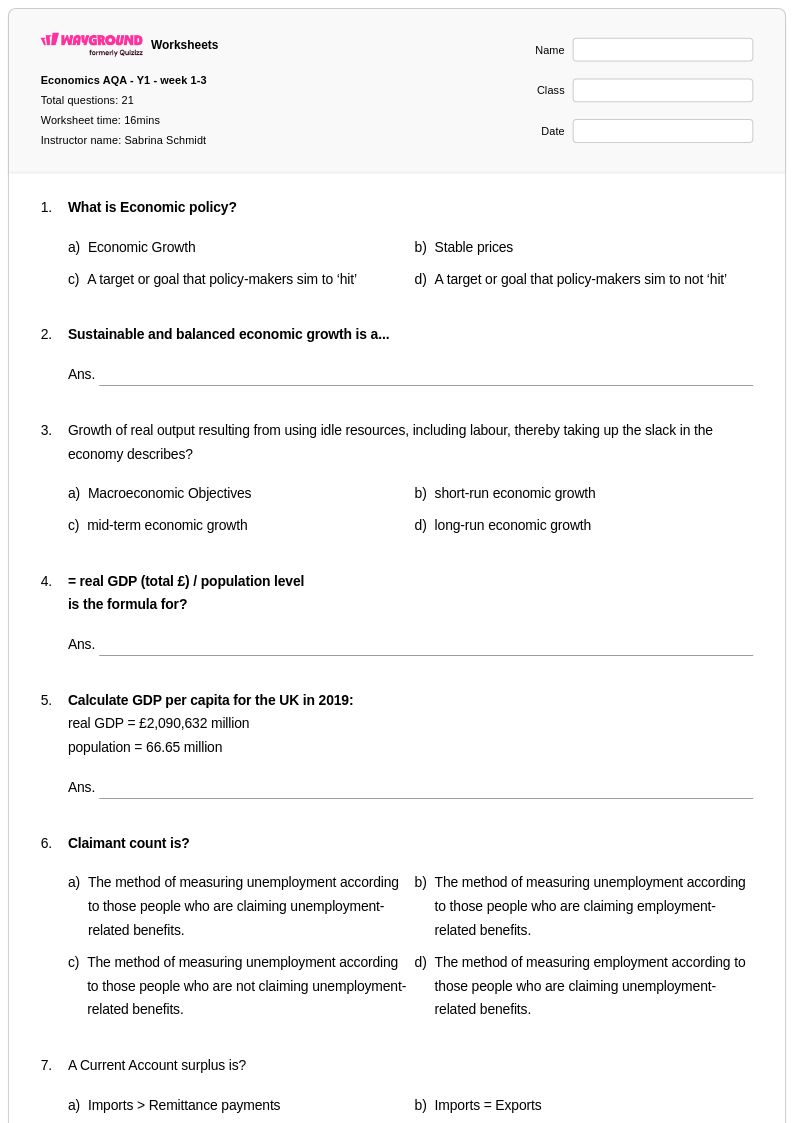
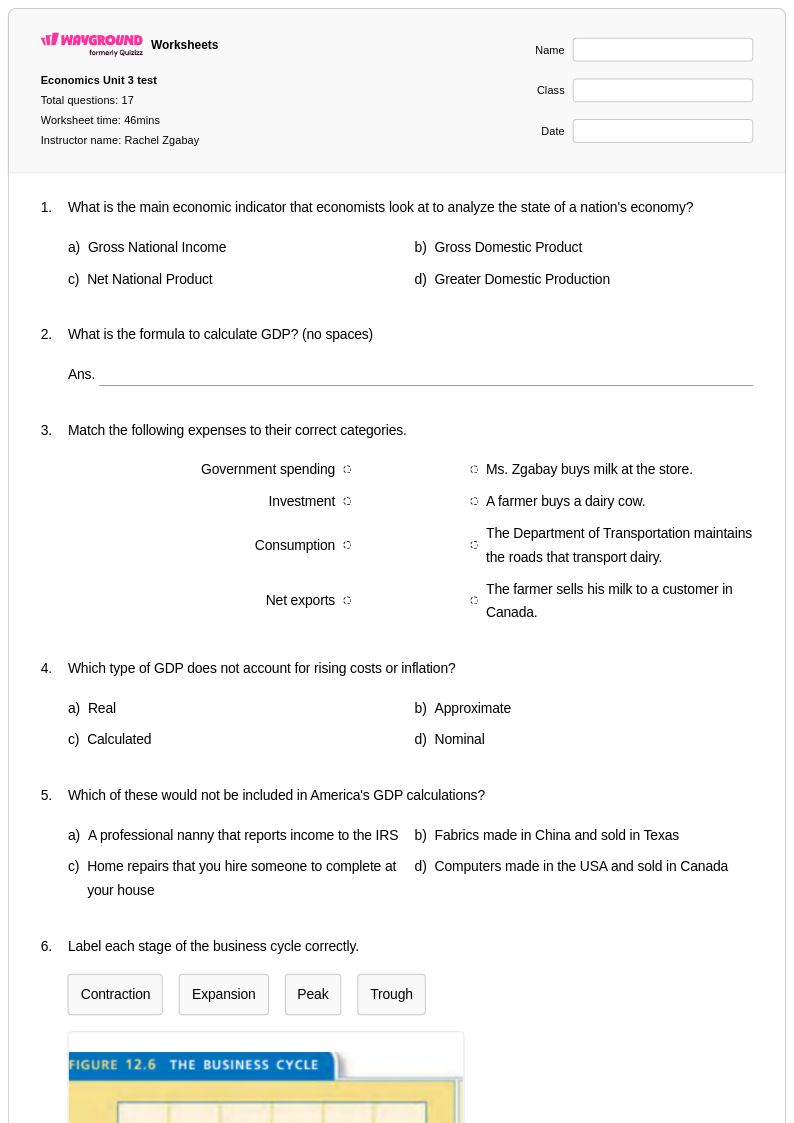
Types of unemployment worksheets for Class 11 students available through Wayground (formerly Quizizz) provide comprehensive coverage of the fundamental categories that define joblessness in modern economies. These expertly crafted resources help students distinguish between frictional, structural, cyclical, and seasonal unemployment while developing critical analytical skills necessary for advanced economic reasoning. The worksheets feature detailed practice problems that challenge students to identify unemployment types in real-world scenarios, calculate unemployment rates, and analyze the underlying causes and effects of each category. Each worksheet collection includes comprehensive answer keys and is available as free printable pdf resources, enabling students to work through complex economic concepts at their own pace while reinforcing their understanding of labor market dynamics.
Wayground (formerly Quizizz) supports educators with millions of teacher-created worksheet resources specifically designed for Class 11 economics instruction, featuring robust search and filtering capabilities that allow teachers to quickly locate materials aligned with curriculum standards and learning objectives. The platform's differentiation tools enable instructors to customize unemployment worksheets based on individual student needs, whether for remediation of foundational concepts or enrichment activities for advanced learners. Teachers can access these resources in both printable and digital formats, including downloadable pdf versions, making them ideal for classroom instruction, homework assignments, or independent study sessions. The flexible customization options and comprehensive resource library streamline lesson planning while providing targeted skill practice that helps students master the nuanced distinctions between unemployment types and their broader economic implications.
FAQs
How do I teach the different types of unemployment to high school economics students?
Start by grounding each unemployment type in a concrete, relatable scenario before introducing the formal definition. Frictional unemployment is best explained through job-searching examples like a recent graduate looking for their first role; structural unemployment through industry shifts like factory automation; cyclical unemployment through recessions; and seasonal unemployment through industries like agriculture or tourism. Once students can match real-world examples to each category, move to analysis tasks that ask them to explain why a given unemployment type is harder or easier to reduce through policy.
What exercises help students practice identifying types of unemployment?
Scenario-based classification exercises are the most effective practice format for this topic. Present students with short descriptions of workers who have lost or are seeking jobs, and ask them to identify the unemployment type and justify their answer. Adding unemployment rate calculation problems alongside classification tasks reinforces the quantitative side of labor market analysis. Worksheets that combine both skill types give students practice applying definitions in context rather than reciting them from memory.
What mistakes do students commonly make when classifying types of unemployment?
The most common error is confusing structural and frictional unemployment, since both involve workers who are between jobs. The key distinction is cause: frictional unemployment is temporary and voluntary, while structural unemployment results from a permanent mismatch between worker skills and available jobs due to technological or economic shifts. Students also frequently misclassify cyclical unemployment as structural during recessions, not recognizing that cyclical unemployment is tied to the business cycle and expected to reverse as the economy recovers.
How do I use types of unemployment worksheets in a unit on labor markets?
These worksheets work well at multiple points in a labor market unit. Use classification exercises early to build definitional fluency, then reintroduce them after covering macroeconomic policy so students can connect unemployment types to appropriate policy responses. Wayground's types of unemployment worksheets are available as printable PDFs for in-class use and in digital formats for technology-integrated assignments, and can also be hosted as a quiz directly on Wayground, making them adaptable for formative checks, homework, or summative review.
How does understanding types of unemployment help students analyze economic policy?
Distinguishing between unemployment types is foundational to evaluating policy effectiveness because different types require different interventions. Frictional unemployment may respond to better job-matching services, structural unemployment requires retraining programs, and cyclical unemployment calls for fiscal or monetary stimulus. Without this classification framework, students cannot critically assess why a given policy succeeds or fails in reducing unemployment, which is a core analytical skill in introductory and AP Economics.
How can I differentiate types of unemployment instruction for students at different skill levels?
For introductory learners, focus on definition matching and simple scenario classification before adding calculation tasks. For more advanced students, layer in analysis prompts that ask them to evaluate which unemployment type is most harmful to long-term economic growth and why. On Wayground, teachers can apply accommodations such as reduced answer choices for students who need additional support, or extended time settings for individual students, without other students being notified, keeping differentiation seamless during digital assignments.