Free Printable Homophones and Homographs Worksheets for Class 6
Enhance Class 6 students' understanding of homophones and homographs with Wayground's comprehensive collection of free worksheets, printables, and practice problems featuring detailed answer keys to master these essential language concepts.
Explore printable Homophones and Homographs worksheets for Class 6
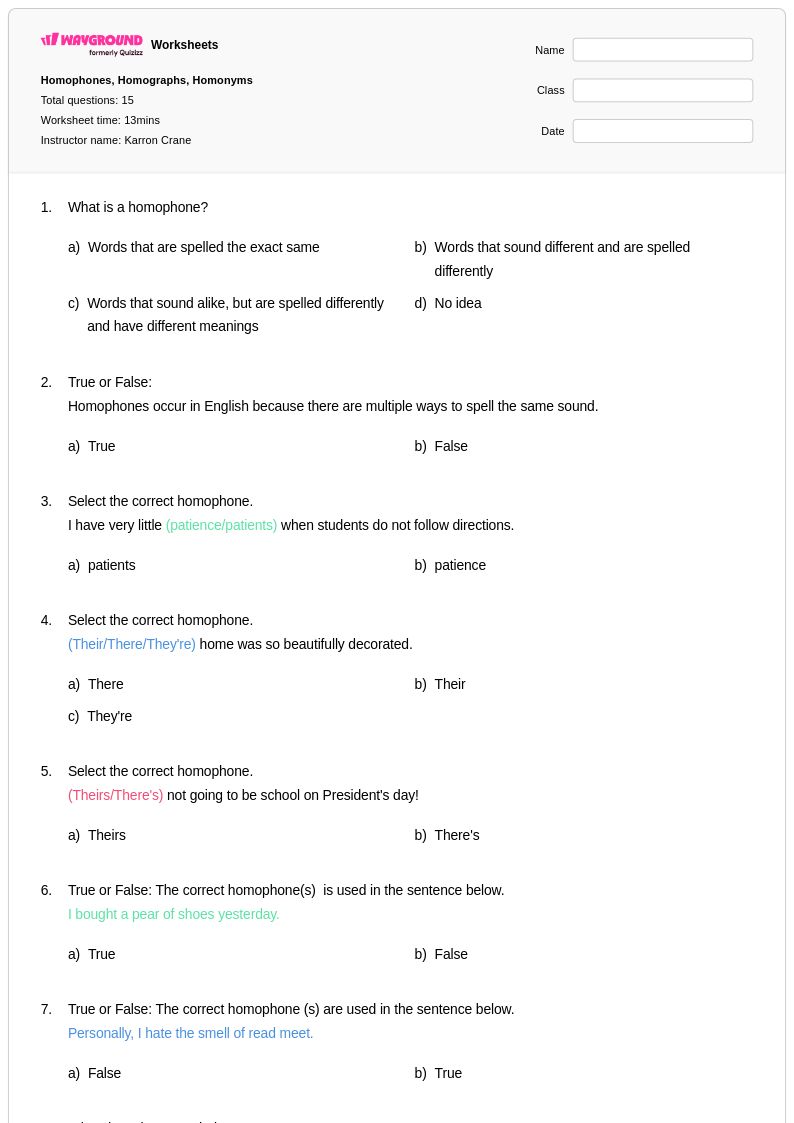
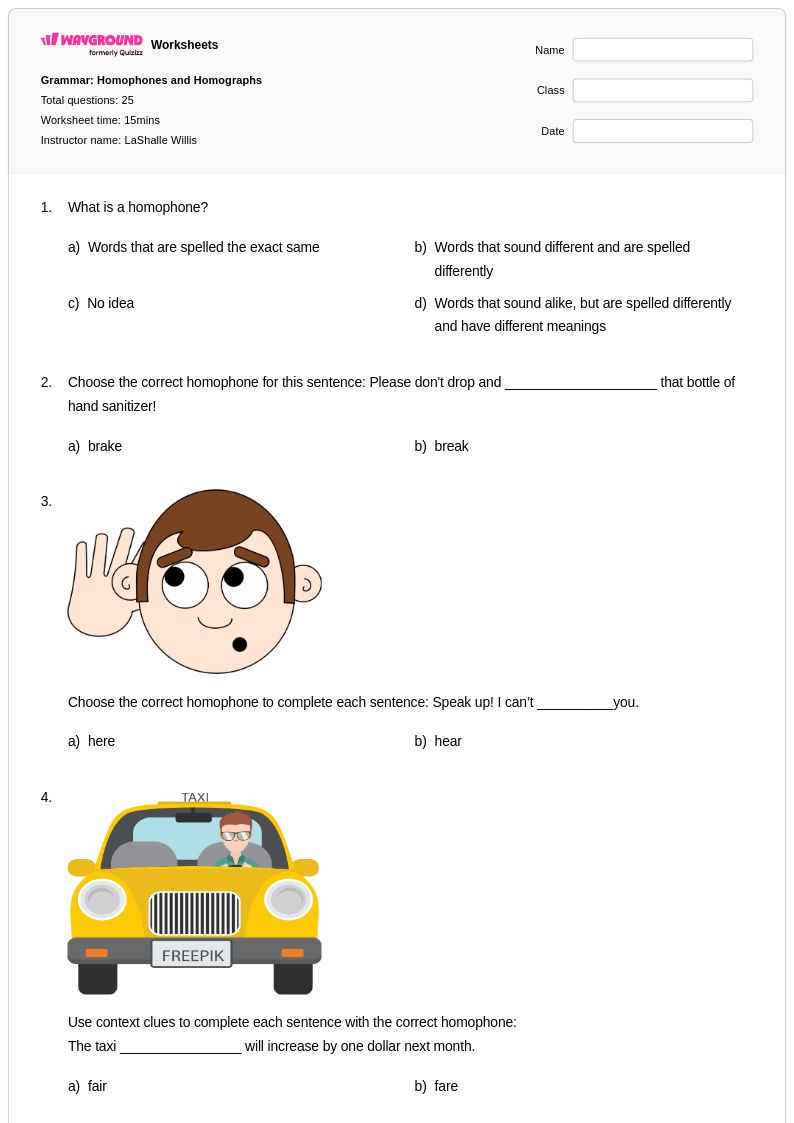
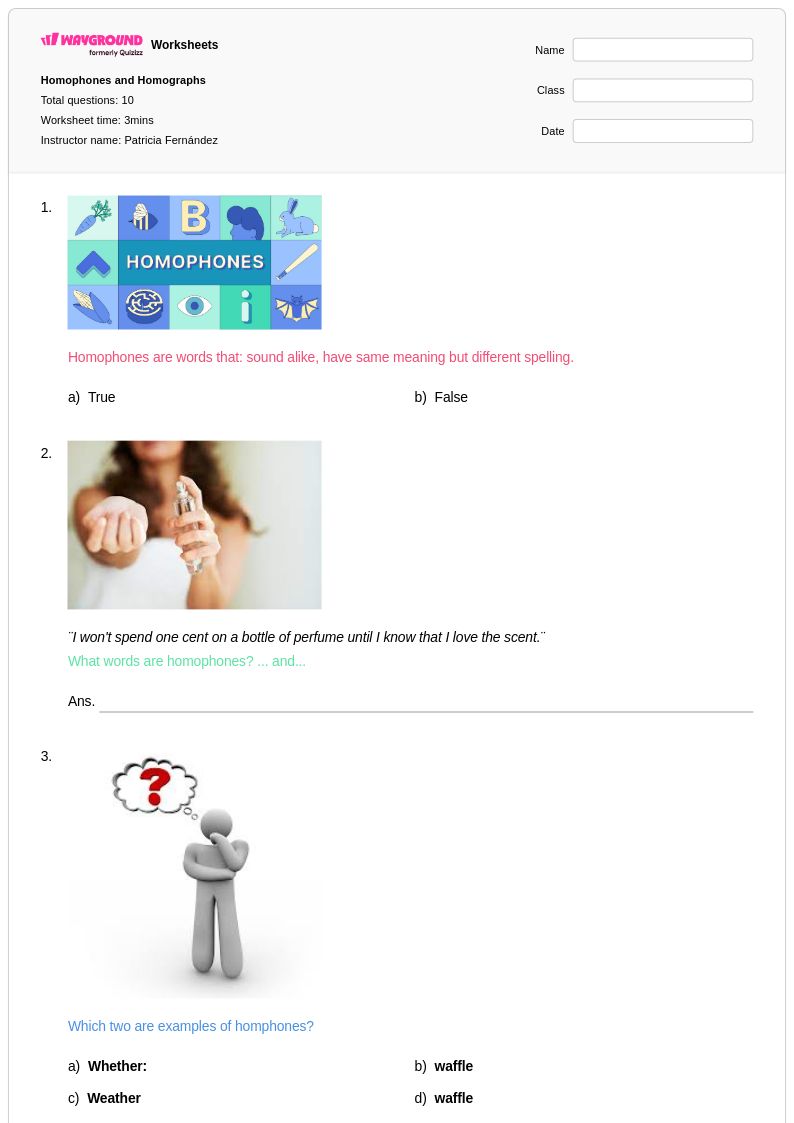
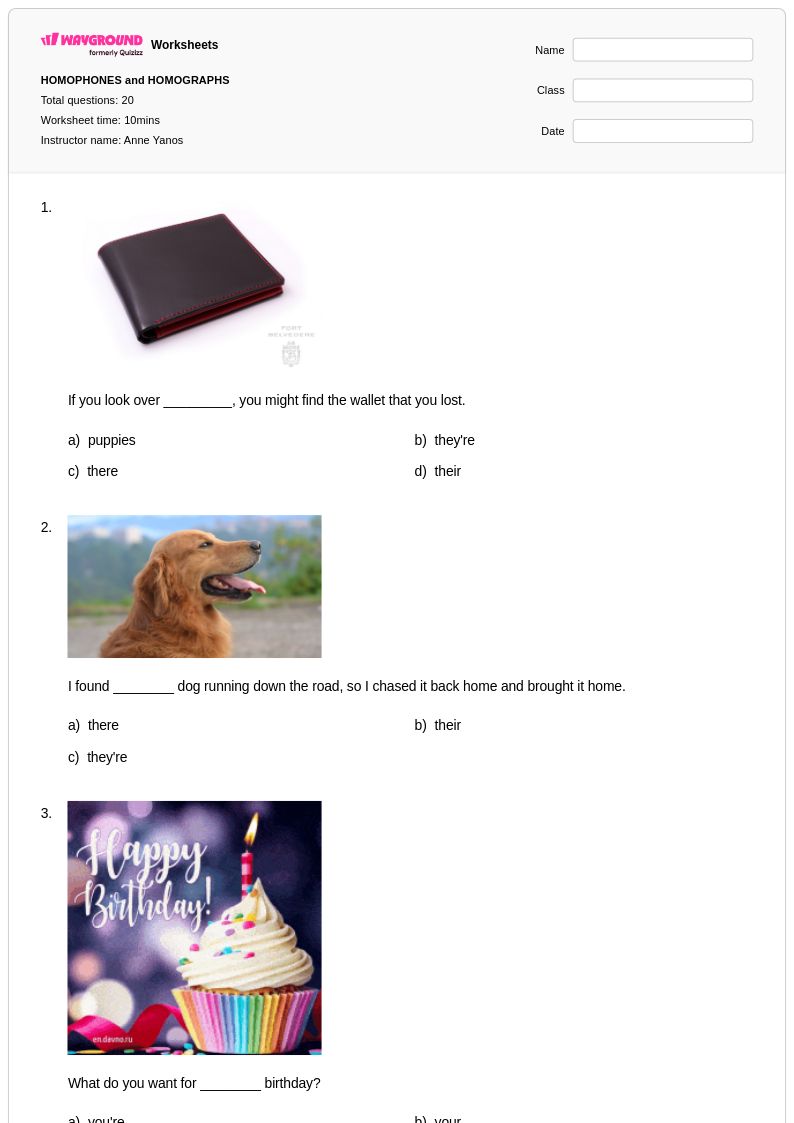
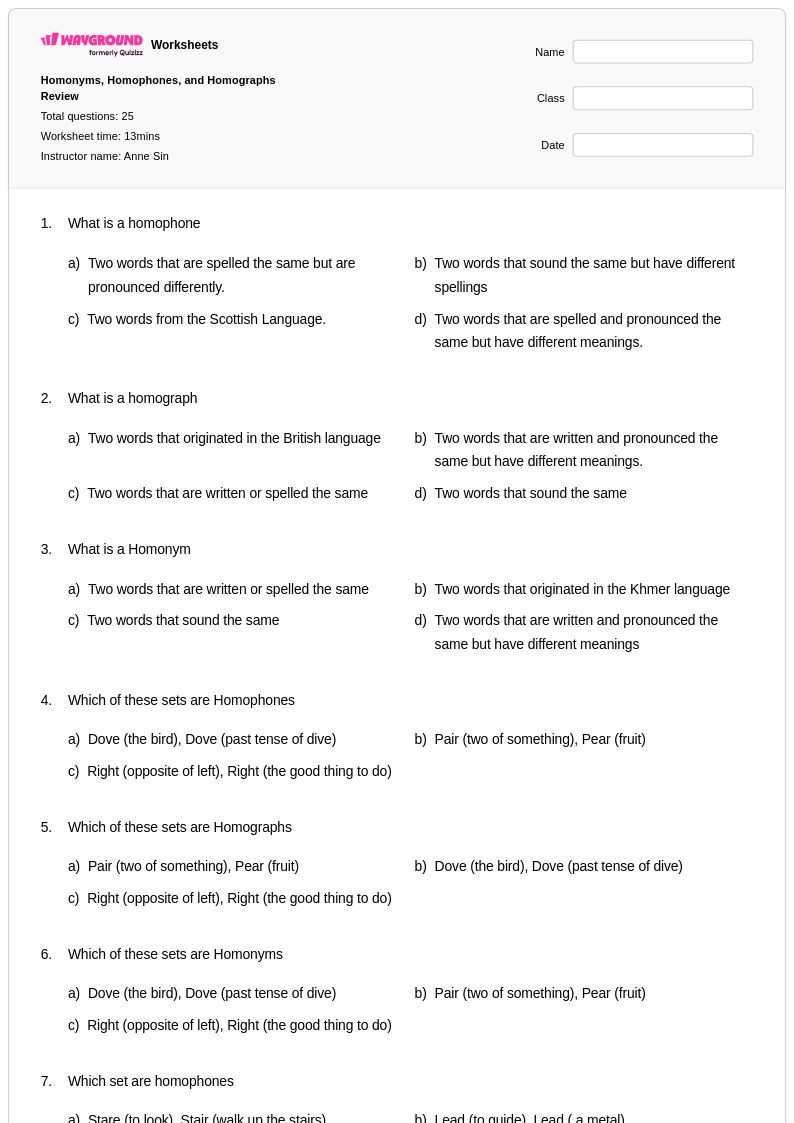
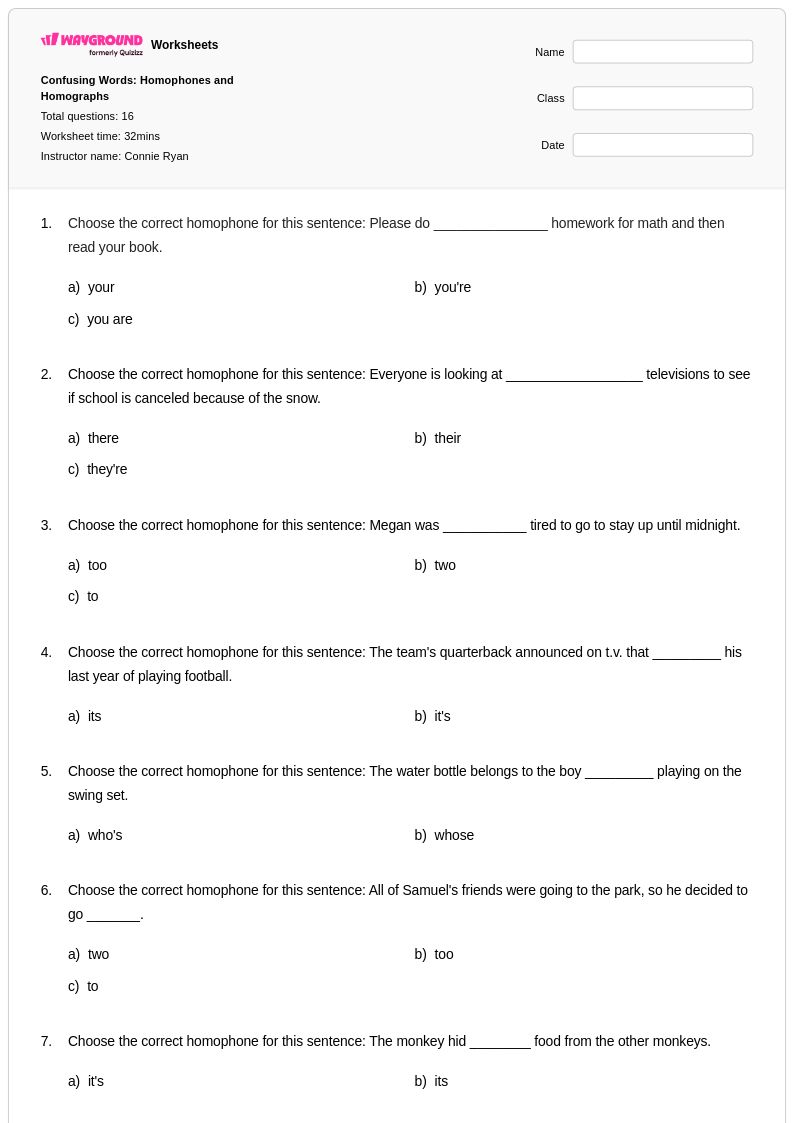
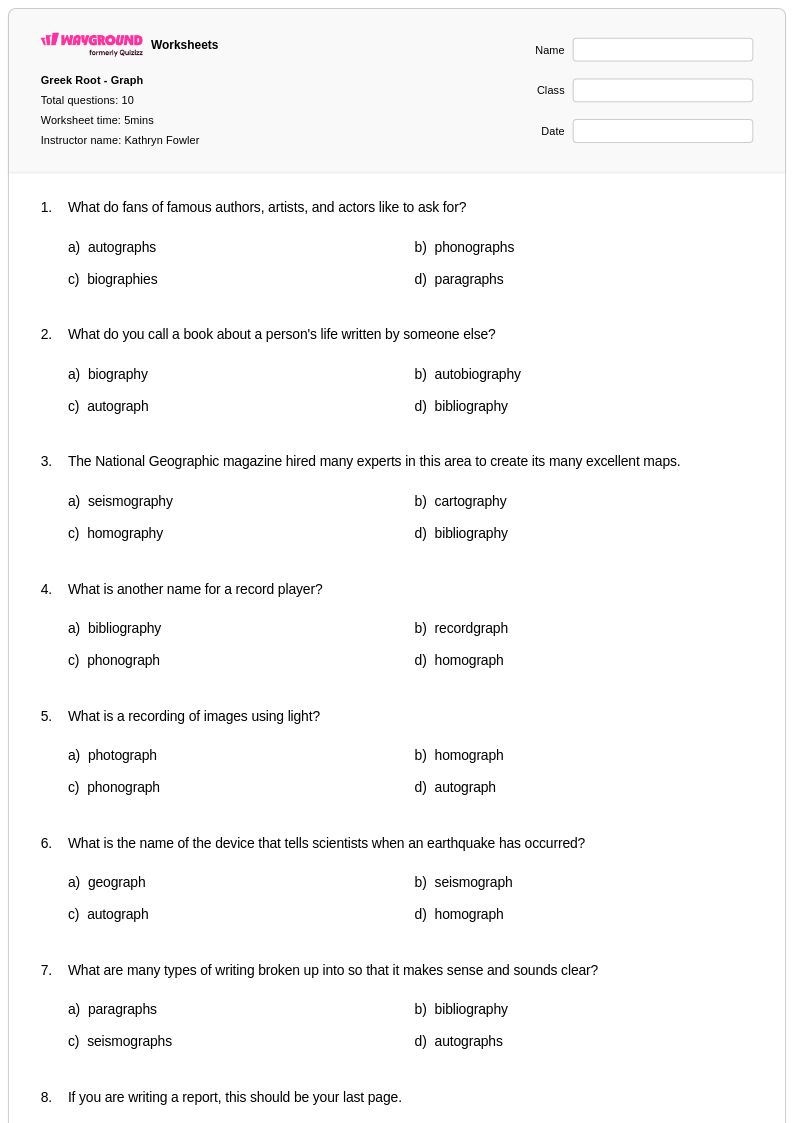
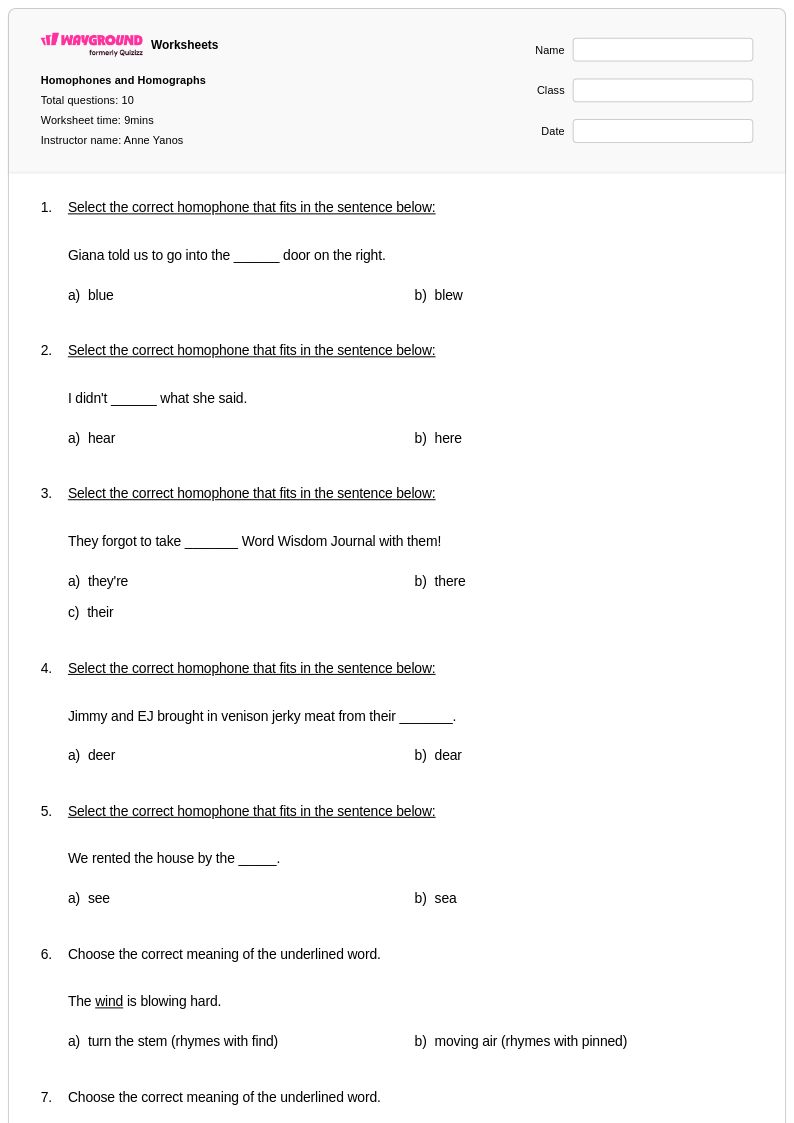
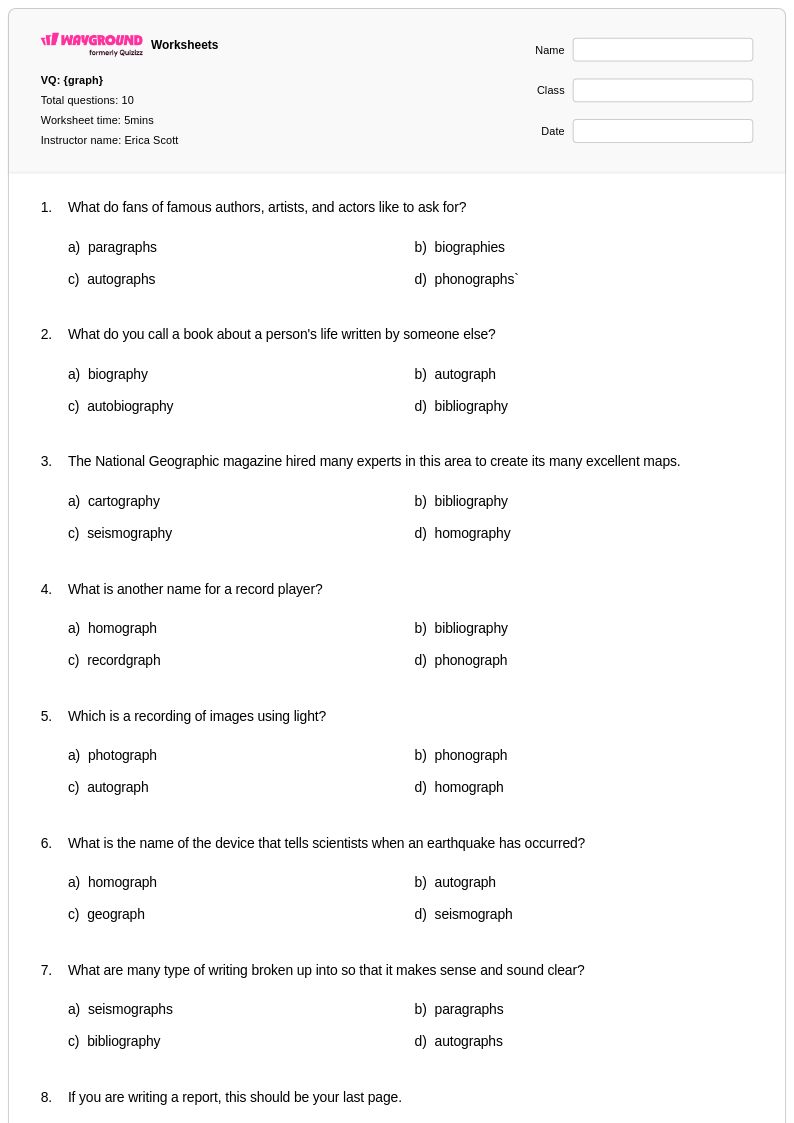
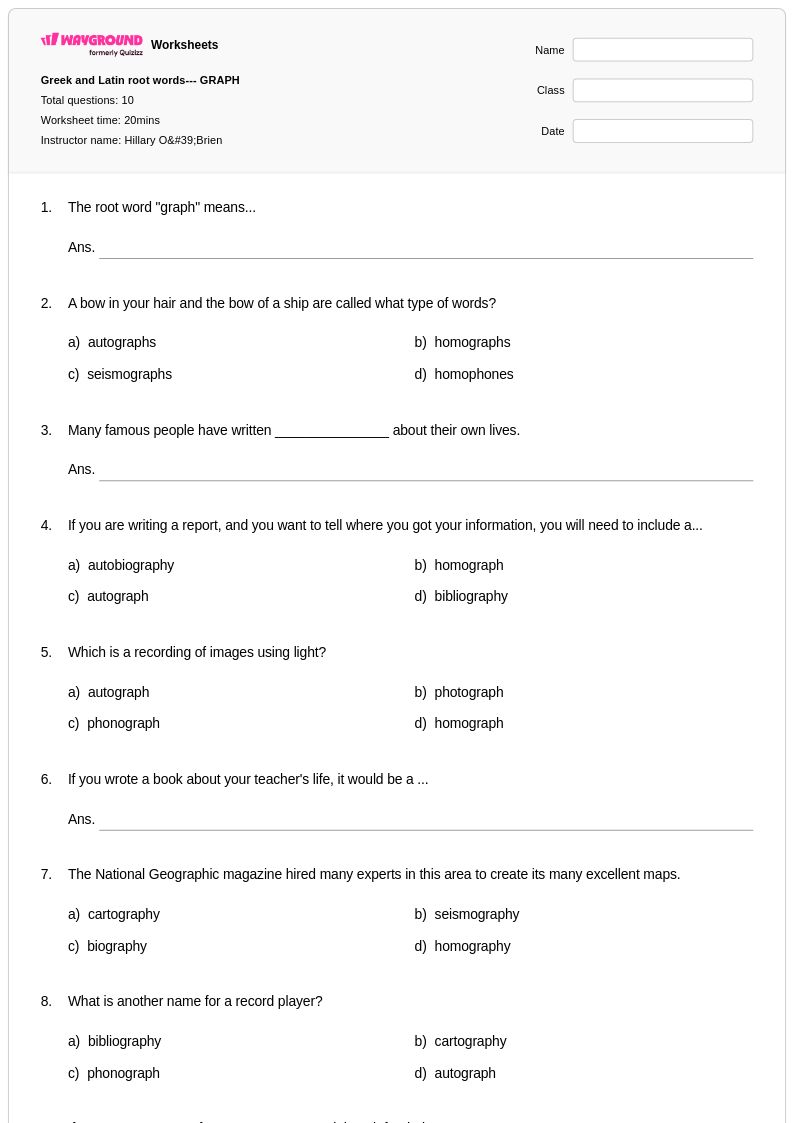
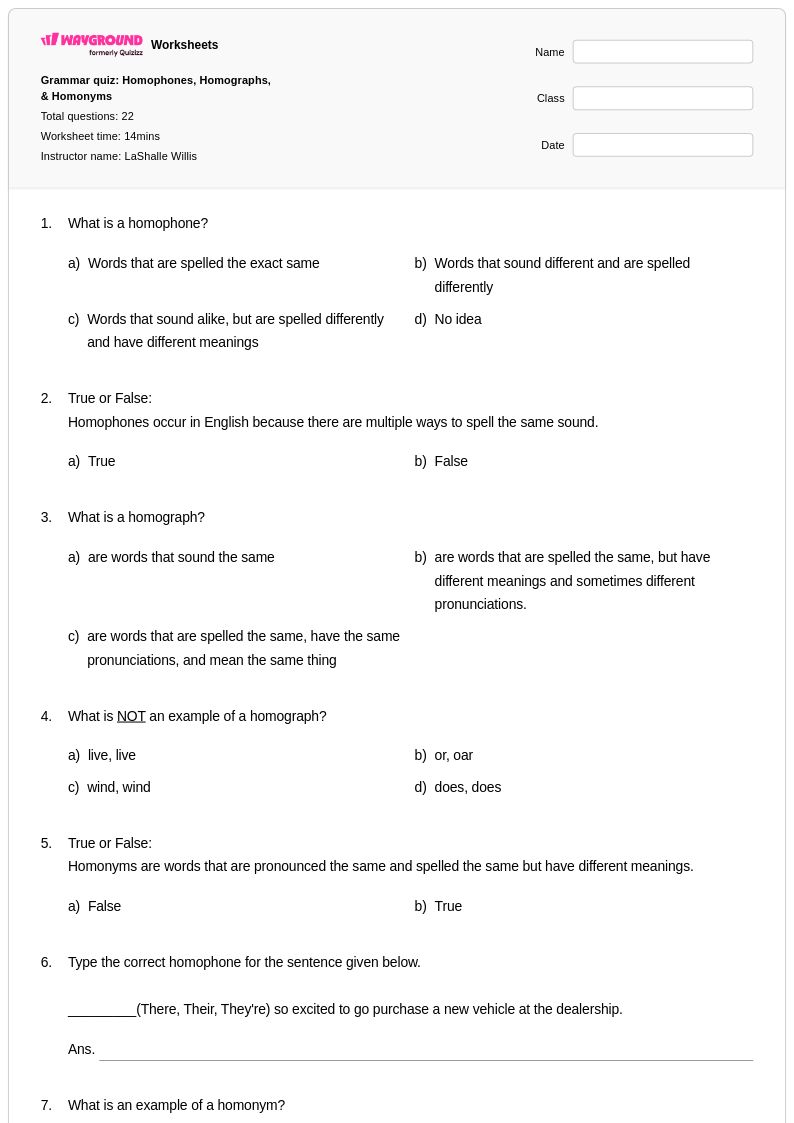
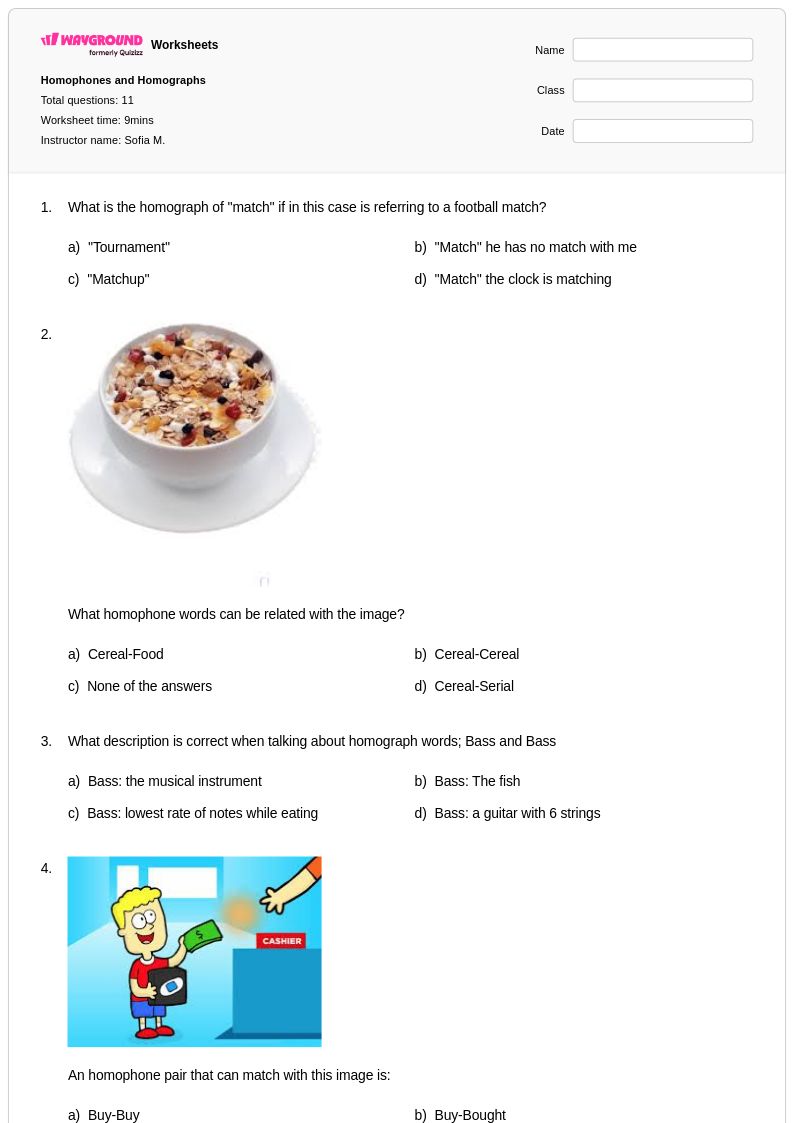
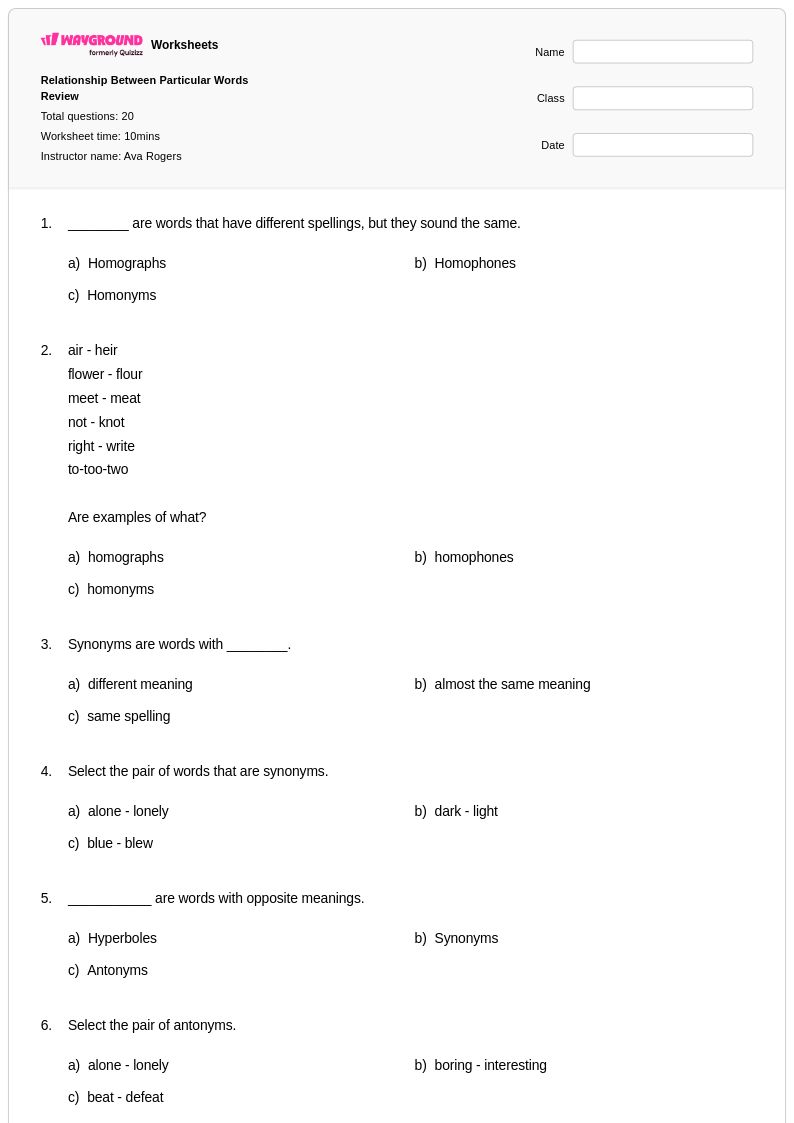
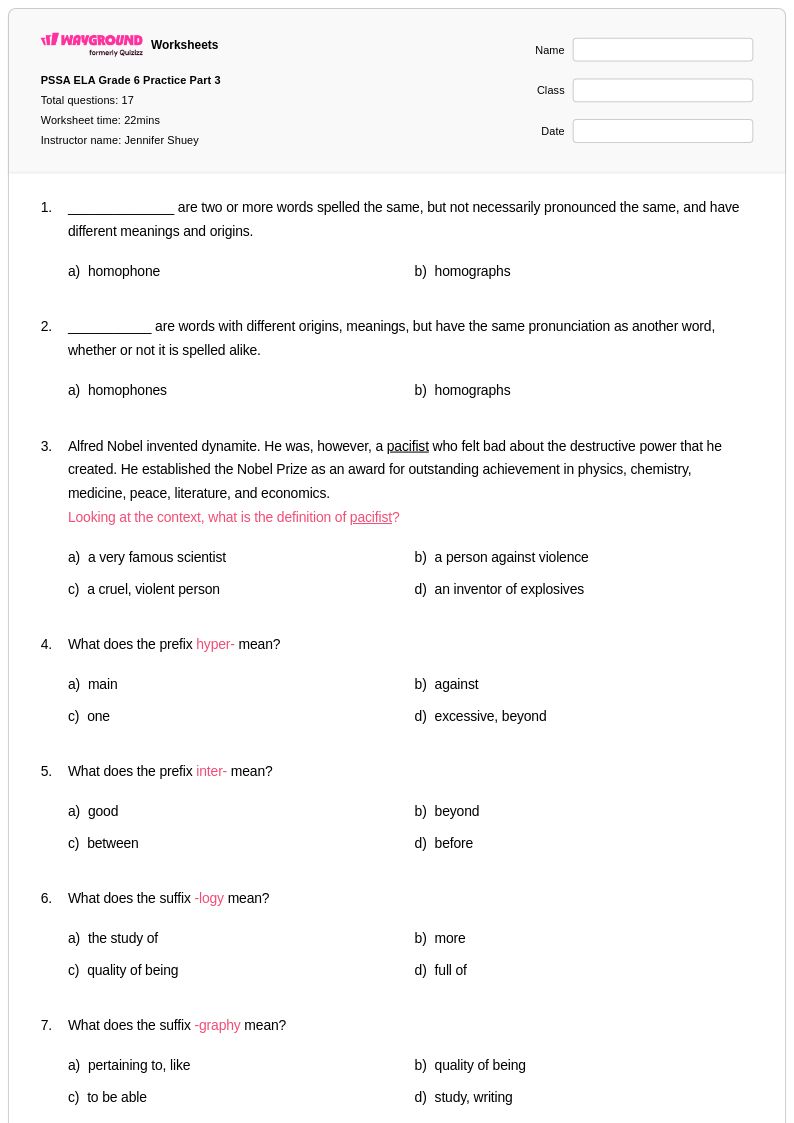
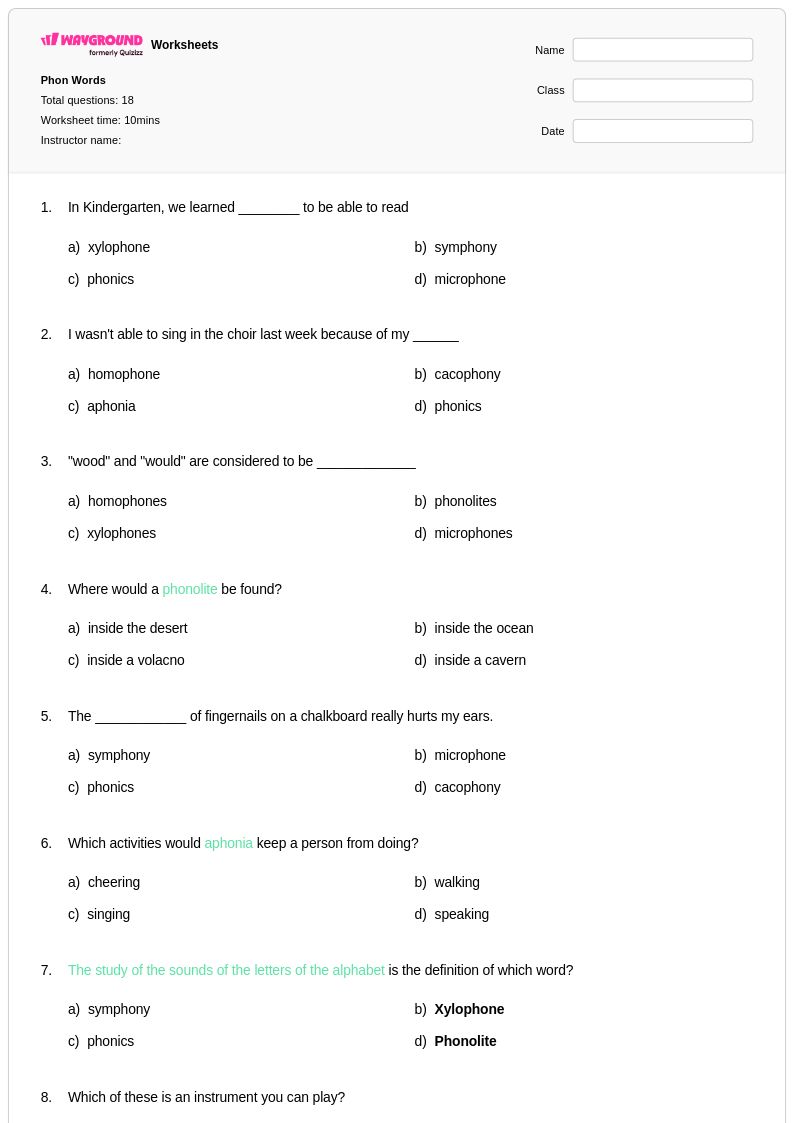
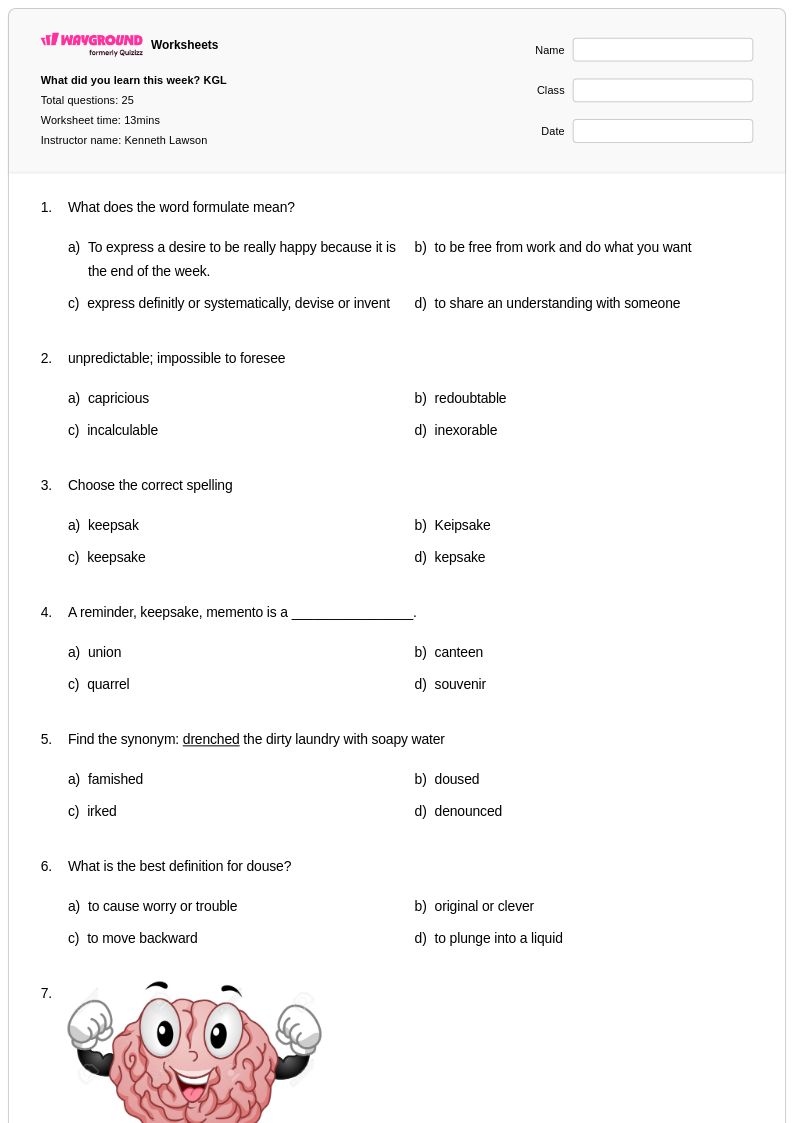
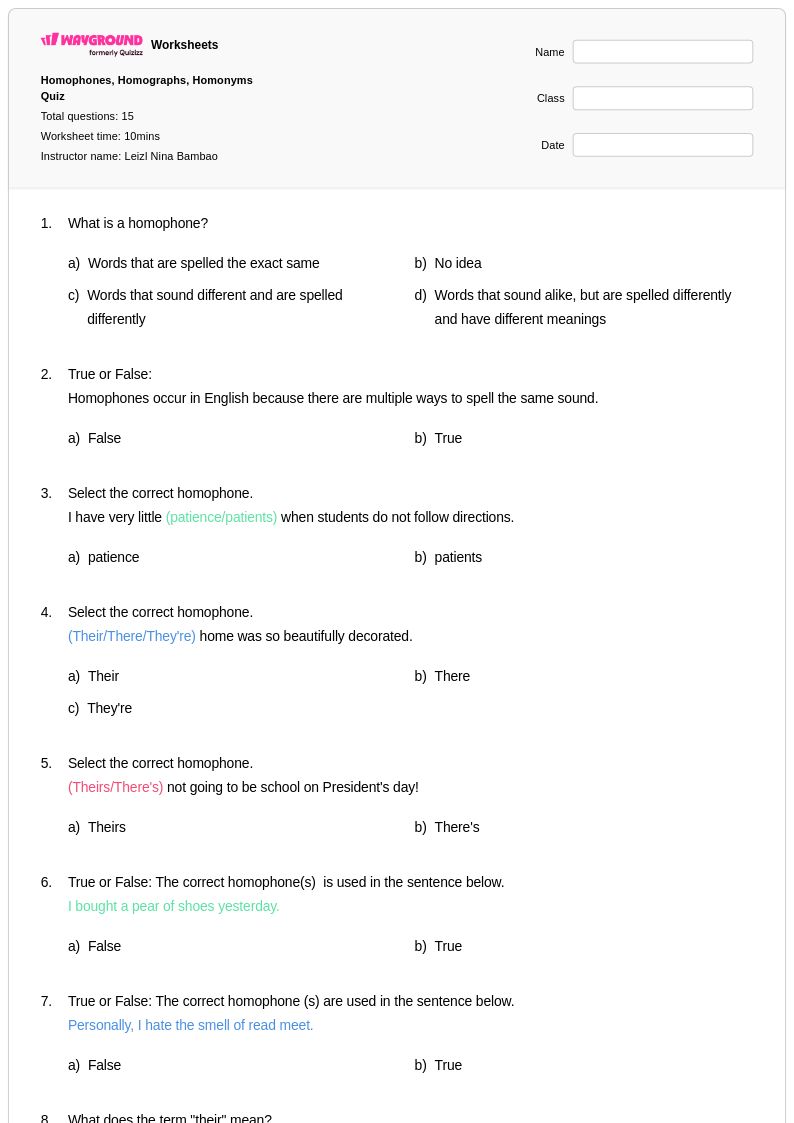
Homophones and homographs worksheets for Class 6 students provide essential practice in distinguishing between words that sound alike but have different meanings, and words that are spelled the same but may have different pronunciations and meanings. These comprehensive worksheet collections from Wayground strengthen students' vocabulary development, reading comprehension, and spelling accuracy through targeted exercises that challenge learners to identify context clues and apply proper word usage. Students work through practice problems that feature common homophone pairs like "there," "their," and "they're," as well as homographs such as "lead" (to guide) versus "lead" (the metal), building confidence in word recognition and meaning differentiation. Each worksheet includes an answer key to support independent learning and self-assessment, with free printables available in convenient PDF format for classroom distribution or homework assignments.
Wayground's extensive collection of teacher-created homophones and homographs resources draws from millions of educational materials specifically designed to support Class 6 language instruction across diverse learning environments. The platform's robust search and filtering capabilities enable educators to quickly locate worksheets that align with curriculum standards and match their students' specific skill levels, whether for initial instruction, remediation, or enrichment activities. Teachers can customize these digital and printable resources to accommodate different learning styles and pacing needs, creating differentiated assignments that challenge advanced learners while providing additional support for struggling students. The flexible format options, including downloadable PDFs and interactive digital versions, streamline lesson planning and allow educators to seamlessly integrate focused vocabulary practice into their language arts curriculum, ensuring students develop mastery of these frequently confused word categories.
FAQs
How do I teach homophones and homographs to students?
Start by establishing clear definitions: homophones are words that sound alike but have different meanings and spellings (e.g., 'there', 'their', 'they're'), while homographs are words spelled the same but with different meanings or pronunciations (e.g., 'lead' the metal vs. 'lead' to guide). Use context-rich sentences to show students how surrounding words signal the correct meaning, and build in repeated exposure through reading and writing activities. Grouping words into visual word pairs or anchor charts helps students internalize distinctions rather than memorizing definitions in isolation.
What exercises help students practice homophones and homographs?
Fill-in-the-blank sentences are among the most effective exercises because they require students to apply contextual reasoning rather than simply recall definitions. Matching activities that pair words with their meanings, sentence-completion tasks using homophone sets, and error-correction exercises where students identify misused words all build the recognition and accuracy skills needed for strong reading and writing. Regular practice with commonly confused pairs — such as 'affect/effect', 'bare/bear', and 'wind' (movement of air) vs. 'wind' (to turn) — helps students develop fluency over time.
What mistakes do students commonly make with homophones and homographs?
The most common error with homophones is selecting a word based on sound alone without considering spelling or meaning, which is why 'there/their/they're' and 'to/too/two' appear so frequently in student writing errors. With homographs, students often default to a single pronunciation or meaning regardless of context, missing the cue that sentence structure provides. Students also tend to confuse homophones and homographs with each other as categories, so reinforcing the definitions alongside the practice — not just the word pairs themselves — reduces conceptual slippage.
How can I use homophones and homographs worksheets in my classroom?
Homophones and homographs worksheets on Wayground are available as printable PDFs for traditional classroom use and in digital formats for technology-integrated environments, including the option to host them as a quiz directly on Wayground. Printable versions work well for independent practice, homework assignments, or small-group instruction, while digital formats allow for immediate interaction and self-paced work. Both formats include complete answer keys, so grading is efficient and students can receive timely feedback on their responses.
How do I differentiate homophones and homographs instruction for struggling learners?
For students who struggle with these concepts, narrowing the focus to a smaller set of high-frequency word pairs reduces cognitive load and builds confidence before expanding to more complex examples. On Wayground, teachers can apply student-level accommodations such as reduced answer choices, read aloud support, and extended time, which can be assigned to individual students without notifying the rest of the class. These settings are reusable across sessions, making it practical to maintain consistent support for students who need it throughout a unit.
How are homophones different from homographs?
Homophones are words that share the same pronunciation but differ in spelling and meaning, such as 'knight' and 'night' or 'flour' and 'flower'. Homographs, by contrast, are words with identical spellings that carry different meanings and sometimes different pronunciations, such as 'bass' (the fish, pronounced with a short 'a') and 'bass' (the musical term, pronounced with a long 'a'). Understanding this distinction matters for reading comprehension and writing accuracy because the strategies for decoding each type rely on different cues — sound context for homophones, sentence meaning for homographs.