
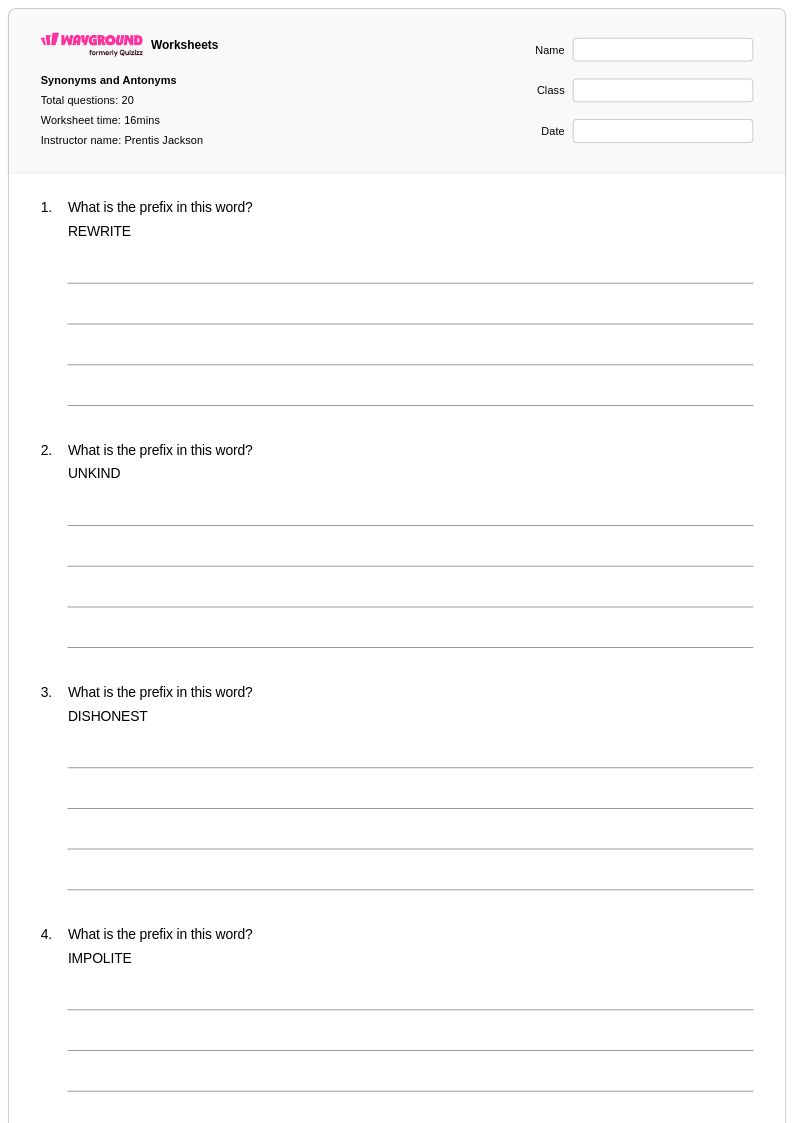
20 Q
3rd - Uni
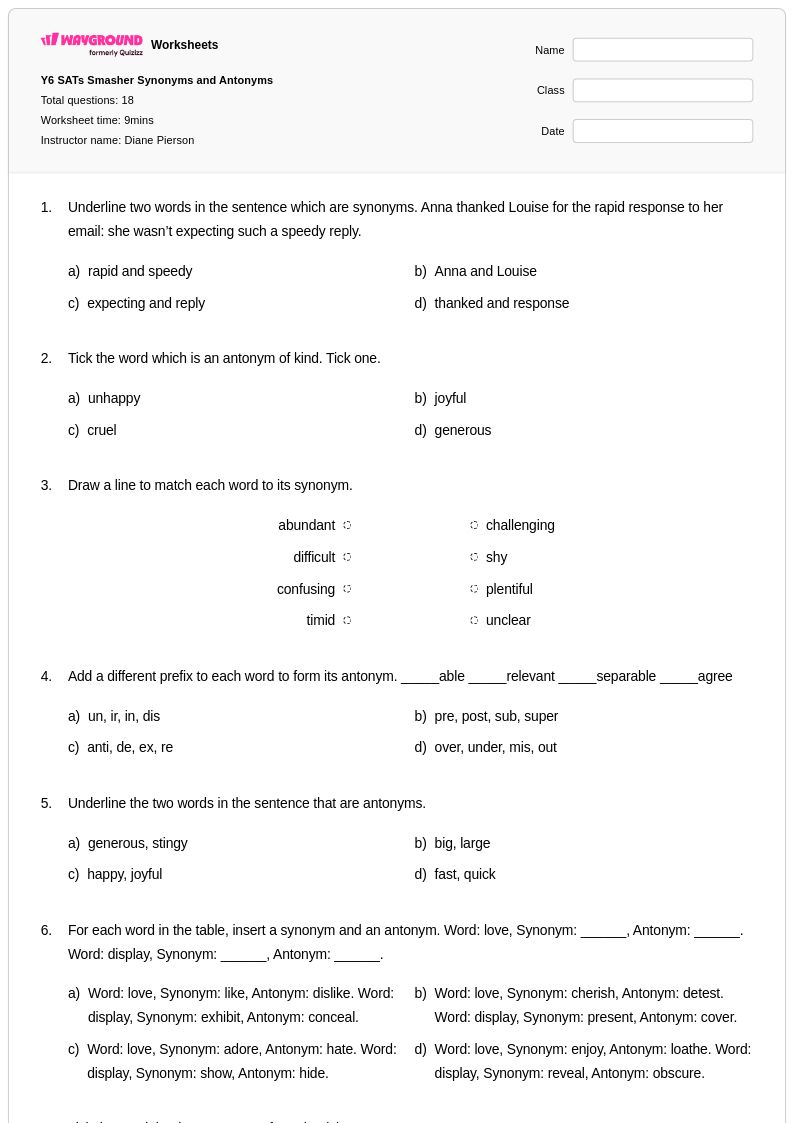
18 Q
6th - Uni
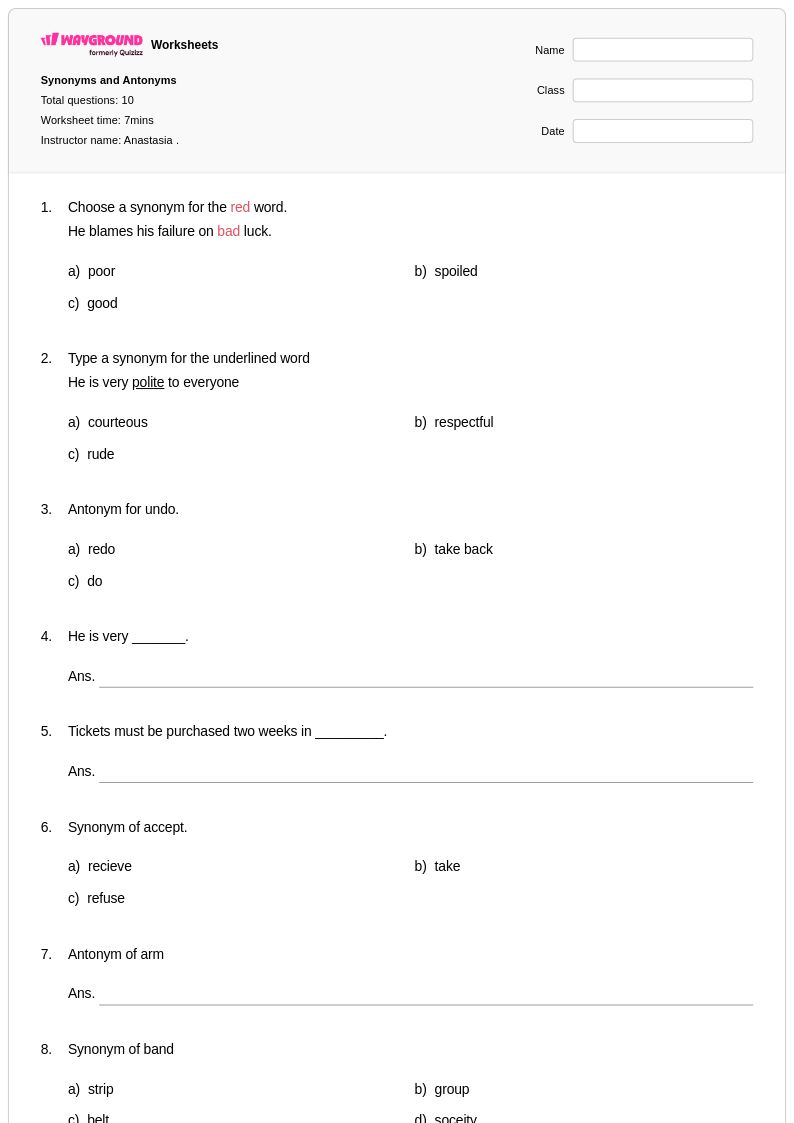
10 Q
6th
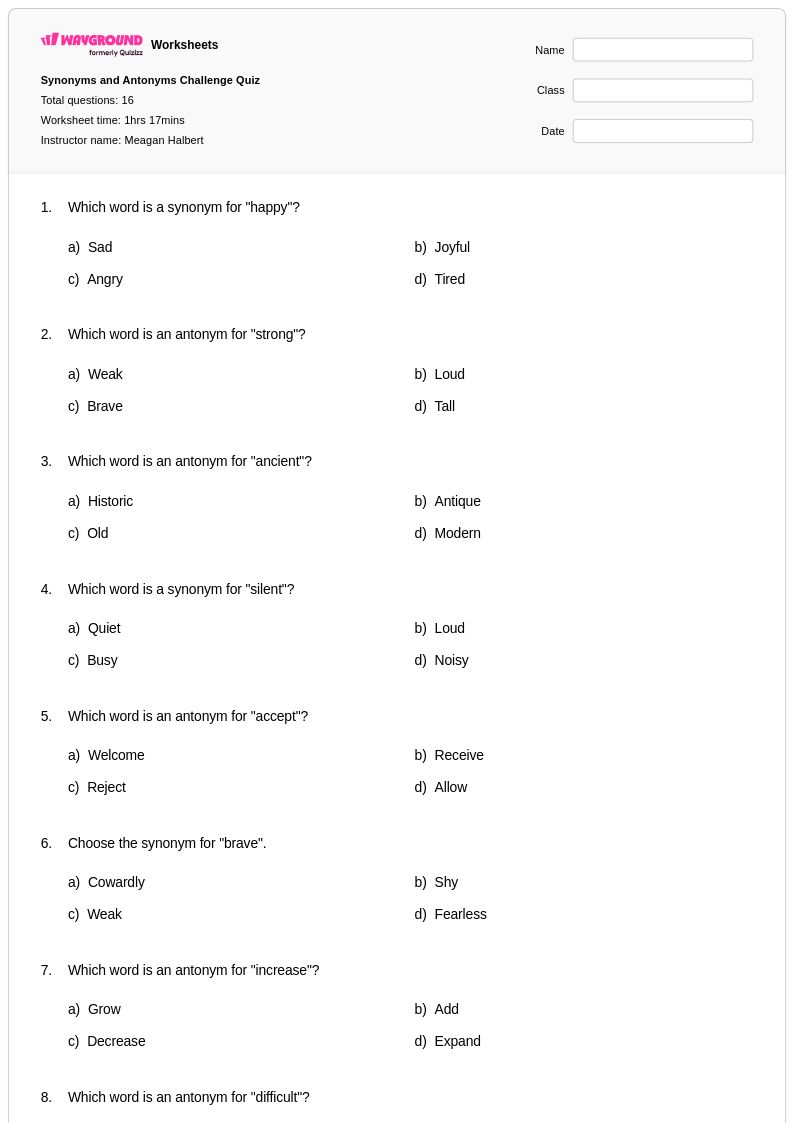
16 Q
6th
15 Q
6th - 8th
9 Q
6th - 8th
13 Q
1st - Uni
10 Q
2nd - 6th
20 Q
6th
20 Q
6th - Uni
20 Q
6th
48 Q
5th - 10th
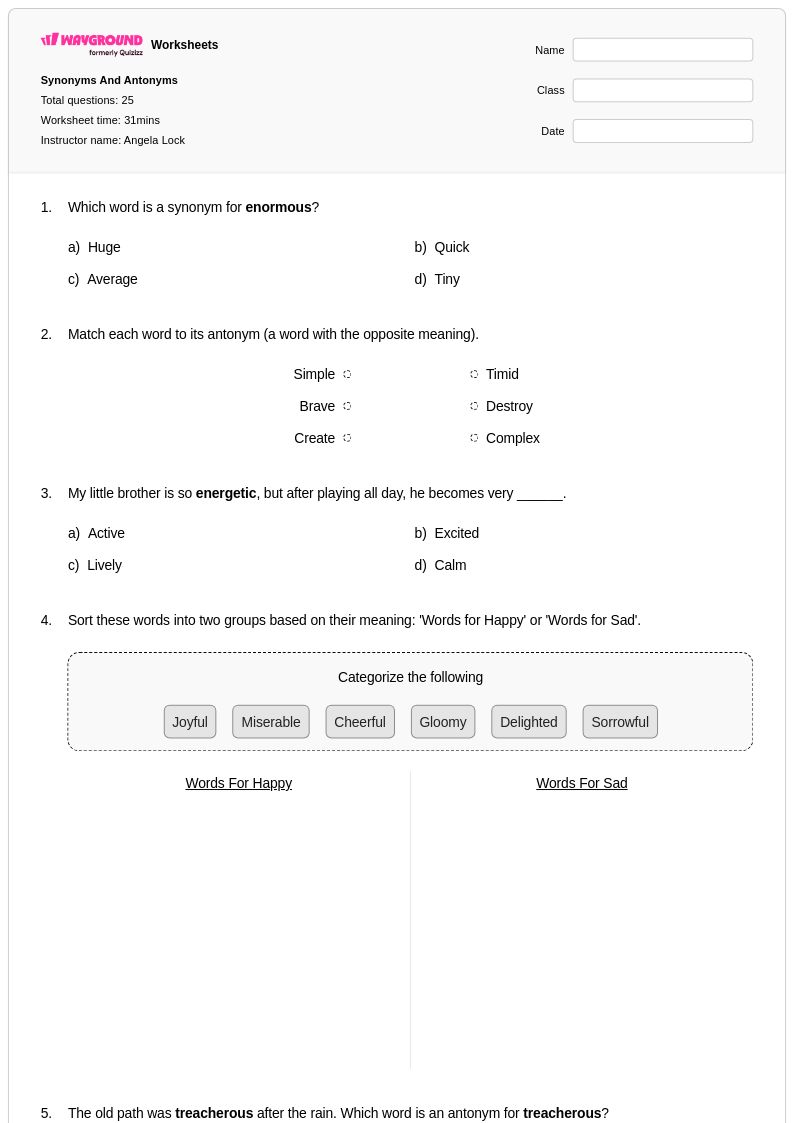
25 Q
6th - Uni
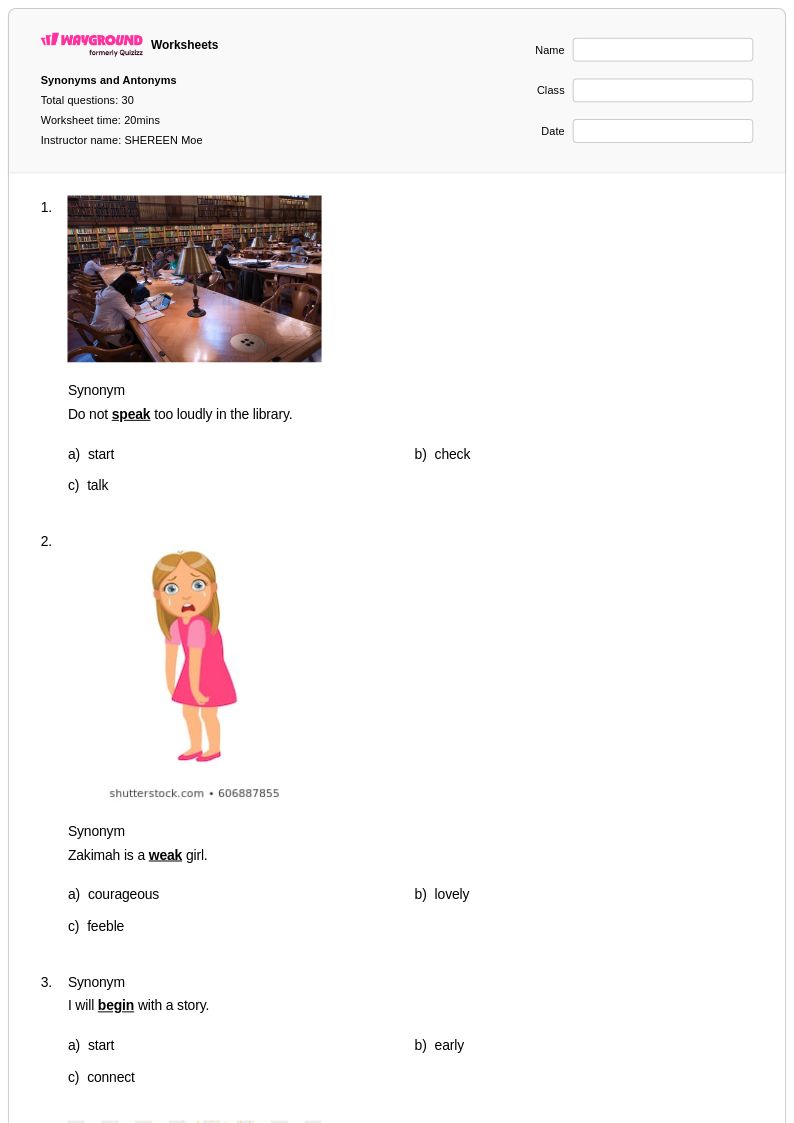
30 Q
6th
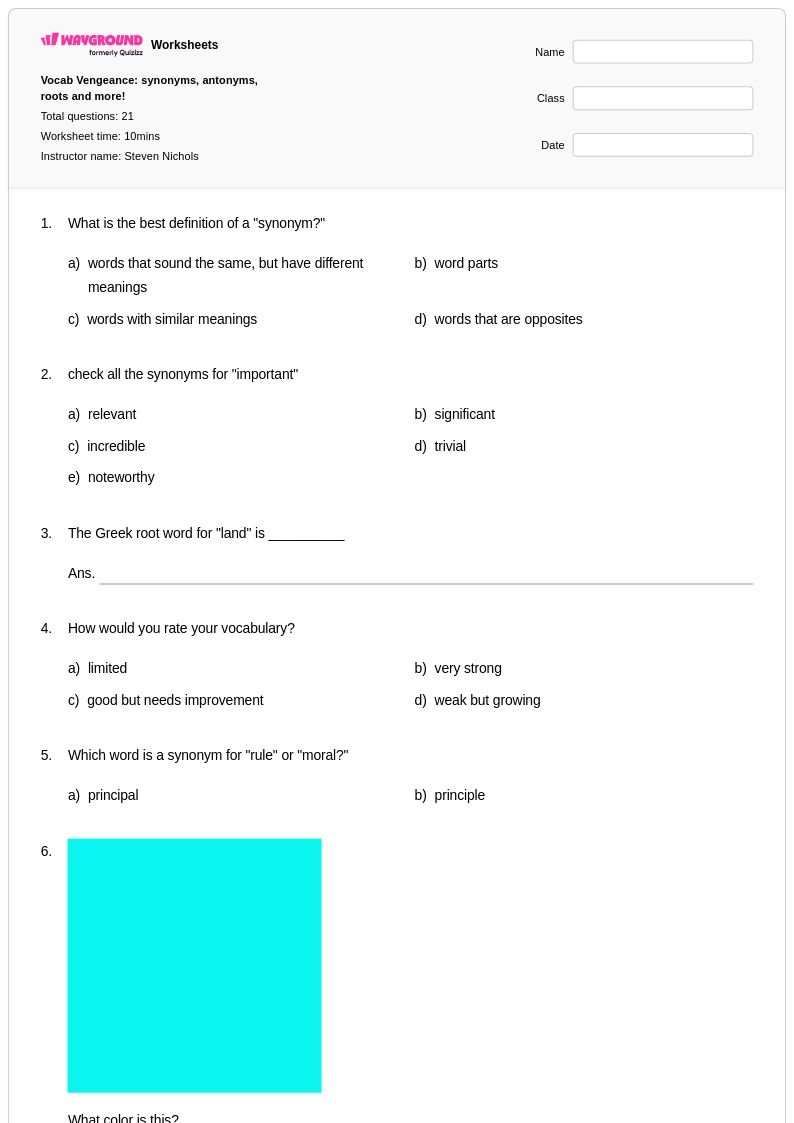
21 Q
5th - 8th
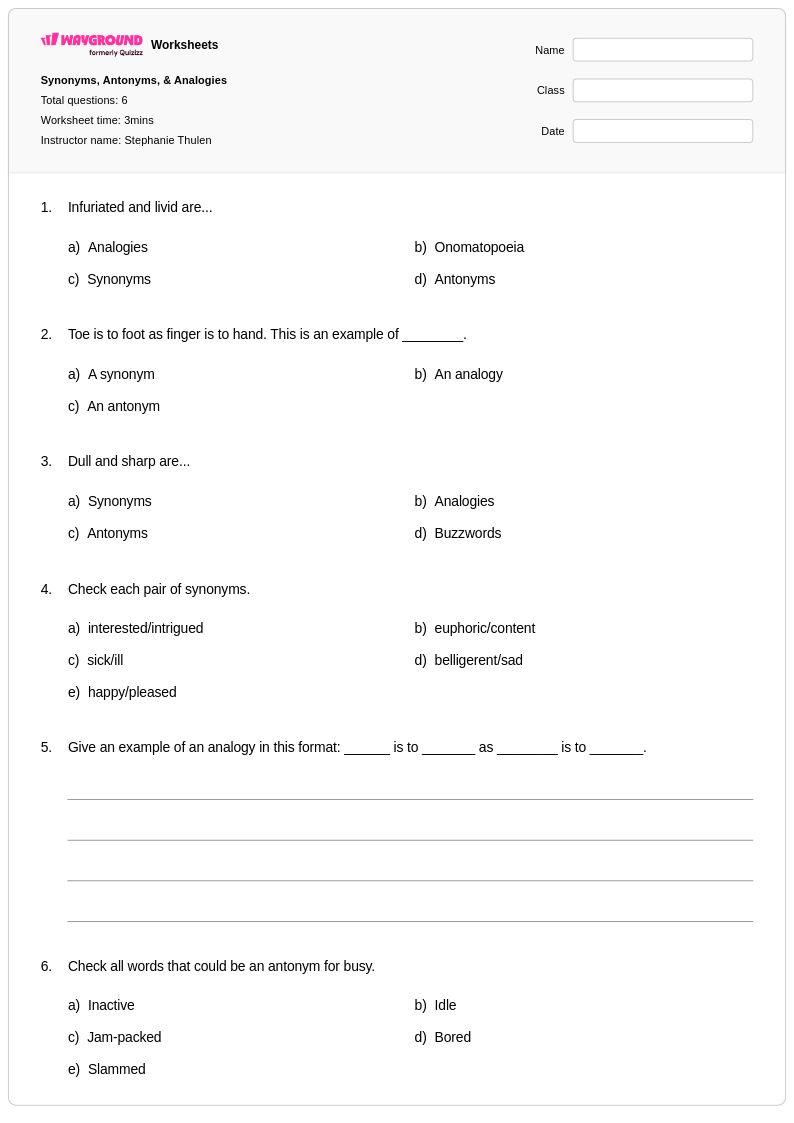
6 Q
6th - 8th
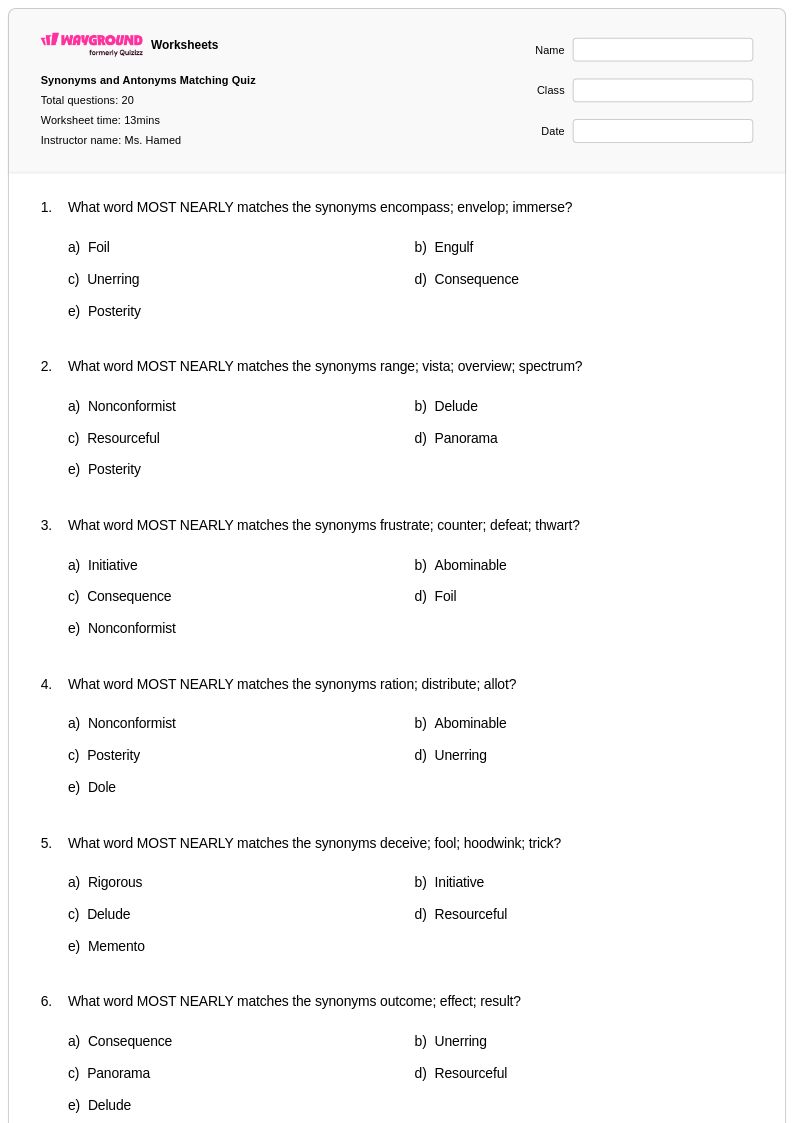
20 Q
6th
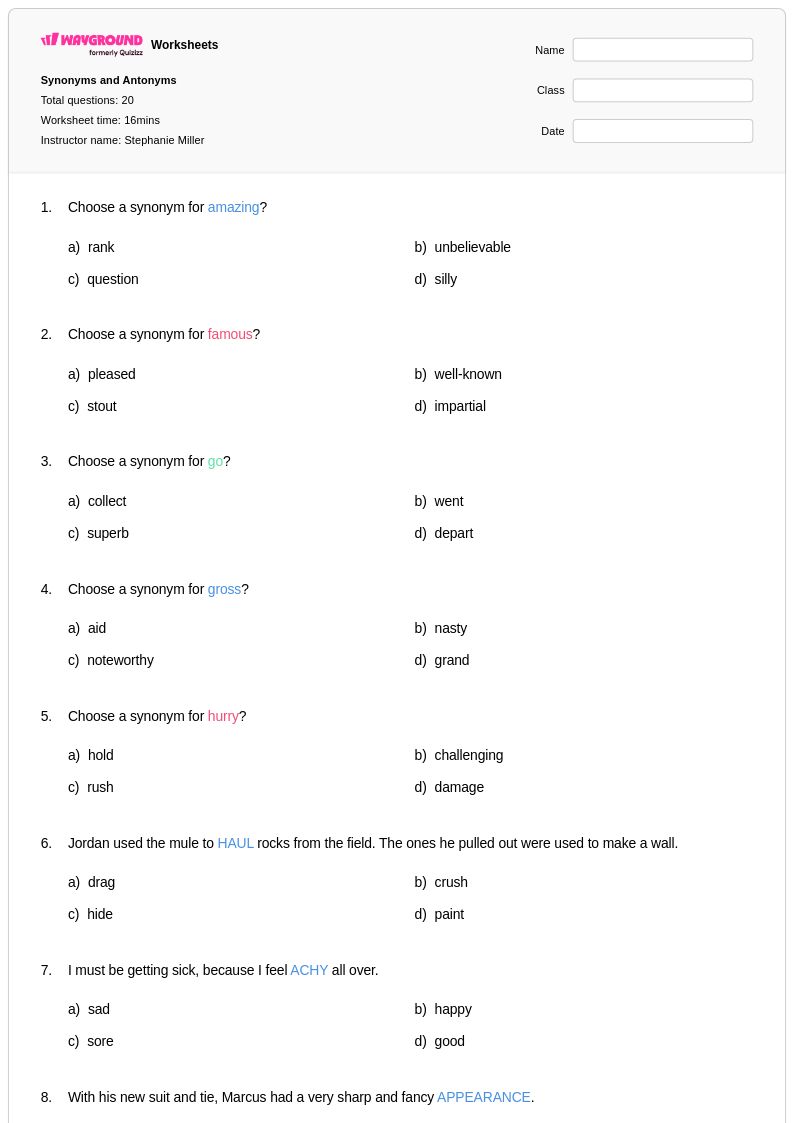
20 Q
3rd - 6th
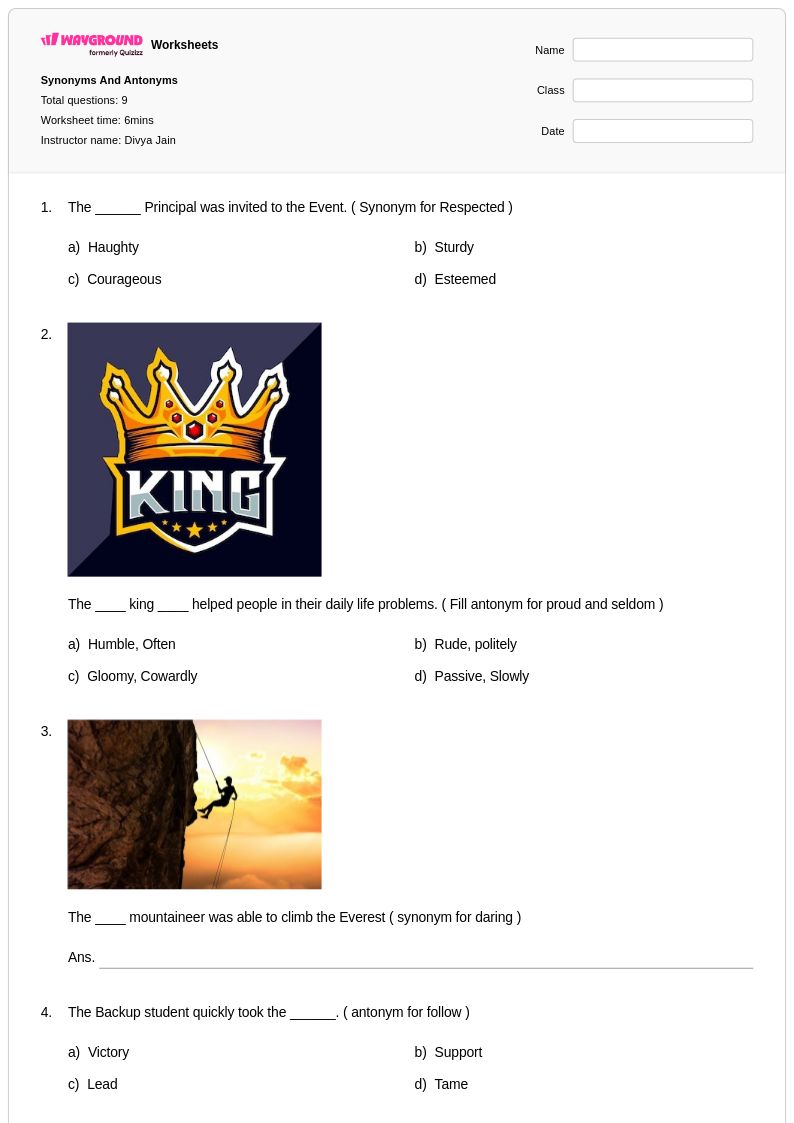
9 Q
5th - 7th
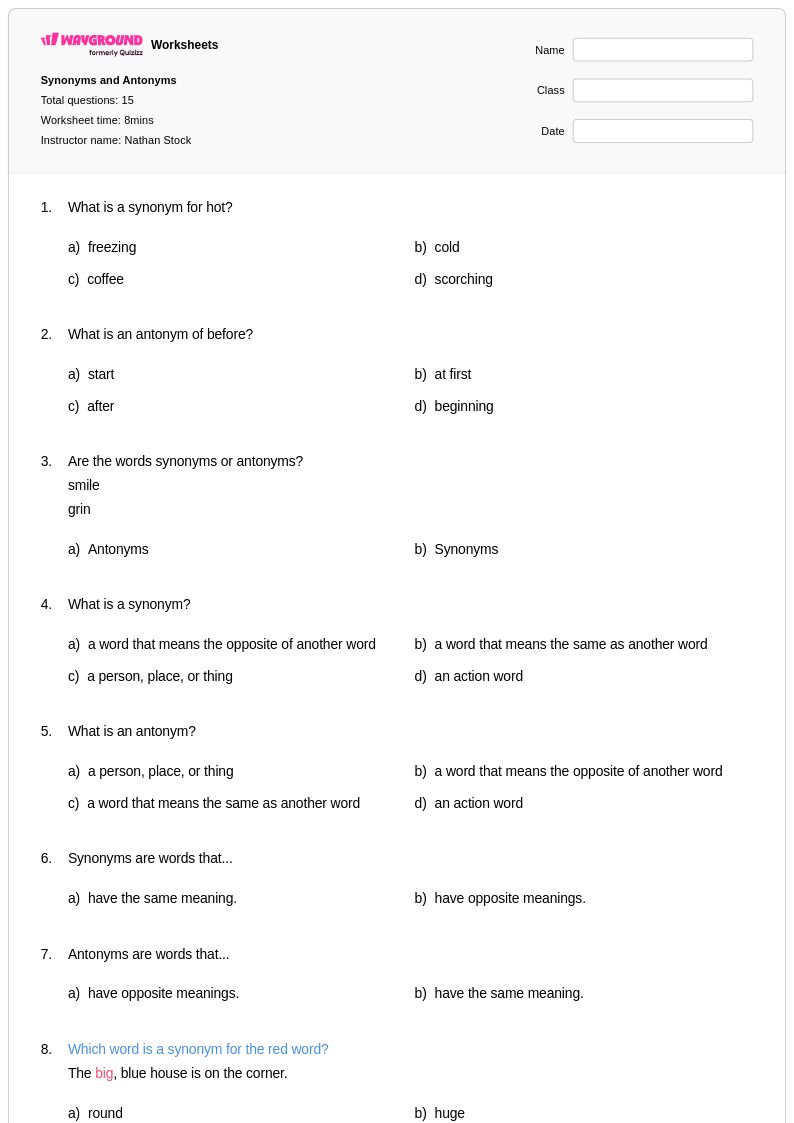
15 Q
4th - 6th
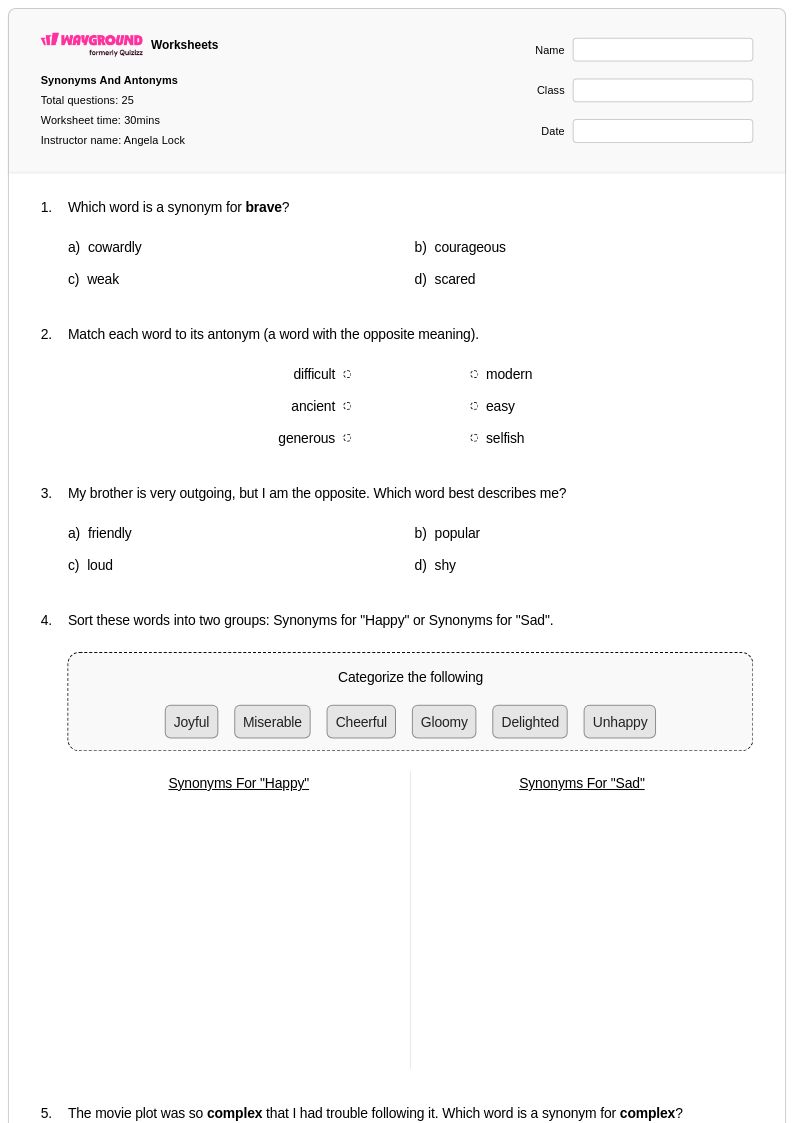
25 Q
6th - Uni
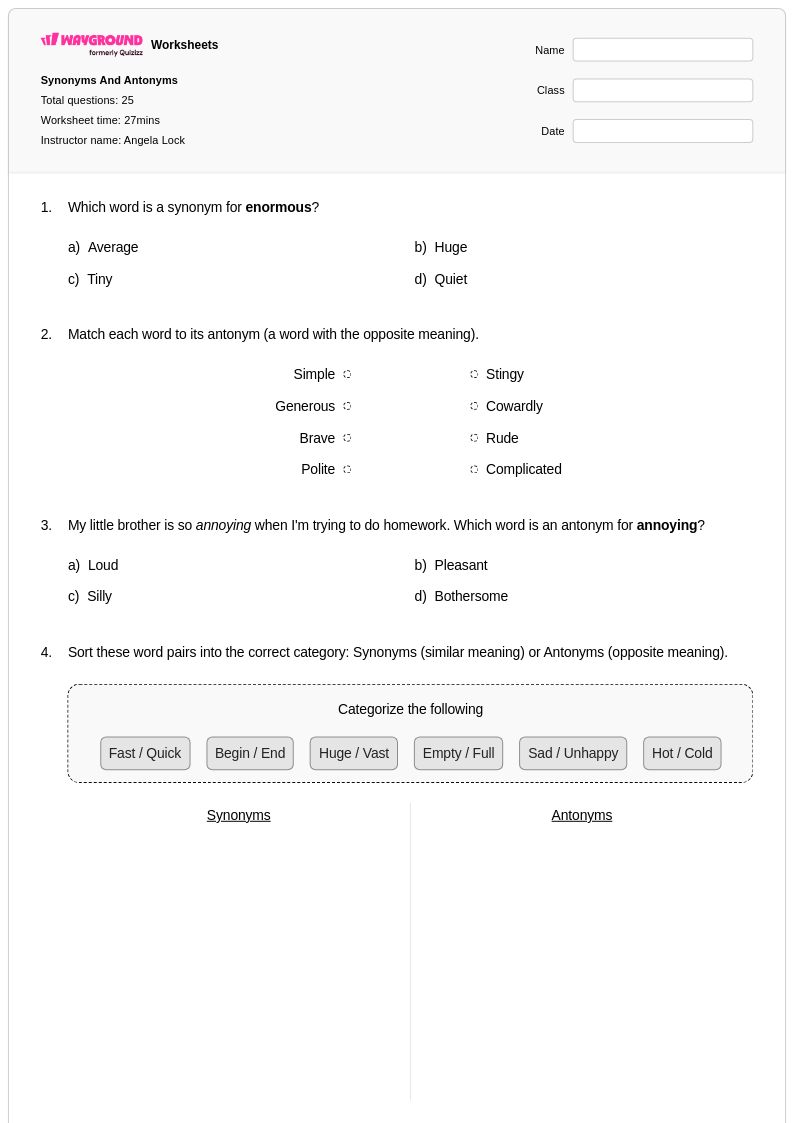
25 Q
6th - Uni
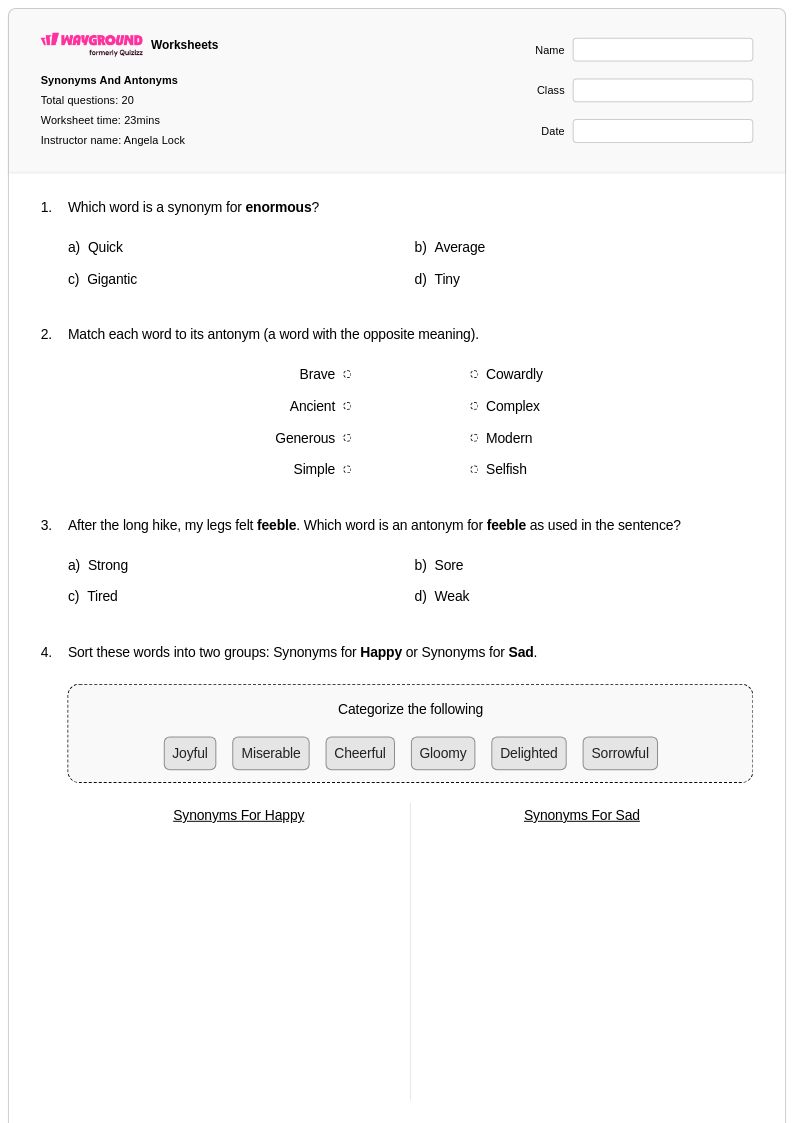
20 Q
6th - Uni
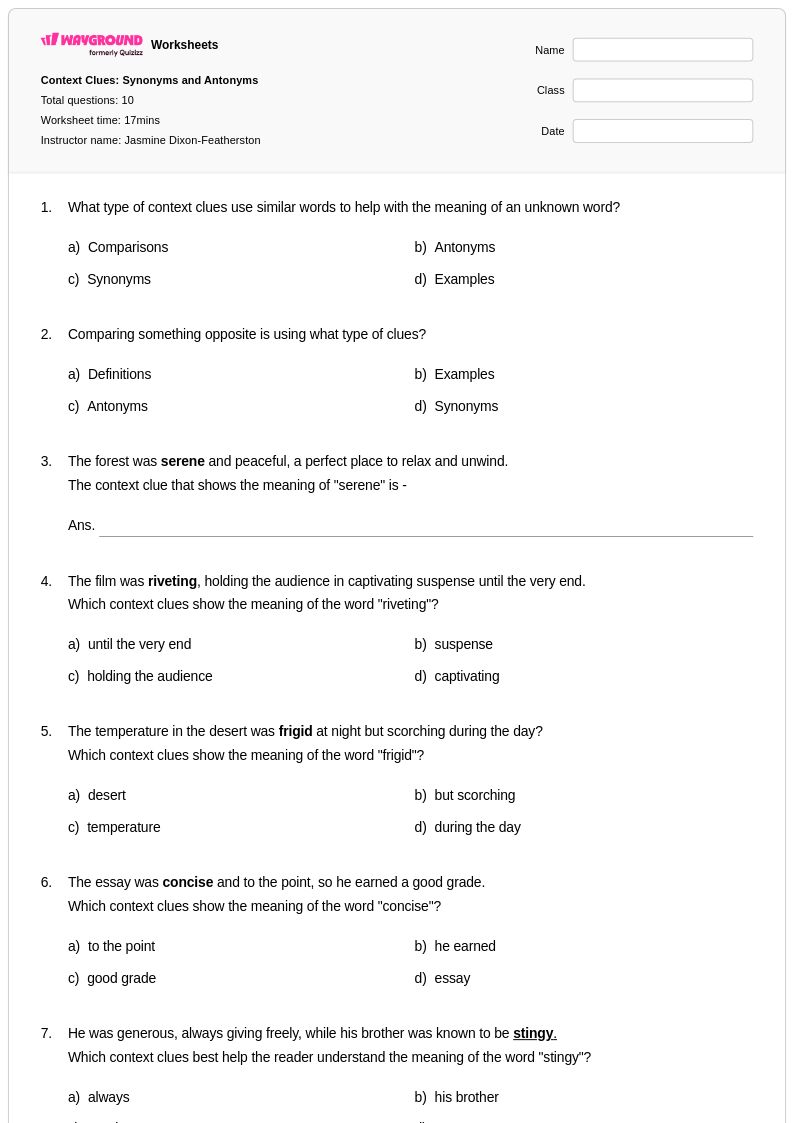
10 Q
6th - 8th
Explore Synonyms and Antonyms Worksheets by Grades
Explore Other Subject Worksheets for class 6
Explore printable Synonyms and Antonyms worksheets for Class 6
Synonyms and antonyms worksheets for Class 6 students available through Wayground provide comprehensive practice in understanding word relationships and expanding vocabulary skills. These carefully designed resources help students master the ability to identify words with similar meanings (synonyms) and opposite meanings (antonyms), which are fundamental building blocks for reading comprehension, writing fluency, and effective communication. The worksheets feature engaging exercises that challenge sixth graders to match word pairs, complete sentences using appropriate synonyms or antonyms, and analyze context clues to determine meaning relationships. Each printable resource includes detailed answer keys that support independent learning and self-assessment, while the free pdf format ensures easy access for both classroom instruction and home practice. These practice problems systematically build students' understanding of nuanced vocabulary distinctions and semantic relationships that are essential for academic success across all subject areas.
Wayground's extensive collection of synonyms and antonyms worksheets draws from millions of teacher-created resources, providing educators with unparalleled variety and quality for Class 6 language instruction. The platform's robust search and filtering capabilities allow teachers to quickly locate materials that align with specific curriculum standards and match their students' individual learning needs. Advanced differentiation tools enable educators to customize worksheets for varying skill levels within the same classroom, supporting both remediation for struggling learners and enrichment opportunities for advanced students. The flexible format options, including downloadable pdf versions and interactive digital activities, accommodate diverse teaching styles and learning environments while streamlining lesson planning. This comprehensive approach to vocabulary development helps teachers create targeted practice sessions that strengthen students' word knowledge, improve their reading comprehension abilities, and enhance their written expression through more precise word choice and varied language use.
FAQs
How do I teach synonyms and antonyms effectively in the classroom?
What exercises help students practice identifying synonyms and antonyms?
What mistakes do students commonly make when working with synonyms and antonyms?
How can I differentiate synonym and antonym practice for students at different reading levels?
How do I use Wayground's synonyms and antonyms worksheets in my classroom?
How do synonyms and antonyms worksheets support reading comprehension and writing skills?